The Earth's Masterpiece: How Rock Formations Inspire My Art (and Yours)
Dive into the fascinating world where art meets geology. I explore how the raw beauty, textures, and deep history of rock formations ignite artistic inspiration, from ancient cave paintings to contemporary abstract works. Discover why mountains, minerals, and geological strata offer an endless wellspring for creativity, and how you can find this natural muse too.

The Earth's Masterpiece: How Rock Formations Inspire My Art (and Yours)
Have you ever stood before a towering cliff face, felt the gritty silence of a desert canyon, or traced the intricate patterns in a piece of polished stone and felt that visceral tug, that whisper of ancient stories? I certainly have. For me, the intersection of art and geology isn't just a topic; it's a deep, personal resonance, a constant dialogue between my creative spirit and the planet's vast, unfathomable history. It's the profound realization that the Earth itself, with its patient, relentless sculpting, is perhaps the ultimate artist, and rock formations are its most enduring, magnificent canvases. It’s a bit humbling, really, to think about the sheer time involved in creating a mountain range, only to then try and capture a tiny fraction of that grandeur on a canvas or in a sculpture. But that's exactly the magic, isn't it? The challenge of translating millions of years into a moment of visual art, of giving voice to the silent sagas etched in stone. For me, these formations aren't just inert objects; they are Earth's living sculptures, time capsules of immense pressure and slow, relentless transformation. They whisper of a beauty both ancient and ever-new, a muse that continues to sculpt our planet and, in turn, our art. This profound sense of deep time – the vastness of geological history – often serves as a silent, powerful undercurrent in my work, influencing not just my subjects but the very rhythm of my brushstrokes and the layering of my compositions. How do we, as artists and art lovers, truly engage with this geological grandeur, and how can it fundamentally reshape our creative practice, leading us to new frontiers of expression? This article is my attempt to unravel that connection, exploring how the silent, colossal artistry of the Earth can ignite our own, from ancient cave paintings to contemporary land art, and how its fundamental forces continue to shape our creative spirit. From the mind-bending scale of deep time to the minute dance of crystallization, the Earth isn't just a backdrop for our lives; it's a profound, ever-present muse, continually sculpting both landscapes and our creative souls. So, buckle up, fellow art lovers, because we're about to embark on a journey that will, I hope, forever change how you see a rock, a canyon, or even the subtle texture in your next painting.

The Allure of Earth's Art: A Personal Connection
I’ve always felt this magnetic pull towards raw, untamed landscapes. It's in the way a mountain range carves itself against the sky, etching a silhouette against the dawn, or how a single, ordinary pebble can hold the story of a thousand journeys in its smooth, worn surface – a miniature planet in your palm. This isn't just a passing interest; it's a core part of my artistic DNA, a source of endless fascination and inspiration that I find myself returning to again and again. I believe that by truly observing the Earth's grand narratives – the slow dance of continents, the furious birth of volcanoes, the patient carving of canyons – we can tap into a primal wellspring of creativity. It's about looking beyond the picturesque and seeking the profound, the underlying forces that shape not just our planet, but our very perception of beauty and form. It's about recognizing the elemental truths embedded in stone, and translating those into a visual language. Consider the striking forms of the Grand Canyon, carved over millions of years by the Colorado River, or the stark, compelling beauty of the basalt columns at Giant's Causeway in Northern Ireland – these are nature's own masterpieces of sculpture and design. This article is a journey into that connection, a way to bridge the chasm between the geological and the artistic, showing how one continually enriches the other. And it makes me think about my own artistic journey, always striving to find that connection. The way sunlight plays across eroded sandstone, revealing layers of deep red and orange, is a constant lesson in composition, while the raw power of a volcanic basalt flow offers a masterclass in texture. These aren't just pretty scenes; they're direct, elemental communications from the Earth itself, teaching us about resilience, transformation, and the sheer audacity of creation. Beyond the obvious marvels, I'm often captivated by the subtle, yet equally profound, artistry in a slot canyon's curving walls, sculpted by millennia of flash floods, or the delicate mineral efflorescences that bloom on cave surfaces. These nuanced formations offer endless lessons in line, form, and the ephemeral nature of beauty, continually inspiring new approaches in my abstract work, urging me to find the monumental within the minute. If you're curious about how I've channeled these profound influences into my personal style, you can read more about it in finding my voice: the evolution of my abstract artistic style.
Understanding Deep Time: Our Ephemeral Art on an Ancient Canvas
Before we delve into the specific forces that shape our planet and our art, let's take a moment to truly grasp the breathtaking scale of the Earth's artistry. We're talking about deep time – a concept that refers to the immense spans of geological time, measured in millions and billions of years, far beyond human comprehension. It's not just a scientific metric; it's a profound philosophical framework. When I look at a mountain range, I don't just see a collection of rocks; I see the slow, patient unfolding of eons, a testament to processes that began before any life walked this planet. I see the birth of oceans, the collision of continents, the inexorable grind of glaciers – all condensed into the very landscape before me. Our art, our lives, our very civilizations are but a fleeting blink in this cosmic drama, a momentary brushstroke on an ancient, continually repainted canvas. This humbling perspective can be incredibly liberating for an artist, freeing us from the pressure of instant gratification and connecting us to a grander narrative. It's about recognizing that our creations, no matter how profound, are part of an ongoing, ceaseless conversation with forces that dwarf our individual existence. Imagine the entire history of the Earth compressed into a single 24-hour day; human existence would barely register as the last few seconds. That's the scale of deep time! It's a dizzying thought, really, like trying to count every grain of sand on every beach. This realization profoundly shapes my abstract art, where I often try to capture the feeling of time's passage rather than depicting literal scenes. It’s an embrace of the ephemeral, and a connection to something eternal, a quiet acknowledgment of the vastness that surrounds us. To truly feel deep time is to let go of our human-centric clock and sync up with the Earth's heartbeat – a pulse measured in geological epochs, not human heartbeats. It's a reminder that even the most 'permanent' human structures are but dust compared to the patient carving of a canyon or the slow drift of continents. I find myself contemplating the 'geological selfie' – a snapshot so vast it captures the very genesis and dissolution of mountain ranges, a profound meditation on the cycles of creation and destruction that mirror artistic evolution itself.
Deep Time: A Radical Shift in Perspective
To truly internalize deep time is to fundamentally shift your perspective. It's to understand that the lifespan of a star, the formation of a galaxy, or the slow churn of a supercontinent are not just scientific facts, but profound narratives playing out on a scale that dwarfs human experience. It forces a certain humility, doesn't it? As an artist, I find this incredibly freeing. It dismantles the pressure to create something 'timeless' in the human sense and instead encourages me to contribute a fleeting, yet sincere, mark to an unimaginably vast continuum. It's not about making art that lasts forever, but about making art that acknowledges forever, that gestures towards the endlessness. This idea resonates with how I approach the unseen layers: my process of building depth and narrative in abstract mixed-media, where each layer is a nod to the countless strata of Earth's history, a geological record of planetary transformations. It’s a liberation from the tyranny of the immediate, allowing me to engage with my creative practice from a much broader, more contemplative vantage point. This profound historical consciousness also allows for a unique artistic freedom—the freedom to experiment, to fail, and to understand that each creative act, however small, contributes to an ongoing, planetary-scale narrative, a tiny yet significant ripple in the grand ocean of time.
Beyond Geological Forces: Climate and Its Artistic Impact
While the direct geological forces are undeniably powerful, it's impossible to discuss Earth's artistry without acknowledging the overarching influence of climate. Climate isn't a geological force in itself, but it acts as a colossal orchestrator, profoundly influencing and accelerating (or decelerating) every geological process, from erosion by raging storms to deposition by shifting glaciers and the expansion and contraction of ice sheets. It shapes the very landscapes we find so inspiring, dictating where deserts form, where ice sheets carve, and where lush forests can thrive. Think of the monumental ice sheets of the polar regions, constantly sculpting the land beneath them through glacial scour and deposition, or the relentless freeze-thaw cycles that break down rocks in temperate zones. Climate dictates the patterns of rainfall that drive river erosion, the winds that carve sand dunes, and the temperatures that influence chemical weathering rates. For artists, climate change and its historical impact offer a dramatic, urgent canvas. It highlights vulnerability, the fragility of seemingly permanent landscapes, and the profound, sometimes terrifying, power of interconnected natural systems. It’s a compelling, often unsettling, muse for contemporary artists grappling with humanity's impact on the planet, driving them to create works that confront environmental degradation, celebrate resilience, or envision sustainable futures.
The Earth as a Master Artist: Geological Forces and Artistic Analogies
To truly appreciate the artistry of the Earth, it helps to understand the fundamental forces at play. These aren't just scientific concepts; they are the very rhythms that shape our planet, and by extension, our artistic imagination.
Geological Force  | Description | Artistic Analogy / Inspiration |
|---|---|---|
| Tectonics | The grand, slow-motion movement and collision of Earth's crustal plates, forming colossal mountain ranges, deep ocean trenches, and vast rift valleys. | The fundamental push and pull of composition, creating dynamic tension and release in a canvas; the monumental scale and inherent drama in sculpture, much like a mountain range rising from the Earth; the powerful, unseen forces that dictate structure in abstract forms. Think of the powerful, jagged forms in Abstract Expressionist works mirroring the collision zones of tectonic plates, or the layered history of a painting reflecting geological strata. |
| Erosion | The relentless wearing away of rock, soil, and landforms by natural agents like wind, water, ice, and gravity, creating smooth, jagged, or sculpted forms. | The sculptor's subtractive process, revealing forms from raw material; the painter's layering and sanding, creating subtle histories on the canvas; the subtle decay and evolution of forms over time; creating negative space and defining boundaries. I often use scratching and layering in my abstract work to evoke the relentless processes of erosion, revealing underlying colors and textures, much like a cliff face exposed to the elements. |
| Deposition | The natural process of laying down sediment, rock fragments, or organic matter, leading to the creation of distinct layered (stratified) rock formations. | The building up of layers in a painting, constructing visual depth; the accumulation of material in mixed-media art; the sequential narrative of a series of works; the history embedded in a surface, telling a story through strata. This is a core principle in my own the unseen layers: my process of building depth and narrative in abstract mixed-media, where each layer adds to the 'geological record' of the artwork. |
| Volcanism | The eruption of molten rock (magma/lava), ash, and gases from beneath the Earth's surface, creating new landforms, unique textures, and rich mineral deposits. | The raw, explosive energy of gestural painting, where paint erupts onto the canvas; the creation of texture with impasto or mixed media, mimicking hardened lava flows; the fiery palette of reds, oranges, and blacks; the birth of something new from chaos, a powerful, often destructive, creative force. I find myself drawn to intense reds and blacks, much like the colors found in volcanic rock, to convey a sense of primal energy and transformation. |
| Crystallization | The intricate process where atoms, ions, or molecules arrange into highly ordered, repeating three-dimensional structures, forming minerals under specific conditions of heat and pressure. | The pursuit of geometric abstraction; the intricate details in a drawing or etching; the perfect balance and symmetry in a composition; the hidden order beneath apparent randomness; the sparkle of light on a faceted surface, inspiring precision and clarity in artistic expression and the beauty of underlying structure. This can be seen in the precise, crystalline forms of Cubist painting or the meticulous patterns in Op Art. |
| Metamorphism | The profound transformation of existing igneous, sedimentary, or other metamorphic rocks by intense heat, pressure, or chemically active fluids, altering their mineralogy and texture without melting. | The transformation of raw materials into art; the way an artist reworks a piece, imbuing it with new meaning; the subtle shifts in tone and texture that hint at a hidden history and internal struggle; adapting to external pressures in the creative process, leading to resilience and new forms. For me, the process of revising an artwork, of sanding it down and repainting, feels akin to metamorphism, transforming the piece under creative 'pressure'. |
| Weathering | The in-situ physical breakdown (e.g., freeze-thaw) and chemical decomposition (e.g., dissolution) of rocks, soil, and minerals at or near the Earth's surface. | The natural aging of art, creating a unique patina; the gradual decay and textural patination of sculptures; creating nuanced textures and broken, fragmented forms in mixed media; the beauty of imperfection and time's gentle, relentless touch, revealing inner character. I often incorporate deliberate 'aging' effects in my abstract work, allowing certain pigments to fade or crack, much like the slow weathering of a natural stone monument. |
| Climate | The long-term weather patterns that profoundly influence the rates and types of geological processes, dictating everything from glacial advance and retreat to desertification and sea-level change, shaping entire biomes. | The grand, overarching narrative of change and adaptation in art; the use of color palettes to evoke specific environments; the exploration of impermanence and the impact of human activity on the landscape; a constant reminder of the delicate balance and immense power of planetary systems. Think of how artists capture the stark beauty of a polar landscape or the vibrant intensity of a tropical rainforest, both shaped by distinct climatic regimes. |
| Diagenesis | The complex suite of physical and chemical changes occurring in sediments after deposition and during their lithification (conversion to solid rock), excluding surface weathering and high-grade metamorphism. | The subtle, alchemical transformation of an artwork over time, where initial layers react and meld, developing new characteristics and deeper narratives; the maturing of a concept into a refined expression; the hidden processes that solidify artistic intent. This slow evolution of materials on the canvas, reacting to light and air, parallels the geological changes of diagenesis, silently shaping the final form. |
| Glaciation | The formation, movement, and effects of glaciers and ice sheets, which profoundly reshape landscapes through erosion (e.g., carving U-shaped valleys) and deposition (e.g., forming moraines). | The powerful, sculpting hand in monumental sculpture; the slow, inexorable force that carves and redefines artistic movements; the chilling beauty and austere palettes of ice and snow; the profound impact of unseen, immense pressure over vast spans of time, mirroring the lasting impact of certain artistic eras. |
| Geomagnetic Field | The invisible magnetic field generated by the Earth's core, which protects the planet from solar winds and influences mineral alignments during rock formation (paleomagnetism). | Inspiring abstract compositions that explore unseen connections and energetic flows; the subtle tension of opposing forces in a design; the hidden architecture that underpins all matter; the exploration of migratory patterns or celestial navigation in conceptual art, reflecting an unseen, yet vital, planetary presence. |
These forces, slow and vast, are constantly at work, a testament to the Earth's ongoing creative process. It's a humbling thought, isn't it? To be an artist is, in a way, to echo these grand geological dialogues on a much smaller, human scale.
The Rhythms of Earth's Creative Cycle
Each of these forces doesn't act in isolation; they are deeply interconnected, forming a ceaseless cycle of creation, destruction, and recreation that mirrors our own artistic journeys. Tectonics, for example, isn't just about mountains rising; it's about the deep-seated pressures that trigger volcanism, feeding new materials to the surface, which then become subject to weathering and erosion. Those eroded sediments are eventually compacted and cemented through deposition and diagenesis, potentially becoming new canvases for metamorphism under immense heat and pressure. It’s a grand, planetary ballet, a constant remixing of elements, and understanding this interconnectedness profoundly enriches my artistic perspective. It teaches me about the inherent dynamism of any creative process – the push and pull, the breakdown and buildup, the constant evolution of ideas and forms, the way one artistic choice inevitably leads to the next. I think about how these cycles resonate with the evolution of abstract art: key movements and their collectible value, always changing, always influenced by what came before, a truly "deep time" view of art history.
The Earth's Palette: Why Rocks Resonate with Artists
It’s not just the sheer scale of geological phenomena, though that certainly plays a part in inspiring awe. What truly draws artists to rock formations, I think, is a deeper, more intrinsic connection to a combination of fundamental artistic elements already present in these natural wonders. It’s like the Earth is giving us a masterclass in composition, texture, and color theory, all wrapped up in a package of profound, slow-motion drama and elemental beauty. The very ground beneath our feet is a gallery, showcasing a spectrum of artistic principles that have been guiding human creativity for millennia.
Mineralogy and Artistic Pigments: Nature's Own Color Lab
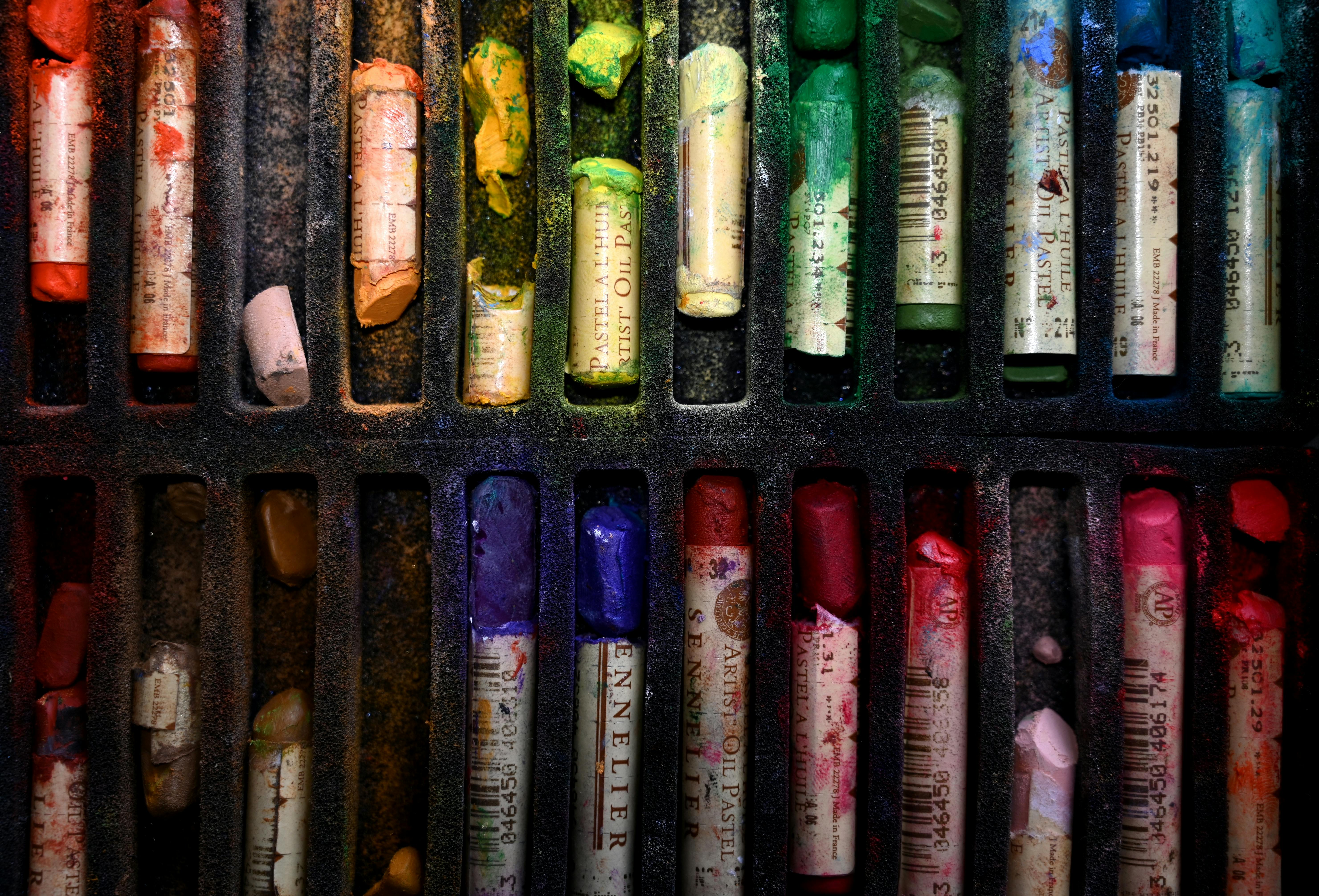
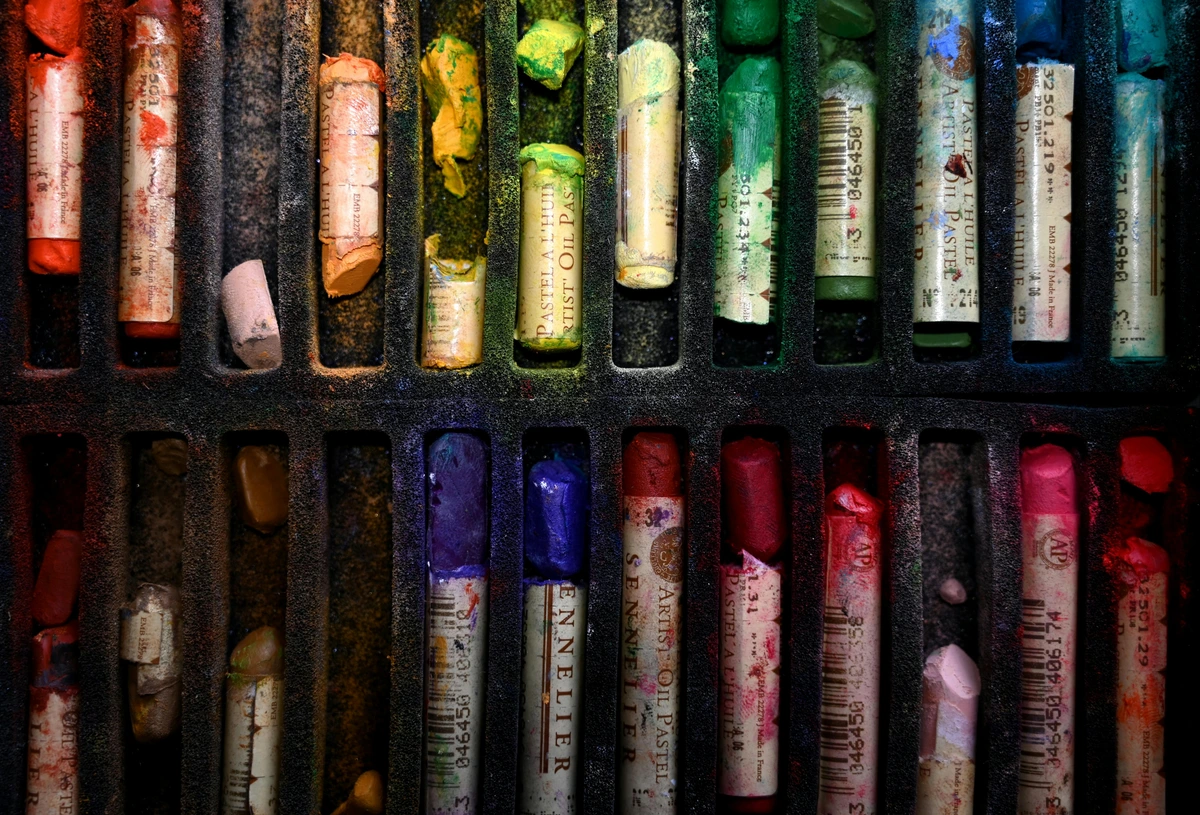
Before the advent of synthetic pigments, artists relied almost entirely on the Earth's bounty for their colors, meticulously grinding minerals to create their palettes. Minerals weren't just pretty rocks; they were the very foundation of color itself, imbued with stories of deep time and geological processes. Think about the rich blues of genuine ultramarine (derived from the semi-precious stone lapis lazuli), the vibrant reds and yellows of ochres (ancient iron oxides), or the deep greens of malachite. These aren't just historical footnotes; the raw, elemental beauty of these mineral-derived hues continues to inspire, offering a richness and subtlety that modern pigments often struggle to replicate. The way they interact with light, their inherent depth and luminosity, their very earthiness, is unparalleled. It's a direct, undeniable connection to the planet's elemental chemistry, a reminder that every stroke of color on a canvas has a lineage stretching back to geological processes, to volcanic eruptions, hydrothermal vents, and the slow crystallization within the Earth's crust. Understanding this history deepens our appreciation for how artists use color, tracing its origins from the deep earth to the canvas, a truly alchemical transformation. And when I think about the sheer volume of iron oxides that give us everything from warm sienna to deep umber, or the stunning range of blues from azurite and smalt, it's a humbling thought. It reminds me that the very foundation of our visual language often comes directly from the Earth's ancient chemistry. Consider also the vibrant greens of malachite, the striking reds of cinnabar (from mercury sulfide, used since antiquity despite its toxicity!), or the ethereal whites of kaolin clay. Each mineral pigment tells a story of geological forces at play, offering not just a color, but a piece of the Earth’s own history to the artist’s palette. Even today, many artists choose to work with naturally sourced pigments, valuing their unique vibrational qualities and the direct connection they offer to the planet's raw materiality.
It's a beautiful thought, isn't it? That the very colors we use often have a story millions of years in the making. And this brings us to another fundamental aspect of geology that profoundly influences art: form and texture.
Form and Texture: The Sculptural Language of Stone
Think about it: the jagged peaks of a mountain, the smooth, worn curves of river stones, the crystalline structures within a geode. These aren't just random shapes; they are the result of immense pressures, erosion, and time, each telling a story through its form. The Earth is a master sculptor, constantly working, reshaping itself with an array of processes that create an endless variety of forms and textures. From the monumental, almost brutalist forms of Iceland's basalt columns arranged with mathematical precision (a result of columnar jointing during cooling lava flows), to the delicate, almost calligraphic lines of tree roots fracturing a rock face, nature continuously presents us with compositional dilemmas and elegant solutions that artists have grappled with for millennia. It's about finding the underlying geometry in chaos, the inherent balance in asymmetry. Think of the incredible swirling patterns in agate, or the intricate vein networks in marble – these are natural lessons in dynamic composition, micro-masterpieces of geological artistry. Even the way a single river stone, worn smooth by eons of tumbling, can perfectly fit in the palm of your hand, demonstrates a natural aesthetic balance that we instinctively find pleasing. The Earth teaches us harmony, tension, rhythm, and flow, often in the most unexpected places. The layered stratification in a cliff face, for example, can inspire multi-panel paintings or sculptures that explore depth and hidden histories. The sharp, angular fractures in a piece of quartz mimic the deliberate cuts of a sculptor, while the smooth, polished surface of a river stone echoes the refined finish of a Brâncuși sculpture. These are direct, visual cues from the Earth, shaping our understanding of form and material.
Mineral / Geological Material | Artistic Uses / Inspiration | |
|---|---|---|
| Ochre (Iron Oxides) | Yellow, Red, Brown | Ancient cave paintings, traditional frescoes, warm earth tones in landscapes, natural pigments, drawing materials. |
| Lapis Lazuli | Deep Blue | Historically ground for ultramarine pigment, used in illuminated manuscripts, Renaissance paintings, jewelry; symbolizes divinity and royalty. |
| Malachite | Green | Pigment for vibrant greens in painting, decorative stone for sculpture and inlay, jewelry; evokes lush landscapes and natural vitality. |
| Hematite | Reddish-Brown, Black | Red ochre pigment, drawing pencils (like sanguine), polishing agent; symbolic of blood and earth. |
| Graphite | Grey, Black | Drawing pencils, raw material for contemporary sculpture, textural abstract art; evokes shadows, depth, and industrial forms. |
| Clay (various types) | Earth Tones | Ceramics, sculpture, building materials, natural pigments; represents malleability, grounding, and ancient craftsmanship. (See also: introduction to ceramics: history, techniques, and contemporary practice) |
| Quartz (various forms) | Clear, White, Pink, Purple | Crystals used in jewelry, decorative objects, inspiration for crystalline structures in abstract art; often associated with clarity and light. |
| Basalt | Dark Grey, Black | Sculptural material (especially for Land Art), architectural elements; evokes raw power, primal forces, and ancient landscapes. |
| Sandstone | Red, Tan, Brown | Building material, carving stone; inspires layered compositions and warm, earthy palettes. |
| Marble | White, Grey, Black, Green, Pink | Sculptural material (Renaissance to modern), architectural elements, polished surfaces, inlay; symbolizes purity, elegance, strength, and classical ideals. |
| Obsidian | Black, Dark Grey | Volcanic glass, used for ancient tools and weapons, contemporary sculpture, sharp forms, reflective surfaces; evokes primal power, mystery, and raw, untamed energy. |
| Gneiss | Banded, various colors | Metamorphic rock with distinct banding, used in architecture, decorative stone; inspires layered, striated compositions, textural depth, and the concept of transformation under pressure. |
| Slate | Dark Grey, Green, Purple | Fine-grained metamorphic rock with excellent cleavage, used for roofing, flooring, and often carved; inspires layered, fractured forms, cool palettes, and a sense of enduring strength and utility. |
| Chert / Flint | Grey, Brown, Black, White | Microcrystalline sedimentary rock, forms nodules in limestone, used for tools and ignition; inspires sharp forms, muted earth tones, and connections to ancient craftsmanship and primal human interaction with stone. |
| Granite | Speckled, various colors | Igneous rock with visible mineral grains, used extensively in construction, sculpture, countertops; inspires solidity, foundational strength, and the beauty of interlocking crystalline structures, often used to convey monumentality and permanence. |
Form and Texture: The Sculptural Language of Stone
As an artist, I see an inherent sculpture in every rock. The way light catches a rough surface, the unexpected softness of moss on granite, the sharp angles contrasting with gentle slopes – it’s a feast for the eyes and a challenge for the hands. When I look at, say, a piece of igneous rock like granite, I see the interlocking crystals, a testament to volcanic cooling, suggesting a kind of internal strength and the foundational nature of our planet. Its coarse, granular texture can be translated into impasto painting techniques or rough-hewn sculpture. Sedimentary rocks, with their distinct layers, are like natural collages, each stratum a record of a different time, inspiring layered compositions in my work and a sense of historical narrative. Think of the fine, delicate laminations of shale, inspiring subtle washes, or the rough, cemented grains of sandstone, perfect for conveying raw, earthy textures. And then there’s metamorphic rock, transformed by immense heat and pressure, showing incredible banding and recrystallization – a metaphor for artistic transformation itself, a testament to enduring through creative struggle, perhaps? The swirling patterns of marble or the pronounced foliation of schist are direct invitations to explore dynamic lines and layered depths in paint or carved forms. It’s all about these nuances, these subtle differences in how the Earth forms and expresses itself, each a lesson in visual language. If you're anything like me, you'll find endless ways to bring these tactile qualities into your own creations; in fact, I've shared some of my favorite approaches in exploring texture: my favorite techniques for adding depth to abstract paintings.
Artists like Tony Cragg often create works where the material itself seems to ripple and flow, mimicking geological processes in a human-made form, blurring the lines between natural and artificial. And it's not just sculpture; painters, too, capture this, often using the expressive power of charcoal in abstract art to create raw, earthy textures that suggest the grain of stone or the shifting sands of a desert.
This is where artists find endless inspiration, whether working directly with stone or attempting to capture its essence. It's about recognizing the unseen structure: how composition guides my abstract art not just in a painting, but in the very fabric of the Earth.
The Art of Geological Features: Beyond Rock Types
Beyond the raw materials, specific geological features themselves offer profound lessons in form and composition. Think of the towering, isolated rock pinnacles of hoodoos (like those in Bryce Canyon), sculpted by differential erosion into almost surreal, totem-like forms. Or the intricate, twisting passages of a slot canyon, carved by millennia of water flow into organic, flowing lines that dance with light and shadow. The rhythmic repetition of wave-cut platforms along a coastline, or the chaotic jumble of a talus slope at the base of a cliff – each presents a unique compositional challenge and opportunity for artistic interpretation. These aren't just landscapes; they are living, evolving sculptures, dynamic compositions that constantly shift and reform, offering an endless source of inspiration for artists seeking to explore fundamental forms and the processes that shape them.

Color and Composition: A Geological Masterpiece
And the colors! Oh, the colors! Forget the paint aisle for a moment and look at a cross-section of a mineral or a cliff face. You'll find a spectrum that shifts from the fiery reds of iron oxides to the cool blues of certain crystals, the deep greens of malachite, or the subtle ochres of sandstone. These aren't just colors; they're stories of elemental interaction, of millions of years of chemical reactions, of mineral deposits interacting with light and water over eons. Think of the breathtaking layered hues of Antelope Canyon, where light plays across sculpted sandstone to create an ever-shifting palette of oranges, purples, and reds, or the vibrant brushstrokes of the Painted Desert in Arizona – these are natural galleries, showcasing palettes we could only dream of mixing. The Earth itself is a master colorist. It’s a masterclass in how artists use color naturally, and a profound lesson in the psychology of color in abstract art: beyond basic hues. The Earth, in its rawest form, provides us with an unparalleled color theory textbook, demonstrating how complementary hues clash, how analogous colors flow, and how saturation and value create depth and drama that humble any human attempt. For instance, the striking contrast of blue glaciers against warm-toned rocks, or the subtle analogous shifts from deep reds to oranges in a desert sunset, are lessons in composition that no art school can fully replicate. I often think of the vibrant greens of malachite contrasting with the rich blues of azurite – a natural pairing that artists have exploited for centuries. Or the startling yet harmonious palette of a desert landscape at dusk, where the deep purples of distant mountains meet the fiery oranges of the setting sun and the subtle ochres of the sand. It’s a masterclass in the psychology of color in abstract art: beyond basic hues without ever needing a lecture hall. The geological strata of the Painted Desert in Arizona, with its shifting bands of red, orange, and purple, are not just beautiful, they are a profound lesson in how color can convey narrative and time. Similarly, the deep, luminous blues found in ancient cave formations, stained by mineral deposits, offer insights into how natural light interacts with pigments to create an almost otherworldly glow. These natural color theories are not just observed, but felt, resonating on a primal level within the artist.
Nature's Compositional Genius
The way these colors are laid down, in layers, streaks, and veins, also speaks to composition. Geological strata, for example, are nature's original abstract paintings, demonstrating balance, rhythm, and tension. I often find myself sketching patterns from geological maps, not because I want to replicate them directly, but because they offer an intuitive sense of balance and flow that I try to bring into my own abstract compositions. Think of the incredible swirling patterns in agate, or the intricate vein networks in marble – these are natural lessons in dynamic composition, micro-masterpieces of geological artistry. From the monumental, almost brutalist forms of Iceland's basalt columns arranged with mathematical precision, to the delicate, almost calligraphic lines of tree roots fracturing a rock face, nature continuously presents us with compositional dilemmas and elegant solutions that artists have grappled with for millennia. Think of the intricate fractal patterns in a snowflake, or the rhythmic flow of sand dunes in a desert. These self-similar patterns, repeating at different scales, are a profound lesson in natural design, often echoing principles seen in abstract art. It's about finding the underlying geometry in chaos, the inherent balance in asymmetry, and recognizing how nature utilizes principles like the golden ratio in the spiral of a nautilus shell or the arrangement of leaves, all of which offer subtle, yet powerful, guides for artistic composition. Geological fault lines, too, can inspire dramatic diagonal compositions, creating tension and dynamism on the canvas, while the erosion patterns in a river delta offer lessons in organic flow and branching structures.
Deep Time and Impermanence: A Philosophical Canvas
Perhaps the most profound inspiration, though, is the concept of deep time. When I look at a rock, I'm not just seeing a physical object; I'm seeing a condensed history of the planet. It makes you feel incredibly small, doesn't it? But also deeply connected. This sense of ancientness, of slow, inexorable change, brings a philosophical depth to art inspired by geology. It speaks to permanence, yet also to the ultimate impermanence of everything, even mountains that seem to touch the sky. It’s a powerful paradox to wrestle with as an artist, a reminder of the fleeting nature of our own existence against the backdrop of geological ages. It’s the slow grind of tectonic plates pushing continents, the patient carving of erosion by wind and water, or the explosive birth of land through volcanism – these are the grand narratives that underpin the quiet drama of a rock. I sometimes think of my own artistic process as a microcosm of these forces: layers building up, ideas eroding away, sudden bursts of creative energy. It's all part of the same cosmic dance, a continuous cycle of creation and destruction, much like the evolution of art itself. This deep historical perspective, acknowledging the vastness of Earth's timeline, profoundly impacts how I view my own contributions, recognizing them as part of an endless, evolving story. It’s a grand, planetary ballet, a constant remixing of elements, and understanding this interconnectedness profoundly enriches my artistic perspective. It teaches me about the inherent dynamism of any creative process – the push and pull, the breakdown and buildup, the constant evolution of ideas and forms, the way one artistic choice inevitably leads to the next. I often think about the geological rock cycle itself – how igneous rock can be weathered into sediment, deposited, lithified into sedimentary rock, then metamorphosed by heat and pressure, only to melt and become igneous again. It’s a relentless, beautiful loop of transformation that offers endless parallels for creative practice. This cyclical view of creation, destruction, and re-creation resonates deeply with how I see the evolution of abstract art: key movements and their collectible value, always changing, always influenced by what came before, a truly "deep time" view of art history.

The Human Echo in Geological Narratives
What’s truly fascinating is how these vast, impersonal forces of geology find profound echoes in the deeply personal human experience. The crushing weight of metamorphism, transforming one rock into another under immense pressure, can be a potent metaphor for personal struggle and profound transformation. The slow, inevitable process of erosion mirrors the passage of time, the wearing away of memory, or the gradual shaping of character through life's trials. The explosive, chaotic energy of volcanism can represent moments of intense creativity, sudden breakthroughs, or emotional upheaval. The seemingly random patterns of fractures in rock might reflect the cracks and fault lines in our own psyches or relationships. As artists, we intuitively grasp these parallels, allowing the Earth's grand narratives to provide a powerful, universal framework for exploring our own inner landscapes. It's a testament to the universality of certain patterns and processes, whether they're unfolding over eons on a planetary scale or within the confines of a human lifespan. And sometimes, you just have to ask yourself, how do I translate that raw, elemental emotion into something tangible? It's a testament to the universality of certain patterns and processes, whether they're unfolding over eons on a planetary scale or within the confines of a human lifespan. And sometimes, you just have to ask yourself, how do I translate that raw, elemental emotion into something tangible? It's a journey you can explore in translating emotion into abstract art: my process of visual expression.

Beyond the Visible: Unseen Geological Forces and Their Artistic Echoes
Sometimes, the most profound inspirations aren't immediately visible to the naked eye. They're the underlying forces, the processes that take place over eons or deep beneath the surface, that subtly yet powerfully give form to the world we see. Artists, consciously or unconsciously, often tap into these unseen energies, translating their invisible effects into tangible art. Think about the magnetic fields that guide mineral alignments, the immense gravitational pull that shapes mountain ranges, or the geothermal heat that creates stunning crystal caves and vibrant hot springs. For me, it's about sensing the invisible architecture of the Earth and letting it inform the structure, tension, and flow of a piece, creating a dialogue with forces beyond our immediate perception. This often means delving into the unseen realms, beyond the immediate tactile and visual, to connect with the planet's profound underlying energies.
Unseen Forces: Magnetism, Geothermal Energy, and Artistic Intuition
Beyond the obvious pull of gravity, think of Earth's powerful, yet invisible, magnetic fields, which guide mineral alignments, affect compasses, and even influence the migratory patterns of animals. While we don't see magnetism, its effects are everywhere, creating invisible lines of force and directional currents. In art, this can inspire abstract compositions that explore unseen connections, directional flows, the subtle tension of opposing forces, or the hidden architecture that underpins all matter. Similarly, geothermal heat, bubbling up from beneath the Earth's crust, creates vibrant hot springs, mineral-rich deposits, and unique ecological niches. This hidden energy can translate into art that pulses with internal light, evokes primordial beginnings, explores the transformative power of heat, or suggests the dynamic, living quality of the Earth itself. Imagine creating an artwork that subtly reacts to external forces, changing its form or color based on hidden environmental cues, a direct artistic echo of geothermal activity. It's about trusting artistic intuition to perceive and translate these subtle yet fundamental energies into a visual language, much like the Earth itself silently directs its subterranean artistry, creating wonders like immense crystal caves or fiery volcanic vents. Think of the mesmerizing mineral formations in a geode, where unseen chemical processes create perfect, glittering crystals in the dark – a silent, subterranean alchemy that artists can echo through precise lines, shimmering textures, or unexpected bursts of color. The dramatic plumes of geysers, or the vibrant, mineral-stained terraces of hot springs, are natural spectacles that showcase the raw, creative energy of geothermal activity, providing direct visual inspiration for color and dynamic form.
The Silent Hum of Tectonic Stress
Even the immense, slow-motion forces of tectonic stress – the constant push, pull, and grind of continental plates – offer profound artistic inspiration. While we usually only perceive the dramatic results (earthquakes, volcanic eruptions, mountain building), the stress itself is an unseen, omnipresent force. Artists can interpret this tension through fractured compositions, a sense of impending movement, or dynamic contrasts within a piece. It’s about sensing the latent energy, the potential for seismic activity and sudden, dramatic shifts, much like an artist might build tension in a narrative or a visual composition, hinting at unspoken dramas beneath the surface. The chaotic, unpredictable energy of an earthquake, for instance, can be translated into powerful, disrupted compositions or dynamic, unstable forms that speak to the fragility of stability. This constant, underlying geological tension is a potent metaphor for both creative struggle and revolutionary artistic breakthroughs.
These subtle yet powerful forces have an abstract quality that resonates deeply, often more so than direct representation. When I create an abstract painting, I'm often not depicting a specific object, but rather trying to capture the feeling of these invisible pressures and movements. The viscous flow of magma, the slow creep of ice, the deep vibration of an earthquake, the silent build-up of stress in a fault line – these are dynamic energies that can be translated into powerful, emotive brushstrokes, fractured compositions, and a palpable sense of internal energy within the artwork. It’s like the Earth is constantly humming with potential energy, and an artist's job is to tune into that frequency, translating its unseen vibrations into visible forms.
It's a way of looking at the world not just as a collection of static forms, but as a vibrant, constantly evolving system, and finding the artistic language to express that profound dynamism. It's about sensing the invisible architecture of the Earth and letting it inform the structure of a piece.
Gravitational Forces and Form
Consider the relentless, omnipresent pull of gravity. It sculpts mountains, dictates the flow of rivers and glaciers, and causes landslides that dramatically reshape landscapes with immense power. In art, this unseen force finds its echo in monumental sculptures that challenge stability and defy expectation, or in paintings where the weight of forms creates tension and balance within the composition. Think of the precarious balance in some abstract compositions, where shapes seem to float or press down, or the way a sculptor uses gravity to create a sense of imposing mass and permanence. It’s a fundamental part of how we perceive form and structure, both in nature and in art, giving a sense of grounding (or lack thereof). I often find myself thinking about the implications of gravity not just on a grand, geological scale, but even on the seemingly mundane – how dust settles, how paint drips, how canvases sag over time, how a sculpture casts a shadow. There's a subtle, almost poetic beauty in this inevitable pull, a silent force shaping even the most delicate artistic endeavors and the very way we interact with our physical world.

It makes me wonder if the fundamental principles of what is design in art are, at their core, reflections of these universal forces, including gravity, that govern all form and structure. In my own work, I often experiment with gravity's influence on paint, allowing drips and flows to create organic, geological-like patterns, embracing its subtle power as a co-creator. It's a kind of collaboration, allowing the paint to settle and pool in ways that evoke the natural deposition of sediment or the slow, viscous flow of ancient lava. This recognition of gravity's artistic hand adds a layer of depth, reminding us that even the most fundamental forces can be creative partners in the studio.
A Journey Through Stone-Inspired Art Movements: A Deep Time Art History
This isn't a new phenomenon, by any means. Artists have been looking to the Earth for inspiration for as long as there have been artists. It's a journey that spans millennia, a continuous, evolving dialogue between human creativity and planetary processes. I often think about this long timeline, stretching back to the earliest artistic impulses, and it makes me feel part of a much larger, ongoing conversation, a continuous thread connecting us to our ancient ancestors and the very planet we inhabit. You can trace this journey across a grand timeline of human artistic endeavor, seeing how each era interpreted the Earth's enduring muse. It’s like stepping into a vast, open-air gallery, where each epoch adds its own brushstrokes to the planet's story, always drawing from the same profound source material: the Earth itself.
Early Inspirations: From Cave Paintings to Classical Ruins
Think about the earliest forms of art: the breathtaking cave paintings of Lascaux or Chauvet. They weren't just on rock; they were of rock, using its natural contours, fissures, and textures to shape the animal forms, a direct, primal collaboration with the Earth's natural canvas. These early artists understood the inherent power of the stone itself, often grinding minerals like ochre into pigments to create their vibrant palettes directly from the earth. Later, in classical antiquity, the very stone used for sculptures and monumental buildings was imbued with meaning, carefully sourced from specific quarries, each with its own character and symbolic weight. Roman aqueducts and Greek temples, in their enduring stone, speak of a mastery over geological materials and a profound reverence for their strength, permanence, and aesthetic qualities. And even before that, the colossal, enigmatic megalithic structures like Stonehenge in England, the complex alignments of Carnac stones in France, or the intricate carvings and massive pyramids of ancient Mesoamerican civilizations (such as the Mayan and Aztec, meticulously built from local stone), all show a profound spiritual, astronomical, and practical connection to stone. They weren't just building; they were communicating with the very essence of the Earth, embedding their beliefs, histories, and cosmic understandings in enduring geological forms. This deep respect for the Earth's materials also extended to other magnificent forms, like the intricate rock-cut architecture of Petra in Jordan, where entire cities were sculpted directly from living rock, turning a mountain into a monument. This is art on a monumental, almost inconceivable, scale, a testament to humanity's ancient dialogue with geology. Even earlier, sites like Göbekli Tepe in Turkey, with its intricately carved megalithic pillars dating back 11,000 years, demonstrate an astonishingly sophisticated artistic engagement with stone at the very dawn of settled human civilization. Think also of the monumental pyramids of Giza in Egypt, constructed from millions of precisely cut limestone and granite blocks, or the vast, interlocking stonework of Machu Picchu in Peru, built without mortar to withstand seismic activity – each a testament to a profound understanding and reverence for geological materials. These ancient structures aren't just remnants of the past; they are profound artistic statements carved from the very fabric of the Earth, echoing its permanence and the cyclical nature of time.
Ancient Art and Geoglyphs: Art on a Planetary Scale
Long before modern land art, ancient cultures created monumental works directly on the Earth's surface, demonstrating an early understanding of geological artistry on a grand scale. Think of the mysterious Nazca Lines in Peru, massive geoglyphs etched into the desert floor that can only be fully appreciated from above, depicting animals, plants, and geometric designs. Or the ancient Uffington White Horse in England, a prehistoric hill figure carved into the chalk hillside, maintained for millennia. These are perhaps the earliest examples of art so grand in scale that they become geological interventions themselves, utilizing the Earth's vastness as their canvas and its materials as their medium. They speak to a perception of landscape far beyond human eye-level, a dialogue with the gods or a record for future generations, etched into the very crust of the planet, revealing complex cultural narratives through geological transformation.
The Age of Exploration and Scientific Illustration: Documenting Earth's Wonders
Moving forward from ancient times, the Age of Exploration brought with it a renewed, almost insatiable, fascination with the natural world. Artists weren't just creating mythological scenes or portraits; they were actively documenting newly discovered landscapes, flora, and fauna with a keen eye for detail. This period saw the rise of scientific illustration, a crucial bridge between art and science, where artists like Maria Sibylla Merian (though focused on insects) paved the way for meticulous natural observation. Artists worked closely with naturalists and pioneering geologists like James Hutton or Charles Lyell (though the artists themselves are often unnamed, their contributions were immense), to accurately depict rock formations, intricate mineral specimens, and groundbreaking fossil discoveries. Illustrators like Georgius Agricola's work in De re metallica (1556) provided detailed woodcuts of mining, metallurgy, and geological structures, while later artists meticulously documented the finds of figures like Mary Anning, the pioneering paleontologist. These illustrations, while often serving a vital scientific purpose in classification and education, were also works of art in their own right, combining meticulous detail with a palpable sense of wonder and artistic skill. They helped to popularize the nascent study of geology, bringing the Earth's hidden beauty and ancient history into the public imagination, effectively bridging the gap between rigorous scientific observation and profound aesthetic appreciation. Imagine the wonder of seeing newly discovered geological formations or exotic mineral specimens meticulously rendered for the first time – these illustrations weren't just data, they were gateways to a deeper understanding and appreciation of our planet's hidden artistry.
Renaissance and Baroque: Sculpting Divinity from Stone
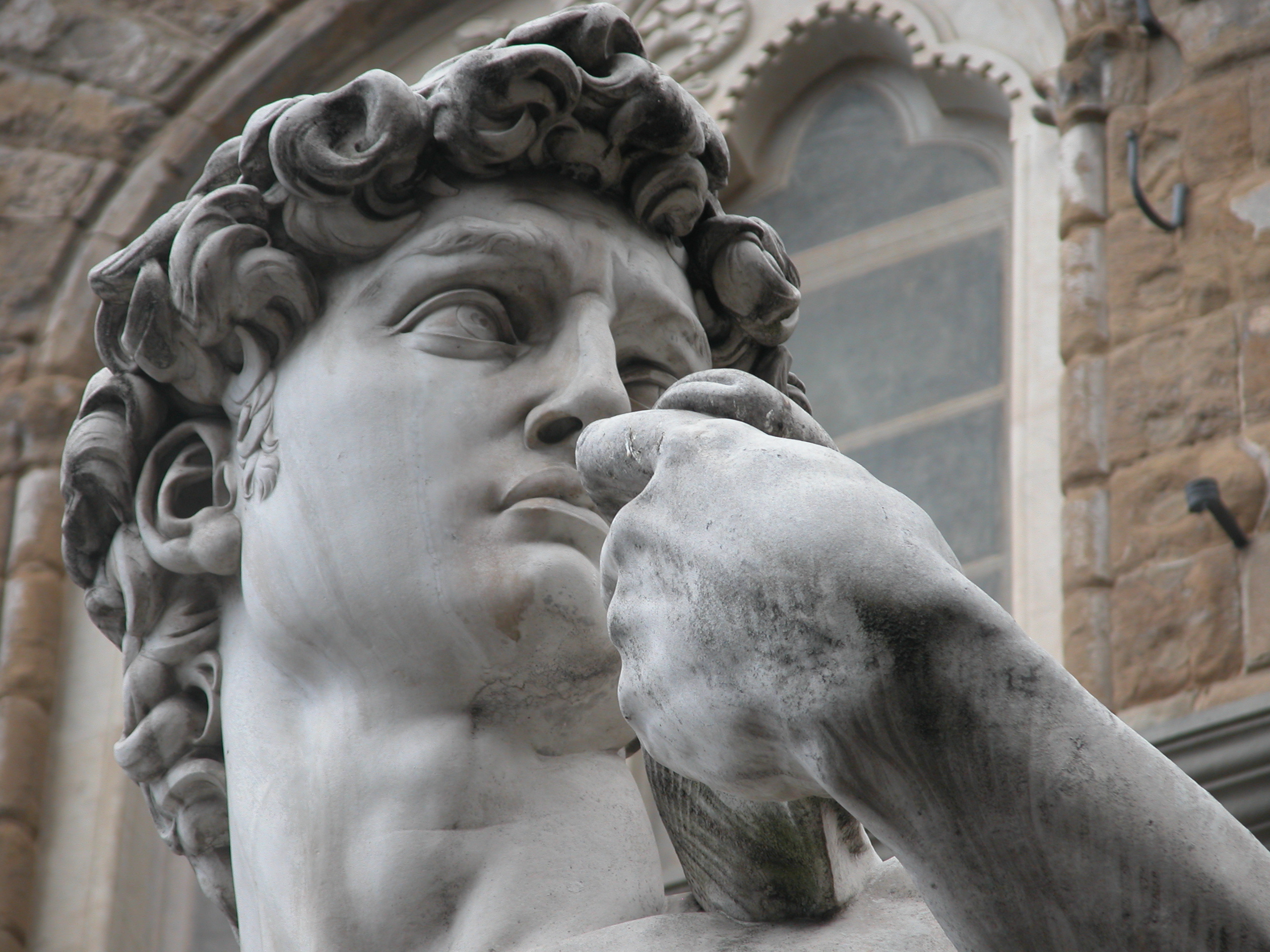
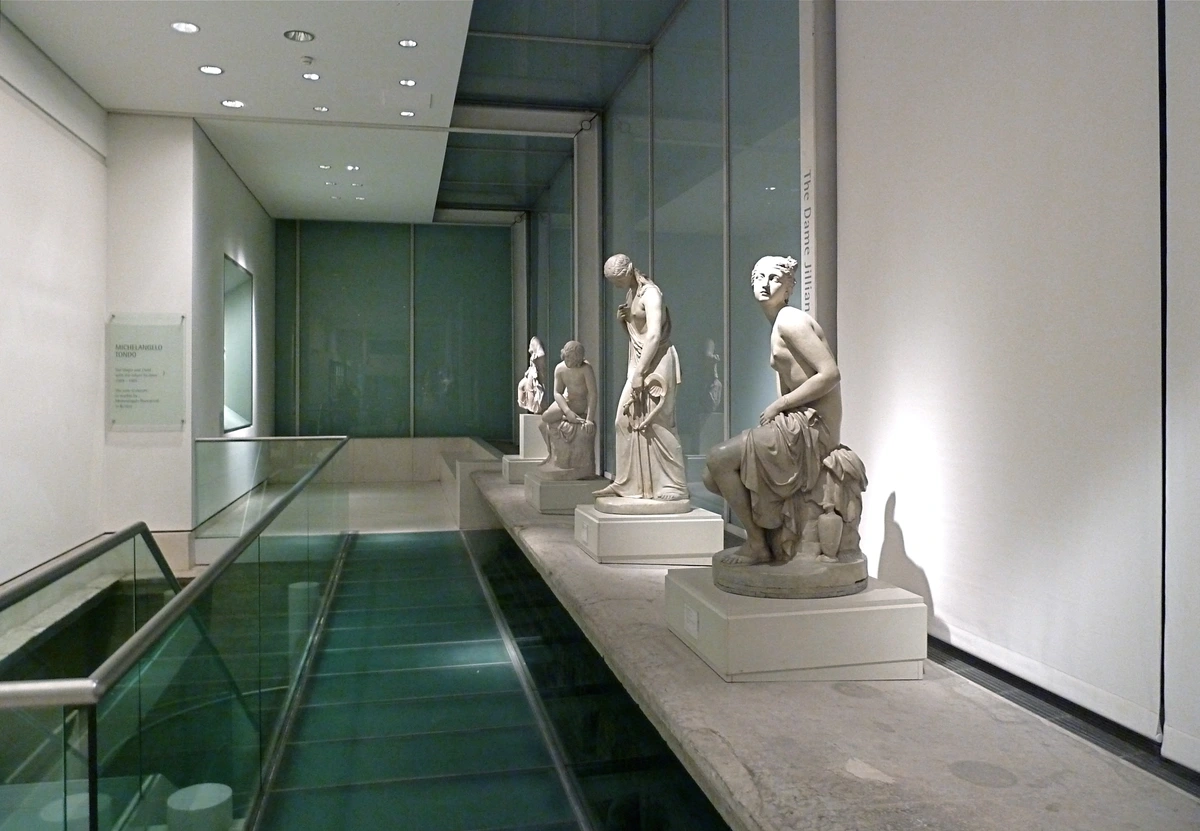
As we move into the Renaissance and Baroque periods, the mastery of stone reached new, unprecedented heights, truly demonstrating how human artistry could elevate geological materials. Artists like Michelangelo and Bernini didn't just carve marble; they seemingly coaxed life, raw emotion, and profound divine narratives directly from it, often employing techniques like undercutting to create deep shadows and a sense of three-dimensionality, enhancing the stone's inherent drama. The veins in the stone, its inherent luminosity, its strength – these were not obstacles to be overcome, but rather opportunities to be embraced and integrated into the artwork. Think of Michelangelo's iconic David, a figure seemingly emerging from the raw block, its muscularity and emotional intensity born from the very stone. Or Bernini's Ecstasy of Saint Teresa, where marble folds like actual cloth, depicting spiritual fervor with astonishing fluidity and dramatic realism. The careful choice of marble, often from specific, renowned quarries like Carrara in Italy, was itself a conscious artistic decision, reflecting its purity, texture, and unparalleled ability to hold intricate detail and reflect light. It was about elevating the natural material, transforming it, to express profound human and spiritual truths. These masters understood the stone's inherent qualities, working with its grain and variations rather than against them, a monumental lesson in collaboration with nature's own material intelligence. They truly saw the hidden potential within the geological form.
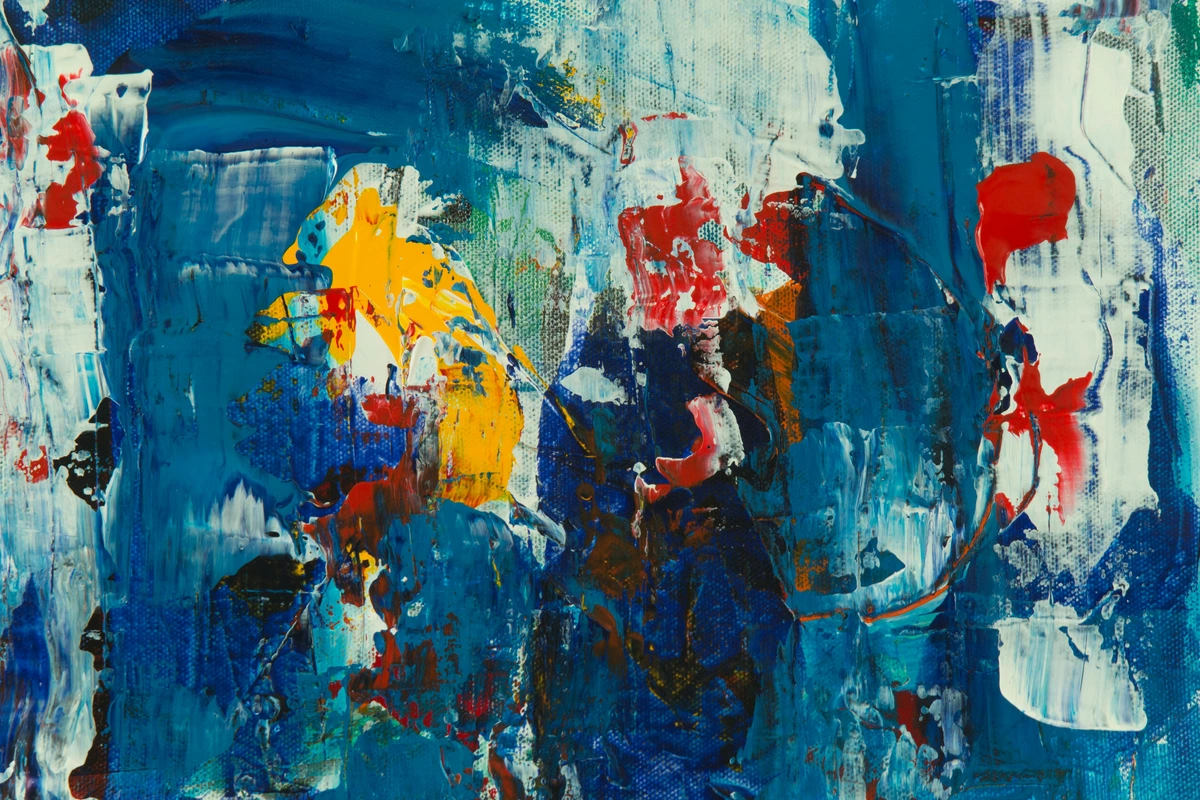
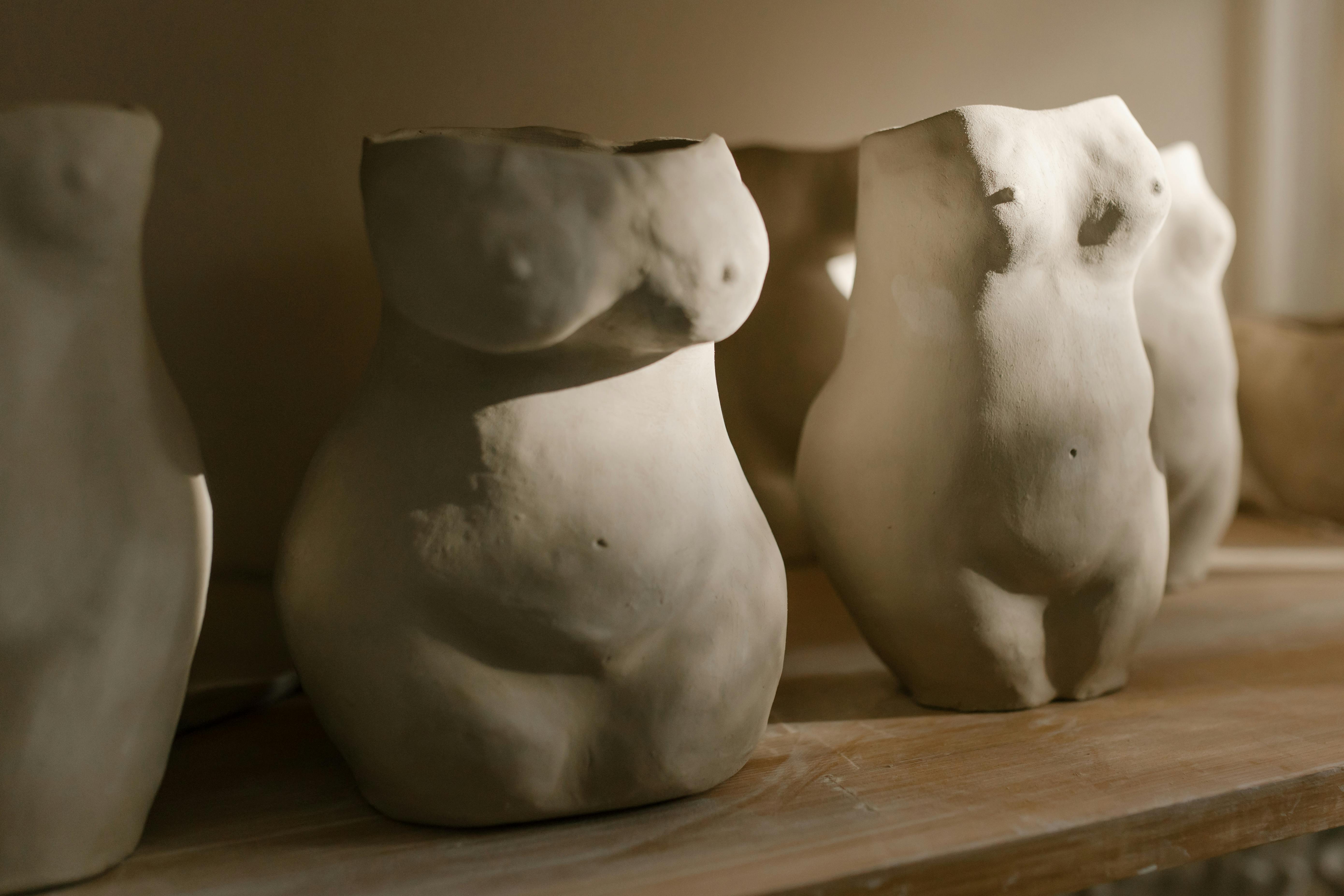
This tactile connection, whether working with clay or paint, is part of the deep engagement with geological themes, reminding us that art is often a conversation between human intent and the inherent properties of natural materials. Even painting, seemingly detached, draws its pigments and foundational surfaces from the Earth’s bounty, making every stroke a connection to geology.
The Romantics and the Sublime: Nature's Grandeur
Fast forward to the Romantic era (roughly late 18th to mid-19th century), and you see artists like J.M.W. Turner and Caspar David Friedrich capturing the sublime beauty and terrifying power of landscapes, often featuring dramatic mountain ranges, stormy seas, and rugged coastlines. They weren't just painting rocks; they were painting the overwhelming emotional response these colossal formations evoked: awe, terror, spiritual awakening, and a profound sense of human insignificance in the face of nature's vastness. It was less about geological accuracy and more about the human experience of nature's raw, untamed power. The sheer scale of the Alps or the dramatic coastlines of Britain became a stage for human emotion, a canvas for spiritual contemplation and existential reflection. In America, the Hudson River School painters took this a step further, depicting grand, often idealized, geological landscapes – towering peaks, cascading waterfalls, dramatic valleys – as symbols of a nascent national identity and a divinely ordained spiritual wilderness. They weren't just painting rocks; they were painting a vision of America's rugged soul, a testament to the continent's profound geological majesty. Think of Albert Bierstadt's sweeping vistas of the American West, where mountains loom with almost divine authority, or Thomas Cole's allegorical landscapes that embed moral narratives within geological grandeur. These artists understood that the Earth's forms were not merely scenery but powerful characters in a grand epic, capable of eliciting the deepest human emotions. They painted not just what they saw, but what they felt in the face of nature’s immense power and profound beauty. It was an art of emotional resonance, a direct dialogue between the human soul and the geological sublime.
Modernist Primitivism and Elemental Forms
The early 20th century, with its revolutionary push towards modernism, saw artists moving away from strict representation and towards fundamental, universal forms. While not always explicitly geology-focused, many sculptors, like the iconic Constantin Brâncuși, sought to capture the essence of natural objects, simplifying forms to their elemental core. His smooth, highly polished, egg-like shapes or soaring, totem-like columns echo the elegant, natural erosion of pebbles, the growth of crystals, or the ancient, worn forms of geological features, finding a universal, timeless beauty in the most basic geometric and organic forms found in nature. It was a kind of artistic geology, stripping away the superfluous to reveal the inherent structure and spirit of matter itself. Beyond Brâncuși, artists like Henry Moore found profound inspiration in eroded bones, pebbles, and rock formations, translating their organic curves, hollows, and monumental scale into powerful, biomorphic sculptures that feel both ancient and entirely modern. This search for fundamental truths and elemental structures is a common thread that also connects to what is design in art and the eternal quest for essential forms that resonate deeply with human experience. Even painters like Georgia O'Keeffe, though not explicitly geological, often found inspiration in the stripped-down, elemental forms of the desert landscape, echoing the smooth, wind-carved contours of rock and bone. This approach, simplifying the world to its core geological and organic structures, reveals a universal aesthetic that transcends time and culture. It’s about getting to the very bones of form, if you will, recognizing the shared language between a polished pebble and a powerful abstract sculpture. Beyond Brâncuși, artists like Henry Moore found profound inspiration in eroded bones, pebbles, and rock formations, translating their organic curves, hollows, and monumental scale into powerful, biomorphic sculptures that feel both ancient and entirely modern. Similarly, Isamu Noguchi's elegant stone sculptures often evoke geological forms, suggesting the patient hand of nature in their smooth, organic curves. This modernist quest for elemental truth in form is deeply intertwined with the underlying structures of the Earth itself.
Land Art and Earthworks: When Art Becomes Geology
This movement emerged in the late 1960s, a radical departure from traditional gallery spaces, with artists moving out of studios to create monumental works directly in the landscape, using natural materials like earth, rock, and water. These "earthworks" were not merely placed in the landscape but often became inseparable from it, interacting with geological processes and the passage of time. Robert Smithson's "Spiral Jetty" (1970) in the Great Salt Lake, Utah, is perhaps the most iconic example, a massive spiral made of basalt rock, earth, and salt crystals, a monumental gesture that slowly yields to the changing water levels and salt deposits, demonstrating nature's ongoing collaboration. But he wasn't alone in this profound geological dialogue. Think also of Walter De Maria's "Lightning Field" (1977) in New Mexico, an installation of 400 stainless steel poles designed to interact with natural lightning strikes, making the invisible power of the atmosphere visible, a raw engagement with elemental forces. Or Michael Heizer's "Double Negative" (1969-70), two enormous trenches cut into the Nevada desert, literally carving art into the landscape, displacing 240,000 tons of earth. Other notable artists include Ana Mendieta, who explored her identity through powerful "earth-body" sculptures that engaged directly with the land, often leaving imprints of her body in natural environments, and Richard Long, known for his meditative walks and ephemeral stone arrangements in nature, often documenting the journey as much as the final form. This movement profoundly blurred the lines between human creation and natural process, often allowing the elements to continue shaping the artwork, a continuous, profound conversation with geology, letting nature have the final word (or many, many final words), emphasizing impermanence and the vastness of deep time. It wasn't about imposing art on nature, but about collaborating with it, creating a dynamic, living artwork that evolved with the seasons, the weather, and the relentless march of geological time. Think of **Agnes Denes's
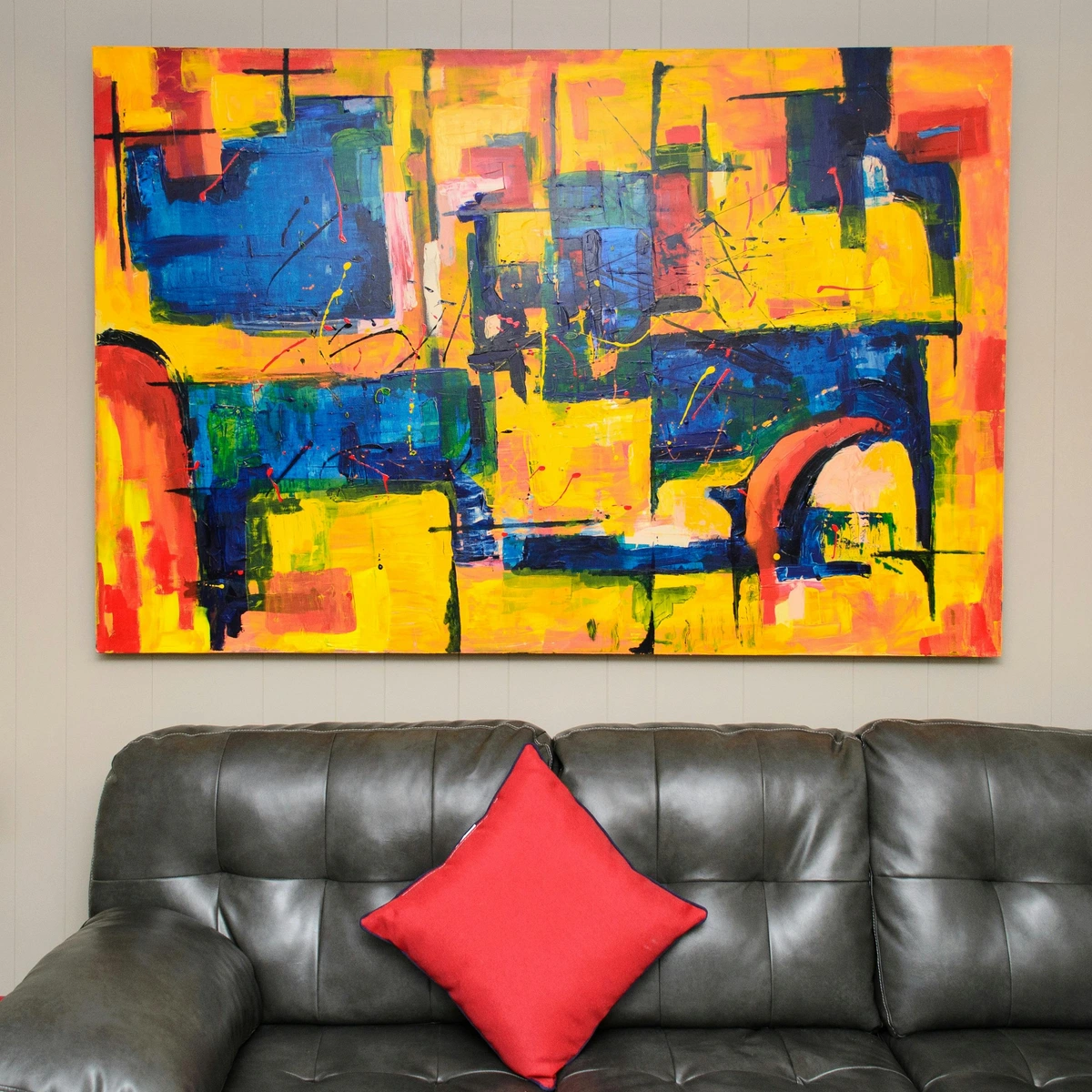
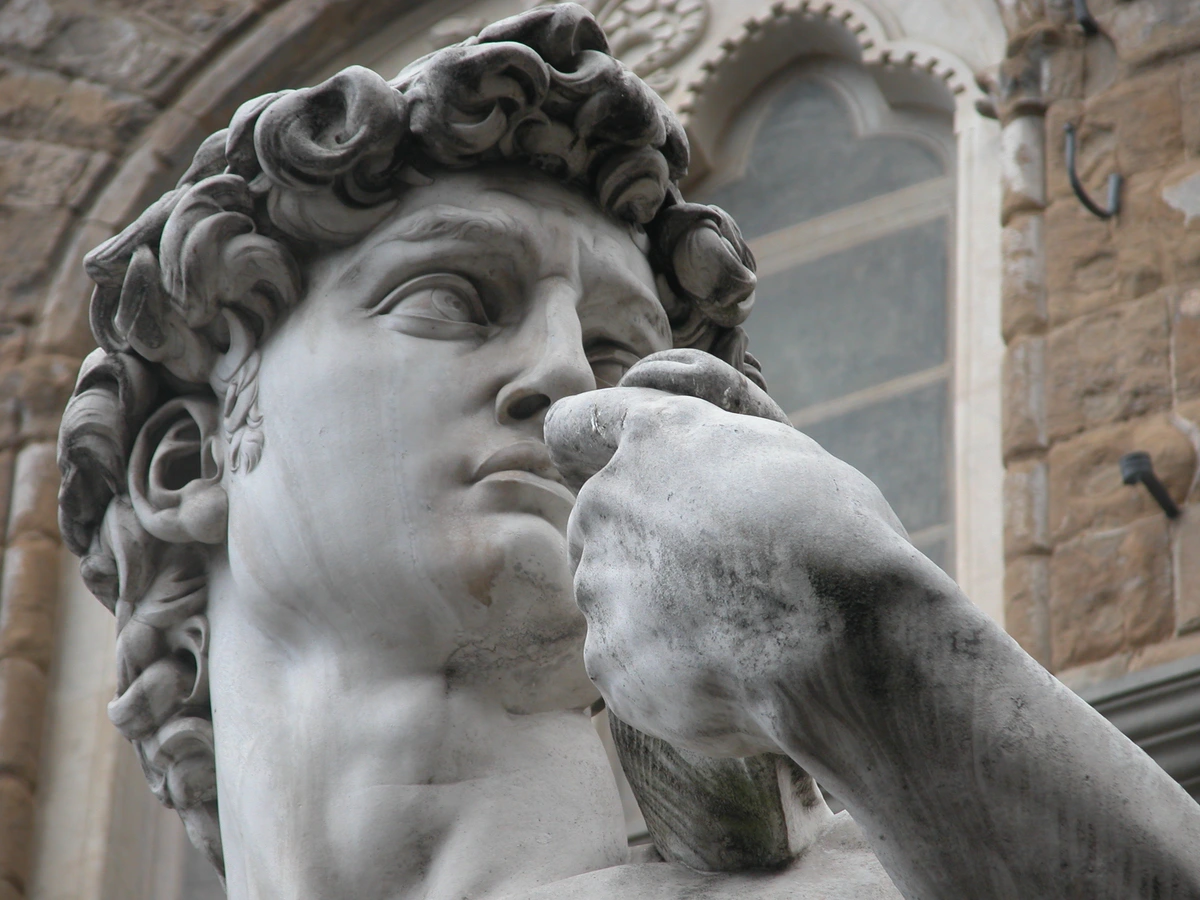
This deeply tactile connection, whether working with clay, stone, or even just painting with earth pigments, is part of the deep engagement with geological themes. It reminds us that art is often a conversation between human intent and the inherent properties of natural materials.
If you're fascinated by this idea of art directly engaging with nature, you might enjoy exploring articles about other artists inspired by nature.
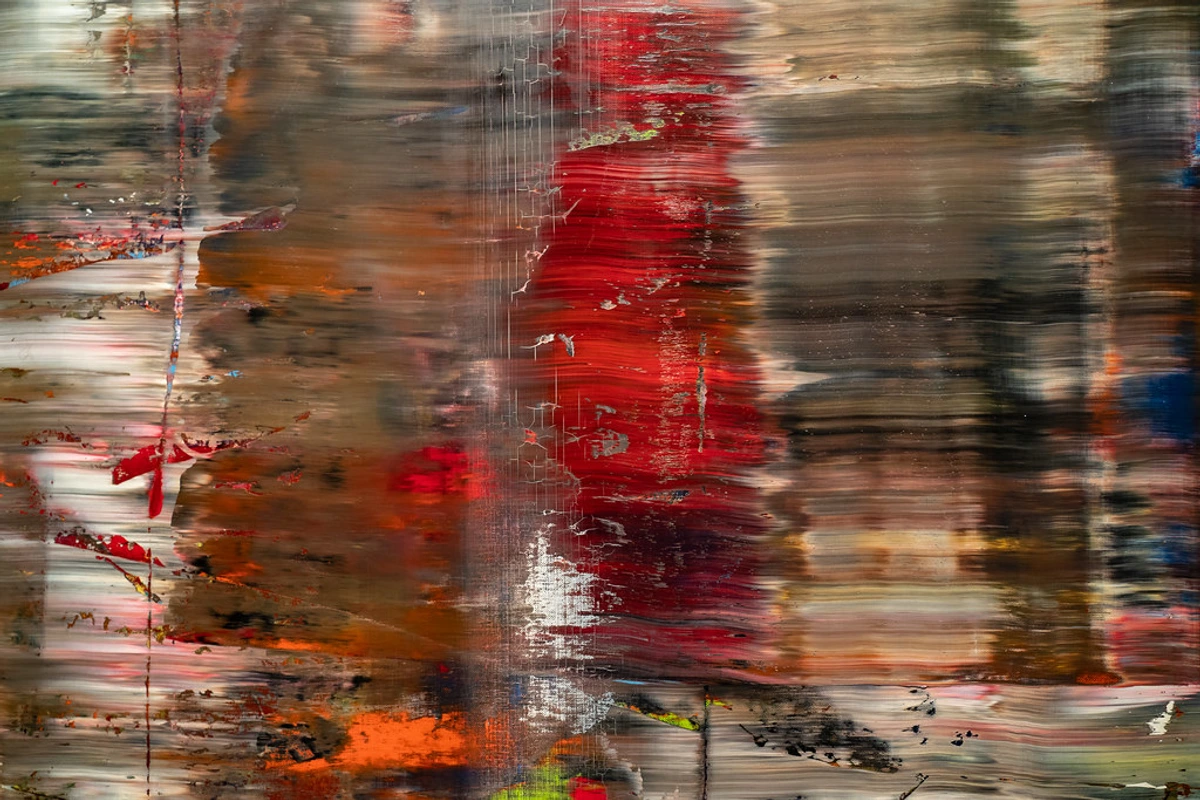
This tactile connection, whether working with clay or stone, or even just painting with earth pigments, is part of the deep engagement with geological themes. It reminds us that art is often a conversation between human intent and the inherent properties of natural materials.
Abstract Expressions: Capturing the Essence of Strata and Crystal
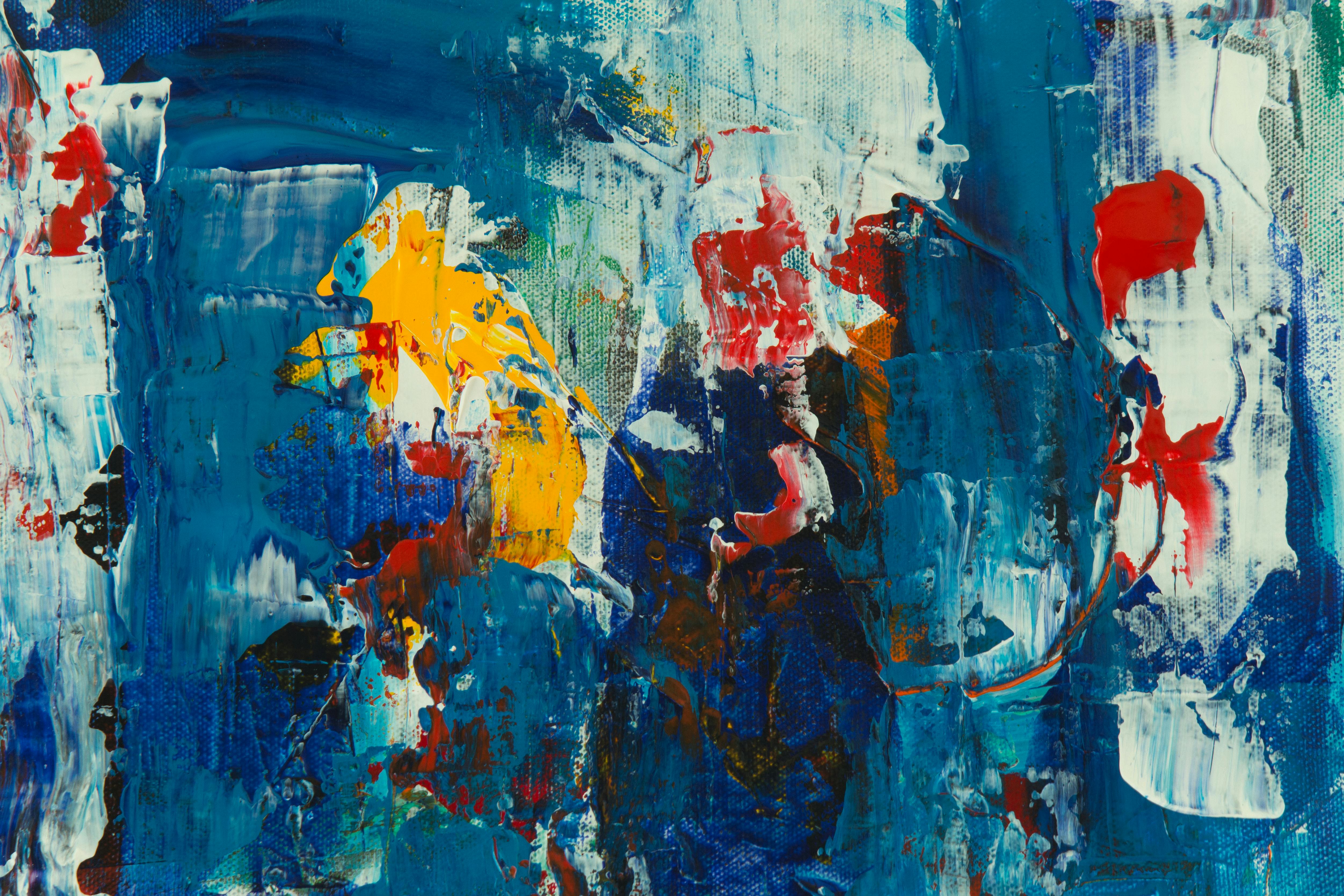
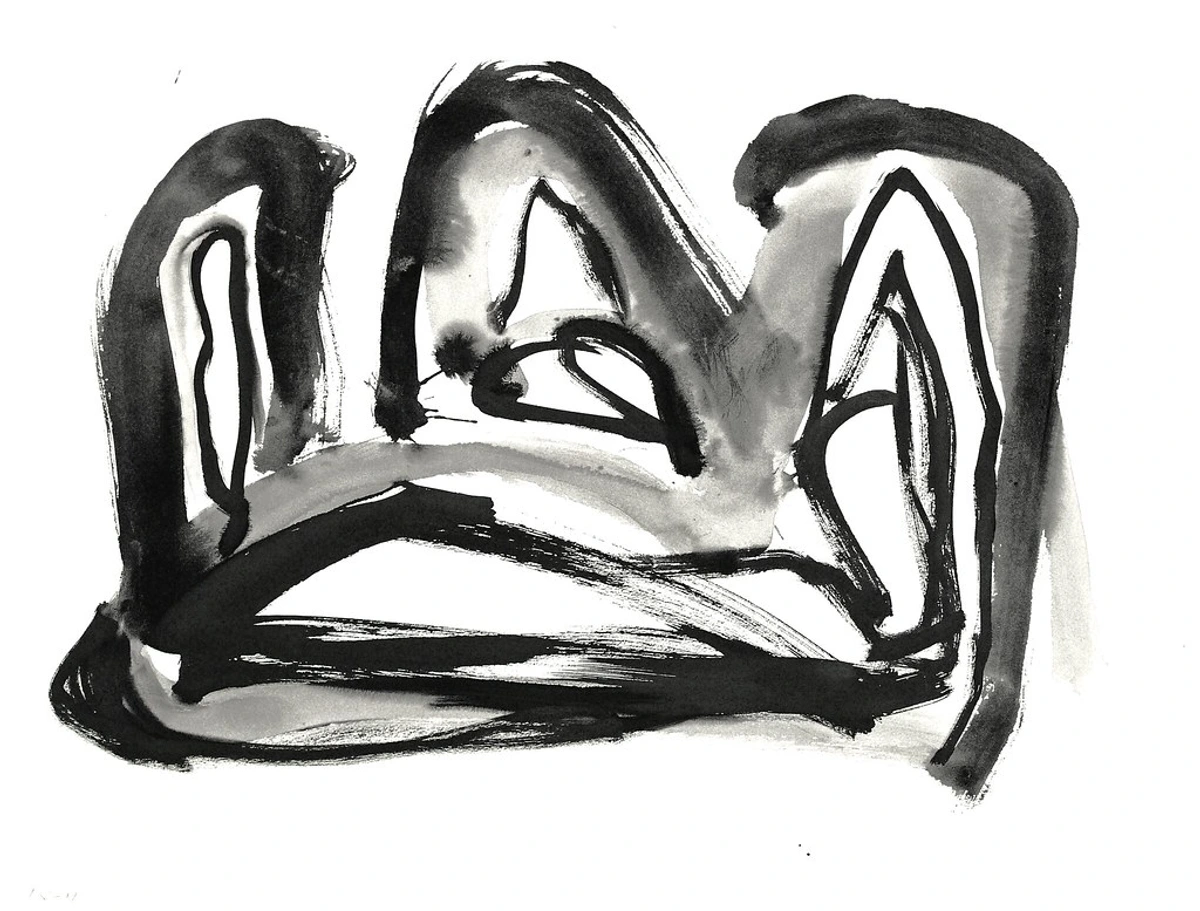
For abstract artists like myself, geology offers a different, perhaps even more profound, kind of freedom. We're not necessarily replicating a specific rock formation with photorealistic accuracy, but rather internalizing its patterns, textures, colors, and underlying forces. I'm talking about capturing the essence of strata, the angularity of crystals, the viscous flow of magma, or the subtle, nuanced shifts in color found in eroded landscapes. It's about distilling those geological phenomena into lines, shapes, and colors that resonate with the raw power and ancient wisdom of the Earth. Think of Cubism's fragmented planes and multiple perspectives – a visual equivalent to the fractured surfaces and intersecting layers of rock, or the multifaceted nature of a crystal. Or the raw, energetic brushstrokes of Abstract Expressionism, which can powerfully evoke the intense, churning forces of volcanism, the slow, unyielding power of a glacier, or the seismic shifts within the Earth. For me, it's less about literal depiction and more about translating that primal energy into an emotional and visual language, channeling the immense, quiet, and sometimes explosive energy of the Earth into art that speaks to universal experiences of creation and destruction.
It makes me think of the fundamental drive behind abstract movements, where artists seek to express deeper truths beyond mere representation. If you're curious about this, a definitive guide to the history of abstract art: key movements, artists, and evolution could be a fantastic next step.
Contemporary Explorations: Geology in New Media and Conceptual Art
In the vibrant contemporary art world, geology continues to be a remarkably fertile ground for inspiration, constantly extending into new media and conceptual practices. Artists today might use digital simulations and virtual reality to explore geological forces, creating immersive experiences that mimic tectonic shifts, the deep-time erosion of landscapes, or the intricate, kaleidoscopic growth of crystals. Others might employ performance art or large-scale installations that highlight pressing environmental concerns related to mining, erosion, climate change, or resource depletion, directly engaging with the planet's vulnerabilities and demanding audience participation. You see artists using sophisticated data visualization of seismic activity to create dynamic, moving images, or creating sculptures from recycled earth materials, pushing the boundaries of what "geological art" can be in the 21st century. It’s a dynamic and constantly evolving field, reflecting our ongoing fascination with and growing responsibility towards the Earth. This push and pull between the monumental and the miniature, the ancient and the cutting-edge, the scientific and the aesthetic, makes contemporary geological art a truly exciting frontier. I'm always looking for innovative ways to integrate these themes into my own practice, even considering how AI as co-creator: exploring collaborative art projects with artificial intelligence might allow for entirely new explorations of geological data, forms, and deep-time narratives, creating art that resonates with both ancient wisdom and future technologies. It's truly exciting to imagine art that can adapt, evolve, and even 'grow' in response to real-time geological data, creating a living, breathing dialogue between human creativity and planetary processes. Artists like Jenny Kendler create works that respond to ecological data, while others explore the aesthetics of deep ocean vents or the subsurface architecture revealed by geological imaging, translating complex scientific datasets into visually compelling art. This blending of art, science, and technology represents the cutting edge of geological inspiration.
My Own Rock-Solid Inspirations
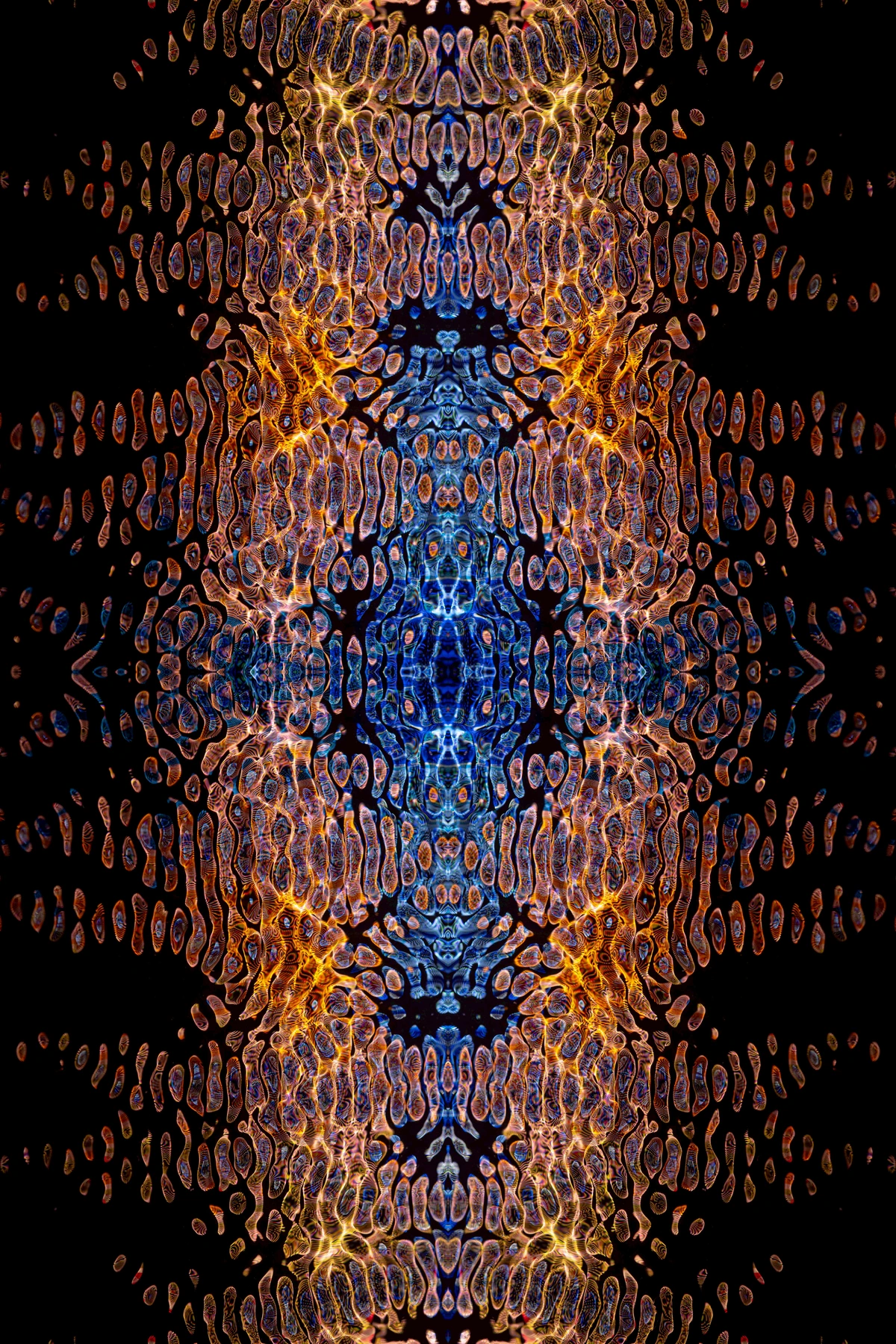
As someone who primarily works in abstract art, the influence of geology is often subtle but deeply pervasive, a constant hum beneath my creative process. It's not about painting a photorealistic mountain, but about letting the principles of geology inform my mark-making, my color choices, and my compositions. For instance, I’m constantly thinking about how layers interact and build, how tension builds and releases in a form, and how light (or the absence of it) carves out shapes – much like the constant dance between erosion and deposition carves the Earth. It’s a personal dialogue, really, between my brush and the planet's ancient wisdom, a kind of intuitive mapping of unseen forces onto canvas. I remember working on a piece once, a large canvas dominated by deep blues and fragmented ochre shapes, and realizing halfway through that I was unconsciously channeling the geological cross-section of a glacial valley I’d seen years ago – the way the ice had carved, then deposited, leaving behind these incredible, striated patterns, a palpable sense of deep time layered within the canvas. It wasn't intentional at first, but the Earth's blueprint was clearly guiding my hand, speaking through me.
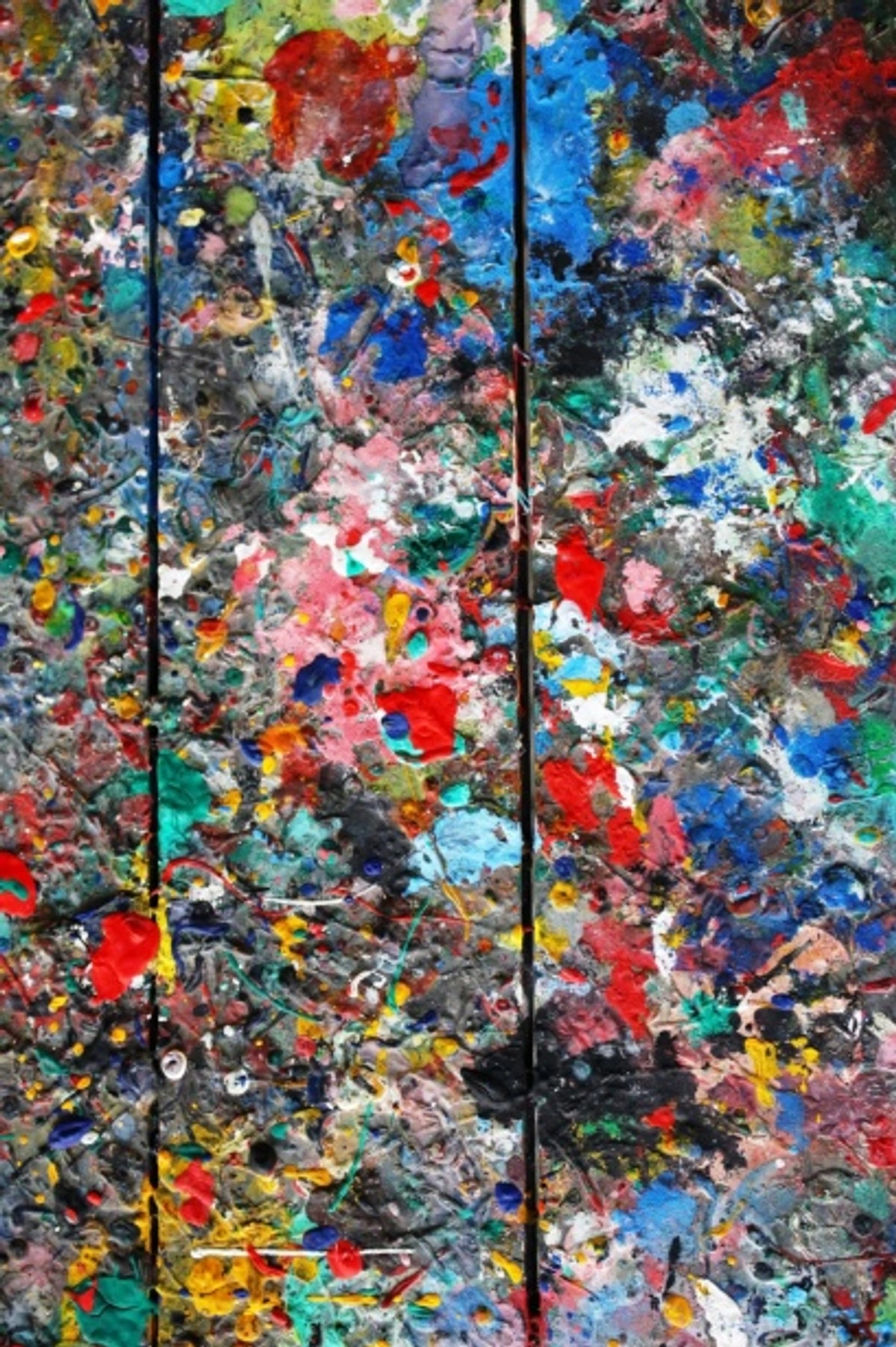
When I'm layering paints, I'm often thinking about geological strata, building up depth and history on the canvas, literally creating visual archaeological records. It's much like building the unseen layers: my process of building depth and narrative in abstract mixed-media. And the colors I choose? Often they're direct reflections of the Earth's hidden gems and minerals – the deep, almost spiritual blues of lapis lazuli, the fiery oranges and blacks of volcanic rock, the cool, anchoring greys of granite, or the subtle, shifting hues of an eroded cliff face. It's about translating that raw, elemental beauty into an emotional landscape, a core philosophy you can read more about in why i paint abstract: my personal philosophy and artistic vision. I sometimes even find myself experimenting with different best acrylic mediums for abstract artists to mimic the textures and viscous flows of lava, the granular quality of sandstone, or the shimmering, fractured surfaces of metamorphic rock, allowing the very materials I use to echo geological processes and histories.
Bringing Geological Art into Your Life
So, how can you, as an art enthusiast, a budding creative, or a seasoned collector, engage more deeply with this fascinating intersection of art and geology? It's simpler than you might think, and the rewards are profound, opening up new avenues of appreciation and creative spark that connect you to something ancient and ever-present. You don't need a geology degree or an art studio to begin; the Earth's influence is all around us, waiting to be noticed.
Geology in Everyday Design and Craft: Beyond the Canvas
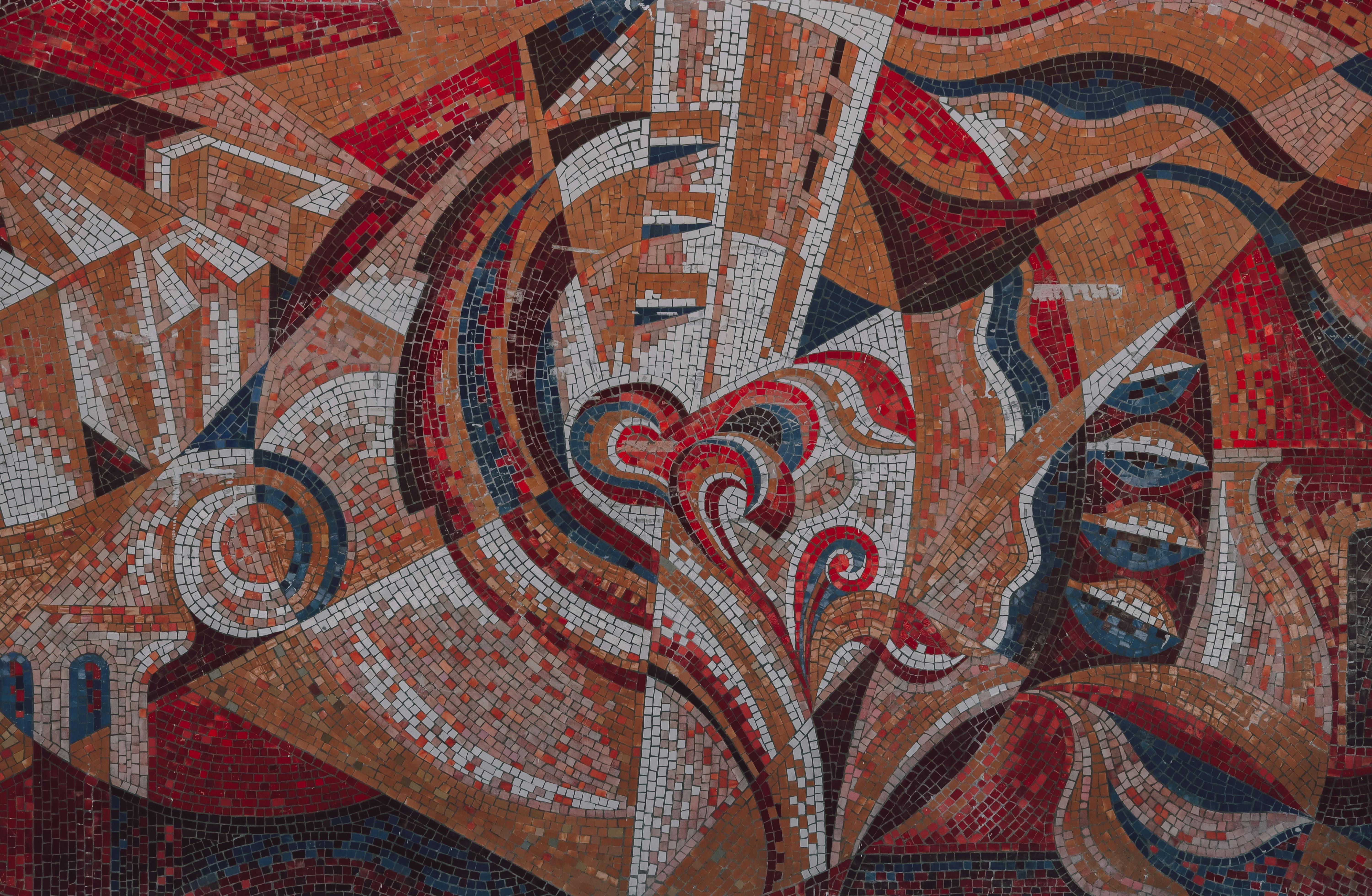
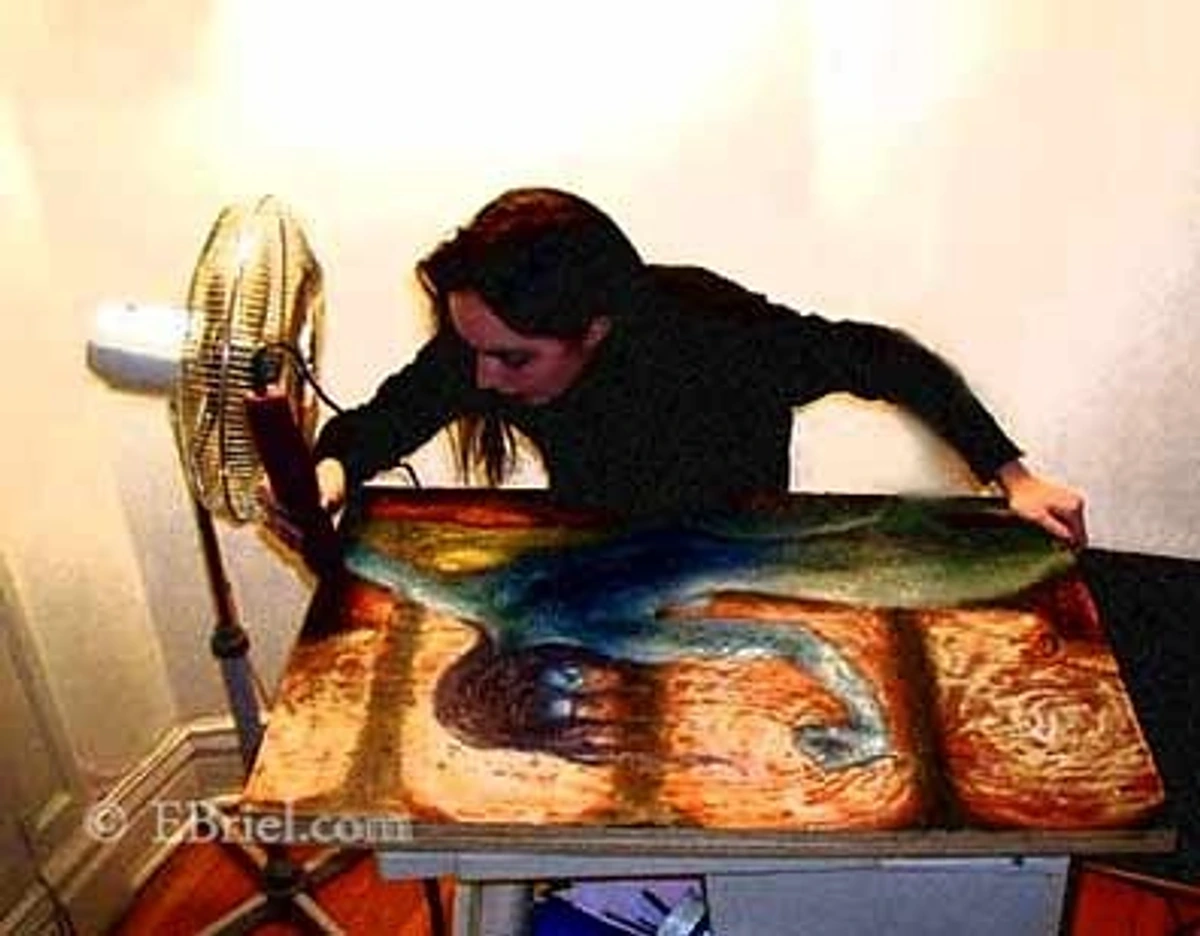
The influence of geological forms isn't confined to fine art; it permeates our daily lives in subtle yet profound ways, often without us even realizing it. From the polished granite or quartz countertops in our kitchens to the intricate patterns in mosaic tiles, from the raw concrete of brutalist architecture to the earthy tones of natural dye textiles, geology is a silent, ubiquitous designer. Artists, industrial designers, and craftspeople continuously draw from the Earth's inherent aesthetics, whether it's mimicking crystalline structures in contemporary jewelry, replicating sedimentary layers in ceramic glazes, incorporating natural stone into bespoke furniture design, or even engineering sustainable building materials inspired by natural processes. It’s a testament to the timeless appeal of these organic forms and textures, bringing a sense of grounding, natural beauty, and elemental truth into our manufactured environments. Think of the serene art of Japanese dry gardens, where meticulously raked gravel mimics ocean waves or mountain ranges, or the modern resurgence of biophilic design, which consciously integrates natural patterns, materials, and light to foster well-being and a connection to nature in our indoor spaces. Even the humble brick, a product of baked earth, connects us to ancient geological processes and enduring craftsmanship, a testament to humanity's long-standing relationship with Earth's materials. Consider the exquisite geological diversity in tiling, from shimmering mother-of-pearl mosaics to rough-hewn slate floors, each telling a story of its origin and transformation. Beyond these, the very aggregates in concrete (sand, gravel, crushed rock) are geological products, forming the silent, foundational backbone of our modern cities. Think of the sweeping, organic lines of certain architectural marvels that echo wind-sculpted rock formations, or interior designs that incorporate raw, uncut stone to bring a sense of natural grandeur indoors. This ubiquitous presence of geological aesthetics, often unseen, profoundly shapes our built environment and our daily experience.
Appreciating Geological Art
Start by truly looking – not just at the surface, but into the artwork, seeking its origins. When you encounter a piece of art, whether it’s a painting, a sculpture, a ceramic piece, or even an architectural detail, consider if there’s a geological whisper within it. Does it evoke the raw texture of rock, the fluid flow of lava, the intricate stillness of a crystal, or the layered history of ancient sediments? Does the artist's palette remind you of earth tones, mineral hues, or the vibrant colors revealed in a geological cross-section? This kind of intentional, mindful observation can unlock entirely new layers of appreciation. Even beyond traditional fine art, start noticing how geology subtly informs interior design – the rough-hewn timber and natural stone in a rustic home, the sleek marble and shimmering quartz in a modern space, or the fractal patterns found in textiles and wallpaper. The Earth's design principles are everywhere if you know how to look. I often think about how this kind of mindful appreciation can lead to mindful moments: how abstract art can be a gateway to inner peace and reflection, grounding us in the natural world even when we're indoors, creating a sense of connection to something much larger than ourselves. Ask yourself: Does this piece of architecture echo the layered rock formations of a canyon? Do these textiles remind me of eroded river stones? This active inquiry deepens the connection. It's about approaching art with a geological lens, and geology with an artistic eye, allowing these two vast fields to continually enrich each other. You might be surprised at the hidden narratives you uncover.
Hands-On Geological Art: Embracing the Earth as Your Medium
If you're eager to move beyond appreciation and actively engage with geological themes in your own creative practice, there are countless ways to get your hands dirty – literally! This isn't just for seasoned artists; even beginners can find immense joy and inspiration in working directly with Earth's materials or mimicking its processes. It's about fostering a direct, tactile dialogue with the planet that transcends mere observation.
Finding Your Own Inspiration in Nature
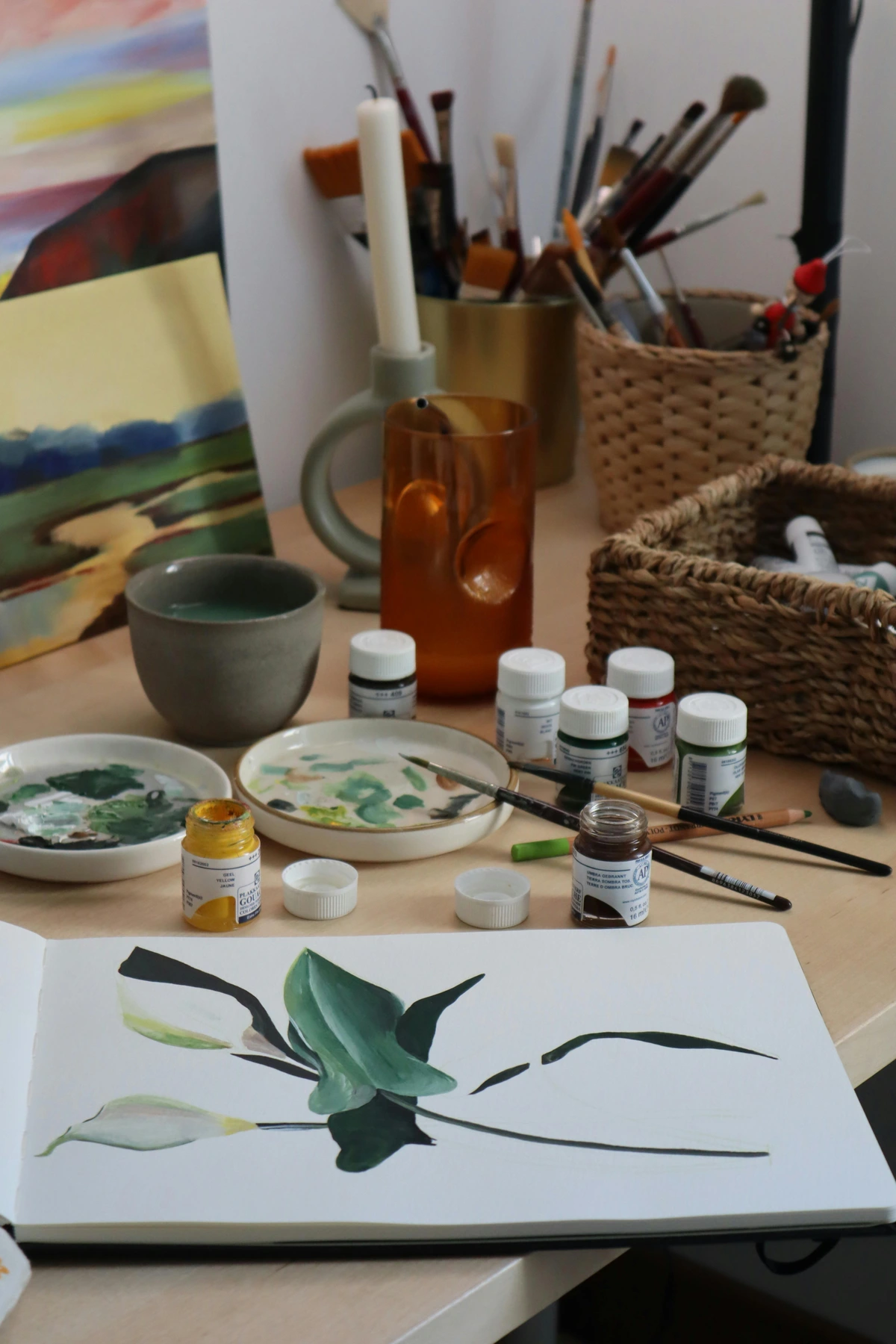
Go outside! Seriously, it's the simplest and most profound step. Take a walk in a forest, hike a mountain trail, visit a rocky beach, or even just observe the subtle nuances of the stones in a local park. Pay close attention to the cracks in the pavement, the patterns in exposed soil, the way water carves channels – the world around us is literally filled with incredible geological artistry. Carry a small sketchbook and just draw what you see – don't strive for perfection, but focus on capturing the lines, the textures, the play of light and shadow, the overall feeling of the forms. You'd be amazed at what simple, focused observation can spark. Or, why not collect some interesting pebbles or small rocks from your travels (always responsibly and legally, of course, and and with respect for the environment)? Arrange them, photograph them, even try to paint or sketch their unique characteristics, noting the subtle color variations and the way light plays on their surfaces. The act of mindful engagement with these natural objects can be a powerful creative catalyst, a direct dialogue with the Earth's artistry, and a fantastic way to find art inspirations in unexpected places, right at your fingertips. For a slightly more adventurous artistic endeavor, try a 'geological walk' where you collect natural pigments – perhaps grinding soft ochre clays or charcoal from burned wood to create your own earth-based drawing tools. It’s a primal connection to art-making, echoing the earliest cave painters. You could also experiment with mud painting, using different soil types to create a natural, earthy palette, or even try rock stacking (cairns) as a meditative, ephemeral sculptural practice (always with respect for natural environments!). These direct, tactile engagements with Earth's materials offer a profound sense of connection and inspiration.
Collecting Geological Specimens for Inspiration
If you're truly drawn to the tactile beauty and profound history embedded within geological forms, consider starting a small collection of interesting rocks, minerals, or fossils (always collect responsibly and legally, of course, respecting protected areas and regulations!). These aren't just scientific curiosities; they can be powerful physical muses in your studio or home. A beautifully striated piece of agate, a sparkling quartz crystal, a piece of raw obsidian, or a fossilized shell can serve as a constant, tangible reminder of the Earth's artistic processes, inspiring new color palettes, dynamic textures, or complex compositional ideas. They are tangible links to deep time, ready to spark your imagination and ground your creative spirit. I often keep a few specimens on my studio desk, turning them over in my hands, feeling their weight and texture, letting their silent, ancient stories subtly guide my artistic choices – a piece of raw quartz inspiring crystalline structures in a painting, or a fossilized shell prompting a new organic form in a sculpture. It's a very grounded, tactile way to begin the abstract journey of how to abstract art, providing a physical connection to the elemental forces I seek to express. Always remember to collect responsibly and legally, respecting protected areas and minimizing your impact on the natural environment. The goal is appreciation and inspiration, not depletion. I once spent an entire afternoon just examining the cross-section of a discarded piece of gneiss, noting the intricate banding and mineral segregation, and that observation directly informed a series of highly layered mixed-media pieces, each stratum building upon the last, much like the Earth's own geological record.
Collecting Art That Resonates with the Earth
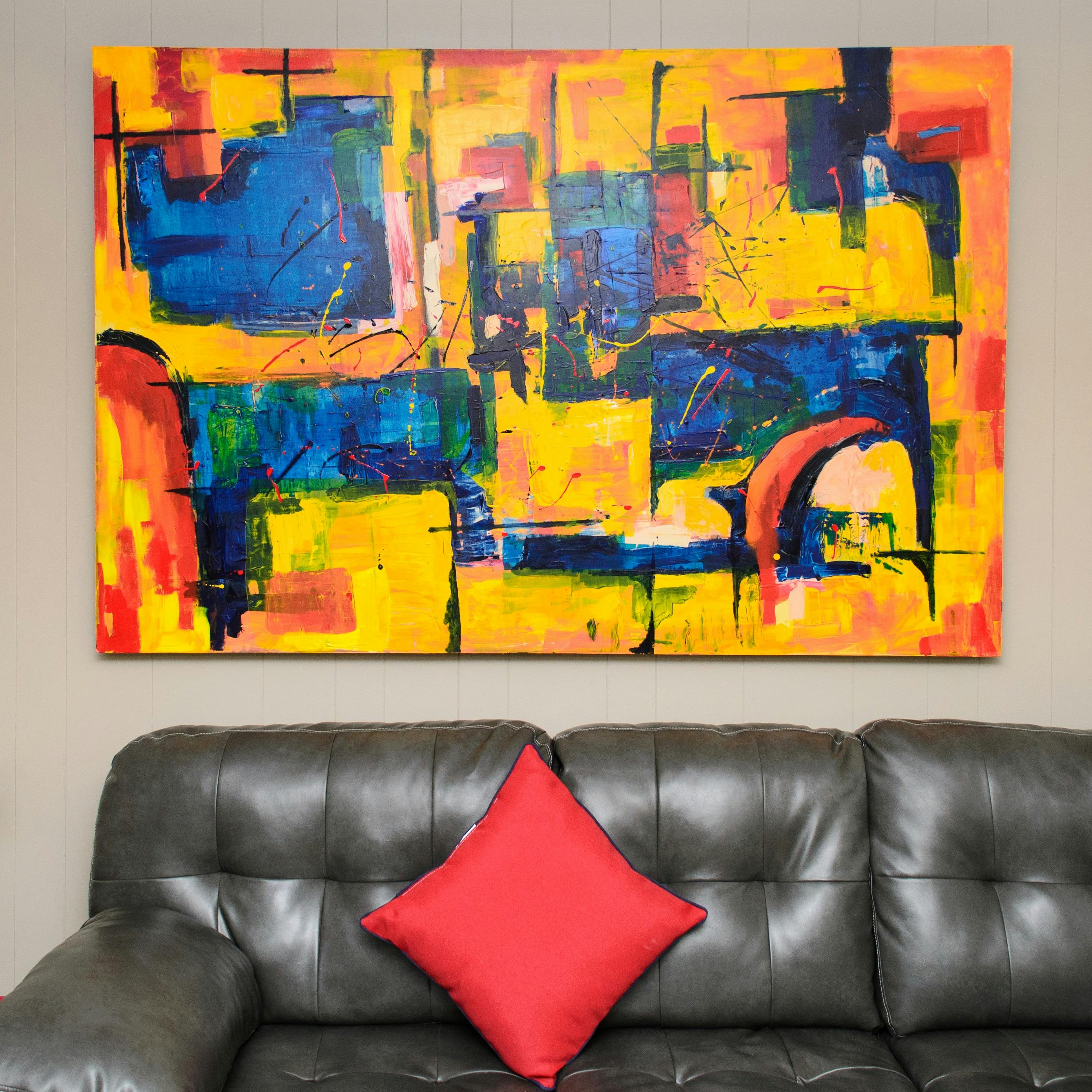
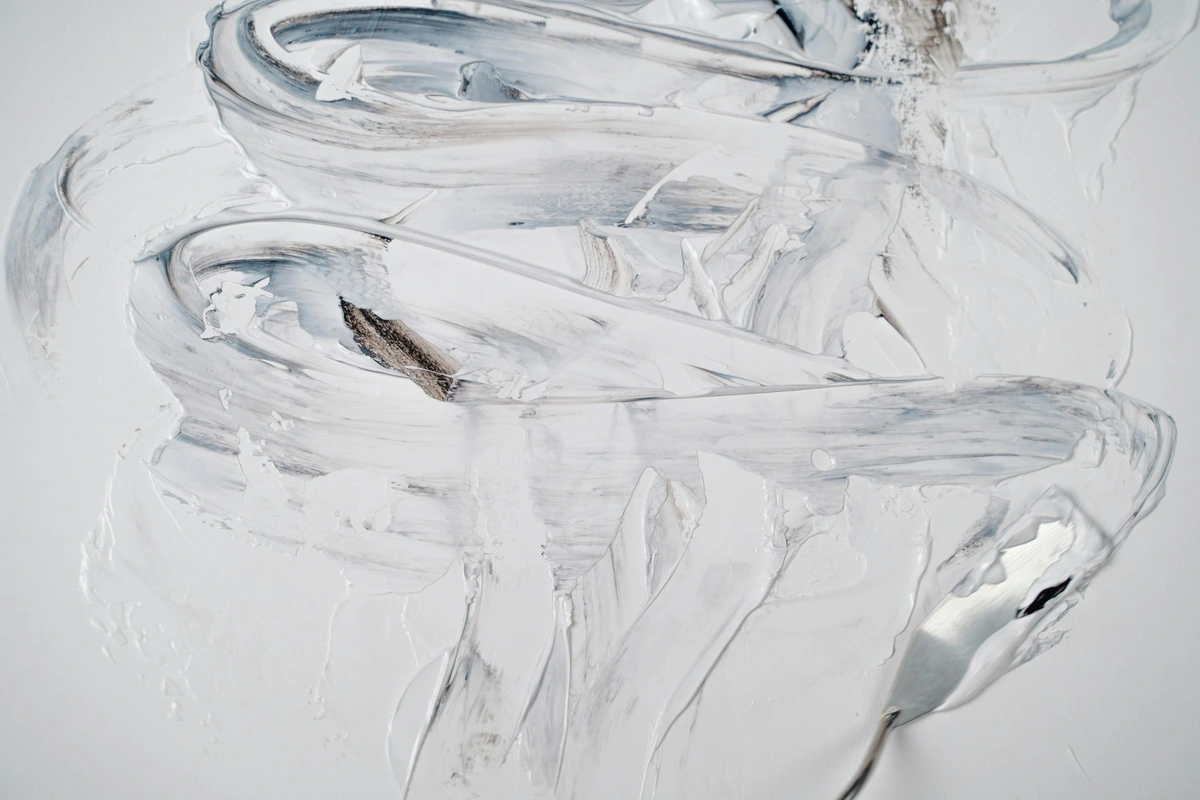
If you feel a profound connection to this kind of elemental beauty and deep time, consider collecting art that speaks to the power and inspiration of geology. Abstract art, in particular, often embodies these principles without literal depiction, inviting a more intuitive, visceral response. Look for pieces with strong, evocative textures, layered compositions that hint at geological strata, or color palettes directly inspired by natural minerals, rocks, and earth tones. It's a way to bring a piece of that ancient, powerful Earth energy and wisdom into your own space, creating a constant dialogue with natural forces. You can always explore what’s currently available and buy works that resonate with you. Many artists who focus on geological themes also excel in the art of mark-making: expressive lines and gestures in abstract painting, creating pieces with dynamic, raw, and deeply textured surfaces. If you're looking to dive deeper into the world of contemporary art acquisition, I highly recommend checking out collecting emerging abstract art: a guide to discovering tomorrow's masters. Look for artists who incorporate natural pigments, or who use found geological materials (responsibly sourced, of course) in their mixed media work. Sometimes, the most powerful pieces are those that subtly echo geological forms, perhaps through a stark, monolithic presence like a mountain, or through the intricate, crystalline patterns of a natural mineral. Consider also artists who work with materials that change over time, allowing the art itself to undergo a kind of geological process, reflecting themes of impermanence and transformation. This conscious engagement with geological time and material ensures your collection is not just beautiful, but deeply resonant with the planet's story.
Geological Inspiration | Artistic Interpretation | Example Art Movements/Techniques |
|---|---|---|
| Mountain Ranges | Grandeur, Scale, Jagged Forms, Verticality, Immovable Presence | Romanticism, Landscape Painting, Abstract Expressionism, Monumental Sculpture, Site-Specific Installation |
| Stratified Rocks | Layers, Patterns, History, Sequential Narrative, Hidden Depths | Abstract Art, Earthworks, Geometrical Abstraction, Layered Mixed Media, Digital Art (stacking) |
| Crystals & Minerals | Structure, Color, Light Refraction, Geometric Order, Hidden Beauty | Abstract Art, Sculpture, Contemporary Jewelry Design, Digital Art (fractals), Photography (macro) |
| Erosion Patterns | Flow, Wear, Organic Forms, Impermanence, Sculptural Negative Space | Land Art, Environmental Art, Abstract Painting, Textural Ceramics, Performance Art (weathering) |
| Volcanic Rock | Texture, Darkness, Raw Power, Primordial Energy, Explosive Creation | Textural Abstract Art, Sculptural Ceramics, Expressive Painting, Installation Art (smoke, light) |
| Fossils & Stratigraphy | Ancient Life, Layered History, Imprints, Time Capsules, Memory | Paleolithic Art, Scientific Illustration, Abstract Narratives, Mixed Media, Bio-Art, Conceptual Art (archaeological digs) |
| Glacial Forms | Carved Landscapes, Smoothness, Power, Ice Age History, Cold Beauty | Romantic Landscape Painting, Abstract Sculpture, Environmental Art, Ice Sculpture, Photography (arctic) |
| Volcanic Craters | Circular Forms, Centrality, Explosive Energy, Void, Primordial Birthplace | Abstract Painting, Conceptual Art, Land Art (site-specific installations), Performance Art (controlled explosions) |
| Geothermal Features | Steam, Color, Transformation, Hidden Heat, Earth's Breath | Installation Art, Light Art, Performance Art (interacting with natural steam/hot springs), Photography (thermal vents) |
| Sedimentary Layers | Horizontal Lines, Repetition, Time, Accumulation, Earth's Record Book | Minimalist Painting, Textile Art, Graphic Design (patterns), Conceptual Art (historical layering) |
| Rock Fractures | Irregular Lines, Tension, Breakage, Vulnerability, Resilience | Abstract Drawing, Kinetic Sculpture (implying movement), Collage, Installation Art (cracked surfaces) |
| Desert Varnish | Surface Patina, Color Changes, Age, Elemental Coating, Time's Mark | Mixed Media Painting, Photography (emphasizing surface detail), Conservation Art, Pigment Art (natural sources) |
| River Carving | Flow, Movement, Curvilinear Forms, Persistence, Water's Power | Abstract Painting (fluid lines), Landscape Architecture, Sculpture (water features), Digital Simulation |
| Cave Formations | Stalactites, Stalagmites, Darkness, Subterranean Wonders, Organic Growth | Abstract Sculpture (hanging forms), Installation Art (light and shadow), Photography (spelunking), Jewelry Design (organic shapes) |
| Magnetic Anomalies | Invisible Forces, Directional Pull, Hidden Energy, Earth's Core | Abstract Painting (lines of force), Conceptual Art (invisible maps), Digital Art (data visualization) |
| Tectonic Stress | Pressure, Tension, Latent Energy, Slow Grind, Force of Change | Abstract Sculpture (compressed forms), Expressive Painting (dynamic lines), Performance Art (endurance pieces) |
Geological Art and Sustainability: A Conscious Practice
As we increasingly recognize the impact of human activity on our planet, the intersection of art and geology naturally extends into the realm of sustainability. Many contemporary artists working with geological themes are not only inspired by the Earth but are also deeply concerned with its well-being. This can manifest in several ways: using sustainably sourced or recycled natural materials, creating art that highlights environmental degradation, or even designing interventions that promote ecological restoration. It's a powerful shift, where art moves beyond mere representation to become an active participant in environmental dialogue and solutions. Artists might employ ephemeral materials that naturally break down, minimizing their footprint, or engage in land art that literally reclaims and revitalizes damaged landscapes. For instance, some artists use bio-remediation techniques, employing plants or microbes in their art to clean contaminated soil, turning a site of environmental damage into a living sculpture of healing. This conscious approach ensures that our artistic expressions not only draw from the Earth's beauty but also contribute to its preservation, fostering a more harmonious relationship between human creativity and the planetary ecosystem. It's about recognizing that our artistic footprint, just like our geological one, has an impact, and choosing to make that impact a positive, restorative one.
FAQ: Unearthing More About Art and Geology
Here are some frequently asked questions that I often encounter, or ponder myself, regarding this deep and fascinating connection between geological forms and artistic expression.
Q: How does the Earth's internal structure relate to art?
A: While not always visually apparent, the Earth's internal structure—its core, mantle, and crust—profoundly influences artistic themes. The molten outer core generates the geomagnetic field, inspiring art about unseen forces and protective shields. The immense pressures and heat in the mantle and inner core are metaphorical for internal creative pressures, transformation, and the hidden energies that drive both planetary processes and artistic breakthroughs. Artists might explore the layering of the Earth as a metaphor for hidden depths in their compositions, or draw parallels between the slow, convection currents of the mantle and the fluid, evolving nature of artistic movements over time. It’s about recognizing the invisible architecture that underpins all that we see and experience, translating that fundamental order into an artistic language.
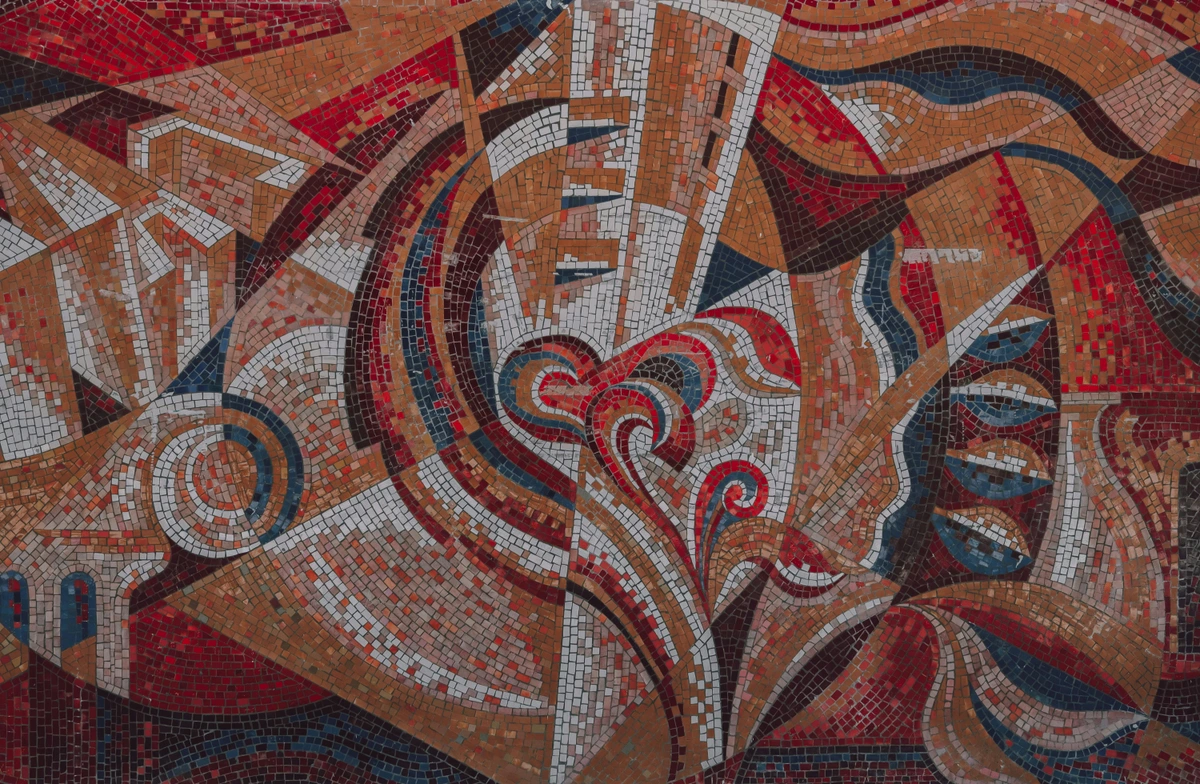
Q: What is biomimicry in geological art?
A: Biomimicry in geological art involves drawing inspiration from nature's designs and processes, specifically those found in geology, to create art or design solutions. This can range from mimicking the self-healing properties of certain minerals in new material designs, to emulating the structural efficiency of honeycombed rock formations in architecture. For artists, it means observing how nature solves problems—how a river carves a landscape efficiently, or how crystals grow with perfect geometry—and then applying those 'solutions' to their own creative challenges. It's a fascinating cross-disciplinary approach that emphasizes learning from the Earth's billions of years of trial and error, leading to innovative and often sustainable artistic practices.
Q: Are there examples of geological art used for healing or therapy?
A: Absolutely. The grounding and transformative power of geological art can be profoundly therapeutic. Working with natural materials like clay (ceramics) or stone (carving) offers a tactile, meditative experience that connects individuals to the Earth and their own inner processes, fostering mindfulness and self-expression. Viewing geological art, especially pieces that evoke vastness, permanence, or the cyclical nature of change, can also promote feelings of awe, humility, and connection, reducing stress and fostering introspection. Land art projects that involve community participation, such as constructing stone labyrinths or planting native species in geomantically significant patterns, can serve as powerful healing spaces, connecting individuals to each other and to the regenerative power of the land. It’s about leveraging the Earth's inherent stability and beauty for psychological and emotional well-being.
Q: How do artists address environmental impact when using geological materials?
A: Artists concerned with the environmental impact of their geological art employ various strategies. This includes using sustainably sourced materials, such as recycled stone or reclaimed earth, to minimize new extraction. Many prioritize ephemeral art—works designed to naturally degrade or be reabsorbed by the landscape, leaving minimal or no lasting trace. Others engage in site-specific interventions that aim to heal or restore damaged environments, turning their art into a form of ecological activism. Crucially, ethical considerations like avoiding protected areas, respecting indigenous lands, and ensuring proper permits are always paramount. It's a conscious practice that aligns artistic creation with environmental stewardship, recognizing the artist's role in advocating for planetary health. This commitment is often as much a part of the artwork's message as its aesthetic form.
Q: What role do natural disasters play as artistic inspiration?
A: Natural disasters, while devastating, represent some of Earth's most powerful geological forces in action, and they have long served as potent, albeit challenging, artistic inspiration. Events like volcanic eruptions, earthquakes, tsunamis, and landslides reveal the raw, destructive, and transformative power of the planet. Artists interpret these events to explore themes of chaos, fragility, resilience, loss, and renewal. They might use fractured compositions to evoke seismic shifts, fiery palettes to capture volcanic fury, or unsettling, dynamic forms to represent the unpredictable forces of nature. Such art often serves as a powerful commentary on human vulnerability, climate change, and our precarious relationship with the planet, prompting contemplation and sometimes calls for action. It's a way of processing the immense and often terrifying aspects of geological power through creative expression.
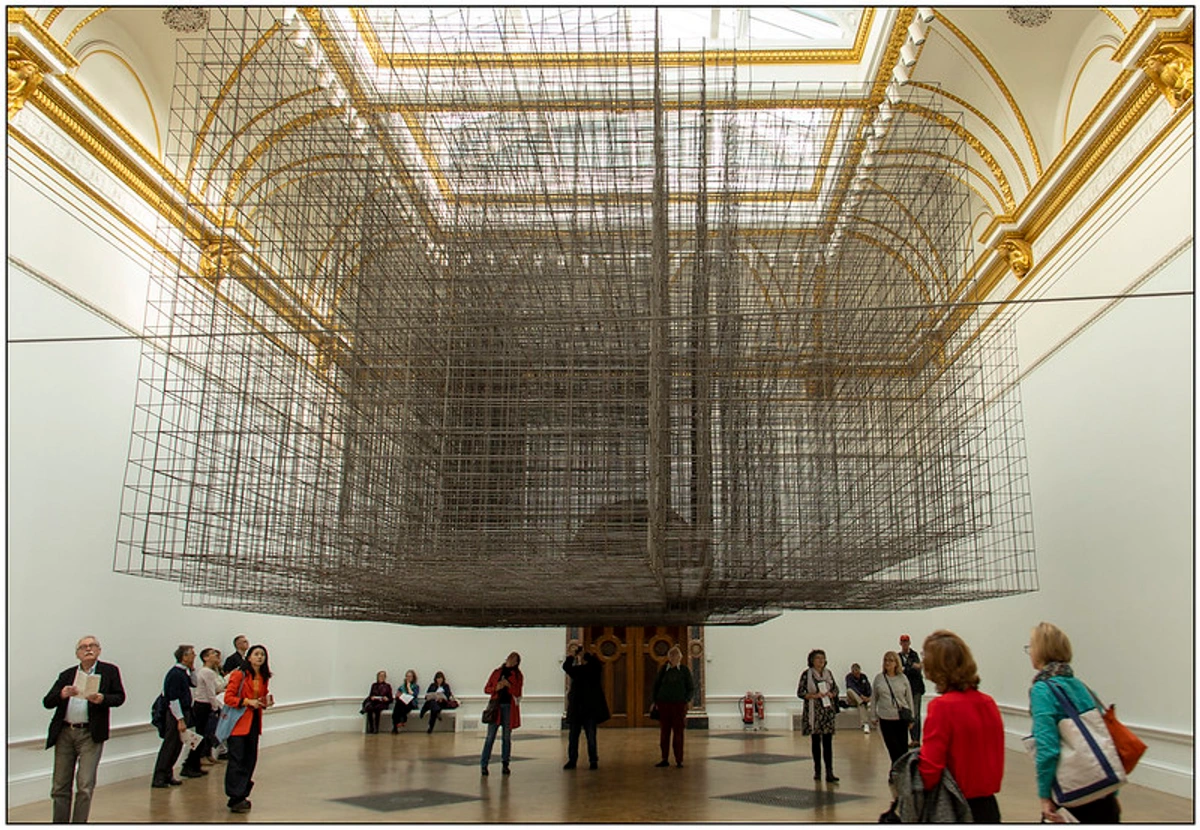
Q: What are the main types of rocks, and how do they inform artistic approaches?
A: Broadly, there are three main types of rocks, each with distinct formation processes that offer unique artistic inspiration. Understanding their origins allows artists to infuse their work with deeper meaning and texture.
- Igneous Rocks (from fire, e.g., granite, basalt, obsidian): Formed from the cooling and solidification of molten magma or lava. Artists might draw inspiration from their raw power, crystalline structures (granite), or dark, dense, often glassy textures (basalt, obsidian), often evoking themes of primal creation, solidity, elemental force, and explosive energy in sculpture or abstract painting. Their unyielding nature can symbolize foundational strength and ancient origins.
- Sedimentary Rocks (from layers, e.g., sandstone, shale, limestone): Formed from the accumulation and compaction of sediments (fragments of other rocks, minerals, or organic matter) over long periods. These inspire layered compositions, earthy palettes, and themes of history, memory, sequential narratives, and the gradual accumulation of time in painting, mixed media, or land art. The subtle shifts in color and texture within these layers can suggest hidden stories.
- Metamorphic Rocks (transformed, e.g., marble, slate, gneiss): Formed when existing igneous, sedimentary, or other metamorphic rocks are transformed by intense heat, pressure, or chemical alteration deep within the Earth. Artists are inspired by their banding (foliation), recrystallized textures, and the idea of profound transformation, pressure, and resilience in sculpture and abstract art. The swirling patterns in marble or the strong cleavage of slate speak to the immense forces that reshape materials, mirroring creative struggle and evolution.
Each type tells a different story, a different chapter in Earth's autobiography, offering an endless wellspring of visual and conceptual metaphors for artists. Igneous rocks might inspire art that feels raw, molten, and intensely textural, while sedimentary rocks lend themselves to layered, narrative compositions, perhaps even mimicking the historical 'pages' of Earth's story. Metamorphic rocks, with their transformed and often banded appearances, are perfect for exploring themes of resilience, hidden depth, and the beauty born from immense pressure. It's all about observing their unique characters and letting that inform your artistic interpretation, allowing the very geology to speak through your chosen medium.
Q: How do artists depict "deep time" or geological time in their work?
A: Depicting "deep time" is a challenge, as its scale is beyond human comprehension. Artists often approach it conceptually rather than literally. They might use layering techniques to suggest accumulated history (like geological strata), employ materials with inherent ancientness (fossils, ancient stones), or create works that slowly transform over time, allowing natural processes like weathering to become part of the art itself (as seen in Land Art). The use of minimalist forms can also evoke timelessness, while abstract compositions can capture the feeling of vast, slow processes rather than specific events. It’s about hinting at the immeasurable, creating a sense of awe and connection to a history far grander than our own. Artists might also use serial art (a series of works that evolve slowly) to mimic gradual geological change, or create pieces that require the viewer to physically move through them, experiencing a passage of time and space analogous to traversing a vast landscape. The scale is less about literal representation and more about evoking the feeling of millions of years condensed into a moment.
Q: Are there contemporary artists who specifically work with geological data or scientific processes?
A: Absolutely! Beyond those who use geological materials, a growing number of contemporary artists are integrating scientific data and processes directly into their work. Artists like Katie Paterson are renowned for projects that deal with deep time, geological processes, and cosmic scale – for example, casting meteorites or mapping extinct stars. Olafur Eliasson often brings natural phenomena into the gallery space, using ice, light, and water to highlight our perception of natural processes and geology. Others might use seismic data visualizations, Lidar scans of landscapes, or even material science to explore geological themes, blurring the lines between art, science, and technology. It’s a fascinating frontier where art helps us understand complex scientific concepts on an emotional and aesthetic level. Think of Reverdy Johnson, who uses satellite imagery and geological survey data to create abstract paintings, or Lia Halloran, who meticulously illustrates the surfaces of celestial bodies, blending scientific accuracy with artistic wonder. These artists exemplify how scientific rigor can fuel incredible artistic innovation, making the invisible visible and the immense comprehensible.
Q: What is the relationship between "the sublime" and geological art?
A: The concept of the sublime, which became prominent during the Romantic era, describes experiences that evoke awe, terror, and a sense of overwhelming grandeur – emotions often triggered by vast, powerful natural landscapes. Geological art, especially works depicting dramatic mountains, canyons, or volcanic activity, frequently taps into the sublime. These formations remind us of our smallness in the face of nature's immense power and deep time, prompting both fear and spiritual elevation. Artists like J.M.W. Turner and Caspar David Friedrich captured this perfectly, using geological forms not just as scenery, but as vessels for profound emotional and existential experience. Think of Turner's tempestuous seascapes or Friedrich's solitary figures contemplating vast mountain ranges – these are quintessential examples of the sublime in art. It’s a feeling of being simultaneously overwhelmed and uplifted, confronted by the raw, untamed force of the Earth. It's that moment when you stand at the edge of the Grand Canyon, or feel the tremor of an earthquake, and you realize how small and fleeting your own existence is in the grand scheme of things, yet simultaneously feel a profound connection to something eternal and magnificent. The sublime in geological art often challenges our perceptions of beauty, pushing us to find it even in destructive or chaotic natural events.
Q: What are some artistic techniques directly inspired by geological processes?
A: Many artistic techniques draw direct inspiration from geological processes, often unconsciously!
- Layering and Stratification: Mimicking sedimentary rock layers through successive applications of paint, paper, or mixed media, building up depth and history. This is a common strategy in abstract painting to create visual depth and narrative.
- Textural Accumulation/Subtraction: Building up impasto layers to suggest volcanic flows or mineral deposits, or scraping/sanding down surfaces to emulate erosion or weathering. Think of using thick gels or pastes to create rock-like textures.
- Fracturing and Cracking: Intentionally cracking paint (e.g., using crackle mediums) or materials to suggest rock fractures, fault lines, or the breaking down of surfaces. This can add a sense of age and geological stress.
- Crystallization: Creating geometric abstractions or using crystalline structures in sculpture and digital art to evoke mineral growth and internal order. This often involves precision and repetition.
- Patination and Oxidation: Allowing materials to naturally age or inducing chemical reactions (like rust) to mimic the geological processes of surface transformation and weathering. This technique allows the artwork to evolve over time.
- Molding and Casting: Using natural forms as molds, or casting materials like concrete and clay, directly engaging with the Earth's ability to shape and harden. This provides a direct, tactile connection to geological creation. These techniques allow artists to not just depict geology, but to perform it in their creative process. This active engagement creates a powerful feedback loop, where the artist learns from the Earth's processes and translates that understanding into new forms of expression. Consider also earth pigment painting, where artists literally grind minerals and clays to create their own paints, connecting directly to the Earth's raw color palette. Or sand painting, an ancient art form that uses colored sands to create intricate, often ephemeral, designs, echoing the depositional processes of nature.
Q: What exactly is "geological art"?
A: "Geological art" is a broad term that encompasses any art inspired by, depicting, or using geological features, processes, or materials. This can range from realistic landscape paintings of mountains to abstract sculptures made from stone, or even large-scale earthworks that reshape the landscape itself. It's a spectrum that moves from direct representation to subtle conceptual engagement, always finding a connection to the Earth's profound history and ongoing transformations. It’s an expansive genre, encompassing everything from the raw power of a volcano captured in a painting to the subtle, almost imperceptible shifts in an earthwork over years. The common thread is a deep reverence for the planet's creative and destructive power. It's about recognizing the Earth as an active co-creator, whether the artist is simply observing and depicting its forms, or actively engaging with its materials and processes to create new artistic expressions. This field bridges scientific understanding with aesthetic appreciation, inviting us to see the deep interconnectedness between the natural world and human creativity.
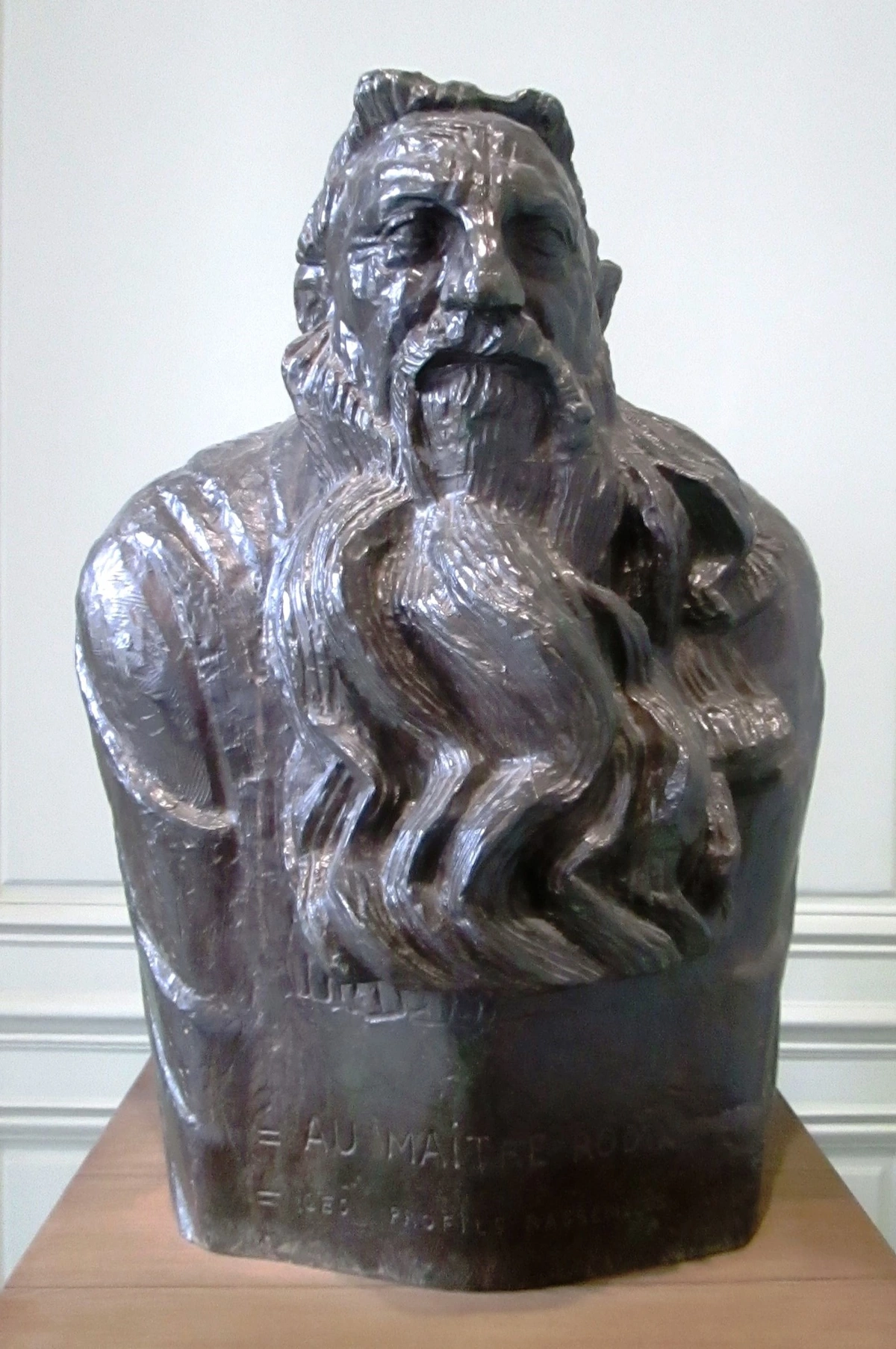
Q: What are some famous natural rock formations known for inspiring art?
A: So many! Think of the dramatic archways of Arches National Park in Utah, the colossal granite cliffs of Yosemite Valley, the otherworldly hoodoos of Bryce Canyon, or the vibrant, swirling sandstones of Antelope Canyon. Internationally, places like the Giant's Causeway in Northern Ireland with its basalt columns, the stunning "Wave" rock formation in Arizona, or the ancient, intricate caves of Waitomo Glowworm Caves in New Zealand, are constant sources of wonder and artistic inspiration. Each offers a unique masterclass in form, texture, and color. I've personally found that visiting these sites is like stepping into a living, breathing art gallery, where every turn reveals a new composition or an unexpected palette. Beyond those, think of the towering dolomite peaks of the Dolomites in Italy, the eerie, balancing rock formations of Goblin Valley State Park in Utah, or the immense, swirling geological structures of Wave Rock in Australia. Each offers not just a view, but a profound visual and spiritual experience that artists can translate into their own unique expressions of awe and wonder.

Q: How do artists incorporate geological patterns into abstract work?
A: Abstract artists often draw inspiration from geological patterns by focusing on elements like layering (strata), texture (rock surfaces), color variations (minerals), and structural forms (crystals, rock fractures). They translate these elements into abstract compositions, using lines, shapes, and colors to evoke the feeling or essence of geological phenomena rather than a literal representation. It's about distilling the core visual and energetic qualities of geology into a new, expressive language. For instance, the jagged lines of a mountain range might become a series of sharp, dynamic brushstrokes, or the subtle gradients of an eroded cliff face could inform a nuanced color blend. The swirling patterns found in agate or marble can inspire fluid, organic compositions, while the stark contrasts of volcanic rock might lead to bold, monochromatic works. It's a way of channeling nature's power without literally copying it. For example, an abstract artist might use bold, diagonal lines to evoke the thrust of tectonic plates, or soft, undulating forms and layered washes to suggest millions of years of gradual erosion. The key is to capture the dynamic energy and inherent structure of geological processes, transforming them into a new, purely visual language.
Q: How does environmental art connect with geology?
A: Environmental art (or Land Art/Earthworks) often directly engages with geology by using the Earth itself as the medium or by highlighting geological processes and features. Artists might excavate, pile, or reshape land (like Robert Smithson's "Spiral Jetty"), use natural stones or minerals, or create works that respond to natural elements like wind, water, and light. These works frequently draw attention to ecological issues, the passage of time, or humanity's relationship with the natural world, making geology a central theme. It’s a deeply philosophical conversation with the planet itself, challenging us to redefine what art can be when it's made of the Earth, not just on it. Beyond the monumental works, think of artists who create ephemeral earth art, such as patterns raked into sand or arrangements of stones that will be naturally dispersed by weather. These works emphasize impermanence, the cyclical nature of geological processes, and humanity's fleeting presence within deep time.
Q: Are there specific materials artists use for geological art?
A: Absolutely! Beyond traditional paints and canvases, artists working with geological themes often use actual earth materials. This can include stone, clay (think introduction to ceramics: history, techniques and contemporary practice), sand, gravel, and even natural pigments derived from minerals like ochre, malachite, and lapis lazuli – a direct lineage from prehistoric cave painters to modern abstract artists. Beyond the raw materials, artists also employ techniques that mimic geological processes, such as using crackle mediums to create fractured surfaces or employing various best acrylic mediums for abstract artists to replicate the viscous flow of lava or the granular texture of sandstone. Land artists, in particular, use the very land as their medium, blurring the lines between creation and nature itself. It's a powerful statement, choosing materials that inherently carry the story and weight of geological time. For example, using volcanic ash in painting or sculpture immediately imbues the work with a sense of raw, primal energy and deep history. Or incorporating petrified wood, which is wood that has turned to stone over millions of years, bridges the gap between organic life and geological transformation, offering a unique narrative potential.
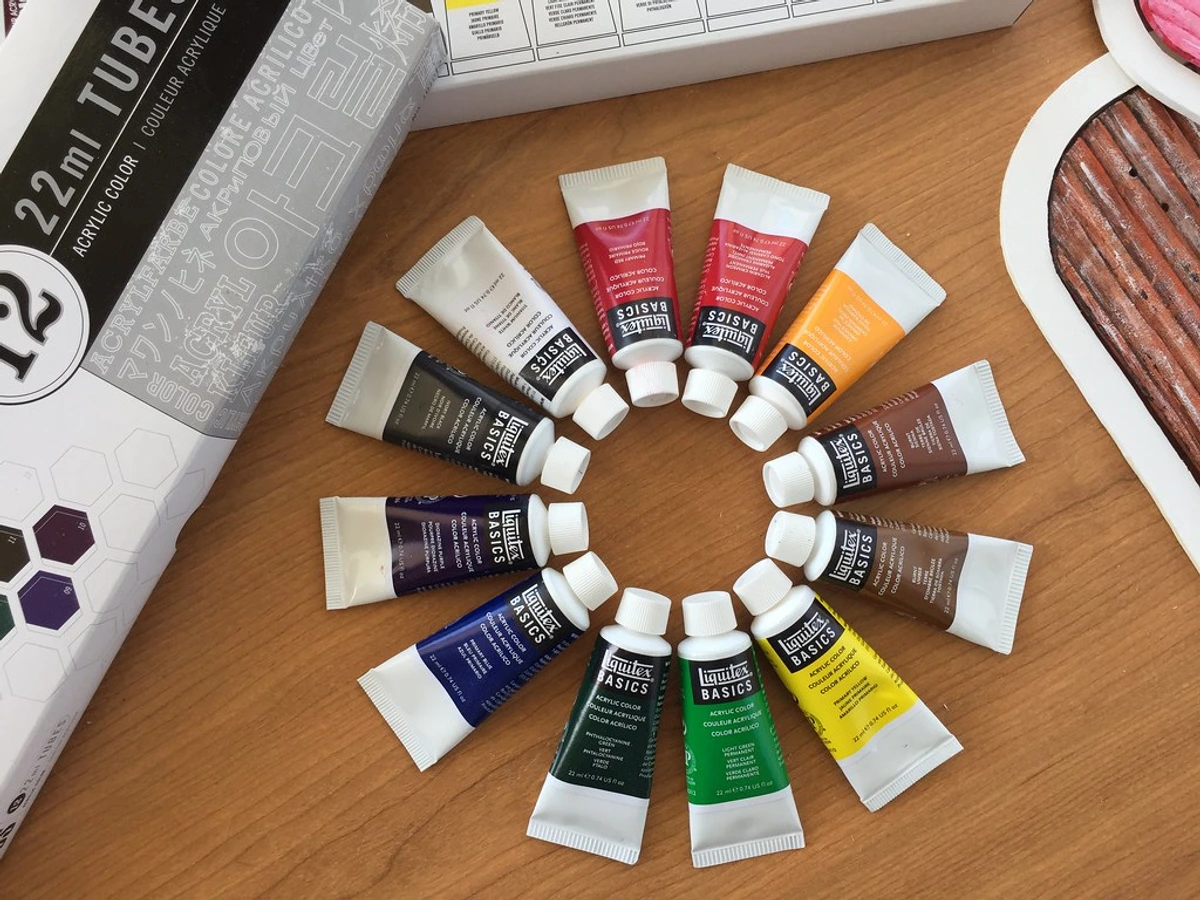
Q: Are there any contemporary artists primarily focused on geological themes?
A: Definitely! While many artists incorporate geological inspiration, some make it central. For instance, Katie Paterson works with deep time and cosmic geology, using meteorites, lunar dust, or mapping extinct stars. Olafur Eliasson often brings natural phenomena like ice or basalt into gallery spaces, creating immersive experiences that highlight our perception of natural processes. Think also of pioneers like Anna Atkins, whose early cyanotypes of seaweeds and geological specimens beautifully fused art and scientific observation. Contemporary artists like Alexis Rockman create vivid, speculative paintings of future landscapes, heavily informed by geological processes and climate change. There are also countless sculptors and abstract painters who draw heavily on the textures, forms, and colors found in rock formations and mineralogy. A quick search for "geological art" or "earth art" at your local gallery or online will reveal a vibrant community of creators. It's truly inspiring to see how artists continue to push the boundaries of this ancient connection, finding new ways to converse with our planet. Think of Ana Mendieta, whose "earth-body" sculptures explored identity and connection to the land by leaving imprints of her body in natural environments, or Andy Goldsworthy, renowned for his ephemeral land art installations made solely from natural materials like leaves, ice, and stones, which gracefully surrender to natural processes. These artists, and many others, demonstrate the incredible breadth and depth of geological inspiration in contemporary art.
Q: Can I find geological art in museums?
A: Yes! Many major art museums will feature works by artists influenced by geology, especially within sections on landscape art, modern sculpture, or contemporary art (particularly Land Art). You might also find specialized exhibitions at natural history museums, science museums, or galleries focusing on nature-inspired art. Keep an eye out for thematic shows that explore "Earth Art," "Environmental Art," or "Art and Science," as these often prominently feature geological themes. If you're ever in the Netherlands, you could always check out the Den Bosch Museum for local contemporary art! It's worth remembering that the lines between art, science, and nature are often beautifully blurred in these spaces, offering a holistic understanding of our world. Don't limit yourself to art museums either; sometimes the most inspiring geological art is found in natural history museums, showcasing breathtaking mineral specimens or fossil displays that are artistic in their own right, demonstrating nature's inherent design genius.
Q: How does geology influence architecture?
A: Geology profoundly influences architecture, from the choice of building materials to structural stability. Historically, local stone (like granite, marble, or sandstone) defined regional architectural styles, like the intricate sandstone carvings of ancient Indian temples or the enduring Roman structures built with volcanic tuff. Today, architects are inspired by geological forms, patterns, and processes, incorporating stratified layers into building facades, mimicking crystal structures in designs, or using raw, exposed concrete to evoke a sense of earthiness. The understanding of geological stability is also crucial for foundation design, especially in earthquake-prone regions, making it a blend of aesthetic and practical inspiration. I find it fascinating how humans, consciously or unconsciously, echo the Earth's own construction principles when we build, striving for permanence and beauty. For instance, the enduring strength of ancient Roman roads, built with layers of earth and stone, directly mimics geological stratification. In modern architecture, the dramatic, soaring forms of buildings like the Sydney Opera House can be seen to echo the organic curves and monumental scale of natural rock formations, bringing geological grandeur into urban spaces.
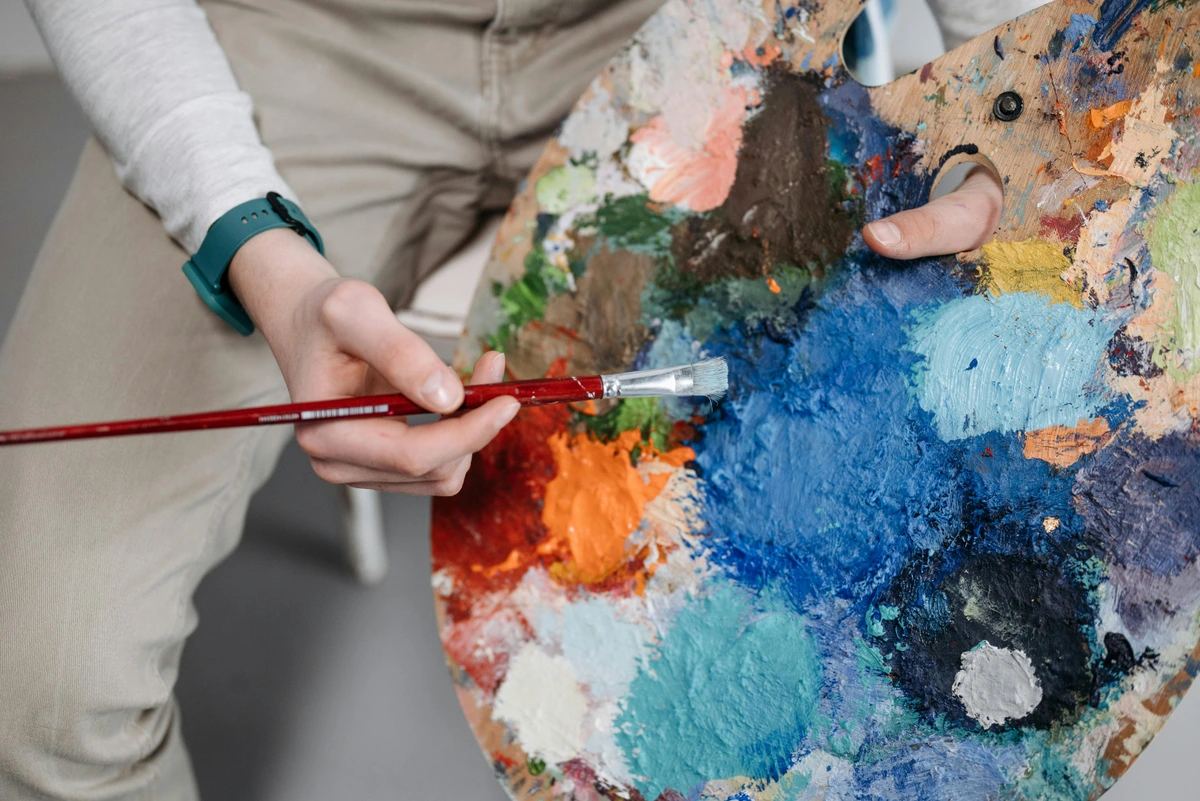
Q: How can I learn more about geology to inform my artistic practice?
A: The best way is to combine direct observation with learning! Visit national parks, rocky beaches, or even just observe the stones in a local park with an artist's eye. Take photos, make sketches, and collect interesting specimens (where permitted!). On the learning front, many universities offer free online introductory geology courses (MOOCs), or you could read popular science books on geology. Understanding the why behind the forms and colors – such as how different minerals contribute to distinct hues or how tectonic forces create specific mountain ranges – will deepen your artistic vocabulary immensely. Think of it as expanding your palette, not just with new colors, but with new concepts and narratives. Don't be afraid to get your hands dirty, either; a little bit of field experience can unlock insights that no textbook ever could. I've found that picking up a field guide to local rocks and minerals (even a simple one!) while exploring can be incredibly enlightening, putting names to the fascinating forms and colors you encounter. It’s like learning the vocabulary of the Earth, which in turn enriches your own artistic language.
Q: What is the difference between weathering and erosion?
A: While often used interchangeably, there's a key distinction! Weathering is the in-situ process of breaking down rocks, soil, and minerals through physical (e.g., freezing and thawing) or chemical (e.g., acid rain) means, without moving the material. Erosion, on the other hand, involves the movement of weathered material by agents like wind, water, ice, or gravity. So, weathering breaks it down, and erosion carries it away. Both processes offer incredible artistic inspiration, from the subtle decay of a surface to the grand carving of a canyon. It’s a dynamic duo of geological artistry, constantly reshaping the world around us. For an artist, weathering might inspire a delicate, textured patina on a sculpture, or subtle, faded layers in a painting, suggesting age and the gentle touch of time. Erosion, on the other hand, might evoke powerful, sweeping lines, dramatic contrasts, and the relentless force of movement and change.
Q: How can geology inspire my own creative process, even if I'm not an artist?
A: Geology can inspire anyone! Try observing the natural world with an artist's eye: notice the textures of a stone wall, the colors in a gravel path, or the way erosion patterns form miniature landscapes after a rain shower. Collect interesting pebbles or rocks and arrange them, or simply sketch them. This mindful observation can foster creativity and a deeper appreciation for the world around you. Even just organizing your bookshelf by color or texture can be a small, everyday nod to geological principles. It's about bringing that deep time perspective into your daily life and letting the Earth's quiet wisdom infuse your experiences. Try a 'texture hunt' in your neighborhood, collecting mental notes or quick sketches of rough bark, smooth pebbles, cracked pavement, or rippling water. These everyday observations, seen through a geological lens, can become powerful inspirations for your own creative endeavors, even if it's just a doodle in a notebook.
Q: Are there ethical considerations when using natural materials in art?
A: Absolutely. When working with natural materials, especially those collected from the Earth, ethical considerations are paramount. This includes respecting environmental regulations, avoiding damage to natural habitats, and ensuring sustainable sourcing. For artists using ancient or rare geological specimens, issues of provenance and cultural heritage also come into play. It's vital to ensure that your artistic practice doesn't inadvertently contribute to ecological harm or the exploitation of cultural resources. This is a topic I feel strongly about, and it ties into broader discussions of ethics of art collecting – responsible creation and acquisition are crucial for the integrity of the art world and the well-being of the planet. Always prioritize legal and respectful collection practices, and if purchasing art with natural materials, inquire about their provenance and the artist's commitment to ethical sourcing. Our creative pursuit should never come at the expense of our shared planetary heritage.
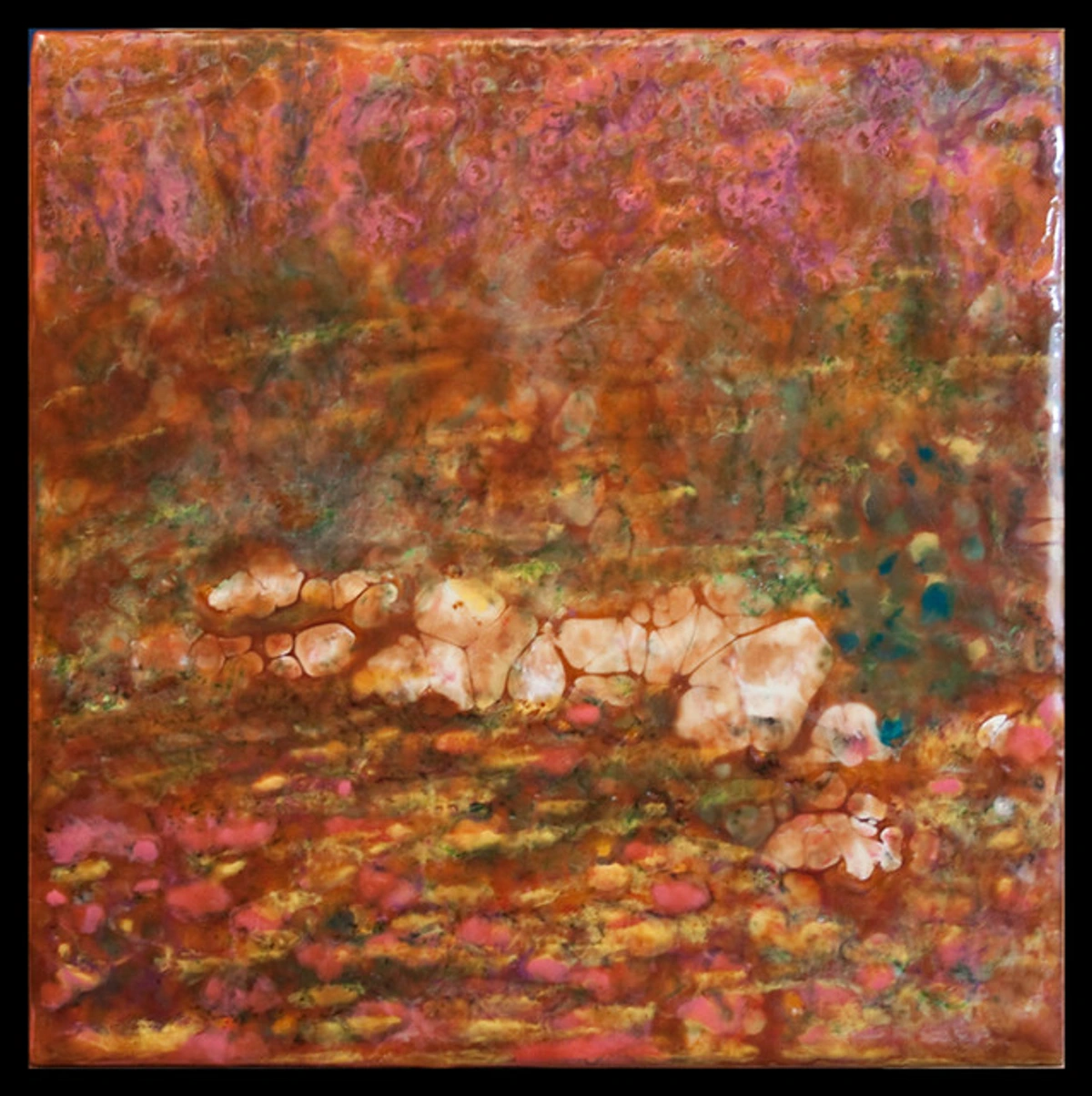
Q: How can I identify different rock types for artistic inspiration?
A: A great starting point for artists is to observe common characteristics! Igneous rocks (like granite or basalt) often have interlocking crystals or a glassy texture, formed from cooling magma. Sedimentary rocks (like sandstone or shale) are typically layered, often feel gritty, and might contain fossils. Metamorphic rocks (like marble or slate) often show banding or foliation due to heat and pressure. Field guides or basic geology books are fantastic resources. Don't worry about being a geologist; simply paying attention to these visual and tactile cues can unlock a wealth of artistic ideas! For example, basalt is often dark and fine-grained, inspiring stark, minimalist forms. Quartz crystals are typically hexagonal and translucent, perfect for exploring geometric abstraction and light. Shale is usually thinly layered and easily splits, suggesting delicate, fragile textures or layered compositions. Limestone, a common sedimentary rock, often has a softer, more uniform texture and can contain abundant fossils, inspiring themes of ancient life and delicate patterns. Each rock is a unique visual prompt, waiting for your artistic interpretation, offering a rich vocabulary of forms, textures, and histories to draw upon.
Q: What role does light play in geological art?
A: Light is absolutely crucial! Just as it sculpts rock formations in nature (think of the shifting light in Antelope Canyon), it sculpts our perception of geological art. Artists use light to emphasize texture, reveal hidden layers, create dramatic shadows that define form, or highlight the inherent luminescence of certain minerals. In photography, the angle and quality of light can transform a static rock face into a dynamic, living entity. For land artists, the changing light throughout the day, or across seasons, becomes an integral part of the artwork itself, continually altering its appearance and emotional impact. It's a co-creator, revealing the hidden beauty and profound drama embedded within geological forms and the art they inspire. Consider how direct sunlight can make a crystalline rock formation sparkle, or how twilight can soften the harsh edges of a mountain, transforming its character entirely. Artists manipulate light in their studios to replicate these effects, or they strategically choose locations for their land art where the sun and shadows become active participants in the artwork's narrative. Without light, much of the Earth's stunning geological artistry would remain hidden, and thus, it becomes an indispensable tool and inspiration for any artist engaged with geology.
A Final Note on the Earth's Enduring Muse
To me, the enduring allure of geology in art lies in its profound ability to connect us to something much larger and infinitely older than ourselves. It's a constant, humbling reminder that beneath our fleeting lives, the Earth is perpetually creating, continually transforming, and ceaselessly evolving. And as artists, or simply as mindful observers, we get to bear witness to that magnificent, slow-motion dance, a planetary performance playing out over eons. It’s an immeasurable gift, really, this planet-sized muse, always there, always inspiring, offering lessons in resilience, transformation, and enduring beauty. So next time you're outside, take a moment. Pause. Look down at the intricate patterns in a pebble, look up at the ancient majesty of a mountain, and let the rocks speak to you. You might just find your next great inspiration – a deep, elemental connection that transcends time and space, leaving an indelible mark on your creative soul, just as the Earth leaves its indelible mark on everything around us. This profound, ongoing dialogue between humanity and our geological home continues to unfold, ensuring that the Earth will remain the ultimate artist, and its masterpieces will forever sculpt our imaginations, our cultures, and our very sense of being. And perhaps, through our art, however modest, we can add a new layer to this ancient canvas, contributing our own small, yet meaningful, mark to its unending story. This continuous conversation between human creativity and the Earth's colossal artistry is, I believe, one of the most fundamental and enriching aspects of our existence, a beautiful testament to the enduring power of nature to shape our world and our souls, and to remind us of the profound privilege of being part of this incredible planetary artwork. So, go forth, look closely, create boldly, and let the Earth's deep wisdom guide your hand. Who knows what geological masterpiece you might uncover, or what new layer you might add to its magnificent, never-ending story. The canvas is waiting, and its story is yours to explore.