Land Art Explained: Earth's Canvas, Ancient Roots, Iconic Figures & Environmental Dialogue
Explore Land Art's captivating journey from ancient earthworks to modern masterpieces like Smithson's 'Spiral Jetty'. Delve into its environmental impact, evolution into Ecological Art, and its profound challenge to traditional art, all through a personal, engaging lens.

Land Art Explained: History, Iconic Artists, Environmental Impact, and Personal Reflections
You know, sometimes I look at art and I just... get it. The colors, the composition, the emotional punch – it clicks. But then there are those moments, those movements, that make you tilt your head a little, scratch your chin, and wonder, 'Wait, that's art?' Land Art, or Earth Art, was definitely one of those for me initially. I confess, when I first stumbled upon images of massive spirals carved into salt lakes, or enormous trenches dug into desert plains, my immediate thought was, 'Who does this? And why? Is this even art, or just... really big dirt piles?' It felt so far removed from the canvas and brushstrokes I knew and loved, almost a bit silly at first glance. But as I began to look closer, I realized that this initial bewilderment was precisely the point – its magic lay in its ability to challenge everything I thought I knew, expanding the very definition of what art can be. Today, we're going to peel back those layers, exploring the fascinating history of Land Art, delving into the iconic figures who shaped it, grappling with its profound connections to our planet (which, honestly, can feel like a wrestling match sometimes!), and unpacking the unique challenges it presents. My aim, truly, is to transform that initial head-scratching into a deep appreciation, making this the most comprehensive and engaging guide you'll find, even if you're starting from scratch like I was. It’s an invitation to embark on an artistic journey of exploration, seeing the world with new eyes.
Earth as Canvas: What Defines Land Art?
So, what exactly are we talking about here? Let's get down to brass tacks: Land Art is an art movement where the landscape itself is the medium, and the artwork is often created in and with nature, using natural materials like earth, rocks, trees, water, and even light. Forget your pristine white gallery walls and pedestals; we're talking mountains, deserts, coastlines, and forests as the ultimate exhibition space. These creations are often referred to as earthworks – monumental sculptures made from, or integrated into, the earth itself.
This isn't about placing a sculpture on a landscape; it's about the landscape becoming the sculpture. The scale is often immense, the locations remote, and the interaction with the environment is paramount. It's a dialogue with nature: sometimes a gentle whisper, like a carefully stacked cairn of stones echoing a mountain's form, and sometimes a dramatic statement, a monumental intervention that demands attention and questions our place within the vastness. If you've ever felt a deep connection to the raw power of nature, you'll understand why these artists felt compelled to work with it directly. It truly makes you reconsider what design means in art when the canvas is literally the planet.
The Building Blocks: Materials and Techniques of Earth Art
One of the most compelling aspects of Land Art, for me, is its rejection of traditional art supplies. Instead of paint and canvas, these artists turned to the earth itself. The materials are often as fundamental as our planet, and the techniques, while sometimes employing modern machinery, often echo ancient human practices. So, what did they use, and how did they do it?
- Raw Earth and Rock: This is the bedrock (pun intended!) of Land Art. Artists like Robert Smithson and Michael Heizer literally moved tons of earth, rock, and basalt to carve out or build their monumental structures. This involved heavy excavation, sometimes even dynamite, to redefine natural topography on an astonishing scale, requiring immense logistical effort and industrial machinery like bulldozers and trucks.
- Natural Elements: Water, ice, sand, mud, and even light itself become artistic components. Walter De Maria's Lightning Field, for instance, harnesses the very atmosphere, requiring lightning storms to complete its artistic statement. Andy Goldsworthy, on the other hand, works with the delicate ephemerality of ice, leaves, and branches, stacking, balancing, and arranging them into intricate, temporary sculptures with meticulous hand-placement and meditative patience.
- Vegetation: Living plants, trees, and even crops have been used. Agnes Denes's Wheatfield – A Confrontation transformed a landfill into a fertile field, making a powerful statement about land use and urban nature. Other artists might use indigenous plant species for land restoration as part of their artwork, blurring the lines between art and ecological intervention.
- Temporary Interventions: Many works are designed to be temporary, to erode, melt, or be reclaimed by nature. This requires an understanding of natural cycles and a willingness to surrender the artwork to time and the elements. Other artists, like Richard Long, create art simply by walking, leaving only the trace of their footsteps or a subtle line on the landscape, emphasizing process and experience over a permanent artifact.
The techniques span from highly mechanized earthmoving to meditative, painstaking arrangement by hand. But in every case, the artist becomes a collaborator with nature, inviting its forces – gravity, erosion, growth, decay – to shape and evolve the artwork over time. It makes you think about creation in a whole new way, doesn't it? It's a profound exploration of understanding the elements of sculpture when those elements are the earth itself.
A Little Bit of History (and Why It Still Blows My Mind)
Now, let's rewind a bit, because while the term 'Land Art' is relatively new, the idea of humans shaping the earth for expressive purposes is as old as, well, dirt. Before the term 'Land Art' even existed, humans were doing remarkable things. Across diverse Indigenous cultures worldwide, ancient practices demonstrate a profound, long-standing relationship with the land, shaping it for spiritual, ceremonial, and survival purposes, each with its unique wisdom and connection to place.
Consider the ancient Nazca Lines in Peru, those mysterious megalithic structures like Stonehenge, or the intricate terraced agricultural landscapes found across various ancient civilizations. And let's not forget the profound, long-standing practices of Indigenous cultures worldwide, who've shaped, managed, and lived in harmony with the land for millennia. For example, the Great Serpent Mound in Ohio, a magnificent effigy mound stretching over 1,300 feet, clearly demonstrates a monumental, ritualistic shaping of the earth by ancient Native Americans, aligning with astronomical events and deeply rooted in their spiritual worldview. Across Australia, Aboriginal artists have created elaborate earth etchings and ceremonial grounds, often integrating sacred stories and maps into the very landscape. Their intricate knowledge of ecosystems, sustainable agriculture, and ceremonial earthworks demonstrate a deep, reciprocal relationship with the planet—a kind of earth-stewardship that profoundly predates any Western art movement. This ancient interaction with the land, often driven by spiritual, astronomical, or ceremonial motivations, sets a powerful precedent for monumental human intervention and connects deeply with the enduring influence of Indigenous art on modern abstract movements. It's a thought-provoking legacy, a quiet whisper across millennia that humans have always felt the pull of the monumental and the natural. It's almost like they were sketching grand ideas onto the planet itself, long before the word 'art' even entered our vocabulary.
While these ancient gestures laid a groundwork of human interaction with the land, serving as a powerful, silent preface to the story, the Land Art movement as we know it truly took root in the late 1960s and early 1970s, predominantly in America. This wasn't just a stylistic shift; it was a cultural upheaval. Artists, weary of the art market's commodification, the perceived stuffiness of traditional galleries – those 'white cube' spaces that often felt disconnected from real life – decided enough was enough. They consciously took their work outdoors, far from the urban centers and commercial pressures. It was an act of artistic rebellion, a declaration that the world itself was their canvas, a bold response to the era's burgeoning counter-culture, environmental awareness, and a broader philosophical questioning of humanity's impact and place in the universe. In my humble opinion, it was utterly revolutionary, driven by a desire for authenticity and a profound critique of established art institutions.
This radical shift also drew inspiration from contemporaneous movements like Minimalism and Conceptual Art. From Minimalism, Land Art borrowed a focus on elemental forms, industrial materials (sometimes, ironically, in its construction), and a direct, unadorned presentation. Think of how a Minimalist sculptor like Donald Judd used simple geometric boxes, focusing on the object's inherent qualities; Land Artists translated this into colossal, raw earth formations, stripping away unnecessary ornamentation to emphasize the stark presence of the landscape. From Conceptual Art, it took the emphasis on the underlying idea or experience of the artwork over the aesthetic object itself. The concept—the very act of creating a work in a remote desert, subject to the elements, documented by photography—often became more central than the physical artifact itself, much like Sol LeWitt's instructional pieces where the idea was the art. This intellectual ferment, combined with a desire for direct engagement with reality, fueled the radical departure that Land Art represented. If you've ever explored the definitive guide to the history of abstract art: key movements, artists, and evolution, you'll see how artists were constantly pushing boundaries, and Land Art was perhaps the most audacious extension of that intellectual and creative ferment. What a time to be an artist, right?
The Visionaries Who Carved the Earth
So, who were these artistic rebels bold enough to turn the earth into their canvas? Let's dive into some of the visionaries who literally carved, reshaped, and whispered to the land, forever altering our perception of art and nature.
Robert Smithson: The Master of the Spiral
You simply cannot talk about Land Art without conjuring images of his iconic Spiral Jetty (1970). This monumental 1,500-foot-long coil of black basalt rock, earth, and salt crystals defiantly juts out into the vivid red waters of the Great Salt Lake in Utah. When I first saw images of it, my jaw literally dropped. I mean, the sheer audacity of planning and executing the movement of tons of rock in such a remote, almost alien-looking location just blows my mind. The logistics alone must have been a nightmare! The black basalt rock, sourced locally, contrasts sharply with the vibrant pink and red hues of the salt-saturated water, a color derived from salt-tolerant algae and bacteria, making the artwork a living, breathing entity. It wasn't a delicate handiwork; its creation involved heavy machinery – trucks and barges moving tons of rock – a stark intervention that itself questioned humanity's role in the landscape. Smithson himself documented its creation and its evolving state through his film, Spiral Jetty, which becomes an integral part of its artistic legacy, often viewed as an artwork in itself. It’s a dynamic piece, constantly changing with the lake's water levels and salt accretion, a visceral reminder that nature is the ultimate sculptor, always reshaping, always reclaiming. What does it truly mean to create something so vast, so exposed, so utterly at the mercy of the elements? It's a question Smithson embedded directly into the landscape, forcing us to consider our own fleeting presence against geological time. Smithson's Spiral Jetty is a raw, powerful confrontation with time and nature, a testament to humanity's desire to leave a mark, even as nature slowly reclaims it.
Walter De Maria: Harnessing the Storm
His Lightning Field (1977) in New Mexico is another monumental work, consisting of 400 precisely arranged stainless steel poles set in a grid across a vast plain. It's not just about the poles themselves; it's about the immersive, almost spiritual experience, especially during a lightning storm, when the field truly comes alive, becoming a beacon of crackling energy. The isolation of the site is as crucial as the poles themselves, forcing a deep contemplation of one's place within the vastness of nature and the raw power of the elements. It's an artwork that literally relies on the natural environment – the very atmosphere – to complete itself, a powerful, almost terrifying interplay between human intervention and elemental forces. Imagine being there when the sky ignites, the air buzzing with electricity – a truly primal, unforgettable experience that makes you feel both tiny and connected to something immense. How does one even conceive of harnessing the raw power of a storm as part of an artwork? De Maria's Lightning Field is a masterclass in elemental engagement, transforming the raw power of the sky into an ephemeral, overwhelming artistic event that humbles and exhilarates.
Michael Heizer: Sculpting the Void
Michael Heizer, known for his colossal earthworks like Double Negative (1969-70), pushed the boundaries of sculpture by focusing on absence. His work consists of two enormous trenches, each 30 feet wide and 50 feet deep, cut directly into the sides of a mesa in Nevada. This isn't about adding to the landscape; it's a literal removal of earth and rock, requiring monumental excavation by bulldozers and dynamite, creating a powerful void that plays with our perception of space and absence on an almost overwhelming scale. An estimated 240,000 tons of earth and rock were removed, a colossal undertaking that fundamentally redefines the very essence of sculpture itself, challenging us to consider what constitutes an artistic form. It really forces you to reconsider understanding the elements of sculpture when the 'sculpture' is defined by what's not there. What profound statement is Heizer making, I wonder, by removing land rather than adding to it? It feels like a grand, almost defiant gesture against artistic convention, making a statement with absence rather than presence. Double Negative is a defiant act of absence, carving a monumental question into the earth about what defines artistic creation.
Andy Goldsworthy: The Whisper of Impermanence
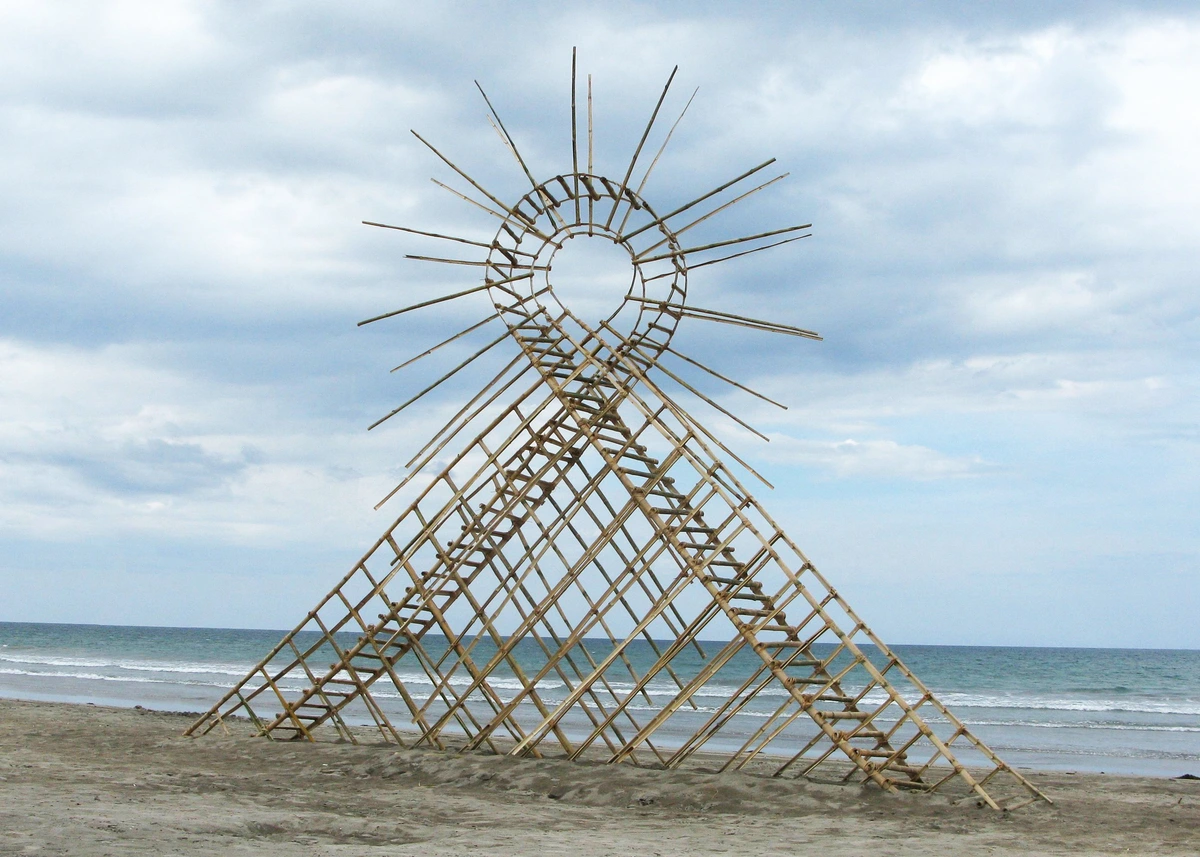
But Land Art isn't just about grand, monumental gestures; it also finds profound beauty in the delicate and the ephemeral. For me, this is where artists like Andy Goldsworthy truly shine, offering a quiet counterpoint to the colossal statements of Smithson or Heizer. Goldsworthy, a British sculptor, is renowned for his breathtakingly delicate, site-specific sculptures made from entirely natural and often temporary materials like ice, leaves, stones, and branches. His process often involves hours of patient gathering and delicate placement, a meditative dance with the materials that imbues each ephemeral creation with a profound sense of presence. His works are often designed to succumb to the elements, melting, eroding, or being swept away by the tide, making them a poignant meditation on time, decay, and the natural cycle. For me, his pieces are profoundly beautiful – a quiet, almost reverent whisper, but equally powerful in their humble respect for nature's rhythms and impermanence. Other artists like Richard Long also explored walking as an art form, creating subtle, temporary interventions in the landscape through their movement alone. What kind of patience and humility must it take to create something so beautiful, knowing it will soon be gone? Goldsworthy's works are a poignant, almost spiritual, whisper about the beauty of fleeting moments and nature's quiet, inevitable authority.
Other Groundbreaking Artists
Beyond these giants, other pioneering figures like Agnes Denes, with her powerful Wheatfield – A Confrontation (1982) in downtown Manhattan, where she planted a thriving wheat field on a landfill, made a profound ecological statement about land use, food production, and urban reclamation, bringing an undeniable urgency to the movement. Meanwhile, Christo and Jeanne-Claude created monumental, temporary installations like Running Fence (1976), a 24.5-mile fabric fence snaking across California hills, that transformed vast landscapes into fabric wonders, inviting new perspectives on familiar terrain and prompting questions about public space and ephemeral beauty.
Ultimately, these artists didn't just place art in the landscape; they made the landscape the art. They pushed the boundaries of what design means in art by collaborating with forces – gravity, erosion, weather – far beyond traditional artistic control, creating a dynamic dialogue with time itself and showcasing the deep, intimate relationship artists can form with their chosen materials.
The Environmental Thread: Why it Matters to Our Planet
Beyond the sheer audacity of these monumental creations and the visionary drive of their makers, Land Art carries a profound, often beautifully complicated, relationship with the very environment it inhabits. This isn't just about aesthetics; it's a deep conversation with the planet itself, a thread that, for me, becomes increasingly vital in our modern world, pushing us to ask harder questions about our connection to Earth. Many of these artists, sometimes implicitly, sometimes explicitly, became early proponents of environmental thought, even if their initial intentions were purely artistic or anti-institutional.
Using Nature, Respecting Nature
A core tenet for many Land Artists was the meticulous use of natural, often local, materials. This wasn't a casual choice; it was a conscious move away from industrially produced art objects, a rejection of consumerism and a deliberate critique of the art market's commodification. The idea was to create art that was of the earth, not just on it. This approach inherently brought forth discussions about:
- Sustainability & Bioregionalism: How can we create art without damaging the environment? This often connects to the philosophy of bioregionalism, which advocates for the use of local resources and respect for regional ecosystems by creating art deeply rooted in the unique natural and cultural characteristics of a specific geographical area. While some early works involved significant earth moving (and, let's be honest, some big machinery), many later projects and contemporary earth artists aim for minimal impact, or even active land restoration – such as reintroducing native plant species to degraded areas, demonstrating an evolving understanding of environmental responsibility. It's a broad spectrum of practice, highlighting a shift towards more regenerative artistic interventions.
- Ephemeral vs. Permanent: This, to me, is one of Land Art's most poetic aspects. Some pieces were designed to be temporary, to erode, to decay, or to be gracefully reclaimed by nature, reflecting the cycles of life, death, and renewal. This focus on impermanence is incredibly profound – a humble, almost sacred acknowledgment of nature's ultimate power, where the artwork's disappearance is a deliberate artistic statement about change and impermanence. For such works, the act of documentation—through photography, film, or maps—becomes integral to their very existence and legacy, often serving not just as a record but as an extension of the artistic statement itself, sometimes even becoming an artwork in its own right. Other pieces, however, were designed for longevity, aiming to become a lasting part of the landscape, much like an ancient monument, enduring through the ages.
- Site-Specificity: This is non-negotiable. The artwork is intrinsically linked to its location. You can't just pick up Spiral Jetty and put it in a museum in, say, Paris, because its vibrant red water and white salt crystals, formed by specific algae and geology, are as much a part of the artwork as the basalt rock itself. Its meaning and impact are utterly inseparable from its specific geological, ecological, and even historical context. This forces us, the viewers, to confront our surroundings, to travel, to appreciate the unique, irreducible qualities of a particular place – a truly enriching, if challenging, experience. The inherent site-specificity also presents unique challenges for conservation and preservation, often leading to a constant negotiation between human intervention and natural processes. And in a crucial evolution of the movement, contemporary Land Art increasingly recognizes the importance of working with, and getting permission from, Indigenous communities, especially when projects are situated on ancestral lands, respecting traditional ecological knowledge and acknowledging profound historical and spiritual connections.
A Call to Awareness
By drawing attention to remote, often untouched, natural spaces, Land Art implicitly, and sometimes explicitly, encourages a deeper, more profound appreciation for the environment. It almost forces you to confront your surroundings, doesn't it? To think about the land not just as a pretty backdrop or a resource to be exploited, but as a living, breathing entity that deserves our attention, respect, and fervent protection. Geology and ecology are not merely settings; they are active collaborators, shaping and evolving the artwork alongside human intervention. It's a powerful antidote to our often screen-mediated lives, forcing us to engage our senses directly with the world around us. Land Art also fosters a deep dialogue with geological time, inviting us to contemplate our human scale against the vast, humbling stretches of planetary existence.
In a world increasingly disconnected from nature, where screens often mediate our experience of reality, these monumental works serve as powerful, visceral reminders of our planet's grandeur and its heartbreaking fragility. They make us slow down, look, and perhaps even feel a sense of awe that we rarely get in our busy urban lives. It's a subtle call to environmental stewardship, delivered not through a lecture, but through an experience, blurring the lines between the human-made and the natural to suggest a fundamental interconnectedness. What a beautiful, quiet way to make a loud statement.
Land Art, Environmental Art, and Ecological Art: Untangling the Threads
Are Land Art, Environmental Art, and Ecological Art the same thing? Not quite, though they definitely share a family resemblance! While they often overlap, the distinction between Land Art, Environmental Art, and Ecological Art lies primarily in their core intent and the artist's relationship with the environment. Land Art, born in the late 60s, initially aimed more at challenging traditional art institutions and asserting the landscape itself as the medium. It was art in the land, often reflecting on the land's raw power. A piece like Robert Smithson's Spiral Jetty, for instance, primarily uses the land as a site for an artistic statement, though its inherent interaction with natural processes gives it an environmental dimension.
Environmental Art, a broader, later-emerging term, more explicitly prioritizes ecological concerns, often aiming to repair environmental damage, raise awareness, or promote sustainability. Many early Land Art pieces became environmental art through their inherent interaction with nature and their powerful message, almost by accident, but not all Land Art necessarily started with an explicit ecological agenda. Think of works that involve planting trees, cleaning up polluted sites, or creating habitats as part of the artistic process.
Ecological Art goes a step further, often integrating scientific and restorative practices, seeking to actively regenerate ecosystems and directly address environmental crises. It’s art as an ecosystem, where the ecological outcome is as central as the aesthetic. For instance, a project focused on actively reintroducing native plant species to a degraded area, working closely with scientists and local communities, would squarely fit the definition of Ecological Art. It’s a subtle but crucial distinction, highlighting an evolution from institutional critique to more active planetary stewardship and direct engagement with ecological processes. For me, understanding this helps clarify the different layers of meaning an earthwork can carry – from pure artistic statement to urgent environmental plea – demonstrating a fascinating spectrum of engagement. It's like realizing your favorite band, initially known for catchy tunes, has now released an album entirely dedicated to climate activism.
Contemporary Land Art: Evolving with the Planet
It's easy to think of Land Art as a movement locked in the 60s and 70s, but its spirit continues to thrive and evolve. Today's Land Artists often grapple with even more pressing concerns, weaving them into their monumental (and sometimes intimate) dialogues with the earth.
Many contemporary works directly address climate change, using melting ice, rising water levels, or changing ecosystems as integral, if heartbreaking, components of their art. Others bring the principles of Land Art – site-specificity, natural materials, engagement with the environment – into urban settings, creating unexpected interventions that make city dwellers pause and reconsider their connection to nature amidst the concrete. A fantastic example is Maya Lin's Storm King Wavefield (2007-08) in upstate New York, where rolling earth mounds evoke ocean waves, transforming a former gravel pit into a serene, powerful landscape sculpture that invites interaction and contemplation. Her work masterfully balances monumental scale with a profound sense of ecological healing. You also see temporary urban installations or public art projects utilizing natural elements – like vertical gardens on buildings, artistic rain gardens, or temporary earth mounds in public plazas – to spark environmental awareness and a dialogue about nature in human-dominated spaces.
And with the rise of technology, digital documentation isn't just a record anymore; for some artists, it becomes a primary medium. Online experiences, drone footage, and virtual reality tours allow for global access to ephemeral works, or those in truly inaccessible locations, raising new questions about presence and perception. Of course, this also raises ethical questions about potential misrepresentation or the creation of virtual experiences that might overshadow the reality of the physical artwork. It's a fascinating evolution, showing that the core ideas of Land Art are as relevant and adaptable as ever, constantly questioning and expanding its own boundaries, much like the dynamic interplay of colors and forms in my own abstract works that seek to capture unseen landscapes and elemental forces.
The Challenges and My Two Cents
Now, as much as I adore the philosophical depth and sheer ambition of Land Art, it's not without its complexities. And honestly, some of these issues make me ponder quite a bit, making me scratch my head, wondering about the artists' intentions and the long-term implications of their monumental statements. Here are my two cents on the challenges that Land Art throws our way:
- Accessibility and Perceived Elitism: Let's be real for a moment. Most of us aren't exactly hopping a plane to the Nevada desert or a remote corner of Utah every weekend, right? I, for one, would love to see Spiral Jetty firsthand, but the logistics and cost are a significant barrier. The very remoteness that makes these works so powerful and pristine also makes them incredibly exclusive. This immediately raises questions about who gets to experience this art, and whether that exclusivity inherently contradicts a movement born from a desire to escape the elitism of the gallery system. It’s a paradox, beautifully frustrating. Beyond physical access, the highly conceptual nature of some Land Art can also present an intellectual barrier, making it feel exclusive to those 'in the know.' While virtual tours and online archives attempt to bridge this gap, they can never fully replicate the immersive, physical encounter with the land.
- Environmental Impact of Creation & Restoration: While the intent is often ecological awareness and a deep connection to nature, let's not gloss over the fact that some early, truly monumental works, like Heizer's Double Negative, involved the removal of an estimated 240,000 tons of earth and rock using heavy earth-moving equipment. I mean, imagine the bulldozers, the trucks, the sheer amount of fossil fuels burned, the alteration of potentially fragile ecosystems during construction! It's a point of contention and a crucial reminder that even with the best intentions, our interventions can have consequences. This tension highlights the importance of the 'leave no trace' ideal, a principle many contemporary Land Artists now strive rigorously to uphold. Indeed, many modern practitioners now engage in land restoration as part of their artistic practice, actively healing rather than just shaping the environment, and employing long-term ecological monitoring as a key part of their projects, demonstrating a more evolved environmental consciousness.
- Ethical Considerations and Indigenous Land Rights: This is a weighty one. Historically, some Land Art projects were created on public or unowned lands without specific consideration for local populations or Indigenous claims. However, modern practice increasingly involves crucial ethical considerations, especially when projects are situated on ancestral lands. This requires extensive consultation and active permission from Indigenous communities, respecting their traditional ecological knowledge, their profound historical and spiritual connections to the land, and ensuring that artistic interventions are not a form of cultural insensitivity or unintentional displacement. It's about collaboration, not conquest.
- Preservation: Nature's elements are relentless, a force to be reckoned with. Wind, rain, erosion, shifts in ecosystems – these aren't just external factors; they are an intrinsic part of the artwork's existence. It's a tricky, almost poetic balance: creating something meant to interact with nature but also, in some form, to last. Do we intervene with preservation efforts to fight against natural processes, or do we simply let nature take its course, allowing the art to slowly return to the earth from whence it came? This is a profound philosophical question for the artist, the curator, and certainly for us, the audience. It forces us to confront our desire for permanence in a world defined by change, and invites us to consider our own role in deciding the fate of these magnificent, yet vulnerable, creations.
- Documentation and Photography: The Artwork's Legacy: Finally, there's the incredibly vital, yet complicated, role of documentation and photography. For most of us, experiencing these remote works is only possible through photographs, films, or digital reproductions. This raises a fascinating, almost existential, question: Is the photograph the art itself? Or is it merely a crucial record or representation of an experience that precious few can have firsthand? It complicates the very idea of the 'original artwork' and absolutely underscores how crucial meticulous documentation is to the legacy and understanding of Land Art. The artist's intent behind the documentation – whether it's purely for record-keeping or if the photographic output itself is an intended artistic product – becomes a key part of this debate. These images and films transform these vast, distant creations into a shared visual experience, allowing us to connect with them even if we're thousands of miles away, sitting in a bustling city or, say, learning about art online. The photographer, in this sense, becomes a vital artistic interpreter, even a co-creator, shaping our understanding of these distant works, and ensuring the artistic legacy of ideas continues even if the physical work fades.
For me, someone deeply involved in creating art, Land Art constantly makes me reflect on the canvas that stretches far beyond the stretcher bars of my studio. It pushes me to think about the broader impact of what I create, even if it's just a painting. It's a potent reminder that art isn't just about what you see on a wall; it's about what it makes you feel, what it makes you think, and the powerful conversations it sparks, both with others and, perhaps most importantly, within yourself. When I ponder the monumental ambition of Land Art, I sometimes wonder how I might translate that sense of vastness or environmental dialogue into the vibrant colors and abstract forms I create. It inspires me to infuse my own abstract, colorful works with a sense of the universal, to hint at landscapes unseen and forces felt, bridging the monumental with the intimate. For instance, when I'm layering vibrant blues and greens, I often think of the shifting hues of the Great Salt Lake around Spiral Jetty, or the quiet, enduring presence of ancient earth mounds, seeking to translate that sense of elemental power and vastness into my own abstract, colorful works, playing with line, form, texture, and scale on a smaller but equally profound canvas. It’s a journey, much like an artist's timeline, always evolving, always seeking new connections.
Frequently Asked Questions About Land Art
Before we wrap up our journey into the vast, open-air gallery of Land Art, let's tackle a few common questions that often pop up when people first encounter this fascinating movement. Consider this a quick Q&A over a virtual coffee.
Q: Is all Land Art temporary?
Not all of it, and this is part of its beautiful complexity! Land Art encompasses a fascinating spectrum of intentionality. Some Land Art, like Robert Smithson's iconic Spiral Jetty, is designed to be permanent or semi-permanent, intended to evolve and interact with the natural environment over decades or even centuries. Others, particularly the breathtaking ephemeral sculptures by artists like Andy Goldsworthy, made from ice, leaves, or stones, are intentionally temporary, specifically crafted to be reclaimed by nature, offering a poignant reflection on cycles of decay and renewal, where their disappearance is a deliberate artistic statement.
Q: How does Land Art's scale and experience differ from traditional sculpture?
Oh, the scale is often a world apart! Traditional sculpture is typically created for a gallery or specific architectural setting, often intended to be viewed from a fixed perspective, allowing for a contained, singular viewing experience. Land Art, on the other hand, frequently embraces a monumental scale, transforming entire landscapes into the artwork itself. Think of works that span acres, miles, or involve moving tons of earth – they often demand a physical journey to experience and can only be fully grasped from aerial views or through prolonged engagement with their expansive environment. The physical exertion required to reach and explore these remote sites becomes an integral part of the artwork's immersive quality. It's less about a contained object and more about an immersive, environmental encounter that often relies on documentation (photography, film) as the primary way most people will ever 'see' it, due to its remote locations. It really makes you rethink the definitive guide to understanding form and space in abstract art: principles, perception, and practice when the 'form' is a desert valley.
Q: Do Land Artists always get permission to create their works?
This definitely varies, especially across the history of the movement. Historically, some early Land Artists, driven by their rebellious spirit, did create works on remote, often unowned or publicly accessible land without explicit permission – a kind of 'ask for forgiveness, not permission' approach. However, contemporary Land Art projects almost always involve extensive planning, permits, and crucial collaboration with landowners, Indigenous communities (especially when working on ancestral lands, which is a vital ethical consideration requiring consultation and respect for traditional ecological knowledge), and environmental agencies to ensure ecological responsibility, legal compliance, and community engagement. The modern approach is far more about stewardship than unbridled intervention.
Q: What philosophical ideas underpin the use of natural materials in Land Art?
At its core, the use of natural materials is a profound philosophical statement. It's a rejection of commercialism and the artificiality of the art market, striving to create art that is of the earth, not just on it. This approach often embodies ideas of impermanence, ecological cycles, and a desire to reconnect humanity with the raw, untamed power of nature. Artists often reflect on the passage of time, the elements as collaborators, and humanity's humble place within the vast, ongoing processes of the planet. Moreover, the tactile and sensory experience of these natural materials – the feel of stone, the smell of earth, the sound of wind – becomes a key philosophical element, contrasting sharply with the often smooth, manufactured surfaces of traditional art. It’s art as a meditation on our environmental relationship.
Q: How does Land Art relate to environmental activism?
While not all Land Art is explicitly activist in a direct, campaigning sense, the movement inherently promotes a deep connection to and awareness of the natural world. Many artists do use their work to subtly (or not so subtly) highlight environmental issues, challenge our anthropocentric relationship with the land, or inspire a sense of responsibility towards ecological preservation. Its very existence and interaction with the environment can be seen as a form of subtle activism, raising awareness and prompting reflection simply by inviting us to slow down, observe, and connect with the monumental beauty and fragility of our planet. It's a visual, experiential form of dialogue with our planet, encouraging us to slow down, observe, and reflect on our impact.
Q: What are some examples of Land Art that are more accessible or found in urban environments?
While many iconic Land Art pieces are in remote locations, the movement's principles – site-specificity, natural materials, engagement with the environment – have certainly evolved into more accessible forms. You can find contemporary works that bring elements of Land Art into urban settings, often as public art installations using plants, water, or repurposed natural materials. Think of green roofs, urban gardens designed with artistic intent, living walls on buildings, or temporary installations in city parks that encourage interaction with nature. These pieces aim to spark environmental awareness and a connection to the natural world even amidst concrete jungles, making the powerful ideas of Land Art relevant to daily urban life. Examples might include artistic park designs, urban earth sculptures, or community-led ecological restoration projects with an artistic component.
Q: Where can I see Land Art?
Many iconic Land Art pieces are in wonderfully remote desert or rural locations, predominantly in the United States – think Utah and New Mexico for giants like Spiral Jetty and The Lightning Field. You might also find installations in national parks, vast desert regions, or increasingly, large-scale public art projects in urban settings that intentionally incorporate natural elements. For example, James Turrell's Roden Crater in Arizona is still under development, promising a unique celestial experience within a volcanic cinder cone. Artists like Andy Goldsworthy, on the other hand, create ephemeral works globally, so you'd need to catch them before nature reclaims them! Always research specific artists or locations if you plan to visit, as accessibility, and even visibility (due to natural changes), can vary greatly. Many museums, galleries, or artist foundations dedicated to Land Art will host exhibitions of Land Art documentation, offering a way to engage with these remote works without the travel.
Final Thoughts: Art Beyond the Walls
So, what's my final thought, my lingering impression, after delving into the vast, uncontained world of Land Art? It's a powerful, almost unsettling reminder that art isn't confined to galleries, studios, or even traditional definitions. It’s everywhere, daring us to look closer, demanding our attention, our respect, and sometimes, yes, a very long road trip. This movement speaks to a primal, ancient connection between humanity and the earth, urging us to look beyond the manufactured and appreciate the monumental, often fleeting, beauty of the natural world. It encourages us to consider the ethical and aesthetic implications of our interaction with the planet, a message that feels more urgent than ever, and fundamentally expanded my own definition of what art can truly be.
For me, as an artist, contemplating these gargantuan creations and their dialogue with nature poses a constant challenge. How do I, working with paint and canvas, capture even a fraction of that immensity, that respect for natural cycles, that profound connection to the land? It inspires me to infuse my own abstract, colorful works with a sense of the universal, to hint at landscapes unseen and forces felt, bridging the monumental with the intimate. For instance, when I'm layering vibrant blues and greens, I often think of the shifting hues of the Great Salt Lake around Spiral Jetty, or the quiet, enduring presence of ancient earth mounds, seeking to translate that sense of elemental power, geological time, and vastness into my own abstract, colorful works. The artistic process of creating such works, much like my own, is a journey of exploration and dialogue, constantly evolving, much like an artist's timeline, always seeking new connections and expressions of nature’s power.


Ultimately, Land Art is about more than just earth and rock; it’s about perception, patience, and our place in the grand narrative of the planet. It’s about slowing down and truly seeing. And honestly, isn't that a wonderful thought to carry with you? Perhaps it even inspires you to consider how art, whether a grand earthwork or a vibrant piece for your own space, can connect you with these monumental ideas, offering a tangible link to something bigger than ourselves. If you're seeking art that sparks a similar sense of awe, that channels nature's power into expressive form, you might find something that resonates when you browse my art for sale.