Dalí's Persistence of Memory: Unveiling Melting Clocks and Surrealism
Dive into Salvador Dalí's iconic 'The Persistence of Memory.' Discover its profound symbolism, his unique "paranoiac-critical method," technical brilliance, and enduring cultural legacy in this ultimate guide.

The Persistence of Memory: Unpacking Dalí's Melting Clocks and Their Meaning
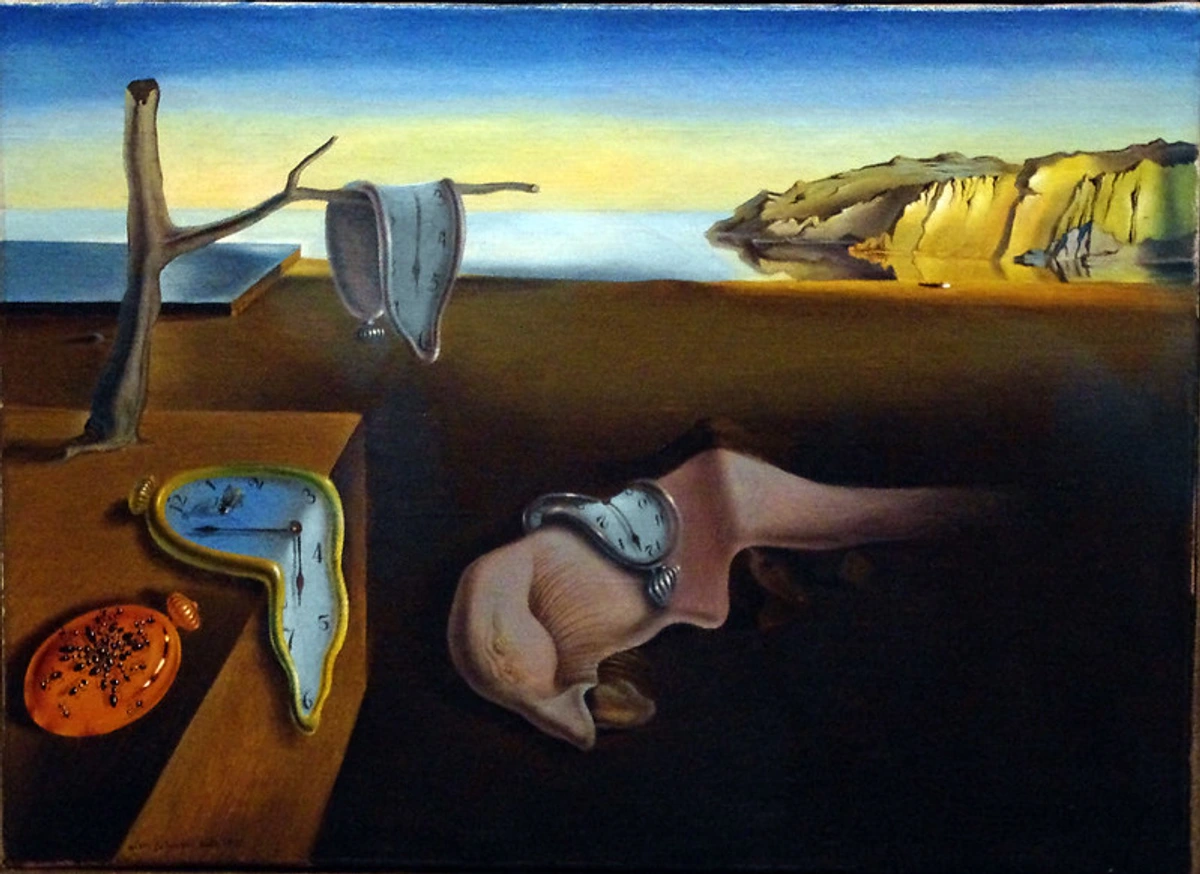
There are some works of art that defy all expectation, and then there's Salvador Dalí's The Persistence of Memory. The first time I saw it, I almost walked right past it. And it wasn't because I didn't recognize those iconic melting clocks – everyone has seen them somewhere, right? It was because this masterpiece, so monumental in its cultural impact, is surprisingly, almost absurdly, tiny. Only about 9.5 by 13 inches (24 x 33 cm). Imagine encountering this colossal cultural icon in such a petite package – it’s a disorienting experience that immediately signals this isn't just "any" famous painting. Smaller than a standard piece of printer paper, yet it contains a universe of deliberate strangeness, a profound meditation on time, memory, and the human subconscious. Beyond the pop-culture ubiquity, lies a canvas teeming with meaning, often misunderstood or oversimplified. My goal here is to help you really see it anew, from Dalí's radical methods to the painting's intricate symbolism and its enduring echo in our collective consciousness. It’s much stranger, and frankly, more brilliant than its pop-culture status lets on. So, let’s stop rushing past it, and delve into the fascinating "paranoiac-critical method" that brought these dreamscapes to life.
credit, licence
Dalí's Formative Years: A Rebellion Forged in Tradition and Dreams
Before we unravel The Persistence of Memory, it's worth understanding the mind that birthed it. Salvador Dalí, born in Figueres, Catalonia, in 1904, wasn't just a quirky figure who painted melting clocks. He was, in fact, a rigorously trained artist, steeped in the traditions of the Old Masters, yet destined to tear them apart. His early education at the Municipal Drawing School in Figueres honed his prodigious technical skill – a foundation he would later use to render his most fantastical visions with unsettling realism. Think of the meticulous detail of a Johannes Vermeer or the compositional mastery you'd find in Renaissance art; Dalí absorbed these principles only to then dramatically subvert them with his own unique vision. He painstakingly studied their brushwork and glazing techniques, understanding that true mastery allowed for intentional disruption, a kind of controlled artistic anarchy.
By 1922, Dalí enrolled at the Royal Academy of Fine Arts of San Fernando in Madrid. This was a period where he really started to experiment wildly, absorbing influences from Cubism, Futurism, and Metaphysical painting. He wasn't just observing these movements; he was internalizing their radical approaches to fragmented perspectives, dynamism, eerie stillness, and psychological space, preparing the ground for his own unique brand of visual disruption. Even then, before formal Surrealist encounters, his fascination with the subconscious, heavily influenced by reading Sigmund Freud, was evident. He was brilliant, yes, but also fiercely independent and, well, rebellious. I often wonder what those professors made of him! He challenged them, declared them incompetent, and was eventually expelled in 1926, just before his final exams. Clearly, academic institutions and Dalí weren't destined for a long, harmonious marriage! Not exactly a conventional path, but then again, what about Dalí was conventional?
This early period of intellectual ferment and artistic rebellion was crucial. It wasn't long after his expulsion that he made his first trip to Paris and encountered the Surrealist movement. His unwillingness to be confined by academic or artistic norms perfectly aligned with Surrealism's radical, anti-establishment ethos, making him a natural (if eventually rebellious) fit for the group. His fiery personality drove him to seek out and eventually redefine radical artistic expression, much like the distorted perspectives found in some of Picasso's work from similar periods.
Surrealism Unpacked: Dalí's "Hand-Painted Dream Photographs"
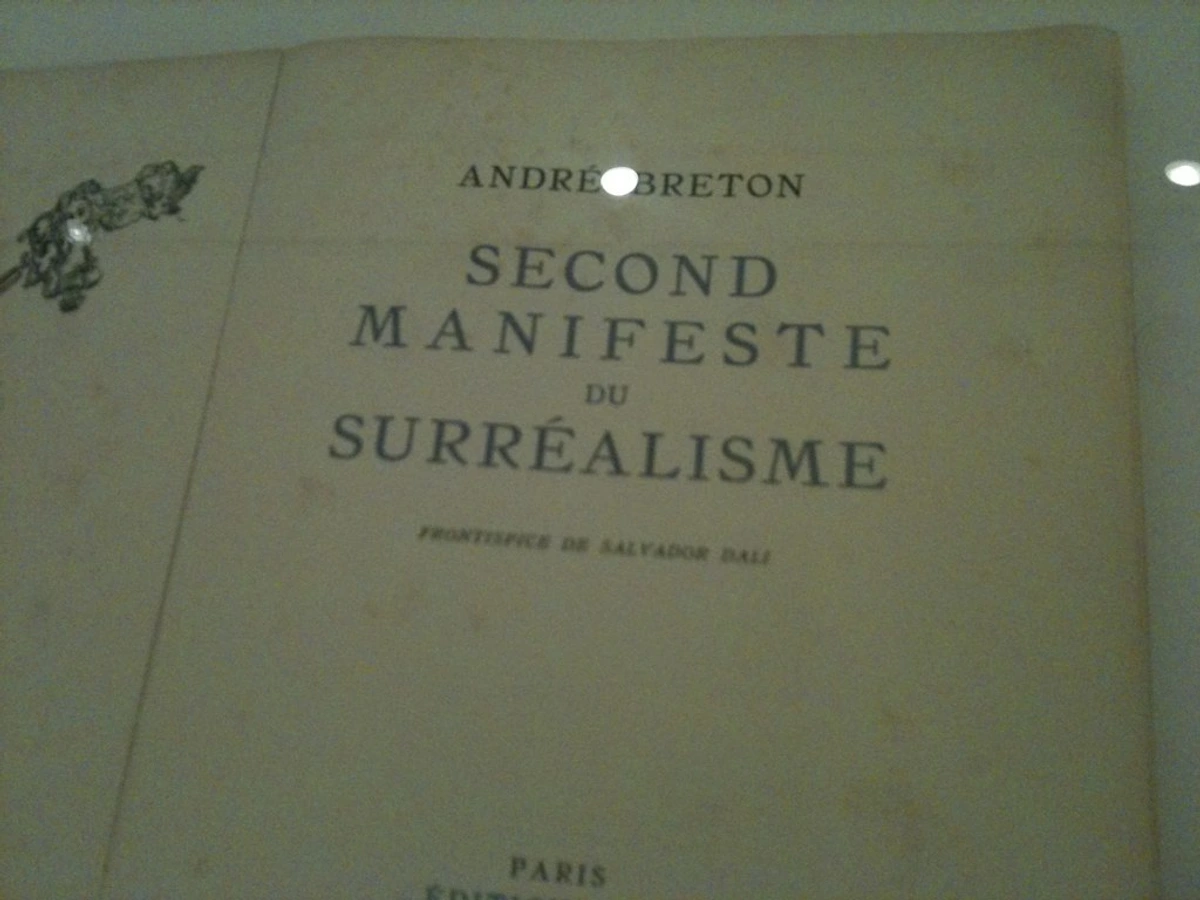
To truly grasp The Persistence of Memory, we need to place it firmly within the swirling, often contradictory, world of Surrealism. Born in Paris in the 1920s, largely under the intellectual guidance of André Breton, Surrealism wasn't just an art movement; it was a philosophical, literary, and political revolution. Influenced heavily by Sigmund Freud's theories of the unconscious mind and dreams, Surrealists sought to liberate human imagination by bypassing rational control. They aimed to resolve the "hitherto contradictory conditions of dream and reality into an absolute reality, a super-reality." What did Breton mean by this 'super-reality'? Imagine standing at the edge of a cliff, where the solid ground of your waking life seamlessly merges with the liquid, illogical abyss of a dream. Essentially, it was a higher plane of existence where the waking world and the dream world merged into something more profound and true, making the illogical feel utterly natural. It was a fascinating, often chaotic, pursuit of the subconscious, driven by the belief that true freedom lay in breaking free from the constraints of reason.
Dalí, with his flamboyant personality and unparalleled technical skill, quickly became one of Surrealism's most recognizable figures. His hyper-realistic style, which he called "hand-painted dream photographs," was distinct. While artists like Joan Miró explored automatism (spontaneous, uncontrolled drawing or writing to express the subconscious) through biomorphic abstraction – think squiggly, organic shapes that seem to evolve on the canvas – and Max Ernst experimented with frottage and grattage techniques to generate accidental imagery from textures, Dalí presented his dreamscapes with a startling, almost academic precision. This gave his fantastical visions a disturbing believability, making the impossible feel chillingly real. It’s this very tension between the tangible and the impossible that makes the scene so compelling. He wasn't just influenced by Surrealism; he bent the movement to his own will, for better or worse (depending on who you asked at the time), eventually leading to his formal expulsion in 1934, though he famously retorted, "I myself am Surrealism."
Consider other contemporaries: Yves Tanguy's desolate landscapes filled with biomorphic forms (irregular, amoeba-like shapes that suggest evolving biological organisms, appearing as alien, fluid structures that defy easy categorization) and an alien stillness, like ghostly, elongated figures marching across an otherworldly plain. Paul Delvaux's dreamlike tableaux of nude women and skeletons in classical settings evoke a silent, unsettling theater. Or Leonora Carrington's mystical, often unsettling narratives drawn from folklore and her own subconscious personal mythology, like a dark, fantastical fairy tale. Each found their own route to the "super-reality" Breton spoke of. Dalí's path, however, was unique in its meticulous detail, creating a profound dissonance that drew the viewer deeper into his constructed dream worlds. It's almost like he was building a hyper-detailed diorama of his nightmares.
The Dalí Psyche: Camembert, Trauma, and the Paranoiac-Critical Method
While Dalí's technical prowess is undeniable, the genesis of his most iconic imagery often stemmed from his unique psychological landscape and unconventional methods. So where did this bizarre, unsettling vision come from? Dalí himself offered a famously simple, almost dismissive explanation for The Persistence of Memory. He claimed he was inspired after dinner one evening while contemplating the "super-soft" nature of a runny Camembert cheese. The story goes that his wife, Gala, had gone to the cinema, and he, feeling a migraine coming on, stayed home. He looked at an almost-finished landscape painting of the Catalan coast he had in his studio and, in a hallucinatory flash triggered by the melting cheese, saw the clocks. Within two hours, he had painted them in. Gala returned, saw the painting, and immediately declared it a masterpiece, famously saying, "No one can see this and forget it."
Should we take the cheese story at face value? With Dalí, who was a master showman, provocateur, and self-mythologizer, who knows. Maybe it was just a convenient, delightful anecdote, a perfect blend of the mundane and the profound that Dalí loved. But it does fit perfectly with his radical artistic method, which he called the "paranoiac-critical method." This isn't just a fancy term; it's the core of his creative genius. He described it as a "spontaneous method of irrational knowledge based on the critical and systemic objectification of delirious associations and interpretations." Essentially, it meant tapping directly into the subconscious – into paranoid delusions, dream logic, and hallucinatory visions – and then using his extraordinary, hyper-realistic technical skill as a painter to render those visions with almost photographic detail. Think of it like a highly controlled artistic 'hack' – a shortcut to bypass the rational mind and tap into raw, unfiltered creativity, then shaping that chaos with immense control. The runny Camembert wasn't merely a snack; it was a "critical mass" for Dalí, a perfect everyday object that, when viewed with a 'paranoid' lens, transformed into a symbol of decaying time, unleashing a torrent of subconscious associations. This method allowed him to create works that were both deeply personal and universally unsettling, bridging the gap between his inner world and the external reality he depicted so flawlessly.
Now, about Albert Einstein's Theory of Relativity: while many love to connect the melting clocks to this revolutionary scientific concept, Dalí himself repeatedly dismissed the idea. He stressed that the inspiration was purely the Camembert, reinforcing his emphasis on the immediate, subconscious trigger rather than external scientific theories. So, my money is on something far more personal and psychological.
Gala, his wife, muse, and business manager, played a pivotal, though often understated, role in his work. More than just a model, she was his intellectual companion, his rock, and perhaps the only person who truly understood the complex, often chaotic, landscape of his psyche. Her validation was a crucial component of his creative process, offering a grounding influence amidst his fantastical visions and his increasingly elaborate public persona. Dalí was also deeply interested in harnessing the power of dreams. He famously cultivated hypnagogic states – the point between waking and sleeping – where he would often hold a spoon above a plate. As he drifted off, the spoon would clatter, waking him to immediately record the fleeting images from his subconscious. This was another facet of his systematic approach to unlocking irrational knowledge.
Dalí also carried deep-seated anxieties and traumas that heavily influenced his artistic vocabulary. His profound, lifelong phobia of ants, for instance, stemmed from a childhood trauma where he witnessed insects devouring a decaying bat. This visceral experience imbued the image of ants with intense psychological weight in his work, making them powerful symbols of decay, corruption, and his anxieties around control and mortality, perhaps even hidden sexual desire. Understanding these personal layers helps us see that his art wasn't just bizarre for the sake of it, but deeply rooted in his unique psyche.
The Dream Unfolds: A Visual Inventory of The Persistence of Memory
So, what are we truly observing in this dreamscape? Before diving into complex theories about Einstein or psychoanalysis, let’s just take a moment for pure observation. Close your eyes, then open them and truly see the scene. The setting is a desolate, dreamlike landscape, starkly rendered yet eerily familiar. Dalí himself confirmed it was inspired by the rugged, windswept cliffs of Cap de Creus in Catalonia, near his home – a place of harsh beauty and profound significance to him. This particular geological formation, with its ancient, gnarled rocks shaped by relentless Tramontana winds and sea erosion, offered Dalí a perfect symbol for deep time and the unyielding forces of nature, starkly contrasting with his melting forms. The light is strange, an unearthly glow that casts long, dramatic shadows, making the familiar feel utterly alien. This duality, the hyper-realistic rendering of an impossible scene, is a hallmark of Surrealism, after all.
But it's the objects within this landscape that truly make it iconic. Each one is a potent piece of the puzzle, rendered with a disturbing, almost photographic clarity. Within this stark yet evocative landscape, Dalí has placed a cast of unforgettable objects, each a potent piece of the puzzle, inviting us to decode its strange beauty.
Symbol  | Description | Interpretations & My Take |
|---|---|---|
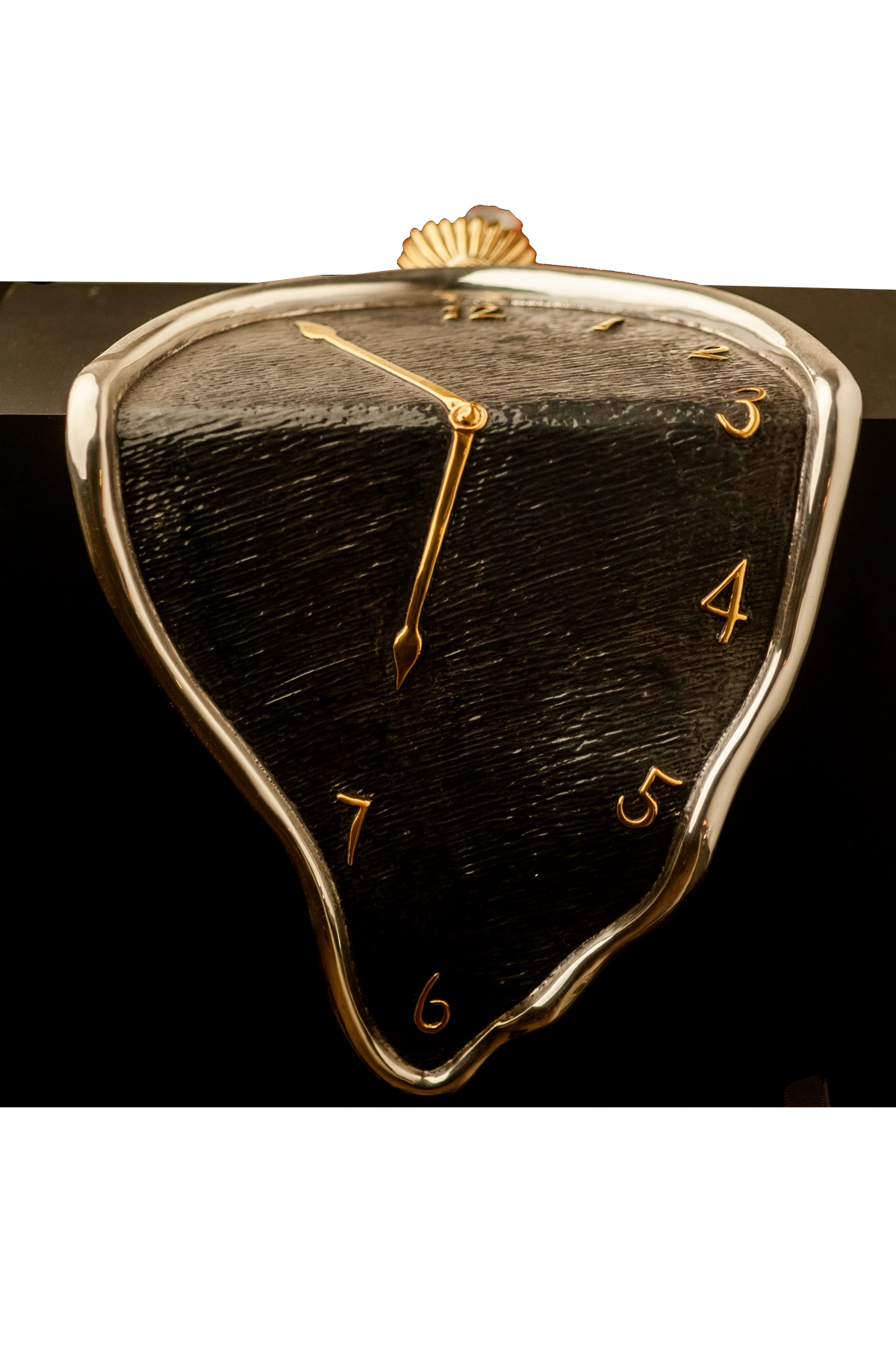
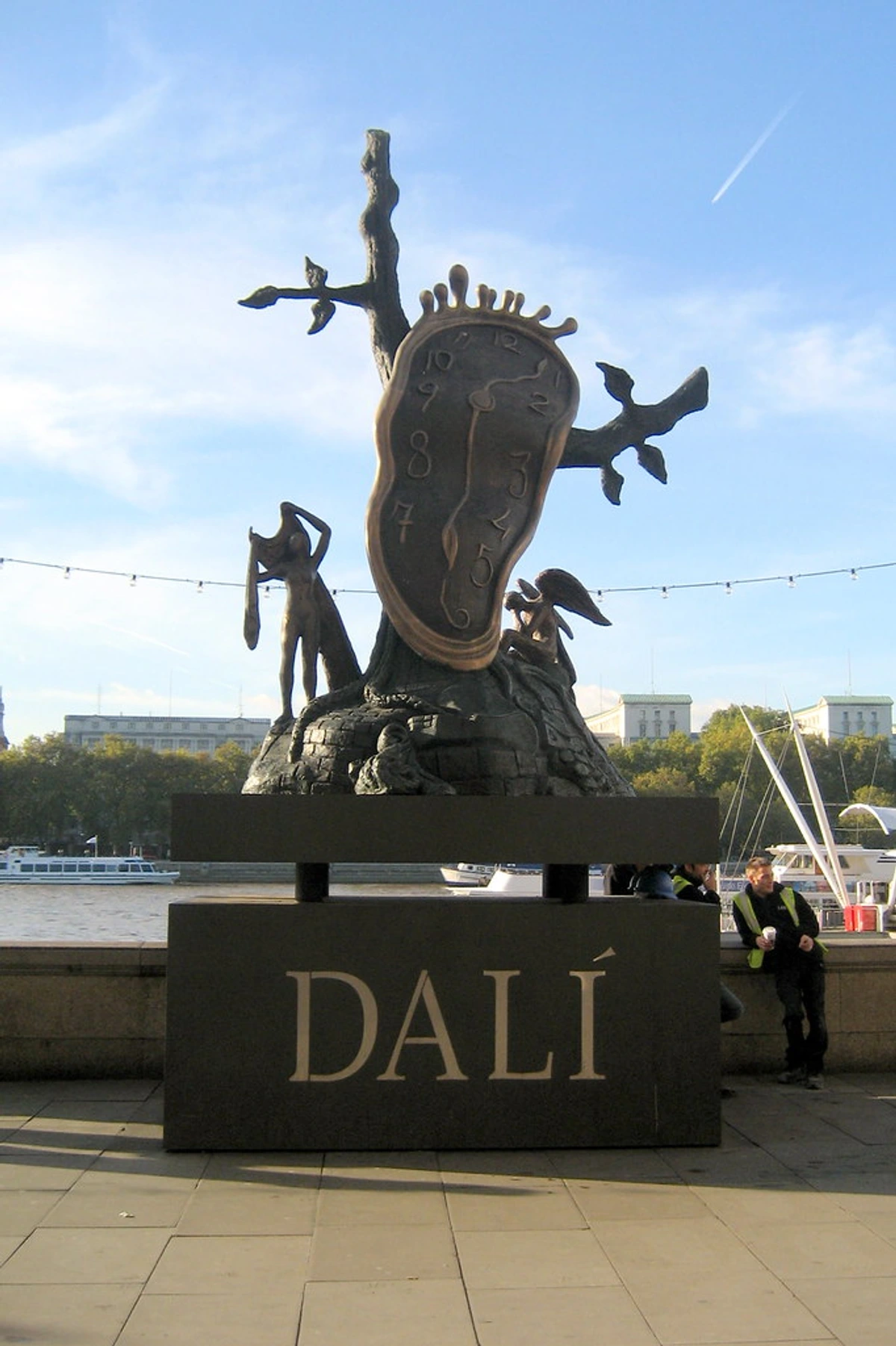
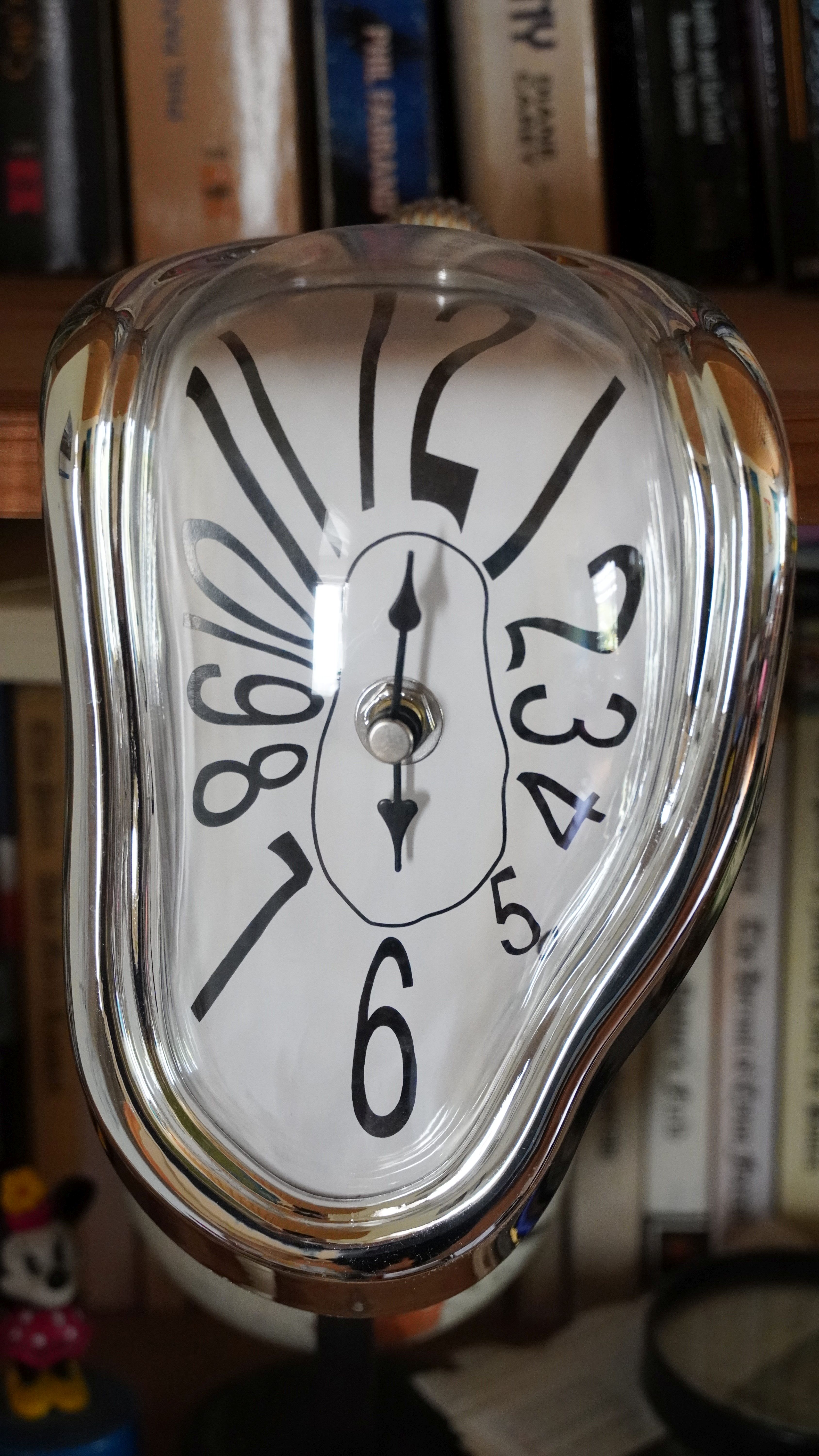
| The Melting Clocks | Three pocket watches appear to be melting limply over various objects: a tree branch, the distorted self-portrait, and a block. Their metallic forms are strangely fluid, like cheese left in the sun. | These are the most famous symbols, powerfully speaking to the softness, fluidity, and unreliability of time itself. For Dalí, time was a psychological, subjective concept rather than a rigid, measurable one. Art historians often connect them to Henri Bergson's theories on subjective time, or even to the malleability of memory itself. For me, they perfectly embody how time feels when we're lost in thought, memory, or boredom – stretching and distorting. This captures the essence of symbolism of time in surrealist art. They challenge the very notion of time as a fixed, objective construct, suggesting it's as malleable as our memories. |
| The Orange Clock | A single, solid pocket watch on the far left, face down, covered in a swarm of black ants. | In stark contrast to the melting clocks, this solid, devoured timepiece clearly symbolizes decay, death, and the finite, destructive nature of time. Dalí had a profound, lifelong phobia of ants, stemming from a childhood trauma. This personal terror imbues the image with intense psychological weight, making it a visceral representation of his anxieties around corruption and loss of control. It reminds me of the relentless, unnoticed march of entropy, slowly consuming everything. |
| The Strange Creature | A fleshy, amorphous form lying on the ground, resembling a deflated, melting head or a sea monster. It has long eyelashes and a nose, often interpreted as a distorted self-portrait of Dalí himself, perhaps asleep or dreaming. | Widely seen as a representation of the dreamer – Dalí’s own subconscious mind where these bizarre visions originate. Its vulnerability and distortion suggest the fragile, malleable nature of the self when confronted with the illogical world of dreams, or perhaps the 'death' of the waking self to allow the subconscious to surface. Its uncanny human features (the eyelashes!) make it both repulsive and eerily familiar, perhaps representing the artist grappling with the strange forms his own mind produced. It's almost like his consciousness itself is melting, a visual metaphor for the dissolved boundaries of the self during a dream state. |
| The Barren Landscape | The precise, rugged cliffs of Cap de Creus in Catalonia, stretching into the distance under an impossibly clear sky. | This represents the harsh reality of the external world, the unyielding backdrop against which the internal, fluid world of dreams and memory plays out. It’s a stage setting that grounds the impossible objects in a tangible (if unsettling) place, emphasizing the contrast between inner and outer realities. The timelessness of the ancient rocks stands in stark opposition to the fleeting nature of the clocks, creating a powerful visual paradox. Some see it as a symbol of infinity, others as a desolate spiritual void. For me, it feels like the desolate stage for an internal drama, a canvas for the mind's projections, reflecting the vast indifference of nature against human concerns. |
| The Fly | A single fly rests on the orange melting clock. While often overlooked, it's rendered with unsettling detail. | Another powerful, albeit subtle, symbol of decay, transience, and the passage of time, buzzing around the transient moment. Its presence reinforces the theme of inevitable deterioration, echoing the ants and adding to the overall sense of fleeting existence, a small but potent reminder of mortality. It can also symbolize the irritant, the nuisance that disrupts contemplation. It’s a tiny, unsettling detail that adds to the painting's pervasive sense of unease. |
| The Olive Tree | A dead or pruned olive tree, with only a few struggling leaves, springs from a rectangular wooden block. | Traditionally a symbol of ancient wisdom, peace, and immortality, here it is barren, almost petrified, suggesting the death of old certainties or the futility of traditional structures in the face of the fluid, irrational modern mind. Its stillness contrasts sharply with the fluidity of the clocks, presenting a poignant visual paradox. It's a powerful example of understanding the symbolism of trees in art. To me, it speaks of something once strong and rooted, now withered and forgotten, a fragile outpost against a relentless, distorting world. |

Meticulous Madness: Dalí's Technical Brilliance
It's easy to get lost in the symbolism and psychoanalysis of The Persistence of Memory, but we often overlook the sheer technical mastery that underpins Dalí's surreal visions. He was, by all accounts, an extraordinarily gifted draftsman and painter, deeply rooted in the techniques of the Old Masters he so admired, particularly the meticulous detail of the Dutch and Flemish Renaissance. This isn't just a casual observation; it's the very core of what made his "hand-painted dream photographs" so compelling. He took the impossible and made it palpably, unsettlingly real.
Dalí employed traditional oil painting methods to achieve the smooth, almost enameled surfaces and the astonishing clarity in his work. He meticulously built up layers of thin, transparent glazes – essentially, layers of paint diluted with a medium to make them translucent – over solid underpainting, a technique that creates a luminous depth and makes the light feel so otherworldly. This layering allowed for a translucent, ethereal quality, making the impossible light seem to emanate from within the canvas and contributing to the illusion of 'softness' for the clocks. As an artist who has wrestled with oil paints myself, I can attest to the sheer dedication required for such flawless application, letting each layer dry before carefully adding another. It speaks to an unwavering commitment to craft. He wasn't just splashing paint around; he was orchestrating it with the precision of a Renaissance master. The precision with which he renders every eyelash on the distorted self-portrait, every ant on the clock, and every crag in the Cap de Creus cliffs is breathtaking. This hyper-realistic finish, juxtaposed against the utterly irrational subject matter, is what gives the painting its unique power. It tricks the viewer's eye into accepting the impossible as real, drawing them deeper into the dream, making the abstract feel astonishingly tangible. It's a key aspect of the definitive guide to understanding abstract art styles.
He wasn't merely illustrating dreams; he was fabricating them on canvas with an almost scientific exactitude, a testament to his belief in the "absolute reality" of his subconscious visions, deserving of the highest artistic craft. In a way, his process was akin to building a meticulously detailed stage set for his most bizarre inner dramas.

Beyond Physics: The Subjective Feeling of Time
I don’t think this painting is about physics; it’s about the feeling of time. Think about it: when you're impatiently waiting for a train, an hour can stretch into an eternity. But when you're completely engrossed in a new art piece you're creating, hours melt away in minutes. When you’re trying to recall a distant memory, time becomes warped and distorted, blending fragments of different eras. Consider also moments of intense anxiety or fear, where time seems to slow to a crawl, or periods of intense joy, where it rushes by in an instant. This is the "softness" of time that Dalí was obsessed with, the way our internal, subjective experience of chronology is utterly unreliable. The painting isn't a scientific diagram; it's an emotional one, a raw visualization of the strange, unreliable, and utterly subjective nature of our own internal clocks. It’s a key piece of understanding symbolism in contemporary art, offering insights into how an artist can capture the ineffable.
The ants, for instance, are not just generic symbols of decay; for Dalí, they represented a deep-seated childhood trauma associated with decay and sexual anxiety. This intensely personal connection injects a primal fear into the symbol, making it far more potent than a purely intellectual interpretation could offer. Similarly, the barren olive tree, traditionally a symbol of ancient wisdom, peace, and immortality, here stands as a withered testament to the vulnerability of even the most enduring symbols in the face of our fluid internal worlds. Its petrified state against the melting clocks underscores a tension between permanence and transience that I find utterly compelling. It reminds me of those moments where something I thought was solid and unchanging in my memory suddenly reveals itself to be fragile or even gone. It's an insightful lens through which to consider the definitive guide to understanding symbolism in art.
Dalí's focus on this subjective experience of time is what makes The Persistence of Memory so universally resonant. It's not just a surreal landscape; it's a mirror reflecting our own internal battles with memory, decay, and the ever-shifting nature of our perception. You can see his journey through art in our timeline.
An Icon's Enduring Echo: Cultural Impact and Legacy
There’s a reason this image has been endlessly parodied in everything from The Simpsons to advertisements for watches (oh, the irony!). It taps into a universal human experience. Dalí managed to create a visual shorthand for the weirdness of time, memory, and the subconscious that transcends language and culture. He gave us a symbol for a concept that is incredibly hard to describe with words, a dreamscape so potent it became a collective cultural touchstone, recognized across generations and disciplines. Consider its appearance in films like Alfred Hitchcock's Spellbound (where Dalí himself designed a dream sequence), its subtle influences in fashion editorials featuring fluid, distorted realities (think Elsa Schiaparelli's collaborations with Dalí, or later designers like Alexander McQueen echoing the grotesque and the beautiful), or music videos that evoke warped time and subconscious imagery (Björk's early work, or even the fantastical elements in some contemporary pop videos). Literary works, too, have echoed its themes of temporal distortion and fragmented reality, from Gabriel Garcia Marquez's magical realism to science fiction exploring nonlinear time.

When The Persistence of Memory was first exhibited in 1931, it caused a sensation. Critics were both fascinated and bewildered. Early reviews, like those in The New York Times, highlighted its "enigmatic brilliance" and "startling originality," quickly cementing Dalí’s reputation as a leading figure of Surrealism. Its provocative imagery resonated deeply, challenging established artistic norms that prioritized rational thought. Alongside works by contemporaries like René Magritte and Joan Miró, it helped embed the surrealist aesthetic firmly in the public imagination. Its acquisition by MoMA in 1934 solidified its status as a modern masterpiece, making it accessible to millions. Thankfully, due to diligent conservation efforts, its delicate oil paint layers and vibrant pigments continue to be preserved for future generations, ensuring this tiny canvas retains its monumental impact.
Its influence extends far beyond art history textbooks. Today, with the rise of digital art and AI-generated imagery, we're seeing new ways to bend reality, to create impossible landscapes and fluid forms that challenge our perception of what's real and what's authentic. While Dalí didn't have algorithms, his paranoiac-critical method was, in a way, his personal algorithm for simulating these distortions, pushing the boundaries of the imagined into the tangible. While these new technologies raise intriguing questions about authenticity and value, the enduring fascination with Dalí's work reminds us that genuine artistic insight and the human touch continue to captivate. It's a testament to the painting's enduring power that nearly a century later, it continues to provoke, delight, and puzzle, inviting each new generation to question their own perception of reality. It's truly a timeless piece, ironically, about time's fleeting and subjective nature.
Dalí's Evolving Visions: From Dreams to Nuclear Mysticism
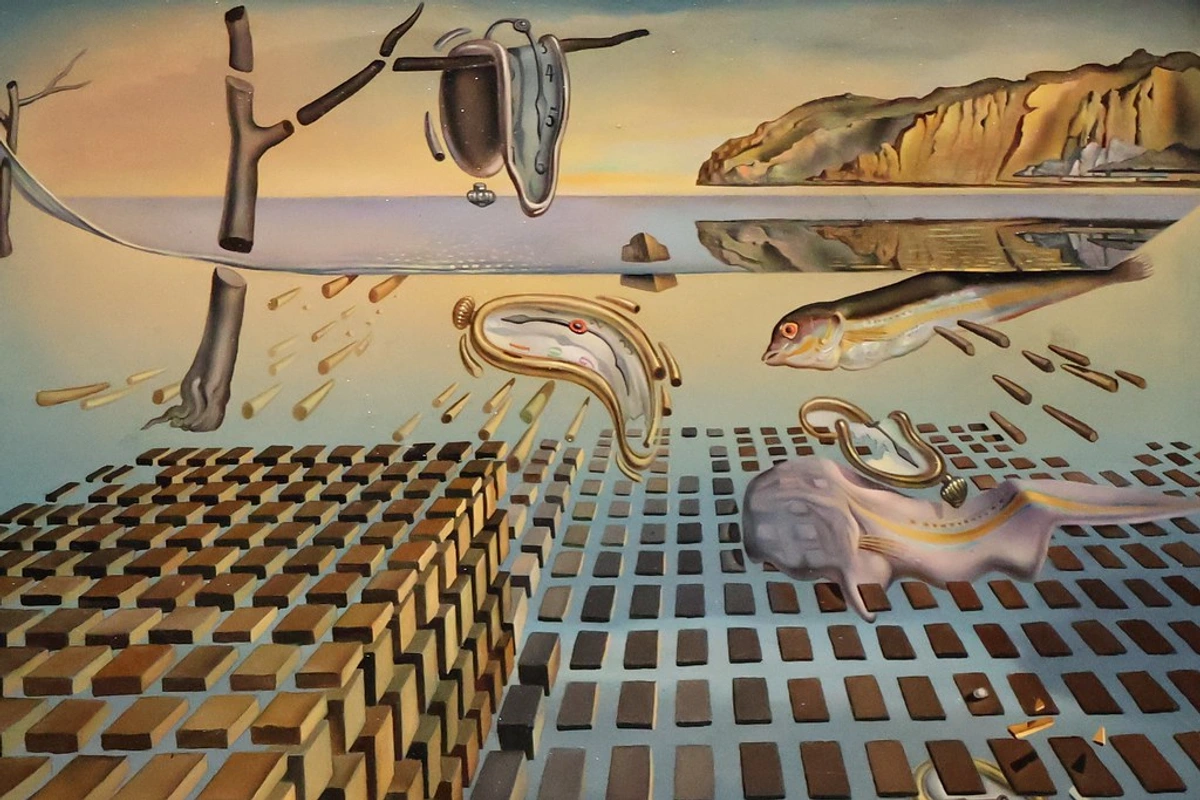
Dalí's artistic journey didn't end with the melting clocks. Later in his career, especially after the existential shock of World War II and the atomic bomb, he explored themes of nuclear mysticism, seeking to integrate scientific theories like quantum physics, atomic theory, and mathematics with spiritual and artistic concepts. Works like Corpus Hypercubus (1954), which depicts Christ on a tesseract (a four-dimensional cube, unfolded into three dimensions), or his own The Disintegration of the Persistence of Memory (1954), show a profound shift. In this later piece, the familiar elements of his earlier masterpiece are fragmented and floating, reflecting his fascination with the breakdown of matter at an atomic level and the invisible forces holding the universe together. This phase demonstrated his continuous exploration of the universe both within and without, always pushing the boundaries of representation and perception, connecting the micro-cosmos of the atom to the macro-cosmos of spiritual reality.
credit, licence
Key Takeaways: Mastering Dalí's Masterpiece
Before we wrap up, here’s a quick recap of the essential points about The Persistence of Memory and Salvador Dalí:
- Small Scale, Monumental Impact: Despite its tiny size (9.5 x 13 inches), the painting holds immense cultural significance and instantly recognizable imagery.
- Surrealism's Core: It's a prime example of Surrealism, aiming to merge dream and reality into a "super-reality" by bypassing rational thought.
- Dalí's Unique Method: His "paranoiac-critical method" involved systematically rendering hallucinatory visions with hyper-realistic detail, making the impossible tangible.
- Time is Subjective: The melting clocks are not about Einstein's physics, but about the deeply personal, psychological, and fluid nature of our experience of time and memory.
- Personal Symbolism: Elements like ants (decay, trauma) and the barren olive tree (death of old certainties) are laden with Dalí's specific anxieties and philosophical reflections.
- Old Master Technique: Dalí's astonishing technical skill, rooted in Renaissance methods, gives his irrational dreamscapes a disturbing, convincing reality.
- Enduring Icon: The painting's powerful imagery has permeated popular culture, influencing film, fashion, music, and art, cementing Dalí's legacy as a true visionary.
Frequently Asked Questions (FAQ)
To further illuminate this iconic work, let's address some of the most common questions people have about The Persistence of Memory.
Where is The Persistence of Memory located?
It is part of the permanent collection at the Museum of Modern Art (MoMA) in New York City. It has been there since 1934, making it one of the museum's most prized and recognizable works.

What is the strange creature in the center of the painting?
It is widely believed to be a distorted self-portrait of Salvador Dalí in profile, as if asleep and dreaming. The amorphous form, with its long eyelashes, is similar to other self-portraits he included in paintings like The Great Masturbator, representing the vulnerable, subconscious self, melting under the pressures of unconscious thought.
What is Dalí's "paranoiac-critical method"?
It was Dalí's unique surrealist technique, a "spontaneous method of irrational knowledge based on the critical and systemic objectification of delirious associations and interpretations." Essentially, he would tap into dream logic, paranoid delusions, and hallucinatory visions, then meticulously render these internal experiences with hyper-realistic painting skill, making the impossible seem tangible and giving them absolute reality. Think of it as a highly controlled artistic 'hack' for the subconscious mind, allowing him to externalize his inner world with shocking clarity and precision.
What artistic techniques did Dalí use to achieve the hyper-realism in The Persistence of Memory?
Dalí was a master of traditional oil painting, employing techniques used by Old Masters, particularly those of the Dutch and Flemish Renaissance. He meticulously built up layers of thin, transparent glazes over solid underpainting, which created a luminous depth, ethereal light, and smooth, enameled surfaces. His use of fine brushes allowed for astonishing detail, making every element, from an ant's leg to a rock's crag, appear with photographic precision. This technical mastery was key to making his irrational dreamscapes feel utterly convincing and disturbing.

What were Dalí's key philosophical influences?
Dalí was deeply influenced by Sigmund Freud's psychoanalytic theories, particularly regarding the unconscious mind, dreams, and repressed desires. He also engaged with philosophical concepts of time, notably Henri Bergson's idea of subjective duration, which challenged objective, measurable time. Beyond these, his fascination with the nature of reality and perception, along with his later interest in scientific advancements, contributed to his unique philosophical lens, often infused with his own brand of existentialism and a quest for 'absolute reality'.
How did Dalí's childhood experiences influence his art?
Dalí's childhood in Catalonia and his family life profoundly shaped his art. The rugged landscape of Cap de Creus, near his home, became a recurring backdrop in his work, symbolizing both timelessness and desolation. His intense, lifelong phobia of ants stemmed from a traumatic childhood memory, leading them to symbolize decay and sexual anxiety in his paintings. His complex relationship with his parents, particularly his overbearing father, also played a role in his rebellious spirit and explorations of identity and self-portraiture within his surreal dreamscapes. These deeply personal experiences were systematically channeled through his paranoiac-critical method into universal symbols.
What was Dalí's relationship with Gala?
Gala Dalí was not just Salvador Dalí's wife and muse; she was his intellectual partner, confidante, and shrewd business manager. She played a crucial role in his life and work, providing stability, inspiration, and astute management of his career, helping him navigate the art world and secure his financial success. Many believe she was the only person who truly understood his complex genius and kept him grounded amidst his fantastical visions and public persona.
What other famous works did Dalí create?
Beyond The Persistence of Memory, Dalí created a vast body of work, including Swans Reflecting Elephants, The Temptation of St. Anthony, Christ of Saint John of the Cross, and the Mae West Lips Sofa. He also experimented with film, sculpture, and fashion, famously collaborating with Luis Buñuel on surrealist films like Un Chien Andalou (1929) and L'Age d'Or (1930), as well as designing sets for Alfred Hitchcock's Spellbound. Later in his career, he explored themes of nuclear mysticism, incorporating scientific ideas into works like Corpus Hypercubus and The Disintegration of the Persistence of Memory, showing a continuous exploration of the universe both within and without.
Did Dalí get expelled from the Surrealist movement?
Yes, Dalí had a complex and often turbulent relationship with the Surrealist leader André Breton. While he was a prominent and influential figure, his increasingly commercial ventures, his ambiguous political leanings, and his flamboyant personality led to his formal expulsion from the group in 1934, though he famously retorted, "I myself am Surrealism." He continued to consider himself a Surrealist even after his excommunication.




credit, licence
Was Dalí interested in science?
Yes, Dalí was deeply fascinated by science throughout his career, particularly quantum physics, mathematics, and genetics. This interest became more pronounced later in his life, leading to his "nuclear mysticism" phase. He often integrated scientific concepts, like atomic theory, anti-matter, and the breakdown of matter, into his art, exploring the unseen forces that shape reality, though he typically approached them through a highly personal and surreal lens. He was always seeking new ways to understand and depict the universe, blending the scientific with the spiritual and artistic.
A Final Thought
In the end, whether it's about runny Camembert cheese or cosmic theories, The Persistence of Memory sticks with us because it visualizes a feeling we all know. Time isn't a steady, ticking clock on the wall. It's a weird, wobbly, personal thing that melts in the sun of our memories, gets eaten by the ants of our anxieties, and distorts with the ebb and flow of our emotions. For Dalí to put that elusive, subjective feeling on a tiny canvas with such precision isn't just surreal; it's profoundly real. It’s a testament to the power of art to articulate the inarticulable, to make the internal external, and to remind us that even our deepest, strangest thoughts can find a universal echo. So, the next time you encounter Dalí's melting clocks, pause. What does time mean to you? How does your own consciousness warp and bend the rigid structure of minutes and hours? Perhaps you'll find parallels in how contemporary abstract art often makes the ineffable feel tangible, or even in the quiet moments of your own creative process.