Franz Kline: Master of Gestural Abstraction & Earned Freedom
Discover Franz Kline's journey from figuration to monumental gestural abstraction. This ultimate guide unpacks his techniques, controlled chaos, and how you can harness his "permission slip" to find your bold artistic voice. Includes practical exercises and deep insights.

Franz Kline's Dynamic Chaos: Your Definitive Artist's Guide to Powerful Gestural Abstraction
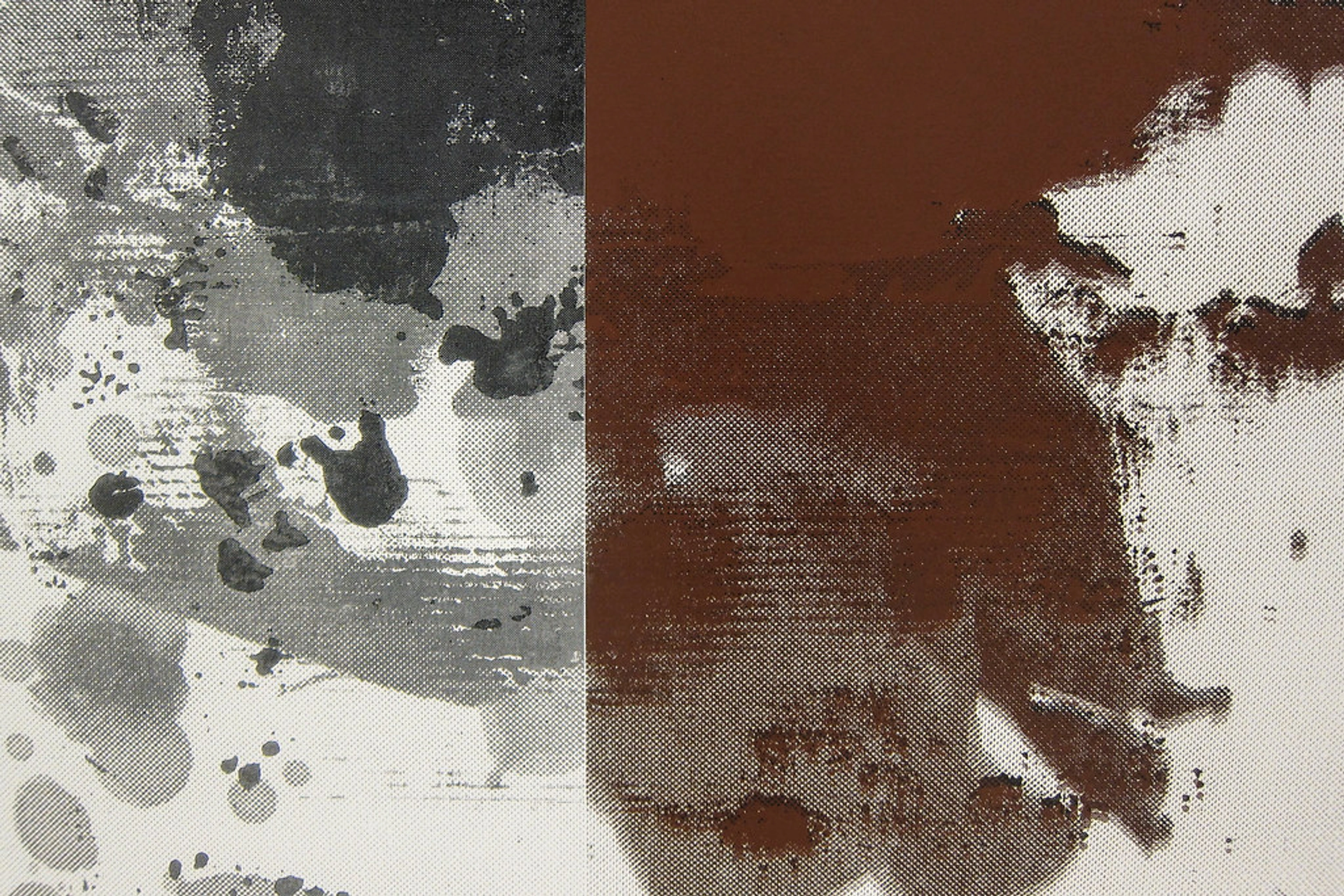
The first time I stood in front of a real Franz Kline painting, my first thought was a cliché, but an honest one: "My kid could probably do that." It's a massive canvas, often stretching several meters, dominated by what looks like a few furious slashes of black house paint. It’s raw, aggressive, and seems almost recklessly simple. But then you stand there for another minute, and another. You start to see things. The way the black isn't just black, but reveals its texture and history, scraping against the canvas, sometimes thick with impasto (a technique of applying paint thickly so that it stands out from a surface), other times a ghostly stain. The way the white isn't just a passive background, but an active, muscular shape pushing back, asserting its own presence, holding its own form against the black. And that's when the second, more humbling thought hits you: "Oh. No, he couldn't."
Kline has this magnetic pull because his work feels both incredibly simple and impossibly complex. It's this masterful synthesis of raw energy and meticulous control that truly captivates me. It looks like pure, spontaneous emotion, but it’s built on a foundation of rigorous control. He basically hands us a 'permission slip' to be bold, to get messy, to use raw materials, and to express ourselves physically. This isn't just about making a mark; it's about making your mark with genuine, unbridled energy, and then understanding the subtle architectural decisions behind that energy – things like the interplay of line weight, implied perspective, and dynamic balance. So, if you've ever felt that pull, that desire to create something with that same raw power, you're in the right place. We're going to break down the myth, the materials, and the motion behind Franz Kline's technique, not just to copy him, but to borrow that permission slip and find your own voice in the expressive sweep of a brush. This is your ultimate guide to harnessing that dynamic chaos in your own contemporary art practice.
Before the Black and White Storm: Kline's Earned Freedom
Before he became the titan of black and white abstraction, Franz Kline was, like many artists, walking a different path entirely. His early career, deeply rooted in the American art scene, saw him immersed in figurative and representational art. I've often thought about how artists like Kline, who later embraced abstraction, rarely started there. They master the rules before they break them. He painted compelling cityscapes of his native Pennsylvania, intimate portraits of friends and family, and even powerful murals for the Works Progress Administration (WPA) during the Great Depression, often depicting labor scenes or everyday American life with a robust, earthy palette. These early works, characterized by a Social Realist bent (depicting social and racial injustice or the hardships of everyday life) or reminiscent of American Scene painters (think vivid street scenes, robust industrial landscapes, or portraits of ordinary people), demonstrate a profound understanding of traditional techniques, form, and understanding balance in art composition.
He wasn't just skilled; he was a meticulous craftsman. This early foundation is crucial; it tells us that his later move to abstraction wasn't a shortcut or a rejection of skill, but a deliberate evolution – a distillation of his understanding of visual language. It’s like learning the classical symphony before you invent jazz; the freedom is earned, not accidental. For Kline, mastering these traditional elements, like how forms interact or how to guide the eye, was a non-negotiable step, empowering him to truly innovate when he decided to break free. What a potent reminder that true innovation often comes from deep understanding, right?
The post-war American psyche, with its blend of burgeoning industrial might, Cold War anxieties, and existential unease, provided a fertile ground for this evolution. Imagine the feeling of a nation rebuilding, the roar of machinery, the tension of a world on edge – it pushed artists towards a visual language that felt raw, immediate, and utterly modern, yet deeply structured. This period, often called the New York School, was also shaped by the influx of European émigré artists, many influenced by Surrealism's automatism, though Kline's spontaneity was far more controlled and premeditated. He wasn't just letting the subconscious flow; he was directing it, searching for fundamental forms. The philosophical currents of existentialism, emphasizing individual freedom and the anxiety of choice, also resonated deeply with the Abstract Expressionists' exploration of raw, subjective experience on the canvas.
The Architect of Energy: Deconstructing Kline's Controlled Chaos
Here’s the biggest secret about Kline, and it’s one that always fascinates me: those massive, explosive gestures weren’t born on the canvas in a flash of temper or joy. They were meticulously rehearsed, a carefully orchestrated performance of raw energy. Kline was a master of preparation, a true architect of energy. He would create hundreds of preliminary sketches, often on cheap, disposable paper like pages from a telephone book, newspapers, or even old magazine covers. I sometimes imagine him poring over these scraps, a brush and ink in hand, rapidly trying out compositions, searching for that perfect, dynamic balance, almost like a choreographer refining a dance move. Think of iconic works like "Mahoning," with its colossal, bridge-like black forms dominating the surface, or "Chief," an almost totemic structure of interlocking, thrusting strokes, or the fierce, angular thrust of "Cobra" – they feel utterly immediate, but their underlying structure was thoroughly explored and refined in these countless studies.
What does this meticulous preparation tell us about the nature of artistic "spontaneity"? It suggests that true freedom isn't the absence of structure, but the mastery of it. He wasn't just throwing paint; he was designing a controlled explosion. He would often use a projector to blow up his favorite small sketches onto his large canvases, meticulously re-creating the essence of that tiny, initial brushstroke, amplifying its energy and impact on a monumental scale. This distinction is crucial: the final painting wasn't a moment of spontaneous rage; it was a carefully executed performance of a moment of spontaneous genius. It reveals that the core of his work wasn't just raw emotion, but a profound understanding of fundamental design in art. In fact, the term "action painting" — which refers to a style where the physical act of painting is itself central to the artwork's creation, often involving dripping, splashing, or smearing paint — barely scratches the surface of his nuanced, often architectural process.
And here’s another vital insight, one that will truly unlock his vision for your own practice: Kline didn't paint black lines on a white background. He painted with black and white. He saw the white not as passive space to be filled, but as an active, structural element, a muscular shape in itself, pushing and pulling against the black. This interplay of positive and negative space is a foundational aspect of his compositions, making his work far more dynamic than it might first appear. Think of it this way: if you have a bold black diagonal stroke, the white triangles it carves out of the canvas are not empty voids; they are equally weighted, active forms. He even drew inspiration from what he called "typographic forms," seeing the bold, abstract quality in industrial symbols and signs – things like the stark outlines of steel girders, factory windows, or massive block letters on a billboard, stripping them down to their energetic core. For him, these powerful, simplified forms offered a vocabulary for dynamic lines and masses. This idea, that even seemingly empty space holds form and power, transformed my own understanding of composition, and I believe it can do the same for yours. Think of the white not as an absence, but as a sculpted presence, like the air around a statue defining its form.
The Artist's Toolkit: Getting the Right Gear for the Job
You don’t need a fancy studio to channel your inner Kline, but using the right kind of materials makes a world of difference. He was after an industrial, gritty, distinctly American feel, and his tools reflected that. It's less about delicacy and more about directness, a rebellion against the preciousness of traditional "fine art" materials. His choices were often driven by their availability, low cost, and sheer physical properties, giving his work that unpretentious, raw power. For him, the industrial nature of house paint imbued his work with a certain honesty, stripping away any pretense often associated with art. This approach is incredibly liberating, moving you away from the preciousness of 'fine art' and closer to the raw act of making a mark, emphasizing the material itself as an element of art. It feels like a permission slip to just create, without worrying about perfection. As for how he mixed his paints? He likely did so quickly and directly, perhaps in tin cans or on scraps, valuing immediacy and the natural viscosity of the house paint over precise, delicate blending.
credit, licence
Tool  | Kline's Choice | Why It Works | Modern Alternative (and why) |
|---|---|---|---|
| Paint | Commercial Enamel, House Paint | Its thick, viscous consistency allowed for bold, sculptural brushstrokes, creating a tangible, almost three-dimensional mark. The paint held its shape, building up ridges and textures. The fast drying time of industrial enamel also enabled quick layering and aggressive reworking without muddying the stark black and white, preserving the clarity and impact of each distinct mark. Its low cost and industrial nature also stripped away preciousness, emphasizing the raw act of creation. | Heavy-body acrylics offer high viscosity and excellent retention of brushstrokes, perfectly mimicking Kline's impasto. Alkyd oils dry faster than traditional oils, mimicking enamel's workability. To achieve Kline's dramatic textural effects, mix gel mediums or modeling pastes into standard acrylics to dramatically thicken them for pronounced impasto, allowing your marks to stand off the surface. You could even explore a brand like Liquitex Heavy Body Acrylics for consistent results. |
| Brushes | House-painting brushes (4-8 inches wide), often worn and frayed | A large, wide brush forces you to use your whole arm and even your torso, not just your wrist, directly translating to the broad, powerful, and committed marks characteristic of Kline's mature style. It demands force and decisive action, pushing you towards a full-body gesture. The worn bristles add character and unique textural effects to your strokes. | Any large, cheap hardware store brush will do, from sash brushes to wall brushes. Don't be precious about it; beat it up, let it fray. You're looking for tools that encourage raw, energetic application and sweeping, gestural movements. |
| Surface | Large, often unprimed or simply gessoed canvas | The monumental scale is essential for the physical gesture, demanding full-body movement and transforming painting into a physical act. Raw canvas could absorb the paint, creating a flatter, more integrated look, while a simple gesso layer (often applied quickly, without much fuss) provides a more active push-back and brighter white, enhancing the black-and-white contrast. For those interested, learning how to stretch canvas for painting is a great place to start with preparing your surface. | Large canvas panels or stretched canvas are ideal. For preparatory studies or practice, even large sheets of heavy-duty paper (like construction paper or watercolor paper) or sturdy cardboard (like moving boxes) work great for experimenting with scale and gesture. You could also try painting directly on unprimed wood panels for a different absorption and texture. |
| Palette | Literally anything: scraps of wood, old phone books, the studio floor, a tin can | No need for a traditional palette. The goal is quick, direct application of paint to canvas, often straight from the can or a rough mixing surface, keeping the energy uninhibited and the process raw. He valued immediacy over refinement in the mixing stage. | A tear-off paper palette, a sheet of glass (for easy cleaning), or a sturdy piece of cardboard. Keep it simple and disposable to avoid distraction and maintain focus on the gesture. The key is that it shouldn't interrupt your flow. |
Kline's Studio: The Dance of Preparation and Performance
With these tools in hand, let's step into the environment where these materials were transformed into monumental statements. While we've touched on his meticulous sketches, it's worth picturing Kline in his actual studio, transforming those small studies into monumental statements. His studio, often described as a whirlwind of activity, would contain numerous sketches pinned to walls, some small, some projected large. I imagine the air thick with the scent of turpentine and industrial paint, scattered with crumpled paper and the raw energy of constant experimentation. He'd typically work on multiple canvases simultaneously, moving between them, building layers, and allowing ideas to cross-pollinate. This wasn't a solitary, one-off creation; it was an ongoing conversation with his materials and his evolving forms. He worked standing up, often backing away from the canvas to view it from a distance, then charging forward for another decisive stroke. This physical engagement wasn't just about applying paint; it was a full-body dance, a performance where the artist's entire being was channeled into the mark-making. I think this constant movement, this physical dialogue with the work, is a crucial, often overlooked, aspect of his process – it's what makes the energy feel so inherent to the paintings themselves, almost radiating off the surface.
The Monumental Confrontation: Why Scale Matters in Kline's Vision
While we often see Kline's works reproduced in books or online, it's crucial to remember their monumental scale. Most of his iconic black-and-white abstractions are huge, often stretching several meters across. This wasn't an arbitrary choice; it was integral to his artistic statement and process, almost an architectural decision in itself. Working on such a grand scale demands a full-body engagement from the artist. You're not just moving your wrist; you're swinging your entire arm, stepping back, stepping forward, almost dancing with the canvas. It transforms painting into a physical act, a full-contact sport for the creative spirit, allowing the natural force of your body to translate directly onto the surface.
For the viewer, this scale creates an immersive, almost confrontational experience. You can't take in a Kline painting with a single glance; it envelops you. What happens when you see a reproduction versus standing before the real thing? A small image might give you the general idea, but it utterly fails to convey the physical presence, the tactile quality of the paint, and the sheer power radiating from the canvas. The gestural marks, which might seem simple up close, reveal intricate layers and texture as you step back. From two feet away, you might see the raw edges of a brushstroke, the way the white paint pushes against the black, a momentary drip. But step back ten feet, and those individual elements coalesce into a powerful, unified composition, where the white areas, previously seen as voids, emerge as powerful forms, demonstrating Kline's mastery of positive and negative space. The sheer size of the work mimics the vastness and dynamism of the post-war American industrial landscape he was subtly referencing – the steel beams, the concrete canyons, the raw energy of a nation rebuilding and expanding. It forces you to feel the weight, the energy, and the raw ambition that defined the Abstract Expressionist movement, placing you directly in confrontation with its power, inviting you to step into the painting rather than merely observing it. I remember the first time I felt truly dwarfed by a Kline, and it was less about the subject matter and more about the visceral impact of the artist's sheer physical commitment.
The Kline Workout: A Practical Guide to Gestural Painting
Alright, let's get physical. This isn't about sitting comfortably on a stool; it's about movement, intention, and embracing the raw energy of mark-making. Think of it less as painting and more as a full-body workout for your creativity. This is where we put that "permission slip" to good use, embracing how to abstract art with genuine intent, letting your body become an extension of your artistic will.
Step 1: The Phone Book Sprints - Unleashing Unconscious Energy
Grab some cheap paper (newsprint or even discarded packaging cardboard is great) and some black ink or watered-down acrylic paint. Set a timer for 10 minutes. Your goal is to fill at least 20 pages with small, quick, black-and-white compositions. Don't think. Just react. Let the brush move freely, making bold, decisive basic brushstrokes. The purpose here is to bypass conscious inhibition, to tap into a more primal, subconscious mark-making. You're looking for happy accidents, powerful shapes, and interesting relationships between black and white. Most will be garbage – and that’s perfectly fine! The magic is in the sheer volume. A few will have a spark, a nascent energy, a gestural truth. How do you find that spark? Look for compelling tension between forms, surprising negative spaces, or a sense of dynamic movement. Ask yourself: "What does this mark feel like?" That's what you're hunting for, without any pressure of a finished product. Keep an eye on those surprising juxtapositions – they are gold! This exercise builds crucial visual muscle memory.
Step 2: Activating the White Space - Seeing Form in the Void
Remember our earlier insight? The white is not passive space; it's an active force, a sculpted element. As you're painting, consciously think about the shapes you're creating with the white areas as much as with the black. Practice coming back in with white paint, carving into the black shapes, defining or refining them. It’s a dialogue, a push and pull, where the white actively asserts its presence, transforming absence into potent presence. Try painting a series of white forms first, then adding black to define or interact with them. Or, after making a bold black mark, immediately consider how the negative space around it contributes to the overall tension. This single shift in perspective will revolutionize how you approach this style, helping you master understanding balance in art composition and creating far more dynamic works.

Step 3: From Wrist to Shoulder: Embracing Action Painting
Now, move to a larger surface. Stand up. Here's a trick: stiffen your wrist and elbow, or at least consciously initiate movement from your shoulder and your core. This forces you to use your full arm and torso. Feel the drag of the big brush loaded with thick paint. This is the essence of action painting, where the physical act of painting itself becomes part of the art, a direct expression of the artist's body and mind. Let the stroke be fast and committed. Don't dab. Don't feather. Make a mark and own it. Feel the weight of the brush, the resistance of the paint, the almost athletic exertion of your entire arm. The raw energy comes from this physical commitment, from letting your entire body be the brush. For more on this revolutionary artistic approach, explore the definitive guide to the history of abstract art.
Step 4: Embrace the 'Mess' - The Authenticity of Imperfection
The drips, the splatters, the areas where the paint is thick and clumpy (impasto), and the areas where it's thin and scraped—these are not mistakes. They are the evidence of the event. They are a record of your movement and energy, the undeniable truth of the moment the paint met the canvas. A perfectly clean, smooth Kline-style painting would feel dead, stripped of its vitality. The life is in the imperfections, in the honest traces of the struggle and dance. Look for the raw edges where paint was applied rapidly, the delicate transparency where it was almost scraped off, the accidental textures from frayed bristles. Let them happen, celebrate them, and understand that they are integral to the raw, visceral feeling of the work, revealing its inherent authenticity. Your "mess" is your signature and a testament to your unbridled creative energy. It's your permission slip to be truly, authentically you on the canvas.
Kline's Legacy: The Echo of the Black and White Giant
Kline's influence is everywhere, even if you don't immediately recognize it. His work proved that you could achieve the emotional weight of representation with the raw power of abstraction. He carved out a unique space within Abstract Expressionism, distinct from the lyrical abstraction of Mark Rothko or the pure gestural spontaneity of Jackson Pollock, by bringing a profound sense of structure and a quasi-architectural sensibility to his seemingly chaotic marks. While he shared a close friendship and exhibited alongside Willem de Kooning (whose dynamic brushwork and deconstructed figures explored similar themes of energy and raw emotion, though often with a vibrant, complex palette), Kline's stark black and white palette and architectural emphasis set him apart.
His deep understanding of composition, honed in his early figurative work and later expressed through his studies of typographic forms, gave his powerful gestures an underlying logic – a building of form with paint. It was less about wild abandon and more about informed spontaneity. Initially, some critics struggled with the apparent simplicity and aggressive directness of his black-and-white canvases, sometimes dismissing them as crude. However, his work quickly gained critical acclaim for its bold originality and emotional intensity, standing as a testament to the power of artistic conviction. Beyond painting, Kline was deeply influenced by jazz music, often listening to it in his studio, finding parallels between its improvisational energy and the rhythmic flow of his brushstrokes. He even drew inspiration from modern dance and theater, seeing the powerful, stripped-down gestures and fundamental forms as a universal language. This cross-pollination of ideas gave his work an even richer depth. I remember thinking how those distinct yet related energies in de Kooning's work, after really understanding Kline, demonstrated such a fascinating dynamic within the New York School, constantly influencing and challenging each other.
You can see his DNA in the stark, text-based work of Christopher Wool, not just in the bold lines but in the way Wool's letters become almost abstract forms, reminiscent of Kline's exploration of typographic elements. You see it in the raw energy of Neo-Expressionism, which embraced aggressive brushwork and emotional intensity, and even in the graphic boldness of contemporary street art, with its often industrial materials and direct, powerful imagery, echoing Kline's use of industrial forms and materials. He created a visual language that was primal, sophisticated, and unapologetically direct, a testament to the enduring power of black and white. Kline also had a significant impact through his teaching and mentorship at institutions like Pratt Institute, where he encouraged students to explore the authenticity of their own mark-making, emphasizing process and intuitive decision-making over rigid academic rules. His legacy isn't just in the canvases he left behind, but in the permission he gave artists to explore energy, structure, and their own unique voice, extending beyond black and white into any form of dynamic abstract art.
FAQ: Your Questions Answered About Franz Kline
I get a lot of questions about Franz Kline, and for good reason! His work seems to invite a particular kind of inquiry. Here are some of the most common ones I hear, and my take on them – the real questions that hit at the heart of his artistic intention:
Was Franz Kline an 'action painter' like Jackson Pollock?
Yes and no. He was a leading figure in the Abstract Expressionist movement, which included action painting, and his work certainly involved a very physical, full-body process. However, as we've explored, Kline's method was often more deliberate and composed, heavily reliant on preliminary sketches blown up to scale, making his physicality a controlled performance. His process was a dance between forethought and explosive execution. Think of it like a martial artist performing a perfectly executed, powerful move – it looks spontaneous, but it's built on years of training and precise intention. In contrast, Jackson Pollock's drip technique was more about embracing chance, automatic gesture, and working more directly on the canvas without prior studies, allowing gravity and improvisation to dictate much of the final form. Pollock might attack a canvas laid flat on the floor, pouring and flinging paint, letting the medium itself guide the composition in a less consciously directed way. Both were physical, but Kline's approach was arguably more about performed spontaneity, whereas Pollock's was about unleashed spontaneity. It's a subtle but crucial distinction for understanding their individual contributions within the broader movement. It's like the difference between a meticulously choreographed dance and pure, freeform improvisation – both energetic, but with different levels of overt control.
Did Franz Kline only paint in black and white?
Nope! While it's his most famous and iconic period, for sure, he had a robust early career as a figurative and representational artist, painting cityscapes, portraits, and murals in vibrant color. I've seen some of his early figurative works, and they are surprisingly rich in palette and traditional in execution. He also reintroduced color into his large-scale abstractions later in his career, though these never achieved the same instantly recognizable, seismic impact as his black and white period. Works like "Red Painting" (1961) or "Rue" (1959) show his later explorations with color, often retaining the bold, gestural qualities but adding a new dimension of emotional complexity. The intense focus on black and white was a deliberate, powerful chapter of exploration, a way to strip down to essentials, to explore form, light, and dynamism without the distraction of hue. It was a profound exploration, not his entire story, and a testament to how artistic constraints can unlock immense creativity.
What was Kline's philosophy regarding chaos and control?
Kline famously stated, "The final picture… is a statement about the moment you are in." For him, the apparent chaos was always rooted in a meticulous preparation. His philosophy embraced the raw, visceral energy of the gesture, but tempered it with an underlying structure discovered through hundreds of preliminary sketches. It wasn't about uncontrolled abandon, but about channeling and performing that energy with deliberate precision, giving form to what might seem formless. He sought to find the inherent order within dynamic expression, seeing each stroke as a fundamental building block, almost architectural in its intent. He knew that true freedom in expression often comes from a deep understanding and control of your medium and process. It’s the difference between flailing randomly and executing a powerful, uninhibited punch from a martial artist who has trained for years, or a jazz musician's seemingly wild improvisation built on a profound understanding of music theory. It's about informed chaos.

Can I use acrylics to replicate this technique?
Absolutely. The key is to get the consistency right, mimicking the thick, viscous quality of Kline's industrial paints. You'll want to use a heavy body acrylic paint, which has a higher viscosity and will retain brush marks better. Brands like Liquitex or Golden Heavy Body Acrylics are excellent for this. You should also consider adding a gel medium or modeling paste to your paint to thicken it up further and help it retain those bold, expressive brush marks, effectively mimicking the impasto and sculptural feel of Kline's thick enamel paints. Don't be afraid to experiment with different ratios to find the perfect consistency that works for your gestures. Remember, the goal is to create texture and demonstrate the physical act of painting, so really load that brush and embrace the building of three-dimensional form on your canvas!
How important is the large scale?
It's pretty important for the final, immersive effect, creating that confrontational impact we discussed earlier. The monumental scale is what makes the gestures feel so powerful and all-encompassing for the viewer, demanding their full attention. It transforms the painting into an environment. When you stand before a large Kline, the individual marks and subtle textures that might be lost in a small reproduction become intensely personal, revealing the raw physical act behind their creation. However, you can absolutely practice all the core principles—the gestural marks, the black-and-white interplay, the physical movement—on a smaller scale. The phone book exercises are proof of that! Smaller studies are not just for practice; they are essential for developing the underlying language and muscle memory before tackling a giant canvas. Think of them as vocal warm-ups before a grand performance; they build the confidence and skill needed for the main event. It’s always good to start small and then scale up once you feel that confidence in your physical mark-making, understanding that the impact will profoundly shift with size.




How did Kline relate to other Abstract Expressionists like Willem de Kooning?
Kline was very much at the heart of the New York School, and his interactions with artists like Willem de Kooning and Jackson Pollock were fundamental to the movement's evolution. He shared a studio building with de Kooning for a time, and their close friendship and artistic dialogue were legendary. While both artists embraced dynamic brushwork and a powerful gestural approach, they had distinct aesthetics. De Kooning, famous for his "Woman" series, often worked with a vibrant, complex palette and explored deconstructed figures, balancing abstraction with recognizable forms. Kline, by contrast, pared down to the stark black and white, focusing on pure, almost architectural forms and the energy of the mark itself, even when he later reintroduced color. They were both titans of the movement, pushing boundaries in different, yet complementary, directions – a truly fascinating dynamic to observe, constantly influencing and challenging each other within the vibrant crucible of the New York art scene.
A Final Thought: Your Mark, Your Statement
Studying Franz Kline isn't just about learning to paint a black square on a white canvas. It’s about learning to see the power in simplicity, the structure in apparent chaos, and the incredible energy that can be captured in a single, committed brushstroke. His work is a physical conversation with the canvas, a dance between intention and accident, a powerful statement about the inherent order within dynamic expression. He taught us that the raw, visceral act of creation, when informed by deep understanding and careful preparation, can yield profoundly sophisticated results.
It's about finding that raw, honest mark that only you can make, a unique signature of your own creative energy. So go ahead, grab a big cheap brush, some heavy-body paint, and make a mark. Don't overthink it; trust your instincts. Just move. If you're ready to embrace that permission slip, try one of the exercises from "The Kline Workout" today. You might be surprised by what you have to say, and how powerfully you can say it. If you’re inspired to explore more dynamic abstract art, perhaps you’ll find echoes of this raw energy in original pieces, or delve deeper into the timeline of artistic journeys and discover your own permission slip for bold creation.