Who Was Auguste Rodin? The Man Who Shaped Modern Sculpture
Forget the stiff statues. Dive into the messy, passionate life of Auguste Rodin, the rebel who broke all the rules to make sculpture human again. A personal guide.

Auguste Rodin: The Revolutionary Sculptor Beyond 'The Thinker'
I'll be honest. For the longest time, I thought of Auguste Rodin as the sculptor of 'that dude thinking really hard on a rock.' You know the one. Brooding, muscular, the original over-thinker. And for a lot of people, that’s where the story begins and ends. But that’s like saying Leonardo da Vinci was just a guy who painted a smiling lady. It's true, but it misses the entire, explosive point of a man who single-handedly dragged sculpture into the modern era, challenging centuries of academic tradition and infusing marble and bronze with unprecedented emotional depth. I'm talking about a life as raw and complex as the art itself, a journey from repeated rejection to global acclaim. This isn't just a biography; it's an exploration of how a perceived failure became a titan, how rejection fueled revolution, and how one artist's unwavering vision reshaped our understanding of the human form and the very purpose of art. He stood at the precipice, looking back at the grandeur of Renaissance art and forward into the tumultuous landscape of modernism.
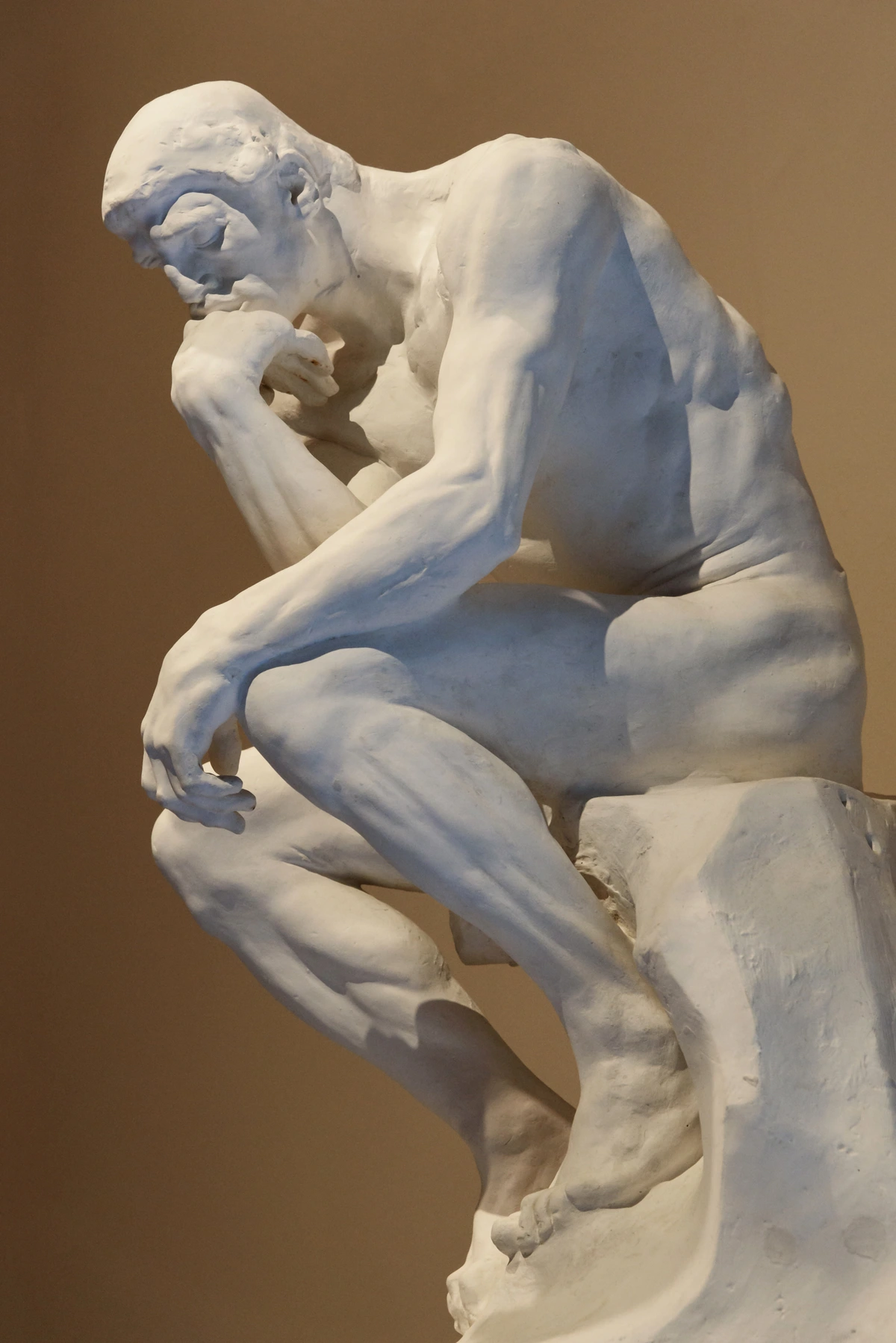
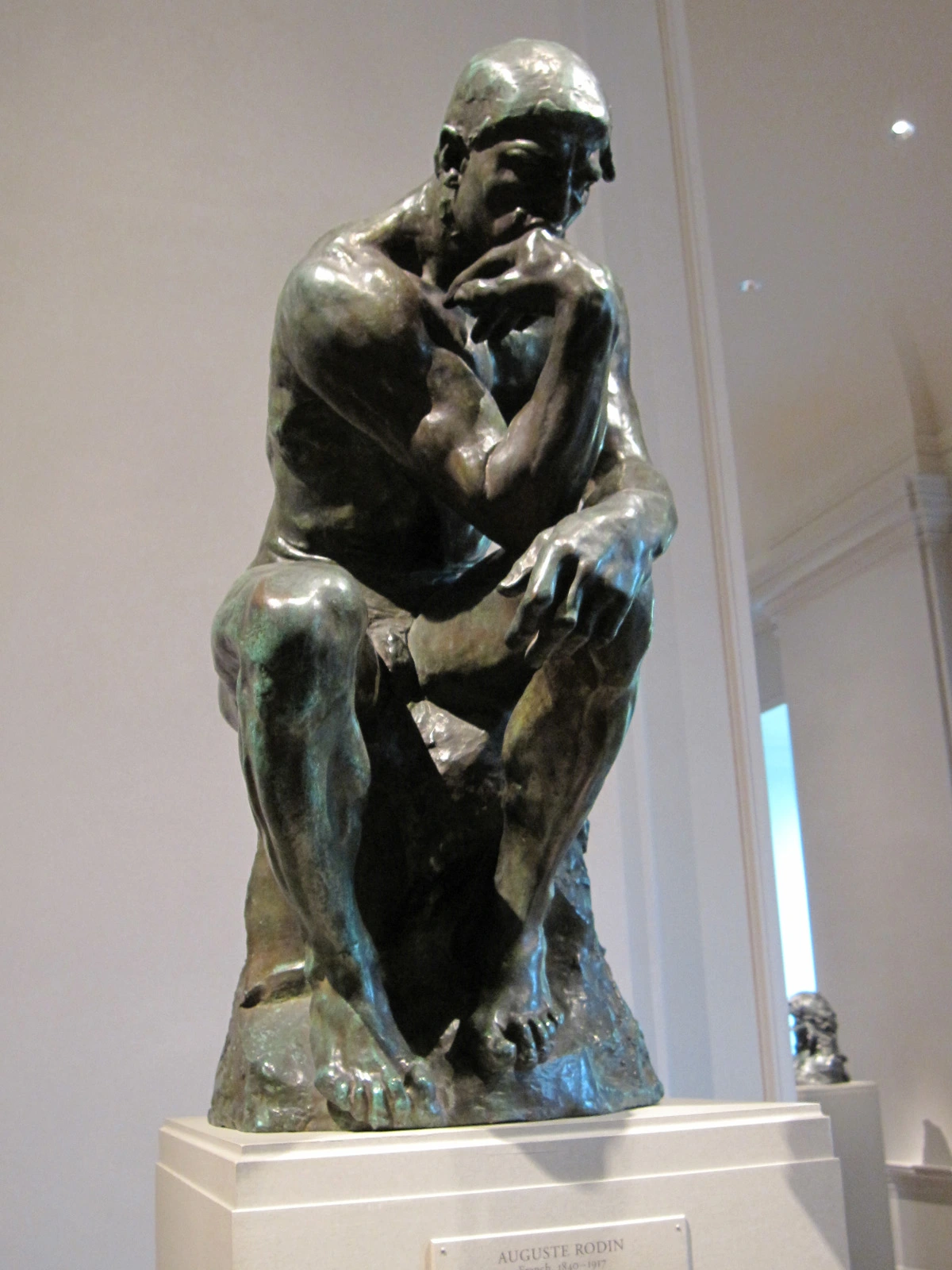
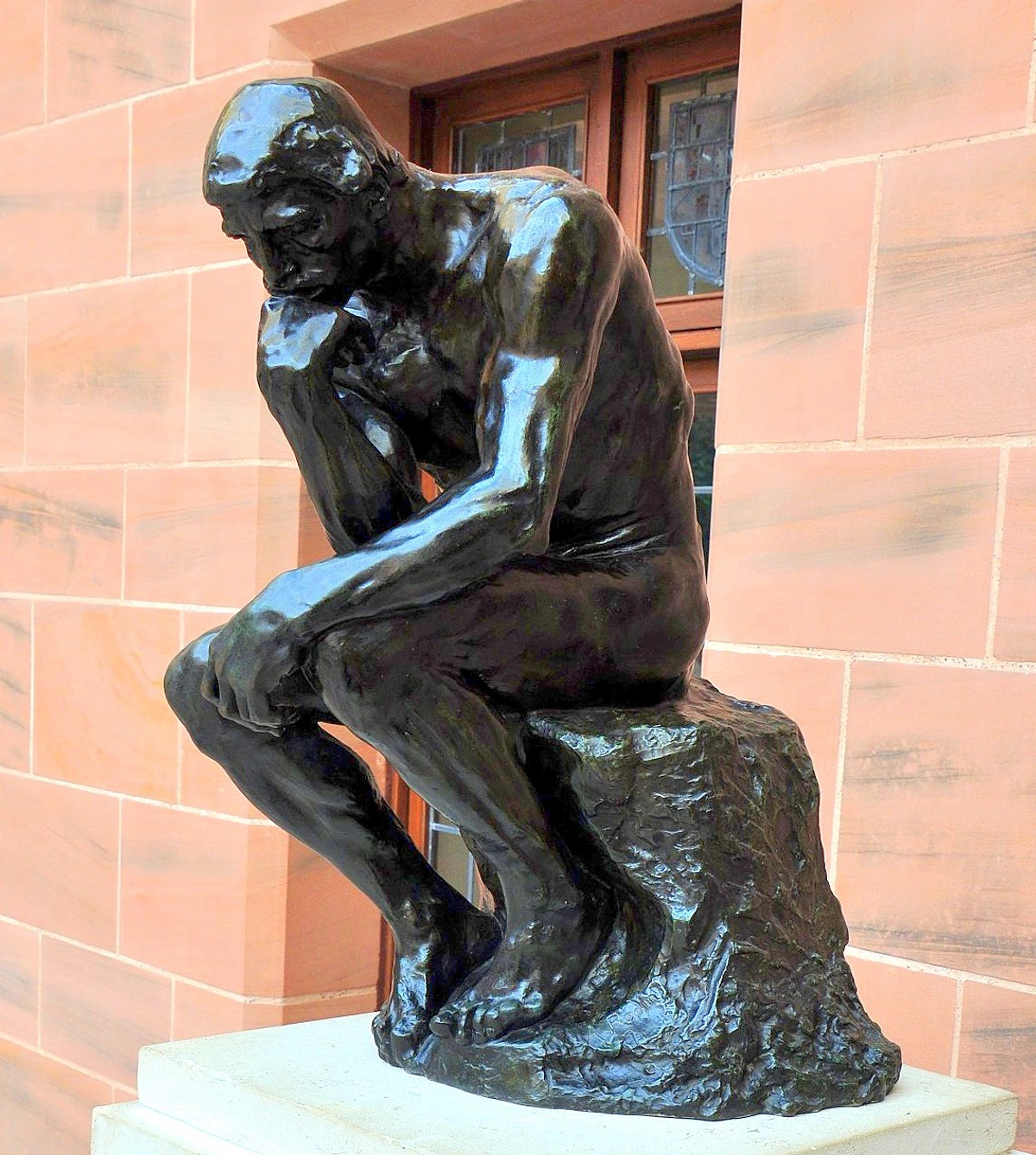
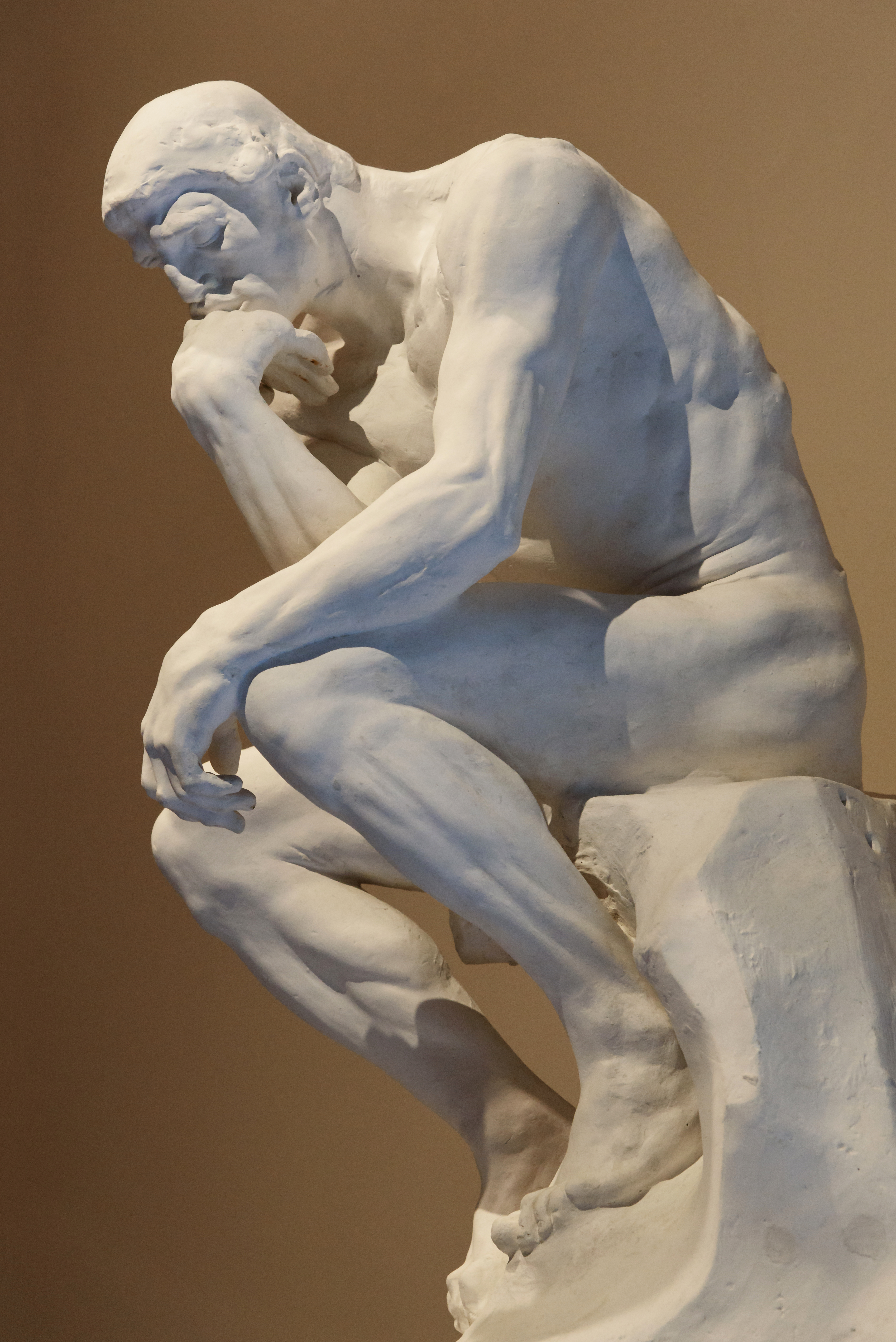
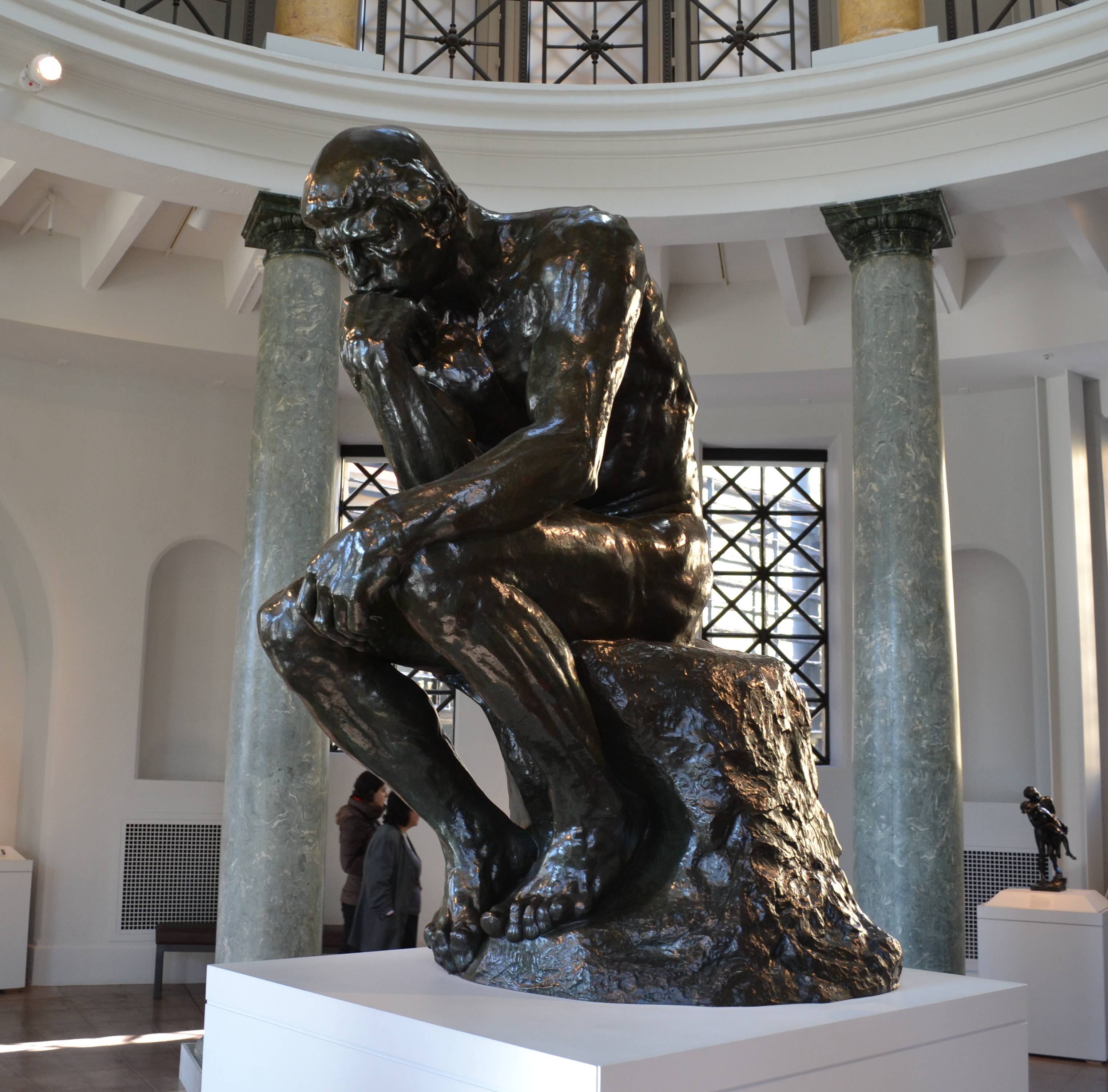
Rodin wasn't just a sculptor; he was a revolutionary. He took sculpture, which had become a bit stiff and, let's face it, boringly academic, and injected it with a raw, messy, and passionate dose of humanity. He made bronze and marble feel flesh and emotion. And his life? It was just as dramatic and complicated as his art. This iconic image of 'The Thinker' is a testament to the profound internal world Rodin brought to his figures, a world that began to stir even in his formative years.
François-Auguste-René Rodin was born in Paris in 1840 to a working-class family. His father, Jean-Baptiste Rodin, was a police clerk, and his mother, Marie Cheffer, was a homemaker. Poverty was a constant companion during his childhood, and this early exposure to the realities of everyday life would subtly inform the raw humanism of his later work. He wasn't a prodigy in the traditional sense; in fact, his early academic performance was, shall we say, uninspired. He struggled with conventional schooling, often retreating into his own world of observation and drawing, filling notebooks with sketches of the world around him. But even as a young boy, one talent shone brightly through the general gloom of his school reports: he could draw, and he could draw exceptionally well. This wasn't just a hobby; it was an undeniable, almost obsessive calling, a way for him to engage with the world on his own terms. At 14, in 1854, he enrolled in the Petite École (officially the École Impériale Spéciale de Dessin et de Mathématiques), an institution focused primarily on the decorative arts. This wasn't the gilded path to 'fine art' glory at the prestigious École des Beaux-Arts; instead, it was a practical training ground for artisans. Think architectural ornamentation, jewelry design, and furniture decoration – the kind of applied arts that built the beautiful details of Paris. Here, Rodin immersed himself in drawing, mathematics, and ornament, a curriculum that emphasized direct observation, technical precision, and the practical application of artistic skill, which instilled in him a profound respect for craftsmanship and the expressive potential of even the smallest detail. It was within this seemingly humble environment, far removed from the lofty ideals of academic painting and sculpture, that Rodin honed his exceptional observational abilities and a profound understanding of form. These were the very foundations that would become the bedrock of his revolutionary approach to sculpture, a rebellion against the idealized, often lifeless forms championed by the academic establishment, that would later define his singular vision. It's a powerful lesson, I think, about how sometimes the most practical, hands-on training can be the most potent catalyst for true innovation, forcing an artist to build from the ground up rather than conforming to established norms. It makes me think of how foundational learning the basics of drawing can be, even for someone like me who creates abstract art – you have to know the rules before you can break them.
His real ambition, however, was the big league: the École des Beaux-Arts, the most prestigious art school in France, the gateway to official recognition and commissions. He applied, full of hope. And failed. He tried again, surely, they'd see his talent now? And failed. He tried a third time. Rejected. Three times! Can you imagine the profound sting of that? The official gatekeepers of the French art establishment, those arbiters of taste at the École des Beaux-Arts, looked at the man who would later redefine sculpture, not once, not twice, but three times, and essentially said, 'Nah, not for us, kid. You don't fit our mold. You're too raw, too unconventional.' Talk about a tough crowd! This wasn't just a rejection of his skill; it was a rejection of his burgeoning, unconventional vision. They championed idealized forms, classical restraint, and polished perfection, while Rodin was already moving towards a visceral realism and intense emotionality that the establishment simply couldn't comprehend or accept. This repeated rejection, while undoubtedly agonizing at the time, was perhaps the greatest gift Rodin ever received. It inadvertently freed him from the rigid, often stifling conventions of academic classicism, forcing him to forge his own path, experiment with forms, and ultimately develop a style that was truly his own – raw, expressive, and deeply human. Rather than being molded by institutional norms, he was compelled to look inward and to the world around him for inspiration, developing a unique artistic language that prioritized naturalism and emotional truth over polished ideals. It's a powerful reminder that many of history's most famous Renaissance artists and later innovators, from Michelangelo to countless modern masters, also faced initial skepticism and resistance from the established art world. Imagine a world where all genius conformed to a single, narrow vision; how much poorer our cultural tapestry would be! Rodin's defiance, born of necessity and fueled by his own innate vision, became the blueprint for his artistic revolution. I often think about this when I'm faced with resistance to new ideas – sometimes, it's the push you need to truly find your unique voice, even if it feels like the whole world is telling you you're wrong.
I find this part of his story incredibly humanizing. It wasn't a smooth, golden path to instant recognition; it was a long, arduous grind. For nearly two decades, from his late teens into his late thirties, Rodin toiled as a decorative sculptor, a kind of artistic ghostworker in the shadows, creating architectural details, ornaments, and models for other, more established artists. I imagine it was a bit like being a session musician for rock stars; you're playing the notes, you're essential, but nobody knows your name or gives you credit. He produced elegant caryatids for buildings, allegorical figures for public fountains, and countless decorative motifs, often for the burgeoning, grand Parisian boulevards that were being reshaped by Baron Haussmann. During this time, he also traveled extensively, including a significant period in Belgium from 1864 to 1870, where he worked on public commissions such as allegorical figures for the Brussels Stock Exchange and monument restorations. It was during these years he created some of his earliest independent works like Man with a Broken Nose (1864), a powerful, unidealized portrait bust that already hinted at his future direction. This long, anonymous apprenticeship, however, was far from wasted. It was a crucible where he refined his prodigious skills in anatomy, composition, and material handling, absorbing diverse influences from Gothic cathedrals to the anatomical studies of Renaissance masters. He gained an unparalleled understanding of the human form, not from academic lectures, but from the pragmatic demands of his craft. He was, unknowingly, building the technical and conceptual arsenal that would, eventually, allow him to explode onto the scene not as a mere craftsman, but as a groundbreaking, revolutionary artist. It reminds me that true mastery often comes from the unseen years of dedication and quiet work, often far from the spotlight, perfecting your craft one detail at a time.
Influences: From Gothic Grandeur to Italian Renaissance
Rodin's artistic journey was a fascinating synthesis of historical influences and deeply personal innovation. While his reputation is built on breaking from tradition, he was also a diligent student of the past. His early training in decorative arts gave him a profound appreciation for craftsmanship, but his intellectual curiosity led him far beyond. He was particularly drawn to two seemingly disparate periods:
- Gothic Art: From the soaring facades and intricately carved portals of Gothic cathedrals, Rodin absorbed a sense of profound religious drama, a raw, almost visceral emotionality, and an understanding of how figures could interact with architectural space. He admired the expressive gestures and the way emotion was conveyed through dynamic bodily forms, rather than idealized beauty. He even, for a time, seriously considered becoming a Gothic sculptor.
- Italian Renaissance: His transformative trip to Italy in 1875 solidified this influence. He didn't just see Michelangelo's sculptures; he felt their raw power, the profound anguish, the explosive vitality, the very essence of human struggle and triumph captured in marble. Works like Michelangelo's Dying Slave or Rebellious Slave, with their visible struggle against the stone, deeply resonated with Rodin's nascent ideas about form, emotion, and the internal life of a figure. This profound encounter with Renaissance art wasn't just inspiring; it fundamentally shifted his artistic vision, pushing him towards a deeper realism, a heightened sense of drama, and an unprecedented emotional intensity in his own work. He absorbed Michelangelo's mastery of the human figure, but reinterpreted it through his own modern, psychological lens, focusing on movement and emotional authenticity rather than idealized heroism.
He also admired the realism and psychological depth of Baroque sculptors like Gian Lorenzo Bernini, who infused his marble figures with dramatic movement and intense emotion. This fascination with dynamic compositions and emotive gestures further solidified Rodin's own artistic direction, proving that true innovation often comes from a deep understanding and reinterpretation of historical precedents. Rodin's genius lay in his ability to digest these diverse influences, not to copy them, but to use them as a springboard for his own radical innovations, creating something utterly new yet deeply rooted in art historical tradition. It’s like how a musician might absorb jazz, classical, and folk, then create a completely new genre – the roots are there, but the outcome is revolutionary.
A Scandal and a Masterpiece: The Age of Bronze
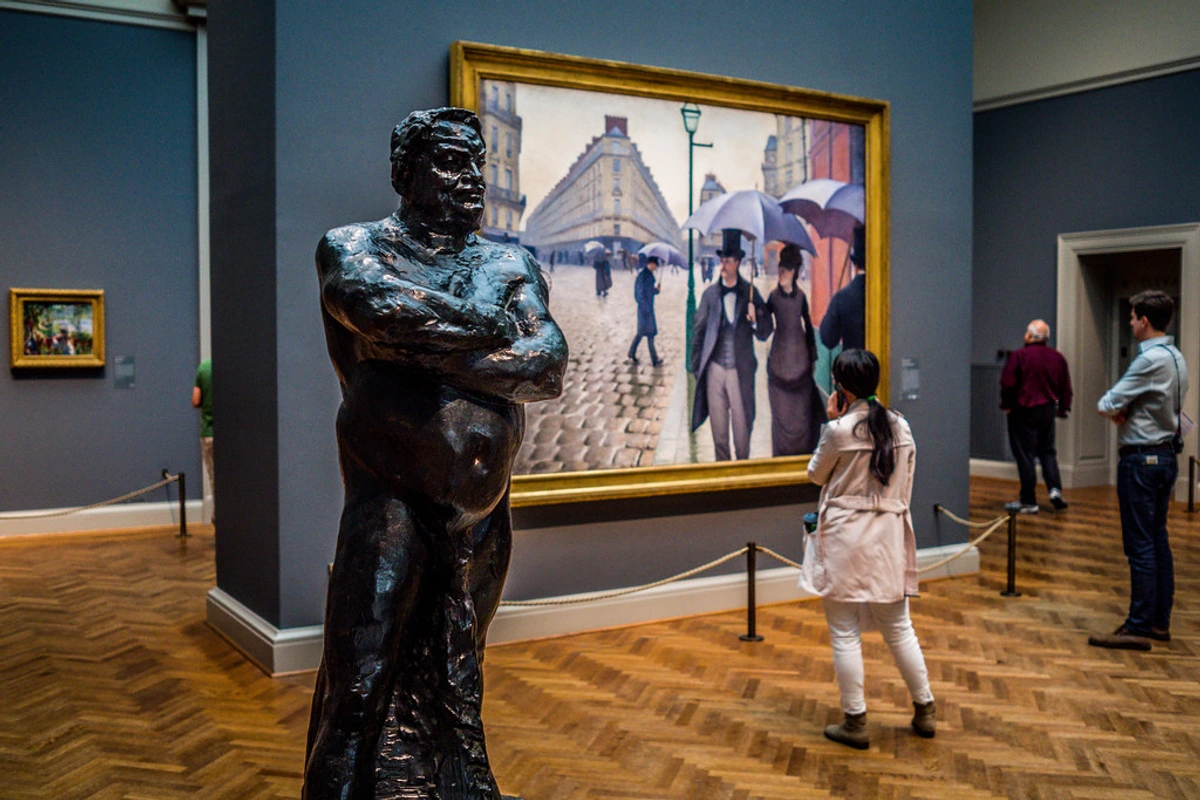
Returning to Brussels after his transformative journey, Rodin channeled this newfound inspiration, particularly from Michelangelo's emotionally charged figures (as discussed earlier in his influences), into his first major independent work: The Age of Bronze (initially titled The Vanquished Man). This life-size figure of a nude young man, depicting a moment of awakening or emergence from a primeval state, was so astonishingly realistic, so uncannily life-like in its anatomical precision and subtle movement, that it immediately caused a massive scandal when exhibited in 1877. Critics, accustomed to the idealized, often smooth and impersonal forms of academic sculpture, were utterly bewildered and deeply disturbed by The Age of Bronze. How could human hands achieve such verisimilitude? They couldn't believe such naturalism could be achieved by hand and publicly accused him of cheating, claiming he must have bypassed the artistic process altogether by making a plaster cast directly from a living model—a practice known as surmoulage. This wasn't just a slight; it was a devastating accusation of artistic fraud, essentially branding him a cheat who lacked skill and intellectual rigor. For an artist who had painstakingly refined his craft for twenty years, after suffering repeated rejections from the École des Beaux-Arts, it was an egregious insult and a profound misunderstanding of his rigorous working methods. The controversy wasn't merely about technique; it was a fundamental clash between the old guard's staid ideals, championed by institutions like the Royal Academy of Arts in London and its Parisian counterparts, and Rodin's radical, visceral realism. They simply couldn't fathom art that felt so real, so alive. It was too much for their sensibilities, too much of a challenge to their established order, threatening to upend centuries of established artistic hierarchy. It was, in essence, an early battle in the war between academic conservatism and the burgeoning forces of modernism, with Rodin's raw humanity pitted against rigid ideals. This moment really highlights how threatening new forms of artistic expression can be to the established order, especially when they challenge the very notion of what 'art' is.
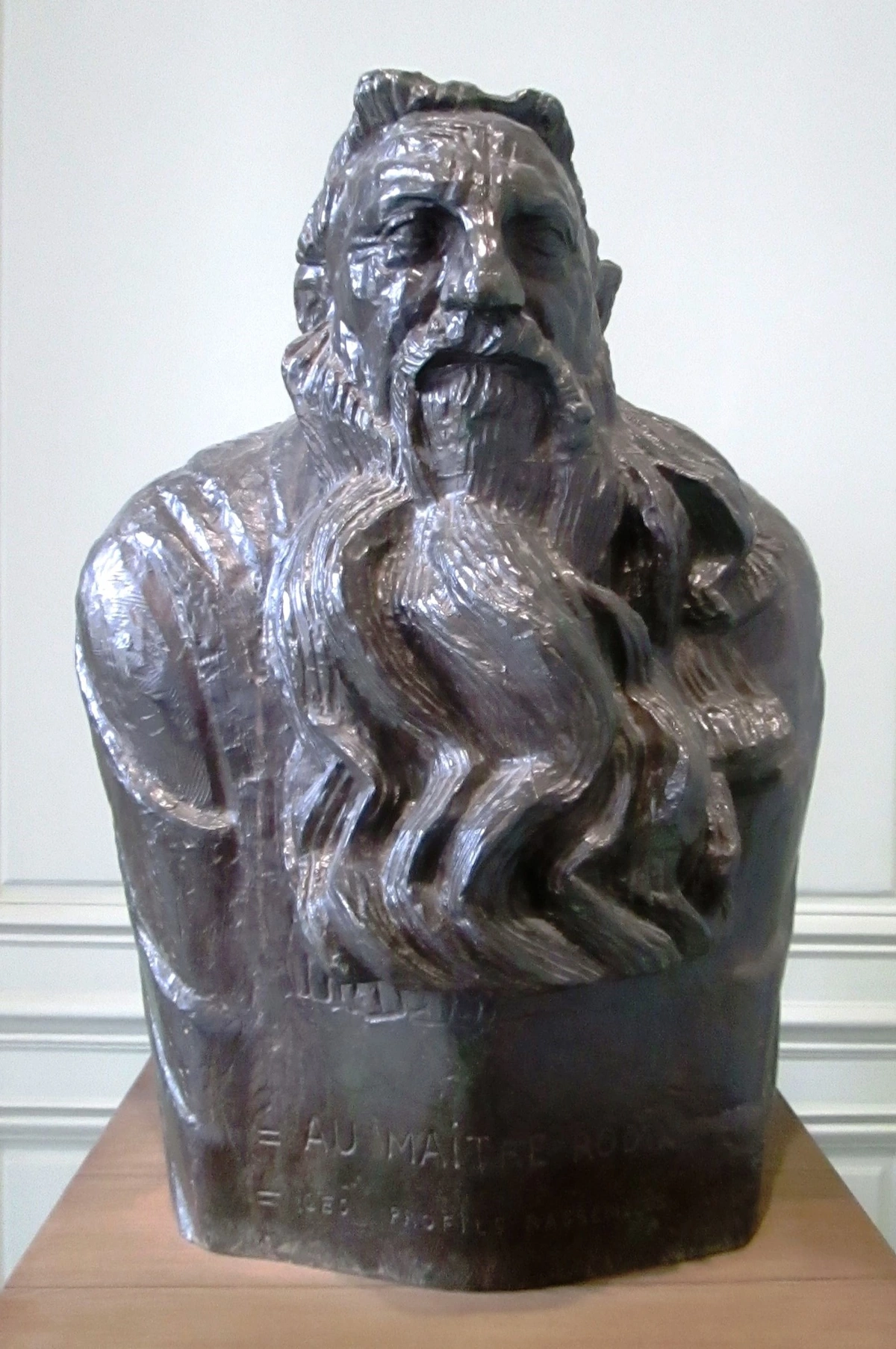
Rodin was, understandably, furious. To be accused of such a shortcut after two decades of arduous training and experimentation was a profound insult, a slap in the face to his dedication. Yet, in a strange, paradoxical way, the controversy also served to vindicate him. The sheer outrage was a testament to the revolutionary impact of his work; it was too real, too vital, too emotionally resonant for the staid academic tastes of the time. To defend his integrity, Rodin had to produce photographs of his model, a young Belgian soldier named Auguste Neyt, and even detailed measurements comparing the sculpture's proportions to those of a living person. These irrefutable proofs definitively showed that he had, indeed, modeled it by hand, painstakingly shaping every muscle and contour. The scandal raged for years, even reaching parliamentary levels in France, where the Minister of Fine Arts, Edmond Turquet, eventually intervened to clear Rodin's name and acknowledge his artistic integrity. In a strange, paradoxical way, the very outrage validated his genius. His work was too real, too vital for the academic tastes of the time, and that audacious realism, born of profound skill, eventually propelled his name into the public consciousness. He became a figure of intense discussion and, ultimately, a celebrated artist. It really shows how sometimes, the biggest controversy can be the greatest advertisement, doesn't it? A bit like how a powerful, new art movement might face initial hostility, only to be embraced wholeheartedly by later generations. It reminds me of the pushback many Expressionist artists faced when they dared to depict raw emotion over refined aesthetics.
The Birth of Public Recognition and Monumental Projects
| Rodin's Life: Key Milestones | | --- | --- | | 1840 | Born in Paris. | | 1854-57 | Attends the Petite École. | | 1857-60 | Fails the entrance exam for the École des Beaux-Arts three times. | | 1876 | Travels to Italy; is profoundly influenced by Michelangelo. | | 1877 | Exhibits The Age of Bronze, causing a major scandal. | | 1880 | Receives the commission for The Gates of Hell. | | 1883 | Begins his relationship with Camille Claudel. |
| 1900 | Holds a major solo exhibition at the Pavillon de l'Alma, securing his international fame. | | 1917 | Dies in Meudon, France. |
The Gates of Hell: An Obsession That Birthed Icons
In 1880, Rodin received the monumental commission that would, arguably, define his entire artistic life: a set of colossal bronze doors for a new decorative arts museum in Paris. The ambitious subject was Dante's Inferno, specifically the first part of his Divine Comedy. For those unfamiliar, Dante Alighieri's Divine Comedy is a 14th-century epic poem, and Inferno describes Dante's harrowing journey through Hell, a vividly imagined realm of eternal torment and moral consequence, populated by sinners receiving their just, often gruesome, punishments. This was a dream project for Rodin, offering him unparalleled freedom to explore the full spectrum of human emotion, from despair and anguish to passion and fleeting joy, echoing the dramatic narratives of Michelangelo's Sistine Chapel and the deep psychological insights of Gothic sculpture. For Rodin, Dante's Inferno was more than just a literary work; it was a profound exploration of the human condition, a mirror to our deepest fears and desires, and he embraced this narrative with fervent intensity. Though the museum was never built and the doors were never fully completed to his satisfaction during his lifetime, The Gates of Hell became Rodin's personal creative laboratory for nearly 40 years, an inexhaustible source from which many of his most iconic individual sculptures would emerge. It was an obsession, a monumental undertaking that shaped his artistic vision and method like no other project, a truly immersive world of torment and salvation that captured his imagination. I think about it as his grand opus, a living, breathing project that he continually revisited and reinterpreted throughout his career, constantly extracting new ideas and forms from its infernal depths.
It was a sprawling, chaotic, and profoundly moving masterpiece, featuring hundreds of figures writhing, embracing, and falling into the depths of suffering, passion, and despair, inspired by Dante's vivid descriptions. Rodin filled the doors with a dizzying array of bodies, some clearly identifiable, others blending into tormented masses, creating a dense, almost claustrophobic vision of the underworld. And here’s the fascinating part, a testament to Rodin’s iterative and prolific process: many of his most famous, standalone sculptures actually started their lives as tiny figures for these monumental doors, later enlarged and given lives of their own. It's almost like he was populating a universe from a single origin point, isn't it?
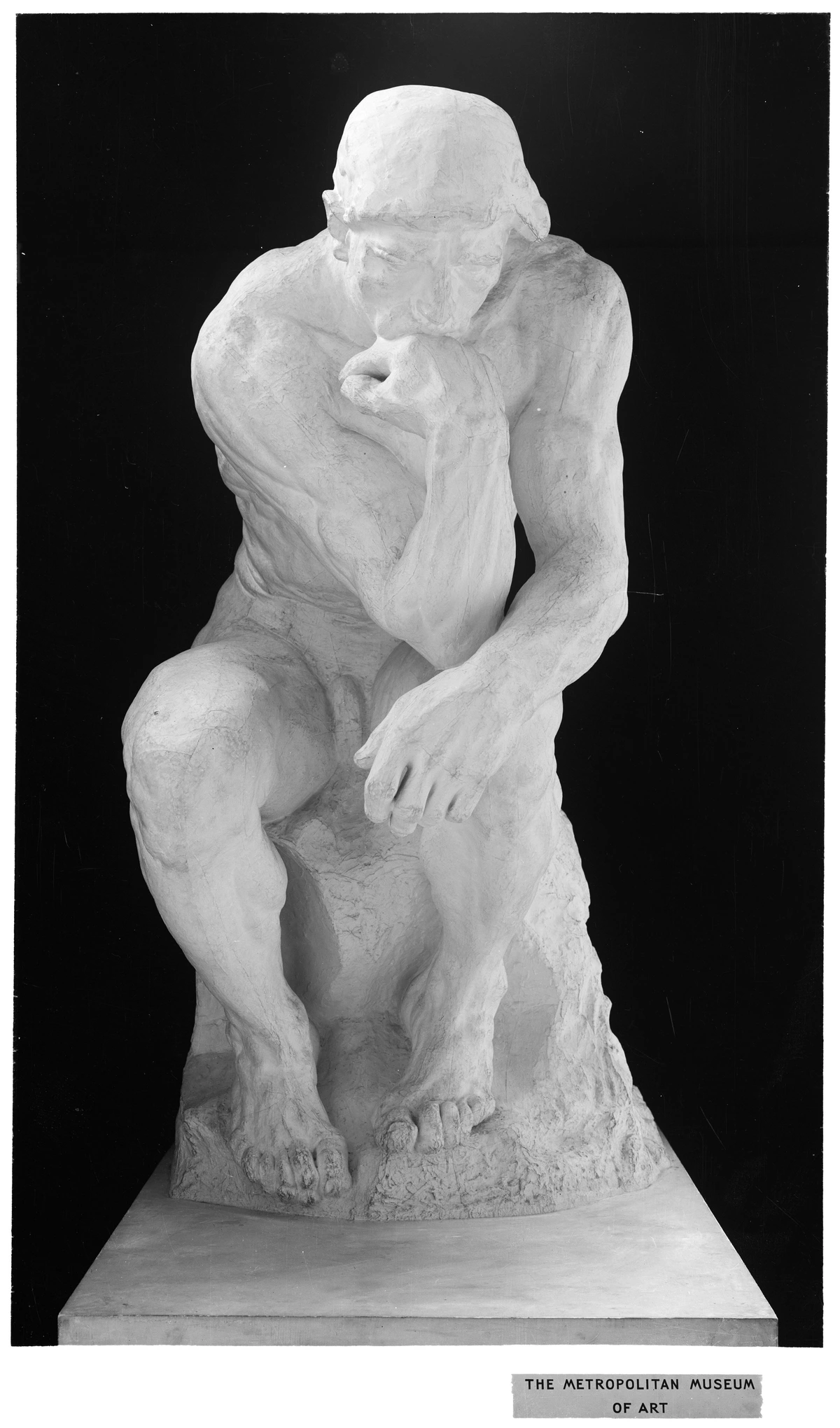
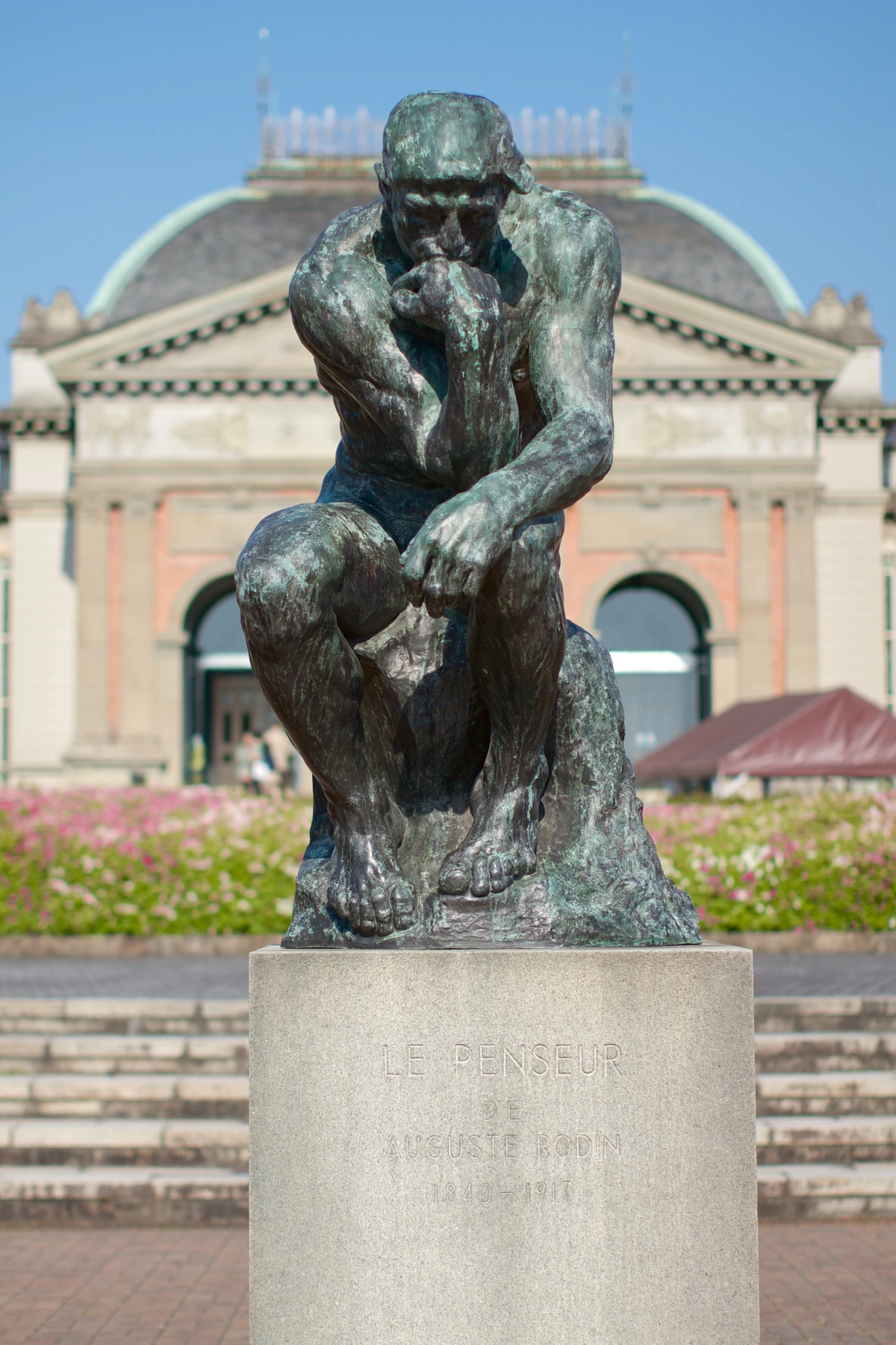
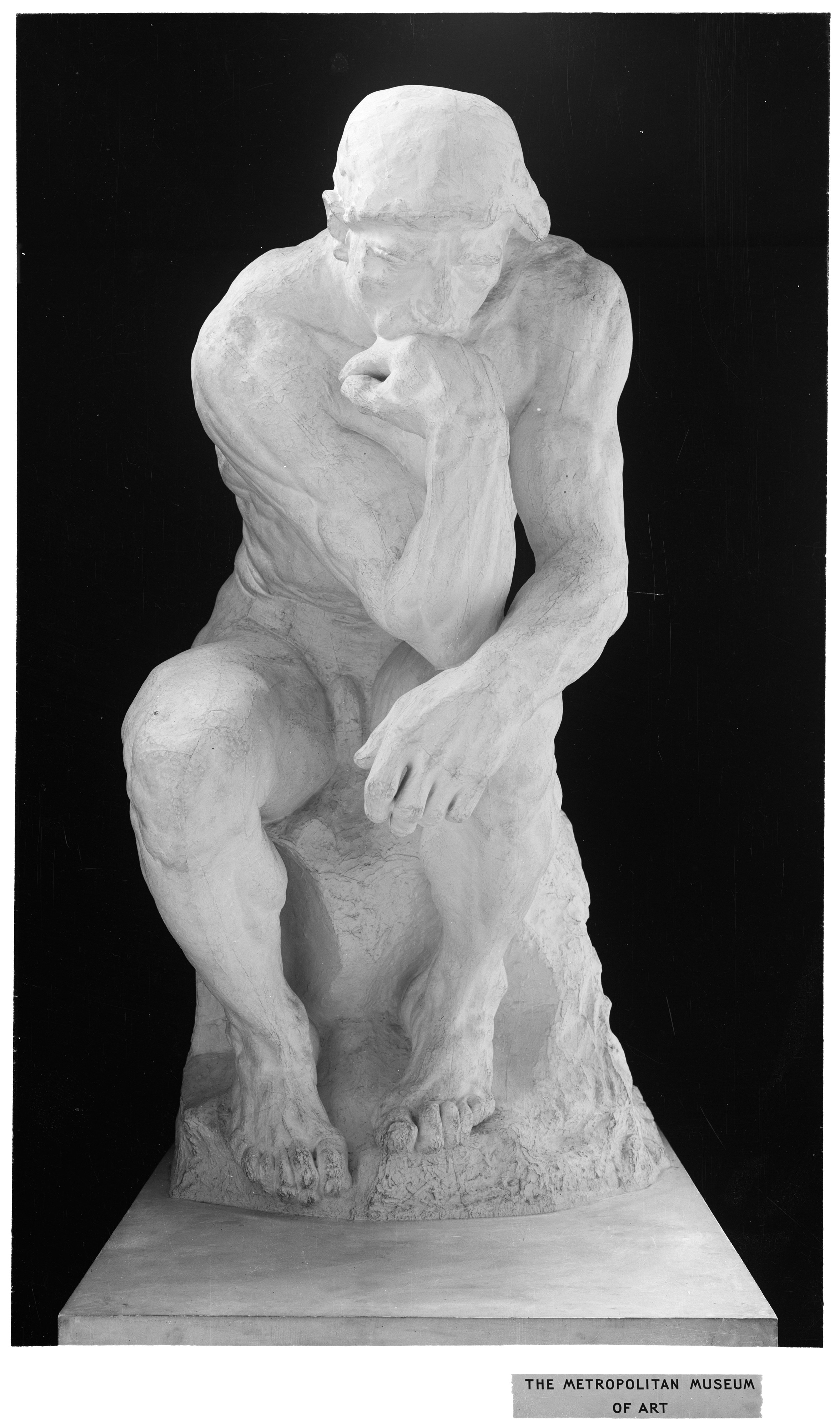
- The Thinker: Originally, this powerful figure, initially conceived as 'The Poet,' was meant to represent Dante himself, contemplating the tragic scenes of damnation below from his perch atop the gates. Over time, Rodin separated him from the Gates, allowing him to evolve into a universal symbol of profound thought, intense meditation, and the creative spirit – a true embodiment of humanity's intellectual struggle, becoming one of the most recognizable sculptures in art history. It's not just a man thinking; it’s humanity wrestling with profound questions, a weight I often feel when I’m trying to solve a complex visual problem in my own work.
- The Kiss: This iconic depiction of passionate lovers was initially based on the tragic story of Paolo and Francesca, two illicit lovers from Dante's Inferno whose affair led to their demise. Rodin eventually removed it from the Gates because its tenderness and idyllic sensuality, celebrating human love, contrasted too sharply with the overwhelming torment and despair of the surrounding narrative, making it a standalone masterpiece that explores romance rather than damnation. It became a powerful ode to carnal love, separate from moral judgment, a celebration of human intimacy.
- Ugolino and His Children: This harrowing group, based on another episode from Dante's Inferno, depicts the Count Ugolino della Gherardesca, a Pisan traitor, and his children condemned to starve in a tower. It's a brutal portrayal of desperation, filial love, and even cannibalism, showcasing Rodin's capacity for intense, raw drama and psychological terror. The visceral agony is almost unbearable to witness; Rodin doesn't shy away from the darkest aspects of the human condition here.
- The Three Shades: Originally conceived as a single figure for the top of The Gates, Rodin duplicated the figure three times, repositioning them slightly to form a haunting group. Their identical, melancholic postures and downward gaze draw the viewer into the abyss of the Gates below, embodying a sense of inescapable fate, eternal judgment, and the profound sorrow of the damned. It's a masterclass in emotional replication, and a stark visual metaphor for the hopelessness within – a chilling, unified expression of despair.
- Adam and Eve: Though not directly part of the final Gates composition, the figures of Adam and Eve were conceived concurrently and shared the same thematic exploration of human vulnerability, shame, and divine judgment. These powerful, separate works were often displayed alongside sketches and studies for the Gates, demonstrating the pervasive influence of the project on his broader output and his ongoing fascination with primal human narratives. They reflect a timeless human struggle with innocence and consequence, a fundamental narrative that Rodin continuously explored.
He would model these figures, often starting small, in malleable clay, then endlessly duplicate, enlarge, reduce, and rearrange them, constantly exploring new compositions and meanings. This fluid, experimental approach, enabled by the use of plaster casts, allowed him to treat his figures like building blocks, unlocking their potential for multiple narratives and interpretations. It was a monumental undertaking, much like the great religious narrative art of centuries past, but reinterpreted through a fiercely modern, human lens. This constant re-evaluation and adaptation of forms across different projects was a hallmark of his studio practice, demonstrating an almost architectural approach to sculptural composition. This leads us directly to what made him so radical, so utterly transformative in the world of sculpture. It's a creative method that still resonates today in contemporary art, where artists often work in series, constantly re-imagining and iterating on core ideas.
Rodin's Revolutionary Concepts  | Description | Impact on Art | Key Works/Examples |
|---|---|---|---|
| The Fragment as a Whole | Exhibited incomplete figures (torsos, hands, feet) as finished artworks, emphasizing expressive power and universal meaning over narrative completeness. He believed a powerful fragment could convey as much emotion as a full figure. | Challenged academic ideals of idealized perfection and narrative necessity; profoundly influenced abstraction and the power of suggestion in 20th-century art. | The Walking Man, The Hand of God, The Cathedral, Torso of Adèle |
| Capturing Movement & Emotion | Imbued figures with dynamic, often raw, psychological states, focusing on internal turmoil, intense suffering, or passionate embrace, rather than static, idealized poses. He sought to capture the fleeting 'moment' of an emotion. | Prefigured movements like Expressionism and Surrealism; transformed sculpture into a direct vehicle for visceral human experience and psychological insight. | The Thinker, The Age of Bronze, The Kiss, numerous figures from The Gates of Hell |
| Materiality & Visible Process | Deliberately left tool marks, rough surfaces, and traces of the casting process visible, celebrating the struggle, labor, and evolution of creation. He viewed the material itself as part of the expressive content. | Emphasized authenticity, the artist's hand, and process-oriented art; rejected the idea of effortless, polished perfection, paving the way for artists to embrace the raw nature of their mediums. | Surface textures on many of his bronze and marble works (e.g., Burghers of Calais, Balzac) |
| The Studio as a Creative Factory | Utilized a highly innovative and systematic studio practice involving numerous assistants and the extensive use of plaster casts for iterative experimentation, duplication, reduction, enlargement, and reassembly of figures. This allowed him to treat his sculptural forms like building blocks, constantly reconfiguring and discovering new narratives and meanings. | Enabled prolific output and constant formal exploration; blurred lines between individual artistic genius and the workshop model, influencing modern art production and seriality. This approach democratized the creative process to some extent, allowing for a vast and varied output. | The Gates of Hell (as a source of numerous individual figures, constantly reconfigured), preparatory studies for all major monuments, The Burghers of Calais (where individual figures were studied and assembled) |
The Fragment as a Whole
Before Rodin, the prevailing academic standard dictated that a sculpture had to be a complete, finished thing, a whole and idealized figure. A torso without a head, or a hand severed from a body? Unthinkable. Such pieces would be considered mere studies, incomplete sketches in three dimensions, certainly not worthy of exhibition as finished works of art. Rodin, however, saw things profoundly differently. He believed that a fragment—a powerful hand, a dynamic torso, a solitary foot—could contain all the emotional power, all the expressive force, and indeed, all the aesthetic completeness of a full figure. He famously exhibited works like The Walking Man, a headless, armless torso that nevertheless exudes immense forward momentum and vital energy, or countless individual studies of hands, each conveying a universe of emotion – from the delicate The Cathedral (depicting two intertwined hands) to the powerful The Hand of God (a monumental hand shaping nascent figures, a truly divine act captured in bronze). He even created standalone torsos, such as his Torso of Adèle, which, despite its incompleteness, pulsates with an internal life. This radical notion, that the fragment could embody a complete aesthetic and emotional statement, was deeply shocking at the time. It flew in the face of academic dictates demanding narrative completeness and idealized perfection. Yet, it proved profoundly prescient, directly paving the way for later movements and artists who embraced abstraction, the power of suggestion, and a new understanding of artistic autonomy. I mean, who would have thought a hand could be a whole world, conveying so much without a body? It's a testament to his belief that meaning resides not just in narrative, but in raw, concentrated expression, inviting the viewer to complete the story in their own mind. It really challenged the viewer to participate in the art, rather than passively observe a completed narrative. It’s like when I’m sketching an idea for a new piece; sometimes the raw energy of a gesture or a partial form is more potent than a fully rendered image.
Capturing Movement and Emotion
Forget the stoic, idealized, and often static poses that dominated academic sculpture. Rodin's figures twist, writhe, slouch, embrace, and recoil with an astonishing, almost disturbing energy that felt startlingly real and immediate. He was less interested in mythological perfection or classical beauty and far more captivated by the raw, authentic, often messy gestures of human life and the turbulent inner world of the psyche. He achieved this through an intensive study of live models, often asking them to move freely and quickly, capturing fleeting gestures in rapid clay sketches – a practice that was considered radical at the time. He believed that true beauty lay in character and truth, even if that truth was uncomfortable or unconventional. This focus on inner psychological states, on expressing the unseen turmoil beneath the surface, on the raw truth of human experience rather than idealized forms, would deeply influence later movements. It directly prefigured Expressionism, which sought to externalize subjective emotion and psychological angst, and even touched on the nascent ideas that would fuel Surrealism, with its exploration of the subconscious mind. When you look at his figures, you don't just see a body; you feel the story within, the burden of thought, the ache of desire, the weight of despair. It's a visceral, empathetic connection that few sculptors before him achieved, pulling art away from mere representation towards psychological immersion. It's like he bottled pure human experience and poured it into bronze and marble. I often find myself trying to capture that same fleeting essence in my own work, that elusive spark of emotion that makes an artwork truly alive.
Materiality and Process: The Visible Hand of the Artist
Rodin didn't just sculpt; he engaged in a profound dialogue with his materials, and crucially, he didn't hide his process. Unlike academic sculptors who aimed for a smooth, polished, often anonymous finish, Rodin frequently left the marks of his tools—the gouges of the chisel, the ridges left by his fingers or modeling tools—visible on the surface of his sculptures. You could literally feel the clay being pushed and shaped, the marble struggling against its inherent form. This wasn't laziness; it was a deliberate, almost philosophical artistic choice, a powerful declaration that the artwork was not some divinely perfect object, effortlessly sprung into existence, but rather the tangible product of intense human labor, struggle, and passionate interaction with matter. You could see and feel the struggle, the effort, the very process of creation embedded in the bronze and marble, a stark contrast to the smooth, 'finished' surfaces expected of academic work. This embrace of imperfection and the visible, often raw, process was a profoundly modern idea, anticipating the raw authenticity and process-oriented art sought by countless 20th-century artists who prioritized the making over a false ideal of perfection. It's like seeing the rough sketch behind a finished masterpiece – it reveals the journey, and for Rodin, the journey was as important as the destination. I think it makes the art feel more honest, more human, to see those traces of the artist's hand, almost as if you can reach out and touch the creative energy itself.

Love, Obsession, and Camille Claudel: A Shared Genius, a Tragic Fate
You simply can't talk about Auguste Rodin comprehensively without dedicating significant thought to Camille Claudel. She arrived at his studio in 1882, a prodigiously talented young student and assistant, just 18 years old. Having already trained at the Académie Colarossi, one of the few places where women could formally study sculpture from live models, she was not merely an apprentice; she was a brilliant sculptor in her own right, possessing an extraordinary understanding of form and expression that immediately impressed Rodin. Her early command of expressive movement and raw emotional power was evident in her own works, such as The Waltz (1889-1905), a dynamic group of intertwined figures that pulsates with sensuality and movement, and the harrowing allegory of The Mature Age (1894-1900), which depicts an aged man, perhaps Rodin himself, leaving a pleading young woman, often interpreted as Claudel, in the grip of an older female figure. Their professional relationship quickly blossomed into a passionate, intensely collaborative, and ultimately destructive decade-long affair that profoundly shaped both their lives and art. It's a story that’s as captivating as it is heartbreaking, highlighting the brutal realities faced by many women artists striving for recognition in a patriarchal world.
Claudel was Rodin's model, his muse, his confidante, and a vital collaborator. It's impossible to definitively disentangle their mutual influence, but it's clear her genius, her sharp critical eye, and her innovative approach undoubtedly pushed Rodin to new heights. They shared a creative language, a passion for capturing the raw human experience, and a mastery of anatomical expression, often working on similar themes simultaneously and inspiring each other's interpretations. In fact, many scholars now suggest that Claudel's distinct artistic vision, particularly her dynamic compositions and profound psychological insights, profoundly influenced Rodin's own development, especially during the peak of their collaboration. Her presence in his studio wasn't merely as an assistant, but as an intellectual and creative equal, even if societal norms prevented her from receiving equal recognition and often led to her work being misattributed or overshadowed. It's a testament to her talent that she could stand toe-to-toe with a master like Rodin, even if history initially failed to acknowledge it, a testament to a brilliance that fought against immense headwinds.
However, their relationship was fraught with immense difficulty. Rodin was already in a long-term, common-law relationship with Rose Beuret, whom he had known since the 1860s and who had supported him through his early struggles. Despite his passionate affair with Claudel, he would never leave Rose, eventually marrying her shortly before his death. The emotional turmoil of this triangular relationship, the social stigma faced by an unmarried woman who was both lover and protégé, combined with the severe societal pressures on a woman artist in the late 19th century, eventually took a devastating toll on Claudel. Claudel struggled fiercely for recognition in a male-dominated world, often finding her groundbreaking work overshadowed by her mentor's towering reputation and frequently misattributed to him. This tragic combination of professional frustration and personal heartbreak led to her painful breakup with Rodin around 1898, marking a devastating turning point in her life and career. Imagine pouring your soul into your art, only to have it seen as an extension of someone else's genius, or worse, denied a platform because of your gender. It's a stark reminder of the battles women artists have fought through history. I think about this often when considering the narratives around artists and their legacies; how many brilliant voices have been silenced or diminished by circumstance? It’s a tragedy that continues to resonate today, pushing us to re-evaluate art history and give credit where it's long overdue.

Claudel's later years were marked by increasing isolation, paranoia, and a severe mental breakdown. By 1913, increasingly isolated and struggling with severe paranoia and mental breakdown, Camille Claudel was institutionalized at the request of her family. She would spend the last 30 years of her life in asylums, often in deplorable conditions, despite numerous appeals for her release from artists and friends who recognized her genius. This tragic narrative adds an undeniable layer of dark complexity to Rodin's legacy. He was a man of immense passion, capable of inspiring profound art, but that same passion, combined with the rigid societal norms and patriarchal structures of his era, also caused immense pain and arguably contributed to the devastating suppression of another extraordinary artistic voice. Understanding Claudel's story is crucial not just for a complete picture of Rodin, but for acknowledging the broader challenges and injustices faced by countless talented women artists throughout history. It's a sobering reminder that genius doesn't always triumph in the face of societal prejudice, and that even the greatest artists can cast long, sometimes painful, shadows. Her works, now celebrated, stand as a testament to her enduring brilliance against formidable odds.

The Legacy: Why Rodin Still Matters
By the end of his long and tumultuous life, Auguste Rodin was arguably the most famous and celebrated artist in the world. He hadn't just changed the definition of sculpture; he had fundamentally reimagined its purpose, its expressive possibilities, and its very relationship to the human spirit. He single-handedly dragged it from the idealized, often sterile confines of the 19th-century academic salon into the raw, expressive, and psychologically charged realm of the 20th-century modern world. He made sculpture less about distant gods, allegorical heroes, or grand historical narratives, and profoundly more about us: our intimate thoughts, our tumultuous loves, our visceral pain, our deep anxieties, and our soaring triumphs—the full, messy, and undeniable spectrum of the human condition. It’s like he stripped away all the polite veneer and just showed us what it truly feels like to be human, in all its glory and agony. It's a legacy that continues to resonate with me whenever I wrestle with the challenge of conveying raw emotion in my own art. I often think about his commitment to authenticity when I'm trying to find that 'truth' in my own abstract pieces; it’s a universal artistic quest.
Rodin's International Acclaim
Rodin's fame wasn't confined to France; by the turn of the 20th century, he had achieved significant international recognition. His work was exhibited across Europe and in the United States, attracting collectors, critics, and admirers from around the globe. Key to this international rise was his highly successful retrospective exhibition at the Pavillon de l'Alma in Paris in 1900, coinciding with the Exposition Universelle. This monumental show, organized independently by Rodin, showcased 150 of his works, solidifying his reputation as a living master and drawing immense crowds. It was a bold move that bypassed the traditional Salon system, allowing him full control over the presentation of his oeuvre and cementing his status as an independent artistic force. This event, more than any other, propelled him to global superstardom, and he was showered with honors and commissions from various countries. He became a symbol of modern art, a sculptor who had truly broken free from the past.
When you look at the trajectory of modern and contemporary art, you can truly see his fingerprints everywhere. Rodin opened the door for artists to explore subjective emotion, to embrace imperfection as a virtue, and to find profound beauty and meaning in the fragment and the incomplete. His emphasis on the psychological and the visceral, on capturing fleeting moments and inner states, laid crucial groundwork for subsequent movements. Think about the emotional intensity of Expressionism or the fragmented, multi-perspectival approach of Cubism – you can trace a clear lineage back to Rodin's innovations. He even paved the way for early 20th-century artists exploring themes of alienation and the human condition, profoundly influencing sculptors like Constantin Brâncuși (with his simplified, elemental forms) and Henry Moore (with his reclining figures and abstract human forms), who further pushed the boundaries of abstraction and the human form. He paved the way for sculptors to break free from rigid narrative constraints, to explore pure form, texture, and the raw power of the human body as an expressive, often abstract, vehicle. His radical approach to public commissions also fundamentally changed the way we interact with monumental art in urban spaces, turning them from static commemorations into dynamic, empathetic dialogues with the city and its inhabitants, demanding a more personal engagement from the viewer. It’s almost like he democratized monumental sculpture, making it a conversation rather than a pronouncement.
Rodin and Public Sculpture: A New Dialogue with the City
Rodin's impact extended significantly into the realm of public sculpture, challenging the very notion of what a civic monument should be. Prior to Rodin, public statues often glorified military heroes or political figures in a rather didactic, elevated manner, typically placed high on imposing plinths, designed to instill awe and respect from a distance. Rodin, through groundbreaking works like The Burghers of Calais and the Monument to Balzac, fundamentally transformed this tradition. For The Burghers of Calais, depicting six prominent citizens who offered their lives to save their city during the Hundred Years' War, he presented them not as heroic figures, but as a unified group, vulnerable and human-scaled, inviting viewers to walk among them and experience their shared sacrifice and anguish up close. It was a monument to profound humanity, not just heroism, forcing the public to confront the emotional cost of war and sacrifice on a deeply personal level. The Monument to Balzac, initially highly controversial for its radical, cloaked form emphasizing the writer's creative force and inner struggle rather than physical likeness, became a powerful statement about artistic genius and internal life, a true 'portrait of a soul.' He brought his figures closer to the viewer, often placing them on low pedestals or directly on the ground, inviting a more intimate, empathetic, and sometimes challenging dialogue with the public. He was interested in conveying universal human experiences—sacrifice, contemplation, genius, despair—rather than just nationalistic pride or historical illustration. His approach helped to shift public sculpture from mere commemoration to a dynamic artistic statement that engages directly with its urban environment and its audience, demanding emotional connection rather than passive observation. His works encouraged future artists to think about sculpture as an active presence, not just a static decoration, within public spaces. This redefinition of public art still resonates today, challenging us to consider the stories and emotions embedded in the urban landscape.
So next time you encounter The Thinker, whether in the hallowed halls of a museum, gazing out over a cityscape, or even just in an image, give him more than just a passing nod. He's not just thinking; he's carrying the weight of an entire artistic revolution on his bronze shoulders. He embodies the seismic shift from a conventional past to a dynamic, emotionally charged modern future. He reminds us that true genius often comes from questioning the very foundations of what is accepted, from finding beauty and truth in the raw, the imperfect, and the deeply human. It's a lesson I think about often when I'm in my own studio, wrestling with forms and ideas, trying to find that authentic spark that makes something truly resonate, trying to find my own voice. The struggle, the unwavering vision, the willingness to break from expectation – that's the Rodin legacy that continually inspires me, a powerful reminder that sometimes, the biggest 'failures' can be the greatest catalysts for transformation. His story, in its raw honesty and relentless pursuit of artistic truth, is a powerful guide for anyone seeking to create something truly meaningful. It's about finding that core emotional truth in the work, whatever your medium. It's why I often link to my own work, like the Den Bosch Museum guide, because I see that same human search for meaning and expression in every piece of art, from ancient sculptures to modern abstractions. We're all trying to connect, aren't we?
Frequently Asked Questions (FAQ)
What are Rodin's most famous sculptures beyond The Thinker and The Kiss?
While The Thinker and The Kiss are his most universally recognized works, Rodin created a vast and impactful oeuvre. Other highly significant sculptures include:
- The Gates of Hell: His monumental, unfinished doors, a repository for many of his individual figures, including smaller versions of The Thinker.
- The Burghers of Calais: A deeply empathetic public monument depicting six prominent citizens sacrificing themselves during the Hundred Years' War.
- Monument to Balzac: A controversial and revolutionary portrait of the French novelist, emphasizing the artist's genius and inner life over physical likeness.
- The Age of Bronze: His early masterpiece that sparked a huge scandal due to its unprecedented realism.
- Eternal Springtime: A tender and dynamic depiction of lovers, often seen as a precursor to The Kiss, celebrating profound human affection.
- The Hand of God: A powerful symbolic work illustrating the divine act of creation, with nascent figures emerging from a colossal hand.
- The Walking Man: A headless, armless torso that celebrates movement, vitality, and the fragment as a complete work of art, a truly radical statement for its time.
Where are the main Rodin Museums located and what is their significance?
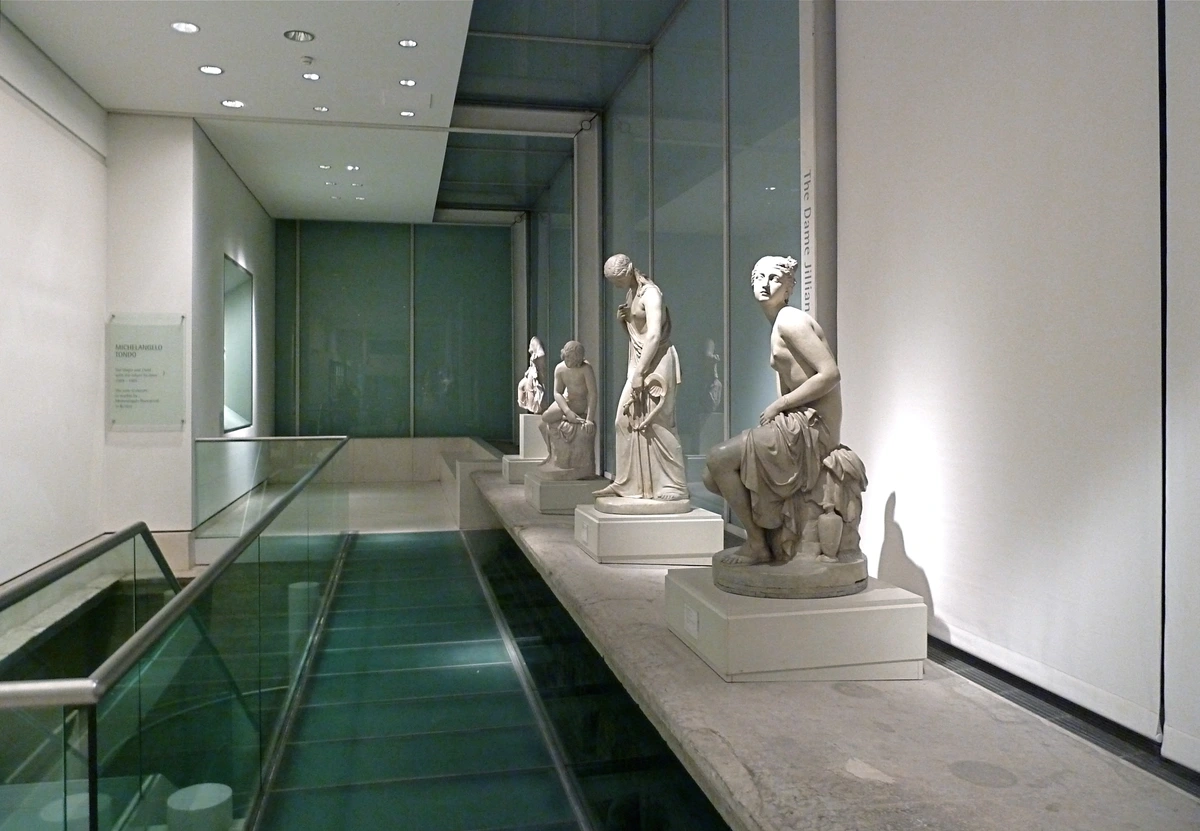
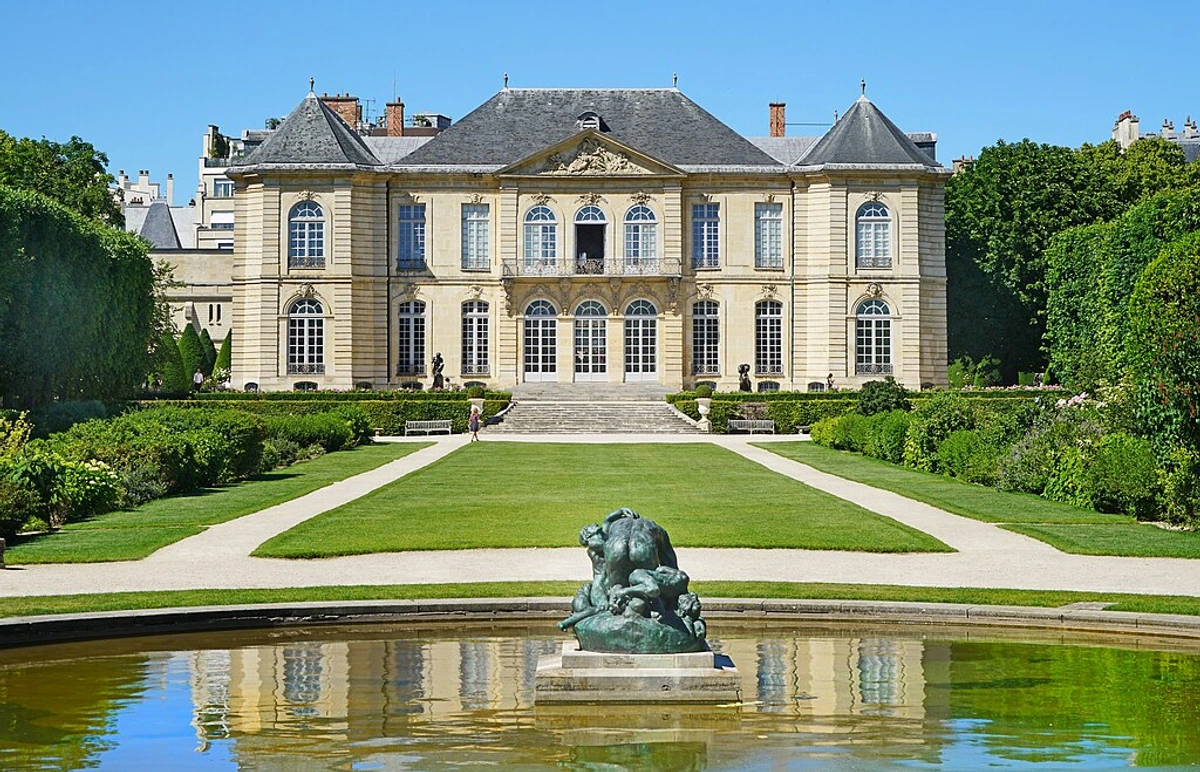
- Musée Rodin, Paris, France: This museum holds immense significance as it is housed in the Hôtel Biron, where Rodin lived and worked during the most productive period of his career. It was here, in 1908, that he first rented rooms and later, in 1916, bequeathed his entire collection of works, along with his personal art collection and archives, to the French state, on the condition that the Hôtel Biron become a museum dedicated to his work. This allows visitors to experience his art in the context of his own environment, including a beautiful sculpture garden where many of his monumental works are displayed. It's truly a must-visit, I think, offering unparalleled insight into his creative world and the context of his artistic production, much like visiting an artist's personal archive.
- Rodin Museum, Philadelphia, USA: This museum boasts the largest collection of Rodin's works outside Paris, including numerous bronzes, marbles, and plasters, set within a Beaux-Arts building and sculpture garden. It was established through the generous gift of entrepreneur Jules Mastbaum, who amassed one of the largest private collections of Rodin's work, ensuring Rodin's influence reached American audiences.
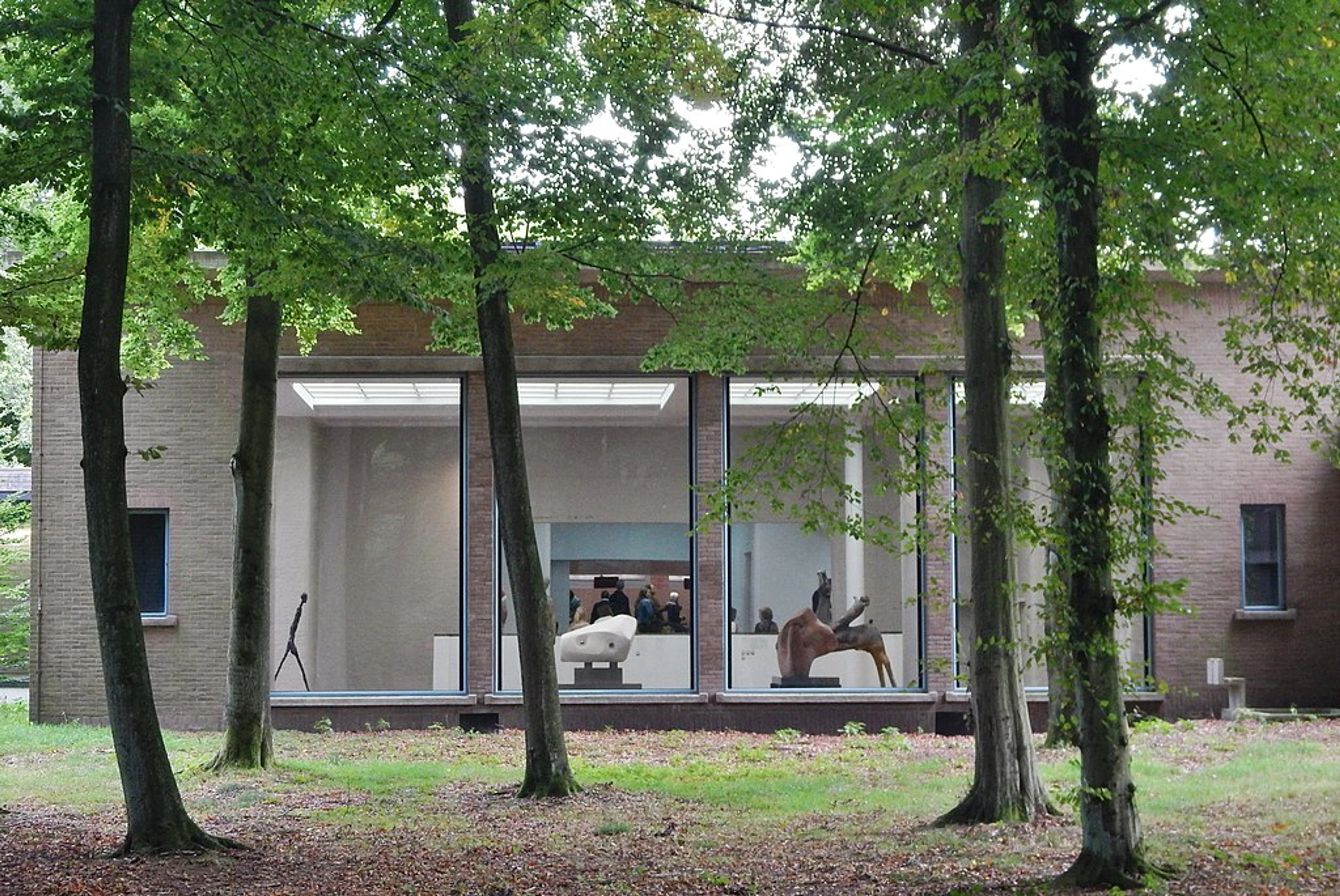
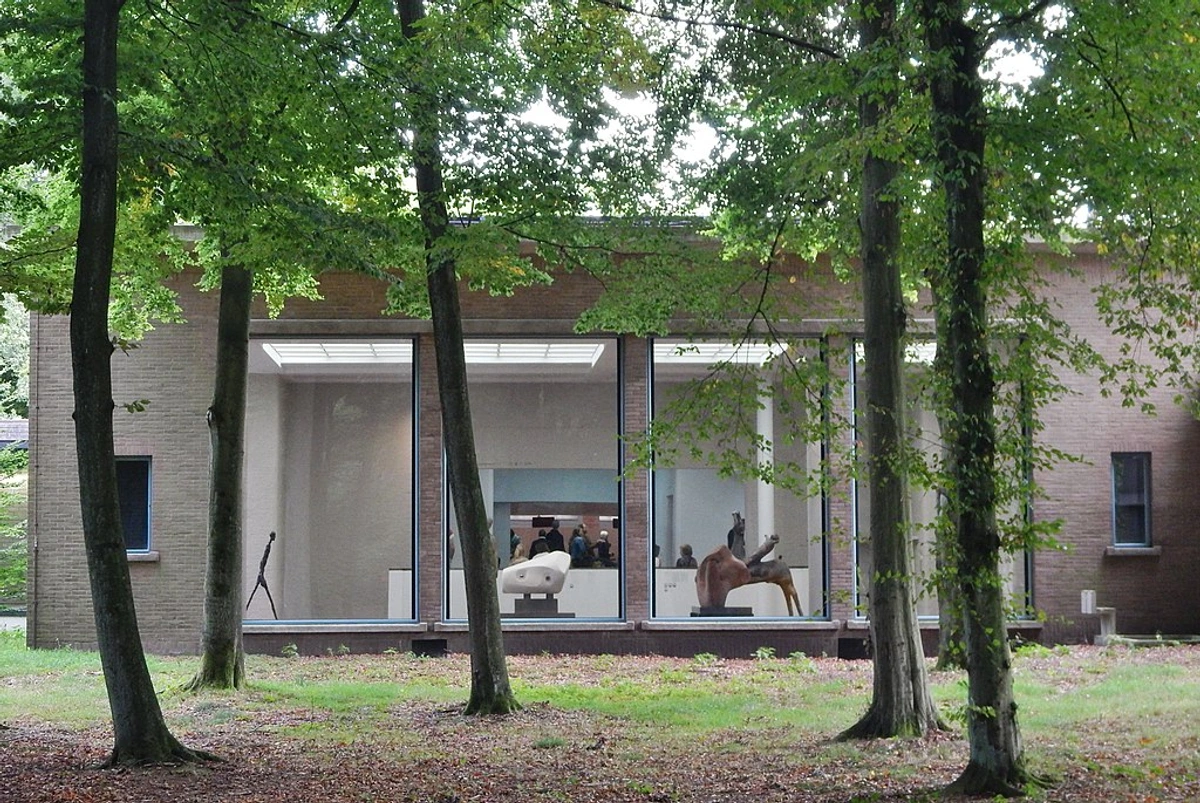
Beyond these two primary institutions, his works are prominently featured in major museums and public spaces globally, from the Metropolitan Museum of Art in New York to the Victoria and Albert Museum in London. Other notable collections can be found at institutions like the Kröller-Müller Museum in the Netherlands, among many others. The widespread presence of his work testifies to his enduring global impact.










What is the Hôtel Biron and why is it important?
The Hôtel Biron is a historic Rococo mansion in Paris that served as Auguste Rodin's last residence and studio from 1908. Its importance lies in the fact that it is now the Musée Rodin, established there due to Rodin's generous donation of all his works to the French state in 1916, on the condition that the building be preserved as a museum dedicated to his art. This allows visitors to experience his sculptures, drawings, and personal collections in the very place where he created and lived, offering a unique and intimate insight into his creative process and daily environment. It's truly a preserved piece of art history, almost as if his spirit still resides within its walls.
What techniques did Rodin use in his sculpture?
Rodin was a master of traditional sculptural techniques but applied them with radical innovation. His primary methods included:
- Modeling in Clay: He almost always began with clay, its malleability allowing for spontaneous, rapid capturing of movement and emotion from live models. These were often quick sketches in three dimensions, capturing fleeting impressions.
- Casting in Plaster: Clay models were frequently cast in plaster. This was a crucial step, as plaster allowed for easy duplication, reduction, enlargement (through pantograph machines), and rearrangement of figures, facilitating his experimental approach and the creation of numerous variations of a single motif. It was his way of drawing in 3D, always iterating and refining his ideas.
- Bronze Casting: Many of his most famous works were cast in bronze using the lost-wax method, a complex multi-step process that captures incredible detail and allows for multiple editions of a single sculpture, bringing a rich patina and lasting presence to his figures.
- Marble Carving: For marble, Rodin typically employed skilled assistants to rough out the primary forms from the plaster models, often using a pointing machine to transfer precise measurements. He would then personally complete the marble, adding the final, expressive touches, characteristic surface textures, and nuanced details that imbued the stone with life, giving it a surprising sense of flesh and movement.
What was Rodin's artistic philosophy?
Rodin’s philosophy was rooted in the belief that sculpture should not merely represent the external form, but rather capture the inner life, emotion, and psychological truth of the human subject. He championed authenticity over idealized beauty, seeing beauty even in imperfection and struggle. He believed in the power of the fragment, the expressive potential of movement, and the importance of the artist's visible hand in the creative process. For Rodin, art was a profound dialogue between the artist, the material, and the universal human experience, constantly seeking to express the drama and vitality of life itself. He sought to reveal the soul through the body, transforming static stone into living emotion, making his figures resonate with an almost unsettling vitality. It was a radical departure from the academic norms that sought to sanitize and idealize human experience.
What is Auguste Rodin most famous for?
Auguste Rodin is most famous for his iconic sculptures, particularly The Thinker, The Kiss, and the monumental The Gates of Hell. He is widely considered the father of modern sculpture due to his revolutionary focus on psychological realism, intense emotion, capturing dynamic movement, and his departure from idealized academic traditions. His ability to imbue bronze and marble with a sense of living flesh and inner turmoil set him apart and earned him international fame. He truly redefined what sculpture could be, making it a mirror to the complex inner world of humanity.
How did Rodin's personal life influence his art?
Rodin's intensely dramatic and often tumultuous personal life profoundly influenced his art, infusing it with raw emotion and psychological depth. His passionate affairs, particularly with Camille Claudel, fueled his exploration of sensuality, desire, and emotional torment, leading to some of his most powerfully intimate and fraught works. His own experiences of poverty, rejection, and struggle as a young artist imbued his figures with a sense of empathy and existential weight, making them profoundly relatable to the human condition. The complex relationships in his life often found allegorical expression in his works, making his art a deeply personal reflection of the human condition, with all its joys and sorrows. It's clear that for Rodin, art and life were inextricably intertwined, feeding each other in a constant, often turbulent, dialogue.
Why was Rodin's work so controversial?
Rodin's work was controversial for several key reasons, all stemming from his radical break with the academic art establishment of his time. His sculptures were startlingly realistic, so much so that he was accused of surmoulage (casting directly from live models) for The Age of Bronze. He also presented fragments of the human body (like torsos, hands, and feet) as complete, finished artworks, a concept that was unthinkable to conservative audiences and a direct challenge to notions of perfection. Furthermore, his depictions of raw human emotion, sensuality, and suffering, particularly in works like The Kiss and those from The Gates of Hell, were often deemed too explicit or undignified for public display, shocking a society accustomed to more restrained and idealized forms. He dared to show humanity in all its messy truth, and that made people uncomfortable.
Did Rodin have other notable students or associates besides Claudel?
While Camille Claudel is the most famous and impactful of Rodin's associates, his studio was a hub of artistic activity, attracting many talented individuals. Among them were Antoine Bourdelle and Charles Despiau, who went on to become significant sculptors in their own right, though their relationships with Rodin were less personally fraught than Claudel's. Bourdelle, for example, developed a more monumental and architectural style, while Despiau pursued a refined classicism. He also collaborated with many skilled craftsmen and marble carvers, who translated his plaster models into finished works, forming a kind of artistic lineage that extended his influence through their hands, even if their names aren't as widely recognized. His studio was a true crucible of talent, fostering a generation of sculptors who, while developing their own distinct styles, carried forward aspects of his revolutionary approach to form and emotion.
Who was Camille Claudel?
Camille Claudel was an extraordinarily gifted French sculptor, who served as Rodin's student, collaborator, model, muse, and lover for about a decade, starting in 1882. She was a brilliant artist in her own right, producing powerful and original works such as The Waltz and The Mature Age, which explored themes of passion, aging, and separation with profound emotional depth. However, her career was tragically overshadowed by Rodin's immense fame and the societal constraints placed on women artists. Her tumultuous relationship with Rodin, combined with a lack of critical and institutional recognition for her own genius, contributed to a severe mental breakdown, leading to her institutionalization for the last 30 years of her life. Her story highlights the profound injustices faced by many talented women artists throughout history, and her work is now rightly celebrated for its independent power and vision, finally receiving the recognition it deserves.
What materials did Rodin primarily use?
Rodin worked across a range of materials, most notably clay for his initial models (allowing for spontaneous expression and rapid capturing of fleeting gestures), plaster for intermediate casts (which allowed for easy duplication, manipulation, and the creation of variations – a truly revolutionary aspect of his studio practice), bronze for many of his final, iconic public works (cast using the lost-wax method for enduring presence, offering a rich patina and powerful volumetric presence), and marble for sculptures that demanded a luminous, classical finish, often carved by his skilled assistants under his precise direction, where he would add the final, expressive touches. He was also a prolific draftsman, producing thousands of drawings and watercolors that capture his keen observational skills and expressive line work, offering a fascinating glimpse into his creative process and his relentless pursuit of form.
What was Rodin's relationship with the art Salon?
Rodin had a complex and often adversarial relationship with the official French art Salon and the École des Beaux-Arts, which served as the arbiters of artistic taste and success. He was famously rejected from the École three times, a humiliation that perhaps fueled his rebellious spirit. While he did exhibit at the Salon and sought official commissions to further his career, his innovative, often controversial, and anti-academic approach frequently put him at odds with its conservative juries and critics. His work was seen as too raw, too emotionally charged, and too realistic for their refined sensibilities. He ultimately achieved success largely on his own terms, often bypassing the Salon system to hold his own independent exhibitions, most notably his grand retrospective at the Pavillon de l'Alma in 1900, which allowed him greater artistic freedom and direct engagement with a broader public. He carved his own path, even when it meant battling the establishment, proving that artistic vision can triumph over institutional resistance.
Where can I see Rodin's art?
Major, comprehensive collections of his work are housed at the Musée Rodin in Paris (located in his former home and studio) and the Rodin Museum in Philadelphia. Beyond these, his sculptures can be found in major museums worldwide, including the Metropolitan Museum of Art in New York, the Victoria and Albert Museum in London, the National Gallery of Art in Washington D.C., the Kröller-Müller Museum in the Netherlands, and many others. Many of his larger public sculptures also grace squares and gardens in cities across the globe, offering public access to his genius. Online resources and virtual museum tours also provide excellent ways to explore his vast body of work. Seeing art in person is always a different experience, something I think about when people visit my local museum, as featured in my Den Bosch Museum guide. There's a tangible presence to sculpture that you can only truly appreciate when you're standing before it, a certain energy that photographs can only hint at.
How did Rodin's approach influence future sculptors?
Rodin's revolutionary approach fundamentally altered the course of modern sculpture. His emphasis on raw emotion, psychological depth, and the dynamic human form liberated sculptors from the rigid academic conventions of the past. He paved the way for artists to embrace abstraction, the power of suggestion, and the expressive potential of material itself. Sculptors like Constantin Brâncuși, with his simplified, elemental forms, and Henry Moore, with his reclining figures and abstract human forms, directly built upon Rodin's innovations, pushing the boundaries of sculptural expression even further. He showed that sculpture could be about pure feeling and form, rather than just narrative illustration, forever changing how artists conceived of and interacted with the medium. It's truly difficult to imagine 20th-century sculpture without his monumental influence.