How the Roman Empire's Art Still Shapes Everything We Create
A detailed journey through the art of the Roman Empire, exploring its influences, innovations, and the enduring legacy that still captivates artists today.

How the Roman Empire's Art Still Shapes Everything We Create
Consider those moments when you're working with materials—whether physical paints or digital tools—and realize that your creative choices exist within an unbroken conversation stretching back millennia. Or when you're struggling with perspective in a drawing and it hits you that the Romans were solving these same spatial problems while building aqueducts that still stand today? The other day I caught myself obsessing over the play of natural light in my studio, only to remember that Roman architects were manipulating sunlight through oculus openings two thousand years before James Turrell made it fashionable. When I visit the Vatican Museums and see how Michelangelo later transformed these ideas, the influence becomes almost dizzying.
I've been thinking about this lately because we're living through another moment of radical transformation—not from republic to empire this time, but from analog to digital, from local to global, from established media to entirely new ones. The questions Roman artists faced feel eerily contemporary: How do you balance innovation with tradition? How do you create meaning when old certainties crumble? How do you make work that speaks across cultural boundaries? These aren't just historical curiosities—they're the same challenges contemporary artists navigate every day in our interconnected, rapidly changing world.
The Pantheon's oculus—that perfect circle of sky visible through the dome's opening—creates an environmental artwork that changes throughout the day as sunlight moves across the interior. This wasn't just architectural functionality; it was a carefully calibrated environmental artwork that transformed the building into a cosmic calendar or sundial, making time and weather visible within the architectural space.
The curve of your favorite coffee cup likely descends from Roman ceramic artists experimenting with new kiln technologies. The geometric patterns you might sketch in a notebook whisper of conversations held by mosaic artisans in Leptis Magna. The very idea that art should exist outside of temples and palaces, integrated into the homes and daily lives of ordinary people, is a profoundly Roman innovation.
What if I told you the graceful contour of your favorite coffee mug, the sophisticated proportions of that abstract canvas you've been struggling with, and even the democratic concept of art accessible to everyone might all trace their roots back to a single revolutionary civilization? This understanding reaches far beyond art history trivia—it's about decoding the essential DNA of visual culture that has been transmitted, transformed, and continuously rediscovered across millennia. We're participants in a living conversation between ancient workshops and contemporary studios that continues to fundamentally shape how we perceive, create, and conceptualize visual expression in our digital age.
Here's what I find most compelling: Roman art wasn't created by isolated geniuses working in garrets. It emerged from workshops that were essentially small businesses—artists and artisans collaborating, competing, innovating within economic and political constraints that would feel familiar to anyone trying to make a living as an artist today. They faced demanding patrons, tight budgets, technical challenges, and the constant pressure to deliver quality work on schedule. Sound familiar? It should. The conditions that produced some of history's most innovative art were remarkably similar to the conditions contemporary artists work within.
Why This Matters Now More Than Ever
We're living through another moment of radical technological transformation—the digital age, with AI-generated imagery, virtual reality, and global connectivity that would stagger the Roman imagination. Yet the fundamental questions Roman artists negotiated feel eerily contemporary: How do you balance innovation with tradition? How do you create meaning when old certainties crumble? How do you make work that speaks across cultural boundaries?
Roman art thrived during another period of massive transformation—the shift from republican city-state to continental empire, from local traditions to multicultural metropolis, from bronze and stone to revolutionary new materials like concrete. Sound familiar? We're navigating similar shifts: from physical to digital, from local to global, from established media to entirely new ones.
What strikes me most is how Roman artists approached these changes. They weren't paralyzed by anxiety about originality or cultural authenticity—they dove into the messy work of synthesis, adaptation, and innovation. Greek art provided a vocabulary, but Roman artists used that vocabulary to tell different stories, serve different functions, and express different values. This pragmatic approach to tradition—respecting it while transforming it for contemporary needs—offers powerful lessons for artists today who feel caught between reverence for art history and the pressure to be completely original.
This article isn't just about what Roman art was—it's about what Roman art offers contemporary artists wrestling with questions of influence, authenticity, public engagement, technological change, and cultural identity. The Romans weren't just making pretty things; they were creating the visual language of one of history's most diverse, complex, innovative societies. We can learn from how they did it.
But here's what I think matters most: studying Roman art isn't about copying ancient forms or styles. It's about understanding how artists in any period can work with real-world constraints—economic, political, social, technical—and somehow turn those limitations into sources of creative energy. The most innovative Roman art emerged not despite these challenges, but because of them. Every time we face similar challenges in our own practice, Roman precedents offer both practical guidance and encouragement that meaningful work is possible even in less-than-ideal circumstances.
From the workshops of Pompeii to the imperial forges of Rome, artists operated within a system that demanded both technical innovation and mass production, pushing them to create an artistic vocabulary that could be standardized for an empire yet retain enough flexibility to be adapted from the misty highlands of Britannia to the sun-baked markets of Alexandria.
The scale of this enterprise still staggers me. Think about it: artists working in what we'd now call Portugal were creating mosaics using techniques developed in North Africa, depicting mythological scenes borrowed from Greece, for patrons who identified as Roman citizens while maintaining local cultural traditions. The result wasn't cultural chaos—it was creative synthesis. Artists in different regions developed distinctive approaches that reflected their particular cultural circumstances while remaining recognizably Roman. This dynamic—local innovation within an international framework—directly anticipates contemporary challenges facing artists working in a globalized art world.
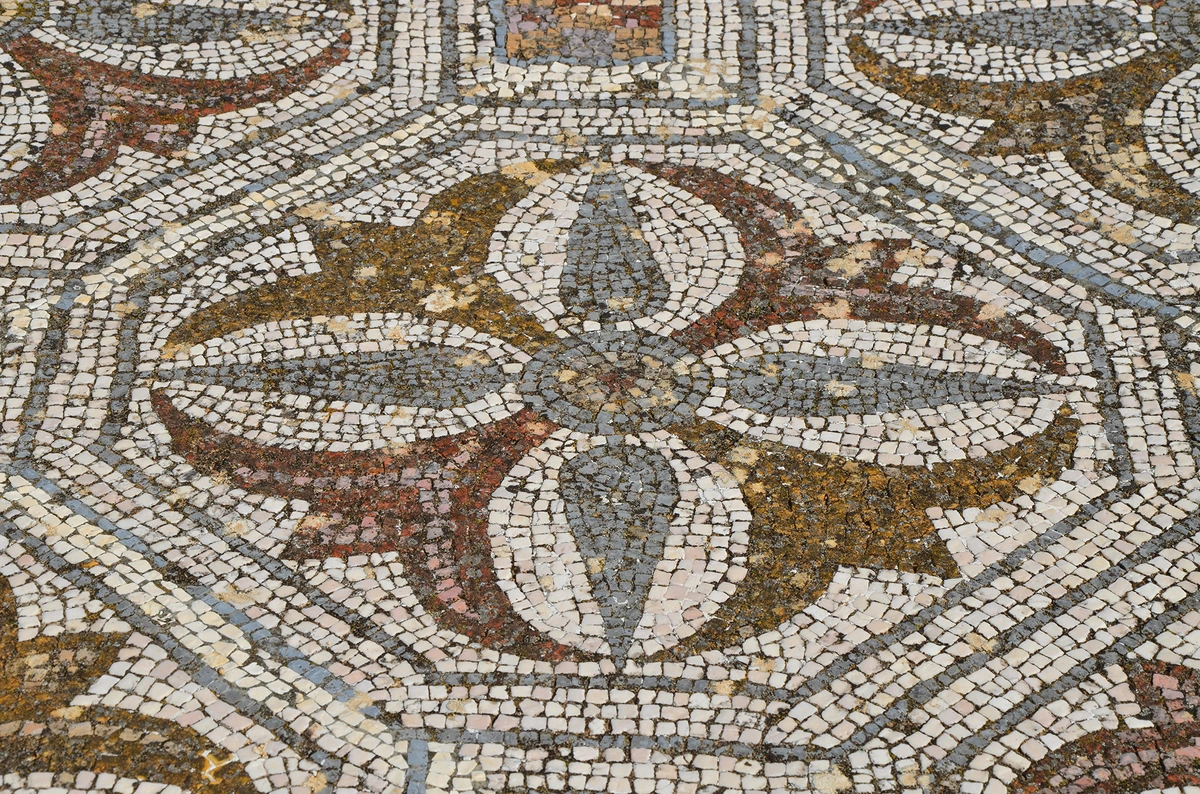
I've walked through galleries feeling utterly modern, only to realize I'm essentially looking at variations on themes developed in imperial workshops from Britain to Syria. The geometric patterns in my most abstract pieces suddenly seem to whisper conversations with mosaic artisans from Leptis Magna. It's humbling, frustrating, and ultimately liberating. Once you start seeing these connections, you can't unsee them—and honestly, why would you want to?
The Hellenistic Spark: When Greek Art Met Roman Ambition
Let me paint you a picture of what might be the most consequential artistic encounter in Western history. I want you to imagine Rome in the 2nd century BCE: a martial society, pragmatic and proud, suddenly encountering the sophisticated aesthetic culture of the Hellenistic world. Roman generals returned from campaigns in Greece, Macedonia, and Asia Minor, bringing back not just the spoils of war, but the spoils of culture—shiploads of Greek sculptures, paintings, and perhaps most importantly, Greek artists themselves.
What fascinates me most about this encounter is how it reveals the complex relationship between conquest and culture. Military victory brought Roman generals into contact with artistic traditions that were, in many ways, more sophisticated than their own. The result wasn't simple cultural replacement or wholesale adoption—it was a creative negotiation that produced something genuinely new. Greek artists brought aesthetic knowledge that Roman culture lacked, but Roman society provided new contexts, new purposes, and new ambitions for that artistic knowledge.
This pattern—where political and military power encounters cultural prestige that it simultaneously covets and resents—recurs throughout history. Contemporary artists working with postcolonial themes, cultural identity, or cross-cultural exchange are often dealing with similar dynamics: how do you navigate relationships where power and cultural influence flow in different directions? How do you maintain integrity while working within systems shaped by historical inequalities? The Roman-Greek encounter offers no simple answers, but it shows us how complex these relationships have always been.
Rome's encounter with Greek art wasn't a simple case of cultural admiration—it was a complex colonial relationship that generated both creative energy and cultural anxiety. Roman elites desperately wanted the cultural prestige that Greek art represented, but they also feared losing their distinctive Roman identity. This tension between attraction and resistance, between appropriation and anxiety, created the dynamic conditions that produced genuinely new artistic forms. The most innovative Roman art emerged not from simple imitation or cultural purity, but from the creative friction between Greek sophistication and Roman pragmatism.
Roman art represents a fascinating intersection of imperial power, cultural synthesis, and technical innovation that continues to influence contemporary artistic practice. From the revolutionary invention of concrete architecture to the psychological depth of veristic portraiture, Roman artists created visual languages that spoke across cultural boundaries while maintaining local specificity.
The scale of this cultural absorption was staggering. According to historical accounts, a single Roman general brought back 285 bronze statues and 230 marble statues from just one Greek campaign. Entire workshops were transplanted from Athens to Rome. Greek artists—sculptors, painters, architects—found themselves working for Roman patrons who wanted what Hellenistic culture had perfected: idealized beauty, mathematical proportion, mythological sophistication.
This was more than conquest; it was a cultural transfusion. Plutarch tells us that Roman general Aemilius Paullus, upon conquering Macedonia in 168 BCE, deliberately sought out Greek artists and scholars, bringing them back to Rome not as slaves to be sold, but as valued cultural conduits. The senator and orator Cicero later complained that his contemporaries were so enamored with Greek art that they were bankrupting themselves to acquire it, creating a massive trade imbalance that funneled Roman silver eastward in exchange for statues and paintings.
The Roman elite became absolutely obsessed with Greek art. This wasn't mere appreciation; it was cultural intoxication. Wealthy Romans commissioned Greek-style statues for their villas, learned Greek philosophy, and sent their sons to Athens to study. The demand was so intense that workshops in Athens began mass-producing "Greek" sculptures specifically for Roman export markets.
But here's what fascinates me as a contemporary artist: the Romans weren't passive consumers. They engaged in what we might now call radical appropriation—selecting, adapting, and transforming Greek forms to serve Roman cultural purposes. When a Roman patron commissioned a copy of a famous Greek statue, they weren't just getting a reproduction; they were getting a Roman interpretation filtered through distinctly Roman sensibilities.
The political and cultural dynamics were fascinating. Elite Roman families competed to display Greek art in their homes, but they also feared losing their Roman identity. Cato the Elder warned that Greek luxury would corrupt traditional Roman virtue. It's the same tension you see today between embracing global culture and maintaining local identity—between appreciating international art and fearing cultural homogenization.
I find myself thinking about this dynamic when I visit contemporary art fairs or scroll through Instagram feeds. We're all feeding on each other's work, remixing, adapting, sometimes outright copying—and somewhere in that messy process, genuine innovation emerges. The Romans understood something we're still grappling with: influence isn't opposition to originality; it's the precondition for it.
What made this cultural encounter so generative was its fundamental asymmetry. Greek artists were often enslaved or working under Roman military domination, yet they brought artistic knowledge that Roman culture desperately wanted. This dynamic—knowledge flowing from conquered to conqueror—created a complex cultural negotiation that produced genuinely new artistic forms. It's a crucial reminder that cultural innovation often happens in conditions of discomfort and unequal power, not in isolation or peaceful symbiosis.
What made Roman adaptation of Greek art so revolutionary was their relentlessly pragmatic approach. They asked practical questions: How can we use Greek forms to celebrate specific Roman victories? How can we adapt Greek idealism to honor real Roman individuals? How can we make Greek aesthetics serve Roman power and identity? These weren't academic questions—they were urgent cultural problems that generated genuinely creative solutions.
Consider the practical differences between Greek and Roman artistic goals:
- Greek art emerged from city-states where citizens participated in governance and religious festivals. Art expressed civic identity and religious devotion within relatively homogenous communities.
- Roman art served an empire of unprecedented scale and diversity. It had to communicate across languages, cultures, and vast geographical distances.
- Greek workshops served relatively local communities with shared cultural references
- Roman workshops served a multicultural empire where clients ranged from Spanish merchants to Syrian soldiers to African aristocrats
This practical pressure—the need to communicate visually across cultural boundaries—pushed Roman artists to develop entirely new forms of visual expression. It's precisely the same pressure contemporary artists face when making work that needs to travel internationally, speak to diverse audiences, or function in increasingly globalized art markets.
Think about how contemporary artists navigate similar challenges. When an artist from Lagos shows work at Art Basel, or when a Tokyo-based digital artist creates something for international platforms, they're negotiating the same fundamental tension: how do you make work that's both locally meaningful and globally legible? Roman artists solved this problem by creating visual languages that could function across different cultural contexts without losing their distinctive character.
This wasn't simple imitation, though. The Romans had this almost insatiable appetite for Greek culture, but with characteristically Roman pragmatism, they asked: "How can we make this work for us?" The answer to that question fundamentally shaped Western art. Roman artists became the ultimate remixers—taking Greek samples and creating entirely new tracks. They understood something that feels incredibly contemporary: influence isn't theft; it's the raw material of innovation. The anxiety about originality that paralyzes so many artists today? The Romans would have found it baffling. For them, the question wasn't "Is this original?" but "Does this work?" and "Does this serve its purpose?"
The Workshop as Innovation Lab
The Roman art workshop (officina) was a remarkably modern space. Picture this: Greek master sculptors working alongside Roman apprentices, with Egyptian craftsmen providing specialized skills in colored marbles, Syrian traders supplying pigments from Afghanistan, Spanish technicians bringing knowledge of mercury mining for cinnabar red. The workshop was a microcosm of the empire itself—multicultural, commercially sophisticated, technically innovative.
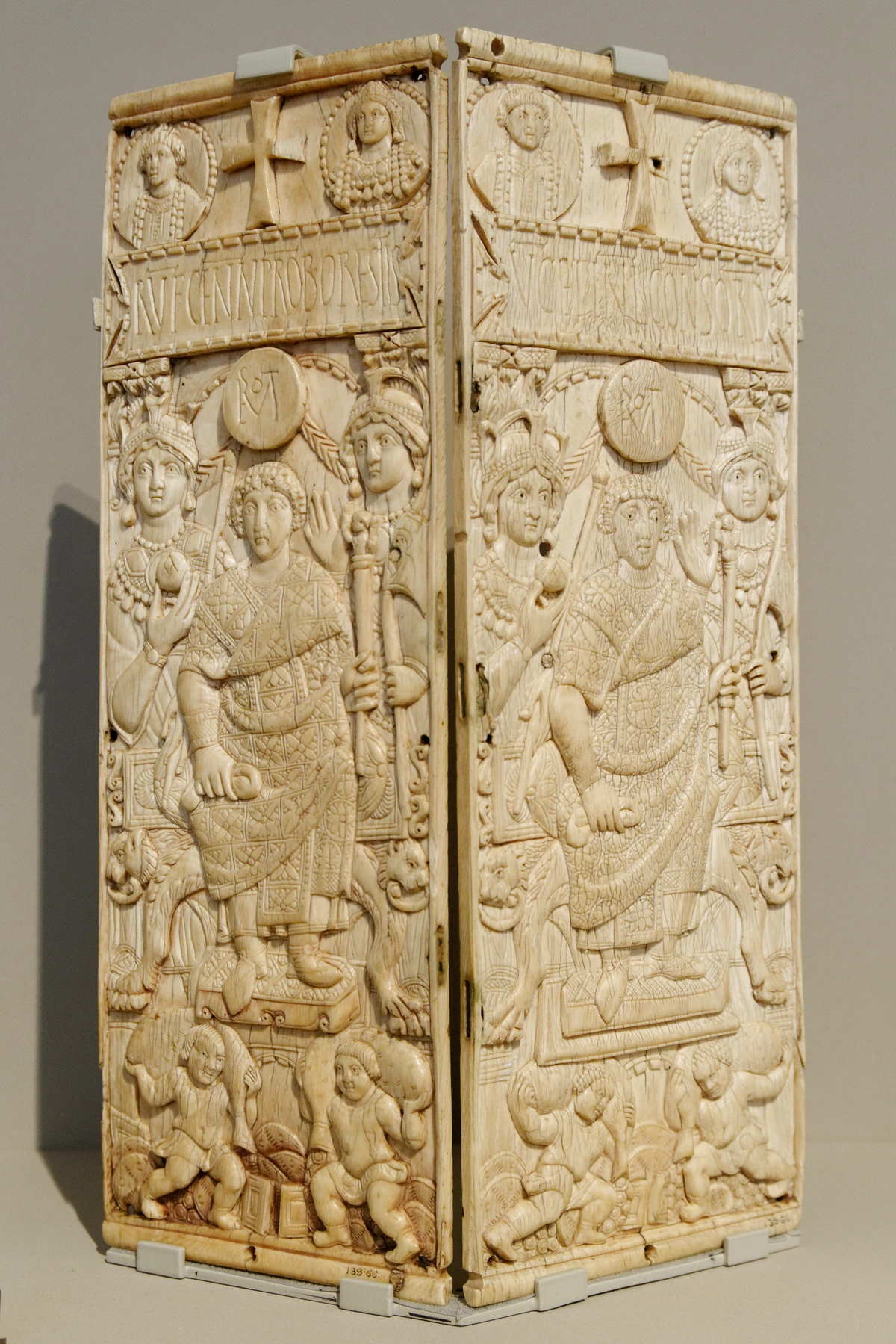
This collaborative environment accelerated artistic development. Techniques that took centuries to develop in isolation could be combined in single projects. A single sculpture might show:
- Greek understanding of anatomical proportion perfected through centuries of artistic evolution
- Roman psychological realism in facial expression drawn from the veristic tradition
- Egyptian granite-working techniques requiring specialized stone-carving tools
- Eastern Mediterranean decorative motifs filtered through imperial Roman workshops
- Local marble from Carrara or colored stone imported from North Africa
- Technical innovations in bronze casting that allowed for more complex forms including use of color
- Advanced pigment chemistry enabling fresco painters to achieve unprecedented richness
The workshop model also enabled specialization. Some artists became expert at mythological scenes, others at portraiture, still others at architectural sculpture. This specialization allowed for deep technical expertise while facilitating collaboration on large imperial projects like triumphal arches or public bath complexes.
Contemporary artists might recognize something familiar in this model. We work in digital spaces where we can collaborate across continents, access global markets through platforms like Instagram or gallery networks, and combine techniques from different traditions. The Roman workshop was doing similar work—just with chisels instead of Photoshop, and with sailing ships instead of broadband.
I find myself thinking about this when I'm working on complex projects that require multiple skills. Rather than trying to master everything myself, I look for collaborators who bring different expertise. It's the Roman workshop principle: innovation happens at the intersection of different knowledge systems.
The result was fascinating. Roman artists began creating what art historians call the Neo-Attic style—essentially, Roman interpretations of classical Greek forms. But here's where it gets interesting for contemporary artists: even in this early period, the Romans weren't just copying. They were selecting, adapting, and creating hybrids that reflected Roman values while maintaining Greek elegance.
The Neo-Attic style reveals something crucial about cultural appropriation versus cultural appreciation. Modern debates about these issues often assume they're uniquely contemporary problems. But Roman artists were already navigating these questions two thousand years ago. They developed sophisticated approaches that contemporary artists can learn from—not providing easy answers, but offering models for how to think through these complex issues with intellectual honesty and ethical awareness.
The most important insight from studying Roman-Greek artistic relationships is that cultural influence rarely happens on equal terms. Greek artists often worked under Roman military and economic domination, yet they brought artistic knowledge Roman culture desperately wanted. This power imbalance—knowledge flowing from conquered to conqueror, cultural prestige trumping military power—created the dynamic tensions that produced genuinely new artistic forms. Contemporary artists working with issues of cultural appropriation can learn from how Roman artists navigated (and sometimes failed to navigate) these ethical complexities. They developed sophisticated approaches:
Contemporary artists grappling with questions of cultural influence, appropriation, or cross-cultural collaboration might find useful precedents in these Roman approaches. When artists today work with traditions from cultures other than their own—whether through respectful engagement, critical transformation, or productive misreading—they're working within frameworks that Roman artists helped establish. Understanding how Roman artists balanced respect for sources with creative transformation offers guidance for contemporary artists wrestling with the ethics and aesthetics of cultural borrowing.
Of course, we shouldn't romanticize this process. Roman cultural appropriation happened within a colonial relationship that involved real violence, economic exploitation, and cultural destruction. Indigenous artistic traditions across the empire were systematically marginalized or completely erased. The creative synthesis we celebrate came at real human cost. Contemporary artists working with issues of cultural borrowing need to acknowledge this complexity rather than using Roman examples to justify simplistic approaches to artistic influence.
What Roman art shows us is that cultural exchange—even highly unequal exchange—can produce genuine innovation. But it also shows us that these exchanges happen within power structures that artists have ethical obligations to understand and, when possible, challenge. This double awareness—appreciating creative transformation while acknowledging power imbalances—might be the most valuable lesson Roman art offers contemporary practitioners.
- Adaptation rather than replication: Instead of slavishly copying Greek originals, they adapted them to Roman contexts
- Hybridization: They combined Greek forms with Etruscan, Egyptian, or Near Eastern elements
- Functional transformation: They took religious or civic sculpture and adapted it for private decorative purposes
- Scale shift: They miniaturized monumental Greek sculpture for Roman domestic spaces
This historical example suggests that the problem isn't "influence" itself—it's the power dynamics and economic structures through which influence operates. When Roman patrons commissioned Greek-style art, they were operating within a colonial relationship, but they were also creating genuinely new cultural forms that served different social functions than the originals.
Contemporary artists working with "appropriation" might think about this distinction. When Kara Walker reworks imagery from antebellum slavery, or when Kehinde Wiley reimagines European portraiture with contemporary Black subjects, they're engaging in this same tradition of critical adaptation. The question isn't whether influence is legitimate, but how artistic transformation serves critical or liberatory purposes.
This created a fascinating tension that still resonates in contemporary art. When Kehinde Wiley paints contemporary Black subjects in poses borrowed from Renaissance masters (who were themselves borrowing from Roman sculpture), he's working in this same tradition of radical appropriation. When Sherrie Levine photographs Walker Evans's Depression-era photographs, she's exploring the same questions about originality, influence, and cultural authority that Roman artists faced when copying Greek masterworks.
I find myself thinking about this dynamic in my own studio practice. When I'm working on a painting that shows clear influence from artists I admire, my instinct is often to worry about originality. But Roman art reminds me that influence isn't the opposite of originality—it's the raw material from which originality emerges. The question isn't whether I'm being influenced, but what I'm doing with that influence—how I'm transforming it, adapting it to serve my own purposes, making it speak to contemporary concerns rather than simply reproducing past achievements.
This shift in thinking—from 'Is this original?' to 'Is this working for what I want to communicate?'—can be incredibly liberating for contemporary artists. It reframes the challenge from avoiding influence (impossible) to engaging influence consciously and critically. That's exactly what the best Roman artists did with Greek models, and it's exactly what the most innovative contemporary artists do with the traditions they inherit.
What gets lost in simplistic critiques of appropriation is this Roman lesson: the act of translation is itself creative. A Roman copyist working in marble had to solve technical problems the original Greek bronze sculptor never faced. The different material properties, the need to add struts for support, the subtle shifts in scale and finish—all of these forced Roman artists to engage creatively with their Greek models. They weren't just replicating; they were problem-solving, which is itself a form of making.
I think about this whenever I hear artists worrying that digital tools or new technologies somehow make art 'less creative' because they're not starting from scratch. But Roman artists remind us that all art involves working within constraints, using tools and materials developed by others, building on existing knowledge and traditions. The creativity comes not from inventing everything yourself, but from what you do with the resources available to you.
This insight extends beyond materials to conceptual frameworks. Contemporary artists working with appropriation or remix culture—whether in digital media, collage, or citation-based practices—are working in this same tradition of creative transformation. The question isn't whether you're using existing material, but how you're transforming it to create new meanings and experiences. The Romans perfected this approach centuries before it became a recognized contemporary art practice.
The difference, of course, is that Roman artists didn't have our modern anxiety about originality. They saw themselves as part of a continuous tradition, not as isolated geniuses creating ex nihilo. There's something deeply liberating about this approach—it takes the pressure off having to invent everything from scratch and instead focuses energy on executing ideas with excellence and making them serve contemporary needs.
But think about how you approach your own work. Maybe you love Rothko's color fields but filter them through your anxiety about climate change. Perhaps you admire Japanese woodblock prints but apply their principles to digital animation. That dynamic—tradition meeting personal vision—is exactly what Roman artists navigated when Greek sculpture met Roman pragmatism.
Greek Classicism vs. Roman Innovation: A Detailed Comparison
Characteristic  | Greek Art (Classical Period) | Roman Art |
|---|---|---|
| Primary Focus | Idealized beauty, mathematical perfection | Realistic portraiture, narrative, utility |
| Portraiture | Idealized types, generic features | Veristic (warts-and-all realism), individual character |
| Architecture | Post-and-lintel, integrated sculpture | Arches, vaults, concrete, massive scale |
| Sculpture Material | Primarily bronze and marble | Bronze, marble, terracotta, emphasizing material suitability |
| Innovation Approach | Perfecting established forms | Developing new materials and engineering solutions |
| Cultural Role | Civic and religious expression | State propaganda, public communication, mass entertainment |
| Aesthetic Goal | Universal ideals and mathematical harmony | Individual truth, psychological depth, practical function |
| Public Function | Religious and civic monuments | Triumphal arches, baths, aqueducts, propaganda |
| Scale & Scope | Individual city-states, regional styles | Empire-wide, intentionally standardized forms |
| Subject Matter | Mythology, idealized athletes, gods | Historical events, specific individuals, daily life |
| Audience | Primarily elite, educated citizens | Mass public, diverse populations across empire |
| Artistic Training | Workshop apprenticeships, regional traditions | Imperial workshops, formal academies, international exchange |
| Material Innovation | Marble, bronze | Concrete, brick-faced concrete, mosaic |
| Emotional Range | Noble restraint, idealized emotion | Dramatic expression, psychological depth |
| Trade & Commerce | Local materials, regional markets | Global supply chains, empire-wide trade |
| Political Function | Celebration of democratic values | Imperial propaganda, social control |
| Technological Base | Craft-based, individual mastery | Industrial scale, engineered solutions |
This comparison reveals something crucial: the shift from Greek to Roman art wasn't just stylistic—it was systemic. Roman artists were responding to fundamentally different social, technological, and economic conditions. They had to:
- Serve an empire rather than a city-state
- Communicate across cultural and linguistic boundaries
- Work with industrial-scale production methods
- Satisfy both elite patrons and mass audiences
- Integrate diverse cultural influences into coherent visual programs
These pressures drove Roman artists to develop new approaches to form, content, and technique. The result was an artistic revolution that created the foundation for Western art history while remaining distinctly Roman in its pragmatic, inclusive, functionally-oriented character.
Something profound happens when you look at these differences. The Greeks gave us the vocabulary of Western art—proportion, harmony, the ideal human form. But the Romans taught us how to use that vocabulary to tell specific stories about real people, power, and place.
The Etruscan Connection: Rome's Other Artistic Heritage
Before we get too focused on Greece, it's crucial to remember that Roman art had another major source: the Etruscans. The Etruscans, who dominated central Italy before Roman expansion, developed sophisticated artistic traditions that differed markedly from Greek models. Etruscan art emphasized:
- Dynamism and movement over static perfection
- Vitality and energy in human figures
- Narrative scenes with dramatic action
- Integration of art with ritual and burial practices
- Sophisticated metalworking and terracotta sculpture
When Roman artists began developing their own visual language, they didn't just choose between Greek and Etruscan models—they synthesized them. The result was an artistic tradition that combined:
- Greek attention to anatomical accuracy and proportion
- Etruscan emphasis on energy, movement, and narrative
- Roman pragmatism and functionalism
This synthesis is visible in everything from early Roman temple architecture (which combines Greek column styles with Etruscan spatial planning) to sarcophagus sculpture (which shows Greek technical skill applied to Etruscan funerary themes).
The lesson for contemporary artists is crucial: cultural influence rarely comes from single sources. It's typically a process of synthesizing multiple traditions to create something genuinely new. When we talk about "Western art," we're really talking about a conversation between Greek idealization, Etruscan vitality, and Roman pragmatism—with countless other influences woven in as the empire expanded.
Think about contemporary movements that synthesize multiple traditions: the blending of African and European traditions in the Harlem Renaissance, the fusion of Japanese and Western approaches in Impressionism, or the combination of Indigenous and contemporary media in current art practices. The Romans were doing similar work two thousand years ago.
Verism: The Revolutionary Art of the Unpretty Truth
Now we arrive at what I consider one of Rome's most radical artistic innovations—and one that should matter enormously to anyone working with portraiture, character studies, or psychological realism today. The Romans developed something called verism—from the Latin verus, meaning 'truth'—and it represents a genuine revolution in how humans represent other humans.
What gets me most about verism is how fundamentally it shifts what we think art should do. Before Roman verism, most portrait art aimed for idealization—showing people as we wish they were, or as representatives of ideals rather than individuals. Verism does something completely different: it insists that actual human beings, with all their particularities and imperfections, are worthy subjects for serious artistic attention. This wasn't just a stylistic choice—it was a philosophical position about the relationship between art and truth.
I see this same impulse in contemporary artists who refuse to idealize their subjects—photographers who document ordinary people with dignity and specificity, painters who show bodies marked by time and experience, artists who find beauty in actuality rather than fantasy. Roman verism reminds us that you don't have to choose between truth-telling and aesthetic excellence—the most compelling art often emerges from their integration.
But here's the crucial point that's often missed: verism wasn't just a stylistic choice; it was deeply connected to Roman legal and social practices. Roman families kept wax death masks (imagines) of their ancestors, which were worn by living relatives during funeral processions. These masks were often made from direct casts of the deceased's face. When this tradition migrated into permanent media like marble and bronze, it carried with it this profound commitment to documentary accuracy—not just for art's sake, but for memory's sake, for law's sake, for the very continuity of Roman family identity.
Picture this: you're a wealthy Roman citizen commissioning a portrait bust in the 1st century BCE. Greek sculptors would have given you an idealized version—perfect proportions, noble expression, generic features that could represent any aristocrat. But Roman veristic portraits show something completely different: wrinkles, scars, receding hairlines, asymmetrical features, the actual wear and tear of human experience carved directly into marble or cast in bronze.
This wasn't about flattery. It was about documenting character, experience, and individual identity. Roman verism operates on the principle that a person's face tells their life story—not in some metaphorical sense, but literally. The lines around someone's mouth reveal their habitual expressions; the set of their jaw suggests their typical emotional state; the texture of their skin records decades of living.
The Republican Roots: Where Verism Came From
To understand why verism emerged when and where it did, you need to understand Roman Republican values. The Roman Republic (roughly 509-27 BCE) was a society that celebrated practical achievement over inherited status. Romans valued:
- Experience over youth: Political and military leaders were typically older men who had proven themselves through decades of service
- Character over beauty: Moral authority came from demonstrated virtue, not physical perfection
- Public service over private pleasure: Citizens were expected to serve the state through military or political service
- Pragmatism over idealism: What mattered was what worked, not what was theoretically perfect
These values created a cultural environment where depicting age, experience, and character made sense. A portrait showing a receding hairline, deep wrinkles, and determined expression wasn't unflattering—it was a record of public service and proven reliability.
This cultural context helps explain why verism emerged in Rome rather than Greece. Greek city-states valued athletic perfection and idealized youth. Roman society valued the wisdom that came from lived experience. The artistic innovations reflected these different social values.
It's worth noting that verism wasn't universal or static. As Rome transitioned from Republic to Empire, portraiture evolved. Augustan portraiture often blended veristic realism with idealized touches that suggested divine favor or eternal youth. Later imperial portraiture developed its own conventions that balanced realism with propaganda needs. But the fundamental Roman commitment to psychological portraiture—the idea that art should reveal character, not just depict appearance—remained constant.
This might be my favorite Roman innovation, and it's one that should matter enormously to any contemporary artist working with portraiture, character studies, or psychological realism.
The Veristic Revolution in Contemporary Practice
If you're making portraits today—whether traditional painting, photography, digital media, or experimental approaches—Roman verism offers powerful lessons. Consider how contemporary artists work with similar principles:
Alice Neel (1900-1984) brought unsparing psychological intensity to portraits of friends, family, and neighbors, refusing to idealize while maintaining profound empathy for her subjects. Her portraits show people with all their vulnerabilities, insecurities, and particularities intact—exactly the approach Roman veristic sculptors took.
Lucian Freud (1922-2011) painted flesh with almost brutal honesty, showing bodies as they actually exist—marked by time, experience, and individual circumstance. His statement "I paint people as they are, not as they would like to be seen" could have been spoken by a Roman Republican portrait artist.
Diane Arbus (1923-1971) photographed people who were often marginalized or considered "outside" normal society, presenting them with dignity and specificity rather than exoticizing or romanticizing them. Her work embodies the Roman principle that ordinary, particular human reality is worthy of serious artistic attention.
Even contemporary artists working in more abstract or conceptual modes can learn from verism. Chuck Close's massive portraits—whether photorealist paintings or later more abstract works—maintain a commitment to individual specificity even as they explore different approaches to representation. His work suggests that portraiture can be both technically experimental and psychologically penetrating.
The digital age poses interesting challenges to veristic principles. Instagram filters, Photoshop editing, and AI-generated imagery all push us toward idealization and perfection. But there's a counter-movement in artists who use digital tools to explore individual specificity rather than erase it. Contemporary photographers who work with "unretouched" images, or digital artists who embrace "glitch aesthetics" as markers of authenticity, are working with the same fundamental commitment to truth-telling that drove Roman verism.
What all these approaches share is the Roman insight that meaning emerges from particularity rather than universality. The artists job isn't to show us "ideal humanity" but to show us this specific human being with all their individual history written on their body and face. This approach has revolutionary implications for how we understand art's relationship to truth, beauty, and human dignity.
This fundamental shift—from idealized types to specific individuals—represents one of the most important philosophical contributions of Roman art to Western culture. Where Greek sculptors gave us perfect embodiments of athletic virtue or divine power, Roman artists gave us real people with distinctive faces, particular life stories, and the actual marks of lived experience. This celebration of human specificity over abstract idealism has profound implications for understanding human worth, democratic dignity, and the artistic value of ordinary life. The Romans developed something called verism—from the Latin verus, meaning 'truth'—and it's absolutely revolutionary.
This shift represents something profound in the history of art: the emergence of psychological portraiture. Roman verism asks us to consider not just what someone looks like, but who they are—their personality, their history, their character. It's the difference between a generic representation of 'a general' and the specific representation of this general, with his particular combination of intelligence, ruthlessness, and weariness.
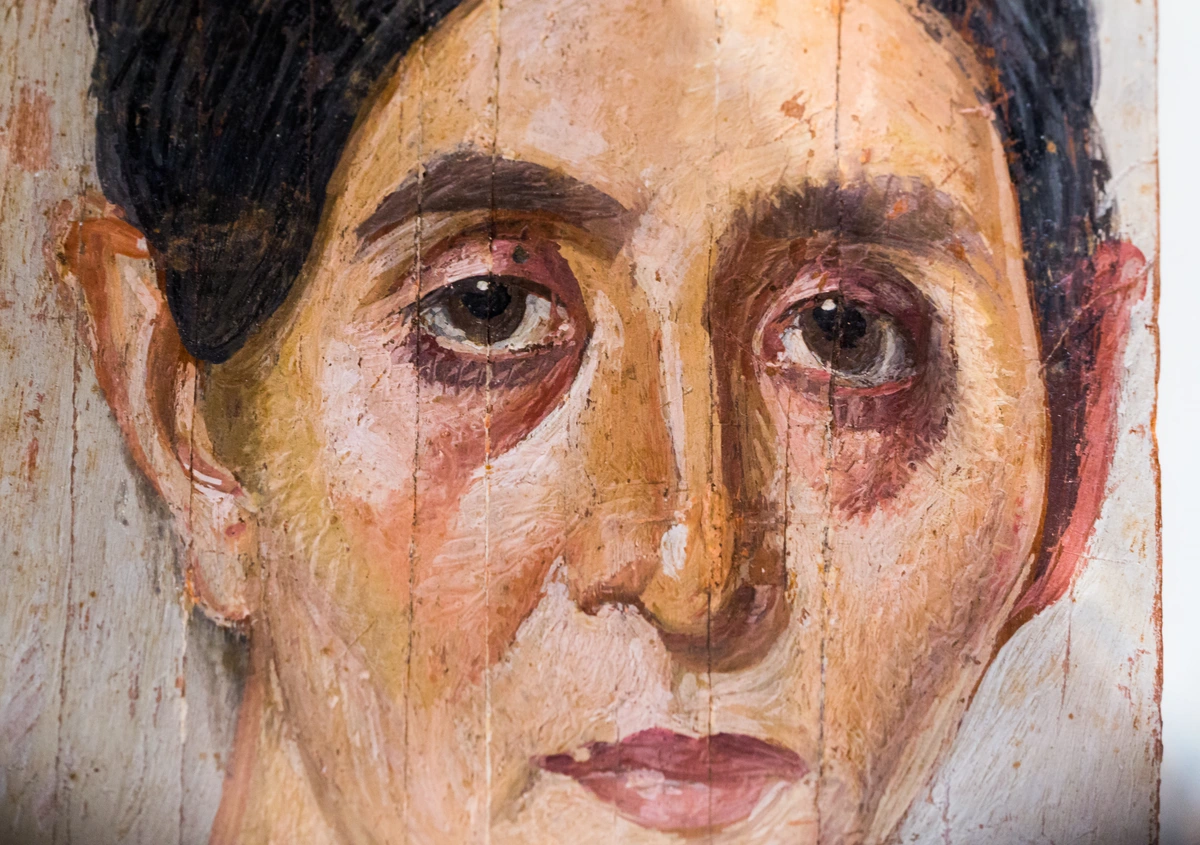
I find myself thinking about this when I'm painting portraits today. It's so tempting to smooth out imperfections, to create flattering versions of people that erase their actual lived experience. But Roman verism reminds me that the most compelling portraits often come from looking at reality with clear eyes—not judgmental, but truthful. When I look at a Roman veristic bust, I feel like I'm meeting an actual person, not an artistic ideal.
This commitment to psychological truth-telling connects Roman portraiture directly to some of the most important contemporary artistic practices. Whether you're working with photo-realism, documentary photography, or experimental approaches to representation, the Roman veristic tradition offers a model for how to treat your subjects with dignity while refusing to idealize or romanticize their lived experience. The faces that Roman artists carved into marble or cast in bronze weren't just likenesses—they were character studies, psychological portraits, testaments to individual human specificity in all its particularity and imperfection.
What's even more striking is how this Republican verism evolved under the Empire. The brutal realism of the late Republic—all sagging flesh and defiantly unglamorous features—gradually softened into something more psychologically complex. Early imperial portraits of Augustus show this fascinating negotiation: they retain veristic details but blend them with idealized elements suggesting divine favor and eternal youth. The portrait artists had to satisfy two contradictory demands: show the emperor as an actual human being while suggesting he was something more. This tension between documentary truth and political myth-making is something every portrait artist who has ever painted a powerful client will recognize.
I believe this shift represents one of the most significant breakthroughs in the entire history of art. For the first time, artists weren't just creating generic representations of 'a general' or 'a senator.' They were capturing the specific person—their life story written in their face, their character evident in their expression, their mortality made permanent in stone. This wasn't flattery; it was truth-telling.
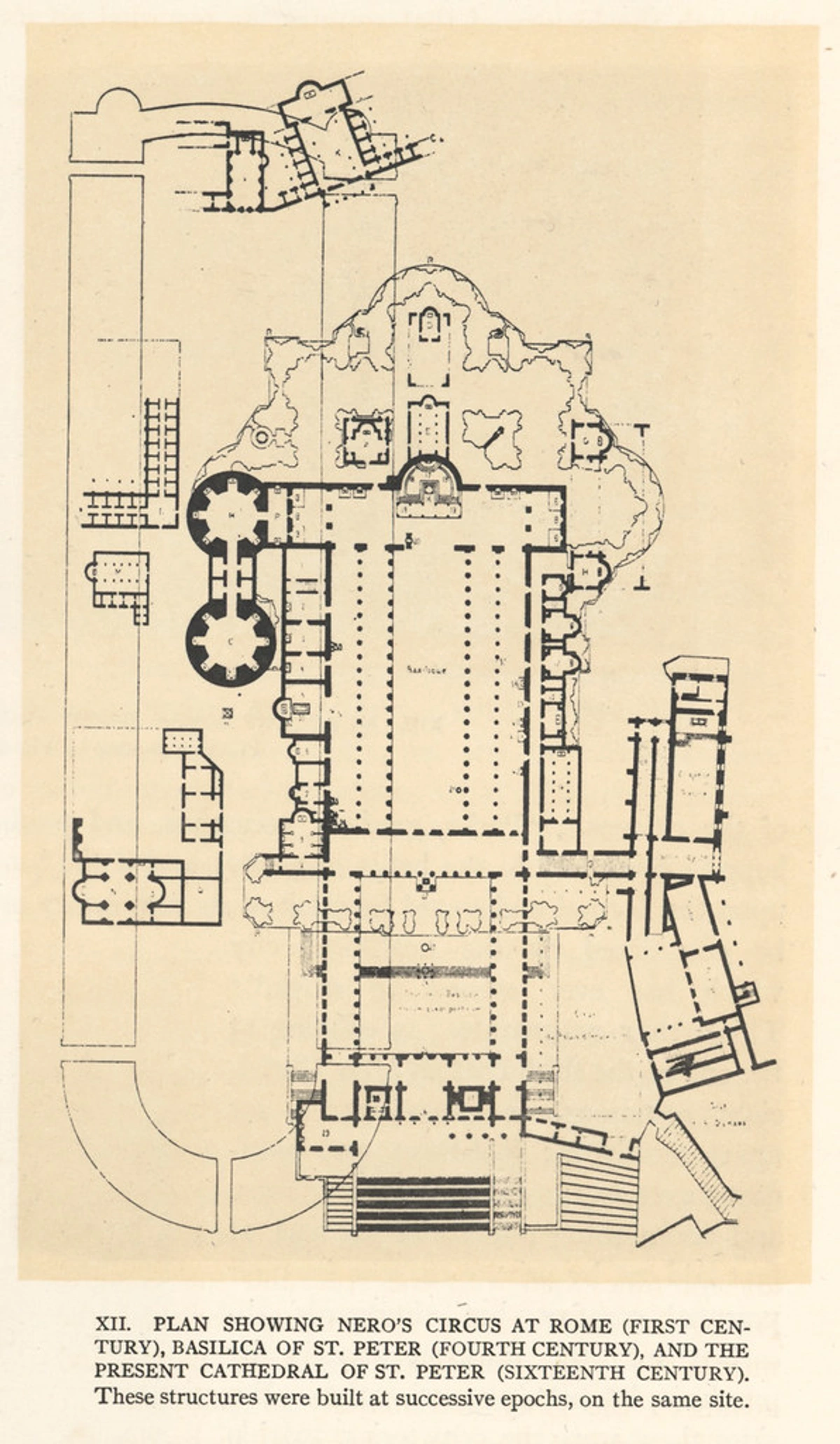
The motivations behind verism reveal something fascinating about Roman culture. These portraits were often commissioned for funerary contexts—to ensure the memory of the deceased would survive. But more than that, they reflected a distinctively Roman value: the celebration of auctoritas, which roughly translates to personal authority accumulated through lived experience, and gravitas, the weightiness and seriousness that came from proven reliability and moral character. Physical signs of aging weren't seen as flaws but as evidence of experience, wisdom, and endurance—qualities Romans respected deeply.
The social function of these portraits was remarkably sophisticated. They weren't just private memorials—they were part of elaborate funeral rituals where death masks of ancestors were worn by living family members, creating a powerful visual connection between past and present. This practice reinforced family prestige while preserving collective memory.
These funeral masks (imagines) were themselves works of extraordinary realism, often made from wax pressed directly onto the face of the deceased. They served both religious and social functions: ensuring the deceased was remembered accurately while demonstrating the family's distinguished lineage to the broader community.
When these traditions translated into permanent marble or bronze sculpture, they brought their commitment to accuracy with them. Roman artists developed techniques for capturing individual likeness that went far beyond what Greek sculpture had achieved. They paid attention to:
- Asymmetrical features (no human face is perfectly symmetrical)
- The specific shape of ears, noses, hairlines
- The tension patterns in facial muscles that reveal typical emotional states
- The texture differences between skin, hair, and clothing
- Even subtle details like moles, scars, or dental irregularities
This level of specific observation required both extraordinary technical skill and a cultural mandate for truth-telling. Roman patrons wanted portraits that looked like them, not like idealized versions of them. This preference for accuracy over flattery represents a genuinely revolutionary moment in the history of art.
The psychological implications are fascinating too. Roman verism suggests that Romans saw themselves as individuals with unique life stories written on their bodies, not as interchangeable examples of human types. This represents an early form of what we might now call individualism—the idea that each person's experience is unique and valuable in its particularity rather than just as an example of universal human nature.
Portrait Head of a Roman Aristocrat, 1st Century BCE
Take a look at this portrait from the late Republican period. This isn't just a face—it's a psychological study. Notice the deep lines around the mouth, suggesting decades of commanding troops or making difficult political decisions. The receding hairline isn't concealed but presented as a fact of this particular man's aging process. The set of the jaw, the slightly asymmetrical features, the specific bone structure—all of this works together to create not just a likeness but a character study that still resonates with viewers today, proving that artistic beauty can emerge from unflinching honesty.
What strikes me most is the lack of idealization. This man isn't presented as eternally youthful or classically handsome. He's presented as this specific person at this specific moment in his life. There's something almost confrontational about this realism—it refuses to flatter and instead insists on documenting.
This approach to portraiture represents a radical departure from Greek artistic values and establishes principles that remain crucial for contemporary artists working with representation, identity, and psychological depth. The Roman insistence on showing individuals as they actually exist—rather than as ideal types—creates space for a more democratic and inclusive understanding of who deserves serious artistic attention.
The contemporary equivalent might be the unsparing portraits of Lucian Freud, who famously said his goal was to paint people 'as they really are, not as they would like to be seen.' Or consider the street photography of Diane Arbus, who captured people with all their particularities intact rather than presenting generic types. The impulse is the same: find meaning and beauty in actual human reality, not in artistic ideals.
(Credit: Metropolitan Museum of Art, CC0)

Look at this couple. They're not idealized. They're middle-aged, solidly middle-class, and utterly real. You can almost imagine having a conversation with them at a neighborhood gathering. The wife's hairstyle is contemporary to her time period—the Flavian period, if you want to get technical—while her face shows the gentle sag of middle age. The husband's receding hairline and slight jowls suggest a man comfortable in his skin. This willingness to depict ordinary people with dignity and specificity—without resorting to flattery—feels startlingly modern, even radical.
Now think about contemporary portraiture. From Lucian Freud's unsparing nudes to contemporary street photography's documentation of everyday life, the impulse toward verism—truthful representation—continues to drive some of our most compelling art. Any contemporary artist working with portraiture—whether painting, photography, or sculpture—should spend serious time with Roman veristic busts.
The Romans essentially gave us permission to find beauty and meaning in un-idealized reality. This applies far beyond portraiture. Think about how documentary photography finds poetry in urban decay, or how still life painting can elevate ordinary household objects, or how experimental video captures the mundane with profound intensity—all of this descends from the Roman revolution of looking at truth without flinching.
But here's what I think is most valuable about verism for contemporary practice: it suggests that artistic meaning emerges from engagement with the actual world rather than escape from it. When I'm tempted to retreat into abstraction or fantasy because the real world feels too complicated or painful to address directly, Roman portraiture reminds me that there's profound artistic power in looking directly at reality—not judgmentally, but with clear eyes and genuine curiosity about what makes people who they are.
This approach has political implications that extend far beyond individual portraiture. The Roman commitment to showing specific people rather than generic types, actual faces rather than idealized masks, creates space for a more democratic understanding of who deserves artistic attention. Verism suggests that ordinary people—not just emperors or gods—are worthy subjects for serious art. This democratic impulse remains crucial for contemporary artists working with social justice themes, community engagement, or any practice that seeks to expand rather than restrict who gets represented in our visual culture.
Concrete Dreams: How Roman Architecture Became Art Itself
Let's talk about something that might seem mundane but is actually one of the most revolutionary developments in art history: Roman concrete. I want you to understand why this matters not just for architects, but for any artist working with materials, space, or form.
I remember the first time I stood inside the Pantheon in Rome. It's one thing to read about Roman concrete in books—it's something completely different to experience the space that concrete made possible. The dome feels both impossibly massive and remarkably intimate, a perfect sphere of space that still feels revolutionary two thousand years later. What struck me most was how the building changes throughout the day as sunlight moves across the interior—not just architecture, but environmental art that transforms with time and weather.
This experience made me realize something crucial: Roman concrete wasn't just an engineering innovation. It was a medium that enabled new ways of thinking about space, light, and human experience. The architects who designed the Pantheon weren't just solving structural problems—they were creating new possibilities for how humans could experience built environments. This integration of technical innovation and artistic vision is exactly what makes Roman concrete relevant for contemporary artists working with any new medium or technology. The Roman concrete revolution represents one of those rare moments in art history when a technical innovation fundamentally changed what was creatively possible across multiple disciplines.
Before Roman concrete (opus caementicium), monumental architecture was constrained by the physical limitations of stone. Massive columns and thick walls were necessary to support heavy stone beams, which limited interior space and architectural possibility. Greek architects had perfected post-and-lintel construction, creating buildings of extraordinary elegance and proportion, but they couldn't create the kinds of vast interior spaces that Roman concrete would make possible.
Roman concrete changed everything. Made from lime, volcanic ash (called pozzolana), and aggregate, this material was incredibly strong, relatively lightweight, and could be poured into molds to create curved forms. Most remarkably, Roman concrete actually got stronger over time as it continued to cure. Modern scientists studying Roman concrete have discovered that the inclusion of specific volcanic materials created self-healing properties—microcracks that form over time actually trigger chemical reactions that fill the cracks with new crystalline material.
Opus Caementicium: The Material That Changed Everything
The technical term for Roman concrete was opus caementicium, and understanding its composition reveals the sophistication of Roman engineering. The mixture included:
- Lime: Obtained by heating limestone to around 900°C
- Pozzolana: Volcanic ash from the region around Pozzuoli, near Naples
- Aggregate: A mixture of stones, rubble, and sometimes broken bricks
- Water: Added in specific ratios to activate the chemical reactions
What made Roman concrete superior to anything that came before it was the pozzolana. This volcanic material contains silica and alumina that react with lime and water to create calcium silicate hydrate—the same material that makes modern Portland cement work. The result was a concrete that:
- Cured (got harder) over time rather than deteriorating
- Could set underwater (crucial for harbor construction)
- Could be poured into molds to create curved forms
- Was significantly stronger in compression than stone
- Was lighter weight than solid stone construction
The sophisticated chemistry involved is remarkable. Roman engineers somehow understood—through empirical observation if not theoretical knowledge—that pozzolana from different sources had different properties, and they adjusted their mixtures accordingly. Analysis of Roman concrete shows they used different formulations for different applications: higher quality concrete for exposed elements, more economical mixes for foundations.
This empirical, experimental approach to materials offers a powerful model for contemporary artists working with any medium. The Roman engineers weren't working from theoretical principles but from careful observation, systematic experimentation, and practical problem-solving. They tested different mixtures, learned from failures, refined techniques through iteration, and developed sophisticated material knowledge through hands-on engagement rather than abstract theory. This experimental method—empirical, incremental, responsive to evidence—is precisely the approach that drives the most innovative contemporary work with new media, digital technologies, and experimental materials.
This technical sophistication had profound artistic consequences. Before concrete, architecture was largely subtractive—you started with a solid block and removed material. Concrete is additive—you build formwork and pour material that takes shape as it cures. This shift from subtractive to additive thinking opened entirely new architectural possibilities.
Before Roman concrete (called opus caementicium), architecture was largely constrained by the limitations of stone post-and-lintel construction. Buildings required massive columns and walls to support heavy stone beams. Interior spaces were necessarily limited, and architects couldn't create large enclosed areas without forests of supporting columns.
Roman concrete changed everything. Made from a mixture of lime, volcanic ash (called pozzolana), and aggregate, this material was incredibly strong, relatively light, and—most importantly—could be poured into molds to create entirely new forms. Suddenly, architects could think in curves, vaults, domes, and massive enclosed spaces.
The sophistication went even deeper than the basic recipe. Modern scientific analysis using techniques like scanning electron microscopy has revealed that Roman engineers were unknowingly creating nanostructured materials. The lime and pozzolana reaction created crystals of aluminum tobermorite, a incredibly durable mineral that actually strengthens over centuries as it continues to react with seawater and rainwater. This wasn't just concrete; it was a self-healing, time-strengthening material that modern engineers are still trying to fully replicate. When we struggle with concrete cancer and crumbling infrastructure today, Roman concrete stands as both inspiration and rebuke.
Let's talk about concrete. No, seriously—Roman concrete is one of those inventions that quietly changed everything about how humans conceive of space, form, and architectural possibility. Before Roman concrete, buildings were largely constrained by the limitations of stone post-and-lintel construction. After Roman concrete, architects could dream in curves, vaults, and massive enclosed spaces.

(Credit: Wikimedia Commons, CC BY-SA 3.0)
The Pantheon's dome remains one of the most breathtaking architectural achievements in human history. When I first stood under it, I felt this vertigo—not just physical, but temporal. How could something so ancient feel so impossibly modern? The oculus at the top—that perfect circle of open sky—creates an almost mystical experience as sunlight moves across the interior throughout the day.
But the real magic happens during rain. Water falls through the oculus and drains through an almost invisible system of channels and slight inclines in the floor. The architects understood that a building isn't just an object; it's an environmental system that changes with weather, season, and time of day. They designed for dynamic conditions, not a static ideal. This ecological thinking—building with natural processes rather than against them—feels startlingly contemporary, even prescient, in our age of climate consciousness.
The engineering sophistication involved is extraordinary. The dome is 142 feet in both diameter and height, creating a perfect sphere of interior space. To achieve this, Roman engineers used several techniques:
- Varying thickness: The dome thins as it rises, from 20 feet thick at the base to just 4 feet around the oculus
- Coffering: The recessed panels reduce weight while maintaining structural integrity
- Varying materials: Heavier, denser concrete at the base, lighter materials (including pumice) at the top
- Curing control: Different concrete mixes cured at different rates to manage structural stress
- Formwork innovation: Temporary wooden structures that could support wet concrete until it cured
But the artistic achievement goes beyond engineering. The Pantheon creates an experience that's simultaneously monumental and intimate. The oculus—the opening at the top—creates a direct connection to the sky, transforming the building into a kind of cosmic clock or calendar. As the sun moves across the sky, light sweeps across the interior, illuminating different areas at different times of day and different seasons of the year.
For contemporary artists, the Pantheon offers powerful lessons in how technical sophistication and artistic vision can't be separated. The engineers who designed it weren't just solving structural problems—they were creating an environment that shapes human experience. Every technical decision—the dome's curvature, the oculus placement, the coffering pattern—served both structural and experiential purposes.
This integration of technical and artistic thinking is crucial for contemporary practice. Whether you're working with digital media, installation art, 3D printing, or any new technology, the Roman approach suggests that tool mastery and artistic vision develop together. You don't first learn Photoshop and then make art—you learn Photoshop in order to make art, and the artistic vision evolves as you understand what the tool makes possible.
But here's what matters for artists: Roman concrete didn't just allow for new building techniques; it enabled new ways of experiencing space itself. The Baths of Caracalla, the Basilica of Maxentius, even something as utilitarian as the Markets of Trajan—these weren't just buildings but carefully crafted spatial experiences that manipulated light, volume, and movement through architectural form.
Baths, Markets, and the Democratization of Architectural Experience
The Baths of Caracalla represent perhaps the most sophisticated use of concrete for creating controlled spatial experiences. Built between 212-216 CE, these massive public baths could accommodate over 1,600 bathers simultaneously. But they weren't just functional buildings—they were orchestrated sequences of spatial and sensory experience.
Visitors would move through a carefully choreographed sequence:
- Apodyterium (Changing rooms): Relatively modest spaces preparing visitors for the main complex
- Frigidarium (Cold room): A massive hall with high vaulted ceilings and cold plunge pools
- Tepidarium (Warm room): Intermediate spaces that prepared the body for higher temperatures
- Caldarium (Hot room): Heated spaces with dome-like vaults that concentrated heat
- Natatio (Swimming pool): Open-air spaces for exercise and socializing
Each space had different lighting conditions, different scales, different materials, different ceiling heights. The concrete vaulting allowed for these dramatic variations while maintaining structural coherence. Light was carefully controlled through different strategies: clerestory windows, oculus openings, reflection pools that bounced light upward.
The result was architecture as total environmental art—buildings that shaped not just what people saw but how they moved, how they felt, even how they experienced their own bodies. This approach to architecture as environmental sculpture directly anticipates contemporary installation art and immersive environments. The psychological sophistication involved was extraordinary—bath complexes were designed to engage all the senses simultaneously, creating experiences that were simultaneously social, aesthetic, therapeutic, and spiritual.
Consider contemporary artists who work with similar principles:
- James Turrell has spent decades creating installations that manipulate perception through controlled light and space, creating experiences that feel simultaneously ancient and futuristic
- Olafur Eliasson builds large-scale environments that create particular sensory experiences, often using natural elements like light, water, fog, or temperature
- Anish Kapoor creates architectural-scale sculptures that transform viewers' experience of space through form, color, and scale
All these approaches share the Roman insight that architecture doesn't just contain human activity—it shapes human consciousness. Concrete was the tool that made this possible at imperial scale.
The revolutionary insight was that new materials don't just serve old ideas—they generate new ones. Roman architects didn't invent concrete and then figure out what to do with it. They had ambitious spatial vision that drove them to develop new materials and techniques. Concrete was both the solution to their artistic problems and the catalyst for new artistic possibilities.
This matters enormously for contemporary artists working with digital media, installation, or new materials. New tools don't just allow us to do old things more efficiently; they fundamentally change what's possible to imagine and express. When James Turrell creates his light installations or Olafur Eliasson builds his immersive environments, they're working in this same tradition: using technical innovation to create new kinds of aesthetic experience.
Material Innovation as Artistic Practice
For contemporary artists, the Roman concrete revolution offers a powerful model for thinking about the relationship between materials and ideas:
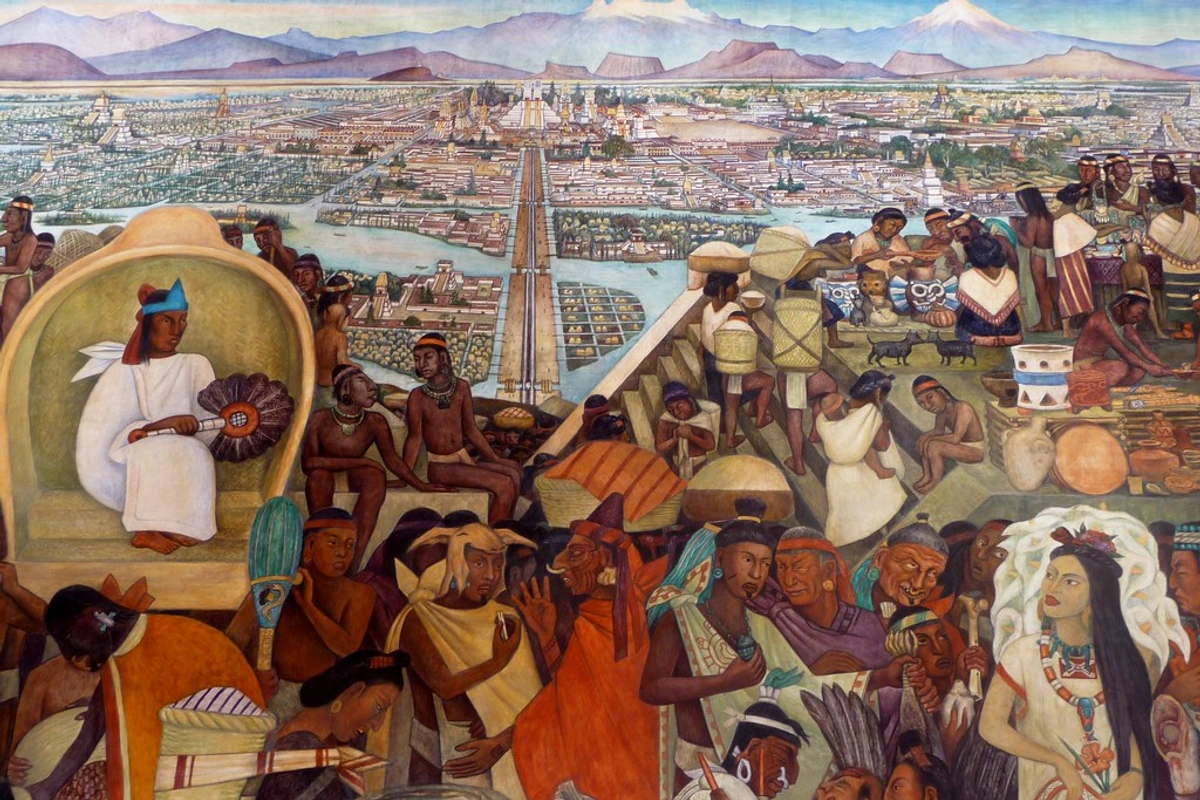
Digital Artists can see parallels in how digital tools have created entirely new art forms. Early computer art was often dismissed as merely "technical," but artists quickly discovered that digital media enabled entirely new ways of thinking about image, time, interaction, and distribution. The software didn't just make traditional art easier—it made new kinds of art possible.
Ceramic Artists work with one of humanity's oldest art forms, but contemporary ceramicists constantly experiment with new firing techniques, clay bodies, glazing methods, and surface treatments. These technical innovations aren't just about getting better results—they're about discovering what clay can do that it couldn't do before. The material becomes a research question.
Textile Artists working with new fabrics, digital looms, or experimental dyeing techniques are engaged in the same process. The innovation might be a new weaving pattern, a different approach to color, or novel ways of structuring fabric—but the creative process involves both technical mastery and conceptual innovation.
Installation Artists who work with light, sound, kinetics, or interactive technologies face exactly the same challenges Roman architects faced: how do you use new technical possibilities to create new kinds of experience? The technical problems and artistic vision have to develop together.
The key insight is that material innovation isn't separate from conceptual innovation. When you discover that a new concrete mixture allows for thinner walls or larger spans, you don't just build bigger versions of existing buildings—you start imagining entirely new kinds of spaces. When you learn that a new software tool allows for real-time interaction or generative imagery, you don't just make digital versions of paintings—you start imagining what art might look like as software rather than as static objects.
The Romans understood this intuitively. Their written records (what survives of them) suggest they were relentlessly practical and experimental, willing to try new techniques and learn from failures. The architect Vitruvius, writing in the 1st century BCE, provides one of the few surviving theoretical discussions of Roman architecture, and it's remarkably detailed about technical matters: different types of concrete for different conditions, how to select and prepare materials, how to design formwork, how to cure concrete properly.
This practical, experimental approach to materials is directly relevant to contemporary artists. Whether you're working with pigments, clay, digital media, found objects, or any other material, the Roman example suggests that deep material knowledge and conceptual ambition should develop together rather than separately.
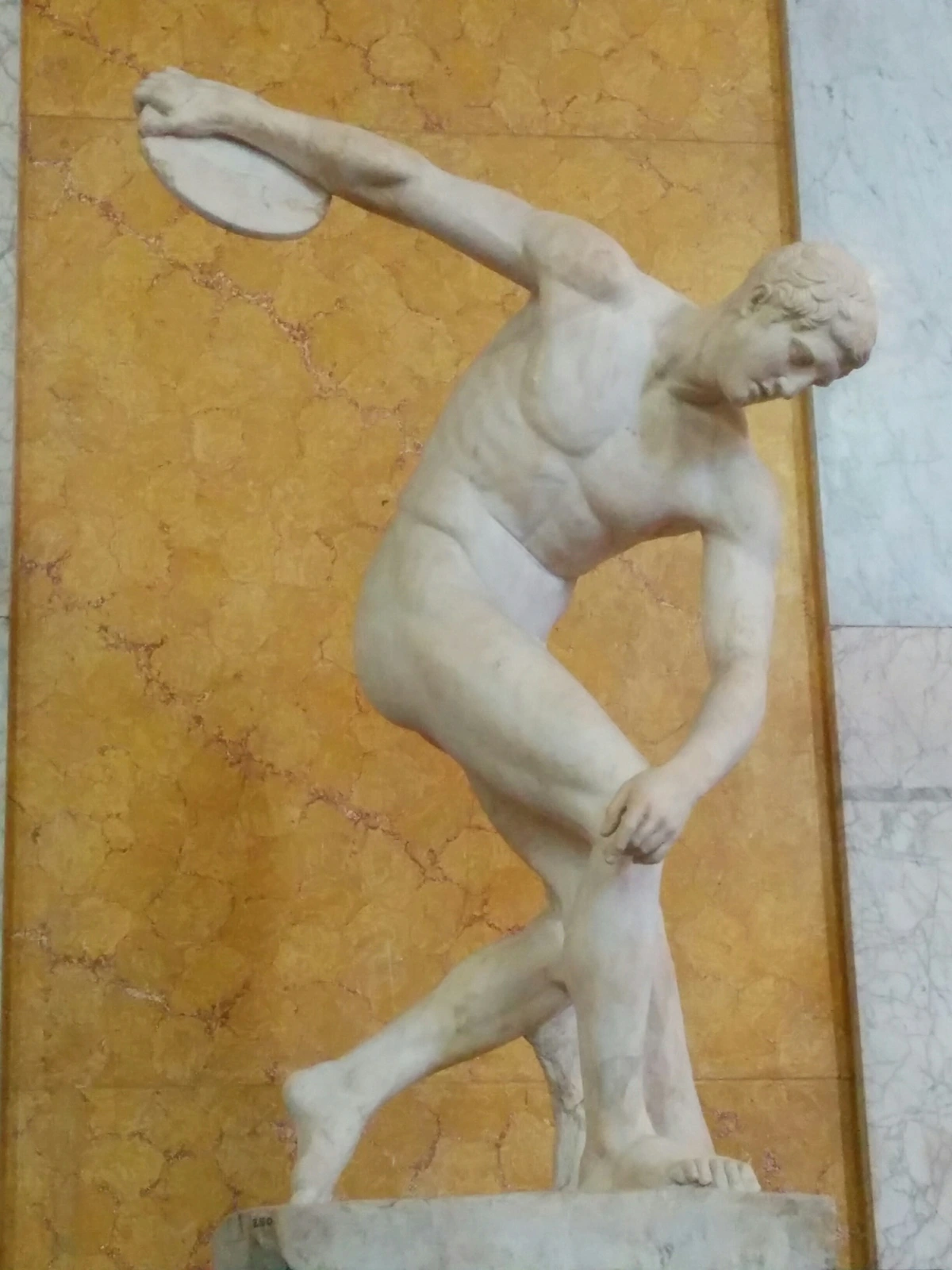
This matters for contemporary artists because it reminds us that technical innovation and artistic vision don't just inform each other—they're inseparable. The Romans didn't invent concrete and then figure out what to do with it. They had artistic and architectural ambitions that drove them to develop new materials and techniques.
Materials Innovation: Beyond Concrete
While Roman concrete gets most of the attention, Roman artists and craftspeople developed innovations across multiple materials that continue to influence contemporary practice. Their approach to material wasn't just technical—it was deeply conceptual, understanding that different materials carry different cultural meanings and create different aesthetic possibilities.
Take Roman glass, for example. Roman glassmakers developed techniques like millefiori (thousand flowers), where colored glass canes were fused together and sliced to create intricate patterns. They invented glassblowing techniques that allowed for mass production while maintaining aesthetic quality. The Portland Vase—a cameo glass vessel from the early Roman Empire—remains one of the most technically sophisticated glass objects ever created, with layer upon layer of differently colored glass carved to create figures in relief.
Or consider Roman metalworking. Roman craftspeople developed sophisticated techniques for bronze casting that allowed unprecedented detail and dynamic poses. The Riace Bronzes, discovered off the coast of Italy in 1972, show Roman mastery of lost-wax casting on a monumental scale. Roman goldsmiths created jewelry using techniques like filigree and granulation that wouldn't be matched until the Renaissance. The Hoxne Hoard, discovered in Britain, contains hundreds of Roman gold and silver objects that show extraordinary technical sophistication combined with aesthetic refinement.
Even seemingly humble materials reveal Roman innovation. Roman pottery workshops developed sophisticated production techniques, with some centers producing tens of thousands of vessels per year. Terra sigillata—Roman red-gloss pottery—was produced in standardized forms but with infinite variations in detail, showing how mass production and individual artistry could coexist. Roman ceramic lamps weren't just functional objects—they were designed with detailed relief decoration that turned everyday lighting into aesthetic experience.
This chicken-and-egg relationship between medium and message still defines contemporary practice. Digital artists don't just use software; they help create it. Ceramicists don't just use clay; they experiment with new firing techniques that change what clay can do. Roman concrete provides the ultimate historical example of how revolutionary art often requires revolutionary materials—and how revolutionary materials often inspire revolutionary art.
Consider the challenge they faced. Traditional stone or brick construction required enormous amounts of skilled labor and time. Concrete allowed for faster construction using less skilled labor, but required sophisticated planning and formwork. This changed the economics of architecture. Suddenly, monumental buildings became affordable for patrons beyond just the emperor. Provincial cities across the empire could build their own amphitheaters, temples, and bath complexes using local labor and materials. This democratization of architectural scale through technological innovation parallels exactly what digital fabrication and 3D printing are doing in contemporary architecture.
Consider what this means for digital artists, installation artists, or anyone working with new media today. New materials and tools don't just allow us to do old things more efficiently; they fundamentally change what's possible to imagine and express. Roman architects understood this intuitively.
The Daily Life Revolution: Art for Everyone, Everywhere
What strikes me most about Roman art—and what makes it so relevant for contemporary artists—is how thoroughly it integrated aesthetic experience into everyday life. Yes, there were grand imperial monuments and expensive marble sculptures, but there were also beautifully designed oil lamps, decorative pottery on middle-class dinner tables, exquisite jewelry worn by ordinary people, erotic art in brothels and bathhouses, and even graffiti that shows ordinary people engaging with visual culture.
This integration extended to clothing and personal adornment. Roman textiles featured sophisticated dyeing techniques using expensive imported materials—Tyrian purple from sea snails, brilliant reds from madder root, deep blues from woad. Roman jewelry wasn't just decorative—it carried social meaning, indicating everything from marital status to religious affiliation to economic class. The Roman approach to personal adornment suggests that aesthetic experience begins with the body and extends outward to encompass all aspects of lived experience.
The Democratization of Beauty: Art Beyond Elite Spaces
This represents a profound cultural shift. For much of human history before Rome, high-quality art had been largely restricted to religious contexts, royal palaces, or elite burials. The great artistic traditions of Egypt, Mesopotamia, and even classical Greece were primarily focused on serving religious, political, or social elites. Yes, Greek pottery was widely available, but the most sophisticated artistic production served limited audiences.
The Romans essentially democratized aesthetic experience—not in our modern sense of making everyone equal consumers of culture, but in the sense that art became a normal part of life across a broad social spectrum. This happened through several mechanisms:
1. Commercial Production Roman workshops produced art at multiple price points and quality levels. Fine pottery (like Arretine ware) was widely available at prices ordinary people could afford. Bronze figurines, glass vessels, decorative lamps—all were produced in industrial quantities and distributed throughout the empire. This meant that aesthetic quality wasn't reserved for the wealthy—though of course the wealthy had access to much more expensive and elaborate versions. Production centers like those in Gaul and North Africa became renowned for specific forms, creating regional specialties that were traded across the empire—mosaics from Africa, pottery from Gaul, glassware from Syria or Egypt.
2. Public Accessibility Roman cities were full of public art that was genuinely accessible to everyone: statues in forums, reliefs on buildings, paintings in bath complexes, mosaics in public spaces. This wasn't art you had to pay to see or be invited to view—it was part of the fabric of urban life. This public access created a visually literate populace; ordinary citizens understood the symbolic language of sculpture and architecture because it was omnipresent in their daily experience. Even provincial cities like Trier in Germany or Tarraco in Spain had monumental public art programs that communicated Roman imperial power while serving local community functions.
3. Domestic Integration Even relatively modest Roman houses often had some decorative elements: painted walls, mosaic floors (even if simple geometric patterns), decorative objects. The aspiration for aesthetic refinement wasn't limited to elites. Archaeological evidence from Pompeii, Herculaneum, and sites across the empire suggests that a wide range of Roman society invested in making their homes beautiful. Excavations show that even modest homes frequently contained decorative elements, and the Roman approach suggests that aesthetic experience shouldn't be reserved for special occasions or special places—it should be part of the texture of ordinary life. This insight predates the Arts and Crafts movement by almost two millennia and continues to influence contemporary thinking about design, urban planning, and the democratization of art.
4. Practical Aesthetics The Romans had a remarkable ability to make functional objects beautiful without compromising their utility. Everything from oil lamps to cooking pots to tools could be well-designed and aesthetically pleasing. This integration of design with function reflects a culture-wide commitment to aesthetic experience as part of daily life. Roman lamps weren't just sources of light—they were designed with relief decoration that made every evening's use an aesthetic experience. Roman furniture featured sophisticated woodworking, bronze fittings, and ivory inlays that transformed ordinary domestic life into something approaching art. Even humble objects like jars or plates displayed this integration, creating an aesthetic awareness that permeated society far beyond wealthy elites.
This represents a profound cultural shift. For much of human history before Rome, high-quality art had been largely restricted to religious contexts, royal palaces, or elite burials. The Romans essentially democratized aesthetic experience—not in our modern sense of making everyone equal consumers of culture, but in the sense that art became a normal part of life across a broad social spectrum. This transformation fundamentally shaped Western concepts of art's social role and accessibility, anticipating by millennia the democratic aspirations that emerged during the Renaissance or Enlightenment periods. The Roman approach directly influenced how later periods thought about art's relationship to daily life, public space, and social hierarchy—echoes that resonate in everything from neighborhood murals to accessible design in contemporary society.
The Roman glazed pottery industry provides a concrete example of this democratizing impulse. Factories produced standardized, mass-produced tableware (terra sigillata) that was affordable for a large middle class yet displayed remarkably sophisticated design. These workshops also produced international luxury goods like Chinese porcelain, but with very different economic access structures. Molds allowed for consistent quality while various workshops developed distinctive styles. This combination of industrial production with aesthetic quality created something unprecedented: good design available to people of modest means. We take this for granted today at places like Target, but in the ancient world this was revolutionary. The most successful production centers shipped their wares across the empire, creating standardized visual culture from Britain to the Middle East while maintaining local variations that reflected regional preferences and cultural hybridity.
Consider the Roman villa. Even relatively modest homes often featured mosaic floors, painted walls, decorative fountains, and sculpture gardens. The excavations at Pompeii and Herculaneum reveal that middle-class homes—not just luxury villas—featured sophisticated fresco cycles, decorative mosaics, and carefully designed interior spaces. What's striking is how these weren't just displays of wealth; they were integral to how Romans understood the good life. Art wasn't something you visited in temples or viewed in special places—it was woven into the fabric of daily experience, shaping everything from how you entertained guests to how you experienced your private domestic space.
This integration extended beyond the home into public commercial spaces. Roman taverns featured painted decorations, brothels displayed erotic art, and even functional spaces like warehouses and markets incorporated aesthetic considerations. The Roman approach suggests that aesthetic experience shouldn't be reserved for special occasions or special places—it should be part of the texture of ordinary life. This insight predates the Arts and Crafts movement by almost two millennia and continues to influence contemporary thinking about design, urban planning, and the democratization of art.
The Villa as Total Art Environment Roman domestic architecture created environments where art and architecture were inseparable. The wealthy villa at Oplontis near Pompeii exemplifies this approach to art education, where visual learning was integrated into everyday life:
- Wall paintings that created illusionistic architectural spaces, making rooms feel larger and more elaborate than they actually were
- Mosaic floors that were carefully designed both for aesthetic impact and practical durability
- Courtyards and gardens that brought nature inside while maintaining architectural control
- Sculpture placed both indoors and outdoors, creating dialogues between art and environment
- Water features that added sound, movement, and cooling to the domestic environment
The level of coordination between different art forms was extraordinary. Mosaic patterns related to painted motifs, sculpture placement responded to architectural sightlines, garden design created specific experiences as one moved through the space. This integration of different media into coherent total environments anticipates everything from Baroque church interiors to contemporary installation art. Contemporary artists like Yayoi Kusama work in this tradition of creating total sensory experiences, and her infinity rooms extend the Roman insight that art can reshape both space and consciousness.
Pompeian Perspective Systems One of the most sophisticated aspects of Roman domestic art was the use of perspective in wall paintings. Roman painters developed elaborate illusionistic systems that could make small rooms feel monumental, create the impression of architectural depth where none existed, or open walls onto imaginary landscapes.
These weren't the mathematically precise linear perspective systems of the Renaissance—they were more intuitive and flexible—but they show sophisticated understanding of how visual perception works. Artists could:
- Create convincing spatial illusions that made rooms feel larger
- Coordinate painted elements with architectural features
- Manipulate light and shadow to enhance three-dimensional effects
- Use color and atmospheric perspective to suggest depth and distance
For contemporary artists, the Roman approach to domestic space offers powerful lessons in how art can function as environmental design. Whether you're making work for corporate collections, private homes, or public spaces, the Roman example suggests that art's power comes not just from individual objects but from how those objects function within larger spatial and social contexts.
The integration of art into domestic life also has implications for how we think about the art market today. Roman artists produced work at multiple scales and price points, understanding that aesthetic experience could happen in different contexts. Contemporary artists who work across different media (oil paintings and prints, for example) or at different scales are working with similar principles.
Consider the economics. Archaeological evidence suggests that acquiring modest decorative art wasn't ruinously expensive for middle-class Romans. A simple mosaic floor might cost roughly 10-15 percent of a skilled worker's annual wage—expensive, but not impossible for families willing to save. This created a thriving secondary art market focused on more modest decorative objects rather than grand imperial commissions. Roman artists understood something that contemporary artists working with prints, small works, or digital reproductions understand intuitively: you can make good art accessible without compromising your more ambitious projects.

The Romans democratized art in ways that still influence how we think about public space, decorative arts, and the integration of beauty into everyday life. Yes, there were grand imperial monuments and expensive marble sculptures, but there were also mosaics in middle-class homes, frescoes in taverns, decorative pottery on dinner tables across the empire.
The Revolutionary Brush: Rediscovering Roman Painting
While Roman sculpture and architecture get most of the attention, the Roman revolution in painting represents perhaps an even more profound innovation—one that directly anticipates everything from Renaissance illusionism to contemporary abstract art.
The tragedy, of course, is that so little Roman painting survives. What we know comes primarily from the archaeological accidents at Pompeii and Herculaneum, with scattered examples from Rome itself and provincial sites. But these surviving fragments reveal an extraordinarily sophisticated painting tradition that was already exploring most of the questions that would preoccupy European painters centuries later.
Roman painting wasn't monolithic. Scholars traditionally divide it into four Pompeian styles, each representing different approaches to space, color, and illusion. But what unites these styles is a radical commitment to painting as a form of architectural transformation. Roman painters understood something that contemporary installation artists understand: painting can fundamentally reshape our experience of physical space. What's remarkable is how this highly skilled art form existed at multiple social levels:
Simple Geometric Mosaics Even modest Roman houses often had mosaic floors in main rooms. These typically used black and white tesserae arranged in geometric patterns: simple grids, meanders, rosettes, or stylized floral motifs. The technical skill required was considerable, but the materials were relatively inexpensive and the results were both beautiful and durable.
These simple mosaics show sophisticated design thinking. Artists had to plan patterns that would work at room scale, create visual interest without overwhelming the space, and solve technical problems like making patterns work around corners or integrate with architectural features. The best geometric mosaics are marvels of proportional thinking and rhythmic organization.
Figurative Mosaics More elaborate mosaics included figurative elements: mythological scenes, hunting scenes, marine creatures, personifications of seasons or virtues. These required much greater technical skill and were correspondingly more expensive, but they were found not just in imperial palaces but in wealthy private homes across the empire.
The sophistication of figurative mosaics is extraordinary. Artists had to:
- Translate painting techniques into mosaic media
- Understand how color and value work with stone and glass
- Plan compositions that would work at architectural scale
- Manage thousands of individually cut tesserae
- Create convincing illusionistic effects with inherently flat materials
Some of the finest examples—like the Alexander Mosaic from Pompeii or the 4th-century mosaic from the Villa Romana del Casale in Sicily—show astonishingly sophisticated understanding of anatomy, perspective, and narrative. The Alexander Mosaic captures a moment of high dramatic tension with remarkable psychological acuity, all rendered in thousands of tiny colored stones.
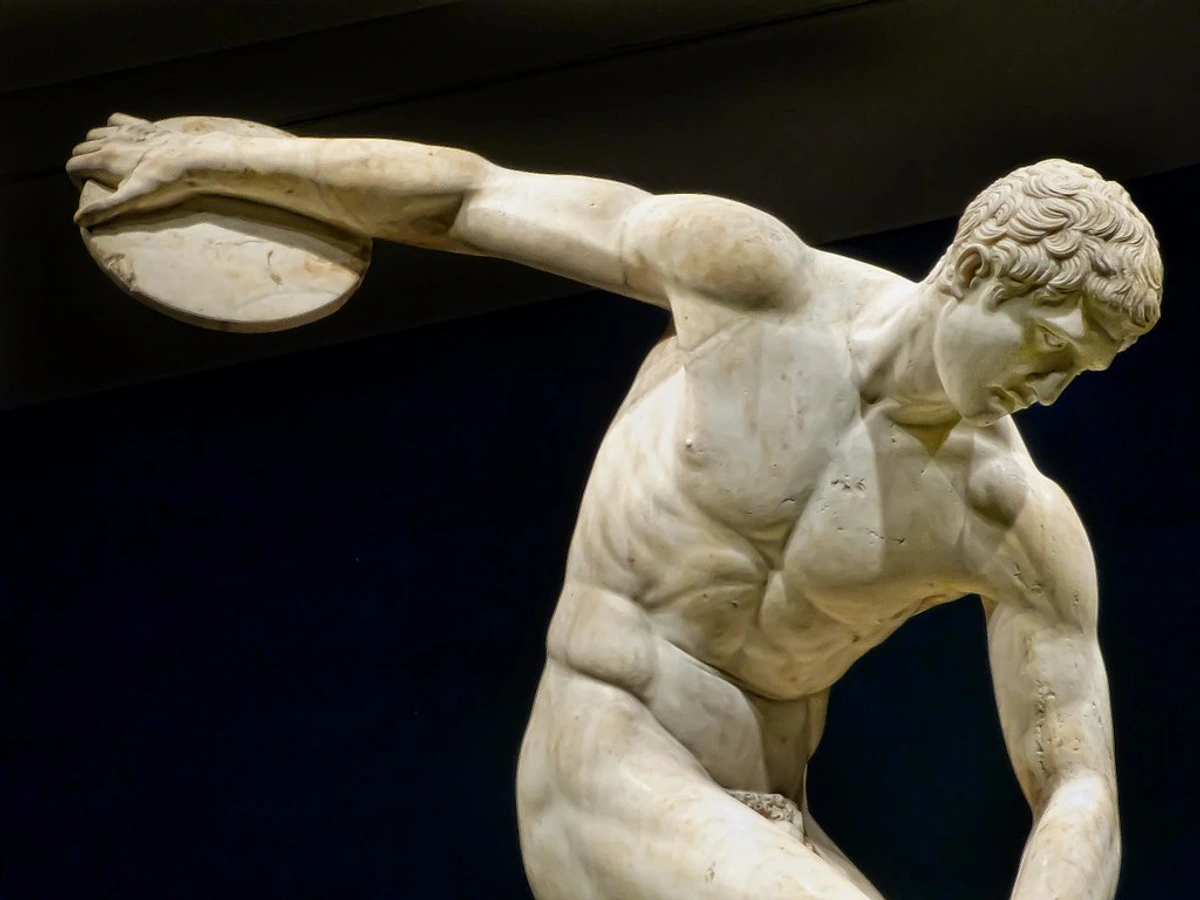
Regional Styles and Global Trade One of the most fascinating aspects of Roman mosaics is how they show the empire's cultural dynamics. Mosaics from different regions developed distinct styles while maintaining sufficient commonality to be recognizable as Roman:
- North African mosaics are particularly renowned for their naturalistic details and sophisticated use of color, often featuring elaborate hunting scenes and marine life rendered with astonishing fidelity
- Syrian mosaics often show Eastern influences in both style and subject matter, incorporating Persian decorative motifs and Semitic themes alongside classical mythology
- British mosaics adapted Roman techniques to local traditions and materials, developing unique color palettes and sometimes incorporating Celtic design elements
- Gallic and German mosaics developed distinctive geometric patterns reflecting local aesthetic preferences while still working within Roman technical frameworks
- Spanish mosaics showed influences from North Africa while developing unique approaches to figure composition and architectural representation
- Egyptian mosaics blended traditional pharaonic imagery with classical Roman styles, creating a fascinating cultural hybrid unique to Alexandria and the Nile Valley
These regional variations show that Roman culture wasn't simply imposed uniformly—it was adapted, transformed, and hybridized according to local traditions and preferences. This process of cultural exchange and adaptation created genuine innovation rather than just passive imitation.
For contemporary artists, the Roman mosaic tradition offers rich lessons in how technical skill, cultural diversity, and practical function can combine to create democratic art. Mosaics were beautiful, durable, accessible to a broad range of people, and adaptable to different cultural contexts—qualities that remain relevant for anyone making public art, decorative work, or functional art today.
Gardenscape from the Villa of Livia (fresco)
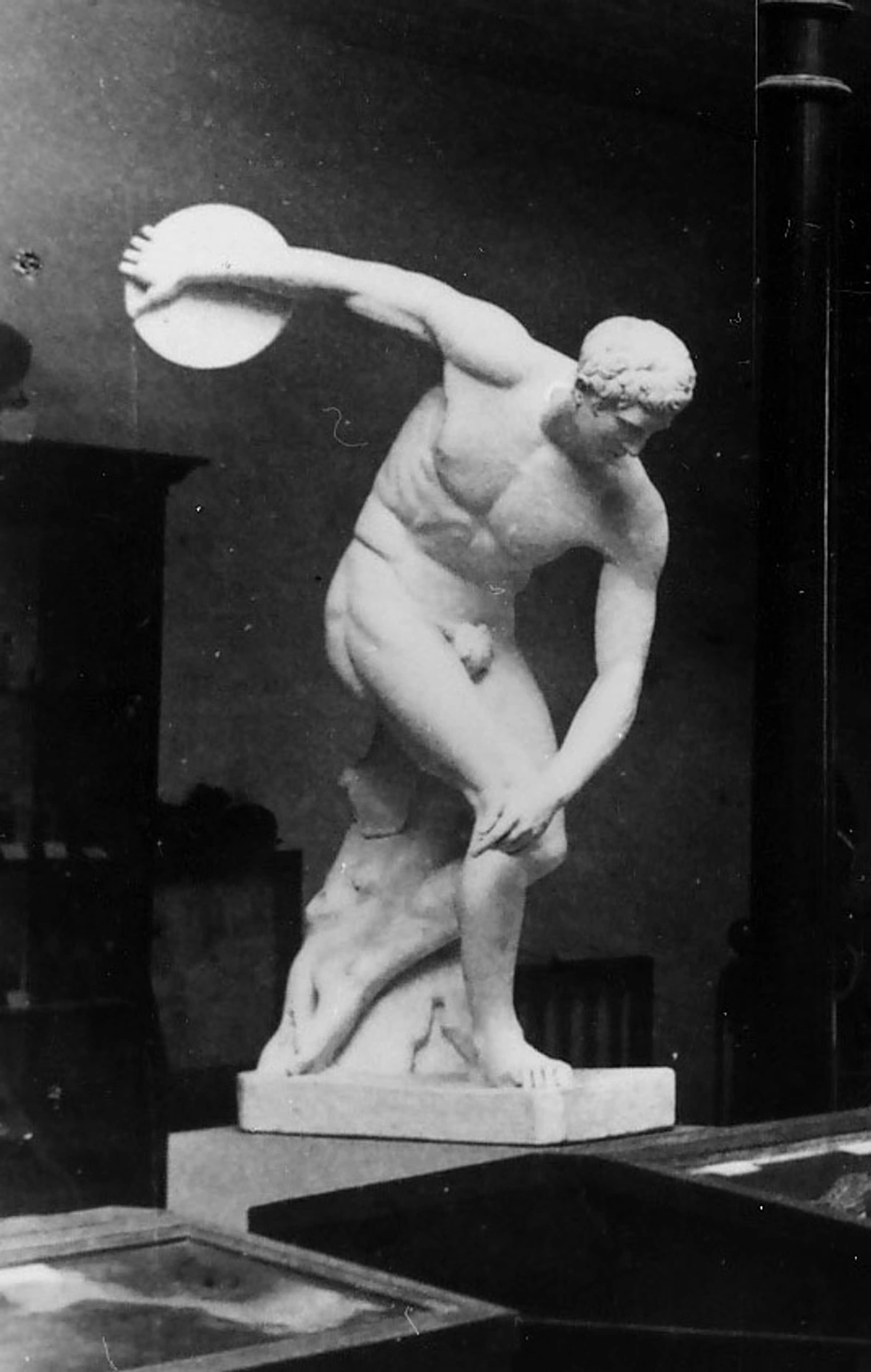
(Credit: National Roman Museum, CC BY-NC-SA)
Look at this garden fresco from the Villa of Livia. It's not a religious scene or imperial propaganda. It's simply beautiful interior decoration meant to bring the outside world inside. The quality is extraordinary—the artist's understanding of natural forms, the sophisticated handling of spatial illusion, the sheer joy in representing the natural world.
This integration of art into daily life represents a profound cultural shift. Art wasn't just for temples and palaces anymore; it was for ordinary people's homes and workplaces. Sound familiar? It should. This Roman approach to art as integral to daily life rather than separate from it anticipates everything from the Arts and Crafts movement to contemporary design thinking.
But here's what I find most striking: the Roman approach suggests that democratic culture isn't about making everyone equal consumers of elite art. It's about making aesthetic experience so thoroughly integrated into daily life that it becomes part of how people actually live, not something separate from ordinary experience. When I think about the most powerful contemporary art experiences I've had, they often share this quality—they feel integrated into life rather than separate from it, whether that's a mural I encounter on my way to work, a beautifully designed object I use every day, or an installation that transforms how I experience a familiar space.
The lesson for contemporary artists is crucial: art's democratic potential isn't primarily about accessibility or simplicity. It's about integration—making excellent art part of the fabric of daily life rather than setting it apart in special places for special occasions. The Romans perfected this approach two thousand years before design thinking made it fashionable.
What contemporary artists like Yayoi Kusama or Ai Weiwei understand—and what the Romans perfected—is that scale matters less than integration. Roman art moved seamlessly between monumental public sculpture and intimate household objects because Romans understood that aesthetic experience doesn't have to be hierarchical. A beautifully designed oil lamp could be as meaningful as a triumphal arch—not in terms of political importance, but in terms of its capacity to shape daily experience.
I find myself thinking about this when I design my own living spaces. There's something powerful about surrounding yourself with objects that reward careful attention—not because they're expensive or historically important, but because they're well-made and thoughtfully designed. The Roman approach suggests that democratic culture isn't about making everyone experts; it's about making aesthetic experience accessible and integral to ordinary life.
The Dark Side: Art as Imperial Domination
Before we romanticize Roman art's democratic potential, we need to acknowledge its function as imperial propaganda. Roman art wasn't just beautiful or functional—it was often an instrument of political control and cultural domination.
This function operated on multiple levels simultaneously. At the most obvious level, triumphal arches, victory columns, and monumental public sculpture celebrated Roman military conquest and communicated the empire's invincibility to both citizens and subject peoples. But at a more subtle level, Roman art also functioned through what we might call "aesthetic imperialism"—the systematic privileging of Roman artistic styles and subjects over indigenous traditions, creating cultural hierarchies that reinforced political hierarchies.
Recent scholarship in postcolonial art history has reframed our understanding of Roman art's function in provincial contexts. What earlier generations of scholars celebrated as the "spread of civilization" or "Romanization" looks more complex when we ask: whose voices and visual traditions were lost when Roman artistic conventions became dominant? The indigenous art traditions of Gaul, Britain, Spain, and North Africa didn't simply disappear; they were either suppressed or selectively incorporated into Roman forms in ways that erased their original meanings.
Consider what Roman monuments communicated to conquered peoples:
- Triumphal arches celebrated victories over your ancestors
- Public sculpture showed the emperor as divine or semi-divine
- Coins carried imperial portraits and propaganda throughout the empire
- Public buildings demonstrated Roman technical superiority and organizational capacity
- Urban planning imposed Roman spatial logic on indigenous landscapes
This wasn't just art—it was the visual language of empire. The message was clear: Roman power is inevitable, divinely sanctioned, and beneficial for everyone (who cooperates). Resistance is futile and leads to destruction, while cooperation brings prosperity and inclusion.
The sophisticated narrative techniques we've discussed weren't neutral storytelling methods—they were tools for shaping collective memory and political consciousness. When Trajan's Column commemorated the Dacian Wars, it was also erasing alternative narratives. The people who resisted Roman conquest didn't get to tell their version of events in marble.
This critical awareness of how narrative art serves power connects Roman practice directly to contemporary artists working with political content, historical memory, or public space. Artists like Kara Walker who rework problematic historical imagery, or creators who challenge dominant historical narratives through public installations, are working in this same tradition of critical engagement with how stories are told and whose perspectives get preserved. Understanding how Roman art functioned as political communication doesn't undermine its artistic value—it shows us more clearly how ambitious art always operates within complex social and political contexts.
This tension between aesthetic achievement and political function isn't unique to Rome—it's characteristic of most state-sponsored art throughout history. But acknowledging this dark side is crucial for understanding Roman art honestly.
For contemporary artists working with public commissions, institutional support, or state funding, this raises difficult questions:
- How do you maintain artistic integrity while serving powerful institutions?
- Can art be politically critical from within state-supported structures?
- When does working with power become serving power?
- How do you acknowledge complicity while still making meaningful work?
There are no easy answers, but the Roman example suggests some approaches:
Reflexive Awareness: Some of the best Roman artists found ways to acknowledge complexity within their work. The veristic tradition, with its insistence on showing actual people rather than idealized types, could work against propagandistic tendencies.
Multiple Audiences: Art that works on multiple levels can satisfy institutional requirements while maintaining critical distance. The Ara Pacis celebrates Augustan peace while also showing the human cost and political complexity involved.
Material Integrity: Focusing on technical excellence and material innovation could be a way of maintaining artistic values even while serving political functions. The Pantheon works as both propaganda and spatial innovation.
Legacy Concerns: Some Roman artists clearly thought about how their work would be viewed by posterity, not just contemporary audiences. This longer-term perspective could create space for more complex or critical approaches.
Contemporary parallels exist. Artists working with corporate commissions, public art projects, or institutional funding face similar tensions. The solution isn't to reject such opportunities but to develop strategies for maintaining critical awareness while working within constraints.
I'm particularly struck by how contemporary artists like Yayoi Kusama or Ai Weiwei work at both monumental public scale and intimate domestic scale, just as Roman art moved seamlessly between public monuments and private decorative objects. The Roman innovation was making high-quality art a normal part of middle-class life, not just an elite privilege. We're still grappling with that democratizing impulse today.
Gender and Status: Women, Enslaved Artists, and Social Hierarchy
One of the most fascinating but overlooked aspects of Roman art is how it reveals the complex social dynamics of artistic production—particularly the role of women and enslaved artists who have been largely written out of traditional art histories.
Women as Art Producers and Consumers Evidence suggests that women participated in Roman artistic culture in multiple roles. While most Roman artists remain anonymous to us, archaeological evidence reveals women's significant involvement in textile art, an enormously important but often undervalued medium. Roman frescoes from Pompeii and Herculaneum show women engaged in artistic activities, and some surviving inscriptions suggest women ran their own workshops or served as patrons commissioning major works.
More visibly, Roman funerary art shows women as active participants in social and economic life. Relief sculptures depict women as merchants conducting business, as educated individuals reading scrolls, as priestesses performing religious functions. These aren't generic female types but specific individuals with distinctive identities and social roles. The funerary relief of a woman named Publia Aelia Procula shows her with book scrolls, indicating literacy and intellectual interests that challenge our assumptions about ancient gender roles.
Contemporary artists like Judy Chicago, who created The Dinner Party to honor women's historical achievements, or the Guerilla Girls, who challenge art world sexism through activism and art, are working in a tradition that has ancient roots. Roman art reminds us that women have always been part of artistic production, even when historical records make their contributions invisible.
Enslaved Artists and Workshop Dynamics The Roman workshop (officina) often included enslaved artists working alongside free artisans—a complex dynamic that challenges romantic notions about artistic creation. Many of the Greek artists who brought sophisticated techniques to Rome were enslaved or working under military domination. This raises difficult questions about agency, authorship, and how artistic innovation happens within systems of coercion.
Some enslaved artists achieved remarkable success and eventual freedom. The 1st-century BCE sculptor Dioscurides, originally enslaved, became so renowned that he was able to purchase his freedom and establish his own workshop. His signed works show extraordinary technical sophistication—helmeted heads carved with astonishing precision that influenced later cameo traditions.
Understanding these dynamics matters for contemporary artists working with themes of labor, authorship, and creative agency. When we talk about "Roman art," we're often talking about work created through complex collaborations between free and enslaved artists, citizens and foreigners, men and women. Acknowledging this complexity doesn't diminish Roman artistic achievements—it shows us how art-making has always involved navigating complex social realities.
The key insight is that artistic excellence doesn't depend on ideal conditions. Some of history's most innovative art emerged from conditions of tremendous inequality and injustice. This isn't to romanticize suffering or justify exploitation, but to recognize that artists have always found ways to create meaning even within oppressive systems. Contemporary artists working with themes of social justice, labor rights, or historical memory can find powerful precedents in how Roman artists navigated (and sometimes challenged) the hierarchical society they inhabited.
Empire and Aftermath: How Roman Art Traveled Through Time
The end of Roman political power didn't mean the end of Roman artistic influence. The story of how Roman forms, techniques, and ideas survived, transformed, and were periodically rediscovered reveals crucial insights into how cultural traditions work.
What strikes me most is how Roman art refused to stay safely in the past. Throughout history, artists and movements have returned to Roman precedents not out of nostalgia or academic interest, but because they found in Roman art resources for addressing contemporary problems. The Renaissance wasn't just reviving Roman art—it was using Roman forms to create a new relationship between Christian theology and human experience. Neoclassical architects weren't copying Roman buildings—they were adapting Roman civic architecture to serve democratic rather than imperial purposes.
This pattern continues today. Contemporary artists working with public space, political themes, or cross-cultural exchange often find themselves dealing with questions that Roman artists first addressed. The difference is that contemporary artists can choose to engage Roman precedents critically rather than reverently—questioning imperial power structures while learning from artistic innovations that emerged within those structures.
What's crucial for understanding artistic influence is that classical Roman forms didn't just survive unchanged—they offered a flexible vocabulary that later cultures adapted for radically different purposes. The same Roman architectural elements that originally served imperial propaganda became, centuries later, symbols of republican virtue in Renaissance Florence and democratic aspiration in American civic architecture. This transformation reveals how artistic forms can carry multiple meanings across history.
I find this incredibly liberating for contemporary practice. It suggests that artistic forms aren't permanently tied to their original contexts or meanings—they can be reimagined, repurposed, transformed to serve very different cultural projects. When contemporary artists work with historical references or traditional techniques, they're participating in this same process of creative reinterpretation. The question isn't whether you're being faithful to the original meaning, but what new meanings emerge through your engagement with these forms.
This insight has particular relevance for artists working with postcolonial themes or cultural identity issues. How do you work with artistic traditions that have been associated with oppression or cultural domination? The Roman example suggests that artistic forms can be critically reappropriated—transformed to serve liberatory rather than oppressive purposes. Contemporary artists like Kehinde Wiley, who reimagines European portraiture with contemporary Black subjects, are working in exactly this tradition of critical transformation.
This transformation wasn't accidental or arbitrary; it reflects how artistic forms can carry multiple meanings simultaneously. Roman art contained within it both the memory of republican political culture (which appealed to Renaissance humanists and American founders) and the visual language of imperial authority (which appealed to medieval emperors and absolutist monarchs). What later artists chose to emphasize from the Roman tradition often revealed more about their own political and cultural moment than about ancient Rome itself.
The Carolingian Renaissance: Rome Reborn
Charlemagne's deliberate revival of Roman art in the late 8th and early 9th centuries represents a particularly sophisticated example of cultural appropriation. Charlemagne wasn't simply nostalgic for Roman glory; he was using Roman artistic forms to legitimize his claim to imperial authority and position his Frankish kingdom as the successor to the Roman Empire.
The court workshops at Aachen produced manuscripts, ivories, and metalwork that imitated Roman models with remarkable fidelity. But these weren't slavish copies. Carolingian artists adapted Roman forms to serve Christian purposes while expressing distinctly medieval aesthetic values. The resulting art was simultaneously Roman and medieval, both imitative and innovative. The Vienna Coronation Gospels, for example, uses classical Roman portrait techniques but represents Christian religious subjects in a way that feels genuinely medieval rather than classical.
This wasn't cultural nostalgia; it was political theology expressed through artistic style. Charlemagne understood something that artists and patrons have always understood: appropriating ancient artistic forms can legitimize contemporary political claims.
These Eastern successors to Rome preserved and transformed Roman art in several ways:
- Mosaics became more abstract and symbolic, moving away from naturalistic representation
- Architecture perfected the dome-on-square plan using Roman engineering knowledge
- Icon painting developed from Roman portrait traditions while incorporating Christian theology
- Manuscript illumination preserved classical forms while adapting them to Christian texts
The result was an artistic tradition that was both continuous with and different from classical Roman art—a perfect example of cultural evolution rather than simple preservation.
Medieval Fragmentation and Revival
In Western Europe, the story was more complex. Some Roman buildings were preserved (often because they were converted to churches), others were systematically dismantled for building materials, still others were simply abandoned and buried by time.
During the Carolingian Renaissance (8th-9th centuries), Charlemagne and his successors deliberately revived Roman artistic models to legitimize their claims to imperial authority. They built churches inspired by Roman basilicas, commissioned sculpture that imitated Roman forms, and established workshops that attempted to recover lost technical knowledge.
This pattern repeated itself: political figures who wanted to claim imperial legitimacy reached back to Roman models. The Ottonian Renaissance (10th century), the Norman kingdom of Sicily (11th-12th centuries), and various medieval empires all used Roman art as a tool for political legitimation.
The key insight here is that cultural revival is never neutral. When medieval rulers revived Roman art, they were making political statements about authority, legitimacy, and historical continuity.
The Ara Pacis: Propaganda as Sacred Art
The Ara Pacis Augustae (Altar of Augustan Peace), dedicated in 9 BCE, represents perhaps the most sophisticated example of Roman narrative sculpture as political communication. The altar was commissioned by the Senate to celebrate Augustus's military victories in Gaul and Spain, but its message was about peace and prosperity rather than conquest.
What I find most fascinating about the Ara Pacis is how it achieves multiple, sometimes contradictory, goals simultaneously. On one level, it's straightforward political propaganda celebrating Augustus's achievements. But on another level, it's a sophisticated work of art that transforms political messaging into something approaching religious or spiritual experience. The altar doesn't just assert power—it legitimizes power by connecting contemporary political achievements to timeless religious values and mythological precedents.
Contemporary artists working with political content can learn from this multi-level approach. The most effective political art often works on multiple registers: immediate visual impact for casual viewers, sophisticated content for educated audiences, specific meanings for cultural insiders. This isn't about manipulation—it's about creating work that maintains both accessibility and complexity, that can be understood in different ways by different viewers while maintaining artistic integrity.
But the Ara Pacis also embodies a more subtle artistic achievement: the creation of an official state style. Augustus and his advisor Maecenas didn't just commission individual works; they systematically developed an imperial aesthetic that would serve as a visual language of legitimacy for centuries to come. This wasn't just about Augustus's individual reign; it was about establishing a durable visual vocabulary of imperial authority.
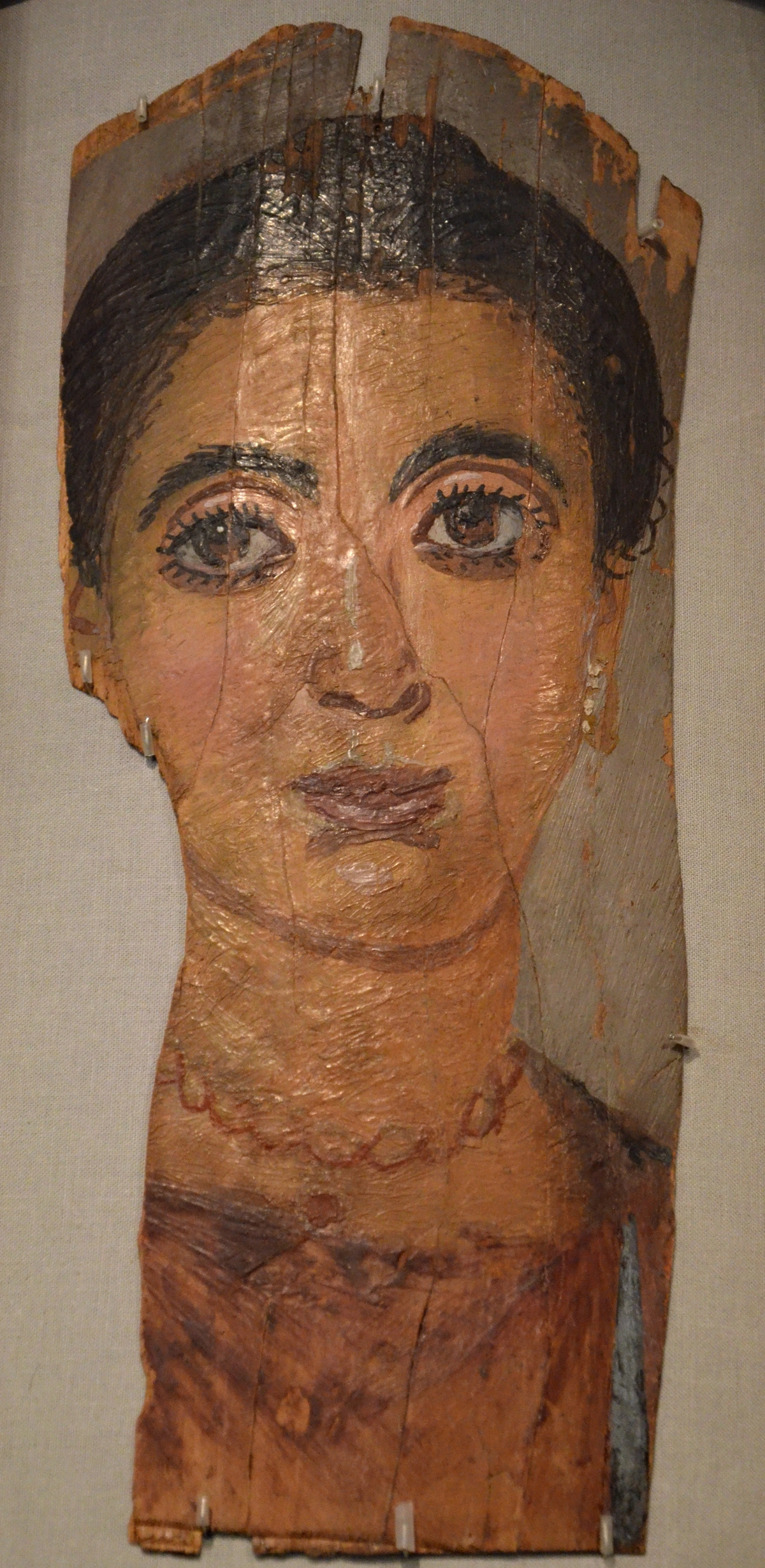
The Ara Pacis achieves this through sophisticated multi-level communication. The mythological panels connect Augustus to Rome's legendary founders and divine protectors, while the processional reliefs show specific contemporary individuals engaged in religious ceremony. The overall program combines three different registers: the mythological, the contemporary political, and the religious. This creates a complex web of associations that works for viewers with different levels of education and cultural knowledge.
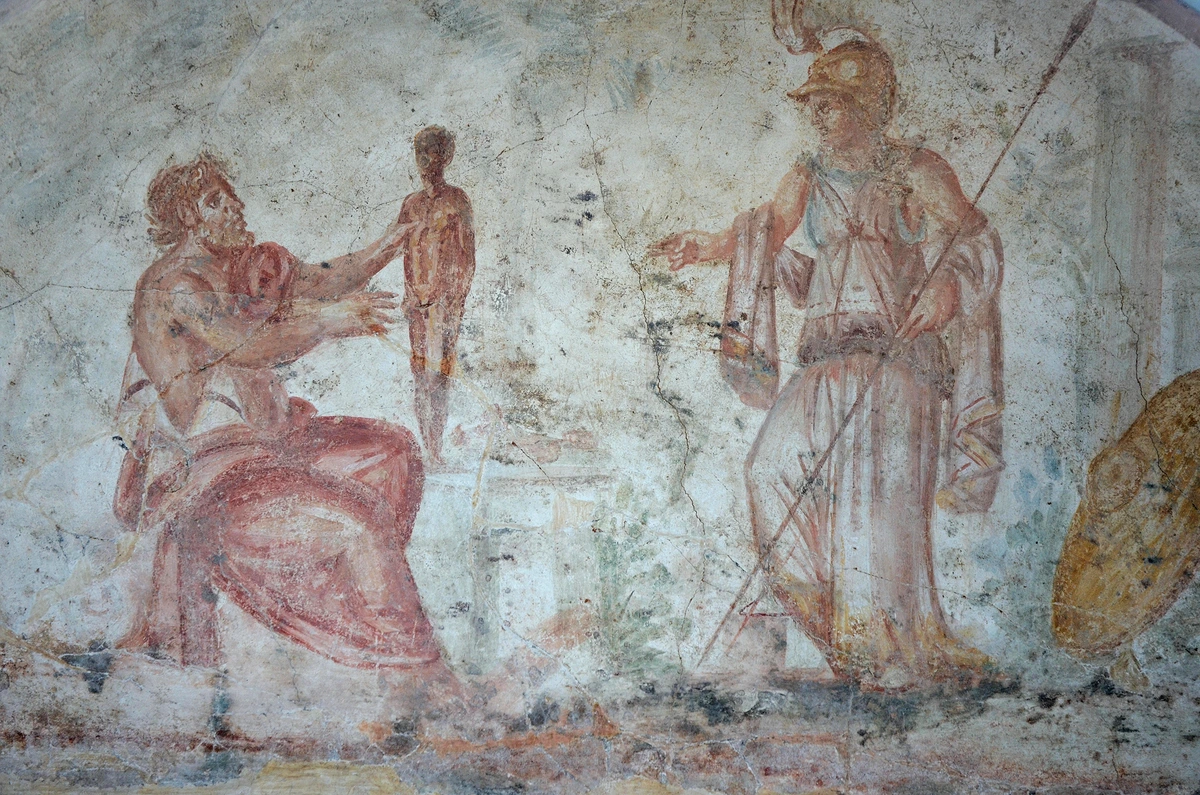
The relief sculptures create a complex visual program that works on multiple levels:
Processional Reliefs The exterior walls show processions of senators, priests, and members of the imperial family. But these aren't generic figures—they're specific individuals shown with veristic portraits that make them recognizable to contemporary viewers. The procession isn't just decorative—it's a visual record of who held power and religious authority in Augustan Rome.
The technical sophistication is remarkable. Artists had to:
- Show dozens of figures in believable spatial relationships
- Maintain proportional accuracy while working in shallow relief
- Create convincing portraits of specific individuals
- Suggest depth and movement within limited relief depth
- Coordinate multiple scenes into a coherent visual program
Mythological Panels The altar also includes mythological reliefs that connect Augustus's reign to divine precedents. One panel shows the discovery of Romulus and Remus, connecting Augustus to Rome's legendary founders. Another shows Aeneas, the Trojan hero whom Romans claimed as their ancestor, performing religious rites.
These mythological references work on both literal and allegorical levels. They connect contemporary political achievement to foundational Roman myths while suggesting that Augustus's reign represents a restoration of divine favor and moral order.
Tellus Panel One of the most beautiful reliefs shows a female figure (probably Tellus, the earth goddess) surrounded by symbols of fertility and prosperity: fruits, grains, animals, and infants. The message is clear: Augustan peace brings abundance and renewal.
This panel shows extraordinary technical skill. The artist created convincing three-dimensional forms while working in relatively shallow relief, used drapery to suggest body structure, and organized complex symbolic elements into a coherent composition. The result is both aesthetically beautiful and politically effective—a combination that defines the best Roman narrative art.
Political Function The overall program of the Ara Pacis was carefully designed to communicate specific political messages:
- Augustus brings peace through military strength (the victories being celebrated)
- This peace results in prosperity and abundance (the fertility imagery)
- The peace is divinely sanctioned (the religious and mythological references)
- Augustus respects traditional Roman values (the emphasis on religious ritual and family)
- The new regime represents continuity with Roman tradition (the connection to myths and founders)
The sophistication here is political as much as artistic. The Ara Pacis doesn't just assert power—it legitimizes power by connecting it to traditional values, religious authority, and popular prosperity. The artists had to work within these political constraints while creating aesthetically compelling work.
**But the most significant innovation of the Ara Pacis is its subtle transformation of Republican verism into imperial style. The portraits of contemporary figures maintain veristic attention to individual features, but they're presented in idealized compositions that suggest divine sanction and eternal significance. Augustus himself is shown not with the brutal realism of Republican portraits, but with a subtle idealism that suggests both human particularity and divine favor.
This synthesis is the crucial achievement. The Ara Pacis doesn't reject Republican artistic values outright; it transforms them to serve imperial purposes. The commitment to showing real people remains, but now those people are shown participating in a divinely ordained historical process.
Arch of Titus showing the spoils of Jerusalem**
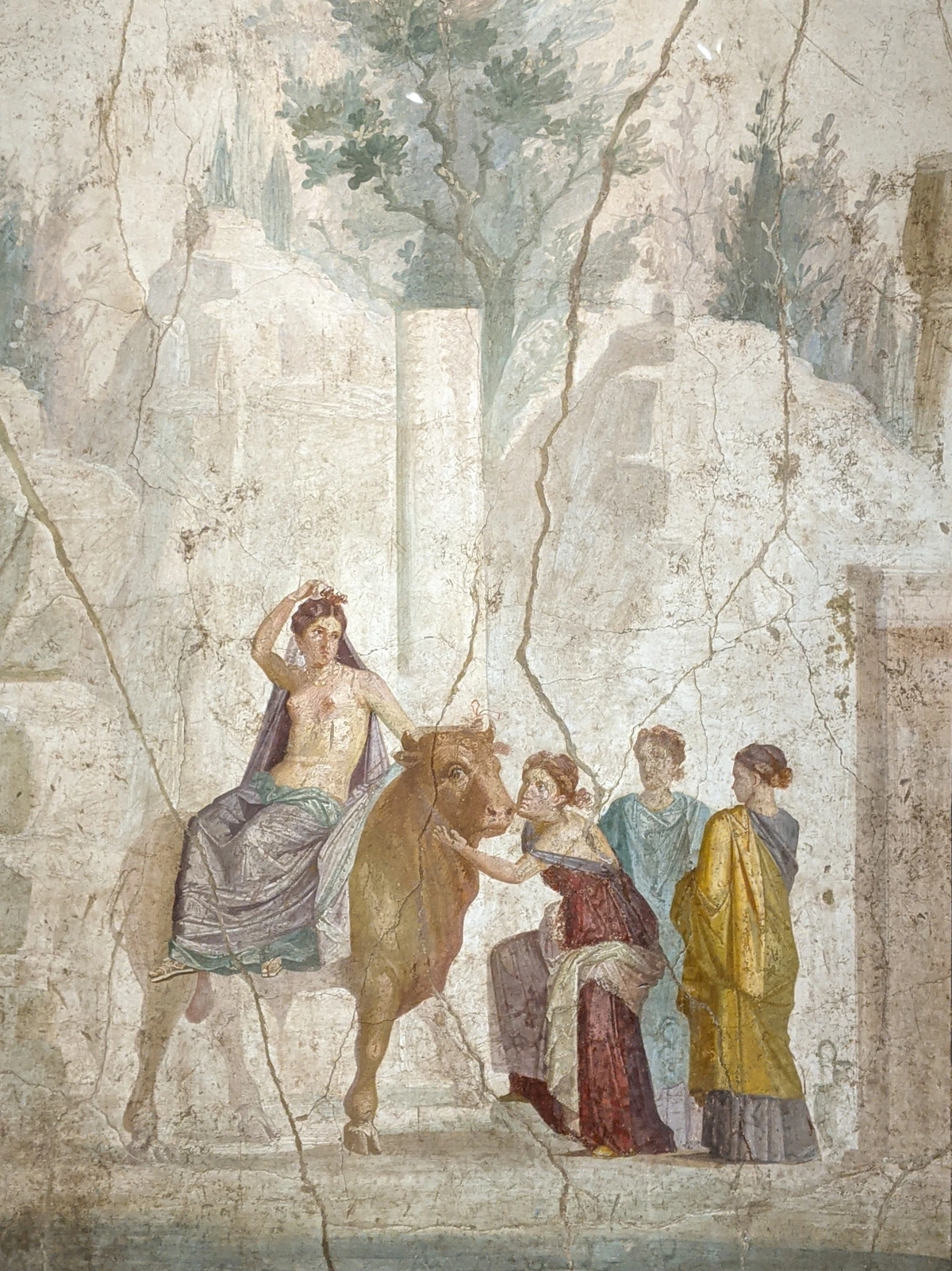
(Credit: Wikimedia Commons, Public Domain)
The continuous spiral frieze of Trajan's Column tells the story of the Dacian Wars through hundreds of carved scenes—Roman soldiers building forts, fighting battles, receiving surrenders. It's essentially a comic book carved 100 feet high, designed to be 'read' by walking around the column.
But think about the sophisticated narrative techniques involved: the artist had to compress time and space, show different moments in a continuous narrative, guide viewers through a complex story without written text. The scenes flow into each other with remarkable sophistication—figures from one scene often overlap into the next, creating visual continuity while maintaining narrative clarity.
Narrative Legibility Across Cultural Boundaries
One of the most misunderstood aspects of Roman art is its supposed uniformity. Generations of scholars presented Roman art as a monolithic entity that spread outward from the capital, becoming inevitably diluted and degraded in distant provinces. This center-to-periphery model fundamentally misrepresents the creative cultural dynamism of the Roman Empire.
What really happened was far more interesting. Roman artistic conventions functioned as a flexible visual language that provincial artists adapted to express local identities within an imperial framework. The result was creative synthesis rather than cultural replacement. Mosaics from Roman Britain incorporate Celtic design elements alongside classical motifs. Funerary portraits from Roman Egypt blend traditional pharaonic conventions with Roman veristic realism. The caravan city of Palmyra in Syria developed a distinctive style combining Roman techniques with Eastern influences.
This matters enormously for understanding contemporary globalization. The Roman example suggests that cultural influence doesn't have to mean homogenization. When artistic languages are flexible rather than rigid, when they can be adapted to local contexts rather than simply imposed, the result is creative innovation rather than cultural erasure. Contemporary artists working in multicultural contexts or addressing questions of cultural identity can find powerful precedents in how Roman provincial artists navigated between local traditions and international frameworks.
The key insight is that cultural exchange works best when it flows in multiple directions. The most innovative Roman provincial art emerged not from passive imitation of metropolitan models, but from creative adaptation that transformed both local traditions and Roman conventions. This dynamic—local innovation within international frameworks—remains crucial for understanding how contemporary art can be both globally relevant and locally meaningful.
In reality, Roman art was never truly uniform. Instead, it functioned as a flexible visual language that provincial artists and patrons adapted to express local identities within an imperial framework. Understanding this provincial diversity isn't just academic—it fundamentally changes how we think about cultural globalization, artistic influence, and the relationship between imperial power and local creativity.
What made Roman art successful across such a vast and diverse empire wasn't its uniformity but its adaptability. Roman artistic conventions provided a common visual vocabulary that could be learned and used by artists from dozens of different cultural backgrounds, but these conventions were never so rigid that they prevented local adaptation and innovation.
The creative dynamism of provincial Roman art reveals itself in several key patterns:
1. The British Example: Blending Worlds In Roman Britain—particularly at sites like Fishbourne Palace and the villas of southern England—we see a fascinating synthesis of Classical Roman styles with indigenous Celtic artistic traditions. British mosaics often retain the technical sophistication of continental workshops but incorporate local imagery, unique color palettes, and sometimes even Celtic decorative motifs subtly woven into classical compositions.
What's crucial here is that this wasn't cultural contamination or decline. It was creative adaptation. Local patrons and artists were making active choices about which Roman conventions to adopt, which to modify, and which to reject in favor of indigenous traditions. The result was a distinctly British-Roman art that could communicate both local identity and participation in imperial culture simultaneously.
2. The North African Flourishing Roman North Africa (particularly modern Tunisia and Algeria) became one of the empire's most artistically innovative regions, developing mosaic traditions that surpassed anything produced in Italy itself. Workshops in cities like Carthage and Thysdrus (modern El Djem) created mosaics of extraordinary technical sophistication and naturalistic detail.
North African artists developed distinctive approaches to both subject matter and style. They excelled at depicting the natural world—hunting scenes, marine life, agricultural activities—with an observational precision that approaches scientific illustration. Their mosaics also show sophisticated understanding of how to use color and light to create convincing spatial illusion, solving optical problems that preoccupy painters centuries later.
This regional flowering challenges our assumptions about center and periphery. By the 2nd and 3rd centuries CE, North African artists weren't imitating Italian models; they were creating work that influenced artistic development back in Rome itself. This cultural flow isn't center to periphery, but a multidirectional exchange across the empire.
3. The Eastern Mediterranean Fusion In the wealthy cities of Roman Syria, Asia Minor, and Egypt, classical artistic traditions met and merged with ancient Eastern cultures. The results were extraordinary: funerary portraits from Roman Egypt blend traditional pharaonic artistic conventions with Roman veristic portraiture, while some Syrian mosaics show clear influences from Persian art.
Palmyra, the great caravan city in the Syrian desert, developed a distinctive artistic style that combined Roman techniques with Parthian and local Arabian elements. The famous Palmyrene funerary portraits show this synthesis perfectly: the veristic attention to individual facial features is recognizably Roman, but the formal poses, direct frontal gazes, and decorative elements show clear Eastern influence.
This artistic fusion wasn't random cultural mixing. It reflected the cosmopolitan identity of a city that served as a bridge between Roman, Persian, and Arabian worlds. The artists and patrons of Palmyra weren't confused about their identity—they were creating visual art that expressed their complex, multiple cultural affiliations.
4. Art as Cultural Negotiation The key insight from studying provincial Roman art is that artistic influence is never simply imposed or passively received. Provincial artists and patrons actively negotiated their relationship with Roman culture through their artistic choices. Sometimes this meant enthusiastic adoption of Roman styles. Other times it meant strategic modification or even outright rejection.
This process of cultural negotiation mirrors exactly what happens in contemporary global culture. When an artist in Lagos works within international contemporary art conventions, or when a Tokyo-based designer blends Japanese and Western aesthetic principles, they're engaged in the same kind of creative cultural negotiation that Roman provincial artists performed two thousand years ago.
For contemporary artists navigating an increasingly globalized art world, the Roman provincial example offers encouraging precedents. The artists who created the most vital and enduring work weren't those who most slavishly imitated metropolitan models, but those who found ways to make imperial artistic languages express distinctly local concerns and identities.
5. Sequential Storytelling Instead of showing single moments, Roman narratives showed sequences of action that told stories even without written text. A battle scene might show the approach, the clash, the victory, and the consequences in a single composition. This narrative compression made complex events understandable to viewers with different levels of education and cultural familiarity.
These strategies have direct contemporary relevance. Artists today working with public art, social media, or international exhibition face similar challenges: how do you communicate with audiences who speak different languages, come from different cultural backgrounds, have different levels of education?
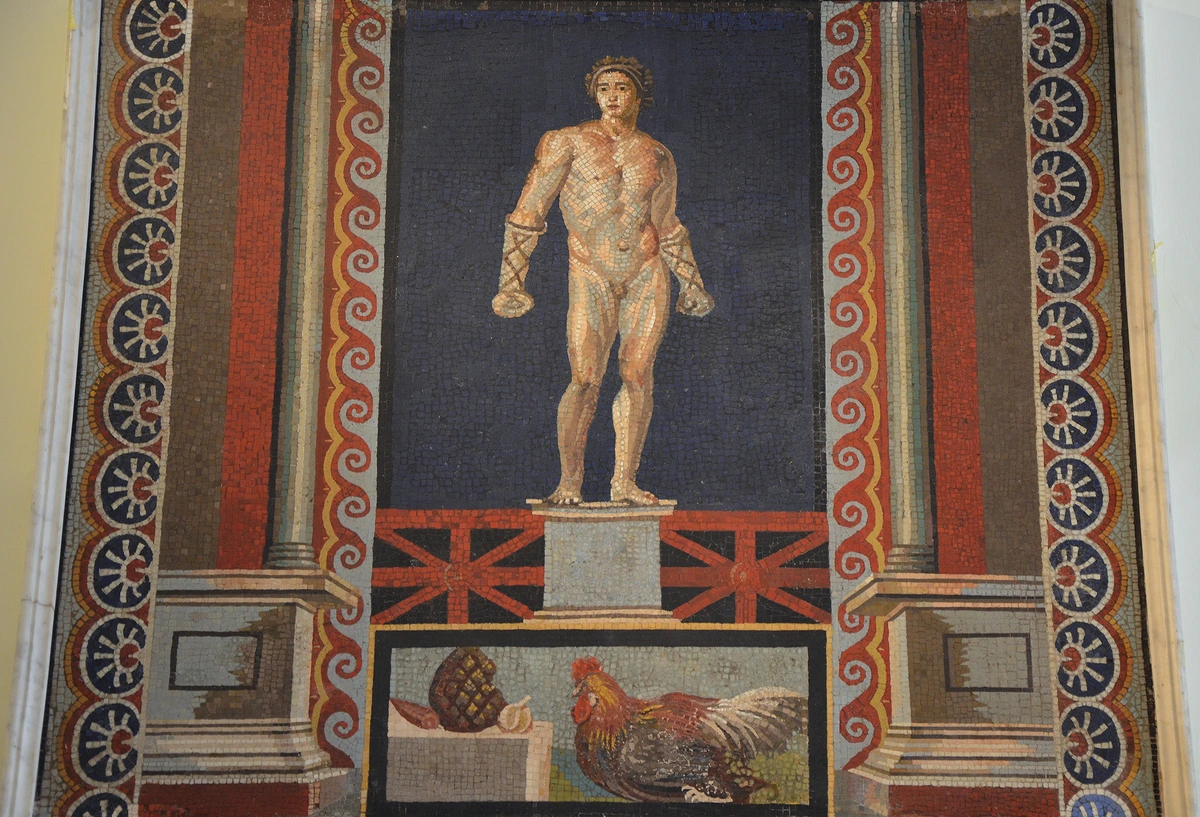
Contemporary equivalents of Roman visual strategies:
- Universal symbols in airport signage or traffic signals
- Emojis that communicate across language barriers
- Infographics that make complex information immediately accessible
- Political cartoons that work through visual conventions The Romans essentially invented these approaches for visual communication at imperial scale.
Contemporary artists working with political content, social commentary, or public memory are working in this same tradition. When Kara Walker creates her silhouettes exploring racial violence in American history, she's using narrative art to intervene in public memory just as Roman artists did. When Kehinde Wiley paints contemporary Black subjects in poses borrowed from equestrian monuments, he's challenging whose stories get told in public space—exactly the kind of intervention Roman public art was designed to make.
What contemporary artists can learn from the Ara Pacis is how to work in multiple registers simultaneously. The best political art functions for multiple audiences, communicates on different levels of sophistication, and can be understood by viewers with different political commitments. The Ara Pacis works whether you're a Roman senator who understands all the mythological allusions or a foreign visitor who only understands the basic message of peace and prosperity. This multi-level communication is a crucial skill for any artist working with public content or political themes today.
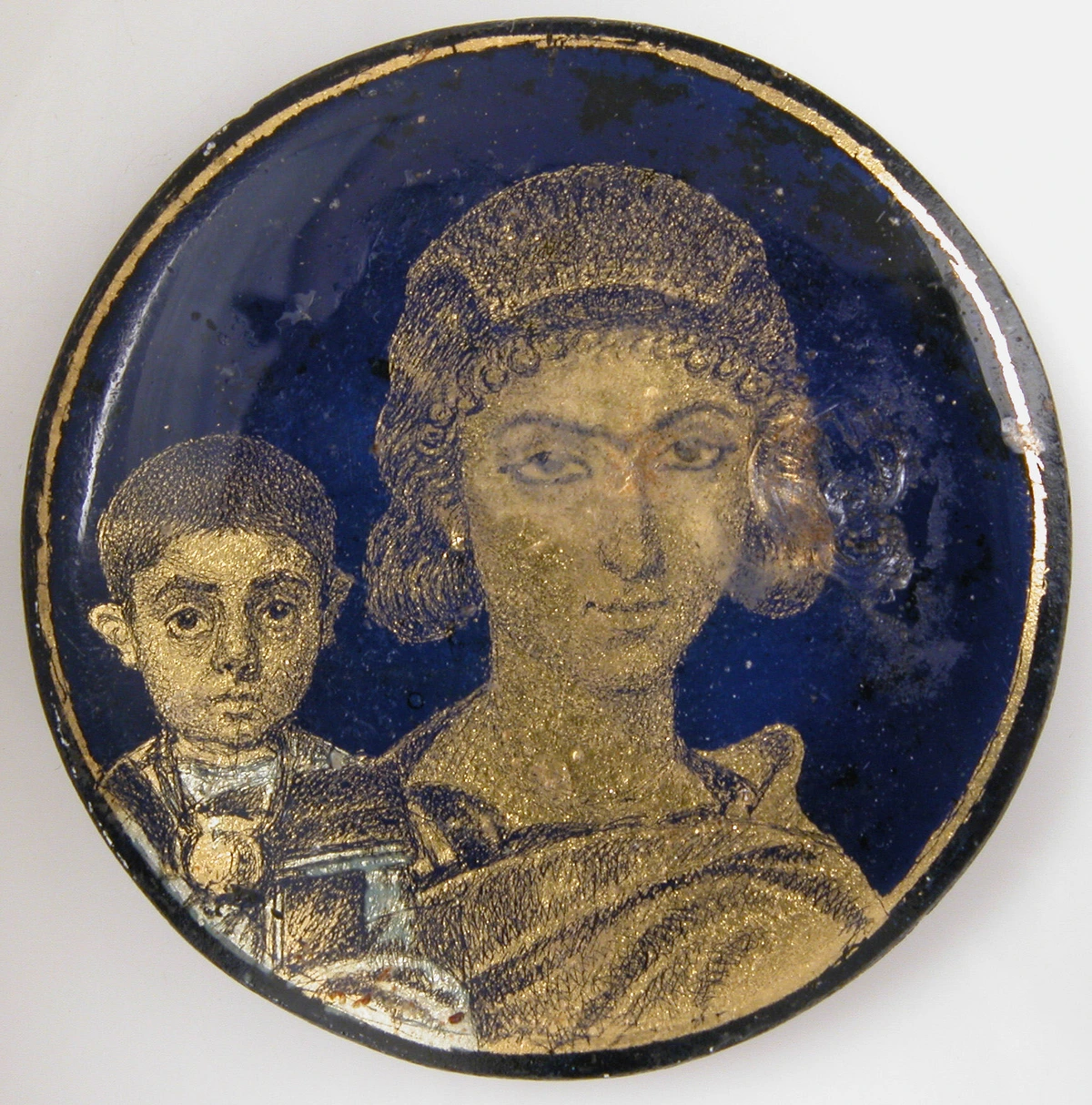
What Roman narrative art shows us is that political art doesn't have to be didactic or preachy to be effective. The best Roman reliefs work through sophisticated visual storytelling—showing rather than telling, suggesting rather than insisting. They create space for viewers to draw their own conclusions while guiding interpretation through careful composition, gesture, and emphasis.
This matters enormously for understanding contemporary art that engages with politics, memory, and public space. Artists like Kara Walker, Kehinde Wiley, or Jenny Holzer are working in a tradition that the Romans essentially perfected: using public art to intervene in political discourse, to commemorate (or interrogate) historical narratives, to shape how communities understand their past and imagine their future.
What I find fascinating is that the Romans understood something contemporary artists are still exploring: public art's power doesn't come from aesthetic beauty alone. It comes from placement, scale, and the narrative it constructs. The Arch of Titus wasn't just beautiful; it was strategically placed, visually compelling, and told a story designed to legitimize imperial power. The Column of Trajan's continuous spiral frieze wasn't just decoration—it was sophisticated visual storytelling designed to be "read" by viewers walking around it, creating an immersive narrative experience that wouldn't be matched until modern cinematic techniques.
Contemporary public artists work with exactly these same tools, whether they're creating murals, installations, or performance pieces. When contemporary artists like Kara Walker create silhouette installations in public spaces, they're working in this same Roman tradition—using strategic placement, scale, and narrative to intervene in public discourse about power, memory, and identity.
Empire's Echo: Why Roman Art Still Shapes Contemporary Practice
The Patronage System: Art, Money, and Power
Understanding how Roman artists actually worked—the economic realities, the patronage relationships, the workshop structures—reveals another set of lessons that couldn't be more relevant for contemporary artists navigating galleries, grants, and commercial pressures.
Here's what I find most striking about the Roman patronage system: it created conditions for extraordinary artistic innovation while maintaining practical constraints that would feel familiar to any working artist today. Roman patrons—whether wealthy individuals, state officials, or imperial authorities—had clear expectations: monuments that communicated political messages, portraits that enhanced family prestige, public buildings that demonstrated civic generosity. Artists had to satisfy these demands while pursuing their own artistic visions.
The key insight that emerges from studying Roman patronage is that constraints can generate creativity rather than limiting it. The pressure to serve imperial propaganda led Roman artists to develop sophisticated approaches to narrative art. The need to commemorate specific historical events forced innovations in how complex stories could be told visually. The requirement that public monuments communicate across cultural and linguistic boundaries pushed artists to develop new approaches to visual clarity and symbolic communication.
Contemporary artists operating within commercial art markets, applying for grants, or seeking institutional support face similar challenges. The question isn't whether to work within constraints—it's how to work within them creatively. Roman precedents suggest that the most powerful work often emerges not by transcending practical demands, but by finding ways to make practical demands serve rather than undermine artistic vision.
Roman artists worked within a sophisticated patronage system that connected artistic production to political power, social status, and economic interest. Wealthy patrons—senators, successful generals, wealthy merchants who had made fortunes in trade—commissioned art not just because they appreciated beauty, but because art served specific social and political functions. Public buildings demonstrated civic generosity; portraits communicated family prestige across generations; luxury objects displayed sophisticated taste and economic success.
Some of the most famous Roman artworks were essentially political propaganda. The Ara Pacis Augustae celebrated Augustus's military victories while promoting his vision of peace and prosperity. The Arch of Titus commemorated the sack of Jerusalem while legitimizing imperial conquest. The Column of Trajan narrated the Dacian Wars while demonstrating the emperor's military prowess and divine favor.
But here's what's crucial: patronage didn't automatically corrupt artistic integrity. The best Roman artists found ways to pursue their own artistic visions while satisfying patron demands. Sometimes this meant finding patrons who shared the artist's aesthetic values. Sometimes it meant educating patrons about new possibilities—showing them artistic approaches they hadn't considered. Sometimes it meant making pragmatic compromises on some aspects while protecting what mattered most in the work.
The Pantheon offers a perfect example. The patron (Emperor Hadrian) had clear political and religious goals—he wanted a temple that would demonstrate his own architectural sophistication while honoring all the gods. But the architect (whose name we don't even know) had extraordinary creative freedom in how to achieve those goals. The result was a building that serves its political function while achieving revolutionary artistic innovation—not despite patronage, but because of the creative tension between patron goals and artistic vision.
This matters enormously for contemporary artists because we face similar challenges. Whether you're applying for grants, seeking gallery representation, doing commercial illustration work, or trying to make art that sells while maintaining conceptual rigor, the fundamental question remains: how do you maintain artistic integrity while navigating economic realities? Roman artists developed sophisticated approaches that remain relevant: building long-term relationships with patrons who understood their work, maintaining workshop traditions that ensured quality while allowing artistic personality, creating innovative work within the constraints of specific commissions.
Women in Roman Art: Creators and Subjects
One of the most significant but often overlooked aspects of Roman art is the role of women—both as subjects of artistic representation and as creators of art themselves. While Roman society was patriarchal, art provides evidence that women participated in cultural production in ways that challenge our assumptions about ancient gender roles.
As subjects of portraiture, Roman women were represented with remarkable individuality and psychological depth. Funerary reliefs from the late Republic and early Empire show women engaged in activities ranging from wool-making to scholarly reading to conducting business. These aren't generic female types—they're specific individuals with distinctive features, clothing styles, and attributes that indicate their social status, personality, and achievements.
The funerary relief of a woman named Publia Aelia Procula, for example, shows her with a book scroll, indicating literacy and intellectual interests. Other reliefs show women as merchants, priestesses, and matrons managing households. This veristic representation of women—showing them as individuals with specific identities and social roles—was revolutionary in the ancient world and continues to influence how contemporary artists approach representing women's lives and experiences.
Evidence also suggests women were active as artists and craftspeople. While we know frustratingly few Roman artists by name—and even fewer women artists—archaeological evidence reveals women's involvement in artistic production. Textile production, an art form massively important in Roman society, was primarily women's work. Roman frescoes from Pompeii show women engaged in artistic activities, and some surviving works show stylistic characteristics that suggest women artists may have worked in various media, just as they participated in collecting and commissioning art from popular gallerists of their time.
The Herculaneum papyri, charred scrolls preserved by the eruption of Vesuvius, include writing by women that shows sophisticated literary and philosophical education. While not visual art, this evidence suggests that at least some Roman women had the education and cultural access that would have enabled artistic production. When we consider that much Roman art was signed not with individual names but with workshop marks, it becomes entirely possible that many anonymous Roman artworks were created by women.
Contemporary artists like Judy Chicago, who created The Dinner Party to honor women's historical achievements, or the Guerilla Girls, who challenge art world sexism, are working in a tradition that has ancient roots. Roman art reminds us that women have always been part of artistic production, even when historical records make their contributions invisible.
So why should a contemporary artist—perhaps someone exploring abstraction, digital media, installation, or experimental forms—care about Roman art? Because the fundamental questions Roman artists negotiated are the same ones artists face today:
That creative pragmatism—making meaningful work within real-world constraints—might be the most valuable lesson Roman art offers contemporary artists. We live in a moment when the art world often feels polarized between commercial success and artistic integrity, between selling work and making meaningful contributions to culture. Roman art suggests these don't have to be opposed.
The best work often emerges from constraints. Roman artists navigated economic pressures, demanding patrons, and political complexity while creating extraordinary innovations.
The most revolutionary Roman innovations—verism, concrete architecture, narrative relief sculpture, sophisticated workshop practices—emerged not from artists trying to escape their moment but from artists engaging their moment with extraordinary intensity and intelligence. That's not a historical curiosity. It's a model for contemporary practice.
Every time I'm struggling with a painting, wondering if it's too derivative or too obscure, too commercial or too inaccessible, too traditional or too experimental, I find myself thinking about Roman artists adapting Greek models, developing new materials, finding ways to satisfy patron demands while pursuing artistic excellence. They remind me that the most important artistic work often emerges not from transcending our challenges but from engaging them with all the creativity and integrity we can muster.
Beyond practical techniques, Roman art shows us what art can do in the world—how it shapes human experience, creates meaning across cultural boundaries, and integrates aesthetic excellence into daily life.
Roman artists were working with questions that contemporary artists are still trying to answer: How do you create meaning that outlasts you? How do you make work that speaks across cultural differences? How do you honor tradition while insisting on contemporary relevance? How do you serve practical needs without sacrificing excellence?
These aren't Roman questions or contemporary questions. They're human questions that artists have been negotiating for millennia. Studying Roman art doesn't give us easy answers. But it does give us company—reminds us that artists have been working on these problems for thousands of years, developing sophisticated approaches that remain relevant today.
The Globalized Workshop: Lessons for Contemporary Practice
We're living through another period of massive cultural transformation, and the challenges Roman artists faced have uncanny contemporary parallels. Consider how their solutions might inform current practice:
1. Navigating Cultural Influence in the Digital Age
Roman artists adapted Greek models to serve Roman purposes. Contemporary artists negotiate relationships between local traditions and global art markets, between indigenous practices and international biennial culture, between handmade craft and digital reproduction.
The Roman approach suggests some strategies:
- Synthesis over imitation: Combine influences to create something new rather than copying existing models
- Functional transformation: Adapt borrowed forms to serve local contexts and contemporary purposes
- Maintain critical awareness: Understand power dynamics without being paralyzed by them
- Multiple levels of operation: Make work that functions locally and internationally simultaneously
2. Material Innovation and Creative Possibility
Roman concrete didn't just improve existing architecture—it made entirely new kinds of buildings possible. Contemporary digital tools, new materials, and technical processes offer similar potential.
Rather than using new tools to do old things better, artists can ask:
- What becomes possible that was impossible before?
- How do new materials change our relationship to space, time, or interaction?
- What new questions emerge from technical possibilities?
- How do we maintain craft values while embracing technical change?
The Roman example suggests that technical experimentation and artistic vision should develop together rather than separately.
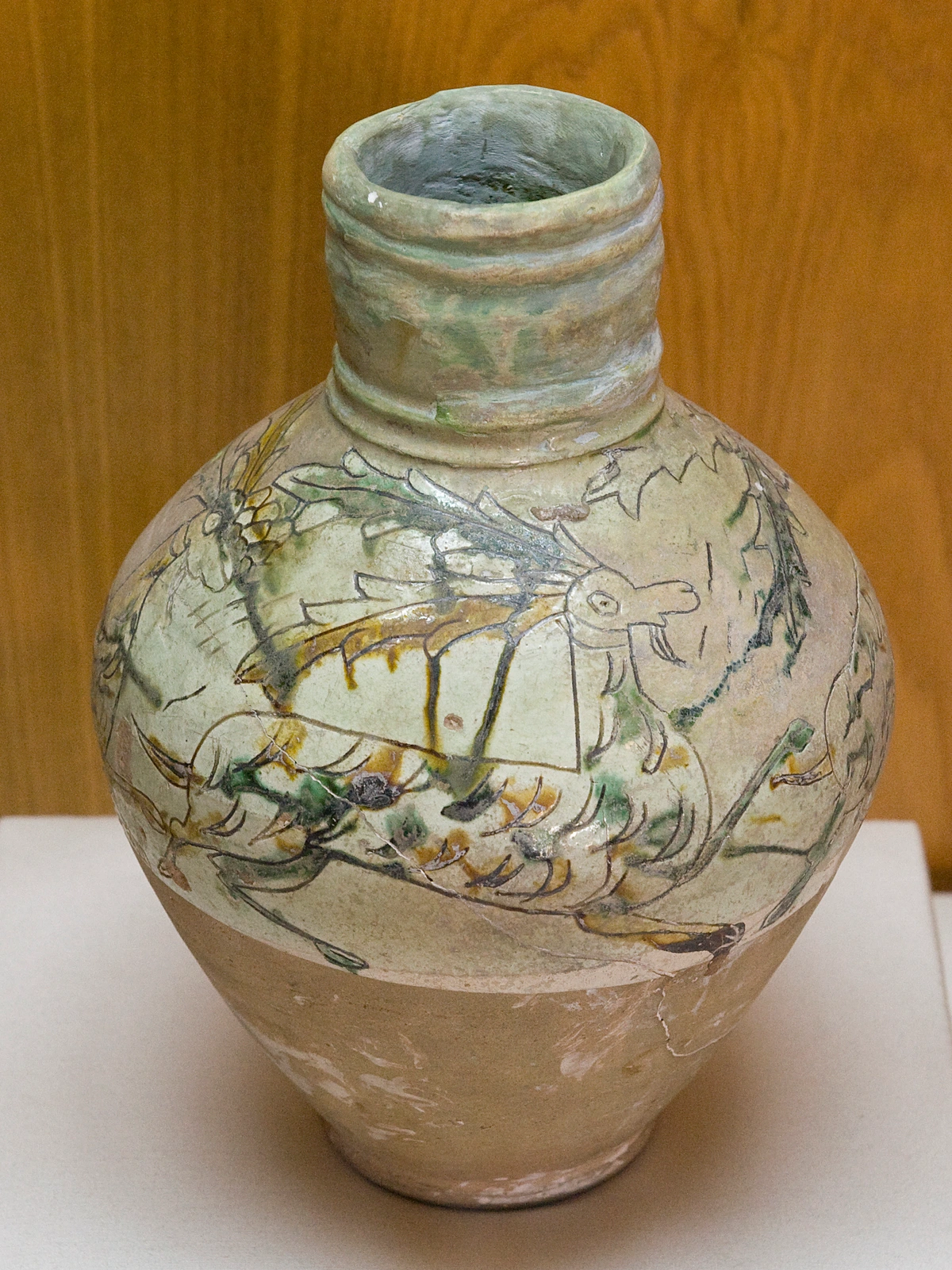
How do you balance respect for tradition with the need to innovate? The Romans loved Greek art but refused to be limited by it. They adapted, transformed, and created something new. They understood that innovation doesn't require rejecting tradition—it requires engaging tradition critically and creatively.
When I'm struggling with a painting that feels too derivative, I think about Roman artists adapting Greek models. They weren't worried about being 'original' in our modern sense; they were concerned with being effective, meaningful, and appropriate to their context. That shift from 'originality' to 'appropriateness' is incredibly liberating.
3. The Studio as Collaborative Space
Roman workshops brought together artists from different traditions, skills, and backgrounds. This collaborative model has contemporary relevance as artists work in shared studios, participate in residencies, or collaborate on projects.
The key insight: diversity of expertise accelerates innovation while maintaining quality. A contemporary studio might include:
- Artists with traditional technical skills
- Digital artists or programmers
- Theorists or writers
- Curators or producers
- Fabricators or technicians
This isn't just about efficiency—it's about creating generative friction between different ways of thinking.
4. Engaging Diverse Audiences
Roman art had to speak to citizens, subjects, allies, and enemies across vast cultural differences. Contemporary artists face similar challenges with international exhibitions, online audiences, or public projects.
The Roman approach was to create work that functioned on multiple levels:
- Immediate visual impact for casual viewers
- Sophisticated content for educated audiences
- Specific meanings for cultural insiders
- Different interpretations for different cultural groups
This multi-level approach remains relevant for public art, museum exhibitions, or online platforms where work reaches diverse audiences.
How do you make work that functions in public space while maintaining integrity? Roman public art wasn't made in ivory towers; it was made for the messy reality of forums, baths, and processional routes. It had to speak to diverse audiences—educated elites, ordinary citizens, foreign visitors, illiterate workers—without being simplistic or condescending.
This challenge should feel familiar to contemporary artists working with public art, community projects, or any work meant to engage broad audiences. The Romans understood that public art doesn't have to choose between accessibility and sophistication. The best Roman public art works on multiple levels: visually impressive from a distance, rewarding close examination, meaningful to viewers with different backgrounds and education levels.
How do you find meaning in everyday reality? Verism teaches us that ordinary people, ordinary moments, ordinary faces are worthy subjects for serious art. This insight should resonate with any contemporary artist working with documentary photography, realist painting, or any form that seeks to capture lived experience.
The contemporary equivalent might be the street photography of someone like Vivian Maier, who found extraordinary beauty and dignity in ordinary people living ordinary lives. Or consider the paintings of Alice Neel, who brought the same psychological intensity to portraits of her neighbors that Roman artists brought to their aristocratic subjects.
How do technical innovations open new expressive possibilities? Roman concrete wasn't just engineering; it was art. The insight that new materials enable new artistic visions should matter to every contemporary artist working with digital media, new technologies, or experimental materials.
Consider how digital tools have changed what's possible in contemporary art. Artists like Refik Anadol use AI and machine learning to create works that would have been literally unimaginable twenty years ago. Or think about how 3D printing is changing sculpture. These technological shifts follow the pattern established by Roman concrete: new tools don't just serve existing artistic ideas—they generate entirely new ones.
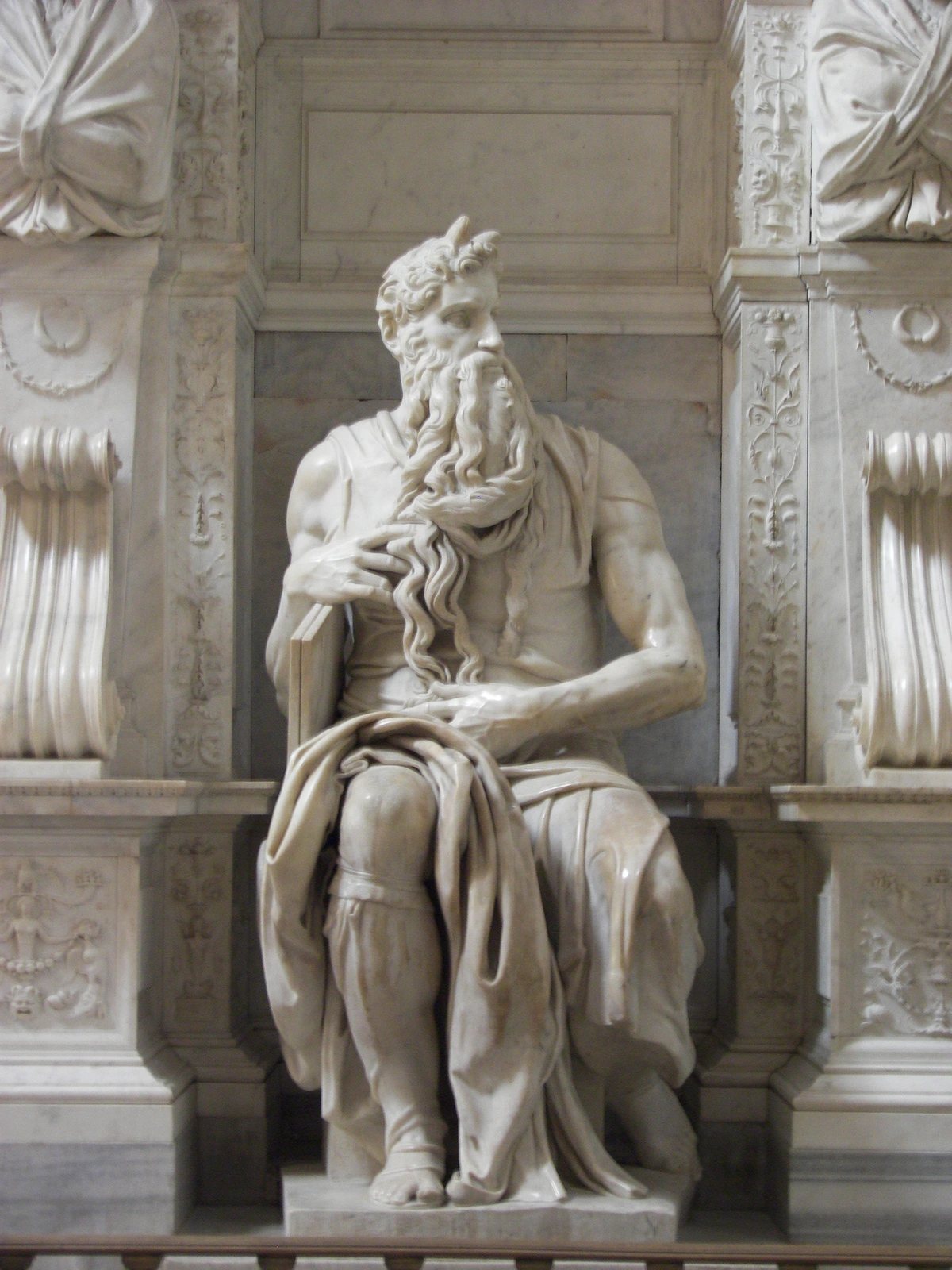
How do you create work that connects with diverse audiences? The Roman Empire encompassed countless cultures, languages, and artistic traditions, and Roman art learned to speak across these differences. This challenge should resonate with contemporary artists working in multicultural contexts, addressing global issues, or trying to make work that travels across cultural boundaries.
The Romans developed what we might now call a 'visual lingua franca'—forms and symbols that could be understood across linguistic and cultural differences. They accomplished this not by dumbing down their art, but by finding universal human themes and representing them with clarity and power.
When I'm struggling with a painting, wondering if it's too derivative or too obscure, I sometimes think about Roman artists adapting Greek models. They weren't worried about being 'original' in our modern sense; they were concerned with being effective, meaningful, and appropriate to their context. That shift in focus—from originality to effectiveness—is incredibly liberating.
But the most important lesson Roman art offers contemporary artists may be this: the Romans weren't making art primarily for other artists. They weren't creating work to be displayed in galleries or to be judged primarily by aesthetic criteria. Roman art was embedded in social life, political process, religious ritual, and daily experience in ways that contemporary art rarely achieves.
This isn't a call to abandon gallery culture or stop making work that requires specialized knowledge to fully appreciate. But it is a reminder that some of the most powerful art in human history was created to serve specific, practical functions while achieving extraordinary aesthetic sophistication. The separation between "art for art's sake" and "functional art" is a relatively recent invention, and Roman art suggests it might be a false dichotomy.
Contemporary artists working with public art, community projects, design, architecture, or any form that engages directly with social life are working in closer continuity with Roman artistic values than they might realize. The Roman example suggests that the most enduring art often emerges from engaging constraints, serving real human needs, and finding ways to make aesthetic experience part of how people actually live rather than something separate from daily life.
Of course, not all Roman art was excellent—just as not all contemporary art succeeds. But the best Roman work shows us what's possible when artists engage with complexity rather than avoiding it. Imperial propaganda could be as crudely effective as any modern advertising. But the best Roman art—the veristic portraits, the sophisticated narrative reliefs, the revolutionary architecture—shows us what happens when effectiveness and artistic ambition work together rather than in opposition.
Where contemporary artists sometimes romanticize absolute creative freedom, Roman practice suggests that the most powerful work emerges from deeply engaging with constraints—not escaping them. Whether it's working with specific materials, addressing particular audiences, or operating within commercial frameworks, constraints can generate creativity rather than limiting it.
I also think about verism when I'm making portraits. It's tempting to smooth out imperfections, to create flattering versions of people. But Roman portraiture reminds me that the most compelling art often comes from looking at reality with clear eyes—not judgmental, but truthful.
When I consider how contemporary artists navigate commercial pressures, institutional gatekeeping, and audience engagement challenges, Roman precedents offer practical wisdom. Yes, there was plenty of imperial propaganda and mass-produced schlock. But there was also extraordinary work being made across the social spectrum, from monumental public sculpture to intimate household objects.
Museums and Cultural Heritage: Where to Experience Roman Art Today
For artists and art lovers wanting to experience Roman art directly, understanding where to find the best collections and most significant monuments is crucial. These sites aren't just historical curiosities—they're laboratories for understanding artistic problems that remain urgent today.
Major Collections and Their Specializations
Museum/Archaeological Site | Location | Key Holdings | Special Notes for Artists |
|---|---|---|---|
| Vatican Museums | Vatican City | Laocoön and His Sons, Apollo Belvedere, extensive Roman sculpture and mosaic collections | The Cortile del Belvedere alone can occupy days of study for sculptors and figurative artists |
| Capitoline Museums | Rome, Italy | Famous Roman bronze statues including the Capitoline Wolf and equestrian statue of Marcus Aurelius | Less crowded than Vatican, excellent for studying bronze work and portraiture |
| National Roman Museum | Rome, Italy (multiple sites) | Frescoes, mosaics, Roman domestic art, massive sculpture collection | Palazzo Massimo is particularly strong in Roman painting techniques and color use |
| Metropolitan Museum of Art | New York, USA | Comprehensive Roman collections including the famous Cubiculum from Boscoreale | Excellent study collection for understanding Roman domestic interior design |
| British Museum | London, UK | Roman Britain artifacts, Portland Vase, cameo glass, Roman coins and jewelry | Strong holdings of provincial Roman art showing cultural synthesis |
| Louvre Museum | Paris, France | Venus de Milo, Winged Victory of Samothrace, extensive Roman and Greek collections | World's most comprehensive ancient art collection |
| Naples National Archaeological Museum | Naples, Italy | Frescoes and artifacts from Pompeii and Herculaneum | Essential for studying Roman painting techniques and color theory |
| Getty Villa | Malibu, California | Focused Roman collections, beautiful outdoor spaces, excellent educational programs | Recreated Roman villa architecture provides context for understanding domestic art |
| Palazzo Altemps | Rome, Italy | Roman sculpture in original Renaissance palace setting | Shows how Roman art was collected and displayed in later periods |
| Baths of Diocletian/Roman National Museum | Rome, Italy | Massive public bath complex converted into museum | Extraordinary for understanding Roman architectural scale and spatial experience |
Beyond Major Museums: Lesser-Known Sites What many artists don't realize is that some of the most powerful Roman art experiences happen outside major museums:
- Ostia Antica: The ancient port of Rome preserves extensive Roman domestic architecture and commercial spaces that reveal everyday life with remarkable intimacy. The apartment buildings (insula) show how ordinary Romans actually lived.
- Hadrian's Villa (Villa Adriana): Near Tivoli outside Rome, this enormous imperial retreat represents the most sophisticated integration of architecture, landscape design, and sculpture in the Roman world. Essential for understanding Roman approaches to total art environments.
- Pompeii and Herculaneum: While famous, these sites are worth visiting specifically for how they preserve Roman art in its original contexts—not isolated objects but complete environments where painting, sculpture, and architecture work together.
- Roman Provincial Sites: For artists interested in cultural fusion, visiting sites like Leptis Magna (Libya), Palmyra (Syria), or Ephesus (Turkey) shows how Roman artistic conventions interacted with local traditions to create distinctive regional styles.
Practical Tips for Artist Visitors Having visited many of these sites myself, I've learned some practical strategies for getting the most out of Roman art immersion:
- Visit in person when possible, but prepare digitally first: High-resolution images available online can help you identify specific works and techniques to study, but nothing replaces seeing scale, surface, and spatial relationships in person.
- Focus on process as much as product: Look at chisel marks, painterly brushwork, structural solutions, evidence of workshop collaboration. Roman artists were practical makers solving practical problems.
- Sketch rather than photograph: Drawing forces you to see differently—to notice proportions, structural logic, spatial relationships that photography can miss. Even quick sketches can reveal insights about artistic decision-making.
- Study conservation work: Roman works in museums often show modern restoration or conservation. Learning to distinguish original Roman work from later additions teaches crucial lessons about material integrity and historical preservation.
- Talk to museum educators: Many major museums have education departments specifically for working artists. These specialists can often provide insights unavailable in standard guidebooks.
The key insight from visiting Roman art collections is that these aren't dead artifacts—they're living evidence of how artists solved problems that remain urgent today. When you stand in front of a Roman veristic portrait, you're seeing an artist struggling with the same questions about representation, psychology, and truth-telling that preoccupy contemporary figurative artists. When you experience the space of the Pantheon, you're understanding how architectural innovation can create new possibilities for human experience.
Color and Light: The Roman Painter's Palette
Let me tell you about something that should fascinate any contemporary painter: the Roman approach to color. What we know about Roman color theory and practice comes from surviving frescoes, written descriptions (mostly from later periods), and technical analysis of pigments.
When I first started working with pigments seriously, I assumed that ancient artists had a limited, primitive palette. Learning about Roman color theory was a revelation—the kind of fundamental insight that can transform your entire approach to artistic expression. The Roman painter's palette was both sophisticated and surprisingly modern. They worked with earth pigments (ochers, umbers, siennas) that remain staples of contemporary painting. But they also used expensive imported colors that show the reach of Roman trade networks: Egyptian blue (a synthetic pigment made from sand, lime, and copper), cinnabar red (from mercury mines in Spain), and even imported materials from as far away as Afghanistan (lapis lazuli for ultramarine blue).
The real sophistication, though, lay in how they used these materials. Roman painters developed layering techniques that wouldn't be matched until the Venetian Renaissance. They understood that different pigments required different preparation, different binders, different application techniques. Some pigments could be applied wet-on-wet (like modern alla prima technique) while others required careful layering and drying time between coats. Technical analysis using scanning electron microscopy and X-ray fluorescence has revealed extraordinary sophistication in these methods.
The Roman painter's palette was both sophisticated and surprisingly modern. They worked with earth pigments (ochers, umbers, siennas) that remain staples of contemporary painting. But they also used expensive imported colors that show the reach of Roman trade networks: Egyptian blue (a synthetic pigment made from sand, lime, and copper), cinnabar red (from mercury mines in Spain), and even imported materials from as far away as Afghanistan (lapis lazuli for ultramarine blue).
Modern pigment analysis reveals extraordinary sophistication in Roman color technology. Roman painters understood that different pigments required different preparation, different binders, different application techniques. Some pigments could be applied wet-on-wet (like modern alla prima technique) while others required careful layering and drying time. They developed complex glazing techniques using multiple transparent layers to achieve depth and luminosity—techniques that wouldn't be matched until the Northern Renaissance.
The famous Pompeian red background wasn't just a decorative choice—it was achieved using cinnabar (mercury sulfide), an expensive imported pigment that created an almost luminous quality while symbolizing elite status. Roman color choices carried social and political meaning: expensive imported pigments demonstrated wealth and sophistication, while local earth pigments made high-quality art accessible to middle-class consumers. Other cultures had their own sophisticated approaches—considering how Indigenous Australians used natural pigments to communicate complex cultural information through their art—but Roman technology and trade networks created unprecedented access to diverse materials.
What strikes me most is how Roman painters understood color's psychological effects. The deep red backgrounds of many Pompeian frescoes aren't just decorative—they create an almost theatrical intensity that draws viewers into the painted space. The subtle gradations of color in landscape frescoes show sophisticated understanding of atmospheric perspective—how colors become cooler and less saturated with distance.
Contemporary painters working with color field abstraction, like Mark Rothko's meditations on color's emotional power, or contemporary installation artists using color to shape spatial experience, like James Turrell or Olafur Eliasson, are working with some of the same concerns that animated Roman fresco painters. Roman artists understood that color isn't just decorative—it's a tool for creating space, affecting emotion, and shaping human experience within architectural environments.
What strikes me most is how Roman painters understood color's psychological effects. The deep red backgrounds of many Pompeian frescoes aren't just decorative choices—they create an almost theatrical intensity that draws viewers into the painted space. The subtle gradations of color in landscape frescoes show sophisticated understanding of atmospheric perspective—how colors become cooler and less saturated with distance.
Even more remarkably, they understood color in environmental terms. The famous Pompeian Fourth Style wall paintings don't just use color decoratively; they use color to create different kinds of spatial experiences. Light yellows and whites push spaces forward, while deep reds and blacks create receding depth. Cool blues and greens suggest atmospheric distance even in enclosed rooms. Roman painters were essentially creating interior design through color relationships—something contemporary installation artists are rediscovering today.
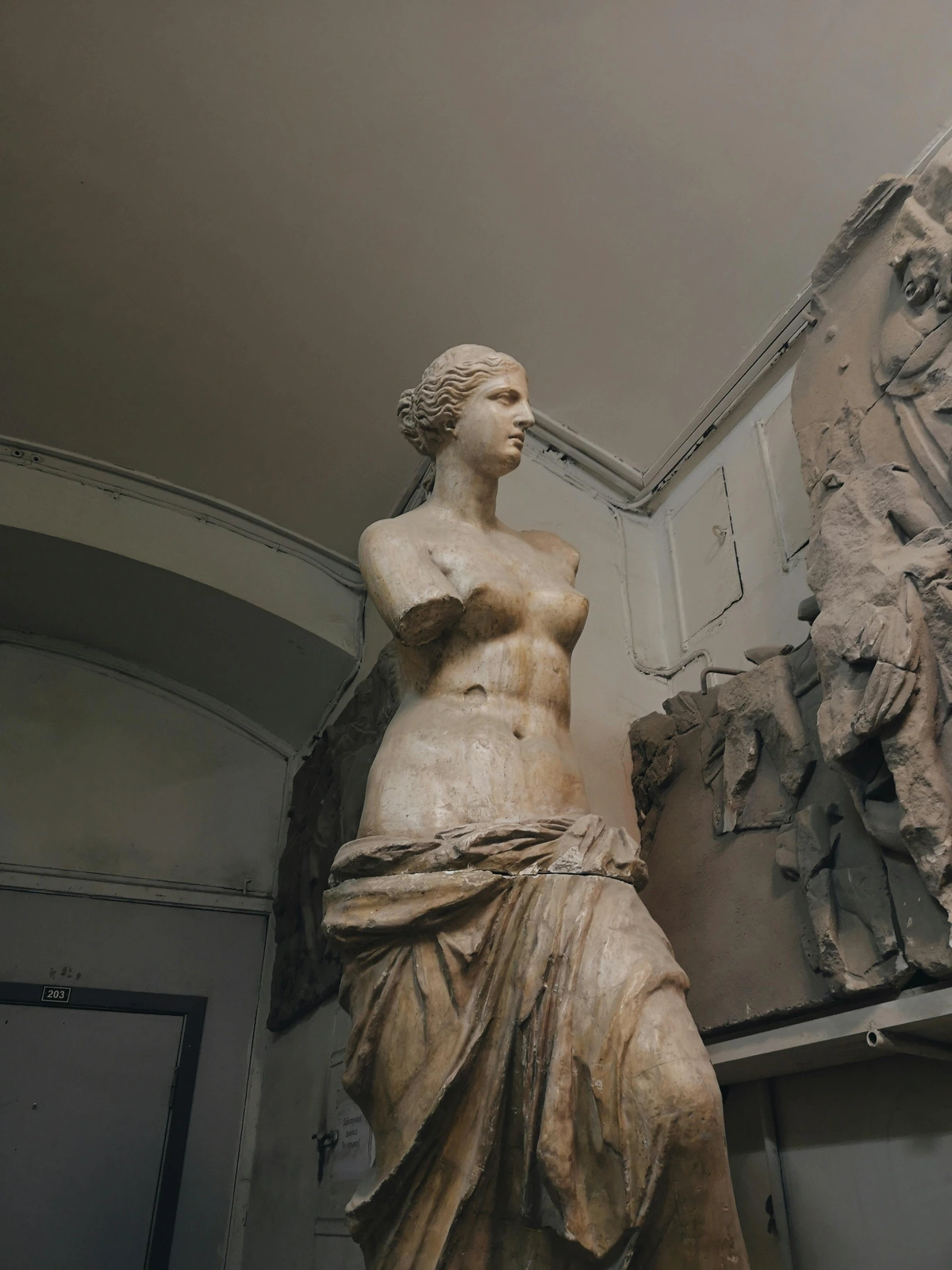
Roman Fresco from the Villa of Livia
This extraordinary fresco from the Villa of Livia shows the sophistication of Roman color technique. The artist has created an illusionistic garden scene that would have made a small enclosed room feel like it opened onto an endless landscape. Notice the subtle gradations of green, the realistic rendering of different plant species, the sophisticated modeling of light and shadow. The color palette is deliberately limited—mostly greens, blues, and earth tones—which creates visual harmony and atmospheric unity.
The Four Pompeian Styles: A Brief Evolution Roman wall painting is traditionally divided into four major styles that evolved between the 2nd century BCE and the 1st century CE. Each style represents different approaches to space, illusion, and architectural integration:
- First Style (c. 200-90 BCE): Essentially painted plaster that imitates expensive marble paneling. This wasn't about creating illusionistic space but about transforming wall surfaces into something precious and architectural.
- Second Style (c. 90-15 BCE): The breakthrough style that creates elaborate illusionistic architectural spaces. Painters used linear perspective and atmospheric effects to make walls seem to open onto imaginary courtyards, temples, and landscapes.
- Third Style (c. 15 BCE-50 CE): Also called the "Egyptianizing" style, this rejected Second Style illusionism in favor of flat, decorative surfaces with delicate architectural elements and small central panels showing mythological scenes.
- Fourth Style (c. 50-79 CE): A synthesis of all previous styles, combining Second Style illusionism, Third Style decorative sophistication, and First Style architectural emphasis into complex, layered compositions.
This stylistic evolution wasn't just random fashion change. It represents an increasingly sophisticated understanding of how painting can transform architectural space and manipulate viewer perception—exactly the same concerns that drive contemporary installation art and mural painting.
For contemporary painters, Roman color technique offers fascinating models for thinking about everything from limited palettes to psychological use of color to integration of painting with architectural space. When Mark Rothko creates his color field paintings or when Helen Frankenthaler develops her soak-stain technique, they're working with some of the same concerns that animated Roman fresco painters: how color creates space, how it affects emotion, how it interacts with architectural context.
Roman art didn't disappear with the empire's fall. It traveled through Byzantine art, was rediscovered during the Renaissance, informed Neoclassical movements, and continues to echo in contemporary practice. The specific forms may have evolved, but the fundamental innovations remain influential.
- Realistic portraiture that seeks psychological truth
- Public art designed to shape civic identity and memory
- Spatial innovation made possible by new materials and engineering
- Narrative art that tells complex stories across multiple scenes
- Integration of art into daily life beyond elite or religious contexts
- Synthesis of different cultural traditions into something new
The Patronage System: How Roman Artists Made a Living
Understanding how Roman artists actually worked—how they made a living, found clients, and organized their workshops—reveals another set of lessons for contemporary artists navigating the art market, grant systems, and commercial pressures.
Roman artists worked within a sophisticated patronage system that connected artistic production to political and social power. Wealthy patrons—senators, successful generals, wealthy merchants—commissioned art to demonstrate their cultural sophistication, celebrate their achievements, and shape their public image. This sounds mercenary, but it actually created opportunities for extraordinary artistic innovation.
The key insight for contemporary artists is that patronage doesn't automatically corrupt artistic integrity. The best Roman artists found ways to pursue their artistic visions while satisfying patron demands. Sometimes this meant finding patrons who shared their artistic values; sometimes it meant educating patrons about new possibilities; sometimes it meant making pragmatic compromises while protecting what mattered most in their work.
Consider the relationship between architect and patron in projects like the Pantheon. The patron (Emperor Hadrian) had clear political and religious goals, but the architect had extraordinary creative freedom in how to achieve those goals. The result was a work that serves its political function while achieving extraordinary artistic innovation—not in spite of patronage, but because of the creative tension between patron goals and artistic vision.
This matters for contemporary artists because we face similar challenges. Whether you're applying for grants, seeking gallery representation, or doing commercial illustration work, the fundamental question remains: how do you maintain artistic integrity while navigating economic realities? Roman artists developed sophisticated approaches to this challenge that remain relevant today.
They understood, for example, that working within constraints could be creatively productive. Imperial commissions came with specific requirements—celebrate this victory, honor this emperor, communicate this political message—but these constraints often pushed artists to innovate. The need to make Roman portraiture serve political propaganda led to new approaches to narrative art. The requirement for public monuments that could be 'read' by diverse audiences led to sophisticated visual communication techniques.
Roman artists also understood the value of specialization. Some artists specialized in certain subjects (mythological scenes, battle narratives, architectural elements). Others specialized in certain materials (marble carving, bronze casting, fresco painting). This specialization allowed for deep technical expertise while creating opportunities for collaboration on large projects.
Contemporary artists face similar choices about specialization versus generalization. Do you become known for one thing, or maintain flexibility across different media and subjects? Do you collaborate on large projects, or maintain total creative control? Roman workshop practices suggest that specialization and collaboration can coexist with individual artistic vision.
I find myself returning to Roman art not because it offers easy answers, but because it shows me how artists have always negotiated complexity. These weren't isolated geniuses in garrets; they were professionals working within complex social, political, and economic systems, trying to make work that mattered within those constraints. They were also entrepreneurs, cultural ambassadors, craftspeople, and occasional shameless propagandists—sometimes all at once.
Conclusion: The Persistence of Roman Questions
Maybe that's what's most valuable about studying Roman art—not the specific forms or techniques, but the way Roman artists approached fundamental questions that remain urgent:
How do you make work that serves practical purposes without sacrificing artistic ambition? Roman architects built aqueducts, sewers, and public baths that were both technically brilliant and aesthetically sophisticated. They understood that utility and beauty don't have to be opposed.
How do you navigate political or commercial pressures while maintaining artistic integrity? Roman artists worked for imperial patrons, wealthy clients, and mass markets without losing their commitment to technical excellence and artistic innovation. They found ways to serve multiple constituencies while pursuing their own artistic vision.
How do you adapt traditions without either slavishly copying or completely rejecting them? Roman artists engaged Greek, Etruscan, Egyptian, and other traditions with sophisticated awareness of both power dynamics and creative potential. They transformed what they inherited rather than merely continuing it.
How do you create work that speaks to diverse audiences without becoming simplistic? Roman public art had to communicate across vast cultural and linguistic differences while maintaining conceptual and technical sophistication. The solution was multi-level work that offered different experiences to different viewers.
How do you maintain craft values while embracing technological change? Roman artists adopted concrete, developed new metalworking techniques, experimented with diverse materials, and adapted industrial-scale production while maintaining high standards of craftsmanship and individual expression.
These questions feel even more urgent today. As contemporary artists navigate globalization, digital transformation, and cultural complexity, we face similar challenges to what Roman artists encountered—just with different tools and contexts.
Perhaps most crucially, Roman art shows us how to think about art's relationship to power without becoming simplistic or cynical. Roman artists created extraordinary work within a system that was simultaneously enabling (providing resources, technical knowledge, diverse cultural influences) and deeply problematic (imperial domination, slavery, cultural appropriation). They weren't saints or monsters—they were artists trying to make meaningful work within complex circumstances, just as contemporary artists do.
This nuanced understanding matters enormously for contemporary practice. We don't have to choose between celebrating Roman artistic achievements and acknowledging the problematic systems they emerged from. We can do both—learning from their creative innovations while remaining critically aware of the power structures that shaped their work. This double awareness—appreciating artistic achievement while maintaining ethical consciousness—might be the most valuable lesson Roman art offers contemporary practitioners.
The key insight Roman art offers is that engagement with complexity doesn't have to mean compromise or paralysis. Roman artists found ways to work within constraints—political, economic, social, technical—and somehow those constraints became sources of creative energy rather than limitation. The pressure to serve imperial propaganda led to narrative innovations. The need to work across cultural differences led to sophisticated visual communication. The challenge of building infrastructure at imperial scale led to material revolution.
Roman artists showed us how constraints generate creativity. Every technical challenge became an opportunity for innovation, every limitation sparked formal breakthroughs, every problem became a creative prompt.
I see this dynamic playing out in my own practice and in the work of contemporary artists I admire. The painter who can't afford expensive materials develops innovative approaches to using cheap supplies. The digital artist working with limited processing power discovers new aesthetic possibilities in those limitations. The public artist navigating institutional constraints creates work that's both more sophisticated and more accessible than what would have been possible with total creative freedom.
This isn't romanticizing struggle or poverty. It's recognizing that creativity isn't primarily about having unlimited resources—it's about how you work with the resources you have. Roman artists had access to imperial resources that would be unimaginable to most contemporary artists, but they also faced constraints that would feel familiar to anyone working today: demanding patrons, political pressures, technical challenges, the need to communicate across vast cultural differences.
What makes Roman art valuable for contemporary practice is not that it provides formulas or solutions, but that it shows us what's possible when artists engage constraints creatively rather than seeing them as obstacles to be overcome. Every limitation contains within it the seeds of innovation—if we're willing to look at our circumstances not as barriers to the work we wish we could make, but as conditions for the work we can actually make.
That's not just inspiring—it's practically useful for contemporary artists trying to figure out how to make meaningful work in complex circumstances. The Romans didn't have the luxury of ideal conditions for artistic production, and most contemporary artists don't either. But the Roman example suggests that less-than-ideal conditions might actually be generative rather than limiting.
When I'm struggling with the gap between what I want to make and what seems possible given my resources, skills, or circumstances, I think about Roman artists working with limited tools, serving demanding patrons, operating across cultural divides, and somehow producing some of the most innovative and powerful art ever created. They remind me that we don't make art in ideal conditions—we make art in the conditions that exist, and those conditions shape what we make in ways that aren't necessarily limiting.
In that sense, Roman art is more than historical artifact—it's a model for how to be an artist in the world as it actually exists, not as we wish it would be. That's a lesson that remains urgently relevant, two thousand years after the last Roman artist put down their tools.
Maybe that's the most important lesson for contemporary artists: the Romans remind us that art's power comes not from transcending our context, but from engaging with it deeply, honestly, and imaginatively. We don't make art in a vacuum. We make it in a particular moment, for particular people, with particular materials, for particular purposes. Accepting those constraints doesn't limit creativity—it gives creativity traction. The most revolutionary Roman innovations—verism, concrete architecture, narrative relief sculpture—emerged not from artists trying to escape their moment but from artists engaging their moment with extraordinary intensity and intelligence.
This insight connects directly to challenges facing contemporary artists in the 21st century. Whether you're navigating the complexities of the art market, building a practice that can sustain you economically while maintaining creative integrity, or figuring out how to address urgent social and political issues through your work, the Roman example offers powerful guidance. Engagement with complexity doesn't have to mean compromise or paralysis—it can mean finding creative energy precisely within the constraints and contradictions that define our historical moment.
Here's what I find most encouraging about Roman precedents: they suggest that artistic success isn't measured by avoiding difficulty, but by engaging difficulty creatively. Roman artists working with imperial commissions couldn't escape political complexity, but they could find ways to make political complexity serve rather than undermine artistic ambition. Artists working in multicultural contexts couldn't avoid cultural tension, but they could transform cultural tension into creative fusion.
This approach has powerful implications for how contemporary artists can think about our own moment's challenges—whether that's digital transformation, climate crisis, political polarization, economic inequality, or any other defining issue of our time. The response isn't to retreat from these challenges or wait for them to be resolved, but to engage them as material for artistic practice. The difficulty isn't an obstacle to making art—it's source material for making art that matters.
The Romans perfected this approach: they took the defining challenges of their moment—imperial scale, cultural diversity, political complexity, social hierarchy—and transformed them into artistic opportunities. The result was work that was both of its time and timeless, both deeply engaged with its circumstances and capable of speaking beyond them. That's not an impossible ideal—it's a practical example of what artists in any period can achieve when they engage their world with intelligence and creativity rather than wishing for easier circumstances.
This brings me to what might be the most counterintuitive lesson Roman art offers contemporary artists: the wisdom of not fetishizing individual genius. Roman art was often collaborative, frequently anonymous (we know surprisingly few Roman artists by name), and generally unconcerned with originality in our modern sense. Yet it produced some of the most innovative and powerful art in human history.
What if we measured artistic achievement differently? Instead of focusing primarily on individual innovation or stylistic signature, what if we valued artists' ability to engage their cultural moment meaningfully, to synthesize existing traditions creatively, to serve real human needs through aesthetic means? This doesn't mean abandoning the pursuit of excellence or settling for mediocrity—it means recognizing that excellence can emerge from different contexts and through different processes than our contemporary art world sometimes acknowledges.
I see this playing out in contemporary practices like collaborative art collectives, community-based art projects, or design practices that prioritize function alongside aesthetic innovation. These approaches often produce work that's both more ambitious and more socially engaged than what individual artists can achieve working in isolation. Roman precedents suggest that collaboration and individual excellence don't have to be opposed—the most innovative work often emerges from their creative tension. Yet it produced some of the most innovative and powerful art in human history.
What if we thought about artistic achievement differently? What if instead of measuring artists by their individual genius or originality, we measured them by their ability to engage their cultural moment, to synthesize existing traditions, to serve real human needs through aesthetic means? Roman art suggests that the most important artistic achievements might not come from isolated visionaries but from artists deeply embedded in their communities, traditions, and practical challenges.
Of course, this doesn't mean Roman artists were just anonymous craftspeople executing patron demands. The best Roman art shows extraordinary individual intelligence, even when we don't know the artist's name. But it suggests that individual creativity and collective cultural work don't have to be opposed. Some of the most powerful art emerges from the collaboration between individual vision and collective cultural resources.
Frequently Asked Questions About Roman Art
What are the main periods of Roman art?
Roman art is typically divided into several periods that align with political history. Understanding these periods helps us see how Roman art developed from early influences through imperial grandeur to Christian transformation:
Period | Approximate Dates | Key Characteristics | Representative Works |
|---|---|---|---|
| Etruscan Influence & Early Republic | 753-509 BCE | Strong Etruscan and local Italian influences, terracotta sculpture, tomb painting | Apollo of Veii, Capitoline She-Wolf |
| Republican Art | 509-27 BCE | Veristic portraiture emerges, Greek influence increases, emphasis on individual achievement over ideal types | Veristic portrait heads, Temple of Portunus |
| Early Imperial Art (Augustan) | 27 BCE-14 CE | Idealism mixed with realism, sophisticated political propaganda, Golden Age themes, classical revival | Ara Pacis, Augustus of Prima Porta, Pont du Gard |
| Julio-Claudian & Flavian | 14-96 CE | Dynamic realism, architectural innovation, eruption of Vesuvius preserves Pompeian domestic art | Colosseum, Arch of Titus, Pompeian frescoes |
| High Imperial Art (Trajan & Hadrian) | 98-138 CE | Peak of Roman power, massive building projects, synthesis of Greek and Roman styles under imperial patronage | Column of Trajan, Pantheon, Villa Adriana |
| Antonine & Severan | 138-235 CE | Increasing emotional expression, psychological depth in portraiture, diverse regional styles across empire | Equestrian statue of Marcus Aurelius, Severan arches |
| Late Antique Art | 284-476 CE | Increasing spiritual abstraction, stylized forms, early Christian imagery, preparation for Byzantine art | Arch of Constantine, Basilica of Maxentius, early Christian mosaics |
| Byzantine Continuation | 330-1453 CE | Roman traditions evolve in Eastern Empire, focus on religious imagery, domed churches, mosaic cycles | Hagia Sophia, San Vitale mosaics, icons |
| Provincial Variations | Throughout all periods | Regional styles adapting Roman forms to local traditions and materials across Britain, Gaul, Syria, Egypt, North Africa | British mosaics, Fayum mummy portraits, Palmyrene funerary reliefs |

What were the key characteristics that distinguished Roman art from Greek art?
The easiest way to understand the difference is to compare examples:
Greek Approach: The Parthenon sculptures show idealized figures with perfect proportions, restrained emotion, and generic features that could represent any god or hero.
Roman Approach: The veristic portrait busts show specific individuals with distinctive features, psychological depth, and the actual marks of lived experience.
Both approaches are artistically sophisticated, but they serve different cultural purposes. Greek art seeks universal ideals; Roman art seeks individual truth.
The differences run deeper than surface style—they reflect fundamentally different conceptions of what art should do. Greek art (particularly classical Greek art) emphasized idealized forms, mathematical perfection in proportion, and universal types over individual specificity. When Greek sculptors carved an athlete or a god, they were creating an ideal—not a specific person but the perfect embodiment of athletic virtue or divine power.
The famous Doryphoros (Spear-Bearer) by Polykleitos isn't a portrait of a particular athlete; it's a demonstration of perfect human proportion and form. The Canon of Polykleitos established mathematical rules for ideal human proportions that became the foundation of classical Greek art. This mathematical approach to beauty reflected Greek philosophical ideas about universal forms and perfect truths that exist beyond the messy particularities of individual experience.
Roman art, while deeply influenced by Greek models, pursued fundamentally different goals. Roman art emphasized individual specificity, psychological realism, and practical function. When Roman artists carved portraits, they showed real people with their actual features, wrinkles, scars, and character. The shift represents something profound in the history of art: the emergence of art that values individual experience over universal ideals, specific truth over general beauty.
The psychological implications are fascinating. Greek art creates distance between viewer and subject. You can't imagine having a conversation with the Doryphoros—it's too perfect, too much a representation of ideal humanity rather than an actual person. Roman veristic portraits create intimacy. You feel like you could recognize these people on the street, understand their personalities from their expressions, imagine their life stories from their faces.
This difference extends across all media and scales. Greek architecture perfected the post-and-lintel system with mathematically perfect proportions. The Parthenon represents the culmination of this approach—every element carefully calculated to create an effect of harmonious mathematical perfection. Roman architecture retained Greek proportions and decorative elements but fundamentally transformed architectural possibility through engineering innovations.
Roman architects didn't reject Greek aesthetics—they adapted Greek vocabulary to serve new purposes. The arches, vaults, and domes made possible by Roman concrete allowed architects to create entirely new kinds of interior space. Roman buildings worked from the inside out, creating sophisticated spatial experiences that Greek architecture never attempted.
Greek vase painting focused on mythological narratives with stylized figures. The emphasis was on storytelling and decorative harmony rather than naturalistic representation. Roman painting (particularly fresco work) showed sophisticated illusionism, naturalistic landscapes, and complex psychological scenes. The Roman approach emphasized creating believable illusions of space and light, showing specific moments and individual people rather than generic mythological types.
The implications for contemporary art are fascinating. If Greek art gives us the vocabulary of Western art, Roman art shows us how to use that vocabulary to speak about specific human experience. It's the difference between painting "beauty" and painting a beautiful person you actually know, between designing "perfect space" and designing space for particular people doing particular things.
I sometimes think about this when I'm painting. Am I trying to represent an ideal, or am I trying to capture something truthful about this specific subject? Roman art suggests these don't have to be opposed—but it also suggests there's something uniquely powerful about work that engages the specific, the particular, the individual rather than retreating to the safety of general truth.
Both Greek and Roman approaches remain valid pathways for contemporary artists. Some artists work toward universal statements and ideal forms. Others pursue specific truths and individual realities. What's fascinating is that Western art has been wrestling with this fundamental tension—the general versus the particular, the ideal versus the real—for over two thousand years. Roman artists didn't resolve this tension so much as establish the particular pole as worthy of serious artistic attention alongside the Greek emphasis on universal ideals.
This distinction matters because it helps us understand why certain kinds of contemporary art look and feel the way they do. Realist painters working with specific individuals, specific moments, specific places are working in a Roman tradition even if they don't know it. Artists pursuing abstract universalism or mathematical perfection are working in a Greek tradition. Most interesting contemporary art synthesizes both impulses—finding universal meaning in particular experience, or creating ideal forms that emerge from close observation of reality.
This is one of those questions that seems simple but gets more interesting the longer you think about it. Greek art (particularly classical Greek art) emphasized idealized forms, mathematical perfection, and universal types. Roman art, while deeply influenced by Greek models, emphasized individual specificity, psychological realism, and practical function.
The Greeks perfected the idealized human form; the Romans perfected portraiture that showed real people with their actual features and character. The Greeks created sophisticated architectural proportions; the Romans invented concrete and reimagined interior space. The Greeks excelled at freestanding sculpture; the Romans mastered narrative relief sculpture that told complex stories.
Think of it this way: if Greek art gives us the perfect language of form, Roman art shows us how to use that language to tell specific, grounded, human stories. This fundamental shift—from universal ideals to particular realities, from abstract perfection to individual truth—represents one of the most significant developments in Western art history.
But here's what I find most compelling about this distinction: it suggests that we don't have to choose between technical excellence and human truth. The best Roman art shows us that you can have both—that sophisticated technique can serve profound engagement with actual human experience rather than replacing it with aestheticized fantasy. This lesson remains urgent for contemporary artists navigating between academic traditions that emphasize technical skill and contemporary practices that prioritize conceptual innovation or social engagement.
Roman artists weren't choosing between beauty and truth—they were finding ways to make beauty emerge from truth, to make technical excellence serve human particularity. That integration—getting our hands dirty with both the practical challenges of making and the complex realities of human experience—might be the most valuable lesson Roman art offers anyone trying to make meaningful work today.
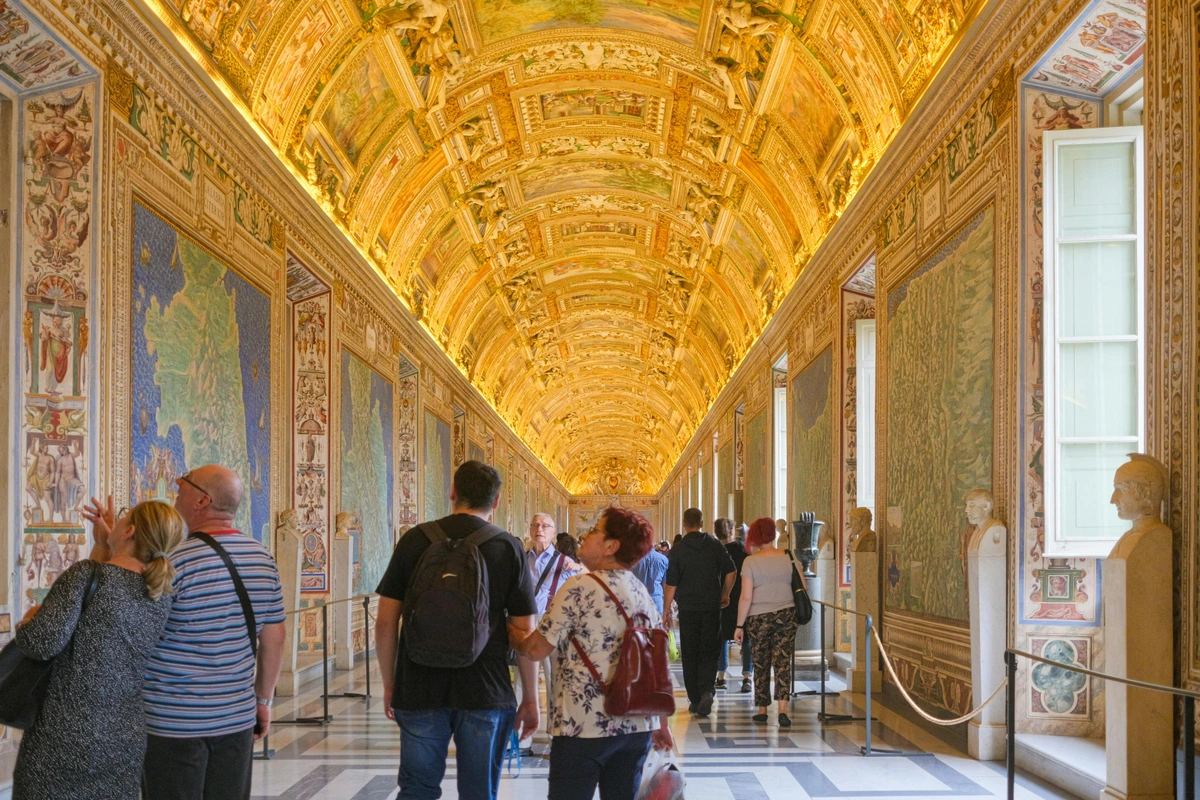
Why is Roman concrete so significant for art and architecture?
Roman concrete (opus caementicium) represents one of those rare moments in history when a technical innovation fundamentally changes what's artistically possible. Before concrete, architecture was constrained by the limitations of stone post-and-lintel construction—essentially, you needed massive columns and walls to support heavy stone beams, which limited interior space and architectural possibility.
Concrete changed everything. Made from lime, volcanic ash (called pozzolana), and aggregate, Roman concrete was incredibly strong, relatively lightweight, could be poured into molds to create curved forms, and actually got stronger over time as it continued to cure. This allowed architects to dream in entirely new ways—creating massive enclosed spaces, soaring domes, complex vaults, and buildings that would have been literally impossible with stone construction alone.
The Pantheon remains the most spectacular example. Its dome—142 feet in diameter and 142 feet high—remains the largest unreinforced concrete dome in the world, almost two thousand years after it was built. The oculus at the top creates this extraordinary light show as the sun moves across the interior throughout the day, transforming the building from static architecture into dynamic environmental art.
But here's what's crucial for artists: new materials don't just make old things easier—they generate new artistic possibilities. Roman concrete didn't just allow architects to build bigger versions of existing buildings; it enabled entirely new kinds of spatial experience. The Baths of Caracalla weren't just bathing facilities—they were carefully crafted sequences of spatial experience, moving visitors through different temperatures, light conditions, and architectural forms.
The key insight is that technical innovation and artistic vision create each other. Roman architects didn't invent concrete and then figure out what to do with it; they had ambitious artistic visions that drove them to develop new materials and techniques. Concrete was both the solution to their artistic problems and the catalyst for new artistic possibilities.
This matters enormously for contemporary artists working with digital media, installation, or any new materials. New tools don't just allow us to do old things more efficiently; they fundamentally change what's possible to imagine and express. When James Turrell creates his light installations or Olafur Eliasson builds his immersive environments, they're working in this same tradition: using technical innovation to create new kinds of aesthetic experience.
The Chemistry and Innovation of Roman Concrete
The chemical composition of Roman concrete was revolutionary because it could set underwater and grew stronger over centuries through a process called "interfacial calcium-aluminum-silicate-hydrate" reaction—a phenomenon modern researchers are still studying. The key component was pozzolana, a volcanic ash found near Pozzuoli, near Mount Vesuvius. When mixed with lime and aggregate, it created a material with remarkable durability and versatility.
Modern concrete, despite its sophisticated chemistry, often shows more rapid decay than ancient Roman concrete. The Pantheon, the Colosseum, and Roman harbours that have survived two millennia of exposure to seawater, weather, and seismic activity testify to the extraordinary sophistication of Roman material science. This longevity wasn't accidental—Roman engineers systematically understood the relationship between materials, proportions, and performance.
Architectural Possibilities Unleashed
The engineering innovations enabled by concrete were astonishing:
Innovation | Pre-Concrete Limitation | Concrete Breakthrough | Impact on Art/Architecture |
|---|---|---|---|
| Domes | Limited by corbeling techniques | Large-scale true domes possible | New interior spatial experiences |
| Vaults | Required complex voussoir stonework | Barrel and groin vaults from poured material | Long uninterrupted interior spaces |
| Arches | Limited in size by stone strength | Massive scale possible | Revolutionary load distribution |
| Interior Space | Multiple columns required for support | Vast open interior volumes | Transformation of space perception |
| Form Innovation | Rectilinear and post-and-lintel | Complex curves and new geometries | Architecture as sculpture |
| Facade Treatment | Structure and decoration integrated | Independent facade possible | Separation of surface and structure |
| Speed of Construction | Slow stone carving and placement | Rapid pouring and setting | Urban development acceleration |
| Material Expression | Finish determined by stone type | Variety of surface treatments possible | Architecture as medium of art |
The Baths of Caracalla: Concrete as Art Medium
The Baths of Caracalla (completed 216 CE) represent perhaps the most sophisticated use of concrete for creating deliberate aesthetic experiences. Covering over 33 acres, the complex wasn't just functional architecture—it was a carefully orchestrated sequence of spatial and sensory experiences.
Bathers moved through a carefully planned progression: first the caldarium (hot bath), then the tepidarium (warm bath), and finally the frigidarium (cold bath). The concrete vaulting and domes enabled architects to use natural light with extraordinary sophistication—creating varied illumination for different spaces and different times of day.
The main hall featured concrete vaults 140 feet high with colored glass mosaic ceilings that turned sunlight into moving light art throughout the day. The complex included gardens, exercise yards, art galleries, libraries, and public spaces—all made possible by concrete's ability to create large, open, flexible interior spaces.
This wasn't just engineering. It was environmental art on a colossal scale, creating total environments where architecture, light, water, temperature, and human movement worked together to create transformative experiences. Contemporary artists creating immersive installations are working in this same tradition of using technology to create new kinds of aesthetic experience.
Pantheon: The Apotheosis of Concrete Art
The Pantheon (completed c. 126 CE) deserves special attention because it represents something rare in human history: a building that transcends mere architecture to become pure art. The dome is an engineering marvel—but more importantly, it's a work of profound emotional and spiritual power.
The interior is a perfect sphere, with the height from floor to oculus exactly equal to the dome's diameter. The concrete becomes progressively lighter toward the top, using different types of aggregate from heavy basalt at the base to light pumice near the oculus. The coffering isn't just decorative—it reduces weight while creating complex plays of light and shadow.
The oculus—the circular opening at the top—transforms the building from static architecture into dynamic sculpture. Sunlight moves across the interior throughout the day, marking time in a way that connects the building to cosmic rhythms. Rain falls through the opening into a carefully designed drainage system (yes, rain gets inside, and the Romans designed for it beautifully).
What makes the Pantheon relevant to contemporary artists is this integration of technical innovation, material understanding, and emotional/spiritual intent. This isn't engineering for its own sake—it's engineering pressed into the service of creating overwhelming aesthetic experience. Contemporary artists working with new materials and technologies face similar challenges: how to make technical sophistication serve emotional depth rather than becoming mere technical display.
Concrete's Global Reach: Provincial Innovations
Roman concrete technology spread throughout the empire, adapting to local materials and conditions. In North Africa, Roman architects used concrete to create exceptionally large public spaces for rapidly growing cities. In Britain, heated concrete floors enabled new approaches to comfortable living in cold climates. In the Middle Eastern provinces, Roman concrete techniques combined with local traditions to create uniquely regional forms.
The point is that concrete wasn't a uniform technology imposed on conquered territories. It was a flexible medium that enabled regional architects to solve local problems while creating distinctly local aesthetic experiences. This matters for contemporary artists because it shows how new technologies can enable regional specificity rather than global homogenization.
Contemporary Legacy and Material Innovation
Every time a contemporary architect creates a dramatic cantilever, every time an artist works with poured materials, every time someone builds with reinforced concrete, they're working in the tradition begun by Roman innovators. The connection isn't just historical—it's about a particular way of thinking about the relationship between materials, form, and experience.
Consider Zaha Hadid's fluid concrete forms or Tadao Ando's meditative concrete walls. These architects are doing exactly what Roman architects did: using concrete not just as construction material but as artistic medium, exploring the unique aesthetic possibilities that only concrete makes possible.
Contemporary sculptors working with concrete are exploring its expressive possibilities in ways that Roman artists would recognize immediately. The material's capacity to take any form, its varied surface possibilities, its potential for both mass and delicacy—all of these continue to fascinate artists because they offer ways of thinking and making that remain fundamentally innovative.
Roman concrete (called opus caementicium) was revolutionary because it allowed architects to create entirely new kinds of spaces. Before concrete, buildings depended on post-and-lintel construction, which limited interior space and required massive exterior supports. Concrete allowed Romans to build vaults, domes, and massive enclosed spaces like the Baths of Caracalla or the Pantheon.
But here's what matters for artists: new materials don't just make old things easier; they change what's possible to imagine. Roman concrete enabled new spatial experiences, new ways of manipulating light and volume, new relationships between interior and exterior space. It's a perfect example of how technical innovation and artistic vision create each other.
Contemporary artists working with digital media, installation, or new materials are engaged in the same process: discovering that new tools don't just serve old ideas—they generate new ones.
What can contemporary artists learn from Roman art?
Roman art offers contemporary artists an enormous range of practical and conceptual lessons. Here are some of the most important:
Beyond these specific lessons, Roman art offers something even more fundamental: a model for how to be an artist in the world as it actually exists, not as we wish it would be. The Romans didn't have ideal conditions for artistic production, just as most contemporary artists work within constraints of limited resources, economic pressures, and institutional limitations. But their example suggests that these constraints can become sources of creative energy rather than obstacles to meaningful artistic work.
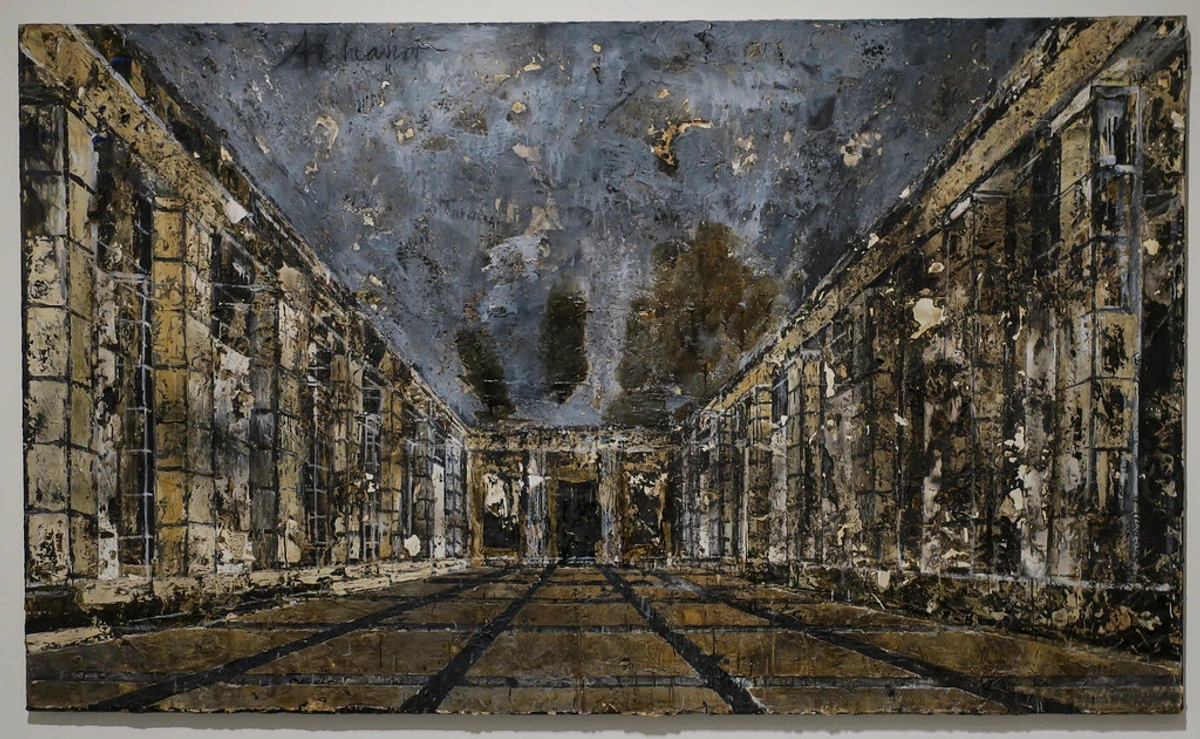
1. Don't Fear Influence The Romans openly and enthusiastically adapted Greek art, Egyptian forms, Etruscan traditions, and Near Eastern influences without anxiety about originality or authenticity. They understood that cultural production is inherently collaborative—that artists build on existing traditions, adapt what works, and transform influences into something new rather than creating ex nihilo.
This matters for contemporary artists because we inherit a Romantic ideology of individual genius that can be paralyzing. The Roman approach suggests that influence isn't opposition to originality—it's the precondition for it.
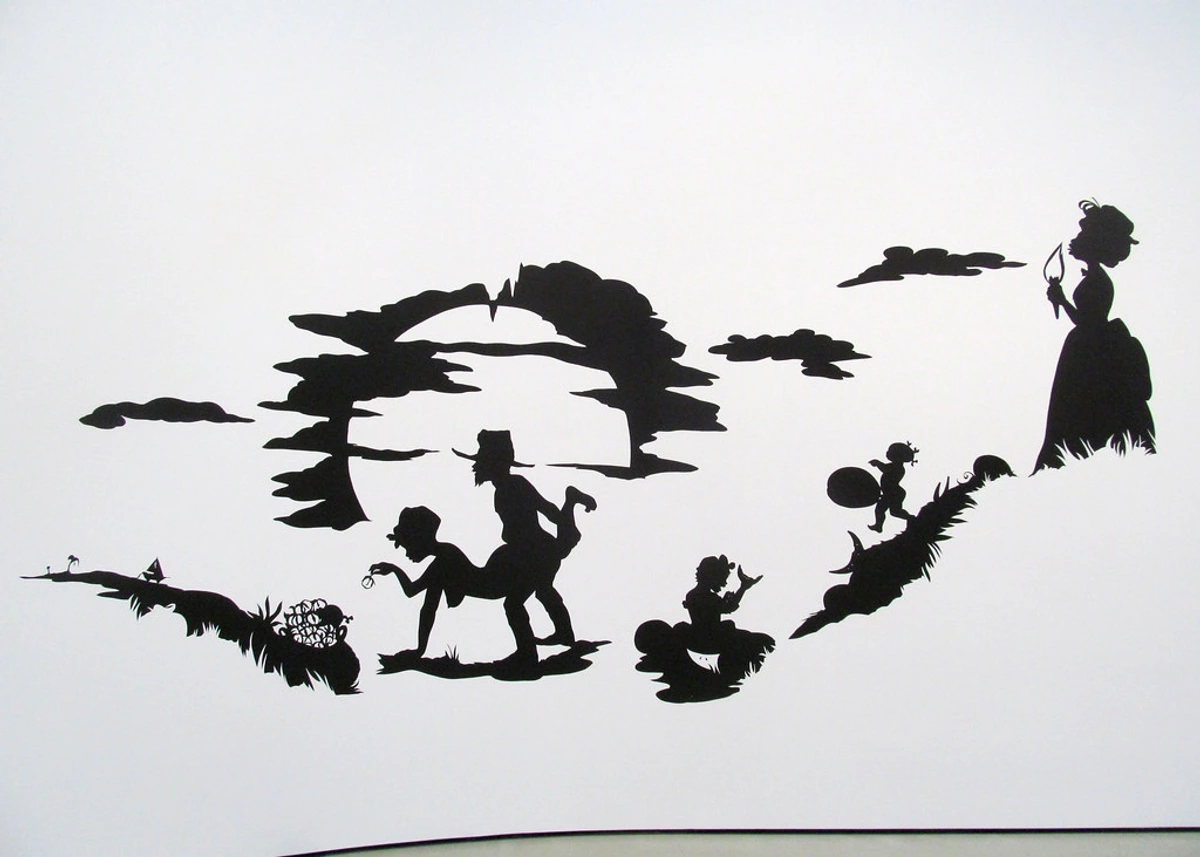
2. Serve Function Without Sacrificing Excellence Roman public art had to serve political functions, religious purposes, and practical needs. But the best Roman art shows that functional constraints don't automatically mean artistic compromise. The Ara Pacis serves its political purpose (celebrating Augustus's military victories and promoting his vision of peace) while achieving extraordinary artistic sophistication.
Contemporary artists often face similar challenges: how do you make gallery work that attracts viewers, public art that serves community needs, or commercial work that meets client demands while maintaining artistic integrity? Roman art suggests that constraints can be creatively generative rather than limiting.
3. Work at Multiple Scales Roman art moved seamlessly between monumental public sculpture and intimate domestic objects. A beautifully designed oil lamp could be as aesthetically meaningful as a triumphal arch—not in terms of historical importance, but in terms of capacity to shape human experience. This suggests that scale matters less than thoughtful engagement with materials, form, and function.
Contemporary artists often fetishize monumentality or alternatively, dismiss anything that isn't earth-shatteringly important. Roman art suggests that aesthetic experience can and should happen at every scale of human life.
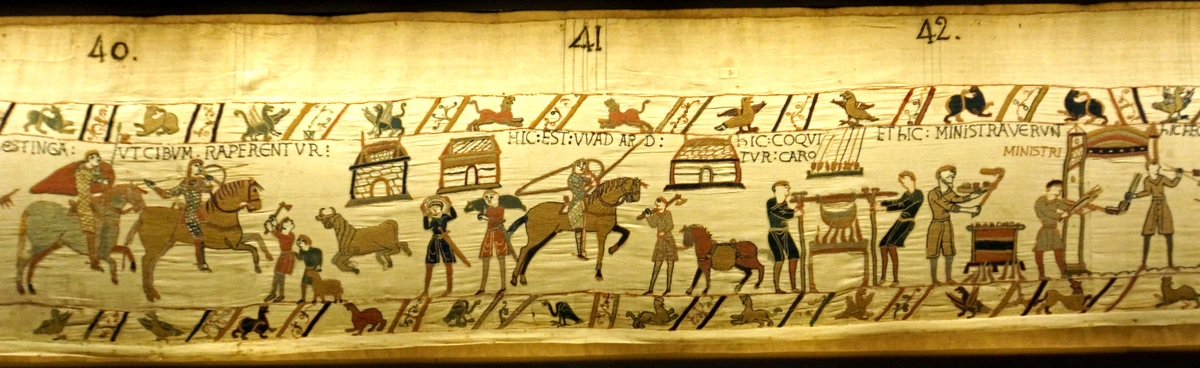
4. Find Beauty in Actual Reality Roman verism shows us the power of looking at real people, real faces, real experiences without idealization. The impulse toward truthful representation—finding meaning and beauty in actuality rather than escaping to fantasy—continues to drive some of our most compelling contemporary art.
From street photography to realist painting to documentary practices, contemporary artists working with actual rather than idealized reality are working in this same tradition. Roman art gives us permission to find subjects worthy of serious artistic attention in the actual world rather than requiring escape to some supposedly higher realm of ideal forms.

5. Integrate Rather Than Separate Roman art was thoroughly integrated into daily life rather than set apart in special places for special occasions. This integration of aesthetic experience into ordinary life suggests that art's democratic potential lies not in making art more accessible or simple, but in making excellent art part of the fabric of daily experience.
Contemporary artists working with public art, design, architecture, or any form that engages with daily life can learn from this Roman approach. The goal isn't to make art that's accessible to everyone—an impossible goal—but to make aesthetic excellence part of the environments where people actually live their lives.
I think contemporary artists can learn several crucial things from Roman art:
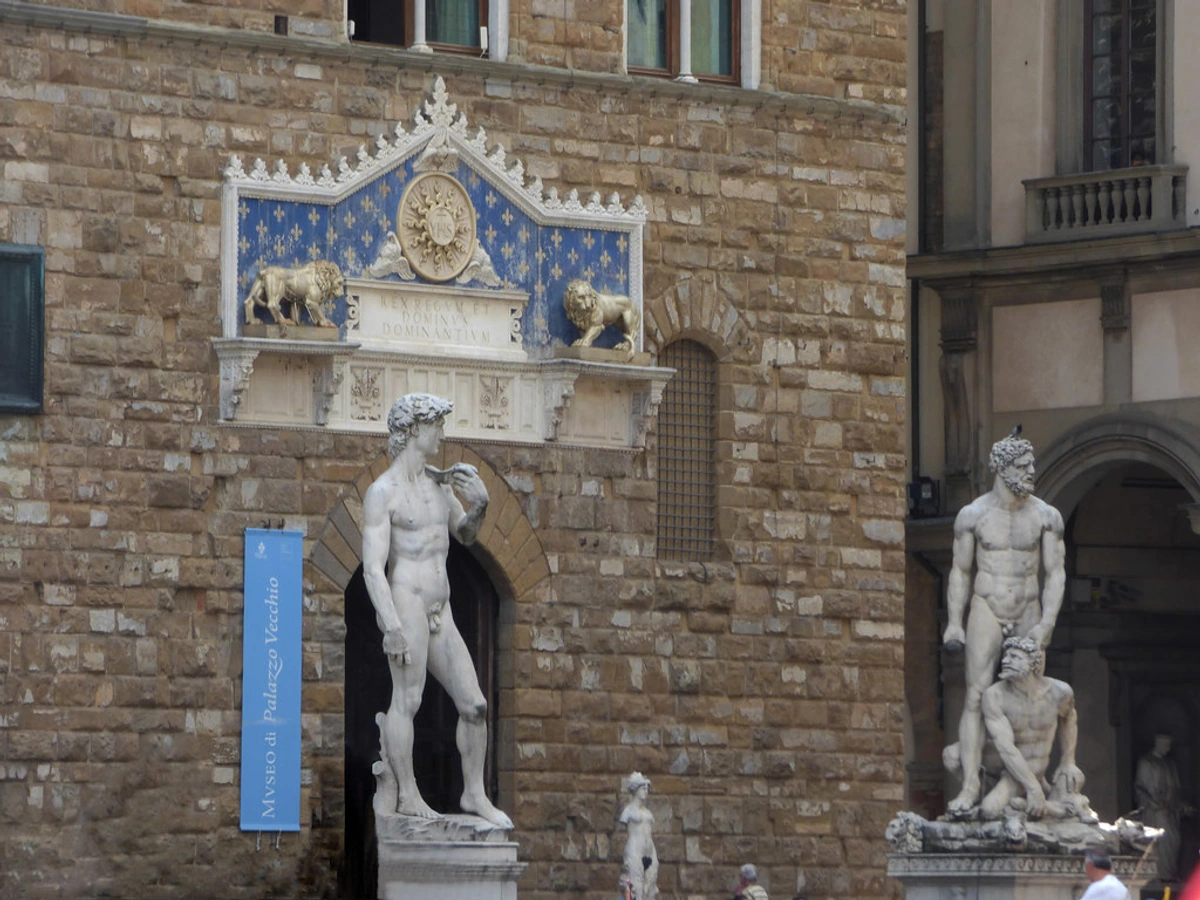
Don't be afraid of influence. The Romans loved Greek art and openly adapted it. Influence isn't weakness; it's how culture works.
Find meaning in ordinary reality. Roman verism shows us the power of looking at real people, real faces, real experiences without idealization.
Think about function and context. Roman art was made for specific places, specific purposes, specific audiences. That constraint generated creativity, not limitation.
Embrace technical innovation. Roman concrete reminds us that new materials and techniques open new expressive possibilities. Don't just use new tools to do old things.
Make art for diverse audiences. Roman art had to speak across an empire of different cultures and languages. That challenge pushed artists to find universal human themes.
The ultimate lesson—the one that keeps bringing me back to Roman art whenever I feel stuck or uninspired—is this: the most powerful art often comes from deep engagement with constraint rather than escape from it. Every limitation the Romans faced—imperial politics, demanding patrons, new materials, cultural diversity, vast distances—became a source of creative energy rather than a barrier to authentic expression.
This isn't romanticizing oppression or celebrating constraint for its own sake. It's recognizing that artistic problems—even problems imposed by circumstances we didn't choose—can generate solutions that are both unexpected and extraordinarily powerful. The pressure to serve imperial propaganda while maintaining artistic integrity drove Roman artists to develop entirely new approaches to narrative art. The need to communicate across cultural boundaries led to sophisticated visual communication strategies that remain relevant today.
Roman artists didn't have the luxury of working in ideal studios with unlimited budgets and total creative freedom. Most contemporary artists don't either. But the Roman example suggests that these limitations aren't obstacles to making important art—they're often the conditions that generate the most significant artistic innovation.
Most importantly, Roman art shows us that meaningful work gets made within constraints—economic, political, social. The goal isn't to transcend your context but to engage it honestly and imaginatively.
How did Roman art influence the Renaissance?
The Renaissance essentially began with the rediscovery of Roman art and architecture in the 14th and 15th centuries. For European artists living centuries after the fall of Rome, encountering Roman ruins and artworks was like discovering an entirely different civilization that was simultaneously strange and familiar.
This rediscovery wasn't accidental—it coincided with broader cultural movements including humanist philosophy, which celebrated human reason and achievement, and the rise of wealthy merchant cities like Florence that could support ambitious artistic projects. Renaissance artists like Brunelleschi and Donatello studied Roman ruins not as historical curiosities but as practical resources for solving contemporary artistic problems. They measured Roman buildings, sketched Roman sculptures, and tried to understand the principles that animated Roman artistic achievement.
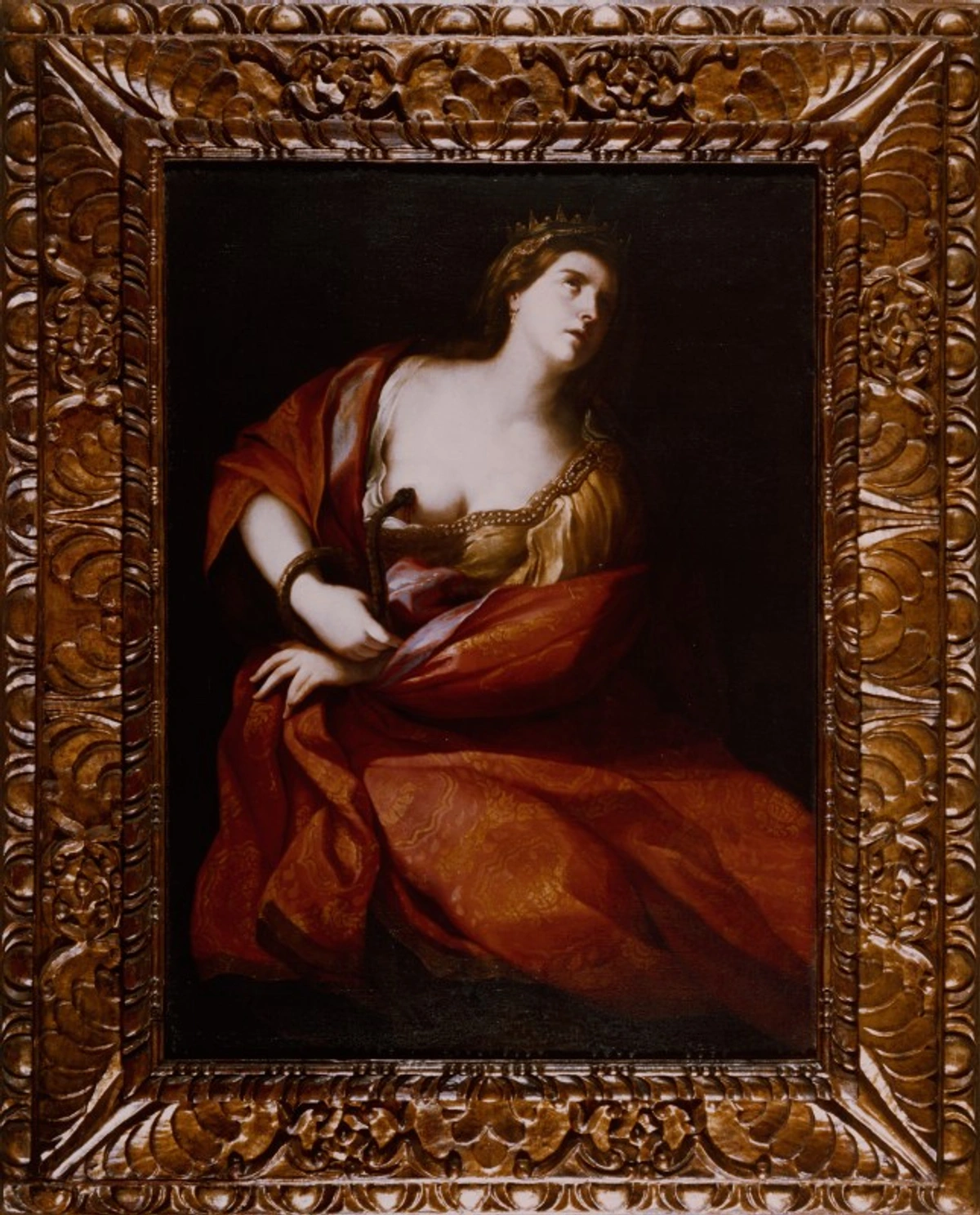
Architectural Influence Artists like Brunelleschi studied the Pantheon, the Colosseum, and Roman ruins to understand classical architectural principles. When Brunelleschi designed the dome of Florence Cathedral, he was directly responding to the challenge posed by Roman concrete domes like the Pantheon. The entire Renaissance architectural vocabulary—columns, arches, domes, symmetrical facades—comes directly from Roman models (which themselves came from Greek models, but were understood as "Roman" by Renaissance architects).
Sculptural Influence Sculptors like Donatello, Michelangelo, and later Bernini studied Roman portraiture, relief sculpture, and freestanding statues to develop their own approaches to anatomical accuracy, psychological realism, and narrative complexity. Roman sculpture provided Renaissance artists with models for everything from contrapposto poses to detailed anatomical rendering to sophisticated handling of drapery.
What's fascinating—and crucial for understanding how artistic influence works—is that Renaissance artists often misunderstood what they were seeing. They interpreted Roman art through the lens of their own Christian culture, humanist philosophy, and contemporary concerns. Roman sculptures were seen as expressions of ideal human virtue rather than specific political or religious messages. Roman buildings were understood as embodiments of mathematical perfection rather than practical engineering solutions.
This creative misunderstanding generated some of the most important art in Western history. Renaissance artists didn't just copy Roman models—they reimagined Roman art to serve contemporary purposes, just as Roman artists had done with Greek models.
The influence continued beyond the Renaissance. Neoclassical artists in the 18th and 19th centuries looked to Roman art as a model of noble simplicity and civic virtue. Even modernist architects like Louis Sullivan and Frank Lloyd Wright studied Roman architecture to understand how to create monumental public spaces that served democratic society.
The key insight is that artistic influence is rarely about accurate imitation—it's about creative interpretation and transformation. Roman art influenced the Renaissance not because Renaissance artists perfectly understood Roman intentions, but because they found in Roman art resources for their own creative purposes.

The Renaissance essentially began with the rediscovery of Roman art and architecture in the 14th and 15th centuries. Artists like Brunelleschi studied the Pantheon to understand how to build the dome of Florence Cathedral. Sculptors like Donatello studied Roman portraiture to develop their own powerful realism. The entire Renaissance fascination with classical antiquity was largely fascination with Roman art as it was understood at the time.
What's fascinating is that Renaissance artists often misunderstood what they were seeing—they saw Roman art through the lens of their own Christian culture and humanist philosophy. But that creative misunderstanding generated some of the most important art in Western history. It's a perfect example of how artistic influence works: it's not about accurate imitation but about generative misreading and creative adaptation.
The crucial insight here is that Renaissance artists weren't simply reviving Roman art; they were creating something new using Roman forms. When Michelangelo carved his David, he wasn't trying to make an authentic Roman sculpture—he was using his understanding of classical Roman art to create a distinctly Florentine, distinctly Renaissance statement about republican virtue and human potential. The Roman forms provided a visual language, but the artistic project was entirely contemporary.
This pattern—creative adaptation rather than slavish imitation—recurs throughout the history of Roman artistic influence. Neoclassical artists in the 18th century, modernist architects in the 20th century, and contemporary artists today all find in Roman art resources for their own quite different projects. Roman art survives not as museum artifact but as living artistic language that continues to generate new meanings in new contexts.
What happened to Roman art after the empire fell?
This is a more complex question than it seems, because Roman art didn't just disappear. Instead, it fragmented, transformed, and continued in different forms in different places.
Survival in the East In the Eastern Roman Empire—what we call the Byzantine Empire—Roman artistic traditions continued and evolved for another thousand years. Byzantine mosaics, icons, and architecture all grew out of late Roman art. The great church of Hagia Sophia in Constantinople (now Istanbul) represents the culmination of Roman architectural innovation (particularly the use of domes and complex interior spaces) while pointing toward new forms of expression.
Fragmentation in the West In Western Europe, the story is more complex. Some Roman buildings were destroyed, others were repurposed for Christian worship, still others were quarried for building materials. But Roman artistic influence never completely disappeared. The Carolingian Renaissance in the 8th and 9th centuries and the Ottonian Renaissance in the 10th century both involved conscious attempts to revive Roman imperial art to serve new Christian emperors.
Medieval Transformations During the Middle Ages, Roman art continued to influence European culture in subtle ways. Medieval manuscript illumination sometimes preserved classical forms (even when artists didn't fully understand what they were copying). Roman architectural techniques like the arch continued to be used, though often in simplified forms.
The Renaissance Rediscovery What we think of as the 'rediscovery' of Roman art during the Italian Renaissance wasn't actually the first time medieval Europeans encountered Roman art—it was the first time they began systematically studying, understanding, and creatively adapting Roman art for contemporary purposes. Artists like Brunelleschi, Donatello, and later Michelangelo didn't just find Roman art—they found it useful for their own artistic and cultural projects.
The key point is that artistic traditions rarely disappear entirely. Instead, they transform, adapt, and continue in new forms. Roman art didn't die with the Western Empire—it continued in Eastern art, influenced medieval traditions, was periodically revived, and ultimately provided crucial resources for the Renaissance and later artistic movements.
Even today, Roman art continues to influence contemporary practice. Artists working with public sculpture, portraiture, architectural integration, or any form that seeks to engage broad audiences while maintaining artistic sophistication are working in traditions that Roman artists helped establish.
This is a more complex question than it seems. Roman art didn't just disappear. In the Eastern Roman Empire (what we call the Byzantine Empire), Roman artistic traditions continued and evolved, particularly in mosaic work and religious iconography. In Western Europe, Roman buildings were often repurposed, Roman sculptures were sometimes destroyed but often preserved in churches or collections.
The Carolingian Renaissance in the 8th and 9th centuries and the Ottonian Renaissance in the 10th century both involved conscious attempts to revive Roman artistic models. But it was really the Italian Renaissance beginning in the 14th century that involved systematic study and revival of Roman art.
The key point is that Roman art's influence never disappeared entirely—it traveled through different cultures, was adapted to different purposes, and was periodically rediscovered and reinterpreted. That process continues today.
What's particularly fascinating is how Roman artistic forms carried multiple, sometimes contradictory, meanings for later cultures. The same Roman architectural elements that originally served imperial propaganda became, in different contexts, symbols of republican virtue, democratic aspiration, or Christian triumph. The Roman arch that originally celebrated military conquest became, in Christian contexts, a symbol of spiritual victory and triumph over death. The artistic form persisted while its cultural meaning transformed completely.
This suggests something crucial about how artistic influence works across long historical periods: successful artistic forms are those that can carry multiple meanings simultaneously, allowing later cultures to find in them resources for their own quite different artistic and political projects.
Conclusion: The Living Conversation Continues
Here's the fundamental lesson: the most revolutionary innovations emerge not from rejecting tradition but from engaging it with intelligence and creative energy. Roman art didn't reject Greek influence—it transformed Greek vocabulary to serve Roman purposes. It didn't escape practical constraints—it found creative freedom within them.
I'm thinking about this right now as I look at my studio walls covered with failed paintings, successful experiments, reference photos, and half-finished projects. The anxiety I sometimes feel about whether my work is "original" enough? Roman artists would have found that completely baffling. They weren't worried about individual genius or creating something from nothing—they were focused on making work that was effective, meaningful, and appropriate to their context.
There's deep liberation in the Roman approach: instead of demanding total originality, it focuses energy on executing ideas with excellence within existing frameworks. The Roman architect who designed the Pantheon didn't need to invent the dome—Greek architects had been working with dome-like structures for centuries. What made the Pantheon revolutionary was how he used existing knowledge about domes to create something entirely new—a space that still feels miraculous two thousand years later.
Contemporary artists are constantly negotiating these same questions. How do you balance respect for art history with the need to say something new? How do you maintain artistic integrity while making a living? How do you create work that's accessible without being simplistic? How do you find your own voice while learning from everyone who came before you?
Roman art suggests that the answers to these questions aren't found by transcending our moment, but by engaging it deeply—by looking at the actual world with clear eyes, by understanding the materials and tools available to us, by working within the constraints of our time and place with as much intelligence and creativity as we can muster.
What I find most valuable about Roman precedents isn't that they provide formulas or solutions—it's that they show us what's possible. They remind us that artists have been working on hard problems for a very long time, and that meaningful innovation often emerges from the very constraints that initially seem limiting. When contemporary artists feel overwhelmed by commercial pressures, institutional politics, technical challenges, or cultural complexity, Roman examples offer both practical guidance and encouragement that creative work can thrive even (or especially) in challenging circumstances.
Roman portrait busts feel startlingly modern—not distant idealizations but recognizably real people whose personalities and experiences remain accessible across millennia. The Roman artists who carved these portraits weren't trying to escape their time; they were trying to engage it honestly, to capture something true about the people they represented and the world they lived in.
The impulse toward truth-telling—looking at reality without flinching, finding meaning in actual experience rather than fantasy, serving human needs while achieving excellence—remains crucial for contemporary practice. Whether you're working with abstraction, figuration, installation, performance, or any other medium, these Roman questions remain urgent.
This doesn't mean Roman art offers easy answers to contemporary artistic challenges. But it does offer models for thinking about problems that remain urgent: How do you maintain artistic integrity while navigating economic realities? How do you create work that engages diverse audiences without sacrificing sophistication? How do you balance respect for tradition with the need to innovate? How do you integrate aesthetic excellence into daily life rather than setting it apart in special places?
Every time I'm struggling with a painting, wondering if it's too derivative or too obscure, too commercial or too inaccessible, too traditional or too experimental, I find myself thinking about Roman artists adapting Greek models, developing new materials, finding ways to satisfy patron demands while pursuing artistic excellence. They remind me that the most important artistic work often emerges not from transcending our moment but from engaging it with all the intelligence, creativity, and integrity we can muster.


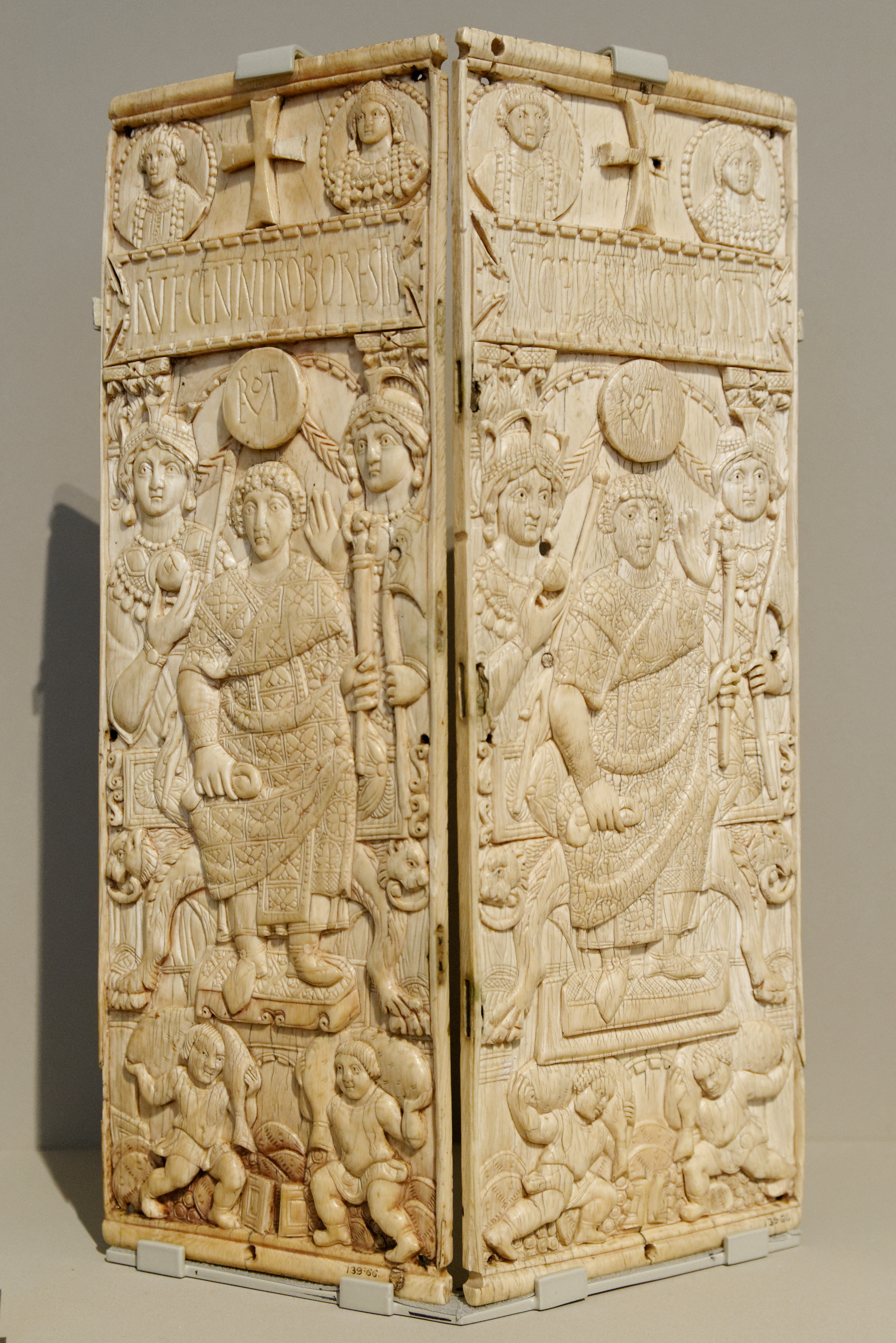


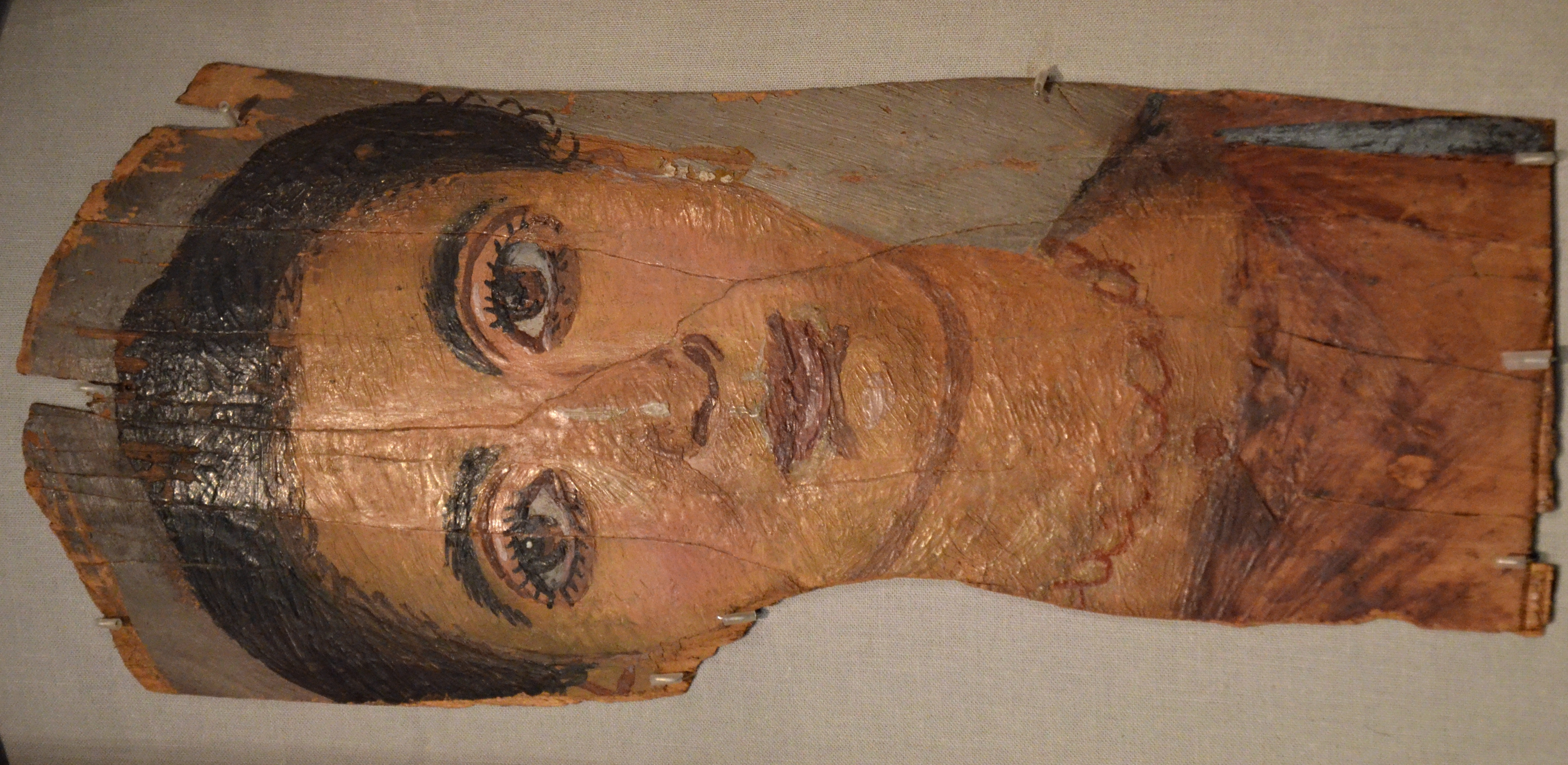
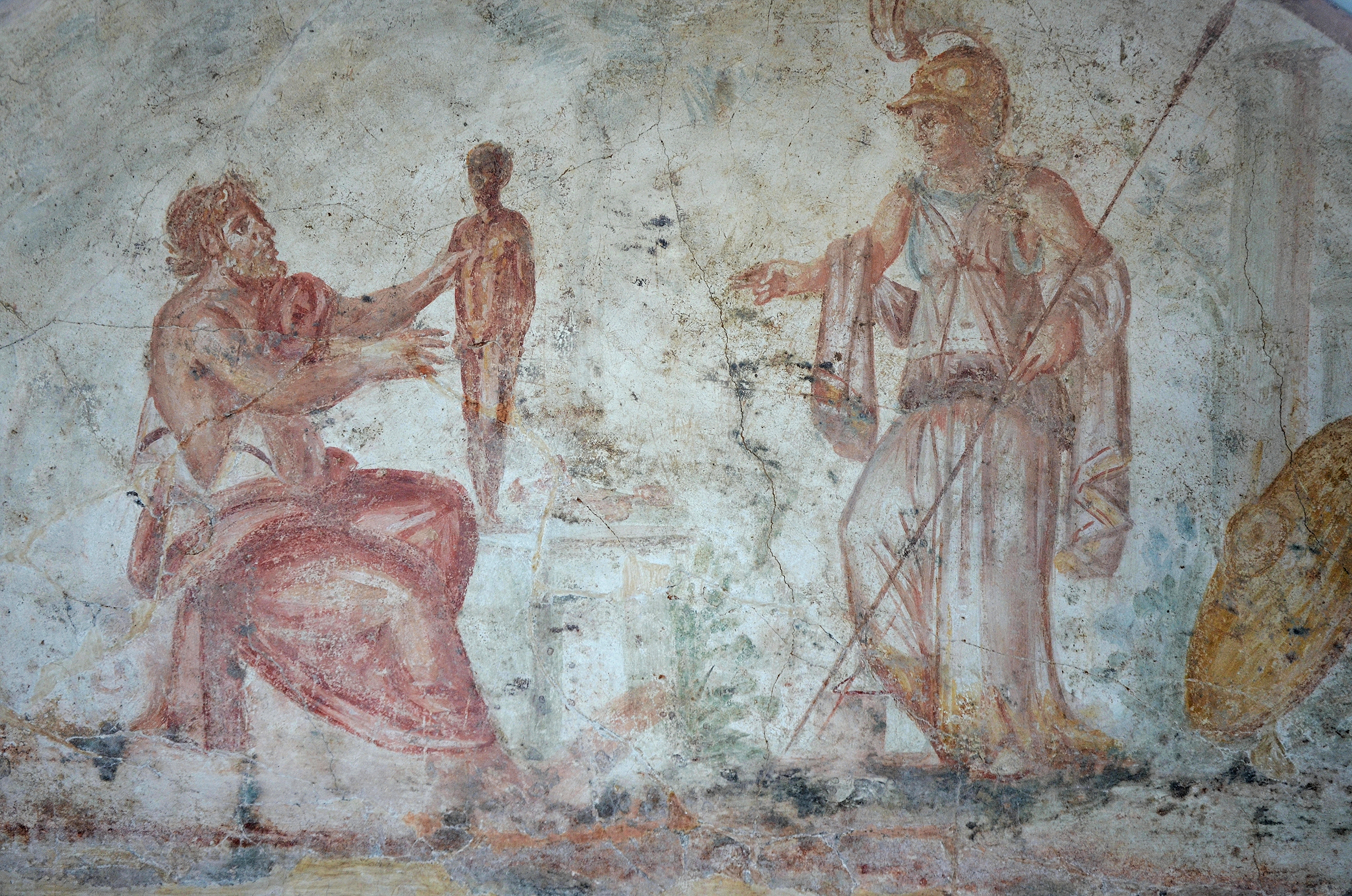


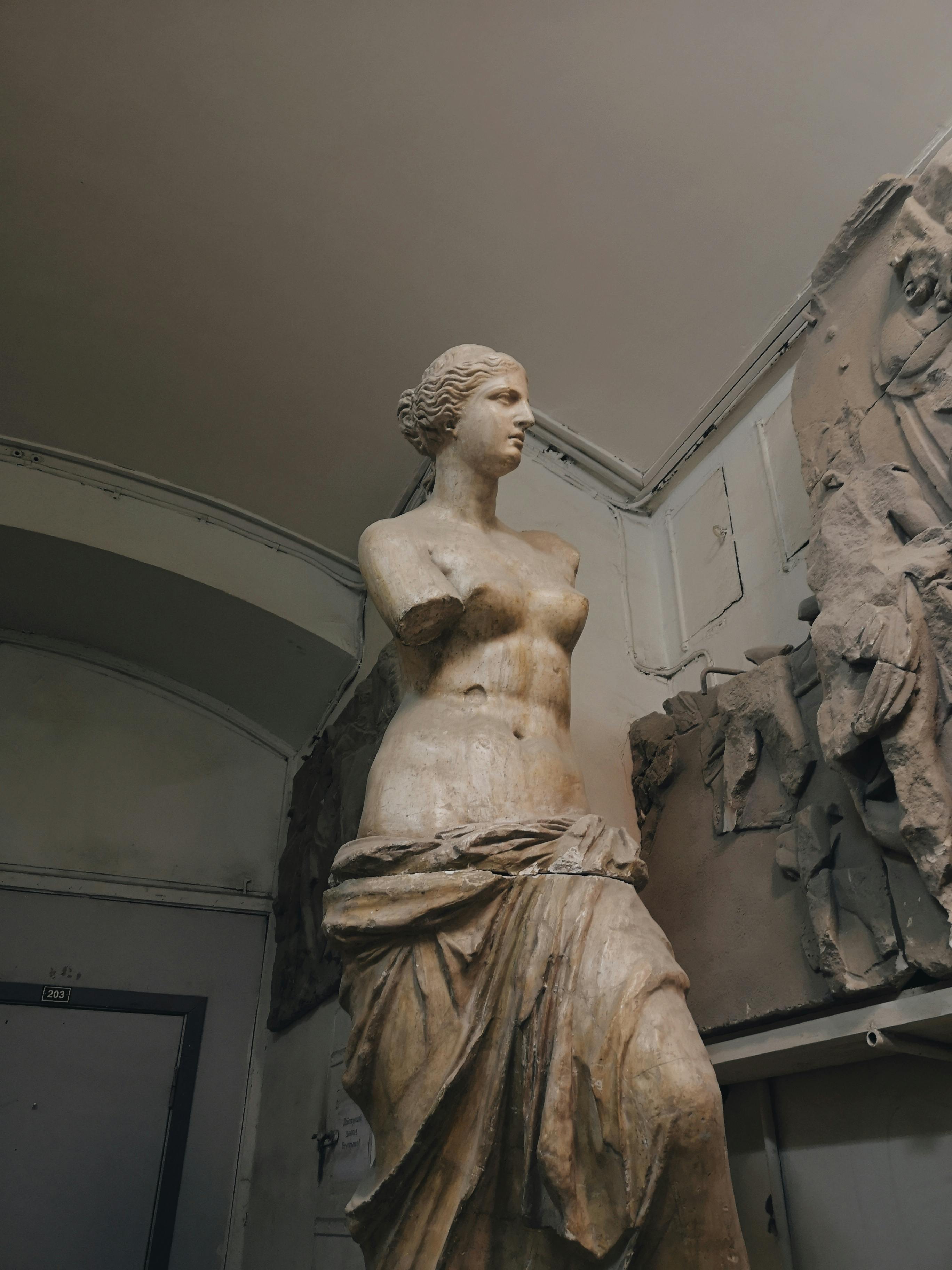


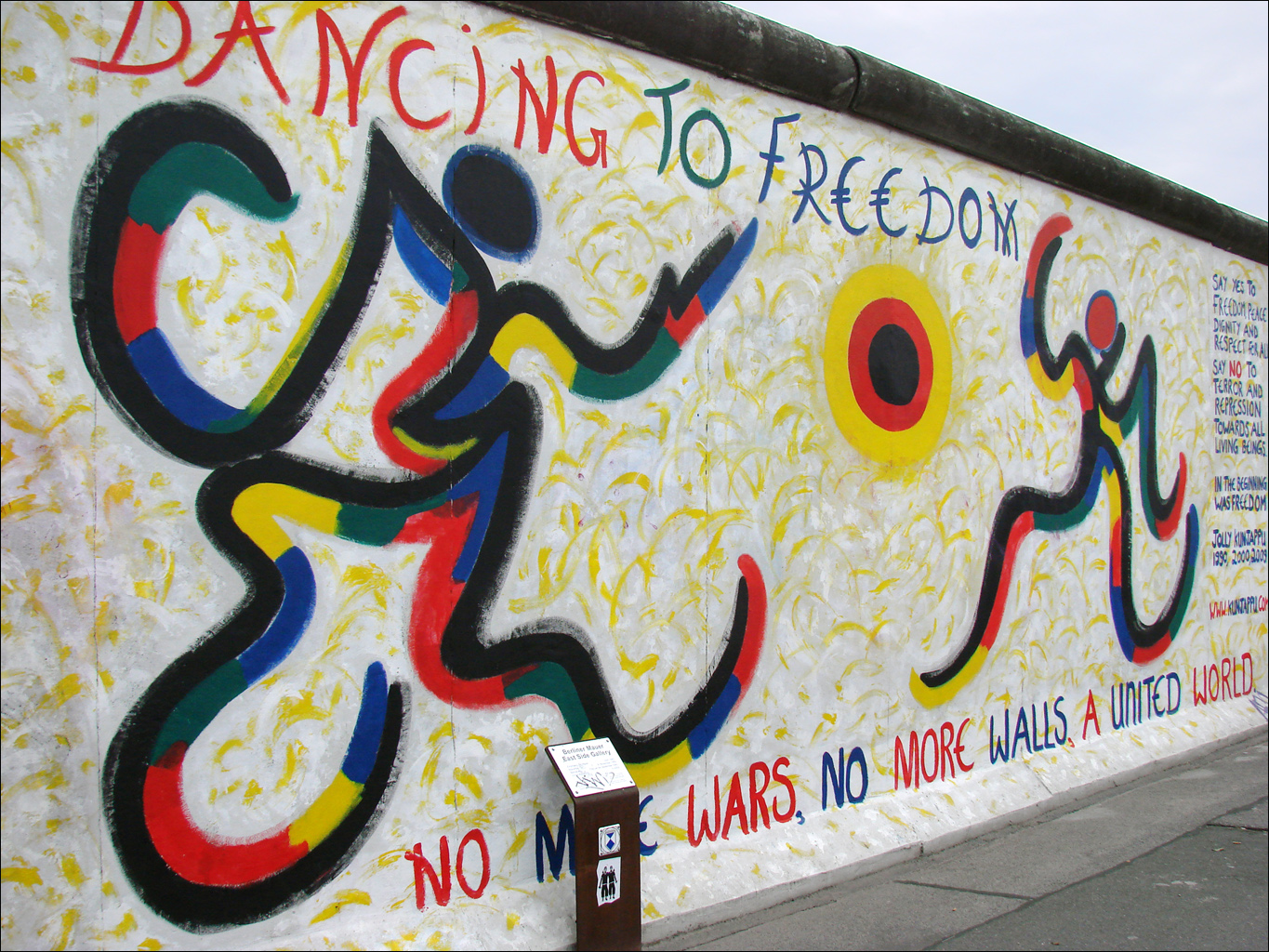


The next time you're mixing paints or struggling with digital tools, remember: these aren't uniquely contemporary challenges. Roman artists faced similar problems—and solved them with extraordinary creativity that remains relevant today.
But more than just solving technical problems, Roman artists show us what art can do in the world—how it can shape human experience, create meaning across cultural boundaries, and integrate aesthetic excellence into daily life. They remind us that making art isn't separate from making culture—it's how cultures understand themselves, how they remember their pasts and imagine their futures, how they communicate across differences and build shared meaning.
The enduring conversation between ancient workshops and contemporary studios continues. Roman art isn't historical artifact—it's ongoing practice, living tradition, creative resource. The questions Roman artists faced remain our questions. Their solutions suggest directions for our own work. Their example offers encouragement that meaningful art is possible even (or especially) in challenging circumstances. That's not just historical curiosity—that's practical wisdom for anyone trying to make work that matters in the world as it actually exists.
The conversation Roman artists began continues. Whenever we balance tradition with innovation, serve practical needs without sacrificing excellence, or create work that matters in the actual world rather than some idealized version—we're participating in that enduring dialogue.
This historical dialogue offers practical guidance for contemporary artists grappling with everything from material choices and technical challenges to questions about influence, appropriation, public engagement, and artistic integrity. The Romans faced fundamentally similar challenges and developed sophisticated approaches that remain relevant for anyone trying to make meaningful work in complex circumstances.
That's not pressure. That's company—and it suggests that making meaningful art in complex times might be more possible than we sometimes imagine.
Here's what I find most encouraging: the Romans remind us that the most important artistic questions aren't new. How do you honor tradition while insisting on innovation? How do you make work that serves practical needs without sacrificing excellence? How do you create meaning that speaks across cultural boundaries? How do you maintain integrity while working within real-world constraints?
These questions have been with us for millennia. Artists have been working on them for generations. Contemporary practitioners aren't starting from scratch—we're participating in an ongoing conversation that stretches back through centuries of creative problem-solving. That continuity isn't a burden; it's a resource. When we face similar challenges, we can look to how previous artists approached them—not for formulas to copy, but for wisdom to adapt to our own circumstances.
The Romans perfected the art of creative inheritance—taking what they'd been given, transforming it for their own purposes, and passing along something richer than what they'd received. That's exactly what contemporary artists do with the traditions we inherit, including Roman traditions themselves. The conversation continues, and we're all invited to participate.