
The Florence Cathedral: Where Stone Meets Divine Ambition
Discover the breathtaking architecture and dramatic history of Florence Cathedral – a Renaissance masterpiece that reshaped art and engineering forever.

The Florence Cathedral: Where Stone Meets Divine Ambition
You know that feeling? When you stand before a building that somehow defies time? That electric hum of human ambition colliding with impossible beauty? That’s exactly what hits you when you first see the Duomo di Firenze, or Florence Cathedral, glistening against an Italian sky. Often called the Duomo Florence or Cattedrale di Santa Maria del Fiore, it's a landmark that has defined the city's identity for over six centuries. It’s not just a church—it’s a 600-year-old argument between humanity and gravity, a testament to what we can build when belief and stubbornness collide. And let me tell you, I’ve read the blueprints, studied the diagrams, but nothing prepares you for the sheer guts of this place.
We’re not just talking about a monument; we’re talking about the ignition point of the Italian Renaissance. This building—officially the Cattedrale di Santa Maria del Fiore—is where medieval piety slammed headfirst into audacious humanist confidence, birthing an architectural revolution that would define Western art and engineering for centuries to come.
And what a revolution it was. Have you ever stopped to think about what it takes to change the entire trajectory of human thought? It doesn't start with a manifesto or a political decree. Often, it starts with a single, impossible object. This cathedral was that object. It was Florence's declaration of intellectual independence, a massive stone argument that human reason could achieve divine miracles.
For the visitor planning a trip, it remains one of the most breathtaking places to visit in Florence. Forget the perfectly manicured piazzas you see on postcards. Go there. Stand in the shadow of that dome, and you'll feel the ghost of Filippo Brunelleschi whispering, "I told you it was possible." It's a story of a city betting the farm on a paranoid, brilliant goldsmith, a tale of a hole in the sky that became a landmark for humanity. The Duomo is a testament that creativity isn't a gentle muse; it's a violent, ambitious, and often messy collision of art and engineering. It's a story about what happens when a city of merchants decides to build heaven on earth.
But this story isn't just about a single building. It's a window into a moment when an entire civilization shifted its gaze from the heavens back to the earth, believing once again in the power of human hands and human minds. To stand before the Duomo is to witness the birthplace of the modern world.
And if you're planning that pilgrimage, know this: climbing the 463 steps to the top is a rite of passage. You’ll emerge sweaty and breathless onto a narrow balcony, and all of Tuscany will unfold beneath you. It’s a view that was worth every florin, every drop of sweat, every ounce of human ingenuity it took to create.
Florence Cathedral: A Love Letter to Human Ingenuity
Before we dive into the story, let's get our bearings. The Florence Cathedral complex consists of three main parts: the Duomo (the dome itself), the Campanile (Giotto's bell tower), and the Baptistry of San Giovanni. When people say "the Duomo," they're often referring to the entire cathedral, but technically it's the magnificent dome. I'll try to be precise, but sometimes the spirit of the place just swallows you whole, and you go with the flow.
It's a living palimpsest of history, each part representing a different century and a different set of ambitions. Think of it as a symphony with three distinct movements: the ancient, mysterious Baptistry; the elegant, rhythmic Campanile; and the audacious, overwhelming dome. Together, they don't just make a building; they tell the 700-year story of a city's soul, its ambitions, its failures, and its ultimate triumph.
And this story is written in the very stones themselves. To truly see the Duomo isn't just to admire its beauty, but to understand the language it speaks—a language of civic pride, divine aspiration, and a rivalry with Rome that was as much about banking as it was about faith. It’s a story that begins not with a prayer, but with a financial ledger.
And it's a story with a very specific, almost unbelievable origin. It begins not with a grand religious decree, but with a political power play.
Imagine Florence in 1296. The Republic of Florence was flexing its muscles, having just crushed its rival, Siena. Money was pouring in from the wool trade, and the city’s banking families—the Medicis and the Peruzzis—were essentially the hedge fund managers of their day. Civic pride was at an all-time high, and the city council, the Signoria, passed a decree to build a cathedral so monumental it would announce Florence as the new Rome.
The scale of the project was a clear political statement, a piece of architectural propaganda intended to project the republic's wealth, power, and divine favor across Christendom. Building a bigger, better cathedral than anyone else was a very public way of winning the geopolitical contest of the era. This wasn’t just about religion; it was about creating a permanent, un-ignorable symbol of Florentine supremacy that could be seen for miles across the Tuscan countryside.
The sheer scale of their ambition is hard to overstate. This wasn't just about piety; it was a power move. In the medieval world, the tallest structure in any city was the cathedral, a symbol of the Church's dominance. But in Florence, the wool guild was footing the bill, and they intended to build a monument that would glorify the city's wealth, its republican ideals, and its God—in that order. It was an early example of corporate sponsorship shaping a city's most important public work.
No smartphones, no cranes that reach for heaven, just pure, unadulterated determination. The city fathers, spurred by the 1293 "Ordinances of Justice" which gave the guilds immense power, essentially created a massive public works project funded by the newly empowered wool guild, the Arte della Lana. This wasn't just about piety; it was about putting the city's merchants at the center of civic and spiritual life, a truly revolutionary concept for its time. They wanted a cathedral so grand it’d make God himself pause and say, "Nice dome." They started laying stone, driven by the 1293 "Ordinances of Justice," which empowered the city’s guilds. The wool guild, the Arte della Lana, became the primary financier and custodian of the project. And they kept laying stone. For 140 years.
And for decades, the dome remained a dream, a massive hole in the Florentine skyline. They built the 42-meter-wide octagonal drum, a perfect stone collar, and then... they stopped. They simply didn't know how to close it. I love that. It's a monument to an unfinished thought, a frozen moment of ambition exceeding grasp. The problem wasn’t just the dome’s diameter; it was its height and the prohibition on traditional wooden buttressing (using a wooden support frame), which violated the city’s aesthetic decrees and was economically unfeasible given the scarcity of large timber.
The engineering constraints were almost comical in their difficulty. To give you a sense of the scale, the drum they built is wider than the nave of most Gothic cathedrals. They had essentially created the largest freestanding masonry opening in the world and then collectively shrugged, having no idea how to span it. Forget the physics; the political will alone must have been staggering.
Standing under that open sky today, you can almost hear the collective groan of generations of architects who looked up and thought, "Now what?" They had built themselves into a corner, a beautiful, grand, and profoundly embarrassing architectural dead end. It was like painting the most beautiful frame in the world and having no idea what the portrait inside would look like. This "hole in the sky" became the city's defining feature, a constant, nagging reminder of their own limitations and a dare to anyone brilliant enough to finally solve the puzzle. For over a century, rain fell on the high altar, and snow drifted into the choir. It was a very public, very expensive symbol of human limitation.
The Early Days: Foundations of an Obsession
The original design? By Arnolfo di Cambio, whom I imagine as this brooding, intense figure, likely drafted his vision around 1294. He wasn’t a lone genius screaming into the void; he was responding to a specific city mandate. The plan was staggeringly ambitious: a Latin cross floor plan with a nave wider than any Gothic cathedral in existence, culminating in a massive octagonal choir. At the crossing, a dome of unprecedented scale—a structure intended to outshine the Pantheon in Rome. He didn't just design a building; he designed a political statement, a piece of architectural propaganda meant to announce Florence as the new superpower of the Italian peninsula. It's said he was inspired by the grandeur of early Christian basilicas but sought to surpass them, creating something uniquely Florentine—a merging of Roman scale with Tuscan Gothic elegance. His design was a promise, a grand vision of what Florence could become, although he would never live to see even a fraction of it realized.
The foundation stone, laid on September 8, 1296, was a moment of collective delirium for Florence. A papal legate, representing the Pope himself, consecrated the site. The surviving documents from the Opera del Duomo—the cathedral’s construction board—show meticulous payments for oxen, timber, and the back-breaking labour of hauling enormous blocks of pietra forte, the local brown sandstone, from the quarries. Every wagon that rumbled into the city square was a public spectacle, a visible sign of the city's collective faith in its own future.
Arnolfo died around 1302, leaving behind detailed plans for the nave but, crucially, no viable solution for the dome itself. The city’s fathers stared up at the 42-meter-wide octagonal drum they’d built, a vast stone gap in their skyline, with no earthly idea how to close it. A few years later, Giotto was brought in, but he too focused on the bell tower, perhaps sensing that the dome problem was one for a future generation.
What followed was a 130-year lull, a fascinating period of architectural ADHD. A succession of master builders came and went. Giotto, the great painter, got distracted building his beautiful bell tower. Others expanded the nave. All the while, the hole in the roof remained. You have to wonder about the psychology of it all. It's one thing to fail, but quite another to fail so spectacularly, so publicly, for over a century. It became the city’s defining feature—not its beauty, but its profound inability to finish what it started. This wasn't just an aesthetic problem; it was a spiritual and civic crisis.
Generations of Florentines attended mass under a temporary wooden ceiling and a water-repellent tarp, a constant, humiliating reminder of their technical limitations. The open drum, which should have been the crown of the city, stood as an open wound, a very public dare to any architect with the genius and arrogance to attempt the impossible. The wind howled through the open top, candles flickered and died, and rain would pool on the floor of the crossing. It was a living, breathing symbol of failure.
And in a deeply superstitious age, this wasn't just a practical problem. It was seen by many as a sign of divine displeasure. Had Florence angered God? Was the city being punished for its wealth, its pride, its republican experiments? These questions must have gnawed at the city fathers, adding a layer of spiritual urgency to what was already a massive engineering and political crisis.

So generations of Florentines worshipped under a canvas tarp, exposed to the Tuscan elements. Can you imagine it? The city's greatest pride, a half-finished shell, a literal gaping hole in their spiritual and civic heart. Think of the psychological toll! Every storm was a public humiliation, a soggy reminder of their collective failure. Every time a foreign dignitary visited, they'd have to explain the giant hole in their most important building. It was like having a perpetually unfinished masterpiece in your living room, a conversation piece that grew more embarrassing with each passing year.
The real drama started with a competition in 1418—a call to design the impossible: an 8-sided stone dome 150 feet in the air without wooden centering, a feat no one on Earth knew how to accomplish. The city fathers, in a fit of either desperation or genius, essentially crowd-sourced the solution, turning a century-old engineering crisis into a public spectacle.
The competition brief was a masterpiece of understated desperation. The city offered a prize of 200 gold florins—a fortune—but it wasn't just about money. It was a call for detailed models and mechanisms. Entrants had to prove not just what their dome would look like, but how they would build it without the traditional, and forbidden, wooden centering. It was a request for a miraculous solution, complete with a business plan.
Era  | Key Event | Significance |
|---|---|---|
| 1293 | Ordinances of Justice passed | Empowers the wool guild (Arte della Lana) to become the primary financial backer of the Duomo, cementing civic power |
| 1296 | Arnolfo di Cambio begins construction | Lays the visionary foundation but dies before the dome challenge is addressed |
| 1302 | Death of Arnolfo di Cambio | Construction grinds to a halt, leaving the ambitious project incomplete |
| 1334 | Giotto appointed master builder; begins the Campanile (bell tower) | Elevates the cathedral complex with a signature Tuscan Gothic aesthetic |
| 1357-1367 | Francesco Talenti expands the nave and completes the bell tower | Solidifies the cathedral's colossal scale and finalizes the octagonal drum |
| 1418 | Dome design competition announced | The city officially acknowledges a century-old engineering crisis, sparking a search for modern genius |
| 1420 | Brunelleschi wins the dome | Appointed as one of three co-superintendents, marking the start of his 16-year masterwork |
| 1436 | Dome completed and consecrated | Pope Eugene IV consecrates the dome, granting Florence immense spiritual and political prestige |
| 1436-1472 | Lantern, Exedrae, and Baptistry additions finalized | Ghiberti completes the "Gates of Paradise," and the dome is capped with a marble lantern, designed by Brunelleschi himself but only finished after his death |
| 1463 | Andrea del Verrocchio installs the bronze sphere and cross atop the lantern | A feat of engineering requiring immense precision, it was a symbolic act of "crowning" the city's achievement. |
| 1515 | Michelangelo's proposed facade design is rejected | The great sculptor was asked to design a facade, but political turmoil and his focus on St. Peter's Basilica in Rome meant this vision never left paper. |
| 1515 | Michelangelo's proposed facade design is rejected | The great sculptor, already at work on St. Peter's in Rome, was approached, but his ideas were never realized, leaving the facade unfinished for centuries more. |
| 1575-1579 | Giorgio Vasari and Federico Zuccari paint the Last Judgment frescoes | The interior of the dome receives its elaborate narrative decoration, a late-Renaissance masterpiece of illusionism covering nearly 40,000 square feet. |
| 1588 | Florence becomes the permanent seat of the Grand Duchy of Tuscany | The Duomo is now the symbolic center of a consolidated Medici power, far removed from its republican origins. |
| 1587-1602 | Baldassarre Lanci and Bernardo Buontalenti design and install the choir screen and new altar. | The interior undergoes a Mannerist and early Baroque renovation, reflecting the changing tastes and theological focus of the post-Tridentine Catholic Church. |
| 1639 | Ferdinando II de' Medici gifts the cathedral a massive silver altarpiece. | Demonstrates the continued use of the cathedral as a stage for Medici wealth and piety, now under the more ornate Baroque sensibilities. |
| 1842 | Emilio De Fabris wins the competition for the new facade. | A renewed interest in completing the cathedral, spurred by 19th-century nationalism and Romantic ideals, leads to the search for a design that would befit the dome's glory. |
| 1871 | Florence briefly becomes the capital of the Kingdom of Italy. | The Duomo serves as a national symbol, with the ongoing construction of its facade becoming a matter of Italian, not just Florentine, pride. |
| 1887 | Completion of the Neo-Gothic facade by Emilio De Fabris | The cathedral receives its iconic pink, white, and green marble face, five centuries after its initial conception. It remains highly controversial among critics. |
| 1966 | The Arno River floods Florence, damaging the Baptistry. | A catastrophic event that threatened the city's heritage; restoration efforts for the Duomo complex become an international cause célèbre. |
| 1982 | The Historic Centre of Florence is declared a UNESCO World Heritage Site. | The Duomo complex is recognized as a site of "outstanding universal value," cementing its status as a global cultural icon. |
| 2019-Present | Ongoing restoration and conservation | Continuous efforts to preserve the marble facade, dome, and interior artworks from pollution and the wear of millions of visitors. |
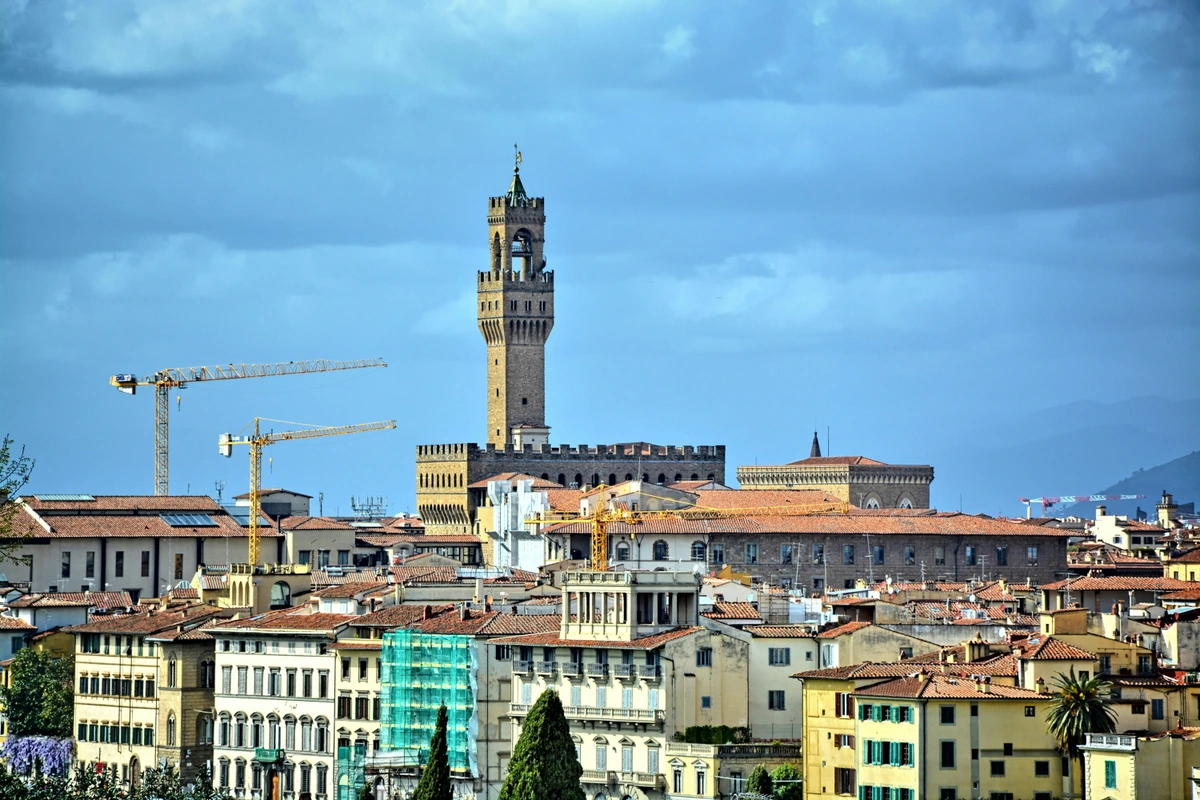
Brunelleschi: The Architect Who Said "Watch Me" and Changed Physics Forever
Enter Filippo Brunelleschi, a goldsmith turned architect whose ego was probably as big as his ambitions. Contemporaries described him as short, quick-tempered, and pathologically secretive. He was a man who embodied the emerging Renaissance ideal of the artist as an individual genius, and he was utterly convinced of his own superiority. This wasn't just arrogance; it was a deep, almost fanatical belief in the power of his own mind to solve problems that had baffled others for over a century.

His obsession with the dome began far earlier, with a different competition. In 1401, the city held a contest for the design of the Baptistry doors. Brunelleschi tied with his rival, Lorenzo Ghiberti, but famously withdrew in a fit of pique when the judges suggested they collaborate. You see, Brunelleschi wanted the commission so badly he refused to share it. That loss triggered a soul-searching trip to Rome with his friend, the sculptor Donatello, where they spent years measuring Roman ruins. By day, he worked as a goldsmith to fund his research. By night, he and Donatello would sneak into the ruins of the Colosseum and other ancient sites, sketching, measuring, and trying to reverse-engineer the lost knowledge of Roman engineering. He wasn’t just sightseeing; he was on an intelligence-gathering mission, scavenging ancient Vitruvian knowledge that had been lost for a millennium, trying to crack the code of the Roman arch and dome. It was there, amid the ruins of an empire that had mastered concrete and built the Pantheon, that he began to formulate his audacious plan—not by copying the Romans, but by understanding their principles and forging them into something entirely new. He realized the Roman secret wasn't just in their materials, but in their geometry.

He re-emerged for the 1418 competition with a plan so audacious the judges called it heresy. It wasn’t just a design; it was a complete system of construction that solved a problem others hadn’t even properly framed. His secret weapon wasn’t one idea, but a synthesis of many radical concepts. Think of it like a grandmaster playing chess not just on the board, but also by designing the pieces, writing the rules, and even building the table. He had a holistic vision that his rivals couldn't even comprehend:
- A double-shell dome: An inner and outer dome, separated by a void and connected by massive sandstone ribs. Think of it like a cathedral jacket and sweater—stylish but practical. This hollow space created a structurally efficient, self-buttressing form that lightened the overall load. The outer shell protected the inner from the elements, while the inner one bore the main weight. Between them, a hollow space not only saved weight but also allowed for a hidden spiral staircase, leading all the way to the lantern.
- A revolutionary brick pattern: He ditched horizontal concentric rings for a vertical herringbone pattern. That zig-zag technique? Absolute genius. It prevented the entire weight of the newly laid bricks from collapsing inward, allowing the structure to support itself as it grew. Each brick became interlocked with its neighbor, creating a unified, load-bearing fabric rather than a series of stacked, fragile rings. It was like knitting a stone sweater.
- A horizontal compression system: To prevent the dome's base from buckling outward, he embedded massive stone beams tied together with iron chains. This "hoop" counteracted the immense spreading forces, a principle familiar to anyone who's seen a barrel held together by metal bands. He essentially invented a system that distributed its own weight so perfectly it needed no external support, becoming, effectively, self-buttressing. If that's not architectural alchemy, I don't know what is.
- A dome pointed upward, not just a hemisphere: Unlike the Pantheon's shallow Roman dome, Brunelleschi designed his with a pointed Gothic profile. This subtle architectural choice pushed the weight down more vertically, channeling gravity straight down the supporting pillars instead of pushing them outward. It was a perfect marriage of Roman structural genius and Gothic architectural form.
Did he win? Initially, nope. The committee of wool merchants and city elders was terrified by his radical, unproven vision. His main rival, Ghiberti (the very man who’d beat him in the Baptistry door contest), proposed a more conventional, and therefore less frightening, design. The panel was deeply divided; they were being asked to bet the city's most important project on a volatile goldsmith with a history of walking away from commissions.
But Brunelleschi was a master salesman. He staged theatrical demonstrations designed to short-circuit their logical objections. The most famous was the egg trick. He challenged the judges to make an egg stand on its end on a flat marble table. After everyone failed, he calmly tapped the egg’s bottom on the surface, cracking it slightly, and it stood. When they complained that anyone could have thought of that, he replied, with perfect logic, that they would have said the same if they had seen his dome designs. It was a performance of pure genius, turning a simple parlor trick into a powerful metaphor for the difference between knowing an answer and daring to find it.
That's the kind of audacity we're dealing with. It was a power play, pure and simple. Brunelleschi understood that to build the impossible, he first had to win the battle for the minds of the men holding the purse strings. He wasn't just an architect; he was a master of rhetoric, psychology, and public relations. He knew that the biggest obstacle to his dome wasn't gravity, but skepticism. And he was willing to use every tool, every trick, every ounce of his considerable ego to crush it. He was ultimately appointed, not as the sole master, but in an uneasy partnership with Ghiberti. It was a classic political compromise, but it set the stage for one of the most legendary feuds in architectural history.
Predictably, they fought constantly. Brunelleschi couldn't stand sharing credit for a vision that was so profoundly his own. He began a campaign of psychological warfare. He feigned illness for weeks on end, forcing Ghiberti to take responsibility for on-site decisions. When Ghiberti, a sculptor, not an engineer, inevitably faltered, Brunelleschi would miraculously recover and publicly point out his rival’s incompetence. He was a master of corporate politics, 15th-century style. He reportedly once upbraided Ghiberti in front of the workmen, holding a sculptor's chisel aloft and mocking, "Here, Lorenzo, take this, and learn how to cut marble!" The rivalry was so intense that when Brunelleschi was eventually awarded the title of sole master of the dome in 1435, it felt less like a promotion and more like a long-overdue acknowledgment of the facts on the ground.
After a few years, Ghiberti was effectively sidelined, and Brunelleschi finally had the creative dictatorship he needed. The project became an extension of his own mind. He was a control freak of the highest order, and honestly, the project demanded it. He personally designed the masons' platforms, invented new types of pulleys, and even dictated their lunch breaks in a detailed set of rules designed to keep the site secure from industrial espionage. His genius wasn't just in the grand design, but in the minute details of execution. He designed canteens for the workmen to keep their wine cool, a canteen with porous walls that allowed for evaporative cooling. He understood that keeping hundreds of men working at dizzying heights in the Tuscan sun required solving not just the macro-challenge of physics, but also the micro-challenges of human comfort and morale. This is a man who, legend has it, would throw fake coins on the construction site floor to observe who would stop working to pick them up—his own little experiment in human behavior.
He even invented a series of hoist systems—nicknamed Il Badalone ("The Monster")—to lift tens of thousands of tons of stone hundreds of feet in the air. This wasn’t just a crane; it was a three-speed gearbox that could reverse its own load, a machine so advanced it wouldn’t be matched for another four centuries. Because, again—no timber, and no limits. The story goes that he'd fire his best masons for the slightest mistake, only to rehire them the next day, a harsh lesson in precision. Every brick, every beam, every iron chain was part of a single, unified system of his own design, all held together by the sheer force of his will.
The Dome: A Lesson in Stubborn Brilliance
Here’s where it gets wild. Bruno (let’s be on a first-name basis) refused to share his plans. The Opera del Duomo kept pressing him for drawings, but he’d deliver cryptic sketches or nothing at all. Why? Paranoia, for sure—he feared theft. But also, his method was less a set of static blueprints and more of a dynamic, intuitive process. He was constantly reacting to the dome as it grew, making real-time adjustments, trusting his calculations and his feel for the stone. He knew the static pressure of each brick and the dynamic interplay of forces better than anyone; the dome was being built in his mind as much as on the structure itself.
He ran the worksite with absolute, single-minded authority. He personally hired and fired the masons, designed their platforms and tools, and even dictated their lunch breaks. His rules were so strict he once fired his best mason for taking a single, unauthorized sip of wine. He famously invented a three-speed reversible hoist, "Il Badalone," to lift impossibly heavy materials hundreds of feet. It was powered by oxen, a masterpiece of gear ratios and human ingenuity that no one could replicate. For 16 years, he oversaw every brick, every angle, a ceaseless presence on the site. He’d famously shout instructions down from the dizzying heights, a tiny figure coordinating a ballet of human effort against gravity.
But perhaps his most brilliant invention was the materials handling system itself. Think about it: millions of bricks, thousands of tons of mortar, all needed to be delivered to a precise spot hundreds of feet in the air, with no margin for error. He created a system of external scaffolding, cranes, and hoists that functioned like a giant, vertical assembly line, a proto-industrial feat of logistics that was centuries ahead of its time.

It's a profound lesson for any creative person. The vision wasn't just in the initial idea; it was in the relentless, daily, almost maddening process of execution. This runs so contrary to our modern idea of a designer who hands off a plan and walks away. Brunelleschi understood that for a project of this impossibility, the designer had to be the builder. He didn't just design a cathedral; he built it. Every day, he was up there, in the muck and the danger, translating abstract geometry into tangible, soaring stone. That's a level of commitment that's staggering to contemplate. It makes me think about how much we lose when we separate the act of designing from the act of making. His desk wasn't a quiet room away from the site; his desk was the site. The wind, the rain, the complaints of the masons, the fear of catastrophic failure—these weren't abstract problems to be managed from a distance, they were the daily soundtrack to his genius. This intimacy with the process, this refusal to separate the mind from the hand, is what allowed him to make the hundreds of tiny, instinctive corrections that are invisible on a blueprint but essential to keeping a structure of this scale from collapsing.
And when it was finally complete in 1436? Florence threw a party that lasted for days. The consecration was performed by Pope Eugene IV himself on March 25, the Feast of the Annunciation. It was a masterpiece of political theater. A temporary, covered gallery was built connecting the Pope's residence to the cathedral, allowing him to walk in splendorous procession without setting foot on the common street. This wasn't just a church service; it was a coronation of Florence as the new center of the Christian world. The inscription "Coro Magnifico" (Magnificent Choir) that was added to the base wasn't just about humility; it was a declaration that this was no longer just a cathedral, but a choir of stone, a symphony sung to the glory of God and the city of Florence.
The ceremony was a masterpiece of political theater. A temporary gallery was built connecting the Pope's residence to the cathedral, allowing him to walk in splendorous procession without setting foot on the common street. The Pope himself consecrated the altar, anointing it with chrism. This act wasn't just about religion; it was the ultimate validation from the highest power in Christendom. It was Florence's ultimate flex, a declaration of spiritual and cultural supremacy on a European stage. Brunelleschi, likely ill at this point, watched from the Piazza della Signoria, a relic hero.
There's a famous story that during the celebration, a city official reportedly asked Brunelleschi if he wasn't terrified that the dome would come crashing down. He replied that he was far more worried about the stability of the building next to it! That's the kind of unshakeable, almost divine confidence he had in his own work. He had stared the impossible in the face for two decades and refused to blink.
His body rests today under watchful guard in the crypt of the cathedral, a final, fitting tribute for the man who had, quite literally, filled the hole in the Florentine sky. The inscription on his funerary slab reads, "Corpus Magni Ingenii Viri Philippi Brunelleschi Fiorentini" (The body of the great genius Filippo Brunelleschi of Florence). But his greatest monument isn't his tomb; it's what's above it. Every day, thousands of people from every corner of the world look up, crane their necks, and feel that same sense of awe that Florentines felt six centuries ago.
He died ten years after the dome was completed, on April 15, 1446. The entire city turned out for his funeral. It's said he was laid to rest in the crypt he designed, wearing the simple robes of a layman. The man who had built a new sky for Florence was finally at rest within the body of his own creation.
More Than Bricks: Why Florence Cathedral Changes Art History
Here’s the thing: The Duomo didn’t just build a roof. It rewrote the rules. Brunelleschi’s dome became a forceful, physical rebuttal to centuries of medieval thinking. It proved that human reason—mathematics, geometry, engineering—could achieve what was previously thought to be the exclusive domain of divine will. It was the Sputnik moment of the Renaissance, a massive, triumphant declaration that humanity was back at the center of the universe and capable of near-miraculous feats.
The psychological effect on Florence was immeasurable. They didn't just get a cathedral; they got a new identity. They were the city of the impossible, the home of the miracle workers.

- Renaissance Reborn: Brunelleschi’s dome proved ancient Roman engineering greatness could be surpassed. It kicked off the Renaissance movement. Leon Battista Alberti, a humanist thinker, dedicated his seminal treatise On Painting to Brunelleschi, recognizing him as the pioneer of a new age. Artists and thinkers across Europe suddenly thought, "If Florence can build that, what else is possible?" It established Florence as the intellectual capital of Europe, a place where the status quo wasn't just challenged—it was demolished with a hammer and chisel. It's hard to imagine a work of art having a more profound psychological impact on an entire continent. It's no coincidence that the dome's completion pre-dates the invention of the printing press by only a few years; a new cultural confidence was in the air, and the Duomo was its first, greatest symbol.
- A New Type of Building: This wasn’t just big—it was revolutionary. Its form directly inspired the design for St. Peter’s Basilica in Rome. Michelangelo, when designing St. Peter’s dome, is said to have muttered, "I will build bigger, but not more beautiful." The Duomo’s influence radiated outward, becoming the archetype for centralized, dome-focused church architecture for the next 500 years. Think of all the great domes you've seen, from St. Paul's in London to the U.S. Capitol in Washington, D.C. They're all, in a way, descendants of that singular, audacious idea that was forged in the sky above Florence. It provided a new grammar for church architecture, shifting the focus from the long, linear nave of the Gothic style to a more centralized, unified space, with the dome serving as a symbolic representation of heaven itself.
- Artistic Collisions: Walk inside and you’ll see frescoes by Vasari and Zuccari telling biblical stories so vivid they feel alive. Commissioned by Cosimo I de' Medici, this Last Judgment was the largest single fresco cycle on earth. But here's the crucial thing: Brunelleschi's architecture wasn't just a stage for the art; it was the art. The building itself was the primary statement. Outside, Ghiberti’s bronze doors on the Baptistry, the so-called "Gates of Paradise," utterly amazed Michelangelo. They used an advanced lost-wax casting technique and even melted down bronze from a destroyed warship for the metal, people! This single square became the crucible of Renaissance art. It was an environment of relentless, obsessive, one-upmanship, where architects, sculptors, and painters all pushed each other to ever-greater heights. It was a creative ecosystem on steroids.
- A Symbol of Things to Come: The Duomo became a potent symbol for what humanity could achieve when it set its mind to something. It wasn’t the end of the story, but the spectacular beginning. Its completion unleashed a wave of humanist confidence that would fuel figures like Leonardo da Vinci, Raphael, and Michelangelo, who would go on to define the High Renaissance. The audacity required to even imagine building the dome was the same audacity that would lead da Vinci to sketch helicopters and dissect corpses in the name of science and art. It was the blueprint for a new kind of ambition.
The Cathedral vs. The Duomo: Let’s Clear This Up
People get tripped up here, and it’s worth pausing to clarify. Technically, Florence Cathedral is the entire complex: the nave, the transepts, the altars, and the dome. The official name is the Cattedrale di Santa Maria del Fiore (St. Mary of the Flower). However, in everyday speech, when a Florentine says they’re "going to the Duomo," they’re usually referring to the whole building. It’s a classic example of synecdoche, where the most famous part (the dome, Il Duomo) stands in for the whole. So, while you can call the iconic dome "Il Duomo," you’re not wrong to call the main church that either. It’s less a mistake and more a local quirk.
Beyond the Dome: A Deeper Look at the Complex
While the dome hogs the spotlight, the entire complex is a treasure trove of art and history. Let’s break down the key components that make this site so overwhelming. It's like a greatest-hits album of Renaissance genius, with each track bringing something new to the table.
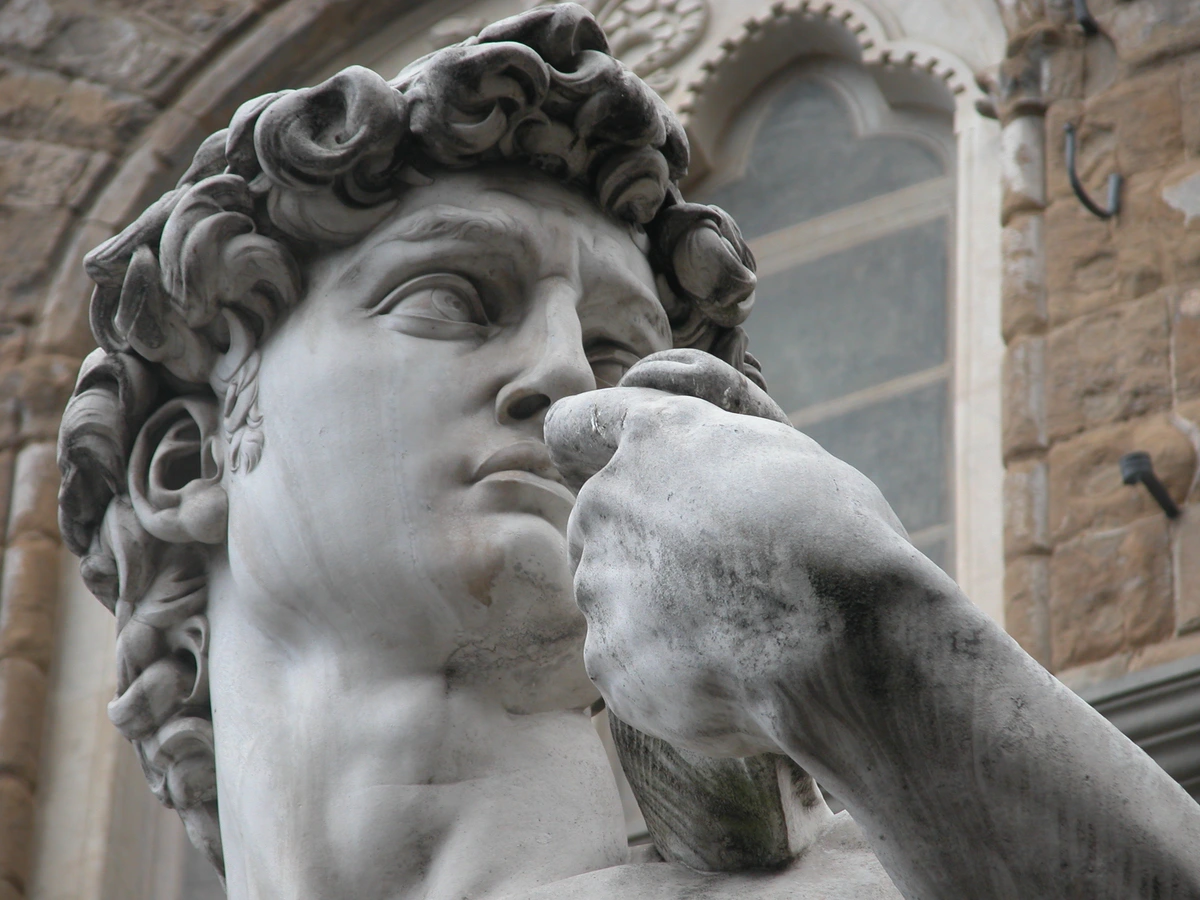
Giotto’s Campanile: The Rhythm of Civic Life
That bell tower isn’t just a pretty neighbor; it’s one of the finest examples of Tuscan Gothic architecture ever built. Designed by Giotto (though he only saw the first level completed before his death), it’s a 277-foot exclamation point of polychrome marble. But what I love most is its purpose: it was a symbol of civic power. The city’s bells regulated the time of merchants, the moments of prayer, and alerted citizens to danger. The Campanile declared that in Florence, even time itself was governed by the state. And those colored marble panels? They aren't just decoration. They represent the perfect union of strength and beauty, the very same philosophy that would define the Renaissance.
Have you ever noticed that it's not attached to the main cathedral building? This was a deliberate choice by Giotto. He wanted it to be a free-standing monument to the city's independence, a powerful vertical counterpoint to the cathedral's horizontal weight. It was a statement: the power of the state and the power of the church worked together, but they were not the same. It's a subtle piece of political commentary, carved in stone.
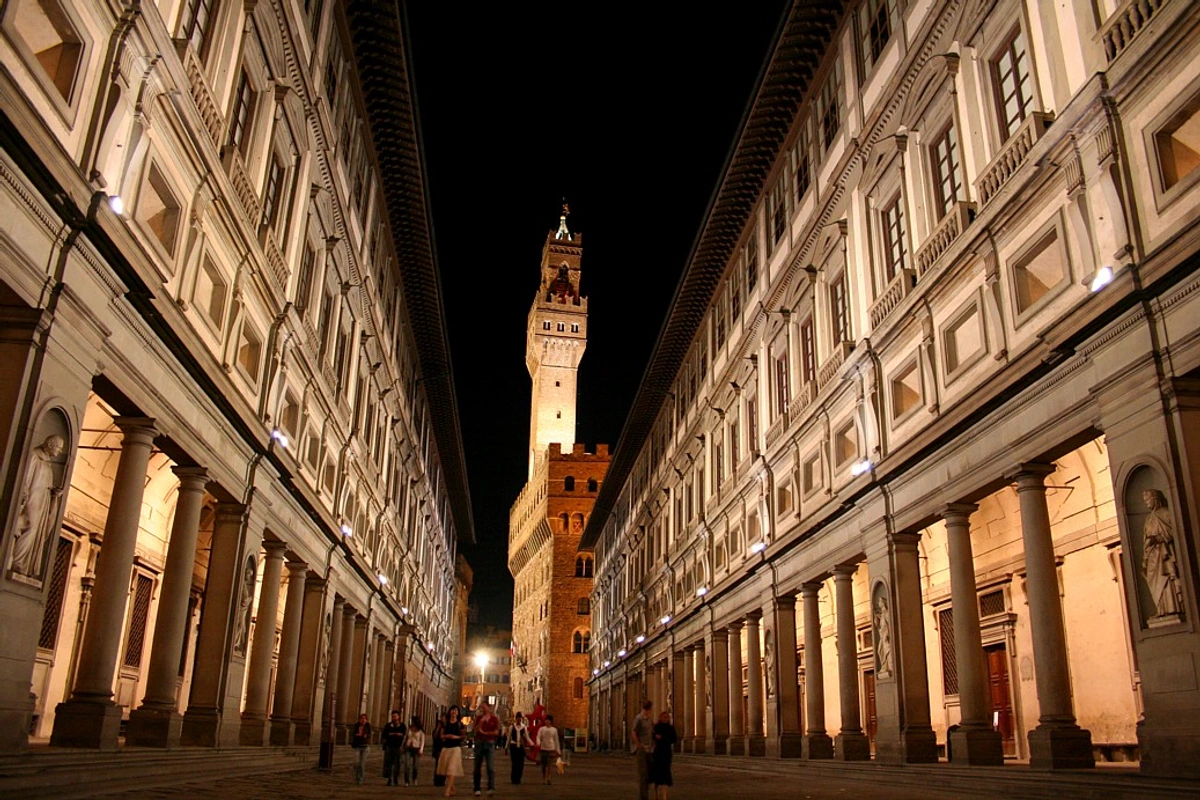
The Baptistry of San Giovanni: An Eight-Sided Soul
Before the cathedral, there was the Baptistry. This octagonal building, clad in the same Prato green and Carrara white marble, is arguably the spiritual heart of the city. For centuries, every Florentine, from Dante to the Medici, was baptized here. Its mosaics, shimmering with gold, depict the Last Judgment in a Byzantine style that feels ancient and deeply powerful. This is where the Florentine soul was, and is, forged. For centuries, this octagonal building was the first stop for every Catholic Florentine, a place of spiritual rebirth before they could enter the civic life of the city. Even Dante Alighieri was baptized under its glittering mosaics, a thought that never fails to send a shiver down my spine. The mosaic cycle on the ceiling, created by Venetian and Florentine craftsmen, is a stunningly detailed and terrifying vision of the Last Judgment, with a gigantic, stern Christ presiding over the fate of all humanity. It's a powerful, medieval statement that stands in stark contrast to the humanist, rational beauty of the later cathedral dome, a reminder that Florence's journey began not with humanism, but with deep, medieval piety.
The humble octagon itself is a powerful symbol. In Christian architecture, the number eight represents rebirth and the new creation. It's no accident that the Baptistry, the place of spiritual rebirth, and the Duomo drum it supports are both octagonal. It's a layer of meaning woven into the very geometry of the place, a silent sermon in stone that you can feel even if you don't consciously understand it.

The "Gates of Paradise": Ghiberti’s Masterpiece
The Baptistry’s east doors, designed by Ghiberti, are a different kind of miracle. Michelangelo reportedly said they were so beautiful they deserved to be the "Gates of Paradise," and the name stuck. Ghiberti pioneered a new technique, using linear perspective to create depth in bronze, revolutionizing sculpture. He cast biblical narratives like The Story of Joseph with a realism and grace that made them seem less like carvings and more like windows into another world.
Michelangelo wasn't using hyperbole. He genuinely spent hours just studying these panels, understanding how Ghiberti had managed to translate the principles of painting into the unforgiving medium of bronze. It was a masterclass in illusionism, achieved not with paint and pigment, but with molten metal and a chisel. It was another vital piece of the Renaissance puzzle: the ability to manipulate perception through technical and artistic innovation. And yes, Ghiberti also incorporated his own likeness into the doorframe, a subtle act of self-promotion that shows Renaissance artists were already their own best marketers.
The Facade: A 19th-Century Makeover
Ah, the Instagram queen! The current facade (finished in 1887) replaced a plain one from the 1400s. For nearly 350 years, the building looked incomplete, its rough brick front a stark contrast to the ornate dome. Nineteenth-century revivals (especially after Italian Unification) sparked a city-wide desire to "finish" the cathedral. The winning design by Emilio De Fabris was an immense undertaking, a patchwork of Carrara white, Prato green serpentine, and Maremma rose marble. Contemporary critics derided it as an oversized wedding cake, a piece of Victorian pageantry in the heart of the Renaissance. And yet, its harmony with the rest of the complex is undeniable; it has become the face of Florence itself.
That controversy is part of what makes it so interesting. It highlights a fundamental question about history: should we preserve a building in its "authentic," unfinished state, or fulfill the original vision of its creators? Florence chose the latter. The facade is a posthumous love letter to the city's greatest monument, a final act of civic pride that took five centuries to complete. I have to confess, I love the audacity of it. It's a testament to the fact that these buildings aren't static museum pieces; they're living entities that continue to be shaped by the ambitions and aesthetics of every generation that inherits them.
The Business of Art: How Renaissance Artists Got Paid
The myth of the starving artist doesn’t quite fit here. The Duomo was a massive, city-funded public works project, and it demanded the best. The craftsmen—calligraphers, goldsmiths, and master masons—were paid through the Opera del Duomo, the powerful guild that managed the cathedral’s finances. It was a sophisticated commission system, centuries ahead of its time.
An artist would submit a design, haggle over the price, and get half the money upfront. But frequently, work was piecemeal, and artists were paid by the day or by the specific task completed. The Opera kept meticulous records, and payments were adjusted based on skill level and marital status; a master with a family to support might get a higher daily wage. Payment disputes were legendary. Donatello, known for his fiery temper, famously once destroyed one of his own works in a fit of rage when the monks who commissioned it tried to haggle the price down after it was finished. Vasari, the great art historian and painter of the dome’s frescoes, died before fully receiving his final payment, leaving a trail of pleading letters to the guild. It tells you something essential: even for the geniuses, art was a business, and chasing invoices is a timeless artistic tradition.
Lost to History: Competition Models & Roman Connections
The models submitted for the 1418 dome competition were physical, three-dimensional proofs of concept. After the judges made their decision, the models were destroyed. Why? They didn't want any would-be competitors scrutinizing the finalist designs. This act of purposeful destruction is why we still don't know every exact detail of Brunelleschi's original scheme, forcing later historians and architects to reverse-engineer his secrets from the finished structure itself.

It's a stark reminder that art and architecture have always been fiercely competitive fields, driven as much by ideas as by industrial secrecy. In a way, Bruno’s paranoia was the 15th-century equivalent of guarding your source code.
The Ultimate Cathedral Showdown: Florence vs. The World
Let’s compare:
Cathedral | Unique Feature | Feeling Inside? | Best For... |
|---|---|---|---|
| Florence Cathedral | Brunelleschi’s impossible dome, Vasari’s frescoes | Awe-inspiring, engineering masterpiece; a story of human defiance | The creative problem-solver, the engineer, the underdog story fan. |
| St. Peter’s Basilica (Rome) | Massive scale, Bernini’s Pietà, and canopy | Overpowering, grandiose; a declaration of absolutist papal power | The lover of Baroque drama and overwhelming, god-like scale. |
| Sagrada Família (Barcelona) | Gaudí’s visionary, fluid Modernisme mosaic wonder | Whimsical, still unfinished; a dream in progress | The fan of organic forms and architecture that feels alive. |
| Notre-Dame de Paris | Iconic Gothic flying buttresses, rose windows | Historic, soaring verticality; a medieval symphony of light and stone | The medievalist, the lover of delicate stonework and history. |

Choosing one is tough. If you want to feel the shock of the new that birthed the Renaissance, Florence is your place. Standing beneath that dome, you don't just see architecture; you feel the intellectual revolution happening in real-time. For sheer, overwhelming scale and Baroque drama, it’s Rome. I keep a print in my studio for the days when a blank canvas feels impossible.
Why This Matters — Even to Artists Today
I know what you’re thinking: "Cool dome, but what does this have to do with my world?” Maybe you're a digital artist, a photographer, a designer staring at a blank screen. Why should a 15th-century construction project matter in an age of AI and instant communication?
Think of the Florence Duomo as one of the world's greatest works of conceptual art. Before a single brick was laid for the dome, it existed as an idea. A stubborn, brilliant, seemingly impossible idea. And that’s where the true connection lies for any creative person, in any medium, today.
Think about the courage Brunelleschi had. He faced dismissal, technical dead-ends, and skepticism. Sound familiar? It’s the same creative block, the same internal doubt, magnified by a factor of a thousand. It’s a story of creative risk, of betting everything on a vision that others deemed impossible. And that, I think, is something every artist, writer, or designer can relate to. Brunelleschi wasn’t just an architect; he was a brand, an advocate for his own vision, a stubborn innovator who had to sell his "impossible" idea to a room full of skeptical patrons. This should hit home for anyone who's ever tried to sell an unconventional idea to a client, pitch a new series to a gallery, or just explain their work to a confused relative. We've all been there: the blank page, the silent studio, the doubt that whispers, "This will never work." The Duomo gives us a 600-year-old precedent for telling that doubt to get lost.
And then there's the problem-solving. Bruno didn't have a pre-existing set of blueprints for what he did. He had a problem and had to invent the solutions on the fly. When his masons were scared of working at such dizzying heights, he designed safer platforms and pulleys. When the logistics of lifting materials seemed impossible, he invented "Il Badalone." That’s the core of the creative process right there—not waiting for the perfect tool or the perfect conditions, but building the ladder as you climb.
His obsession with harmony, his refusal to compromise, his relentless problem-solving—that’s the same drive that pushes contemporary artists to redefine color, challenge perception, and confront the unknown. You don’t have to build a dome to feel that fire. Every time you solve a creative block, you're building your own little Duomo.

And let's not forget the value of a deadline. The Opera del Duomo wasn't a charity; it was a demanding client. They had budgets, timelines, and very high expectations. Sound familiar to anyone who's ever had a commission or a client project? The greatest works of art in human history were often created under immense pressure, with someone constantly looking over the artist's shoulder asking, "Is it done yet?" That creative tension, the friction between vision and reality, between dream and deadline, is the forge where great work is made.
Remember: Innovation often starts as "impossible." The same spirit that saw a cathedral’s empty sky and said, "We’ll build a sphere" — that’s the spirit behind every groundbreaking artwork. It’s the spark behind every brushstroke that says, "What if?” The Duomo teaches us that constraints—political, financial, technical—can fuel, not hinder, creative breakthroughs. The very impossibility of the dome was the engine of its genius. Your creative constraints—be it a deadline, a budget, or a specific medium—aren't your enemy. They're your Brunelleschi's egg, the thing that forces you to think differently.

So next time you’re staring at a blank canvas, remember Florence Cathedral. It tells us that history isn’t written by the cautious. It’s carved by the ones who see a hole in the sky and decide to fill it with a vision that changes everything. The Duomo didn’t just alter a skyline; it changed what we believe is possible. And that’s a legacy worth remembering.













A Masterclass in Creative Risk
It’s a tangible lesson that the path of least resistance rarely leads to greatness. Florence bet its reputation and a fortune on an unproven, middle-aged goldsmith with a grandiose idea. That leap of faith—backing vision over certainty—is what separates a vibrant creative culture from one that is merely conservative. It's the kind of risk I think about with every new collection I start, a reminder that the biggest mistakes are often the ones we never make.
And the most profound lesson of all? The Duomo wasn’t built by a committee. Yes, the wool guild paid the bills, but the vision belonged to one man. It’s a testament to the power of the singular, relentless, almost fanatical vision. In our age of design-by-committee and endless feedback loops, the Duomo is a reminder that the things that change the world usually start as a solitary obsession. It justifies the stubbornness, the eccentricity, the sheer bloody-mindedness required to bring a truly new idea into the world. Bruno wasn’t a team player; he was a force of nature, and Florence is only Florence because they decided to bet on him.
And that is perhaps the most important lesson for any artist today. We live in an age obsessed with data, with market analytics, with guaranteed outcomes. The story of the Florence Cathedral is a powerful counter-narrative. It tells us that the greatest leaps forward aren't always the result of careful planning and risk assessment. Sometimes, they come from a stubborn, almost foolhardy commitment to an idea that everyone else says is impossible. It was a bet on human ingenuity, made by a city that decided to believe in the most arrogant, difficult, and brilliant man they could find. It's a masterclass in creative risk. Florence bet its reputation and a fortune on an unproven, middle-aged goldsmith with a grandiose idea. That leap of faith—backing vision over certainty—is what separates a vibrant creative culture from one that is merely conservative. It's the kind of risk I think about with every new collection I start, a reminder that the biggest mistakes are often the ones we never make.
So the next time you find yourself staring at a blank canvas, or a blank page, or a new project that feels too big and too ambitious, remember the hole in the Florentine sky. For over a hundred years, it was a symbol of failure. And then, one man dared to see it not as a problem, but as an opportunity. The Duomo stands as a 40,000-ton testament to the power of a single, impossible idea, and the sheer, glorious, unadulterated force of human will.
So when you're standing in your studio, wrestling with a problem that feels impossible, remember Filippo Brunelleschi, the secretive, stubborn goldsmith who looked at a 140-year-old hole in the sky and decided it was the perfect place to build a revolution. He didn't just change a skyline; he changed the course of human history. And all it took was an idea, some bricks, and the sheer, glorious, and unadulterated force of human will. The next time you face a creative block, consider it your own personal Duomo—an invitation to invent, not a wall to stop you.
He proved that the greatest masterpieces aren’t just built from materials; they’re built from obsession, ambition, and the refusal to accept the word "can't." And in a world that often feels like it's already been built, that might be the most valuable lesson of all.