The Last Judgment: Stepping into Michelangelo's Terrifying and Beautiful Vision of the End
A deep dive into Michelangelo's 'The Last Judgment.' We explore its meaning, symbolism, controversies, and the story behind this breathtaking Renaissance masterpiece.

The Last Judgment: Stepping into Michelangelo's Terrifying and Beautiful Vision of the End
The first time I stood in the Sistine Chapel, after the murmuring crowd was momentarily hushed, staring at the altar wall, my immediate, gut-level thought had nothing to do with artistic genius or theological history. It was, quite simply, “Wow, this is absolute chaos. How can anyone possibly make sense of this?” The fresco isn’t an image you simply observe; it’s a chaotic event you are forced to witness, a churning storm of bodies, faces contorted in terror and ecstasy, a whirlwind that seems to suck the air right out of the room. And that, I think, is precisely the point. It’s an overwhelming swarm of bodies—rising, falling, soaring, screaming. It feels less like a painting and more like a cosmic event you’ve stumbled upon.
And that, I think, is exactly the point. This isn’t just a painting on a wall; it’s a theological and emotional atom bomb. Michelangelo, who had painted the glorious ceiling of the Sistine Chapel decades earlier as a younger, more optimistic man, returned in his 60s to tackle the altar wall. And this time, he wasn't messing around. He brought all his skill, his faith, his frustrations, and his fears of mortality to this one monumental task.
It stands today as one of the most significant and monumental frescoes ever created. Art historians and casual viewers alike are drawn to its immense power, the raw energy radiating from a work that captures a pivotal moment in Michelangelo’s life, the history of the Catholic Church, and the art of the Renaissance itself. We’ll explore every corner of this masterpiece, from its symbolic depths to the controversies that literally tried to cover it up.
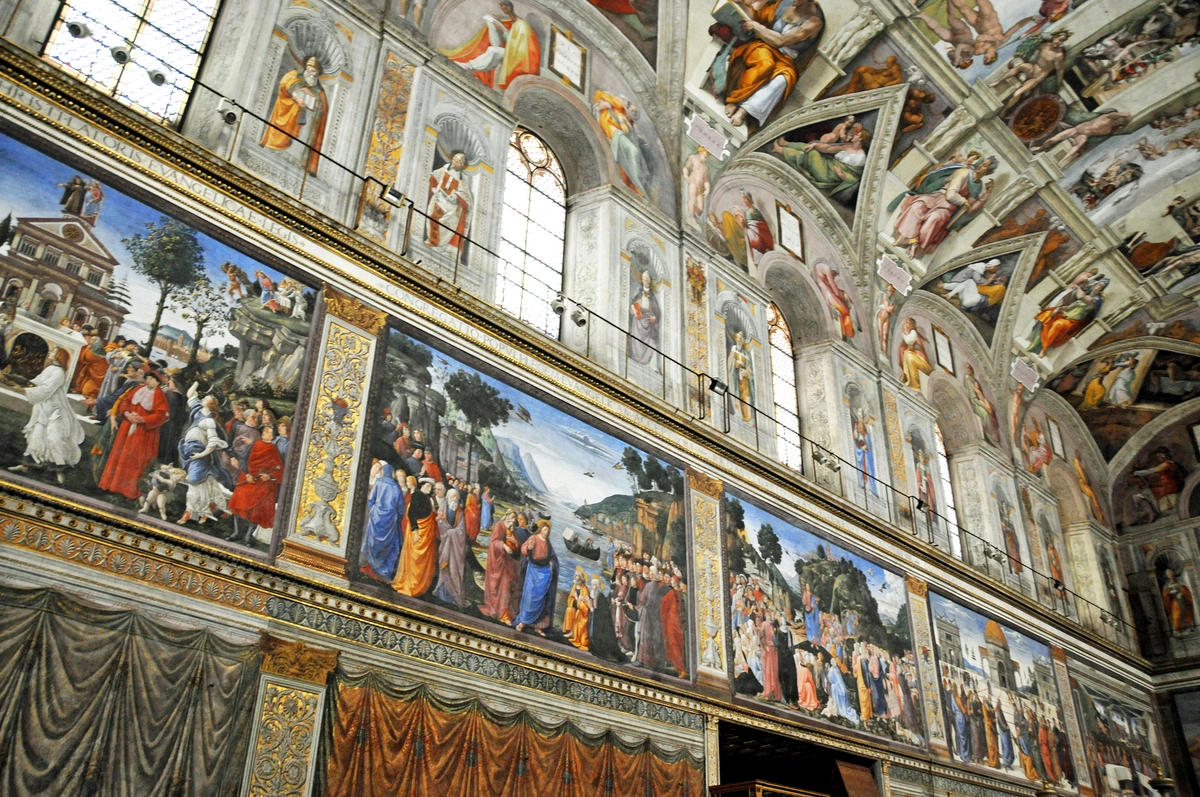
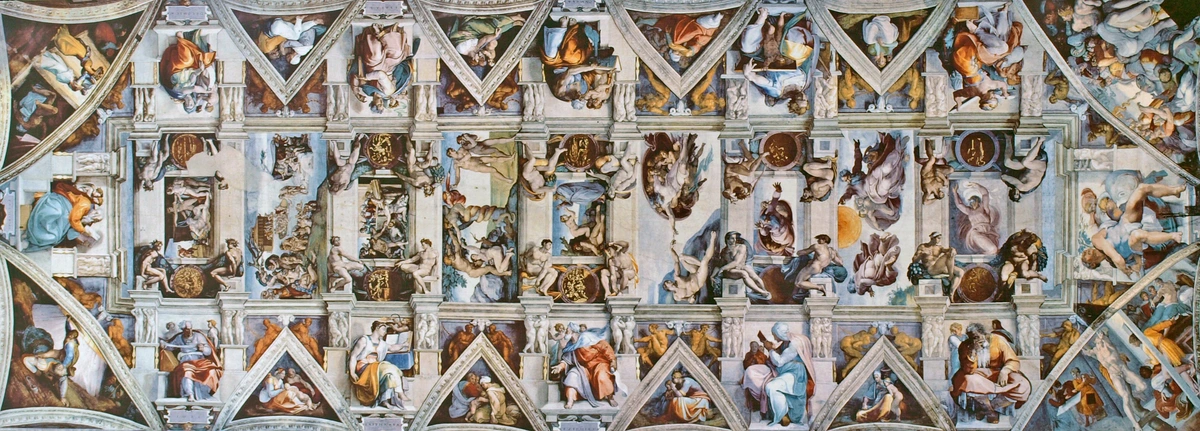
So, what exactly are we looking at? Let's break down this masterpiece that has been shocking and inspiring people for centuries, unpacking its complex layers and revealing the stories hidden within the paint. You know, when you first walk in, your eyes are naturally drawn upward to that famous ceiling—the optimistic story of Genesis and humanity's dawn. But then you turn toward the altar, and the visual tone shifts completely. The ceiling is all about beginnings; this wall is all about the end. It's a powerful one-two punch that Michelangelo and his papal patrons orchestrated perfectly within the chapel's architecture.
And let's be honest about the viewing experience today: you're sharing this moment with about five hundred other tourists, all craning their necks, whispering in a dozen languages, and getting shushed by guards. But somehow, despite the modern chaos, that central figure of Christ the Judge cuts right through it all. That's the real genius of the thing—it was designed to command attention in a room that was never really quiet, even in the 16th century.
A Tale of Two Michelangelos: From Ceiling to Altar Wall
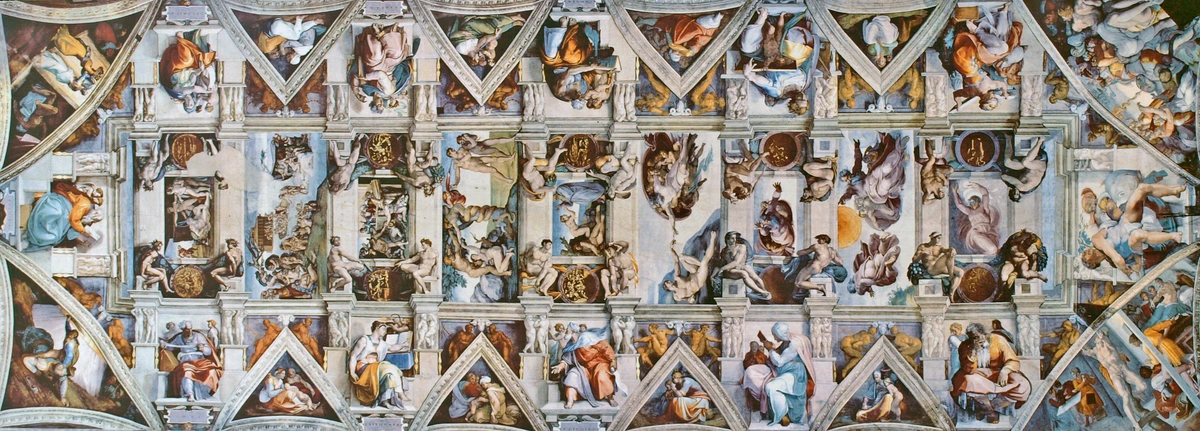
The chasm of about 25 years between the Sistine Chapel ceiling and The Last Judgment is not just a passage of time but a journey through a metamorphosing Europe and a maturing artist's soul. When Michelangelo painted the ceiling (1508-1512), he was a younger man working at the zenith of the High Renaissance. The project was a monumental undertaking, establishing him as a peerless master of the human form and of monumental fresco composition. He lay on his back for four years, and the result was a work infused with divine order, grace, and a profound sense of humanistic potential. It is, for the most part, a hopeful and triumphant vision of humanity's creation and early history.
But here's what changed in those intervening decades that fundamentally altered Michelangelo's vision. Firstly, politically, the world had shifted. The Sack of Rome in 1527 wasn't just a historical footnote—it was a deep, psychological wound for the entire Catholic world. I sometimes think of it as the 9/11 of the Renaissance, an event that shattered the illusion of papal invincibility and raised terrifying questions about divine punishment. Rome wasn't just sacked; the very idea of a secure, triumphant Christendom was brutalized.
And then there was the man himself. The young Michelangelo had been celebrated, ambitious, riding the crest of humanistic optimism. The older Michelangelo was different. He was now in his sixties. He had witnessed friends die, political fortunes collapse, and the Protestant Reformation fundamentally challenge everything the Roman Church stood for. He had also become deeply interested in more introspective, penitent forms of spirituality. He was, by all accounts, wrestling with his own conscience, his own mortality, and the state of his soul. So when Pope Clement VII approached him for this commission, he wasn't getting the same artist who painted the ceiling. He was getting a man who had stared into the abyss of his own era, and more importantly, into the abyss of his own heart.
The Rome to which Michelangelo returned in the 1530s was a city, and a Church, profoundly scarred. The catastrophic Sack of Rome in 1527 by the mutinous troops of Holy Roman Emperor Charles V had shattered the city's sense of invulnerability and dealt a massive blow to papal prestige. The event was seen by many as a divine judgment upon a corrupt and worldly Church. Simultaneously, the Protestant Reformation, ignited by Martin Luther, was fracturing the universal authority of the Catholic Church and vocally rejecting many of its practices, including the veneration of religious imagery.
This brings us to the Council of Trent, which began in 1545. It's easy to see this painting as just Michelangelo's personal vision, but it's more accurate to see it as a foundational text for the entire Counter-Reformation that Trent would formalize. The Church was on the back foot, and this fresco was one of its first and most powerful counter-punches. It was a defiant reassertion of core Catholic doctrines that Protestants were challenging: the reality of Purgatory, the intercession of saints, and the terrifyingly real consequences of sin and divine judgment.
The Church responded with a period of internal reform, moral austerity, and dogmatic reassertion known as the Counter-Reformation. Art was commandeered as a primary tool in this campaign. It was no longer simply an expression of beauty or a private devotional aid; it became a vehicle for mass instruction, a weapon against heresy, and a means to inspire a renewed, more passionate faith. This was the fraught context in which Pope Clement VII, and later the powerful and art-loving Pope Paul III Farnese, commissioned The Last Judgment. They envisioned a monumental work for the most important chapel in Christendom, a fresco that would serve as an awe-inspiring and terrifying testament to God's ultimate power and humanity's final accountability.

Michelangelo, by this time, was in his early sixties. He was a profoundly changed man—widely regarded as the greatest living artist, but also one who had witnessed immense personal and political upheaval. He was more deeply introspective, more concerned with his own salvation, and profoundly affected by the religious fervor of the age. This personal transformation is the emotional core of the fresco. He channeled the era's grim anxieties and his own spiritual turmoil directly into his work. The balanced, harmonious compositions of the ceiling give way to the swirling chaos and storm of divine fury on the altar wall. This profound shift from the grace of creation to the terror of judgment is not just a change in subject matter; it is a mirror of the artist's own journey from a confident young master to a man keenly aware of his own mortality, wrestling with guilt, faith, and the hope for redemption.
Reading the Fresco: A Guided Tour of the Apocalypse
Breaking down The Last Judgment requires us to understand it not as a single scene, but as a series of interconnected, emotionally charged zones. It can be roughly divided into four horizontal bands, moving from the top of the lunettes down to the bottom corners of damnation and salvation. Within this structure, Michelangelo composes a vast, swirling vortex of humanity, a divine engine of judgment. Let's take a tour, section by section, to make sense of the magnificent chaos.
At first glance, the fresco is an overwhelming swirl of bodies. But the apparent chaos is underpinned by a powerful, circular logic, a vast clockwise vortex of spiritual energy that functions like a divine engine. This compositional whirlwind pulls the saved upwards in a great arc on the left and drags the damned downwards into the abyss on the right. It's not a static scene but a dynamic, unfolding event centered on the most powerful figure of all. Christ is the explosive core of this engine, his dynamic pose setting the entire universe of the painting into motion.
What's fascinating is how this circular motion works. It's the visual equivalent of Dante's cosmic order turned into a divine hurricane. Your eye is supposed to get swept up in this current, moving from the dead rising on the lower left, up toward salvation, swirling around the central axis with Christ, and then being violently cast down into the horror of the lower right. The composition itself is a moral and spiritual journey, not just a representation of one. You can't just "look" at it; you have to "read" it, and to read it is to experience the emotional force of rising hope and plummeting despair.
The Center: Christ the Judge
We need to confront the central figure directly. Forget the gentle, bearded Jesus of medieval iconography or the soft-featured savior of later devotional art. Michelangelo’s Christ the Judge is a colossal, muscular, beardless titan, an embodiment of divine power that draws more from the idealized forms of Apollo or Hercules than traditional Christian imagery. This was a deliberate and radical choice, a direct reflection of the artist's profound engagement with Classical ideals of heroic beauty, synthesizing them with the formidable demands of Counter-Reformation theology. His athletic form is twisted in a powerful contrapposto, creating a sense of dynamic, rotational energy that sends shockwaves through the entire composition. He is not seated on a throne; he is an active, dynamic force of judgment.
Look closely at Christ's expression. It is not one of human rage, but of fierce, implacable authority. His gaze is direct and absolute. This depiction embodies the theological concept of the Christus Iudex (Christ the Judge), a figure who fulfills the dual roles of merciful savior and righteous judge. His right arm is raised in a gesture that simultaneously draws the saved towards him and casts the damned into the abyss. It's a movement of finality; there is no appeal. Next to him, the Virgin Mary recoils, shrinking into her cloak. She is traditionally the great intercessor for humanity, but here, in this ultimate moment, she turns away, seemingly unable to witness the finality of her son's judgment. Mercy has been replaced by justice. This poignant detail underscores the fresco's terrifying message: the age of intercession is over, and every soul stands alone before its creator.
The Top: Angels and the Instruments of Passion
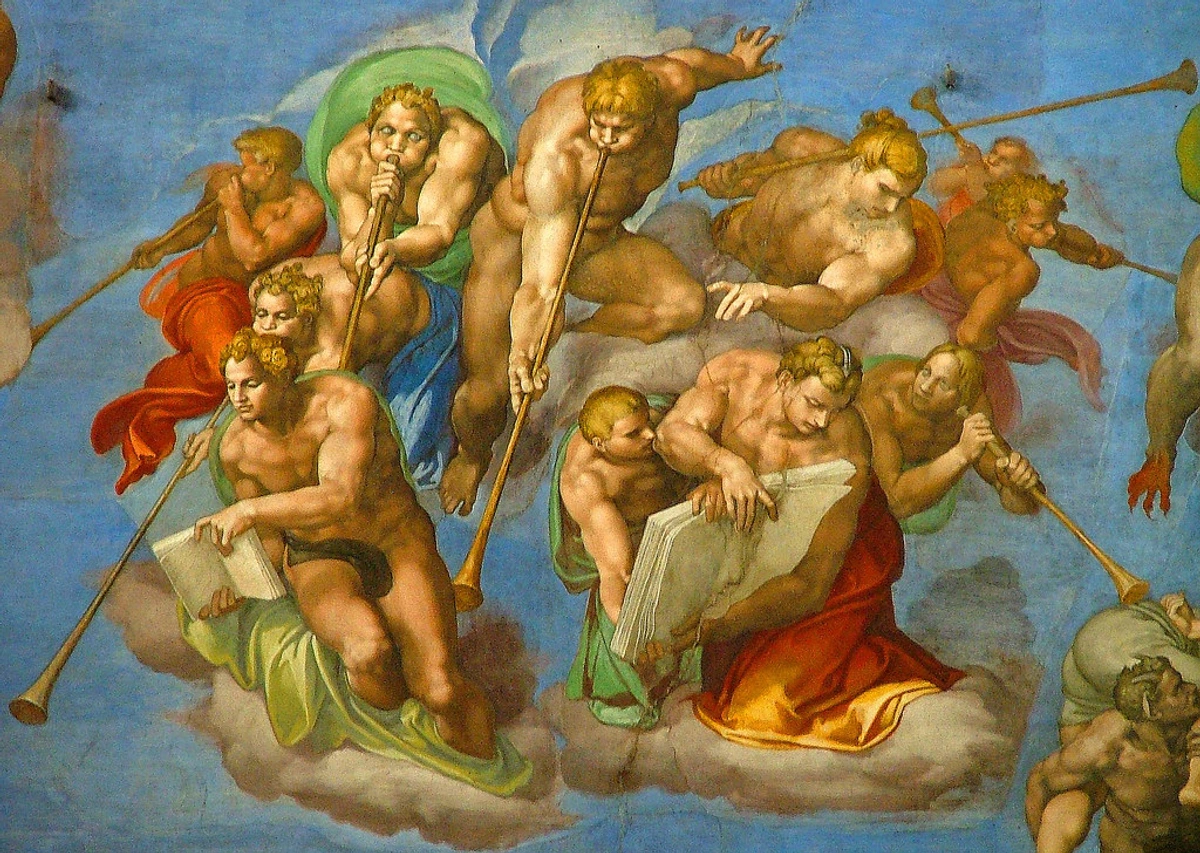
In the two arched sections, or lunettes, at the very apex of the fresco, we find a group of wingless angels. They are not flying or singing hymns; they are laboring. Their task is to carry the symbols of Christ's earthly suffering and crucifixion: the cross, the crown of thorns, the pillar of the flagellation, and the sponge on a reed that was offered to him on the cross. These objects are known collectively as the Arma Christi (Weapons of Christ), and their prominent placement is theologically profound. They serve as a constant, somber reminder that this final act of judgment is predicated on the supreme sacrifice Christ made for humanity—a sacrifice that is now the very standard by which humanity is judged.
You'll notice these angels don't have wings—a deliberate choice. Michelangelo wanted to strip away any easy supernatural signifiers. These are workers, laborers in the divine economy, weighed down as much by the theological gravity of what they carry as by the physical weight of the cross. They're hauling the central evidence of salvation history into the courtroom of eternity. It's not a celebration of the resurrection; it's a solemn presentation of the cost. A Counter-Reformation viewer would have instantly understood this as a rebuke to Protestant ideas about faith versus works. The tools of Christ's passion are literally what open the gates of heaven in this image, a complex theological argument made visible through straining muscle and carved wood.
The Elect: The Saints and the Saved
Encircling Christ isn't a peaceful choir of saints but a clamoring assembly of powerful, agitated, and even demanding figures. Michelangelo's resurrected are not peaceful spirits. They are robust, strained, their musculature a clear indication of the artist's sculptural mindset. Their bodies are the vessels of their spiritual state. This is not a quiet salvation, but a triumphant, anxious, and deeply physical resurrection. Among the swirling figures, several stand out due to their significant placement and easily identifiable attributes. This orchestrated chaos of sainthood played a crucial role in Counter-Reformation teaching, visually narrating the Church's doctrines through powerful, emotionally charged figures.
Surrounding Christ is a host of saints and martyrs. But these aren't serene, heavenly figures. They are powerfully built, anxious, and some even seem to be demanding justice, their faces twisted in a mix of awe and pleading. This is a council of the elect, participating in the drama rather than simply observing it.
You can identify some by their attributes:
- St. Bartholomew: Just below Christ, he holds a knife and his own flayed skin. The face on the skin is famously believed to be a self-portrait of Michelangelo, a deeply personal and rather gruesome confession of his own sinfulness and fears. This isn't just a religious icon; it's Michelangelo placing his own flawed humanity directly into the scene of divine judgment.
- St. Peter: To Christ's left, he holds the keys to Heaven, looking almost like he's returning them now that their purpose is fulfilled.
- St. Lawrence: He holds the grill upon which he was martyred.
- St. Catherine of Alexandria: Often identified by her attribute, the broken spiked wheel of her martyrdom.
- St. Sebastian: Clutching the arrows that were meant to kill him, another powerful symbol of martyrdom and survival through faith.
On the lower left quadrant of the fresco, we're confronted with the chaotic, vibrant, and theologically loaded scene of the Resurrection of the Dead. This is not a gentle awakening. It's a visceral, almost brutal, rebirth. Michelangelo paints the dead clawing their way out of the earth, physically struggling against the pull of mortality. It mirrors that profound human terror of being trapped or buried, rendered with alarming physicality for an audience well-acquainted with disease and earthly suffering. Angels assist in their rising, some literally yanking souls from their graves with a force that speaks of divine impatience and sovereign power over life and death. Their rising is not a gentle affair; it's a physical struggle, a violent passage from earth to sky. This detail—the angels using rosary beads—is one of the most powerful visual declarations of Counter-Reformation doctrine in the entire fresco. At a time when Protestant reformers were criticizing the veneration of Mary, the intercession of saints, and the use of sacramentals like the rosary, Michelangelo paints their divine, life-giving efficacy for all to see. He transforms a simple string of beads into a celestial lifeline, a powerful affirmation by the Church of its core practices. It's art as theological argument, as sophisticated propaganda, and as a source of deep personal comfort all at once. This specific detail is a pointed Counter-Reformation statement, visually affirming the Catholic Church's emphasis on the power of prayer, the intercession of saints, and the sanctity of sacramentals against Protestant critiques.
The Damned: The Descent into Hell
The lower right portion of The Last Judgment contains some of the most harrowing imagery in Western art. It's a vision of damnation so visceral, so physically and emotionally brutal, that it transcends mere illustration and becomes a direct assault on the senses. This is not a painting you simply observe; it's a psychological event. These figures aren't just falling; they are being actively hunted, tormented, and broken by demonic figures who seem to relish their task. Their bodies are twisted into grotesque parodies of human form, their faces frozen in a rictus of pure horror. Michelangelo channels a deep-seated, medieval anxiety about hell, filtered through his unmatched anatomical skill. He doesn't just want you to know about damnation; he wants you to feel the stomach-churning terror of it.
Here, Michelangelo's debt to Dante Alighieri’s Inferno becomes explicit. Charon, the ferryman of the underworld from Greek mythology, beats souls with an oar to get them out of his boat and into the waiting arms of Hell, presided over by another mythological figure, Minos. This wasn't just an artistic flourish; it was a bold synthesis of Classical literature and Christian theology that would have been deeply familiar to the educated Renaissance viewer. It creates a vision of eternal damnation that is not just imagined, but literary, visceral, and horrifyingly specific.

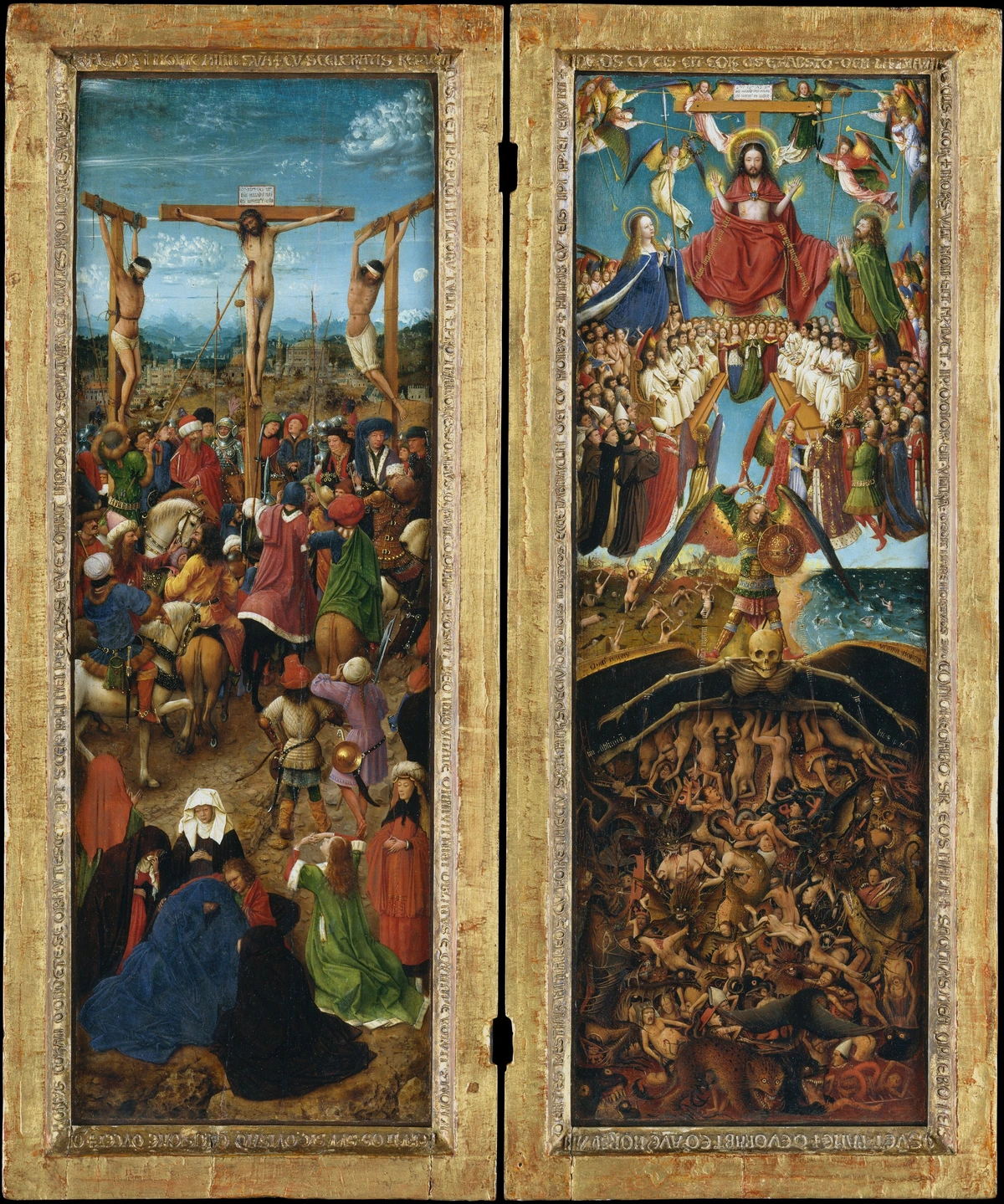
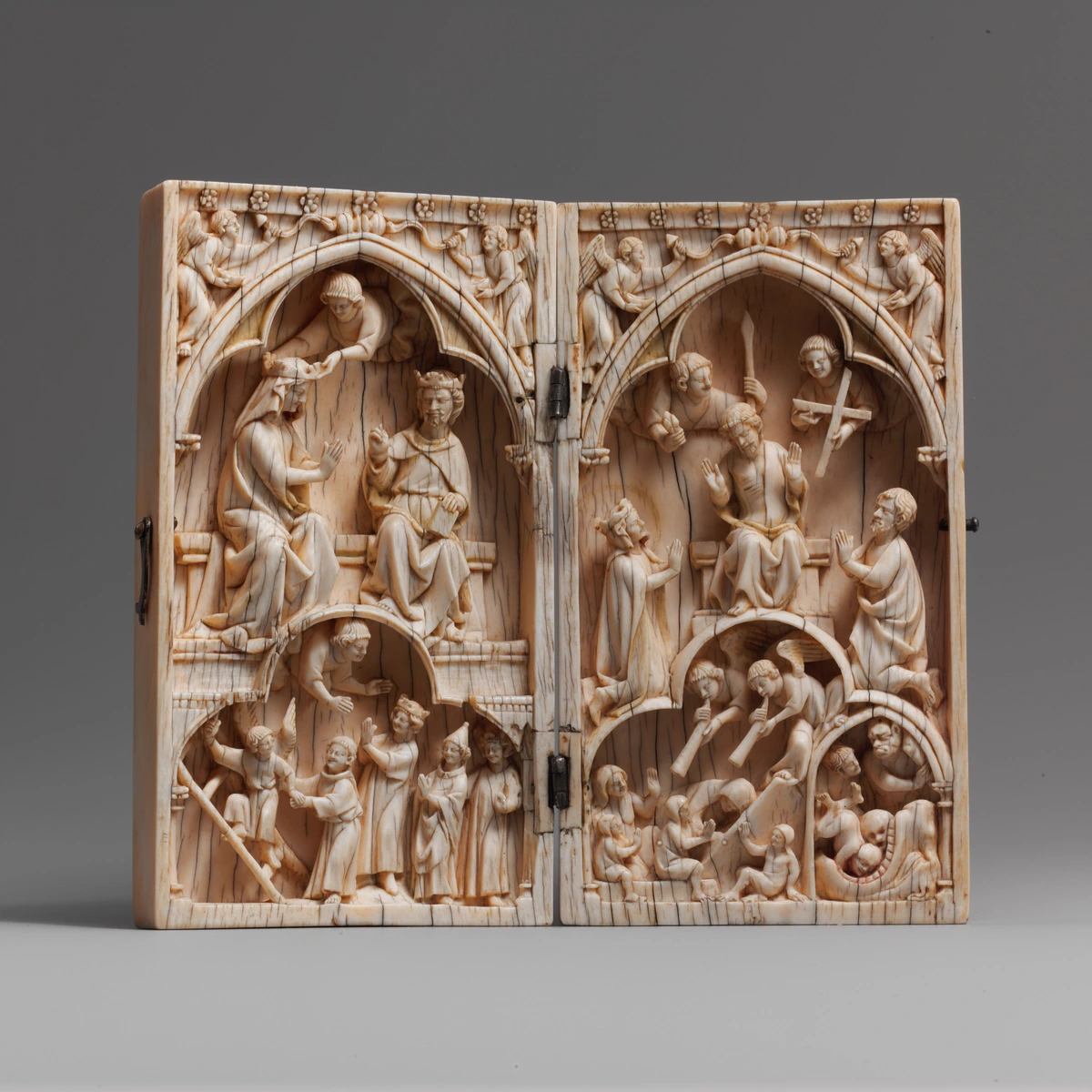
This diptych format, placing the Crucifixion next to the Last Judgment, visually connects Christ's sacrifice with the final consequence for humanity, a central theme in Michelangelo's work.
The Great Controversy: The Nudes and the Fig Leaf Campaign
You can't talk about The Last Judgment without mentioning the scandal. Michelangelo painted nearly all 400 figures nude, in keeping with the Renaissance art tradition of seeing the human body as the ultimate expression of creation. For Michelangelo, the nude was a vehicle for expressing the highest spiritual and emotional concepts. He believed that at the moment of judgment, all worldly status is stripped away, leaving only the naked soul before God.
This idea comes directly from St. Paul's epistle, where he speaks of being "found naked" and wanting to be "clothed" with immortality. Michelangelo was giving that theological concept a brutally literal, physical form. He was saying that rank, wealth, and earthly pride are all illusions that will be torn away. What remains is the naked truth of who you are, without the costumes of status. It's an egalitarian vision of terrifying finality—the Pope and the pauper are equally stripped bare before divine justice.
However, many in the Church were horrified. They saw it as obscene, more fitting for a bathhouse than the Pope's private chapel. The debate wasn't just about modesty; it was a clash between two worldviews—the humanistic reverence for the body inherited from Classical antiquity, and the renewed puritanical zeal of the Counter-Reformation.
The Papal Master of Ceremonies, Biagio da Cesena, famously complained that the work was a disgrace. Michelangelo got his revenge by painting Cesena's likeness into the fresco as Minos, judge of the underworld, complete with donkey ears and a serpent biting his genitals. It was an act of pure, public, and permanent defiance.
And this is where it gets really interesting. The controversy wasn't just about the nudity itself, but about what kind of nudity it was. In the optimistic, Neoplatonic world of the ceiling, the nude was an image of divine perfection. Here, the nude was something else entirely. These bodies are strained, contorted, distorted by fear, hope, and violence. Michelangelo isn't showing you perfect bodies; he's showing you souls made visible through bodies under extreme spiritual and physical stress. He was arguing that the body is the ultimate vehicle for expressing spiritual truth, even—or especially—when that truth is terrifyingly uncomfortable.
The backlash was swift and powerful. Led by figures like the moralistic Cardinal Gian Pietro Carafa, who would later become the austere Pope Paul IV, a movement grew to have the entire fresco demolished. It's hard to overstate how close the work came to being destroyed. The debate over the fresco became a proxy battle for the soul of the Counter-Reformation Church: was it a church of beauty and humanism, or of austerity and rigid moral policing?
Though a full demolition was avoided, after Michelangelo's death in 1564, the tide turned decisively. The final sessions of the Council of Trent in 1563 issued explicit decrees concerning religious art, condemning any imagery that was "lascivious" or could lead the faithful into error. The decision was made to censor the masterpiece. Daniele da Volterra, one of Michelangelo's own pupils, was hired to paint draperies and loincloths over the most "offensive" genitals. This act earned him the cruel and lasting nickname Il Braghettone, or "the breeches-maker."
What's tragic is that Daniele da Volterra was a fine artist in his own right, but his name is now forever synonymous with this act of censorship. He was caught between his loyalty to his master's vision and the overwhelming political and theological pressure of the post-Tridentine Church. In many ways, he made the alterations less obtrusive than they could have been, trying to preserve the dynamism of the original poses, but the damage was done. A central piece of Michelangelo's theological argument—that we are all stripped equally bare before God—was literally being covered up.
Key Details and Symbolism at a Glance
When you're faced with a work this dense, a simple table can feel almost comical in its reductionism. But it can also be incredibly useful. Think of the following as a quick-reference guide, a set of anchors to help you navigate the overwhelming sea of figures and stories. It's like a cast list for the apocalypse.
But don't stop at the table. The real magic of the fresco is in the stories that connect these figures. Notice, for example, the diagonals in the painting. There is a powerful downward diagonal from Christ's raised right arm to the damned in the lower right, a visual expression of the finality of his judgment. Then there is the upward diagonal from the bottom-left corner with the resurrected, moving towards Christ and the saved. It's a compositional X, a cosmic crossroads. Where do you see yourself in that pattern? That was Michelangelo's question, posed in paint, to every cardinal, priest, and pilgrim who ever stood before it.
| Figure/Section | Location | Meaning & Symbolism | | Figure / Section / Symbol | Location | Meaning & Symbolism | | Christ the Judge | Center | A powerful, god-like figure delivering final, unappealable judgment. His muscular form emphasizes divine power over gentle mercy. | | Virgin Mary | Beside Christ | Turns away from the judgment, symbolizing that the age of intercession and mercy has passed. | | St. Bartholomew | Below Christ | Holds his own flayed skin, which bears a self-portrait of Michelangelo. It reflects the artist's personal anxieties about sin and salvation. | | Charon's Boat | Lower Right | A direct borrowing from Dante's Inferno and Greek mythology. It shows the syncretism of Classical and Christian ideas in Italian Renaissance art. | | The Resurrected | Lower Left | The dead rise from their graves. Some are pulled up by rosaries, a powerful Counter-Reformation image affirming the importance of prayer and sacraments. | | Minos, Judge of Hell | Bottom Right Corner | Another figure from mythology, with the face of a Papal critic (Biagio da Cesena), an act of artistic revenge. | | Angels with Instruments (Arma Christi) | Top Lunettes | Wingless angels carry the symbols of the Passion (Cross, column, etc.). A theologically charged reminder of the sacrifice upon which this judgment is based. |
FAQ: Your Questions about The Last Judgment Answered
No matter how much you study a work of art, a few practical and foundational questions always seem to pop up. Let's tackle some of the most common ones head-on. This isn't just trivia; the answers give you a crucial framework for understanding the sheer scale and ambition of Michelangelo's vision.
Where is The Last Judgment located?
It occupies the entire altar wall of the Papal Chapel, or Sistine Chapel, in Vatican City. When you enter the chapel, it's on the far wall, directly opposite the main entrance. This strategic positioning is a stroke of narrative genius. Visitors historically would walk the length of the chapel, gazing up at the ceiling's optimistic journey from Creation to the dawn of humanity, before finally confronting the altar wall's stark vision of its end. It's a powerful chronological and emotional journey, compressed into a single, overwhelming architectural experience.
What technique did Michelangelo use?
The medium is fresco, specifically buon fresco (true fresco). This is one of the most demanding techniques in all of art. Michelangelo had to apply pigments mixed with water directly onto freshly laid, damp lime plaster (intonaco). As the plaster dries, a chemical reaction occurs, causing the lime to form a crystalline matrix that permanently binds the pigment into the wall itself. This means every section had to be painted perfectly before the plaster set—a process that could take less than a day. Imagine the pressure: no room for error, no possibility of significant revision. The entire monumental work, completed in sections over six exhausting years, stands as a testament to his almost superhuman technical mastery, stamina, and unerring sense of design.
How long did it take to paint?
The immense project took Michelangelo approximately six years of nearly continuous work, from the initial preparations in 1536 to its final unveiling on October 31, 1541. He was in his early 60s when he began and approaching 67 upon its completion. The physical demands were extraordinary. Unlike the ceiling, which was largely flat and painted while lying down, the altar wall is curved, forcing the aging artist to work on complex scaffolding, often with his arms raised above his head for hours on end. It's a feat of human endurance that is almost impossible to comprehend today, undertaken at an age when most people would have long since retired.
Why are so many figures muscular?
This is fundamental to Michelangelo's entire artistic identity. You have to remember, the artist always considered himself a sculptor first, even when he was painting. He famously described the act of carving as freeing a figure "from the marble that imprisons it." This sculptural mindset bled into everything he did. For him, the powerful, idealized, and heavily muscled human form—the disegno—was not just a subject but his primary visual language.
But there's another layer here, borrowed from his spiritual guide, the poet Vittoria Colonna, and his deep reading of Neo-Platonic philosophy. The body wasn't just a shell; it was an expression of the soul. And what kind of soul would you expect in a resurrected, perfected state? A powerful one. The muscled forms aren't just a stylistic tick; they are a theological statement about the nature of the glorified, resurrected body. He was arguing that in the next life, our true, perfected spiritual selves would have a vigor and power that our mortal bodies only hint at.
Can you still see the original version without the loincloths?
This taps into one of the great art historical controversies of the 20th century. A massive restoration campaign between 1980 and 1994, under the leadership of chief restorer Gianluigi Colalucci, removed centuries of accumulated soot, dust, candle grease, and yellowed varnish. The result was explosive. The fresco was revealed to be painted in a much brighter, more vibrant, and almost acidic color palette than anyone had imagined. The famous Braghettone loincloths and draperies added by Daniele da Volterra were, however, deliberately left in place. They are now understood not as part of the original work, but as a crucial historical document—a physical record of the bitter controversy the painting provoked and the theological censorship it endured.
What's fascinating is that during the restoration, conservators found traces of secco work—pigments applied to dry plaster—on top of the original buon fresco base. This allowed them to clearly distinguish Michelangelo's original brushstrokes from later repainting and the Braghettone additions. This physical evidence in the plaster settled the debate: we know exactly what was original and what was added later. The decision to leave the loincloths was a conscious choice to preserve the history of the fresco, including its troubled reception. It's a compromise that honors both Michelangelo's genius and the complex, messy, and often censorious history of how his masterpiece was received.






A Final Thought: A Mirror to the Soul
The Last Judgment does not offer easy comfort. It is not meant to. It is a gut-punch of theology, a swirling epic of human hope and divine judgment. In this, his final monumental statement in paint, Michelangelo held up a mirror not just to the specific anxieties of the Counter-Reformation, but to the eternal human predicament: our mortality, our sinfulness, our desperate hope for salvation. He forces every viewer to locate themselves in the chaos—in that eternal, terrifying question of whether we are among the rising or the falling.
Standing before it, you realize that the drama isn't just happening in the painting; it's happening in the space between the painting and you. The artist forces you into the role of witness, and ultimately, of participant. It's a question posed in paint and plaster, and it demands an answer from your own conscience.
The fresco is a work that stays with you, an image you carry out of the chapel and into the world. It remains one of the most powerful, complex, and emotionally devastating works of art ever created. It offers a direct, unfiltered, and deeply personal look into the mind of one of the greatest famous Renaissance artists at the height of his technical powers and the depths of his spiritual struggle. It stands as the ultimate testament to the idea that great art doesn't just decorate a wall; it challenges, provokes, and fundamentally changes you.