Who Painted the Sistine Chapel Ceiling? Michelangelo's Epic Transformation
Uncover Michelangelo's Sistine Chapel saga: a reluctant sculptor's grueling four-year fresco masterclass, intense rivalries, revolutionary techniques, and the enduring legacy that shaped Western art forever. The ultimate guide.

Who Painted the Sistine Chapel Ceiling? The Epic of a Sculptor's Transformation
Who painted the Sistine Chapel ceiling? The straightforward answer, the one that brings most people here, is Michelangelo di Lodovico Buonarroti Simoni. The incomparable. The singular. The legend. That much is crystal clear. But if you're stopping there, you're missing the profound, often agonizing, and ultimately transformative saga behind one of humanity's most extraordinary artistic feats. This isn't just art history; it's a raw testament to human willpower, divine inspiration, and the sheer stubbornness of a genius. I've often found myself staring at a blank canvas, wondering how to begin, only to realize that sometimes, the greatest art is born from the deepest resistance.
Imagine: four years of your life spent with your neck craned back, paint and plaster dust constantly raining down into your eyes, day after relentless day. My own neck aches just thinking about a few hours at my easel. It's a vivid reminder that sometimes, the greatest art is forged in the crucible of discomfort, pushing artists beyond their perceived limits. This article isn't just about who painted it; it's about the reluctant genius, the brutal process, and the enduring legacy that transformed a sculptor into an unlikely painter of heaven itself. It’s a story of artistic defiance and unparalleled tenacity that I find endlessly inspiring, especially when I'm battling a particularly stubborn canvas in my own studio in Den Bosch.
The Reluctant Genius: A Sculptor, Not a Painter
Here’s the first thing you absolutely have to understand: Michelangelo did not want this job. Not one bit. When Pope Julius II, a formidable character nicknamed the "Warrior Pope" (which, let's be honest, tells you everything you need to know about his temperament and ambition for the papacy), summoned him to Rome in 1508, Michelangelo was in his early 30s and already a bona fide superstar. But he was a superstar sculptor. This was the man who had famously carved the incredibly detailed Pietà and the colossal Statue of David out of marble. He was even actively working on his monumental Moses for Julius II's tomb, a project that would become a source of immense frustration for him for decades.
For Michelangelo, painting was a lesser art form – messy, and not nearly as intrinsically profound as liberating a figure from a block of stone. He subscribed to a prevailing hierarchy in the arts of the time, deeply rooted in the intellectual climate of the Italian Renaissance and the burgeoning philosophy of humanism. Thinkers like Marsilio Ficino and Pico della Mirandola championed humanism, celebrating classical antiquity and the human form as a reflection of divine perfection, even going so far as to suggest humanity had a 'divine spark' within. From this Renaissance humanism perspective, sculptors, by carving three-dimensional forms, were seen as more closely imitating God's act of creation, literally battling stone to reveal the form trapped within. Painting on a flat surface? That must have felt like mere surface decoration to him, lacking the divine act of creation he associated with carving. In his mind, he was a sculptor. Full stop. He even famously signed his letters, "Michelangelo, Sculptor." So, when the Pope pitched the idea of painting the chapel's ceiling, Michelangelo's initial response was a polite (or perhaps not so polite) refusal: "No thanks, Your Holiness, you've got the wrong guy."
His artistic education, primarily under Domenico Ghirlandaio in Florence, had honed his drawing (disegno) and anatomical skills, but his true passion and mastery were in sculpture. This emphasis on disegno (drawing and design, valuing line and form above all) over colore (color, valuing hue and surface effects) was a fundamental debate in Renaissance art, a kind of ancient artistic rivalry, and Michelangelo was firmly on the side of form and line, seeing color as secondary. I often think of it as the difference between a master architect who designs structures and a decorator who chooses paint colors; to Michelangelo, the architect was clearly superior.
This wasn't just personal artistic snobbery; his refusal was deeply intertwined with the cutthroat rivalries of the Renaissance art scene. Michelangelo was convinced – and this is where the drama truly starts – that his rivals had cooked up this elaborate scheme to humiliate him. Primarily, it was the shrewd architect Donato Bramante, a key figure in Julius II's court and, crucially, the uncle of the rising painting star Raphael. Bramante, who was already leading the ambitious rebuilding of St. Peter's Basilica, likely saw an opportunity to remove Michelangelo from Rome, sideline his sculptural ambitions (including the Pope's coveted tomb), and clear the path for his talented nephew, Raphael, to become the preeminent painter. This wasn't just artistic banter; this was high-stakes Renaissance power play, a classic tale of ambition, jealousy, and strategic maneuvering that deeply impacted Michelangelo's initial resistance. Bramante, a master of grand architectural projects, was vying for significant papal resources and influence, and a dominant sculptor like Michelangelo was a direct competitor for that precious patronage. Imagine the office politics, but with popes and colossal marble statues at stake. It makes my own studio rivalries seem rather tame.
But why would the Pope, a man of such immense ambition and stubbornness, insist on a reluctant sculptor for such a monumental task? It’s likely a mix of Julius II’s own indomitable will to exert his patronage, a subtle political calculation to demonstrate papal authority over even the greatest artists, and perhaps a shrewd gamble that Michelangelo's undeniable genius, once unleashed, would transcend his preferred medium. Julius II, a military leader as much as a spiritual one, wanted to leave an indelible mark on Rome and the Church, projecting an image of power and divine legitimacy through art. He was convinced Michelangelo was the man to do it, regardless of the artist's personal preferences. Sometimes, I find myself resisting a new technique or subject – say, moving from abstract painting to detailed portraiture – only to discover a new facet of my own artistic voice when pushed outside my comfort zone. For Michelangelo, that push came with a papal decree.
Here's a quick look at some of Michelangelo's sculptural masterpieces that defined his reputation as a master sculptor before the Sistine commission, clearly illustrating why he saw himself as a carver of stone, not a painter:
- The Pietà (1498–1499): Carved from a single block of marble, this incredibly detailed and emotionally resonant sculpture, located in St. Peter's Basilica, depicts the Virgin Mary cradling the dead body of Jesus. Its tender realism and profound pathos were revolutionary, showcasing an unmatched ability to bring life from stone.
- David (1501–1504): This colossal marble statue, a symbol of Florentine liberty, showcases Michelangelo's unparalleled understanding of human anatomy and emotional tension, capturing David just before his battle with Goliath. It established him as the leading sculptor of his generation, a testament to his mastery of the human form in three dimensions.
- Moses (c. 1513–1515): Part of the much-delayed tomb for Pope Julius II, this powerful, seated figure (now in San Pietro in Vincoli, Rome) captures the prophet's awe-inspiring authority and inner turmoil. Its dramatic energy and robust form are quintessential Michelangelo, literally bursting with contained power that only a sculptor could achieve.
A Papal Commission He Couldn't Refuse (And Then Made His Own)
Here’s the thing about popes in the 16th century, especially a formidable character like Julius II: you didn't really say no to them indefinitely. After a lot of arguing – Michelangelo even fleetingly fled Rome at one point – he eventually, reluctantly, accepted the commission in May 1508. This period of artistic patronage, where powerful figures like popes, cardinals, and wealthy families funded grand art, was the lifeblood of the Italian Renaissance. These papal commissions were not just about beautification; they were powerful statements of theological authority, political power, and cultural supremacy.
Initially, the plan for the chapel ceiling was quite modest: just the twelve apostles in the triangular spandrels (the curved, triangular spaces between the arches supporting the vaulted ceiling), perhaps with some decorative elements. A relatively simple job, one might think, especially for a master like Michelangelo. But his formidable artistic ego and burgeoning vision, once engaged, couldn't settle for 'modest.' He reportedly found the initial proposal a "poor thing" and successfully lobbied the Pope to let him do something far more ambitious, a grand narrative covering the entire vault. This expansion wasn't achieved without further conflict; Michelangelo's powerful personality, combined with the Pope's ultimate trust in his genius, allowed him to reshape the commission into the monumental undertaking we know today. This truly demonstrates his formidable will and burgeoning artistic vision as a painter. I often wonder, if a client came to me with a 'modest' idea, would my own artistic pride, once fully engaged, allow me to stick to it? For Michelangelo, the answer was a resounding 'no.' He ended up creating a breathtakingly complex scheme with over 300 figures, a true testament to the heights of human creativity.
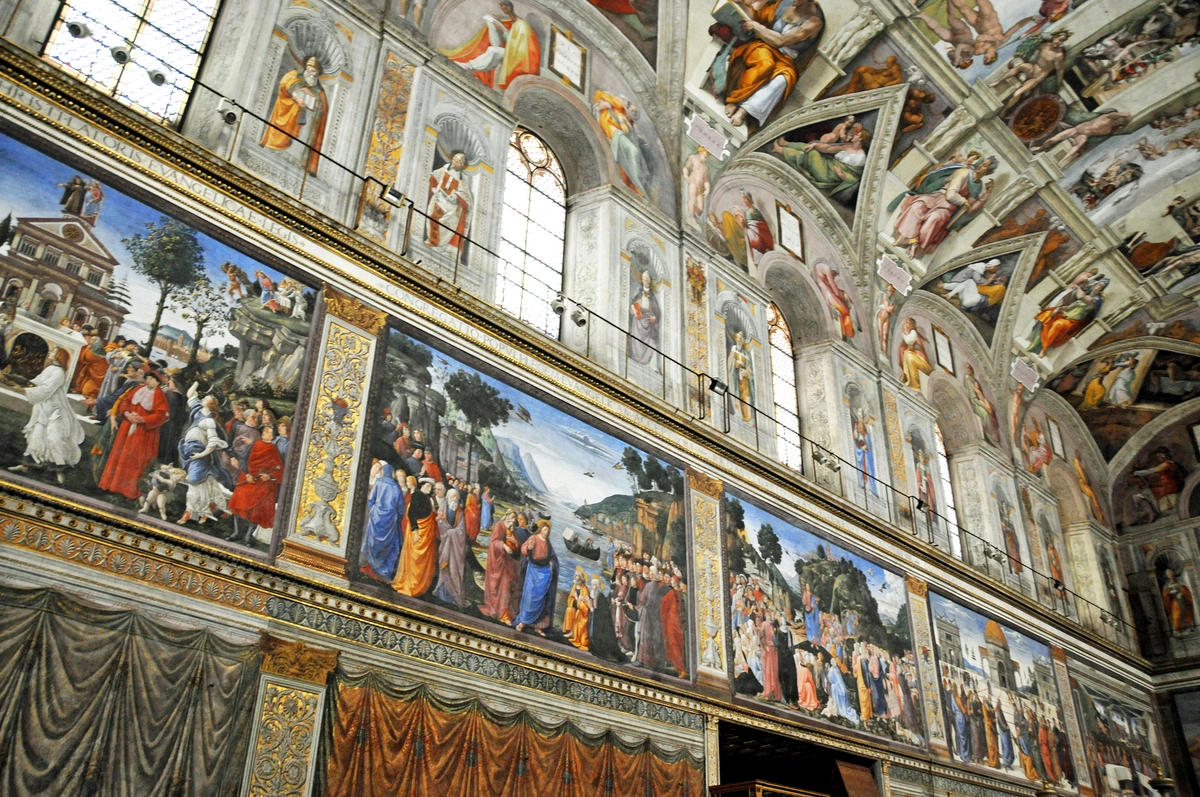
To understand the significance of Michelangelo's work, it's essential to remember the Sistine Chapel's primary function and its existing decor. It wasn't just any church; it was, and still is, the Pope's private chapel, used for significant liturgical events, and most famously, as the venue for the papal conclave – the process by which a new Pope is elected. Architecturally, the chapel is a large rectangular brick building, approximately 40.9 meters (134 feet) long, 13.4 meters (44 feet) wide, and 20.7 meters (68 feet) high. Its walls and ceiling were intended as a visual sermon, reflecting the doctrines and history of the Catholic Church. This sacred space, demanding nothing less than a masterpiece, was built to awe and inspire, reinforcing the power and divine legitimacy of the papacy.
The Grand Design Unveiled: A Theological Tapestry of Creation
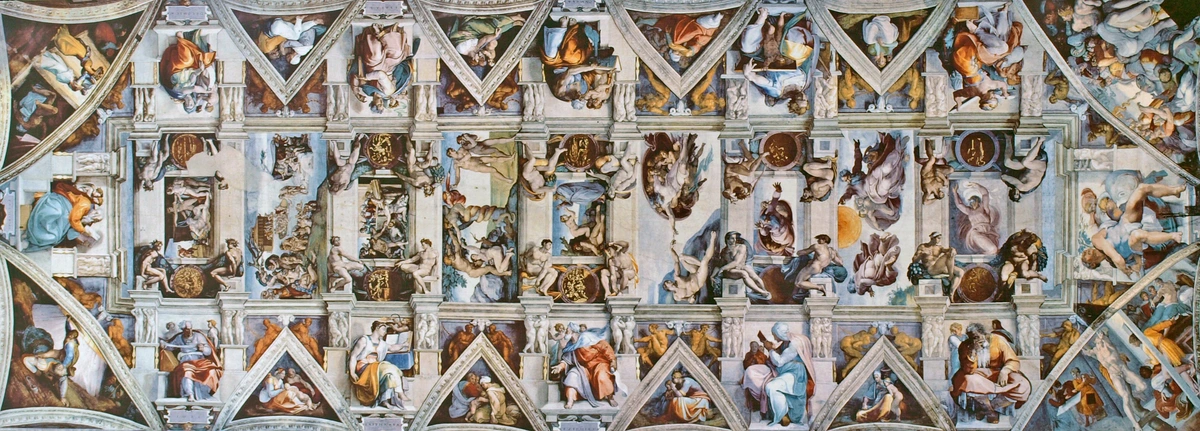
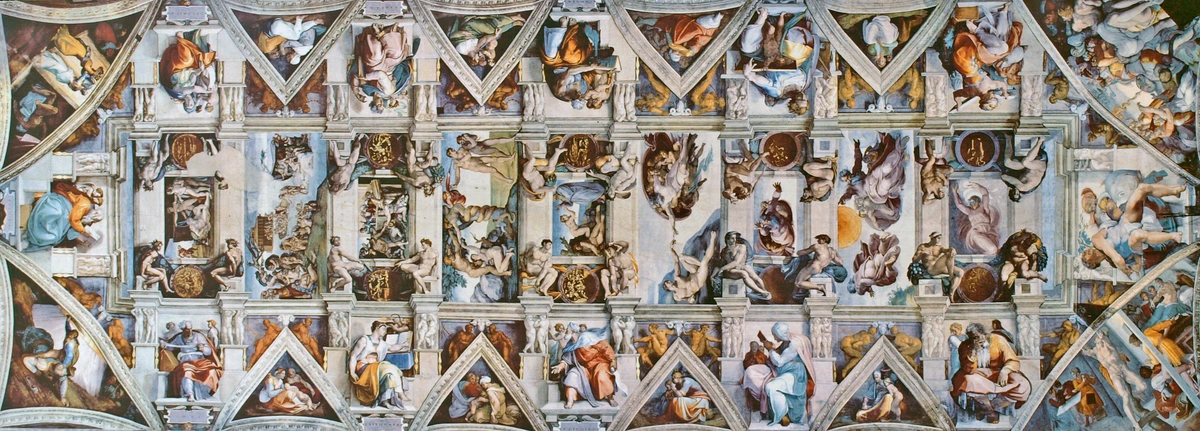
So, what exactly adorns the Sistine Chapel ceiling? Far from a single image, it's a vast, intricate tapestry of narratives and figures that you could spend a lifetime deciphering. Michelangelo masterfully integrated painted architectural elements – cornices, pilasters, and frames – to create an illusionistic structure, a trompe-l'oeil, which means "to deceive the eye." This painted architecture was crucial for imposing order on the immense, curved surface, making it appear grander and more structured than it actually was. I think of it as a master framer who isn't just containing a painting, but becoming part of the painting itself.
Art historians continue to debate the full extent of its iconography, exploring influences from Neoplatonism to classical antiquity. Neoplatonism, a revival of Plato's philosophy during the Renaissance, posited that earthly beauty and truth in art could elevate the soul to the divine. This philosophy manifests visually in Michelangelo's highly idealized, muscular figures, often depicted in a state of contemplation or spiritual striving. Their perfect human forms were intended to mirror divine perfection, helping viewers ascend spiritually through contemplation of beauty. It's a deep dive into the very essence of human potential and its connection to the divine.
The Overall Structure: A Divine Hierarchy
Before delving into the details, it helps to grasp the overall layout of Michelangelo's vision for the Sistine Chapel ceiling. He organized the immense vaulted surface into a complex yet coherent theological program, guiding the viewer from the origins of the world to the promise of salvation:
- Central Spine: Nine scenes from the Book of Genesis, the core narrative of creation and early humanity.
- Flanking the Genesis Panels: Monumental figures of Old Testament Prophets and classical Sibyls, who foretold the coming of Christ, acting as bridges between old and new covenants.
- Encircling the Prophets and Sibyls: The twenty athletic, nude male figures known as the Ignudi, symbolizing idealized human potential and divine messengers.
- Triangular Spandrels and Lunettes: The Ancestors of Christ, connecting the Old Testament narratives to the lineage of Jesus, grounding the divine in human history.
The Central Panels: The Genesis Story
Running down the very center of the ceiling are nine scenes from the Book of Genesis, the Bible's creation story. These are the core narrative, depicting the origins of the universe, humanity, and early human history:
- The Separation of Light from Darkness
- The Creation of the Sun, Moon, and Planets
- The Separation of Land and Water
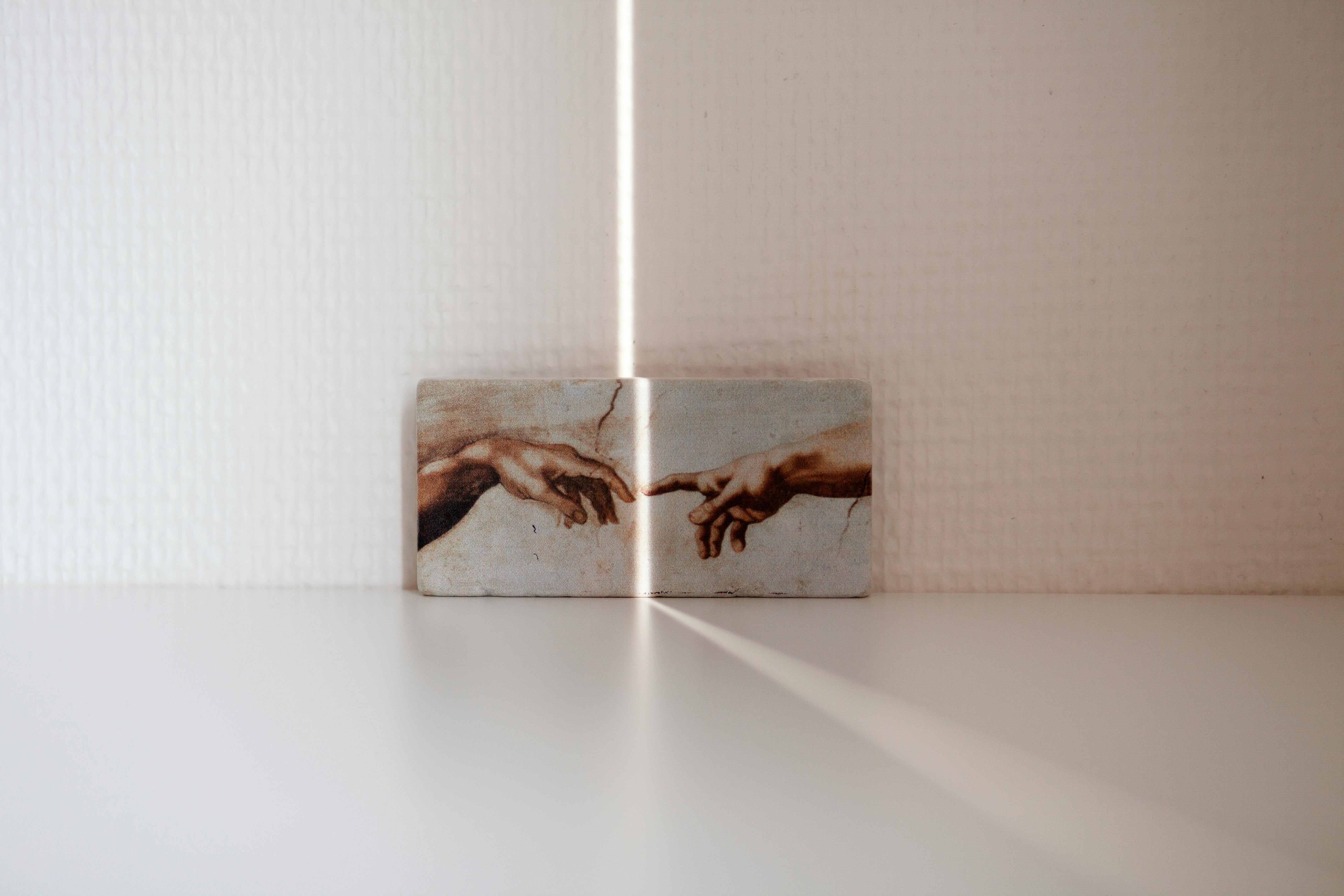
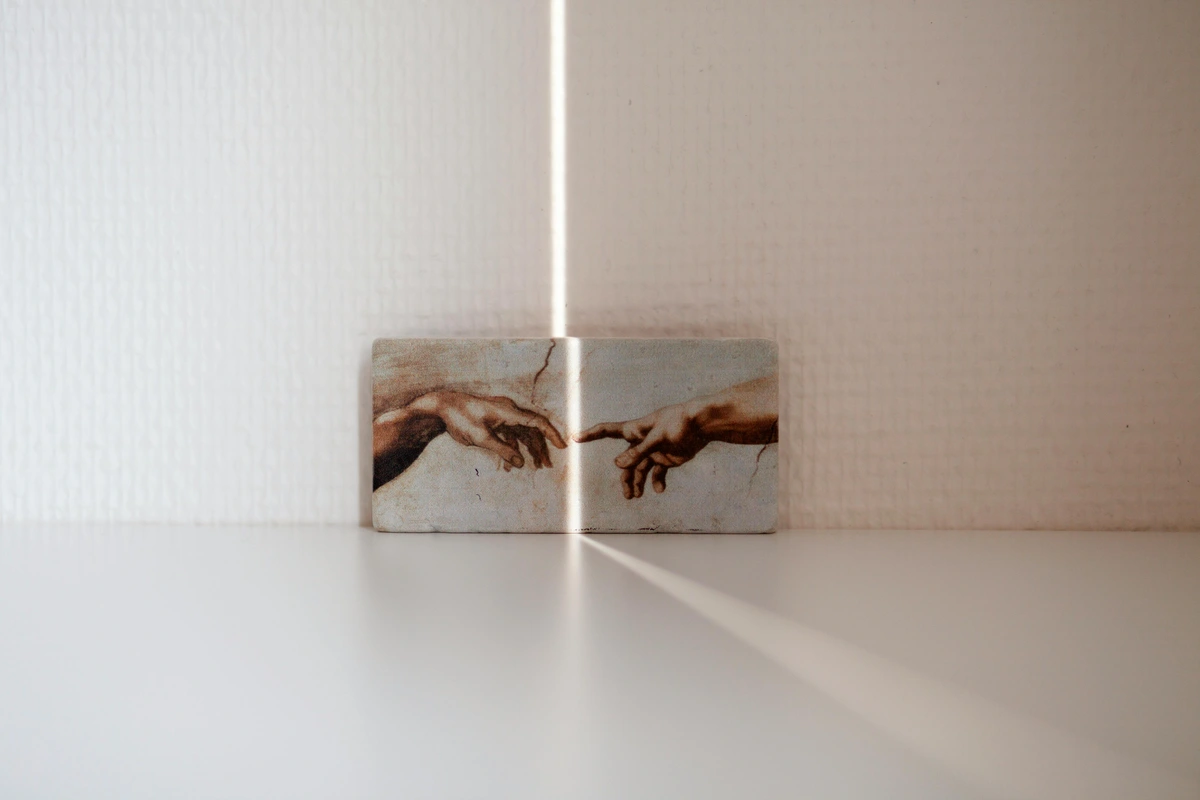
- The Creation of Adam: This includes the single most iconic image in all of Western art, where God gives life to Adam with a near-touch of his finger, symbolizing the divine spark of humanity.
- The Creation of Eve
- The Fall and Expulsion from the Garden of Eden
- The Sacrifice of Noah
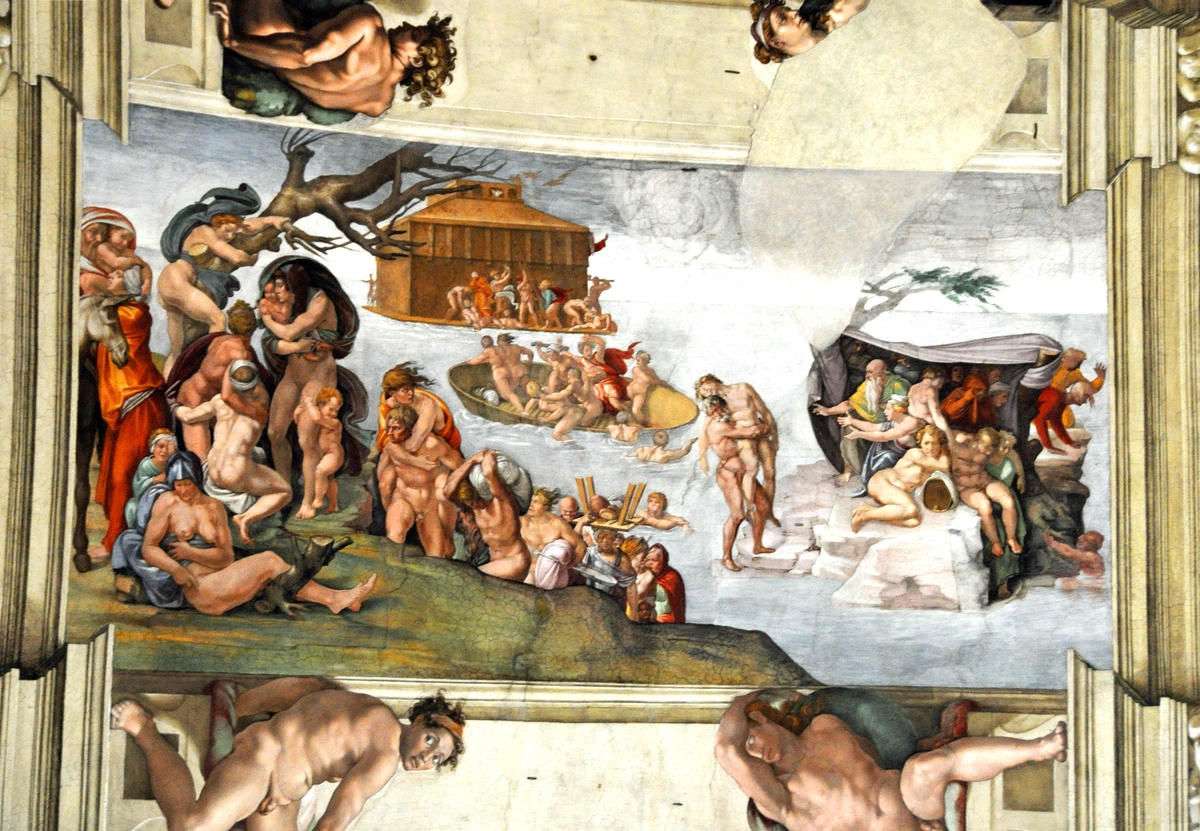
- The Deluge (The Great Flood)
- The Drunkenness of Noah

I find it endlessly fascinating that he painted these scenes in reverse chronological order. He started with the Noah stories (for example, The Deluge), which are arguably his less successful artistically. Why? Because early on, Michelangelo's figures were more crowded and less monumental, reflecting his initial struggle with the demanding fresco medium and its grand scale. This strategic choice allowed him to perfect his demanding fresco technique, build confidence with the daunting scale, and truly master the medium as he progressed towards the more impactful and frequently viewed scenes at the chapel's altar end. His early work shows a certain stiffness and more crowded compositions, but by the time he reached The Creation of Adam, his figures are imbued with unparalleled dynamism, monumentality, and grace, painted with a newfound freedom and mastery. This revolutionary approach allowed him to adapt and evolve his style during the execution of the masterpiece itself, ensuring his greatest triumphs were placed where they would be most seen and appreciated. The first half of the ceiling was unveiled in August 1511, with the entire ceiling completed and officially unveiled in October 1512.
The Ignudi: Guardians of Human Potential
Adding another layer of mystique are the Ignudi, the 20 monumental nude male figures seated at the corners of the five smaller Genesis panels. These powerful, athletic figures embody the Neoplatonic ideal of human beauty and potential. Their purpose is still debated: are they angelic beings, allegories of the human soul, personifications of virtues, or simply idealized representations of physical and spiritual perfection? For me, they represent that moment of intense focus artists experience, where the physical form becomes almost secondary to the mental and spiritual drive. Their varied, dynamic poses – some looking up, some down, some reaching, some contemplating – suggest a range of human experience and spiritual awakening. Regardless, their sheer physical presence serves to frame and highlight the sacred narratives, acting as a bridge between the earthly and divine realms, a pure celebration of the human form central to Renaissance humanism and its emphasis on man's inherent dignity and potential for greatness.
The Supporting Cast: Prophets and Sibyls
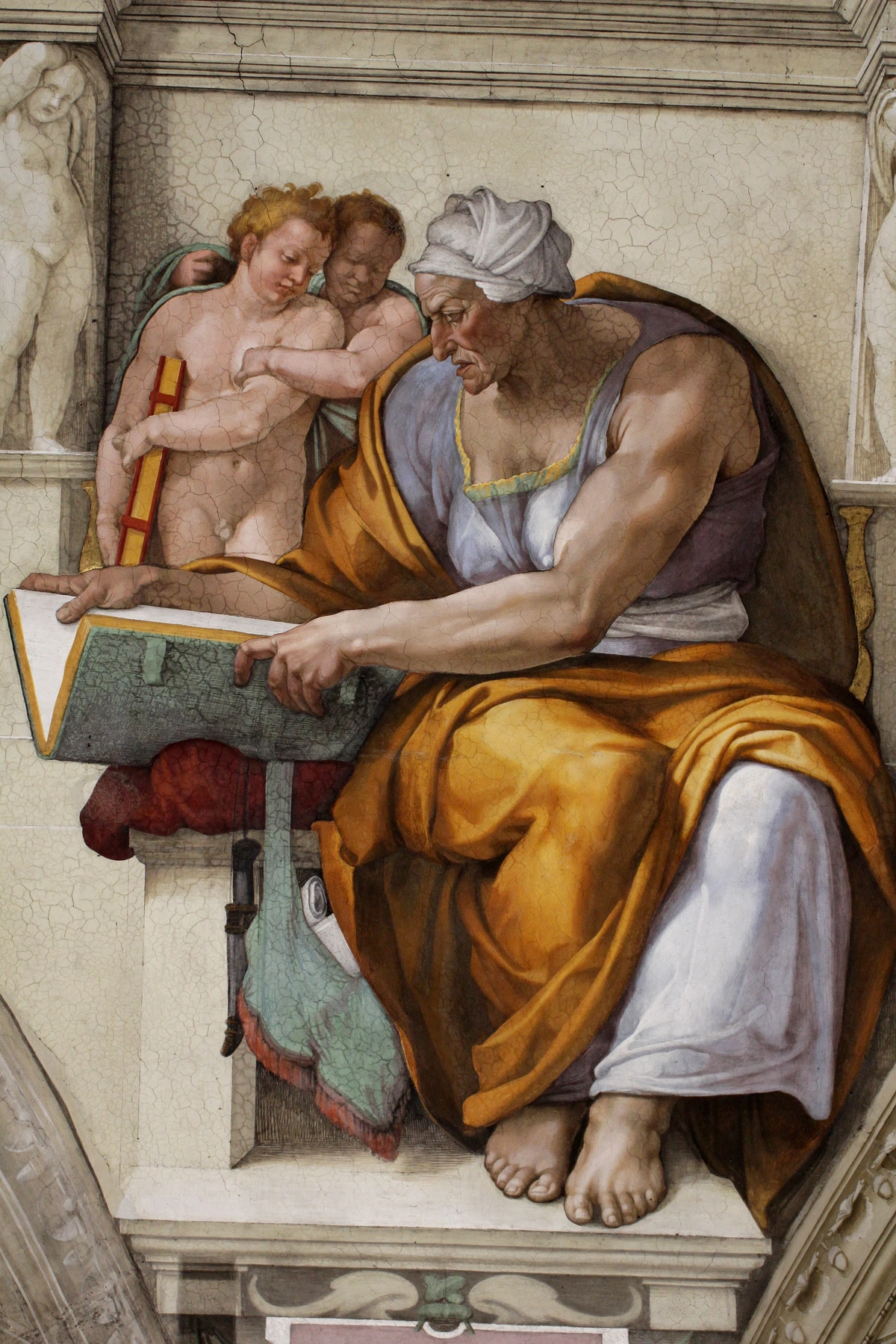
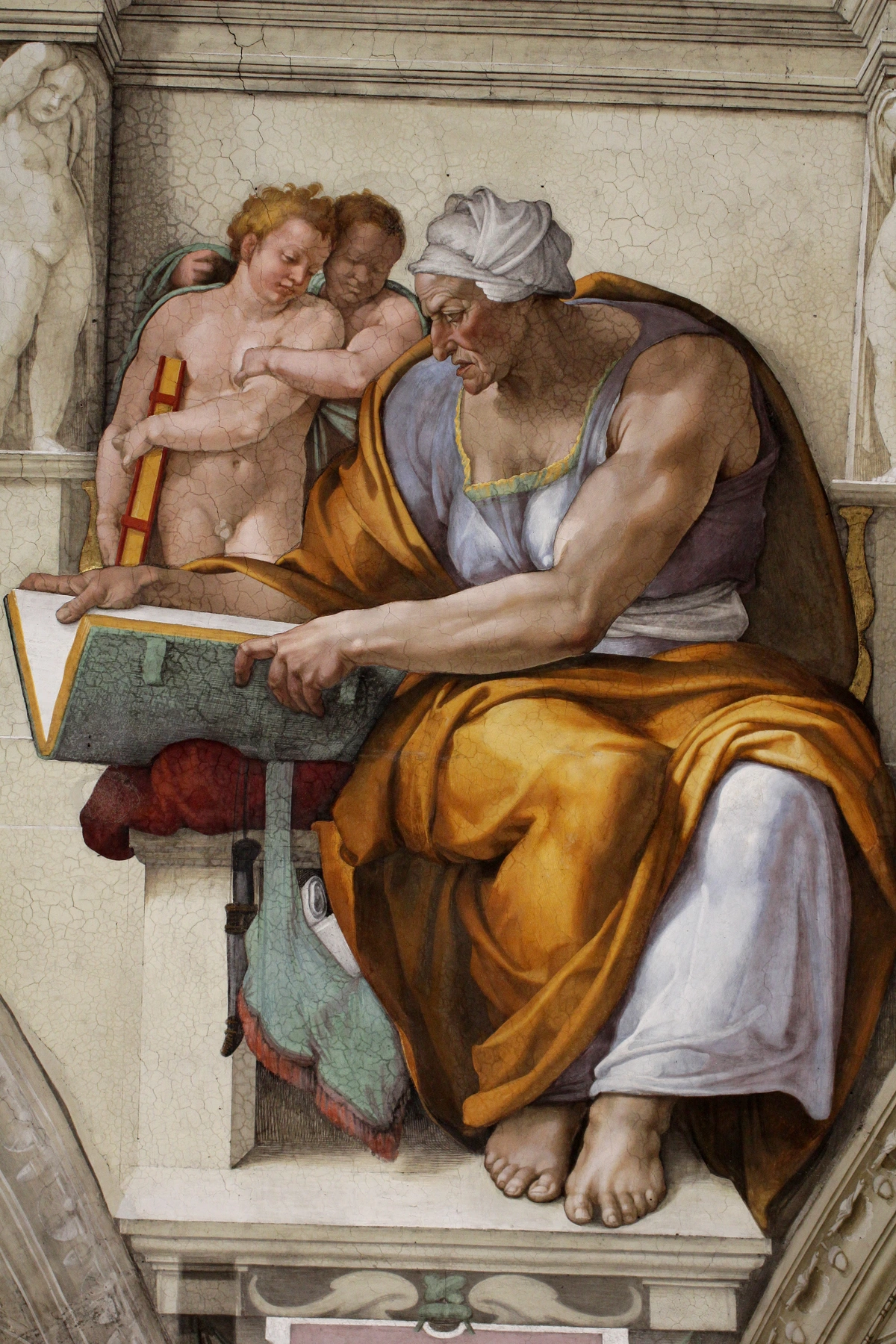
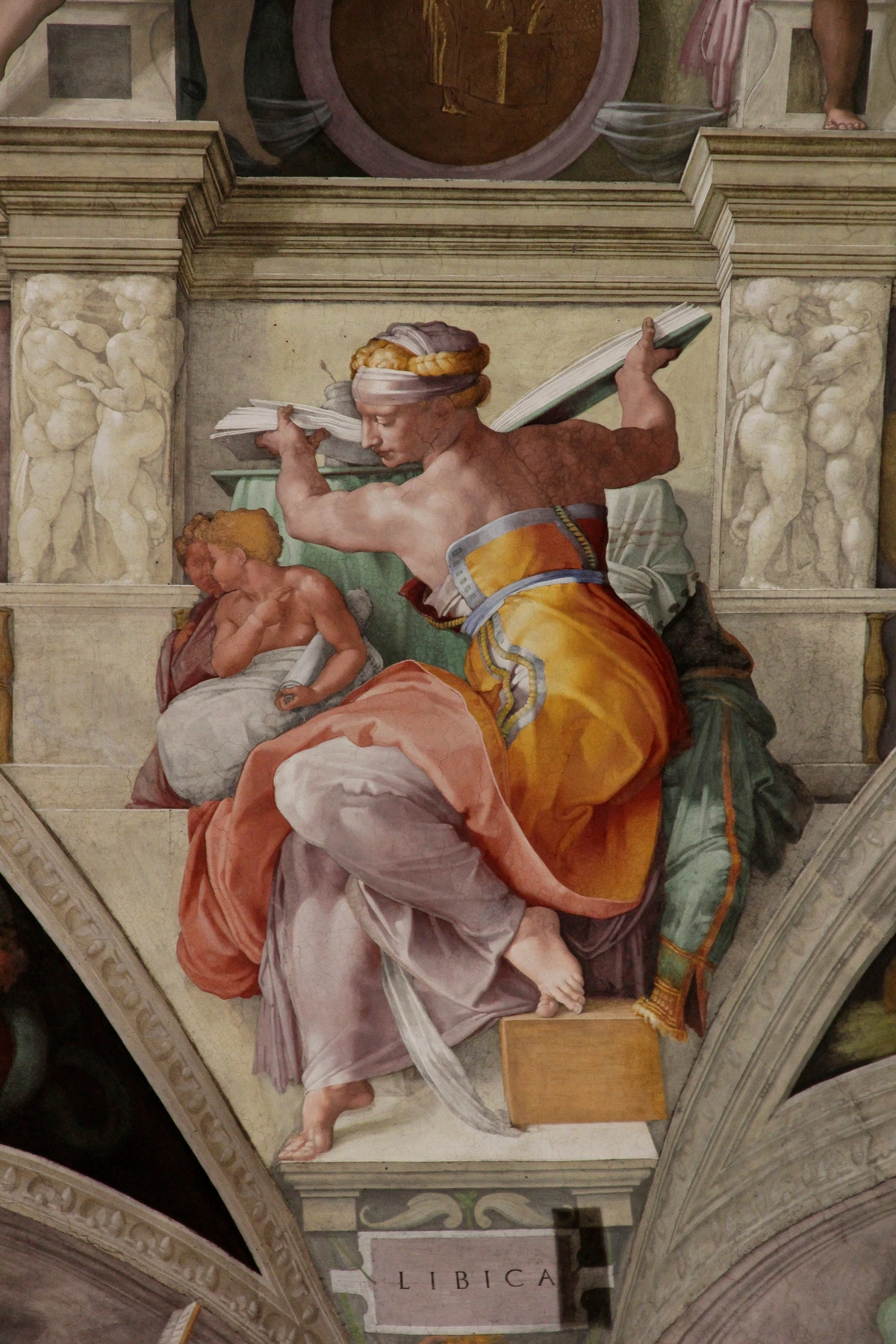
Surrounding the central narrative are enormous, powerful figures of Old Testament Prophets and classical antiquity's Sibyls. These men and women were believed to have foretold the coming of Christ, acting as a crucial bridge between the old covenants (Mosaic Law) and the new (Christianity). Their inclusion demonstrated a Renaissance synthesis of classical wisdom and Christian doctrine, reflecting a broader intellectual movement. They are some of the most sculptural and imposing figures on the ceiling, almost bursting from their painted architectural niches. Their 'sculptural' quality comes from their massive, muscular forms, often depicted in powerful contrapposto poses (a natural, weight-shifted pose that creates an S-curve in the body, giving a sense of dynamic movement), and the way light and shadow define their three-dimensional presence, akin to carved marble. Each one is a masterpiece of character study.
For example, the Prophet Isaiah is often interpreted as foretelling the birth of Jesus, while the Erythraean Sibyl was believed to have prophesied the Last Judgment. The Cumaean Sibyl (known for her wisdom and prophecy, as seen with Aeneas in Virgil's Aeneid) and the Libyan Sibyl (depicted in a dramatically twisted pose, almost dancing off her bench) are just breathtaking in their power, grace, and unique physical presence. Others, like the Prophet Jeremiah, are shown in deep, melancholic contemplation, almost foreseeing the sorrows of the future. Their prophetic visions, from both Jewish and pagan traditions, highlight how Renaissance thinkers saw prophecy and divine knowledge as existing across cultures and eras, a key aspect of Sistine Chapel iconography.
The Ancestors of Christ: Linking Old to New
Further integrating the grand theological narrative are the Ancestors of Christ depicted in the triangular spandrels and lunettes (the semi-circular areas above the chapel windows). These figures, taken from the genealogies of Jesus in the Gospels, serve to connect the Old Testament stories of creation and prophecy with the New Testament's fulfillment in Christ. Often depicted as ordinary individuals in quiet contemplation or domestic scenes – like Jesse, David, Solomon, or Jacob – they provide a powerful human element, illustrating the lineage that leads to salvation. They are a poignant reminder that even amidst divine drama, human history is ultimately intertwined with the sacred narrative, grounding the monumental divine vision in relatable human experience. I see them as quiet heroes, the unsung groundwork for something profound.
The Agony and the Ecstasy: How Did He Even Do It?
This is where my respect for Michelangelo goes through the roof. I mean, truly. I get a sore back from a few hours at the easel. This man spent four years in what he described as absolute misery, facing monumental technical and physical challenges. It makes me reflect on my own artistic process and how often we take the comfort of our modern studios and materials for granted. The sheer willpower to push through such conditions, day after day, year after year, is something I can barely fathom. Once, I had a large commission for a mural, and the sheer scale and physical demands almost broke me – but it also unlocked new problem-solving skills. For Michelangelo, every day was that struggle.
The Technical Nightmare: The Unforgiving Fresco Technique
First, there was the fresco technique itself. For those unfamiliar, fresco (specifically buon fresco, meaning "true" fresco) involves painting on freshly laid, wet plaster. It's a race against time and chemistry, a true test of speed and precision. The plaster is typically applied in two main layers: a rougher base layer called the arriccio, and a final, smoother layer called the intonaco. Pigments, mixed with water, are then applied directly to the wet intonaco. As the plaster dries, the pigment binds with it, becoming an integral part of the wall itself through a chemical reaction called carbonation. This means once the plaster dries, the color is locked in – there's no going back, no blending later, no room for error. It's not like my oil paintings where I can blend and re-blend for days, or even my acrylics where I have a bit more open time and a chance to fix mistakes. This permanence makes digital art feel almost ephemeral by comparison, raising questions about long-term preservation and value, a contrast to the historical debates surrounding fleeting digital assets.
Michelangelo, being primarily a sculptor and notoriously inexperienced with this demanding medium, had a disastrous start when his first section grew mold because the plaster was too wet, likely due to excessive humidity and a misunderstanding of the drying process. He had to scrape it all off and start again. Imagine the frustration, the sheer demoralizing effort of that! It makes me think about how many of my own 'mistakes' I can simply paint over – a luxury Michelangelo didn't have. For a deeper dive into this ancient method, check out our guide to fresco painting.
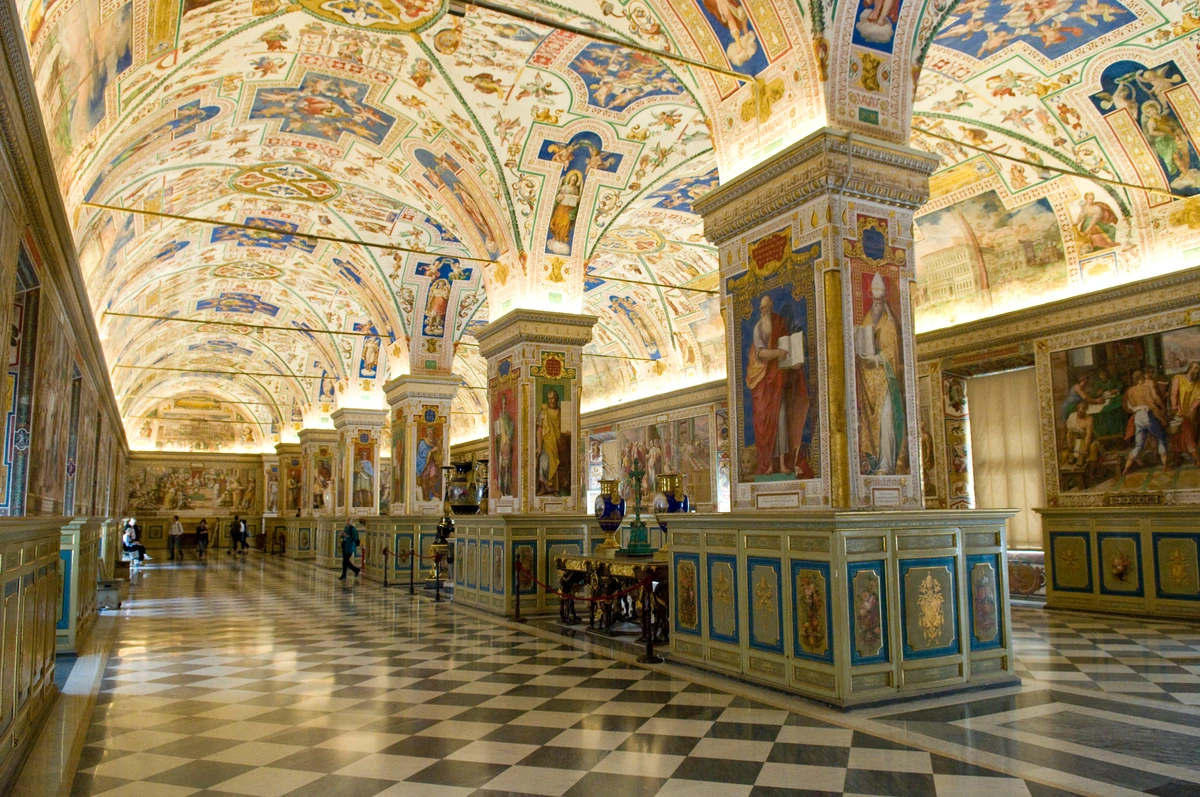
While buon fresco offers unparalleled permanence, another technique, fresco secco (painting on dry plaster), allows for corrections and finer details but is far less durable. Michelangelo understood that for a work of this monumental scale and desired longevity, buon fresco was the only viable option, despite its unforgiving nature. The choice of pigments was also crucial; he largely relied on stable earth tones (ochres, siennas, umbers) and robust blues. Ultramarine blue, derived from lapis lazuli, was a particularly precious and expensive pigment, often reserved for depictions of the Virgin Mary, and its use in fresco required precise handling to ensure it bonded correctly with the plaster without losing its vibrancy. It highlights the immense cost and technical skill involved, even down to the colors themselves.
The Physical Toll: Myth vs. Reality of His Position
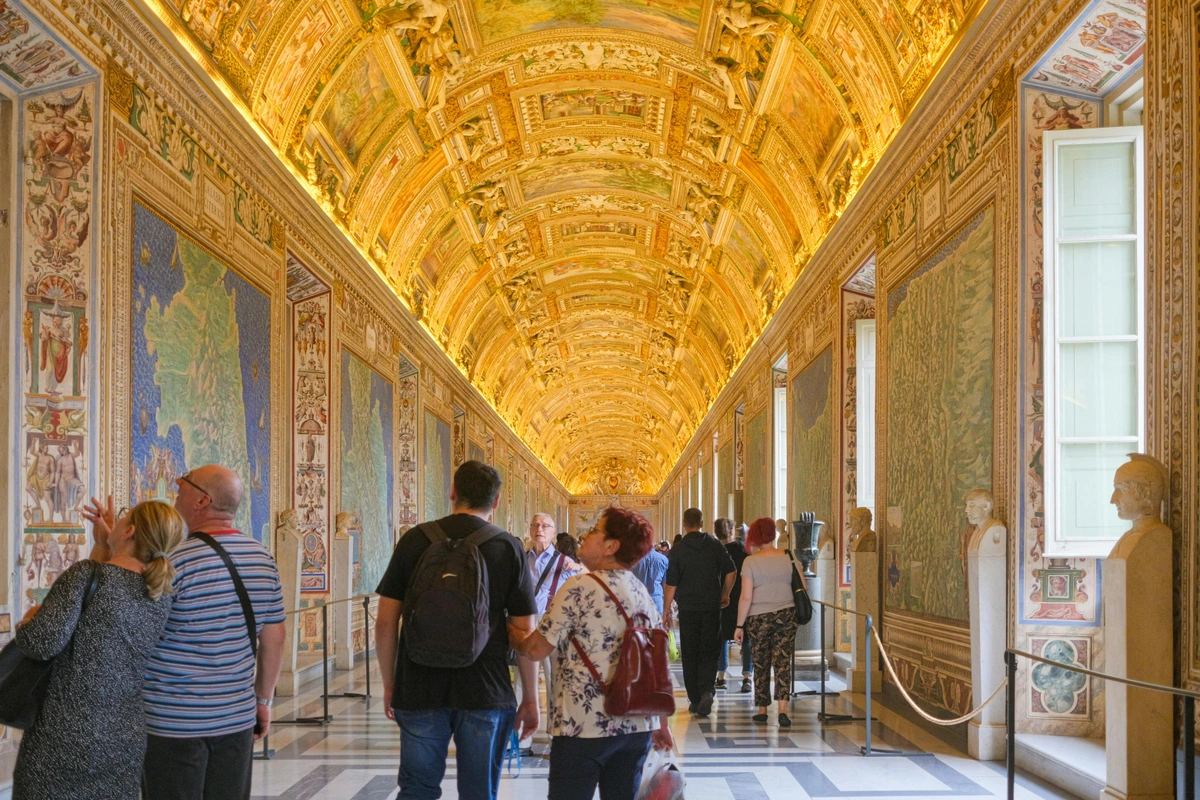
Second, there's the famous myth that he painted lying on his back. Nope. That's a romantic notion popularized by the 1965 movie (The Agony and the Ecstasy) and other fictional portrayals, which dramatically emphasized the suffering. Historical evidence and Michelangelo's own vivid (and often grumpy) accounts suggest he designed his own unique scaffolding system. This system was ingenious: it consisted of wooden platforms built out from holes drilled high in the chapel walls, rather than supported from the floor. This allowed the Pope's ceremonies to continue below, but it meant Michelangelo was constantly craning his neck back, looking up, with paint and plaster dust dripping into his eyes, for four solid years. The physical toll was immense, leading to lasting ailments like chronic neck pain, spinal curvature, and even temporary vision problems. He reportedly developed diplopia (double vision, where you see two images of one object) and found it hard to read for months after completing the work, making it challenging to focus on anything at eye level after spending so long looking up. I can only imagine the disorientation, the world suddenly shifting beneath your feet, or rather, at eye-level.
He famously wrote a poem about it, lamenting:
"My beard turns up to heaven; my nape feels the push... My face makes a fine floor for droppings; my ass, by way of counterweight, is a crupper... My poor mind wanders, and my brush drips up..."
A truly poetic way to describe absolute physical misery. I complain about a stiff shoulder after a long day; Michelangelo redefined artistic suffering. So how did this sculptor, this stubborn, often cantankerous genius, overcome such odds? His methodical approach, unrelenting work ethic, and sheer force of artistic will allowed him to adapt and revolutionize the very medium he initially despised. His journey offers a powerful lesson in tenacity for anyone facing a daunting creative challenge, from a massive mural to a complex series of abstract prints for sale. I'm reminded that sometimes, the greatest leaps in an artist's career come from being forced to confront their weaknesses and turn them into strengths. Michelangelo prepared for the ceiling not just through drawings and cartoons (full-scale preparatory drawings), but through sheer, relentless experimentation on the job itself.
This table summarizes the monumental struggles and ingenious workarounds that defined this project, forever changing the course of Renaissance art history:
Challenges Michelangelo Faced  | Michelangelo's Solution & Impact | Impact on the Art & Legacy |
|---|---|---|
| Inexperience with Fresco | Taught himself through grueling trial and error (scraping away moldy sections), mastering the rapid technique, and ultimately revolutionizing fresco painting. | Visible progression in mastery, from crowded early scenes (e.g., The Deluge) to monumental, dynamic figures (The Creation of Adam). Established new possibilities for the medium. |
| Immense Scale (5,000 sq ft) | Designed and built his own innovative, movable scaffolding system attached to the chapel walls (not the floor), allowing access without disrupting church services. He had to manage five thousand square feet of wet plaster daily. | Enabled the creation of a unified, vast narrative despite technical constraints. Demonstrated remarkable engineering and artistic vision. |
| Extreme Physical Strain | Endured four years of working in a cramped, painful position (neck craned upwards), leading to lasting physical ailments (chronic neck pain, spinal curvature, temporary vision problems like diplopia) and a vivid, personal understanding of human suffering. | His physical struggle arguably infused his figures with a raw, powerful emotional depth and humanity, deepening their spiritual resonance and contributing to his unique expressive style. |
| Creative Control & Pope's Demands | Constantly fought with Pope Julius II for his artistic vision, eventually winning the freedom to expand from a modest plan (12 Apostles) to his grand, complex Genesis design. This negotiation reflects the complex dynamics of papal patronage. | His artistic conviction led to a far richer, more complex, and enduring masterpiece than initially envisioned, showcasing his formidable will and independence. |
| Skepticism & Rivalry (Bramante, Raphael) | His unparalleled success defied his rivals' expectations, solidifying his reputation as a painter despite his primary identity as a sculptor, and ultimately eclipsing many of his detractors. | His triumph transformed him into a truly universal artist, challenging the hierarchy of the arts and demonstrating genius across media. |
Key Players in the Sistine Saga: A Web of Ambition and Genius
To fully appreciate the drama behind the Sistine Chapel, it helps to know the main characters beyond Michelangelo himself. These figures shaped the context and challenges of his monumental commission, creating a vibrant, often volatile, period of papal commissions and artistic rivalry in the Renaissance.
- Pope Julius II (1443–1513): The "Warrior Pope" and ambitious patron who commissioned the ceiling. Known for his fierce temper, military campaigns, and grand artistic visions for Rome, including the rebuilding of St. Peter's Basilica. His determination to leave an indelible mark on Rome and the Church was a driving force behind these immense projects, and his forceful personality was instrumental in pushing Michelangelo to accept the commission, and then trusting him enough to allow the artistic expansion. Their relationship, a constant push and pull, was a defining element of the project. I've often felt a similar dynamic with clients – a tension between their vision and my own, which, when navigated well, can lead to something truly exceptional.
- Donato Bramante (1444–1514): A leading High Renaissance architect and a key figure in Julius II's court, responsible for the initial plans of the new St. Peter's Basilica. Often seen as Michelangelo's cunning rival, he was also Raphael's uncle. He reportedly pushed for Michelangelo to take on the painting commission, believing it would lead to his failure and clear the way for Raphael to dominate Roman artistic commissions. Bramante himself was heavily invested in numerous papal architectural projects, and Michelangelo's strong influence and competitive drive for resources were likely seen as a threat to his own ambitions. His strategic maneuvering highlights the cutthroat nature of patronage during the period, where artistic success was inextricably linked to political favor and court intrigues.
- Raphael (1483–1520): A brilliant young painter, Bramante's nephew and protégé, whose rising star in Rome was undeniable. While Michelangelo was toiling on the ceiling, Raphael was busy creating his influential frescoes in the Vatican's Stanze della Segnatura (e.g., The School of Athens), characterized by their harmonious compositions, graceful figures, and intellectual clarity – a stylistic contrast to Michelangelo's more muscular, dramatic intensity. His success was undoubtedly a significant factor in Bramante's desire to sideline Michelangelo from sculptural commissions and consolidate Raphael's position as the leading painter in Rome. It's fascinating to consider how these two titans, in close proximity, spurred each other on, even if indirectly, through their very different artistic philosophies. It’s like two contemporary artists, each defining their own movement, working right across the street from one another.
- Other Contemporaries (e.g., Leonardo da Vinci & Titian): While not directly involved in the Sistine Chapel ceiling, these titans of the Italian Renaissance represent the broader constellation of artistic genius flourishing at the time. Leonardo da Vinci's scientific curiosity and mastery of sfumato (a soft, hazy blurring of lines and colors) presented a different approach to art, focusing on atmospheric effects and psychological depth, a stark contrast to Michelangelo's sharp, sculptural forms. Titian's revolutionary use of color (colore) and light in Venice, which would later define the Venetian School, stood in philosophical opposition to Michelangelo's primary focus on sculptural form and drawing (disegno). Their diverse approaches highlight Michelangelo's unique emphasis on dramatic narrative, monumental human figures, and the power of line, even amidst varied artistic philosophies across Italy.
A Legacy Beyond the Brushstrokes: Redefining Art and Human Potential
Michelangelo's Sistine Chapel ceiling wasn't just a collection of stunning images; it was a seismic event that reshaped the course of Western art. His dynamic, muscular, and emotionally charged figures redefined the potential of the human form in art, pushing boundaries that had been set by classical antiquity and even by Byzantine art. Unlike the often flat, stylized, and symbolic figures of Byzantine mosaics and frescoes, Michelangelo's figures exploded with three-dimensional vitality and psychological depth.
He essentially created a masterclass in composition, anatomy, and visual storytelling that artists would study for centuries to come. His use of vibrant color, his innovative scaffolding, and his sheer ability to transform a flat surface into a multi-dimensional, spiritually charged narrative remain unparalleled. The influence extended directly to the Mannerist movement, where artists like Pontormo and Rosso Fiorentino exaggerated his elongated forms and complex serpentinata poses (a twisted, serpentine pose designed to show off the human figure from multiple angles) to create new, stylized expressions. The Sistine Chapel fundamentally altered what was considered possible in fresco painting techniques. Moreover, the ceiling's vast iconography and complex theological messages, infused with Neoplatonic ideals, inspired generations of scholars and artists to delve deeper into the interplay between faith, philosophy, and artistic expression. His work undeniably elevated the status of the artist, proving that a single individual could, through sheer will and genius, create something on par with divine creation itself. It’s a powerful lesson in what can be achieved when you truly commit to a vision, even one you initially resisted.
The Great Restoration: Revealing Lost Brilliance
In the late 20th century (1980-1994), the Sistine Chapel ceiling underwent a massive, and at times controversial, restoration. Decades of candle smoke, grime, and earlier clumsy restorations had significantly darkened the frescoes, masking Michelangelo's original palette. The painstaking process of cleaning revealed surprisingly vibrant colors, astonishing many who had only ever seen the muted, somber tones. This cleaning sparked intense debates among art historians:

- The Critics' Argument: Some argued that earlier restorers might have added glazes or other layers that darkened the colors (perhaps to align with later Baroque tastes), or that the aggressive cleaning agents might have removed some of Michelangelo's final, subtle touches or shadows that were applied a secco (on dry plaster). They worried the restoration had stripped away layers of the artist's original intent, making the frescoes look too bright or "new."
- The Restorers' Defense: Others, armed with extensive scientific analysis (microscopic examination, chemical tests, infra-red reflectography), countered that the grime and earlier restorations (often involving animal glue and varnish) were merely obscuring the true brilliance. They pointed to contemporary accounts describing the chapel's initial vividness and to Michelangelo's own preference for clear, bold forms, suggesting the bright colors were indeed original and consistent with the early High Renaissance palette. The evidence suggested the subtle touches claimed to be removed were largely later additions by other artists or clumsy attempts at earlier "restorations."
This forced a re-evaluation of Michelangelo's artistic choices and forever changed our perception of the masterpiece, ultimately allowing millions to experience the ceiling closer to its initial splendor and offering renewed insights into his use of color and light. I think it's a testament to the fact that art, like history, is constantly being re-interpreted and understood through new lenses – sometimes quite literally through advanced scientific techniques.
But Wait, There's More! (The Other Paintings in the Chapel)
But here's a thought that sometimes surprises people, and it certainly changed my perception of the chapel: the ceiling isn't the only story Michelangelo left there, nor was he the only artist to contribute to this sacred space. It's crucial to remember that he didn't paint the entire chapel in one go or by himself. The chapel's decoration actually spans several decades, reflecting different popes' visions and a changing religious landscape. During the four intense years of painting the ceiling, Michelangelo had little personal life to speak of, dedicating himself entirely to the monumental task, often relying on his apprentices for logistical support but executing the vast majority of the painting himself.
The Altar Wall: The Last Judgment
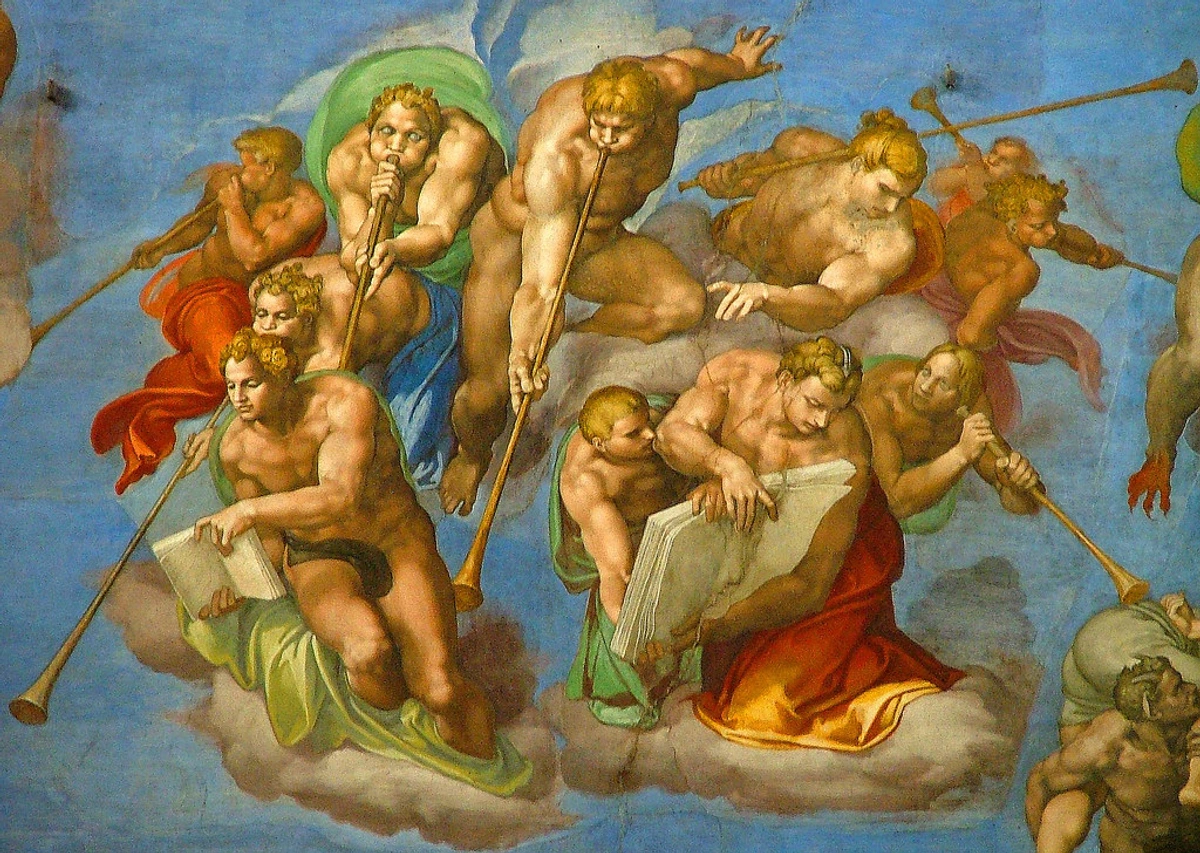
Decades after finishing the ceiling, a much older, more somber, and arguably wiser Michelangelo was called back to paint the altar wall. This is where he created his other great masterpiece in the chapel, the terrifying and awe-inspiring Last Judgment, between 1536 and 1541. This work reflects a profound shift in his artistic and personal worldview, a much darker vision than the vibrant Genesis scenes above. The Council of Trent, a key event of the Counter-Reformation (which emphasized strict dogma, divine punishment for sin, the Church's role in salvation, and a renewed focus on Christ as a stern judge), was underway during its creation, and its somber, dramatic tone reflects the era's heightened religious fervor and sense of impending divine judgment. It was a time of immense theological anxiety and a focus on Christ as judge, rather than just creator. The Council's decrees, advocating for clarity and piety in art, undoubtedly shaped the work's intense, if controversial, presentation of biblical narrative. The work even sparked controversy due to its extensive nudity, leading to figures being later painted over with draperies by Daniele da Volterra, earning him the enduring nickname "Il Braghettone" (the breeches-painter). It's a stark thematic contrast to the optimism and genesis of the ceiling, embodying the stark realities of a changing religious landscape and Michelangelo's own evolving spiritual reflections.

The Side Walls: The 'Dream Team' Before Michelangelo
The walls below the ceiling were already decorated about two decades earlier (starting in 1481 under Pope Sixtus IV, Julius II's uncle) by a 'dream team' of famous Renaissance artists like Sandro Botticelli (whose Birth of Venus is iconic for its lyrical beauty), Pietro Perugino (Raphael's teacher, known for his serene, devotional works), Domenico Ghirlandaio (Michelangelo's teacher, celebrated for his detailed narratives of Florentine life), and Cosimo Rosselli. Pope Sixtus IV commissioned these earlier frescoes to establish the chapel's artistic prestige, to symbolically parallel the life of Moses (Old Covenant) on one wall with the life of Christ (New Covenant) on the other, and to reinforce papal authority through a grand visual program. These frescoes showcase incredible biblical narratives (scenes from the lives of Moses and Christ) long before Michelangelo even arrived, establishing the chapel's artistic prestige and setting a high bar for any subsequent work. This earlier cycle provided the narrative foundation upon which Michelangelo would later build his monumental ceiling, creating a seamless, though chronologically layered, theological program.
Why We Still Look Up in Awe (And How to Experience It)
When you look at the Sistine Chapel ceiling, you're not just seeing a work of genius; you're seeing the result of a stubborn, brilliant sculptor who, against his will, took on a painter's job and ended up creating heaven on a ceiling. It’s a testament to human potential, divine inspiration, and the transformative power of pushing past your own perceived limitations. As an artist myself, I often look back at figures like Michelangelo and wonder: what are the 'impossible' commissions of our age? What seemingly insurmountable challenges do we face, and how do we find the grit to create something that shifts paradigms? His story, for me, isn't just history; it's a constant, thunderous challenge to push past perceived limitations and create something truly monumental. And that, I think, is a lesson for all of us, no matter our chosen craft.
So, what's your Sistine Chapel ceiling? What 'impossible' artistic transformation are you currently facing, and how can Michelangelo's tenacity inspire you to tackle it?
Experiencing the Sistine Chapel Today
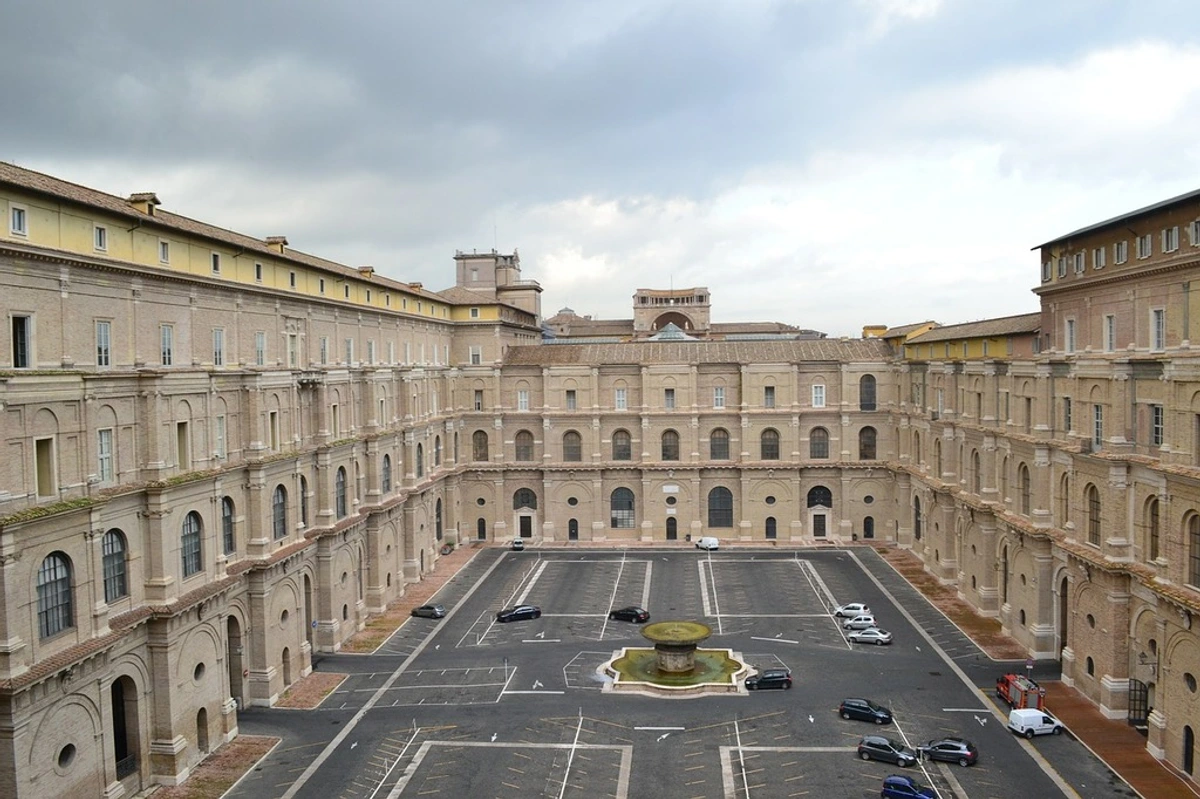
For those wishing to witness this marvel firsthand, the Sistine Chapel is the stunning and often overwhelming climax of a visit to the Vatican Museums in Vatican City, Rome. Be prepared for crowds and a hushed, reverent atmosphere – photography is strictly prohibited, primarily to prevent damage from flash photography and to maintain the sanctity of this deeply spiritual space. Despite the throngs of visitors, the sheer scale and intricate detail of Michelangelo's work are breathtaking. The acoustics of the space and the collective awe of the visitors create a uniquely spiritual and humbling experience. To truly appreciate the details, consider bringing binoculars to observe facial expressions or specific elements within the vast narratives, or focus on one section at a time. Many visitors find it helpful to look for the directional flow of the narrative (starting from the altar towards the entrance) to better understand the theological progression. Visiting earlier in the morning or later in the afternoon can sometimes offer a slightly less crowded experience. Don't feel pressured to see everything at once; take a moment to simply be in the space.
If this deep dive has sparked your curiosity about the man himself, our ultimate guide to Michelangelo awaits. Perhaps it will inspire your own creative journey, whether you're battling a blank canvas or contemplating a new sculpture. You can even explore some contemporary art pieces at my online shop or learn about my studio in Den Bosch.
Frequently Asked Questions (FAQ) About Michelangelo's Sistine Chapel Ceiling
You've got questions about this monumental work of Vatican art? We've got answers!
Q: So, who painted the Sistine Chapel ceiling? A: The one and only Michelangelo Buonarroti. He worked on this monumental fresco from approximately 1508 to 1512, completing it despite his initial reluctance and strong preference for sculpture.
Q: How long did it take to paint the Sistine Chapel ceiling? A: It took Michelangelo about four grueling years of continuous, intense work (1508-1512). This was a remarkably short time given the immense scale and complexity of the project, especially considering his initial inexperience with the demanding fresco painting techniques.
Q: What is the most famous painting on the Sistine Chapel ceiling? A: Without a doubt, it's The Creation of Adam, the iconic scene where God gives life to Adam with a near-touch of his finger, symbolizing the divine spark of humanity. This image is a cornerstone of Sistine Chapel iconography and Renaissance humanism.
Q: Did Michelangelo paint the whole Sistine Chapel by himself? A: No, he did not paint the entire chapel by himself. Michelangelo painted the ceiling (1508-1512) and, much later, The Last Judgment on the altar wall (1536-1541). The side walls of the chapel were decorated by other renowned famous Renaissance artists like Botticelli and Perugino several decades before Michelangelo began his ceiling work, under the patronage of Pope Sixtus IV.
Q: Did Michelangelo really paint lying on his back? A: This is a common myth, likely popularized by the film The Agony and the Ecstasy. Historical evidence and Michelangelo's own detailed accounts indicate that he stood on specially designed scaffolding, constantly craning his neck backward and upward. This position was incredibly painful and caused lasting physical ailments, but it allowed him to work more effectively than lying down.
Q: What is the main theme of the Sistine Chapel ceiling? A: The main theme of the Sistine Chapel ceiling is the story of creation and humanity's early history from the Book of Genesis. It visually narrates the divine plan from the creation of the universe to the fall of humanity and the story of Noah, all culminating in the promise of salvation through the Prophets and Sibyls, and the Ancestors of Christ. This grand theological narrative, infused with Renaissance humanism and Neoplatonic ideals, integrates both Christian doctrine and classical wisdom.
Q: Can you see the Sistine Chapel ceiling today? A: Yes! It is the stunning and often overwhelming climax of a visit to the Vatican Museums in Vatican City, Rome. Millions of visitors each year journey to behold this incredible masterpiece, though crowds and viewing angles can make fully appreciating its detail a challenge.