What is Mannerism: The Ultimate Guide to the Stylish Art Movement
Forget the calm of the Renaissance. Dive into Mannerism, the art movement full of twisted poses, weird colors, and high drama. Your ultimate guide is here.

Mannerism: The Stylishly Weird, Emotionally Intense, and Radically Innovative Art of the Late Renaissance
I used to think of the Renaissance as this singular, monumental block of perfect, serene, and (dare I say?) sometimes a little… predictable art. You know the drill: exquisitely balanced compositions, figures exuding nobility and calm, everything bathed in a sort of divine, logical light that just made sense. But then, like a secret door opening in a familiar mansion, I stumbled upon something utterly different: Mannerism. It was less a gentle evolution and more a delightful rebellion, an artistic mic drop from the Renaissance's brilliantly talented, angsty younger sibling. This wasn't just another chapter; it was a movement that took the established rules of beauty and harmony and delightfully twisted them into something new, something more. Trust me, this isn't your grandma's serene Italian Renaissance art. It's a fascinating detour, a period that fundamentally redefined what 'beautiful' could even mean, pushing the boundaries of aesthetics and expression. For anyone diving deep into art history, understanding this pivotal shift is like unlocking a secret level of appreciation. It's the moment when artists started asking: "What if?"
Suddenly, the bodies in paintings were twisting in impossible, elegant ways, the colors were electric, almost unsettling, and the compositions were packed with a kind of nervous energy that just grabs you by the collar. It wasn't about calm perfection anymore; it was about style (maniera), intense emotion, and showing off some serious technical chops (virtuosità). It felt weird, audacious, and frankly, I was hooked. It spoke to a different sensibility, one that felt both familiar in its mastery and strangely alien in its execution—a direct challenge to everything I thought I knew about the Renaissance and the very purpose of art. It was as if artists, having perfected realism, grew bored and decided to invent new problems to solve, often with a mischievous grin.
So, if you've ever looked at a High Renaissance painting—all that sublime balance and serene idealization—and thought, "This is nice, but could it be a bit more... extra? A little more twisted, perhaps? More about what the artist can do than just what they see?" then you, my friend, are in precisely the right place. Let's peel back the layers of this fascinating, often misunderstood, and profoundly influential period that dared to question the very definition of artistic 'perfection' and, in doing so, forged a completely new path toward subjective expression, one that still echoes in modern and contemporary art.
From Harmony to High Drama: The Seeds of Change
The High Renaissance (think the sublime works of Leonardo da Vinci, Raphael, and early Michelangelo) was, without a doubt, the zenith of classical ideals: harmony, balance, and idealized naturalism. Artists had, in essence, 'cracked the code' for creating perfectly lifelike and harmoniously composed art. They had achieved a kind of visual rhetoric that spoke of order, rationality, and divine beauty. It was a period of astonishing technical and intellectual breakthroughs, almost like discovering all the fundamental laws of physics for art. But here’s the thing about perfection: once you hit it, what's left? When every artistic 'problem' has been solved with such elegant grace, some artists are content to replicate that established beauty. Yet, the most restless, the most innovative, the ones who couldn't sit still, inevitably began to ask, "What's next? What else can art do that hasn't been done with such exquisite poise? Can we push these techniques further, distort them, imbue them with something more personal? What if the rules were merely suggestions?"
Mannerism, flourishing from about 1520 to 1600, was the daring, sophisticated, and sometimes perplexing answer to that very question. It wasn't a wholesale rejection of the Renaissance masters; rather, it was a profound exaggeration, a reinterpretation, and at times, a playful subversion of their breathtaking achievements. The Mannerists took the virtuosic techniques of their predecessors – their mastery of anatomy, linear perspective, and composition – and pushed them to their absolute limits. The new priority was a sophisticated, often artificial elegance—a certain maniera, or 'style'—over the placid naturalism of the earlier period. It was a conscious decision to value artifice, intellectual complexity, and a deliberate emotional intensity over a straightforward, naturalistic imitation of nature. It felt like artists were winking at the viewer, saying, "Look what I can do with these rules! Look how far I can bend them without breaking them entirely!" They weren't just creating beautiful things; they were performing.
The Turbulent Backdrop: Why the Artistic Shift?
To truly understand Mannerism, you absolutely have to look at the world it emerged from – and let me tell you, it was not a world of serene idealism. The early to mid-16th century in Italy was a period of intense upheaval, a far cry from the relatively stable Florence or Rome that nurtured the High Renaissance. The Protestant Reformation, ignited by Martin Luther in 1517, was tearing apart the religious unity of Europe, fundamentally challenging the authority of the Catholic Church and creating widespread spiritual anxiety and doubt. Imagine the psychological toll of such a seismic shift in belief systems, where centuries of established dogma were suddenly thrown into question. Politically, Italy itself was a fragmented battleground, a coveted prize for warring European powers like the Spanish Habsburgs and the French, culminating in the devastating and deeply shocking Sack of Rome in 1527. I mean, just imagine the cultural earthquake that caused – the spiritual capital of the Western world brutally plundered, its treasures stolen, and its populace terrorized. The supposed 'perfection' and 'order' celebrated by the High Renaissance felt increasingly out of step, even naive, in a world that seemed to be unraveling at the seams. The brutal reality of warfare and religious schism contrasted sharply with the idealized visions of beauty. Artists, ever the sensitive barometers of their age, reflected this profound anxiety and disillusionment. They sought new forms of expression that were less about placid idealism and more about emotional tension, intellectual puzzles, and sophisticated display, anticipating the later Counter-Reformation's demand for emotive art. This volatile context moved art beyond simply mirroring idealized humanism to exploring the complexities, contradictions, and profound unease of the human condition in a truly turbulent age. It's a reflection of a world that had decidedly lost its footing, and art had to grapple with that new reality, often through a lens of unsettling beauty.
To really grasp this shift, let's put it side-by-side. The Counter-Reformation, the Catholic Church's vigorous response to the Protestant challenge, further shaped Mannerism, especially in its later phases. The Church sought to reassert its authority and inspire devotion, encouraging art that was clear, emotionally impactful, and awe-inspiring – often a perfect match for Mannerist drama, though sometimes pushing towards greater legibility, foreshadowing the Baroque art movement. It’s a bit like comparing a perfectly balanced classical symphony to a jazz improvisation – both brilliant, but with very different intentions and emotional resonance. Here’s a quick breakdown of the vibe shift:
Feature  | High Renaissance (c. 1490-1520) | Mannerism (c. 1520-1600) |
|---|---|---|
| Overall Impression | Serene, logical, idealized beauty | Stylish, unsettling, intellectual, emotional tension |
| Composition & Balance | Balanced, harmonious, often pyramidal, clear focal point | Unbalanced, crowded, fragmented, often centrifugal, ambiguous focal point |
| Figures & Proportions | Natural proportions, calm poses, grounded | Elongated, twisted poses (figura serpentinata), attenuated limbs, weightless |
| Color Palette | Naturalistic, localized, harmonious, soft transitions | Artificial, acidic, iridescent, clashing, often arbitrary, vivid, stark contrasts |
| Emotion & Expression | Serene, graceful, idealized, dignified | Anxious, dramatic, emotionally intense, theatrical, psychological ambiguity |
| Space & Perspective | Clear, logical, rational, deep, uses perspective perfectly | Ambiguous, flattened, compressed, often illogical or disorienting, figures piled up |
| Artist's Role | Imitator of nature, idealizer | Virtuoso, interpreter, stylist, intellectual wit |
| Key Concepts | Disegno, sprezzatura (subtle mastery), classical ideal | Maniera (style for style's sake), virtuosità (showing off skill), intellectual puzzles |
How to Spot Mannerism in the Wild
Once you know what to look for, Mannerism jumps out at you with a delightful, almost audacious, flourish. It’s a very distinct flavor, almost like a secret handshake among art historians, or a unique dialect within the broader language of Renaissance art. Think of it as an art historical scavenger hunt, a quest for the exquisitely strange, the elegantly exaggerated. It's where the traditional pursuit of beauty met a daring twist, giving us art that’s both familiar and utterly unexpected. Here are your main clues, the tell-tale signs that scream 'Mannerist!' from across the gallery—a checklist for spotting this captivating style in the wild.

1. The 'Figura Serpentinata' (The Serpentine Figure) and Elongated Bodies
This, for me, is the absolute giveaway. Figura serpentinata is Italian for "serpentine figure," and it describes a pose where the human body twists in a complex, often exaggerated spiral, like a snake coiling or a flame dancing. It's incredibly difficult to paint or sculpt, and that was precisely the point – it was a primary way for artists to show off their virtuosic skill and their sophisticated maniera. The poses are elegant, yes, but they're also completely unnatural. Nobody stands like that waiting for a bus, let alone experiencing a profound religious moment; it's a deliberate intellectual and aesthetic choice. It’s pure style, pure artifice, a deliberate departure from naturalism to achieve a new kind of refined grace and dramatic tension, often conveying an inner turmoil or spiritual ecstasy. To add to this elegance, artists often elongated the human body—long necks, impossibly long fingers, slender limbs—giving their figures a uniquely graceful, almost aristocratic, and ethereal look. This elongation wasn't just for beauty; it was a stylistic choice, a conscious departure from natural proportions to achieve a new kind of refined grace and emotional resonance, pushing the boundaries of anatomical possibility.
Just look at Pontormo's Deposition from the Cross (also known as The Entombment of Christ). The figure in the foreground, bending to hold Christ's legs, is a perfect example of a figura serpentinata. His body is contorted in an almost impossible S-curve that's all grace and strain, but not a whole lot of realism. It's a balletic display of anguish, a far cry from the grounded, classically posed figures of the High Renaissance. Another iconic example is Parmigianino's Madonna with the Long Neck, where the Virgin Mary's neck and fingers are dramatically elongated, transforming her into an otherworldly, elegant vision. This wasn't a mistake; it was a profound declaration of artistic intention, pushing beyond mere imitation.
Contrast this with something like Leonardo da Vinci's Vitruvian Man – the epitome of High Renaissance harmony and ideal proportion, a celebration of mathematical order in the human form. Mannerism isn't just ignoring those ideals; it's actively (and brilliantly) twisting them, showing off what the human form could be, rather than what it is naturally, creating a new, highly sophisticated kind of beauty.
2. Artificial (and Awesome) Color Palettes
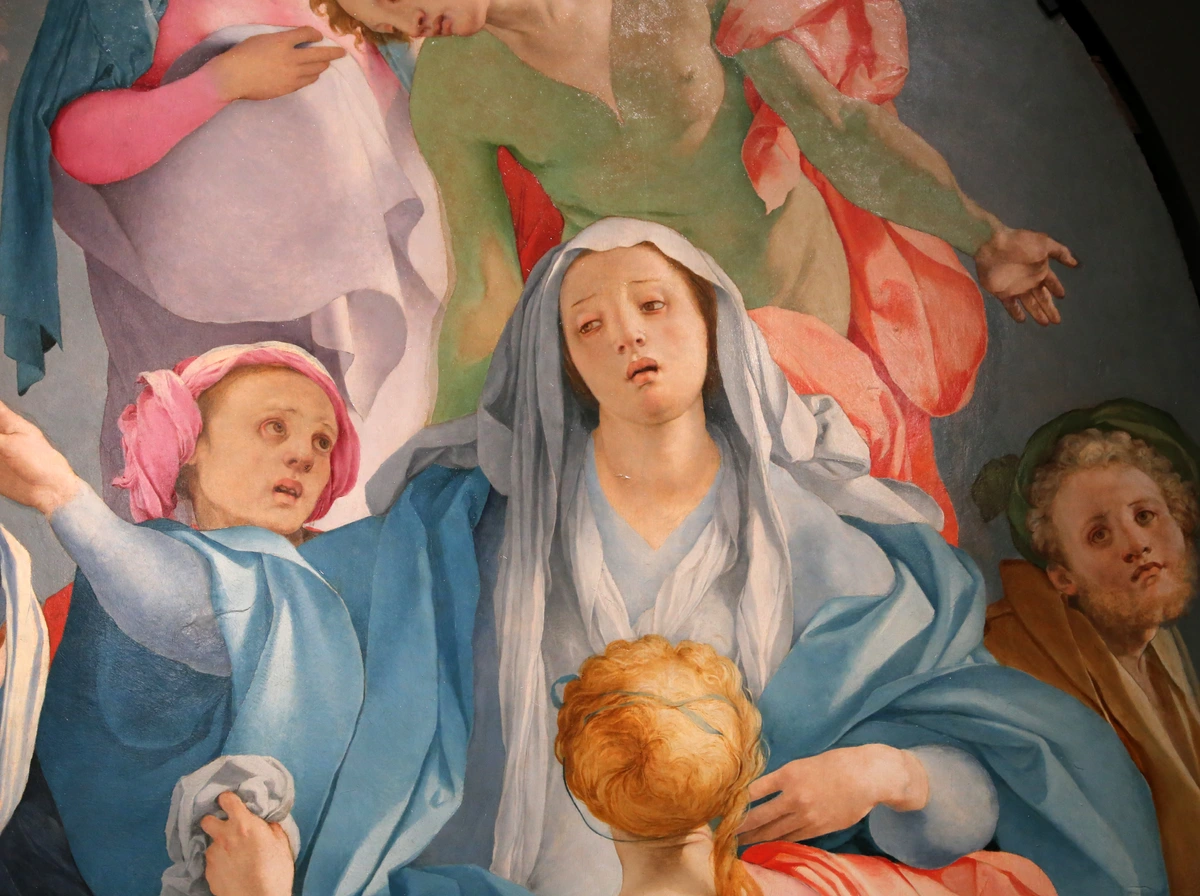
Mannerists threw the rulebook of natural color out the window with gleeful abandon. They chose colors not for realistic representation, but for emotional and stylistic impact, to create a specific effect. You’ll see shot silks that seem to change color as you move around them, acidic greens clashing with hot pinks, electric blues, and strange, otherworldly lighting that casts an ethereal glow. It creates a mood that can be beautiful, jarring, unsettling, or profoundly spiritually intense – a visual punch to the gut, if you will. They weren't just painting what they saw; they were painting what they felt and, perhaps more importantly, what they wanted you to feel, often pushing hues to their most intense, almost unnatural, vibrance.
3. Ambiguous and Compressed Space
One of the most unsettling, yet compelling, aspects of Mannerism is its deliberate distortion of space. Forget the calm, airy, and logically constructed spaces of the High Renaissance, where every figure had its place and linear perspective led your eye clearly to a focal point. Mannerist compositions are often deliberately crowded, creating a sense of anxiety and claustrophobia. Figures are crammed into the foreground, space is ambiguous, flattened, or seems to recede illogically. Pontormo's Deposition from the Cross is a classic example, where figures are piled high, almost floating, in a shallow, undefined space, leaving the viewer disoriented. It's almost as if the artist is playing with your perception, forcing you to confront the artificiality of the scene rather than seamlessly entering it, making the act of viewing a conscious intellectual effort.
4. Psychological Intensity and Emotional Ambiguity
While High Renaissance art aimed for idealized serenity, a dignified calmness, Mannerism often delves into a heightened, almost theatrical, emotional intensity. Figures display exaggerated expressions of grief, spiritual ecstasy, or even a strange, detached melancholia. This isn't emotion portrayed simply; it's often a complex, nuanced feeling, perhaps even a performative one. There's an ambiguity, a certain theatricality to it that can be profoundly unsettling, mirroring the era's spiritual and political anxieties. This wasn't about direct, relatable representation of emotion, but a stylized, intellectual exploration of inner states, a deliberate challenge to the viewer to interpret the deeper, often conflicted, sentiments at play. It's emotional depth, but presented with a filter of high style, inviting a deeper, more cerebral engagement.
The Stars of the Mannerist Show: Masters of the Maniera
Now, let's talk about the genuine rockstars, the trailblazers, the undeniable masters of this stylistic revolution. These artists weren't just following trends; they were setting them, each bringing their unique vision and personal maniera to the forefront. Their individual approaches showcase the remarkable breadth of Mannerist expression, proving that even within a 'weird' movement, there's a huge spectrum of sophisticated weirdness to explore. From the dramatic Florentines to the vibrant Venetians and beyond, these artists collectively pushed the boundaries of what art could be, leaving an indelible mark on art history.

- Pontormo (1494-1557): Often considered the quintessential early Florentine Mannerist, Pontormo really threw caution to the wind, channeling the anxieties of his age into his canvases. His work, such as the astounding Deposition from the Cross (which we've already discussed), is emotionally charged, filled with swirling, almost dizzying compositions, acid colors that sting the eye, and haunting, wide-eyed figures that seem to float rather than stand. He pushed the boundaries of emotional expression to their absolute limit, often at the expense of conventional narrative clarity, leaving the viewer to grapple with the raw, unsettling feeling, almost forcing a psychological introspection.
- Rosso Fiorentino (1494-1540): A contemporary and fellow revolutionary to Pontormo, Rosso shared a similar expressive intensity but often infused his work with a more dramatic, almost theatrical, and at times wonderfully grotesque sensibility. His figures possess a nervous energy, sharp, angular forms, and an almost feverish color palette, making his early works profoundly unsettling and innovative. He later brought the vibrant spirit of Florentine Mannerism to France, becoming a leading figure at the influential Fontainebleau School, disseminating the style beyond Italy's borders and influencing decorative arts and architecture, proving that Mannerism wasn't just for canvas and marble.
- Parmigianino (1503-1540): Hailing from Parma, Parmigianino is famous for his supremely elegant, refined, and often unnerving paintings. His masterpiece, Madonna with the Long Neck (also known as Madonna and Child with Angels and St. Jerome), is a prime example of his aesthetic, featuring attenuated figures with impossibly long limbs and necks, tiny heads, and a delicate, almost ethereal beauty that is both captivating and slightly unsettling. It's a painting that defies naturalism with such exquisite confidence that it becomes a new kind of sublime. He truly perfected the stylish, elongated figure, making it an enduring emblem of Mannerist grace and sophisticated artifice.
- Bronzino (1503-1572): Agnolo di Cosimo, better known as Bronzino, was the undisputed master of the cold, aristocratic portrait, especially for the powerful Medici court in Florence. His subjects are depicted with an almost icy perfection, conveying a sense of psychological distance and a meticulous, almost obsessive, rendering of exquisite fabrics, jewels, and fashionable attire. Works like his Eleonora of Toledo and Her Son Giovanni perfectly showcase this blend of regal composure, elaborate detail, and intellectual aloofness – a stark and intentional contrast to the human warmth and psychological immediacy of earlier Renaissance portraits. These are portraits of power and status, meticulously crafted statements of identity and sprezzatura, not necessarily soul.
- Tintoretto (1518-1594): Hailing from Venice, Tintoretto’s brand of Mannerism is a whirlwind of dramatic chiaroscuro (those intense contrasts of light and shadow!), bold, almost frantic brushwork, and dynamic compositions that often twist figures in exaggerated perspectives, pulling the viewer into the scene. His vast canvases, like The Last Supper or Miracle of Saint Mark Freeing the Slave, explode with spiritual intensity and theatricality, making him a crucial bridge figure between the intellectual complexities of Mannerism and the burgeoning emotional grandeur of the nascent Baroque art movement. He took Venetian colorito and fused it with Florentine disegno, creating something truly unparalleled.
- El Greco (1541-1614): Born in Crete, rigorously trained in Venice, and ultimately settling in Spain, El Greco's later work is a fiery, spiritual explosion of Mannerist tendencies, infused with a deep mysticism. His elongated, flame-like figures, shockingly bold, almost hallucinatory colors, and dramatic, often ecstatic, compositions are instantly recognizable – truly unlike anyone else. Paintings like The Burial of the Count of Orgaz or View of Toledo demonstrate his unique fusion of Byzantine icon painting tradition, Venetian color, and Mannerist distortion to convey profound spiritual visions and a deeply personal inner world, making his work intensely resonant with the Counter-Reformation's spiritual fervor. He represents a powerful, almost otherworldly, localized adaptation of the maniera.
Even Michelangelo, the titan of the High Renaissance, couldn't resist the gravitational pull of Mannerism in his later years. His figures in the Sistine Chapel's Last Judgment, for instance, show a powerful shift towards Mannerist principles with their muscular, twisting bodies, intense drama, and compressed space. While his earlier works like the David represent the peak of classical idealism – a model of classical composure – his later creations embraced a more emotionally fraught and physically contorted aesthetic, demonstrating the widespread influence of the new style, even on the greatest masters. You can see the echoes of the figura serpentinata in his later sculptures and frescoes, a testament to the inescapable power of the maniera.

The Legacy of Style: Re-evaluating an Often Misunderstood Movement
For a long time, Mannerism was, frankly, dismissed. Art historians and critics of later centuries, particularly those enamored with the classicism of the High Renaissance or the grandeur of the Baroque, often saw it as a decadent, inferior corruption of noble artistic principles—a period where artists focused on mere 'style' over meaningful 'substance.' It was a period seen as one of decline, an artistic cul-de-sac. But I think that’s missing the entire, glorious point, a fundamental misunderstanding of its true intention and profound intellectual depth. The 'style' was the substance, a deeply intellectual and emotional response to a changing, tumultuous world and a perceived artistic dead-end. It’s not a corruption; it’s an evolution, a conscious choice to prioritize artifice, intellectual wit, and expressive freedom when the old paradigms no longer fit, and the world itself felt fundamentally unstable.
This was an art for a fundamentally different time, a period of profound disillusionment and anxiety. The world was in turmoil—the Protestant Reformation was splitting the church, challenging old dogmas, and the devastating Sack of Rome in 1527 shattered any lingering illusions of order and stability. The old certainties were gone, and the art reflected this deep anxiety, spiritual unease, and a new, sophisticated courtly taste for intellectual puzzles and intricate artistic displays. It wasn't about simply reflecting reality; it was about interpreting and transforming it, imbuing it with a subjective vision that was both unsettling and captivating, laying crucial groundwork for an art of ideas.
Furthermore, its radical focus on emotional intensity, psychological depth, and the artist's individual inner vision paved the way for future movements in profound ways. You can draw a squiggly, figura serpentinata-style line directly from Mannerism's elegant drama and emotional tension to the grandiose theatricality of the Baroque art movement that followed, and even to the raw, often unsettling emotion of Expressionism. Its emphasis on stylized forms and intellectual games also whispers to later movements like Symbolism and even the playful distortions of Surrealism. It was a crucial step in the journey toward an art that didn't just copy nature but deeply interpreted it, a path that ultimately leads to the subjective explorations of modern abstract art. It’s a testament to its enduring, if sometimes subtle, impact.
You can see where it fits in the grand, meandering scheme of things on my comprehensive art history timeline. I guarantee you'll find Mannerism's echoes in some surprising places.
What were the key centers of Mannerism? Mannerism originated in Central Italy, primarily Florence and Rome, in the wake of the High Renaissance. Florence, with artists like Pontormo and Bronzino, developed an intellectual and often emotionally charged style. Rome, particularly before the Sack of 1527, saw artists experimenting with the grandeur of Raphael and Michelangelo, often leading to more dramatic compositions. Parma, with Parmigianino, was known for a refined, elegant style. Later, Venice, under Tintoretto, developed a dynamic, color-focused Mannerism. Beyond Italy, the Fontainebleau School in France became a significant hub, spreading the style's decorative elements, while El Greco carried its spiritual intensity to Spain. These centers, while sharing core Mannerist characteristics, each contributed their own distinctive flavor to the movement.
Key Themes and Subjects in Mannerist Art
Mannerist artists tackled a range of subjects, but they imbued them with their distinctive stylistic approach. Here are some of the dominant themes:
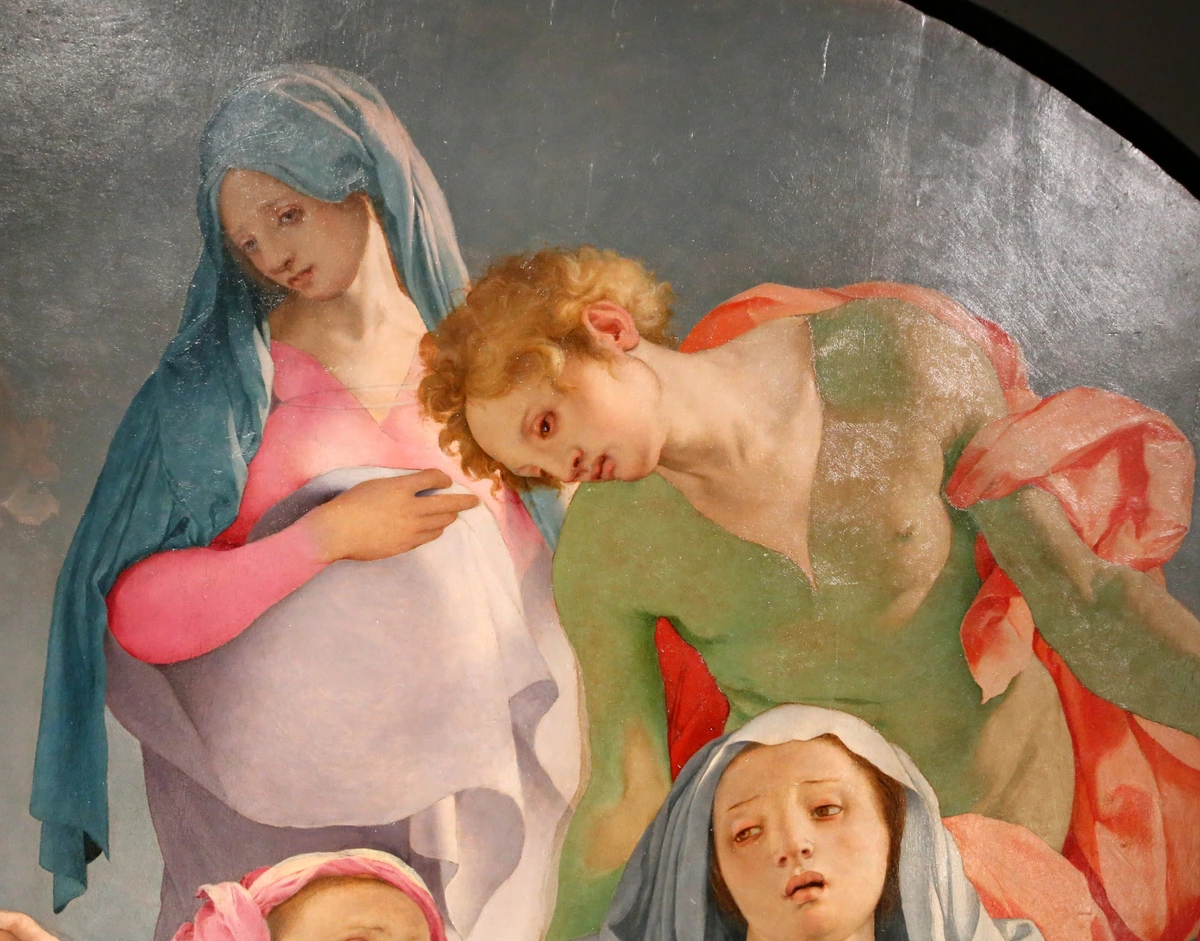
- Religious Subjects: Unsurprisingly, with the Protestant Reformation raging across Europe and the Catholic Counter-Reformation responding in kind, religious art remained absolutely central. However, Mannerist depictions of biblical scenes often diverged sharply from High Renaissance serenity. They emphasized emotional fervor, spiritual ecstasy, dramatic suffering, and sometimes even an unsettling ambiguity, departing from the placid piety that came before. Compositions might be deliberately complex, crowded with many figures, and the focus could shift from clear narrative clarity to an intense, almost mystical, and highly stylized expression of faith or doubt. Think of Pontormo's Deposition once more – it's an explosion of raw, theatrical grief, forcing the viewer to confront suffering rather than simply observe it.
- Portraiture: Courtly portraiture truly flourished during this period, with artists like Bronzino excelling as masters of the genre. These portraits often conveyed an aristocratic elegance, a certain intellectual detachment, and an almost obsessive, meticulous attention to luxurious clothing, exquisite fabrics, and sparkling jewels. They reflected the sitter's elevated status, sophistication, and a cultivated sprezzatura (a term we'll discuss later, but essentially effortless grace) rather than their inner warmth, psychological depth, or natural appearance. These were images of constructed identity, meticulously staged to project power and refinement, not candid snapshots.
- Mythological and Allegorical Scenes: Drawing from classical antiquity remained immensely popular, but Mannerist artists often chose more obscure, complex, or even contradictory mythological narratives. These subjects provided fertile ground for intellectual games, elaborate symbolism, and, of course, the display of the nude human form in elegant, twisted figura serpentinata poses. Allegories, often complex and requiring intellectual decoding, were also highly favored, reflecting the erudition of both artist and patron, creating a dialogue between the artwork and the knowledgeable viewer. Bronzino's Allegory with Venus and Cupid is a prime (and quite scandalous!) example of this genre, packed with enigmatic symbols and complex eroticism, a puzzle wrapped in beauty.
- Still Life and Genre Scenes: While less common than the dominant religious, portraiture, or mythological subjects, elements of still life and early genre painting can certainly be found, often incorporated as smaller details within larger compositions. These instances demonstrate a burgeoning interest in the material world and everyday life, even if it was still viewed through a highly stylized and often symbolic lens. Giuseppe Arcimboldo, for example, took the idea of still life to an entirely new, surreal level with his composite heads made of fruits and vegetables, which, while slightly later and often categorized separately, certainly resonate with Mannerist wit, artifice, and intellectual playfulness.
Mannerism in Sculpture: Virtuosity, Multi-viewpoint Compositions, and Elegance
While painting often takes center stage in discussions of Mannerism, the movement’s defining characteristics – figura serpentinata, emotional intensity, and sheer technical bravado (virtuosità) – found equally powerful expression in sculpture. Mannerist sculptors delighted in creating works of extreme complexity and refined elegance, often pushing the boundaries of what was technically possible in stone and bronze. They embraced the idea of sculpture as a three-dimensional puzzle, meant to be appreciated from multiple viewpoints, revealing new aspects as the viewer moved around the piece. This was art as an experience, not just a static object, but an interactive marvel designed to astonish.
- Benvenuto Cellini (1500-1571): I mentioned him earlier, but he truly deserves his own spotlight here. This flamboyant Florentine goldsmith and sculptor embodies the virtuosic spirit of Mannerism, with a life story almost as dramatic as his art. His bronze Perseus with the Head of Medusa (1545-1554), commissioned by Cosimo I de' Medici, is a monumental work designed to be admired from all angles. It showcases a complex, twisting pose, intricate detail, and a dramatic narrative moment – the hero triumphantly holding up the severed head – a perfect example of Mannerist theatricality and technical skill. Cellini himself was a character, his autobiography painting a vivid picture of artistic ego and courtly intrigue.
- Giambologna (1529-1608): Born Jean Boulogne in Flanders but active primarily in Florence, Giambologna was the most important Mannerist sculptor after Michelangelo. He perfected the figura serpentinata in three dimensions. His masterpiece, The Rape of the Sabine Women (1574-1582), is a towering marble group featuring three interlocking figures spiraling upwards, intended to be viewed from multiple perspectives. It's a tour de force of movement, emotion, and compositional ingenuity, a true highlight of the Florentine Piazza della Signoria, where it still stands today.
These sculptures were not just about depicting a story; they were about demonstrating the artist's unparalleled skill, creating a sense of dynamic movement, and engaging the viewer's intellect through their intricate forms.
Glossary of Mannerist Terms
To navigate the world of Mannerism, a few key terms are indispensable:
- Maniera: The Italian word meaning 'style,' 'manner,' or 'skill.' In the 16th century, it came to denote a highly refined, elegant, and artificial aesthetic, often emphasizing the artist's virtuosic skill and individual stylistic flourishes rather than strict adherence to naturalism. It's where the movement gets its name!
- Figura Serpentinata: Literally 'serpentine figure.' This describes a pose, particularly in sculpture and painting, where the human body twists in a complex, spiraling, S-shaped curve. It's designed to be viewed from multiple angles, demonstrating technical mastery and creating a dynamic, elegant, and often strained sense of movement.
- Disegno: An Italian term with a dual meaning, encompassing both 'drawing' or 'design' and the intellectual conception or invention behind a work of art. For Florentine Mannerists, disegno was paramount, emphasizing the artist's intellectual creativity and technical skill in rendering form and composition.
- Colorito: A Venetian term, emphasizing the application of color, particularly the rich, vibrant, and atmospheric use of color to create form and mood. While Florentine Mannerism often prioritized disegno, Venetian Mannerists like Tintoretto placed a greater emphasis on colorito, leading to different expressive outcomes.
- Sprezzatura: An Italian term popularized by Baldassare Castiglione in The Book of the Courtier (1528), meaning a certain nonchalance, to conceal all art and make whatever one does or says appear to be without effort and almost without any thought about it. In Mannerist art, it translated to an affected ease or graceful detachment, a cultivated coolness that permeated courtly portraiture, despite the immense skill and effort involved.
Frequently Asked Questions about Mannerism
I get a lot of questions about Mannerism, and it's no surprise – it's a period that sparks a lot of curiosity and sometimes, a little confusion! Here are some of the most common inquiries I encounter, hopefully shedding more light on this captivating style.
What is the best example of Mannerism art? For me, Pontormo's Deposition from the Cross (also known as The Entombment of Christ) is often cited as a prime example. It perfectly encapsulates all the core elements we've discussed: those twisted, elongated poses (figura serpentinata), a jarringly acidic color palette, a deliberately crowded and ambiguous composition, and an overwhelming sense of intense, almost theatrical, emotion. It’s a visual manifesto for the entire movement, a bold declaration of its aesthetic principles that still feels startling today, a powerful invitation to look beyond surface realism.
Why is it called Mannerism? It comes directly from the Italian word maniera, which translates to 'style,' 'manner,' or 'skill.' In the 16th century, this term evolved to denote a highly refined, elegant, and individualistic artistic quality, almost a signature touch. The movement was essentially defined by this conscious cultivation of a distinctive 'style'—a deliberate departure from the straightforward naturalism of the High Renaissance in favor of artistic flair, intellectual complexity, and a certain self-consciousness about the act of creation itself. It's art that proudly announces its own artistry, prioritizing how something is depicted over simply what is depicted.
Is Mannerism part of the Renaissance? Yes, absolutely! This is a common point of confusion, but Mannerism is generally considered the last phase of the Renaissance, often termed the Late Renaissance. It directly grew out of the breathtaking achievements of the High Renaissance masters but then consciously evolved to develop its own distinct characteristics, acting as a crucial transitional period before the full emergence of the Baroque art movement. It's a testament to the dynamic and evolving nature of artistic periods; nothing ever truly ends, it just transforms into something new and exciting, much like a theme in a symphony evolving into a complex variation.
Who are the main artists of Mannerism? While it's tough to pick just a few, Pontormo, Parmigianino, and Bronzino are undoubtedly foundational figures, especially in the Florentine and Central Italian context, defining the early, expressive phase. However, the movement was geographically broad and stylistically diverse. You could easily add significant masters like Rosso Fiorentino (crucial for the Fontainebleau School), Tintoretto (the Venetian master of drama and color), and the unique Spanish master El Greco (with his intense spiritual visions) to that list, depending on whether you're focusing on painting, sculpture, or regional variations. The true beauty of Mannerism lies in the strong individual maniera of its many talented practitioners; they all spoke a similar artistic language, but with very different accents and expressive goals.
What was the geographical spread of Mannerism? While its roots are firmly in Central Italy, particularly Florence and Rome, Mannerism was far from confined to the Italian peninsula. It spread across Europe, influencing courts and artists in France (the Fontainebleau School, thanks to artists like Rosso Fiorentino and Primaticcio, who brought a uniquely courtly, decorative flair), the Netherlands, and Spain (with El Greco being a prime example of its powerful, spiritual adaptation). Each region often infused the maniera with its own cultural nuances, creating a rich tapestry of Mannerist styles across the continent. It truly was a pan-European phenomenon, adapting to local tastes and religious contexts.
What is the main purpose of Mannerism? Rather than a single, monolithic 'purpose,' Mannerism served multiple, often intertwined, functions. It was a conscious artistic response to the perceived 'perfection' and 'completion' of the High Renaissance, seeking new avenues for expression when the old ones seemed exhausted. It aimed to display the artist's virtuosity (virtuosità) and intellectual sophistication, often through complex compositions and challenging technical feats. Furthermore, it profoundly reflected the spiritual and political anxieties of the mid-16th century, using artifice, distortion, and emotional intensity to convey a new sensibility for a world that felt increasingly out of joint, moving art beyond objective reality into subjective interpretation. It’s an art that challenges and provokes thought, inviting a more active intellectual participation from the viewer.
How does Mannerism differ from Baroque art? Ah, this is a great question, as Mannerism is often seen as a direct bridge to the Baroque, yet they have distinct personalities. Mannerism often features a nervous tension, elegant artificiality, intellectual complexity, and can sometimes feel deliberately unsettling or ambiguous. Its drama is often internalized or subtle, relying on stylistic intricacy. Baroque art, which followed, embraced drama and emotion with even greater, expansive theatricality but generally aimed for clarity, grandeur, and direct emotional appeal, often serving the triumphant ideals of the Counter-Reformation. Baroque compositions are typically dynamic, sweeping, and expansive, actively guiding the viewer with clear narratives and an overwhelming sense of movement, whereas Mannerism can be more fragmented and focused on exquisite stylistic display over immediate legibility, almost demanding the viewer unravel its visual puzzles. Baroque shouts, Mannerism whispers elegantly.
What are common themes in Mannerist art? Mannerist art explored a rich variety of themes, often reinterpreting traditional subjects through its distinctive stylistic lens. Religious scenes frequently emphasized spiritual intensity, suffering, or ecstatic visions, often with a heightened emotional pitch that could feel almost unsettling. Portraiture showcased aristocratic elegance, psychological distance, and a meticulous rendering of status symbols, a reflection of courtly life and the concept of sprezzatura. Mythological and allegorical subjects were popular for their intellectual puzzles and opportunities to display the idealized, yet distorted, human form in those characteristic twisting poses (figura serpentinata). A pervasive underlying theme was always the exploration of the artist's individual style (maniera), technical prowess (virtuosità), and intellectual wit—it was art that engaged the mind as much as the eye, creating layers of meaning.
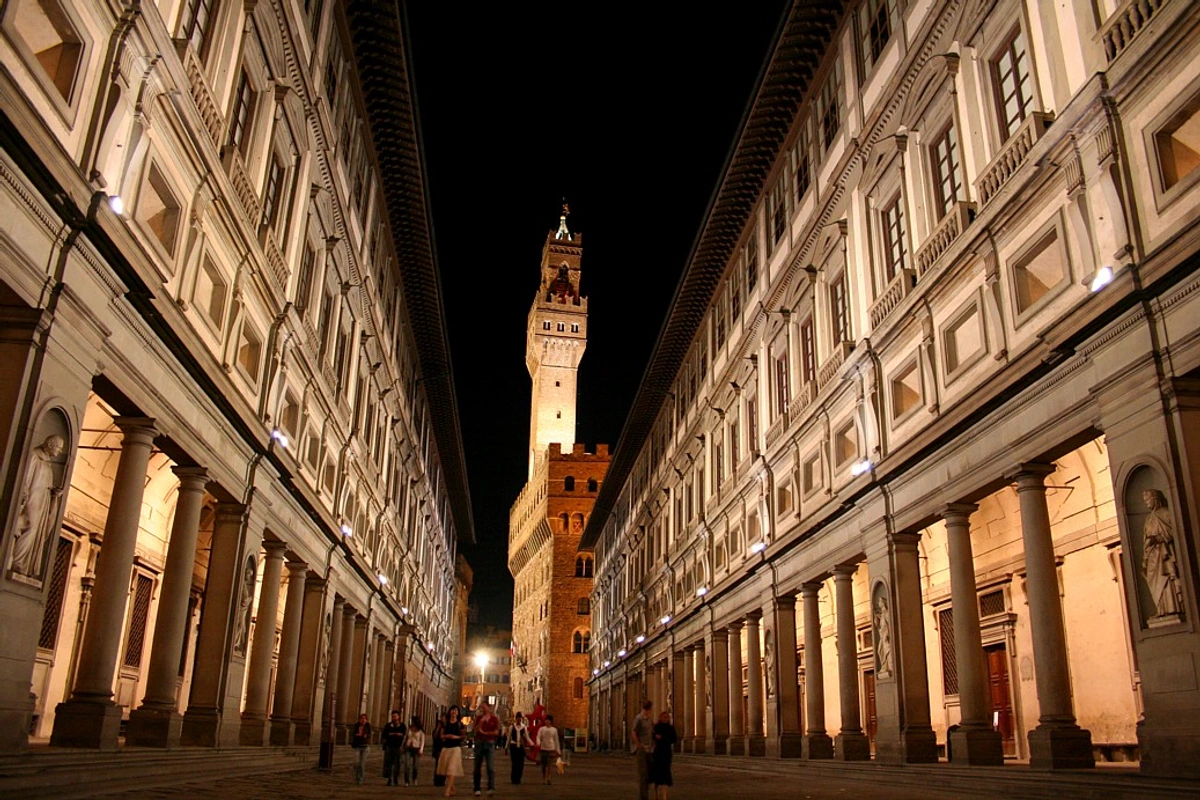
Where can I see Mannerist art? You're in luck, because many major art museums proudly house Mannerist masterpieces. Key collections can be found, unsurprisingly, in Italy, particularly in Florence at the Uffizi Gallery and Palazzo Pitti, where many Florentine Mannerists worked their magic. Rome (especially the Vatican Museums, for later Michelangelo), Siena, and Parma also have significant holdings. Outside of Italy, the Louvre in Paris (thanks to the Fontainebleau School) and the Prado in Madrid (especially for the intense works of El Greco) are excellent places to experience this captivating style firsthand. If you're planning an art lover's guide to Florence, you'll be swimming in Mannerism!

What influence did Mannerism have on later art movements? Mannerism's influence was far more profound than its early critics gave it credit for. Its dramatic compositions, emotional intensity, and dynamic use of light and shadow directly paved the way for the grandeur and theatricality of the Baroque art movement. The emphasis on the artist's individual style (maniera) and subjective vision laid crucial groundwork for modern art, where personal expression often takes precedence over objective reality. Even movements like Symbolism and Expressionism share a clear lineage with Mannerism's audacious use of color and distorted form to convey inner states and emotional turmoil. It taught us that art could be, and often should be, more than just a window onto the world; it could be a powerful, subjective interpretation, opening doors for movements from the Romantic era to Surrealism.
What distinguishes Mannerism from Early Renaissance art? Early Renaissance art, with masters like Botticelli and Masaccio, was characterized by a fervent rediscovery of classical principles, the groundbreaking development of linear perspective, and a strong drive towards naturalism and clarity. Figures were often grounded, compositions relatively simple, and the overall effect was one of harmonious order and rational space. Mannerism, in stark contrast, reacted against this established 'perfection.' It exaggerated classical forms, deliberately distorted proportions, embraced artificiality, and often created complex, ambiguous, and emotionally charged compositions, prioritizing intellectual wit and stylistic elegance (maniera) over a straightforward imitation of nature. It's the difference between laying the foundations and then building an elaborately twisting, decorative tower upon them, testing the very limits of the structure and challenging viewers to engage on a different level.
How did the Counter-Reformation influence Mannerism? The Counter-Reformation, the Catholic Church's vigorous response to the Protestant Reformation, profoundly impacted Mannerist art, especially in the latter half of the 16th century. While early Mannerism could be quite playful and secular, the Church soon encouraged art that was clear, emotive, and inspirational, intended to reaffirm Catholic dogma and move the faithful, contrasting sharply with the iconoclasm of some Protestant factions. This led to a shift towards more intense, dramatic, and overtly spiritual religious themes in Mannerist work, which then directly fed into the grandeur and didactic purpose of the Baroque art movement. Artists like Tintoretto and El Greco, in their later works, perfectly exemplify this blend of Mannerist style with Counter-Reformation fervor, using art to evoke profound piety and awe, making spiritual narratives intensely personal and theatrical.
What materials and techniques were common in Mannerist art? Mannerist artists, inheriting the technical mastery of the High Renaissance, continued to work with traditional materials like oil paint on canvas or wood panel, and fresco for wall and ceiling decoration. In sculpture, marble and bronze remained primary, often pushed to their limits to achieve intricate forms. However, their techniques emphasized virtuosity: bold, visible brushwork (especially in Venice with colorito), complex glazing for vibrant, artificial colors, and intricate carving for figura serpentinata poses that defied natural gravity. Draftsmanship (disegno) remained crucial, but the execution often prioritized stylish flair over strict naturalistic rendering. They were, in short, showing off their chops, pushing materials and methods to their expressive extremes, and in doing so, redefined the very craft of art-making.
**Was there a
A Final Thought: Embracing the Irregular
Mannerism is a powerful reminder that art history isn't a straight, predictable line of 'progress' towards ever-greater realism or perfection. Instead, it's a messy, fascinating, and ongoing conversation between artists across generations, a continuous push and pull. It’s about individuals who encountered an established ideal—the 'perfection' of the High Renaissance—and, rather than simply replicating it, decided to question it, break it, twist it, and make it profoundly their own. It’s a testament to the enduring human need for novelty and expressive freedom.
This movement teaches us that sometimes, the most innovative and expressive path is to embrace the unnatural, the unconventional, and the intellectually challenging. It's an acquired taste, for sure, a subtle flavor you learn to appreciate. But once you tune into its elegant, anxious, and deeply stylish frequency, you'll start seeing its influence everywhere, resonating in the dramatic flair of later periods and the subjective explorations of contemporary art. Mannerism, in its brilliant subversion, shows us that true artistic vitality often lies in daring to be different, in finding profound meaning in the intentionally weird, and in proving that being a little unnatural can, indeed, be the most stylish way to be. If this journey has piqued your interest, perhaps you'll find some of that vibrant, expressive energy in my own contemporary art over at the shop or explore other art movements on my main timeline – you might just surprise yourself!