From Gold Saints to Human Forms: Byzantium's Enduring Legacy to the Renaissance
My journey through art history unveiled how Byzantine art, with its deep spiritual focus and robust techniques, wasn't 'stiff' but the essential, uncredited bedrock for the Renaissance. Discover the profound technical, spiritual, and stylistic inheritance that shaped humanistic art.

My Unexpected Journey: Unearthing Byzantine Echoes in Renaissance Art, Transformed
I’ll confess something upfront: for a long time, if you’d asked me about Byzantine art, my mind would have conjured up images of solemn, flat-faced saints on gold backgrounds, beautiful but… well, a little stiff. Honestly, for years, my brain translated 'Byzantine art' into a visual shorthand for 'very serious people in funny hats staring into eternity.' It felt like trying to connect a meticulously crafted, silent medieval illuminated manuscript to the all-out spectacle of a modern blockbuster film – they seemed to operate on entirely different artistic planets. I mean, where’s the drama? Where’s the perspective? Where’s the humanity? It all just felt so… distant, like a forgotten language, a beautiful but unreadable code.
But here’s the thing about diving deeper into art history – or anything, really – the more you learn, the more the lines blur, and the more you realise that nothing truly springs from a vacuum. It’s like discovering the foundational chords in a piece of music you thought was entirely original, only to find they’ve been around for centuries, just reinterpreted. For me, it was staring at a particular Christ Pantocrator icon, its gaze so unwavering, so otherworldly, that it initially just felt rigid. Yet, the more I looked, the more I saw not stiffness, but an intense focus, a deliberate choice to transcend the earthly. This wasn't a lack of skill; it was a profound spiritual statement, making the figures timeless, eternal, and detached from fleeting human concerns. It’s a bit like acknowledging the ancient, disciplined foundational training that allowed a brilliant, innovative young athlete to excel, even if their style looks entirely different now. What I discovered was a continuous, evolving conversation across centuries, and I want to share how those 'stiff' saints whispered secrets to the masters of realism, providing the very bedrock for the artistic revolution we now call the Renaissance. We’ll explore the deep spiritual purpose, the surprisingly robust technical foundations, and the crucial stylistic bridges that connected these two seemingly disparate worlds, proving that even the most revolutionary shifts build on what came before.
The World of Byzantine Art: Purpose, Techniques, and Profound Symbolism
Before we talk about influence, let’s quickly set the scene. Imagine an art world where the spiritual reigned supreme, and art wasn't just a representation, but a conduit to the divine. Byzantine art, flourishing for over a thousand years (roughly 330 AD to 1453 AD, when the fall of Constantinople marked the effective end of the Byzantine Empire and a significant shift in its artistic legacy), centered around the Eastern Roman Empire, was exactly that. It wasn’t about capturing fleeting moments or human emotion in a realistic way; its very purpose was to communicate divine truth, to function as a window to the transcendent. You might look at a serene Christ Pantocrator icon or a Virgin Hodegetria and, at first glance, see only rigidity, but that perceived 'stiffness' was a deliberate artistic choice – it aimed to elevate the figures beyond earthly concerns, making them timeless and eternal. Think of it this way:
- Intense Spiritual Focus: Figures like Christ, Mary, and saints were depicted with solemn, otherworldly gazes. Their purpose wasn't to engage with you directly, but to serve as a visual pathway to the divine, a focal point for prayer and contemplation within elaborate liturgical practices. The image of the Christ Pantocrator (meaning 'Ruler of All'), for instance, evolved over centuries, from a more classical, youthful depiction to the severe, bearded, and powerfully iconic image we often recognize, always conveying immense authority and judgment. You'd also find Archangels like Michael and Gabriel, depicted with majestic wings and noble expressions, often serving as divine messengers, or Old Testament prophets holding scrolls foretelling Christ's coming. Each figure was a carefully chosen symbol, not a portrait.
- Glorious Gold: Those shimmering gold backgrounds weren't just decorative; they symbolized heavenly light, a transcendent space beyond our earthly realm, removing the figures from any specific time or place. They literally brought the divine into the physical space of the church or home.
- Flatness and Frontality: Perspective as we know it wasn’t a thing. Figures often appear two-dimensional, frontal, and hierarchical in scale – meaning the more important a figure (like Christ or Mary), the larger they might be in the composition, regardless of their actual position in space. Imagine a king depicted larger than a peasant in a scene, not because he's closer, but because he's more important – that's hierarchical scale in action. There were rarely shadows, further detaching figures from any illusion of a naturalistic, sunlit environment. This wasn't a failure of technique, but a conscious decision to eschew earthly illusion for spiritual reality. For more on how artists use color and light, check out our guide on how artists use color.
- Iconography as Language: Every gesture, every color, every object had a specific, understood meaning. It was a sophisticated visual language understood by the faithful. For instance, Christ's specific hand gesture of blessing (thumb and ring finger touching, creating the letters IC XC for "Jesus Christ" – look closely, the fingers form those letters!) or Mary's consistent blue mantle symbolizing purity and divinity were instantly recognizable and communicated deep theological concepts without words. Even halo designs, often simple gold discs, emphasized the spiritual rather than the natural. Colors themselves had potent meanings: red for divinity or martyrdom, white for purity and resurrection, green for life and nature. The very concept of an acheiropoieta – an icon believed to be 'not made by human hands', such as the Mandylion of Edessa, suggesting divine origin and sacred power – underscored the profound reverence attributed to these images, setting them apart from mere human artistry. This symbolic depth is fascinating, and you can delve further into the definitive guide to understanding symbolism in art.
For a long time, I saw this as rigid. Now, having dug a little deeper, I see it as an incredibly powerful, consistent visual system. A kind of visual bedrock, patiently waiting for new layers to be built upon it, a stepping stone to future artistic breakthroughs. It also helps to remember that after the Iconoclasm debates (intense periods of theological and political debate, sometimes outright prohibition of religious images, especially in the 8th and 9th centuries), the role of icons as theological statements became even more deeply entrenched. This wasn't just Constantinople's story; Byzantine art spread its roots across the Eastern Roman Empire, influencing styles in places like Ravenna, Sicily, and the Balkans (Bulgaria and Serbia, for example), each with its own subtle regional interpretations that would later, in turn, filter westward. Key artistic centers like Constantinople, Thessaloniki, and Ravenna developed distinct styles, fostering regional nuances and innovations that would later contribute to the rich tapestry of artistic exchange, including elements of the later Palaeologan Renaissance (13th-15th century) which saw a brief, renewed interest in naturalism and expressiveness within the Byzantine tradition.
The Practicalities of the Sacred: Building Blocks of Artistry
It wasn't just the spiritual focus that permeated from East to West; it was also the practical knowledge, the very 'how-to' of creating art. I used to think of these techniques as merely old-fashioned, but digging deeper, I realized they were incredibly robust, the very building blocks of visual communication. Byzantine artists were masters of techniques like mosaic, tempera painting, and fresco, skills honed over centuries.
Mosaics: Shimmering Windows to the Divine
Mosaics, with their luminous, jewel-like quality, dominated early Byzantine church decoration, offering incredible durability and light-reflecting brilliance. The creation of a mosaic was a monumental task, involving skilled tessellarii who meticulously cut and placed thousands of tiny, often gold-backed, tesserae (the small pieces of material, typically colored glass, natural stone, or sometimes mother-of-pearl) at subtle angles. This angling wasn't accidental; it was a deliberate choice to catch and reflect light, creating a dynamic, ethereal glow that made church interiors feel alive with divine presence. The choice of gold, glass, and often semiprecious stones was deliberate: the medium itself was part of the message, signifying divine light and preciousness. Think of the dazzling golden interiors of the Hagia Sophia in Constantinople or the intricate narrative scenes in the Mausoleum of Galla Placidia in Ravenna – these were powerful, lasting visual statements.
Tempera: Luminous Colors, Precise Details
Tempera, for example, dries quickly to a durable, luminous finish, perfect for the sharp details and radiant colors of icons, allowing for meticulous layering and precise lines that define so many Byzantine works. Artists would prepare wooden panels, often made from poplar or lime wood, with multiple layers of gesso (a mixture of plaster, typically gypsum or chalk, and animal glue) to create a smooth, highly absorbent, and luminous ground. This gesso preparation was crucial for tempera's characteristic brilliance, providing a bright, white base that made the colors truly sing. Finely ground pigments, often sourced from minerals (like lapis lazuli for blue or cinnabar for red), were then suspended in egg yolk, which acted as a binder. The quick-drying nature of tempera necessitated a methodical, almost meditative application of thin layers, building up color and detail with cross-hatching strokes. It sounds laborious, and it was, but the results speak for themselves in the enduring glow of these icons. If you're curious about the longevity and evolution of some of these methods, you might enjoy exploring the history of tempera painting from ancient Egypt to modern revival.
Fresco: Grand Narratives on Wet Walls
Fresco, with its ability to integrate paint directly into wet plaster, was ideal for the monumental scale of church interiors, creating lasting narratives that could endure for centuries. While less luminous than mosaic or tempera, fresco allowed for grand, sweeping narratives that covered vast wall spaces, particularly in monastic churches and less wealthy areas where mosaics were too costly. These weren't merely artistic choices; they were durable methods perfect for monumental church decorations and revered icons. When Italian artists began to move beyond mosaics, they often turned to these established techniques, learning from Byzantine examples brought westward. Imagine a contemporary chef today learning a secret, ancient spice blend, only to reimagine it in a modern molecular gastronomy dish – that's the kind of knowledge transfer we're talking about, a blend of reverence and innovation. You can also dive deeper into the history of fresco painting techniques.
Encaustic and Illumination: Beyond the Major Forms
Beyond these major forms, we also see the use of encaustic painting, a technique involving heated wax mixed with colored pigments. Though less common after the early Byzantine period due to its complexity, it produced incredibly rich, durable colors and was especially favored for some of the earliest and most expressive icons. If you're fascinated by this ancient method, consider reading about the history of encaustic painting.

The meticulous creation of manuscript illuminations, with their vibrant colors, intricate details, and extensive use of gold leaf, also provided a rich visual vocabulary and technical blueprint for later European illustrators. Byzantine scriptoria were crucial in preserving classical Greek philosophical, scientific, and artistic texts, often adorning them with elaborate borders, intricate patterns (like interlace and stylized animal motifs), and golden calligraphy. The precise application of gold leaf in these manuscripts, a technique refined over centuries, directly informed the gilding practices of early Renaissance panel painters. This steady hand of tradition, often uncredited, laid a crucial technical groundwork, extending even to the development of portable panel painting – essentially, devotional paintings created on wooden panels. This portability was revolutionary, directly enabling the creation of smaller, personal devotional pieces and, crucially, the large-scale altarpieces that would become central to Renaissance church interiors.
Byzantine craftsmanship also excelled in enamelwork (especially cloisonné, where thin wires form compartments for colored glass paste) and intricate metalwork (like gold and silver chalices, crosses, and reliquaries), showcasing a mastery of precious materials and decorative techniques that were highly prized and influenced later Western European artisans. The patronage of emperors, empresses, and powerful monastic communities like those on Mount Athos ensured the continuous development and preservation of these artistic traditions, shaping their evolution and dissemination across the empire and beyond. All of this technical skill, however, wouldn't have migrated so effectively without the historical currents that connected East and West.
The Unseen Currents: Bridging East and West
So, if Byzantine art was so distinct, how did it possibly lead to the vibrant realism of the Renaissance? Well, history has a funny way of connecting dots, often through economic and political currents, and sometimes through sheer necessity. Even as the Western Roman Empire fell, the Eastern Empire (Byzantium) continued, preserving classical knowledge and developing its own artistic traditions. Italy, with its strategic location, was a major hub for trade and cultural exchange between East and West. Merchant republics like Venice, Amalfi, Pisa, and Genoa thrived on maritime trade, regularly interacting with the Byzantine Empire. This fragmentation of the Italian peninsula, ironically, fostered competition among city-states, each eager to assert its prestige and wealth, often through artistic patronage that would draw upon various influences.
The Italo-Byzantine Synthesis
This vibrant exchange led to the flourishing of the Italo-Byzantine style – a fascinating blend where Italian artists began to adapt Byzantine forms and motifs, often softening the rigid frontality with nascent hints of local character, before the full Renaissance bloom. In Venice, for instance, this often resulted in a richer, softer aesthetic influenced by its close ties to the East, evident in the shimmering, gold-infused mosaics of St. Mark's Basilica, which incorporate both Byzantine grandeur and Western narrative approaches. Artistic centers like Florence, though deeply rooted in emerging classical traditions, would still feel the pervasive undercurrent of Byzantine forms and techniques, particularly in iconography and compositional clarity, influencing early works even as they strived for a new realism. Other hubs like Rome, with its ancient imperial connections, and Sicily, a crossroads of Byzantine, Islamic, and Norman cultures, also served as vital conduits, absorbing and reinterpreting Byzantine artistic and intellectual currents, creating masterpieces like the mosaics of Monreale and Cefalù Cathedrals. This exciting period is often explored in discussions about the influence of Byzantine art on Renaissance painting.
Translatio Studii: The Great Migration of Knowledge
Then came pivotal moments like the fall of Constantinople in 1453. As the Byzantine Empire waned, many scholars, artists, and their precious manuscripts and artworks migrated westward, particularly to Italy. This wasn't just a casual migration; it was a phenomenon art historians call "translatio studii" – essentially, the transfer or migration of learning and knowledge from one cultural center to another. This veritable scholarly and artistic migration brought a wealth of classical Greek texts – including the philosophical works of Plato and Aristotle, medical treatises by Galen, astronomical studies, and Neoplatonic philosophy – that had been lost or forgotten in the West for centuries. Their rediscovery was transformative, reigniting a passion for classical thought and directly influencing Renaissance humanism. For example, the revival of Neoplatonism, a philosophy blending Plato's ideas with mystical elements, profoundly impacted artists like Botticelli, who imbued his mythological scenes with a sense of ideal beauty and spiritual yearning that reflected these rediscovered philosophical currents. Scholars like Manuel Chrysoloras and Gemistus Pletho were instrumental in bringing these texts and the understanding of ancient Greek language to Italy, sparking a fervent intellectual revival. But it wasn't just philosophy; these texts often came with exquisite Byzantine illustrations, providing visual examples of ancient stories and scientific concepts that directly influenced the burgeoning interest in classical antiquity among Renaissance artists. Along with these texts came the very visual language used to depict spiritual truths. This influx of ideas and objects wasn’t just a historical footnote; it was a living, breathing connection, reminding Italian artists of a rich tradition and providing tangible examples. It wasn't about copying in a sterile sense; it was about absorbing established forms and techniques as a powerful starting point, then creatively transforming them, much like a musician reinterpreting a classic melody in a new genre. It provided a powerful, sophisticated foundation for artists to build upon.
Golden Foundations: Where Byzantine Art Truly Left Its Mark in the Proto-Renaissance
When we look at Proto-Renaissance painters, especially in places like Siena and Florence during the late 13th and early 14th centuries, the Byzantine influence isn't just a faint echo; it’s a distinct foundational melody. Artists weren't simply inventing a new style from scratch; they were building on what came before, gradually pushing its boundaries. This period, often called the Proto-Renaissance or early Renaissance, shows the most direct and crucial bridge between these two worlds.
The Spiritual Heartbeat: Enduring Devotion
Even as Renaissance art embraced humanism, the deep-seated spiritual purpose remained. Early Renaissance Madonnas and saints still retained that Byzantine solemnity and iconic quality, even if they started to inhabit more naturalistic spaces. The idea of art serving a higher, devotional purpose was deeply ingrained, and the reverence for religious figures continued to anchor compositions. The theological concept of the Theotokos (God-bearer), for instance, central to Byzantine reverence for Mary, profoundly shaped her visual representation, and this reverence was carried forward, even as her depiction became more humanistic.
The Sienese and Florentine Bridge: Radiance and Early Realism
Take the gold, for instance. Early Renaissance artists still used gold generously, especially in halos and backgrounds, though they slowly began to experiment with how light interacted with forms. We see artists like Cimabue (late 13th century) still heavily reliant on Byzantine conventions – those elongated faces, the gold striations in drapery, the overall flatness. His famous Maestà for Santa Trinita (c. 1285–1286) is a prime example of Byzantine grandeur subtly softened by a nascent interest in human feeling. It’s like he’s gently prying open a window to the human soul within the divine structure. Another work, his Crucifix for Santa Croce (c. 1287–1288), retains the severe, elongated body of Christ characteristic of Byzantine depictions, but introduces a subtle sense of pathos that hints at the coming Renaissance empathy.
Similarly, Duccio di Buoninsegna, a Sienese master active around the same time, also shows this incredible blending. His monumental Maestà for Siena Cathedral (1308–1311) retains the shimmering gold backgrounds, hierarchical scale, and formal frontality of Byzantine art but introduces a newfound narrative richness, a more delicate grace, and softer, more elegant drapery, moving towards a more humanistic depiction of sacred stories. Look closely at the individual scenes on the predella; you'll see figures interacting with a nascent emotional depth previously unseen. It’s a perfect illustration of how the divine was beginning to be explored through human experience.
From Symbolic Halo to Spatial Light
Byzantine halos were typically flat, symbolic gold discs, emphasizing the sacred and transcendent nature of the figure. In the early Renaissance, we see a gradual evolution. While gold halos persisted, artists began to experiment with representing light more naturalistically. Over time, these halos would become more perspectivally rendered, sometimes depicted as solid rings seen from an angle, indicating the figure's presence in a three-dimensional space rather than just a symbolic marker of divinity. This subtle shift was a microcosm of the larger transition from symbolic representation to illusionistic realism.
A Direct Look: Byzantine Icon vs. Early Renaissance Madonna
To truly grasp this evolution, let’s consider a classic Byzantine icon, like the Virgin and Child you might see from the 12th or 13th century (much like the one pictured above). The Virgin’s face would be elongated, her expression solemn, her drapery rendered in a stylized, almost linear fashion – meant to symbolize spiritual radiance rather than physical volume. Now, picture Cimabue’s Maestà (c. 1285-1286). You still see the gold background, the imposing scale, the frontal pose. But look closely at Mary’s face: there’s a hint of melancholy, a softness around the eyes. And her blue mantle, while still displaying gold highlights, begins to suggest the weight and folds of real fabric, a move away from purely symbolic representation towards a nascent three-dimensional form – essentially, making figures look like they have real weight and occupy physical space, creating the illusion of depth, not just painted on a flat surface. It’s a subtle but powerful shift, moving from an entirely abstract spirituality to one grounded, however gently, in human experience.
Formal Composition: A Stable Framework
The Byzantine emphasis on symmetry, hierarchical scale, and clear, often frontal, arrangements of figures also carried over. It gave early Renaissance compositions a sense of order and dignity that was gradually challenged but never entirely abandoned. This structural clarity provided a stable framework that Renaissance artists would later manipulate and expand upon. If you're keen to understand these foundational elements, our guide to understanding the elements of art is a great place to start.
And then came Giotto, a true game-changer, often considered the father of Renaissance painting. Giotto was clearly trained in the Byzantine tradition – you can see it in the structure and iconography of his early works. But he started to introduce weight, volume, and emotional depth to his figures. His forms feel heavy, grounded, and their expressions hint at inner lives. For instance, in his frescoes in the Scrovegni Chapel, figures like the mourners around Christ in his Lamentation possess a raw, human grief that was unprecedented. You're no longer just observing; you're feeling their sorrow. These feel like people rather than flat symbols. He took that Byzantine foundation and began to build something entirely new on it, brick by careful brick. It’s the difference between a revered elder teacher showing you the rules of composition, and then your influential mentor showing you how to bend those rules to achieve emotional truth. If you're interested in this pivotal shift, exploring the ultimate guide to Renaissance art would be a fantastic next step.
The Great Shift: Renaissance Artists Taking the Baton (and Running with It)
From Giotto onwards, the shift accelerated dramatically. Artists like Masaccio, Piero della Francesca, and later, the High Renaissance masters like Leonardo da Vinci and Michelangelo, pushed further and further from Byzantine conventions. They embraced:
- Scientific Perspective: No more flat backgrounds! Architects like Brunelleschi and artists like Masaccio developed mathematical principles for a definitive guide to perspective in art to create convincing illusions of three-dimensional space on a two-dimensional surface. Masaccio’s Holy Trinity fresco (c. 1425), for example, is a breathtaking masterclass in linear perspective, pulling the viewer deep into the architectural space. It was a revolutionary idea, literally pulling viewers into the scene.
- Naturalism and Human Anatomy: Figures became increasingly lifelike, their bodies anatomically correct, their movements dynamic, and their expressions varied and deeply human. The focus moved from divine prototypes to individual human experience. I think of this as a profound shift: from emphasizing the sacred, timeless idea of humanity to celebrating the unique, often messy, reality of individual human beings. Piero della Francesca, for example, masterfully combined scientific perspective with idealized, geometrically precise figures, creating a sense of monumental calm and intellectual rigor in his works, deeply rooted in classical ideals but advanced through Renaissance innovation.
- Humanism: While spirituality remained important, the Renaissance celebrated human achievement, potential, and beauty. Art reflected this newfound emphasis on man as the measure of all things, even influencing architectural forms.
It’s also important to note what Byzantine art, despite its immense influence, didn't directly provide the Renaissance. While it offered a powerful spiritual and technical foundation, it didn't focus on scientific perspective, detailed anatomical studies based on dissection, or the celebration of classical Greco-Roman mythology as its primary subject matter. These elements were largely rediscovered or innovated upon by Renaissance artists, drawing from classical antiquity and a burgeoning scientific curiosity.
Beyond the Canvas: Echoes in Architecture, Textiles, and Northern Lands
This transformation wasn't limited to painting. Even in architecture, while Byzantine structures often favored central plans and monumental domes (think Hagia Sophia's immense dome in Constantinople, a feat of engineering and spiritual symbolism that inspired awe for centuries), these forms were reinterpreted in the Renaissance. Architects like Brunelleschi studied ancient Roman and Byzantine examples, carefully analyzing their structural innovations, such as the use of pendentives (curved, triangular architectural elements that transition from a square base to a circular dome) and squinches (arches spanning corners to support a rounded dome) or the sophisticated vaulting systems like barrel and groin vaults. He adapted these principles to create harmonious, balanced structures like the Duomo in Florence. While the aesthetic became distinctly Renaissance – focusing on classical orders and a sense of rational beauty – the understanding of monumental scale, dome construction, and the use of light to evoke spiritual presence often had roots in the observation of Byzantine prototypes, alongside their mastery of brick and mortar construction and elaborate marble revetment.
And it wasn't just visual arts. Even Byzantine textile art, with its rich patterns, luxurious materials (like silk embroidered with gold thread), and symbolic motifs (e.g., griffins, eagles, religious scenes), profoundly influenced Renaissance fashion and the decorative arts. These opulent fabrics were highly prized and traded, spreading visual ideas and technical expertise. Similarly, Byzantine music, with its plainchant melodies and emphasis on liturgical function, and the elaborate liturgical practices themselves, subtly influenced the context and purpose of Renaissance art. The solemnity, ritualistic structure, and deep theological underpinnings of Orthodox liturgy, often characterized by modal scales and call-and-response chants, provided a powerful framework for visual representation, influencing the feeling and purpose of religious art in the West, reminding us that the conversation across centuries extended far beyond just brushstrokes and golden backgrounds.
Furthermore, the Byzantine artistic tradition's influence wasn't confined to Italy. It reached Northern European art as well, though often indirectly and reinterpreted through local traditions. Early medieval art in places like the Carolingian and Ottonian empires, for instance, borrowed heavily from Byzantine forms, particularly in manuscript illumination (e.g., the Utrecht Psalter's expressive line work, the gold backgrounds and solemnity of the Lindau Gospels), metalwork, and ivory carving. Later, elements of Byzantine style filtered through Italian centers or via pilgrims returning from the Holy Land. While the Northern Renaissance developed its own distinct naturalism (e.g., in Flemish painting with its focus on oil paint and minute detail), echoes of Byzantine compositional clarity, religious intensity, and even certain iconographic types can still be discerned, especially in early religious panel paintings. It was a more diffuse influence, often integrated into a different aesthetic, but certainly present.
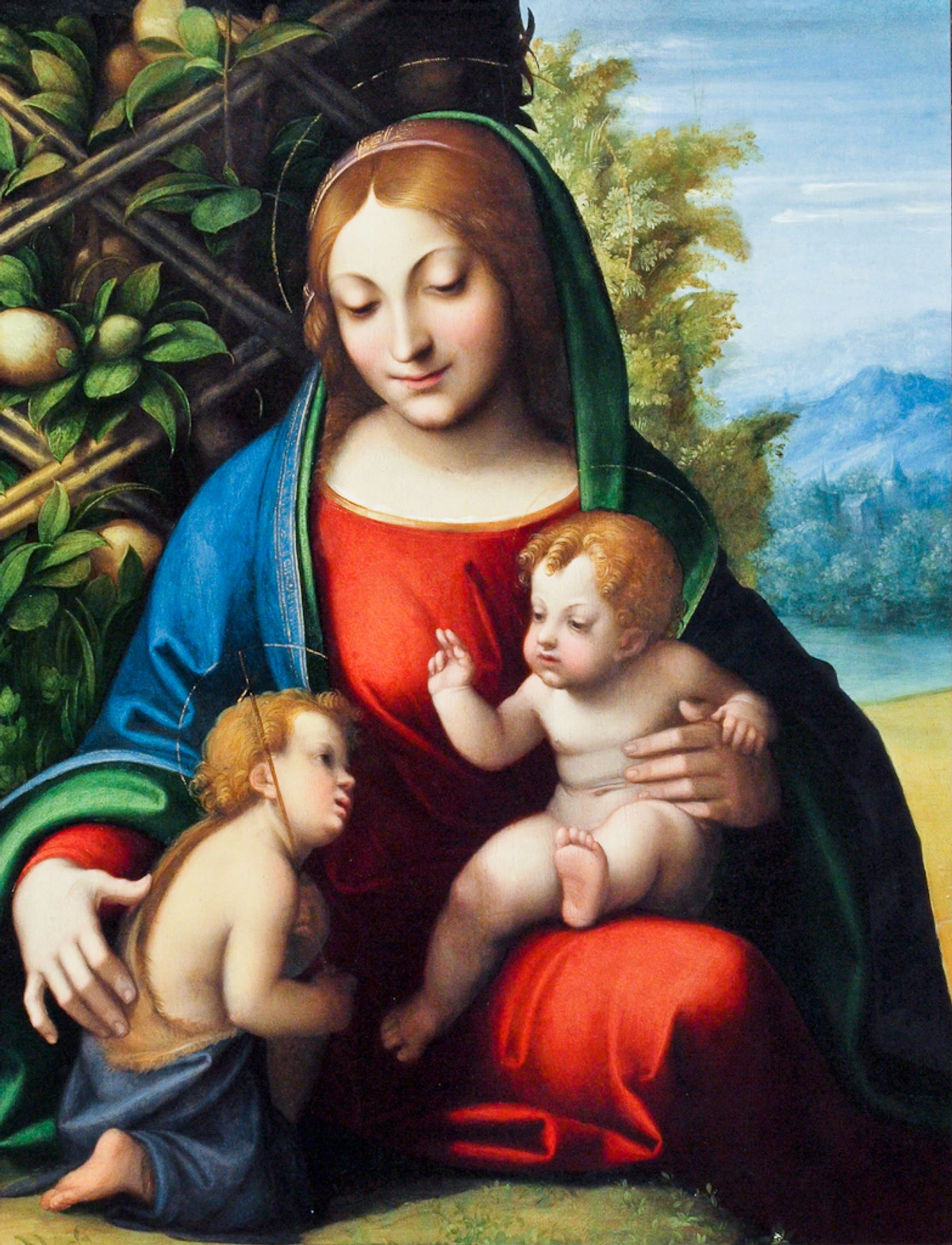
It’s a fascinating progression, isn't it? From the solemn, ethereal world of Byzantium, artists gradually moved towards a celebration of the earthly, the human, and the tangible. Yet, the initial framework – the symbolic language, the devotional intensity, the very idea of art as a profound communicator – was inherited and repurposed. Without that initial, enduring bedrock, who knows what the Renaissance might have looked like? It's a question I often ponder, and one that makes me appreciate the hidden currents of history even more.
Byzantine vs. Early Renaissance: A Snapshot of Transformation
Feature  | Byzantine Art (Approx. 4th-15th Century) | Early Renaissance Art (Approx. Late 13th-14th Century) | Examples/Key Characteristics | |
|---|---|---|---|---|
| Purpose | Spiritual devotion, didactic teaching, conduit to divine | Divine truth with nascent human emotion, narrative focus | Mosaics of San Vitale, Theotokos of Vladimir | Cimabue (Maestà), Duccio (Maestà), early Giotto (Scrovegni Chapel) |
| Form | Flat, two-dimensional, stylized, linear | Beginnings of volumetric form, weight, realistic drapery | Elongated figures, gold striations in drapery | Softer contours, suggestive of body beneath fabric |
| Technique/Medium | Mosaic, tempera, fresco, manuscript illumination | Tempera, fresco, panel painting, refined gilding | Detailed gesso preparation, encaustic | Meticulous layering of tempera, monumental frescoes |
| Perspective | Limited/Symbolic (often hierarchical scale) | Hint of spatial depth, though not yet scientific perspective | Figures arranged frontally, larger for importance | Suggestive overlapping of figures, slight diagonals |
| Emotion | Solemn, otherworldly, static, timeless | Subtle melancholy, nascent human pathos, internal lives suggested | Distant gazes, formal expressions | Hints of sorrow, tenderness, individual reactions |
| Color/Light | Gold for heavenly light, symbolic colors, no shadows | Gold still used, experimentation with natural light, richer palettes | Luminous gold backgrounds, vibrant symbolic reds/blues | Gentle gradations of color, early use of light for modeling |
| Composition | Symmetry, frontality, hierarchical, symbolic settings | Order, dignity, structural clarity, nascent naturalistic settings | Balanced, centrally focused figures | Balanced but with increasing dynamism, early landscapes |
Why This Still Matters to Me Today
Understanding the Byzantine influence isn't just an academic exercise. For me, it underscores a fundamental truth about creativity: everything is connected. There are no true beginnings, only continuations and reinterpretations. It teaches me to look beyond initial impressions, to find the deep roots beneath seemingly disparate art forms. It’s a reminder that even the most revolutionary artistic movements stand on the shoulders of giants, perhaps even giants wearing gold halos and looking a little stern.
This realization profoundly impacts my own artistic practice. I often find myself wrestling with initial concepts that feel, to me, somewhat 'stiff' or rigid – much like my early perception of Byzantine icons. But instead of abandoning them, I now embrace this foundational structure. I think about how the Byzantines used deliberate formality and symbolism to convey profound spiritual depth. While my own art is often abstract and vibrant, understanding that underlying intention helps me. I take a rigid concept, explore its 'bones,' and then slowly, painstakingly, add layers of emotion, personal experience, and often unexpected bursts of color until it breathes its own unique life. It’s a process of respectful transformation, much like the Proto-Renaissance masters did with their Byzantine inheritance, translating a sacred visual language into a humanistic one. This understanding of artistic evolution is deeply embedded in my own timeline of artistic development.
This kind of historical perspective enriches my appreciation for all art, from ancient mosaics to the most cutting-edge contemporary works. It's a constant reminder to always question, always dig deeper, and always appreciate the long, winding human story woven into every brushstroke. If you ever find yourself drawn to art that consciously or unconsciously reflects these layers of history, feel free to browse my art for sale. If you ever find yourself in the Netherlands, consider visiting my museum in 's-Hertogenbosch; perhaps you'll see echoes of these historical journeys in my own work too. My journey from seeing Byzantine art as 'stiff' to understanding its profound roots was unexpected, and I hope this exploration encourages you to look for those hidden connections in art – and perhaps even in your own creative process. The echoes are everywhere, waiting to be heard.
FAQ: Peeling Back the Layers of Art History
Which Renaissance artists show the most Byzantine influence?
The earliest Renaissance artists, often referred to as Proto-Renaissance artists, show the most direct influence. Masters like Cimabue and Duccio di Buoninsegna in the late 13th and early 14th centuries are perfect examples, particularly their large altarpieces and Maestà compositions. Even Giotto, who is credited with breaking away from Byzantine stiffness, started his career within that tradition and his early works clearly display its foundational elements, such as compositional arrangements and the use of rich color. You'll see this evolution most clearly in the Tuscan schools of Florence and Siena. To see some of these works firsthand, consider our art lover's guide to Florence.
Was Byzantine art just flat and gold?
Oh, if only it were that simple! While much of Byzantine art focused on two-dimensional representations with symbolic gold backgrounds, those are certainly its most iconic and pervasive characteristics. However, to say it was just flat and gold misses a lot of nuance. There were variations in different periods and regions – for instance, some Byzantine mosaics showed remarkable depth and intricate details, especially those from the early period in Ravenna. The emphasis was consistently on spiritual symbolism over naturalistic representation or deep spatial illusion, making the 'flat and gold' aesthetic a powerful, consistent visual language. Its deliberate formalism aimed for timelessness, not earthly realism; it was a conscious artistic choice, not a lack of skill. Byzantine art also embraced a sophisticated understanding of balance, harmony, and symbolic color usage, all driven by theological principles.
Did Renaissance artists reject Byzantine art entirely?
No, it wasn't a sudden rejection but rather a gradual evolution. Early Renaissance artists built upon the Byzantine framework, progressively introducing elements of naturalism, perspective, and human emotion. They admired the spiritual gravitas and sophisticated iconography of Byzantine art, finding immense power in its devotional qualities, but sought to imbue it with a new sense of earthly reality and human experience. It was a transformation, not an outright dismissal, a slow but steady reinterpretation of a sacred visual language that allowed them to connect the divine with the tangible. This ongoing dialogue between styles is a core part of understanding symbolism in Renaissance art.
How did regional differences in Byzantine art affect the Renaissance?
While a general "Byzantine style" is often discussed, there were significant regional variations across the vast empire – from Constantinople to Italy (like Venice and Sicily), to the Balkans and Russia. These regional distinctions often led to different local interpretations of Byzantine art. For example, in Venice, a softer, more Italianate Italo-Byzantine style emerged, incorporating Byzantine motifs with local Romanesque influences, visible in the shimmering mosaics of St. Mark's Basilica. Similarly, in Sicily, under Norman rule, a unique blend of Byzantine, Islamic, and Western artistic traditions flourished, creating masterpieces like the mosaics of Monreale Cathedral. As scholars and artworks migrated, these varied styles could have subtly influenced different Italian artistic centers, contributing to the diverse expressions seen in the early Renaissance.
What materials and techniques did Byzantine artists typically use for icons?
Beyond the monumental mosaics and frescoes, Byzantine icons were predominantly created using tempera paint on wooden panels. The process was meticulous: artists would prepare wooden panels (often poplar or lime) with multiple layers of gesso (a mixture of gypsum or chalk and animal glue) to create a perfectly smooth, brilliant white, absorbent surface. Pigments, typically finely ground minerals, were then mixed with egg yolk as a binder and applied in thin, translucent layers. This allowed for precise details, sharp lines, and a luminous quality that captured the ethereal nature of the figures. While tempera was dominant, earlier icons also sometimes employed encaustic painting, using heated wax mixed with pigments, which created incredibly rich, durable colors but was more technically demanding. For a deeper dive, check out the history of encaustic painting.
What about the Byzantine legacy outside the Renaissance?
That's a fantastic question! While Western Europe moved into the Renaissance, the Byzantine artistic tradition continued to flourish and evolve in Eastern Orthodox countries. In places like Russia, Greece, and the Balkans, the iconic style, deep symbolism, and spiritual focus of Byzantine art remained the dominant mode of religious expression for centuries, and indeed, continues in many forms today. This separate, unbroken lineage highlights the enduring power and adaptability of the Byzantine aesthetic, even as it diverged from the Western path. Think of the enduring beauty of Russian icons, for example, which directly trace their lineage back to Byzantine prototypes.




What were the key differences in the purpose of art between Byzantium and the Renaissance?
In Byzantium, the primary purpose of art was theological: to serve as a conduit to the divine, a window to the transcendent. Art was didactic, a visual theology meant to inspire reverence, facilitate prayer, and communicate spiritual truths in an unchanging, eternal manner. Figures were idealized, timeless, and often detached from earthly concerns. In contrast, while spiritual themes remained crucial, the Renaissance introduced a heightened focus on humanism and earthly experience. Art's purpose expanded to celebrate human achievement, potential, and beauty. It aimed for realism, spatial illusion, and narrative clarity, engaging the viewer on a more personal, earthly level while still conveying spiritual meaning. The divine was increasingly depicted through a human lens.
How did the fall of Constantinople in 1453 specifically impact the art world beyond scholars migrating?
The fall of Constantinople in 1453 to the Ottoman Turks had a profound and multifaceted impact. Beyond the immediate migration of scholars, artists, and manuscripts to the West (which significantly boosted the "translatio studii" already underway), it marked the effective end of the Byzantine Empire as a political entity. This meant the cessation of imperial patronage, which had been a driving force for monumental art production in the East. While the artistic traditions continued to evolve in Orthodox lands (like the Palaeologan Renaissance, which saw a brief surge in naturalism), the primary cultural engine and source of new innovations in the broader Byzantine style largely dried up. In the West, the influx of artworks, particularly portable icons, inspired renewed interest and provided tangible models for Italian artists, but also highlighted the cultural contrast that spurred the Renaissance towards its distinct path. It essentially closed one grand chapter in art history while catalyzing a new, vibrant one in the West, accelerating the shift towards humanism and naturalism by making precious resources and expertise available to Italian city-states.
Was Byzantine art only religious in nature?
While religious themes undeniably dominated Byzantine art, especially in the form of icons, mosaics, and frescoes for churches, it wasn't exclusively religious. Secular art certainly existed, though much less has survived due to the emphasis on sacred patronage and the fragility of secular objects. We see secular motifs in richly decorated palace interiors, imperial portraits (though often with strong religious overtones), intricate courtly textiles, carved ivories, metalwork (like elaborate silver plates, consular diptychs), and even some illustrated manuscripts. These often depicted mythological scenes, allegorical figures, historical events, or everyday life, albeit in a stylized manner consistent with the broader Byzantine aesthetic. However, the sheer volume and importance of sacred art means it remains the most visible and impactful aspect of their artistic output.
How did the Byzantine emphasis on unity contrast with the Renaissance 'Renaissance Man' ideal?
Byzantine art and culture emphasized a profound spiritual and theological unity, where all aspects of life – art, state, church, and daily existence – were ideally integrated under a divine order, often personified by the Emperor as God's representative on Earth. The artist's role was to serve this divine unity, translating spiritual truths into visual forms, often as an anonymous craftsman guided by tradition. The Renaissance Man (or Uomo Universale), in contrast, celebrated the individual's diverse talents and capacities across multiple fields – art, science, philosophy, and invention. This ideal, epitomized by figures like Leonardo da Vinci, reflected a burgeoning humanism that focused on human potential and achievement, often distinguishing between different disciplines rather than unifying them under a single spiritual umbrella. While both periods valued skill and knowledge, the Byzantine ideal sought divine harmony through collective expression, while the Renaissance Man sought individual mastery and innovation within a broader, more human-centric worldview.
Did Byzantine art have an influence on Northern European art as well?
Absolutely, though often indirectly and sometimes with a different character than its influence on Italian art. Byzantine art's impact reached Northern Europe through various channels, including trade routes, crusades, and shared monastic networks. Early medieval art in places like Carolingian and Ottonian empires, for instance, borrowed heavily from Byzantine forms, particularly in manuscript illumination (e.g., the expressive linear style of the Utrecht Psalter, the solemnity and gold backgrounds of the Lindau Gospels), metalwork, and ivory carving, adopting its solemnity, gold backgrounds, and specific iconography. Later, elements of Byzantine style filtered through Italian centers or via pilgrims returning from the Holy Land. While the Northern Renaissance developed its own distinct naturalism (e.g., in Flemish painting with its focus on oil paint and minute detail), echoes of Byzantine compositional clarity, religious intensity, and even certain iconographic types can still be discerned, especially in early religious panel paintings. It was a more diffuse influence, often reinterpreted through local traditions, but certainly present.
What's the best way to see this influence firsthand?
Visiting museums with strong collections of early Italian Renaissance art (like the Uffizi Gallery in Florence or the Metropolitan Museum of Art in New York) is excellent. Look specifically for works by Cimabue, Duccio, and early Giotto. You'll see how their art serves as a crucial bridge, still retaining Byzantine elements while hinting at the revolutionary changes to come. Also, seek out specific Byzantine icons and mosaics in churches, particularly in places like Ravenna, Italy (e.g., San Vitale, Galla Placidia), or the Hagia Sophia in Istanbul, to fully appreciate the source of this profound artistic legacy. Trust me, seeing it in person makes all the difference!