
Byzantine Art's Enduring Echo: Iconography, Influence, and Abstract Inspiration
Explore the foundational impact of Byzantine art on Western iconography, its key characteristics, and global spread. Uncover how this ancient spiritual language unexpectedly resonates in a curator's contemporary abstract art, shaping vision and practice.

The Enduring Echo: How Byzantine Art Shaped Western Iconography (and My Abstract Canvas)
I'll admit it: my first encounters with Byzantine art were... well, a bit intimidating. All that gold, those intense, unblinking gazes from solemn figures, the sheer flatness of it all. It felt distant, rigidly formal, a world away from the vibrant, often chaotic energy I chase in my own abstract work. For a while, I almost dismissed it, thinking it was just a historical curiosity, a footnote before the grand narratives of the Renaissance kicked in. It's funny how we prejudge, isn't it? We build walls around what we think we know, especially when it comes to something as ancient and spiritually charged as this art form.
But that's the beautiful, humbling thing about art history, isn't it? Just when you think you've got it figured out, it throws you a curveball – or rather, it gently pulls back a curtain to reveal a whole new stage set. What started as a fleeting dismissal slowly morphed into profound fascination. I came to understand, and now find utterly captivating, the profound, often underappreciated, impact of Byzantine art on Western iconography. This influence wasn't just aesthetic; it was foundational, shaping everything from standardized iconography and the deliberate use of symbolic color to the solemnity of hieratic scale and the establishment of universally recognizable saintly attributes. It's like discovering the ancient blueprints of a sacred cathedral hidden beneath a house you thought was built from scratch, and suddenly, the entire structure makes profound sense. And for a curator like me, whose canvases now dance with abstract forms and vibrant hues, that discovery wasn't just academic; it was a quiet revolution in how I saw art, history, and my own creative purpose. It sparked new questions about what art can truly do, and how abstraction, even today, can echo ancient spiritual quests, focusing on essence rather than mere likeness. As a curator, my role isn't just to show you art, but to reveal these hidden connections, to make you see the echoes across centuries. In this journey, we'll explore the core elements of Byzantine art, trace its westward journey, and discover how its echoes resonate even in my own abstract canvases. So, let's embark on this journey together into a world where art wasn't just seen, but felt, contemplated, and revered.
Unpacking the Byzantine Palette: More Than Just Gold Leaf and Stern Gaze
When I try to put myself in the shoes of a Byzantine artist, I imagine a deep, almost meditative focus. Their aim wasn't to capture fleeting earthly moments but to distill eternal spiritual truths. This intentional departure from naturalism wasn't arbitrary; it was deeply rooted in the theological understanding of the divine – that God transcends the physical, and art should reflect that transcendence. This concept, often tied to ideas of theosis (divinization) or the experience of divine energies, posits that icons are not meant to depict an earthly likeness but rather to offer a glimpse into a higher, spiritual reality, bridging the earthly and the divine. For them, art was a window, not a mirror, to the spiritual realm, designed to inspire contemplation rather than simply depict a scene. This fundamental belief would later fuel intense debates, known as the Iconoclastic Controversies, about the very legitimacy of depicting the sacred.
At its heart, Constantinople (modern-day Istanbul) was the vibrant, intellectual, and artistic powerhouse of the Byzantine Empire. It was a crossroads of cultures, adapting Roman engineering, Greek philosophical depth, and Eastern decorative motifs to serve Christian theology and imperial grandeur. Early Byzantine art built upon the visual language of classical Greco-Roman antiquity, reimagining motifs like the Good Shepherd as Christ. Drawing from traditions like Sasanian Persia (intricate textiles and metalwork) and Coptic Egypt (stylized animal forms), these decorative motifs blended with Roman and Greek influences, forging something truly unique and spiritually profound. Imperial and ecclesiastical patronage drove this grand artistic vision, commissioning monumental works that projected divine authority and fostered spiritual devotion.
When I look at a Byzantine icon now, I don't see rigidity; I see an incredible focus, a distillation of spiritual truth. There's a power in that simplicity, a deliberate choice to move beyond earthly realism to convey the divine. It’s a pause that resonates deeply with me, a moment where the visual stops being just an image and becomes an experience – a direct call to a timeless, sacred dialogue. It's not trying to trick your eye; it's trying to speak to your soul. Doesn't that immediately feel profound?
To truly grasp this profound artistic language, let's consider its key characteristics:
Characteristic  | Description & Purpose |
|---|---|
| Frontality & Gaze | Figures, especially Christ and saints, face directly forward, engaging the viewer with an almost confrontational, yet deeply spiritual, gaze. This direct address isn't a casual invitation but a call to profound internal dialogue and veneration, making the viewer a participant in a sacred encounter designed to bridge the earthly and the divine. For me, that gaze feels less confrontational and more like a profound invitation, pulling me into a timeless conversation, an immediate recognition of the sacred. |
| Hieratic Scale | Importance, not physical accuracy, dictates size. More significant figures (e.g., Christ, the Virgin Mary) are rendered larger, visually emphasizing their spiritual authority and heavenly rank within the divine hierarchy. This visual system immediately conveyed the sacred order, clearly articulating the spiritual hierarchy and who holds divine power – a clear visual hierarchy, even for the illiterate. |
| Golden Backgrounds | The omnipresent gold signifies a heavenly, timeless realm, detaching figures from our mundane world and placing them in an eternal, divine light. It’s not just a color but a light source, symbolizing the uncreated light of God, and for me, it makes every scene glow with perpetual glory, truly a stage for the sacred, a glimpse into paradise. |
| Stylization over Naturalism | Details are simplified, forms are often elongated, and colors are profoundly symbolic rather than realistic. The aim was to convey theological meaning and spiritual essence, not photographic likeness. Every element, from a garment's fold to a hand's gesture, served a spiritual narrative, creating a universal visual language of faith accessible to all, regardless of literacy. It’s a powerful reminder that truth in art isn't always found in literal representation, a lesson that deeply informs my own abstract practice. |
| Materials & Techniques | While monumental mosaics and frescoes adorned grand churches, portable icons, often painted with meticulous egg tempera on wood panels, were central to personal devotion. The careful application of gold leaf (chrysography) and vibrant mineral pigments created luminous surfaces that seemed to glow from within, enhancing their perceived divine presence and making them potent objects of contemplation. The mastery required, even for such 'simplified' forms, is truly breathtaking. Moreover, the inherent durability of mediums like mosaic and fresco ensured these works could withstand centuries, preserving their visual message and spreading their influence. |

These choices were never about a lack of skill – Byzantine artists were highly accomplished – but a deliberate theological statement. It’s a powerful lesson in how art can be both profound and accessible, transcending mere aesthetics to serve a deeper, spiritual purpose. So, we've glimpsed the visual language; now, let's explore its enduring purpose.
Beyond Style: The Enduring Power and Purpose of Iconography
It’s not just the look of Byzantine art that permeated the West; it’s the very purpose and language of it. Art wasn't just decorative back then; it was a powerful theological tool, a window to the divine. This concept of iconography – a standardized system of visual symbols and narratives – was profoundly shaped by Byzantium and became the bedrock for much of Western Christian art. Icons weren't merely images to be admired; they were revered objects, believed to be conduits to the spiritual realm, a theological statement in paint and gold. They were understood to be reflections of heavenly prototypes, inviting the worshipper into a relationship with the sacred figure depicted. In an era predating mass media and widespread literacy, standardized iconography served as a universal visual language, making complex theological narratives and figures instantly recognizable across diverse cultures and regions of the empire. It was a powerful tool for religious instruction and communal understanding.
The intense debates during the Iconoclastic Controversies (roughly 8th-9th centuries) about whether icons should be depicted at all always amaze me – imagine a society tearing itself apart over images! It highlights how deeply intertwined faith and visual representation were then, an intensity we rarely see today. The iconoclasts, like Emperor Leo III, argued that venerating images was idolatry, a violation of the Second Commandment, fearing a return to pagan practices and the potential for worshipping the physical object rather than the divine prototype. On the other side, the iconodules, spearheaded by figures like John of Damascus, passionately defended icons. John of Damascus, for instance, famously argued that Christ's Incarnation made it legitimate to depict God in human form, and crucially, that icons were not worshipped as God, but rather served as aids to prayer, directing veneration to the prototype, much like one might revere a photograph of a loved one. The successful defense of icons not only reaffirmed their legitimacy but also solidified the visual 'grammar' for sacred narratives. This set a precedent for the formal, symbolic approach to religious art that would profoundly influence centuries of Christian art that followed, particularly in the West, establishing archetypal forms that would persist through the medieval period and beyond. For me, it underscores the immense power images hold, a power we still grapple with today.
Think about it: the consistent portrayal of Christ as Pantocrator (Ruler of All) – often a stern, all-seeing figure dominating the dome of a church or the center of an icon – powerfully conveyed divine authority. Similarly, the Virgin Mary as Theotokos (God-Bearer) holding the Christ Child became a universally recognized symbol of divine maternity and intercession. Beyond these central figures, the recognizable attributes of saints (St. George with his dragon, St. Catherine with her wheel, St. Peter with his keys, St. Paul with his scroll or book) – these visual grammars were established and refined in Byzantium, becoming instantly identifiable across cultures and and languages. For example, St. Sebastian's arrows or St. Andrew's saltire cross became codified visual shorthand, immediately communicating identity and narrative to a wide audience. It's a silent, profound language that, for me, still invites deep contemplation and veneration. They provided a universal language for believers, ensuring that sacred stories and figures were immediately identifiable, regardless of literacy or local dialect, making complex theology accessible to all. The concept of divine light was also crucial, often represented by the gold backgrounds and halos, but also through the internal luminosity of the figures themselves, making the art seem to emanate an otherworldly glow. This wasn't just an aesthetic choice; it was a deeply symbolic one, reflecting God's uncreated light, a light that shone not just on the figures, but seemed to emanate from them. If you're curious about how art communicates deeper meanings, you might enjoy exploring the definitive guide to understanding symbolism in art.
The Invisible Threads: How Byzantine Influence Weaved Westward
Art, much like good gossip or a catchy tune, doesn't stay put for long. It travels, transforms, and adapts, whispering its secrets from one culture to another, often transcending political and theological divides. Even though East and West had their differences – culminating in the Great Schism of 1054 – artistic currents weren't so easily contained. It's a fascinating reminder that culture often finds a way to flow, doesn't it, even through political fences? Byzantine art found its way into the Western consciousness through various channels, subtly shaping nascent artistic traditions and leaving an indelible mark.
So, how did this subtle cultural osmosis happen, and what specific elements traveled?
- Trade Routes & Material Exchange: Goods, people, and ideas flowed between the Byzantine Empire and the burgeoning Western European states. Merchants returned with luxurious Byzantine silks, intricate ivories, finely crafted metalwork, and illuminated manuscripts, inspiring local artisans and patrons. Beyond finished artworks, the very techniques of Byzantine artists – from the precise application of gold leaf (chrysography) to the luminosity of egg tempera on wood panels, and sophisticated mosaic creation methods – traveled westward, enriching Western artistic practice. The establishment of Byzantine-influenced workshops, particularly in Italy, became crucial in disseminating these methods. For instance, the detailed preparation of wooden panels, the careful layering of tempera paint to achieve depth and brilliance, and the specialized process of verdaccio (a greenish underpainting for flesh tones) became foundational in early Italian panel painting. This technical legacy meant that Western artists not only adopted Byzantine styles but also their sophisticated methods of bringing sacred images to life, laying the groundwork for later developments in painting. It’s fascinating, isn't it, how techniques, much like secrets, were carefully guarded yet ultimately shared, forming new artistic lineages.
- Religious Exchange and Pilgrimages: Monks, pilgrims, and crusaders traveled to the Holy Land and Constantinople, encountering and bringing back Byzantine icons, mosaics, and manuscripts. These encounters offered direct exposure to the powerful visual language of the East, often viewed with awe and reverence, and sometimes even as miraculous objects. The adoption of certain Byzantine liturgical practices also influenced the visual arts, particularly in the types of images required for worship. Monastic scriptoria also played a crucial role, meticulously copying Byzantine illuminated manuscripts, thus preserving and spreading their visual narratives and stylistic conventions across Europe, a quieter but no less profound form of cultural osmosis.
- Political Alliances and Marriages: Royal families often exchanged gifts and fostered cultural ties, leading to the transfer of artistic styles and techniques. Imagine a Byzantine princess bringing her illuminated prayer books and a retinue of skilled artists and craftsmen to a Western court, sparking new artistic trends and establishing workshops that propagated the Byzantine aesthetic. This exchange wasn't just about art; it was about legitimizing power through a shared, sacred visual language. And often, Western artists didn't just copy; they adapted, blending Byzantine grandeur with local narrative traditions, creating something new yet familiar.
- Patronage and Workshops: Powerful patrons in the West, often religious institutions or rulers, actively sought out Byzantine artists or commissioned works in the Byzantine style, recognizing its prestige and spiritual authority. Workshops, particularly in Italy, became centers where Byzantine methods and iconographies were learned and adapted. Italian artists would apprentice in these shops, adopting the maniera greca (Greek manner) that would dominate until the early Renaissance.
Beyond Europe, Byzantine art also subtly influenced early Islamic art, particularly in its decorative phases. This influence stemmed from shared artistic traditions in the wider region (like Sasanian Persia and late antique Syria), the prestige of Byzantine craftsmanship, and direct cultural exchange during the formative centuries of Islam. Elements like intricate geometric patterns, the use of gold in manuscript illumination, sophisticated mosaic techniques (visible in the Dome of the Rock in Jerusalem and the Great Mosque of Damascus), and certain architectural motifs (e.g., dome structures and decorative friezes) found their way into early Islamic artistic expression. These adaptations typically preserved the high artistic quality and prestige while carefully stripping out figural representations in keeping with Islamic aniconism, offering a fascinating example of how artistic languages adapt across cultural and religious lines. It’s a testament to its pervasive reach.
Seeing Byzantium in the West: Concrete Examples in Early Christian and Medieval Art
This is where it gets really exciting for me – seeing those unmistakable Byzantine echoes in places you might not expect. It's like finding a distant relative with the same distinct nose. We've discussed how the influence spread, and now we can see where it landed, shaping the visual culture of early Western Europe, often blending seamlessly with local traditions, sometimes almost invisibly.
- Early Christian Art: Even before the official split, early Christian art in places like the Roman catacombs and sarcophagi began to show compositional principles and figural types that would later flourish in Byzantine art. For instance, in the Catacombs of Priscilla, we see the Good Shepherd figure, a classical motif, reinterpreted with a new Christian meaning, presented with a frontality that anticipates Byzantine solemnity. There was a move towards more frontal, spiritualized figures, less emphasis on classical naturalism, and the development of narrative cycles focused on Christian themes, as evidenced in early frescoes like those at Dura Europos or the mosaics of Santa Costanza. It was a shared visual language in nascent form, reflecting a common spiritual heritage and the burgeoning Christian identity across the Roman world.
- Ravenna Mosaics: If you want a masterclass in direct Byzantine influence, look no further than the stunning mosaics of Ravenna, Italy. Churches like San Vitale (with its iconic portraits of Emperor Justinian and Empress Theodora) and Sant'Apollinare Nuovo are visual manifestos of Byzantine style right in the heart of the West. They are breathtaking, truly, transporting you to the gilded, spiritual realm, demonstrating the enduring power and imperial grandeur of Byzantine artistic expression through their meticulous use of gold, flattened forms, and solemn, frontal figures with their distinctive, hieratic gazes. When I first saw images of these, I was simply awestruck by their sheer luminescence and the immediate sense of being in a sacred space.
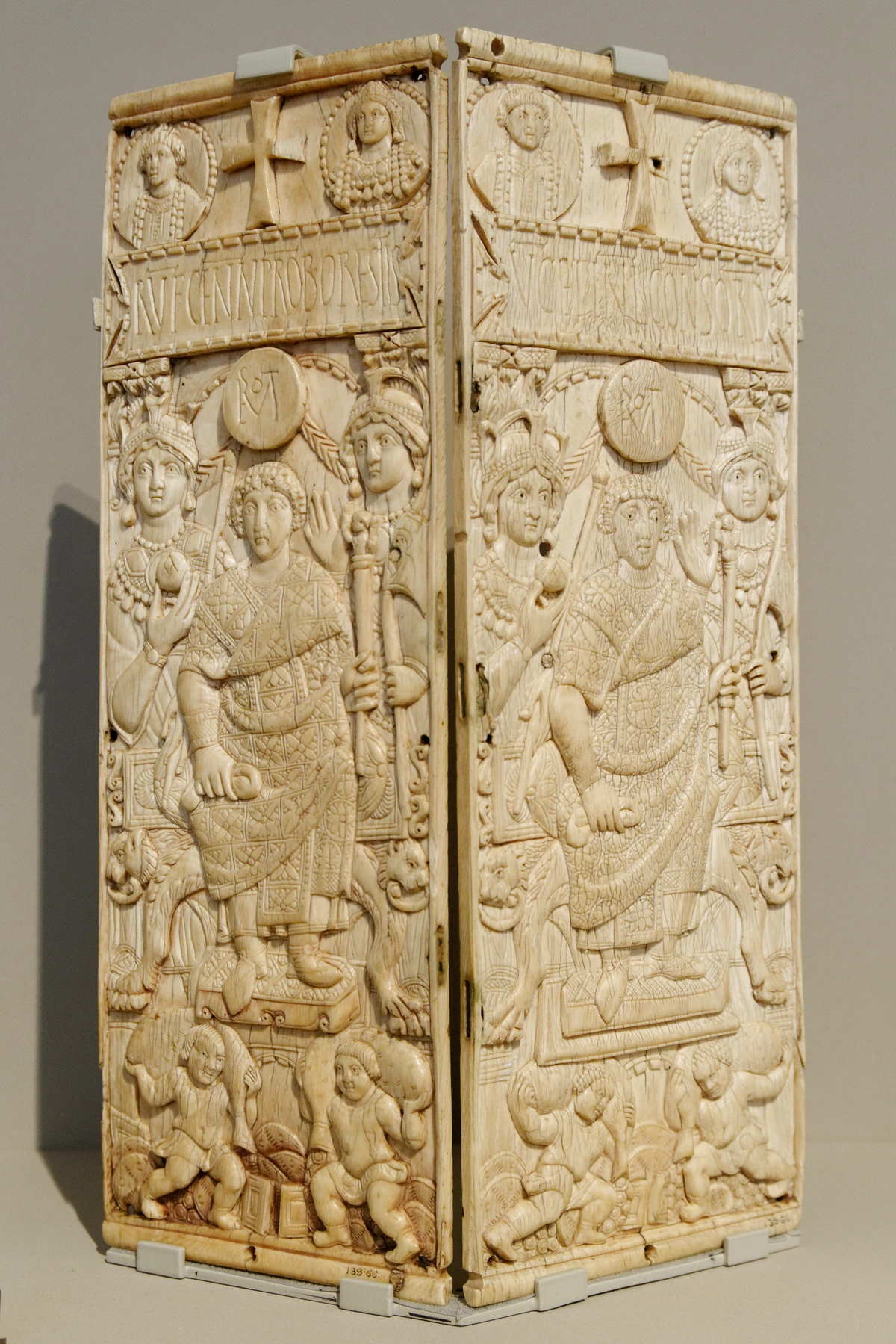
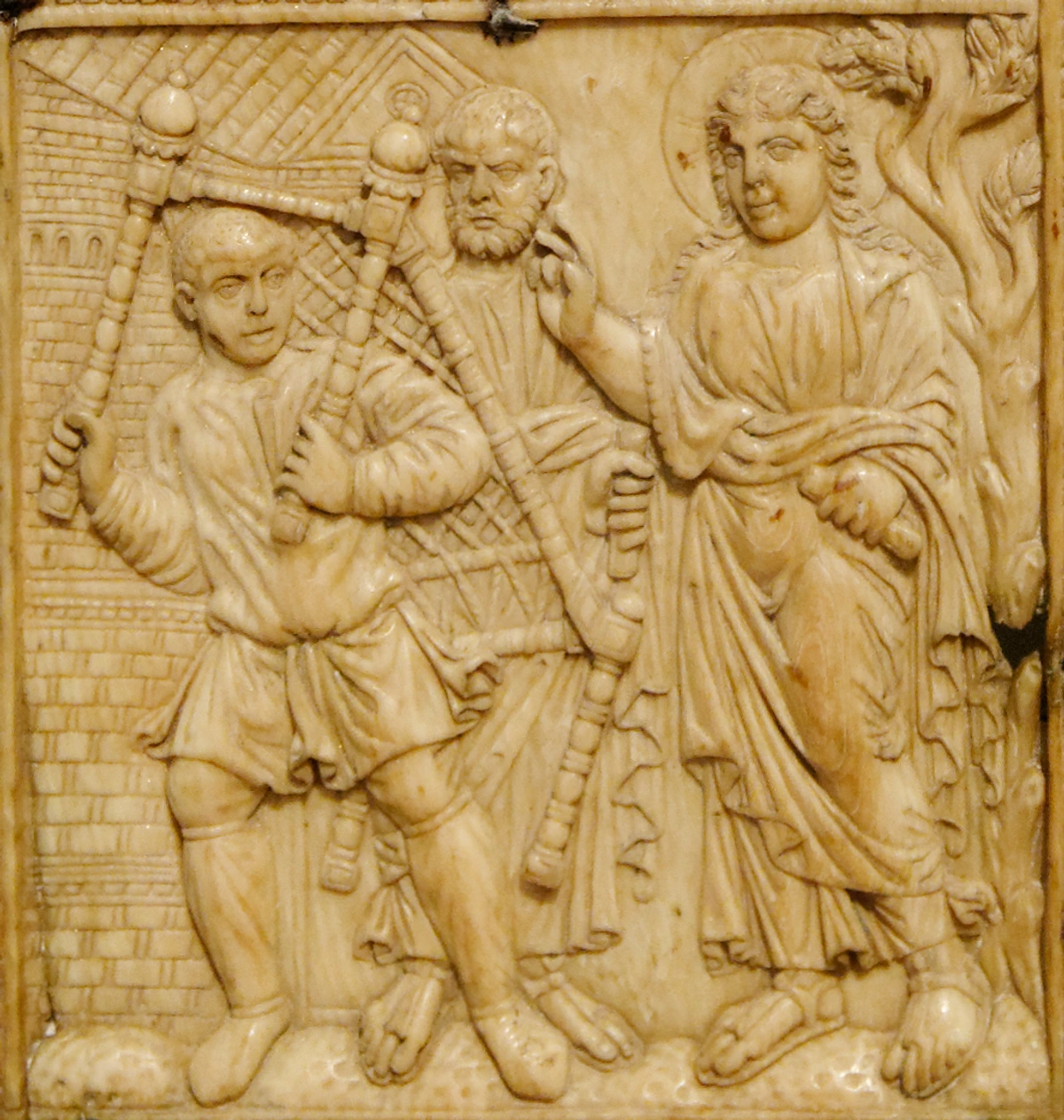
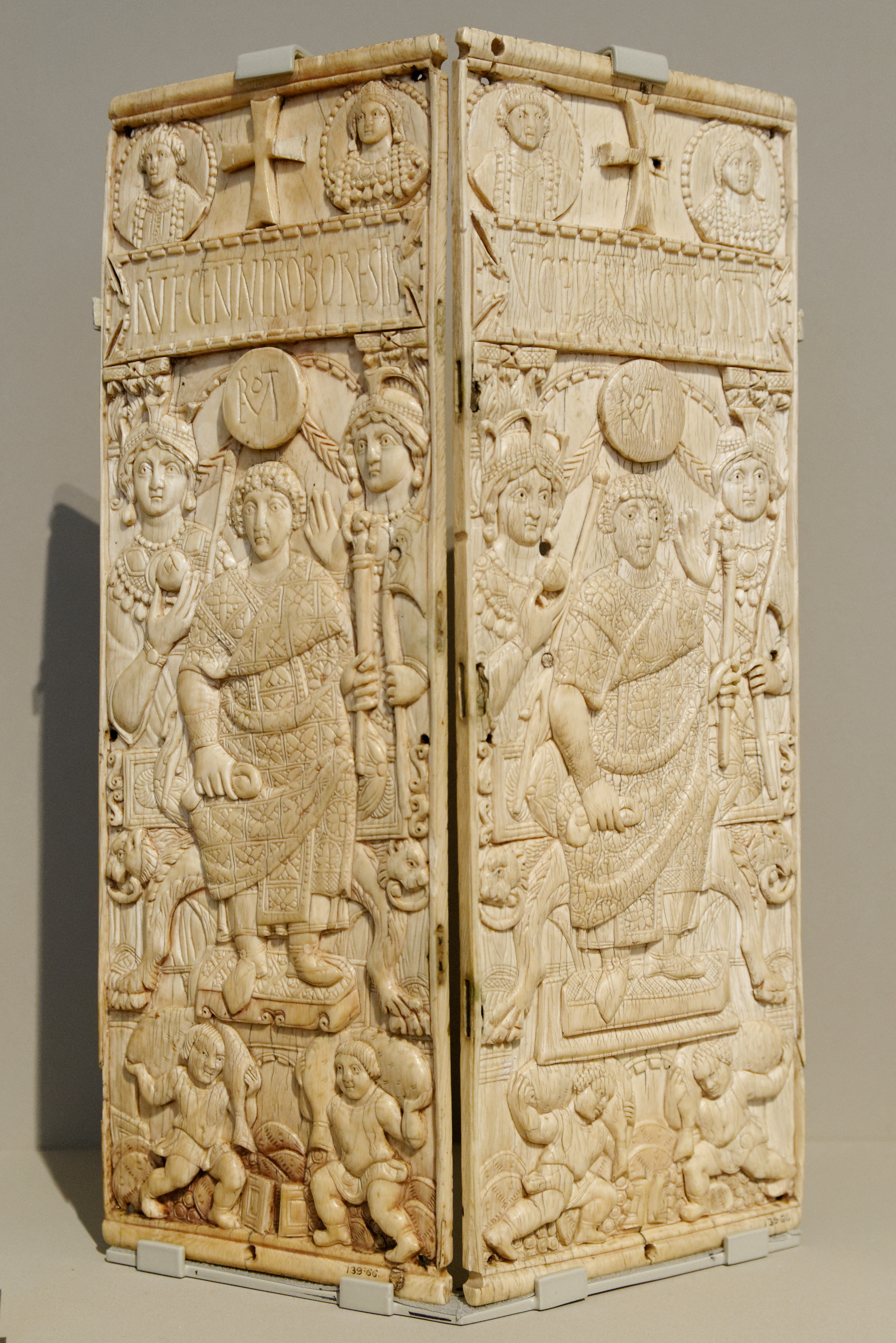
- Early Medieval Europe (Carolingian & Ottonian Art): Throughout the Carolingian and Ottonian empires, illuminated manuscripts, metalwork, and ivories adopted many Byzantine stylistic traits – the use of gold, the focus on symbolic rather than naturalistic representation, hieratic scale, and specific figural poses. We see the Byzantine emphasis on the dignity and formal poses of figures, often depicted with grand, flowing drapery and elaborate ornamentation directly influencing these works, conveying imperial majesty and divine sanction. These adaptations weren't just about pretty pictures; they were a way to legitimize power and faith through a universally recognized sacred aesthetic, connecting their rule to the powerful legacy of Christian emperors and the spiritual authority of Byzantium.
- Italo-Byzantine Style (Maniera Greca): In Italy, particularly before the Renaissance, the Maniera Greca (Greek Manner) or Italo-Byzantine style was dominant for centuries. Artists like Berlinghiero Berlinghieri, Bonaventura Berlinghieri, Giunta Pisano, Margarito of Arezzo, and Coppo di Marcovaldo, active in the 13th century, exemplify this enduring tradition, heavily relying on Byzantine conventions for their monumental altarpieces and smaller icons. Beyond these, artists like Guido da Siena, the Master of San Martino, and the Master of Badia a Isola also worked firmly within the Italo-Byzantine style, producing works that, to my eye, carry that unmistakable echo of Eastern spirituality and solemnity. This style persisted due to its established theological authority, the continuous flow of Byzantine artworks and artists to Italy, and the demand from patrons who associated the style with spiritual gravitas. Even artists like Cimabue, though often seen as a precursor to new developments, still heavily relied on Byzantine conventions. His renowned Maestà of Santa Trinita (c. 1280), for instance, with its elongated figures, golden striations (chrysography), and solemn expressions, clearly shows the direct lineage from Eastern icons. Similarly, Duccio di Buoninsegna’s early works, such as the Rucellai Madonna (c. 1285), while hinting at nascent naturalism, still embrace the spiritual gravitas and stylistic conventions of the Italo-Byzantine tradition. This was the foundational artistic grammar that Italian art learned, setting the stage for the dramatic shifts towards humanism and naturalism during the Renaissance, which, paradoxically, still built upon these profound principles. When I see these works, it’s like glimpsing a bridge between two worlds, the ancient East and the emerging West, a truly powerful moment in art history.
My Modern Lens: Connecting Ancient Echoes to Contemporary Canvas
Now, you might be thinking, "What does any of this have to do with abstract, colorful art like yours?" And it's a fair question! On the surface, my canvases, with their bold colors and dynamic forms, seem a world away from those static, gold-leafed icons. Yet, there’s a subtle, almost subconscious connection, a shared pursuit of something beyond literal representation. It’s like finding a kindred spirit – a fellow explorer of essence and emotion – in an unexpected corner of history. It reminds me that even trailblazing abstract artists like Wassily Kandinsky, with his spiritual theories of art, or Kazimir Malevich, with his Suprematist quest for pure feeling, resonated with a similar drive to transcend the material world, much like the Byzantines did. Kandinsky, for example, believed in the spiritual power of color and form, using abstraction to express inner necessity and mystical truths, much like Byzantine artists sought to reveal divine reality through symbolic representation. Malevich's 'Black Square,' a seemingly simple form, was intended as a spiritual icon, a window to a higher, non-objective reality, mirroring the Byzantine icon's role.
For me, Byzantine art, in its deliberate move away from earthly realism, sought to distill a spiritual truth, to capture an essence rather than a mere likeness. It aimed for emotional and spiritual impact through simplified forms, symbolic color, and intentional distortions. This deliberate flatness, initially unsettling to my Western-trained eye, became a profound lesson. It wasn't about a lack of skill; it was a radical commitment to a different kind of truth. In my own artist's journey, I wrestle with space and dimension, often choosing flatness, or a deliberate ambiguity of depth, to challenge perception and invite contemplation. This mirrors the Byzantine rejection of earthly illusion for a higher, spiritual reality. My 'Inner Landscapes' series, for instance, fragments forms and layers opaque and transparent elements, not to deny depth, but to redefine it as internal or experiential, much like the Byzantines did. When I look at the stylized hands or the elongated figures of a Byzantine icon, for example, they’re not anatomically perfect, yet they convey profound meaning – a blessing, an offering, a gesture of prayer. This inspires me to consider how my own abstract lines and forms, devoid of literal representation, can carry similar weight, communicating emotion or intention through pure gesture or the powerful interplay of color, much like in my 'Emotional Abstractions' series.
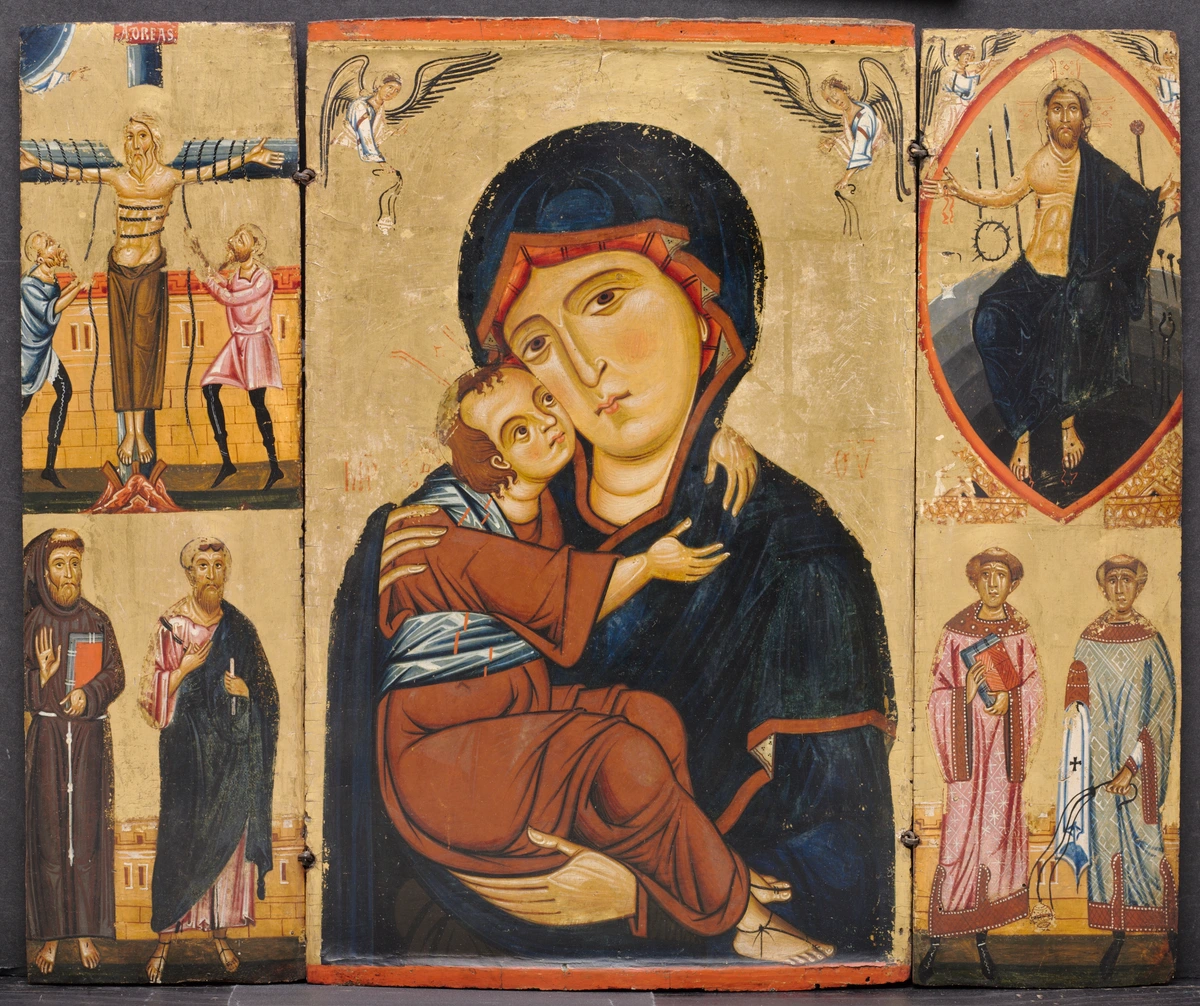
And the gold! That omnipresent, otherworldly gold. It isn't just a color; it's a statement, a light source from within. It reminds me of how I approach color in my own art – not as a mere descriptor of reality, but as a direct conduit for emotion, a symbolic language that bypasses the rational and speaks straight to the soul. Just as Byzantine gold elevates the sacred, my bold blues or fiery reds aim to elevate an emotion, a moment of pure energy, a glimpse of an inner world, or to create a particular vibrational field, a direct parallel to the Byzantine use of chrysography not just for sparkle, but to signify divine light and uncreated energy. Even the careful layering of tempera in Byzantine icons, building up luminosity from within, finds an echo in my mixed-media works, where I layer different materials and glazes to create an illusion of internal light and subtle depth, inviting a sustained, contemplative gaze. There was a time I struggled to accept the "flatness" of certain abstract works, feeling they lacked depth. But my journey with Byzantine art taught me that depth isn't always literal; it can be spiritual or emotional, achieved through powerful symbolism and a deliberate focus on essence, mirroring the way I now seek to create immersive experiences in my own canvases. Think of Mark Rothko's luminous color fields – they don't depict anything, yet they evoke profound emotional and spiritual states, much like a Byzantine icon invites contemplative awe, a window to profound internal experience. If you're intrigued by how colors communicate, explore the psychology of color in abstract art.

In my own work, I’m constantly striving for a similar distillation – to capture an emotion, an idea, a moment of pure energy, a glimpse of an inner world, without literal representation. My work might be abstract, but it seeks to communicate something universal, much like the timeless themes conveyed in Byzantine icons. It’s about stripping away the superficial to get to the essence, about using color and form to evoke feeling and thought, much in the way a golden background evokes the divine. It's a dialogue across centuries, where ancient wisdom informs contemporary expression. Ultimately, in my abstract work, I seek to evoke a similar profound engagement, a moment where the viewer moves beyond simple observation to a deeper, more personal experience, echoing the ancient purpose of Byzantine icons as windows to spiritual reality.



If you're curious about how these ancient principles of impact and meaning can morph into contemporary expressions, I invite you to explore the broader world of abstract art or dive deeper into decoding abstract art. And, of course, if you'd like to see my interpretations of these ideas come to life, feel free to browse my art for sale, or perhaps even experience them firsthand at my museum in Den Bosch.
Unanswered Questions? Let's Talk Byzantine Art! (FAQ)
What exactly defines "Byzantine art"?
Byzantine art refers to the artistic products of the Byzantine Empire, spanning from the founding of Constantinople in 330 CE to its fall in 1453 CE. It encompassed a vast territory from Italy to the Middle East, primarily religious in nature. It's characterized by its iconic representations, extensive use of gold, flattened forms, emphasis on spiritual rather than naturalistic depiction, and its rich mosaics and manuscript illuminations. Its core purpose was to convey theological truths, facilitate spiritual contemplation, and often to reinforce imperial power.
What materials and techniques were common in Byzantine art?
Byzantine artists mastered various mediums. They created monumental mosaics and frescoes adorning grand churches, as well as portable icons painted with meticulous egg tempera on wood panels. Key techniques included the precise application of gold leaf (chrysography) to create luminous backgrounds and highlights. Vibrant mineral pigments were used to build up rich, symbolic colors. The gold leaf was not only symbolic of divine light but also conveyed the wealth and imperial grandeur of the patrons, associating the sacred with power. These materials and techniques were carefully chosen not just for their aesthetic appeal but also for their enduring quality and their ability to convey a sense of the divine and the eternal.
How did Byzantine art spread beyond the Byzantine Empire?
Its influence spread through robust trade routes, which facilitated the exchange of goods, luxury items, and artistic ideas, including specific techniques like chrysography and egg tempera. Religious pilgrimages and monastic orders brought icons and styles westward, often influencing local liturgical practices and visual demands. Strategic political alliances and royal marriages also contributed significantly to cultural and artistic transfers, including the movement of artists and craftsmen who established workshops in the West. Its influence extended to regions like Georgia, Armenia, and the Balkans, shaping local Orthodox artistic traditions, and even had a subtle, early influence on some aspects of Islamic art through shared cultural spaces and trade.
How widely did Byzantine art spread within the Empire itself?
Byzantine art flourished across the vast expanse of the Byzantine Empire, from its capital Constantinople to territories in Greece, the Balkans, Anatolia (modern Turkey), Syria, Egypt, and parts of Italy (like Ravenna and Sicily). Its influence was deeply embedded in Orthodox Christian communities, and local variations often emerged while adhering to the core stylistic and theological principles of the imperial center. This widespread presence meant a consistent visual culture of faith across diverse ethnic and linguistic groups.
What's the difference between an "icon" and a regular painting?
An icon (from the Greek eikōn, meaning 'image') in the Byzantine context is far more than just a painting; it's a sacred image believed to be a window to the divine. Icons are typically rigid in form, follow strict iconographic rules, and are used for veneration and prayer within Orthodox Christianity. They are understood as reflections of heavenly prototypes, embodying a living presence and directing the worshipper's attention to the spiritual realm. In contrast to many Western paintings that primarily serve narrative, decorative, or aesthetic purposes, an icon's primary role is to facilitate a direct spiritual connection and theological understanding.
Did Byzantine art ever change, or did it remain static for a thousand years?
This is a common misconception! While Byzantine art is known for its strong adherence to tradition and theological principles, it certainly did not remain static for over a millennium. Early Byzantine art showed stronger ties to classical naturalism, with figures that, while spiritualized, retained some classical proportions. Over time, particularly after the Iconoclastic Controversies, there was a move towards more stylized, elongated forms, greater frontality, and a heightened emphasis on symbolic rather than naturalistic representation. Later periods, like the Macedonian Renaissance (9th-11th centuries) or the Palaeologan Renaissance (13th-15th centuries), saw a renewed interest in Hellenistic models and greater refinement in technique, demonstrating an ongoing adaptation while maintaining its core sacred purpose. It was a dynamic tradition, evolving while staying true to its spiritual mission.
What was the broader societal role of Byzantine art, beyond just religious depiction?
Beyond its primary religious function, Byzantine art also served crucial societal and political roles. It was a powerful tool for imperial propaganda, conveying the divine authority of the Emperor as God's representative on Earth through grand portraits and ceremonial art. It also played a significant educational role, especially for an largely illiterate population, by visually narrating biblical stories, lives of saints, and theological concepts through cycles of mosaics, frescoes, and manuscript illuminations, making complex doctrines accessible to all. Thus, it functioned as both a spiritual guide and a visual affirmation of both divine and earthly power.
How did the Emperor influence Byzantine art?
The Byzantine Emperor played a paramount role in shaping the artistic landscape of the empire. Seen as God's representative on Earth, emperors like Justinian I were formidable patrons, commissioning monumental churches (e.g., Hagia Sophia) and grand works of art that served to legitimize their rule, project divine authority, and express imperial grandeur. They often dictated artistic themes and styles, particularly those that blended sacred imagery with imperial portraits, ensuring art reinforced both spiritual devotion and political power. Their patronage also funded the workshops and artists, effectively guiding the overall aesthetic and iconographic direction of Byzantine art.
Did the East-West Schism stop artistic influence?
While the Great Schism of 1054 created a profound theological and political divide between Eastern and Western Christianity, it did not entirely halt artistic and cultural exchange. Rather, it led to distinct regional interpretations in the West, where Byzantine styles were adapted and blended with local traditions, eventually paving the way for unique Western artistic developments. However, the foundational language of iconography continued to inform Western art, even as it moved towards greater naturalism during the Renaissance.
How has Byzantine art endured through history?
Despite the fall of the Byzantine Empire, its art has persisted remarkably. Many icons, mosaics, and architectural structures have been preserved for centuries, often due to their sacred nature or the protective environments of churches and monasteries. Its strict adherence to theological principles meant a slower evolution of style, contributing to its enduring recognizability and preservation as a consistent visual language over a millennium. Furthermore, its profound influence on subsequent Western art movements ensures its continued study and appreciation.
What was the influence of Byzantine art on Western illuminated manuscripts?
Byzantine illuminated manuscripts were highly prized in the West and served as models for scribes and artists, particularly during the Carolingian and Ottonian periods. They introduced sophisticated iconographic cycles, intricate decorative motifs (like interlace patterns and elaborate initial letters), and the use of gold and vibrant colors that enriched Western manuscript production. Monasteries played a key role in copying and adapting these styles, thus ensuring the continuity of Byzantine visual language in Western book art, and making complex narratives accessible through images.
What are some common misconceptions about Byzantine art?
One common misconception is that Byzantine art is "primitive" or "lacks realism" due to its flattened figures and stylized forms. This overlooks the deliberate theological purpose behind these artistic choices; naturalism was intentionally avoided to convey divine transcendence, not because artists lacked skill. Another misconception is that it remained static for over a thousand years; while highly traditional, Byzantine art underwent subtle evolutions in style, technique, and iconography over its long history, demonstrating adaptability within its sacred framework. Lastly, it’s often seen as solely Eastern, neglecting its immense foundational impact on Western European art.
Does Byzantine art hold any spiritual relevance today?
Absolutely. For adherents of Orthodox Christianity, icons remain central to spiritual life, serving as aids to prayer, focal points for contemplation, and tangible connections to the divine. Beyond religious practice, many people, regardless of faith, find spiritual or meditative qualities in Byzantine art's deliberate stillness, profound symbolism, and otherworldly beauty. Its focus on essence over realism continues to offer a powerful counterpoint to modern visual culture, inviting viewers to engage with art on a deeper, more contemplative level, reminding us of art's capacity to transcend the material.
Where can I see these influences today?
You can see direct Byzantine influence in the stunning mosaics of Ravenna, Italy, particularly in churches like San Vitale and Sant'Apollinare Nuovo. Additionally, many early medieval Western European illuminated manuscripts, metalwork, and ivories clearly display Byzantine stylistic traits. Beyond Ravenna, significant collections of Byzantine and Italo-Byzantine art can be found in major museums globally, such as the Metropolitan Museum of Art in New York, the Louvre in Paris, the British Museum in London, and the Benaki Museum in Athens. These institutions offer a chance to witness these enduring legacies firsthand, bridging centuries with their profound visual language. For a broader appreciation of how art history continually shapes and informs contemporary work, you might enjoy visiting my own space for art in Den Bosch, where modern expressions stand on the shoulders of giants.
A Final Thought on Timeless Art
So, from those initial, perhaps slightly bewildered, glances at ancient icons, I've come full circle. The enduring influence of Byzantine art on Western iconography isn't just a historical footnote; it's a foundational chapter that resonates with profound spiritual and artistic truths. It reminds me that art is a continuous conversation, a grand tapestry woven with threads from countless eras and cultures. Every piece of art, whether a shimmering mosaic from the 6th century or a bold abstract canvas from today, carries echoes of the past, whispering stories across time. And isn't that just a wonderful thought? It makes you wonder what stories your own creations are whispering to the future, and how they, too, might become unexpected echoes for someone else down the line. I invite you to explore my own 'Inner Landscapes' or 'Emotional Abstractions' series art for sale to see these ancient principles of depth, symbolism, and transcendent emotion brought to life in a contemporary abstract context. Perhaps you'll find your own echo.