The Moon's Eternal Resonance: An Ultimate Guide to Celestial Symbolism in Art History
Unravel the profound and ever-changing symbolism of the moon in art, from ancient deities and global myths to its scientific influence, Baroque drama, Romantic reveries, Surrealist dreams, and contemporary expressions. This definitive guide explores its multifaceted meanings, phases, psychological interpretations, and enduring legacy across millennia of artistic creation, connecting you to humanity's oldest muse.

The Moon's Eternal Resonance: An Ultimate Guide to Celestial Symbolism in Art History
The moon. It's more than just a satellite; it’s a silent, luminous witness, a cosmic timekeeper, and an eternal wellspring of human fascination. I remember standing on a desolate stretch of coastline late one night, the air thick with the scent of salt and ancient stories. The moon, a luminous, almost blinding pearl in the pitch-black sky, cast a shimmering pathway across the waves, reaching straight for me. In that moment, time seemed to dissolve, and I felt an electric current connect me to something primal, vast, and utterly mysterious – a fundamental force that artists have sought to capture and interpret for millennia. This isn't just a personal quirk, though. Throughout history, artists across cultures have felt this same potent pull, translating the moon's enigmatic glow into a rich tapestry of symbolism that speaks volumes about humanity's hopes, fears, and our enduring quest to understand the universe. As a curator deeply invested in the layers of meaning art carries, I see the moon as a cornerstone of our 'symbolism' content cluster, an ever-present theme that constantly reveals new insights. When I encounter a work of art where the moon takes center stage, I don't just see celestial mechanics; I see centuries of accumulated meaning, a silent dialogue between the artist and the cosmos, and often, a little piece of myself reflecting back. Who hasn't stared at that silver orb and felt something stir deep within them? It's a universal experience, really. And in this ultimate guide, we'll unravel the moon's profound and ever-changing meanings, from ancient myths and early scientific observations to contemporary abstract expressions, exploring how this celestial body has become an everlasting muse across global art history.
A Celestial Chameleon: The Moon's Multifaceted Meanings in Art
Isn't it just mind-boggling how one single celestial body can embody so many opposing ideas? The moon, in many ways, is a cosmic chameleon, constantly shifting its appearance through its phases and its symbolic weight. Its cycles, mirroring menstrual rhythms, powerfully link it to femininity and fertility, the very pulse of life itself. Culturally, many ancient goddesses (like Artemis/Diana or Selene/Luna) were powerful lunar deities, reinforcing this association through strong female archetypes – the universal goddess archetype finding its celestial home. The moon’s reflective, gentle light and its mysterious, intuitive nature have also traditionally been seen as feminine qualities, in contrast to the sun’s more assertive, masculine energy. Artists often depict a gentle, nurturing moon, perhaps overseeing a scene of bounty or quiet growth. But then, it’s also the realm of mystery, illusion, and the unconscious, often associated with dreams, hidden depths of the psyche, and sometimes, even unsettling shadows. We see it in art as both a comforting glow and a spectral, otherworldly presence, often within the same canvas, a testament to its profound dualism – that simultaneous embrace of opposing forces. For instance, a Rococo painting might show a delicate crescent moon illuminating a romantic tryst, while a Symbolist work could use a stark, full moon to evoke primal fears or psychological unease.
On one hand, it’s a beacon of guidance in the darkness, a calm, reflective light leading travelers or illuminating sacred rituals. On the other, it can represent madness or lunacy (a word that, fascinatingly, literally comes from luna). It embodies change and transformation through its waxing and waning phases, a constant reminder of impermanence, yet also eternity through its consistent return. I find that tension utterly compelling; it’s a reminder that beauty and chaos, light and shadow, are often two sides of the same celestial coin. This rich dualism has provided endless fodder for artists seeking to explore complex human experiences. The moon’s subtle, diffused light is particularly adept at creating nuanced interplay of light and dark, crucial to understanding artistic composition, where gentle gradients or sharp contrasts define form and mood. If you're interested in general symbolism, our definitive guide to understanding symbolism in contemporary art is a great place to start.

The Lunar Cycle in Art: A Spectrum of Meanings
To truly grasp these ideas, I often think about the moon's phases. The moon isn't static, and neither is its meaning in art. Its phases offer a beautiful spectrum of symbolic interpretations, giving artists a nuanced visual vocabulary. Each phase carries its own emotional resonance, a subtle whisper that artists intuitively capture, often through specific lighting, color, or thematic choices. Consider the crescent moon versus the full moon – they're both lunar, but their artistic impact couldn't be more different. The crescent moon often symbolizes new beginnings, growth, potential, and youthful energy, appearing as an emerging light, a promise of what's to come, or a hopeful whisper – the quiet contemplation before a new journey. The full moon, on the other hand, represents culmination, completion, peak power, revelation, and often heightened emotion or even madness. It's the moon in its most potent, fully realized form, a cosmic spotlight, revealing everything. Artists use these distinct phases to convey very different narrative or emotional tones in their work, from gentle hope to overwhelming intensity. To provide a comprehensive overview, this table outlines the unique symbolism of each phase:
Moon Phase  | Common Artistic Symbolism | Visual Artistic Cues | Evocative Mood in Art |
|---|---|---|---|
| New Moon | New beginnings, potential, darkness, hidden knowledge, introspection, void. | Deep shadows, minimal light, figures in contemplation, abstract emptiness, a sense of stillness before creation. | The quiet hum of potential, a canvas awaiting its first stroke of light, profound stillness before creation, secrecy. |
| Crescent Moon | Growth, nascent power, youth, hope, beginnings, reflection, development. | A delicate sliver of light, often illuminating a vulnerable or hopeful figure, soft glow on a dark landscape, gentle arcs and curves. | The hopeful emergence, a fragile promise, the gentle arc of nascent desire, quiet growth. |
| Half Moon | Decision, balance, progress, action, light and shadow, partial revelation. | Scenes split by light and shadow, figures at a crossroads, balanced compositions, an unfolding narrative, mid-tones, gradients, and transitional lighting. | The moment of unfolding, a steady path forward, the delicate balance of known and unknown, equilibrium. |
| Full Moon | Fulfillment, culmination, illumination, peak power, magic, intense emotion, madness, completion, fertility, harvest, revelation. | Overwhelming radiance, stark highlights, heightened colors, dramatic shadows, scenes of revelry or intense psychological states. | Overwhelming radiance, a powerful culmination, raw, untamed emotion, heightened magic, full revelation. |
| Waning Moon | Release, letting go, wisdom, reflection, decline, journey inward, transition, introspection. | Fading light, somber tones, figures in retreat or deep thought, symbols of shedding or completion, preparation for renewal. | The thoughtful retreat, a gentle release, the quiet strength of wisdom gained, contemplation, a sense of poignant beauty, acceptance of impermanence. |
Ancient Echoes: The Moon as Deity, Cosmic Clock, and Early Science
Way back when, long before electricity and neon signs, the moon wasn't just pretty; it was a fundamental pillar of existence. For ancient civilizations, the moon was a deity, a timekeeper, and a source of profound spiritual power. I remember visiting the British Museum once, standing before a tiny Babylonian cylinder seal. Etched into that ancient stone was a crescent symbol, almost crude in its simplicity, but imbued with an undeniable, sacred reverence. It wasn't just an astronomical marker; it was a prayer, a calendar, a whisper of a deity. The crescent shape, often resembling bull horns, was revered for its association with power, fertility, and the nightly guidance it offered. That's what struck me – how these early artists, without our modern tools, still captured such raw, almost palpable respect for the moon's influence on their world.
Its consistent, predictable cycles dictated planting, harvesting, and spiritual observances, making it a true cosmic clock for their lives, a rhythm for agriculture and ritual. Beyond spiritual awe, early civilizations meticulously observed the moon for practical purposes. Its regular phases were the basis for the first calendars, crucial for agricultural societies and coordinating religious festivals. The moon's gravitational pull, though not fully understood until much later, was observed to influence the tides, a phenomenon often imbued with mystical significance and reflected in artwork depicting lunar deities connected to water or the ocean. Early astronomical instruments, such as rudimentary astrolabes or inscribed celestial maps, visually encoded this early scientific understanding alongside mythical narratives. This deep reverence forged a universal connection to the moon, echoed in myths and artistic expressions across the globe.
Global Lunar Legends: A World of Lunar Deities
While European traditions often take center stage in art history, it’s fascinating to remember that the moon’s mystique is truly universal. Across the globe, cultures developed their own rich narratives and artistic depictions, reflecting a shared human need to find meaning in that distant light. When I think about these different perspectives, it reminds me that the core human experience of wonder is indeed universal, regardless of where you stand on Earth. It's almost as if the moon itself is a silent, global curator, collecting stories and emotions from every corner of the planet.
To quickly grasp the breadth of these associations, here's a snapshot of prominent lunar deities and their cultural connections:
Deity Name (Culture) | Primary Associations | Key Artistic Cues |
|---|---|---|
| Sin / Nanna (Mesopotamia) | Moon god, wisdom, time, fertility, protector. | Crescent moon, bull-horned cap, often bearded, on throne, in cylinder seals. |
| Thoth (Ancient Egypt) | Knowledge, writing, wisdom, moon (timekeeper). | Ibis/baboon head, lunar disk/crescent atop head, scribe's tools, in tomb paintings. |
| Selene / Luna (Greek, Roman) | Personification of moon, cycles, reflective light. | Chariot, horses/oxen, lunar crescent/diadem, flowing robes, torches. |
| Artemis / Diana (Greek, Roman) | Hunt, wilderness, childbirth, virginity, crescent moon. | Bow & arrow, hunting dogs, short tunic, crescent moon in hair. |
| Chandra / Soma (Ancient India) | Moon god, plants, healing, nourishment, purity. | Chariot (10 white horses/antelope), lotus/club, in temple sculptures. |
| Máni (Norse) | Moon personification, celestial guide, cycles. | Chariot, pursued by wolf Hati (described in sagas, rare visual art). |
| Chang'e (Chinese) | Moon goddess, immortality, beauty, longing. | Elegant woman, Jade Rabbit, floating to moon palace, in silk paintings. |
| Tsukuyomi-no-Mikoto (Japanese) | Moon god, night, tides, ruler of night sky. | Often evoked in minimalist landscapes or Ukiyo-e, less direct depiction. |
| Hecate (Greek) | Witchcraft, magic, crossroads, dark moon, underworld. | Triple form, torches, dogs, in shadowy/mystical scenes. |
- Mesopotamia: Sin and NannaIn Mesopotamia, for example, Sin or Nanna, the Sumerian moon god, was a central figure. Often depicted with a crescent moon and a distinctive bull-horned cap, a powerful symbol of divinity and strength, he was revered as the god of wisdom, shining light in the darkness, and governing the calendar. His consistent presence in cylinder seals, stelae, and sculptures speaks to a deep respect for his influence over time and agriculture, offering essential guidance through the night. The moon was a guide not just for their crops but for their very understanding of cosmic order.
- Ancient Egypt: Thoth's Lunar RoleIn Egypt, while the sun god Ra often dominated, the moon also held significant sway. Thoth, often depicted with the head of an ibis or baboon, was intimately associated with the moon. His lunar connection was crucial for his role as a timekeeper, as he was responsible for measuring and regulating the cycles of the moon for astronomical observations, calendrical calculations, and religious festivals. Visual art, from intricate tomb paintings to papyri illustrating sacred texts, often show Thoth's association with the lunar disk, guiding scribes and scholars who looked to him for knowledge. This enduring connection to celestial bodies, and the sophisticated ways the Egyptians encoded it, continues to inform our understanding, much like the enduring influence of ancient Egyptian art on modernism resonates even today.
- Greek and Roman Mythology: Selene, Luna, Artemis, and DianaAh, the classics! We have Selene (Greek) and Luna (Roman), goddesses who personified the moon itself, often shown driving a chariot across the night sky. This imagery of a celestial chariot carries symbolic weight, representing not just the inevitable march of time but also the ethereal, transformative journey of the soul, frequently appearing in frescoes and sculptures. Then there's Artemis (Greek) or Diana (Roman), the formidable goddess of the hunt, wilderness, and childbirth, strongly linked to the crescent moon. Her association with childbirth often stems from the moon's twenty-eight-day cycle mirroring the female reproductive cycle, a powerful symbol of fertility and new life. She’s a formidable figure, independent and powerful, much like the moon itself – untamed, natural, and radiating a quiet strength. This rich mythological tapestry provided endless inspiration for sculptors, painters, and poets, showcasing how deeply Greek mythology's influence on classical art runs, shaping Western artistic traditions for millennia.
- Ancient India: Chandra and SomaIn ancient Indian (Hindu) mythology, the moon is personified as Chandra (also known as Soma), a prominent and benevolent deity. Often depicted riding a three-wheeled chariot pulled by ten white horses or by an antelope, Chandra is associated with purity, nourishment, and the waters of the heavens. He is revered as the god of plants, vegetation, and fertility, and his cool, gentle light is believed to have healing properties. The word Soma refers both to the moon and to a divine, intoxicating drink central to Vedic rituals, highlighting the moon's sacred and life-giving essence. His imagery appears in various forms, from intricate temple sculptures and miniature paintings to philosophical texts, emphasizing his role in cycles of growth, nourishment, and spiritual insight within the vast cosmic order.
- Norse Mythology: Máni, the Celestial RiderIn Norse mythology, the moon is personified as Máni, a male figure who guides the moon across the sky in a chariot pulled by two horses, similar to his sister Sól (the sun). Máni's journey is a continuous race, as he is pursued by the wolf Hati, who will eventually devour him at Ragnarök. This narrative imbues the moon with themes of constant motion, the cyclical nature of time, and an underlying sense of destiny and inevitable change. While less frequently depicted in surviving visual art than other deities, Máni's presence subtly influences the appreciation for celestial phenomena within Norse culture, often evoked in sagas and runic art where cosmic elements play a vital role.
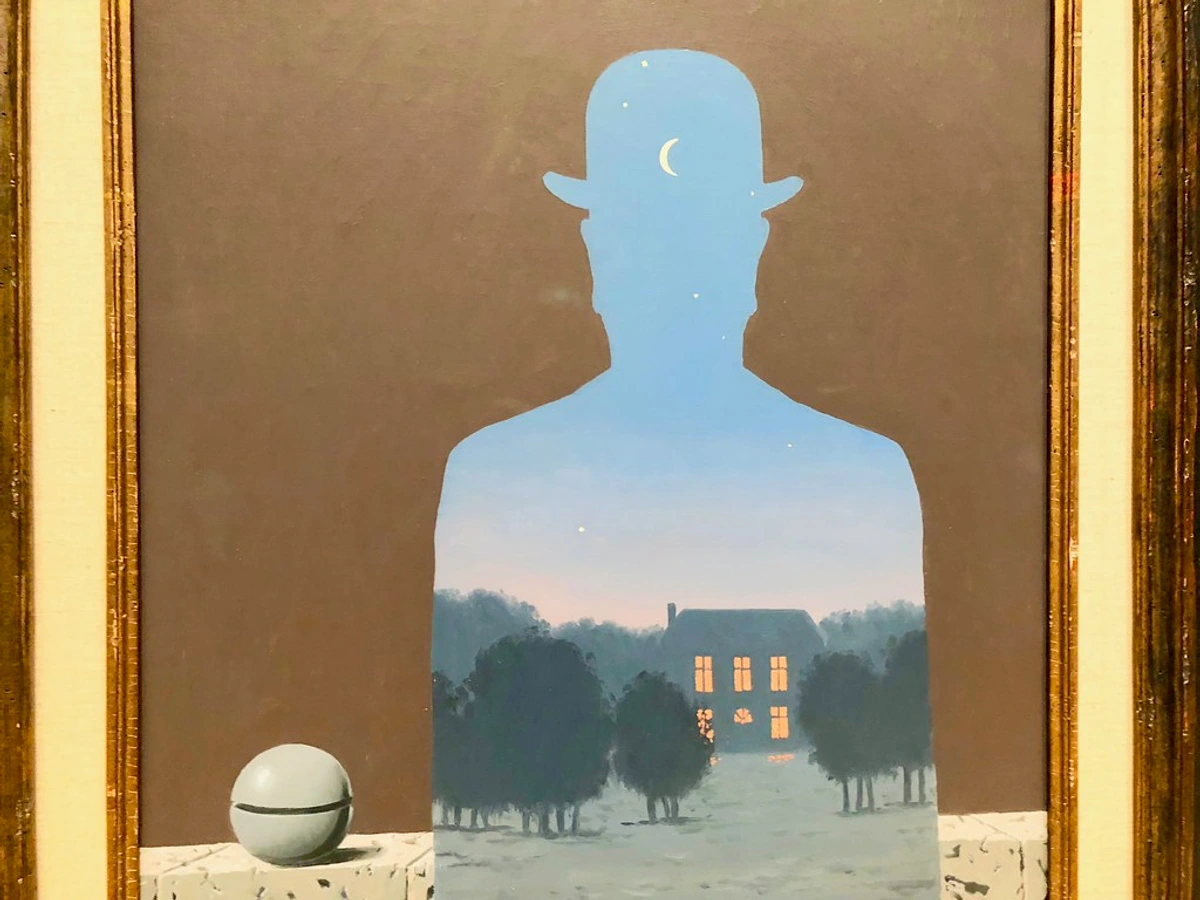
- East Asia: Chang'e, Tsukuyomi-no-Mikoto, and Yin/YangIn Chinese mythology, Chang'e is the graceful moon goddess, who drank an elixir of immortality and ascended to the moon palace. She is often depicted in paintings and silk embroideries with the Jade Rabbit, a symbol of longevity and sacrifice, often associated with pounding ingredients for the elixir of immortality. Her story is a poignant tale of separation and longing, frequently inspiring poetic and visual art. The moon is also a key element in the concept of Yin, representing femininity, passivity, darkness, and intuition, balancing the sun's more assertive Yang. In Japanese traditions, Tsukuyomi-no-Mikoto is the moon god, born from Izanagi's right eye, and is a more enigmatic figure, sometimes associated with the night and controlling the tides. While primarily a literary figure, his essence influences the subtle nocturnal moods in some art forms, often depicted through elegant, minimalist landscape paintings or referenced in Ukiyo-e woodblock prints that capture moonlit scenes.
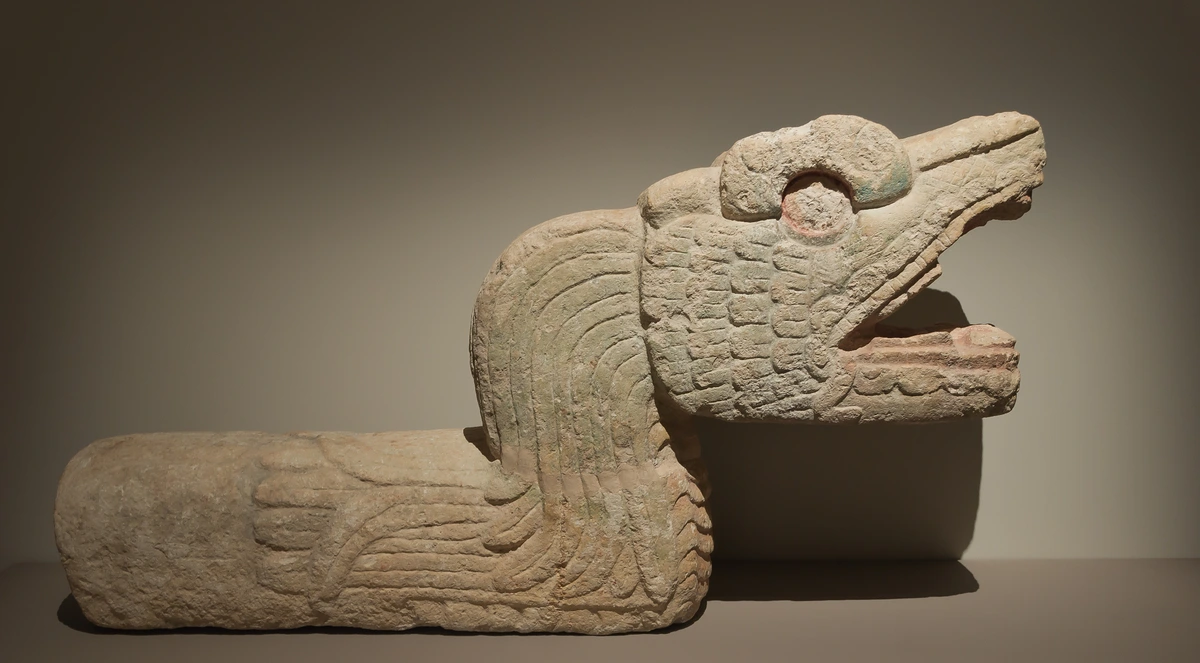
- Indigenous American Traditions: Creator and ProtectorThe moon often appears as a powerful creator deity, a protector, or a giver of light in the dark, featuring prominently in creation myths and spiritual art, emphasizing its life-giving and guiding force. For instance, many Pueblo cultures incorporate lunar symbols, such as crescents and full circles, into their intricate pottery and weaving, reflecting the moon's vital influence on agricultural cycles and ceremonial life. The Navajo people, for example, view the moon as a powerful female deity, regulating water and life, often depicted in sand paintings and textiles with distinctive crescent motifs. The Maya, too, revered a moon goddess associated with weaving, fertility, and procreation, whose imagery appears in elaborate codices and temple carvings, frequently shown with a rabbit or in a boat. I once saw a piece of intricate beadwork with moon phases, and it really brought home the depth of connection and the specific visual language, a quiet reverence woven into every thread. From petroglyphs to totem poles, the moon's symbolism is deeply ingrained.
- African Mythologies: Cycles of Life and HealingMany African mythologies feature lunar deities associated with fertility, healing, and the cycles of life and death, often reflected in masks, carvings, rock art, and oral traditions. The Yoruba goddess Yemaya, though primarily associated with the ocean, often carries strong lunar associations due to her connection to tides and maternal figures. The Mbuti people of the Congo rainforest, for example, associate the moon with creation and the feminine principle, its light guiding nocturnal activities and ceremonies. In visual art, you might see abstract patterns or specific adornments on masks that evoke the moon's glow or shape, particularly in figures representing wisdom or a connection to cycles of life and death. For instance, some West African ceremonial masks feature prominent circular or crescent shapes, sometimes painted in light, reflective colors or adorned with shells, to subtly reference lunar power and its connection to the unseen world or ancestral spirits. These diverse interpretations highlight a shared human need to find meaning in the celestial, often expressed through very distinct visual languages.
- Islamic Art and the Crescent MoonWhile not a deity in Islam, the crescent moon holds profound symbolic significance, often appearing atop mosques and on national flags. It is frequently associated with the new moon that marks the beginning and end of months in the Islamic lunar calendar, including the holy month of Ramadan. In Islamic art and architecture, the crescent often accompanies a star, symbolizing divine guidance and sovereignty. It's important to note that while visually prominent, its meaning differs from the pagan moon deities; it functions more as a calendar marker and a potent emblem of faith and cultural identity, seen in intricate calligraphy, architectural elements, and decorative motifs across the Islamic world.
- Buddhist Art: Serenity and EnlightenmentIn Buddhist art and philosophy, the moon is a powerful metaphor for calmness, purity, and enlightenment. Its radiant yet gentle light is often compared to the wisdom of the Buddha, illuminating the path to awakening and dispelling the darkness of ignorance. The full moon, in particular, symbolizes the perfected mind, free from defilements, and the complete realization of truth. Images of the Buddha or bodhisattvas are sometimes depicted with a lunar disk behind their heads, or in settings where the moon's serene presence underscores meditative states. This symbolism is evident in thangka paintings, mandalas, and temple art across various Buddhist traditions, where the moon represents clarity, tranquility, and the ultimate potential for spiritual liberation.
Celestial Guides: Key Lunar Deities and Archetypes in Art
It's truly fascinating to see how different cultures personified the moon and its myriad associations. Here's a little rundown of some key players you'll encounter when exploring lunar symbolism in art history. It's almost like a cosmic cast of characters, each reflecting a facet of the moon's complex personality, often influencing later artistic depictions even when the direct deity worship faded:
Deity Name (Culture) | Primary Associations | Artistic Representations |
|---|---|---|
| Sin / Nanna (Sumerian, Akkadian) | Moon god, wisdom, time, fertility, protector, guiding light. | Crowned with a crescent moon, often bearded, seated on a throne, distinctive bull-horned cap; depicted in cylinder seals, stelae, and relief sculptures. |
| Thoth (Egyptian) | Knowledge, writing, wisdom, magic, moon (timekeeper), scribe of the gods. | Ibis head or baboon, holding a scribe's palette and pen; sometimes with a lunar disk and crescent atop his head, seen in tomb paintings and papyri. |
| Selene / Luna (Greek, Roman) | Personification of the moon, cycles, reflective light, goddess of the full moon. | Riding a chariot pulled by horses or oxen, wearing a lunar crescent or diadem, flowing robes, often with a torch; found in frescoes, relief sculptures, and coinage. |
| Artemis / Diana (Greek, Roman) | Goddess of hunt, wilderness, childbirth, virginity, the crescent moon. | Bow and arrow, hunting dogs, short tunic; crescent moon in hair/on forehead; depicted in classical sculptures, vase paintings, and mosaics, often in forest settings. |
| Chandra / Soma (Hindu) | Moon god, plants, vegetation, healing, nourishment, purity. | Riding a chariot pulled by ten white horses or an antelope; often holding a lotus or club; found in temple sculptures, miniature paintings, and illuminated manuscripts. |
| Máni (Norse) | Moon personification, celestial guide, cycles of time, constant motion. | Often described in literature guiding a chariot; visual representations are rare but can be implied in cosmic diagrams or sagas. |
| Chang'e (Chinese) | Moon goddess, immortality, beauty, longing, elixir of life. | Elegant woman, often with a rabbit (Jade Rabbit); floating towards the moon palace; depicted in silk paintings, porcelain, and woodblock prints, especially during the Mid-Autumn Festival. |
| Tsukuyomi-no-Mikoto (Japanese) | Moon god, night, tides, ruler of the night sky. | More often described in literature; subtly evoked in minimalist landscape paintings or Ukiyo-e prints that capture nocturnal moods rather than direct anthropomorphic depiction. |
| Hecate (Greek) | Witchcraft, magic, crossroads, night, the dark moon, underworld, three-faced goddess. | Triple form (maiden, mother, crone), torches, dogs, often associated with the dark moon or a three-way crossroads; depicted in shadowy, mystical scenes or funerary art. |
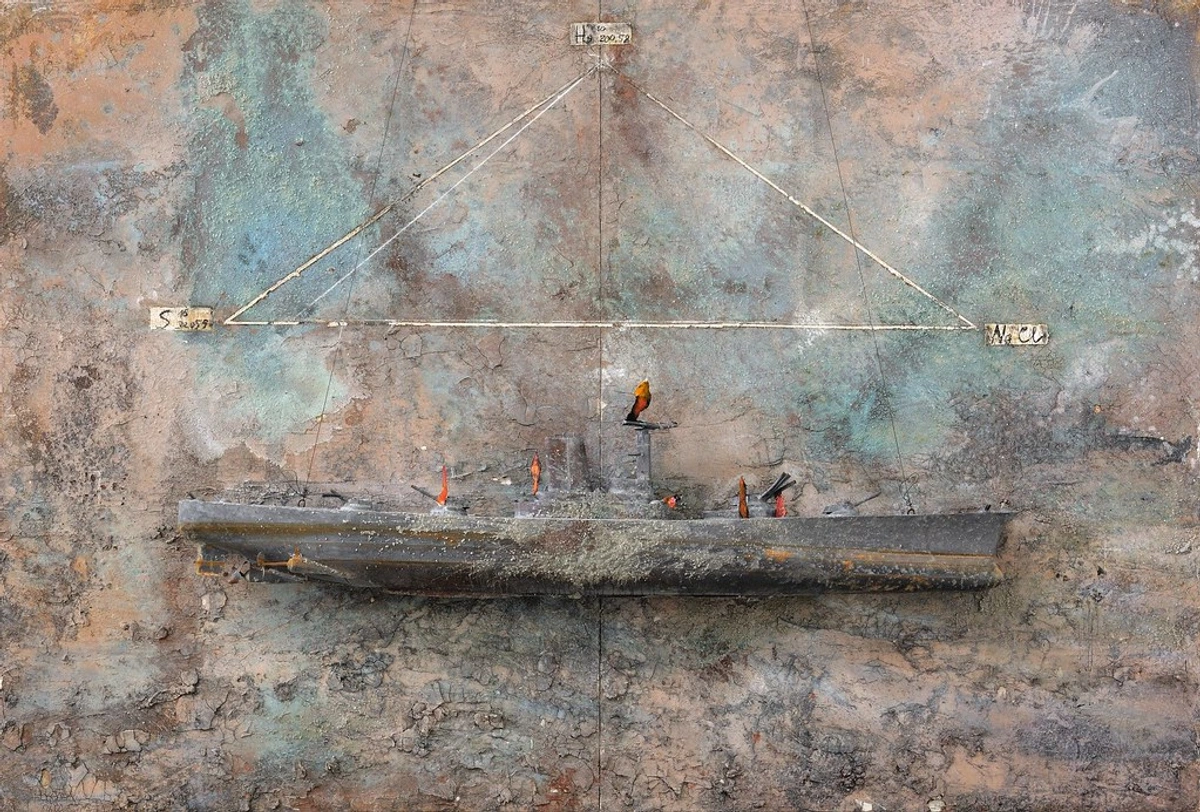
Lunar Folklore and Superstitions: Shadows and Whispers in Art
Beyond formal deities, the moon has always been entangled with popular folklore and superstitions, ideas that subtly seep into art. Think about phrases like “moon-struck” or “lunatic” – these aren't just quaint old sayings; they reflect ancient beliefs that the moon could influence mental states, leading to madness or strange behavior, particularly under a full moon. This historical belief in lunar influence on human psychology created a rich vein for artistic exploration. Artists, especially those delving into the human psyche, have often capitalized on this, using the moon's eerie glow to heighten a sense of unease or the irrational. Remember the tale of werewolves transforming under the full moon? While not art history in itself, such legends feed into the moon's powerful association with transformation, the beast within, and the wild, untamed aspects of nature. It’s the kind of subtle influence that, once you see it, is hard to unsee in many nocturnal or mysterious artworks, from medieval bestiaries to Romantic illustrations of Goethe's Faust. For instance, Symbolist and Expressionist artists, fascinated by the darker aspects of the human mind, often depicted figures under stark, unsettling moonlight to evoke psychological distress or the loss of reason, drawing directly from these popular associations. Frankly, if the moon really drove us mad, I'd probably be painting nothing but chaotic swirls under a full moon every night (which, admittedly, sounds a little fun, doesn't it?).
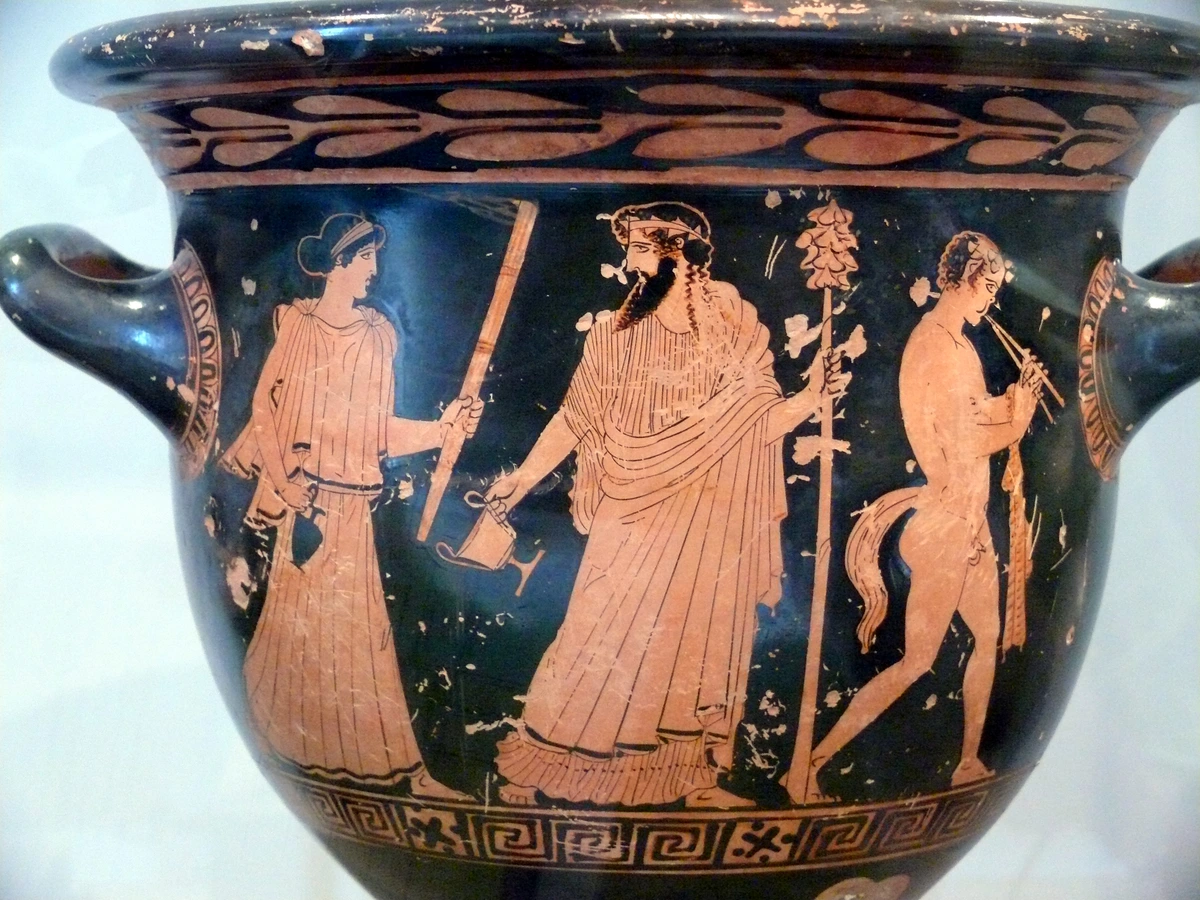
From Divine Reflection to Baroque Drama: The Moon in Medieval, Renaissance, and Early Modern Art
Transitioning into the medieval period, the moon's role in art evolved, often shedding its overt divine personification for subtler, more allegorical interpretations within the burgeoning Christian narrative. It was frequently depicted as a lesser light, reflecting the sun's glory, thus symbolizing the Church reflecting Christ's divine light or Mary's purity. It was seen not as a source of light itself, but as a faithful mirror, a conduit for a greater, divine illumination. This symbolism is particularly prevalent in illuminated manuscripts depicting biblical narratives or in stained glass windows where the moon might quietly observe the unfolding sacred story. But don't let that fool you into thinking it lost its mystique entirely; theological texts sometimes referred to the moon's phases as metaphors for the human spiritual journey or the transient nature of earthly life. I remember seeing a medieval manuscript where the moon seemed to quietly observe the unfolding biblical narrative, a constant, silent witness to divine will and the cycles of human experience.
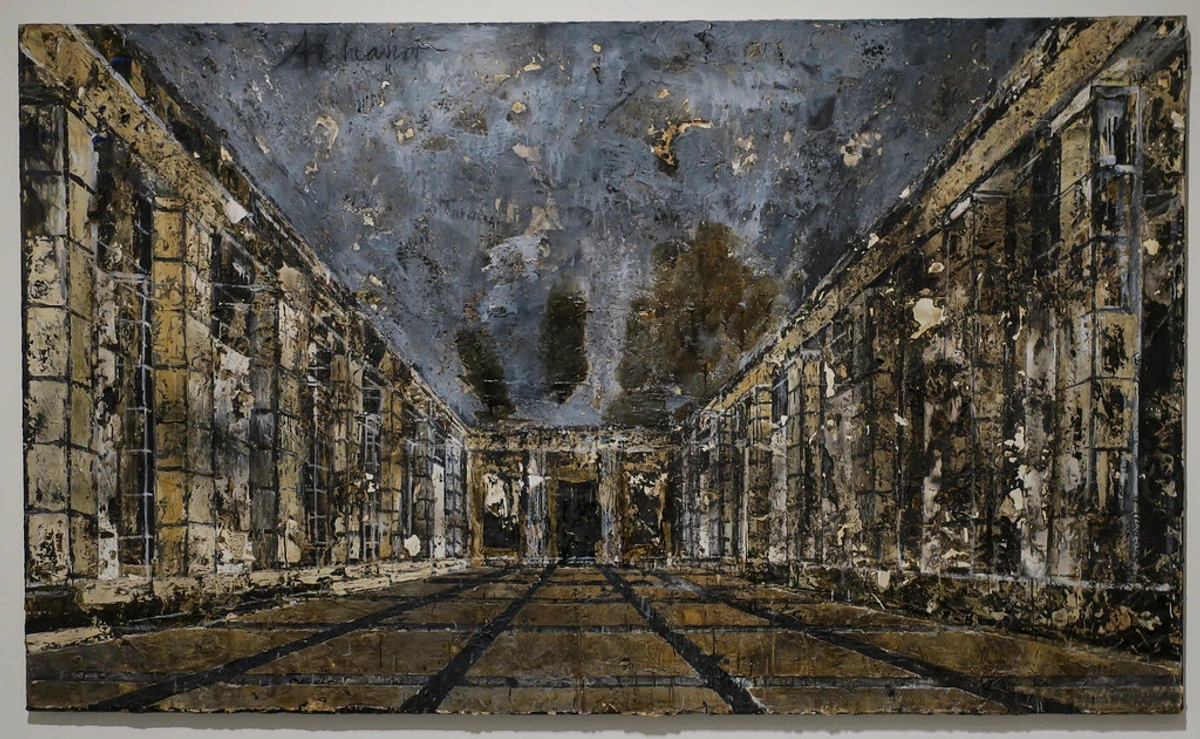
With the Renaissance, there was a renewed interest in classical mythology, so Luna and Diana made glorious comebacks. Artists like Botticelli (who, by the way, has an ultimate guide to Botticelli on our site that's worth a read) would weave these ancient goddesses into their narratives, not just as literal figures, but often as allegories for beauty, chastity, or even the power of love. For instance, Venus (often associated with Luna due to shared feminine and fertile attributes) appearing in The Birth of Venus is a powerful example of how classical figures were reinterpreted through a Renaissance lens. If you're looking to dive deeper into this rich period, our article on understanding symbolism in Renaissance art is a fantastic resource.
Beyond the purely mythological, the moon also subtly appeared in allegorical works, hinting at change, femininity, or the passage of time. Alchemists, too, were deeply fascinated by the moon, linking it to silver (argent) and mercury (quicksilver). Silver's reflective quality and mercury's elusive, transformative nature perfectly mirrored the moon's own subtle, alchemical processes of dissolution, rebirth, and its embodiment of the feminine principle, echoing the alchemical concept of solve et coagula (dissolve and coagulate) – a core principle of breaking down and reforming matter, mirroring the moon's cycles. These ideas occasionally crept into artistic illustrations of their cryptic texts, symbolizing potential and hidden reactions. For example, some alchemical manuscripts feature stylized lunar crescents interacting with solar disks or various vessels, visually representing the moon's role in transformation and creation.
Artists also began to explore the dramatic qualities of lunar light, influencing techniques like chiaroscuro (a strong contrast between light and dark) and tenebrism (a style of painting using very pronounced chiaroscuro, where there are violent contrasts of light and dark, and darkness is a dominating feature, as seen in the works of Caravaggio). Moonlight, with its cooler tones and ability to cast sharply defined, often elongated shadows, provided a unique visual language for dramatizing nocturnal scenes, distinguishing it from the softer, diffused light of day or the harsher glare of artificial sources. This intense interplay of light and shadow, which I've explored in my own work when trying to convey mystery, is something you might want to understand more about. Our definitive guide to understanding light in art is a great place to start. For a deeper dive into these dramatic techniques, our guide on what is tenebrism in art is also insightful.
Beyond these stark contrasts, artists also employed sfumato, a Renaissance technique characterized by soft, hazy transitions between colors and tones, to capture the ethereal quality of moonlight. Think of Leonardo's works where the subtle blending creates a dreamlike atmosphere, perfectly suited to the moon's mysterious glow. Later, artists interested in capturing the shimmering, fragmented nature of light, like the Neo-Impressionists with their pointillism, could conceptually apply similar principles to evoke moonlight reflecting on water or through foliage, breaking the light into myriad tiny, luminous dots.

Romantic Reverie: The Moon as an Emotional Muse
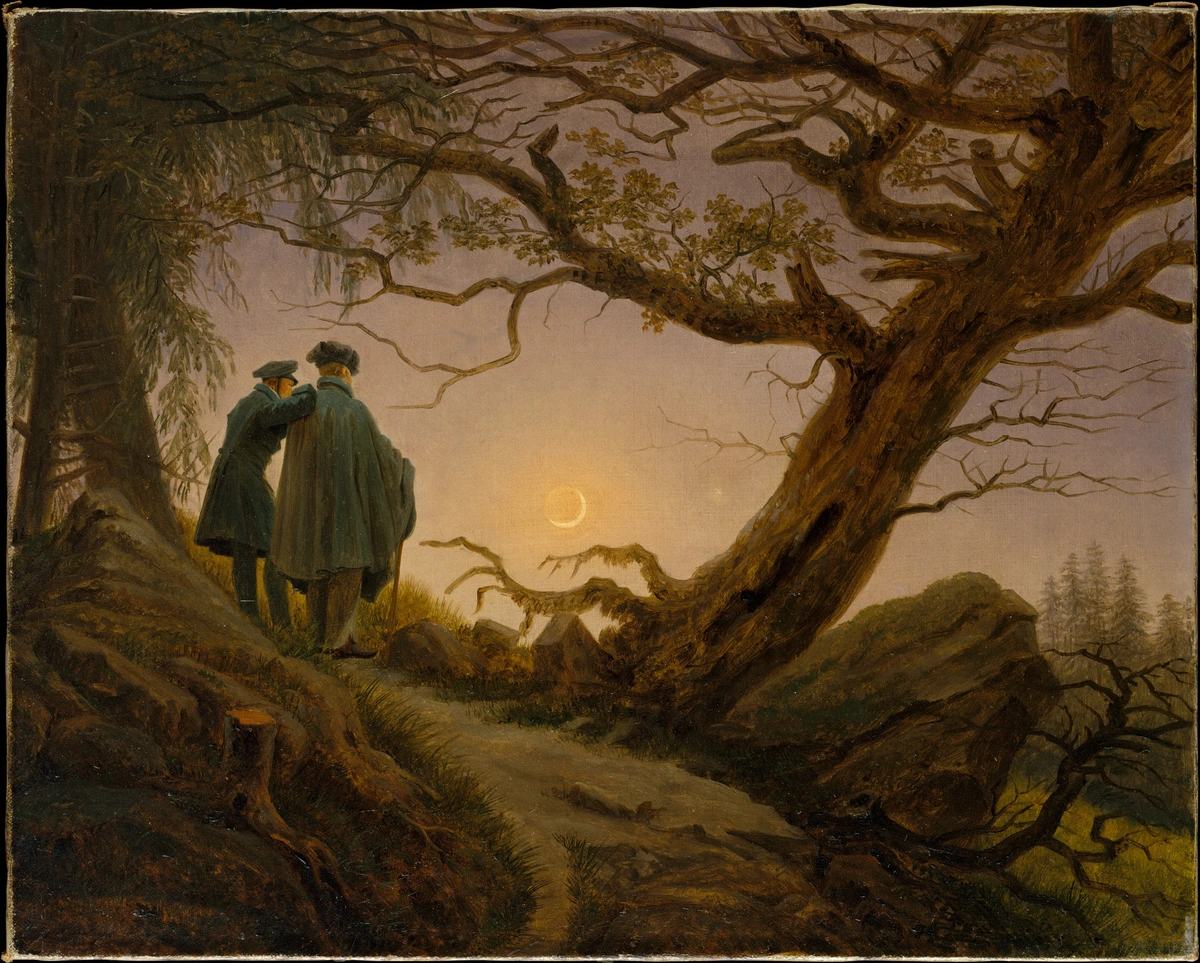
Ah, Romanticism! This is where the moon truly shines as a star of emotional expression. The 19th-century Romantics, with their deep appreciation for nature's grandeur and humanity's inner world, found in the moon a perfect mirror for their sentiments. I think of artists like Caspar David Friedrich, whose works just exude that introspective, sometimes melancholic, connection to nature. Looking at his 'Two Men Contemplating the Moon,' I felt a profound stillness, a chill of recognition. The way those figures, dwarfed by the immensity of the sky, are bathed in that soft, almost melancholic lunar glow – it speaks directly to my own yearning to find my place in the vast, indifferent cosmos. It’s that sense of shared solitude, the quiet contemplation before the overwhelming vastness of nature, that always resonates with me. That painting, for me, embodies a profound sense of shared solitude and the overwhelming vastness of the cosmos – it makes my own small thoughts feel expansive.
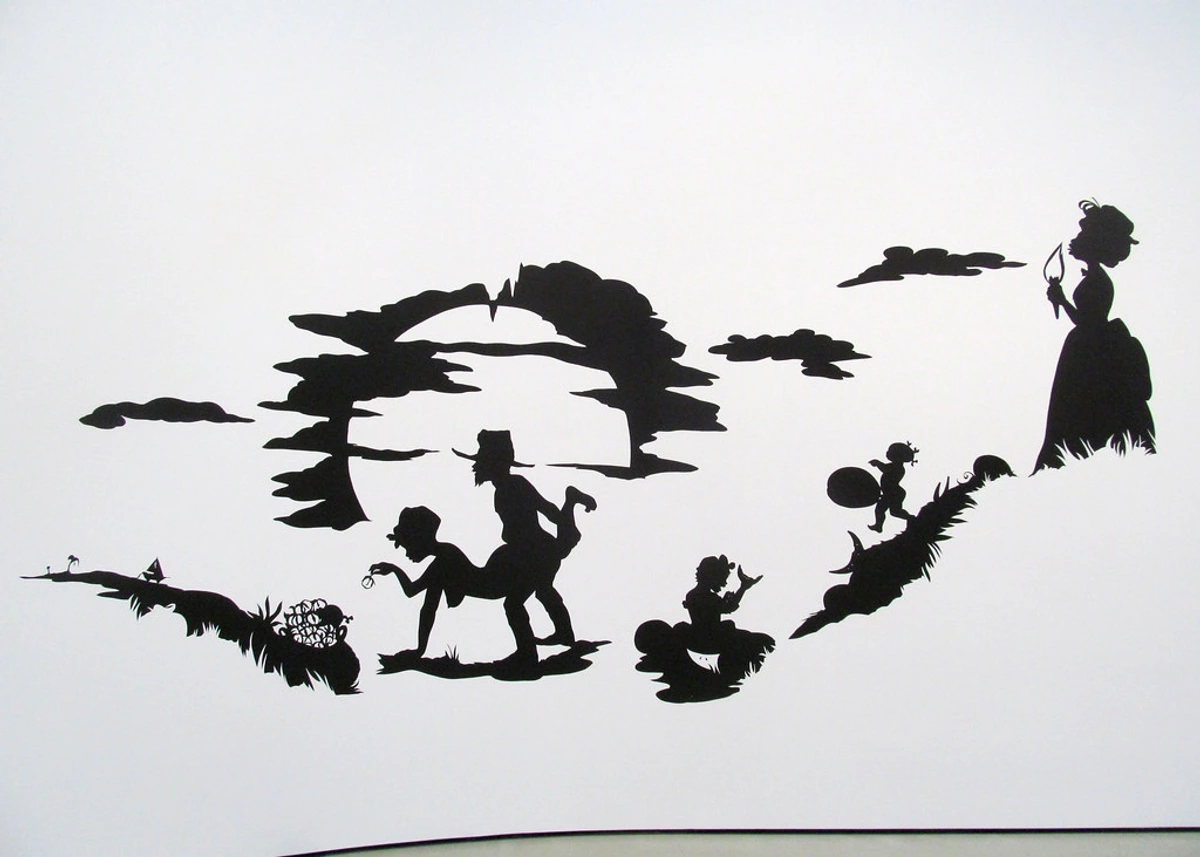
The moon here isn't just an object; it's a catalyst for introspection, solitude, and a sense of the sublime – that awe-inspiring, sometimes terrifying, vastness of nature that makes you feel both incredibly small and profoundly connected to something larger than yourself. The moon's silent, distant gaze amplified the Romantic fascination with the infinite, the mysterious, and the emotional depths of the human soul. It represented the human soul's yearning, the mystery of existence, and the quiet beauty, and sometimes haunting melancholy, of the night. It felt like the moon itself was pulling at their emotions, drawing out deeper truths. For Romantics, the moon was less about divine intervention and more about an internal, subjective experience, a conduit for raw feeling and profound contemplation. If you're interested in diving deeper into this period, check out our ultimate guide to Romanticism.
Modern Echoes: Symbolism, Psychology, and the Moon (19th-20th Century)
As the 19th century progressed and gave way to the 20th, the moon's symbolism shifted again, becoming deeply intertwined with psychology and the burgeoning interest in the unconscious.
The Mystical Moon of Symbolism and Expressionism
The Symbolists, in particular, embraced the moon as a potent emblem of dreams, intuition, and the irrational. Artists like Edvard Munch or Odilon Redon used its spectral light to evoke emotional states and spiritual mysteries, often painting unsettling, dreamlike nocturnal scenes. Munch's famous work 'The Scream,' while depicting a sunset, evokes a profound sense of anxiety often amplified by the thematic association of the moon and night with darkness, the subconscious, and the unknown anxieties that stir within us. Indeed, Expressionists frequently used stark, almost violent lunar imagery to convey inner turmoil, echoing the folklore of lunar-induced madness.
Fleeting Light and Emotional Intensity: Impressionism to Post-Impressionism
Other movements also subtly engaged with lunar themes. Though perhaps not as explicitly as the Romantics, Impressionists like Monet, in his twilight or night scenes, captured the fleeting quality of moonlight, focusing on its visual effects rather than overt symbolism. Their concern was with the transient visual sensation. Post-Impressionists and even some Fauvists, with their bold use of color and expressive brushwork, might use blues, purples, and yellows to evoke moonlit moods, even if the moon itself wasn't the central subject. It's about the atmosphere, the feeling of moonlight on a landscape or a figure, often imbued with a subjective emotional intensity.
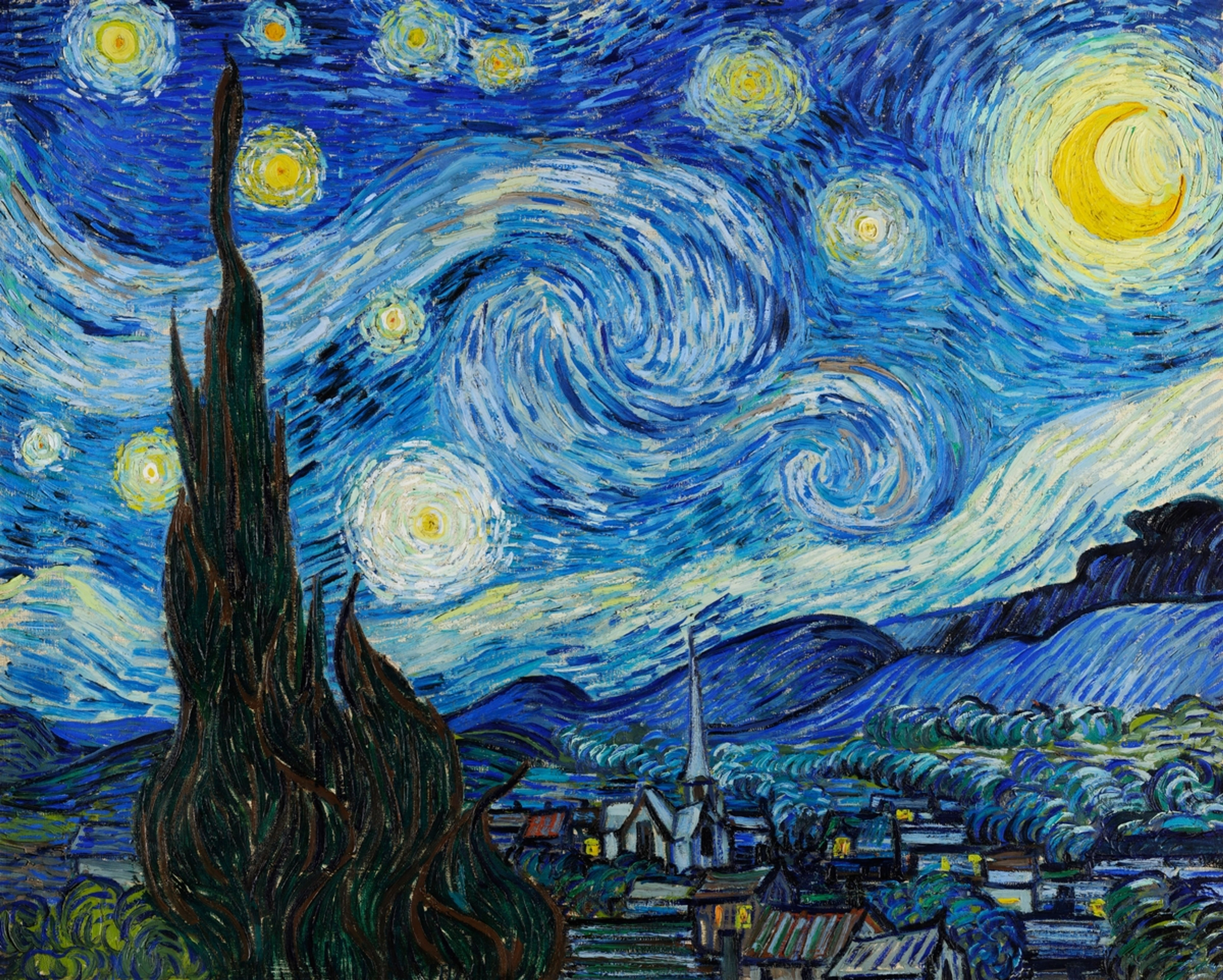
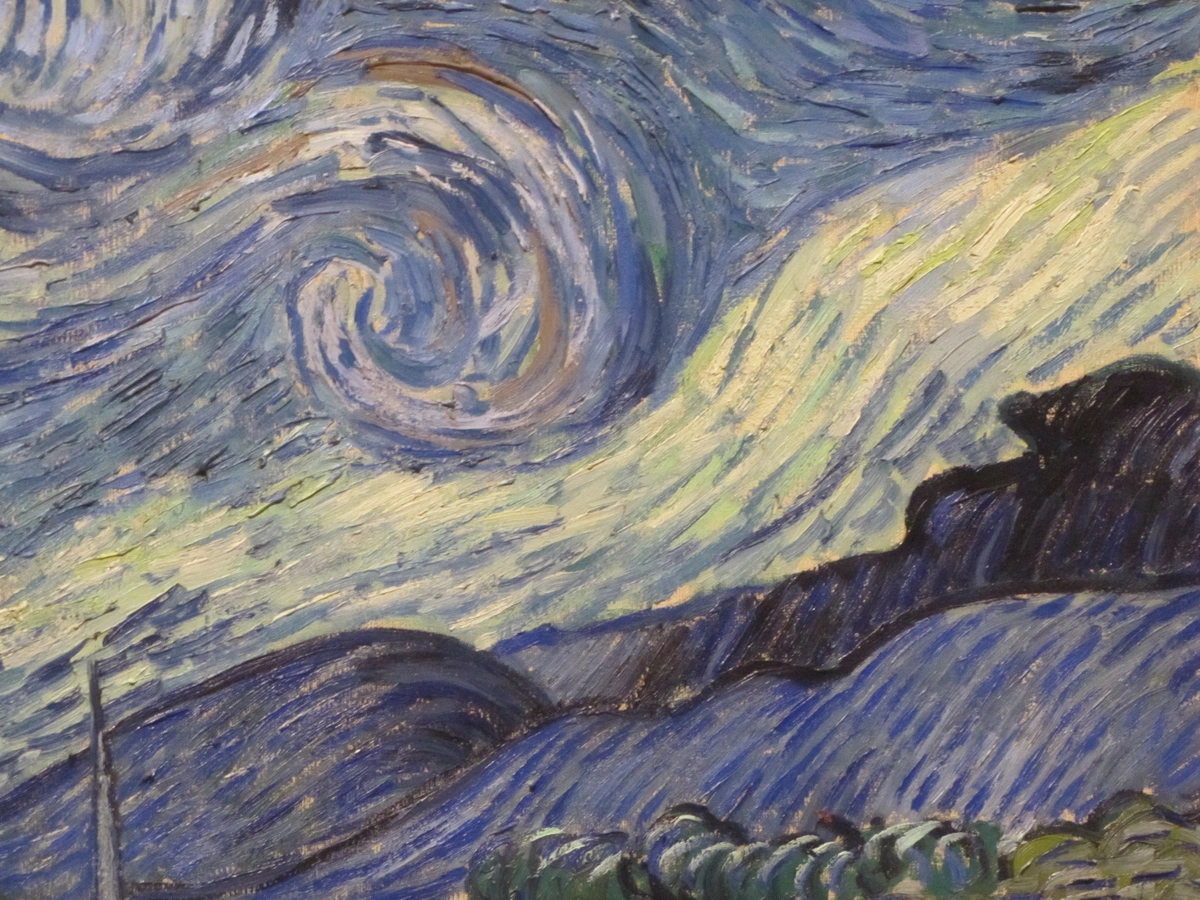
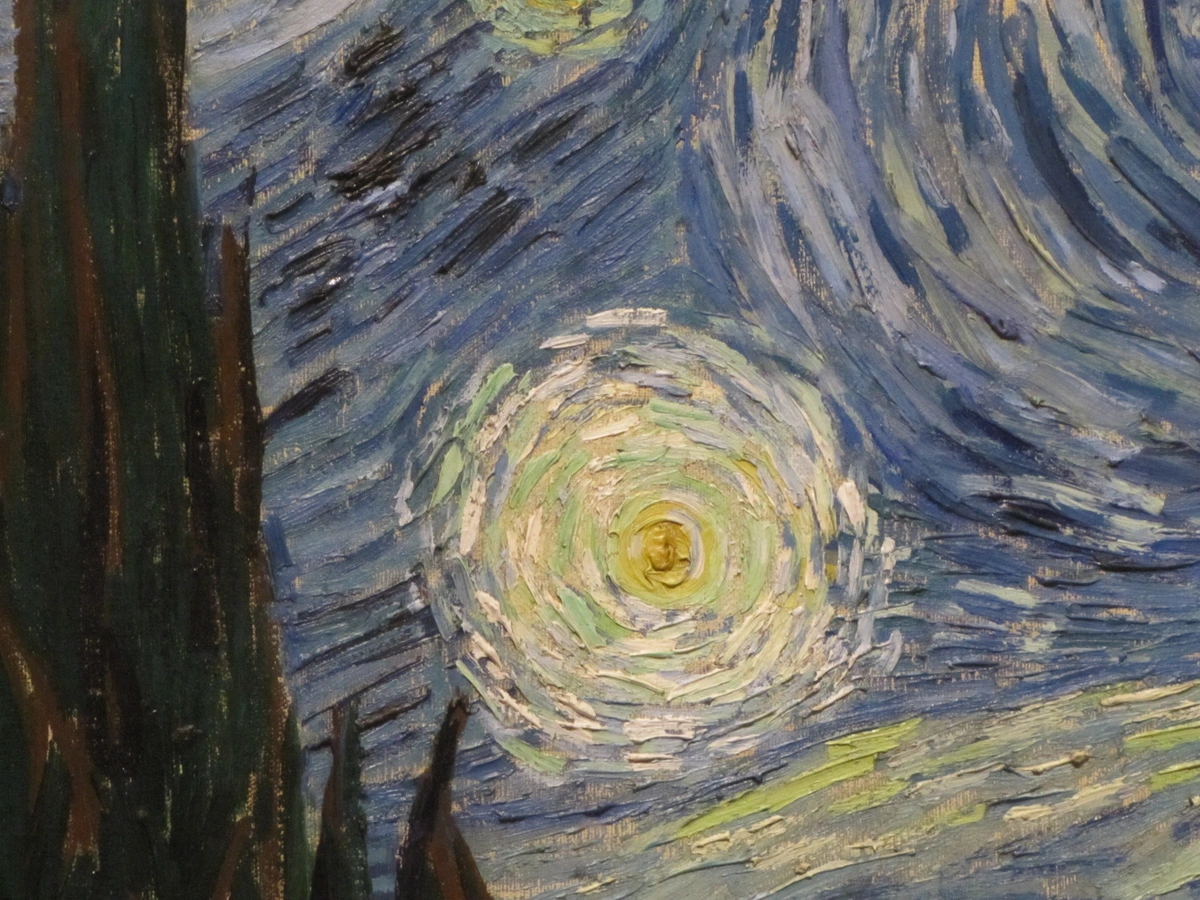
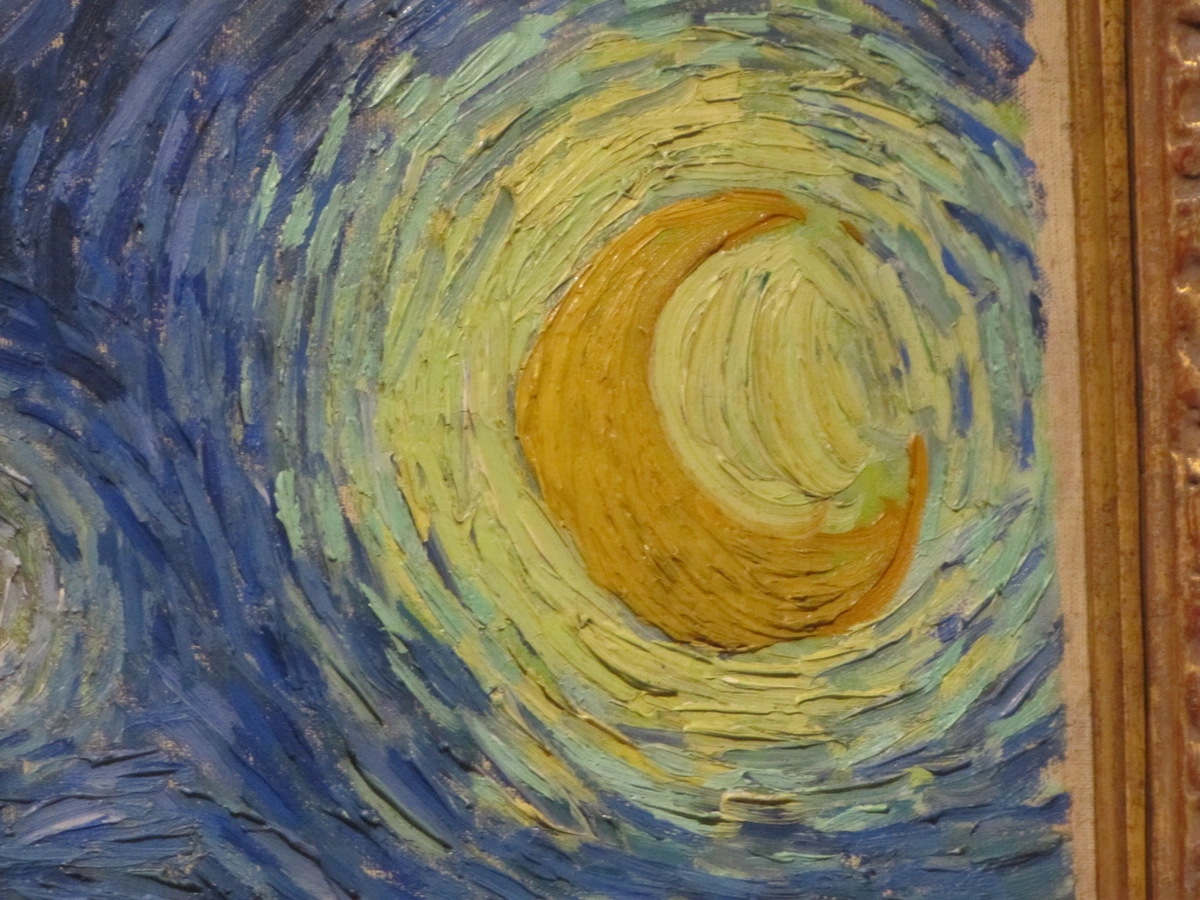
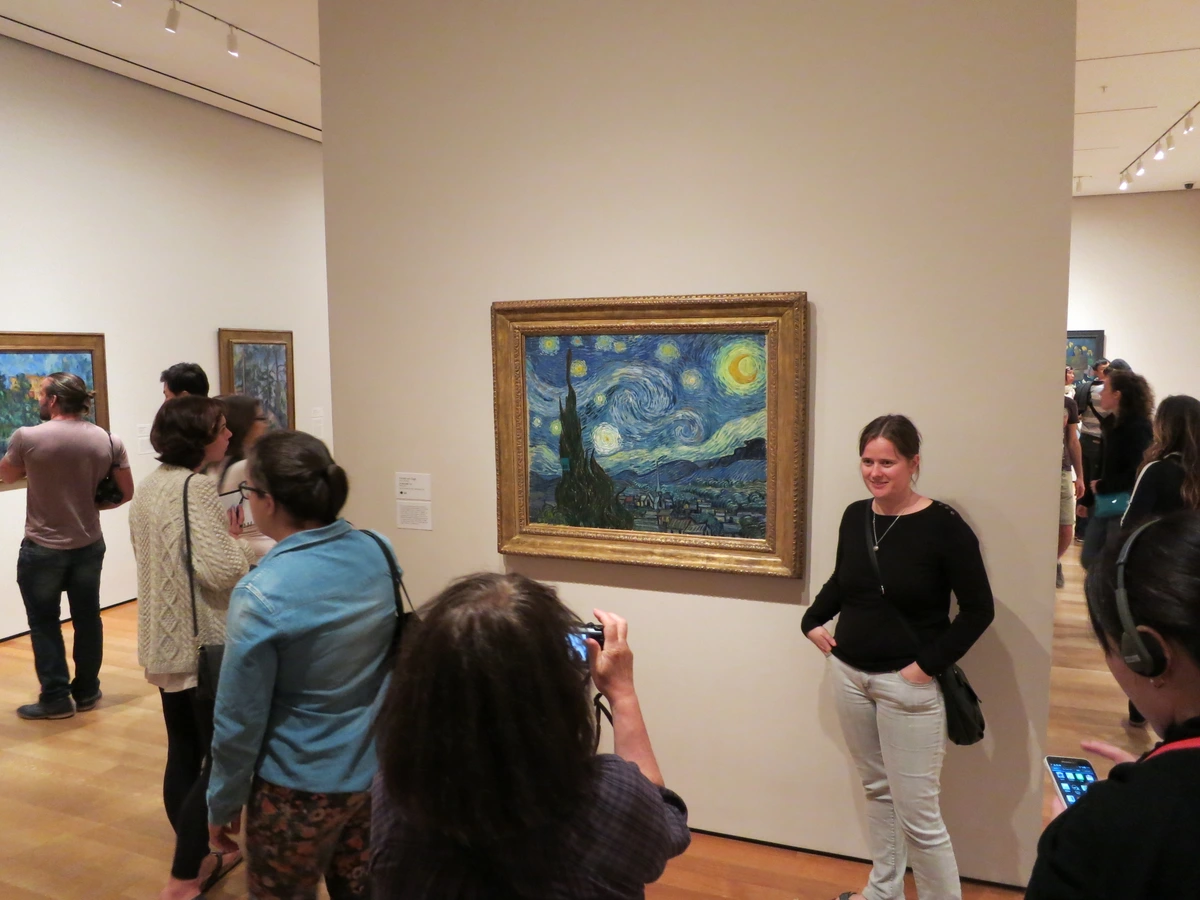
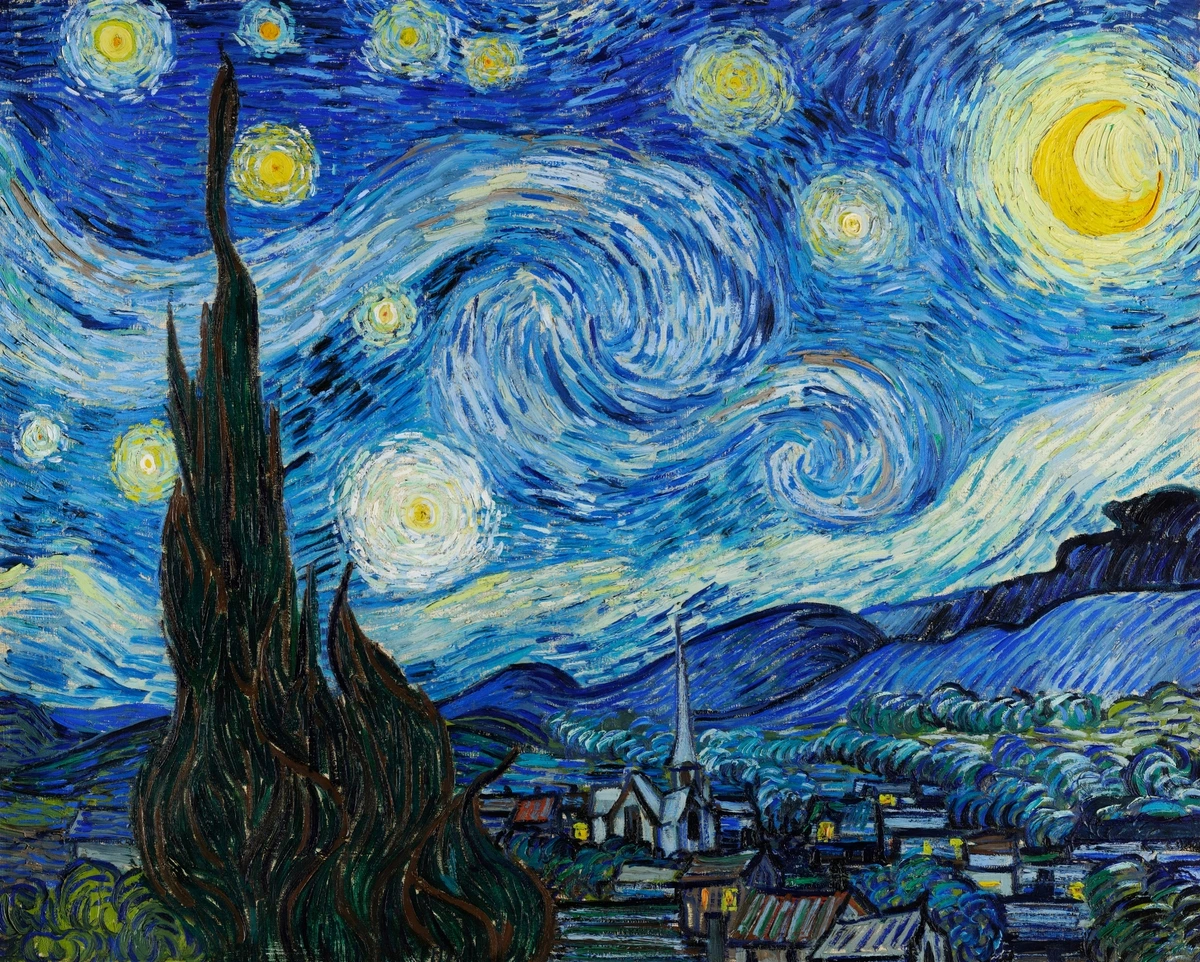
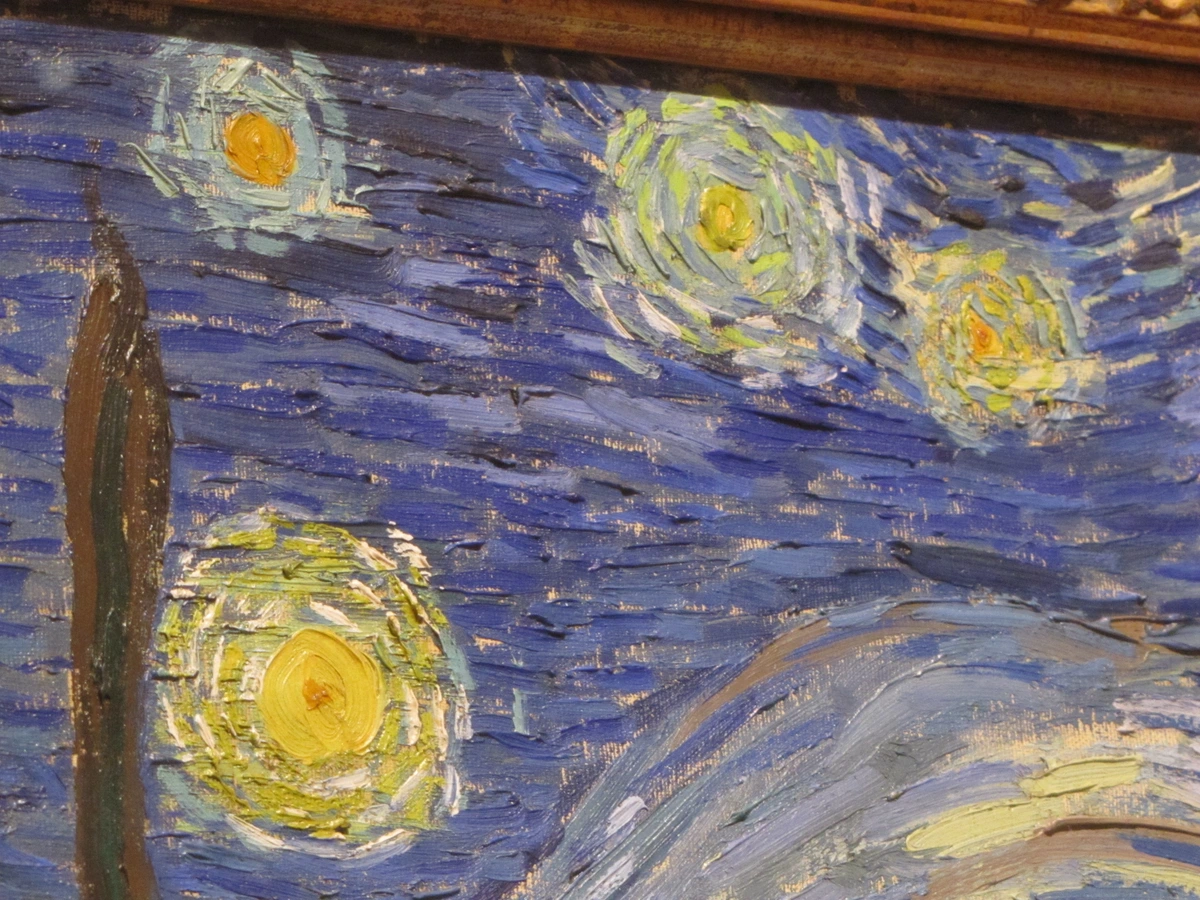
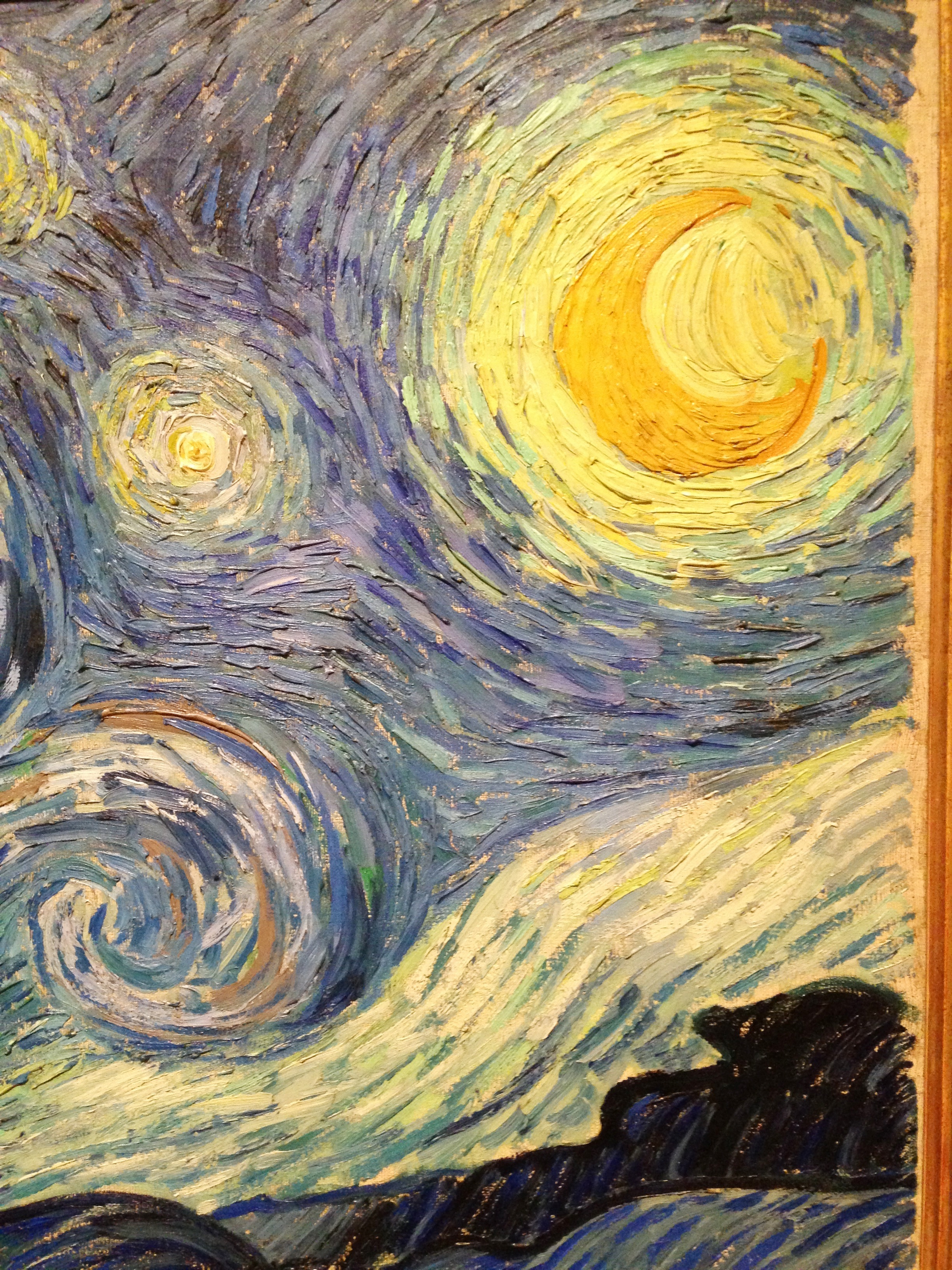
Then comes our dear friend, Vincent van Gogh. His 'The Starry Night' isn't just a painting of a night sky; it's an explosion of emotion, a swirling cosmic dance where the moon and stars are active, living entities. Look at that dynamism! The moon, with its intense, vibrant glow and the powerful, almost violent swirls surrounding it, is not a passive orb but an animated force, reflecting his inner turmoil and his profound, almost religious connection to the divine in nature. For Van Gogh, the moon became less about a shared, external deity and more about an internal, subjective experience, a conduit for raw feeling. His expressive brushstrokes make the celestial bodies throb with life, mirroring the artist's own fervent spirit.
Art Nouveau's Ethereal Glow
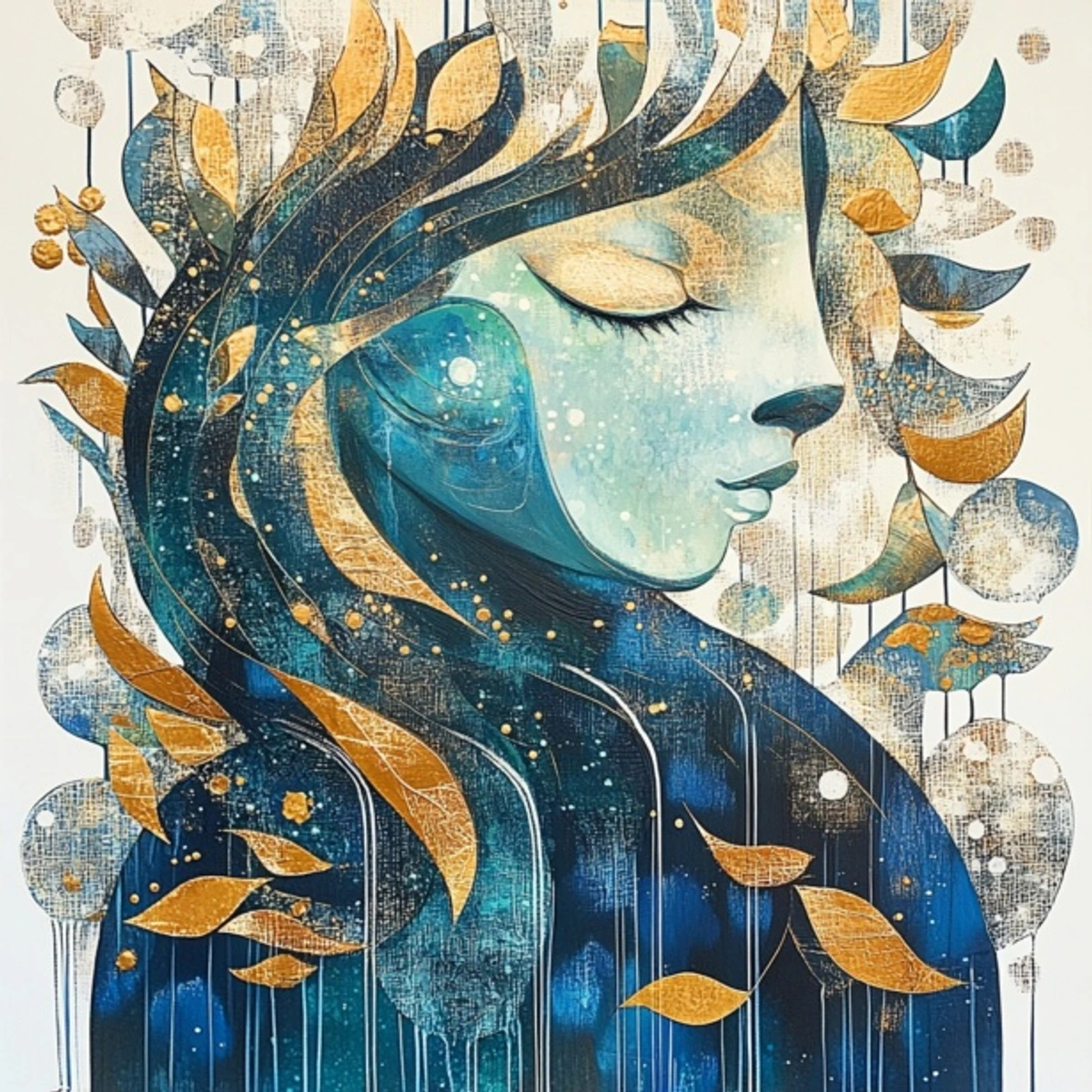
The late 19th and early 20th centuries saw the emergence of the Art Nouveau movement, which, while not exclusively focused on the moon, often incorporated celestial motifs within its characteristic flowing lines, organic forms, and decorative sensibility. Artists like Alphonse Mucha and Gustav Klimt, with their emphasis on natural forms, mythological figures, and ethereal beauty, frequently featured stylized moons and stars, particularly in their graphic art, jewelry, and illustrations. The moon in Art Nouveau might appear as a delicate crescent adorning a goddess's hair, a shimmering backdrop to a mythological scene, or an abstract pattern woven into intricate designs, always imbued with a sense of mystery, femininity, and otherworldly grace. This movement's fascination with the dreamlike and the symbolic naturally lent itself to lunar imagery, creating artworks that felt both ancient and modern, deeply connecting to nature's cycles. Our article on the Art Nouveau movement delves into this period's unique aesthetic.
The Psychology of the Moon: Dreams, Intuition, and the Anima
Drawing heavily from pioneers like Carl Jung, 20th-century art began to explore the moon as a powerful symbol of the collective unconscious and profound psychological states. The moon is often associated with the anima, the feminine archetypal image in the male psyche, representing intuition, emotion, creativity, and the hidden depths of the self. This psychological lens allows artists to portray the moon as a mirror to our inner world, reflecting dreams, hidden desires, and the primal, instinctual aspects of human nature. Think of how its subtle light can illuminate what is usually kept in shadow, bringing subconscious elements to the surface. It's the silent observer of our nocturnal thoughts, a celestial anchor for our emotional currents. For instance, an artist might depict a crescent moon hovering over a sleeping figure to symbolize awakening subconscious thoughts, or a full moon illuminating a shadowy, dreamlike landscape to represent the anima's influence on the male psyche, guiding him through his inner world.
Surrealist Explorations and the Lunar Eclipse
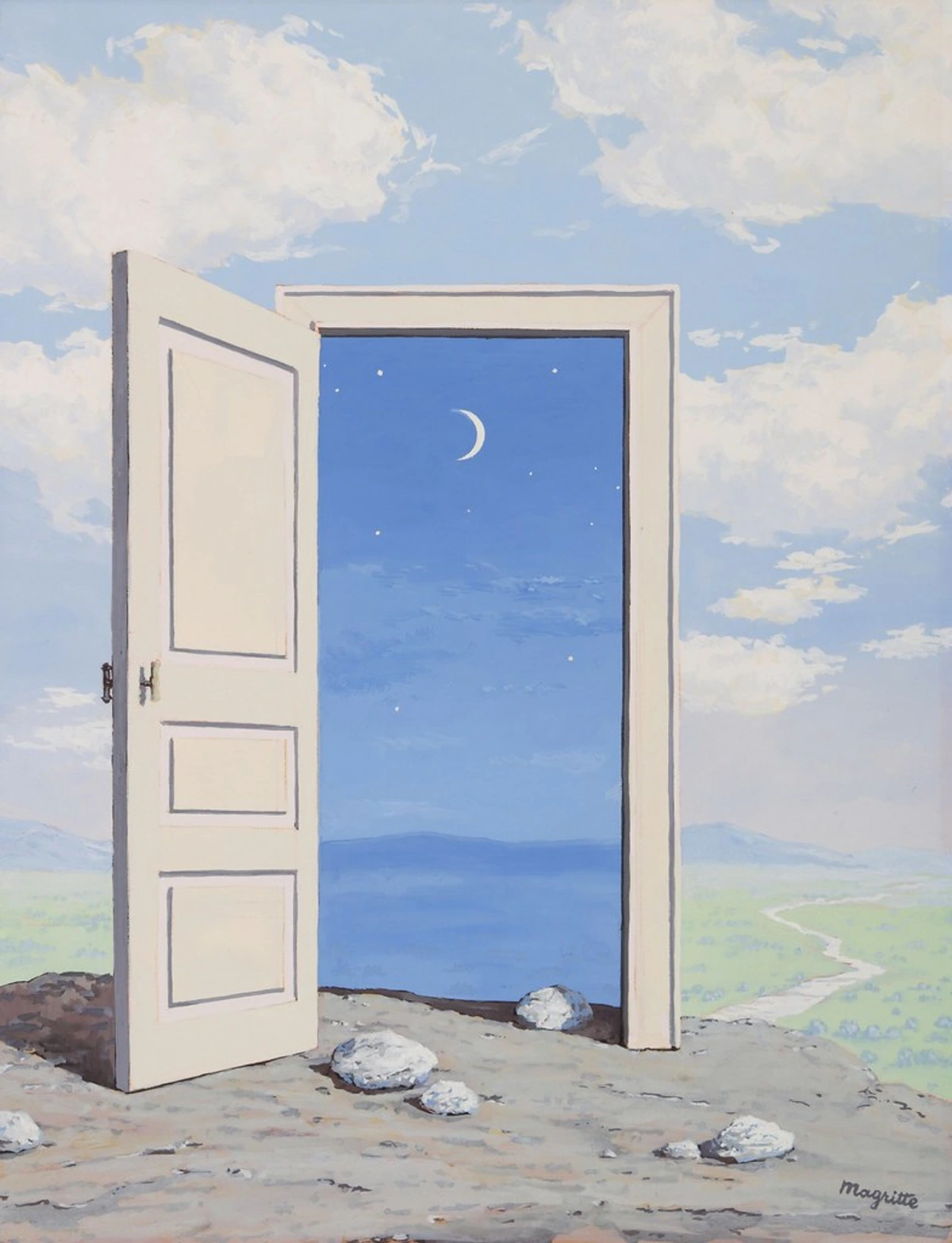
The Surrealist artists, drawing heavily from the unconscious mind and inspired by Jung's concept of the collective unconscious, continued and deepened this exploration. Think of Remedios Varo, whose fantastical, dreamlike paintings often feature celestial bodies and mysterious figures. The moon in her work, or in that of Leonora Carrington or even René Magritte, isn't just a backdrop; it's an active participant, a source of magic, mystery, and often, unsettling beauty. In Varo's surrealist landscapes, the moon might appear not as a mere disc, but as an ethereal portal, a crystalline sphere guiding alchemical processes, or a source of impossible light, beckoning viewers into dreamscapes that defy logical explanation. Her painting Star Gazer, for instance, features a lone figure intently observing a celestial mechanism where the moon plays a central, mystical role. Our guide on the Symbolism movement delves deeper into this fascinating period and how its embrace of the irrational and the subconscious truly paved the way for Surrealism's revolutionary lunar explorations.
While the moon's regular phases embody cycles, the rare and dramatic lunar eclipse carries its own potent symbolism in art. Historically, eclipses were often seen as portents, signaling disruption, divine displeasure, or impending change. Artists might depict an eclipse to foreshadow tragedy, mark a significant turning point, or symbolize a temporary obscuring of truth or light. For example, some medieval religious paintings of the crucifixion include a darkened sun and moon in the sky, subtly referencing apocalyptic portents and cosmic upheaval described in biblical accounts. But an eclipse isn't just about darkness; it's about a profound, albeit temporary, transformation. The moon's blood-red appearance during totality has inspired awe and fear, often associated with powerful, mystical forces or deep, unsettling psychological shifts. It's a cosmic pause, a moment where the ordinary becomes extraordinary, and artists have used this spectacle to evoke everything from dread to profound spiritual revelation. Its dramatic visual impact, much like a memento mori reminds us of life's transience, a lunar eclipse can symbolize a powerful, inevitable shift, a temporary veil over life's certainties.
The Moon in Literature: Echoes in Verse and Prose
The moon's profound influence isn't limited to visual art; it has consistently inspired poets, novelists, and playwrights across epochs, often shaping the very moods and themes that artists later translate onto canvas. From the lyrical odes of ancient Chinese poets like Li Bai, who famously drank with the moon, to the gothic romances of the 19th century where moonlight illuminates haunted castles and tragic lovers, literature provides a rich tapestry of lunar symbolism. Shakespeare's A Midsummer Night's Dream, for instance, is steeped in moonlit magic and illusion, directly influencing Romantic and Symbolist artists in their depiction of fantastical nocturnal scenes. Edgar Allan Poe's poems often use the moon as a source of eerie beauty and melancholy, a theme that resonates deeply with Expressionist and Surrealist visual artists who explore the darker aspects of the psyche. This interplay between the written and visual word creates a powerful feedback loop, with literary moonscapes fueling artistic imagination and vice versa.

The Moon in Photography and Contemporary Art: Personal and Universal
Beyond painting, the moon has held a profound place in photography. From early efforts by astronomers to capture its craters with scientific precision to Ansel Adams's iconic 'Moonrise, Hernandez, New Mexico,' where the moon adds dramatic scale and ethereal light to the landscape, photographers have used the moon to evoke drama, solitude, and the vastness of nature. Artists like Man Ray even explored lunar themes in experimental, surrealist photography, using techniques like solarization and rayographs to distort and play with its form, reflecting inner states or creating abstract lunar landscapes. Contemporary photographers continue this tradition, often employing long exposures to capture stunning lunar trails or digital manipulation to create otherworldly moonscapes. For me, capturing the ephemeral light of the moon in a photograph is almost like trying to bottle a feeling, an elusive moment of connection – it's a constant challenge and a pure joy.
In the 20th and 21st centuries, the moon continues to inspire, though perhaps with less overt spiritual reverence and more nuanced personal or conceptual interpretations. Artists might use the moon to comment on:
- Space Exploration and Humanity's Reach: The moon stands as a powerful symbol of human ambition, scientific advancement, and our collective journey into the cosmos. Contemporary artists might integrate satellite imagery, iconic photos like 'Earthrise,' or even incorporate materials from space to merge scientific fact with artistic wonder. For instance, Tom Sachs famously re-created the Apollo 11 lunar landing in his Space Program series, transforming the moon into a stage for exploring consumer culture, Cold War politics, and the romance of space travel through meticulously crafted, often irreverent, sculptures and installations. The moon here is not just an object, but a frontier, a testament to human ingenuity and our endless desire to explore the unknown. Its scientific understanding, from lunar geology to the potential for colonization, feeds into new forms of artistic expression, pushing the boundaries of what 'lunar art' can be.
- Environmental Concerns: The moon's rhythmic pull on Earth, its pristine, untouched nature in stark contrast to human impact, or a stark reminder of our planet's fragility. The moon can stand as a silent, unchanging witness to our ecological crises, a distant celestial mirror reflecting our actions. Imagine a contemporary artist, like those creating ecological installations, using large-scale projections of lunar landscapes onto polluted urban areas or deforested lands, implicitly asking the viewer to contemplate our impact from an extraterrestrial perspective. I've often thought about how a solitary moon over a changing landscape can speak volumes about the quiet witness nature provides to our actions, a stark emblem of purity against earthly pollution.
- Personal Reflection and the Inner Landscape: Continuing the Romantic tradition of introspection, but often with a contemporary twist – perhaps loneliness in a vast universe, or the calm found in a chaotic world. Artists like Vija Celmins create highly detailed, almost meditative works of celestial bodies. Her graphite drawings of the moon, such as Moon Surface, Ocean Park (1969), invite deep contemplation of the universal in the painstakingly observed detail. Her meticulous rendering of the moon's cratered surface, almost obsessive in its precision, feels like a meditation on infinity, a mirror to the intense, focused dedication an artist sometimes needs. I find her work incredibly grounding, pulling me into that quiet, expansive headspace, a testament to how even scientific precision can achieve profound emotional depth.
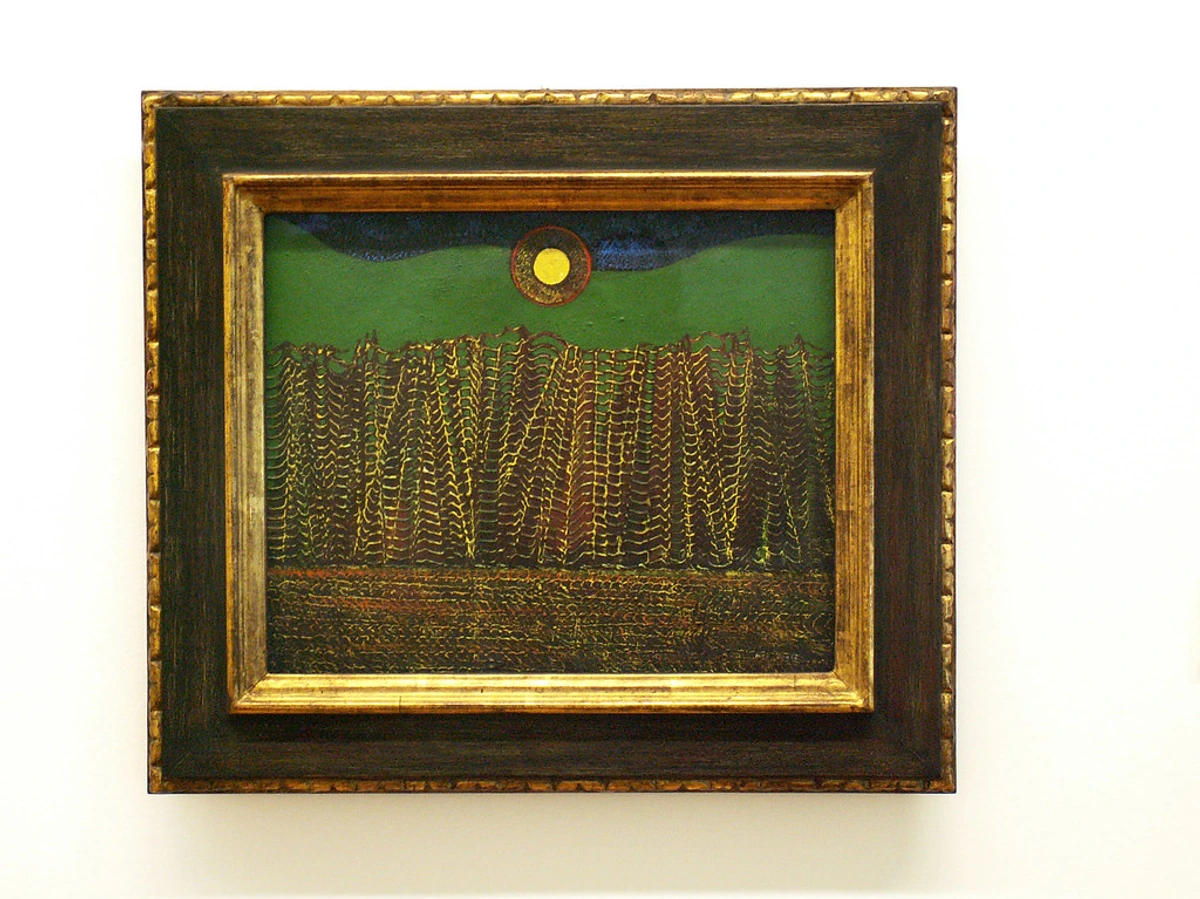
- Abstract Representation and the Artist's Process: This is where the moon truly resonates with my own artistic journey. Some artists might use lunar forms or colors to evoke the feeling or essence of the moon rather than a direct depiction. It's about the underlying patterns, the subtle shifts of light and shadow, the raw emotional power of its presence. Perhaps a series of cool blues and silvers, or textured circles and crescents, can convey the moon's mysterious pull more effectively than a literal rendering. You can see how this plays out in how artists use color or the psychology of color in abstract art. For instance, abstract artist Hilma af Klint's series, The Ten Largest, with its cosmic, swirling forms and subtle color gradients, often evokes celestial movements and a spiritual connection, embodying a lunar essence without direct representation. For me, the moon provides endless inspiration for exploring themes of cyclical change, quiet power, and the interplay of visible and invisible forces. It's a powerful metaphor for the artist's process: the New Moon as the blank canvas, full of latent potential; the waxing moon as the exciting development of an idea; the full moon as the moment of finished, illuminated work; and the waning moon as reflection and critique, all part of the cyclical flow of creation. The moon becomes a silent partner in my studio, its phases mirroring my own creative journey and reminding me that creation, like the cosmos, is a constant dance of emergence and retreat.
Connecting with Lunar Art: A Collector's Perspective
For art collectors and enthusiasts, understanding the rich tapestry of lunar symbolism can add profound layers of meaning to a piece. When you acquire an artwork featuring the moon, you're not just buying a beautiful image; you're investing in centuries of human connection to this celestial body. Whether it’s an abstract piece subtly hinting at the moon’s influence on tides, a contemporary photograph capturing its stark beauty, or a classical depiction of a lunar goddess, the moon's presence often speaks to themes of cycles, mystery, intuition, and transformation. It’s a universal language, allowing a collector to connect with an artwork on a deeper, archetypal level, making the art a personal reflection of cosmic wonder.
My own artistic journey often involves these kinds of abstract meditations on natural phenomena. The moon, with its inherent patterns and subtle shifts, provides endless inspiration. If you're curious about how these themes translate into my work, feel free to explore the pieces available to buy or visit the Den Bosch Museum to see my art in person. It’s a wonderful reminder that the moon, in all its forms, continues to be a profound wellspring for creativity, a celestial echo in every brushstroke.
Frequently Asked Questions About Moon Symbolism in Art
I get it; the moon is a lot to unpack! Here are a few common questions I've encountered, or ones I've asked myself, about its enduring role in art:






Q: How has the symbolism of the moon changed over time in art?
A: It's been a fascinating evolution, and honestly, this adaptability is perhaps what makes it such an enduring symbol! Early art often depicted the moon as a divine entity or deity, a literal god/goddess influencing earthly life and agriculture. In the medieval period, it sometimes became a symbol of the Church, reflecting divine light, or a metaphor for spiritual journeys. During Romanticism, it transformed into a mirror for human emotion, introspection, and the sublime in nature, reflecting inner turmoil or quiet wonder. By the 20th century, particularly with Symbolism and Surrealism, it delved into the unconscious, dreams, and inner psychological states, often drawing from Jungian archetypes. In contemporary art and photography, it can be a highly personal symbol, or used to comment on science, environment, or human ambition, often rendered abstractly. Despite these shifts, core themes like mystery, cycles, and connection to the feminine have consistently resonated, proving its timeless power and relevance to the human condition.
Q: Are there any common colors associated with the moon in art?
A: While the moon itself is a source of light, artists frequently use specific colors to depict it and its surrounding atmosphere, heavily influencing mood and interpretation. Silver and white are obvious choices, reflecting its perceived color and purity. Cool blues and greys are very common for night scenes, evoking calm, mystery, and sometimes melancholy – these are colors I often find myself drawn to in my own lunar explorations. Depending on the artistic period or emotional tone, you might also see pale yellows, creamy whites, or even subtle greens (especially in more fantastical or mystical representations). The choice of color heavily influences the mood, much like how understanding the symbolism of colors in different cultures can change how we interpret a piece. Sometimes, the stark absence of color (monochrome) is used to emphasize its ethereal, timeless beauty, allowing the light itself to speak volumes.
Q: How is the New Moon represented in art?
A: The New Moon, though often unseen in its literal form, is a potent symbol for artists. It represents new beginnings, potential, and the latent power that lies in darkness. In art, it might be depicted through abstract forms, deep shadows, or figures engaged in introspection or contemplation before a new journey. It can also symbolize hidden knowledge or the quiet period before rebirth – think of it as the seed beneath the soil, unseen but full of promise. It’s a powerful metaphor for quiet growth and the mysterious void from which new things emerge, much like the blank canvas before an artist embarks on a new creation, brimming with unrevealed possibilities.
Q: What is the significance of a lunar eclipse in art?
A: A lunar eclipse is a powerful, dramatic event, and in art, it often carries significant symbolic weight. It can represent portents of change or disruption, foreshadowing events of great consequence. The temporary obscuring of the moon’s light might symbolize a moment of hidden truth, vulnerability, or a temporary loss of clarity. Furthermore, the striking blood-red hue of a total lunar eclipse has been associated with transformation, mystical power, or even foreboding. Artists utilize this rare celestial phenomenon to evoke heightened emotion, deep psychological states, or to mark pivotal moments within a narrative, turning a cosmic event into a profound human metaphor for shifts, revelations, or the dramatic interplay of light and shadow in our own lives.
Q: What are some key artworks that prominently feature the moon?
A: The moon has graced countless masterpieces! Some iconic examples include: Caspar David Friedrich's 'Two Men Contemplating the Moon' (c. 1819-20), a quintessential Romantic work depicting introspection and the sublime in nature. Vincent van Gogh's 'The Starry Night' (1889), where the moon is a vibrant, swirling entity reflecting inner turmoil and spiritual connection. Remedios Varo's surrealist paintings, like Star Gazer (1956), where the moon functions as a mystical portal or alchemical guide. Ansel Adams's 'Moonrise, Hernandez, New Mexico' (1941), a photographic masterpiece capturing the moon's dramatic scale and ethereal light. Each of these works, in their distinct styles, harnesses the moon's symbolic power to convey unique messages about humanity, nature, and the cosmos.
Q: Are there any specific art movements where the moon was a central, defining motif?
A: While the moon has been a recurring motif across nearly all art periods, it truly became a central, defining element in a few key movements, often amplifying specific philosophical or emotional tenets. Romanticism (late 18th to mid-19th century) embraced the moon as a prime symbol for the sublime, introspection, and melancholic grandeur of nature, as seen in works by Friedrich. The Symbolist movement (late 19th century) utilized the moon extensively to evoke dreams, the unconscious, mystery, and the irrational, making it a key visual element in their explorations of inner worlds. Later, Surrealism (early 20th century) continued this psychological delving, depicting the moon in fantastical and unsettling contexts to represent subconscious desires and dreamscapes. While less overt, Art Nouveau also frequently incorporated stylized lunar motifs as decorative elements, emphasizing femininity, organic forms, and ethereal beauty. These movements demonstrate the moon's unparalleled ability to serve as a conduit for profound emotional and psychological expression.
Conclusion: The Moon, Our Everlasting Muse
So, there you have it. From ancient deities guiding civilizations and early scientific observation to cosmic swirls reflecting inner turmoil, the moon has been an unwavering muse for artists throughout history. It’s a silent observer, a bringer of dreams, a marker of time, and a mirror for humanity's deepest ponderings. Each time I look up at the night sky, or glimpse a lunar form in a painting – whether it's a classical goddess or a modern abstract – I'm reminded of this profound, ongoing connection. It's a reminder that even in our fast-paced, brightly lit world, there's still a primal, powerful magic to be found in the slow, rhythmic dance of our closest celestial neighbor. The moon's universal presence and ever-changing appearance ensure its eternal relevance, continually inviting us to look up, reflect, and create. This journey through lunar symbolism has reinforced my belief that art is a continuous dialogue between humanity and the cosmos, and the moon is often the silent, luminous third party in that conversation.
So, the next time you gaze at the moon, what story will it whisper to you? What ancient echoes or personal reflections will it stir? I invite you to explore my own lunar-inspired pieces, where the moon's timeless mysteries are translated through vibrant color and abstract form, perhaps bringing a piece of this celestial wonder into your own space. See how the cosmic finds its way into earthly expression – you can find them available to buy, or experience them in person at the Den Bosch Museum.