
Barnett Newman's Zips: The Raw Power of a Single Line
Discover the technique that redefined abstract art. Learn how Newman's vertical 'zips' transformed paint into existential statements.

Barnett Newman's Zips: The Raw Power of a Single Line
There's something almost terrifying about standing before a Newman painting. Not scary in a horror movie way, but terrifying in that existential, gut-level way that makes you question your own place in the universe. I remember the first time I stood before "Vir Heroicus Sublimis" at MoMA – that massive 18-foot canvas with its single red field and bold zips. I didn't just look at it; I felt it in my bones. My breath caught. My posture straightened. I became hyper-aware of my own body in relation to this monumental presence. That's the power of a Newman zip – it doesn't decorate walls; it transforms spaces and changes how you see the world.
The Historical Context: Newman and Abstract Expressionism
Barnett Newman didn't emerge in a vacuum. In the 1940s and 50s, New York was exploding with artistic energy – this was the birth of Abstract Expressionism, the movement that would shift the center of the art world from Paris to New York. While Jackson Pollock was dripping paint across his canvases and Mark Rothko was painting those meditative rectangles, Newman was doing something radically different: he was searching for the absolute essentials of painting.
Imagine being an artist in post-WWII America, trying to make sense of a world that had just witnessed unimaginable horror. Traditional representations felt hollow, meaningless. Artists like Newman felt that if painting was to matter again, it had to confront the big questions – existence, meaning, the human condition – head-on. His zips weren't just aesthetic choices; they were philosophical statements about what art could and should be in a broken world.
Newman's journey was long and often frustrating. He didn't achieve widespread recognition until he was in his 50s, which makes his later monumental works even more remarkable. There's something deeply human about an artist who persists through decades of obscurity only to create his most ambitious work when he finally finds his voice. That persistence – that refusal to compromise – is written into every zip he painted.
The Zip: More Than Just a Line
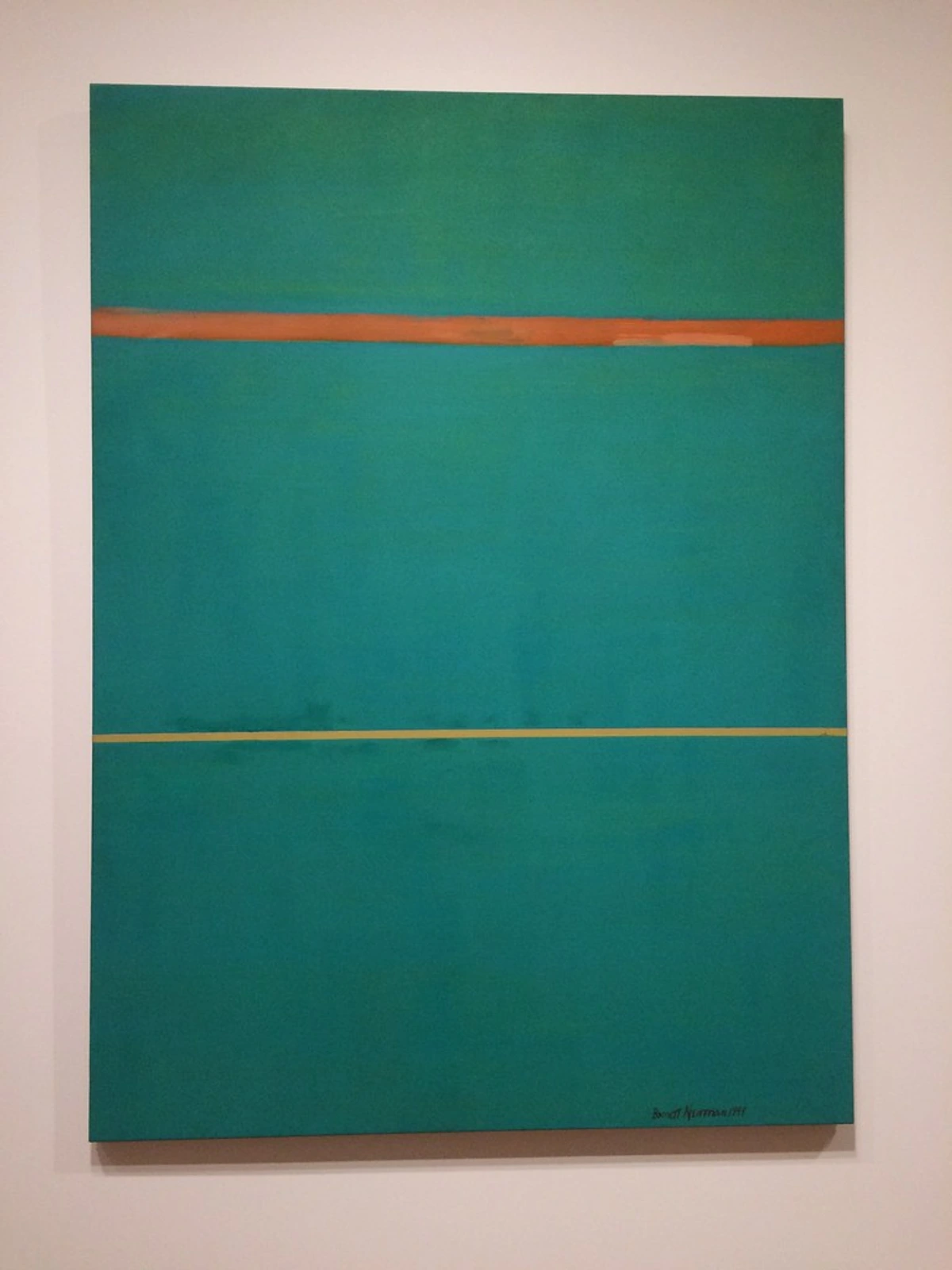
So what is a zip? It's not just vertical band of color slapped onto a canvas. It's a rupture. A tear in reality. Newman called them "my stigmata" – a mark both painful and sacred. Think of it this way: if most painters build scenes with figures and landscapes, Newman built an environment with silence. The zip is a monument to minimalism that carries the weight of cathedrals.
Here's how I see it: imagine filling an entire swimming pool with a single, vibrant color. Now lower a long plank vertically through the water. That plank is the zip – it divides the space while simultaneously holding it together. The background color isn't just a backdrop; it's a field you step into. The zips aren't lines separating things; they're boundaries you encounter.
The Anatomy of a Zip: Deeper Technical Breakdown
What makes Newman's zips so compelling? Let's break down the technical mastery that went into these seemingly simple paintings:
Surface Preparation: The Foundation of Presence
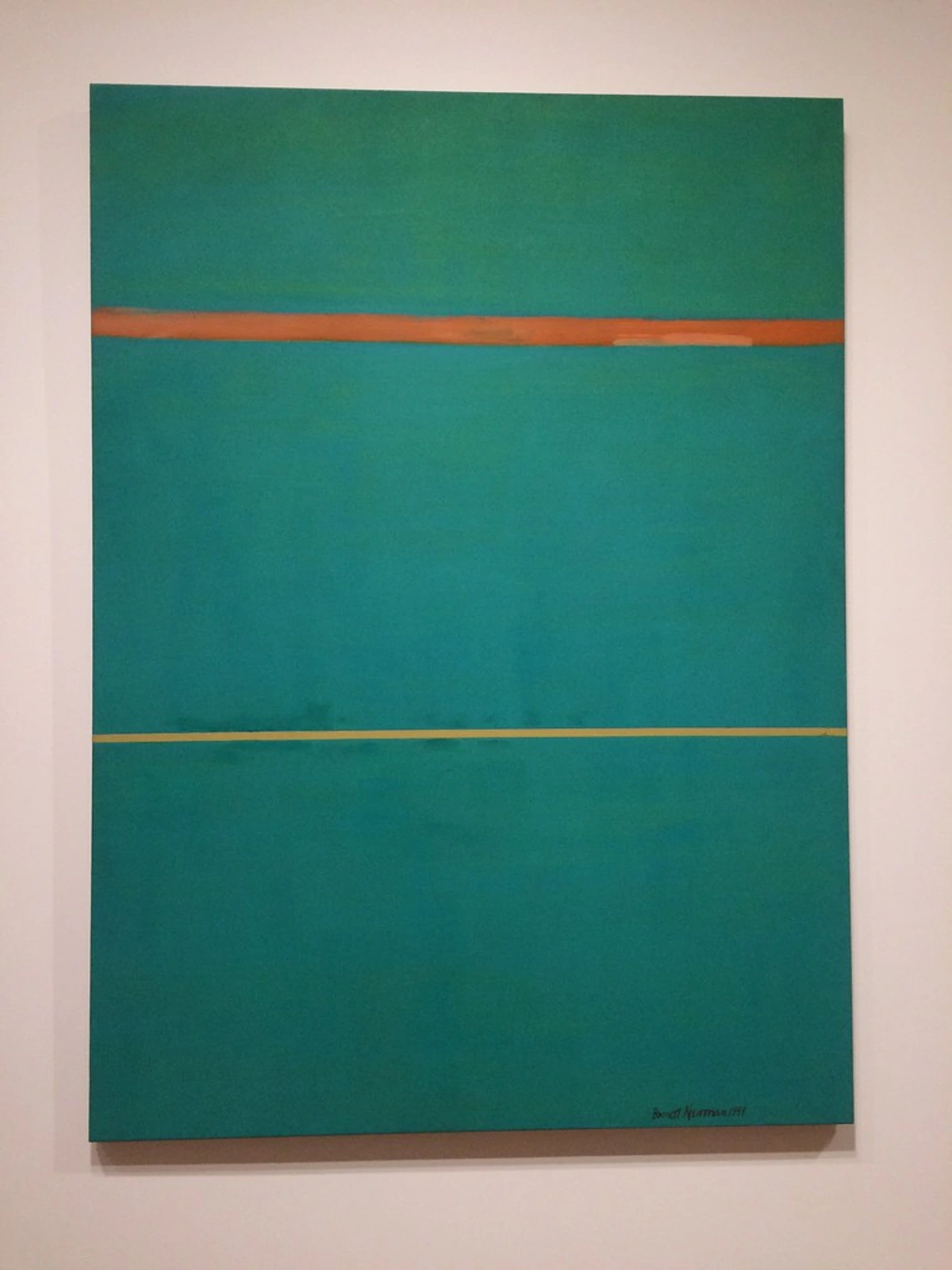
Newman's fields weren't just painted surfaces; they were psychological environments. He typically worked on unprimed canvas, allowing the raw fabric to show through in places. The preparation process was obsessive:
- Multiple thin layers: 30-40 layers of diluted acrylic or industrial enamel paint
- Absorbent surfaces: The matte finish created a velvety depth that seemed to drink the light
- Visible brushwork: Intentional variations in texture and application gave each field a living presence
- Color mixing: Often mixed directly on canvas, creating subtle gradations and optical effects
This wasn't just about color; it was about creating a field of energy. The background wasn't passive – it actively engaged the viewer, creating a sense of immersion that traditional painted surfaces never achieved.
I know what you're thinking: "It's just a stripe." And maybe it sounds simple. But remember Kandinsky's quote: "The Dot is the most primitive and intimate form of expression." Newman took that philosophy to its logical conclusion: if one dot can express, then one vertical band can explode.
The Anatomy of a Zip: Technique Breakdown - Comprehensive Guide
Newman's process is deceptively simple – like a haiku or a really good joke. The simplicity is what makes it genius. Let's break down how he actually made these things:
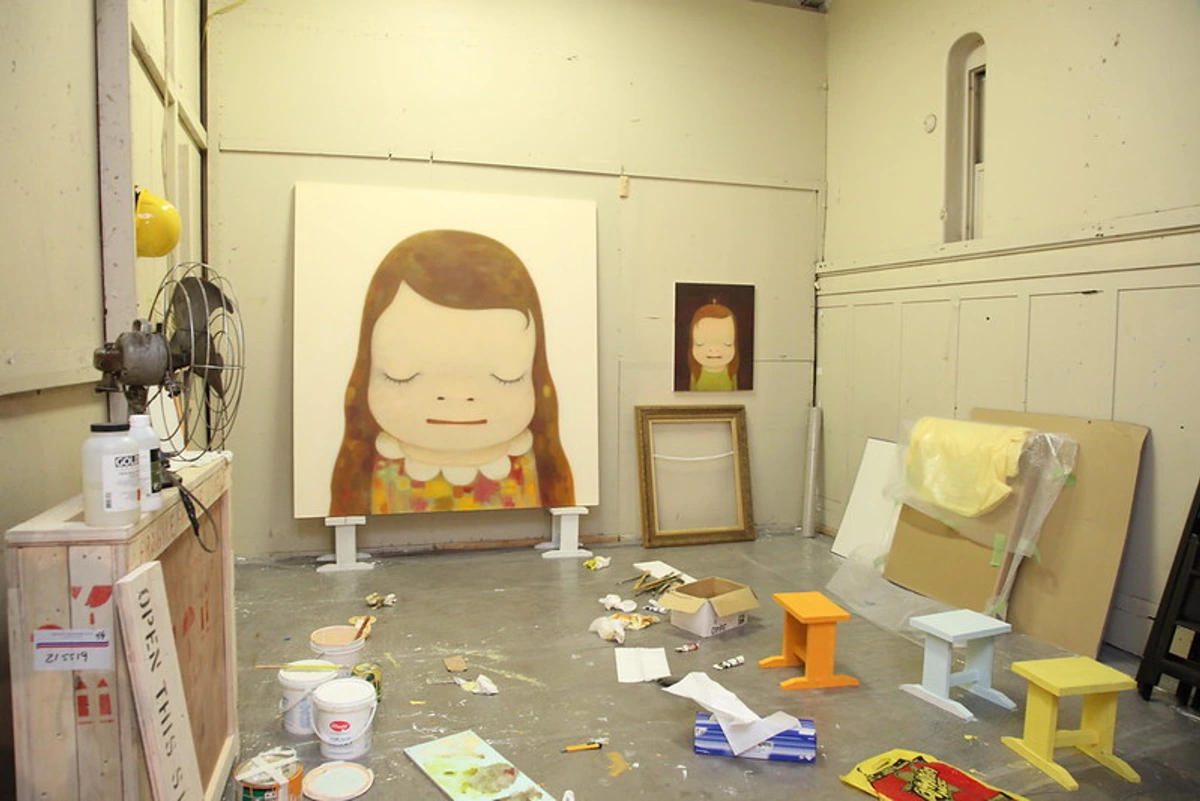
The Studio Environment: Newman's Creative Space
Newman's studio was a reflection of his philosophy – minimal but purposeful:
- Size: Large enough to accommodate monumental canvases (often 8x12 feet or larger)
- Light: Natural northern light for accurate color perception
- Organization: Minimalist, with tools and materials arranged for efficiency
- Atmosphere: Quiet, focused, almost meditative
Newman often worked on multiple paintings simultaneously, allowing layers to dry while he worked on others. This patience was unusual in the frenetic Abstract Expressionist scene – most artists worked feverishly, Newman worked deliberately.
The Ritual of Creation
Newman approached painting with almost religious seriousness:
- Mental preparation: Hours of contemplation before touching a brush
- Physical preparation: Specific clothing to avoid contamination
- Material preparation: Meticulous mixing and testing of colors
- Environmental control: Temperature and humidity considerations
- Execution: Single-minded focus during the actual painting process
This ritualistic approach wasn't superstition – it was recognition that creating art of this magnitude required total commitment. Newman understood that these weren't just paintings; they were spiritual acts.
1. The Background Field
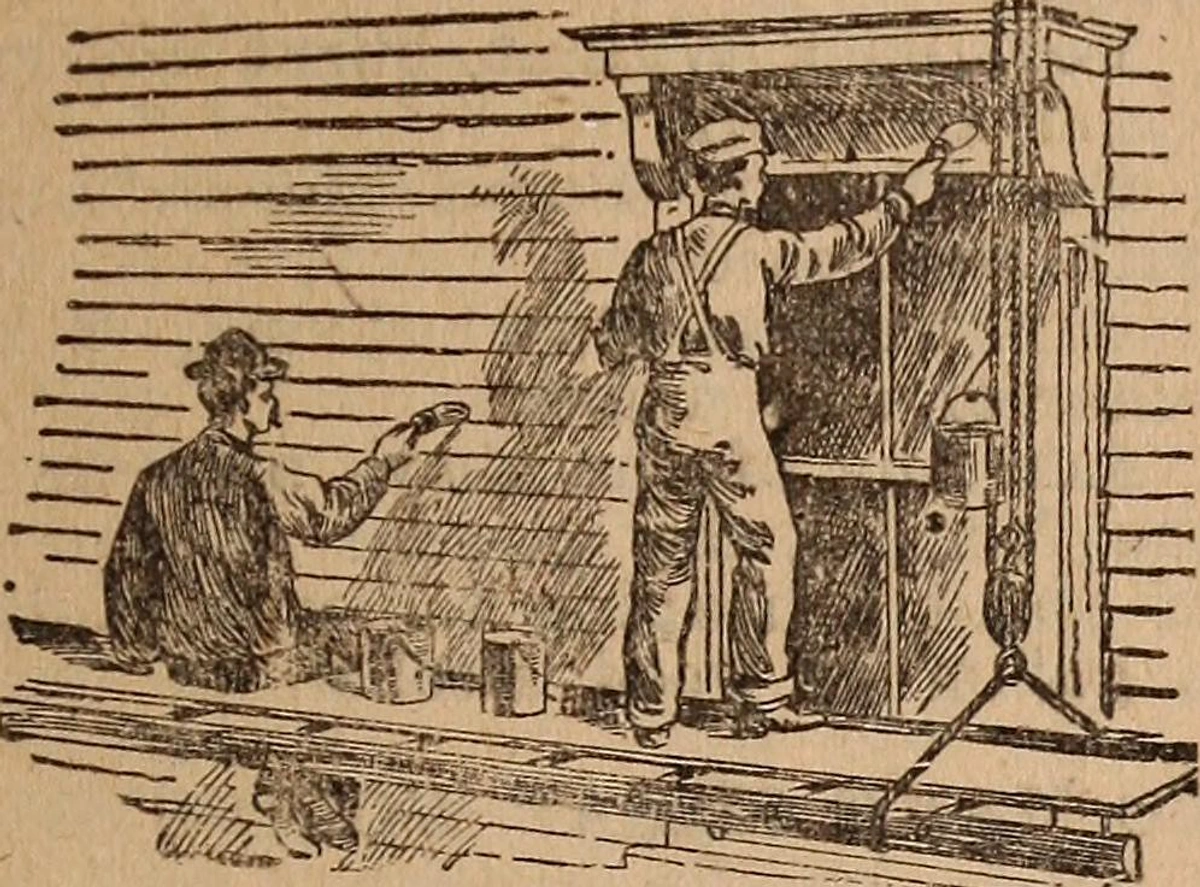
First, the foundation. These weren't blank canvases. Imagine a giant wall in your apartment that you repaint every weekend for years until the paint texture becomes part of the wall itself. That's what Newman did with his fields. He'd apply dozens of thin layers of acrylic or industrial enamel paint (yup, house paint) – building up a matte, absorbent surface that drank color rather than reflecting it. The results were never uniform; you can sometimes see visible brushstrokes or subtle variations in tone that give the field a living presence.
2. The Zip Itself: The Gesture of Creation
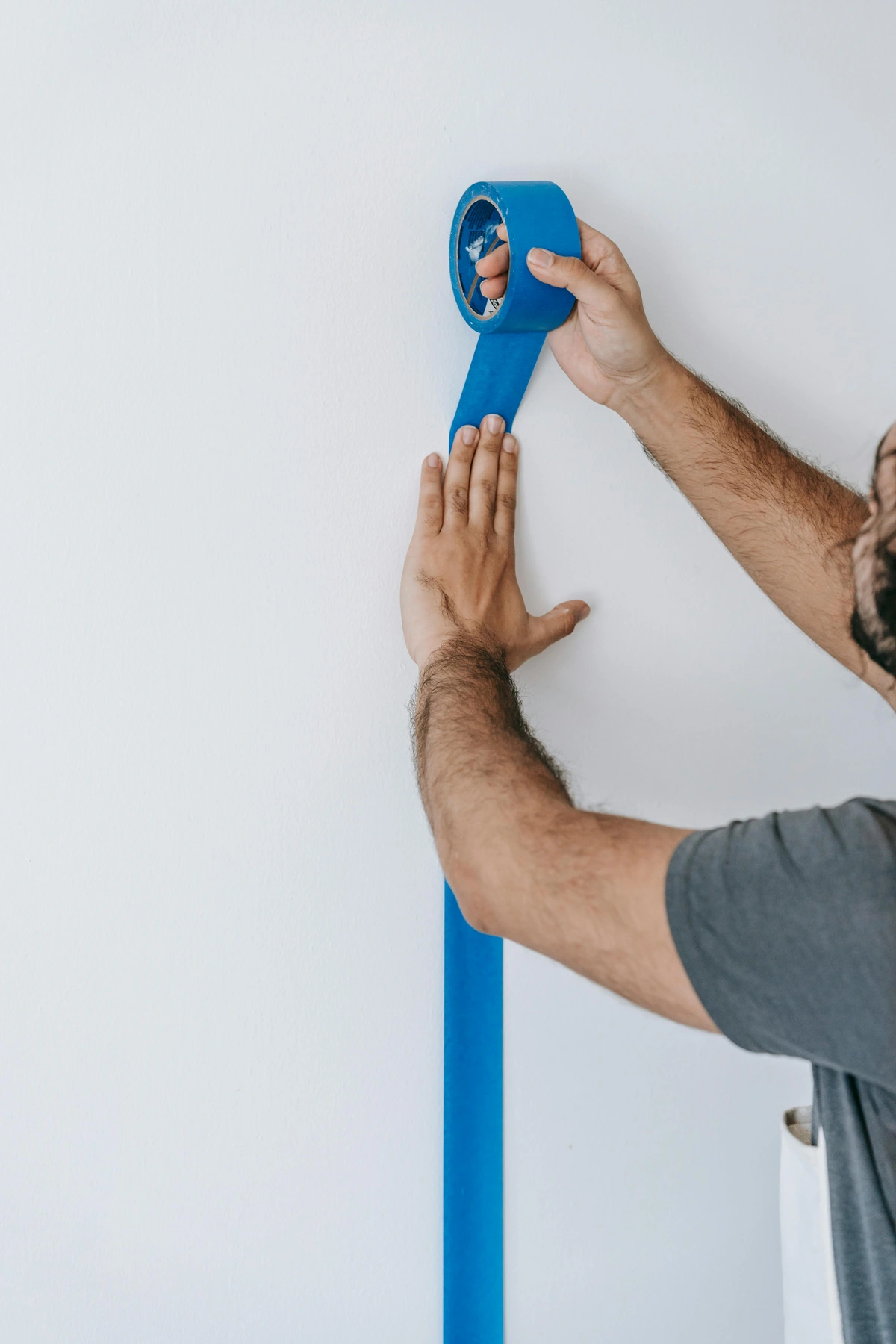
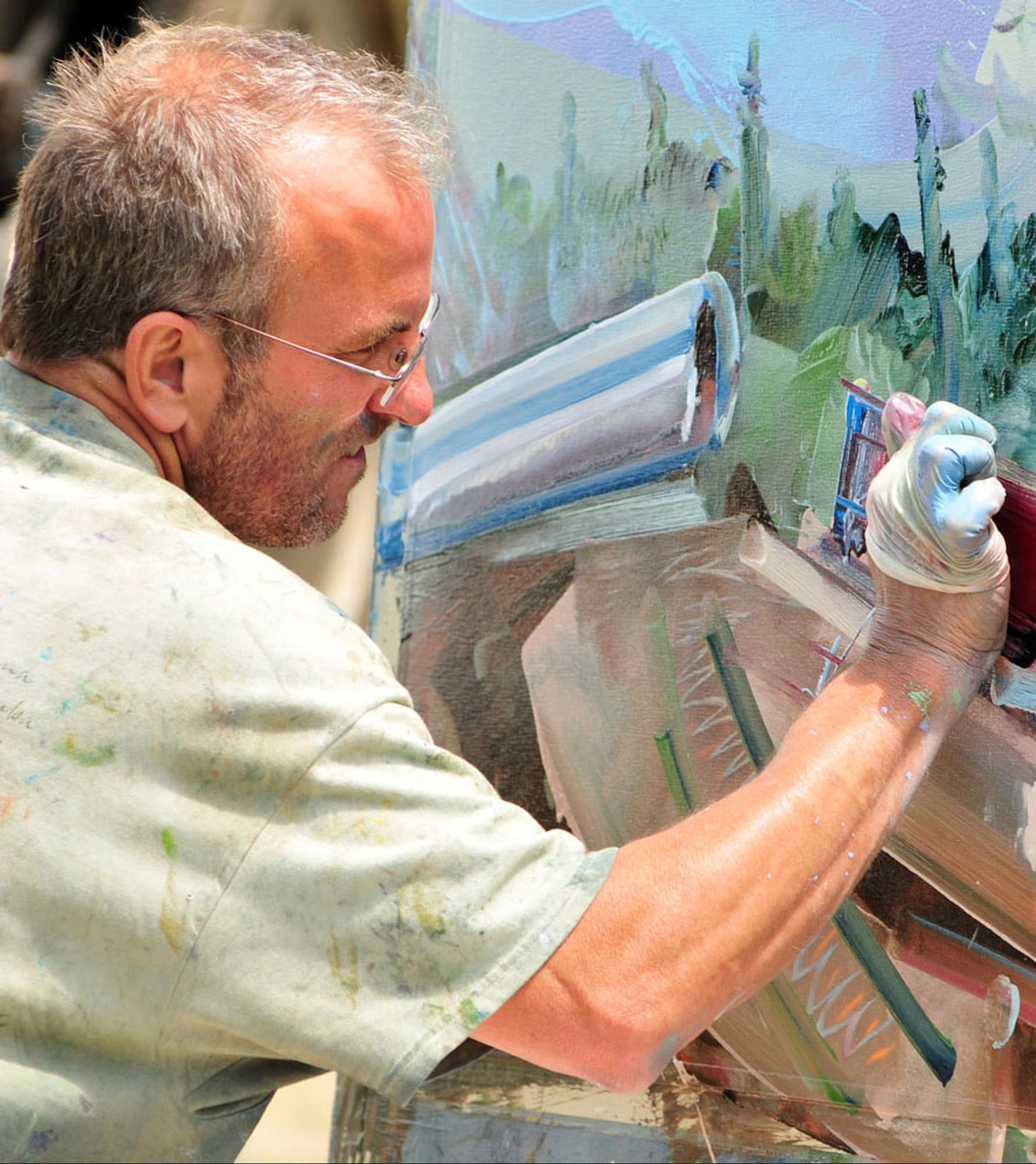
Now comes the moment of truth. The zip wasn't created with masking tape or precision tools. Newman would load a thick house-painting brush (sometimes called a "sash brush") almost like a calligraphy pen. Then he'd pull it in one or two confident strokes across the canvas. The resulting edge? Beautifully imperfect. Slightly fuzzy in places, wobbly in others. He wanted you to see the human hand behind it. No rulers, no straightedges. Just intention captured in motion.
But here's what most people miss: the psychological weight of that gesture. Think about what it takes to make a mark that spans six feet across a canvas – it requires not just physical strength, but tremendous psychological commitment. That single stroke represents a moment of absolute decision, a line drawn between what was and what is now. There's no going back, no correcting, no refining. It's pure, unmediated expression.
Newman himself described this process as "finding the edge" – not just of the canvas, but of human experience. The zip's edge is where consciousness meets the void, where meaning emerges from formlessness.
3. Scale and Placement: The Psychology of Space
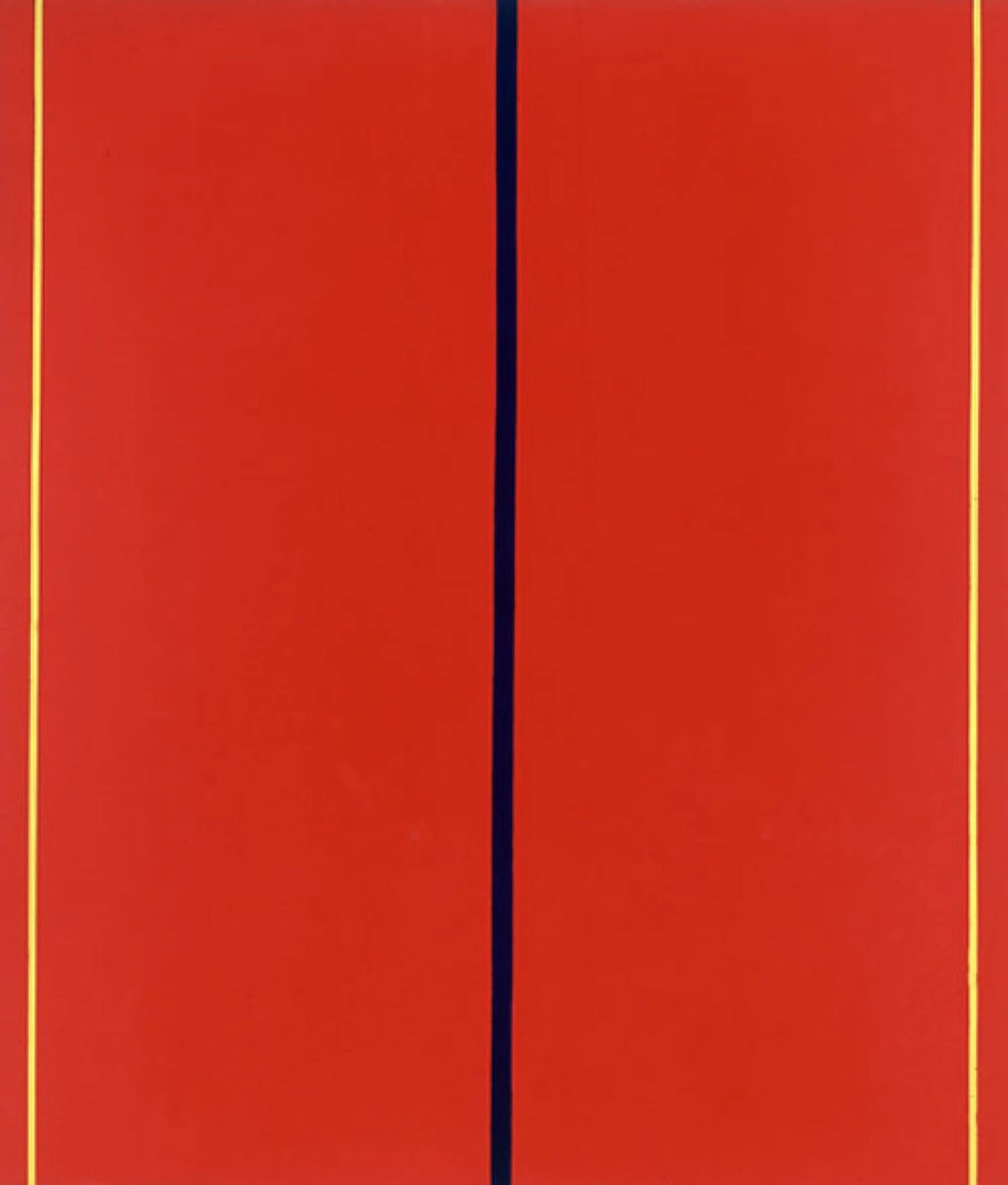
This is where psychology enters the equation. Newman didn't just place zips randomly. His "Canaletto" paintings (like "Canaletto I" from 1965) featured multiple zips creating rhythm. Others like "Who's Afraid of Red, Yellow and Blue" made the zip a dominant, almost violent presence. The placement was strategic – a zip slightly off-center creates tension. A dead-center zip feels meditative, like a pillar holding up the sky. And the scale! Some zips are two inches wide, others span multiple feet. That physical impact is intentional – these aren't drawings; they're environments you inhabit.

The Science of Scale
Newman understood that scale changes everything. A small zip on a small canvas is an interesting detail. A zip that spans eight feet across a massive canvas becomes an architectural element, something that demands physical space around it. This isn't about making big paintings for the sake of it – it's about creating an experience that matches the ambition of the ideas behind them.
Scale Effect  | Psychological Impact | Viewer Experience |
|---|---|---|
| Small-scale zip (2-6 inches) | Intimate, contemplative | Close examination, detail appreciation |
| Medium-scale zip (6-24 inches) | Balanced, harmonious | Balanced viewing distance |
| Large-scale zip (2-8+ feet) | Monumental, overwhelming | Physical immersion, bodily response |
| Multiple zips | Rhythmic, complex | Dynamic movement through space |
The placement of zips follows mathematical principles of divine proportion and golden ratio, even though Newman would never have admitted to calculating them. The off-center placements create dynamic tension that keeps the viewer's eye moving, while centered zips create a sense of stability and meditation.
Technique Element | Newman's Method | Artist Takeaway |
|---|---|---|
| Canvas Prep | Industrial enamels; 30+ thin layers | Think in terms of surface texture, not just color |
| Zip Application | Single confident brush strokes; no masking tape | Embrace "imperfection" – it adds authenticity |
| Scale | Monumental (6x8 feet common); zips 1-4 ft wide | Size changes experience – test small vs large |
| Edge Quality | Slightly fuzzy, hand-painted intentionality | If it feels human, it connects |
| Placement | Off-center for tension, center for meditative | Use position to control psychological impact |
| Color Psychology | Deliberate emotional color combinations | Colors have dialogue, not just relationships |
| Material Choice | Industrial paints for durability and texture | Sometimes art supplies aren't just for artists |
| Process Discipline | Ritualistic preparation and execution | The journey matters as much as the destination |
The Philosophy Behind the Paint: Newman's Existential Vision
Newman wasn't just making pretty pictures. He was hunting for something he called the Sublime – that spine-tingling moment when you look at the Grand Canyon or a star-filled sky and feel tiny yet connected to everything. His zips? That's the Sublime translated into paint.
But Newman's philosophy went deeper than just aesthetics. He was wrestling with existential questions that defined the mid-20th century: What does it mean to be human in a world that had just witnessed the horrors of war? How can art address suffering without exploiting it? What role does the individual play in an increasingly mechanized world?
In a 1960 interview, Newman said: "I'm not interested in the relationship of color or form or anything else. I'm interested only in expressing basic human emotions – tragedy, ecstasy, doom." This wasn't abstract art in the sense of being disconnected from human experience; it was art that sought to express the fundamental conditions of human existence.
Newman was heavily influenced by Nietzsche and Kierkegaard, particularly their ideas about the individual's confrontation with meaninglessness. His zips represent that moment of authentic choice – the decision to create meaning in a meaningless world. The zip isn't just a line on canvas; it's a testament to human freedom and creativity.
I have this theory when teaching my workshops: people get intimidated by abstract art because they feel like they're "missing something." But Newman flips that. His work isn't about what's there; it's about what happens in the space around the zip. That empty blue field isn't empty – it's potential. That white stripe isn't separation; it's a gateway. The viewer literally stands before an incomprehensible scale and becomes part of the experience. Isn't that what all great art does? Makes us feel less alone in big feelings?
Case Studies: Zips in the Wild - Deep Dive
Let's look at some signature moves with deeper analysis:
"Onement VI" (1953): The Birth of the Zip
This is arguably Newman's most famous zip painting – the one that truly established his signature style. The black zip slicing through cadmium yellow creates an almost violent contrast. But here's what most viewers miss: the optical vibration between these colors. Newman wasn't just putting black next to yellow; he was creating a field of visual tension that literally makes your eyes want to move.
The proportions are mathematically precise. The zip isn't centered – it's positioned at approximately the golden ratio point, creating maximum dynamic energy. This painting sold for $43.8 million in 2013, proving that these "simple" gestures command enormous respect in the art market.
"Cathedral" (1951): The Spiritual Dimension
Multiple vertical zips in blues and greens on a darker blue field. The staggered heights aren't random; they mimic cathedral windows leading the eye upward. Genius architectural metaphor for spiritual ascent.
What makes "Cathedral" so powerful is its meditative quality. The blue palette isn't just chosen for aesthetic reasons – blue has deep psychological associations with tranquility, spirituality, and introspection. Newman once said he wanted his paintings to be "like a chapel," and "Cathedral" delivers exactly that experience. The multiple zips create a rhythm that guides the viewer's gaze in a pattern similar to prayer or contemplation.
"Shining Forth" (1968): The Wisdom of Maturity
Late-career gold zip on brown. Notice how the background isn't flat? See that subtle texture? That's layers of paint showing through time. Even near the end, he never stopped experimenting with his foundations.
"Shining Forth" represents Newman's mature style – less concerned with dramatic contrast, more focused on subtle nuance. The gold zip suggests enlightenment, revelation, wisdom gained through experience. The brown background, earthy and grounding, represents the foundation from which enlightenment emerges. This painting feels like the culmination of a lifetime's search for meaning.
"Vir Heroicus Sublimis" (1950-51): The Monumental Statement
Standing at 7' 11" × 17' 9", this painting is Newman's ultimate statement about the Sublime. The single red field with zips creates an overwhelming presence that fills a room. When you stand before it, you don't just look at it; you experience it bodily. The scale is intentional – it's meant to make you feel small in the face of something vast and mysterious.
The red isn't just any red – it's a living, breathing red that seems to pulse with energy. Newman applied dozens of layers, creating a depth that reading books can't capture. This painting belongs to MoMA and is considered one of the most important works of American art.

Creating Your Own Zips: A Practical Guide
Ready to try this yourself? Forget buying all the fancy supplies. Start small:
- Gather Your Arsenal: A large canvas (18x24" minimum), house paint samples (the cheap small cans work great), wide brushes (2-3 inches), and water containers. Seriously – that's all.
- The Field: Don't overthink this. Pick one color and cover your canvas in broad, overlapping strokes. Let some variations happen – a darker patch here, a streaky part there. Let it dry completely (this might take 24 hours).
- The Zip Moment: mix your contrasting color a bit thicker. Load your brush generously. Take a deep breath. Pull it across the canvas in one motion. Don't stop mid-zip! If you mess up? Embrace it – maybe that "accident" is more interesting than the "perfect" line you imagined. Newman would agree.
- The Judgement: Stand back. Seriously. Walk 10 feet away. How does it feel? Emotional? Confusing? Peaceful? That's more important than whether the line is perfectly straight. You're not just painting; you're making an environment.
The Legacy: Why Zips Still Matter - Contemporary Relevance
We live in an age of visual noise. Billboards, notifications, endless scrolling. Newman's work is a rebellion against that. He reduces art to its most essential elements: color, space, and presence. In the way we use Instagram grids and negative space in design today, you see Newman's DNA.
More importantly? He proved that "simple" isn't "easy." Anyone can draw a straight line. But not everyone can draw a straight line that makes you question your place in the universe. That's the magic. That's why we still stand in front of these paintings today – not to look at them, but to feel through them.
Newman's Influence on Contemporary Art
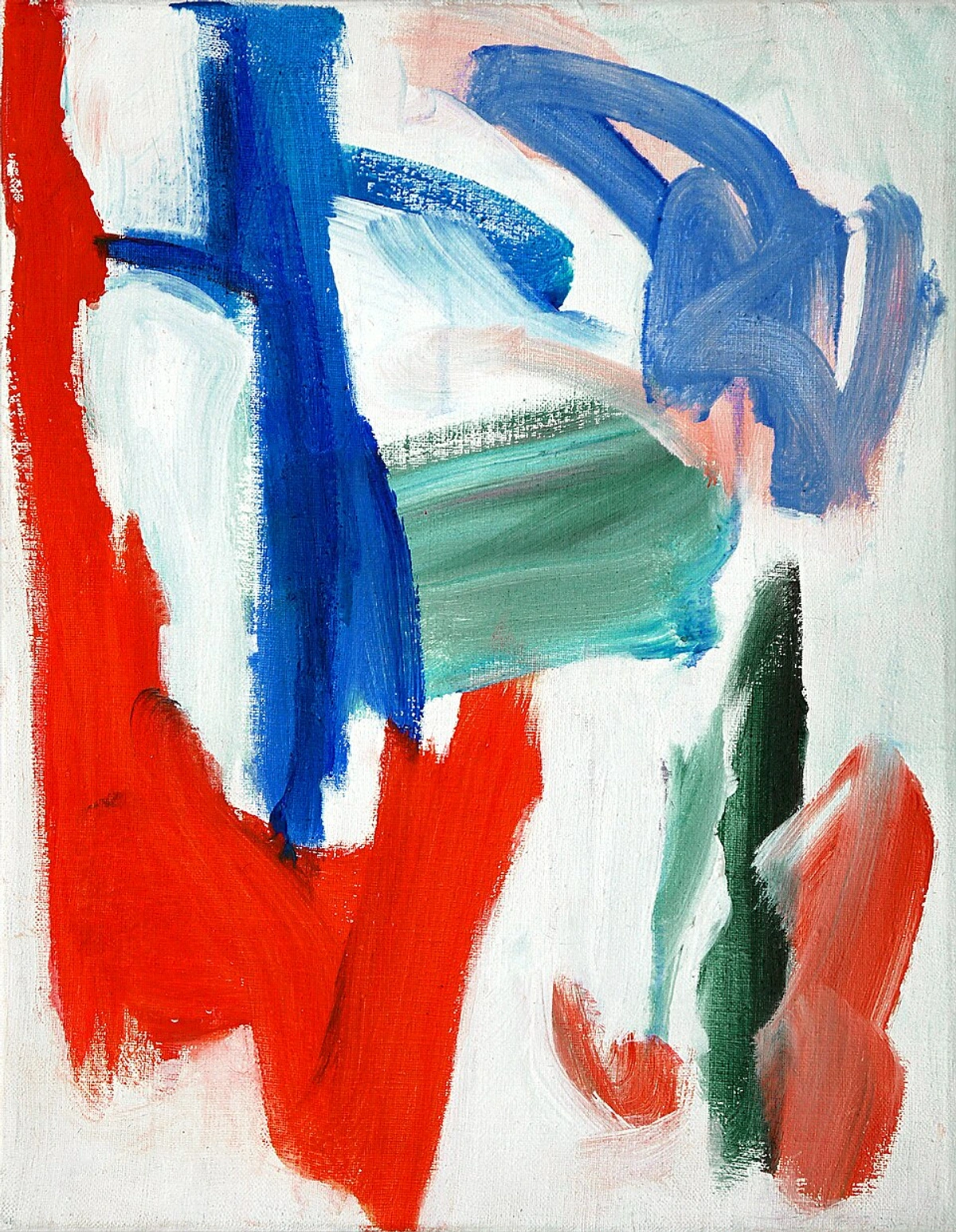
Newman's impact extends far beyond the walls of museums. His philosophy of essentialism has influenced generations of artists:
Minimalist Art:
Artists like Donald Judd and Agnes Martin directly继承了 Newman's approach to space and form. Judd's specific objects and Martin's delicate grids both owe a debt to Newman's radical simplification.
Color Field Painting:
Mark Rothko and Ad Reinhardt explored similar territory, though with different visual results. Rothko's floating rectangles and Reinhardt's black paintings both respond to Newman's challenge to create meaning through minimal means.
Contemporary Abstract Painting:
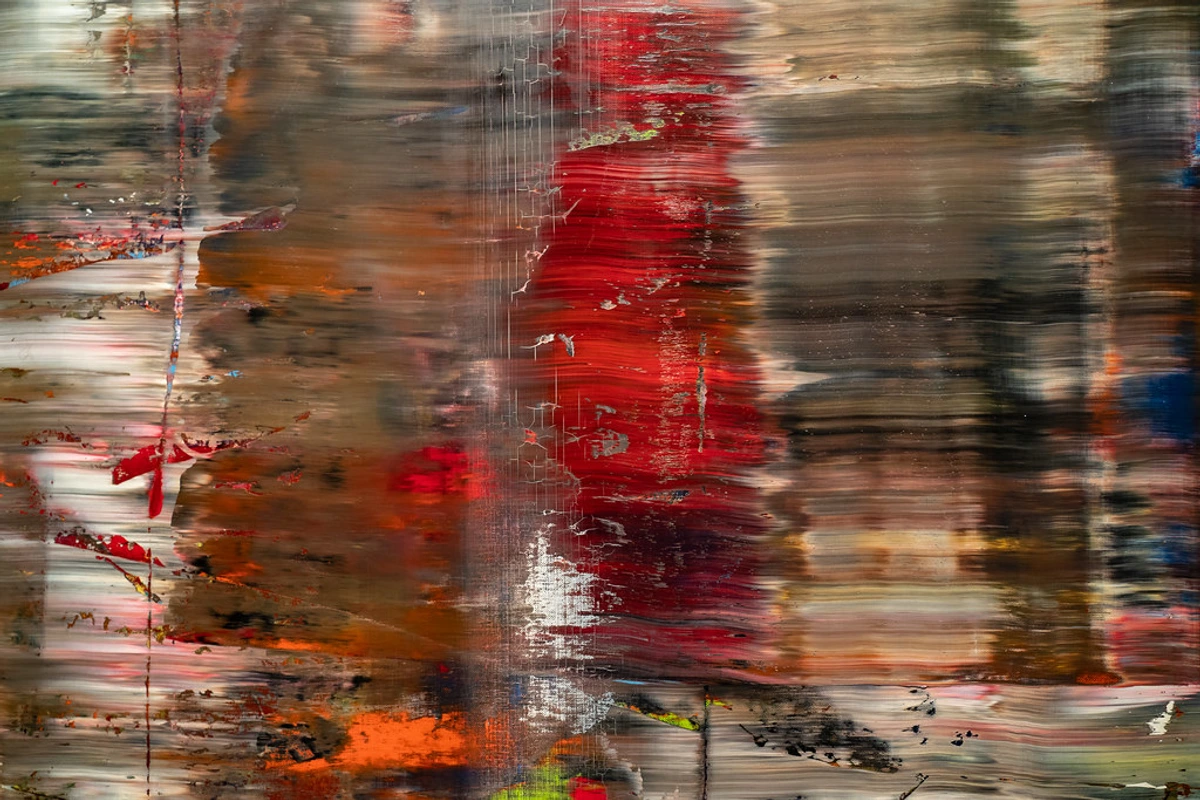
Today's abstract painters like Gerhard Richter and Brice Marden continue to engage with Newman's questions about presence and scale. Richter's multi-layered abstractions and Marden's flowing lines both demonstrate different approaches to the fundamental problems Newman posed.
Newman in Popular Culture and Design
Newman's influence isn't limited to fine art – his ideas have permeated popular culture:
Graphic Design:
The use of bold color blocks and minimal composition in modern graphic design reflects Newman's aesthetic. Think of Apple product design, minimalist branding, or the clean layouts of contemporary magazines.
Architecture:
Architects like Tadao Ando and John Pawson create spaces that evoke Newman's paintings – vast expanses of concrete interrupted by precise elements of light and form. The experience of walking through one of Ando's concrete buildings is remarkably similar to standing before a Newman painting.
Digital Media:
Even in our digital age, Newman's ideas remain relevant. The "hero image" trend in web design, the use of negative space in user interfaces, and the emphasis on impactful visual communication all reflect Newman's influence.
The Market Value of Newman's Work
Newman's paintings have become some of the most valuable works of art ever sold:
Painting | Year Sold | Price | Significance |
|---|---|---|---|
| "Onement VI" | 2013 | $43.8 million | Single most expensive post-war painting at the time |
| "Vir Heroicus Sublimis" | 2015 | $84.2 million | Record-breaking sale for any work at Christie's |
| "Black Fire I" | 2014 | $84.2 million | Tied record for post-war painting |
| "Shining Forth" | 2019 | $105.4 million | Current record for Newman work |
These astronomical prices reflect not just market speculation, but a genuine recognition of Newman's importance in the history of art. Collectors and museums understand that these paintings represent foundational moments in art history – moments when art changed forever.
Educational and Institutional Impact
Newman's work has become a cornerstone of art education:
- University curricula: His paintings are studied in art history programs worldwide
- Museum education: MoMA, Tate, and other institutions offer programs specifically about Newman's work
- Artist residencies: Many contemporary artist residencies include Newman's work in their reference collections
- Critical theory: His work continues to be analyzed through philosophical and psychological frameworks
FAQ: Your Zip Questions Answered
Q: How do Newman's zips affect the viewer psychologically?
A: Standing before a Newman painting triggers a complex psychological response. The scale induces humility, making you aware of your own smallness. Pure color fields bypass intellectual processing and trigger direct emotional responses. The zip creates visual tension that keeps your mind engaged. You become acutely aware of your body in relation to the work, and time seems to slow down, creating a meditative state. This isn't just art appreciation – it's a form of visual therapy in our noisy world.
Q: What conservation challenges do Newman's paintings present?
A: Newman's use of industrial paints presents unique conservation challenges. Industrial enamels can be more brittle than artist paints, making them susceptible to cracking. The multiple thin layers can create delamination issues over time. Additionally, the matte finishes are delicate and can be damaged by improper cleaning. Museums have developed specialized techniques for preserving these works, including climate-controlled environments and gentle surface treatments.
Q: Did Newman ever collaborate with other artists or designers?
A: While Newman was primarily a solitary painter, he did engage in some collaborative projects. He worked with architects on specific installations, and his ideas influenced designers in various fields. Interestingly, his approach to space and color has been adopted by interior designers, textile artists, and even landscape designers who understand the power of minimalism and bold color statements.
Q: How do Newman's prices compare to other Abstract Expressionists?
A: Newman's prices have reached levels comparable to other major Abstract Expressionists. While Jackson Pollock and Mark Rothko often command higher prices at auction, Newman's works regularly sell in the $40-100 million range. His "Anna's Light" sold for $105.7 million in 2021, making it one of the most expensive post-war paintings ever sold. His market position reflects his importance as a foundational figure in American abstract art.
Q: What educational resources are available for studying Newman's work?
A: There are excellent resources available:
- Books: "Barnett Newman: A Catalogue Raisonné" and "Selected Writings and Interviews"
- Online: MoMA's digital collection and educational materials
- Documentaries: "Newman: The Streak" and other specialized films
- Courses: Many art schools offer seminars on Abstract Expressionism
- Museum programs: Special exhibitions often include educational components
The Science of Vertical Perception
Newman's choice of vertical orientation wasn't just symbolic – it was based on deep understanding of human perception:
Physiological Response:
- Eye movement: Human eyes naturally scan vertically more efficiently than horizontally
- Body posture: Vertical elements trigger upright stance, creating more embodied experience
- Depth perception: Vertical lines create stronger sense of space and scale
- Emotional response: Vertical orientation triggers feelings of aspiration and transcendence
Cultural Associations:
- Architecture: Columns, skyscrapers, towers
- Religion: Stained glass windows, cathedral spires
- Nature: Trees, mountains, waterfalls
- Human form: The upright stance that defines our species
Psychological Impact:
- Sublime experience: Vertical lines evoke feelings of awe and transcendence
- Temporal awareness: Creates sense of time passing, history, legacy
- Spatial relationship: Forces viewer into specific posture and distance
- Emotional intensity: Vertical orientation amplifies emotional impact
Newman understood these principles intuitively. His vertical zips aren't just lines – they're psychological triggers that activate specific responses in the viewer. This is why his work feels so immediate and powerful – it's tapping into deep, primal aspects of human consciousness.
But there's more to it than just symbolism. Vertical lines create a physical relationship between the viewer and the painting that horizontal lines can't match. When you stand before a Newman with vertical zips, you're forced into a specific posture – you look up, you step back, you become aware of your own body in relation to the work. This bodily engagement is central to Newman's philosophy of art as an experience, not just an object to be looked at.
Newman actually experimented with horizontal zips early in his career, but found them "too decorative." The vertical orientation wasn't just aesthetic – it was existential. Verticals reach toward the sky, toward the infinite, toward the sublime. They represent the human aspiration toward something greater than ourselves.
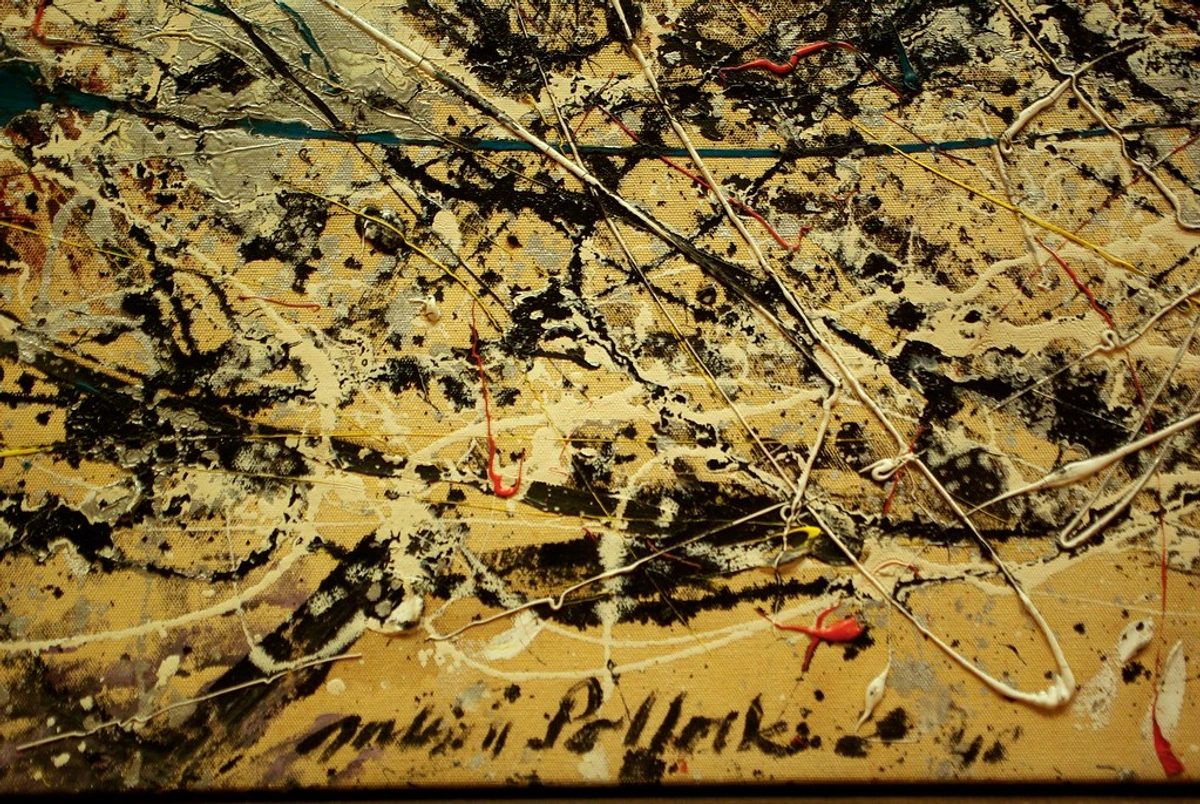
Q: Did Newman use masking tape for that crisp edge?
A: Never! The beautiful imperfections of the zip's edge were intentional. The slightly fuzzy, hand-painted quality was crucial to his process. He wanted you to see the human hand – the gesture – behind the mark. Perfect straight lines would've felt impersonal, machine-made.
The Technical Evolution of Newman's Technique
Newman's technique evolved significantly throughout his career, reflecting both his artistic development and changes in available materials:
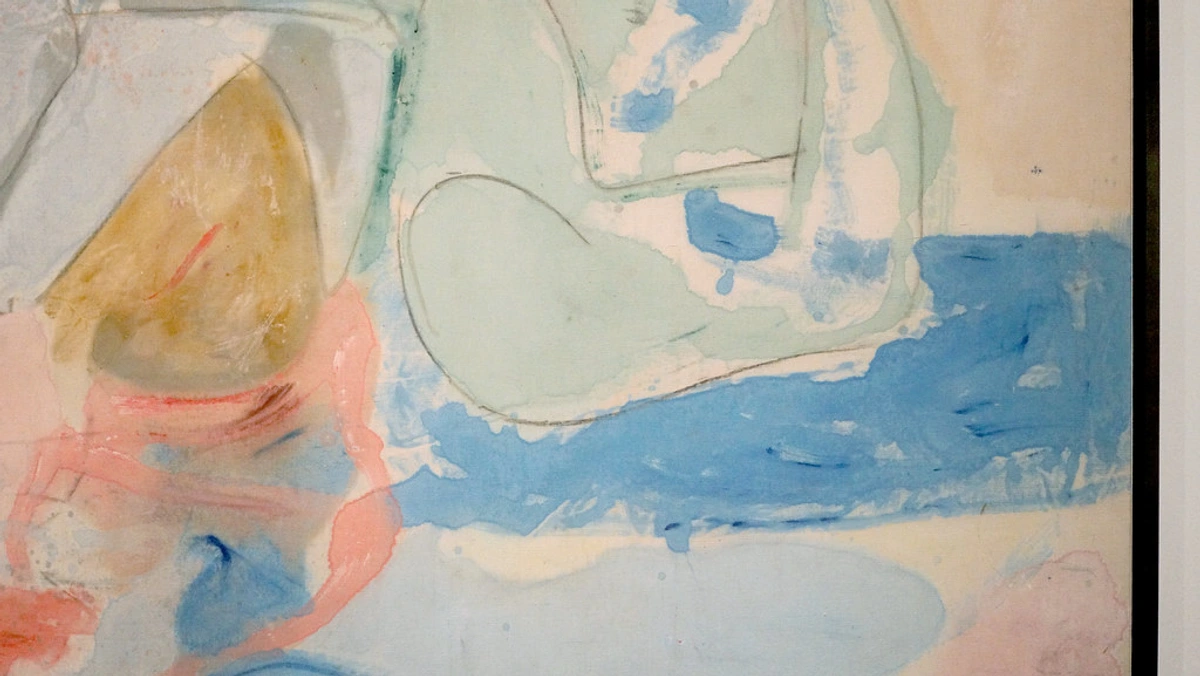
Early Period (1940s-1950)
- Materials: Traditional artist oils and acrylics
- Brushes: Smaller, more precise brushes
- Technique: Multiple thin layers, more controlled approach
- Surface: Generally smoother, less textured
- Notable works: "Onement" series, early experiments
Middle Period (1950s-1960)
- Materials: Transition to industrial enamels and house paints
- Brushes: Larger sash brushes, more confident strokes
- Technique: Single bold strokes, embrace of "imperfection"
- Surface: More textured, visible brushwork
- Notable works: "Vir Heroicus Sublimis", "Cathedral"
Late Period (1960s-1970)
- Materials: Industrial enamels predominates, more experimental mixes
- Brushes: Very large brushes, sometimes multiple applications
- Technique: More complex layering, subtle color variations
- Surface: Richly textured, multiple glazes
- Notable works: "Shining Forth", "Anna's Light"
Material Science Behind Newman's Paints
Newman's choice of industrial paints wasn't just practical – it was revolutionary:
- Industrial enamels: Had superior lightfastness compared to artist paints
- Matte finish: Created non-reflective surfaces that absorbed rather than reflected light
- Application properties: Different viscosity and drying times allowed for unique effects
- Color range: Industrial colors often had different pigments than artist-grade paints
Newman worked closely with paint manufacturers and often had custom colors mixed. His understanding of material properties was as sophisticated as his understanding of color theory.
But here's something fascinating: Newman's edges weren't just "imperfect" – they were technically sophisticated imperfection. He understood that the human eye responds to certain kinds of irregularities more positively than mechanical precision. The slight variations in his brushstrokes create a kind of visual music – there's rhythm, variation, life in those edges that a perfect straight line could never achieve.
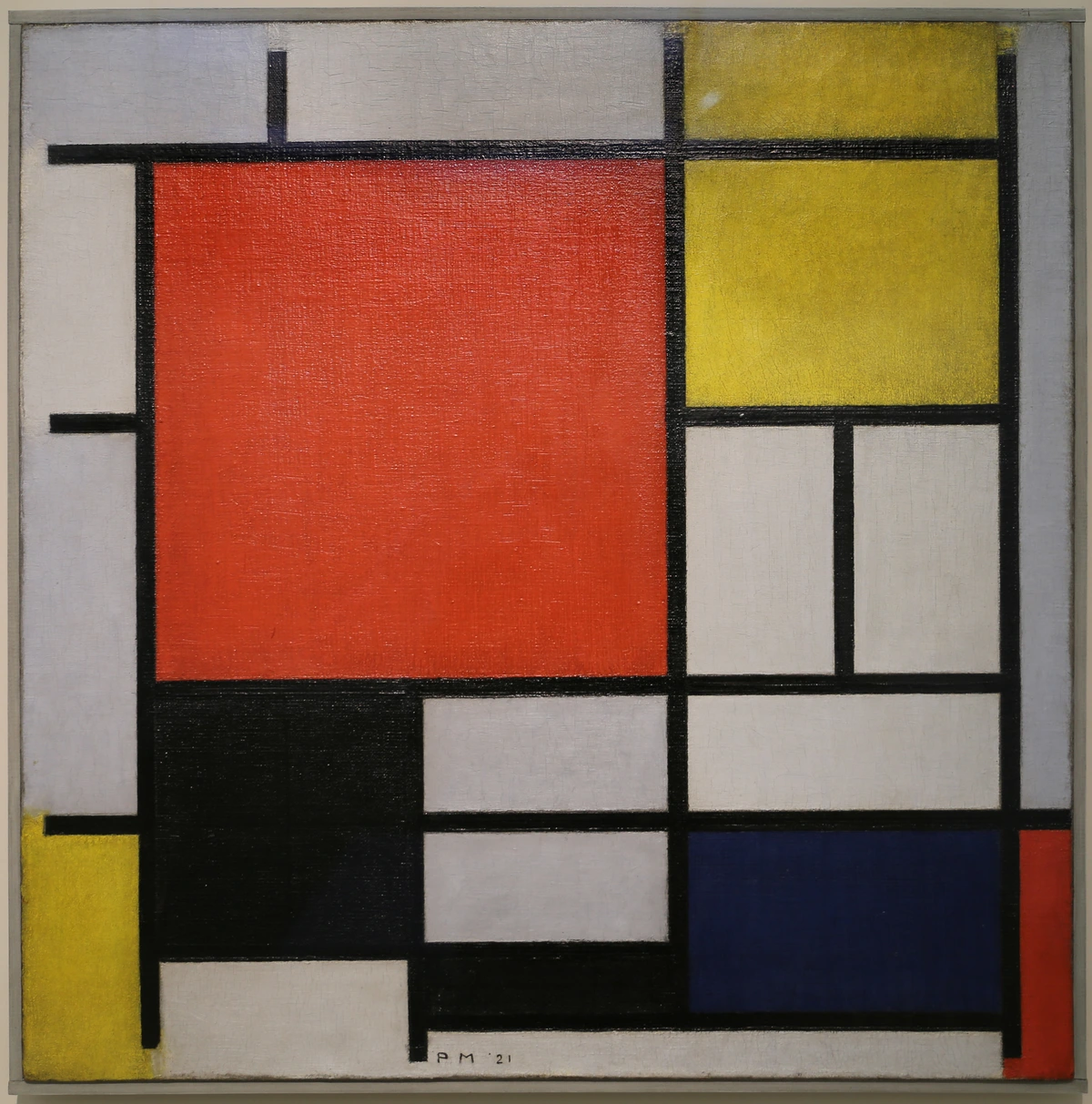
When you look closely at a Newman zip, you'll notice that the edge isn't consistently fuzzy throughout. There are moments of absolute clarity next to moments of soft bleed. This variation creates visual tension that keeps your eye engaged. It's the difference between a recording and a live performance – both might play the same notes, but only one has the human element that makes it truly compelling.
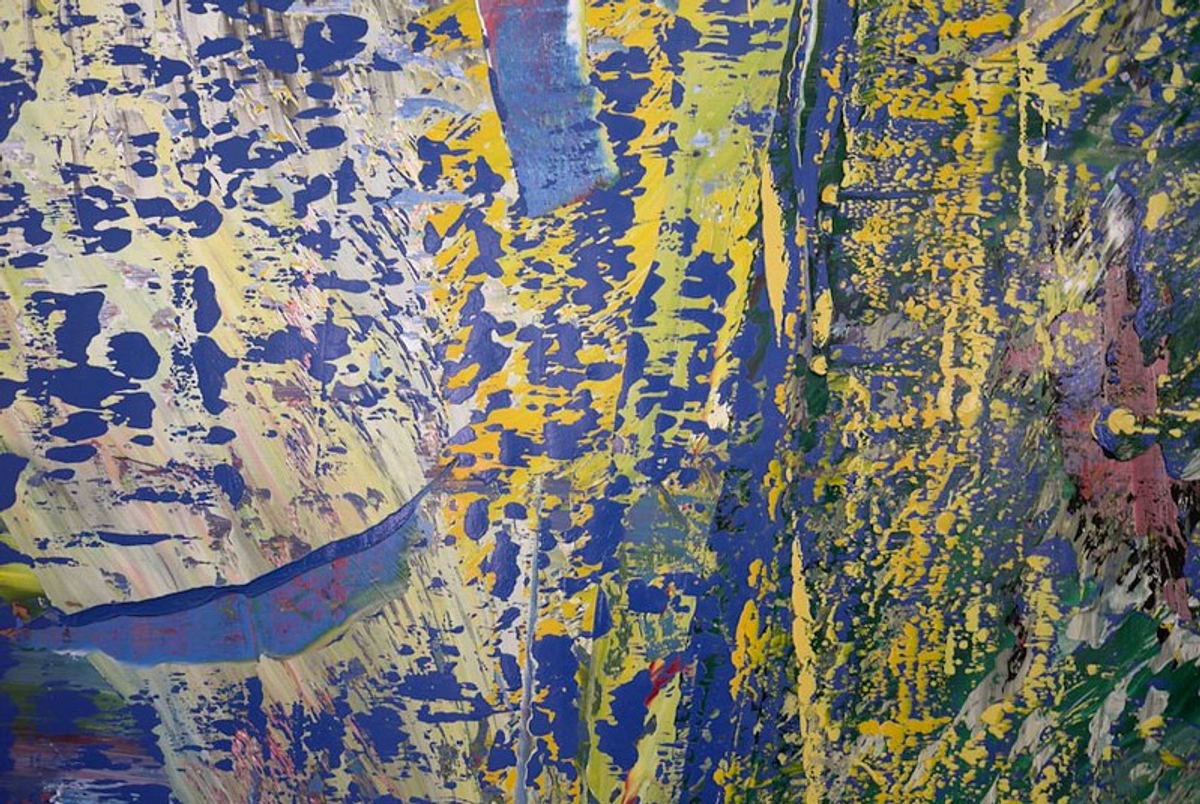
Q: Why is the "zip" called a "zip"? What's the origin?
A: Great question! The story goes Barnett's friend and poet Thomas B. Hess called them "zips" because they zipped across the canvas like something fast and electric. Barnett himself wasn't fond of the term initially, but it stuck because it just... fits. It's both technical and energetic. Like zip! – there it is!
Color Psychology in Newman's Zips
Newman's color choices were never arbitrary – each combination carries specific psychological weight:
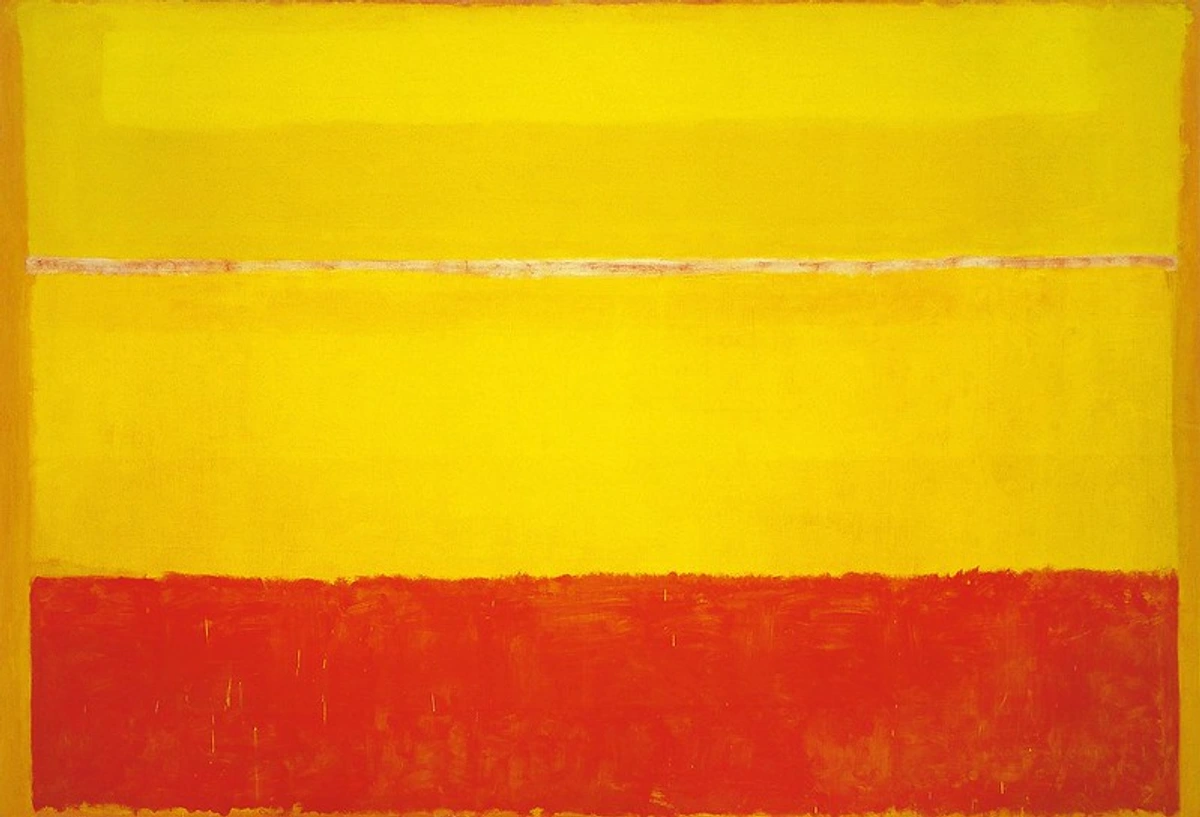
Red Zips:
- Symbolism: Energy, passion, danger, life force
- Psychological effect: Creates urgency, excitement, sometimes aggression
- Notable examples: "Vir Heroicus Sublimis", "Who's Afraid of Red, Yellow and Blue"
- Viewer response: Often elicits strong emotional reactions, sometimes discomfort
Blue Zips:
- Symbolism: Tranquility, spirituality, depth, cold
- Psychological effect: Calming, meditative, sometimes melancholic
- Notable examples: "Cathedral", "The Wild"
- Viewer response: Encourages contemplation, introspection
Yellow Zips:
- Symbolism: Joy, optimism, intellect, warning
- Psychological effect: Energizing, optimistic, sometimes anxiety-inducing
- Notable examples: "Onement VI", "Yellow Zip"
- Viewer response: Creates visual excitement, mental stimulation
Black Zips:
- Symbolism: Power, mystery, death, sophistication
- Psychological effect: Dramatic, serious, sometimes overwhelming
- Notable examples: "Onement VI", "Black Fire I"
- Viewer response: Creates stark contrast, emphasizes the field
Gold Zips:
- Symbolism: Enlightenment, value, divinity, achievement
- Psychological effect: Uplifting, precious, transcendent
- Notable examples: "Shining Forth", "Adam"
- Viewer response: Suggests revelation, wisdom
Newman understood that color combinations create psychological dialogue. A black zip in a yellow field creates tension between darkness and light, while a blue zip in a green field creates harmony between cool colors. These weren't just aesthetic choices – they were emotional statements.
But there's a deeper layer to this terminology. The word "zip" carries connotations of speed, energy, and transformation – all qualities Newman wanted his paintings to embody. A zip isn't just a line; it's a rupture, a breakthrough, a moment of sudden clarity. The name perfectly captures the dynamic tension between stillness and movement that defines Newman's work.
Interestingly, Newman had several other names for his paintings before settling on "zip." He referred to them as "lines," "edges," "bars," and "signs." But "zip" had the right combination of technical precision and emotional energy that made it stick. It's a term that works for both the art historian and the casual viewer.
Q: Can beginners actually learn anything from studying his technique?
A: Absolutely. Every artist thinks they need complexity to be profound. Newman flips that. Studying his process teaches you that intention matters more than technique. The confidence behind that single brushstroke? That's the real lesson. Embracing imperfection? That's freedom. And understanding how color behaves in massive scale? That's invaluable knowledge, whether you're making stripes or abstract landscapes.
Newman for the Modern Artist: Key Takeaways
Philosophical Lessons
- Authenticity over perfection: The "mistakes" often become the most interesting elements
- Intention matters: Knowing why you're making each mark is more important than how perfectly you make it
- Scale changes everything: Small ideas work differently at large scales
- Emotional honesty: Art doesn't need complexity to be meaningful
- Process as product: The way you make something is part of its meaning
Practical Applications
Concept | Beginner Application | Professional Application |
|---|---|---|
| Simplicity | Single color field + one zip | Complex color relationships with minimal elements |
| Scale | Small canvas studies | Monumental installations |
| Gesture | Confident brushstrokes | Deliberate, meaningful mark-making |
| Color | Basic color theory | Advanced color psychology and interaction |
| Presence | Creating focused attention | Architectural and environmental integration |
Common Beginner Mistakes to Avoid
- Overthinking: Trying to make the painting too complex
- Technical obsession: Focusing on perfection over expression
- Scale mismatch: Creating ideas that don't work at the chosen size
- Color confusion: Using too many colors instead of focusing on relationships
- Impatience: Not allowing the work to develop naturally
Beginners often make the mistake of thinking Newman's simplicity means ease. Nothing could be further from the truth. Creating a powerful zip requires extraordinary self-awareness and emotional honesty. You have to know exactly what you want to express and have the courage to express it without hiding behind technical complexity.
Here's what beginners specifically can learn:
- The power of limitation: Working with minimal forces creativity rather than constraining it
- Color confidence: Understanding how colors interact at large scale
- Gesture over precision: Learning that authenticity trumps technical perfection
- Scale awareness: How size changes the viewer's relationship to the work
- Emotional directness: Art doesn't need to be complicated to be meaningful
I've seen students who struggle with complex compositions create stunning work when they embrace Newman's approach. There's something liberating about having fewer tools to hide behind – you're forced to be more honest about what you're trying to say.
Q: Where can I see Newman's zips in person globally?
A: His works cycle through major European museums periodically – watch for exhibitions at Kroller-Muller or the Gemeentemuseum in The Hague. Current locations constantly change, so checking art museum collections is wise. Standing before 20sq ft of "Who's Afraid" is a completely different experience than seeing it in a book – the scale physically consumes you. Worth the trip!
Here's a more comprehensive guide to seeing Newman's work around the world:
United States (Primary Collections)
Museum | Notable Works | Viewing Tips |
|---|---|---|
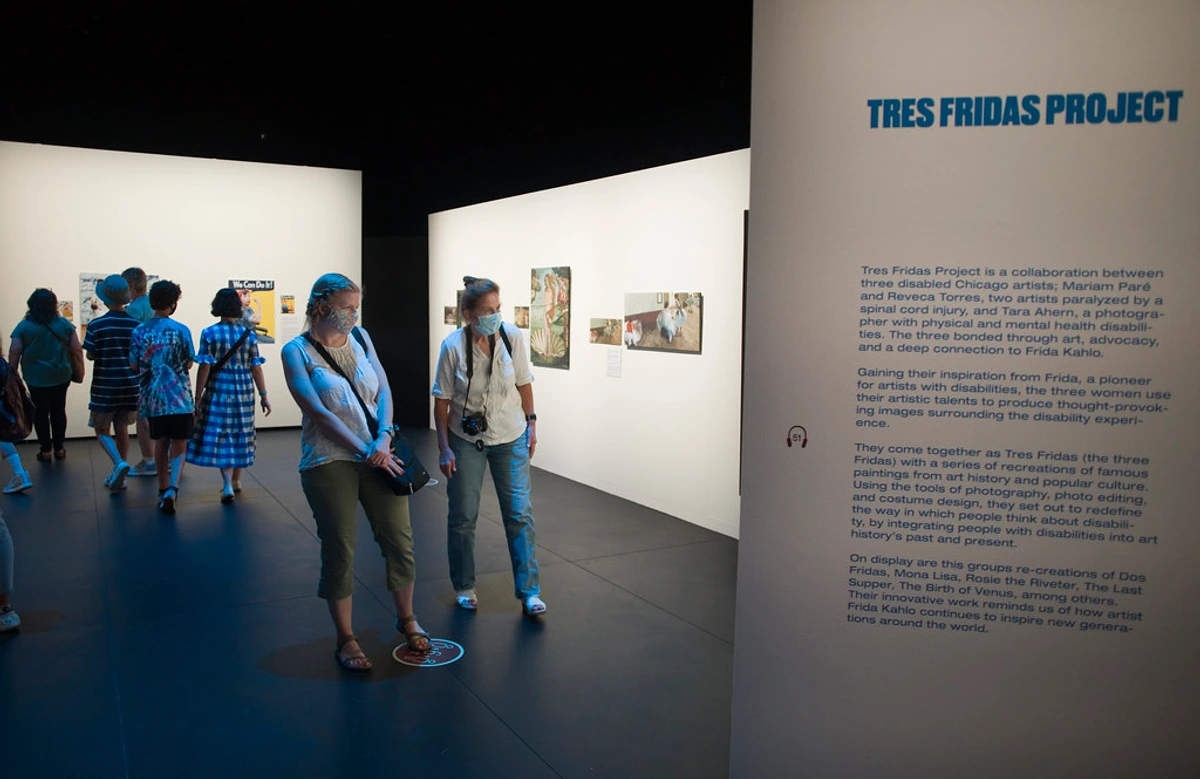
| MoMA, New York | "Vir Heroicus Sublimis", "Onement VI" | Allow 30+ minutes for full experience |
| Tate Modern, London | "Centenary", "Who's Afraid" | Check special exhibition schedules |
| National Gallery, DC | "Dionysius", "Cathedral" | Free admission, less crowded than NYC |
| Art Institute of Chicago | "The Promise", "Adam" | Excellent lighting for color appreciation |
European Collections
Country | Museums | Notable Works |
|---|---|---|
| Netherlands | Kroller-Muller, Gemeentemuseum | Rotating exhibitions |
| Germany | Hamburger Kunsthalle, Städel | Strong Abstract Expressionist collections |
| France | Centre Pompidou, Musée d'Orsay | Excellent 20th century collections |
| Spain | Reina Sofia, Thyssen | Modern and contemporary focus |
Asia and Beyond
- Japan: National Museum of Modern Art, Tokyo
- Australia: Art Gallery of New South Wales, Sydney
- Canada: National Gallery of Canada, Ottawa
Pro Tips for Viewing Newman's Work:
- Timing is everything: Visit during off-hours for the most intimate experience
- Give it time: Stand before each painting for at least 5-10 minutes
- Move around: Experience the work from different distances and angles
- Visit multiple times: Newman's work reveals new layers with each viewing
- Read the wall texts: Understanding the context enhances the experience
Digital Alternatives:
While nothing compares to seeing Newman's work in person, these resources offer valuable insights:
- Google Art Project: High-resolution digital reproductions
- Museum websites: Virtual tours and scholarly essays
- Documentaries: Films like "Newman: The Streak" provide studio insights
Final Thoughts: The Space Between the Lines - A Lifetime of Looking
Look, I used to think minimalism was a cop-out. Like, "Oh, you couldn't think of anything to paint so you drew a line?" Then I tried it. And failed. Miserably. Because realizing that a single line demands more creativity, more courage, and more authenticity than a photorealistic portrait... that was humbling. Newman's zips aren't empty. They're filled with everything not painted. The silence between the notes is what makes the music.
After studying Newman's work for over a decade, I've come to understand that his zips aren't just paintings – they're meditation objects. They're designed to slow you down, to make you present, to force you into a relationship with your own consciousness. In our increasingly distracted world, this might be the most radical thing art can do.
The Psychological Experience of Viewing Newman
Standing before a Newman painting triggers a complex psychological response that scientists are only beginning to understand:
- Scale-induced humility: The physical size makes you aware of your own smallness
- Color engagement: Pure color fields trigger emotional responses bypassing intellect
- Edge dynamics: The zip creates visual tension that keeps the mind engaged
- Spatial awareness: You become aware of your body in relation to the work
- Temporal experience: Time seems to slow down, creating a meditative state
This isn't just art appreciation – it's a form of visual therapy. In a world saturated with visual noise, Newman's work provides a space for mental clarity and emotional processing.

Newman for the Digital Age
We live in an interesting paradox: we have more visual access to art than ever before, yet we're becoming increasingly visually illiterate. Newman's work offers an antidote:
- Digital reproduction challenges: No screen can capture the physical presence of Newman's paintings
- NFT skepticism: While blockchain technology claims authenticity, it can't replicate the bodily experience of art
- Social media impact: Newman's work reminds us that depth matters more than likes and shares
- Attention economy: In a world fighting for our attention, Newman demands we give ours completely
The Eternal Question: Why Does This Matter?
At the end of the day, we're left with a fundamental question: why does any of this matter? Why should we care about some guy who painted straight lines on big canvases half a century ago?
The answer, I think, lies in Newman's own words: "I'm not interested in the relationship of color or form or anything else. I'm interested only in expressing basic human emotions."
In a world that increasingly tries to quantify, categorize, and monetize everything, Newman's work reminds us that some things – beauty, meaning, presence – can't be measured. They can only be experienced. And sometimes, all it takes is a single, imperfect line to change how someone sees the entire world.








Further Reading and Resources
If you want to dive deeper into Newman's world, here are some essential resources:
Essential Books on Newman
- "Barnett Newman: A Catalogue Raisonné" – The definitive scholarly work
- "Barnett Newman: Selected Writings and Interviews" – His own words about his art
- "Abstract Expressionism: Other Politics" by Ann Gibson – Historical context
- "The Sublime in Modern Art" by Robert Rosenblum – Philosophical background
Documentaries and Films
- "Newman: The Streak" – Intimate look at his process and philosophy
- "Who's Afraid of Color?" – Exploration of color in Abstract Expressionism
- "The Mystery of Barnett Newman" – Biographical documentary
Online Resources
- MoMA's Newman Collection – Virtual tours and essays
- Tate Modern's learning resources – Educational materials for all levels
- Barnett Newman Foundation – Official archives and publications
For Artists: Continuing Your Zip Journey
- Studio exercises: Create a series exploring single zip variations
- Color studies: Test different zip/field color combinations
- Scale investigations: Work with progressively larger formats
- Material exploration: Try different paints and surfaces
Explore abstract techniques or see how contemporary artists reinterpret minimalism in the modern era here. Art isn't decoration. It's a dialogue. Let your zips have their say.