What is Fountain Dada Art?
What is Fountain Dada Art? A straightforward, insightful exploration of Marcel Duchamp's 'Fountain' (1917), explaining its role as a quintessential readymade, its critique of art institutions, and its lasting impact on conceptual art. We'll dissect the context behind it—the provocative Dada movement—and tackle common questions about why a urinal is considered one of the most influential artworks of the 20th century.

What is Marcel Duchamp's "Fountain"? A Guide to the Urinal That Changed Art Forever
Have you ever stared at a famously bizarre piece of art and thought, "I could have done that"? I'm right there with you. But that thought—that flicker of defiant recognition—is the very soul of Marcel Duchamp's Fountain. The first time I saw it, just a photograph of a urinal lying on its back, I think I chuckled. It felt like an inside joke I wasn't quite in on. The real punchline, though, was that the joke was on the entire art world. Duchamp wasn't just pulling a prank; he was lobbing a philosophical grenade into the salon, asking a question that would permanently shatter the rules: Who decides what art is?
In the century since its creation, Fountain has become more than an object; it has become a cultural Rorschach test. Every person who encounters it—whether in a textbook, a meme, or standing awkwardly pristine in a museum—has an immediate, often visceral, reaction. That reaction, far more than the porcelain itself, is the substance of the work. The endless debates, the scholarly articles, the student essays, and yes, even the dismissive hand-waving from skeptics—all of this is Fountain''s true medium. It exists not to be admired, but to be argued with. It is an engine of discourse, and in that, it has been more successful than perhaps any artwork ever made. What I find so compelling is that my own opinion of it has shifted over the years. That initial chuckle gave way to frustration, then to deep curiosity, and eventually to a kind of profound respect. It taught me, more than any other piece, that art's job isn't always to comfort or even to communicate; sometimes, its job is to question its own existence. It's a piece of art that forces you to become a critic, a philosopher, a participant, whether you like it or not.
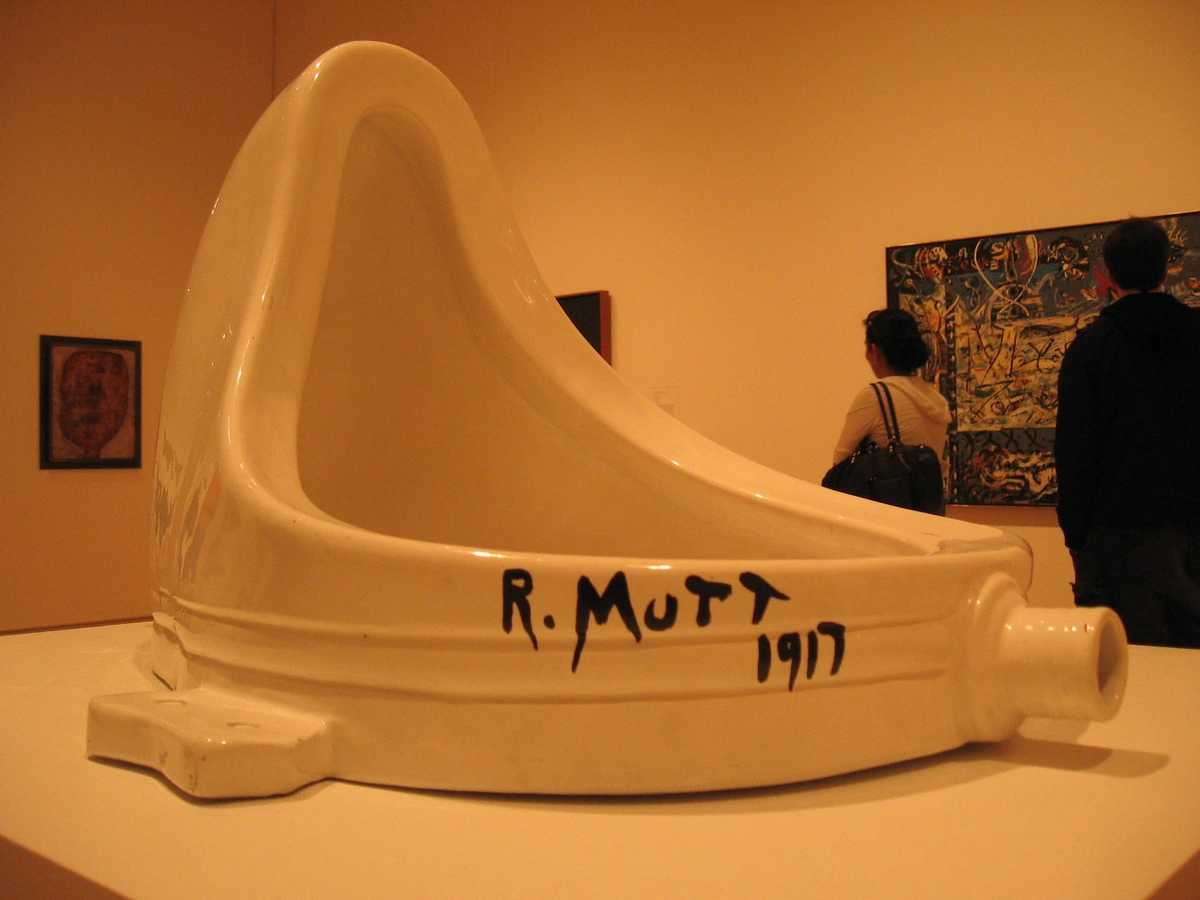
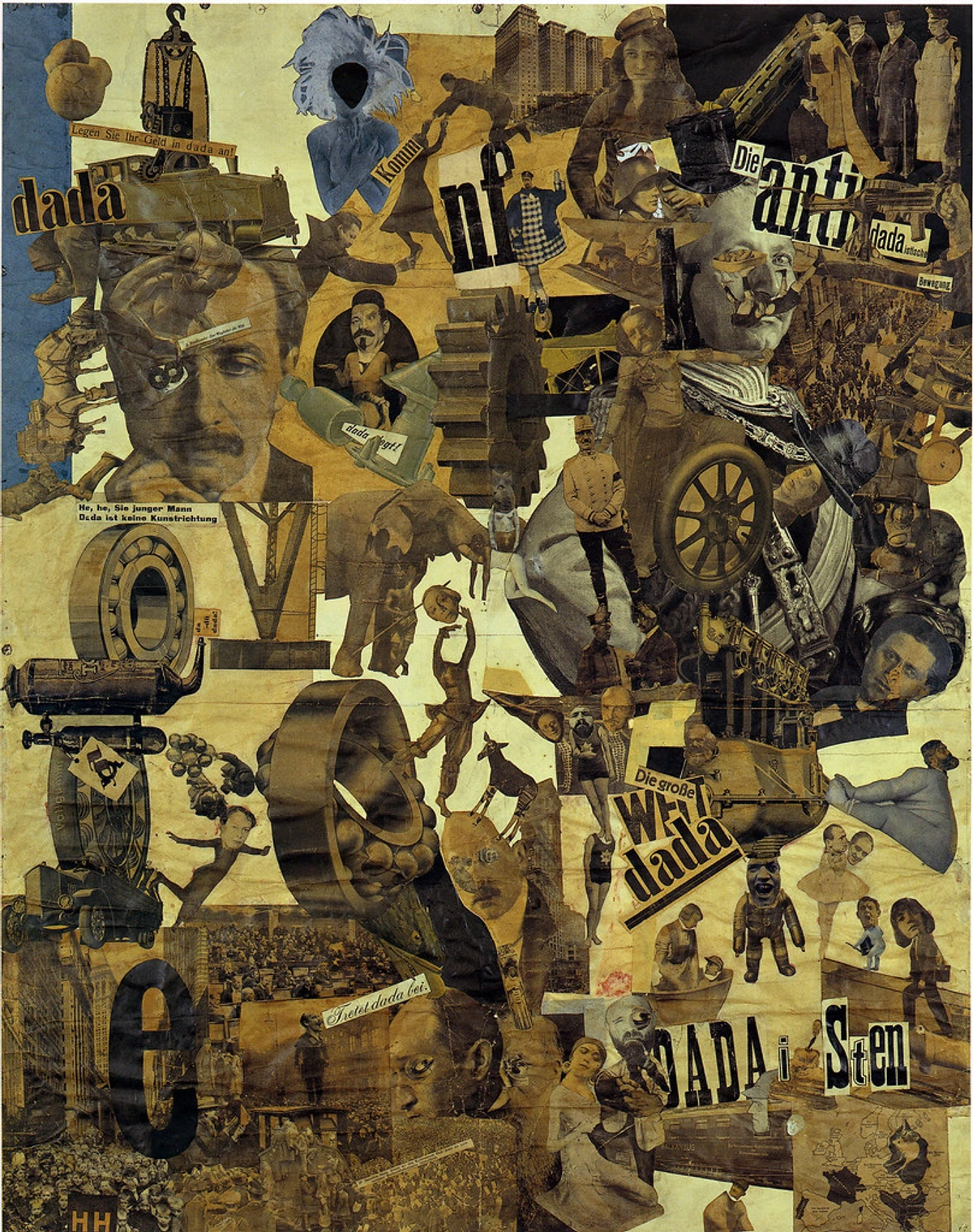
Today, we see it as a cornerstone of modern art. But in 1917, it was simply a urinal, signed with a sly pseudonym, "R. Mutt." It is the ultimate artifact of Dadaism, a movement that took one look at a world shredded by the First World War and decided the only logical response was absolute madness. To call it influential would be an understatement; it's a philosophical singularity that pulled the entire trajectory of 20th-century art into its orbit. It was the moment the artist's primary tool stopped being a chisel or a brush, and became a question. This timeline of Dada captures the chaotic energy of the era.
Year  | Event in Dada's Evolution | Relevance to Fountain |
|---|---|---|
| 1915 | Dada begins to coalesce in Zurich's Cabaret Voltaire. | The ground is prepared; the anti-art sentiment is brewing. |
| 1916 | Hugo Ball recites sound poems, and Dada is officially named. | The movement has a name and a home for its nonsense. |
| 1917 | Duchamp submits Fountain to the Society of Independent Artists in New York. | The ultimate Dada provocation is unleashed. |
| 1920s | Dada's influence spreads to Berlin, Paris, and beyond. | The ideas behind Fountain begin to ripple outward. |
| 1950s-60s | Duchamp is "rediscovered," and he authorizes replicas of Fountain. | The "lost" work is canonized by institutions. |
| Present Day | Fountain is consistently voted one of the most influential modern artworks. | It has gone from scandal to a permanent fixture in art history. |
The 1917 Incident: A Salon Des Refusés in Reverse
Let’s set the scene. It’s 1917, and New York City is a hive for European artists fleeing the First World War. I find it fascinating to think of this historical moment. While Europe was tearing itself apart in the trenches, a different kind of intellectual battle was brewing in Manhattan. The very artists who were rebelling against the old world's logic and nationalism brought their radical ideas to a new shore, creating a perfect storm for an artistic revolution. A group of these avant-garde provocateurs, including Duchamp himself, form the Society of Independent Artists. Their founding principle was radical for its time: a salon with no jury, no prizes, and no hierarchy. In a direct challenge to the exclusive gatekeeping of institutions like the National Academy of Design, their motto was simple: any artist who pays the six-dollar fee gets a spot on the wall. It was a promise of pure, unquestioning democracy in art. I think it’s crucial to understand this context. This wasn’t just any exhibition; it was founded on the very principle that Duchamp sought to test to destruction. It was a perfect, self-contained laboratory for his experiment.
Enter Marcel Duchamp, a French artist whose mind seemed to operate on a different plane. He saw their democratic promise not as a goal, but as a hypothesis to be tested. He purchased a standard Bedfordshire model urinal from the J. L. Mott Iron Works, a manufacturer of plumbing supplies. He didn't sculpt it or paint it. He simply turned it 90 degrees, laying it on its back so it resembled a hooded monk or a serene Buddha. He signed it with the pseudonym "R. Mutt 1917" and submitted it to the exhibition. The piece, titled Fountain, was entered under this anonymous name, a Trojan horse in a porcelain shell. The argument has even been made that Duchamp wasn't alone; that the idea was a collaboration with the avant-garde Baroness Elsa von Freytag-Loringhoven, a poet and artist whose own work was famously confrontational. While the evidence is debated, it adds another layer of intrigue to the work's genesis and highlights the collaborative spirit of New York Dada.
The society's board was thrown into chaos. The 'R. Mutt' piece became a specter haunting their principled stance. Despite their "no jury" policy, they couldn't bring themselves to display a piece of plumbing. A secret vote was allegedly held, and the work was hidden from view during the exhibition. To admit a urinal was to question everything they, and the art world, held dear. The only work of art America had yet produced, Duchamp would later quip, was her plumbing and her bridges—and here was their champion. It was a deliciously impossible situation: if they rejected it, they were hypocrites; if they accepted it, they were dismantling centuries of artistic tradition on the spot. They chose hypocrisy, and in doing so, they played their part in Duchamp's theater of ideas perfectly.
And just like that, Duchamp had won. He had masterfully exposed the hypocrisy of the very institution he helped create. The debate over Fountain's rejection became far more legendary and historically significant than the exhibition itself. The original porcelain urinal was lost or destroyed, a martyr for a new cause. But the idea, the intellectual bomb Duchamp had lit, proved immortal. This cycle of provocation, rejection, and subsequent canonization is what makes Fountain a perpetually relevant case study in how the art world decides what has value. I see this pattern repeating again and again in the art that followed, from Pop Art to the Young British Artists. The work isn't complete until the system reacts to it. The rejection isn't a failure; it's the final brushstroke.
Deconstructing the Readymade: The Ideas Behind the Object
So why that object? It’s a question that cuts to the core of the work. A urinal is aggressively non-art. It's functional, anonymous, mass-produced in a factory, and hidden away in a public bathroom. It possesses none of the traditional markers of aesthetic value we associate with sculpture—no evidence of an artist's hand, no unique craftsmanship, no fine materials. By isolating it and re-framing it, Duchamp was launching a multi-pronged attack on the very foundation of art. He wasn’t just trying to be shocking; he was methodical.
Here’s a breakdown of his targets and the weapons he used:
The Target: Traditional Sculpture Sculpture, for centuries, was a pursuit of the monumental, the heroic, and the beautiful. Think of Rodin's tortured thinkers, Michelangelo's idealized nudes, or the public statues of generals on horseback. The material itself—marble, bronze—was considered noble.
Duchamp's Weapon: He chose an object that was the absolute antithesis of all that. A urinal is the opposite of monumental, it's anti-heroic (associated with private, not public, life), and its material—porcelain—is purely functional, not noble. It wasn't a representation of a body; it was a receptacle for a body's waste. The act of turning it on its back didn't make it look like a heroic figure; it made it look like a hooded, anonymous form, which is arguably even more dismissive of traditional sculptural values. It was sculpture that utterly rejected the entire history of sculpture.
The choice was a calculated affront. Imagine the typical subjects of sculpture at the time: heroic figures, delicate nudes, poignant war memorials. Duchamp bypassed all of it and chose something associated with the basest, most utilitarian, and private of human functions. It was a direct assault on the idea that art needed to be lofty or refined. He was making a statement about art in an industrial age, suggesting that the most honest representation of modern America wasn't in its grand portraits, but in its factories and its plumbing. It was a declaration that the true aesthetic of the modern world wasn't to be found in idealized forms, but in the anonymous, functional design of mass production.
What is a Readymade?
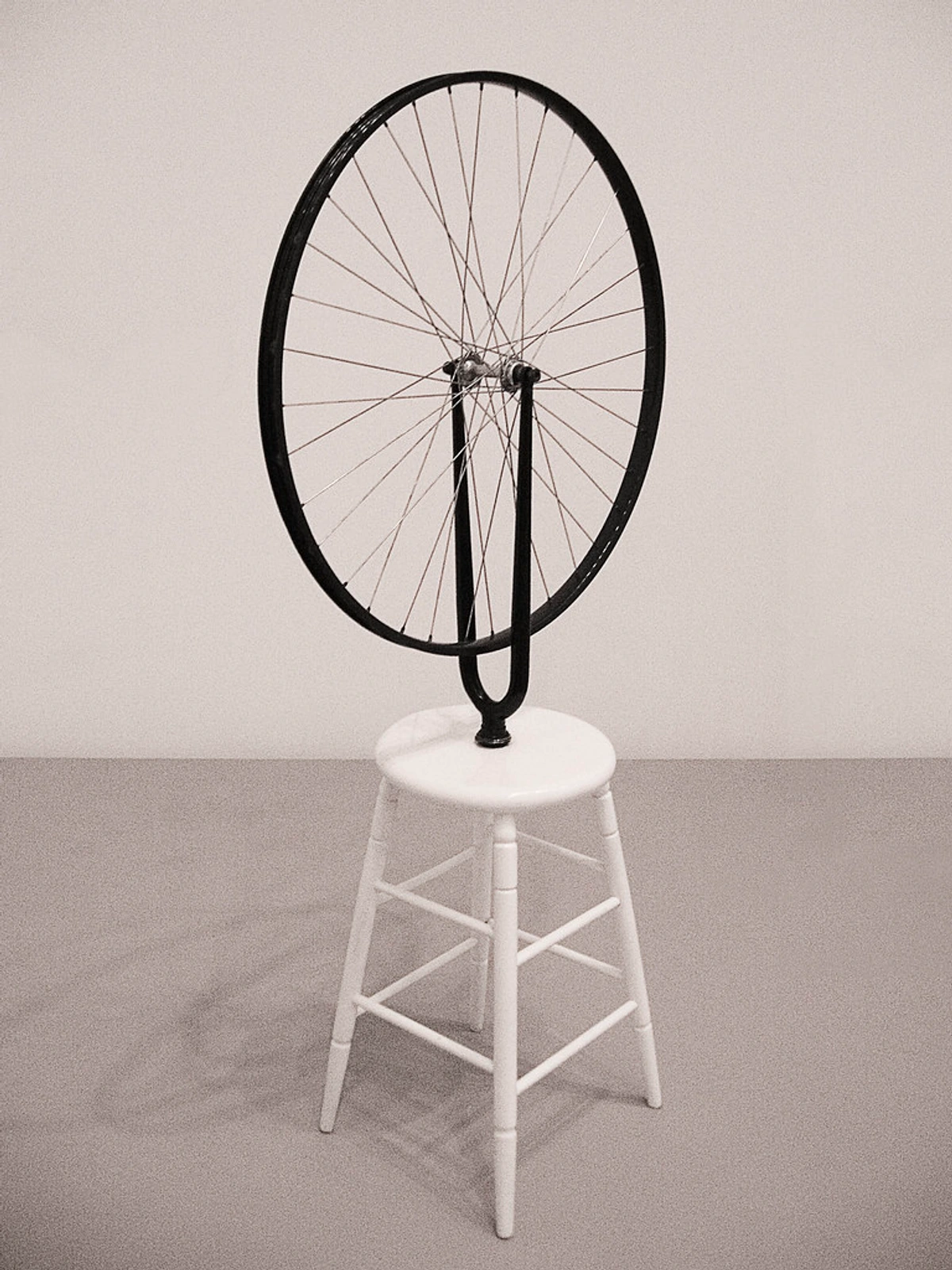
This is Duchamp's great contribution: the "readymade." He defined it as an ordinary, mass-produced object elevated to the status of art simply by the artist's choice. The term itself is a kind of found object, borrowed from the clothing industry where a readymade was a suit bought off the rack, as opposed to one custom-tailored. Duchamp's gesture was to suggest that the artist could now select from the "rack" of industrial production, becoming a kind of connoisseur of the mundane. He wasn't sculpting a urinal; he was appointing one. The creative act shifted away from the hand and the eye—the traditional domains of skill, training, and taste—and relocated squarely in the mind of the artist. The art, Duchamp proposed, wasn't in the porcelain itself, but in the invisible act of selection, the shift in context (from a hardware store to a gallery), and the application of a title. He was asking a disarmingly simple question: "If I, Marcel Duchamp, say this is art, and you, the viewer, encounter it in a gallery, does that idea fundamentally change the object you see?"
The word 'readymade' itself is a kind of found object. It comes from the world of clothing, where it meant a suit bought off the rack, as opposed to one made bespoke by a tailor. By using this term, Duchamp was already making a quiet comparison between the artist and a connoisseur of fine suits, and the art-object and a piece of mass-produced clothing. It was a way of injecting a mundane, commercial feel into the rarefied air of the art world. The implication is clear: the age of the handcrafted masterpiece is over, long live the chosen object.

A "R. Mutt" Joke for the Ages
Fountain was a grenade lobbed directly at the art establishment. It mocked the solemnity of critics, questioned the divine authority of museums, and satirized the very concept of "good taste." It was also a self-aware jab at American culture. Duchamp once famously quipped that the only great works of art America had produced were "her plumbing and her bridges," finding a peculiar beauty in their pure, unadorned utility. The title itself is a piece of absurdist poetry. A urinal doesn't produce a fountain; it receives one. It's a receptacle. By inverting this function in the title, Duchamp creates a small, wry joke that undermines language itself. It's a title that refuses to obey its object, just as the object refuses to obey the rules of art.
The more I think about it, the more I see the choice of object as a kind of social leveler. A urinal is the very opposite of private property. It's a fixture, a part of a public system for managing collective waste. In a way, it's the only truly 'public' sculpture, something used by everyone regardless of class or status. By bringing it into the gallery, Duchamp wasn't just shocking the elite; he was introducing a piece of truly universal industrial design into a space that celebrated the unique, the rare, and the exclusive. The work is so impolite not just because it's a toilet, but because it's the most democratic and anonymous object he could find.
The choice of a urinal was the punchline to this joke. By signing it "R. Mutt," a pun on the plumbing company "Mott" and the popular comic strip "Mutt and Jeff," Duchamp layered it with absurdity. This wasn't the grand, tortured signature of a Romantic genius. It was a joke, a pseudonym, a thumbed nose to the entire circus of artistic personality.
There is a profound irony in the signature itself. By signing an industrially produced object, Duchamp was performing a brief, almost invisible gesture of authorship. Yet, by using a pseudonym, he was simultaneously erasing his own identity from the work. Was "R. Mutt" the artist? Or was the very act of selection, performed by the faceless entity Duchamp, the real authorial act? It's a hall of mirrors that brilliantly undermines the idea of artistic genius. And then there's the question of femininity. A urinal is a decidedly male-specific object. Yet, by laying it on its back, Duchamp transformed its form into something that many at the time saw as vaguely feminine or even maternal. The hooded shape can evoke a veiled woman, a Buddha, or a receptivity that is the inverse of its original function. This subtle gender ambiguity adds another layer to the provocation, quietly questioning the rigid sexual and social roles of the day.
The Ripples in the Pond: Fountain's Unstoppable Legacy
The explosion of Fountain didn't just echo through the 20th century; it set off a chain reaction that fundamentally rewired the artist's playbook. Before 1917, the artist's role was largely defined as a kind of specialized craftsperson—a creator of beautiful, meaningful, or technically masterful objects. After Fountain, the artist's toolkit expanded to include the role of philosopher, prankster, provocateur, and institutional critic. The ripples can be felt everywhere, from the pop-infused ironies of the 1960s to the hyper-commercial spectacles of the 21st century. It created a permission structure for the unexpected, proving that art could be a vehicle for a question, a joke, or an unsolvable paradox. That porcelain urinal became the big bang for a new kind of artistic universe, one where the most important work often happens not on the canvas, but in the mind of the viewer.
The Birth of Conceptual Art
Before Fountain, art was a conversation about aesthetics. After it, the terms of the debate changed forever. The object itself became secondary to the idea that birthed it. This seismic shift laid the foundation for the Conceptual Art movement of the 1960s and beyond. For artists like Sol LeWitt, who stated "The idea becomes a machine that makes the art," or Yoko Ono, whose instructional pieces existed primarily as text, the physical execution was almost an afterthought. Fountain taught them that the primary artistic gesture could be a question, an instruction, or a provocation. The central question of art shifted decisively from "Is this beautiful?" to "What does this mean?" This is the great leap. An artist no longer needed to be a skilled draftsman or a master of color. They could simply be a generator of compelling thoughts and situations. This opened the door for artists who worked with text, performance, and systems, forever changing who could be an artist and what they could make. It effectively argued that if the idea was solid enough, the object could be—and perhaps should be—banal.
Beyond the Object: Art as Idea
Duchamp's true medium wasn't porcelain; it was the thought process itself. He effectively stated that the most important part of the work of art happens in the mind—the artist's mind at the moment of conception, and the viewer's mind at the moment of engagement. If a painting could be considered a window into a world, Fountain was a mirror reflecting the definitions and prejudices of its audience. This radical re-centering of art from the physical to the intellectual is arguably Fountain's most profound and lasting legacy. It's the reason why a lost object—a urinal that was likely thrown away—could become one of the most important of the century. The object was just the trigger. The art was the intellectual event that occurred in its wake. Think about the implications: an artwork can now be completely ephemeral. It can exist only as a set of instructions, a memory, a rumor, or, as in the case of Yoko Ono's Grapefruit, a book of poetic proposals for things that might never actually be built.
A Family Tree of Readymades: From Warhol to Hirst
The influence of the readymade is the art world's most powerful and persistent gene. It's easy to draw a direct line from that porcelain urinal to the key debates of the next century. Each generation has picked up Duchamp's 'tool' and used it for its own purposes, changing the tool itself in the process. It's like a virus that evolves with every host. Sometimes the provocation is muted and tasteful, other times it's as loud and brash as the culture it's reflecting. But underneath it all, the central question remains the same: how does context define the object?

I think what's most compelling about this family tree isn't the similarities, but the differences. Duchamp's gesture was quiet, almost aloof. But when Warhol did it, he was rubbing our noses in the glossy, repetitive, and often empty nature of consumer culture. He wasn't asking an abstract question; he was holding up a mirror to our own lives, filled with identical boxes of soap pads. When Emin did it, she transformed the object from a generic industrial product into a deeply personal and confessional artifact. The readymade wasn't a single idea Duchamp had; it was a grammar he invented, and everyone from Warhol to Hirst has used it to write their own sentences. Each generation has picked up Duchamp's 'tool' and used it for its own purposes, changing the tool itself in the process. It's like a virus that evolves with every host.
Pop Art's Consumer Goods (The Seductive Object): It's impossible to overstate how much Andy Warhol owes to Duchamp. But where Duchamp was philosophical and aloof, Warhol was direct and celebratory. Think of Warhol's Brillo Boxes (1964). He took the readymade and married it to Pop, painstakingly re-creating commercial packaging in wood. He forced us to confront our own attraction to the shiny, repetitive, and empty nature of consumer culture. Jasper Johns's Painted Bronze (1960), a sculpture of two cast beer cans, took this a step further. By having the everyday object cast in bronze and then lovingly hand-painted to look like the real thing, he created a confusing hybrid. It begged the question: is the hand-painted replica of a mass-produced object more or less "real" than the original? It's a dizzying loop of authenticity, all ignited by Duchamp's original provocation.
Confessional Objects (The Abject Object): Tracey Emin's My Bed (1998) was a more vulnerable, autobiographical form of readymade. She presented her own unmade, messy bed, complete with personal detritus, forcing us to stare at an object of extreme intimacy as a subject for public art. Unlike Duchamp's anonymous urinal, this object was drenched in the artist's identity and personal crisis. It changed the question from "What is art?" to "What is too personal, too real, to be art?"
The "Assisted" Readymade (The Spectacular Object): Damien Hirst's shark suspended in formaldehyde, The Physical Impossibility of Death in the Mind of Someone Living (1991), is a kind of high-production-value readymade. Hirst didn't create the shark, but he selected it, preserved it, and presented it within the sacred white cube of the gallery. He took a natural object and turned it into a meditation on mortality, money, and spectacle. This is the readymade taken to the level of Hollywood production, using immense capital to create an experience that is both visceral and philosophical.
The Institutional Critique (The Systemic Object): In the 1970s and beyond, artists like Hans Haacke, Michael Asher, and Andrea Fraser used the logic of Duchamp but applied it directly to the context itself. Instead of a urinal, Fraser would present the museum or the art lecture as her chosen object. In her seminal piece Museum Highlights: A Gallery Talk (1989), she led a museum tour where she spoke as a fictional docent, using the institution's own language to expose its deeply embedded systems of class and power. The art wasn't a thing; it was the system that housed the thing.
The Absurd Gesture (The Questionable Object): The absurdist humor of Fountain is alive and well in contemporary art. Maurizio Cattelan's Comedian (2019)—a banana duct-taped to a wall—is a direct descendant. The jokes are different (Cattelan's piece was more about the maddening circus of the art market), but the strategy is identical: use a deliberately pathetic object to expose the absurdity of the value systems we take for granted. The controversy, the price tag, and the eventual eating of the banana by another artist were all, arguably, part of the work.
The Fully Immaterial (The Invisible Object): A final, breathtaking evolution came from artists who decided the object itself was a burden. Yoko Ono's Instruction Paintings, which began in the early 1960s, are pure conceptualist descendants of Fountain. Her work Painting to be Stepped On is nothing more than a typewritten suggestion: "Leave a piece of canvas or finished painting on the floor or in the street." The art exists entirely in the idea and the potential for its execution. There's nothing to buy, nothing to hang on a wall—just a thought, a possibility. It's the ultimate conclusion of Duchamp's logic: if art is an idea, why bother with the object at all?
This tradition of turning the mundane into a loaded question is what still makes art so vital. I find myself drawn to the art on my /timeline that behaves like a Duchampian object—pieces that are not just things to look at, but provocations that force you to think. The lineage from Duchamp to a Cattelan banana or a Banksy shredding its own painting at auction is a direct one. They all understood that the most powerful art often forces us into a conversation about its own status. It creates a moment of friction, a slight pause where you have to re-evaluate not just the object but the entire world that gives that object meaning. That friction—that split second of cognitive dissonance—is where the real energy of modern art lives.
Frequently Asked Questions
Was the original Fountain ever found?
No, the original 1917 porcelain urinal was lost, likely discarded after the initial controversy, or perhaps destroyed. Its existence is known to us today almost entirely through the iconic photographs taken by the legendary photographer Alfred Stieglitz. It was he who gave the urinal its famous backstory, photographing it against the backdrop of a painting by Marsden Hartley in his avant-garde gallery, 291. The pristine white urinals you see in museums today are all later replicas, authorized by Duchamp himself in the 1950s and 60s to meet the growing institutional demand for the legend. This raises a fascinating ontological puzzle: if the original object was lost, what exactly are we appreciating when we look at the Tate Modern's urinal? I think we're appreciating the idea, given a physical form through the artist's permission. Every time a new replica was made for a museum, it was an act of re-authoring the concept, proving that for this work, the idea was always the true medium.
How did the Dada movement influence Fountain?
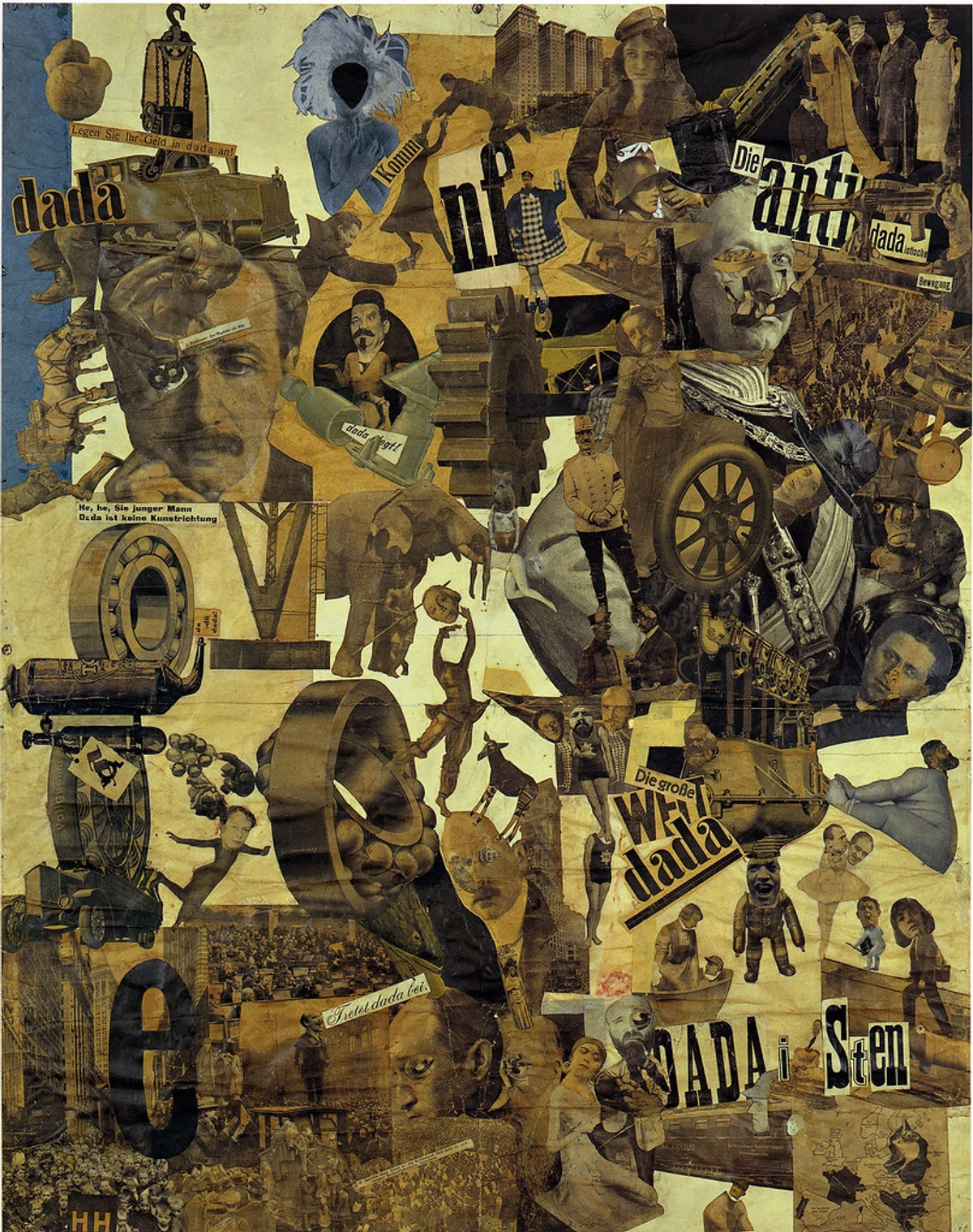
Dada provided the philosophical gunpowder for Fountain's explosive charge. Born in the neutral haven of Zurich amidst the carnage of World War I, Dada was a movement of radical cynicism. Its artists believed that the European culture of logic, reason, and nationalist fervor had led to nothing but industrialized slaughter. Their response was to embrace nonsense, irrationality, and anti-art. Fountain is the quintessential Dada object because it is a declaration of intellectual bankruptcy. It is nonsensical (a urinal in a gallery), irrational (it rejects all established logic of aesthetics), and gleefully anti-art (it uses an industrial product to obliterate the idea of unique artistic skill and taste). It was art designed to bite its own tail. It was an object that, by its very existence, questioned the system that could give it value. I see Dada not as a style, but as a strategy—a way of thinking that distrusts all systems and embraces chaos. Fountain is the most brilliantly executed example of that strategy.
Is Fountain even art?
This is the trap, and Duchamp laid it perfectly. My feeling is that asking if Fountain is 'really' art is the one question you can be sure he never wanted a simple 'yes' or 'no' for. The genius of Fountain is that it doesn't answer the question; it turns the question back on us, forcing us to interrogate the system we use to answer it. Think of it this way: every object, every interaction, every idea we label "'art"' is the result of a silent, often invisible, consensus. We agree that a Rembrandt self-portrait is art because a long history of institutions, critics, and collectors have told us it is. Fountain takes that silent agreement and drags it into the center of the room, turning it into the main event. The artwork is the moment of your own judgment. When you decide "yes" or "no," you are completing the circuit that Duchamp designed. You are collaborating in the creation of the art.
- If art's value comes from visual pleasure, Fountain is designed to be aesthetically neutral, even ugly. Its beauty is purely intellectual.
- If art requires technical skill, Fountain has none. The skill was in the choice, not the making.
- If art must be a unique object, Fountain is the opposite—a mass-produced replica. Its authenticity lies in the originality of the idea, not the object.
- If art must express emotion, Fountain is cold and detached. It is a question, not a feeling.
- If art must have meaning, Fountain's meaning is precisely the lack of inherent meaning, forcing the viewer to provide it.
By systematically breaking these implicit rules, Fountain performs a kind of autopsy on our definition of art. It leaves us with a useful paradox: perhaps the role of art isn't to be any of these things, but to be a space where we can question what these things are in the first place.

So perhaps the artwork isn't the porcelain object. Maybe the artwork is the intellectual event, the philosophical crisis it creates in the mind of the viewer. Maybe the artwork is the century-long argument it ignited. View it through that lens, and Fountain is arguably one of the most successful and enduring works of art ever created, precisely because it refuses to be just an object.
Fountain's importance is a machine that keeps on working. It lies in that simple, powerful act of redefinition. It performed a kind of philosophical jujitsu: it exposed the invisible power structures of the art world—the critics, the galleries, the museums, the collectors. It proved that an institution, a critic, or even a simple label on a wall could be as much a part of the artwork as paint or marble. It unleashed a torrent of questions about originality, authorship, and value that artists are still grappling with. Without Fountain, the door might never have been kicked open for the radical experiments of Pop Art, Minimalism, and Performance Art.
Why is Fountain still so important?
Its importance is a machine that keeps on working. It lies in that simple, powerful act of redefinition. Fountain performed a kind of philosophical jujitsu: it exposed the invisible power structures of the art world. It proved that an institution, a critic, or even a simple label on a wall could be as much a part of the artwork as paint or marble. It unleashed a torrent of questions that artists are still grappling with, from the nature of originality to the role of the artist as a "chooser" rather than a "maker." Without Fountain, the door might never have been kicked open for the radical experiments of Pop Art, Minimalism, and Performance Art. The scandal of Fountain was quiet, but its echo is endless. It fundamentally shifted the goal of art. It was no longer just about adding beautiful objects to the world; it was about changing the way we see the objects that are already there. The object, it turns out, was never the point. The point was the frame. It demonstrated that art could be a verb, not just a noun; an action, not just a thing.
Conclusion: The Urinal That Never Flushes
I think it's easy to dismiss Fountain as a gimmick, a century-old prank that got lucky. But to do that is to miss the point in the most spectacular way. Its power was never in the porcelain. It was always in the provocation—in what it forces us to confront about ourselves, our assumptions, and the culture that decides what is worthy of our attention. It forces the question: what are we looking for when we look at art? Are we seeking beauty, feeling, skill, or truth? Fountain forces an answer, and whatever the answer is, it tells us something profound about the person giving it. I believe the reason it's so enduring is that it hasn't aged a day. Our world is more saturated with objects, brands, and competing claims on our attention than ever before. In a strange way, we all live in Duchamp's world now. We are constantly re-contextualizing found images, memes, and ideas, giving them new meaning. Fountain is the foundational text for this age of re-mixing. It is the ur-text for a culture that understands that meaning isn't something you find, it's something you make. It's the first great work of art for the age of the internet, even though it was made decades before the first computer.





Every time someone sees it for the first time and scoffs, "That's not art," Duchamp's work succeeds all over again. Because instead of looking at a picture, you're now having a conversation about the entire system of pictures. It reminds us that art isn't just something you hang on a wall; it's an arena for thought, a space for argument, and a mirror held up to our strange, complicated world. It stands as a permanent testament to the power of an idea—proof that the most radical thing an artist can do is not create a new object, but present a new way of seeing. That conversation is the work. And in a world overflowing with images, learning how to ask the question "what is this, really?" might be one of the most important skills an artist—or anyone—can have. Fountain is a lesson in critical seeing, a masterclass wrapped in a joke, hidden inside a urinal. And for that, I think, it deserves a place not just in our museums, but in our minds. It's the philosophical equivalent of jujitsu, a weapon that uses the opponent's own strength against them. Duchamp used the art world's own rules to expose their absurdity, and in doing so, he changed the game forever.