Performance Art: History, Impact, & Global Reimagining of Art
Unravel performance art's journey from Dada to digital. Explore key movements, influential artists, its global impact, and how it radically redefines what art can be, challenging commodification and sparking social change.

Performance Art: Unraveling Its History, Impact, and Enduring Challenge to Art, From Dada to Digital Experiments
Okay, let’s be honest. When performance art first crashed into my world, my brain did a polite internal reboot, asking, ‘what on earth is happening here?!’ My idea of art, you see, was neatly framed on a wall or perhaps sculpted in bronze. It had a clear beginning, middle, and end, and you looked at it. Performance art? It felt like... well, something else entirely. But then, as often happens when you let your guard down and just experience something truly ephemeral (existing only for a brief time, often leaving only traces or memories), something clicked. It’s like a conversation that doesn’t always follow a straight line, but somehow, you end up in a profoundly interesting place, challenging your assumptions and revealing hidden connections. This art form has an incredible power to reframe our perception of what art can be, and really, what it should be. For me, this journey isn't just about understanding its past; it's about seeing its enduring impact and why it continues to challenge and transform our understanding of art today. We'll trace its evolution, grapple with its controversies, and explore why this constantly evolving art form remains so vital, often leading to the dematerialization of art (the shift from art as a tangible object to art as an idea, concept, or experience) itself, fundamentally challenging traditional art markets and institutions. It's a powerful art as catalyst for social change, embodying dissent and forcing uncomfortable conversations.
So, come with me, if you will, as we unravel this often-baffling, always-bold art form. From the rebellious cries of early 20th-century movements like Dada and Futurism, through the immersive ‘Happenings’ and the radical use of the body, right up to today’s expansive digital experiments and global currents, we’ll see how it demands more than just observation; it demands engagement. We’re going to pull back the curtain on why this fascinating, challenging, and utterly unforgettable spectacle matters so much. You might even find parallels with the broader historical journey of this art form in the history of performance art from happenings to contemporary installations.
The Early Troublemakers: Shaking Art’s Foundations
You know, before performance art was even a twinkle in anyone’s eye, there were movements desperate to break free from artistic norms. Think about the Futurists with their manifestos about speed, technology, and a fervent desire to burn down old museums. Their theatrical evenings, often called serate futuriste, were more than just shows; they were carefully orchestrated provocations. I've heard stories of audiences throwing vegetables at the stage, which the Futurists often encouraged! These events were filled with noise music (like Luigi Russolo’s intonarumori), spoken-word performances, and actions designed to rile up the audience. I can just picture Filippo Tommaso Marinetti, the movement's founder, dramatically declaiming his Manifesto of Futurism – a performance in itself, a call to action far beyond mere words on a page. These manifestos, declarations of artistic intent, were early forms of performance, asserting ideas through spoken word and dramatic presentation. Umberto Boccioni, another key Futurist, also pushed for art that captured dynamism and movement, laying groundwork for later artists who would embrace action as art.
And then there were the Dadaists. After the utter chaos of World War I, they pretty much decided that if the world made no sense, art shouldn't either. They put on wild, provocative cabaret shows at places like Zurich’s Cabaret Voltaire, which became a central hub for their anarchic performances. Artists like Hugo Ball and Emmy Hennings recited nonsensical sound poems (like Ball's 'Karawane'), wore bizarre geometric costumes, and made strange noises. Imagine the clashing sounds, the unsettling visuals, the raw energy of an audience both bewildered and captivated. Beyond the live acts, Dadaists also experimented with techniques like collage and assemblage, creating artworks from found objects and fragmented images. The act of selecting, cutting, and reordering these found elements was itself a performative deconstruction and recontextualization of existing reality, mirroring how they disrupted artistic norms on stage. Tristan Tzara, a central figure, helped author the Dada Manifesto 1918, declaring war on logic, reason, and traditional aesthetics. It wasn't 'performance art' as we know it today, but it was certainly performing, and it was certainly art – raw, immediate, and designed to shock, paving the way for a more explicit rejection of artistic convention. You can find a deeper dive into their enduring influence in our article on the enduring influence of Dadaism on contemporary art and its legacy.
They planted the seeds, I reckon, for the idea that art didn't have to be static. It could be dynamic, ephemeral, and even a bit confrontational. It had to challenge you. It wasn't about simply appreciating beauty; it was about grappling with ideas, sometimes uncomfortable ones, pushing beyond the canvas into lived experience. This push against tradition reminds me of how my own abstract art seeks to challenge viewers' perceptions, daring them to find meaning beyond the obvious, which you can explore through my [/timeline artist's timeline].
And then, as a direct descendant of this rebellious spirit, came the wild and wonderfully unpredictable Fluxus movement in the 1960s. Building on Dada's anti-art stance and the Futurists' theatricality, Fluxus artists like Yoko Ono, Joseph Beuys, and Nam June Paik stripped art down to its bare essence: an idea, an action, a pure, often whimsical, moment. Their "anti-art" position wasn't just playful; it was a profound rejection of the commercialization and institutionalization of art, advocating for art that was accessible, everyday, and impossible to commodify. They urged us to find art in the mundane – simple instruction pieces or event scores (minimal instructions for an action or experience that may or may not be performed by the artist). These event scores were a direct precursor to conceptual art, making the idea or instruction the artwork itself, rendering the physical object secondary or irrelevant. Take Ono’s 'Cut Piece' (where audience members were invited to cut pieces from her clothing), Nam June Paik's 'Zen for Head' (1962), where the artist dipped his head and tie into a pot of ink and then dragged them across a long roll of paper, or George Brecht's 'Water Yam' series, which included scores like 'Exit' (the performer exits the stage) or 'Drip Music' (a source of water drips into a container). These actions transformed ordinary gestures into profound artistic statements, demonstrating the dematerialization of art in its purest form: art as an idea, a process, a shared moment, rather than a physical object to be bought and sold. Their anti-commercial, everyday aesthetic was a crucial step towards modern conceptual and performance art, creating art that was inherently difficult to commodify. Oh, and we can't forget the International Situationists from the late 1950s, who, with their focus on creating "situations" and their concept of "détournement" (reappropriation of existing cultural elements), were a major intellectual precursor, blurring the lines between art, everyday life, and social critique, deeply influencing Fluxus and the Happenings.
The Rise of Happenings: Art That Consumes You
Fast forward to the late 1950s and early 1960s, and things really start to get interesting with the emergence of Happenings. Imagine stepping into a space not just to see art, but to become part of it, accidentally or intentionally. That’s the electrifying core of Happenings, a true blurring of the lines between art and life. Allan Kaprow, often credited with coining the term and a visionary behind many of these, believed art shouldn't be confined to a frame or pedestal; it should be integrated with life itself, an ephemeral burst of creative energy. His concept of "Activity Art" rejected traditional artistic objects, emphasizing instead the artist's action, the process, and the audience's experience as the primary artistic components. He even wrote "The Legacy of Jackson Pollock" (1958), arguing that Pollock's drip paintings moved beyond the canvas, into a surrounding environment, presaging the immersive, action-oriented art to come. This focus on environment and action even laid some early philosophical groundwork for later ecological or environmental art, which also seeks to integrate art with natural or urban landscapes, highlighting interaction and transformation, often with performative elements. These were spontaneous, often unscripted events that transformed everyday spaces into artistic arenas. Performers wore everyday clothes, used common objects, and audiences were often invited to participate spontaneously, without a formal script. Take Kaprow's 1959 piece, 18 Happenings in 6 Parts, for instance. Viewers were given instruction cards and guided through a series of actions – entering, sitting, observing, performing simple tasks – often involving everyday objects, spoken words, or sounds. You weren't just observing from a distance; you were in it. It was, I think, a vital push against the perceived sterility of traditional art institutions, demanding active participation over passive reception.
These weren't your typical theatre productions. Happenings were often site-specific, meaning they were designed for and took place in a particular, often unconventional, location, integrating everyday objects, sounds, movements, and a healthy dose of unpredictability. They were by their very nature ephemeral – existing only in the moment, never to be precisely replicated. Their legacy lives on mostly through documentation, which itself often becomes a crucial part of the artwork, acting as a portal to a past experience. This ephemeral quality directly challenged the idea of art as a permanent, commodifiable object. It was a radical idea, pushing against the very notion of a permanent artwork and directly challenging the commodification of art itself. A parallel movement worth noting is the Judson Dance Theater (mid-1960s), where choreographers and dancers explored pedestrian movement and everyday actions, further blurring the lines between dance, performance, and everyday life. It also reminds me of how much abstract art pushes boundaries, like you can see in the ultimate guide to abstract art movements from early pioneers to contemporary trends.
The Body as Canvas: Pioneers of Presence and Provocation
As the '60s rolled into the '70s, the blurring of art and life, so vital to Happenings, took its most intimate form: the human body itself became a primary medium in what we now call Body Art or Performance Art. This is where things get intensely personal and often quite challenging, pushing the boundaries of what both art and the human spirit could endure. Artists started using their own bodies to explore themes of identity, pain, vulnerability, gender, sexuality, social norms, and even deep psychological states. Think of it: no brush, no canvas, just the raw, undeniable presence of a human being, often put in vulnerable, extreme, or even dangerous situations. It wasn't always about gratuitous violence or shock for its own sake; it was often a desperate attempt to break through societal numbness, to highlight taboos, or to force an audience to truly feel and confront difficult truths, challenging the very limits of human experience as a commentary on existence itself. I remember feeling a profound unease and discomfort with some of these works, but also an undeniable pull to understand why an artist would choose such a path. Artists often explored this through techniques from endurance (testing physical and mental limits over extended periods) and transformation (altering one's appearance or state) to using the body as a direct social or political signifier (e.g., using their physicality to represent marginalized identities or enacting protest through bodily endurance). For instance, some artists used their bodies as sites for ritualistic action, while others engaged in public interventions that blurred the lines between private and public, acceptable and taboo.
Feminist Performance Art: Reclaiming the Body
Within this intense exploration of the body as a medium, a powerful and critical current emerged in Feminist Performance Art, particularly in the 1970s. Women artists used their own bodies to directly challenge patriarchal structures, traditional representations of women, and societal expectations regarding gender and sexuality. They sought to reclaim agency over their bodies, often confronting objectification and violence head-on, specifically to reclaim narratives of female sexuality and challenge historical objectification in male-dominated art. This was about more than just personal expression; it was a collective artistic and political movement.
And when we talk about this, one name always, always comes to mind: Marina Abramović. Her work is monumental, pushing the absolute limits of physical and mental endurance. I mean, spending hours, days, even months in silent interaction with strangers, or confronting extreme pain and risk? It’s not just watching, it’s feeling. I remember watching a documentary about her and feeling simultaneously repulsed and mesmerized; it was a powerful testament to art's ability to evoke such strong, conflicting emotions. If you ever delve deeper into her incredible career, you’ll find that her life’s work truly defines an era of performance art. You can find a deeper dive into her world in our ultimate guide to Marina Abramović. She taught me that sometimes, the most profound communication happens in silence, in shared vulnerability.
But Abramović was not alone in this intensely personal exploration. Carolee Schneemann, for instance, used her body to challenge patriarchal views of female representation and sexuality, often with shocking directness. In her iconic 1975 piece, Interior Scroll, she slowly pulled a scroll from her vagina and read from it, directly confronting the objectification of the female body in art and society. And then there’s Chris Burden, an artist who, in the early 1970s, literally put himself in the line of fire, having a friend shoot him in the arm for his piece Shoot (1971). This wasn't just shock for shock's sake; it was a chilling exploration of societal violence, the media's spectacle of suffering, and the boundaries of human vulnerability. He also locked himself in a locker for five days in Five Day Locker Piece (1971). These acts weren't about creating something beautiful to look at; they were about confronting visceral truths, societal violence, and the very nature of existence itself. Other important figures include Vito Acconci, who famously masturbated under a gallery floor ramp in Seedbed (1972) while speaking about his fantasies to visitors, exploring boundaries of public and private space and audience engagement. Ana Mendieta, whose powerful "earth-body" sculptures and performances, such as her Silueta Series (1973-1980), explored themes of identity, displacement, and connection to the earth (particularly ancestral ties and the feminine principle in nature) through the ephemeral imprint of her own body in natural landscapes, with the act of creating them being the performance itself. And Valie Export, whose work rigorously examined the female body in relation to media and public space, often challenging objectification with interventions like Tapp- und Tastkino (Tap and Touch Cinema) (1968), where she wore a box on her bare chest and invited passersby to touch her, commenting on voyeurism and control. And let's not forget Adrian Piper, whose conceptual performances, such as "Mythic Time" (1973), or her creation of various personas (like "The Traveling Fat Woman"), used her presence and actions to confront racism, xenophobia, and social boundaries, often provoking uncomfortable self-reflection in her audience.
Beyond direct physical engagement, artists like Rebecca Horn used their bodies as starting points for elaborate mechanical extensions and performances that explored human vulnerability and the relationship between body and machine. These intensely personal and often unsettling works contained strong elements of conceptual art, where the idea behind the action became as crucial as the action itself.
Performance Art as Activism and Social Change
Performance art, with its directness and capacity to provoke, has always been a potent tool for political and social commentary. Artists use their bodies and actions in public and private spaces to critique power structures, protest injustice, advocate for human rights, and challenge societal norms. This isn't just about making a statement; it's about embodying dissent and forcing uncomfortable conversations, often acting as a crucial art as catalyst for social change, pushing for dialogue around identity politics, social justice, and environmental activism.
Joseph Beuys (Germany), though active across several movements, is especially significant here with his concept of "social sculpture." He viewed his own life and actions – his lectures, discussions, and even political engagements – as an ongoing artwork, where the body's actions in a social context were paramount to shaping society. For Beuys, everyone was an artist, and society itself was the ultimate artwork to be sculpted through conscious, creative action. The performative nature of his presence and discourse, engaging audiences directly in conversations about social and ecological issues, was central to his practice. It was a powerful, often unsettling, way to make a statement, leaving audiences undeniably moved, if not deeply disturbed.
Consider artists like Hans Haacke, whose institutional critique pieces often exposed the political and economic ties of art institutions, blurring the lines between art, politics, and social activism. While much of his work involves installations and systems, the presentation and viewer interaction often carry strong performative elements that challenge the status quo. More overtly performative political acts can be seen in groups like the Russian feminist punk rock collective Pussy Riot, who staged unsanctioned performances in public spaces (like Moscow's Cathedral of Christ the Saviour) to protest government policies and the influence of the Orthodox Church, leading to arrests and international attention. Their actions, often brief and confrontational, are designed for immediate impact and widespread media dissemination, making the act itself a powerful political statement. And in the former East Germany, artists like Barbara Jeddeloh used subtle yet potent performative interventions to challenge the restrictive political and social norms of the time, often through actions in public spaces that questioned conformity and surveillance.
Beyond these, artists and collectives like ACT UP (AIDS Coalition to Unleash Power) used direct action and street theater, blurring the lines between protest and performance, to demand government action during the AIDS crisis. Their "die-ins" – where activists would lie down in public spaces, feigning death – were powerful, visceral performances designed to illustrate the devastating impact of the disease and government inaction. The Guerrilla Girls employ anonymous, gorilla-masked appearances and bold graphic posters to expose sexism and racism in the art world, using their very presence and confrontational statistics as a form of ongoing performance and public intervention. This form of art leverages the immediacy and public nature of performance to act as a crucial art as catalyst for social change, pushing for conversations around identity politics, social justice, and even environmental activism.
Durational Performance: The Art of Time and Endurance
A particularly intense sub-genre is Durational Performance, where the artist commits to an action or state for an extended period – hours, days, months, or even years. This form tests the physical, mental, and emotional limits of the artist, often forcing both performer and audience to confront themes of time, isolation, discipline, and the sheer tenacity of the human spirit. The length of the performance itself becomes a critical component of the artwork, challenging our perception of patience, boredom, and the value of a single moment.
One of the most profound practitioners of durational performance is Tehching Hsieh (Taiwanese-American). His "One Year Performances" of the late 1970s and early 1980s are legendary. For One Year Performance 1978–1979 (Cage Piece), Hsieh lived in an 11.5 x 9 x 8-foot wooden cage in his studio for a full year, without reading, talking, watching TV, or any human contact. Another, Outdoor Piece (1981–1982), involved living outside for an entire year, never entering a building, tent, or shelter. These aren't just feats of endurance; they are deep philosophical investigations into the nature of freedom, consciousness, the subjective experience of time, human will, and the subtle rituals of everyday existence, where the passage of time itself becomes the medium. The profound impact lies in the artist's unwavering commitment and the audience's contemplation of such extreme dedication, often touching on existentialist and phenomenological questions about being and perception. We also see this in Marina Abramović's earlier durational work, such as Rhythm 0 (1974), where she presented herself passively for six hours, allowing the audience to use 72 objects (ranging from a rose to a loaded gun) on her body, pushing the limits of vulnerability and trust.
Performance's Evolving Forms: Concept, Digital, and Intermedia
The intensity of early body art paved the way for a broader, more expansive understanding of performance. Today, performance art often blends seamlessly with conceptual art and large-scale installations, evolving far beyond the singular, shocking act. It's less about a standalone event and more about creating an entire environment or situation that the audience navigates, or even participates in. The 'performance' might be subtle, implied, or even entirely absent, with the remnants or documentation serving as the artwork itself. What's truly fascinating is how adaptable art can be, continually shifting and finding new ways to communicate.
Conceptual Foundations: The Idea as Art
This evolution ties deeply into conceptual art, a movement where the idea or concept behind the artwork takes precedence over its traditional aesthetic or material components. Performance art, in many ways, is the perfect vehicle for conceptual exploration, as it often serves as the embodiment of a concept through actions and experiences. Think of artists creating intricate instructions for an action, much like Sol LeWitt's conceptual art pieces that are executed by others based on his written instructions – the artist provides the 'score,' and the 'performance' is its execution, even if only in the mind. The act of engaging becomes the performance. This is where the idea or concept of the work takes precedence, a core tenet of conceptual art.
Interdisciplinarity and Intermedia Art
Performance art thrives on its ability to cross boundaries. It often merges with dance, theatre, music, visual arts (e.g., costumes, props, scenography), and digital media, creating what is sometimes called Intermedia Art – art that consciously works between or mixes different media. This interdisciplinarity enriches performance, allowing artists to draw on a wider expressive palette. For instance, the use of sound is crucial: from the early Futurist intonarumori and Dada sound poems to contemporary electronic soundscapes or the deliberate use of silence, sound and music shape the audience's emotional and intellectual response, adding another dimension to the ephemeral experience.
Video Art and the Digital Realm
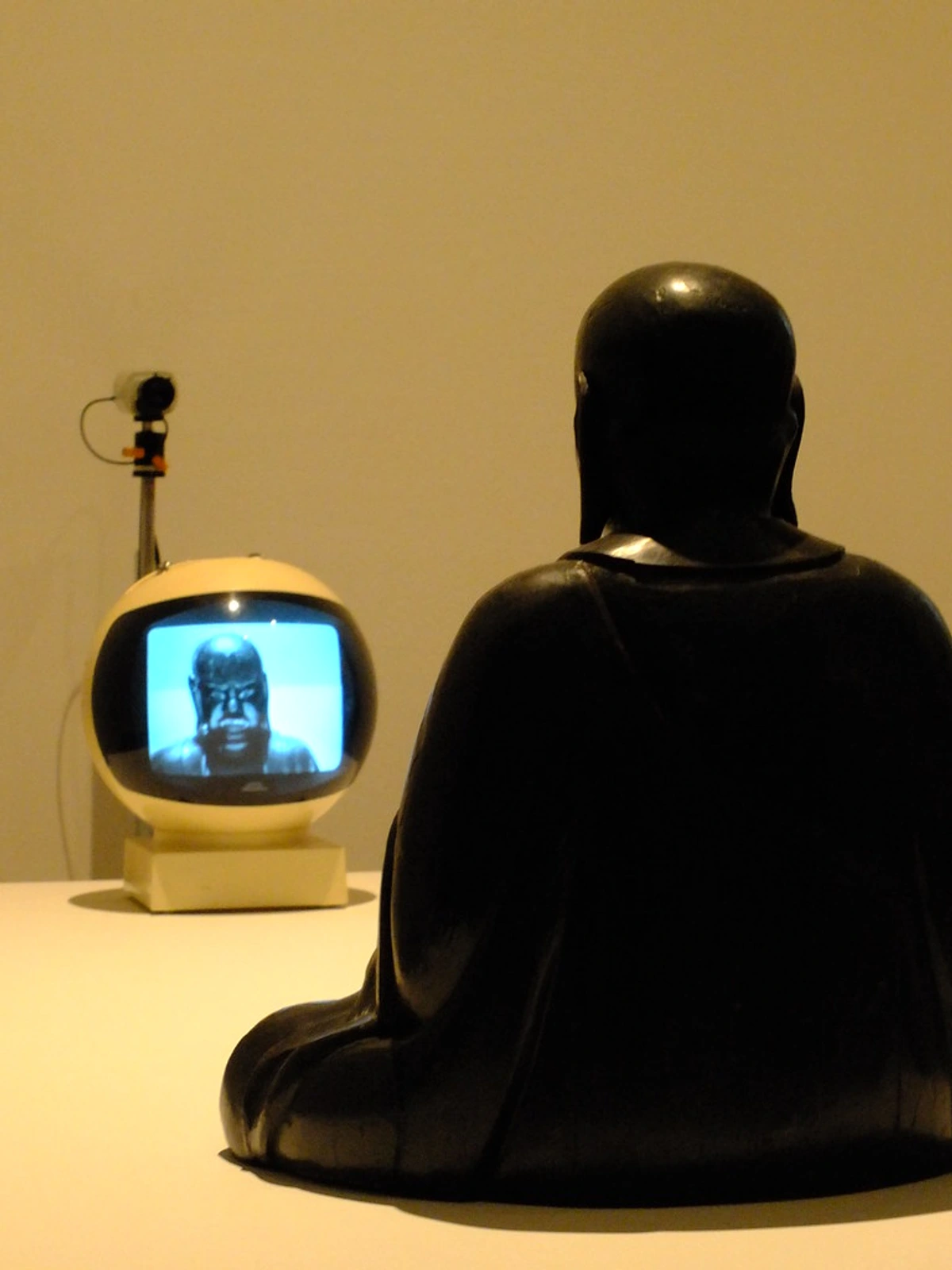
The intersection of performance art with video art began early, with pioneers like Nam June Paik and Vito Acconci exploring how the camera could extend the performance space and document ephemeral actions. Video offered a new means of distribution and preservation, allowing performances to reach audiences beyond the immediate live event. This has only expanded in the digital realm. Today, digital performance art encompasses everything from online, interactive pieces to live-streamed events, virtual reality experiences, and performances conducted through social media or gaming platforms. Artists utilize the internet to create anonymous, geographically dispersed, or algorithm-driven works, challenging traditional notions of audience, presence, and authorship (e.g., how anonymity affects performer-audience dynamics, or how the curated nature of social media impacts the "authenticity" of digital performance). Consider the work of Marina Zurkow, who often explores digital landscapes and environmental themes through animated narratives and interactive installations that perform on screens, or how artists might use live-coding (performing by writing and modifying computer code in real-time, often creating visual art or music) as a performance in itself – it’s a constant redefinition.
Site-Specific Performance: Art in Dialogue with Place
While Happenings were inherently site-specific, this approach evolved into a broader technique used across all eras of performance art. Site-specific performance means the artwork is intrinsically linked to its location, drawing meaning from the unique history, architecture, social context, or natural environment of that space. The performance cannot be truly replicated elsewhere without losing a fundamental aspect of its identity. This could involve artists interacting with urban environments (like street artists creating interventions), performing in natural landscapes to highlight environmental concerns, or using institutional spaces (museums, galleries) to critique their own structures. It's about a deep dialogue between the action and the chosen place, often used to challenge or reveal hidden aspects of a location's history or social fabric.
A Global Tapestry of Performance and Activism
While much of the historical narrative of performance art often centers on Western developments, it's vital to remember that performance traditions have existed globally for centuries, often rooted in ritual, storytelling, and community engagement. These forms are being continuously reinterpreted in contemporary contexts, reflecting diverse cultural perspectives and urgent social issues.
- Asia: Beyond the durational work of Tehching Hsieh, movements like Japan's Gutai Art Association (1950s-70s) pushed boundaries between painting and performance, emphasizing the artist's body and the act of creation itself, with actions like breaking through paper screens or performing with rockets explicitly serving as performances of their material-focused, gestural approach to art. Artists like Tatsumi Hijikata, a founder of Butoh dance, used extreme, grotesque, and ritualistic bodily expressions to explore themes of death, eroticism, and the subconscious, embodying a profound form of performance art that often expressed deep trauma and societal anxieties through visceral physicality. In China, artists like Zhang Huan gained renown for visceral body art challenging social and political norms with works such as 12 Square Meters (1994), where he sat covered in honey and fish oil in a public latrine, attracting flies, or Family Tree (1998), where calligraphers wrote names on his face until it was obscured.
- Latin America: Artists here often integrated participatory elements and social commentary. Lygia Clark (Brazil), already mentioned, explored sensory and participatory aspects with her Bichos (Critters), interactive sculptures that required the viewer's physical manipulation, making the viewer a performer and blurring the lines of authorship and experience. Her contemporary Hélio Oiticica created "Parangolés" – wearable capes that transformed viewers into participants in vibrant, interactive performances, rooted in Brazilian favela culture and challenging institutional art. The "Parangolés" were designed to be worn and danced in public spaces, with the act of wearing and moving with them being the core performance itself. Their work often connected deeply to social and political liberation movements.
- Eastern Europe: During and after communist rule, performance became a powerful tool for subtle, subversive actions or elaborate symbolic gestures to critique totalitarian regimes. Artists like Ewa Partum (Poland) used her body in public interventions to challenge gender roles and political restrictions, such as her 'Change 1974' piece where she offered passersby the chance to change her appearance by letting them cut her hair or apply makeup, making the act of offering agency a political performance itself. Milan Knížák (Czech Republic), a key Fluxus figure, organized provocative public events, anticipating punk aesthetics with raw, confrontational actions.
- Africa: Artists often blend performance with storytelling, ritual, and community engagement, using their bodies to explore post-colonial identities, social injustices, environmental concerns, or queer identities. Consider the work of El Anatsui (Ghana), whose large-scale sculptural installations (often made from bottle caps) often involve community participation in their creation and display, with the process of collective labor and cultural exchange reflecting a performative aspect. Zanele Muholi (South Africa) often incorporates performative elements into their photography and self-portraits to challenge heteronormativity and advocate for LGBTQIA+ rights, using deliberate staging, chosen garments, and a powerful gaze to assert identity and political presence. Traditional masquerades and ceremonial dances, reinterpreted in contemporary art, also show a deep history of performative engagement with culture and society.
Then there are street art actions that are inherently performative, like the anonymous works of Banksy, which challenge public spaces and political ideas through their sudden appearance and disappearance, often creating staged reveals or unexpected interventions that make the act of creation itself a performance, connecting to the history of street art and our ultimate guide to Banksy.
Relational Aesthetics and Social Practice
This broad landscape also includes relational aesthetics, a term coined by Nicolas Bourriaud, where the artwork is seen as a set of human relations and social interaction. Think of artist Rirkrit Tiravanija, who might cook and serve meals to gallery visitors – the shared experience and conversation are the art. Another example is Felix Gonzalez-Torres's piles of candies, from which visitors are invited to take, gradually diminishing the artwork over time, a symbolic act of generosity, loss, and replenishment. It’s a beautifully subtle challenge to the traditional art object. Often overlapping with social practice art, relational aesthetics emphasizes collaboration, community engagement, and the creation of social situations as artistic forms. While powerful, critics sometimes argue that relational aesthetics can be perceived as superficial, lacking in deeper artistic intent if the interaction doesn't lead to profound reflection beyond the immediate social exchange, or even commodifying human interaction itself. My take? It’s a powerful approach, but the depth often depends on the questions it asks and the dialogues it sparks. For me, this evolution shows how adaptable art is. It's constantly shifting, challenging itself, and finding new ways to communicate. It's not always easy to define, and honestly, I think that's part of its charm. It keeps us on our toes, asking questions, and never quite settling for a simple answer. This constant reinvention is why I connect with performance art so deeply; it mirrors the relentless evolution in my own journey as an artist, always searching for new ways to express bold, abstract concepts, as you can see if you explore my [/timeline artist's timeline] or browse the collection available to buy.
Critique and Controversies: Pushing Boundaries, Raising Questions
No art form that challenges as fundamentally as performance art can escape critique. In fact, controversy is often inherent to its nature. I mean, when artists push their bodies to extreme limits, or invite audience members to participate in potentially uncomfortable ways, questions naturally arise. Is it just for shock value? Where do we draw the line between art and self-harm, or between engagement and exploitation? These aren’t easy questions, and I think that’s precisely the point. The ethical responsibility of artists in performance art is a huge and continuously debated topic.
Sometimes, shock serves a powerful artistic purpose – to break through societal apathy, to highlight taboo issues, or to force a confrontation with difficult truths. Other times, it can be perceived as gratuitous or exploitative, diminishing the work's impact. For some, the ethical implications of certain performances, particularly those involving risk to the artist or audience, are paramount. Questions of consent, potential trauma, and the power dynamics between performer and spectator are constantly interrogated. For others, the perceived lack of a tangible 'object' makes it difficult to engage with or even accept as 'art.' The very ephemerality that makes it so potent also complicates its legacy and market value. This naturally sparks debates about commodification, particularly with new technologies like NFTs (Non-Fungible Tokens). While NFTs attempt to create a unique, verifiable digital 'ownership' of ephemeral or digital artworks (including performance art documentation, providing a potential way to create scarcity or track provenance), I'm skeptical of their true artistic value, seeing them more as a financial instrument than a profound artistic innovation that truly aligns with the anti-commercial spirit of performance art. Many argue that attempts to commodify the inherently anti-commercial nature of performance art can dilute its revolutionary power. It's undeniable, however, that they represent one attempt to grapple with how institutions can (or should) collect and display such works.
How do you collect a fleeting moment? Through documentation – photographs, videos, written accounts, artist statements, performance scores, relics – which itself becomes a vital artifact, but can never fully replace the live experience. Yet, these very controversies often highlight the art form's power to provoke dialogue and force critical reflection on what we value in art and society. It's often through this friction that performance art carves out its most important statements, acting as a crucial art as catalyst for social change, pushing for conversations around identity politics, social justice, and even environmental activism. The constant negotiation between the transient and the enduring, the live and the documented, remains a central challenge and a rich area for artistic exploration and institutional innovation. Institutions are continually developing complex strategies to collect and preserve performance art, ranging from commissioning detailed documentation and acquiring artist scores for re-staging, to establishing comprehensive archival systems for multimedia records.
A Brief Timeline of Performance Art Movements
To help keep this wild ride a little organized, here’s a quick overview of some key periods and movements in performance art, complete with their core ideas, key characteristics, and how they challenged norms. Keep in mind that these movements often overlap and influence each other, and categories are never perfectly contained.
Era  | Movement / Focus | Key Characteristics | Key Concepts | Notable Artists |
|---|---|---|---|---|
| Early 20th Century | Futurism, Dadaism | Absurdity, anti-art, manifestos, sound poetry, political protest, noise music, cabaret shows (e.g., Cabaret Voltaire), collage, assemblage | Challenging tradition, rejecting logic, embracing chaos, anti-war, dematerialization of art, art as provocation, anti-establishment, multimedia experimentation | Filippo Tommaso Marinetti, Hugo Ball, Tristan Tzara, Umberto Boccioni, Luigi Russolo |
| Mid-20th Century | Happenings, Fluxus, Intermedia Art, Early Conceptual Art | Participatory, ephemeral, blurring art/life, everyday actions, anti-commercial, event scores, instruction-based actions, multimedia, anti-elitism | Audience engagement, dematerialization of art, art in life, anti-elitism, spontaneity, idea over object, everyday art, blurring art forms | Allan Kaprow, Yoko Ono, Joseph Beuys, Nam June Paik, Lygia Clark, Sol LeWitt, Milan Knížák, John Cage |
| 1970s | Body Art, Feminist Performance, Durational Performance, Social Sculpture | Body as medium, endurance, identity, gender politics, social commentary, visceral experience, extended time, shamanism, collective action, autobiographical exploration | Visceral experience, challenging objectification, exploring vulnerability, direct confrontation, political statement, exploration of time and limits, society as art | Marina Abramović, Carolee Schneemann, Chris Burden, Ana Mendieta, Valie Export, Rebecca Horn, Vito Acconci, Tehching Hsieh, Adrian Piper, Ewa Partum |
| 1980s-Present | Conceptual Performance, Installation Art, Digital Performance, Relational Aesthetics, Social Practice, Political Performance, Global Currents | Idea-driven, site-specific, new media, social commentary, relational aesthetics, interactive, durational, global perspectives, activism, community engagement, digital integration | Concept over object, social interaction as art, global perspectives, new technologies, community engagement, critical reflection, political engagement, post-colonial discourse, global cultural exchange | Laurie Anderson, Tino Sehgal, Tehching Hsieh, Banksy (performative aspects), Rirkrit Tiravanija, Marina Zurkow, Pussy Riot, Zhang Huan, Hélio Oiticica, Zanele Muholi |
The Enduring Echoes: Why Performance Art Still Kicks
So, why does performance art matter? For me, it boils down to its raw honesty and its refusal to be easily consumed or commodified. It forces us to confront uncomfortable truths, to question our assumptions about art and life, and to engage on a deeper, often emotional, level. When Dadaists performed their nonsensical poetry, they were questioning the very logic that led to war. When Marina Abramović pushed her body to its limits, she was probing the depths of human connection and resilience, challenging societal expectations of vulnerability. Chris Burden, too, by putting his body at risk, forced a confrontation with the violence inherent in society, urging us to examine our own complicity or detachment. These acts challenge our passive consumption of art and demand something more from us: our attention, our reflection, and sometimes, even our discomfort. It's not gratuitous; it's a vital, often ethical, confrontation that makes you rethink what art is and can be.
It reminds me that art isn’t just about aesthetics; it’s about ideas, feelings, and the human experience in all its messy, beautiful glory. It's a reminder that true expression can be found in unexpected places, and often, the most impactful art is the one that steps outside the frame entirely. The constant push against the static, the framed, the easily digestible, is what makes me appreciate it so much. It's an art form that refuses to be static, continually pushing boundaries, much like the process of creating bold and expressive abstract works that challenge perception. For me, connecting with performance art means embracing this boundless capacity for meaning, capable of holding up a mirror to ourselves and the society we inhabit. Its fluidity and focus on pure concept and emotion, rather than a fixed object, deeply resonate with my own artistic explorations into abstract painting.
If this journey into the profound and provocative has sparked your curiosity, I highly encourage you to seek out live performance art, explore documentation, or visit institutions that champion this ever-evolving medium. Check local art calendars, university art departments, contemporary art festivals, online video art platforms (like Vimeo or YouTube for archival footage), or even local experimental theatre groups for upcoming events. And if you're ever near 's-Hertogenbosch, you should definitely visit our museum to see some works that push these boundaries in a visual way, reminding us of the fragility and permanence of human endeavors. Keep an open mind, and let it provoke you – that’s where the real magic happens. What kind of performance art would you dare to experience?
Frequently Asked Questions About Performance Art
What exactly is performance art?
In my book, performance art is an ephemeral art form where the artist's body, actions, and authentic presence become the primary medium, often taking place live, in front of an audience, or documented for later viewing. It emphasizes the experience, the concept, and the artist's direct engagement over a traditional, permanent art object, often prioritizing the audience's experience and the artist's intent over a finished, marketable product. It's about the 'doing' rather than the 'making' of a static artwork, often existing as a unique event, a series of instructions, or an immersive environment. I like to think of it as art that dares to breathe and change with you.
Is performance art always live? What about 'Live Art' and 'Durational Performance'?
While often live, and sometimes explicitly referred to as "Live Art" (emphasizing the immediate, real-time presence) or "Durational Performance" (when sustained over extended periods, making the temporal aspect a key component), it isn't strictly necessary for all performance art. Live art is essentially a subset or descriptor of performance art that specifically highlights the real-time aspect. The essence of performance art is the action and the concept. While live presence is powerful and creates an immediate, shared experience, many pieces are documented through photography or video, and some performance art exists purely as an instruction set for an action, which can then be "performed" by others (think Fluxus scores). The documentation serves as a crucial form of its presence, allowing the work to be experienced and studied even if not live in the moment. So, while a live presence is often central, the art can also exist through its potential for re-performance, its concept, or its rich documentation.
How is performance art different from theatre?
Ah, the classic question! While both involve live action and an audience, performance art typically doesn't follow a traditional narrative, fictional characters, or theatrical conventions like a script or stage. It's usually about the artist's authentic presence, their direct interaction with the audience (or lack thereof), or the exploration of a concept or social issue, often challenging the very definition of art itself. Crucially, performance art often involves the artist exploring their own identity, experiences, and vulnerabilities, frequently blurring the lines between the artist's persona and their actual identity, making it inherently autobiographical or directly engaged with a real-world concept. Theatre, on the other hand, usually aims to tell a story or evoke emotions through the portrayal of fictional characters in a fictional world, within established conventions of staging and narrative. Performance art is more about "being" than "acting," and it often critiques the institution of art itself, which is less common in traditional theatre. It’s the difference between someone showing you their raw, unedited thoughts and someone performing a carefully crafted monologue.
What is the goal of performance art?
Well, there's no single goal, which is part of its beauty. It can aim to provoke, question societal norms, explore identity, protest injustice, create an immersive experience, foster healing, build community, expand the definition of what art can be, or even question the nature of art itself purely for aesthetic exploration. It often seeks to engage the audience intellectually or emotionally, rather than just aesthetically, by presenting a unique, often unsettling, encounter. Its goals are frequently tied to pushing boundaries and fostering critical thought, directly reflecting current social, political, or personal concerns. Sometimes, the goal is simply to make you feel something, deeply and undeniably.
What is the significance of documentation and its archival challenges in performance art?
Given its ephemeral nature, documentation is absolutely crucial for performance art. It serves as the primary means by which these fleeting experiences can be remembered, studied, and disseminated. Without photographs, videos, written accounts, artist statements, performance scores, or even relics (objects used or created during a performance), many significant performances would simply vanish from history. Documentation doesn't just record; it actively shapes our understanding, often becoming an artwork in its own right and influencing how the performance is perceived and remembered, preserving the concept and impact long after the live event has concluded. It allows the work to transcend its immediate moment and reach a wider audience, contributing to art history and ongoing dialogue. It’s how we, generations later, can still grapple with the intensity of an Abramović piece or the playful subversion of a Fluxus event.
The challenge, however, lies in how to preserve the experience itself. Institutions are developing complex strategies: collecting performance scores (detailed instructions for a piece) for re-staging, preserving a vast array of multi-media documentation, and in some cases, acquiring the rights to future performances. It’s a dynamic and evolving field that forces art institutions to rethink traditional preservation models.
Can I "buy" performance art?
That's a tricky one! You usually can't buy the "performance" itself, as it's ephemeral – it exists only in the moment. However, you can acquire documentation (photos, videos, contracts detailing how a piece might be re-staged), relics (objects used during the performance), or even the rights to conceptually re-perform a piece. Sometimes, an artist creates editions based on a performance, like a series of prints or objects inspired by it, which are often called "artist multiples." These are tangible ways to engage with the work, much like you might find unique pieces in my own collection when you browse for art. The true value of performance art, I think, often lies in its impact, its concept, and its challenge to the art market's focus on commodity.
What role does sound and music play in performance art?
Sound and music have been integral to performance art since its earliest days. From the cacophonous noise music (intonarumori) of the Futurists and the nonsensical sound poems of the Dadaists, artists have used sound to provoke, set atmosphere, and create sensory experiences. In later movements, sound could be pre-recorded, live, ambient, or entirely absent to create tension or focus. The deliberate use of silence can be just as powerful as noise, forcing reflection or amplifying subtle actions. It can be a core element of the performance itself, an accompaniment, or a deliberate disruption, contributing to the overall immersive and often unsettling effect. It adds another dimension to the ephemeral experience, shaping the audience's emotional and intellectual response.
What about the ethical responsibility of artists in performance art?
This is a huge question and a central point of debate. Performance artists often push boundaries, and this can raise ethical concerns, especially regarding audience participation and the artist's own body. Ethical responsibility includes considering the physical and psychological safety of participants (including the artist), ensuring clear communication about potential risks, and addressing issues of consent, exploitation, and power dynamics. While provocation can be a powerful artistic tool, responsible artists strive to balance impact with respect for human dignity, prompting critical reflection without causing undue harm. Furthermore, the ethical considerations extend to how documentation is used and shared, especially concerning intimate or sensitive performances, ensuring privacy and context are respected. It's a complex tightrope walk that continues to evolve as societal norms change.






How can someone new best experience performance art for the first time?
My best advice? Keep an open mind! Don't go in expecting a traditional play or a static artwork. Research the artist or piece beforehand if you can, but also be prepared to just let it happen. Attend a variety of performances – some might be intense, others whimsical, some interactive, others observational. Focus on the concept, the feeling it evokes, and the questions it makes you ask, rather than trying to find a conventional narrative or a definitive answer. Engage with it on an emotional and intellectual level, and allow yourself to be provoked, surprised, and moved. You might just find a new way of seeing the world!
What are some famous performance art pieces?
Oh, there are so many! Here are a few iconic ones that come to mind:
- Marina Abramović, The Artist is Present (2010): Sitting silently opposite gallery visitors for hours, days, even months, allowing deep emotional connections. I still get chills thinking about the sheer endurance and vulnerability; it redefined human connection in an art context, highlighting the profound emotional impact of shared human presence.
- Chris Burden, Shoot (1971): The artist had a friend shoot him in the arm, exploring themes of violence, vulnerability, and the artist's body as a medium. It’s hard to wrap your head around, but impossible to forget, forcing a confrontation with societal aggression.
- Yoko Ono, Cut Piece (1964): Inviting audience members to cut off pieces of her clothing until she was nearly naked. A powerful statement on vulnerability, trust, and the objectification of women, especially in a time when feminist ideas were really taking root.
- Allan Kaprow, 18 Happenings in 6 Parts (1959): A seminal work that guided participants through a series of timed actions, blurring the line between audience and performer, and breaking the traditional art-viewing experience. It truly redefined what an 'art exhibition' could be, emphasizing participation and the art-life blur.
- Tehching Hsieh, One Year Performance 1978–1979 (Cage Piece): The artist lived in a cage for a year, not reading, talking, or engaging with media, exploring themes of time, isolation, and discipline. This piece is a profound meditation on human confinement and the subjective passage of time.
- Lygia Clark, Bichos (Critters) (1960s onwards): Though primarily sculptural, Clark’s "Bichos" are interactive, articulated metal objects that require the viewer's manipulation to transform. The act of interaction and the changing forms constitute a performative engagement, blurring the line between object and event, typical of Latin American participatory art, making the viewer a direct participant and blurring authorship.
What is Site-Specific Performance and why is it important?
Site-Specific Performance is when an artwork is conceived and executed for a particular location, deriving its meaning and impact directly from that chosen site. Unlike a theatrical play that can be performed on any stage, a site-specific work uses the unique characteristics – history, architecture, social context, or natural environment – of its location as an integral part of the artwork itself. This approach challenges traditional exhibition models, forcing audiences to engage with art outside conventional gallery spaces and reconsider how a place influences experience and interpretation. It highlights the dynamic interplay between art and its environment, often leading to deeper insights into both the artwork and the site itself, and can be used to challenge or reveal hidden aspects of a location's history or social fabric.
So there you have it, my little wander through the wild, wonderful world of performance art. It’s certainly not for everyone, and it’s definitely not always pretty, but it’s undeniably powerful. It taught me that art isn’t just about what we see, but about what we feel, what we question, and how we choose to engage with the world around us. It's a constant, evolving conversation, and I, for one, am happy to listen. Keep an open mind, and let it provoke you – that’s where the real magic happens. It's an art form that refuses to be static, continually pushing boundaries, much like the process of creating bold and expressive abstract works that challenge perception. It's a testament to art's boundless capacity for meaning, capable of holding up a mirror to ourselves and the society we inhabit. Its enduring challenge ensures that art itself remains a living, breathing, and questioning force in our world.