Portuguese Modernism: The Art Movement You've Been Missing Out On
A deep dive into the beautifully complex world of Portuguese Modernism. Discover key artists like Adriano de Sousa Lopes, the unique concept of 'saudade', and why this overlooked movement is one of art history's best-kept secrets.

Portuguese Modernism: The Definitive Guide to an Underrated Art Movement
Let me tell you a secret. For years, whenever I thought about Modern Art, my mind would immediately jump to Picasso's chaotic Paris or Pollock's sprawling New York canvases. It's the standard art history highlight reel, right? Portugal, in that story, was a quiet character standing in the background, if it was there at all. And that, my friends, was a huge mistake on my part.
Discovering Portuguese Modernism felt like finding a secret room in a house I thought I knew inside and out. It's a movement born from a nation in turmoil, wrestling with its past and desperately trying to find its voice in a rapidly changing Europe. It’s not just a copy of French or German art; it’s a conversation with them, sometimes an argument, steeped in a unique cultural feeling that you just don't find anywhere else.
So, grab a coffee. Let’s talk about the art movement you’ve probably been overlooking, and let’s use a fascinating artist, Adriano de Sousa Lopes, as our guide into this world.
The Historical Crucible: Portugal in the Early 20th Century
You can't understand the art without understanding the beautiful mess that was Portugal in the early 20th century. Imagine trying to create something new and profound when your entire country is hitting the reset button. The monarchy had just collapsed in 1910, giving way to the turbulent First Republic. This new government grappled with political instability, crippling public debt, and a deep-seated anxiety about Portugal's place in a Europe dominated by larger powers. This period was a whirlwind of anti-clerical policies that stripped the Church of its land and influence, a chaotic mix of new political parties springing up almost monthly, and a profound, often frantic, search for what it truly meant to be a modern Portuguese citizen.
This societal earthquake didn't just rattle parliament; it tore through the studios and salons. For centuries, Portuguese art had existed in a state of genteel hibernation, largely bound by the polished, predictable rules of academic traditions. Think of it like a language everyone knew how to speak, but no one was allowed to invent new words for. Suddenly, that old language felt useless for describing the emotional and political vertigo of a nation in flux. It was like trying to write a punk rock anthem with a harpsichord. Artists felt this intensely, caught between a fading, sun-drenched imperial past and an uncertain, shadowy future. They looked to the explosive new ideas coming from abroad—the fractured reality of Cubism, the chaotic energy of Italian Futurism, the raw feeling of German Expressionism, and the wild, untamed color of Fauvism. But they weren’t just mimicking. That's the crucial part. They were translating it, filtering it through a distinctly Portuguese lens, asking a question that would haunt their work for decades: "What does all this mean for us?"
The First Wave vs. The Second Wave: A Divided Inheritance
Portuguese Modernism didn't announce itself with a single, unified voice. Instead, it fractured into two distinct generations that often felt like they were engaged in a family argument. I think of it as the explosive punk rock band followed by a more introspective indie group that was determined to write ballads instead of anthems. This wasn't a smooth handover; it was a deliberate change in direction.
The First Generation: The Orpheu Rebels (c. 1915-1917)
The birth of Portuguese Modernism isn't tied to a royal academy or a government decree. It's tied to a publication that arrived like a brick through a window. Its name was Orpheu, and it remains one of the most legendary magazines in European art history. Launched in 1915 in Lisbon, it acted less like a publication and more like a cultural hand grenade, detonating in the heart of a deeply conservative society. For the handful of brilliant, restless minds behind it, this wasn't just about art; it was an existential manifesto. Figures like the enigmatic poet Fernando Pessoa—a man who wrote under dozens of different "personalities" he called heteronyms—, the dazzlingly inventive painter Amadeo de Souza-Cardoso, and the incendiary, short-lived Guilherme Santa-Rita (known as Santa-Rita Pintor), weren't just artists; they were self-appointed cultural shock troops. Their mission was clear: to smash the old, stuffy academic traditions they saw as suffocating Portugal, believing the nation's intellectual salvation lay not in looking backward, but in embracing the radical new European avant-garde movements. Their work was intentionally provocative, proudly cosmopolitan, and designed to disorient the bourgeoisie. Consider Almada Negreiros's 1915 lithograph, O Português, which depicted a national figure as a faceless, disjointed geometric abstraction—a direct affront to traditional portraiture. It was a brash declaration that Portugal was ready to join the modern world, whether the world was ready or not. Orpheu was a short, brilliant explosion of creative energy. It only published two issues before financial collapse and internal squabbles shut it down, but its aftershocks defined an entire era.
The Second Generation: The Introspective Turn (c. 1920s-1940s)
If the first generation was about explosive rebellion, the second generation's mission was deeper and more complex—some might say more mature. Emerging in the relatively calmer, yet still uncertain, 1920s, they inherited a legacy of rebellion but faced a different, more difficult question: okay, we've broken with the past, now who are we? The initial adrenaline rush of provocation had worn off, and what was left was the sober, complicated work of defining a modern identity. Artists like Adriano de Sousa Lopes, Mário Eloy, and the multi-talented Almada Negreiros (now in his more mature phase) turned away from pure provocation. They started to look inward, exploring what it truly meant to be Portuguese in a modern world. The angry, angular manifestos gave way to something more nuanced. Their art became more lyrical, more psychological, more focused on capturing the nation's soul—the unique light, the melancholy, the deep history—rather than simply shocking its bourgeoisie. The search for modernidade was reframed as a search for alma portuguesa—the Portuguese soul.
Here’s a quick breakdown to understand the evolution within the movement:
Aspect  | First Generation (The Orpheu Rebels) | Second Generation (The Introspective Turn) |
|---|---|---|
| Period | c. 1915–1917 (peak) | c. 1920s–1940s (peak) |
| Core Mission | To break violently with academic traditions, provoke society. | To redefine "Portuguese-ness" in modern terms with sincerity. |
| Artistic Temperament | Explosive, provocative, cosmopolitan, "shock the bourgeoisie". | Lyrical, psychological, introspective, nationalistic but not jingoistic. |
| Literary Focus | Avant-garde poetry, manifestos, experimental prose. | Novels, essays, plays with a renewed focus on national themes. |
| Key Influences | Italian Futurism, Cubism, French Fauvism. | German Expressionism, proto-Surrealism, post-war modernism. |
| Central Magazine | Orpheu (1915) | Multiple publications, including Contemporânea (1922-1926) and Presença (1927-1940) |
| Key Figures | Fernando Pessoa, Amadeo de Souza-Cardoso, Santa-Rita Pintor, Mário de Sá-Carneiro. | Almada Negreiros, Mário Eloy, Adriano de Sousa Lopes, Bernardo Marques. |
Our Case Study: Adriano de Sousa Lopes
This is where our guide, Adriano de Sousa Lopes (1879-1944), comes in. I find him fascinating because he's not your typical avant-garde firebrand; instead, he embodies the bridge between the old and the new. A generation older than the Orpheu rebels, he was already an accomplished academic painter by the time they started causing trouble. His path into modernism was forged in the crucible of total war.
In 1917, with Portugal a belligerent in World War I, Sousa Lopes was officially commissioned as a war artist and sent to the Western Front. It was there, far from the Lisbon salons and Parisian cafes, that his style underwent a radical transformation. Confronted with the mechanized horror of modern warfare, the genteel academic traditions he had mastered suddenly felt like a lie. His paintings from that time—works like The Trenches—are raw, dark, and full of a kind of anguished Expressionism. He wasn't just recording events; he was capturing the sheer terror, the mud, the cold, and the flickering humanity of the soldiers trapped in it.
He saw what artists like Matisse were doing with color—making it carry emotional weight rather than just describing an object—and he brought that powerful lesson back to Portugal. After the war, his depictions of the Portuguese landscape and its people changed completely. He began to paint like a man who had seen the world crack open. His later work isn't fully abstract, but it's charged with a raw, almost painful feeling. The figures are sculpted with thick, urgent brushstrokes; the colors don't obey the rules of nature but follow the dictates of emotion. He's a perfect example of that second-generation mission: using modern techniques not to erase one's identity in the name of internationalism, but to strip away the clichés and explore that identity more deeply, more truthfully.

A Deep Dive into the Visual Language of Portuguese Modernism
If you were to boil Portuguese Modernism down to a few key flavors, what would they be? It's tricky, because it was never a single, unified style like Italian Futurism or Dutch De Stijl. It was more of a shared temperament, a set of aesthetic choices and emotional obsessions that recur across the work of its key figures.
The Untranslatable Soul: Saudade and Melancholy
First and foremost is Saudade. No single English word quite captures it, and frankly, that's what makes it so central to understanding this art. It describes a deep, melancholic longing for something or someone absent, a bittersweet nostalgia for a past that may not have even existed. This isn't just a feeling; it's a national temperament. And it permeates the art of the period, giving it a unique, soulful, and introspective quality you simply don't find in the assertive, machine-loving Italian Futurism or the coolly analytical French Cubism. It's that quiet, questioning chord that resonates through so much of the work, a profound sense of loss and beauty intertwined. Think of it as the opposite of nostalgia; nostalgia is a comfortable memory, whereas saudade is an ache.
A Fauvist Palette: Color as Emotion
While the Orpheu generation was drawn to the angular geometry of Cubism, the emotive power of color proved to be a more enduring obsession for the movement as a whole. Like the Fauvists in France, Portuguese modernists weren't afraid of using bold, vibrant, and often shockingly non-naturalistic color. Their palette was a declaration of independence from reality.
They used it to capture the unique, brilliant light of their country, but more importantly, to convey emotion directly onto the canvas. Look at a Portuguese landscape from this period, and you won't see a photo. You'll see a mosaic of ochres, deep magentas, and turquoises, pulsing with an internal energy that has little to do with sunshine and everything to do with feeling. They weren't painting the land; they were painting their memory of it, their longing for it, their argument with it.

A Lyrical Cubism: Structure and Rhythm
Amadeo de Souza-Cardoso was arguably the movement's most brilliant formal innovator. While he deeply understood and embraced the fragmented forms of Cubism, he never became a strict disciple. His was a distinctly Portuguese take on it—more lyrical, less rigidly analytical, and spiced with a playful sense of chaos. The geometry was there, but it was frequently in service of rhythm and feeling. It was less about deconstructing a bottle on a table mathematically and more about using angularity to create a dynamic composition that felt like a folk song, often integrating recognizable elements of Iberian folk art—like the Galo de Barcelos (Rooster of Barcelos)—to forge a unique, hybrid visual language.
The Central Quest: A Modern Portuguese Identity
Ultimately, the driving force behind it all was the search for identity. In nearly every brushstroke, you can feel a central question throbbing: What does it mean to be Portuguese in the modern world? This was a nation coming to terms with the end of its empire (Brazil had been independent for less than a century) and its diminished role on the world stage. So, where did its soul reside?
Was it in the stoic daily life of its fishing villages, the ancient rhythms of its folk tales, the unique, almost blinding quality of its light, or the profound paradox of a country with a grand maritime past navigating an uncertain, landlocked present? This wasn't a search for romantic clichés to sell to tourists. It was a deep, often fraught, and profoundly serious inquiry into how to represent the Portuguese soul on canvas without falling back on the old-fashioned sentimentality that the modernists so despised.
Key Figures and Their Signature Works
Beyond Sousa Lopes, the movement was a constellation of singular talents. These weren't just a group of artists; they were individual planets, each with their own distinct gravitational pull and atmosphere. To truly understand the scope of the movement, you have to understand them. Here are the figures you really need to know.
Amadeo de Souza-Cardoso (1887-1918): The Avant-Garde Prodigy
If Portuguese Modernism had a prodigy—a figure of blinding, meteoric talent—it was Amadeo de Souza-Cardoso. He didn't just visit the heart of the avant-garde; he lived in it. In 1906, at just 19, he left his comfortable upbringing in a small northern Portuguese town for Paris, and he never truly looked back. There, he didn't just rub shoulders with the likes of Modigliani, Brancusi, and the Delaunays; he became an essential part of their circle. His artistic education was the Parisian avant-garde itself. He absorbed the hard-edged logic of Cubism and the frantic, dynamic energy of Italian Futurism. But here's the critical difference: he filtered it all through a uniquely Portuguese sensibility. Look closely at any of his major works, like Entrada (Entrance) (1917), and you'll see a vibrant, chaotic fusion of angular forms, bold patterning inspired by local costumes, and a playful, almost collage-like aesthetic that includes lettering—an early foray into the language of advertising and signage. His work is a joyful, head-on collision of Parisian rigor and Portuguese soul. Tragically, his career was cut brutally short. In 1918, the Spanish flu pandemic reached Portugal. Amadeo, who had returned to his family home to escape the war in Europe, was one of its victims. He was just 30 years old. He left behind a body of work that remains shockingly modern—so much so that it feels fresh today. His death left a profound, poignant "what if?" hanging over Portuguese art history. What heights would he have reached? He remains the great ghost of the movement, a constant reminder of its incredible, unrealized potential.
Almada Negreiros (1893-1970): The Face of Modern Portugal
If Amadeo was the prodigy abroad, Almada Negreiros was the public face, the tireless engine, and the enduring conscience of the movement at home. Think of him as a one-man cultural revolution. A true Renaissance man—painter, writer, poet, playwright, dancer, and fiery critic—he was the ultimate provocateur of the first generation, a force of nature in a country that preferred calm. His early work, with its sharp, stylized lines and aggressive compositions, drew heavily from the fragmentation of Cubism and the stuttering motion of Futurism. It was art as a weapon, designed to be polemical and to provoke an outraged response from the establishment. But as he matured, something fascinating happened. The harsh, jagged lines softened. His style evolved into a lyrical grace that didn't reject Portugal's classical traditions, but instead synthesized them with a modern dynamism. He began to draw figures with an elegant, elongated line that recalled old master frescoes, but placed them in distinctly modern, timeless settings. And he had the ambition to match his talent. Almada didn't want his art confined to galleries. He wanted to create a public art for a modern nation. His vast frescoes and murals for public buildings in Lisbon—such as the monumental Gare Marítima de Alcântara—became landmarks, visually defining the official aspirations of a new, forward-looking Portugal. He didn't just make paintings; he made the backdrop for national life. For decades, through wars and dictatorships, he was the tireless voice and visual conscience of the movement, a living bridge between the radical explosion of the 1910s and the art that would follow, right up until his death in 1970.
Mário Eloy (1900-1951): The Expressionist Outsider
If Amadeo was the luminous star and Almada the public face, Mário Eloy was the movement's anguished soul. If you're looking for the darker, more psychological side of Portuguese Modernism, Mário Eloy is your man. His life was a constant, painful struggle against inner demons and external prejudices. He spent significant periods in mental health facilities, and this intense, often tormented inner life poured directly and unflinchingly onto his canvases.
His powerful, unsettling portraits and figure paintings are deeply expressionistic, with a raw, jagged emotionality that recalls German artists like Ernst Ludwig Kirchner. Eloy used brutally distorted forms, claustrophobic compositions, and brooding, intense colors to explore the inner turmoil of his subjects and, by inevitable extension, himself. Works like Auto-Retrato (Self-Portrait) (1931) are not mere representations; they are psychological X-rays. He represents the essential, existential thread of Portuguese Modernism, the one that understood that modern life wasn't just about dynamism and freedom; it was also about alienation, fracture, and profound psychological pain.
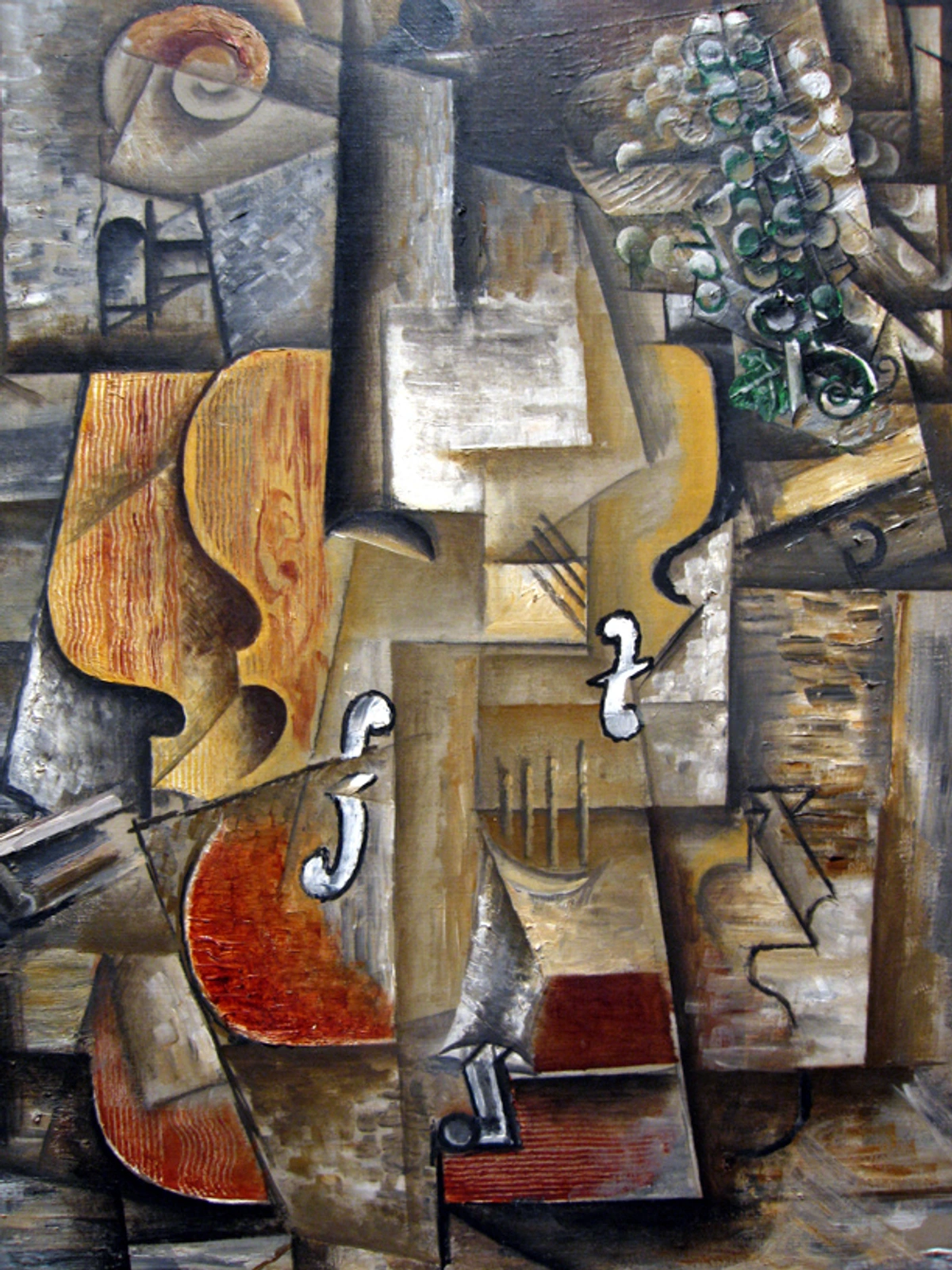
Maria Helena Vieira da Silva (1908-1992): The Luminous Abstractionist
Though she spent most of her prolific career in Paris and is often categorized with the School of Paris, the roots of Maria Helena Vieira da Silva are unambiguously in the soil of Portuguese Modernism. She can be seen as the logical, final evolution of the movement's lyrical, introspective tendency. In her hands, it was pushed into a realm of transcendent, truly poetic abstraction.
Her paintings are instantly recognizable. Think of intricate, grid-like cityscapes, complex architectural labyrinths, and map-like spaces, all rendered in a muted but intensely luminous palette that seems to vibrate with an inner light. Her work isn't about describing a place, but about capturing the feeling of being in a space—the essence of memory and dislocation. It feels both vast and intimate at the same time. She became the ultimate vital bridge, carrying the subtle, soulful legacy of Portuguese Modernism onto the grand international stage of postwar Abstract Art.
Legacy and Influence: The Enduring Relevance of Portuguese Modernism
I think these "off-the-beaten-path" movements are crucial because they remind us that art history isn't a single, straight line dictated by a few big cities. It's a complex, global network of conversations, protests, and syntheses. Portuguese Modernism shows us how a smaller country can take international ideas and create something profoundly personal and unique out of them, offering a masterclass in cultural cross-pollination.
This narrative of resilience, of finding a modern voice without losing one's soul, is perhaps more relevant than ever. In an increasingly globalized art market, Portuguese Modernism serves as a vital case study in what it means to be local without being insular or parochial. It proves that engagement with the wider world doesn't have to mean cultural homogenization. For me, discovering these artists has enriched my understanding of the entire modern period, revealing a harmony I never knew was missing from my favorite song, and influencing my own creative explorations of color and form, which you can see in my work available to /buy.
The initial explosion of Modernism was effectively extinguished around 1933, when the conservative, nationalist, and authoritarian Estado Novo (New State) regime came to power. This government, under António de Oliveira Salazar, promoted a nostalgic, folkloric vision of Portugal and viewed the experimental art of the previous two decades as dangerously foreign and decadent.
Nevertheless, the spirit of the movement refused to die. It just went underground. The influence of these artists continued in private studios and in the minds of a younger generation. Maria Helena Vieira da Silva became a celebrated figure in the international post-war art scene, inspiring generations of abstract artists far beyond Portugal's borders. Back home, the spirit of inquiry championed by Pessoa and Negreiros never disappeared. It laid the direct groundwork for later Portuguese avant-garde movements like the experimental Poesia 61 group. The movement ultimately teaches us that art thrives not in isolation, but in the creative tension between foreign influence and a deeply felt local identity. It's a lesson that resonates with artists everywhere.
Your Questions, Answered
What is the main characteristic of Portuguese Modernism?
If I had to pick one, it’s what I call critical assimilation. It’s not just a blend; it's an active, argumentative engagement with international avant-garde styles (Cubism, Futurism, Expressionism) combined with a deep, introspective search for a modern national identity. They didn't just copy Cubism; they used its fractured planes to ask what a modern Portuguese face looked like. The entire process was colored by the uniquely Portuguese emotion of saudade – a melancholic longing that gave the movement its soulful, poetic quality and set it apart from its more assertive European cousins.
Who is the most famous Portuguese Modernist artist?
This is a tough one! It depends on the context. Outside of Portugal, Amadeo de Souza-Cardoso is probably the most recognized painter due to his direct links to the Parisian avant-garde. His work feels international and is often included in surveys of European modernism. Within Portugal, Almada Negreiros is a towering cultural figure whose influence extended far beyond painting into writing, criticism, and public art. He is the face of the movement's domestic legacy. And in literature, Fernando Pessoa is, without a doubt, a global giant, a writer whose unique exploration of fractured identity has been compared to Kafka and Joyce, and whose influence utterly transcends the movement itself.
How is it different from Spanish Modernism?
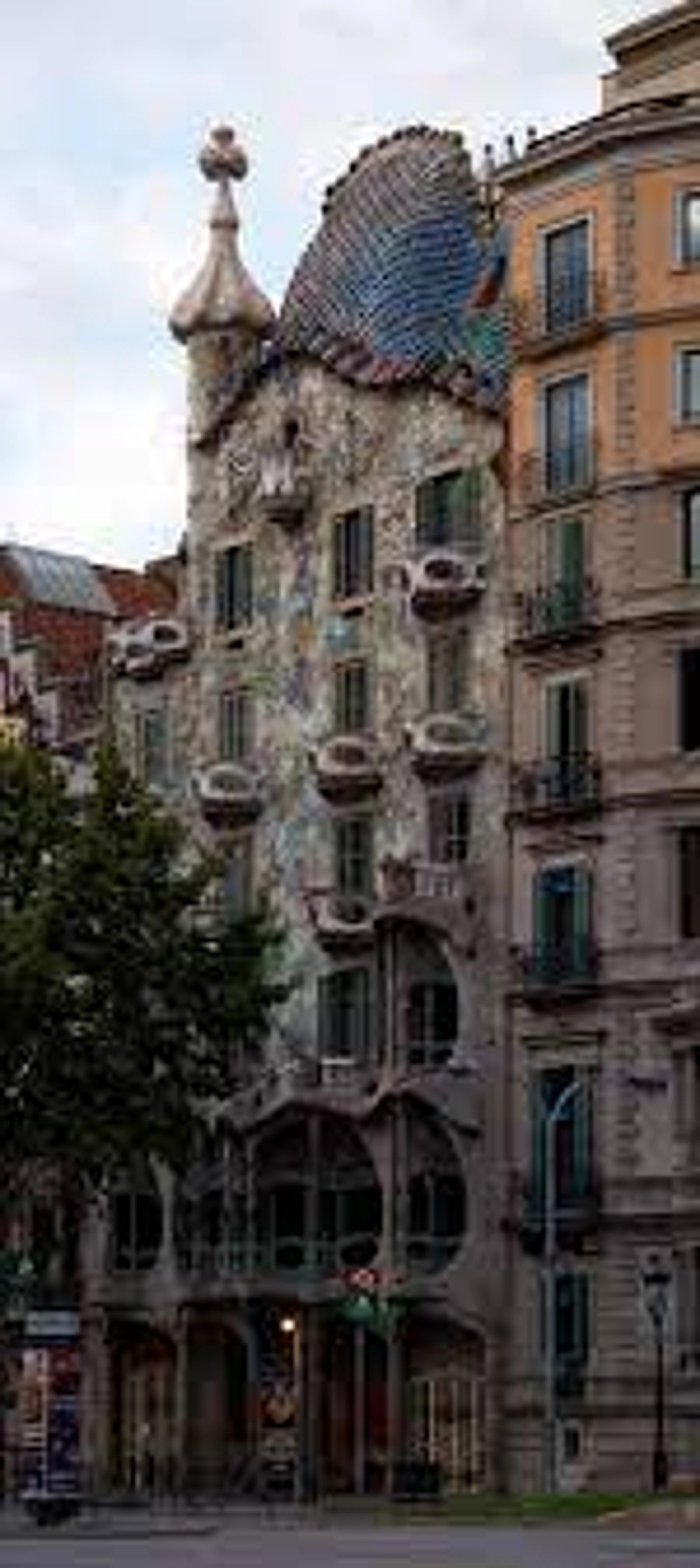
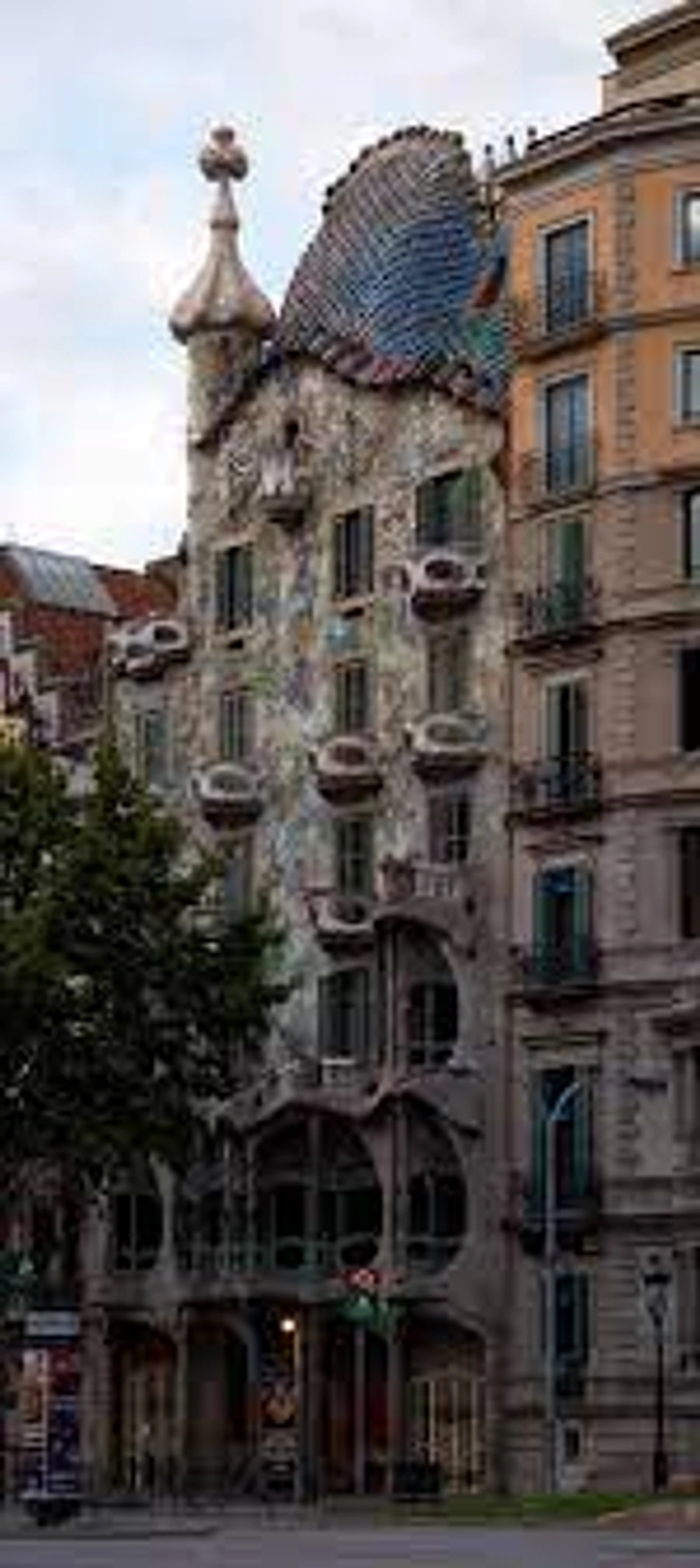
This is a crucial point of confusion, and the difference is stark, mostly due to a linguistic accident. Spanish Modernismo (with an 'o') and Catalan Modernisme refer to movements roughly contemporary with European Art Nouveau. They are primarily architectural and decorative arts movements, epitomized by the sinuous, nature-inspired curves of Antoni Gaudí's buildings in Barcelona. The focus was on total works of art, on intricate decorative craft.
Portuguese Modernism, as we're discussing it, is a completely different beast. It's chronologically later, emerging with the European avant-garde of the 1910s. It was centered not on architecture, but on painting, poetry, and literature. Its primary engagement was with the hard-edged, revolutionary ideas of Cubism, Futurism, and Expressionism, driven by the raw intellectual urgency of forging a modern identity. In short, Spanish Modernism is Gaudí's organic architecture; Portuguese Modernism is the fractured soul of Amadeo.



When did Portuguese Modernism end?
The movement didn't have a clean end date, but its dynamic public energy was gradually suffocated. The conservative, staunchly Catholic, and authoritarian Estado Novo regime came to power in 1933 and implemented strict cultural policies that favored a nostalgic, propagandistic traditionalism called Portugalidade (Portugueseness). Avant-garde expression was labeled as foreign, immoral, and contrary to national values. This state-enforced orthodoxy effectively ended the movement's public phase. However, its influence persisted underground, in private collections, and in the work of subsequent generations of Portuguese artists, waiting for the day it could resurface. That day came with the democratic Carnation Revolution in 1974, which finally restored cultural freedoms and allowed for a full re-examination of this brilliant, suppressed chapter of Portugal's history.
Conclusion: A Final Thought
So, the next time you're in a museum or browsing art online, and you come across a painting from a place you don't immediately recognize—from an artist whose name you can't pronounce—stop for a second. Give it a closer look. It might just be the most interesting story in the whole building, one that changes your entire perception of what was happening in art a century ago.
Rediscovering Portuguese Modernism is about more than just filling a gap in art history; it's about understanding how creativity and identity can flourish in the most unexpected places, how art can give a voice to a nation's deepest longings, and how a conversation with the world can make your own voice stronger, not weaker. It's the story of how, under immense pressure, the soul of a nation can turn into something brilliant, unique, and unforgettable.