René Magritte: Ultimate Guide to Intellectual Surrealism, Paradox, and the Mystery of the Mundane
Dive deep into René Magritte's captivating world. This ultimate guide explores his unique intellectual Surrealism, iconic paradoxes, profound philosophy like nominalism, and how he masterfully reveals the mystery in everyday objects, forever challenging our perception of reality.

René Magritte: Ultimate Guide to Intellectual Surrealism, Paradox, and the Mystery of the Mundane
Imagine standing before a painting of a perfectly ordinary pipe, only to read the words beneath it: "Ceci n'est pas une pipe." What do you feel? A flicker of confusion? A wry smile? A profound jolt to your understanding of reality itself? If so, then like me, you've already had a taste of René Magritte. He wasn't just a painter; he was, and I truly believe this, a quiet saboteur of expectation, a trickster of perception, and a profound philosopher who chose the canvas over the page to articulate his questions. His art doesn't scream for attention; it whispers, then subtly twists, then leaves you wondering if you ever truly understood what you were looking at in the first place.
Indeed, if you've ever grappled with a perfectly normal pipe bearing the infuriatingly simple caption "Ceci n'est pas une pipe" (This is not a pipe), or a man in a bowler hat whose face is inexplicably replaced by a green apple, then you've confronted Magritte. His work possesses this uncanny ability to make everyday objects seem as though they're having an existential crisis, pushing us to question the very fabric of reality long after we've looked away. Magritte didn't just paint pictures; he meticulously crafted visual riddles that compel us to examine the arbitrary rules we impose on reality – the unspoken agreements that a tree is always a tree, or a painting is always what it depicts. His canvases are portals, inviting us to peer behind the curtain of the everyday and confront the profound mystery (or le mystère, as he called it) that lies beneath.
In this ultimate guide, we'll journey through Magritte's life, delve into his unique brand of Surrealism – a cerebral rather than subconscious exploration – deconstruct his most iconic works and their symbolism, uncover his philosophical leanings like nominalism and its implications, explore his specific connection to photography, and finally, understand why his quiet subversion continues to echo loudly in the annals of art and philosophy, perpetually revealing the mystery of the mundane.
The Man Behind the Metaphor: Magritte's Path to Paradox and Philosophy
René Magritte was born in Lessines, Belgium, in 1898. I find it fascinating how sometimes the profoundest artistic inquiries are born from personal crucible. For Magritte, his early life was marked by a profound tragedy: his mother's suicide when he was just 13. She was found with her dress covering her face, an image that is hard not to connect to the veiled figures and obscured faces that appear repeatedly in his later work, most poignantly in pieces like The Lovers. This tragic event, undoubtedly a deeply traumatic experience, imprinted upon him a lifelong fascination with the visible versus the hidden, not just as a visual motif but as a profound philosophical question about the unknowable aspects of reality and self. It's almost as if he was searching for what lies beneath the surface, questioning the very face reality presents to us, a constant interplay of revealing and concealing that became a cornerstone of his art.
Magritte wasn’t born a Surrealist sage, but rather a diligent explorer. He first studied at the Académie Royale des Beaux-Arts in Brussels from 1916 to 1918, where he explored various artistic movements, including Impressionism and Futurism. I always find it fascinating to think about these early experiments not as mistakes, but as necessary detours, laying subtle groundwork for what was to come. He absorbed lessons in light, form, and dynamism from Impressionism and Futurism respectively, lessons he would later subvert. Rather than merely depicting visual reality, he twisted these influences towards a philosophical direction that questioned the very nature of representation itself. He even spent some formative time as a designer in a wallpaper factory – a wonderfully ironic thought, isn't it? The man who would later dismantle our perceptions of reality once designed patterns for walls, an early, perhaps subconscious, encounter with repetition, pattern, and the fabrication of the mundane certainly foreshadowed his later fascination with ordinary objects and their deceptive nature. It just goes to show you that even the most repetitive tasks can hold hidden potentials, guiding a truly unique creative voice along its wonderfully circuitous route to truth.
The real 'aha!' moment, as he described it, came around 1925, when he encountered a reproduction of Giorgio de Chirico's The Song of Love. That painting, with its illogical juxtaposition of a classical bust, a glove, and a ball, was the spark that jolted his world awake. What struck Magritte, and what resonates so deeply with me, was how de Chirico's work, without resorting to dream transcription or Freudian analysis, managed to imbue ordinary objects with a profound, almost unsettling mystery – what Magritte would later call le mystère. It wasn't about fantasy, but about revealing an 'invisible something' waiting beneath the surface of the familiar, making the familiar profoundly strange.
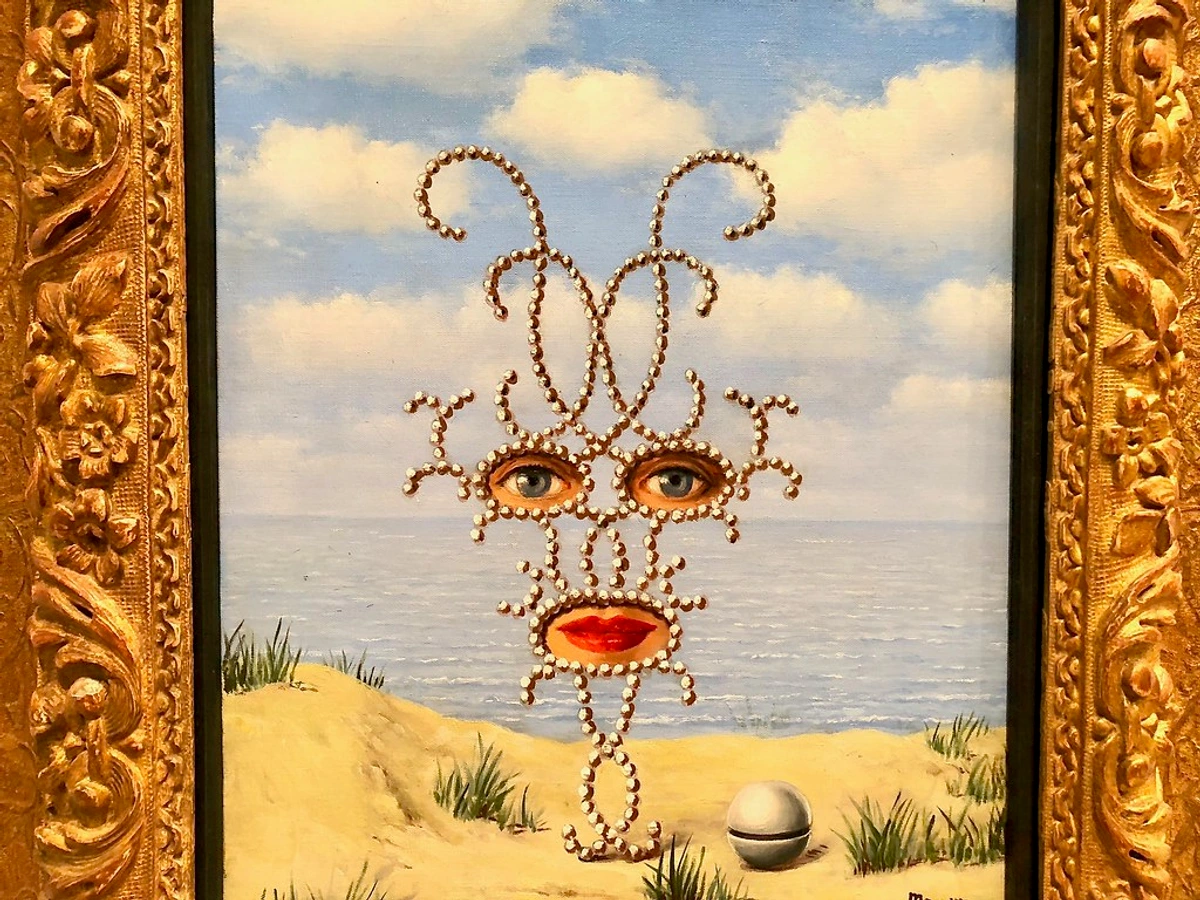
Though stylistically very different, artists like Banksy, with their conceptual interventions in public spaces, share Magritte's lineage in challenging perceptions of reality and art's function, often with a wry wit. Here, in Follow Your Dreams Cancelled, we see a modern reflection on the arbitrary nature of our aspirations and the external forces that shape them, a conceptual thread that Magritte subtly wove through his own work.
Beyond de Chirico, Magritte also admired the writings of the French poet Lautréamont, whose famous line about the "chance encounter of a sewing machine and an umbrella on an operating table" deeply resonated with the Surrealist ethos of unexpected juxtapositions. Throughout his life, he devoured philosophical texts, particularly those exploring perception, the nature of images, and nominalism – the idea that abstract concepts, names, and universals exist only as names or labels, and not independently of objects. Imagine this: the word "cloud" isn't the fluffy vapor floating in the sky, and a painting of a cloud isn't a cloud either. They are distinct entities. Nominalism, simply put, argues against the existence of universal concepts outside of human thought and language. It's a pragmatic approach to meaning, challenging us to recognize the gap between a thing and its representation. Magritte took this philosophical stance and ran with it, using paint to articulate his questions, challenging the very relationship between words, images, and the world we think we know. For him, paint wasn't just a medium; it was a tool for philosophical inquiry, a way to visually interrogate the arbitrary connections we make between signs and objects. It’s like saying the word "chair" isn't the physical chair you sit on; it's just the label we agree to use. A crucial distinction that shifts our entire perspective.
His critical reception during his lifetime, especially early on, was often marked by misunderstanding. Early critics, often steeped in the emotional currents of Expressionism or the narrative of academic art, struggled. They found his cool, intellectual approach too illustrative, even 'empty' of emotion, or simply confusing. For instance, some dismissed The Treachery of Images as a mere linguistic trick, failing to grasp its profound philosophical implications. But Magritte remained unperturbed, steadfast in his philosophical pursuit, believing that the mystery in his art was not to be 'solved' but to be experienced. He was less interested in applause and more in profound inquiry, a refreshing stance, if you ask me, and one I deeply resonate with. Unlike many artists who sought validation, Magritte actively resisted the commercialization of his art, seeing it as a quest for intellectual truth rather than market success.
Magritte's Intellectual Surrealism: Revealing the Mystery in the Mundane
Magritte joined the Parisian Surrealist group in 1927, rubbing shoulders with titans like Joan Miró and Salvador Dalí, and the group's founder André Breton. This was a pivotal moment, yet Magritte offered a distinctly different path within Surrealism. While his Parisian peers like Dalí conjured fantastical, hyper-realistic visions from the subconscious, and Miró explored biomorphic abstraction (forms derived from living organisms that often feel organic or amoeba-like) and automatism (spontaneous expression to bypass conscious thought and tap into the unconscious), Magritte walked a more cerebral, grounded path. As an artist, I often feel he was communicating, "The world is already saturated with magic and enigma; we simply need to adjust our vision to perceive it."
He practiced what he sometimes called "magical realism" – a term he employed years before its later literary recognition. But let's be clear: Magritte's "magical realism" wasn't about blending the fantastical with the everyday in a narrative sense, as we see in later literature. Rather, it was his unique way of making the everyday itself profoundly strange. It was about meticulously rendering ordinary objects in unexpected contexts to reveal the inherent, poetic mystery and paradox that lies within reality, not added to it. He aimed to make a quiet wonder, an unsettling realization, seep from the familiar without resorting to grotesque distortions or direct dream transcription.
Magritte's unique intellectual engagement and his deliberate unsettling of the familiar are what truly set him apart. The Belgian Surrealist movement, to which he belonged alongside figures like Paul Nougé and E.L.T. Mesens, cultivated a more reserved, intellectual, and philosophical character than its Parisian counterpart. They valued a logical subversion of thought, a methodical unsettling of perceptions, and a playful manipulation of language and imagery, deliberately stepping away from automatic writing or Freudian dream analysis. Think less of Freudian psychoanalysis and more of a philosophical chess match with reality, played with paint. This temperament perfectly suited Magritte's quiet yet profound inquiries. He challenges our assumptions about what we see, what we know, and how we name things. Unlike Dadaism, which often used shock and absurdity to directly protest societal norms, Magritte's subversion was quieter, more philosophical, and aimed at questioning perception rather than outright destruction of artistic conventions. If you're curious to dive deeper into the broader movement, I've found a good overview in the enduring legacy of surrealism.
To grasp just how unique Magritte's approach was, let's cast a quick glance at how his Surrealism diverged from some other key figures in the movement. It's fascinating to see how different artistic temperaments interpret similar overarching philosophies.
Surrealism and Beyond: A Comparative Glance
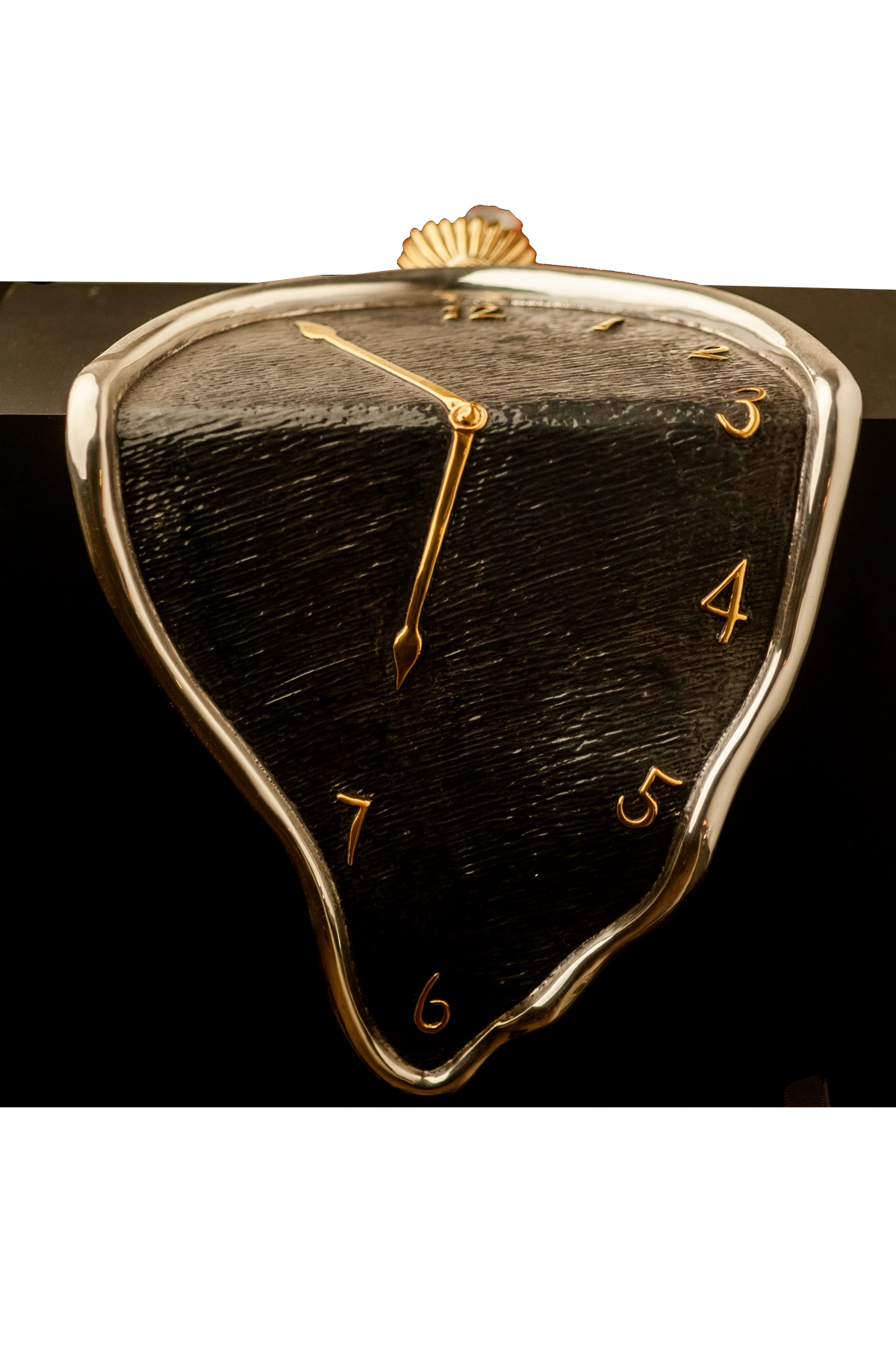
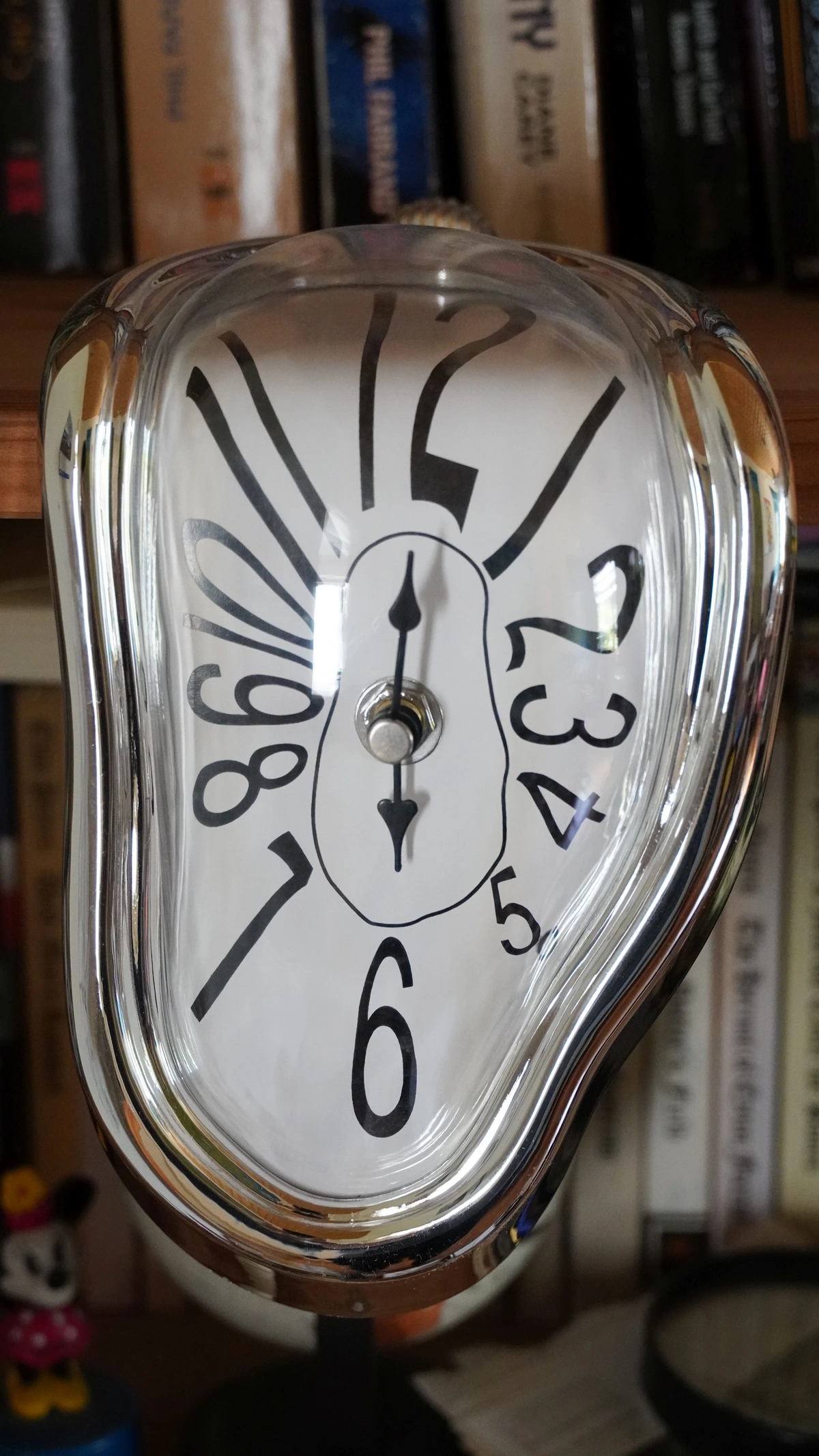
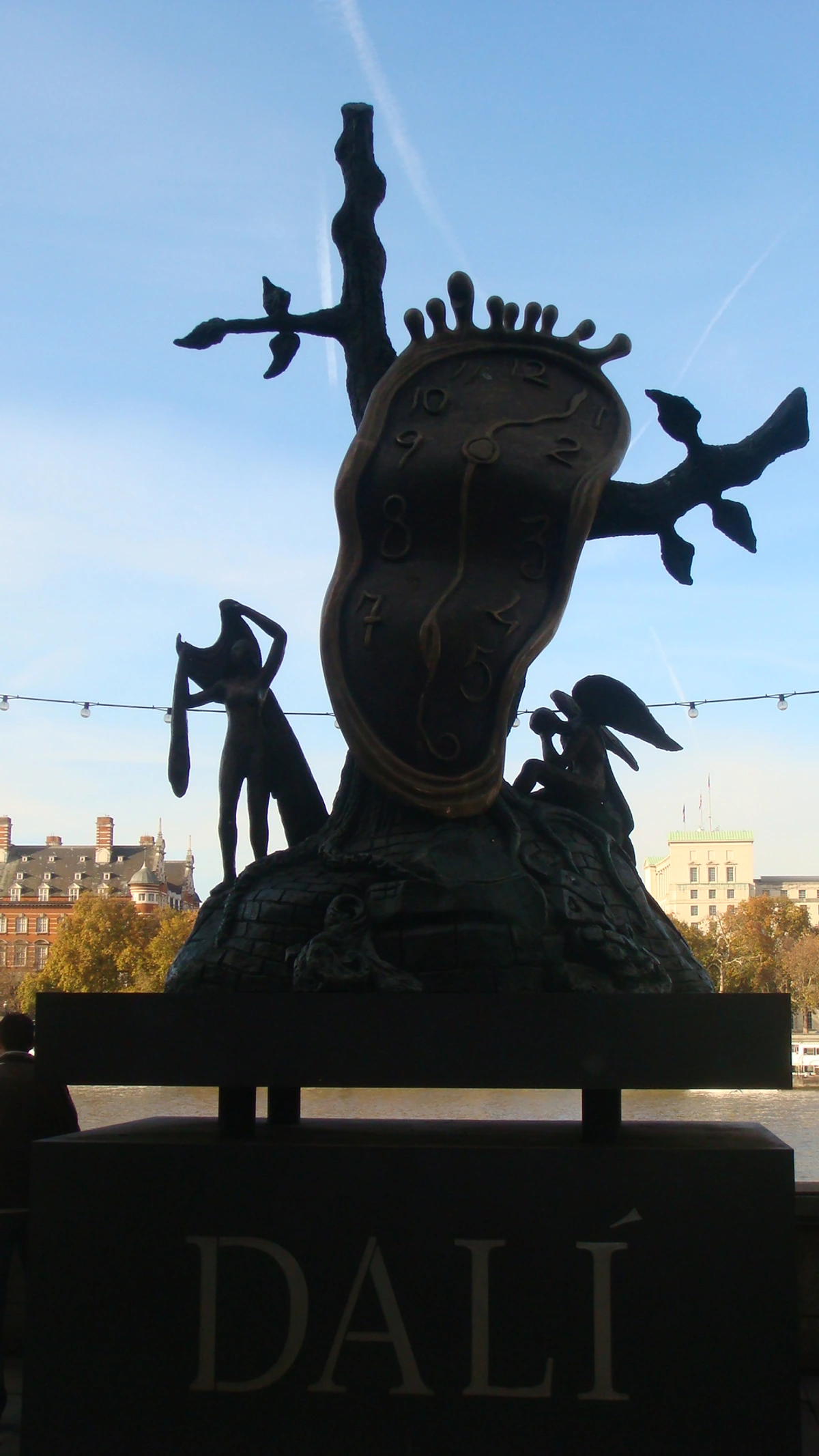
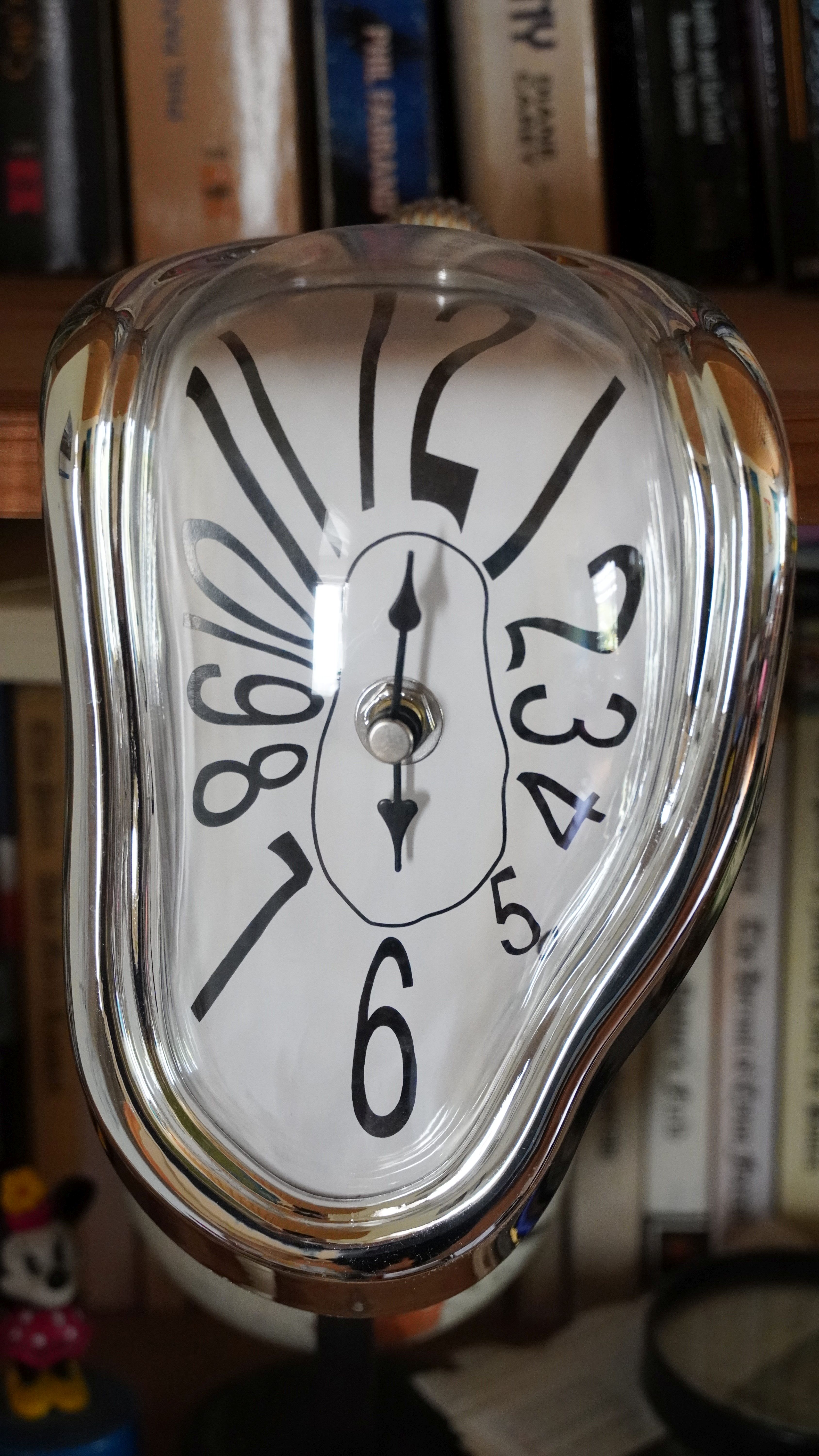
Salvador Dalí's The Persistence of Memory, with its iconic melting clocks, epitomizes his exploration of time, dreams, and the subconscious through hyper-realistic, often grotesque imagery. This is quite different from Magritte's cool, intellectual paradoxes, wouldn't you agree?
Joan Miró's Figures in a Landscape showcases his biomorphic forms and vibrant, playful abstraction, a more intuitive and automatic approach to Surrealism, steeped in a raw, almost childlike wonder.
Artist  | Primary Focus | Style | Key Themes | Magritte's Contrast Point |
|---|---|---|---|---|
| René Magritte | Challenging perception, paradox, philosophical inquiry, language, representation | Realistic style, juxtaposing ordinary objects in illogical ways | Visible vs. hidden, mystery, language, representation, the illusion of reality, nominalism, the ordinary made extraordinary | Focus on cerebral paradox, not dream transcription or pure fantasy. |
| Salvador Dalí | Dreams, subconscious, Freudian symbolism, desire | Hyper-realistic, often grotesque or fantastical imagery | Time, decay, sexuality, paranoia, death, metamorphosis, Freudian psychoanalysis | Intellectual, not hallucinatory; objective reality, not subconscious dreams or Freudian symbolism. |
| Joan Miró | Biomorphic forms, automatism, childlike wonder | Abstract, symbolic, vibrant colors, often playful | Cosmos, nature, poetry, Catalan identity, subconscious, primal instincts | Methodical, not automatic; intellectual concept, not raw emotion or spontaneous expression. |
| Frida Kahlo | Personal suffering, Mexican culture, identity, post-colonialism | Figurative, strong self-portraits, symbolic, often seen as Surrealism | Pain, loss, identity, gender, reality and fantasy, political allegory | Less direct personal narrative; more universal, philosophical questions about perception and reality, often detached from overt emotional expression. |
| Banksy | Social commentary, political activism, anti-establishment | Stencil graffiti, often anonymously placed in public spaces | Capitalism, consumerism, war, poverty, freedom, identity, social critique, irony | Conceptual impact on visual culture, but Magritte's focus is on perception's philosophy, not overt political activism. |
The Art of Subversion: Magritte's Philosophical Toolkit
Magritte's genius lies in his ability to make the familiar unfamiliar without resorting to dramatic distortion. He's a master of the visual pun and the conceptual riddle. He wasn't interested in simply painting beautiful pictures; he wanted to make us think about what beauty, reality, and representation truly mean. He once said, "The mind loves the unknown. It loves images whose meaning is unknown, since the meaning of the known mind is itself unknown." This encapsulates his entire project: revealing the inherent mystery in everything.
Meticulous Realism and the Uncanny
Magritte's method was precise and methodical. Unlike many Surrealists who embraced chance or automatic techniques, Magritte planned his compositions meticulously. His paintings are often rendered in a strikingly realistic, almost illustrative style. This meticulous realism serves a crucial purpose: it makes the impossible seem entirely plausible, thus amplifying the unsettling effect. It's like a magician who shows you an empty hat before pulling out a rabbit – the more normal the setup, the more profound the disruption. His use of a relatively muted, yet clear and consistent, color palette further emphasizes the conceptual over the purely emotional. The stillness in his work, that almost photographic quality, contributes immensely to this uncanny feeling, where everything is perfectly rendered, yet deeply, unnervingly wrong. As an artist myself, I can attest to the discipline required to achieve such a deceptive simplicity.
Photography as a Conceptual Proving Ground
Interestingly, Magritte often used photography as a conceptual proving ground, not just as reference material, but as a deliberate medium to stage and document his ideas. He would meticulously set up scenes – photographing himself and his friends in bizarre juxtapositions, or simply capturing uncanny everyday situations – creating a visual 'test kitchen' for the paradoxes he later translated to canvas. These photographic experiments were more than just preparatory sketches; they were often finished artworks in themselves, allowing him to 'test' the unsettling effect of recontextualizing the ordinary. He even made several short amateur films, extending his photographic explorations into moving images. This systematic investigation profoundly influenced how he conceived compositions, approached light, and captured the static, almost cinematic quality that defines many of his paintings. He wasn't just painting pictures; he was carefully constructing visual thought experiments, using photography and film to explore the boundary between reality and illusion, a theme that would deeply permeate his canvases.
Nominalism in Practice: Challenging Labels
This interplay between what is seen and what is concealed – the visible versus the hidden – is a central pillar of his art, a visual game of peek-a-boo that invites endless contemplation. He consistently challenged the "arbitrary rules" we impose on reality – those unspoken agreements that dictate how things 'should' be. Why should a pipe be only a pipe? Why should a sky always be above us, or a rock always be heavy? He disrupted these conventions, inviting us to see the cracks in our consensus reality. Consider, for instance, a painting where a window is the landscape it depicts (like in The Human Condition). He forced us to question the very definition of a 'view' versus its 'representation.' This wasn't just playful; it was a profound philosophical exploration of how we construct reality. He demonstrated that the rules we apply to objects, images, and words are often arbitrary – a concept deeply rooted in his nominalist leanings, which, if you recall, argues against the independent existence of universal concepts outside of human thought and language. For Magritte, the 'tree' in the painting was no more a 'tree' than the word 'tree' itself – both are merely representations, names we give to things. His art constantly reminds us that the map is never the territory, and the image is never the object itself. It's like saying the word 'chair' isn't the physical chair you sit on; it's just the label we agree to use, or that the concept of 'love' isn't the feeling itself, but the word we use to try and capture it. A crucial distinction that shifts our entire perspective.
The Anti-Commercial Stance: Art for Thought, Not Market
Magritte also held a skeptical view of art as a commodity, often refusing to offer explanations for his work, preferring the viewer to grapple with its inherent mystery. "Art for me," he once stated, "is not a means for expressing emotions, but for posing questions and making discoveries." This anti-commercial stance, coupled with his unwavering philosophical rigor, marked him as an artist whose primary pursuit was intellectual truth, not market success – a remarkably refreshing perspective, especially in our contemporary art world. I deeply resonate with his belief in the autonomy of the artwork, allowing it to speak for itself, rather than dictating its meaning or bending to market trends. It’s a powerful reminder that art can be a profound inquiry, a visual philosophical statement, not merely a product or a decorative item.
Imagine, if you will, opening your window one morning to find a perfectly normal teacup, not on your table, but floating serenely in the sky. Magritte wants you to linger in that moment of delightful illogic, to question the unspoken agreement we have with the world about how things 'should' be. It's an intellectual prank of the highest order, inviting us to find the profound in the peculiar.

Iconic Visions: Decoding Magritte's Visual Riddles
Alright, let's step into the gallery of Magritte's mind, shall we? As we journey through these truly unforgettable images, remember this: Magritte invites us not just to see his paintings, but to engage with them. He's laid out a series of visual puzzles, not meant to be 'solved' in a conventional sense, but to provoke endless contemplation. The true 'solution,' if there is one, lies in the questions they ignite within you. As you encounter each iconic vision, I urge you to ask yourself: What assumptions am I making about reality here? What is truly visible, and what is deliberately hidden? And how does this particular paradox challenge my everyday understanding of the world?
Here are some of his most profound visual statements, many of which are so ingrained in our culture that even if you haven't seen the originals, you've seen their echoes.
The Treachery of Images (Ceci n'est pas une pipe) (1929)
(While I cannot provide an image here due to copyright, this iconic oil on canvas, approximately 62 x 81 cm, is permanently embedded in the collective imagination, housed at the Los Angeles County Museum of Art (LACMA). A quick search for "Ceci n'est pas une pipe" will reveal this foundational work.)
A meticulously painted pipe, underneath which Magritte wrote, in elegant script, "Ceci n'est pas une pipe" (This is not a pipe). It's a foundational piece not just for Surrealism, but for conceptual art as a whole, a radical assertion of the distinction between an object, its image, and its name. A painting of a pipe is not a pipe, just as the word "pipe" is not the object itself. This isn't just wordplay; it's a direct challenge to the philosophical traditions that assume a seamless connection between a representation and the thing it represents. He forces us to actively confront the arbitrary nature of representation and the agreements we make about language. This piece is a cornerstone of semiotics – the study of signs and symbols and their interpretation – demonstrating how signs (the word "pipe") and images (the painting of a pipe) are distinct from the actual object they refer to. It’s a profound linguistic and philosophical puzzle, daring us to think beyond what we simply see. This artwork literally rewired how many artists and thinkers approached the relationship between signs and objects, perfectly embodying his nominalist leanings. Mind-blowing, right? It also echoes earlier philosophical questions, such as Plato's allegory of the cave, where shadows are mistaken for reality, reminding us to always question the fidelity of what we perceive.
What other 'truths' do we take for granted simply because they are presented to us? When we select a vibrant blue from a paint set, are we capturing the essence of 'blue,' or merely its manufactured representation? How often do we confuse the label for the thing itself?
The Human Condition (La Condition Humaine) (1933)
(Another deeply conceptual piece, typically an oil on canvas around 100 x 81 cm, which you can easily find with a quick search. Imagine its striking simplicity, now part of the National Gallery of Art in Washington D.C.)
Here, Magritte paints a canvas on an easel, perfectly positioned in front of a window, so that the painting exactly depicts the landscape outside the window that it obscures. This is a profound meditation on representation itself. Is the painting a window onto reality, or is reality merely a painting? It blurs the lines between art and life, illusion and reality, prompting us to question the very act of seeing and the faithfulness of any image to its subject. Is it reality imitating art, or art imitating reality? It’s a classic example of Magritte exploring the philosophical limits of representation, a meta-commentary on the act of painting itself, and a powerful statement on the subjective nature of our perceived reality. This piece, more than any other, concretely illustrates his nominalist argument: the painting is not the view itself, but merely a representation, a name for what is 'out there'. For Magritte, the 'tree' in the painting was no more a 'tree' than the word 'tree' itself – both are merely representations. How often do you confuse the map for the territory, or the image for the actual experience?
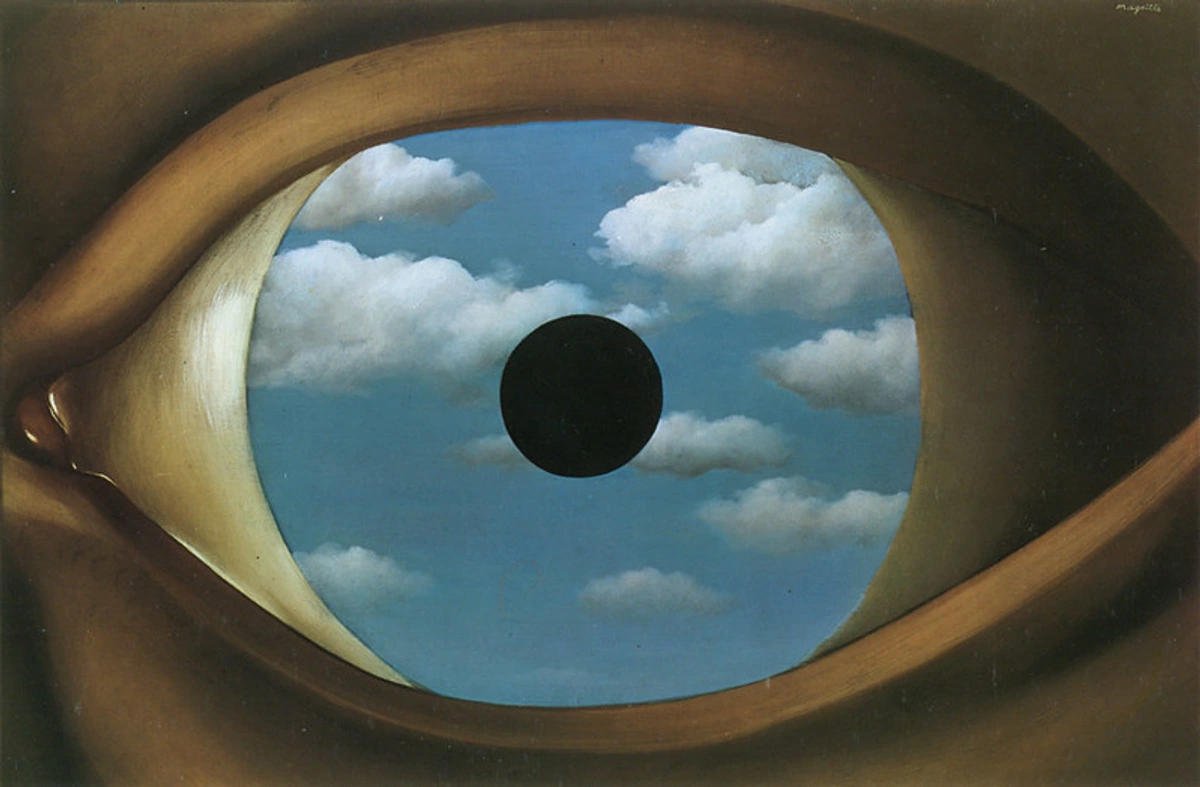
The False Mirror (1929)
(This artwork is featured at the very top of this article, and is a gem of the Museum of Modern Art (MoMA) in New York.)
This one always mesmerizes me. A giant eye, but instead of an iris, there's a cloudy sky. This oil on canvas, roughly 54 x 81 cm, is a powerful statement on perception itself: Are we truly witnessing the external world, or is it merely a projection of our inner landscape, filtered through our own subjective experience? It’s a beautiful, unsettling meditation on perception, a window into the soul that also mirrors the heavens. A perfect example of his exploration of the internal versus the external, and how our inner world shapes our view of reality. The eye, the organ of sight, becomes a canvas for the external world, yet it's also a closed system, reflecting only what it contains. It makes me wonder, are we seeing the sky, or our sky? It's a profound paradox of sight and self, highlighting the inherently subjective nature of vision and the limits of objective observation. When you look at the world, how much of what you see is truly 'out there,' and how much is a reflection of 'in here'? What secrets does your inner sky hold?
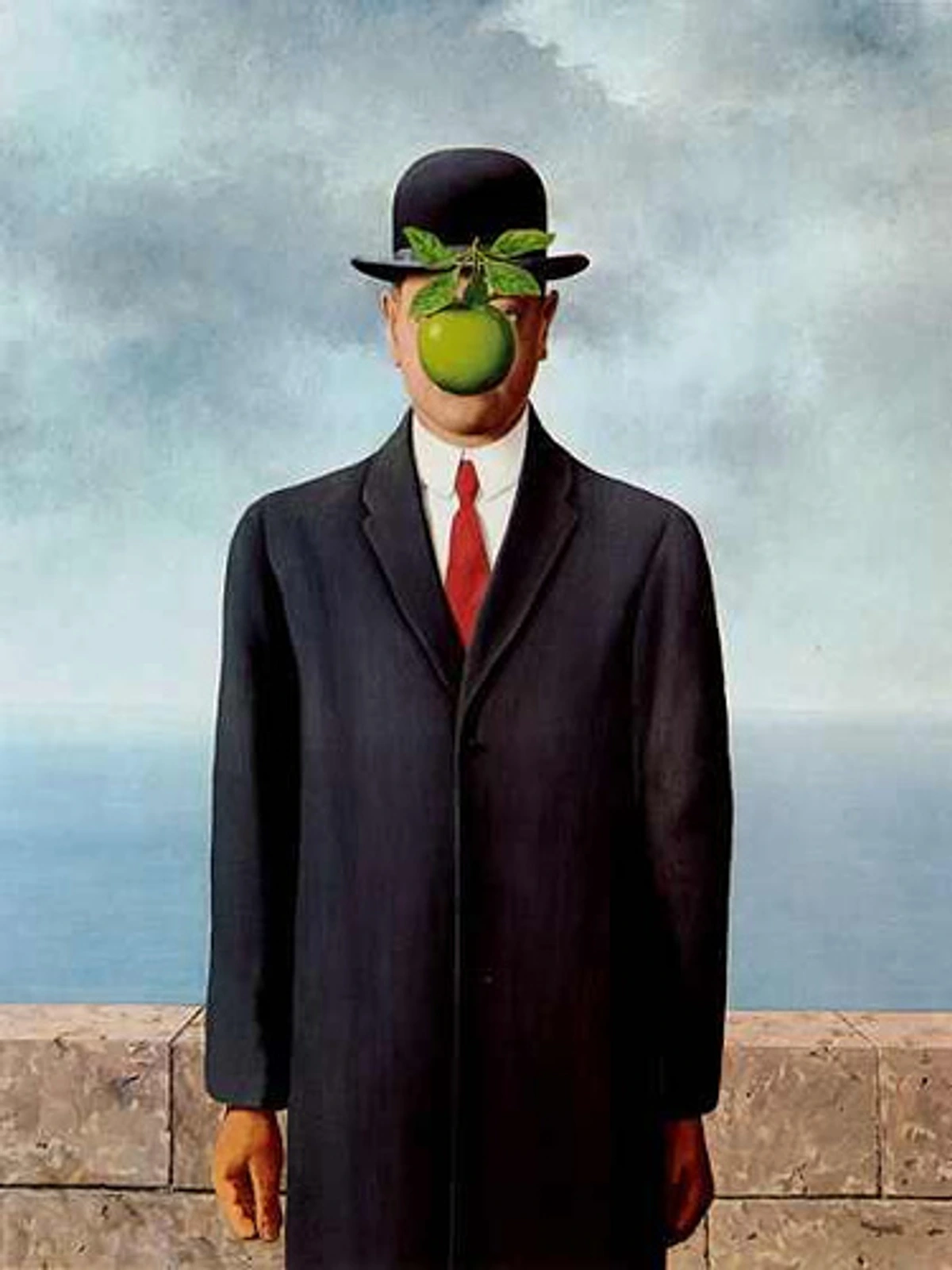
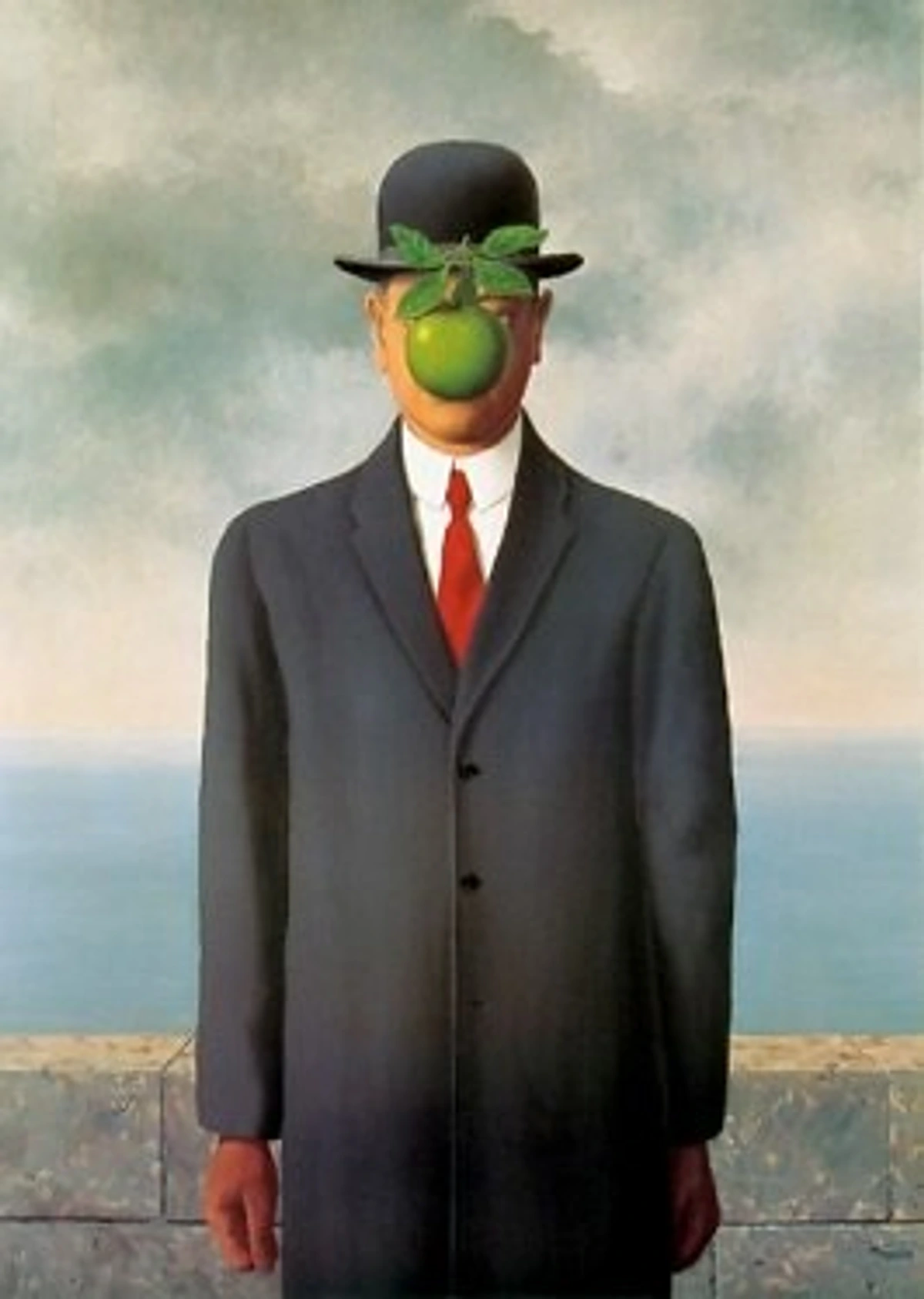
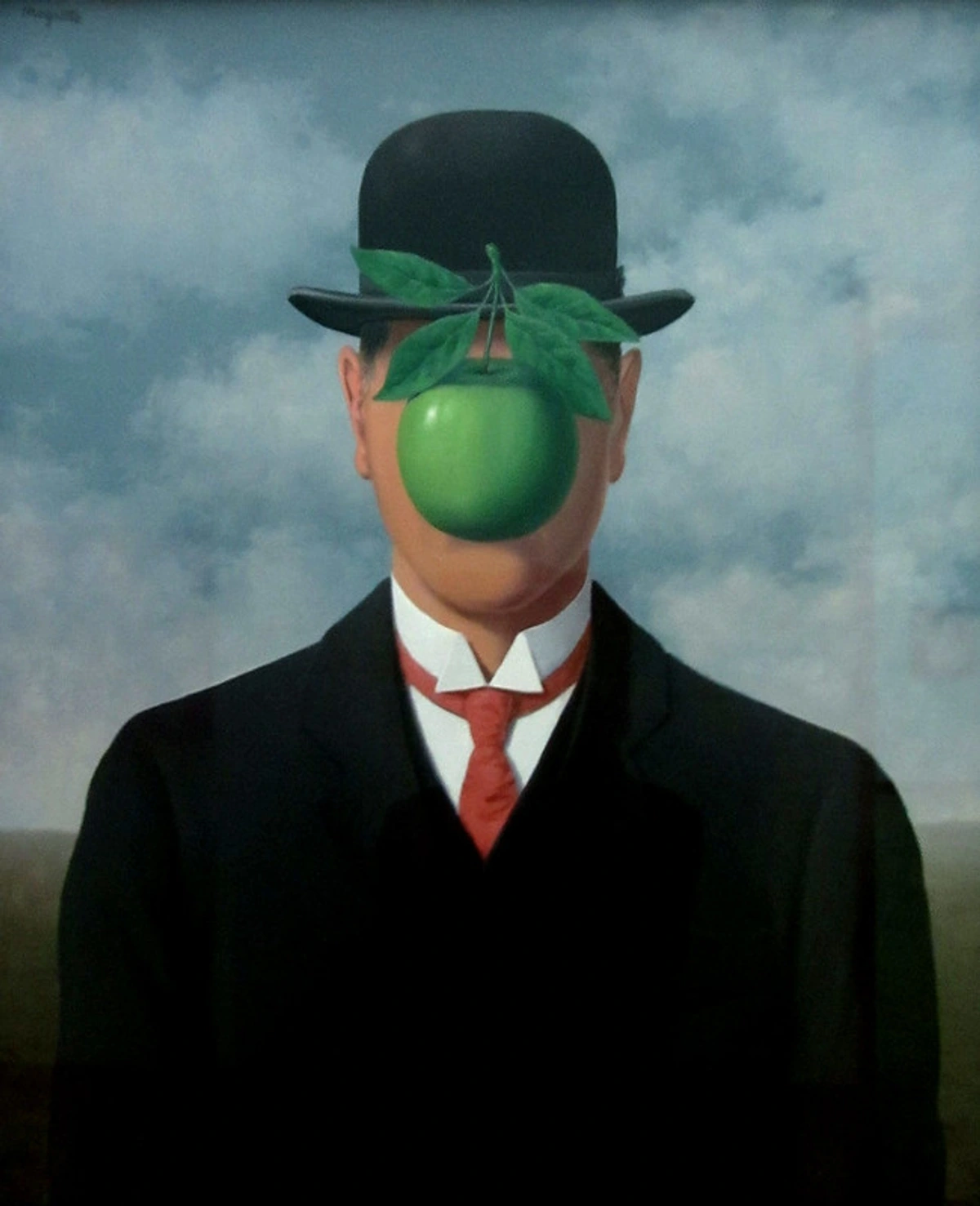
The Son of Man (1964)
(Again, no image to show you, but trust me, this approximately 116 x 89 cm oil painting, a private collection, is deeply ingrained in our cultural consciousness. You'll recognize it immediately if you look it up.)
This painting, with the iconic green apple obscuring the face of a man in a bowler hat, has become a cultural touchstone, replicated and referenced endlessly. It’s arguably his most [famous work](/finder/page/famous abstract art), and for good reason. It makes you ask: What's hidden? What's revealed? Is it about anonymity, or the hidden depths within every person? We all have parts of ourselves we don't show, don't we? That green apple, while obscuring the face, doesn't just hide identity; it represents the universal, the hidden self we all carry, the constant interplay between visibility and concealment. It also brings in themes of temptation and knowledge (think biblical apple), or perhaps simply the ultimate paradox of the mundane object becoming the profound barrier. It speaks to our own inner worlds, often veiled, always mysterious. The bowler-hatted man is a recurring motif for Magritte, often seen as representing anonymity or the everyman, making the obscured face a universal symbol of the unknowable self. It’s a quintessential Magritte: deeply personal, universally relatable, and endlessly open to interpretation. What do you choose to conceal about yourself, and what does that reveal, even in its concealment?
Hopper’s introspective figures, like this Clamdigger, share with Magritte a quiet contemplation of the human condition, though Hopper’s realism is about observation of everyday solitude, while Magritte uses realism to provoke philosophical questions.
The Empire of Light (L'Empire des Lumières) (multiple versions, 1949-1967)
(No image available here, but its concept is unforgettable and many versions exist, varying in size, such as a prominent 130 x 162 cm oil on canvas, with one version at the Museum of Modern Art (MoMA) in New York, and another at the Royal Museums of Fine Arts of Belgium in Brussels. Visualise a charming, dark street at night, with a single streetlamp casting a glow... but above, the sky is bright blue with fluffy white clouds, as if it's high noon.)
This series of paintings presents a startling paradox: a nocturnal street scene under a bright, cloud-filled daytime sky. It's an impossible fusion, yet rendered with such photographic realism that it feels utterly plausible. This work brilliantly encapsulates Magritte's core theme of paradox and the unsettling of expectation. It forces us to reconcile two incompatible realities within a single frame, challenging our conventional understanding of time, light, and consistency. How can it be both day and night simultaneously? Magritte doesn't offer an answer, only the compelling visual riddle, inviting us to sit with the inherent mystery. It's a powerful visual metaphor for the contradictions inherent in existence, the unseen layers of reality, or perhaps even the subconscious mind where such incongruities can coexist without question. What impossible juxtapositions do you live with every day, accepting them as normal, even beautiful?
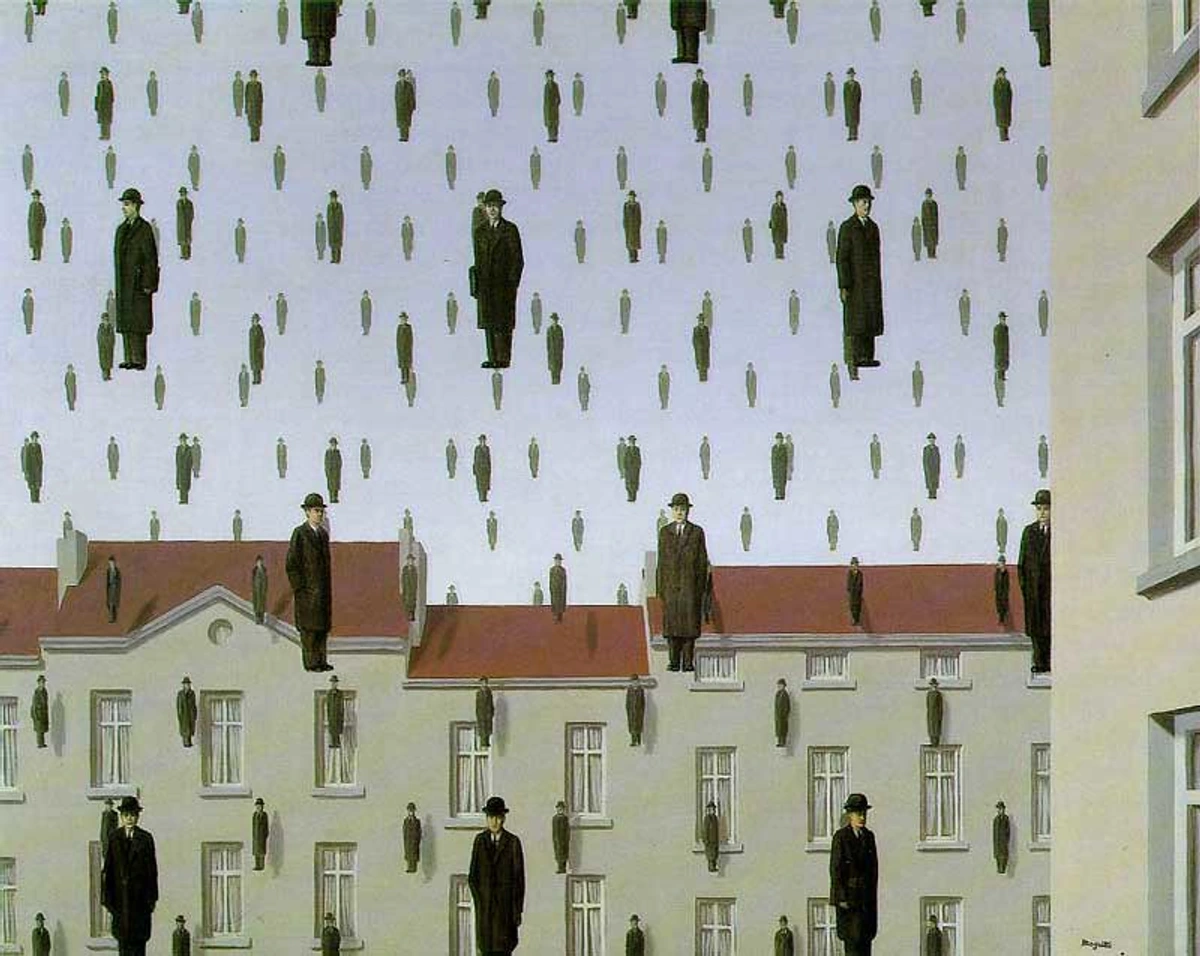
Golconda (1953)
Imagine looking up and seeing a sky full of falling men in bowler hats. Not just one, but dozens, perfectly spaced, suspended in mid-air above a quiet cityscape. Golconda, an oil on canvas measuring around 81 x 100 cm, currently at the Menil Collection in Houston, is just brilliant in its absurdity, yet somehow utterly serene. Are these men ascending, descending, or simply suspended in an endless, absurd moment? The ambiguity is part of its profound charm. For me, the uniform repetition of the figures in a seemingly impossible situation is a powerful commentary on societal conformity and the individual lost within the collective, like a humorous, yet unsettling, take on urban anonymity. It could also suggest the weight of convention, individuals being 'dropped' into pre-ordained roles, or even the subtle omnipresence of surveillance in modern life. Or perhaps, it's a playful meditation on gravity itself, or an ironic depiction of divine intervention. It's a visual poem that continues to provoke questions about our routines and how easily we accept them, or perhaps, how easily we become part of a larger, unquestioned pattern. This painting, with its unsettling repetition, often brings to mind the anxious, sometimes faceless, crowds in Edvard Munch's work, though Magritte’s vision is far cooler, more detached, and tinged with a philosophical irony rather than raw emotional angst. It forces us to ask: In what ways do you find yourself part of the 'raining men' of society, and what does it feel like to step out of line, or perhaps, to be just one of many, indistinguishable from the rest?
La Belle Société (1965)
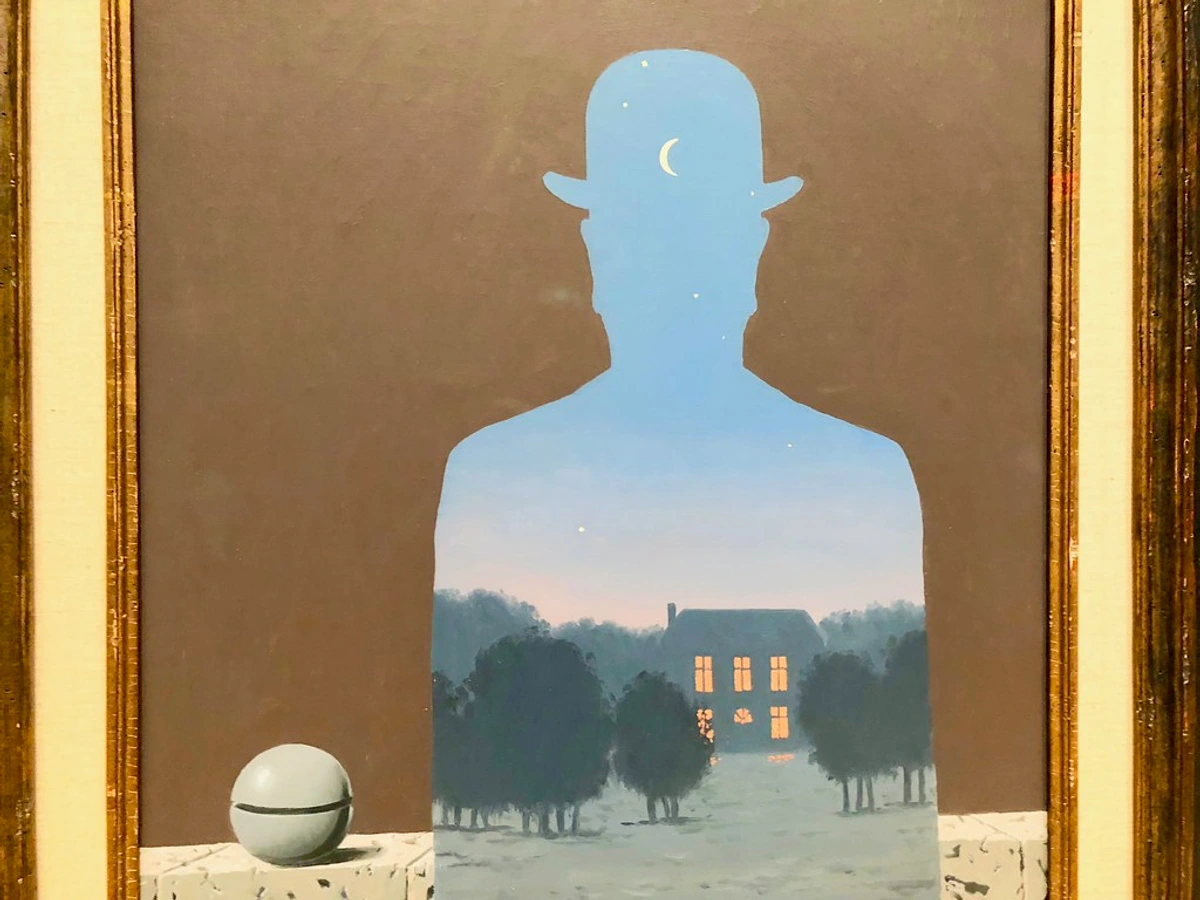
Another iconic image featuring those mysterious bowler-hatted men, but this time they are silhouettes, filled with disparate elements. One is a leafy green forest, the other a clear blue sky. These two figures, typically an oil on canvas of about 60 x 80 cm, brilliantly play with duality. Are they extensions of nature, or do they contain nature? It asks us to consider what we carry within us – our internal 'environments' – and how seamlessly (or perhaps disjointedly) they connect with the external world. Magritte truly was a master of probing profound dualities, particularly the intersection of man and nature, and the internal landscapes we inhabit. It challenges us to look beyond surface appearances and consider the essence of what makes us who we are, and how that essence might be composed of seemingly external elements. If your inner world were visible, what natural landscape would fill your silhouette?
Magritte's Enduring Legacy: Why His Questions Still Echo
Magritte’s influence is undeniable and, I'd confidently say, almost omnipresent in contemporary visual culture. His unique blend of meticulously rendered realism and philosophical absurdity laid crucial groundwork for future movements like Pop Art – think how Andy Warhol elevated everyday objects to iconic status, or Roy Lichtenstein's comic book aesthetics. While Warhol often focused on commodity and celebrity, his fascination with the 'readymade' and the recontextualization of mass-produced images echoed Magritte's earlier inquiries into the nature of objects and their representation. He profoundly impacted conceptual art, where the idea triumphs over aesthetic execution, with artists like Joseph Kosuth and John Baldessari directly acknowledging Magritte's influence in their explorations of language, images, and meaning. Kosuth's One and Three Chairs, for example, is a direct heir to The Treachery of Images.
His precise, almost photographic approach to painting also subtly influenced subsequent generations of photographers and artists exploring similar themes of illusion, reality, and the uncanny within the everyday. In a world increasingly saturated with digital images and simulated realities, where a virtual pipe is certainly not a pipe, but its existence can feel just as 'real,' Magritte's inquiries into representation and perception feel more relevant than ever. Ceci n'est pas une pipe remains a timeless touchstone for anyone exploring semiotics and the nature of signs and symbols. Beyond fine art, his iconic imagery and paradoxes are constantly referenced in advertising, graphic design, film, and even meme culture, demonstrating his pervasive cultural footprint.
credit, licence
I find his legacy particularly potent today. For an artist like myself, deeply engaged in exploring the boundaries between figuration and abstraction, and who delights in the unexpected turns of perception, Magritte's work is an endless wellspring of inspiration. His constant challenge to how we see, how we name, and how we understand the world pushes me to delve deeper into the 'why' behind the 'what' in my own canvases. When I explore themes of anxiety, dreams, or the surreal within the familiar, I often feel a quiet kinship with Magritte's methodical questioning. If you're curious to see some of that journey, how I grapple with these very questions through color and form, you can explore my timeline or browse my current collections.
credit, licence
His skeptical view of art as a commodity, prioritizing intellectual exploration over market demands, also feels remarkably relevant. He nudged the art world towards a more thoughtful engagement, questioning not just reality but also the commercial structures that often dictate artistic value.
Beyond direct stylistic influence, his work injected a quiet wit and a sense of playful subversion into the art world, nudging us away from an often solemn view of fine art. His art, like a well-crafted philosophical riddle, invites a smile, a head tilt, and then a deep, lingering thought – a truly rare and potent combination that continues to resonate with those seeking meaning beyond the obvious.

credit, licence
Frequently Asked Questions About René Magritte
To consolidate some of these insights and address common inquiries, here's a look at frequently asked questions about René Magritte, the silent saboteur of reality, whose work continues to inspire and perplex:
Who was René Magritte, and what defines his art?
René Magritte (1898–1967) was a highly influential Belgian Surrealist artist renowned for his witty, philosophical, and thought-provoking paintings. He challenged observers' preconceptions of reality by placing ordinary objects in unusual, often paradoxical contexts, rendered in a precise, realistic style. His art is defined by its exploration of mystery (le mystère), the visible vs. the hidden, language, representation, nominalism, and the very nature of perception. He often focused on the mystery of the mundane, elevating everyday items to objects of profound philosophical inquiry. When people search "who was Magritte," they're looking for an artist who fundamentally questioned how we see and understand the world.
What was Magritte's painting technique and style?
Magritte's technique was characterized by a meticulous, almost photographic realism, often described as illustrative. This precise rendering allowed him to make impossible scenarios appear utterly plausible, amplifying their unsettling effect and revealing the mystery of the mundane. He favored smooth brushwork, clear lines, and a relatively muted, consistent color palette to emphasize the conceptual content over raw emotion. He also extensively used photography not just as reference, but as a conceptual tool for staging and exploring his ideas, even creating short amateur films. This rigorous experimentation contributed significantly to the static, almost cinematic quality and uncanny stillness that defines his paintings. His meticulous realism was a deliberate choice to ground his surreal concepts in an undeniable visual reality.
What are René Magritte’s most famous works?
Magritte is most famous for his iconic Surrealist paintings that often feature men in bowler hats, floating green apples, and ordinary objects used in unsettling or illogical ways. His most renowned works include The Treachery of Images (Ceci n'est pas une pipe), The Son of Man (with the green apple face), Golconda (raining men), The False Mirror (eye with sky), The Empire of Light (day/night paradox), and The Human Condition (painting within a painting). These are often the first results when people search for "Magritte famous paintings."
How did Magritte’s Surrealism differ from others in the movement?
Magritte's Surrealism was distinctively intellectual and conceptual, contrasting with some contemporaries who focused on automatic drawing or fantastical dreamscapes. He practiced what he called "magical realism," revealing the inherent mystery within everyday reality rather than depicting actual dreams or subconscious fantasies. His methodical technique, emphasis on paradox, and playful engagement with language and philosophy (like nominalism) set his work apart from the more emotive or purely subconscious explorations of his peers like Dalí's Freudian dreamscapes or Miró's biomorphic abstractions (forms derived from living organisms that often feel organic or amoeba-like) and automatism (spontaneous expression to bypass conscious thought and tap into the unconscious). The Belgian Surrealist movement, which he belonged to, often favored philosophical inquiry and logical subversion over the raw expression of the unconscious mind. Unlike Dadaism, which often used shock and absurdity to directly protest societal norms, Magritte's subversion was quieter, more philosophical, and aimed at questioning perception rather than outright destruction of artistic conventions.
What inspired Magritte’s artistic philosophy and key themes?
Magritte drew inspiration from literature (Lautréamont), philosophy (especially nominalism and theories of perception), and everyday life, coupled with profound personal experiences like his mother's tragic death (reflected in veiled figures). He was deeply fascinated by the concept of paradox, the visible versus the hidden, and the limitations of language and perception. He aimed to evoke a sense of mystery (le mystère) and make the viewer question their understanding of reality, seeking to expose the 'extraordinary' hidden within the 'ordinary.' He also explored themes of identity, anonymity, conformity, and the deceptive nature of appearances. His artistic philosophy was less about expressing emotions and more about posing intellectual questions, often challenging the arbitrary rules we impose on reality, such as the assumed identity of an object and its image. This addresses common searches for "Magritte inspiration" or "Magritte themes."
What are Magritte's recurring motifs and their symbolism?
Magritte frequently employed several recurring motifs, each rich with symbolic potential:
- The Man in the Bowler Hat: Often seen as an anonymous 'everyman,' symbolizing societal conformity, anonymity, and the hidden identity beneath a conventional exterior. It can also represent the bourgeois identity or simply a universal, unidentifiable presence. Prominently featured in
The Son of ManandGolconda. - The Apple: Most famously in
The Son of Man, it represents the hidden self, temptation, knowledge, and the concept of concealment masking what is familiar. It acts as a barrier, yet its very presence is a statement. This is what people mean when they search "Magritte green apple symbolism." - The Pipe: Central to
The Treachery of Images, it challenges representation and nominalism, questioning the relationship between an object, its image, and its name. It's a linguistic puzzle about the fidelity of depiction. This clarifies searches for "Magritte meaning of pipe." - Clouds and Sky: Used paradoxically (e.g.,
The Empire of Light,The False Mirror), they represent the ethereal, the boundless, and blur the lines between internal and external landscapes, or day and night, always hinting at the mystery of the mundane. They also suggest the internal mind projecting onto the external world. - Curtains and Veils: Directly linked to his mother's tragedy, these signify concealment, the unseen, and the mysterious layers of reality, as seen in
The LoversandThe Forbidden. They highlight the constant interplay between what is revealed and what remains hidden. - Birds: Often depicted as a leaf or stone, symbolizing the transformation of the ordinary and the arbitrary nature of form, challenging our classification of nature and the malleability of perception.
What is the meaning behind Magritte's green apple in 'The Son of Man'?
The green apple in The Son of Man obscuring the man's face is one of Magritte's most recognizable symbols, prompting frequent searches for "Magritte green apple symbolism." While he rarely offered definitive explanations, it's widely interpreted as a powerful visual metaphor for the visible versus the hidden. The apple, an anachronistic everyday object, simultaneously conceals and replaces identity, representing the inherent mystery within every individual – the parts of ourselves we don't show, the unknowable aspects of the self, or the universal human experience of anonymity. It also subtly introduces themes of temptation and knowledge. It forces the viewer to confront what is revealed and what remains eternally concealed, inviting introspection into our own veiled realities. It's a classic paradox of everyday life.
Why did René Magritte paint ordinary objects like pipes?
Magritte painted ordinary objects like pipes, apples, and bowler hats precisely because of their commonplace nature. By decontextualizing them or placing them in illogical scenarios, he aimed to disrupt our automatic, conventional understanding of these objects. This was central to his philosophical inquiry into representation, nominalism, and the mystery of the mundane. He wanted to force viewers to look at familiar things with fresh eyes, question their identity, and challenge the arbitrary rules we impose on reality. A pipe is just a pipe, but a painting of a pipe, labeled "Ceci n'est pas une pipe," becomes a profound philosophical statement, urging us to question the very act of naming and knowing. This addresses common queries like "Magritte meaning of pipe." His goal was to make the familiar strange, not by distorting the object itself, but by altering its context or challenging its given name.
Did Magritte ever explain his art?
Magritte famously resisted offering definitive explanations for his artworks. He believed that the mystery inherent in his paintings was not meant to be 'solved' but rather to be experienced and contemplated by the viewer. He saw his role as an artist as posing questions and making discoveries, not providing answers. This stance underscored his anti-commercial view of art, emphasizing intellectual engagement over prescriptive meaning, and allowing the artwork to maintain its autonomy and power to provoke thought.
How did Magritte influence contemporary art and culture?
Magritte's influence is pervasive, extending beyond fine art into advertising, graphic design, film, and popular culture (including memes). His questioning of representation laid groundwork for conceptual art, while his elevation of the ordinary impacted Pop Art. Artists like Joseph Kosuth and John Baldessari, in their exploration of language and images, clearly draw a lineage from Magritte's work. His precise, photographic style inspired generations of artists and photographers. Furthermore, his exploration of paradox, the visible vs. the hidden, and the blurred lines between reality and illusion resonates powerfully in today's digital age, where simulated realities are commonplace. His art continues to challenge us to look beyond the surface and question our perceptions of the world. He taught us to find the mystery of the mundane everywhere.
Where can I experience Magritte's art?
Many of Magritte's most famous works are housed in museums worldwide. The Royal Museums of Fine Arts of Belgium in Brussels, his home country, holds a significant collection. Other major institutions like the Museum of Modern Art (MoMA) in New York, the Art Institute of Chicago, the Menil Collection in Houston, and the Centre Pompidou in Paris also feature his masterpieces. You might also find some pieces in temporary exhibitions, so always check local museum listings, perhaps even places like the Den Bosch Museum if they're hosting a modern art exhibit!






Conclusion: The Enduring Echo of Magritte's Questions
So there we have it – a profound journey into the captivating world of René Magritte, the quiet saboteur who taught us that the most compelling mysteries often hide in plain sight. He didn't merely paint canvases; he crafted visual riddles that continue to unravel our perceptions and invite us to embrace the beautiful, often humorous, absurdity of existence. His art is a powerful, understated reminder that the most profound truths frequently reside not in what is explicitly revealed, but in what is tantalizingly concealed – in those fertile, ambiguous spaces between expectation and reality. And that, my friends, is precisely why Magritte remains a timeless, thought-provoking master, forever inviting us to look at our world with fresh, perpetually questioning eyes, forever finding the profound mystery of the mundane. Now, go forth and discover: what delightful illogic will you uncover in your everyday? What hidden truths will you find lurking beneath the veneer of the familiar?