
The Unblinking Gaze: Marilyn Monroe in Art History
A journey through Marilyn Monroe's artistic legacy, from Warhol's pop art to today's digital interpretations. Discover why her image remains a powerful symbol and a mirror to our culture.

The Unblinking Gaze: Why Artists Can't Stop Looking at Marilyn Monroe
There’s a specific kind of tiredness in her eyes that I can’t stop thinking about. It’s not the glamour, not the perfect coiffure, not even the iconic smile. It’s something quieter, more vulnerable, crackling beneath the surface of every photograph and film frame. It's that unblinking stare, looking back at a world that never stopped looking at her. This is, I believe, the real reason Marilyn Monroe remains one of the most interpreted figures in the history of art. Her image is not just a subject; it's a vessel. It carries the weight of our collective fascination with fame, femininity, and the profound, often tragic, gap between the public self and the private soul. Before scrolling further, consider this a conversation. We're not just looking at art history; we're unpacking why a woman who died over sixty years ago still feels more present, more debated, and more seen than most people we pass on the street today.
You see her face everywhere, don’t you? On tote bags, in music videos, as a digital avatar. But this ubiquity is the very heart of the matter. To understand why she’s such a powerful artistic symbol, you first have to understand the sheer scale of her presence in our visual landscape. Her image functions as a cultural hieroglyph, an instantly recognizable symbol for a whole complex of ideas about beauty, tragedy, and the American Dream. This isn’t just celebrity; it’s a form of modern mythology, a cultural trope artists have been writing in paint, print, and pixels for over sixty years, interrogating themes from universal human truths to the pressures of modern digital life.
It's an image that predates our current era of hyper-visibility, yet it feels like she was the first to truly live it. Before Instagram feeds and 24-hour news cycles, Marilyn understood, perhaps unwillingly, that her face was not fully her own. It was a public utility, a thing to be borrowed, sold, desired, and judged. Every artist who has tackled her likeness since is, in a way, participating in this grand, ongoing experiment of what it means to be seen.
And the results of that experiment are far more complex than you might think, touching on everything from the birth of Pop Art to the very nature of digital identity. Artists like Andy Warhol saw in her the perfect alchemy of person and product. Later, feminist artists looked at her and saw the patriarchy’s blueprint for the ideal, consumable woman, a theme explored further in social commentary art. Today, digital artists see her as a foundational layer in the archaeology of our visual culture—a ghost haunting the machine, waiting to be remixed, deconstructed, and re-sampled, echoing the transformative power of new technologies in art.
This isn’t just about celebrity obsession. It’s about how one person’s image—a carefully crafted persona made of equal parts dream and desperation—can become a mirror for our own cultural anxieties, desires, and shifting ideas about fame, identity, and womanhood. Artists aren't just painting Marilyn; they're using her face to ask fundamental questions. Who controls a woman's narrative? What is the cost of fame? How does the public persona consume the private self?
These aren't abstract concepts; they are the very real forces that sculpted Marilyn's life and, ultimately, her death. When you look at the arc of artistic interpretations of her, you’re essentially watching our own societal evolution in fast-forward. The male gaze of the Abstract Expressionists gives way to the cool, impersonal eye of Pop, which in turn makes space for the critical, feminist, and queer perspectives of later generations. Each era finds something in Marilyn that it needs to see, a canvas upon which to project its own preoccupations and fears.

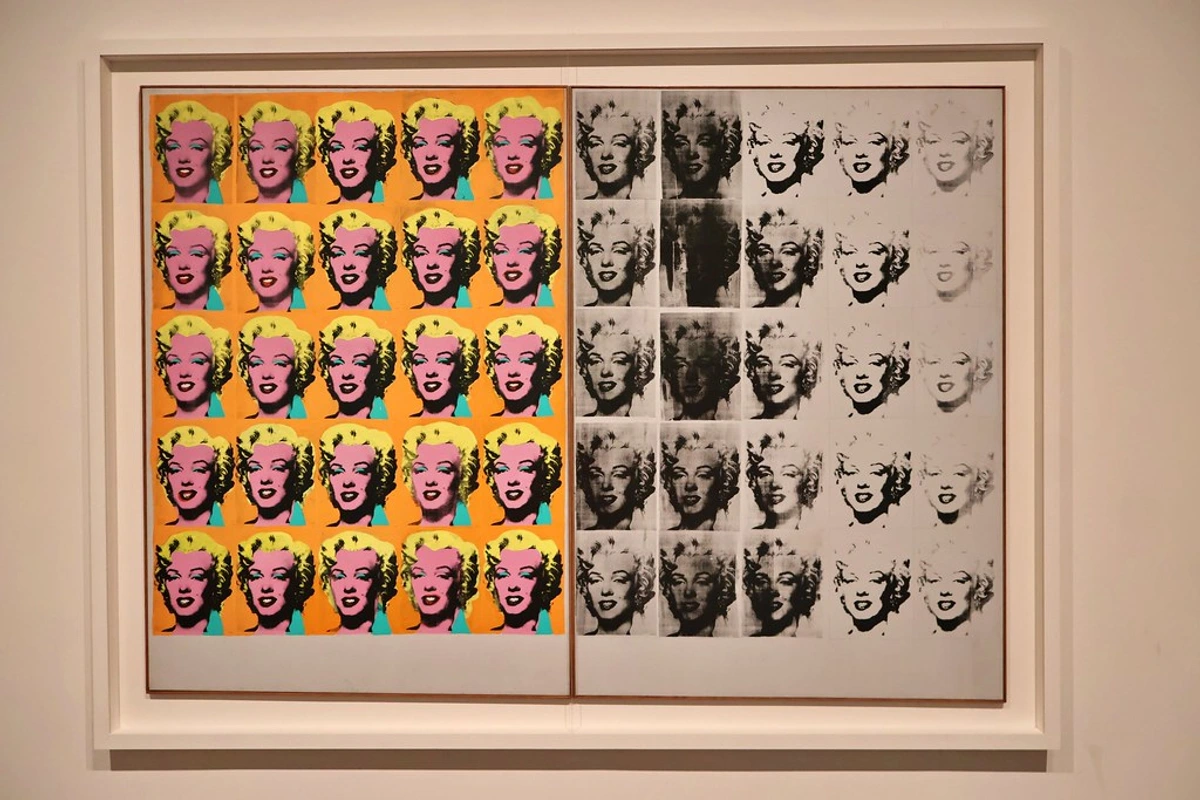
The contrast between vibrant life and stark death in the Marilyn Diptych makes it one of Warhol's most emotionally resonant works.
A Canvas of Contradictions: Marilyn as a Cultural Mirror
Before she was a silkscreen, Marilyn Monroe was a woman of profound and often painful contradictions. She was a bombshell who loved literature, a global sex symbol who battled deep insecurities, a creation of the Hollywood machine who desperately wanted to be recognized as a serious actress. This tension between the public image and the private self is the crack where great art gets in. It's in this space between what the world saw and who she really was that artists find their most fertile ground. She represents the ultimate paradox: an icon built by the system who desperately wanted to be seen as an individual. This internal schism is what makes her story a blueprint for the anxieties of the modern era, particularly as we navigate the curated identities demanded by social media and the relentless pressure to perform for a digital audience. Her life story serves as an arresting example of the profound human struggle for authenticity, a theme artists have explored from Botticelli's birth of Venus to the most contemporary digital art installations.
And let's be honest, we all have that crack, don't we? Maybe not on the scale of a global icon, but we all perform a version of ourselves for the world, curating identities like canvases for public display. Marilyn just did it under the most intense spotlight imaginable. This is what makes her not just a historical figure, but a timeless archetype.
Think about it. When you look at a portrait of a queen, you see power and lineage. When you look at a portrait of Marilyn Monroe, you see the very machinery of celebrity laid bare, a theme explored by master artists from Picasso's deconstructed faces to the social critiques of Banksy. She is both the product and the victim, the icon and the human. Artists are drawn to this duality because it reflects our own modern condition—the pressure to curate a perfect self while wrestling with inner chaos. It’s a theme that feels startlingly contemporary, which is why her image has proven to be so endlessly elastic. She isn’t just a subject from the past; she's a working symbol for the present, a tool for understanding the strange, fragmented way we live now, reminiscent of how Sol LeWitt's conceptual pieces explore the systems behind art itself.
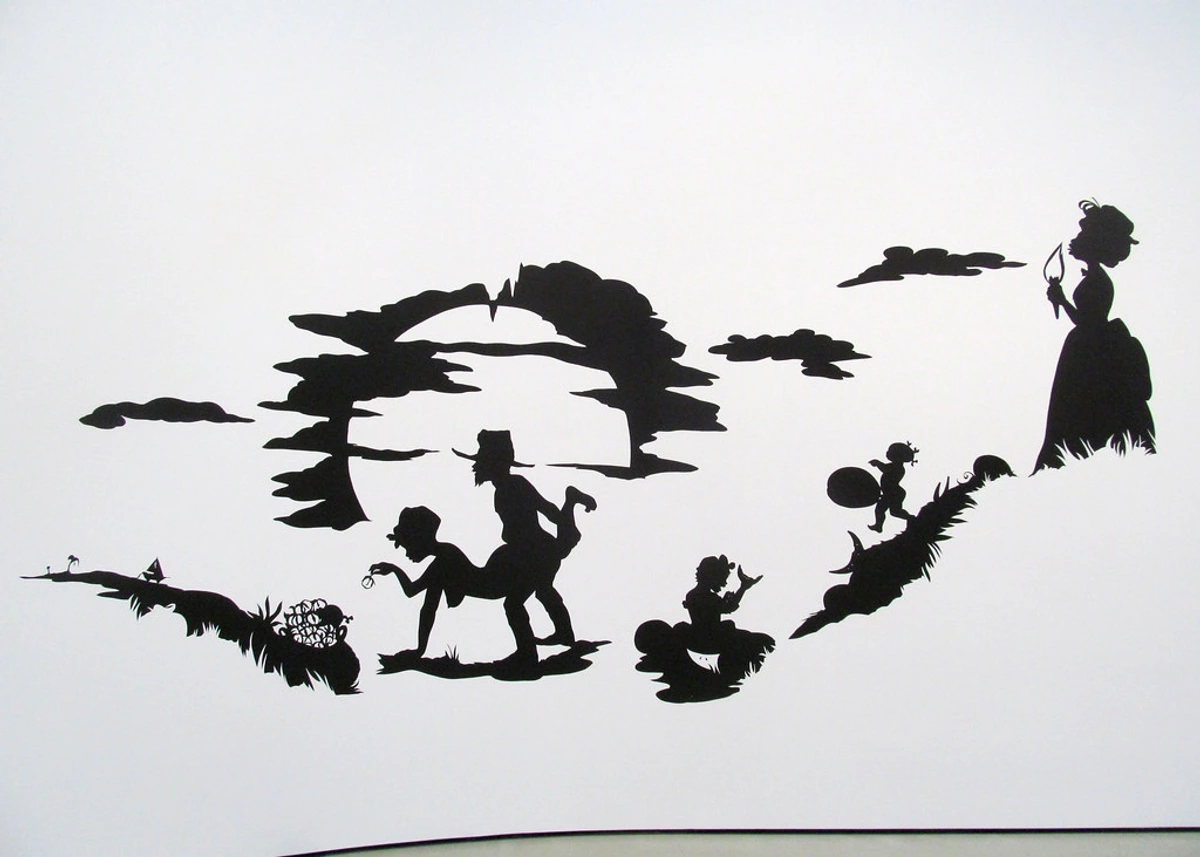
Her contradictions are our contradictions, just dialed up to eleven. The fame she courted also became her cage. The beauty she wielded left her feeling unseen. The intelligence she possessed was constantly overshadowed by the "dumb blonde" stereotype. In every single one of those tensions, an artist finds a story. It reminds me of how Picasso deconstructed a face to show you all its angles at once, revealing deeper truths about perception and identity. Marilyn was deconstructed by society, her image fragmented by relentless media attention and mass production, and artists have been reassembling the pieces ever since, each according to their own design, much like the layered narratives in Kara Walker’s silhouettes.
The Birth of an Icon: From Norma Jeane to Marilyn
We can't talk about the myth without understanding the woman. Born Norma Jeane Mortenson, her early life was a blueprint for instability—foster homes, an absent father she never knew, a mother battling mental illness. The creation of "Marilyn Monroe" was a deliberate act of survival. This transformation itself, the shedding of one skin for another, has always fascinated me as a core artistic theme, echoing the radical persona shifts explored in contemporary art. It’s a metamorphosis that speaks to our deepest anxieties about identity, a stark contrast to the steadfastness depicted in something like American Gothic. This wasn't just a stage name; it was a persona meticulously crafted with the help of agents, photographers, and studio executives, an early form of personal branding that predates today's social media influences on art. She learned to walk differently, to pitch her voice higher, to create a character that was the very essence of mid-century American desire. But the real woman, Norma Jeane, never fully disappeared, leaving a haunting trace for later artists to excavate.
This internal split—Norma Jeane the thoughtful, fragile human versus Marilyn the luminous, untouchable object—is the central drama of her existence and the primary source of artistic fascination. Artists aren't just depicting a glamorous star; they are dissecting this violent act of self-creation. It's a process that feels painfully close to the way we build our own online identities and social media presences, curating a highlight reel for public consumption while our inner life remains something else entirely, much like crafting a digital collage of life's best moments. The only difference is scale.

We see this duality play out in our own lives every day. The pressure to maintain a perfect social media profile, the anxiety of a work call where you must project confidence while internally you're a wreck—Marilyn’s struggle feels like a magnified, Technicolor version of our own. She became a symbol because her specific pain was a universal one, dressed up in the most gorgeous, desirable package imaginable. The art about her works because it peels back that packaging to show the raw material inside.
Her story is a question we all face: how much of our authentic self are we willing to sacrifice to be loved? For Marilyn, that sacrifice seems to have been almost total. It's the price of admission to the public square, and she paid it in full. Artists understand this transaction intimately. They see in her not a victim, necessarily, but the original high priestess of a new kind of identity—one forged in the crucible of public opinion and media glare, a theme later interrogated by artists mining the depths of social commentary in art and the impact of fame on individual identity.
Pop Goes the Icon: Warhol and the Birth of the Modern Marilyn
The year was 1962. Marilyn Monroe had died just weeks before, and the world was grappling with the sudden silencing of its most luminous star. But in the hands of Andy Warhol, this was not an end; it was a beginning. It was the moment her image was finally, completely liberated from the woman, ready to be dissected in the autopsy room of Pop Art, a movement that paralleled the rise of mass-produced consumer goods in art.
Of course, you can't talk about Marilyn in art without talking about Andy Warhol. It's almost a cliché at this point, but clichés become clichés for a reason. Before Warhol, depictions of celebrities often aimed for glamour or psychological depth, much like the celebrated portraiture throughout art history. Warhol did something different. He turned Marilyn into a product, interchangeable with other consumer icons like Campbell's Soup.
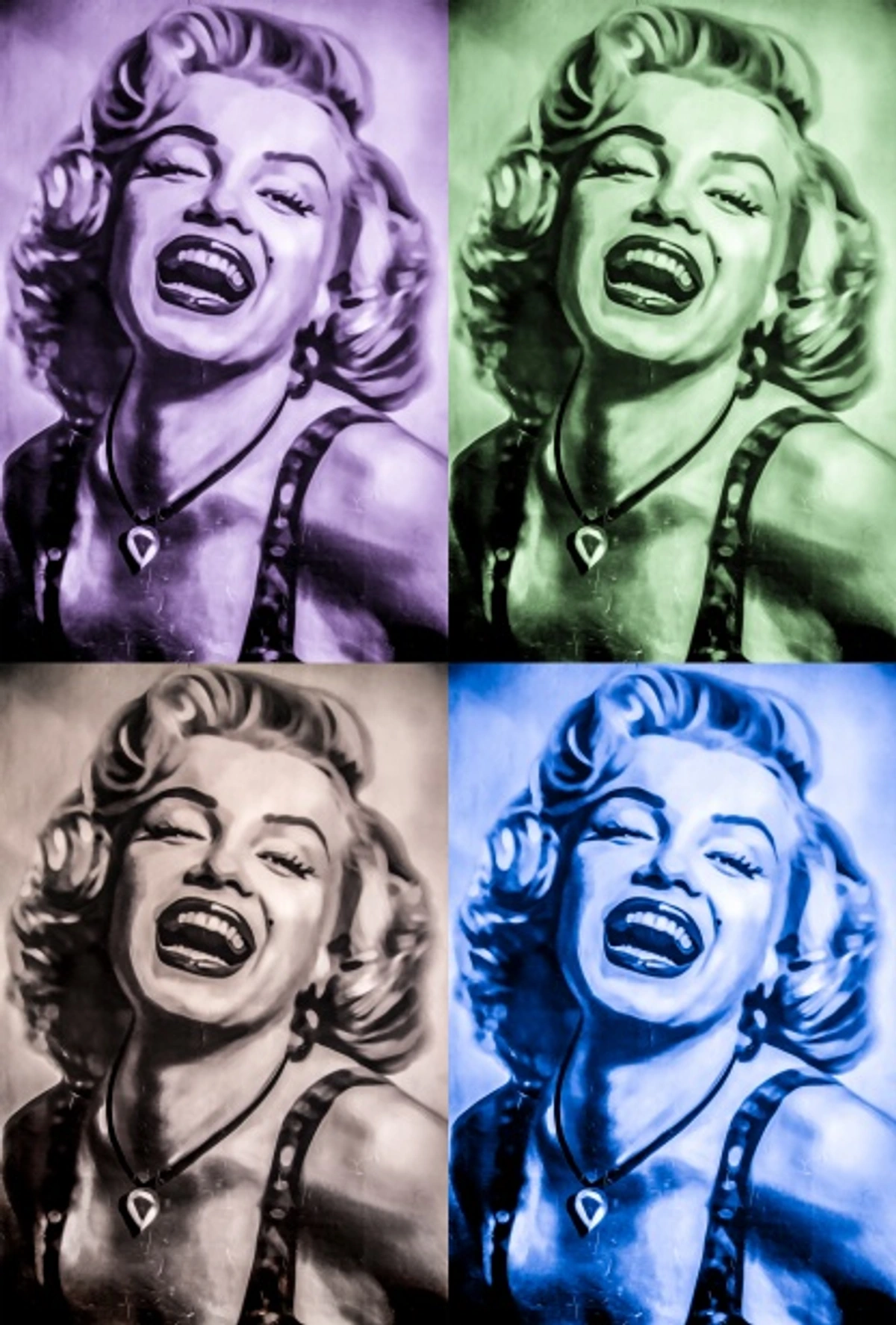
In doing so, he didn't just create a portrait; he created a vocabulary for understanding fame in the age of mechanical reproduction. This is the crucial insight. Warhol looked at Marilyn and didn't see a soul; he saw a brand, a logo. He saw the same process of mass production that he saw in a bottle of Coke or a can of soup. Her image wasn't special because it was unique; it was powerful because it was reproducible. This idea, that an image gains power through its endless repetition, is arguably the single most important concept in understanding modern visual culture, a radical departure from traditional artistic meaning.
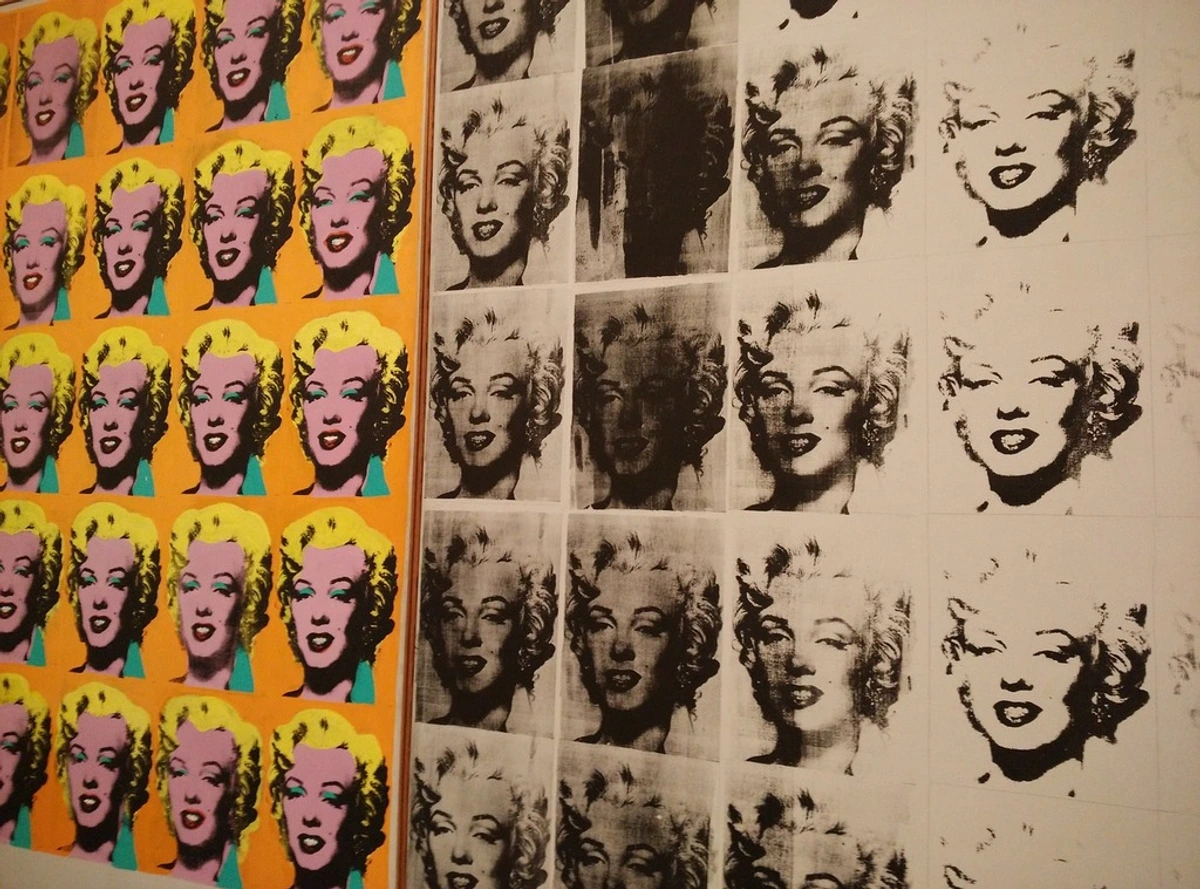
His series of Marilyn Monroe silkscreens, created in the days following her death in August 1962, aren't portraits in the traditional sense. They're comments on mass production, on the way fame flattens a person into a consumable image. He took a publicity still from her 1953 film Niagara and ran it through his silk-screening process, churning out variations with lurid colors and sloppy, off-register printing, deliberately subverting the perfection of the original image. I find myself wondering if Warhol was a fan or a brilliant, detached diagnostician, observing the commodification with surgical precision. The process itself—repeating, making small errors, changing colors—was his true subject, and Marilyn was merely the perfect, most recognizable specimen, echoing the way collage artists had used found imagery to create new meaning.
The Marilyn Diptych (1962), with its vibrant left panel fading into a stark, ghostly black-and-white right panel, is perhaps the most powerful statement on this. It simultaneously celebrates her vitality and laments her mortality, turning her life cycle into a production line of images, each print a repeated motif in a larger system of meaning, much like Sol LeWitt’s conceptual wall drawings. I often wonder if Warhol was being cold or deeply sentimental. Maybe he was being both. That’s the genius of it. The work captures the paradox entirely: we consume the image, but the person disappears. We are left with the ghost in the machine, beautiful and empty.
The choice of the Niagara press photo is its own kind of statement. It's an image she herself commissioned and controlled, a piece of her own myth-making. By appropriating it, Warhol exposes the circular nature of fame: the celebrity creates an image, the media distributes it, and the artist repackages it as commentary on the very system they are all trapped in, echoing themes explored in critiques of art institutions. He didn't just use her image; he held up a mirror to the entire star-making machinery, forcing us to confront the artifice behind the glamour, a strategy borrowed from Cubist collage techniques.
There is a profound and deeply unsettling truth in this gesture. It suggests that in the modern world, there is no "real" Marilyn Monroe, only a series of endlessly circulating images, a reality now mirrored in our digital art and social media age. And if that’s true for her, what does it mean for the rest of us, as we navigate curated identities and public perception?

The genius isn't in the brushstroke; it's in the repetition. By making multiple Marilyns, Warhol was holding up a mirror to the movie studios, the magazines, and the public who couldn't get enough of her image. He was asking: when you see Marilyn Monroe, are you seeing a person, or are you just seeing a brand?
That question feels even more pointed today in our age of influencers and viral content, where personalities are consciously manufactured and then endlessly reproduced for consumption, confronting emerging artists with new pressures. We live in the world Warhol's Marilyn predicted, where everyone is both a consumer and a product, and the line between person and persona is thinner than ever. His factory-produced Marilyns were a prophecy, a vision of a future where we would all curate and commodify our own identities, one post at a time, turning life into public performance art.
Beyond Pop: Interpretations Across Eras and Mediums
What's fascinating is how her image has evolved in the hands of different artists, each pulling out a different facet of her myth. This evolution in portrayal traces our own shifting cultural attitudes—from the rebellious, consumerist critiques of the 60s, through the expressive interpretations of the 70s and 80s, to the hyper-aware, identity-focused art of the 21st century, shaped by new technologies explored in digital art. Each artist is a mirror, reflecting not just Marilyn, but the world as they see it, revealing themes of universal human truth through their distinctive lens.
If Warhol gave us the blueprint, then the artists who followed him are the ones who broke into the house and started redesigning the interior. They took his foundation and built upon it—a foundation rooted in challenging perceptions of art and accessibility—challenging his detached coolness, adding layers of psychological depth, political anger, and personal empathy that he deliberately stripped away. They refused to see her as just a product and insisted on seeing her as a person, a symbol, and a cautionary tale all at once, embodying the enduring power of social commentary in art.
The handmade imperfections of Warhol's technique are more visible up close, revealing the human touch within the mass-produced icon.
The Abstract and Expressive Lens
In the 1960s, artists like Willem de Kooning and Richard Hamilton moved away from literal representation, pushing abstraction further than movements like Cubism had previously ventured. For them, Marilyn was not a person but a set of signs—a wave of blonde hair, a suggestive curve, a slash of red for lips. This semiotic breakdown feels startlingly modern. It's the same process a meme-maker uses: distilling a complex entity into its most potent, repeatable symbols. These artists were essentially creating the first memes of high art, deconstructing her iconic look into pure visual data, explored even today in modern practices like selling art on Instagram.
Richard Hamilton’s 1964 work My Marilyn is a particularly sharp example. He presents a grid of Polaroid-style images, many of which are violently crossed out by thick pencil lines. The story goes that Marilyn herself would do this to unwanted photos. By appropriating this gesture, Hamilton shows us a woman trying to wrestle control of her own image back from the photographers, the studio, and the public. It's a profoundly poignant act—one woman's desperate attempt to edit an un-editable public self.
Their work abstracts her form, using her iconic features as a starting point to explore themes of eroticism, consumer culture, and the fragmentation of the human form in the modern world, themes later echoed by artists probing social commentary in art. They weren't painting her; they were painting the idea of her. They were painting the impact she had on the culture, the psychic space she occupied in the collective male imagination of the time, a perspective increasingly challenged by feminist art movements.
British Pop artist Richard Hamilton, in his 1964 work My Marilyn, presents a grid of Polaroid-style images. Some are crossed out, suggesting a woman editing her own image—a powerful metaphor for Marilyn's own struggles with self-perception and the public gaze, reminiscent of the radical self-presentation explored by feminist and conceptual artists. The work is a commentary on the impossibility of living up to the perfect image, a theme that resonates with anyone who has ever curated a photo gallery on their phone, much like modern artists leveraging Instagram. What I find so compelling about this piece is its agency. It shows Marilyn not as a passive victim of the camera, but as an active, if desperate, editor of her own narrative. She is literally trying to scratch out the parts of her image she deems unworthy, an act of creative destruction paralleling Kara Walker’s complex histories. It’s a heartbreaking act of self-erasure in the service of maintaining a flawless public face. The story behind these cross-outs—that Monroe herself did this on contact sheets—adds another layer, suggesting the work isn't just about her, but is a collaboration of sorts, using her own gestures as a primary artistic material.
De Kooning, for instance, wasn't interested in portraiture but in voracious energy, a raw emotionality that connected directly to primal human experience, a theme explored throughout universal truth in art history. His Marilyn-inspired figures from the early 1960s are aggressive, almost violent in their application of paint, embodying the frenetic pulse of modern fame. They feel less like a celebration of a woman and more like a gut reaction to the overwhelming force of her media image. He was painting the impact of Marilyn, not the person, much as Basquiat later channeled cultural chaos into his work.

You look at a de Kooning, and you don't see the starlet; you see the messy, frightening, and beautiful chaos she unleashed upon the culture, mirroring the kind of profound emotional response great art can evoke. His work is deeply uncomfortable. It reflects the anxiety of an artist—and a gender—confronting a new kind of female power, one that was both seductive and threatening, a tension central to contemporary feminist art. It’s the visual equivalent of a primal scream in response to the unreachable, unattainable icon.
Blurring the Cinematic and the Artistic
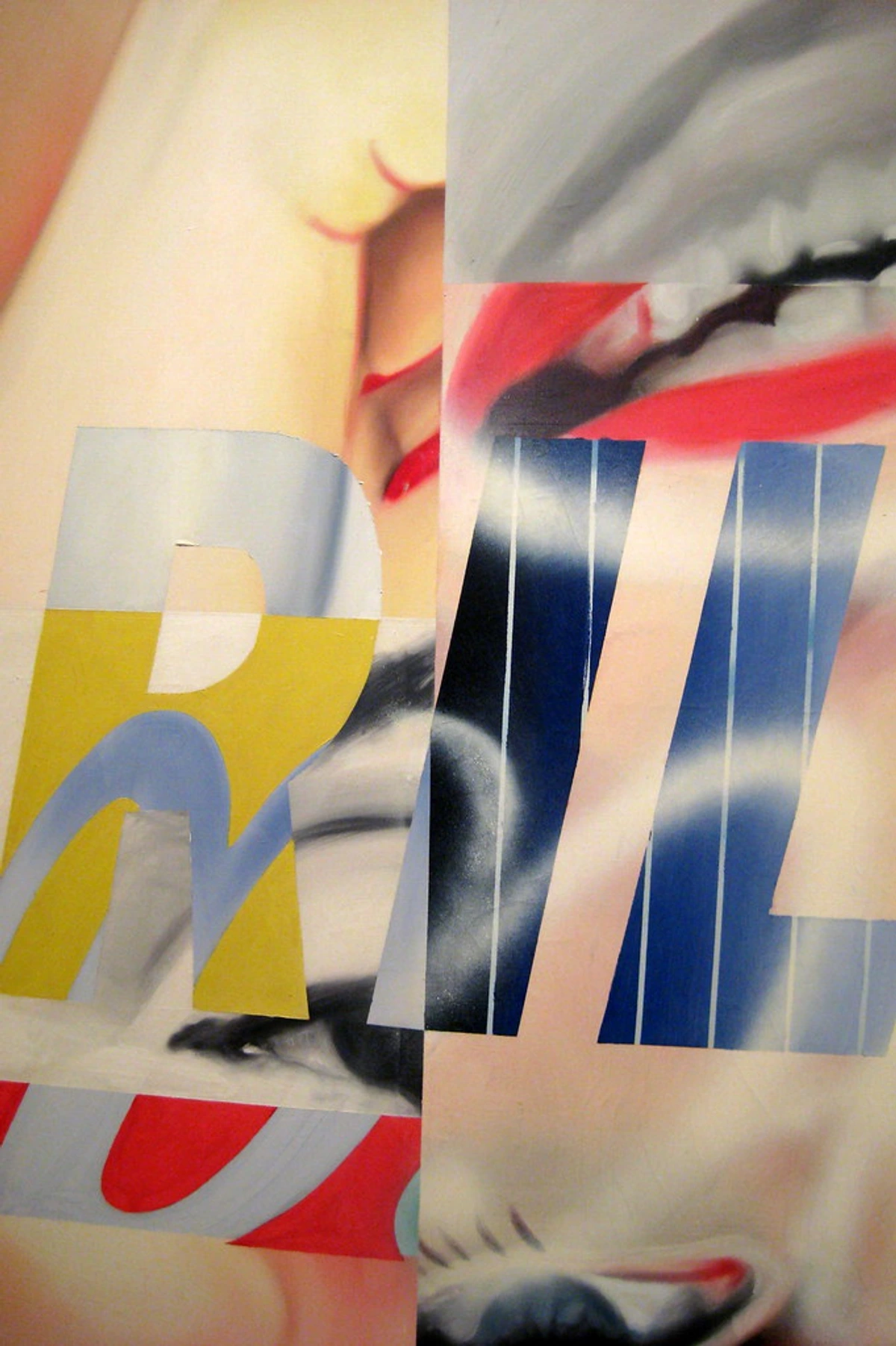
Then there’s James Gill, an artist who gets far less attention than he deserves. A Pop artist associated with the California scene, his 1962 painting Marilyn is a masterpiece of fractured perception. He overlays multiple images of her from the same photo shoot, creating a sense of cinematic movement and psychological layering, predating the layered effects used in contemporary digital collage. It’s a frantic, disorienting work that seems to capture the speed and chaos of her life and the public's insatiable appetite for her image. It feels less like a static portrait and more like a filmstrip collapsing in on itself—a visual representation of a life lived in a million flashes from a million cameras.
Think of it like watching a short film on a broken projector, where all the frames are stuttering and glitching at once. You get a sense of motion, of time passing, but it’s all fractured. This is Gill's great insight: Marilyn the person was constantly disappearing behind the onslaught of Marilyn the image, and the only way to capture that truth was to make the image itself feel unstable and multiple—a radical deconstruction of celebrity.
The Contemporary Stare: A Digital and Psychological Return
Contemporary artists have often circled back to the person behind the icon, but with a distinctly modern, critical eye, informed by feminist theory and digital-age anxieties explored in new technological art. They seem less interested in the machinery of fame than in the psychological fallout. It’s as if Warhol diagnosed the disease of modern fame, and now contemporary artists are treating the patient with empathy and a deeper understanding of the trauma involved, echoing themes of vulnerability and power found in Kara Walker’s art. This shift marks a new chapter in her artistic biography, one focused on healing and nuanced interpretation, often exploring universal truths about suffering and resilience.
Take Douglas Gordon's video installation, 30 Seconds Text. He slowed down a clip of Marilyn from the film The Seven Year Itch, stretching a brief moment into a sprawling half-hour. The effect is excruciating and beautiful. We see every micro-expression, the flicker of real emotion crossing her face when she's supposed to be the carefree blonde, revealing her skill as a serious actor studied in New York. It forces a confrontation. Instead of a distant icon, we're face-to-face with a human being, and the voyeurism of it all becomes uncomfortable, turning the viewer into a participant, much like immersive art installations in major museums and cultural institutions. We are forced to sit with her, to see the tiny cracks in the performance, and it’s devastating.

Canadian artist Sarah Maple takes a more direct, feminist approach. In her work I've Had Enough, she photographs herself in a Marilyn-esque pose—the hair, the makeup, the expression—but holds a sign with the painting's title. It’s a powerful act of reclamation, taking back the narrative and asking us to consider the cost of being the image everyone desires but no one truly knows. She isn't just depicting Marilyn; she is channeling her, using her image to speak directly to the ongoing pressure women face to be perpetually desirable and agreeable, addressing themes similar to those in Kara Walker’s exploration of historic power structures.
These artists give us a Marilyn who is no longer a silent object, but a subject whose experience is made visible, palpitating with a vulnerability that Warhol's detached gaze would never allow.
And in our digital age, her image has become raw material for a new generation. From photomanipulation to AI-generated art, Marilyn Monroe is endlessly recontextualized, her face blended into modern memes, fashion editorials, and social commentary. She is a perpetual, flickering ghost in the machine of our visual culture, a ready-made asset in the global content farm, echoing how collage artists have long repurposed found images.
Just look at artists like Michael Moebius, who painted her as a modern-day geisha or a Vermeer portrait, playfully smashing timelines and contexts together to create something entirely new, reminiscent of postmodern artists exhibited in major art institutions. Or consider how often her face appears in memes, where she's given new, often ironic, dialogue. This is Marilyn in the 21st century: completely unmoored from her original context, a free-floating signifier that can mean almost anything, her tired gaze now staring out from a million more screens, on a scale even Warhol couldn't have imagined.
The Marilyn Motifs: Why She is Still Relevant
To understand her enduring relevance, we have to break down the specific elements artists keep returning to, like recurring motifs in a grand piece of visual music. It's like when a songwriter uses a specific chord progression or a writer uses a recurring metaphor. These elements become a shorthand for a whole universe of meaning. For Marilyn, it's the eyes, the smile, the hair, the name, and even the body itself. This deconstruction is how artists turn an icon back into raw material.
Think of it like archaeology. Each motif is a fragment of pottery—seemingly insignificant on its own, but when pieced together with other fragments, it tells the story of an entire civilization. Marilyn’s fame was so total, so all-encompassing, that artists can use one feature to summon the entire myth, freeing them to explore modern contexts without getting stuck in biographical detail.
Motif  | Artistic Interpretation | Cultural Question |
|---|---|---|
| The Eyes | Warhol's vacant, impersonal gaze serves as a machine-made mask, while Gordon's intense magnification reveals a flicker of profound, soul-crushing fatigue. | What is the psychological cost of being perpetually watched by the world? |
| The Smile | De Kooning's savage, predatory grin is a far cry from the euphoric, empty promise of a Hollywood smile, while Maple's defiant rejection of it entirely becomes its own statement. | Is the iconic smile a genuine expression of joy, a carefully constructed mask of happiness, or an unconscious symbol of resistance? |
| The Hair | Often abstracted into bright yellow slashes, the platinum blonde curls became an instantly recognizable symbol of seduction and innocence, as iconic as the golden arches. | How is female identity constructed through cultural symbols and beauty standards, and who controls that narrative? |
| The Name | More than just a name, "Marilyn Monroe" became a powerful brand, a signifier of desire, tragedy, and commercial power, completely detached from the human being, Norma Jeane. | What happens to the individual when their identity is completely consumed and replaced by their public image? |
| The Body | Whether celebrated by Warhol or violently dismembered by de Kooning, her form represents the ultimate site of cultural obsession and control. | Who has the right to claim ownership over a woman’s body—the public, the artist, or the woman herself? |
| The Voice & Breath | Often overlooked, her whispery, breathy voice was as much a part of her construction as her look. In performance art, like the immersive pieces found in New York galleries and beyond, it becomes a symbol of vulnerability and forced sensuality. | How does power assert itself not just over how a woman looks, but how she speaks, breathes, and even occupies sonic space? |
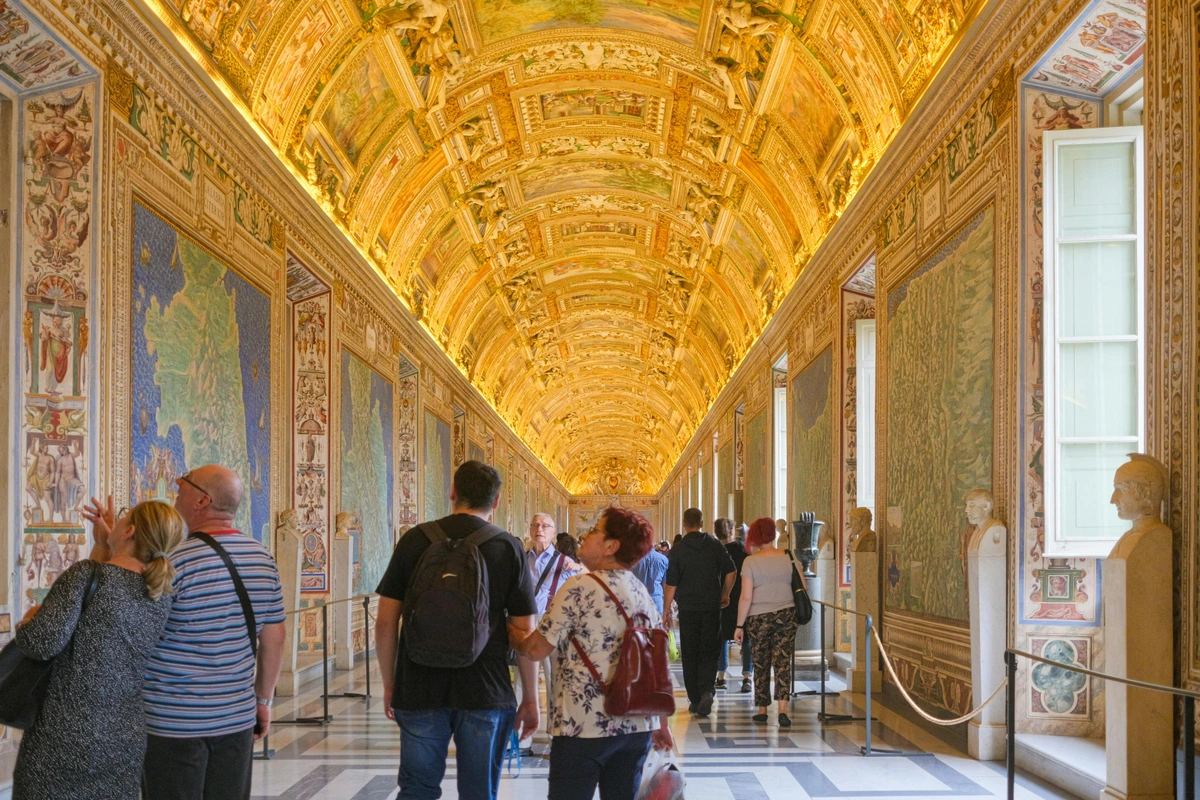
Institutions like the Guggenheim and MoMA have become pilgrimage sites for understanding Pop Art's impact.
This table is just a starting point. Every artist who takes on Marilyn Monroe is, in some way, contributing to this ongoing conversation. It's a conversation about who gets to be seen, who gets to be heard, and what parts of ourselves we're willing to sacrifice for a place in the spotlight. It's a testament to her complexity that six decades of art haven't come close to answering these questions definitively.
What I find so compelling about breaking her down this way is that it reveals how modular her persona really was, much like the systematic breakdown found in conceptual art. Each of these motifs is like a different instrument in an orchestra, and every artist who engages with her is essentially a conductor, choosing which parts to emphasize to create a new symphony of meaning. I’ve often thought that this modularity is the key to her immortality. It allows her to be both a feminist martyr and a consumerist icon, a victim and a powerful agent, all at once, embodying the kind of layered truths explored by major art critics. Few subjects in art history offer such multi-layered flexibility, making her a recurring figure in exhibitions at MoMA and other major institutions.
Frequently Asked Questions (FAQ)
Why was Marilyn Monroe so important to Pop Art?
Marilyn Monroe was the perfect subject for Pop Art, a movement showcased in major institutions like MoMA, because she was the first true multimedia celebrity of the modern age. Her image was ubiquitous—in movies, on magazine covers, in advertisements. For artists like Andy Warhol, she wasn't just a person; she was a factory-produced commodity, a symbol of America’s post-war consumer culture, echoing the themes of mass reproduction found in works like Warhol's Campbell's Soup Cans. Painting her was a way of painting the mechanism of fame itself. The sheer repetition inherent in movie posters and magazine spreads prefigured the core principle of Pop: that in our culture, the copy is not inferior to the original; the copy is the reality.
He saw the same mass-produced quality in her that he saw in a can of Campbell's Soup—a product designed, packaged, and sold to the public. She was a perfect ready-made, a living example of art and commerce fused into a single, globally recognizable icon. The very fact that her face was everywhere made her invisible in plain sight; Warhol's genius was to elevate that ubiquity into high art, forcing us to see the strangeness of the familiar.
The sheer repetition of her image in the culture is, in itself, the subject of artistic inquiry.
Did Marilyn Monroe pose for Andy Warhol?
No, she never posed for him. Warhol's iconic silkscreens are based on a publicity photograph from the 1953 film Niagara. This is a crucial part of his artistic statement, reflecting his philosophy found in works like his Campbell's Soup Cans series. He wasn't interested in capturing her essence from life; he was interested in using the images that were already circulating in the mass media, further flattening the line between reality and representation, a concept central to many artistic explorations of repetition and meaning.
It's a testament to his brilliance that he understood the celebrity image itself was the real subject, not the person. He used a reproduction to comment on reproduction, turning the entire act of looking at celebrities into the subject of the artwork. In a digital world where we are all constantly re-appropriating existing content, Warhol’s use of a 'found' image feels more relevant than ever. He was a true prophet of the remix culture we now inhabit.
What other famous artists have used Marilyn Monroe as a subject?
Beyond Warhol, the list is long and varied. It includes titans of 20th-century art like Willem de Kooning, Richard Hamilton, and James Rosenquist. Contemporary artists like Douglas Gordon, Sarah Maple, Marc Quinn, and Jason John Würm have also offered powerful reinterpretations, many showcased in prominent institutions like MoMA and global venues. Even street artists like Banksy have used her image to make sharp points about modern society, continuing the tradition of using her as a vehicle for social commentary in art.
The sheer scope is staggering: from the abstract expressionism of de Kooning to the digital interventions of today's internet artists, her image has been fodder for nearly every major movement of the last 60 years. It proves that her face is far more than just a subject; it's a universal signifier, a blank slate upon which artists can inscribe their own interpretations of the world. For galleries and collectors, art featuring Marilyn Monroe has proven to be a remarkably enduring and valuable category of contemporary art, with pieces fetching millions at auction and continually appearing in major museum retrospectives.
New York institutions like the Guggenheim and MoMA have been central to the display and interpretation of Pop Art, where Marilyn's image became a critical subject.
What did Marilyn Monroe think of being an artistic muse?
By most accounts, Marilyn saw herself as a serious artist, an actress who studied at the Actors Studio in New York. While she enjoyed adoration, she was also deeply frustrated by being seen as just a "dumb blonde" or a sex symbol. There is a tragic irony in her becoming the ultimate artistic symbol, as much of the art made of her focuses on the very image she struggled against.
I suspect she would have been both fascinated and horrified by her own myth-making. She longed to be seen as a serious performer, yet her greatest legacy turned out to be the very persona she desperately wanted to escape. She was, in the end, a prisoner of the very image she worked so hard to create, a paradox that remains heartbreaking to this day. She became the ultimate muse not by choice, but by conquest—her image was captured, replicated, and distributed by a culture that wanted the symbol far more than it wanted the complex, struggling human being.

Artistic interpretations of Marilyn Monroe are a global phenomenon, held in collections from New York to The Hague. If you find yourself drawn to these powerful intersections of celebrity, art, and identity, I invite you to explore my own work, where I often explore similar themes through color and form. You can find my available pieces here: /buy.
Why is Marilyn Monroe so popular in art even now?
She remains popular because her story is a foundational myth for the modern world. It touches on everything we're still trying to figure out: the conflict between authenticity and performance, the nature of female celebrity, the cost of public adoration, and the line between a person and a brand. Her life and image contain these big, messy themes in a single, potent package, providing endless fuel for artists to interpret and reinterpret.
In a world of Instagram influencers and personal branding, her struggle feels less like history and more like a daily reality. She was the prototype, and her story is the user manual for the age of manufactured identity. She is the ghost that haunts every social media profile, every consciously crafted self. We look at her now and we see the beginning of the path we are all still walking—the exhausting, exhilarating, and often terrifying journey of creating a self for public consumption.
What is the most expensive Marilyn Monroe artwork ever sold?
The indisputable champion is Andy Warhol's Shot Sage Blue Marilyn, which sold at Christie's in May 2022 for a staggering $195 million. This 1964 silkscreen, far more serene and iconic than the 1962 flash paintings, became the most expensive 20th-century artwork ever sold at auction at the time.
Another major work, Warhol's Marilyn Diptych, is considered so culturally significant it's held by the Tate museum in London, making it essentially priceless. The astronomical price tag is a stark indicator of just how foundational the Marilyn image is to the very concept of modern art and celebrity. It marks the moment her iconic status was officially sanctified by the art market, a final, ironic twist in a story about the commodification of a human being.

The repetitive nature of both the soup cans and the Marilyn portraits underscores Warhol's central theme of mass production.
How did Marilyn Monroe's death in 1962 impact her portrayal in art?
Her death was a seismic event that fundamentally changed everything, transforming her into a timeless symbol. Before 1962, artists focused on her living energy, as seen in some of Warhol's early drawings. But her death transformed her status overnight. Warhol's first major Marilyn series was completed immediately after, capitalizing on the public's sudden shock and grief, a strategy seen in the creation of his most famous diptych works. This raises a profound, perhaps unanswerable, question: Would Marilyn the icon exist without her tragic end? It’s a deeply uncomfortable thought, but her death completed the narrative arc that artists continue to mine for universal truths about mortality and fame.
Her death created the ultimate distance between the real woman, Norma Jeane, and the now-frozen, untouchable icon, echoing the transformation of historic figures into mythic symbols. Artists were no longer depicting a living person; they were interpreting a myth, a solidified piece of cultural history. This event marks the turning point where she truly became an 'image,' a theme central to movements like Pop Art. Her life was a story; her death was an ending that turned her into a timeless symbol, a blank canvas onto which every subsequent generation could project its own obsessions, a process of cultural myth-making. The living, breathing woman was gone, and in her place stood a perfect, tragic, and infinitely mutable idea, explored in depth within modern art institutions.







Marilyn in the 21st Century: Beyond Warhol and Pop Art
The conversation didn't end with Warhol or the Pop artists. Marilyn's image has proved to be infinitely malleable, finding new life and meaning in every decade. From the punk provocations of the 80s to the minimalist conceptualism of the 90s, she has been an unavoidable reference point for artists. But the last two decades have seen a particularly sharp turn, moving away from pure image analysis and toward deeper psychological, feminist, and political excavation. This is our era's contribution to her story. We no longer see her through the cool, impersonal lens of Pop; we see her through the corrective lenses of #MeToo, fourth-wave feminism, and a culture finally beginning to grapple with the human cost of misogyny.
In 2012, for the 50th anniversary of her death, American artist Jason John Würm created The Marilyn Project, a series that blended her image with that of Elizabeth Taylor and Jackie Kennedy. The work explored how these women were positioned as competing archetypes of ideal American womanhood, each defined and ultimately consumed by the public's insatiable need for a story. Würm’s work is a direct descendant of Warhol’s, but its focus is less on the mechanics of production and more on the psychological fallout of being a cultural symbol. He's not just looking at the image; he's looking at the human cost of the myth. The triptych of Monroe, Taylor, and Kennedy is particularly potent. It illustrates how the cultural machine creates distinct roles for its icons: the Sex Symbol, the Grand Dame, and the Tragic Widow. Würm’s blending of their features is a powerful visual metaphor, suggesting the immense pressure these women faced to live up to archetypes that left little room for their individual complexities.
Similarly, in the 1990s, the Young British Artist (YBA) Marc Quinn took a radical turn with his hyperrealist sculpture of Marilyn. Rather than a flat, two-dimensional image, he presented her in three-dimensional form on a pedestal. But it’s not a heroic pose. She's cast in a moment of seeming vulnerability, subverting the expectations we bring to a monument. It’s a powerful reminder that she was, first and foremost, a physical person, a body that experienced the world in all its joy and pain, not just a face on a poster. He forces the icon back into a corporeal form, grounding her ethereal fame in the reality of flesh and blood. This act of re-embodiment is a crucial counterpoint to Warhol. While Warhol flattened her into a sign, Quinn asks us to remember the physical, breathing woman trapped beneath the mythology, a person who had bad days, felt aches and pains, and existed in a space far more complex than any two-dimensional surface could ever contain.
Street artist Banksy also used Marilyn in his characteristic satirical style, often placing her image in stark, modern contexts to critique consumerism and the emptiness of fame. By putting Marilyn on the side of a building, he strips the icon of its gallery context and forces it back into the cultural conversation it never really left. It's a demonstration of her continued raw power as a symbol that requires no introduction.
This constant reinterpretation is key to her longevity. Marilyn isn't just a historical figure; she's a language. Artists learn this language, speak it in their own dialect, and pass it on to the next generation. She is a recurring character in the long, strange novel of 20th and 21st-century art, and her story is far from over. She has become a tool, a mirror, and a warning, all at once. This brings to mind another iconic series by Warhol, his endless repetition of Campbell's Soup Cans. In both cases, the subject is not the individual can or the individual woman, but the societal obsession with branding and reproduction that renders them identical and interchangeable. Marilyn became the first human whose artistic significance stemmed directly from her commercial reproducibility.
I started this by talking about the tiredness in her eyes. After tracing her journey from human to icon, I'm more convinced than ever that that's the key. We live in an age of relentless self-presentation, of curating our lives for public consumption, a theme reflected in the rise of digital art and social media trends. Marilyn Monroe was the prototype for this modern condition. We see our own exhaustion, our own fears of being misunderstood, our own messy humanity reflected back at us in her carefully constructed, famously fragile image. Every time I see Warhol's empty-faced prints, I see the hollow feeling after posting something online that didn't connect. When I see Douglas Gordon's agonizingly slow video, I see the real, unedited self that we all hide away, a confrontation with universal truths about identity.
The artists who interpret her are not just making a portrait. They are engaging in a deep, complex, and often uncomfortable conversation about identity, fame, and the price of being looked at. Her face is a canvas, and we are the ones who keep painting it, over and over again, with all our own contradictions and desires. Whether we're staring at Warhol's vacant, mass-produced goddess or Gordon's painfully slow, intimate confession, we're ultimately looking at ourselves. Her vulnerability has become our own.
So, when you see her image next time—whether it's in a museum, on a t-shirt, or popping up unexpectedly in your feed—I hope you'll see more than just an old movie star. I hope you'll see the first draft of us, an archetype of modern identity explored today. The tiredness in her eyes isn't just hers; it's the quiet exhaustion of the performance we all now live. And the art that looks back at her, from Warhol's Factory to works by Basquiat or beyond, isn't just about her; it's the story we tell ourselves, over and over, about the cost of being seen. Her story is far from over. It's just finding new mediums and fresh eyes.