Andy Warhol's Soup Cans: A Curator's Take on Pop Art, The Machine, and Our Branded World
Journey through Warhol's iconic Campbell's Soup Cans. Discover Pop Art's revolution, his 'machine' philosophy, artistic appropriation, and the lasting impact on art and consumer culture from a curator's unique perspective.

Andy Warhol's Soup Cans: A Curator's Take on Pop Art, The Machine, and Our Branded World
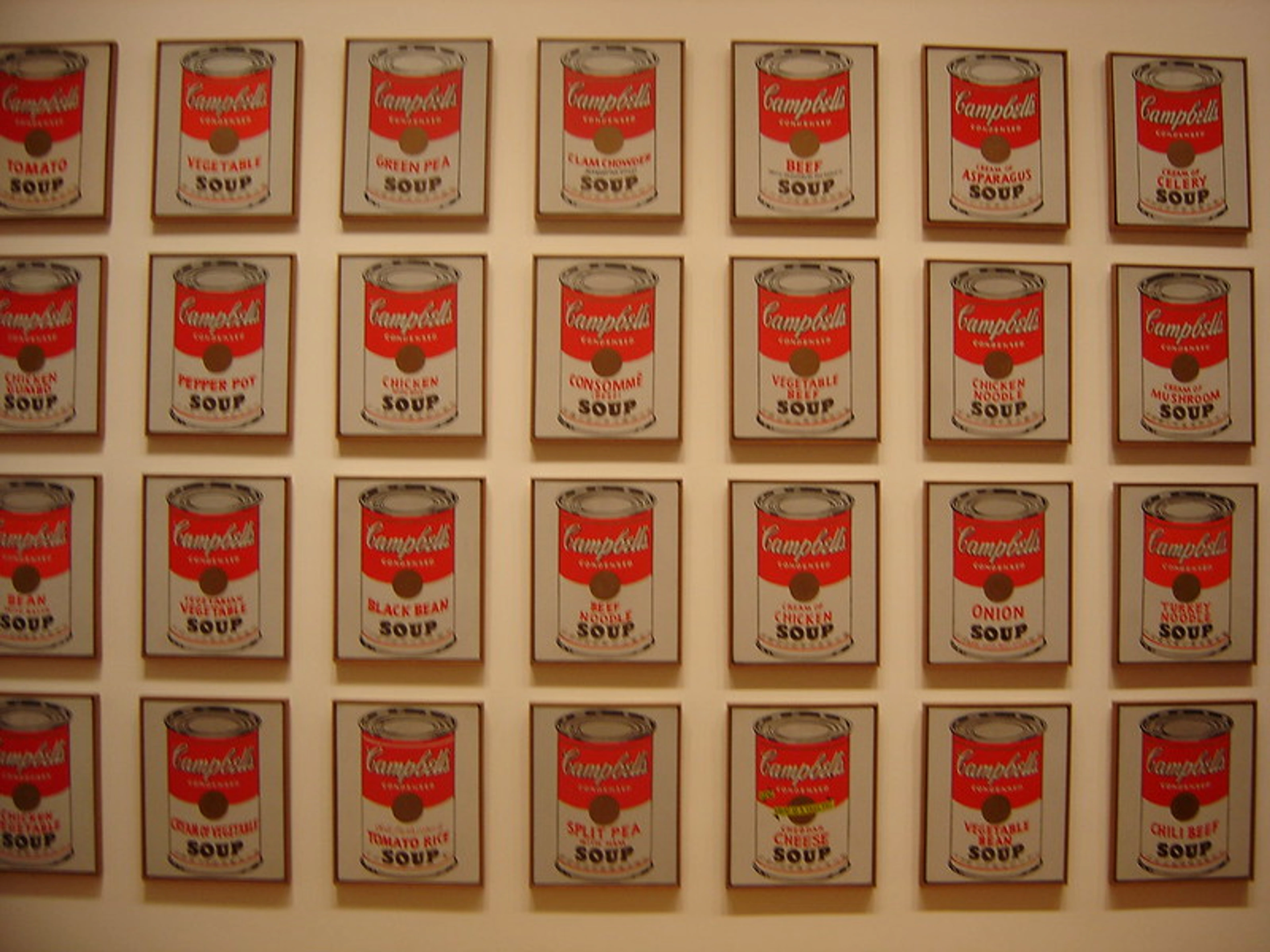
You know, some artworks just stop you dead in your tracks, make you tilt your head, and genuinely rethink everything you thought you knew about art. For me, Andy Warhol's Campbell's Soup Cans series did exactly that. I still vividly recall my first encounter, standing in front of them at a major museum – I think it was MoMA, though the details blur with the decades – trying to look suitably profound, but honestly, all I could really think was, "Is this... a grocery list? Am I supposed to buy one?" It wasn't just a picture; it was a profound, almost cheeky challenge to my entire understanding of what art could be. First displayed in 1962, this seminal series didn't just question conventional art; it exploded the very notion, making us confront the art in our everyday lives, the mechanics of mass production, and the fascinating blurred lines between commerce and creativity. This wasn't merely a shift; it was a radical reorientation of artistic thought and a direct challenge to the art establishment.
This exploration will take us deep into the buzzing artistic landscape that birthed Pop Art, reveal the surprising genius behind Warhol's choice of such a commonplace object, and peel back the layers of his revolutionary mechanical process. We'll uncover the lasting ripples this simple soup can sent through the art world and our perception of culture itself, challenging our very idea of what an artist could be – and perhaps, even what a curator should present. With 32 canvases, each meticulously depicting a different flavor of Campbell's Soup, Warhol didn't merely question traditional artistic notions; he fundamentally reoriented the art world. He dared to ask: Could a simple soup can be revered as a grand, traditional painting? It's a work that compels us to reconsider the boundaries of art and recognize the profound artistic significance that can be found in the most ubiquitous objects. It's almost like he decided to show us the art hidden in plain sight, daring us to look closer at the ordinary – a theme that, even today, keeps me looking differently at the world around me. And that, I think, is the true mark of a revolutionary artwork.
The Artistic Landscape of the 1960s: From Abstraction to Pop
To truly grasp the revolutionary nature of these soup cans, we must first understand the artistic climate of the late 1950s and early 1960s. Abstract Expressionism, characterized by its deep exploration of emotion, gesture, and the artist's inner psyche, was at its zenith. Artists like Willem de Kooning and Jackson Pollock pioneered intensely personal expression through monumental, often abstract, canvases. They delved into grand narratives of the subconscious, creating art often perceived as deeply spiritual, complex, and, let's be honest, sometimes a little intimidating to the uninitiated. This was art for the soul, often for the elite. I remember feeling a genuine disconnect in front of some of those massive works – a profound sense of awe, yes, but also a whisper that perhaps I wasn't quite 'getting' it, that it was meant for someone else, someone with a deeper understanding of angst and existential dread.
Yet, a new generation of artists, particularly in America and Britain, began to feel this movement had become too insular, too detached from the vibrant, consumer-driven reality of post-war society. Imagine stepping out of a dark, brooding art gallery filled with existential angst and into a brightly lit supermarket aisle, brimming with colorful, perfectly packaged promises of modern life. The disconnect was palpable. Mid-century American art often leaned towards austerity and introspection, a mood that felt increasingly out of step with a booming economy and a culture embracing new media and mass-produced comforts. Other movements like Minimalism and Fluxus also emerged, each in its own way challenging the emotional intensity and subjective expression of Abstract Expressionism. Minimalism, with its focus on geometric forms and industrial materials, sought to strip art down to its bare essentials, emphasizing objectivity and the viewer's direct experience of the object itself. Fluxus, on the other hand, was a playful, experimental art movement that championed performance, happenings, and the everyday, often incorporating mundane objects and actions into its anti-art stance. But while these movements offered different paths, Pop Art offered a distinct, audacious embrace of the everyday, transforming the ordinary into the extraordinary with a wink and a nod. It was, in many ways, the inevitable artistic response to a changing cultural landscape.
The Readymade Precedent: Duchamp's Challenge
Of course, the idea of elevating a mundane object to the status of art wasn't entirely new. You can't talk about everyday objects in a gallery without tipping your hat to Marcel Duchamp and his revolutionary readymades of the early 20th century. His Fountain (1917), a signed urinal, famously challenged the very definition of art by asserting that the artist's choice and conceptual intent could transform an object into art. Warhol, consciously or not, was building upon this legacy, but with a crucial difference. Duchamp's act was one of singular provocation, questioning the art object itself. Warhol's, however, was about the ubiquity of the object, the power of mass production, and the pervasive visual language of commerce. He wasn't just saying "this could be art"; he was saying "this is art, because it's everywhere, and it shapes us."
This is precisely where Pop Art erupted onto the scene. It represented a radical departure, a playful yet incisive rebellion that embraced popular culture, mass media, and consumerism as its primary subject matter. Warhol, with his astute sensibility and extensive background in commercial illustration, was uniquely positioned to spearhead this shift. Before becoming the Pop Art icon, Warhol honed his craft in advertising, creating captivating illustrations for magazines like Glamour, Harper's Bazaar, and Vogue, and working for shoe companies like I. Miller. This experience deeply familiarized him with the power of repetition, branding, and the visual language of commercial appeal. We're so used to the image of the tortured artist, right? The one agonizing over every brushstroke. Warhol famously articulated his artistic philosophy by stating, "I want to be a machine," a bold rejection of that romanticized image. He essentially declared a deliberate detachment, a calculated embrace of industrial replication that blurred the lines between high art and mass-produced goods. Coming from a world where he had to churn out commercial images, often dozens a day, he understood the efficiency and power of repetition. This wasn't about stifling creativity; it was about reimagining it, seeing the artist not as a solitary genius burdened by unique expression, but as a conductor, an organizer of images, much like the factories that produced the very goods he celebrated. For a more comprehensive overview of this transformative movement, consider exploring The History of Pop Art: From Consumerism to Cultural Icon.
Art Movement  | Philosophy | Subject Matter | Approach | Relation to Warhol |
|---|---|---|---|---|
| Abstract Expressionism | Deep emotion, subjective psyche, grand narratives | Non-representational, gestural, monumental | Personal expression, unique hand, spiritual | Pop Art reacted against its perceived elitism & introspection |
| Minimalism | Objectivity, direct experience, essence | Geometric forms, industrial materials, stripped-down | Impersonal, reductive, focus on viewer's perception | Shared interest in seriality but different focus; less overt social commentary |
| Fluxus | Playful, experimental, anti-art, everyday | Performance, happenings, mundane objects/actions | Collaborative, conceptual, often irreverent | Embraced everyday but lacked Pop Art's direct engagement with commercial branding |
| Pop Art | Embrace popular culture, consumerism, mass media | Commercial products, celebrities, everyday objects | Mechanical reproduction, irony, often detached | Warhol was a spearhead, epitomized its core ideas through direct appropriation |
The Humble Soup Can: Warhol's Iconic Choice and Post-War America
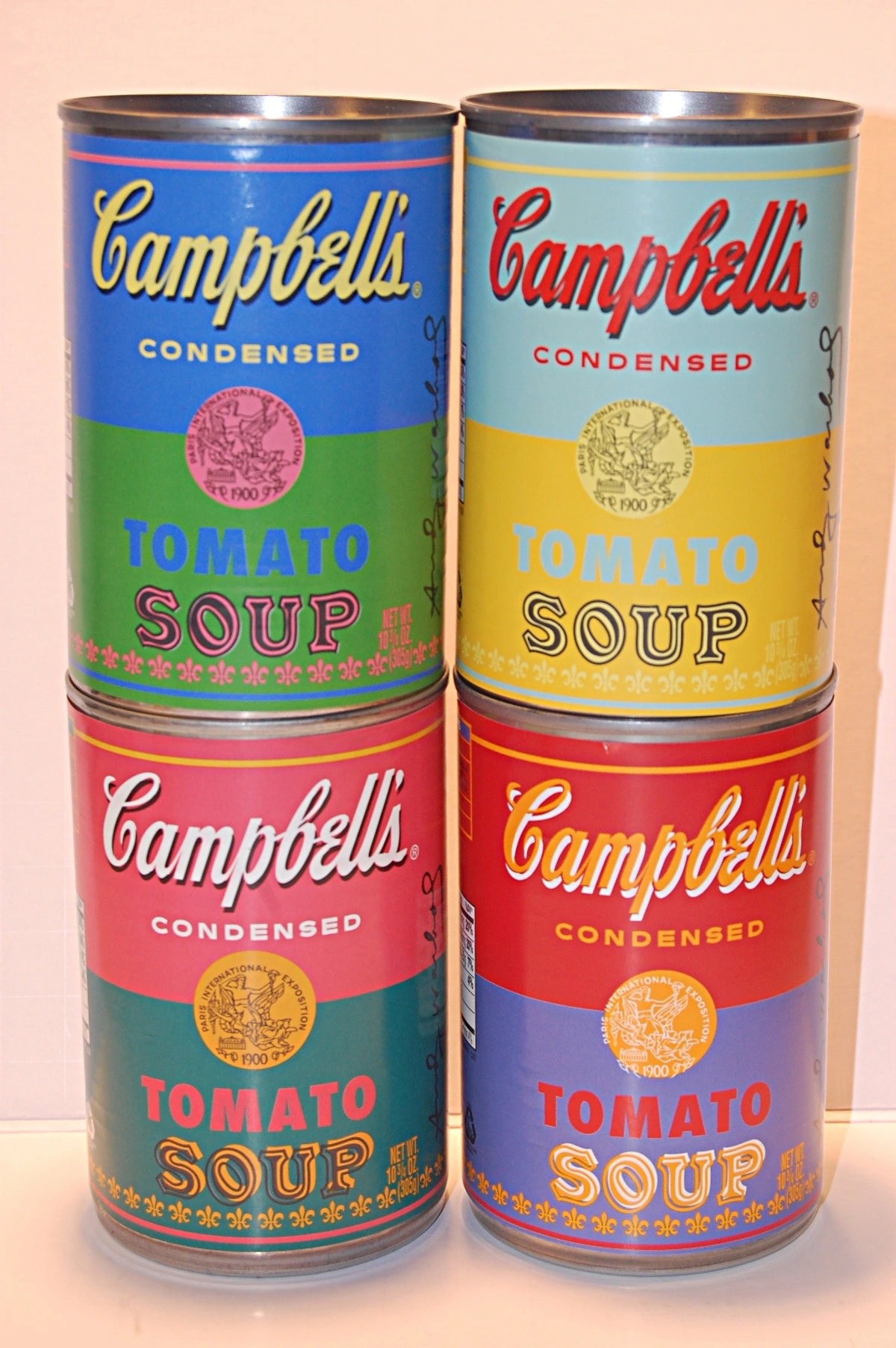
Warhol's selection of the Campbell's Soup can was nothing short of genius. It was an object so deeply ingrained in American households, so utterly commonplace, that it had become virtually invisible. By isolating it on canvas, Warhol compelled viewers to truly examine it, to perceive its form, label, and cultural implications anew. It's like discovering your morning coffee mug has suddenly gained sentience and a coveted spot in MoMA. A bit unnerving, but utterly brilliant. It forces you to ask, "Wait, this is art?"
https://live.staticflickr.com/2286/1850765168_c032b90730_b.jpg, https://creativecommons.org/licenses/by/2.0/
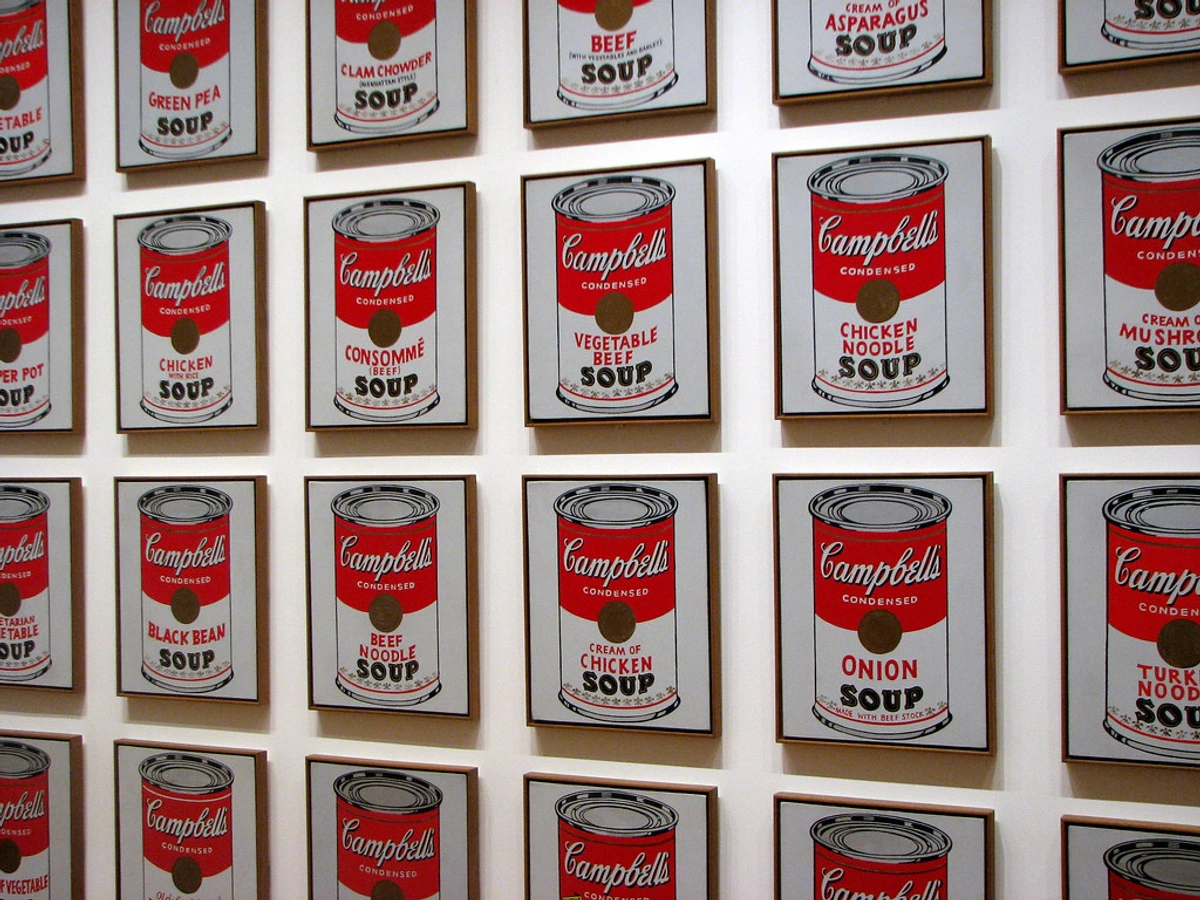
The prevailing narrative suggests that Warhol, seeking an unmistakably American image, asked a friend for suggestions. The friend reportedly proposed something "everybody sees every day"—a can of soup. From this simple suggestion, an ordinary grocery item like Cream of Mushroom, Tomato, or Chicken Noodle was destined for the hallowed halls of high art. The specific choice of 32 cans was not arbitrary; it represented every single variety of Campbell's Soup available at the time, underscoring the completeness of his artistic inventory and mirroring the exhaustive nature of consumer choice. This original series, first exhibited on July 9, 1962, comprised exactly 32 canvases, each depicting a different flavor.
But why Campbell's specifically? Beyond its ubiquity, the brand held a particular resonance. The iconic red and white label, with its distinctive serif font and gold medallion, was a masterclass in early branding – instantly recognizable, a promise of consistent quality. It was a visual shorthand for comfort, home, and a certain accessible version of the "American Dream" that proliferated in the post-war era. Think about it: a perfectly uniform product, available everywhere, always the same, delivering a reliable, comforting experience. This exact reliability made it ripe for Warhol's artistic scrutiny, turning a symbol of domesticity into a canvas for cultural critique.
The Post-War Boom and Homogenization
This choice was a sharp, witty commentary on American consumer culture, reflecting the burgeoning post-war economic boom and the standardization of products that permeated daily life. This was the era of the suburban ideal, the rise of mass media (especially television advertising), and a growing middle class that embraced convenience and branded goods. Processed foods, like canned soup, symbolized a new kind of modern living—efficiency, accessibility, and a certain aspirational conformity. They represented the promise of effortless domesticity and an abundance unimaginable just years before. The soup can was not just food; it was a potent symbol of this accessible, standardized American dream, reflecting changing social structures and economic prosperity.
This omnipresence of branded goods also subtly commented on the homogenization of culture. When the same perfectly packaged products line shelves across the nation, an illusion of boundless choice often masks an underlying commonality. Warhol, by presenting these uniform cans, compelled us to consider how deeply these symbols of mass production shaped our collective identity, subtly asking if our desires were truly individual or simply reflections of well-orchestrated marketing. Aren't we all, to some extent, complicit in this cycle of consumption and branding?
Interestingly, while Warhol never had a formal endorsement from Campbell's, the company's reaction was initially one of amused tolerance. Over time, however, as the art brought unforeseen cultural prominence and a hip, avant-garde association to their brand, Campbell's evolved into a more embracing attitude. There were no known legal battles, just a gradual recognition that their soup can had transcended its mundane function, becoming a cultural icon in its own right, thanks to Warhol. A savvy curator would recognize this as a fascinating case study in how art can inadvertently reshape brand perception, long before "brand activations" were a thing.
The Art of Mechanical Reproduction: Warhol's Creative Process
Warhol's initial "Campbell's Soup Cans" series consisted of 32 canvases, each measuring a uniform 20 by 16 inches. These precise dimensions not only contributed to the series' visual cohesion but also echoed the standardized sizing of supermarket shelves, a subtle nod to their commercial origins. Each canvas displayed a single can, corresponding precisely to the 32 varieties of soup offered by Campbell's at the time. The artistic method he employed was integral to his philosophy: screen printing (or silkscreen printing).
Screen Printing: The Mechanical Brush
For Warhol, screen printing transcended being merely a tool; it was a powerful statement about artistic production, a deliberate act of mechanical reproduction. Imagine laying a stencil – like a giant cookie cutter for images – onto a fine mesh screen. Ink is then pushed through the open areas of the stencil onto the canvas below. Each push produces a near-identical image, much like a factory stamping out products on an assembly line. This technique allowed him to directly emulate the industrial processes inherent in commercial imagery, blurring the traditional boundaries between fine art and mass production. He wanted to be a machine, and screen printing was his chosen mechanism for challenging the revered "artist's hand." This approach directly resonated with Walter Benjamin's seminal essay, "The Work of Art in the Age of Mechanical Reproduction" (1936), which discussed how mechanical reproduction strips an artwork of its "aura" – its unique presence in time and space – making it accessible to the masses. Warhol, perhaps consciously, perhaps intuitively, embodied this concept.
https://www.flickr.com/photos/catmurray/134836991, https://creativecommons.org/licenses/by-nc-sa/2.0/
By embracing processes that diminished art's traditional "aura" (that unrepeatable quality of an original masterpiece), Warhol asserted that meaning could be found in the accessible, the replicable, the mass-produced. What's fascinating is that while the unique aura of a traditional painting was diminished, the soup cans, once brought into the art context and imbued with Warhol's celebrity, gained a new kind of cultural aura – the aura of the icon, the brand, the commentary itself. You could argue he didn't destroy the aura; he simply relocated it, transforming the object's presence into a conceptual statement. Unlike traditional painting, where each brushstroke often reveals the artist's unique hand and individual struggle – think of a chef meticulously crafting a singular gourmet dish – screen printing is more akin to a factory producing thousands of identical, perfectly packaged snacks. For me, as an artist today, the digital realm offers a similar challenge: how do you maintain a unique voice when endless replication is just a click away? It's a conversation Warhol started, and it's more relevant than ever.
The Factory: Art as Assembly Line
His studio, known as The Factory, was a buzzing hub of activity, explicitly designed to mimic an industrial production line. Here, he famously employed assistants, such as Gerard Malanga, to aid in the actual production, further embodying his "machine-like" persona and provocatively questioning the very notion of individual artistic genius. This approach wasn't without its detractors; some critics questioned the authenticity of art made by assistants or argued that it devalued the sacred act of creation, blurring the lines between artist and factory worker. But this, I think, was precisely Warhol’s point – to provoke, to push boundaries, and to force us to reconsider who gets to be an artist and what art truly is. Each of these 32 canvases was, in itself, an original work of art, albeit created through a process of mechanical reproduction. It's funny, isn't it? We're often told to be original, to be unique, but sometimes, the most powerful statements come from embracing the very things that make us all a little bit the same – like needing a quick, comforting bowl of soup. If you are intrigued by the technical aspects, What is Screen Printing? A Guide for Artists and Collectors offers further insight.
Materials and Techniques: Bridging Commercial and Fine Art
https://live.staticflickr.com/2179/2268641248_16b769ed3a_b.jpg, https://creativecommons.org/licenses/by-sa/2.0/
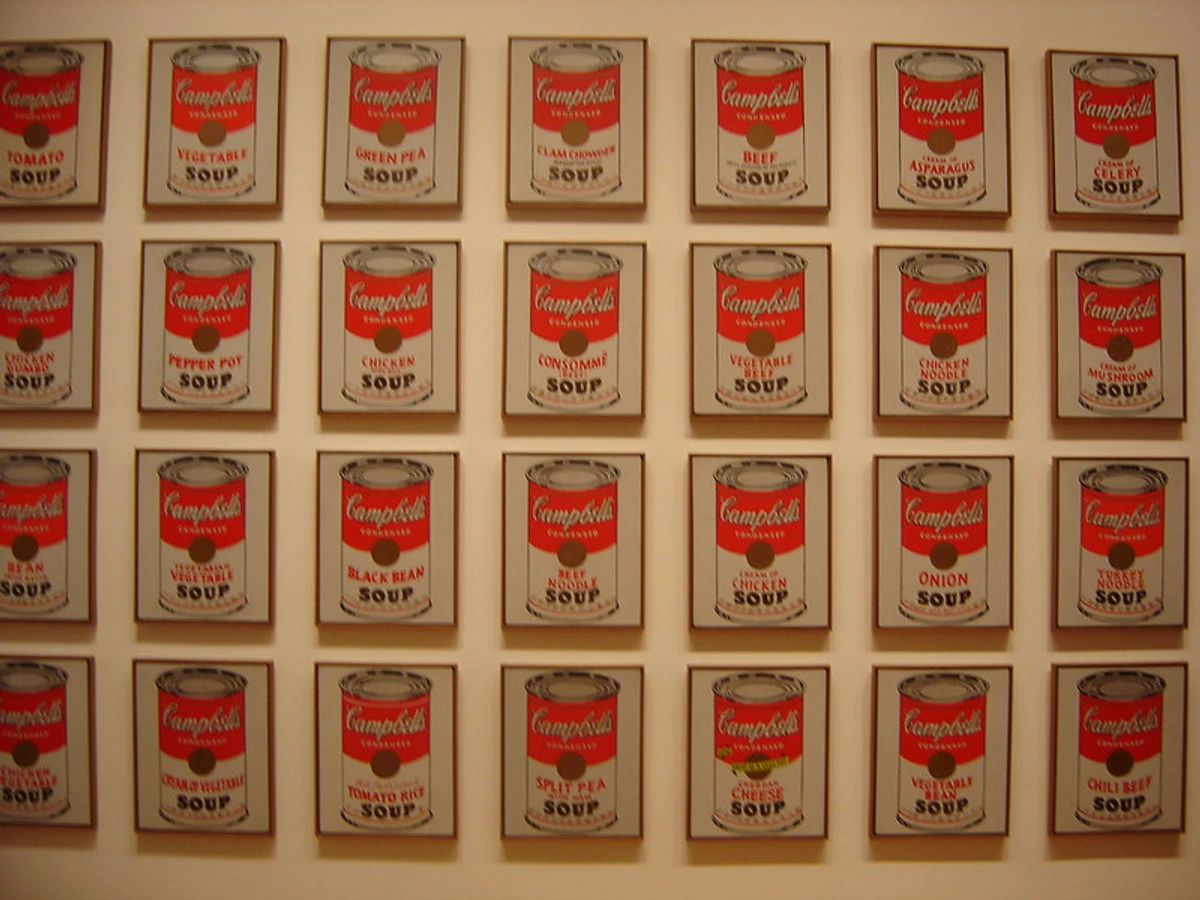
The execution of the canvases was precise and, on the surface, devoid of overt emotion. The cans are depicted flatly, lacking traditional perspective or shadow, much like the advertisements from which they drew inspiration. Warhol primarily utilized acrylic paint and silkscreen ink, materials that were becoming prevalent in commercial art. He applied these to a standard stretched canvas, often primed in white to provide a clean, neutral ground that further emphasized the reproduced image. The sole variation among the canvases is the name of the soup variety, often handwritten or stamped beneath the iconic red and white label, adding a subtle touch of human presence within the machine-like replication. This meticulous, almost anonymous approach emphasized the object itself, stripping away the personal artistic "touch" so highly valued in the art world of that era.
But this wasn't just about simple replication; it was a deliberate curation, a precise "performance of indifference"—a calculated artistic posture designed to provoke viewers to question their assumptions about art's value, originality, and the role of the artist in a mass-produced world. It forced us to ask, "Is the artist's emotion necessary for art to be profound, or can the idea itself carry all the weight?" To delve deeper into the mind behind these groundbreaking works, consulting The Ultimate Guide to Andy Warhol is highly recommended. For those of us working with digital art today, this question echoes. Is the AI's algorithm the "artist's hand," and what constitutes its "materials"?
Unpacking the Impact: Reception and Enduring Legacy
When first unveiled at the Ferus Gallery in Los Angeles on July 9, 1962—Andy Warhol's first solo exhibition on the West Coast—the "Campbell's Soup Cans" were displayed ingeniously: each canvas rested on a narrow shelf, deliberately mimicking a grocery store aisle. The lighting was stark, further enhancing the commercial, almost clinical, presentation, and reinforcing the idea that these were everyday objects, not traditional art to be revered on pedestals. From a curatorial standpoint, this choice of display was as much a part of the artwork as the canvases themselves, actively shaping the viewer's interpretation. The initial reception was a fascinating blend of bemusement, outright dismissal, and profound intellectual fascination. Some critics scoffed, questioning whether such mundane objects could possibly qualify as art. I imagine a few people muttering, "My kid could paint that!" (Spoiler: Probably not, not with this much conceptual intent).

https://upload.wikimedia.org/wikipedia/commons/7/78/Ame02128_22.jpg, https://creativecommons.org/licenses/by-sa/4.0
Specific criticisms ranged from accusations of trivializing art to a perceived lack of technical skill and emotional depth. Art critic Max Kozloff famously critiqued Pop Art for being "the art of the bland leading the bland," while others, like Art International magazine, questioned the integrity of art that seemed to merely replicate commercial imagery. Robert Rosenblum, an art historian, reflected that "the impact of the new Pop art was simply to send the entire world of traditional values reeling." However, a significant number of observers swiftly recognized the radical implications of Warhol's artistic statement. One early critic reportedly dismissed them as "blots on the canvas of fine art," while another lauded them as a "brilliant commentary on the commercialized soul of America." Gallerist Irving Blum, recognizing the profound significance, famously acquired the entire set of 32 canvases for $1,000. He later sold them to the Museum of Modern Art (MoMA) in New York City, where they have since become a cornerstone of its collection, solidifying their place in art history.
This series sparked a crucial and ongoing dialogue that resonates powerfully even in contemporary art discourse. Its profound importance lies in its instrumental role in establishing Pop Art, radically challenging the rigid distinctions between high art and popular culture. These works fundamentally redefined what could be considered a valid subject for artistic expression, forcing a re-evaluation of artistic value itself. Here are some key facets of its enduring impact:
Democratizing Art and Challenging Elitism
By selecting a common, universally affordable item, Warhol powerfully asserted that art could be discovered anywhere, making it accessible to everyone, not solely the elite who could afford unique, expensive masterpieces. This was a direct contrast to the often esoteric and grand narratives of Abstract Expressionism, whose large, abstract canvases often felt distant and exclusive. Warhol effectively leveled the playing field, shifting focus from rarity and technical mastery to perception and concept. Art no longer needed to be 'high-brow' to be profound; it just needed to make you think. He made art about us. Think about how this paved the way for street art, for digital art shared freely online, for installations that invite public interaction – all forms that push art out of the exclusive gallery space and into the collective consciousness.
A Witty Critique of Consumerism (or a Celebration?)
Was Warhol celebrating the pervasive nature of consumerism or subtly critiquing its influence? The artist presented these products without overt judgment, allowing viewers to project their own feelings and interpretations. This deliberate ambiguity was, in fact, an intentional artistic strategy, precisely what gives the work its enduring power, prompting a complex interplay between participation in and observation of consumer culture. It's a deliciously uncomfortable embrace, forcing us to confront our own relationship with the brands that shape our lives. Warhol himself, with his carefully cultivated persona and embrace of fame, became a brand, a product, subtly blurring the lines between art, artist, and commodity. This concept, later elaborated by thinkers like Jean Baudrillard, explores the idea of simulacra: where the copy becomes so pervasive and powerful that it takes on a reality more real than the original itself. Think about how the image of a Campbell's soup can, through Warhol's art and pervasive advertising, became more iconic and recognizable as a cultural symbol than any individual physical can of soup ever could be.
The Power of Repetition and the Business of Art

https://pixabay.com/, https://creativecommons.org/publicdomain/zero/1.0/
The serial nature of the work, presenting slight variations on a familiar theme, echoed the repetitive character of advertising and mass production. However, it also hinted at the meditative quality found in repetition itself, challenging the notion of artistic originality in an age of endless reproductions. Warhol, perhaps more than any artist before him, understood the intersection of art and commerce. He saw art, and himself, as a brand, a product. And honestly, isn't that a mirror to our own lives now, where we're all, to some degree, curating our "brand" online? Warhol was just way ahead of the curve. While artists like Sol LeWitt and Donald Judd later explored repetition in Minimalism, Warhol's Pop Art seriality specifically addressed mass culture. This art also brought inadvertent commercial success to Campbell's, highlighting an unforeseen symbiotic relationship between high art and everyday branding. You could argue it showed corporations the value of art as a cultural amplifier.
Ethical Considerations: Appropriation and Originality
Warhol's direct appropriation of commercial imagery sparked significant debate about artistic originality and the ethics of borrowing existing images. Was he simply copying? Or was he transforming the meaning of these images through context and artistic intent? Critics debated whether this practice was a form of artistic laziness, a trivialization of art, or a brilliant subversion. For me, the transformation is clear: by isolating the can, altering its scale, and presenting it in a grid with slight variations (the flavor names), he forced a re-evaluation, turning a commercial emblem into a philosophical question mark. It made us confront our definitions of what art is, and who owns the visual landscape of our daily lives. This conversation is still incredibly relevant today, especially with the rise of AI-generated art and digital sampling. Where do we draw the line between homage, theft, and transformation?
https://upload.wikimedia.org/wikipedia/commons/6/6e/TAG_Andy_Warhol_Soup_Can_01.jpg, https://creativecommons.org/licenses/by-sa/4.0
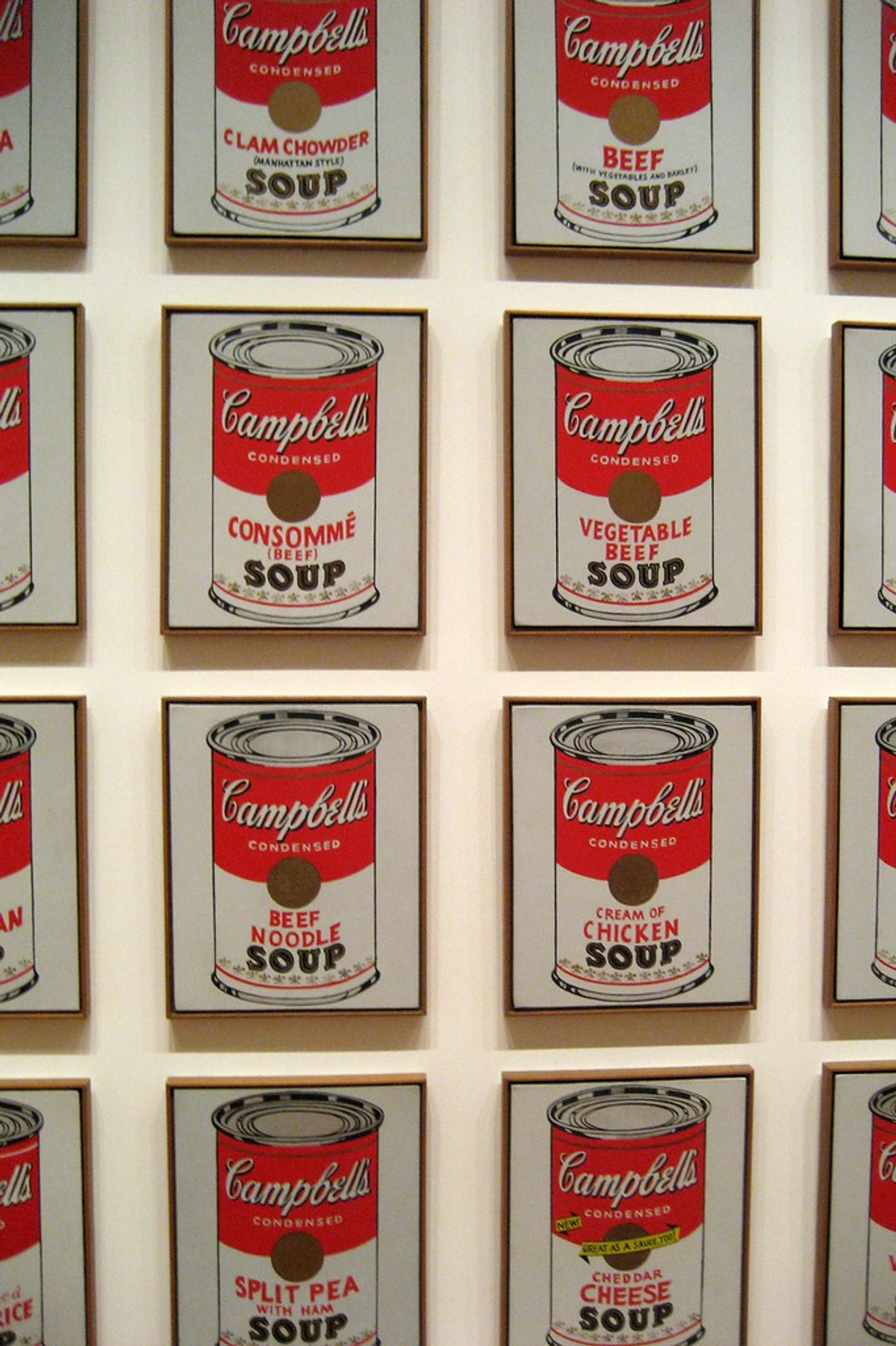
Warhol's engagement with the Campbell's Soup Can motif did not conclude with the original 32 canvases. He continued to produce numerous iterations throughout his career, experimenting with diverse sizes, colors, and arrangements. For example, he later created series like the "Large Campbell's Soup Can" (1962), a single monumental canvas emphasizing the product's grand presence, and "Campbell's Soup Cans II" (1969), where he introduced vibrant, non-naturalistic color fields to the labels, moving further into abstraction. The "Cans of Campbell's Soup (Tomato)" (1968) explored stacked arrangements, referencing supermarket displays and commodity abundance. These later works further explored themes of repetition, variation, and the enduring power of the branded image, extending the original concept. While other Pop Art contemporaries like Roy Lichtenstein (known for his fragmented billboard-like compositions and comic-strip inspired works) and Claes Oldenburg (who sculpted monumental everyday objects in soft or unusual materials) also examined consumerism, Warhol's approach became singularly iconic due to its direct, almost clinical presentation of the unmodified commercial image and his cultivated persona as an artist-as-brand.


https://commons.wikimedia.org/wiki/File:Roy_Lichtenstein_%281967%29.jpg, https://support.google.com/websearch/?p=image_info

The Monetary Value: From Humble Purchase to Art Market Icon
Speaking of impact, let's address the question everyone always whispers: "What is it worth?" The original set of 32 canvases, acquired by the visionary gallerist Irving Blum for a mere $1,000, was indeed a steal. That was around $31 per canvas! Today, individual works from this seminal series or later variations have fetched millions at auction. This exponential increase reflects not just market speculation, but their undeniable historical significance as foundational Pop Art pieces and their enduring cultural resonance. It's a testament to how conceptual shifts in art can translate into monumental financial value, transforming a simple commodity into an investment.
Warhol's Lasting Influence: Beyond Pop Art
Today, Andy Warhol's "Campbell's Soup Cans" are universally celebrated as a landmark achievement, not only within Pop Art but also in the broader narrative of conceptual art and postmodernism. These works permanently reshaped the landscape of what could be considered art, paving the way for future generations of artists to fearlessly explore new subjects, unconventional materials, and innovative processes. He didn't just paint a soup can; he gave permission to an entire lineage of artists to look beyond the traditional, to find meaning in the mundane, and to challenge the very definition of artistic value. The series' influence extends to how contemporary art engages with branding, mass media, and the very definition of artistic value in an increasingly commercialized world. It fundamentally contributed to the shift towards conceptual art, where the idea behind the artwork takes precedence over its aesthetic execution, a profound echo of Warhol's original "machine" philosophy.
As a curator and an artist myself, I find immense inspiration in Warhol's audacious simplicity. His ability to elevate the commonplace into the profound, to make us question the very fabric of our consumer-driven existence, is something I strive for in my own work. When I paint abstract forms or create colorful prints, I'm often thinking about the unexpected beauty hidden in patterns, the overlooked details in everyday life, and how to make the accessible also deeply thought-provoking. The subtle yet profound message of the soup can endures: beauty, meaning, and art itself are often hidden in plain sight, waiting for us to cultivate a fresh perspective. We just need to open our eyes and maybe, just maybe, look at that soup can a little differently. What if we applied that same curiosity to everything around us? I know I certainly do now, often pausing in the supermarket aisle to appreciate the graphic design of a cereal box or the unexpected color palette of cleaning products. It’s like Warhol flipped a switch in my brain, and now the world is just bursting with art. If you're inspired to see how contemporary artists, like myself, continue to find artistic merit in the mundane or overlooked, perhaps you'll find something resonant in the colorful, often abstract art prints and paintings available for purchase here. Or delve into my own artistic journey and works at my museum in 's-Hertogenbosch, where we can collectively ponder the enduring legacy of artists who dared to challenge what art could be. Perhaps you'll even join me in my next exploration of how mass culture informs abstract expression, a journey that still feels deeply rooted in the questions Warhol first posed.