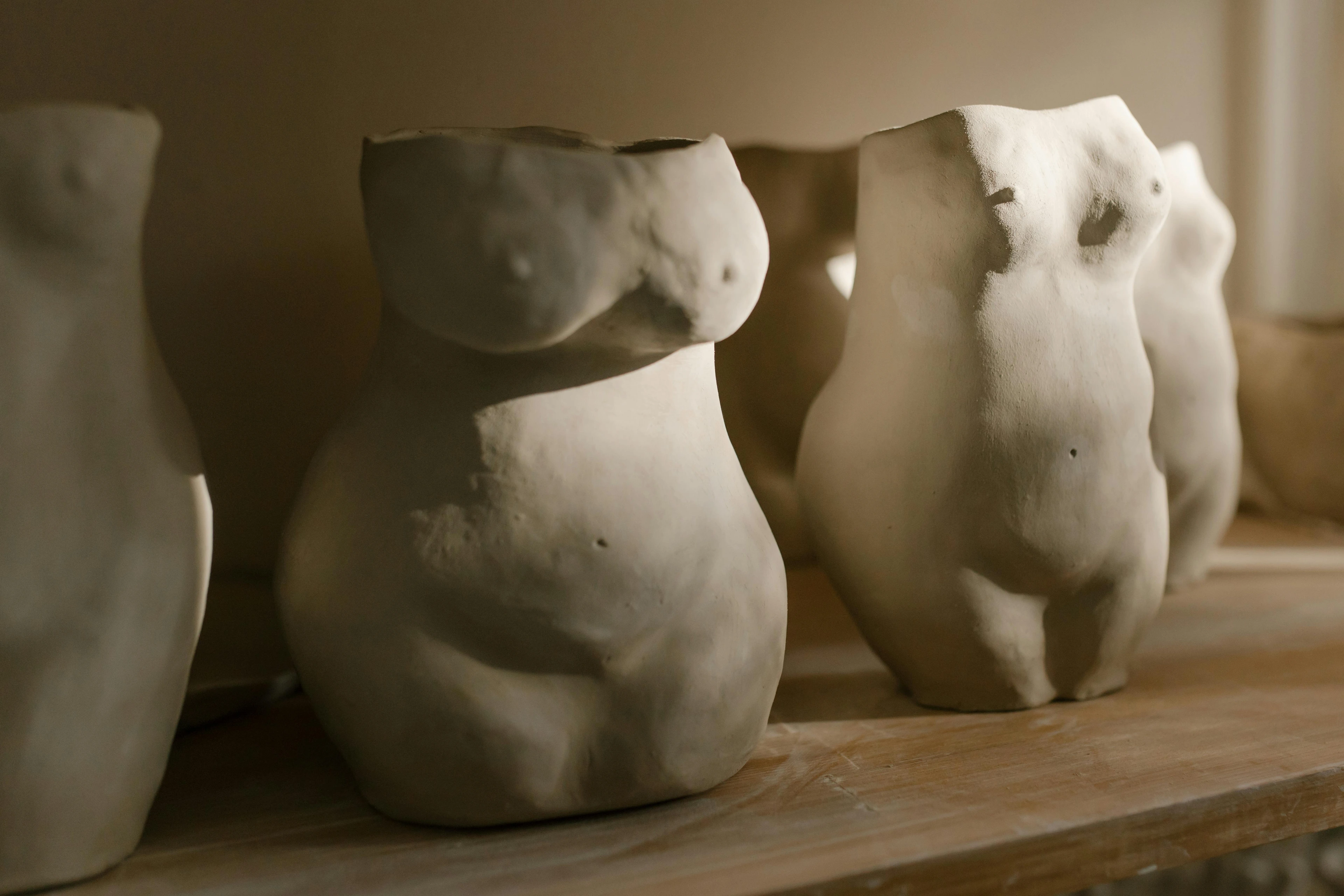
Unearthing the Marvels: Your Ultimate Guide to Famous Greek Sculptures
Ever wondered about the stories behind those iconic, often fragmented, Greek sculptures? Join me on a journey through the Archaic, Classical, and Hellenistic periods, exploring the masterpieces that shaped Western art forever. From the ideal human form to dramatic emotion, we'll uncover the genius, the myths, and the enduring legacy of ancient Greek sculptors.

Unearthing the Marvels: Your Ultimate Guide to Iconic Greek Sculptures and Their Enduring Legacy
Welcome, fellow art explorers! Have you ever stood before a truly ancient work of art and felt that inexplicable pull across millennia? That's precisely what happens to me every time I delve into the mesmerizing world of Greek sculpture. For me, these aren't just cold stones; they are, in my view, palpable echoes of a vibrant civilization, profound philosophical statements etched in marble, and a continuous, unbroken dialogue with humanity's quest for ideal beauty, meaning, and excellence. It’s a conversation that has spanned millennia, profoundly shaping everything from our understanding of aesthetics to our very notions of heroism, civic duty, and human potential. It’s a foundational cornerstone of what we now call classical art, and for genuinely good reason. My hope, as your guide, is that this article will not only illuminate the sheer beauty and technical mastery of these ancient forms but also reveal their profound, ongoing influence on the entire trajectory of Western art and thought, right up to our contemporary moment.
I have a confession to make, and perhaps you'll relate. When I first encountered images of ancient Greek sculptures, I found them... well, a bit cold, a touch imposing. All that marble, those stoic, sometimes distant expressions, and yes, sometimes a missing limb or two (which, let's be honest, can be a little jarring, even a bit unsettling, at first). But then, something truly shifted for me. I started looking closer, reading the fascinating stories behind the figures, understanding their historical and philosophical context. And suddenly, these aren't just old rocks anymore; they're vibrant narratives, profound philosophical statements, and breathtaking testaments to human ingenuity and emotion, and the enduring human spirit. They truly are some of the most iconic and famous sculptures in history, and for exceptionally good reason.
Now, you might be thinking, and it’s a fair thought, "Greek sculptures? Isn't that a bit... well, 'academic'?" And yes, in some contexts, it absolutely can be. But my goal here isn't to give you a dry history lesson or a purely academic treatise. Instead, I want to share my deep, enduring fascination, to peel back the layers of dust and time, and show you why these ancient masterpieces still resonate so profoundly today, speaking directly to our modern sensibilities. This isn't just about art history; it's about humanity in its most aspirational forms, about the timeless pursuit of beauty, and about the endless quest for perfection (and sometimes, the glorious, relatable imperfection that makes these works so compelling). My aim is to make this subject approachable, genuinely engaging, and exciting, revealing how these magnificent stone and bronze figures continue to shape our understanding of art and, ultimately, ourselves.
This article, my friend, is designed to be your ultimate, most comprehensive, and genuinely engaging guide to understanding these incredible works. I promise we'll delve deep into their fascinating evolution, explore their profound and undeniable impact on Western art, and uncover the captivating stories behind the most iconic pieces. My goal is for you to leave here with not just a newfound appreciation, but perhaps even a burning passion, for these truly timeless artistic achievements. Think of it as your personal passport to the ancient world, guided by someone who's utterly captivated by its marvels.
The Allure of Perfection and Humanity
For me, what truly sets Greek sculpture apart, making it endlessly compelling, is its audacious, almost relentless, pursuit of kalokagathia – a beautiful and deeply philosophical Greek term that encapsulates the ideal of harmonious perfection, combining both physical and moral excellence. It's far more than just being physically fit or intellectually sharp; it's about the holistic integration of virtue and beauty, a truly unified vision of human flourishing. These aren't just pretty statues, you see; they are profound embodiments of a culture's highest aspirations, mirroring a society that valued intellectual rigor, physical prowess, civic duty, and profound ethical inquiry. All of these ideals were intertwined and expressed with breathtaking clarity through the idealized human form. It's a concept that still challenges us today, isn't it? This striving for an all-encompassing human excellence – a truly holistic vision that unified aesthetic grace with profound moral integrity – offers so much to reflect on, even today. It reminds me, personally, that true beauty isn't just skin deep, a superficial facade, but rather a profound reflection of inner virtue, intellectual rigor, physical prowess, and deeply held societal values. It's a timeless pursuit, one that still challenges and inspires us in our modern world, urging us to consider what it truly means to be a well-rounded, flourishing human being.
The Birth of Western Aesthetics: A Foundational Dialogue
I often wonder if the ancient Greeks fully grasped the sheer, monumental influence their artistic endeavors would have on everything that came after. Because, let's be honest, they practically invented Western aesthetics as we know it. From their audacious, almost revolutionary, pursuit of naturalism (or mimesis, as Aristotle would later articulate, building on centuries of sculptors striving for lifelike representation) to their profound philosophical debates on ideal forms and harmonious rhythm and proportion (concepts that would deeply influence thinkers like Plato with his theory of Forms, finding tangible expression in meticulously applied artistic principles), they laid the bedrock upon which subsequent artistic movements, from the glorious Renaissance to the elegant Neoclassicism, would build. When you look at a Greek sculpture, you're not just seeing an ancient artifact; you're witnessing the genesis of concepts like proportion, balance, movement, and emotional expression that still fundamentally define our understanding of art today. These aren't just artistic choices; they're profound philosophical statements etched in marble and bronze, paving the way for everything that followed, even subtly influencing the underlying structures deconstructed in movements like Cubism. It truly is the birth of Western aesthetics, a foundational dialogue that continues, uninterrupted, across millennia.
Why Greek Sculpture Continues to Captivate Us
I mean, let's be real, what makes a piece of art created thousands of years ago still relevant, still resonate so profoundly? For me, it boils down to a few core ideas that the Greeks absolutely mastered, and which, quite frankly, still inform so much of what we consider 'art' today. Beyond the sheer craftsmanship, it's the underlying principles – the pursuit of the ideal, the power of narrative, the dynamic relationship between art and its environment – that continue to speak volumes.

The Mastery of the Human Form
It sounds almost simple, but the Greeks, over centuries, meticulously cracked the code of depicting the human body in a way that was both idealized and incredibly lifelike. Their understanding of anatomy, their innovative use of techniques like contrapposto, and their relentless pursuit of symmetria (harmonious proportions) created figures that feel eternally vibrant. This wasn't just about technical skill; it was a profound celebration of human potential, virtue, and physical prowess, establishing a visual language for the body that endures. I find it endlessly fascinating how they meticulously applied mathematical ratios, developing a true 'canon' of proportions, to the human body, believing that beauty could be objectively expressed and achieved through order, measure, and harmonious balance. It's almost like a divine blueprint for the human form, aiming for a visual perfection that mirrored their highest philosophical ideals of intellectual and physical excellence. This systematic approach transformed the depiction of the human body from a mere representation to a profound philosophical statement, a timeless pursuit of ideal physical and moral excellence.
(Antonio Canova's Neoclassical Venere Italica is a direct artistic descendant, clearly absorbing the lessons of idealized Greek forms, even if with a distinctly different, perhaps more delicate, sensibility.)

(And when we look at the intricate, yet delicate drapery of a Baroque piece like Antonio Corradini's Allegory of Faith, we can still trace the lineage of classical ideals, even with a distinctly different emotional flourish.)
The Role of Mythology and Heroic Narratives
For me, Greek sculptures are essentially visual encyclopedias, living archives of their rich myths and heroic tales. Think of the epic struggles of Hercules and his twelve labors, the cunning intelligence of Odysseus on his long journey home, or the divine, often scandalous, drama of Zeus and his entire Olympian pantheon. These weren't just bedtime stories, mind you; they were profound moral compasses, early explanations for the natural world's mysteries, and deep reflections on the complexities of human nature. Sculptors, with their unparalleled skill, brought these narratives to vivid life, making the gods and heroes tangible, relatable, and utterly awe-inspiring. It’s almost as if they were creating the world's first immersive cinematic universe, but etched in enduring stone. Think, for instance, of the poignant narrative on a grave stele, eloquently telling a story of individual loss and collective remembrance, or the dramatic, often monumental, scenes on a temple pediment, re-enacting a divine struggle or a foundational myth for all to see and internalize. The metopes of the Temple of Zeus at Olympia, for example, vividly depict Hercules' arduous labors, transforming heroic myths into a form of public visual education and celebrating physical and moral excellence that resonated deeply with the populace. These weren't just decorative elements; they were profound narratives, moral compasses, communal touchstones, and even political statements, making the abstract tangible and the divine relatable.
The Human Element and Emotional Resonance
Beyond the stoic expressions and idealized forms, what I find incredibly compelling is how Greek sculptors, even in their pursuit of the ideal, managed to imbue their figures with a profound sense of humanity and emotional depth. It's not always overt; sometimes it's a subtle tension in a muscle, a gentle tilt of the head, or the implied narrative of a scene that suggests deep feeling. From the quiet dignity of the Classical masters, like the almost imperceptible melancholy in some grave stelae, to the overt drama of the Hellenistic period (think of the visceral pain in the Laocoön group), these artists explored the full spectrum of human experience. They captured moments of triumph, grief, introspection, and ecstasy, allowing us, millennia later, to connect with these universal emotions. For me, this is where the stones truly breathe, echoing our own joys and sorrows. From the subtle, almost anticipatory tension in the Kritios Boy to the almost imperceptible melancholy and quiet dignity in some Classical grave stelae, and finally to the overt, writhing agony and visceral pain of the Laocoön group from the Hellenistic period, Greek sculptors explored the full gamut of human emotion. They captured moments of triumph, profound grief, intense introspection, and ecstatic joy, allowing us, millennia later, to connect intimately with these universal feelings that transcend time and culture. It's a testament to their profound psychological insight and understanding of the human condition, making these ancient figures feel incredibly alive and remarkably relatable.
The Pursuit of the Ideal Form
One of the first things that truly strikes me about many Greek sculptures, especially from the Classical period, is this almost relentless, audacious pursuit of the ideal human form. We're talking about perfect proportions, athletic physiques that defy gravity, and expressions of such profound serenity that they seem to transcend earthly concerns. It can be almost unsettling, how 'perfect' some of them are, can't it? But they weren't just depicting ordinary people; they were depicting gods, legendary heroes, and an idealized vision of humanity itself. This wasn't merely about superficial beauty, far from it; it was a deeply philosophical endeavor, reflecting the Greek belief in the potential for human excellence – both physical and moral. When you think of philosophers like Plato, who eloquently mused about ideal Forms and perfect essences residing in a transcendent realm beyond our senses, or Aristotle, who pondered the concept of mimesis (imitation) as a means to achieve a higher truth and reveal universal patterns, the sculptors were, in a very real and profound way, giving tangible, physical form to these abstract philosophical ideals. They weren't just crafting beautiful bodies; they were attempting to materialize concepts of universal truth, inherent goodness, and transcendent beauty, making the unattainable seem, for a fleeting moment, within reach for human contemplation. This deeply intellectual and spiritual pursuit elevates Greek sculpture far beyond mere aesthetic decoration, transforming it into a powerful medium for philosophical inquiry.
(This striving for an almost divine perfection in human representation also speaks to a culture that valued the mind and body in equal measure, a holistic approach that finds echoes even in our modern appreciation for athletic prowess.)

Storytelling in Stone
Beyond the sheer aesthetics, these sculptures are, for me, incredible storytellers. They don't just depict; they narrate. They capture intricate myths, monumental historical events, and profound philosophical concepts. Can you imagine a world without books, without mass media, where monumental sculptures served as the primary public narratives, the moral lessons etched in stone, and even powerful forms of propaganda? They didn't just stand there; they invited viewers to engage, to interpret, to feel the weight of history and myth. Looking at a Greek sculpture is, to me, like opening a window into an ancient epic, where every curve and chisel mark holds a whisper of a forgotten hero, a legendary battle, or a divine intervention. Consider the narrative power of the Great Altar of Pergamon, for instance, which tells a sweeping story of the Gigantomachy (battle of gods and giants) with unparalleled dramatic intensity, symbolizing the triumph of order over chaos. Or the poignant narratives depicted on grave stelae, offering glimpses into individual lives and the Greek understanding of death. These sculptures functioned as public libraries, moral textbooks, and powerful propaganda, solidifying cultural values and celebrating collective identity. Each piece, to me, is a window into the ancient Greek psyche, revealing their hopes, fears, and profound understanding of the human drama.
The Dynamic Relationship with Architecture
It's crucial to remember, and something I often emphasize, that most Greek sculptures weren't standalone art objects meant for a museum pedestal; they were integral, inseparable components of grand architectural ensembles, especially temples. Think of the majestic pediments, the continuous friezes, and the relief-decorated metopes – these weren't just decorated surfaces. Oh no, they told epic stories, celebrated monumental victories, and honored deities, all in situ. The sculpture and the building were conceived as a single, harmonious work, creating a complete, immersive experience. The Parthenon, for instance, with its breathtaking narrative frieze of the Panathenaic procession, showing Athenian citizens, cavalry, and even gods participating in the civic ritual, and its intricate pedimental sculptures depicting divine births and contests (like the struggle between Athena and Poseidon for patronage of Athens), is utterly incomprehensible without its sculptural program. Beyond Athens, temples across the Greek world, such as the Temple of Zeus at Olympia, featured similarly ambitious sculptural programs that engaged and instructed the populace, narrating the city's foundation myths or divine protection. This harmonious integration of sculpture into architecture perfectly reflects the Greek ideal of order and balance, where art served not only aesthetic but also vital civic and religious functions, transforming public spaces into realms that were both beautiful and profoundly meaningful. It's a complete, immersive experience, where the building itself becomes a storytelling canvas, and the sculptures are its eloquent characters, speaking to the divine and human alike.
A Legacy That Echoes Through Time
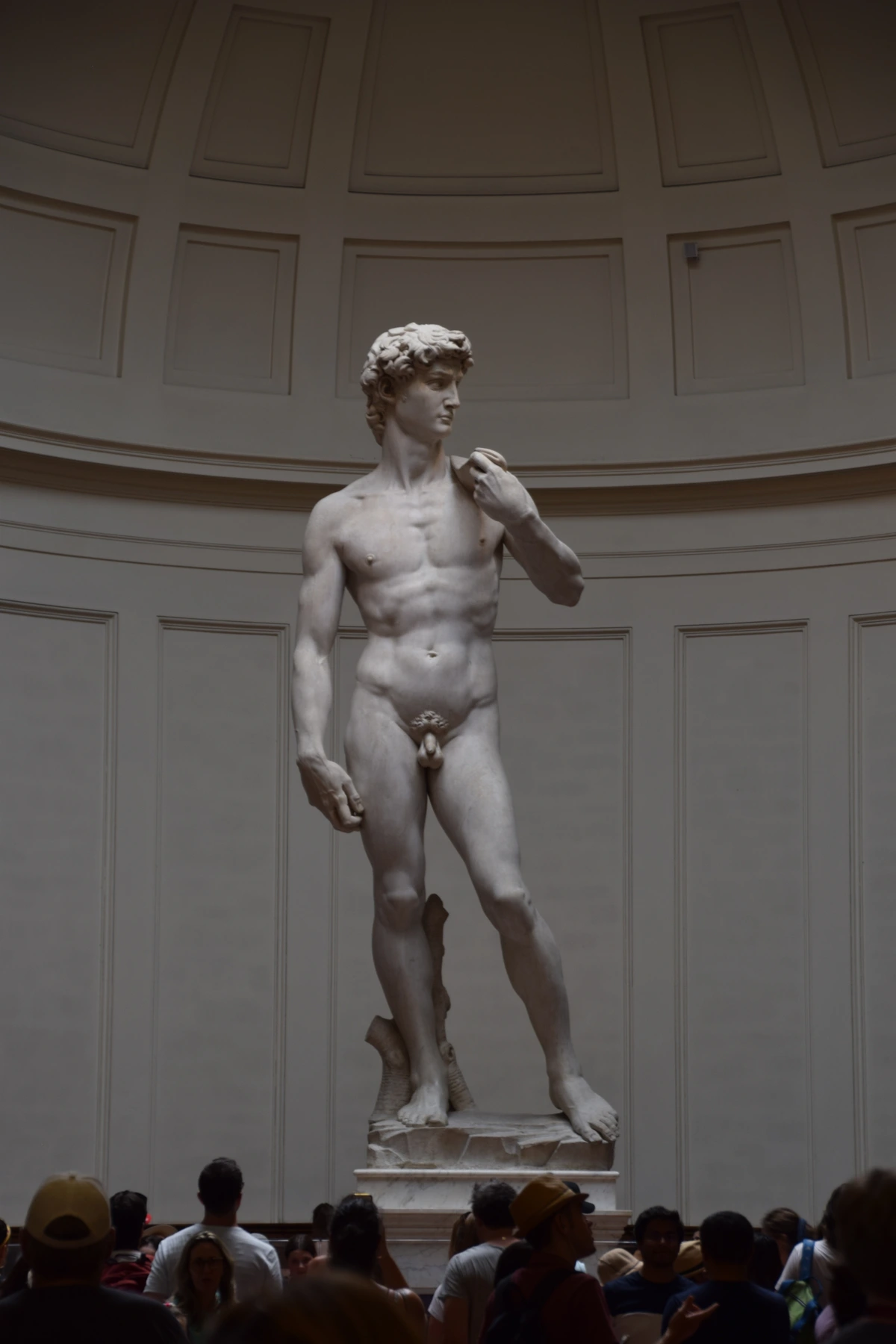
And then, there's the sheer, undeniable influence. Honestly, you simply cannot talk about later periods of Western art, like the incredible Renaissance with masters such as Michelangelo (whose David is a clear heir to the Greek heroic nude) and Donatello (whose Saint George revives a classical contrapposto), or the elegant Neoclassical movement of the 18th century (with artists like Antonio Canova directly reinterpreting classical poses and themes), without acknowledging the colossal, foundational shadow cast by Greek sculpture. It's truly like the bedrock upon which so much else was meticulously built. This isn't just a casual nod of historical importance; it's a foundational, undeniable truth in art history. I mean, just look at the heroic nude figures, the sheer muscle, and the profound human emotion conveyed in a Michelangelo, and you'll immediately see echoes of Greek ideals. It’s a powerful conversation across millennia, a continuous thread woven through the tapestry of art, constantly reinterpreted and celebrated. You simply cannot talk about later periods of Western art – the incredible Renaissance with masters like Michelangelo (whose David, with its heroic nude form and profound contrapposto, is a clear, undeniable heir to the Greek ideal) and Donatello (whose Saint George dramatically revives a classical contrapposto and psychological depth), or the elegant Neoclassical movement of the 18th century (with artists like Antonio Canova directly reinterpreting classical poses and themes with new grace), or even the expressive drama of the Baroque period – without acknowledging the colossal, foundational shadow cast by Greek sculpture. Their principles of ideal form, narrative clarity, and anatomical mastery were absorbed, adapted, reinterpreted, and sometimes even challenged, but never ignored. The influence even extends to how Roman sculpture not only preserved but also disseminated Greek forms across a vast empire, ensuring their legacy would span continents and centuries, becoming the artistic language of a globalized ancient world.

Influence on Roman Art: Beyond Mere Copies
Now, while we often speak, perhaps a bit dismissively, of Roman sculpture 'copying' Greek originals, I find that it's a far more nuanced and fascinating relationship than that. Roman artists certainly admired and emulated Greek forms, yes, but they also ingeniously adapted them to their own distinct cultural purposes. This is where you see innovation, especially in their portraiture, which achieved an unprecedented level of realism and individualistic detail – a stark contrast to the Greek idealization. The Romans, with their pragmatic and empirical mindset, were less concerned with the universal ideal and more with the specific, the historical, and the individual. Crucially, they effectively preserved much of what we know today about lost Greek bronzes through their numerous, often high-quality, marble copies. But the Romans also innovated significantly, particularly in their historical relief sculpture (think of the magnificent Column of Trajan or the Arch of Titus, which served as powerful vehicles for imperial propaganda and historical record) and their intensely realistic portraiture, with monumental arches and columns proudly celebrating military victories and imperial power. The Romans were, in a way, the greatest curators and disseminators of Greek artistic principles, ensuring their profound legacy endured and evolved, albeit through a distinctly Roman lens. Their pragmatic adoption of Greek models led to a flourishing industry of copies that, ironically, often preserve our only knowledge of lost Greek bronze originals, which would have otherwise vanished. But the true Roman genius lay not just in replication, but in ingeniously adapting these forms to their own pragmatic, historical, and deeply individualistic sensibilities. This is especially evident in their striking, realistic portrait busts of emperors and prominent citizens (a far cry from Greek idealization), and their monumental narrative historical reliefs, like the grand Column of Trajan or the Arch of Titus, which served as powerful vehicles for imperial propaganda, historical record-keeping, and the celebration of military prowess and civic achievements. These distinct Roman innovations demonstrate a keen understanding of art's power to serve specific political and social functions, differentiating them from their Greek predecessors.

(And of course, Michelangelo's David, a Renaissance marvel, truly could not exist without the ancient Greek masters who first perfected the heroic male nude.)
(Auguste Rodin's The Thinker, while far removed in time, undeniably inherits a certain classical gravity and introspective power from the Greek tradition of conveying profound thought through the human form.)

(Donatello, a master of the Early Renaissance, deeply absorbed the lessons of Greek sculpture, evident in the dynamic contrapposto and expressive naturalism of his Saint George.)
Religious and Philosophical Significance
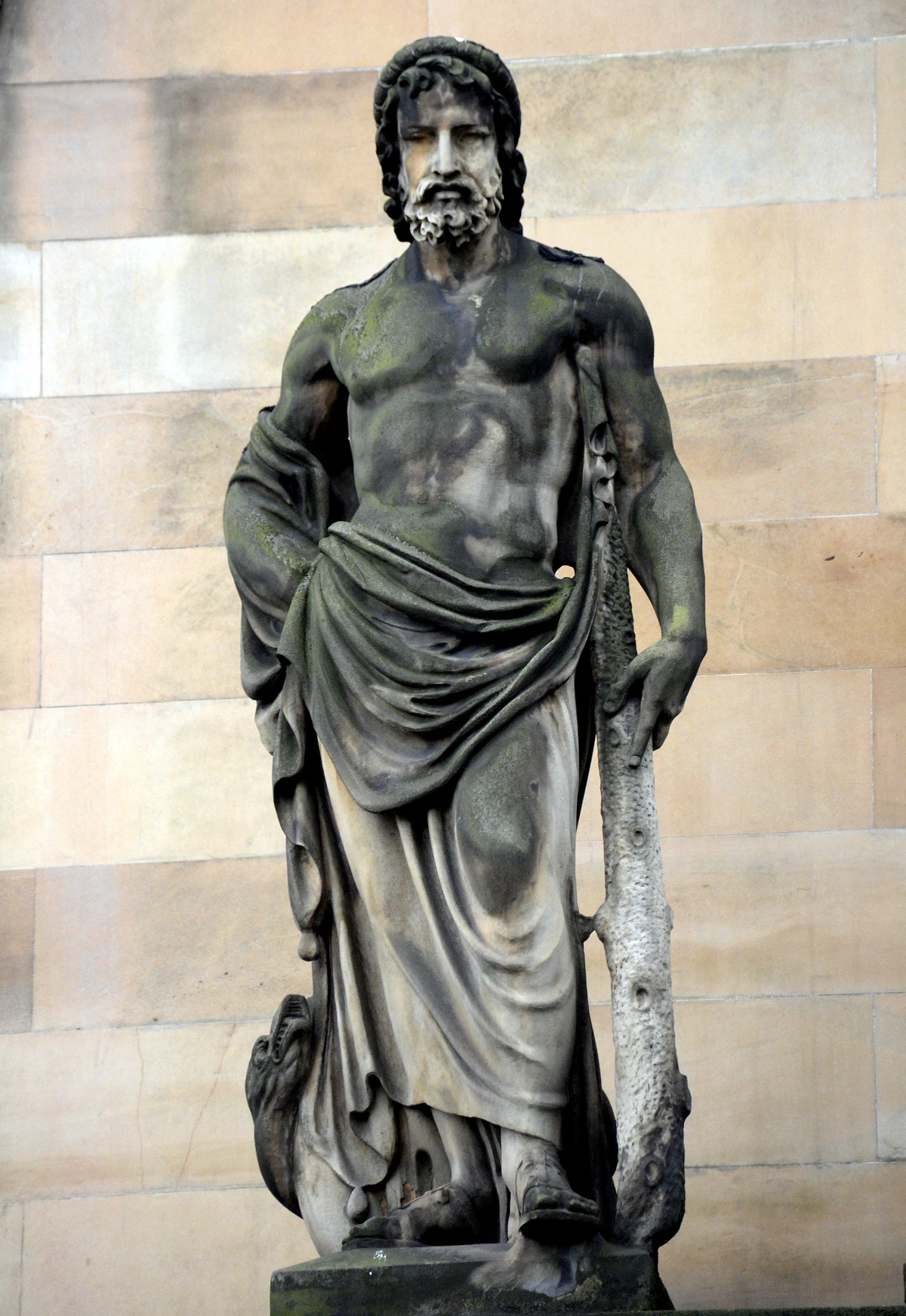
Beyond their undeniable aesthetic beauty, Greek sculptures were deeply, almost inextricably, intertwined with the religious and philosophical life of the ancient Greeks. Many were colossal cult statues, housed within the most sacred temples, literally embodying the gods and goddesses they worshipped, serving as intermediaries between the mortal and divine worlds. Others depicted revered heroes or mythical figures, serving as potent visual reminders of their virtues and vices, or illustrating profound philosophical concepts about humanity's place in the cosmos. They weren't merely decorations, you see; they were focal points of worship, expressions of fierce civic pride (think of Athens glorifying Athena through the Parthenon's sculptural program), and catalysts for intellectual discourse. The performance of rituals, offerings, and processions often centered around these sacred images. Think, for a moment, of the colossal, awe-inspiring statue of Zeus at Olympia, one of the legendary Seven Wonders of the Ancient World – a breathtaking, chryselephantine (gold and ivory) embodiment of their chief deity, a true testament to both artistic skill and profound faith, meant to inspire awe and devotion in all who beheld it. The very act of visiting these sanctuaries was a deeply immersive religious and aesthetic experience, with sculptures guiding the devotee's spiritual journey. From the colossal, awe-inspiring gold-and-ivory Zeus at Olympia (one of the legendary Seven Wonders of the Ancient World, designed to inspire profound reverence) to countless smaller votive offerings and grave stelai, these sculptures were not just art in our modern sense; they were sacred objects, focal points of ritual, powerful points of communion, and tangible expressions of a profound cosmological worldview. They linked the mundane with the divine, the human with the heroic, and the city with its patron gods, making the intangible feel present, real, and powerfully influential in daily life. This deep integration of art into religious and philosophical practice truly underscores its fundamental role in ancient Greek society.

(While not exclusively Greek, the Uffizi houses many works influenced by classical antiquity, showcasing the enduring legacy of Greek ideals. It's like a direct line from the Parthenon to the halls of Florence.)
Setting the Stage: From Precursors to the Dawn of Greek Art
Before we dive into the distinct periods of Greek sculpture, it's worth taking a moment, as I often do, to appreciate the rich artistic landscape that existed before the 'Greek style' as we know it truly emerged. These earlier civilizations, though distinct, laid crucial groundwork, hinting at the burgeoning interest in the human form and storytelling that would later define Greek art.
The Evolution of Greek Sculpture: A Personal Journey Through Eras
I find it really helpful to think of Greek sculpture not as one monolithic style, but as a journey through distinct phases, each with its own character and charm. Let's take a quick stroll through them, shall we?
Early Influences and Precursors (c. 3000-600 BCE): The Foundations
Before the recognizable 'Greek' style emerged, the Aegean world was a melting pot of artistic ideas, a rich tapestry of pre-Hellenic cultures that would subtly (and sometimes not so subtly) influence the burgeoning Greek aesthetic. We see early forms of human representation in the Cycladic figurines (minimalist marble figures from the Cycladic islands, predating Minoan and Mycenaean cultures), with their haunting, simplified, almost abstract forms, often found in graves as funerary offerings, hinting at a spiritual significance and a nascent interest in the human form. Then there are the vibrant frescoes and stylized figures of the Minoan civilization on Crete, depicting graceful bull-leapers, elegant court ladies, and opulent palace life, characterized by their curvilinear forms and lively movement, a distinct organic aesthetic. Finally, the martial, often gold-laden art of the Mycenaeans on mainland Greece, known for their formidable citadels, monumental 'Cyclopean' masonry, and the famous Gold Mask of Agamemnon, speaks of a warrior culture focused on grave goods and fortifications, showcasing a different kind of power. These early experiments, while distinct, laid some of the groundwork for the Greeks' later mastery of form and narrative, particularly in their burgeoning interest in the human figure and storytelling. They were, in a way, the first drafts of what was to come, hinting at the profound human drama and aesthetic exploration that would define later Greek art.
Early Influences and Precursors (c. 3000-600 BCE): The Foundations
Before the recognizable 'Greek' style emerged, the Aegean world was a melting pot of artistic ideas, a rich tapestry of pre-Hellenic cultures that would subtly (and sometimes not so subtly) influence the burgeoning Greek aesthetic. We see early forms of human representation in the Cycladic figurines (minimalist marble figures from the Cycladic islands, predating Minoan and Mycenaean cultures), with their haunting, simplified, almost abstract forms, often found in graves as funerary offerings, hinting at a spiritual significance and a nascent interest in the human form. Then there are the vibrant frescoes and stylized figures of the Minoan civilization on Crete, depicting graceful bull-leapers, elegant court ladies, and opulent palace life, characterized by their curvilinear forms and lively movement, a distinct organic aesthetic. Finally, the martial, often gold-laden art of the Mycenaeans on mainland Greece, known for their formidable citadels, monumental 'Cyclopean' masonry, and the famous Gold Mask of Agamemnon, speaks of a warrior culture focused on grave goods and fortifications, showcasing a different kind of power. These early experiments, while distinct, laid some of the groundwork for the Greeks' later mastery of form and narrative, particularly in their burgeoning interest in the human figure and storytelling. They were, in a way, the first drafts of what was to come, hinting at the profound human drama and aesthetic exploration that would define later Greek art.
The Geometric and Orientalizing Periods (c. 900-600 BCE)
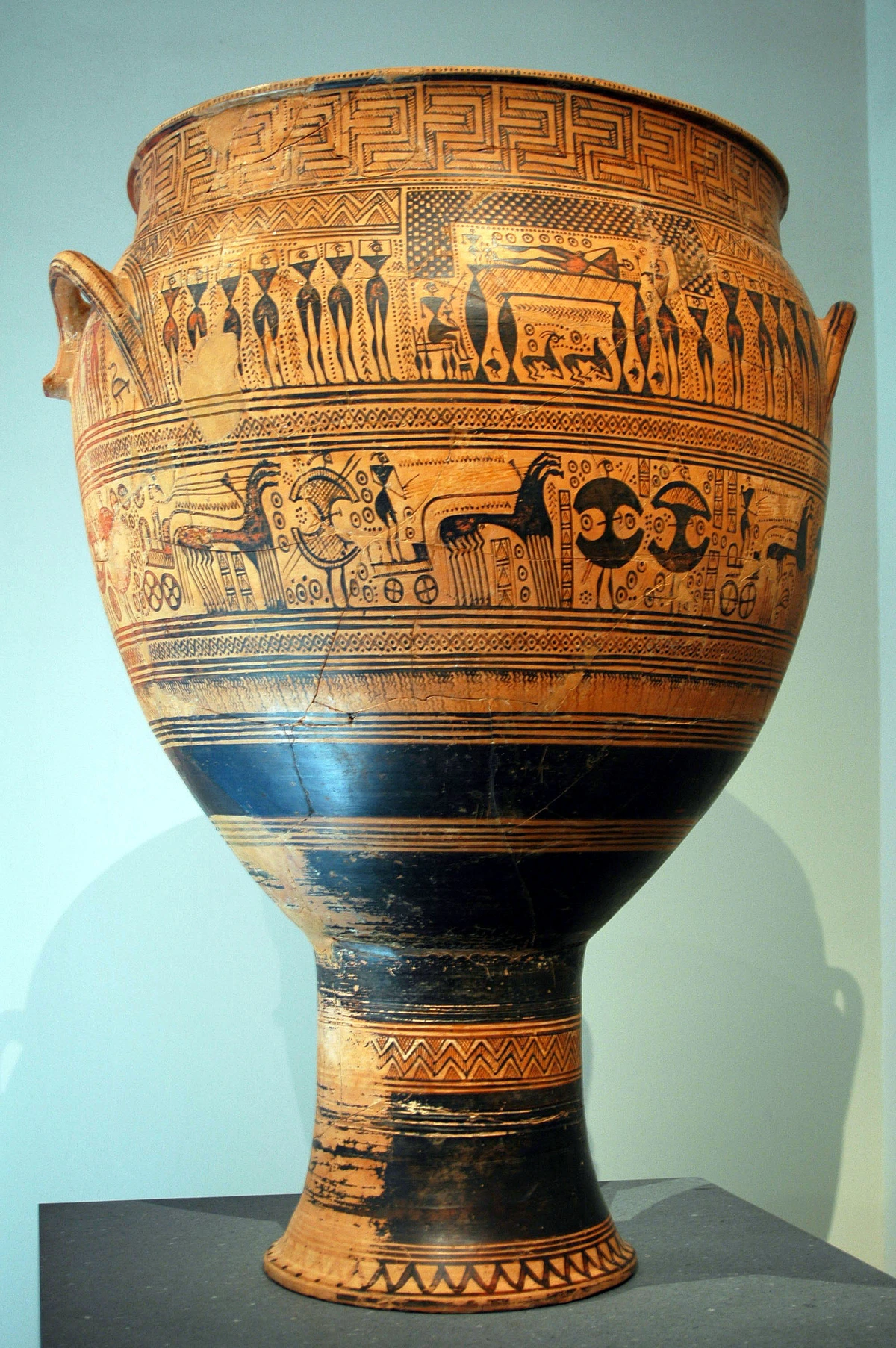
Following the tumultuous Bronze Age collapse and a subsequent 'Dark Age,' the Geometric period (c. 900-700 BCE) saw a crucial return to human figuration, albeit highly stylized, often adorning large funerary pottery (like monumental kraters) that marked graves. Figures were abstract, made of simple geometric shapes – triangles for torsos, circles for heads, and stick-like limbs – a fascinating exercise in minimalist representation, telling complex stories through simplified forms. Then came the Orientalizing Period (c. 700-600 BCE), a truly fascinating time when increasing trade and interaction led Greek artists to absorb rich influences from the Near East (Mesopotamia, Persia) and Egypt. This period introduced a greater naturalism in human and animal forms, a burgeoning interest in monumental scale, and a more complex decorative vocabulary (think rosettes, palmettes, and exotic animal friezes). It was during this time that the seeds of monumental sculpture were truly sown, as Greek artists began to craft larger, more intricate figures, often showing influences like the Daedalic style with its distinctive triangular faces and stiff poses, a direct precursor to the more monumental Archaic Kouros and Kore figures. This era was a crucible of new ideas, preparing the way for the Archaic explosion of form.
1. The Archaic Period (c. 600-480 BCE): The First Steps
My initial impression of Archaic sculptures was that they were... stiff. Very frontal, almost block-like, and those famous Archaic smiles that seem to float unsettlingly on their faces. But once you realize that this was a period of incredible experimentation, of sculptors learning to represent the human body in stone, the stiffness becomes a fascinating record of their progress. They were actively, and often audaciously, breaking free from rigid Egyptian influences, such as the strict canon of proportions and the requirement to remain attached to a back slab, which characterized figures like standing pharaohs. Instead, Greek sculptors were developing their own unique aesthetic, pushing the boundaries of what was possible in monumental sculpture carved fully in the round. Think of it as a sculptor's intensive, transformative learning phase, laying the crucial anatomical and compositional groundwork for later mastery.
(In a way, the early, somewhat constrained forms of Archaic sculpture remind me of the foundational lines in an abstract drawing, where simplicity holds the promise of complex forms to come.)
For me, the Kouros (male youth) and Kore (female youth) statues are the quintessential, defining examples here. They're like ancient Greek mannequins, yes, but with a burgeoning, almost palpable sense of life and a profound dedication to representing the human form. These figures, typically monumental in scale, often served crucial roles as aristocratic grave markers or as impressive dedications to the gods in sanctuaries. The Kouros of Anavysos, with its muscularity and proud, almost defiant stance, famously bears the poignant inscription: "Stop and show pity beside the monument of dead Kroisos, slain by raging Ares as he fought in the front ranks." Another iconic example, embodying nascent athletic prowess and filial piety, is the Kleobis and Biton, two powerful brothers depicted as early Kouroi, found at the sanctuary of Delphi. We also see the elegant Peplos Kore, adorned in a peplos dress, whose tantalizing traces of original paint whisper of a once vibrant, polychrome appearance, reminding us that these ancient works were not originally stark white marble. These figures, whether standing as aristocratic grave markers or votive offerings, represent the earliest Greek attempts at monumental sculpture, laying the crucial anatomical and compositional groundwork for what was to come, slowly but surely breaking free from rigid, static forms to imbue their stone with a nascent, developing sense of life and character.
Key Characteristics of Archaic Sculpture:
- Frontality and Rigidity: Figures typically stand stiffly, facing forward.
- Archaic Smile: A conventional, somewhat enigmatic smile, not intended to convey emotion but rather a sign of liveliness.
- Stylized Hair and Features: Hair is often braided or patterned, facial features are generalized.
- Egyptian Influence: Clear parallels in pose and form, though Greeks began to carve figures completely in the round.
- Kouros and Kore Types: Idealized nude males (Kouros) and draped females (Kore), often as votive offerings or grave markers.
Notable Archaic Sculptures
Sculpture Name  | Description | Significance | Current Location |
|---|---|---|---|
| Kouros of Anavysos | A powerful marble statue of a nude male youth, depicting strong musculature and the classic Archaic smile. | Celebrated for its proud stance and memorial inscription, marking a significant step towards naturalism while retaining Archaic conventions. | National Archaeological Museum, Athens |
| Kleobis and Biton | Two early Kouroi depicting mythical brothers, renowned for their filial piety and strength. They embody an earlier, more robust form of the Kouros ideal. | Important early example of monumental sculpture, demonstrating artistic ambition and mythical narrative integration. | Delphi Archaeological Museum |
| Peplos Kore | An elegant statue of a clothed female youth (Kore) wearing a peplos dress. Traces of original paint have been found. | Reveals the vibrant polychromy of ancient Greek sculpture and the evolving depiction of female figures with intricate drapery. | Acropolis Museum, Athens |
| Lady of Auxerre | A small, early Archaic limestone statuette of a goddess or worshiper, known for its stylized form and geometric hair. | One of the earliest examples of large-scale Greek sculpture in the round, showing clear Orientalizing influences. | Louvre Museum, Paris |
Key Characteristics of Archaic Sculpture:
Characteristic | Description |
|---|---|
| Frontality and Rigidity | Figures typically stand stiffly, facing directly forward, often with arms at their sides and one foot slightly advanced, emphasizing a block-like, monumental presence rather than dynamic movement. |
| Archaic Smile | A conventional, somewhat enigmatic smile that appears on many Archaic figures, not necessarily to convey genuine emotion, but rather to suggest a sense of liveliness, well-being, or the figure's transcendence. |
| Stylized Hair & Features | Hair is often rendered in highly decorative, patterned ways (e.g., beaded or braided), and facial features are generalized, aiming for an idealized, timeless type rather than individual likeness. |
| Egyptian Influence | Strong parallels exist with Egyptian statuary, particularly in the rigid frontal pose, columnar mass, and the canon of proportions used. However, Greek sculptors rapidly distinguished themselves by carving figures fully in the round, freeing them from the stone block. |
| Kouros & Kore Types | The quintessential forms are the Kouros (idealized nude male youths, often grave markers or dedications) and the Kore (draped female youths, typically votive offerings), embodying ideals of aristocratic virtue, beauty, and piety. |
The Severe Style / Early Classical (c. 480-450 BCE): A Bridge to Idealism and Triumph
This period immediately followed the monumental Persian Wars (499-449 BCE), a series of conflicts that not only solidified Greek identity but also fostered an unprecedented sense of collective triumph, a newfound confidence, and an explosion of intellectual and artistic flourishing. This hard-won victory, I deeply believe, contributed to the profound gravitas, introspection, and serious focus evident in the art of the time, moving away from the earlier, more decorative and outwardly smiling forms. It was a time of serious reflection on human potential, collective civic virtue, and divine favor, moving the artistic focus from aristocratic display towards a more unified, civic-minded heroism that championed the individual's role in the collective. This historical watershed truly redefined what Greek art aimed to achieve, shifting towards something more weighty, meaningful, and emotionally restrained.
Sandwiched between the Archaic and the breathtaking High Classical periods, this transitional phase, often known as the Severe Style, marks a truly crucial shift in artistic sensibility. The somewhat unsettling, stiff Archaic smile completely disappears, replaced by a more serious, almost somber expression – what I like to call a kind of 'Greek poker face,' conveying a new intellectual rigor and emotional restraint. We see a burgeoning, fascinating interest in capturing natural human movement, often just before or after an action, and a significantly greater understanding of anatomy. It's less about static, decorative perfection and more about conveying restrained power, potential energy, and an underlying sense of calm thoughtfulness. The famous Kritios Boy is a perfect, almost revolutionary, example, standing in an early, subtle form of contrapposto, hinting at the anatomical and compositional revolution that was about to unfold. Other key examples include the awe-inspiring bronze Charioteer of Delphi, with its serene expression and detailed drapery, and the powerful Tyrannicides group (Harmodius and Aristogeiton), which capture dynamic narrative moments with a newfound realism and emotional depth, celebrating civic heroism and a new democratic ideal. The Severe Style, to me, is the vital moment where Greek sculptors truly began to find their own, unique voice, stepping confidently onto the path of unparalleled naturalism and idealized humanism.
(The understated emotion of the Severe Style, a quiet intensity, reminds me of the power in minimalist composition, where a few strong lines or shapes can convey immense depth.)
Notable Severe Style Sculptures
Sculpture Name | Artist (Attributed) | Material | Key Feature | Current Location |
|---|---|---|---|---|
| Kritios Boy | Kritios | Marble | First known use of early contrapposto; serious expression marks a break from Archaic. | Acropolis Museum, Athens |
| Charioteer of Delphi | Unknown | Bronze | One of the finest surviving Greek bronzes; captures solemnity and idealized realism. | Delphi Archaeological Museum |
| Tyrannicides (Harmodius and Aristogeiton) | Kritios and Nesiotes | Bronze (original lost, Roman copies exist) | Dynamic, narrative pose depicting heroes; crucial for showing civic virtue. | Museo Archeologico Nazionale, Naples (copy) |
| Zeus or Poseidon of Artemision | Unknown | Bronze | Powerful, dynamic pose of a god launching a trident/thunderbolt. | National Archaeological Museum, Athens |
Key Characteristics of the Severe Style:
Characteristic | Description |
|---|---|
| Serious Expression | Replaces the Archaic smile; faces are somber, thoughtful, or focused. |
| Natural Movement | Figures begin to show weight shift, often in a moment just before or after action. |
| Anatomical Accuracy | Improved understanding and depiction of human musculature and bone structure. |
| Restrained Emotion | Emotion is conveyed through body language rather than exaggerated facial features. |
| Early Contrapposto | Subtle weight shifts, signaling the coming revolution in pose and balance. |
| Transitional | A bridge between the stylized Archaic and the idealized Classical periods. |
2. The Classical Period (c. 480-323 BCE): The Golden Age of Idealism
Now, this is where things really, really get interesting for many, myself included. The Classical period is, I believe, the epitome of what most people picture when they think of Greek sculpture. It's the glorious era of contrapposto (a rather fancy word for a relaxed, natural stance where the body's weight is shifted to one leg, creating that subtle, elegant S-curve), of truly idealized beauty, and incredible anatomical precision. This era, of course, coincides with the legendary Golden Age of Athens, a time of unprecedented flourishing in democracy, groundbreaking philosophy (think Socrates' ethical inquiries, Plato's theories of ideal Forms, and Aristotle's logic and mimesis – whose ideas deeply influenced the pursuit of ideal forms and harmonious proportions in art), and unparalleled architectural ambition following the Persian Wars. All of this, naturally, fueled an intense and prolific artistic output, driven by a collective desire to embody these ideals. The Parthenon itself, with its unparalleled sculptural program (supervised by Phidias), stands as the ultimate, enduring testament to this period of humanistic flourishing and civic pride, a visual summary of Athenian ideals where the intellect and artistic skill profoundly converged, seeking a profound truth in beauty and order.
It’s almost as if artists like Phidias, Polykleitos, and Praxiteles said, "Alright, we've figured out how to make a human body in stone; now let's make it perfect." This era is when Greek sculpture truly became synonymous with the pursuit of ideal human beauty and harmonious proportion, a standard that would profoundly influence art for millennia to come. This pursuit extended far beyond mere aesthetics; it was a deeply philosophical endeavor, reflecting a fervent Greek belief in the potential for human excellence – both physical and moral – embodied in the concepts of reason, order, and balance. The very nude form, particularly for males, became a powerful symbol of heroism, virtue, and civic pride, celebrating the athletic and intellectual achievements of the citizen.
(The ideal balance and serenity of Classical forms can still be seen echoed in contemporary art that seeks a quiet, almost meditative perfection.)
The Late Classical Period (c. 400-323 BCE): A Shift Towards Humanism and Grace
As the Classical period progressed, especially towards its later decades, following the Peloponnesian War and a period of political instability, there was a subtle but significant shift in artistic focus. While the pursuit of ideal form remained, sculptors began to explore more humanistic themes, introducing a greater sense of grace, sensuality, and even individual psychology. The serene detachment of earlier High Classical works started to give way to figures that were more approachable, often leaning or posed in a way that emphasized their elegance rather than just their power. This period saw a significant rise in the depiction of female nudes, notably with Praxiteles' revolutionary Aphrodite of Knidos, often considered the first life-size female nude sculpture in Greek art. This daring work marked a bold new direction for the portrayal of divine beauty, emphasizing alluring curves, a more intimate appeal, and a delicate sensuality. It’s almost as if the gods started to feel a little more... human, approachable, and relatable, reflecting a society where individual experience, personal introspection, and private patronage were gaining prominence, moving slightly away from the purely civic and public focus that dominated earlier Classical art. Sculptors like Praxiteles and Scopas began to explore more nuanced emotions and graceful poses, with an increased focus on the individual and a growing sensuality in their depictions. The female nude, epitomized by Praxiteles' revolutionary Aphrodite of Knidos, thus emerged as a powerful symbol of divine beauty and approachable allure, setting a new, profoundly influential standard for centuries to come.
Key Sculptors and Their Innovations:
- Phidias: The undeniable artistic director of the Parthenon, he was responsible for the colossal chryselephantine (gold and ivory) statue of Athena Parthenos (sadly lost, but its grandeur known from descriptions, even featuring carved ivory skin and gold drapery) and supervised the creation of the Parthenon's exquisite friezes and pediment sculptures, showcasing an unparalleled mastery of drapery, dynamic composition, and narrative storytelling. His monumental vision, characterized by a unique blend of grandeur and refined detail, truly defined the High Classical style, particularly in the depiction of deities, imbuing them with both human grace and an unmistakable aura of divine authority.
- Polykleitos: Famous for his theoretical treatise, the Canon, which meticulously set out ideal mathematical proportions and harmonious balance for the human figure – a system of symmetria that aimed for perfect harmony, defining specific ratios for head to body, limb length, and musculature. His iconic Doryphoros (Spear Bearer) was a meticulously crafted visual demonstration of these principles, a perfect embodiment of contrapposto and balanced form that became an absolute benchmark for centuries. This masterwork profoundly influenced generations of artists and sculptors, serving almost like a visual textbook for ideal human representation, deeply ingrained in the artistic consciousness.
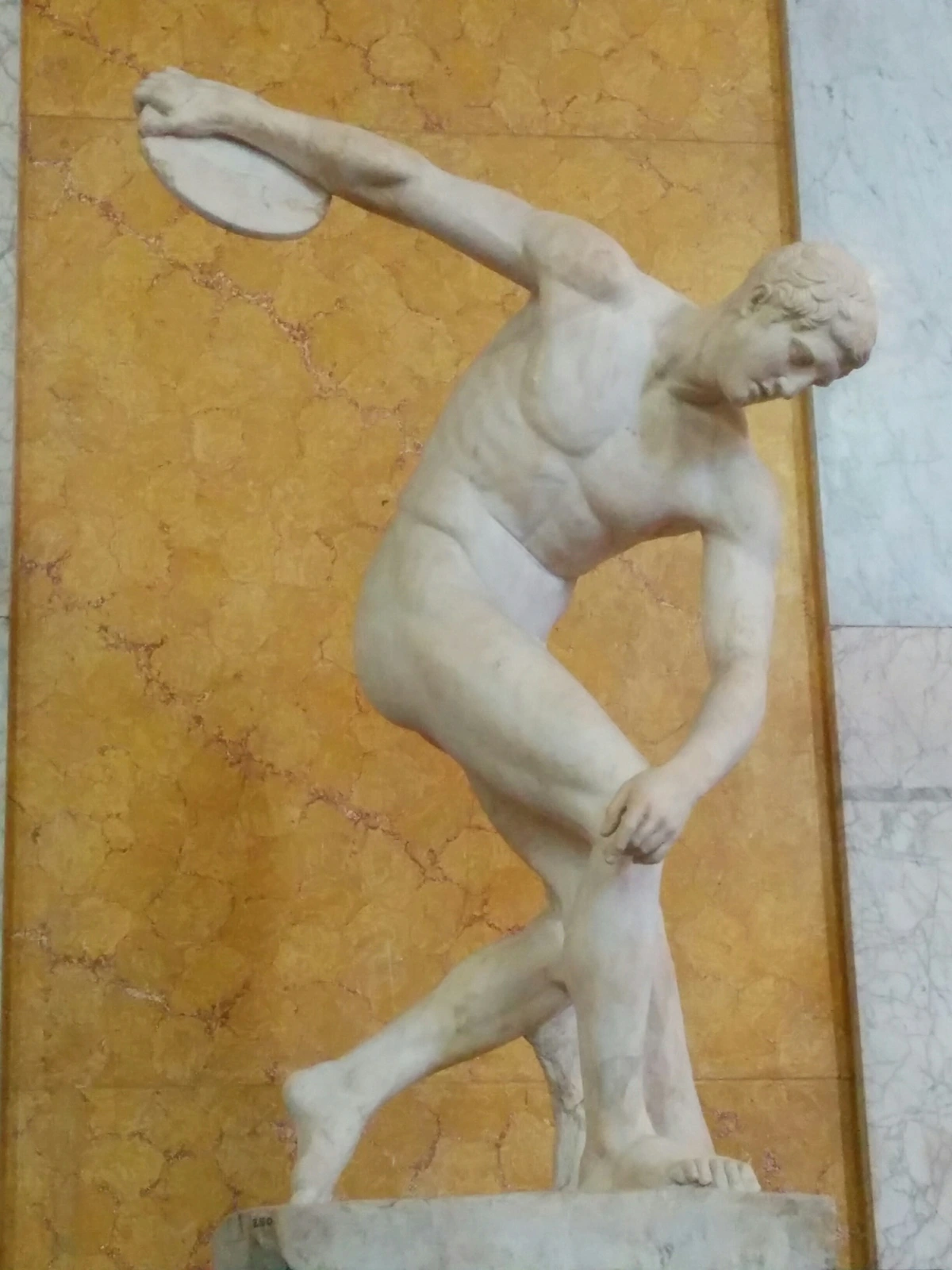
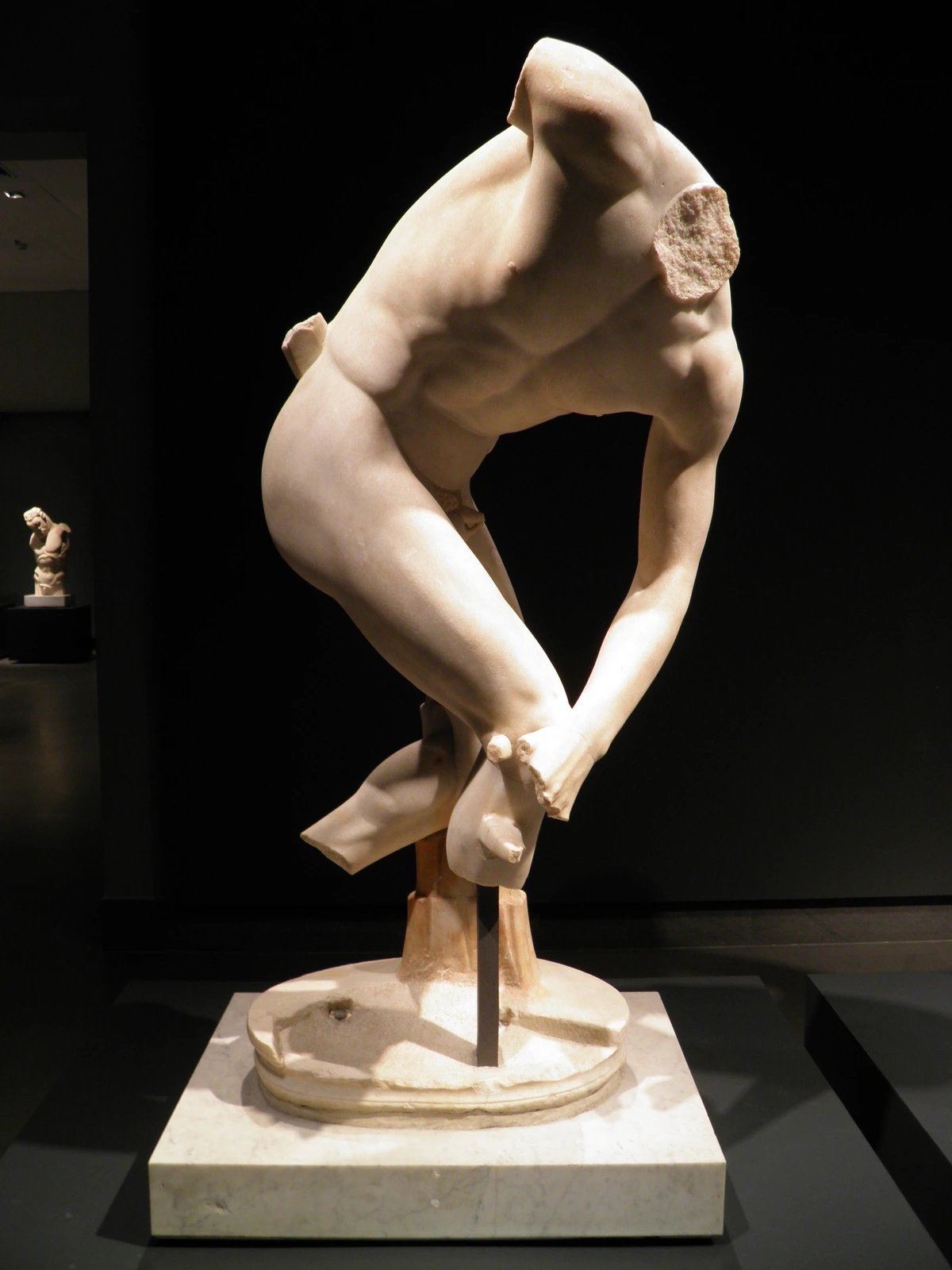
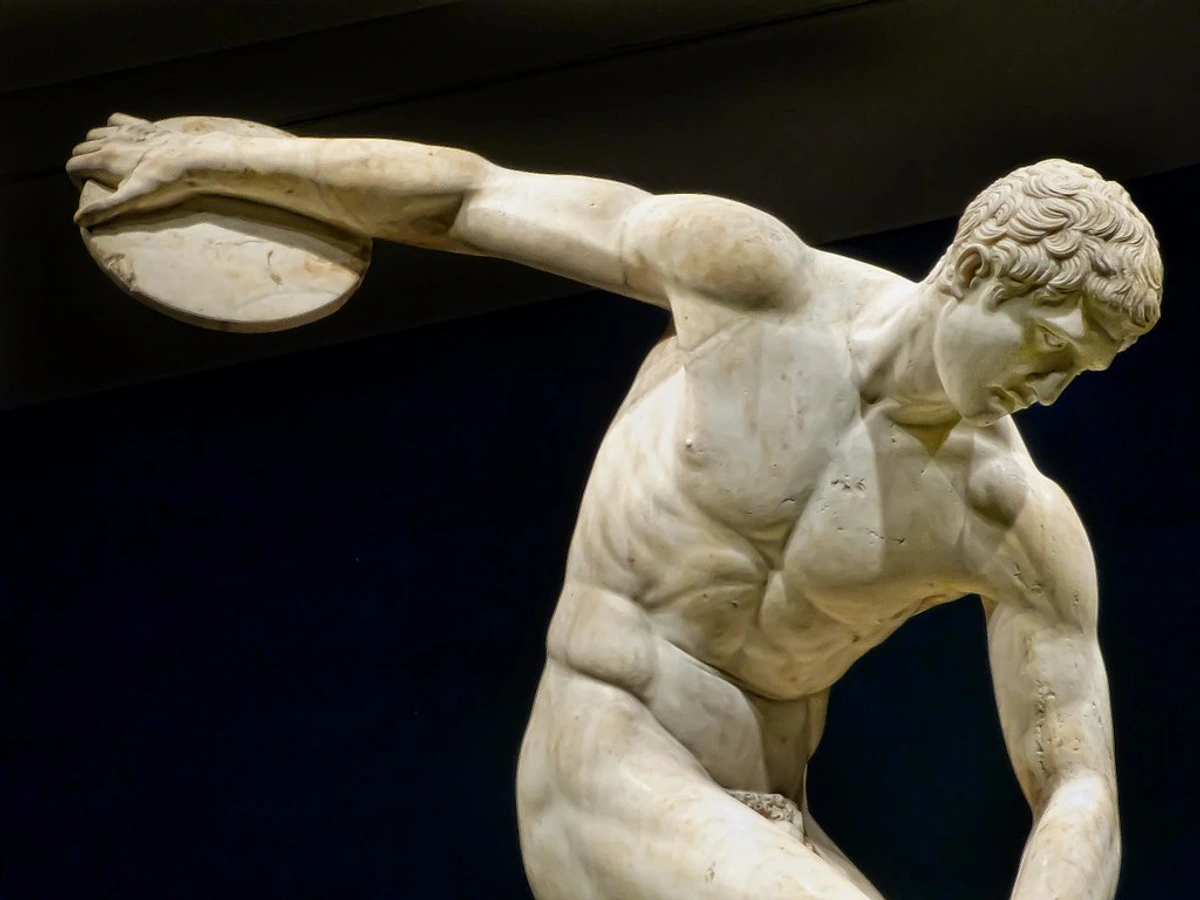
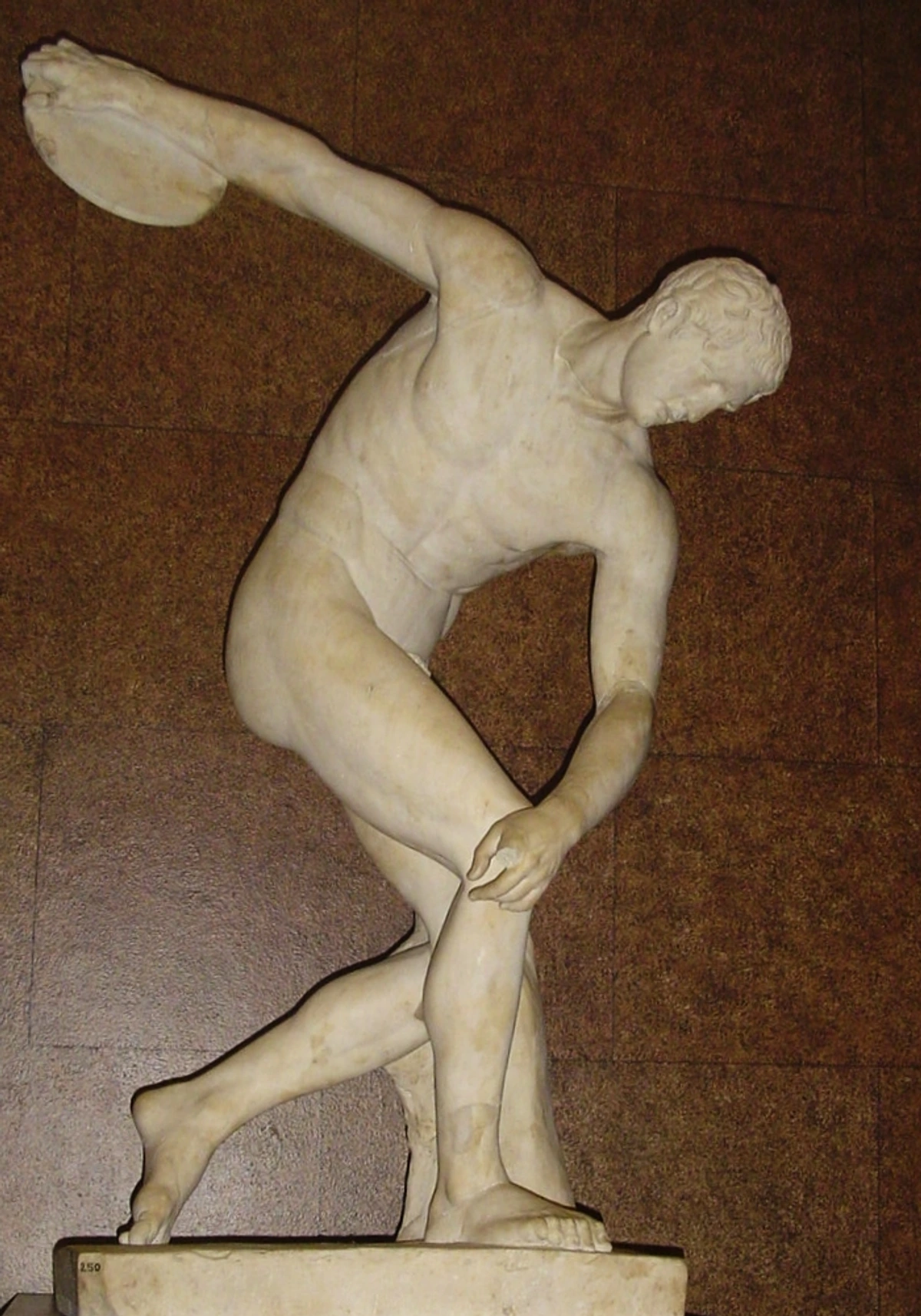
- Myron: Celebrated for ingeniously capturing fleeting moments of athletic tension and grace, his Discobolus (Discus Thrower) freezes a dynamic action in a way that suggests both immense potential movement and poised calm. It's a profound snapshot of athletic perfection, embodying the Greek ideal of physical prowess, mental focus, and the beauty of the body in peak performance, a celebration of controlled energy.
- Praxiteles: Active primarily in the Late Classical period, he introduced a more sensual, graceful, and often intimate quality to sculpture. This is beautifully seen in his Aphrodite of Knidos, often considered the first life-size female nude sculpture in Greek art, marking a radical new approach to the depiction of the divine body, emphasizing alluring beauty and an approachable sensuality over austere power. His exquisite Hermes with the Infant Dionysus also exemplifies his soft, elegant style, a graceful S-curve posture, and a remarkable ability to convey a tender, almost playful and intimate interaction between gods, making them feel more human and accessible.
- Scopas: Active primarily in the Late Classical period, Scopas is renowned for introducing an unprecedented intensity of emotional expression and dramatic movement into sculpture. His figures often feature deeply set eyes, furrowed brows, and agitated poses, conveying a profound sense of pathos (suffering or deep emotion). He contributed to major projects like the Mausoleum at Halicarnassus, one of the Seven Wonders of the Ancient World, and his dramatically expressive style clearly anticipates the emotional grandeur of the Hellenistic period, pushing the boundaries of expressive realism and emotional intensity in stone.
- Lysippos: The official sculptor to Alexander the Great, Lysippos was a pivotal figure bridging the Classical and Hellenistic eras. He famously reinterpreted Polykleitos's 'Canon,' introducing a new canon of slenderer proportions (where the head was often one-eighth of the total body height, rather than one-seventh), emphasizing a lighter, more agile physique. His figures are known for their active, often twisting poses and complex compositions that invite viewing from multiple angles, subtly breaking the earlier, more static conventions in favor of a more dynamic and engaging reality. His Apoxyomenos (Scraper), with its slender proportions and active pose, is a prime example of his innovative approach to conveying movement, individual character, and spatial engagement, inviting viewers to walk around the sculpture.
Key Classical Sculptures and Their Innovations
(The classical ideal, with its emphasis on harmonious proportions and serene beauty, finds its parallel in abstract art that seeks balance and visual order through color and form.)
Sculpture Name | Artist (Attributed) | Period | Key Feature / Significance | Current Location (often Roman copies) |
|---|---|---|---|---|
| Parthenon Sculptures | Phidias (supervised) | High Classical | Friezes and pediment sculptures depicting mythological scenes and the Panathenaic procession; epitome of High Classical idealism and narrative art. | British Museum, Acropolis Museum |
| Doryphoros (Spear Bearer) | Polykleitos | High Classical | Embodiment of Polykleitos's 'Canon' of ideal human proportions; perfect example of contrapposto and balanced form. | Museo Archeologico Nazionale, Naples |
| Discobolus (Discus Thrower) | Myron | Early Classical | Captures a dynamic, frozen moment of athletic action; revolutionary in its depiction of movement and tension. | National Museum of Rome (Lancellotti Discobolus) |
| Hermes with the Infant Dionysus | Praxiteles | Late Classical | Known for its graceful S-curve, sensual surface treatment, and depiction of playful interaction between gods, showing a shift towards humanism. | Olympia Archaeological Museum |
| Aphrodite of Knidos | Praxiteles | Late Classical | The first life-size female nude, marking a new era of sensual and humanized portrayal of goddesses, profoundly influential. | Vatican Museums (Colonna copy) |
| Apollo Belvedere | Leochares (original, Roman copy) | High Classical | Iconic idealized male nude, athletic and graceful; a powerful symbol of divine beauty and classical perfection, highly influential on later art. | Vatican Museums, Vatican City |
| Capitoline Venus | Unknown (Roman copy of a Praxiteles or similar original) | Late Classical | A modest, sensual female nude depicting Aphrodite after her bath; a graceful and influential depiction of divine feminine beauty. | Capitoline Museums, Rome |
| Nike of Paeonius | Paeonius of Mende | High Classical | Dynamic, wind-swept drapery and powerful sense of movement, celebrating victory; originally placed atop a monumental pillar. | Olympia Archaeological Museum |
Key Characteristics of Classical Sculpture:
- Contrapposto: Lifelike posture, movement implied even in stillness.
- Idealized Figures: Focus on beauty, harmony, and proportion.
- Serene Expressions: Emotion is subtle, often conveyed through body language rather than facial features.
- Emphasis on Humanism: Celebrating the human form and its potential.
3. The Hellenistic Period (c. 323-31 BCE): Emotion Unleashed and Theatrical Grandeur
After the sudden and untimely death of Alexander the Great in 323 BCE, his vast empire fragmented into numerous Hellenistic kingdoms (Ptolemaic Egypt, Seleucid Syria, Antigonid Macedonia, among others), each vying for prestige and power. This unprecedented geopolitical upheaval led to a broader dissemination of Greek culture across a much wider geographical area and fostered new, often extravagant, forms of artistic patronage by powerful rulers and wealthy elites. With this expanded, more complex, and often turbulent world, art itself embraced a new kind of drama, a heightened emotionality, and a truly globalized outlook. The Hellenistic period is precisely where Greek sculpture throws off much of that serene Classical restraint and leans hard into raw emotion, dramatic movement, and theatricality. If the Classical period was defined by calm, idealized perfection, the Hellenistic was undeniably about passion, intense suffering, ecstatic joy, and dynamic, often overwhelming, action. It's raw, powerful, and utterly captivating, a reflection of a world in flux. This fragmentation and the rise of powerful, often competing, kingdoms fostered a taste for the grandiose, the dramatic, and the often emotionally charged, reflecting a more complex and individualistic worldview than the earlier civic-minded Classical era. Art became a powerful tool for propaganda, self-aggrandizement, and a celebration of individual experience, moving beyond the idealized types to embrace the full spectrum of human reality, from the sublime to the grotesque.
I remember seeing the Laocoön and His Sons for the very first time, and it just hit me with an overwhelming wave of visceral pain. No more stoicism here; just pure, unadulterated human drama, a desperate, agonizing battle against overwhelming, terrifying forces. The Hellenistic age, I feel, truly wasn't afraid to explore the full, unvarnished spectrum of human experience, from profound suffering and despair to ecstatic joy and uninhibited sensuality (think of the sensual Barberini Faun, a sleeping satyr in a state of unrestrained repose), often rendered with a theatrical flair that still utterly captivates us today. It truly pushed the boundaries of emotional expression in stone, making marble weep, scream, and sigh with dramatic intensity. This fragmentation of Alexander's empire and the rise of powerful, often competing, kingdoms fostered a taste for the grandiose, the dramatic, and the often emotionally charged, reflecting a more complex and individualistic worldview than the earlier civic-minded Classical era. Art became a powerful tool for propaganda, self-aggrandizement, and a celebration of individual experience, moving beyond the idealized types to embrace the full spectrum of human reality, from the sublime to the grotesque.
(The intense, almost baroque emotion of Hellenistic sculpture can be likened to the raw, unbridled energy found in certain abstract expressionist works.)

Notable Hellenistic Sculptures
Sculpture Name | Artist (Attributed) | Key Feature / Significance | Current Location |
|---|---|---|---|
| Laocoön and His Sons | Athanadoros, Hagesandros, Polydoros of Rhodes | Intense drama, suffering, baroque emotion, depicting a priest and his sons battling sea serpents. | Vatican Museums, Vatican City |
| Winged Victory of Samothrace | Pythokritos of Rhodes | Dynamic drapery, powerful movement, goddess Nike alighting on a ship's prow, celebrating naval triumph. | Louvre Museum, Paris |
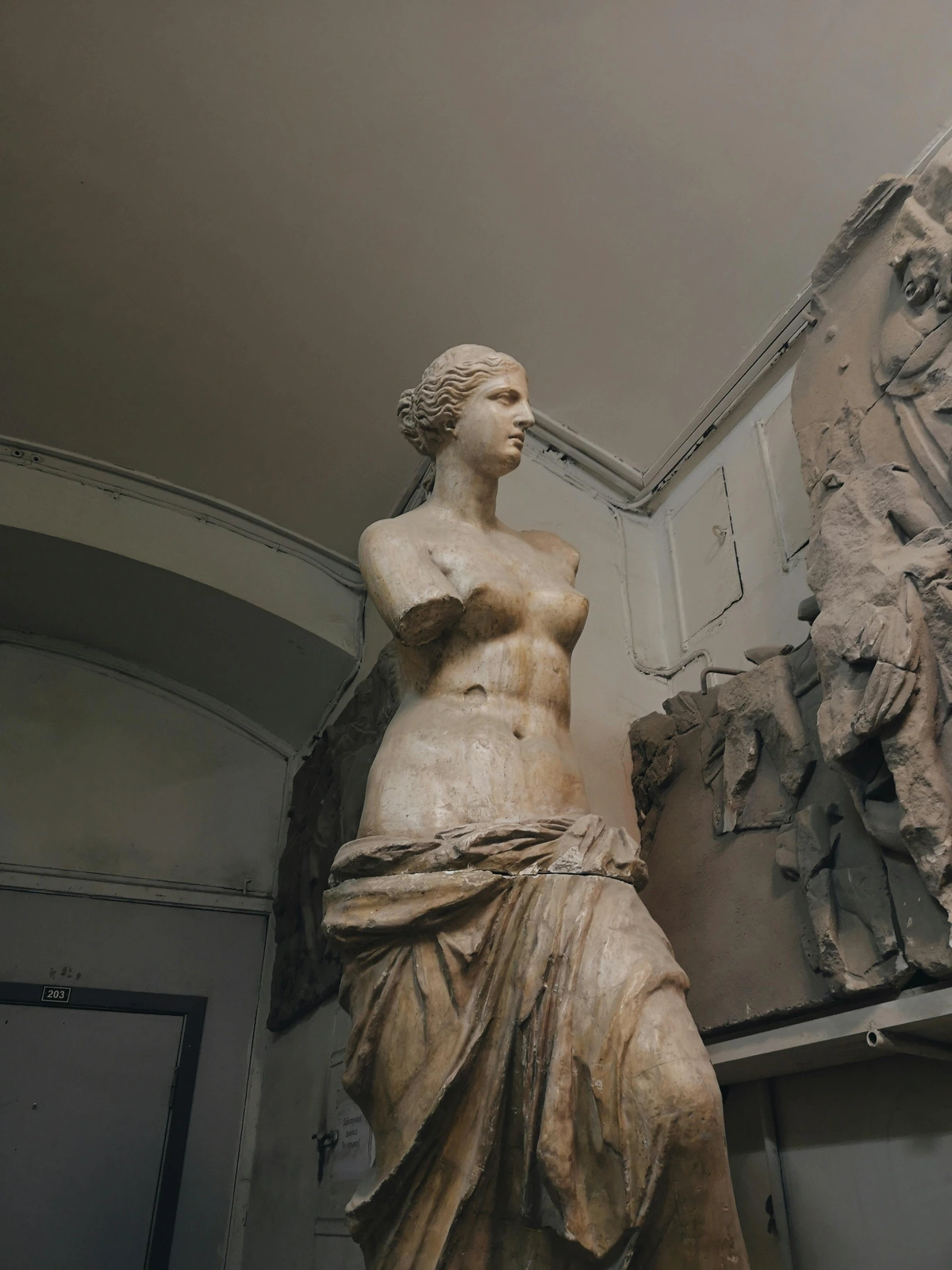
| Venus de Milo | Alexandros of Antioch | Enigmatic, armless goddess, graceful S-curve, embodying Hellenistic sensuality and idealized form. | Louvre Museum, Paris |
| Dying Gaul | Epigonus (attributed) | Portrays a defeated Gallic warrior with raw emotion and realism in suffering, a poignant representation of defeat. | Capitoline Museums, Rome |
| Great Altar of Pergamon Frieze | Various artists | Monumental battle scenes of gods and giants, intense drama, deep carving, celebrating the victory of Pergamon. | Pergamon Museum, Berlin |
| Sleeping Hermaphroditus | Polykles (original, Roman copy) | A realistic, sensual depiction of a sleeping figure, remarkable for its intricate detail, exploration of gender identity, and the exquisite rendering of the human form in repose. | Louvre Museum, Paris |
| Barberini Faun | Unknown (original, Roman copy) | A sensual, powerful depiction of a sleeping satyr, showcasing uninhibited repose and a deep understanding of anatomy, often seen as a symbol of unrestrained pleasure. | Glyptothek, Munich |
Key Characteristics of Hellenistic Sculpture:
- Intense Emotion and Drama: Figures express a full gamut of intense feelings – from agony, despair, and fear to ecstasy, triumph, and sensual delight – often conveyed through exaggerated facial expressions, contorted bodies, and dynamic, often violent, poses.
- Dynamic Movement and Energy: Hellenistic sculptures are highly kinetic and energetic, with swirling drapery, deep carving that creates dramatic chiaroscuro effects, and complex compositions that demand viewing from multiple angles, drawing the viewer into the narrative.
- Heightened Realism and Individualism: A significantly greater focus on individual characteristics, moving beyond the generalized, idealized forms of the Classical period to include detailed depictions of old age, childhood, distinct ethnic features, and even the grotesque. This makes the figures feel incredibly human and relatable.
- Monumental Scale and Grandeur: Many works were intentionally larger than life, designed to impress, awe, and even overwhelm the viewer, often reflecting the ambitions of Hellenistic rulers and their vast kingdoms.
- Theatricality and Narrative Engagement: Sculptures were frequently designed to create a dramatic scene or tableau, engaging the viewer emotionally and narratively, turning art into a profound visual experience.
Iconic Masterpieces You Absolutely Need to Know
Sculpture Name | Artist (if known) | Period | Key Feature | Current Location (often Roman copies) |
|---|---|---|---|---|
| Kritios Boy | Kritios (attributed) | Severe Style | Early contrapposto, marks the transition to Classical ideals. | Acropolis Museum, Athens |
| Charioteer of Delphi | Unknown | Severe Style | Bronze masterpiece, capturing solemnity and restrained realism. | Delphi Archaeological Museum |
| Discobolus (Discus Thrower) | Myron | Classical | Captures a moment of athletic tension, contrapposto | National Museum of Rome (Lancellotti Discobolus) |
| Doryphoros (Spear Bearer) | Polykleitos | Classical | The 'Canon' of ideal proportions, perfect contrapposto | Museo Archeologico Nazionale, Naples |
| Parthenon Marbles | Phidias (supervised) | Classical | Friezes and pediment sculptures from the Parthenon | British Museum, London (controversial) |
| Hermes with the Infant Dionysus | Praxiteles | Late Classical | Sensual, S-curve pose, depicts divine playfulness. | Olympia Archaeological Museum |
| Aphrodite of Knidos | Praxiteles | Late Classical | First life-size female nude, sensual and innovative | Vatican Museums (Colonna copy) |
| Venus de Milo | Alexandros of Antioch | Hellenistic | Enigmatic, armless goddess, graceful S-curve | Louvre Museum, Paris |
| Winged Victory of Samothrace | Pythokritos of Rhodes | Hellenistic | Dynamic drapery, powerful movement, goddess on a ship's prow | Louvre Museum, Paris |
| Laocoön and His Sons | Athanadoros, Hagesandros, Polydoros of Rhodes | Hellenistic | Intense drama, suffering, baroque emotion | Vatican Museums, Vatican City |
| Dying Gaul | Epigonus (attributed) | Hellenistic | Portrays a defeated Gallic warrior with raw emotion, realism in suffering | Capitoline Museums, Rome |
| Great Altar of Pergamon Frieze | Various artists | Hellenistic | Monumental battle scenes, intense drama, deep carving | Pergamon Museum, Berlin |
| Apollo Belvedere | Leochares (original, Roman copy) | Classical | Iconic idealized male nude, athletic and graceful; a powerful symbol of divine beauty and classical perfection, highly influential on later art. | Vatican Museums, Vatican City |
| Capitoline Venus | Unknown (Roman copy of a Praxiteles or similar original) | Late Classical | A modest, sensual female nude depicting Aphrodite after her bath; a graceful and influential depiction of divine feminine beauty. | Capitoline Museums, Rome |
| Sleeping Hermaphroditus | Polykles (original, Roman copy) | Hellenistic | A realistic, sensual depiction of a sleeping hermaphrodite, remarkable for its intricate detail and exploration of gender identity. | Louvre Museum, Paris |
| Great Altar of Pergamon Frieze | Various artists | Hellenistic | Monumental battle scenes of gods and giants, intense drama, deep carving, celebrating the victory of Pergamon. | Pergamon Museum, Berlin |
The Parthenon Marbles (Elgin Marbles)
Ah, the Parthenon Marbles – what a story they tell, a narrative that's as much about history and international politics as it is about art. These incredible friezes, metopes, and pediment sculptures originally adorned the glorious Parthenon on the Acropolis in Athens, conceived under the unparalleled artistic direction of Phidias. They depict a rich tapestry of mythological scenes, such as the dramatic birth of Athena and the contest between Athena and Poseidon for patronage of Athens, as well as the vibrant Panathenaic procession, all rendered with that exquisite Classical grace and anatomical mastery. They were, in essence, the ultimate public art installation of their time, a powerful visual narrative of Athenian identity, their burgeoning democratic values, and divine favor. Each figure, whether god or mortal, is imbued with a palpable sense of life, dignity, and purpose, making the narrative unfold with breathtaking clarity and a profound sense of humanistic idealization.
Today, you can see a significant portion of them in the British Museum in London, often controversially referred to as the 'Elgin Marbles' after Lord Elgin, who removed them in the early 19th century. The debate over their repatriation to Greece is a long, passionate, and, frankly, vital one, and I honestly think it's one of the most compelling discussions in the art world today. It forces us to really think about ownership, cultural heritage, the ethics of museum collections, and the very nature of universal heritage versus national patrimony. Seeing them in person, even removed from their original context, is to witness the zenith of Classical Greek artistic achievement, a powerful blend of idealized form and narrative mastery, even if the question of their rightful home persists with a persistent echo.
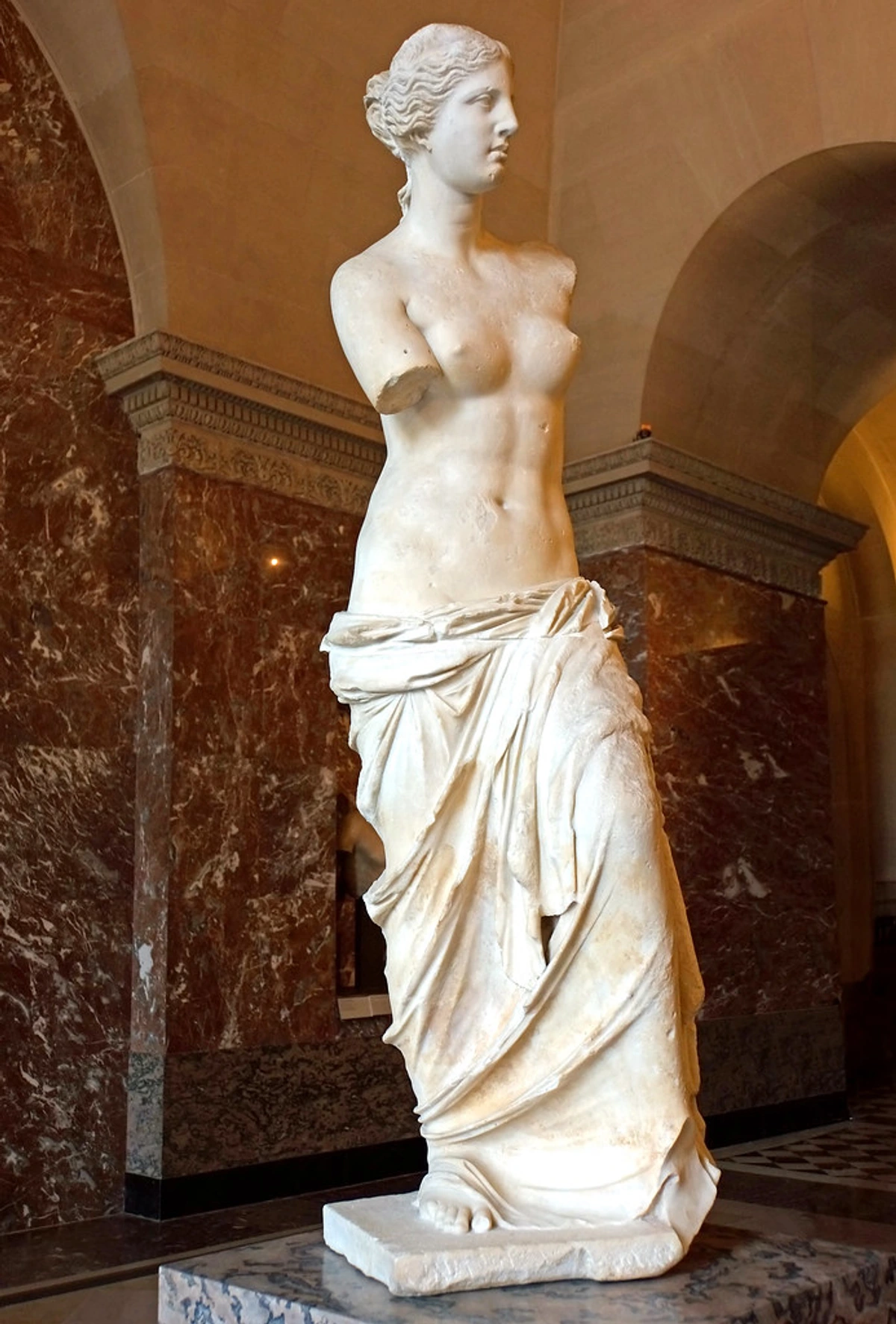
Venus de Milo
Who among us hasn't seen the iconic Venus de Milo? This Hellenistic masterpiece, famously discovered on the Aegean island of Milos in 1820 by a local farmer, is instantly recognizable, even with her missing arms. Or perhaps, and this is what I often ponder, because of her missing arms? Her enigmatic pose, the elegant twist of her body (that truly lovely S-curve that hints at contrapposto's Hellenistic evolution), and that serene yet slightly aloof expression make her endlessly fascinating, drawing viewers into her mystery. She embodies the enduring allure and profound mystery of ancient goddesses, and honestly, the ongoing speculation about what she was doing with her missing arms only adds to her profound charm and universal appeal. Was she holding an apple, the symbol of Paris's judgment? A mirror, admiring her own divine beauty? A shield, like the Aphrodite of Capua, or perhaps supporting a column? The possibilities are, truly, as endless as our collective imagination, encouraging an active, almost participatory, engagement with the artwork itself. For me, her enduring power lies precisely in that very incompleteness; it forces us to complete her story, projecting our own ideas of beauty, grace, and narrative onto her timeless form. Her immediate impact upon discovery was profound, instantly becoming a global symbol of classical beauty for the modern world, perfectly encapsulating the Hellenistic blend of sensuality, idealized form, and compelling ambiguity.
(The grand setting of the Louvre, home to some of the most famous Greek sculptures, itself speaks to the enduring value and impact of these ancient masterpieces.)
Discobolus (Discus Thrower)
Myron's Discobolus is, for me, the quintessential Classical Greek sculpture of an athlete, a true marvel capturing the precise moment of poised tension just before action. While the original bronze is tragically lost (a common fate for many Greek bronze masterpieces due to their valuable material, often melted down for other uses), numerous exquisite Roman marble copies allow us to admire its undeniable genius. Myron ingeniously freezes a fleeting moment of athletic prowess, making the human body a marvel of dynamic balance and idealized musculature. It’s a powerful testament to the Greek obsession with the human form in motion, a perfect snapshot of athletic grace, embodying the ideal of the youthful, victorious athlete. Looking at it, I can almost viscerally feel the coiled energy ready to explode, a perfect example of how, even in apparent stillness, the Greeks could convey immense potential for powerful movement and dramatic action. It's a masterclass in suggesting implied narrative within a static form, inviting the viewer to imagine the seconds before and after this captured moment, engaging deeply with the artistic illusion of life.
The Sculptors: Names We Know, and Names We've Lost
It's a curious thing, isn't it? To think that behind these monumental, world-changing works of art, there were real people, with chisels and hammers, with vision and grit. Yet, so many of these ancient artists remain anonymous to us. While the great masters like Phidias and Polykleitos are justly celebrated, countless skilled hands contributed to the ancient world's sculptural legacy. It’s a bittersweet thought, really, that such monumental skill often went without individual recognition for centuries, creating a collective artistic identity that we now strive to unravel. This collective effort, I think, highlights a different cultural value, one that perhaps prioritized the dedication to the craft and the purpose of the artwork over individual fame.
The Challenge of Attribution
Unlike many later periods in art history, ancient Greek sculptors didn't consistently sign their works in the way we might expect today, or if they did, the signatures often appeared on the bases of statues rather than the figures themselves. Furthermore, the records we do have are often fragmented, incomplete, or tragically lost to the ravages of time – papyri decayed, libraries burned. Much of what we know about individual artists and their contributions comes from later Roman writers like Pliny the Elder (whose Natural History is an invaluable, though sometimes biased, source) and Pausanias (whose Description of Greece acts as an ancient travel guide, noting countless sculptures), who diligently cataloged famous artists and their masterpieces centuries after the fact, or from inscriptions on statue bases unearthed during archaeological digs. This means that many iconic pieces are attributed based on meticulous stylistic analysis, detailed archaeological context, or these often-fragmented historical accounts, rather than direct, unambiguous signatures that we might expect today. It adds a peculiar, almost romantic, layer of mystery, doesn't it? To think of the countless masterworks whose creators, despite their undeniable genius and profound impact, remain forever nameless, their individual stories largely untold, a silent testament to a culture that often valued the collective civic or religious function of art over individual fame, a powerful contrast to modern artistic sensibilities.
Polykleitos's Doryphoros and the 'Canon': The Embodiment of Ideal Proportions
If you truly want to understand Classical Greek sculpture and its profound ideals, you must know Polykleitos's Doryphoros (Spear Bearer). This isn't just a statue, I argue; it was a visual manifesto, a physical embodiment of Polykleitos's groundbreaking theoretical treatise, the 'Canon,' which meticulously laid out the perfect mathematical proportions and harmonious balance for the human figure. The contrapposto here is absolutely masterfully executed, creating a sense of dynamic equilibrium, a harmonious balance between tension and relaxation that feels utterly natural, almost as if the figure is about to step forward and engage with the viewer's space. The Doryphoros became the benchmark, the ultimate reference point for ideal masculine form and proportion for centuries to come, a testament to the profound Greek belief that beauty could be expressed, understood, and even taught through measurable, rational principles – almost a visual equivalent of a perfectly executed mathematical equation for the human form. It’s like the ancient world’s instruction manual for sculptural perfection, a timeless blueprint for ideal beauty that continues to inspire and inform.
Sculptor | Period | Notable Works (often through Roman copies) |
|---|---|---|
| Phidias | High Classical | Supervised Parthenon sculptures; famed for colossal chryselephantine (gold and ivory) statues of Zeus and Athena (lost) |
| Polykleitos | High Classical | Doryphoros (Spear-Bearer), Diadumenos (Fillet-Binder); developed the 'Canon' of ideal proportions and contrapposto |
| Praxiteles | Late Classical | Aphrodite of Knidos (first life-size female nude), Hermes with the Infant Dionysus |
| Myron | Early Classical | Discobolus (Discus Thrower), Athena and Marsyas |
| Scopas | Late Classical | Known for intense emotional expression, dramatic poses, and deep-set eyes that convey pathos (e.g., contributing to the Mausoleum at Halicarnassus) |
| Lysippos | Hellenistic | Official sculptor to Alexander the Great; known for introducing a new canon of slenderer proportions (a head measuring one-eighth of the total body height), active poses, and complex compositions that encouraged viewing from multiple angles, subtly breaking Polykleitan 'Canon' in favor of a more dynamic reality. |
| Hagesandros, Polydoros, and Athanadoros of Rhodes | Hellenistic | Collaborated on the monumental Laocoön and His Sons, a powerful and dramatic depiction of suffering. |
| Praxias and Androsthenes | Late Archaic | Sculptors of the pedimental sculptures for the Temple of Apollo at Delphi, demonstrating early narrative skill. |
| Paeonius of Mende | High Classical | Sculptor of the Nike of Paeonius, known for her dynamic, wind-swept drapery and powerful sense of movement, celebrating victory. |

Laocoön and His Sons
For sheer, unadulterated dramatic impact, I find it incredibly hard to beat the Laocoön and His Sons. This monumental Hellenistic masterpiece, crafted by the Rhodian sculptors Hagesandros, Polydoros, and Athanadoros, was famously unearthed in Rome in 1506 in the ruins of Nero's Golden House and instantly captivated Renaissance artists like Michelangelo, who saw in it a powerful expression of pathos and anatomical prowess. It immediately became a benchmark for expressive sculpture, depicting the Trojan priest Laocoön and his two sons in a desperate, agonizing struggle against sea serpents – a divine punishment for Laocoön's attempt to warn the Trojans about the infamous Trojan Horse. The sheer agony, the desperate struggle, the twisted forms, the deep carving that creates dramatic, almost painterly, shadows and emphasizes the figures' torment – it's a visceral representation of human suffering, rendered with astonishing anatomical detail and raw emotional intensity. This work, with its intense 'baroque' qualities of dramatic movement and profound emotion, profoundly influenced later movements, including the Baroque period itself, demonstrating the enduring power of dramatic narrative in sculpture. It's a powerful reminder that beauty in art isn't always serene or idealized; sometimes, it's about confronting the rawest, most profound, and most agonizing aspects of the human condition in a grand, theatrical manner that leaves you utterly breathless. Its rediscovery in 1506 in Rome, within the ruins of Emperor Nero's Golden House, was a monumental event that profoundly influenced Renaissance artists like Michelangelo, who admired its anatomical prowess and powerful expression of pathos, immediately making it a benchmark for emotional intensity in sculpture that would resonate for centuries, particularly during the Baroque period.
(The enduring influence of Laocoön's dramatic intensity can be felt in modern abstract works that explore conflict and emotional tension through form and color.)
Winged Victory of Samothrace
If you've ever stood before the magnificent Winged Victory of Samothrace in the Louvre, I'm sure you know that feeling of being utterly swept away. This monumental Hellenistic marble statue, likely created by Pythokritos of Rhodes around 190 BCE to commemorate a significant naval victory (perhaps the Battle of Side or the Battle of Myonessus), depicts the goddess Nike (Victory) dramatically alighting on the prow of a ship. Even without her head and arms, the sense of dynamic motion is electrifying, isn't it? The drapery, sculpted with incredible, almost impossible skill, billows and clings to her form with such realism, making the solid marble seem weightless and alive, as if caught in a powerful sea breeze. The deep carving of the folds creates dramatic shadows, further enhancing the illusion of movement and depth. It's a masterclass in conveying movement and triumph, a powerful symbol of victory that feels as fresh and exhilarating today as it did over two millennia ago. It truly is like the wind itself has been captured in stone, a breathtaking example of Hellenistic theatricality and technical virtuosity that continues to inspire awe, inviting viewers to experience the emotional thrill of triumph. This monumental marble statue, likely created by Pythokritos of Rhodes around 190 BCE, commemorates a significant naval victory (perhaps the Battle of Side or the Battle of Myonessus), and its original placement at the sanctuary of the Great Gods on the island of Samothrace would have been an overwhelmingly dramatic dedication, a powerful symbol of victory rising majestically above the Aegean Sea, seeming to soar into the heavens. The sheer dynamism of the composition, with Nike's body twisting and her drapery billowing, would have been amplified by its natural setting, creating an unforgettable experience of triumph.

Techniques and Materials: More Than Just Marble
When I first think of Greek sculpture, I immediately picture gleaming white marble. And yes, marble was incredibly important, absolutely central to their artistic output, but it was by no means the only medium they mastered. The ancient Greeks were, in fact, incredibly versatile masters of various techniques and materials. It’s truly humbling to consider the sheer effort, ingenious problem-solving, and astonishing skill that went into these creations, especially when you think about the relatively simple tools they had at their disposal. It makes you realize just how dedicated they were to their craft.
Marble Carving: The Heart of Greek Sculpture
This is, of course, what most surviving pieces are famously made from. The skill required to transform a rough, inert block of marble into flowing drapery that seems to catch a breeze, or rippling muscle that flexes with life, is just astounding to me. They certainly didn't have power tools, remember! It was all chisels, hammers, rasps, and an almost unfathomable amount of incredible patience, often involving a meticulous multi-stage process from roughly blocking out the shape to the final, exquisite polishing. I've always been fascinated by the idea of 'liberating' the figure from the stone, as Michelangelo famously put it. Greek sculptors specifically sought out and used high-quality marble from renowned quarries like Mount Pentelicus near Athens or the island of Paros, famous for its exceptionally fine grain and translucent, almost luminescent quality. Their toolkit included robust point chisels for roughing out the initial form, breaking away large chunks; tooth chisels for finer shaping and texture, creating parallel grooves; and drills for creating deep undercuts and intricate details, particularly effective for creating dramatic shadows in drapery and defining strands of hair. The surface would then be meticulously smoothed with abrasives (like pumice or emery) and polished to a brilliant sheen, creating a perfect canvas for its subsequent vibrant paint. This meticulous, labor-intensive process, all executed by hand with incredible skill and precision, makes the enduring beauty and technical precision of these works all the more astonishing to me, a true testament to human ingenuity and dedication.
Bronze Casting: Lost Masterpieces and Technical Brilliance
Many, perhaps even most, of the most celebrated Greek sculptures were actually cast in bronze. This medium allowed for significantly more dynamic poses, extended limbs that wouldn't easily break, and a lighter, more agile feel than marble. The Greeks perfected the sophisticated lost-wax method (or cire perdue), a highly complex, multi-stage process involving creating a clay core, covering it with a wax model, adding an an outer layer of clay for the mold, heating to melt the wax out (hence 'lost-wax'), and finally pouring molten metal into the cavity left by the wax. This allowed for intricate details and a truly lifelike quality, with gleaming, often patinated surfaces, and frequently inlaid eyes of stone or glass, copper lips, and silver teeth or nipples for astonishing added realism. The problem, and it's a truly tragic one in my opinion, is that bronze was an incredibly valuable material. As a result, most original bronze statues were melted down over the centuries for their metal, meaning we largely know these masterpieces through less robust Roman marble copies. It's an immense, heartbreaking loss of countless incredible originals, making rare, miraculous survivors like the Riace Bronzes (two magnificent, nearly intact Greek bronze warriors, perhaps portraying legendary heroes or deities, discovered in the sea off the coast of Italy in 1972) all the more precious and breathtaking. These magnificent bronzes, with their intricate details like inlaid eyes (made from bone or ivory), copper lips, and silver teeth or nipples, offer a truly rare and breathtaking glimpse into the astonishing vibrancy, lifelike realism, and technical virtuosity of original Greek bronze work, a stark contrast to the often idealized and less detailed marble copies.
Chryselephantine: Gold, Ivory, and Grandeur
This rather fancy word, Chryselephantine (derived from Greek chrysos 'gold' and elephantinos 'ivory'), refers to statues meticulously crafted from gold and ivory, materials reserved for the most sacred and important cult statues housed in grand temples. Think of Phidias's colossal Athena Parthenos for the Parthenon in Athens, standing over 37 feet tall, or his monumental Zeus at Olympia, one of the legendary Seven Wonders of the Ancient World, depicting the enthroned king of the gods. Can you even begin to imagine the shimmering grandeur, the glittering gold drapery, the luminous ivory skin (often from elephant tusks), the sheer, overwhelming opulence of these pieces under torchlight? These were truly spectacular, often towering figures, intricately crafted to inspire awe, profound devotion, and to literally embody the very presence of the deity. Sadly, and it's another immense loss, none of these magnificent original works survive, lost to time, fire, and the immense intrinsic value of their constituent materials. We are left only to imagine their breathtaking, mind-altering glory, piecing together their appearance from ancient descriptions, small copies, and literary accounts. The sheer spectacle of these towering figures, shimmering with brilliant gold and luminous ivory, would have been an overwhelming sensory, spiritual, and awe-inspiring experience for anyone entering the sacred precincts, truly making the divine manifest on earth.
Polychromy: A World of Vibrant Color
Now, this is one of the biggest surprises, and perhaps even a shock, for many people: ancient Greek sculptures were not originally white! This pristine, monochromatic image we have is a modern misconception. They were, in fact, vibrantly painted, or polychrome, in dazzling, often incredibly bold and intricate colors. Just imagine the Parthenon friezes, not in stark, austere white, but in vivid reds (for flesh tones), deep blues (for drapery or backgrounds), shimmering golds, and even intricate patterns on clothing, hair, and skin, making the figures truly leap out with lifelike vitality! The paint has, alas, simply faded and worn away over millennia, often leaving only faint, microscopic traces discernible under special light and through advanced scientific techniques. Modern research, employing sophisticated tools like UV light, X-ray fluorescence, and mass spectrometry, is now helping us meticulously rediscover their original colorful glory, allowing for stunning digital and physical reconstructions (like those seen in the 'Gods in Color' exhibitions) that profoundly challenge our long-held pristine, monochromatic view of antiquity. It honestly changes everything you thought you knew about their aesthetic, making the ancient world seem far more vibrant, immediate, and alive, a riot of color that would have been truly breathtaking!
Terracotta and Wood: Humbler, Yet Historically Important Materials
While certainly less common for monumental works due to their inherent fragility, terracotta (fired clay) played a crucial role in Greek art, often providing a more affordable and accessible medium. It was widely used for smaller figurines (ranging from charming genre scenes to mythological figures, like the expressive Tanagra figurines), votive offerings in sanctuaries, and intricate architectural decorations like antefixes (ornamental blocks concealing roof tile joints) and akroteria (sculptural ornaments at the apex or corners of a pediment). Wood, though sadly perishable, was almost certainly used for very early cult statues, known as xoana, which were highly revered and believed to embody the deity. These xoana often had a simple, archaic form, sometimes adorned with real fabric and ornaments. Virtually no examples of these wooden works remain, making them phantom figures in the history of Greek sculpture, only known through later descriptions and literary sources. Nonetheless, these humbler materials offer a fascinating glimpse into the diverse practices of Greek workshops and the broader, more accessible spectrum of ancient Greek artistic production beyond the grand temple commissions, revealing a vibrant craft tradition alongside the monumental. Terracotta, particularly, was used for a vast array of objects, from charming genre scenes and mythological figures (like the famous Tanagra figurines, known for their elegant poses and rich detail) to a myriad of architectural elements and votive offerings, demonstrating that artistic skill and innovation extended to everyday and devotional objects alike, making art accessible across social strata.
(Even in modern sculpture, an armature provides the foundational structure, a concept of support that ancient Greek sculptors also mastered, albeit with different materials.)
(And when I think of the sheer variety of materials, I'm reminded of the unexpected forms contemporary artists can create, like Yayoi Kusama's vibrant, polka-dotted flower sculptures that challenge conventional ideas of beauty and scale.)
Restoration and Preservation: Battling Time for Immortality
Before we embark on our virtual museum tour, I often find myself reflecting on the incredible, often unsung, work of preservation. These ancient masterpieces have survived millennia, but not without immense struggle. From the ravages of war, natural disasters, and the simple decay of time, to the deliberate iconoclasm of later eras, Greek sculptures have faced countless threats. Ancient repairs, often done with metal clamps or plaster, speak to the value placed on these objects even in antiquity. Today, the work is even more meticulous, involving dedicated conservation efforts, advanced scientific analysis to understand material degradation, and carefully controlled museum environments to slow the inexorable march of time. It's a continuous, monumental, and often heartbreaking task in its scale, requiring immense dedication and expertise, but it is absolutely vital to ensure these fragile, irreplaceable treasures endure for future generations, allowing their powerful stories to continue to be told.
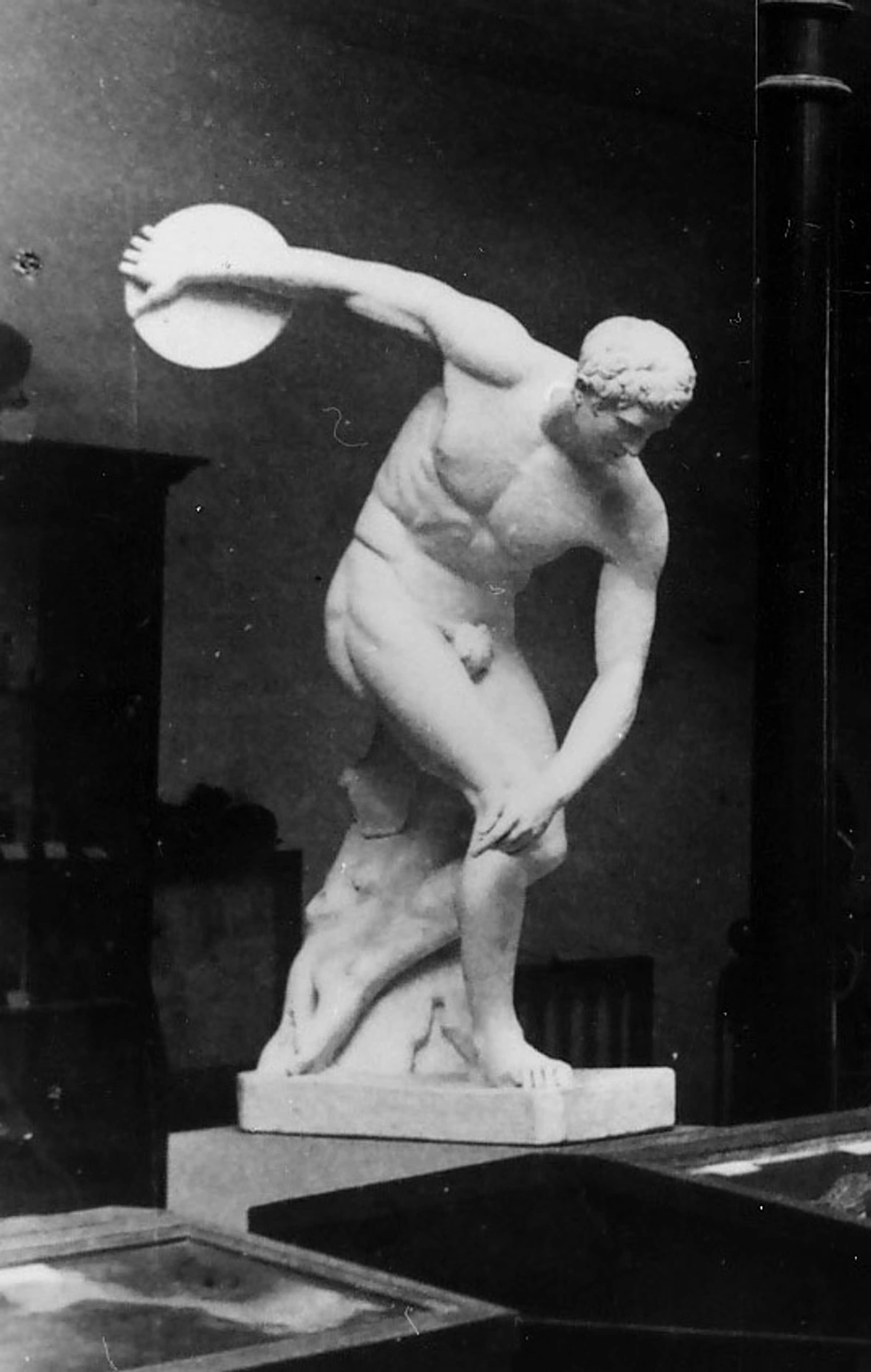
Where to Witness These Ancient Wonders Today
If you're anything like me, reading about these masterpieces ignites an irresistible urge to see them for yourself. There’s something truly magical about standing before a piece of history, feeling its presence across millennia. While many are, perhaps lamentably, scattered across the world's great museums, here are some prime destinations where you can truly connect with their power. Trust me, seeing these in person is a completely different, often overwhelming, experience than any photograph can convey. And always remember, as I constantly remind myself, these ancient works are incredibly fragile; their ongoing preservation is a constant, monumental, and often heartbreaking task carried out by dedicated professionals who are essentially battling time itself. The sheer privilege of being able to stand before them, absorbing their history and beauty, is a profound gift that stems from centuries of dedicated care and recovery.


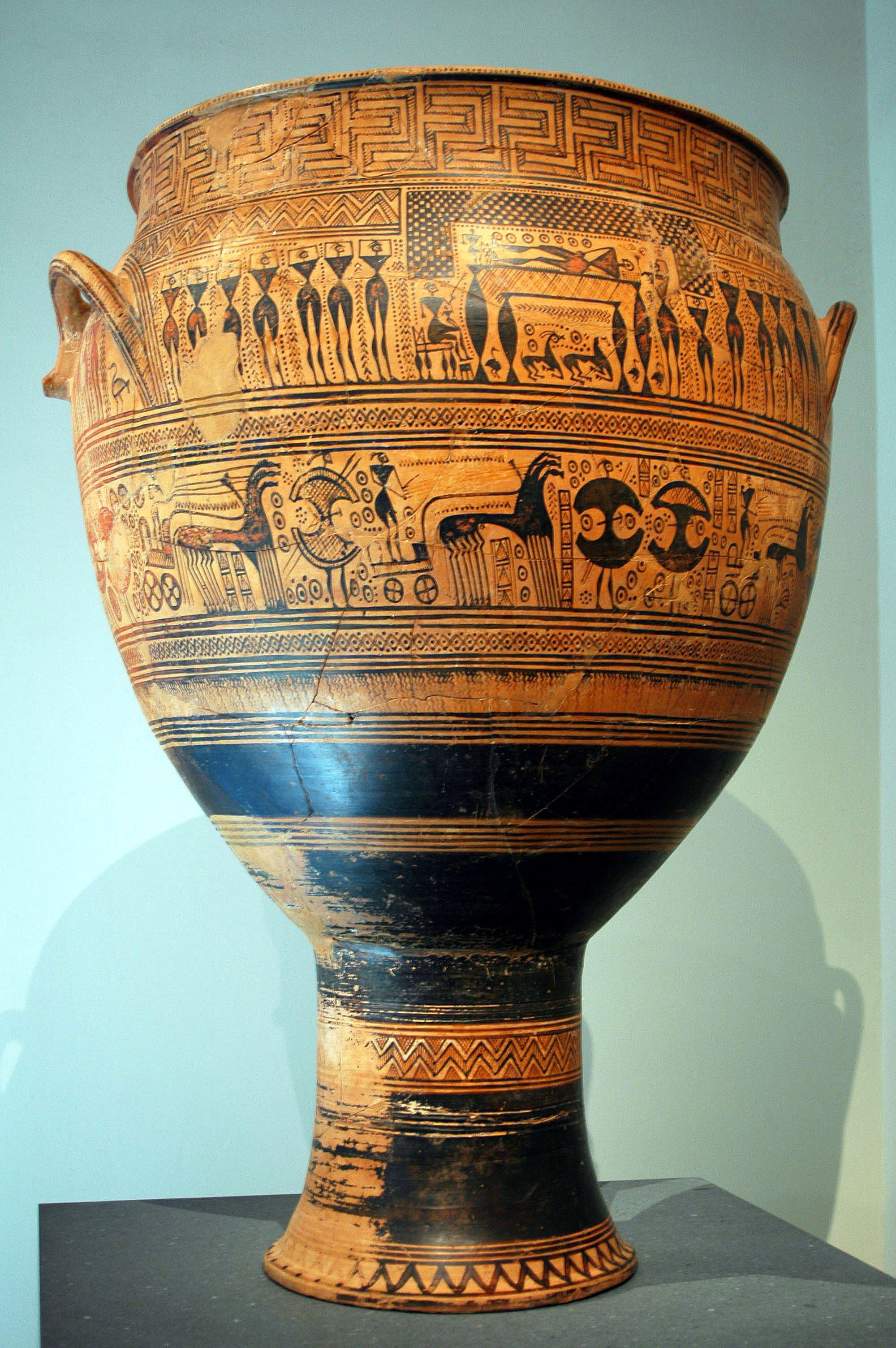


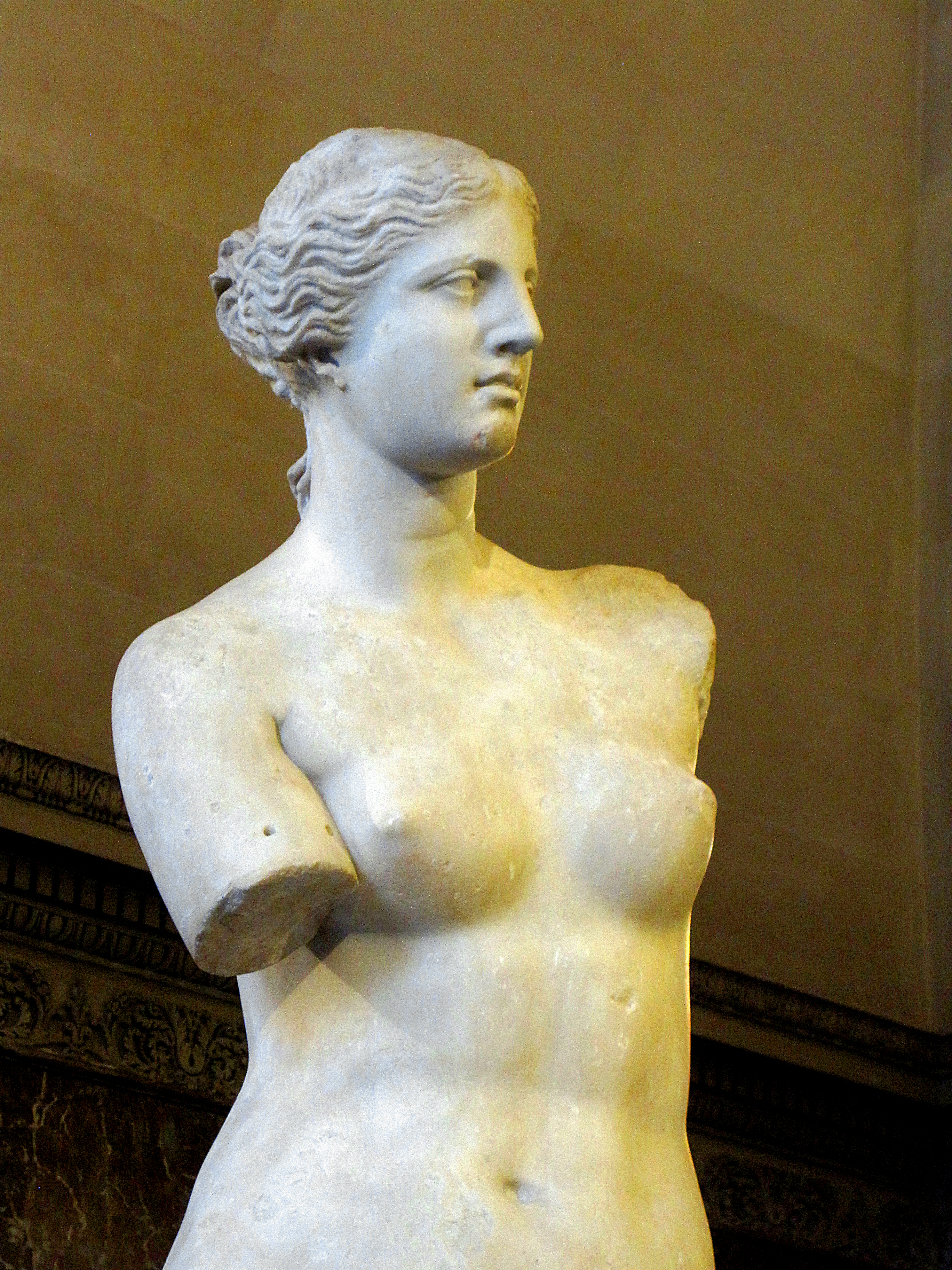
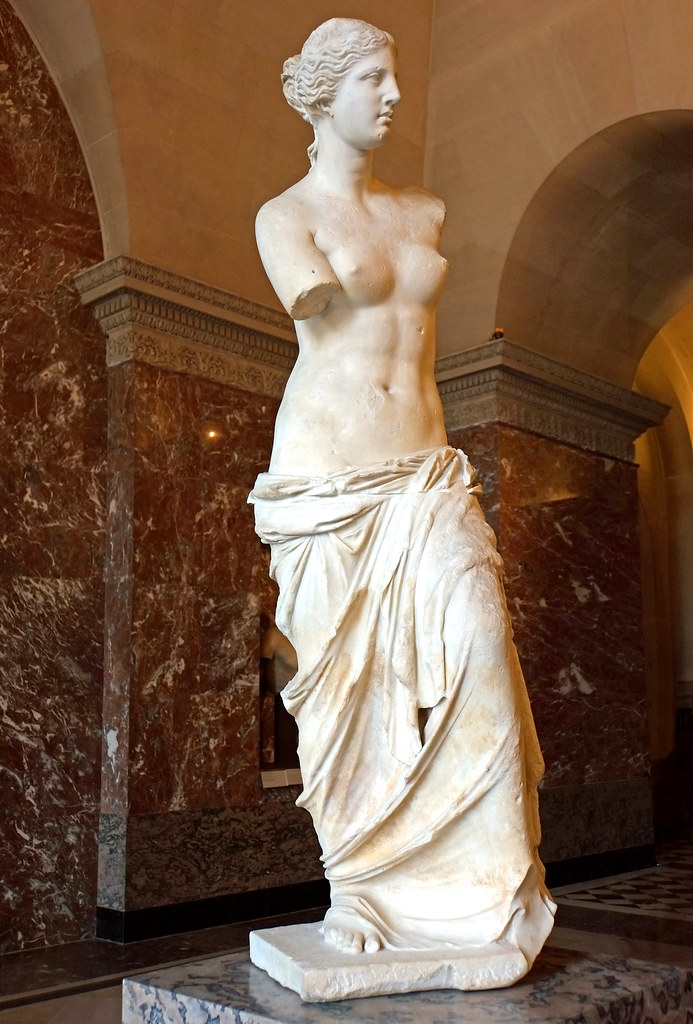


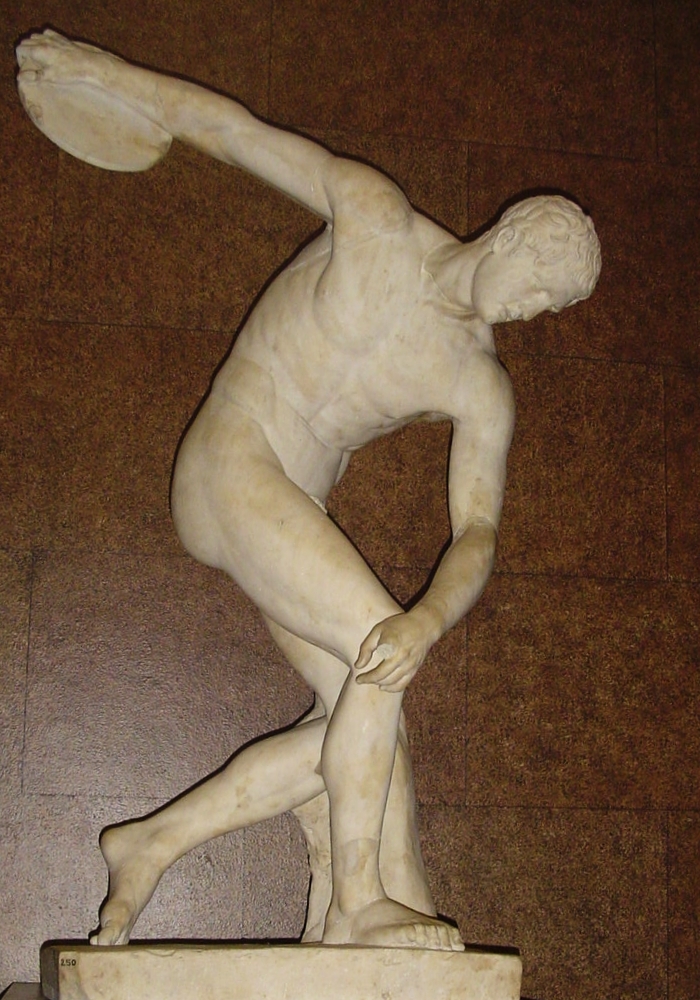

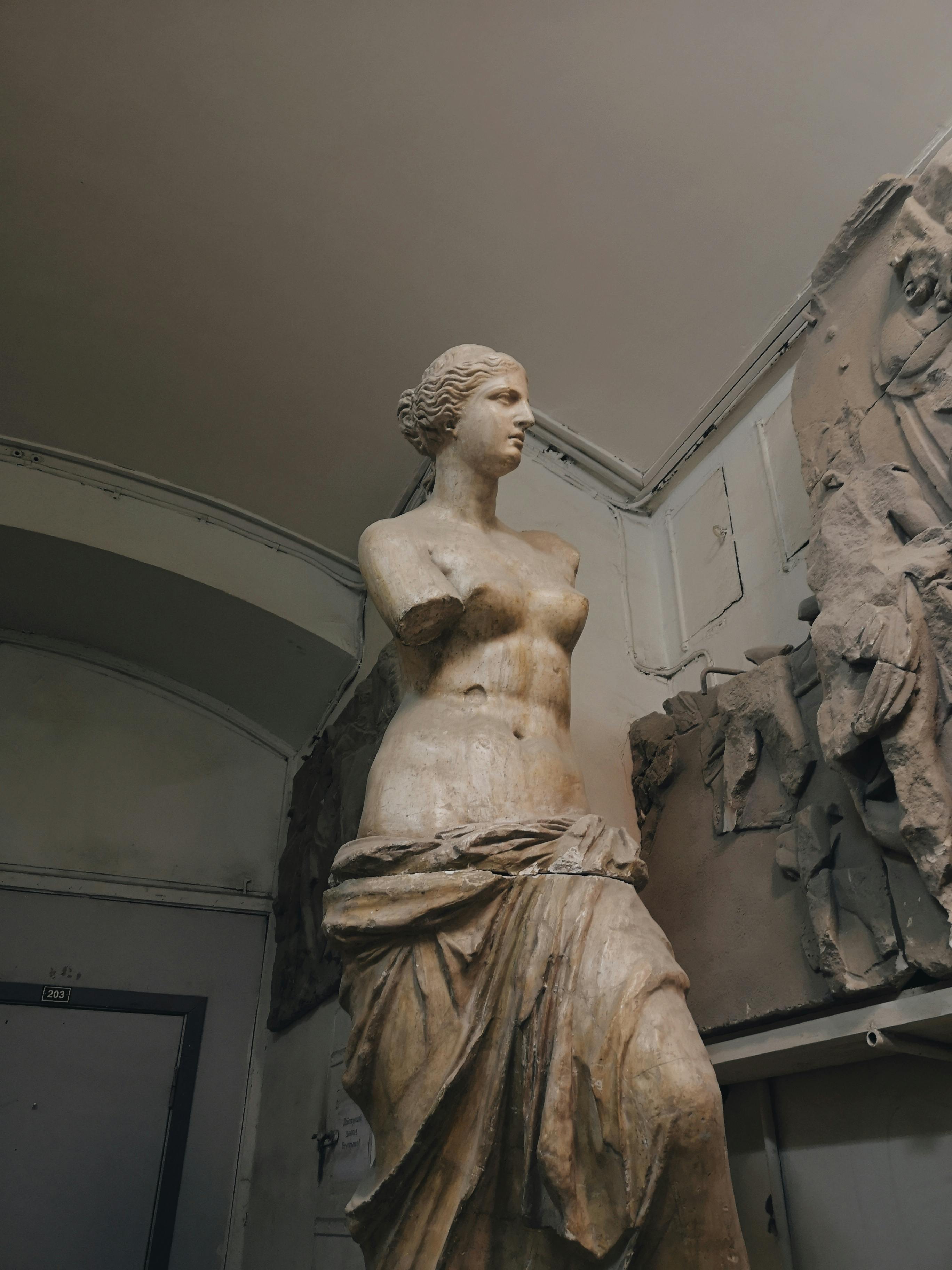


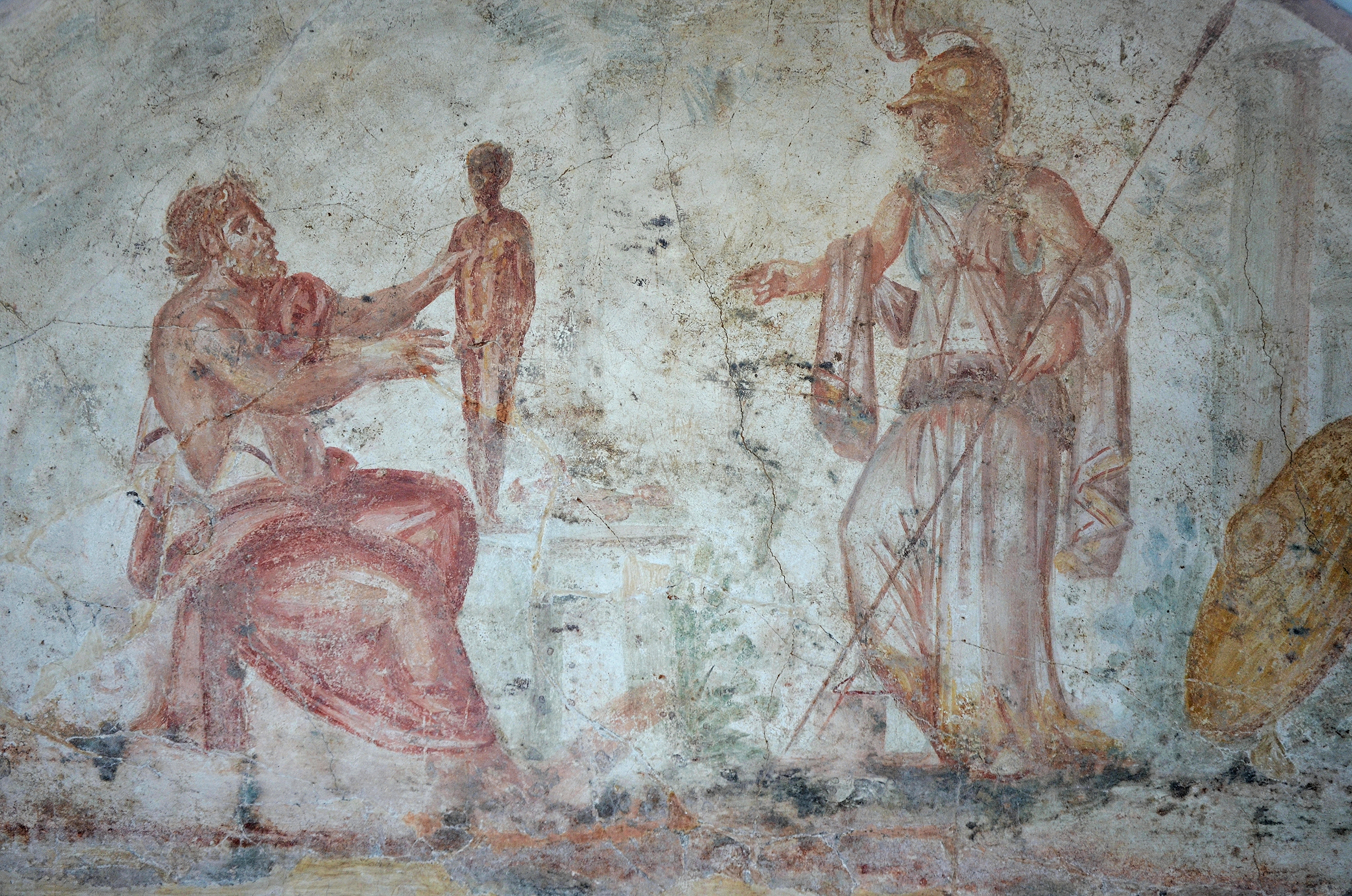


- The Acropolis Museum, Athens, Greece: Located right beneath the Acropolis, this breathtaking modern museum is specifically designed to house the artifacts found on the Acropolis, including the surviving Parthenon Marbles (and dedicated space for those currently in London), the exquisite Caryatids from the Erechtheion, and a stunning collection of Archaic and Classical pieces, all displayed with exceptional clarity and context. It's an absolute must-visit for understanding the direct context, offering a profound dialogue with the very site where these masterpieces once stood. The thoughtful integration of natural light, the museum's proximity to the sacred rock, and the meticulous curation make it an unparalleled experience, almost as if the sculptures breathe again in their spiritual home, providing crucial context for understanding their original intent and grandeur.
- Pergamon Museum, Berlin, Germany: Home to the monumental Great Altar of Pergamon Frieze (though currently undergoing extensive renovations, sections are visible), this museum offers a spectacular, immersive insight into Hellenistic architectural sculpture, renowned for its dramatic scale and intense emotionality and dynamic composition. Experiencing the sheer size, dramatic intensity, and narrative power of these friezes, vividly depicting the Gigantomachy (the epic battle between the Olympian gods and the Giants), is an experience in itself, almost overwhelming in its theatricality and raw emotional force, designed to convey the triumph of order over chaos.
- The British Museum, London, UK: While controversial, this institution is undeniably home to a significant portion of the 'Elgin Marbles' (Parthenon sculptures), as well as the elegant Nereid Monument and a vast collection of other Greek and Roman antiquities. It's a treasure trove that allows you to trace the stylistic evolution from early Cycladic pieces right through to the Roman period, offering a comprehensive, albeit fragmented and ethically debated, narrative that highlights the enduring influence of Greek art across millennia, showcasing its profound impact on subsequent artistic traditions.
- The Louvre Museum, Paris, France: This iconic museum is where you'll find the enigmatic Venus de Milo and the breathtaking Winged Victory of Samothrace. The sheer scale, enigmatic beauty, and dramatic presence of these pieces in person are truly unforgettable, and honestly, the way the Winged Victory of Samothrace majestically dominates its grand staircase is a masterclass in museum display, strategically positioned to make you feel the exhilarating wind of victory yourself as you ascend towards it.
- The Vatican Museums, Vatican City: These sprawling museums house the intensely dramatic Laocoön and His Sons, the idealized Apollo Belvedere, and a Roman copy of Praxiteles' sensual Aphrodite of Knidos, among many other classical treasures. The palpable sense of history and spiritual significance here is immense, and the sheer density of ancient masterpieces, often collected by popes and cardinals through centuries, can be overwhelming in the most exhilarating way, truly requiring multiple visits to fully absorb the astonishing richness and diversity of the collection, offering a journey through classical antiquity and beyond.
- Museo Archeologico Nazionale, Naples, Italy: This museum holds some of the best-preserved Roman copies of famous Greek bronzes, including Polykleitos's Doryphoros and the dynamic Tyrannicides group (Harmodius and Aristogeiton), offering an invaluable glimpse into lost masterpieces that would otherwise be unknown. Many of these copies were recovered from Pompeii and Herculaneum, preserved by volcanic ash, making them particularly pristine. It's a key destination for understanding the crucial role of Roman appropriation and diligent preservation of Greek art, offering invaluable insights into lost bronze originals and the nuances of ancient artistic transmission.
- The Metropolitan Museum of Art, New York City, USA: For those across the pond, The Met boasts an excellent and comprehensive collection of Greek and Roman art, showcasing a wide range of sculptures, from exquisite marble to rare bronze, providing a fantastic overview for the American audience. Their extensive Greek galleries offer a fantastic, thoughtfully curated journey through the stylistic periods, from early geometric pottery to late Hellenistic bronzes, meticulously highlighting the evolution of form, style, and cultural context, providing a world-class overview for the American audience.
- Capitoline Museums, Rome, Italy: Situated on the historic Capitoline Hill, these museums house an impressive collection of ancient Roman and Greek sculpture, including the evocative Dying Gaul and the serene Capitoline Venus. The evocative atmosphere, situated within Michelangelo-designed palaces on the historic Capitoline Hill, adds another profound layer to the already rich historical experience, creating an unparalleled dialogue between ancient Roman, Greek, and Renaissance masterworks, deeply connecting artistic eras.
Museum / Location | Key Greek Sculptures You Might Find |
|---|---|
| Acropolis Museum, Athens | Parthenon Marbles (surviving), Caryatids, Archaic Korai |
| Pergamon Museum, Berlin | Great Altar of Pergamon Frieze (sections) |
| British Museum, London | Parthenon Marbles (Elgin Marbles), Nereid Monument |
| Louvre Museum, Paris | Venus de Milo, Winged Victory of Samothrace, Kritios Boy |
| Vatican Museums, Vatican City | Laocoön and His Sons, Apollo Belvedere, Aphrodite of Knidos |
| Museo Archeologico Nazionale, Naples | Doryphoros (Roman copy), Tyrannicides (Roman copy) |
| Metropolitan Museum of Art, NYC | Extensive collection spanning periods, Etruscan and Roman influences, including many Roman copies of Greek originals. |
| Capitoline Museums, Rome | Dying Gaul, Capitoline Venus |
Each of these places offers a unique experience, a chance to stand in awe before the remnants of a civilization that shaped our artistic and philosophical foundations. I always encourage people to see art in person whenever possible. It's a completely different experience from looking at a picture on a screen.
Frequently Asked Questions About Famous Greek Sculptures
I get a lot of questions about this topic, so I thought I'd tackle a few common ones here.
Q: How were Greek sculptures discovered and preserved?
A: The discovery and preservation of Greek sculptures is a tale of both fortune and misfortune. Many sculptures, especially those in bronze, were tragically melted down over the centuries for their valuable metal. Others succumbed to earthquakes, fires, and the ravages of time and warfare. Many of the marble sculptures we have today were excavated from ruins, often damaged and fragmented, sometimes already buried for centuries. The dry climate of Greece and the protective layer of earth or sea (as with the incredible Riace Bronzes) sometimes aided in their preservation. Roman copies, too, played a crucial role, providing replicas of lost Greek originals. Early archaeologists, while pioneers, sometimes lacked the delicate techniques used today, leading to further damage during excavation. Today, preservation involves meticulous climate control in state-of-the-art museums, careful and ethical restoration by skilled conservators, and ongoing research using advanced scientific techniques to understand material degradation and proactively protect these fragile treasures for future generations, ensuring their continued survival against the relentless march of time.
Q: What is the most famous Greek sculpture?
A: That's a truly tough one, as "fame" is so subjective and can change with cultural tides! However, if we're talking global recognition, the Venus de Milo and the Winged Victory of Samothrace are arguably the most universally recognized Hellenistic sculptures, captivating audiences with their dramatic presence and enigmatic beauty. For Classical Greek sculpture, the Parthenon Marbles represent the absolute pinnacle of artistic achievement and civic expression, while Polykleitos's Doryphoros is incredibly famous for its academic importance and its foundational influence on later ideals of human proportion. For me, it's less about identifying a single 'most famous' and more about appreciating the collective, profound impact and diverse significance of these incredible works, each telling its own compelling and timeless story and contributing to the rich tapestry of art history.
Q: Why do so many Greek sculptures have missing arms or heads?
A: Oh, that's a really good question, and one I get asked a lot! Most surviving Greek sculptures are indeed thousands of years old and have endured centuries of neglect, natural disasters (earthquakes were a big culprit!), brutal warfare, and even intentional destruction. Many were also excavated from ruins, already damaged, sometimes simply collapsed from structural failures of the buildings they adorned. And let's be honest, early archaeologists, bless their hearts, weren't always as careful with fragile artifacts as they are today. Arms, heads, and other projecting elements, being more exposed and often carved separately (or made from separate pieces of marble or bronze, attached with dowels for stability), were frequently the first to break off during these tumultuous events or hasty excavations. It's a constant, poignant reminder of the inherent fragility of even the most monumental art. It’s a poignant testament to the relentless passage of time, the tumultuous history, and the sheer fragility of these objects that have miraculously survived for millennia, leaving us to reconstruct their original glory and complete their narratives in our minds, piece by mental piece. Every missing limb tells a story of survival against immense odds.
Q: Were Greek sculptures originally white?
A: Absolutely not! And this, for me, is one of the biggest and most fascinating misconceptions people have about ancient Greek art. While we commonly see them as pristine white marble today, almost all ancient Greek sculptures were originally polychrome, meaning they were vibrantly painted in dazzling, often incredibly bold and intricate colors. Can you even imagine the Parthenon friezes, not in stark white, but in vivid reds, deep blues, shimmering golds, and with intricate patterns on clothing, hair, and even eyes? It would have made the figures truly leap out with lifelike realism! The paint has simply faded and worn away over millennia, often leaving only faint, microscopic traces discernible under special light and through advanced scientific techniques. Modern research, employing sophisticated tools like UV light, X-ray fluorescence, and mass spectrometry, is now helping us meticulously rediscover their original colorful glory, allowing for stunning digital and physical reconstructions that profoundly challenge our long-held pristine, monochromatic view of antiquity. It's a fundamental mental shift, but once you imagine them in full, vibrant color, the ancient world suddenly feels so much more alive, immediate, and breathtakingly real! Contemporary research, utilizing cutting-edge technologies like UV photography, X-ray fluorescence, and mass spectrometry, continues to reveal new, often vibrant, traces of pigments, allowing for ever more accurate digital and physical reconstructions that profoundly challenge our modern, often sterile, perception of antiquity. These 'Gods in Color' exhibitions, as they're often called, are truly revelatory, transforming our understanding of Greek aesthetics and making the ancient world feel far more immediate, human, and gloriously colorful than we previously imagined.
Q: What is contrapposto?
A: Ah, contrapposto! This is a truly pivotal artistic technique used in sculpture where the human figure is depicted standing with its weight shifted onto one leg, creating a brilliant counter-balancing effect across the entire body. This shift results in a subtle yet profound S-curve: typically, the engaged leg (bearing the weight) is taut, while the free leg is relaxed. Consequently, the hip over the engaged leg is higher, and the shoulder on the opposite side is often raised, while the other side is lowered. It makes the figure look infinitely more natural, relaxed, and dynamically alive, departing dramatically from the rigid, frontal stiffness of earlier Archaic art. Think of it as the difference between a person standing stiffly for a formal photograph versus someone casually leaning and at ease. It’s a brilliant, almost revolutionary, innovation that injects life, dynamic movement, and even a nascent psychological depth into the stone, making the figures feel truly alive, poised, and engaged with their surrounding space, inviting a more active viewing experience.
Q: How did Greek sculpture influence later art?
A: Its influence is nothing short of immense, a foundational, undeniable pillar of Western art! Greek sculpture set the enduring standard for idealism, naturalism, and anatomical precision that artists would grapple with for millennia. It directly inspired Roman sculpture (which often reverently copied Greek originals and ingeniously adapted their forms for their own purposes). It then heavily, profoundly influenced the Renaissance, where masters like Michelangelo and Donatello rediscovered and passionately emulated classical forms, infusing them with new life. And it was a major, defining touchstone for the elegant Neoclassical movement of the 18th century, with artists like Antonio Canova directly drawing inspiration from ancient ideals. Even today, contemporary artists consciously or unconsciously grapple with the profound aesthetic and philosophical ideals set forth by the Greeks, whether embracing them, reinterpreting them, or consciously rebelling against them in new, exciting ways. It really is a timeless, foundational bedrock, proving that sometimes, the oldest ideas are the most enduring and continue to spark entirely new artistic dialogues across millennia, forming an unbroken thread in the tapestry of human creativity.
Q: What was the main purpose of Greek sculpture?
A: The purpose of Greek sculpture was remarkably multifaceted, truly evolving over time and constantly adapting to the changing needs and values of society. Initially, in the Archaic period, Kouros and Kore figures often served profound functions as grave markers for the aristocratic elite or as votive offerings to deities in sanctuaries, embodying piety and aspiration. During the Classical period, monumental sculptures primarily served crucial religious functions as awe-inspiring cult statues housed in grand temples (like the colossal Athena Parthenos) and as integral architectural decoration, vividly narrating myths, historical events, and celebrating civic virtues. They also proudly celebrated athletic victories (commemorating Olympic champions with idealized forms) and honored prominent civic leaders. As the Hellenistic period emerged, the range expanded significantly to include more private commissions for wealthy patrons, highly realistic individual portraits, and decorative works for homes and gardens, alongside the continued, though often more dramatic, public and religious functions. It was art, you see, deeply and fundamentally embedded in the very fabric of their lives, serving as a powerful, dynamic force that unified their religious beliefs, civic pride, and philosophical ideals, far from being an isolated aesthetic pursuit.
Q: How did the rise of Christianity impact Greek sculpture?
A: The rise of Christianity, particularly from the 4th century CE onwards, marked a profound turning point and ultimately led to the decline of traditional Greek and Roman pagan sculpture. Early Christians often viewed the idealized nude figures and polytheistic imagery of classical sculpture as idolatrous and pagan, leading to widespread destruction, defacement, or neglect of these works. Many magnificent bronze statues were melted down to repurpose their valuable metal for Christian objects or weaponry, which is a tragic loss for art history. While some classical forms and techniques were later reinterpreted or subtly adapted for Christian themes (especially in the Byzantine Empire, often in relief or decorative arts, rather than freestanding sculpture), the explicit celebration of the nude body and overt pagan deities largely ceased for centuries, replaced by a new artistic focus on spiritual, transcendent, and often hieratic ideals, rather than physical perfection, marking a dramatic and profound shift in aesthetic and cultural values across the Western world.
Q: What is the significance of nudity in Greek sculpture?
A: Nudity in Greek sculpture, especially for male figures, was, perhaps surprisingly to modern eyes, far from gratuitous or scandalous. It was, instead, deeply symbolic, representing heroism, divinity, virtue, and athletic excellence – that profound concept of kalokagathia once again. The idealized nude male body, particularly in the Classical period, was seen as the epitome of human perfection, both physical and moral, a powerful celebration of the human form as the measure of all things. For female figures, nudity became more prevalent and explicit in the Late Classical and particularly the Hellenistic periods, often associated with goddesses like Aphrodite, emphasizing beauty, sensuality, and sometimes, a more vulnerable or intimate portrayal. It was a profound, multifaceted philosophical statement about human potential, the divine connection, and the body as a sacred vessel for complex ideals of kalokagathia, virtue, and heroism, far from being merely a depiction of the everyday or a titillating image. It spoke to their highest aspirations.
Q: What kind of stories did Greek sculptures tell?
A: Greek sculptures were, in essence, grand storytellers etched in stone. They vividly narrated a vast array of tales, from the epic struggles of mythological heroes like Hercules and Odysseus to the dramatic, often scandalous, lives of the Olympian gods and goddesses (Zeus, Athena, Aphrodite). They also depicted significant historical events (like military victories on triumphal arches, though more common in Roman art, the Greeks had their own civic narratives), celebrated athletic triumphs, and commemorated the deceased on grave markers. Essentially, they served as vibrant visual encyclopedias, powerful moral compasses, and communal touchstones for their society, making complex narratives tangible and accessible to everyone, ensuring the stories of their myths, heroes, and cultural values endured through the ages, deeply influencing public understanding and collective memory.
Q: Did Greek sculptors sign their work?
A: Generally, no, not in the direct, prominent way modern artists often sign their canvases or sculptures. It's a key difference from later eras. While some sculptors are indeed known by name through invaluable historical accounts (like Phidias or Polykleitos), and some works do bear dedicatory inscriptions mentioning the artist (often in a humble 'made by' or 'sculpted by' format, almost as a record rather than a proud declaration), direct, prominent signatures on the sculptures themselves were relatively rare. Most monumental works were, in fact, often collaborative efforts by skilled workshops, rather than singular artistic statements of individual genius. We often rely on literary sources (like Pliny the Elder) or these often-fragmented dedicatory inscriptions to attribute works, which is precisely why much ancient art remains, somewhat hauntingly, 'anonymous.' It's a powerful and insightful reminder that the individual artist's ego and personal fame were perhaps less emphasized than the collective achievement, the honor bestowed upon the gods, or the profound civic pride embodied in the artwork itself, a stark contrast to many modern art world sensibilities.
Q: What was the economic and social status of sculptors?
A: This is a fascinating question that often surprises people, as we tend to glamorize artists today. In ancient Greece, sculptors, while highly skilled and respected for their craft, were generally considered artisans or craftsmen, not 'fine artists' in the modern sense. They often worked in workshops, sometimes overseeing many assistants, and their social status, though varying, was typically not among the elite. Patronage came from the state, temples, wealthy individuals, or victors of athletic games. While famous sculptors like Phidias and Polykleitos were indeed renowned, their individual fame was often secondary to the civic or religious purpose of their monumental works. It’s a testament to their profound dedication to the craft, their communal contribution, and the civic or religious purpose of their work, rather than a focus on solely individual glory, reflecting a different set of societal values around artistic creation.
Q: What is a Kouros or Kore?
A: A Kouros (plural: Kouroi) is a quintessential type of freestanding ancient Greek sculpture of a nude male youth, typically dating from the Archaic period (c. 600-480 BCE). They are characterized by their rigid, columnar, frontal stance, often with one foot slightly forward as if taking a step, and the enigmatic 'Archaic smile' – a conventional expression not intended to convey specific emotion, but rather a sign of liveliness or well-being. They primarily served as grave markers for noble families or as votive offerings to deities in sanctuaries, embodying aristocratic ideals. A Kore (plural: Korai) is their female counterpart, always depicted clothed (often in richly patterned peplos or chiton), often with intricately carved drapery that cascades over their forms, and also serving similar votive or funerary purposes. They are quintessential examples of early Greek attempts to represent the human form in monumental sculpture, laying crucial anatomical and compositional groundwork for the burgeoning naturalism and greater dynamism that would follow, truly marking the dawn of monumental Greek sculpture.
Q: What is the difference between Greek and Roman sculpture?
A: This is a truly crucial distinction, and one I love to explore! While Roman sculpture was undeniably heavily influenced by the Greeks (and famously, and pragmatically, often copied Greek originals), there are key differences that profoundly reflect their distinct cultural values and societal priorities. Greek sculpture, especially from the Classical period, tended strongly towards idealism, aiming for perfect, generalized forms that embodied philosophical concepts of beauty, kalokagathia, and excellence. It was about the ideal, the universal. Roman sculpture, on the other hand, often passionately embraced greater realism and intense individualism, particularly in portraiture, depicting specific features, wrinkles, and even perceived flaws, striving for a truthful, unvarnished likeness of a person. Roman art also served markedly different purposes, with a strong emphasis on historical narratives (like the incredible Column of Trajan or triumphal arches), imperial propaganda, and strikingly realistic portraits of emperors and prominent citizens, whereas Greek art more often focused on mythological, religious, and athletic themes. So, think of Greek sculpture as embodying the philosophical ideal, the pursuit of kalokagathia (the harmonious excellence of mind and body), and Roman sculpture as embracing the pragmatic reality, the celebration of individual achievement, specific civic duty, and detailed historical legacy. It's a fascinating and illuminating study of how two distinct, though intertwined, cultures expressed their unique values and priorities through the enduring and powerful language of art, each leaving an indelible mark on Western civilization.
My Final Thoughts: The Enduring Echo of Antiquity
So, there you have it – my somewhat meandering, intensely personal, and hopefully engaging dive into the mesmerizing world of famous Greek sculptures. What truly started for me as a series of seemingly cold, white forms has transformed, over years of looking and learning, into a profound appreciation for human endeavor, philosophical expression, and breathtaking artistry. These sculptures aren't just relics in a dusty museum; they are vibrant, ongoing conversations across millennia, speaking to us about beauty, tragedy, heroism, and the indomitable, eternal human spirit. They are tangible, powerful links to a civilization that, despite its immense distance in time, laid so many of the intellectual and aesthetic foundations for our own. Each chisel mark, each elegant curve, each dramatic pose is a palpable whisper from the past, inviting us to listen, to learn, and to feel, connecting us to a shared human story.
They remind me, in the most powerful way, that art, at its core, is about connection – connecting with the past, connecting with universal human experiences, and perhaps most importantly, connecting with a deeper, more profound part of ourselves. The Greeks, with their keen eyes, their masterful chisels, and their profound insights into the human condition, laid a foundation that we continue to build upon, question, and reinterpret. If you ever feel inspired to create something yourself, to explore your own unique artistic vision, please remember the ancient Greeks. Their relentless pursuit of excellence, whether in the perfect curve of a muscle or the dramatic sweep of drapery, is a powerful, enduring motivator, a testament to what human hands and minds, fueled by vision, can truly achieve. If you're looking for art that speaks to the present, you can always check out some vibrant, contemporary abstract pieces on my site or visit my museum in Den Bosch. The journey of art, from antiquity to today, is a continuous, fascinating timeline, and I often find myself taking inspiration from the harmonious proportions of a Greek ideal or the dramatic movement of a Hellenistic frieze, even in my own colorful abstract creations. It's a powerful reminder that the echoes of antiquity truly do endure, continuously sparking new dialogues and inspiring fresh artistic expressions across millennia. It's a beautiful thought, isn't it? Perhaps your own work, with its unique forms and colors, is already part of that grand, continuous conversation.