Pissarro's Impressionist Techniques: A Practical Guide
A dive into Camille Pissarro's specific Impressionist techniques, exploring his distinctive brushwork, colour choices, and plein air methods. This piece offers actionable insights for artists and art lovers seeking to understand the 'Patriarch of Impressionism''s enduring legacy.

Seeing the World in Dabs: The Painting Techniques of Camille Pissarro
Have you ever carried an umbrella on a cloudy day, only to find yourself caught in a burst of sunlight that makes everything—the wet pavement, the grey buildings, even the air itself—suddenly glow? That fleeting alchemy, where the mundane becomes momentarily transcendent, is the very heartbeat of Impressionist painting. We all have. For Camille Pissarro, that interplay wasn’t just a backdrop; it was the entire subject.
He was the steady, moral, and artistic anchor of the Impressionist movement, the one artist with the unwavering commitment to exhibit in all eight of the group’s groundbreaking Paris exhibitions. While giants like Monet and Renoir are more famous today, it was Pissarro who held the fractious group together, his unwavering dedication and calm wisdom serving as the movement’s bedrock. Why such devotion? Because he believed that reality wasn’t the static object, but the shimmering, ephemeral play of light that clothed it.
This guide isn’t just about dissecting techniques; it’s an invitation to understand a new way of seeing the world—a language of dancing brushstrokes and vibrating colour that forever changed how we depict reality. We’ll start by looking at the revolutionary context that made Impressionism possible, then deep-dive into the three pillars of his technique: his radical brushwork, his scientifically-informed palette, and his life-long commitment to painting outdoors. We’ll then move from theory to practice, offering actionable advice for artists looking to emulate his methods, and finally, we’ll dissect a masterpiece to see it all come together.

You know the feeling of walking a familiar street when the sunlight slants just right, filtering through leaves to dapple the pavement with moving patterns of yellow and grey? For most of us, it’s a fleeting moment. For Camille Pissarro, that moment was everything. He wasn’t merely painting a landscape; he was bottling the shimmering, ephemeral sensation of light itself. I’m drawn to artists who tackle the impossible, and Pissarro, the quiet patriarch of the Impressionists, spent his life chasing that shimmer.
What set him apart wasn’t just what he painted—country lanes, peasant farmers, bustling Parisian boulevards—but how. He crafted a language of dancing brushstrokes and vibrating colour that didn’t describe a scene so much as immerse you in its atmosphere. It seems natural, almost effortless, but that’s the great illusion. Behind every apparently casual dab lies a deliberate, revolutionary technique refined over decades of relentless observation.
When you look at my own work, you might sense the ghost of Impressionism hovering in the choices of light and hue. That’s intentional. Dissecting Pissarro’s methods isn’t just academic for me; it’s like an architect studying the foundations of a master builder. We may build different structures, but the principles for capturing light remain timeless.
The challenge, and the magic, begins with a simple question: how do you translate the kinetic energy of lived experience onto a static canvas? Pissarro's answer—his entire technical apparatus—was designed to solve that impossible equation. It’s a puzzle where every brushstroke is a potential solution.
The Pillars of Pissarro’s Impressionist Technique
Pissarro’s genius wasn’t a single revelation but a powerful synergy of three core ideas: how he touched the brush to canvas, how he saw colour, and where he chose to stand. Together, these pillars built a new way of seeing the world, one vibrating dab at a time.
Understanding them is like learning the grammar of a new language—the language of Modern art, one might say. His work stands as a testament to the power of observation, a theme frequently explored in various artistic journeys. You don’t need a degree in art history to understand it. You just need to step outside and look. But to truly grasp his contribution, we must first understand the revolutionary context in which he worked—a world poised between the rigid traditions of the academy and the shimmering possibilities of pure light.
1. Broken Colour and the Dynamic Brushstroke
To truly grasp the seismic shift Pissarro initiated, we must first venture into the studio of a 19th-century academic painter. Here, the ideal was "le beau fini"—the beautiful finish. Paintings were constructed in layers: a meticulous pencil drawing transferred to canvas, followed by a monochrome underpainting (grisaille), and finally, thin veils (glazes) of color painstakingly built up. The goal was absolute finish, where the surface was as smooth as porcelain and the artist’s hand was rendered invisible. For centuries, painters worked to hide their brushstrokes, striving for smooth, invisible gradations of tone. A shadow was a carefully mixed, solid murk. A highlight, a solid cream. Pissarro shattered that illusion. He announced the presence of the brush, applying paint in a mosaic of distinct, separate strokes—sometimes short and stubby, sometimes long and flicking. This practice of broken colour is the very engine of the Impressionist effect. It’s a radical shift from trying to be a photograph to being a translation.
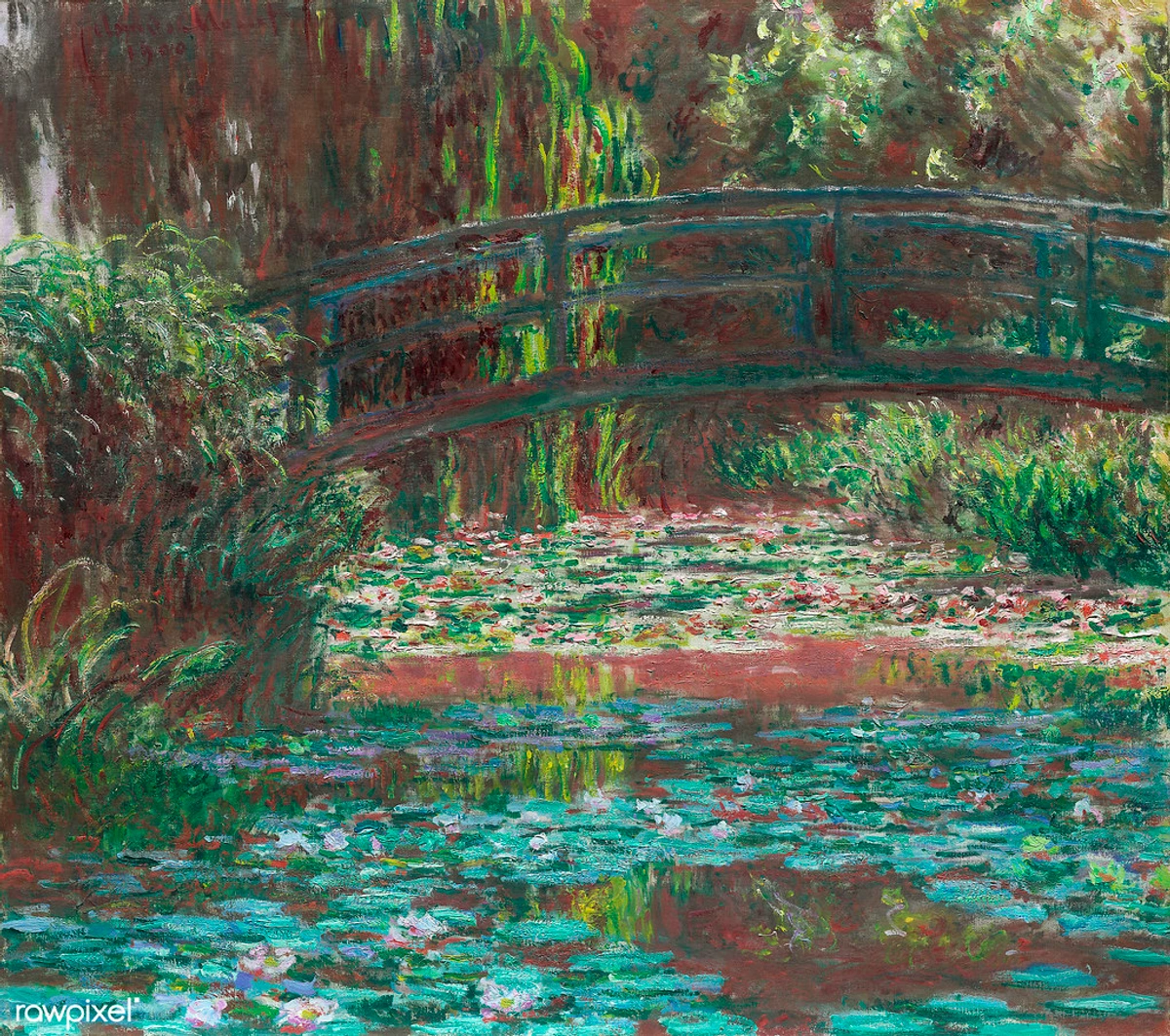
Instead of mixing green on his palette, he would place a stroke of pure yellow right next to a stroke of pure blue. Your eye, from a distance, does the mixing, creating a more vibrant, luminous green than any tube could offer. This isn’t just a technique; it’s a philosophy. He trusted the viewer’s perception, making us an active ingredient in the painting. It’s a participatory magic trick. Blended colour is a smoothie—everything is pre-mixed. Broken colour is a fruit salad—you taste the individual grapes and the sharpness of the melon. Pissarro’s fruit salad is dynamic, alive.
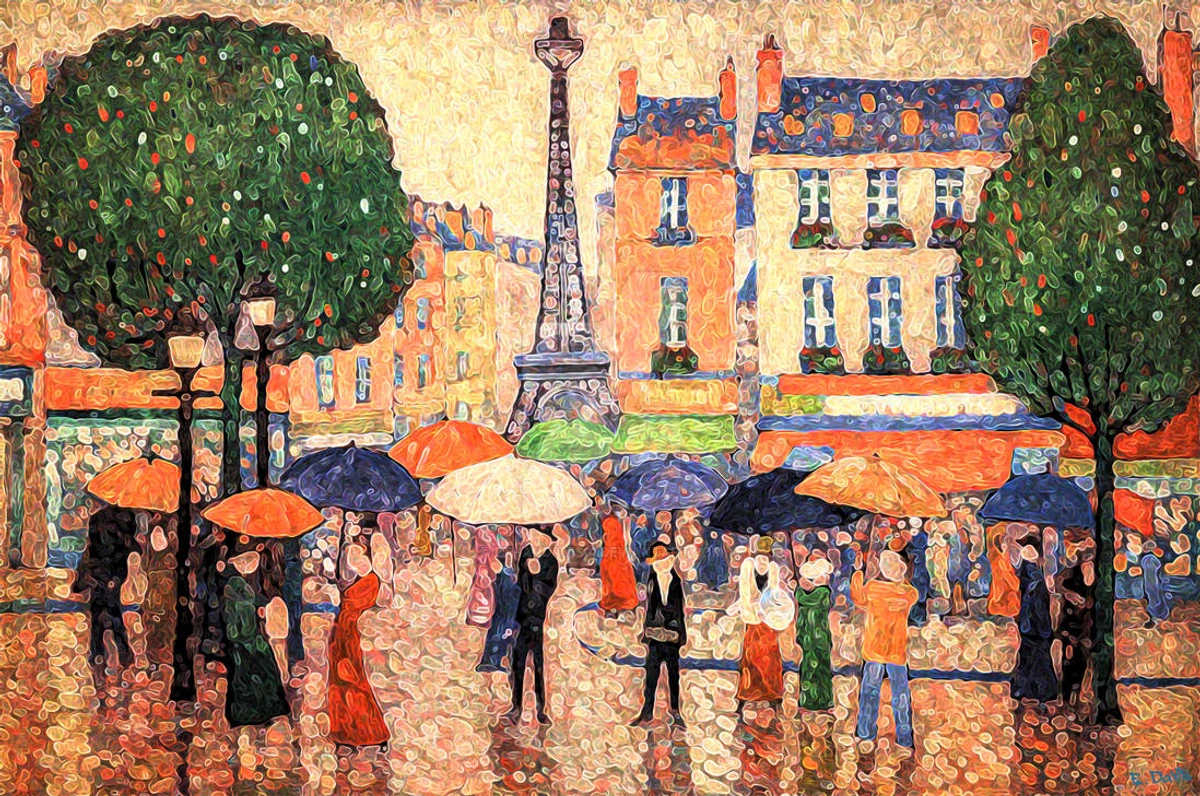
Instead of mixing green on his palette, he would place a stroke of pure yellow right next to a stroke of pure blue. Your eye, from a distance, does the mixing, creating a more vibrant, luminous green than any tube could offer. This isn’t just a technique; it’s a philosophy. He trusted the viewer’s perception, making us an active ingredient in the painting. It’s a participatory magic trick.

Blended colour is a smoothie—everything is pre-mixed. Broken colour is a fruit salad—you taste the individual grapes and the sharpness of the melon. Pissarro’s fruit salad is dynamic, alive.

Examine a painting like Hoar Frost, the Old Road to Ennery. From a distance, it's a quiet, chilly landscape. Up close, it's a riot. He builds the furrows of a ploughed field from short, directional strokes that follow the earth's form. The frosty atmosphere isn’t a wash of grey; it’s a thousand tiny strokes of pale blue, lavender, and cream laid over warmer tones. This is how he captures the air itself, not just the objects within it. He builds entire scenes from these energetic marks, giving static views a palpable sense of vibration and movement.
This method is fundamentally additive. He constructs the world from the ground up, from the canvas weave outwards, stroke by considered stroke. It’s a form of visual masonry, laying each dab like a brick. The particular tools he used were crucial to this effect. He favoured stiff, square-tipped bristle brushes made from hog hair. The stiffness held their shape, allowing for crisp dabs, while the flat edge could be used to create a variety of marks—from a broad swipe to a chiselled dot.
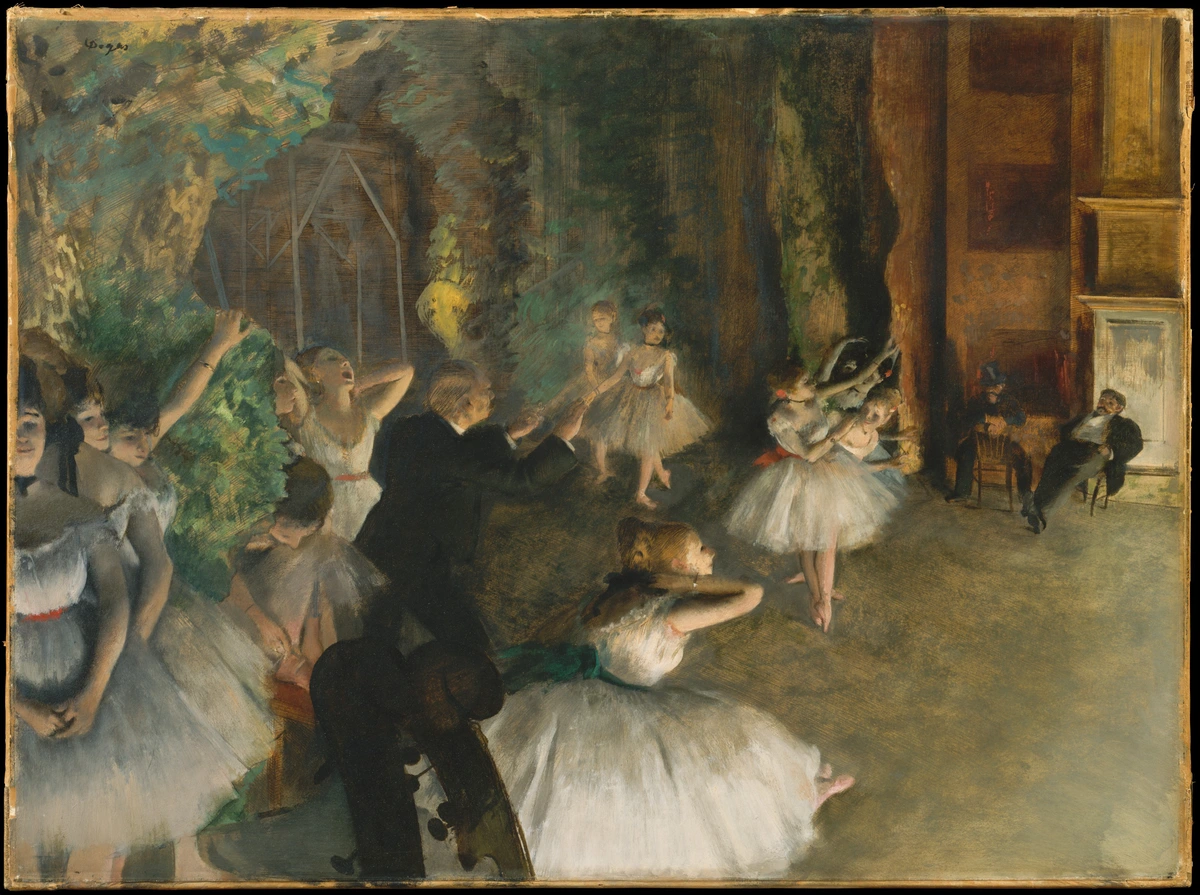
Beyond the choice of tool, his drawing process itself was revolutionary. Forget the meticulous pencil outlines of academic tradition. Pissarro’s “drawing” was done with the brush itself, using thinned paint to block in the major shapes and value masses directly on the canvas. This wasn’t a preparatory sketch to be filled in later; this was the first act of painting, establishing the tonal architecture of the scene in a direct, painterly response. This approach, known as peinture claire, or “clear painting,” ensured that from the very first mark, the artist was thinking in terms of light and color, not rigid outlines. It locked him into a direct dialogue with the motif in front of him, forcing an economy of means and a spontaneous, energetic mark-making that became the very signature of Impressionism.
Technique  | Description | The Effect |
|---|---|---|
| Broken Colour | Applying separate dabs of pure or near-pure colour, rather than pre-mixing them on the palette. | Creates optical vibrancy and luminosity as the viewer's eye blends the colours from a distance, simulating the fleeting dance of light. |
| Short, Chopped Strokes | Laying down small, rectangular or comma-shaped marks of paint, often with a square-tipped brush. | Gives forms a sense of structure and solidity, excellent for depicting foliage, ploughed fields, and architecture. |
| Directional Brushwork | Following the form of the object with the direction of the stroke—upwards for tree trunks, inwards for a haystack. | Enhances the three-dimensionality and texture of the subject without relying on heavy contour lines or Chiaroscuro. |
| Impasto | Applying paint thickly, so it stands off the canvas, creating actual texture and shadow. | Adds a tactile, physical quality; each stroke catches the light in the real world, just as in the depicted one. |
| Alla Prima (Wet-on-Wet) | Applying fresh layers of paint onto still-wet underpaintings without waiting for them to dry. | Allows for a spontaneous, energetic response and lets colours mix optically on the canvas itself. |
| Peinture Claire | Blocking in the composition directly with a brush loaded with thinned paint, rather than a detailed pencil sketch. | Establishes a direct, painterly response from the start and forces a focus on light and value, not outlines. |
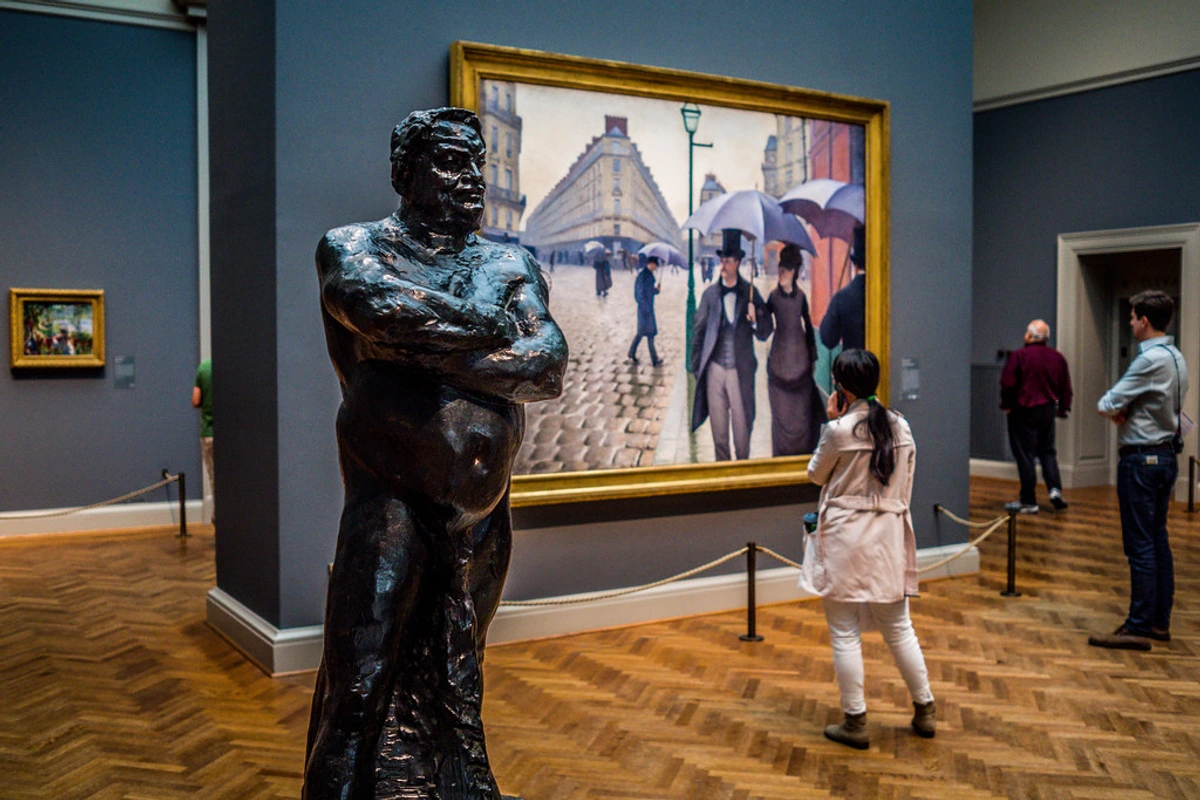
These weren’t random flourishes. The direction, length, and thickness of each stroke were calculated to model form and guide the eye. This relentless, almost invisible, discipline underpins the supposedly effortless, spontaneous effect. He makes it look easy because he had worked out the hard parts in his mind and through years of practice. It's a dance where every step, though it appears free, is the result of deep training.
2. A Revolutionary Palette: Pissarro’s Colour Theory
If his brushwork was the rhythm, his palette was the melody. Pissarro’s colours were a radical departure from the muted, earth-toned tradition. He jettisoned the umbers and siennas for a brilliant, vibrating spectrum—the legacy of a quiet scientific revolution. Newly available synthetic pigments like Prussian Blue, Chrome Yellow, and vibrant Cadmium Reds offered a chromatic firepower the Old Masters could only dream of.
This wasn’t just an aesthetic choice; it was a scientific one, heavily influenced by the burgeoning field of colour theory. It's impossible to overstate the quiet revolution of a simple invention: the collapsible metal paint tube by John Goffe Rand in 1841. Before the tube, artists mixed paints in the studio from messy pig bladders or syringes. They were tethered to a fixed workplace. Suddenly, with a box of these portable, color-filled tubes, they could walk out the door with their entire palette and chase the light wherever it led. This unassuming piece of technology was arguably the most crucial catalyst for the entire Impressionist revolution—it literally opened the door to painting en plein air.
The advent of the railways was equally transformative. For the first time, the countryside was no longer an arduous journey away. Artists could board a train and be in a rural village like Pissarro’s beloved Pontoise or Éragny in under an hour, their portable easels and newly perfected tube paints in tow. This synergy of technology—the tube and the train—democratized landscape painting. The motif was no longer confined to what was within walking distance of the studio. The entire countryside, with its unique atmospheric effects, became accessible, an ever-changing theatre of light awaiting its Impressionist interpreters.
He was a dogged student of contemporary scientific thought, particularly Michel Eugène Chevreul's Law of Simultaneous Contrast. Chevreul, a French chemist tasked with improving the dyes for the Gobelins tapestry factory, discovered that a colour’s appearance is fundamentally altered by its neighbors. A grey will look greenish against a red background and reddish against a green one. Pissarro didn’t just know this rule; he painted with it.
But Chevreul wasn’t his only influence. The American physicist Ogden Rood, in his seminal 1879 book Modern Chromatics, explored the mathematical relationships between color wavelengths and had a profound impact on the later development of Pointillism (or Divisionism). Simultaneously, German scientist Hermann von Helmholtz was publishing his groundbreaking work on the physiology of vision, showing how the human eye itself mixed colors. These ideas were in the air, a pervasive undercurrent of scientific rationalism that convinced artists like Pissarro that they weren’t just painting feelings, but a more scientifically accurate representation of light and perception than the Old Masters ever could.
This is the reason you will almost never find a neutral grey or black in his work. A shadow on a sunlit road is never just brown. It’s a muted violet, because its complementary colour (violet) is the secret to making the adjacent yellow light vibrate with warmth. He was a colourist composer, orchestrating harmony and deliberate discord not with notes, but with hues. This is why his shadows feel so alive; they are filled with the reflected colors of the world around them, not just empty darkness.
There's a common misconception that Impressionists just slapped on whatever colours they felt like. The truth is far more disciplined. This approach was a direct application of scientific principles. Pissarro was part of a generation of artists who were deeply engaged with the science of their time, believing that a more accurate understanding of light and perception would lead to a more truthful art. They weren't abandoning realism; they were pursuing a deeper, more optical realism. Their palette wasn’t chosen by whim, but by principle. They moved away from the earth-based pigments—the umbers, siennas, and bitumen—of the academic tradition. These pigments created a warm, brown-toned harmony that was, to the Impressionist eye, a fundamental misrepresentation of the often cool, bright, and vibrating light of the natural world. Their palette was built on three tenets: avoid black, avoid earth tones, and embrace vibrant, synthetic pigments, especially for shadows.
Look at the way he paints a sunlit field in spring. He doesn’t just use green. He lays down strokes of pure yellow to catch the direct sunlight, then adds strokes of vibrant viridian green for the cooler grass in partial shade, and finally, in the deepest shadows, he might place a stroke of crimson or violet. From a few feet away, your eye fuses these separate colours into a single, shimmering, incredibly vibrant field of green. But up close, you can see the separate components of the chord he’s playing. It’s a masterful, almost musical, approach to colour.

In a remarkable display of intellectual honesty and humility, the aging Pissarro was briefly captivated by the scientific rigor of Pointillism, also known as Divisionism. Influenced by younger firebrands like Georges Seurat and Paul Signac, this movement took the idea of broken colour to its logical extreme. For a period of about four years, he traded his gestural, rhythmic strokes for thousands of tiny, methodical dots, believing this was the ultimate scientific path to luminosity. This wasn't a mere stylistic flirtation; it was the artist as a tireless researcher, willing to deconstruct his own signature style in the pursuit of pure optical truth.
For a period of about four years, Pissarro set aside his intuitive, gestural brushwork and meticulously applied colour in thousands of tiny, precise dots (or 'points'). Driven by the theories of scientists like Ogden Rood, he believed this was the most rational and scientific method to achieve the maximum possible luminosity. Works from this period, like Haymaking, Éragny (1887), demonstrate his disciplined application of the technique.
Yet, he eventually found it too rigid and time-consuming, lamenting that it stifled his spontaneous response to nature. The methodical application of dots was an anchor preventing him from capturing the swift effects of changing light. His willingness to deconstruct his own hard-won style in pursuit of pure light, and his equally brave decision to abandon it, is a profound lesson in artistic courage. This period of experimentation wasn't a failure; it was a necessary evolutionary step that purified his understanding of color and, in many ways, laid the groundwork for Post-Impressionism. Pissarro proved that the spirit of an artist could not be imprisoned by even the most rational of systems.
3. Embracing En Plein Air: The Truth of the Moment
The final, crucial pillar was Pissarro’s commitment to en plein air—painting outdoors, directly from the subject. This was non-negotiable. The studio was for final assembly, but the essential truth of a painting had to be captured on-site, in the chaotic, unpredictable flow of the real world. The simple act of stepping out the door was a declaration of intent: to paint not an idealized memory, but the messy, glorious reality of the moment. You can see this evolution in his own work. Early paintings, like his submissions to the Paris Salon, were often large-scale, mythological, or allegorical scenes created entirely indoors. But after his pivotal encounters with Corot and the plein air painters, his entire artistic philosophy pivoted. His canvases became smaller, more manageable for transport, and his subjects became resolutely modern and mundane. He wasn’t painting nymphs; he was painting peasants, potato fields, and muddy village roads. He traded the historical for the contemporary, the staged for the spontaneous. This wasn’t an invention of the Impressionists, of course. Earlier masters like John Constable in England and the Barbizon School painters like Jean-Baptiste-Camille Corot had already championed working directly from nature. But the Impressionists, armed with their new technologies, elevated it from a preparatory practice to the very essence of their art. For Pissarro, the fleeting effect of light on a subject at a specific time of day was the subject.
Why did this matter so much? Because it made him a slave to the moment. Light shifts by the second. A passing cloud can transform a green meadow into a field of violet and cobalt shadows in an instant. By painting outside, he was chasing a specific, irreproducible truth. He would often paint the same subject—like his famous series of the Boulevard Montmartre—at different times of day to capture this relentless change. This series approach wasn't merely repetition; it was a deep investigation into the transient effects of light and atmosphere on a single, humble subject—a theme famously explored by his friend Claude Monet in his Haystacks and Water Lilies.

His brush had to work with speed and conviction, often using the Alla Prima (wet-on-wet) technique to blend colours directly on the canvas, capturing the essential character of the light before it vanished forever. This urgency is what gives his work its breathtaking freshness and immediacy. It feels not like a staged reconstruction, but a record of an experience. This obsession with capturing the transitory moment is the very root of the term "Impressionism." When the movement’s first exhibition was being organized, they needed a name. They chose "Société Anonyme Coopérative des Artistes Peintres, Sculpteurs, Graveurs, etc."—a bureaucratic mouthful. It was a critic, Louis Leroy, reviewing the show, who latched onto the title of a painting by Pissarro’s friend Claude Monet, "Impression, soleil levant" (Impression, Sunrise). Leroy used the word “Impressionist” as an insult, implying their work was merely a crude, unfinished sketch. The artists, showing a brilliant sense of defiant marketing, embraced the name. It perfectly encapsulated their goal: not to paint a finished, timeless object, but to capture the fleeting sensory experience—the impression—of a moment in time.
Emulating the Master: Practical Insights for Artists
So, how does a modern artist begin to internalize Pissarro’s lessons? It’s less about copying haystacks and more about adopting a mindset: a radical commitment to observation, a disciplined looseness, and a trust in the power of pure colour. It's about cultivating a state of mind—one I've often struggled with myself, caught between the desire for perfect realism and the thrill of pure sensation. The key is to reframe the goal of painting: you are not a camera. Your job isn’t to document every leaf, but to translate the feeling of the light as it hits your face and bounces off the world in front of you. Strive to become a conduit for that light, not its master. It’s about learning to see the world not as a collection of solid objects, but as a shifting, shimmering field of coloured light waiting to be translated into pigment. This isn’t just a historical exercise; it’s a practical toolkit for making your own work more vibrant and alive.
- Loosen Your Palette: Start with a simple, limited palette—a warm and a cool version of each primary (e.g., Cadmium Yellow and Lemon Yellow, Ultramarine Blue and Cerulean Blue, Cadmium Red and Alizarin Crimson), plus white. Forcing yourself to mix secondaries is the first step toward a vibrant, unified canvas. This discipline prevents muddy colours and forces you to think in terms of temperature and harmony. A common question is, “how do I get that Pissarro glow?” The answer is often right here: limit your pigments. By mixing your own greens, purples, and oranges from a few powerful primaries, you create a symphony where every note belongs to the same scale.
- Break Your Strokes: Train your hand to be a mosaic artist. Instead of blending two colours, place them side-by-side. Paint an apple: put strokes of pure red on the lit side, and strokes of its complement (a dark green) in the shadow. Step back. Watch your eye perform the alchemy. Start with a patch of simple objects and practice placing unmixed strokes next to one another. The goal is to overcome the instinct to smooth everything out. This was a battle for me, too—the urge to blend and “fix” is powerful.
- Paint the Light, Not the Object: This is harder than it sounds. When you paint a tree, don’t think ‘tree’. Think ‘a collection of blue-violet and yellow-green marks my eye reads as a tree in sunlight’. Shift your focus from the noun to the adjective—from the thing to the quality of light hitting the thing. This reframes the entire painting process. This single mental shift separates the student from the master.
- Go Outside: Commit to working from life. Even a 10-minute sketch sharpens your instincts. The pressure of changing light forces decisive, energetic marks. If working from a photo is unavoidable, try to recall the feeling of that moment. Your goal is to translate a sensory experience, not just copy a flat image. The tyranny of the perfect photograph can be a dead end; your flawed, subjective memory of a scene is often a better guide to its truth.
- Embrace Speed: Work faster than is comfortable. The Impressionist goal was to capture a fleeting moment. Set a timer. Use larger brushes than you think you need. This forces you to simplify and focus on the essential light and colour. When you feel the panic of the ticking clock, that’s when you start making decisions with your gut, not your head—and that’s where the magic lives.
- Study the Greys: Pissarro’s shadows were rarely black or brown. He filled them with colour—violets, blues, and cool greens. Mix your own greys from complementary colours (red and green, blue and orange, yellow and violet). These greys will be richer and more luminous. I keep a small canvas on my easel just for testing these “colored greys,” and it’s more valuable than any color-mixing app.
- Master Value Relationships: Before you even think about color, nail your values. If you can’t make a painting work in black, white, and grey, adding color will only create a beautiful mess. Squint at your subject. Simplifying it into three or four major value masses (light, mid-tone, dark) is the foundation of any great painting, and Pissarro was a master of this.
- Understand Your Ground: The surface you paint on matters. Pissarro almost always used a light-toned ground, usually a white or pale grey primer. This layer reflects light back through the paint, creating the signature luminosity of Impressionist work. A dark ground absorbs light, and this technique becomes impossible. Think of the ground as the first, and most important, layer of light in your painting.
Case Study: A Step-by-Step Analysis of a Pissarro Masterpiece
To truly understand a technique, it’s best to see it in action. Let’s dissect one of Pissarro’s iconic works, Hoar Frost, the Old Road to Ennery (1873), a painting that perfectly encapsulates his mature Impressionist style.
But one case study is rarely enough. To give you a broader view, we’ll also briefly touch on another of his masterworks from a different thematic vein—his urban scenes—before diving deep into Hoar Frost. This dual analysis will reveal how his core principles remained constant, even as his subjects changed dramatically.
Case Study #1: Urban Ephemerality in The Boulevard Montmartre at Night
Before we analyze Pissarro’s quintessential rural scene, let’s look at the city. In the 1890s, from a hotel room overlooking the Boulevard Montmartre, the aging and infirm Pissarro produced a series of canvases that masterfully applied his lifelong plein air principles to the modern metropolis. The night scene is a revelation, proving that the ephemeral quality of light was not limited to the countryside.
Here, his broken-colour technique is re-engineered to capture gaslight, electric street lamps, and their reflections on wet pavement. The sky is not black, but a deep, luminous ultramarine, against which the light sources glow with yellow, orange, and crimson. The entire cityscape is built from a web of energetic strokes that convey the hustle and energy of the boulevard. The shadows are not voids but are filled with dark violets and blues. He was painting the birth of the modern city, and his brush was just as adept at capturing the shimmer of gaslight on rain-slicked asphalt as it was at capturing frost on a ploughed field. It shows his enduring curiosity and his refusal to be confined by a single, successful subject matter.
Case Study #2: Rural Mastery in Hoar Frost, the Old Road to Ennery
Now, let’s return to the countryside, to 1873, and the painting that stands as a testament to his mature technique. The scene is a vast, flat field on a cold winter morning. Ploughed furrows recede into the distance, meeting a line of bare trees under a hazy sky. In the foreground, a solitary peasant figure drives a donkey and cart. The entire scene is bathed in the cool, diffuse light of a frosty day. It's a profoundly ordinary moment transformed into something monumental.
1. The First Mark: Setting the Stage with a Toned Ground
While not always visible in the final piece, Pissarro and many of his contemporaries would often begin by toning their white canvas with a thin wash of colour—a light reddish-brown or a pale grey. This immediate banishes the stark white of the canvas, providing a unifying middle tone from the very first moment. A white canvas can trick the eye into seeing colours as brighter than they are; a toned ground creates a more balanced foundation for judging values. This act of preparation is a quiet reminder that even the most spontaneous effects are often built on careful foundations. It’s the first step in a dialogue between the artist and the canvas. You can often see glimpses of this ground peeking through in his later, more thinly painted works, adding an extra layer of warmth and life.

2. The Drawing: Laying Out the Architecture Pissarro would have blocked in the main compositional elements with a brush, using thinned paint. He wasn’t interested in a detailed pencil sketch; the subject was light, not lines. The goal was to establish the big shapes: the horizon line, the diagonal of the road, the verticals of the trees, and the placement of the figure. This compositional architecture is deceptively simple but incredibly strong, creating a sense of deep space and rural monumentality. The peasant and his cart are placed according to the rule of thirds, a classic device to create a dynamic focal point rather than a static center.
3. Constructing the World with Broken Colour This is where the magic happens. Look closely at the field.
- The Furrows: Looking closely at a high-resolution image, you can see how Pissarro doesn’t paint lines in the dirt. He uses short, thick, horizontal strokes of warm earth tones—burnt sienna, ochre, and even flashes of reddish-brown—to build the raised ridges of the ploughed earth. These strokes have a physical thickness, a subtle impasto, that you can almost feel. Between them, in the shadows, he lays down cooler strokes of grey, lavender, and pale blue, representing the frost. The strokes aren’t blended. They sit side-by-side, creating a rhythmic, textured surface that your eye reads as sunlit soil and shadowed frost.
- The Atmosphere: The air itself is thick with colour. The hazy sky isn’t just white; it’s a myriad of tiny strokes in pale cream, soft blue, and the faintest hint of pink. This “dry mist,” as the title suggests, is painted, not left as empty space. Pissarro uses these atmospheric strokes to soften the edges of the distant trees, enhancing the feeling of deep recession and vast, open space. He is painting the air.
4. The Orchestration of Colour and Light The painting is a symphony of blues and violets set against warmer earth tones.
- Shadows as Colour: The shadows on the ground are alive with the complementary colours of the sunlight. Since the light is cool and silvery-white, the shadows are tinged with warmer violets and lavenders. This is a direct application of Chevreul’s Law and creates the vibrant, shimmering effect of light bouncing around a frosty landscape.
- Limited but Vibrant Palette: He achieves this complexity with a surprisingly limited palette dominated by Lead White, Viridian Green, Cobalt Blue, and various earth pigments. The genius is in the placement, not the number of colours. It’s a masterclass in restraint.
5. The Final Touches: Human Scale and Life The peasant and his cart provide essential human scale and a narrative focal point. They are painted with the same broken-colour technique but with slightly more definition than the surrounding landscape. Pissarro uses their dark, muted tones to create a strong value contrast, drawing the eye and anchoring the vast, airy composition. Their presence connects the viewer to the scene, reminding us that this is a working landscape, a place of human toil, not just an aesthetic arrangement.
By dissecting these two paintings, you can see his entire philosophy at work: a commitment to painting the sensation of a specific time and place through a disciplined application of broken colour, scientific colour theory, and masterful composition. It’s a landscape built, stroke by deliberate stroke, into a timeless record of a fleeting moment. This universal approach, whether applied to a muddy field or a glittering boulevard, established his legacy as an artist who didn’t just paint the world, but taught us a new way to see it.
Frequently Asked Questions
Looking at Pissarro’s work often invites a flurry of practical questions. How did he achieve that effect? What tools did he use? It’s tempting to look for a single brush or a magic pigment, but the real answer almost always lies in his disciplined process. Below are some of the most common questions I hear, with answers drawn from historical analysis and a bit of practical painting experience.
Q: What kind of brushes did Camille Pissarro use?
A: While we can’t be certain without his actual kit, the evidence in his paintings points to a preference for square-tipped, stiff bristle brushes, likely made from hog hair. These were perfect for creating the distinct, textural marks that define his style. The stiffness of the bristles and the chiseled edge of a flat or bright brush allowed him to create a range of effects—from a broad, sweeping stroke to the signature short, choppy dab. For finer details, he might have utilized smaller, softer brushes, but the foundational structure of his paintings was built with these robust, texture-building tools. The brush was not just a tool; it was the primary instrument for translating his vision.
The square-tipped brush, in particular, was key. Unlike a round brush that produces a uniform mark, a flat or bright brush can be used on its edge for a thin line, on its side for a wide stroke, or dabbed on its end for a square, brick-like mark. Pissarro exploited every part of this chiseled edge, and learning to do the same is a crucial step in emulating his style. Try holding a flat brush perpendicular to the canvas and stabbing or dabbing it down to create a mark. This is the very DNA of Pissarro’s technique.
Q: What paints did Pissarro use?
A: He used oil paints, which were undergoing a revolution in the 19th century. The advent of the collapsible metal paint tube was perhaps the single most important invention for the Impressionists, as it finally freed them from the studio. Pissarro embraced a new generation of vibrant, lightfast synthetic pigments that offered a brilliance the Old Masters could only dream of. This new palette, a product of 19th-century chemistry, was as crucial to his art as his own eyesight. His palette typically included:
Pigment | Use & Effect |
|---|---|
| Chrome Yellow | A vibrant, opaque yellow used for highlights and sunlit areas. A synthetic pigment that replaced the fugitive natural orpiment. |
| Viridian Green | A cool, transparent green essential for foliage and landscape tones. |
| Cobalt Blue | A pure, sky-like blue used for skies, water, and atmospheric effects. |
| French Ultramarine | A deeper, warmer blue, often used in shadows and for mixing rich violets. |
| Lead White | The standard white, prized for its opacity and quick-drying properties. (A health hazard, it has since been largely replaced by safer Titanium and Zinc whites). |
| Alizarin Crimson | A deep, cool red used for accents and mixing rich purples for shadows. |
His medium was likely a simple mix of linseed oil (for gloss and flow) and turpentine (for thinning), which allowed him to build up the desired impasto texture while maintaining workability. It’s also worth noting the rise of commercially prepared “peinture à l’essence,” a form of oil paint where some of the oil has been partially removed, creating a stiffer, faster-drying paint. This was incredibly useful for plein air work, as it prevented the paint from becoming a slick, unworkable mess.
Q: What surfaces did Pissarro paint on?
A: Pissarro painted on both primed linen canvas and lightweight wooden panels (often mahogany or cedar). The panels, in particular, were a practical choice for plein air work. They were rigid, easy to transport, and didn’t require a heavy easel. Whether on panel or canvas, the surface was always primed with a light-coloured ground, typically white or a pale grey. This foundational layer was non-negotiable. A light ground acts like a mirror, reflecting light back through the subsequent layers of paint. This optical effect is one of the key contributors to the radiant, sun-drenched luminosity that defines Impressionist paintings. A dark ground, by contrast, would absorb light and deaden the colours, making Pissarro’s technique impossible. The very surface he painted on was the first and most important partnership in creating his art.
The choice of linen canvas was also significant. Linen, made from flax, is stronger and more durable than cotton, with a finer, more regular weave. This creates a smoother surface that allows for more delicate marks and better shows off the paint’s texture. Today, a good-quality linen canvas is still a sign of an artist's commitment to archival quality, and it provides a beautiful surface to work on.
Q: Did Pissarro ever use a palette knife?
A: Yes, he did, though it was a secondary tool compared to his beloved brushes. You can see evidence of the palette knife in some of his later works, where he used it to apply broad, flat planes of colour or to scrape and texture the paint surface. A palette knife excels at creating sharp edges and crisp shapes, a perfect way to describe the flat surface of a road, a wall, or a field under strong light. It’s a fascinating technique that creates a very different physical texture compared to the woven texture of a bristle brush. It shows his constant experimentation, his refusal to be limited to a single method. It's a tool I find incredibly useful in my own abstract work for introducing areas of flat, unmodulated colour that contrast with more gestural, brushy passages.
Interestingly, he also used the palette knife for scraping and incising—a technique known as sgraffito. By dragging the knife across a wet layer of paint, he could scratch back down to the lighter ground color, creating fine lines for things like fence posts, branches, or the veins in a leaf. This shows the ingenuity of an artist using every part of his tools to solve a visual problem.
Q: Did Pissarro invent Impressionism?
A: No, Impressionism wasn’t the creation of a single artist. It was a revolutionary movement that grew from the collective frustration and shared vision of a group of artists in Paris. However, if there was one artist who could be called its anchor, its moral and artistic core, it was Pissarro. He was the only artist to exhibit in all eight of the original Paris Impressionist exhibitions, a testament to his unwavering dedication. This commitment earned him the title of the "Patriarch of Impressionism." He was a father figure and a generous mentor to pivotal younger artists, including Paul Cézanne, Paul Gauguin, and even the great American painter Mary Cassatt, proving his influence extended far beyond his own canvas.
His mentorship is writ large in the history of art. In the 1870s, a young, temperamental Paul Cézanne often worked alongside Pissarro in Pontoise. Pissarro’s patient guidance and his structured, constructive method of building a painting from distinct strokes had a transformative effect. He calmed Cézanne’s turbulent compositions and taught him how to modulate color to create form. Cézanne would later say, “We all stem from Pissarro,” a testament to the older artist’s quiet but profound influence on the future of modern art.
Q: What are the key characteristics of a Pissarro painting?
A: You can identify a Pissarro by a few key characteristics: a humble, everyday subject matter (landscapes, peasants, village scenes); a high horizon line that gives a sense of vast, open space, often emphasizing the solid, earthy ground over the transient sky; a consistent use of broken colour with short, rhythmic brushstrokes, a technique sometimes called his “constructive stroke”; shadows rendered in vibrant violets and blues instead of blacks or browns; an overall feeling of light, air, and atmosphere (what the French call plein air); and a unique sense of monumentality, finding grandeur in scenes of simple, rural labor.
Q: How did Pissarro influence modern art?
A: His influence was profound and multifaceted. Technically, his radical use of broken colour and his dedication to painting light paved the way for all subsequent colour-based movements, from the Fauves to the Abstract Expressionists. Personally, his role as a mentor to titans like Cézanne and Gauguin meant he directly shaped the course of Post-Impressionism. Philosophically, his commitment to painting modern life and finding beauty in the mundane helped liberate art from its academic constraints, opening the door for the radical freedoms of 20th-century Modern art.
His greatest legacy, perhaps, was his elevation of the artist’s subjective sensation. By insisting on painting his personal perception of a scene—the impression—rather than a sterile, objective reproduction, he set the stage for a century of art that would celebrate individual expression over academic convention. He didn’t just paint the world; he taught a generation of artists how to feel it with their brush.
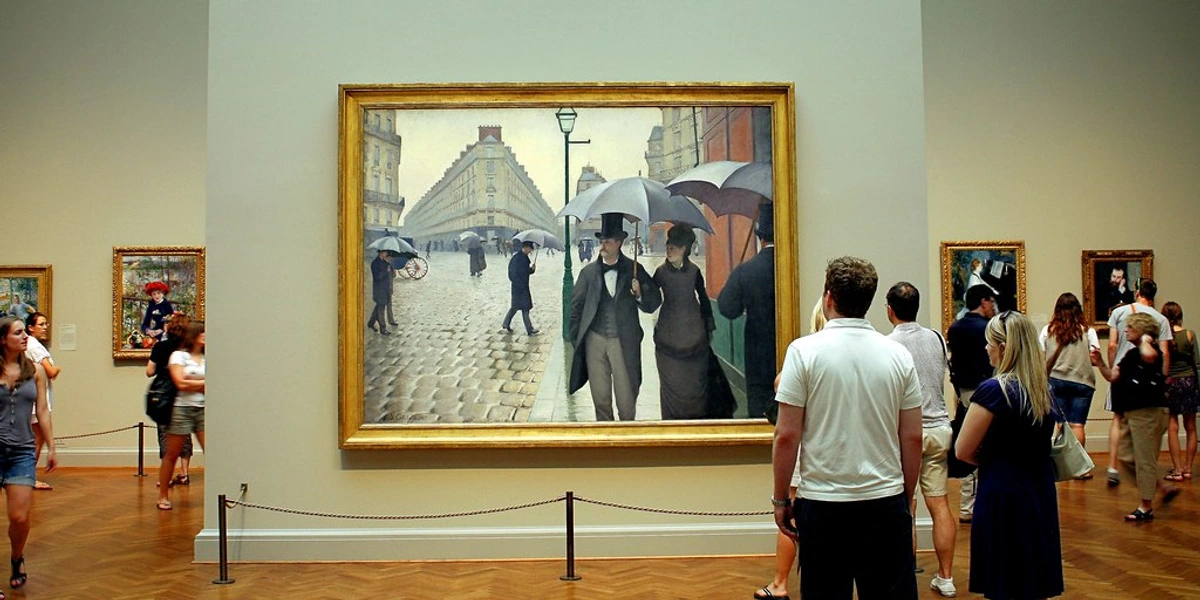




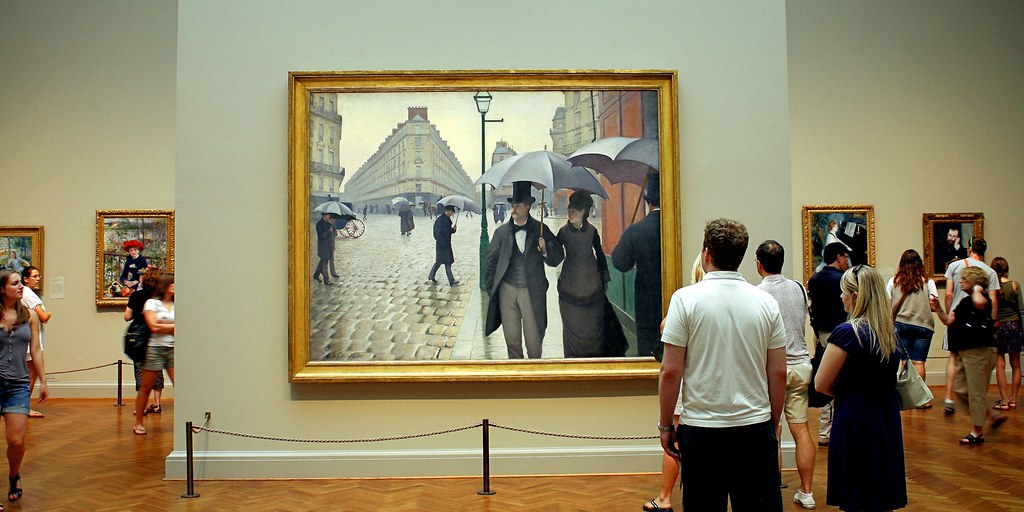
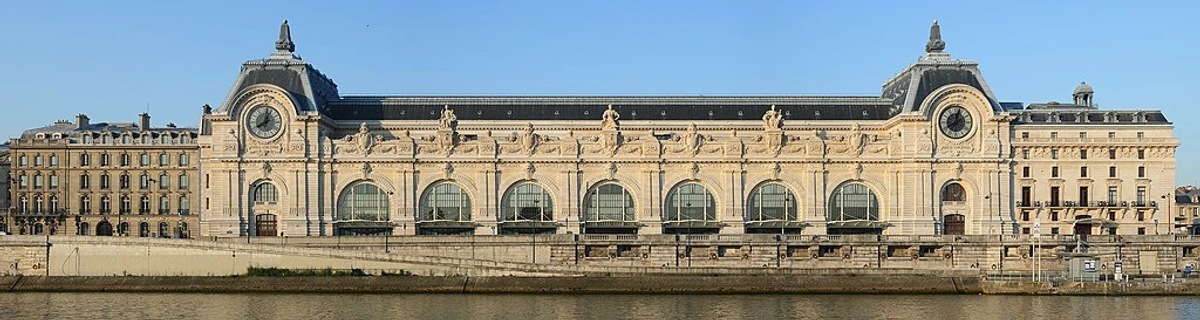
Q: Where can I see Pissarro's paintings in person? A: His work is held in major museums worldwide. In Paris, the Musée d'Orsay has a fantastic collection, as does the Art Institute of Chicago and the Metropolitan Museum of Art in New York. Seeing the physical texture of his brushstrokes and the incredible luminosity of his colours in person is an experience no reproduction can match.