Leon Battista Alberti's Art Theory on Perspective & Techniques
A practical guide to Leon Battista Alberti's theory of perspective and painting, exploring why a 15th-century architect's ideas still matter for artists and art lovers today.

Further Reading & Must-See Artworks
If this article has sparked your curiosity, here are some specific artworks and books to deepen your understanding. There’s no substitute for looking at the real thing, or at least a high-resolution image, and thinking through the artist's choices for yourself.
To truly appreciate the seismic shift Alberti catalyzed, it's worth looking at what came before. The International Gothic style, with its graceful but spatially ambiguous figures, offers a fascinating counterpoint to Renaissance rationalism. Works by Fra Angelico, such as The Annunciation, show a masterful artist poised between the symbolic, devotional world of the Gothic and the new spatial logic of the Renaissance, creating a unique blend of spiritual fervor and emerging naturalism.
Artworks to Study Online (in order of appearance):
- Masaccio, The Holy Trinity (c. 1427), Santa Maria Novella, Florence: Look for the vanishing point. It should be at your eye level. Follow the orthogonals of the coffered ceiling down to it. Notice how the kneeling donors are outside the sacred architectural space, defined by perspective.
- Piero della Francesca, The Flagellation of Christ (c. 1455-1460), Galleria Nazionale delle Marche, Urbino: A masterclass in geometric composition. The entire scene is divided by the architecture. The figure of Christ is placed according to mathematical ratios. It feels cold, serene, and inevitable.
- Raphael, The School of Athens (1509-1511), Stanza della Segnatura, Vatican: The ultimate Albertian painting. A grand intellectual istoria set in a majestic, coffered hall that recedes in perfect single-point perspective. The vanishing point sits perfectly between the heads of Plato and Aristotle, the two central philosophers. Notice how Raphael uses the architecture itself as a tool to emphasize the central philosophical debate.
- Paolo Uccello, The Battle of San Romano (c. 1435-1455), National Gallery, London: Uccello was famously obsessed with perspective, sometimes to the detriment of narrative flow. In this panel, the fallen soldiers and discarded weapons on the ground create a complex grid of foreshortened forms, showcasing a dazzling, almost academic display of the new technique.
- Andrea Mantegna, Lamentation over the Dead Christ (c. 1480), Pinacoteca di Brera, Milan: A powerful and moving example of extreme foreshortening. The perspective is used not just to create space, but to create a visceral emotional impact, confronting the viewer directly with the reality of Christ's body.
Recommended Books:
- Leon Battista Alberti, On Painting (Penguin Classics): The core text itself. It’s surprisingly readable and short. Reading it feels like having a conversation with the man.
- John Berger, Ways of Seeing: The classic 1970s text that puts Alberti's "window" into a modern social and philosophical context. It will completely change how you think about images.
- Erwin Panofsky, Perspective as Symbolic Form: A more academic but profoundly influential essay that argues perspective is not just a technique, but a worldview—the "symbolic form" of the modern era.
- David Hockney, Secret Knowledge: Rediscovering the Lost Techniques of the Old Masters: A controversial and thrilling read where Hockney argues that many Old Masters used optical devices like the camera obscura to achieve their realism. It's a fascinating counterpoint to the purely mathematical view of perspective.
- James Elkins, The Poetics of Perspective: This book explores how perspective is not a neutral scientific method but a culturally determined way of seeing, deeply embedded with philosophical and metaphorical meanings.
Alberti's Influence Beyond Painting: The Extended Mind
You can't separate Alberti the art theorist from Alberti the architect. His ideas weren't just for canvas; they were for the city. His architectural treatise, De re aedificatoria (On the Art of Building), was the first of its kind since antiquity and applied the same principles of order, proportion, and harmony to urban planning and building design. He sought to create a human-centered environment where buildings were arranged in rational, geometric harmony, much like the figures in a perfect istoria. His architectural philosophy was a direct extension of his pictorial one. He believed that buildings should be designed according to harmonic ratios, with every part relating to the whole in a beautiful and orderly fashion. The facade of Santa Maria Novella in Florence is a perfect example of this, with its geometric inlays of green marble creating a perfectly proportioned and harmonious front.
But his influence extended even beyond this, into the very way we conceptualize territory and space. His work laid the theoretical groundwork for the development of accurate cartography. Explorers could not have mapped the world without the conceptual shift Alberti championed. The globe was no longer a symbolic diagram but a measurable space that could be rationally projected onto a two-dimensional surface—a kind of global picture plane. In this sense, Alberti's "centric point" didn't just organize paintings; it helped organize the known world, paving the way for the Age of Discovery. His mind, ever synthetic, saw the same principles of order governing art, architecture, and the cosmos itself.
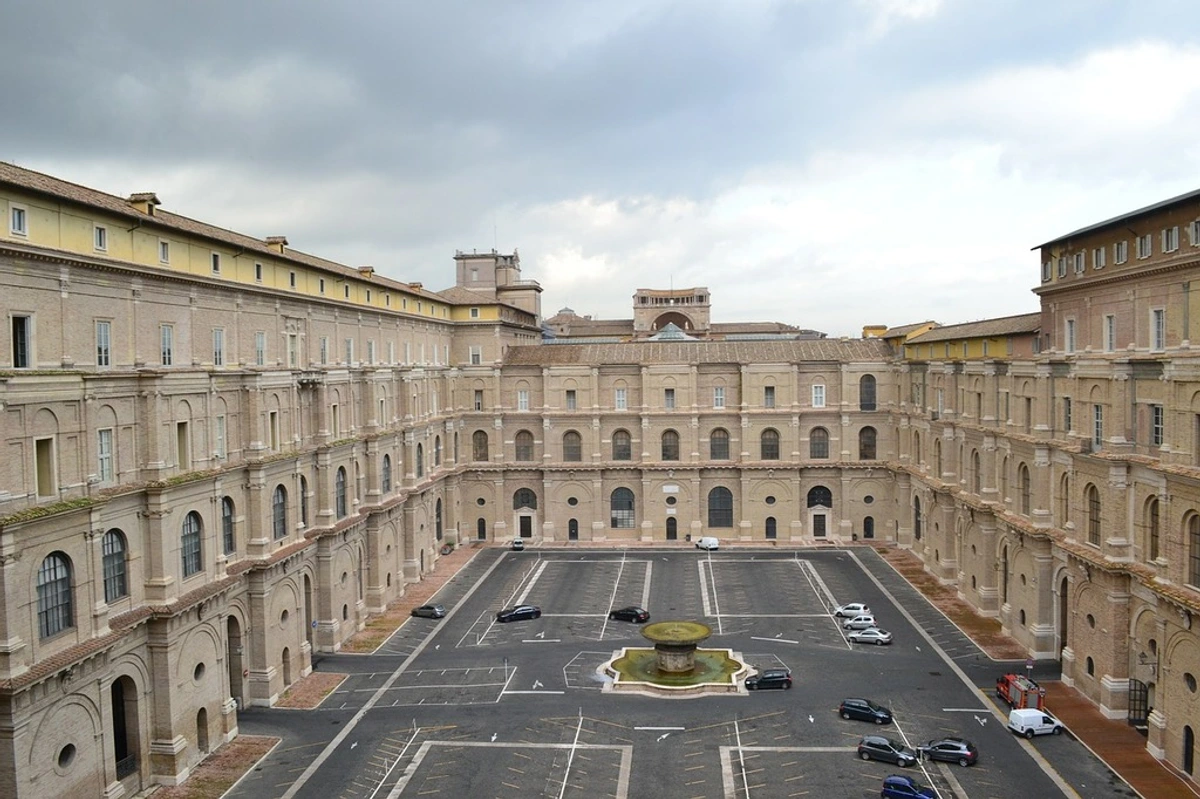
His influence went even further. It's impossible to imagine Christopher Columbus's voyages of discovery occurring without this new way of seeing. The very act of map-making was revolutionized by the concept of a fixed, objective viewpoint. The world was no longer a collection of symbolic icons on a flat parchment; it was a measurable, mappable space that could be rationally understood and navigated. The "peephole" didn't just change art; it changed humanity's relationship with the physical world itself.
The Rival: Northern European Naturalism
It’s tempting to see the Renaissance as a purely Italian phenomenon, but this isn’t the whole picture. While Alberti was codifying his mathematical system, a completely different, yet equally revolutionary, approach to realism was flourishing in Northern Europe, in places like Flanders. Artists like Jan van Eyck were not interested in strict linear perspective. Their path to realism was through obsessive, microscopic detail and a brilliant, intuitive handling of light and atmosphere.
Instead of a mathematical grid, they used an empirical, observational approach to recreate the world with a jewel-like precision. Their figures are solid and real because of the way light reflects off rich brocades and pearls, not because they are placed in a geometric box. Their interiors feel deep because of how light fades through a window or is absorbed by wood paneling, not because of a "centric point."
This creates a crucial distinction. Italian Renaissance art tends to feel rational, architectural, and idealized. Northern Renaissance art feels empirical, domestic, and hyper-real. Both were revolutionary, but one followed the path of the mathematician, the other the path of the scientist-directly observing nature. One opened a rational "window," the other held up a meticulous "mirror." This fundamental difference in approach also highlights a cultural divide. The Italian Renaissance was fueled by a revival of classical ideals of harmony, proportion, and humanism. The Northern Renaissance, while influenced by Italian ideas, was more deeply rooted in late medieval devotional practices. The emphasis was on creating an intense, tangible reality to bring sacred stories closer to the viewer, making them feel present and real. This is why Northern paintings are filled with precisely rendered domestic objects, rich textures, and immersive landscapes, creating a world you feel you could step into, rather than look through a window at.
De Pictura: The Book Itself
We talk a lot about Alberti's ideas, but what about the vessel that carried them? De Pictura wasn’t just an influential book; it's a masterpiece of scientific and artistic communication. Written in 1435, it was structured with a beautiful, rational clarity that mirrored the very principles it taught. It was divided into three books, each with a distinct purpose:
- Book One: The Mathematics. This was the foundation, literally. Alberti started with the abstract, laying out the geometric principles of optics—how we see, how light travels, and how a pyramid of vision works. He was building the conceptual engine of his system from first principles. This was aimed at the educated patron or philosopher, proving that painting was built on a noble, mathematical foundation.
- Book Two: The Practice. This is the heart for any working artist. Here, Alberti gets his hands dirty. He provides the step-by-step, "how-to" guide: how to circumscribe a figure, how to compose an istoria, how to use light and shadow to achieve rilievo. It was practical, actionable advice, translated from the Latin into Italian so that the non-scholars in the workshops could understand and apply it.
- Book Three: The Artist. The final book was less about technique and more about the mind of the artist. It discussed the intellectual and moral education an artist should have, from studying the liberal arts to understanding history and poetry. It was a call to elevate the painter from artisan to intellectual, a true "Renaissance Man."
The book itself was a perfect istoria—a narrative designed to persuade and educate, moving from the abstract to the practical to the ideal. It was the ultimate Trojan horse for the intellectual dignity of art.
From Theory to Practice: How to See like Alberti
Reading about these principles is one thing, but how do you actually internalize them? Here’s a simple exercise. The next time you're in a room, pick a spot on the wall in front of you at your eye level. That's your horizon line. Now, look at the top edge of a door frame or a window frame. Follow that line with your eye. Notice how, even though you know it's straight and level, it appears to angle downwards, meeting the wall at that exact spot you picked? That’s an orthogonal line rushing towards its vanishing point.
Do this for all the parallel lines in the room. The lines where the walls meet the ceiling, the tiles on the floor, the legs of a table. If you trace their path, they all converge on that same line and at one or two main points. You are literally seeing the world as a perspective drawing. It’s a strange and wonderful feeling when you first notice it—as if you’ve suddenly learned to read a secret language that was hiding in plain sight. This ability to see the world's hidden geometry is the first step toward visual literacy. It trains your eye to look beyond the superficial appearance of things and to understand the underlying structure that governs how we perceive space. This is what Alberti wanted for the artist: not just a pair of skillful hands, but a mind trained to see the rational order beneath the visible world.
When a Peephole Changed Art Forever: The Revolutionary Ideas of Leon Battista Alberti
I have a confession to make: for the longest time, art theory felt like a foreign language to me. All these rules, all this talk of geometry... what did math have to do with the soul of a painting? Wasn't art supposed to be about feeling? Then, I stumbled upon the story of a 15th-century polymath who didn't just want to teach artists how to paint. He wanted to convince them that painting was a noble pursuit, on par with philosophy or poetry. This man, Leon Battista Alberti, gave us the foundational grammar for seeing the world in pictures. Before him, paintings were flat, symbolic spaces. After his 1435 treatise De Pictura, the canvas became a window—a rational, measurable extension of our own vision. This shift was as profound as the invention of the printing press, and we are still living within the visual reality he helped to invent.

His name was Leon Battista Alberti, and his little book, De Pictura (On Painting), written in 1435, didn't just describe perspective—it gave artists a philosophy for seeing the world. It was the first modern treatise on the theory of painting, and it codified a shift in human consciousness as profound as the invention of movable type.
Seriously, why should you care about a guy who wrote a book 600 years ago? Because we're still living in the visual world he helped invent. The very idea of a painting as a window into another reality—that's Alberti. That sense of depth you take for granted when you look at a photo, or the immersive feeling in a well-composed film scene? It all traces back to a few powerful ideas he codified in Florence, right at the heart of the Renaissance.

Who Was Leon Battista Alberti? The Architect Who Redefined Art
Before we dive into the technical stuff, let's get to know the man. Leon Battista Alberti (1404-1472) was the quintessential "Renaissance Man." He wasn't just a dabbler; he was a master. An illegitimate son of a wealthy Florentine merchant family, his early life was marked by exile, but he turned that into a driving force for intellectual achievement. He was an architect who designed the Tempio Malatestiano in Rimini and the facade of Santa Maria Novella in Florence. He was a poet, a linguist who wrote one of the first Italian grammars, a cryptographer who created the first Western polyalphabetic cipher, and a philosopher who could quote the classics as easily as he could design a church.
Crucially, he was less of a practicing painter himself and more of a brilliant thinker who looked at what the great artists of his time—people like Masaccio, Donatello, and Brunelleschi—were doing and asked, "What are the principles behind this magic?" This privileged position as an observer, rather than a practitioner, was perhaps his greatest asset. It allowed him to extract a universal system from the working methods of individual masters. He stood with one foot in the world of humanist scholarship and the other in the bustling workshops of Florence, translating the practical discoveries of artists into the language of classical philosophy and mathematics. This act of translation was his true masterpiece; he didn't invent the components, but he assembled them into the first coherent theoretical framework for painting in the modern era.
In 1435, he wrote De Pictura in Latin, then quickly translated it into Italian, ensuring it would be read by the artists he sought to elevate. His goal wasn't just to explain the mechanics of perspective, which was already in the air. It was to give painting a theoretical foundation. He wanted to transform the painter from a mere craftsman into an intellectual, someone who could hold their own with the great thinkers. It's a radical idea when you think about it—that the hands-on work of painting could be a form of liberal art, a way of pursuing knowledge and truth, as noble as the work of any mathematician or poet.
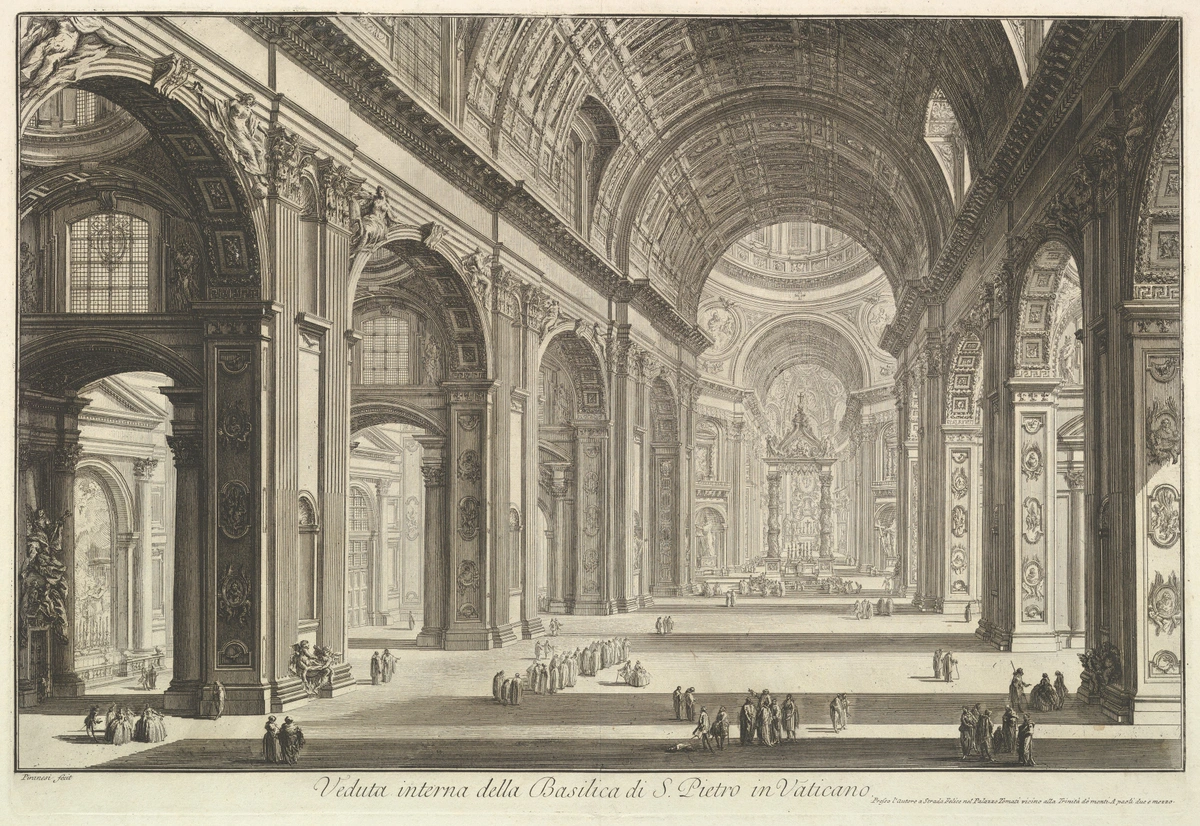
The Big Idea: A Painting as a Window
Alright, let's get to the core of it. What is Alberti's theory? If I had to boil it down to one simple, life-changing metaphor, it's this: a painting should be regarded as a transparent window through which we look at the world.
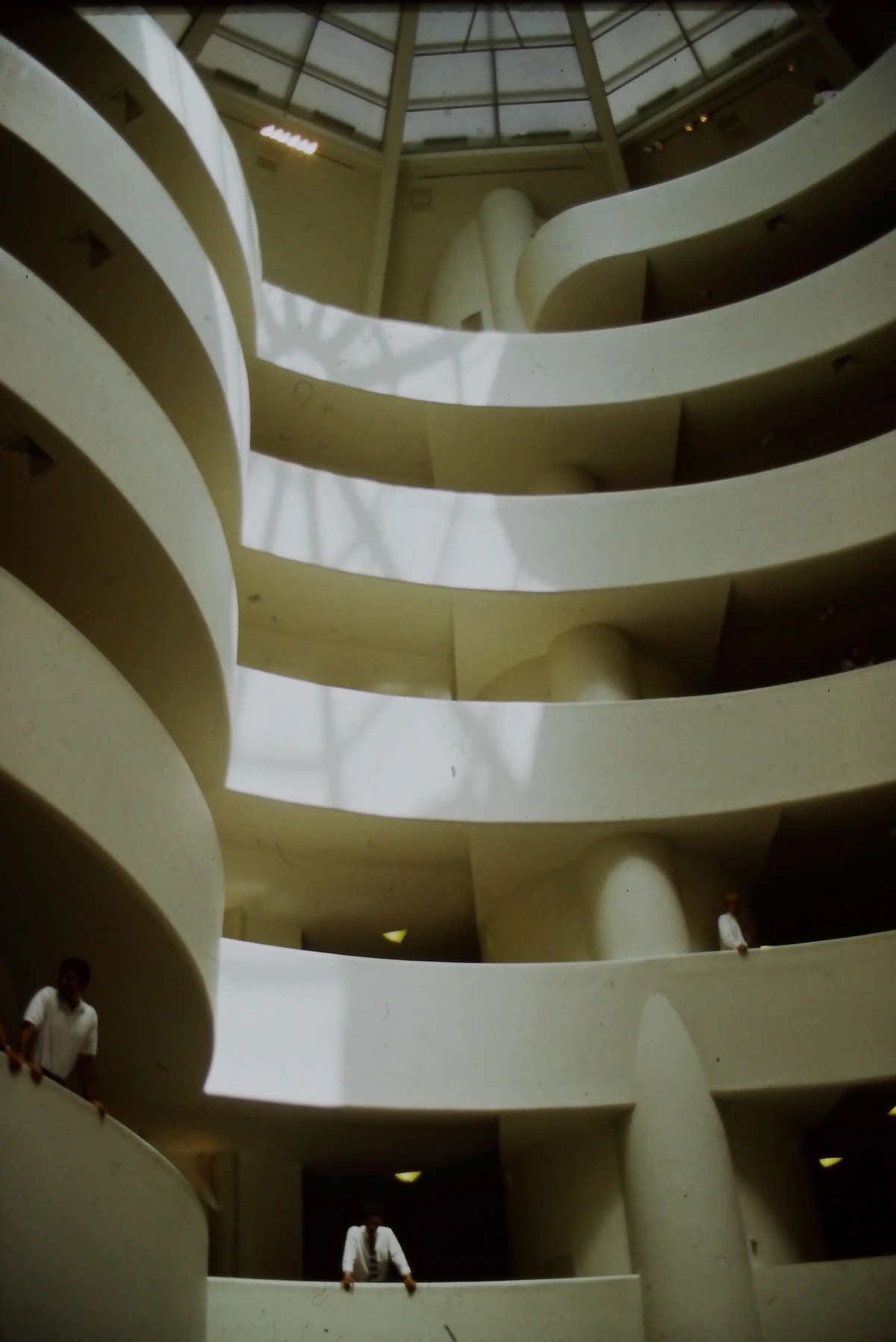
Sounds obvious now, right? But in the 15th century, this was revolutionary. It shifted the entire purpose of a painting. It was no longer just a flat surface decorated with figures or a collection of symbols. It became a virtual space, a slice of reality that the viewer could enter with their eyes. This concept of the picture plane—that imaginary pane of glass—is the single most important idea in his entire system. Everything else—construction, composition, light—follows from this central metaphor.
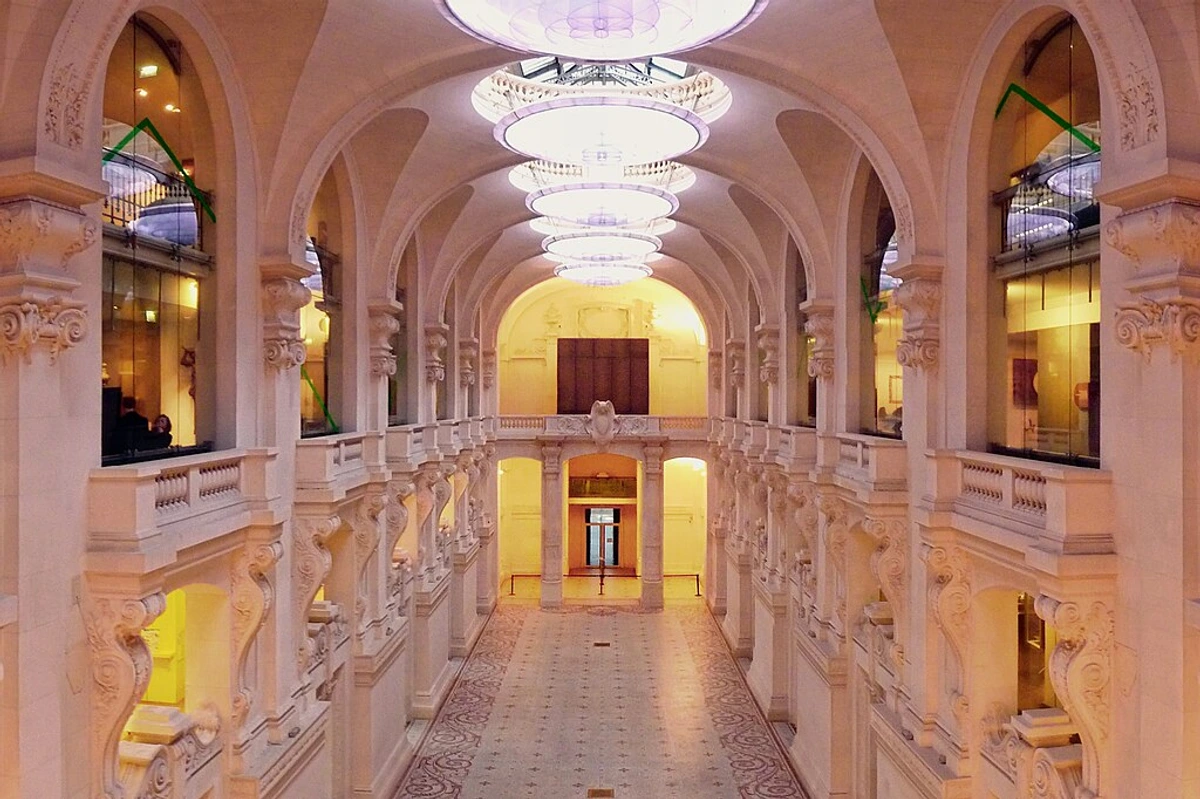
The Magic Trick: How to Build the World with a Vanishing Point
So, how do you actually construct this "window"? This is where Alberti gets practical, and where the famous linear perspective comes in. He laid out a step-by-step method that was so clear, so elegant, that any artist could learn it. Think of it as a recipe for reality. Imagine you're the artist, standing before a vast, blank wall you're about to cover with plaster for a fresco. Here's how Alberti tells you to begin.
First, you decide on the size of your main figure. Let's say he's three braccia tall (a Florentine unit of measure, about six feet). That figure is your module, your fundamental unit of scale for the entire painting. Everything in the picture will be measured in relation to this single human form. This is how you maintain harmony. Next, you draw a horizontal line at that same height—three braccia off the ground. This is your horizon line. It represents the distant boundary where the earth seems to meet the sky, and it's always at the eye-level of the viewer standing in front of the painting. If you raise that line, you feel like you're looking down on the scene, giving a sense of divine omniscience. Lower it, and you're looking up, making the figures seem heroic and monumental. It’s a tiny choice with huge psychological impact.
Now, here comes the most famous part. Somewhere on that horizon line, you place a single point—the vanishing point. This is the spot where all parallel lines that recede into the distance appear to converge. Think of a straight road heading off to the horizon. The two edges of the road meet at a single point in the distance. That's the concept. Alberti called this the "centric point," anchoring the entire visual field. The concept of a single vanishing point was revolutionary because it created a unified, coherent space. It established a fixed relationship between the viewer, the picture plane, and the illusionistic world within the painting. This was a radical departure from earlier systems where space was often suggested through overlapping or atmospheric perspective without a consistent mathematical logic.
Finally, you'd draw a grid of lines, like a fishing net, radiating from that vanishing point. These are your orthogonals, or perspective lines. They act as a guide, allowing you to place every tile on the floor, every beam on the ceiling, and every person in the distance at exactly the right size and position to create a convincing illusion of depth. This grid, this mathematical net, is what captures the world in a rational, measurable system. The key to its power? Mathematical consistency. Once you choose your fixed station point (your viewpoint) and vanishing point, the entire spatial logic of the painting is locked in. This system is often called costruzione legittima, the "legitimate construction." While the principles of foreshortening had been observed by artists like Giotto, Alberti was the first to codify a single, unified, and mathematically consistent method for creating a convincing illusion of three-dimensional space on a two-dimensional surface. This wasn't just about making pictures look real; it was about proving that art could be a form of knowledge, as rational and demonstrable as geometry or architecture.
Element  | Alberti's Term | What It Is | Why It Matters |
|---|---|---|---|
| The Panel | Intersegatione | The transparent "window" or picture plane | The foundational metaphor; defines the painting as a view. |
| The Horizon | Centric Line | A line drawn across the picture at the viewer's eye level | Determines the vantage point (looking up, down, or straight on). |
| The Vanishing Point | Central Point | A single point on the horizon where all orthogonals converge | The anchor of the entire perspective system, creating the illusion of recession. |
| Orthogonals | Pirangon | The lines that radiate from the vanishing point to the foreground | Guides for placing objects in depth and creating the perspective grid. |
| The Velum | Velo | A grid of threads used to transfer a scene | Turned subjective seeing into an objective, measurable process. |
Annotated diagram of linear perspective principles, Public Domain
The Revolutionary Tool: The Velum
The technique wasn't just theoretical; it demanded new tools. Alberti's method required a fixed viewpoint, which was alien to medieval workshop practices. This is where the velum—a thin, semi-transparent veil—became essential. An artist would place a wooden frame strung with a grid of threads (the velum) between their eye and the subject. Then, they would transfer what they saw, square by square, onto a corresponding grid on their paper.
This simple device was revolutionary. It turned the subjective act of seeing into an objective, mechanical process. It objectified the "window," proving the world could be mapped. It's a powerful example of how a new technology (the velum) and a new theory (perspective) reinforced each other to create a paradigm shift. Albrecht Dürer, the great Northern Renaissance master, famously illustrated various perspective machines in his treatises. His woodcuts show artists peering through a sight to trace a nude model's form onto a glass pane, a direct descendent of Alberti's veil. These devices underscore a broader theme: the Renaissance was a period obsessed with the marriage of art and science. The velum was a tool of empirical observation, bridging the gap between the eye and the world, and making the process of representation a form of scientific inquiry.
Beyond Math: Color, Light, and the Soul of a Painting
This is the part that truly sets Alberti apart from a simple technician. He knew that geometry alone couldn't make a great painting. A mathematically perfect scene could still feel dead and lifeless. So, he dedicated a huge portion of De Pictura to the more qualitative aspects of art. He understood that the artist's job was to be a master of appearances.
One of his most influential ideas is rilievo. It's an Italian word that means "relief," and it refers to the quality of three-dimensionality in a painting—how sculptural and solid the figures appear. This concern with modeling form shows the deep influence of classical sculpture on Alberti's thinking. For him, painting should aspire to the same tangible presence as a statue by Praxiteles or Donatello. The goal was not just to represent a figure but to make it seem as if it could step out of the picture plane into the viewer's space. To achieve this, an artist had to move beyond simple contour lines and understand the body as a complex interplay of surfaces, volumes, and light. This focus on the body as a primary vehicle for meaning and beauty became a cornerstone of Renaissance humanism in art. To achieve rilievo, an artist has to be a master of light and shadow. Think about it: we only perceive form because of the way light falls on an object, creating a pattern of lights, darks, and halftones. Alberti advises painters to study light constantly, especially the soft, diffused light of a cloudy day, because it gently reveals form without harsh, confusing shadows.
He also had very specific thoughts on color. He wasn't interested in arbitrary color choices. He defined light as pure white and shadow as almost black. All other colors, he argued, were modified by these two extremes. Think about that for a second. Every color you perceive is just a variation of light and dark. This was a radical simplification, a way to unify the entire chromatic world of the painting under a single, logical principle. This tonal approach to color had profound implications. It shifted the painter's focus from using local color (the inherent hue of an object) to observed color (how that hue is altered by light and atmosphere). A red robe in shadow isn't just a darker red; according to this logic, it is a red modified by black, losing its vitality. This created a powerful sense of atmospheric unity, where all elements in a scene were governed by a single, consistent light source. This was a significant step toward the chromatic naturalism that would later define the work of artists like Titian and Velázquez, who were masterful at depicting the subtle interplay of light on varied surfaces. He introduced the concept of "mixtures of light"—really an early theory of color saturation and value. A vivid red, he would say, only exists where it's fully illuminated. As that surface turns away from the light, the color becomes darker and, in his view, less saturated, losing its vitality as it succumbs to shadow. This attention to how local color is affected by light gives a painting its powerful sense of unity and realism. It forces the artist to think not just "What color is that?" but "How does the light in my scene transform that color?"
Finally, there's the story. For Alberti, the perfect illusion was useless if it didn't serve a higher purpose. He called this istoria—the narrative subject of the painting. A great istoria, he argued, should be morally instructive and emotionally engaging. The figures should be arranged in a clear, readable composition (he loved circular and triangular groupings). Their gestures and expressions—a concept he called movements of the soul—should powerfully communicate the inner drama of the scene. This focus on emotional expression and narrative clarity connects Alberti directly to the classical tradition of rhetoric. Just as an orator would use gesture, posture, and facial expression to persuade an audience, the painter was to use the human figure to make the narrative of the istoria credible and moving. He discouraged artists from repeating the same face or pose, advocating instead for variety (varietà) to reflect the diversity of humanity and to keep the viewer's eyes engaged. This insistence on both emotional depth and compositional order created a template for history painting that would dominate European art for the next five centuries. A good painting, in Alberti's view, was a feast for the eyes; a great one was an education for the soul.
Putting It All Together: Alberti's Legacy in Action
The true test of a theory is whether it creates great art. And Alberti's ideas were put to use almost immediately by some of the greatest artists who ever lived. I always think of the frescoes in the Church of Santa Maria Novella in Florence, painted by artists like Masaccio and Domenico Ghirlandaio. They are like a textbook for Alberti's principles.
Look at Masaccio's "The Holy Trinity". It's a marvel of perspective. The coffered ceiling of the barrel vault recedes perfectly to a vanishing point that is level with the viewer's gaze, making the architectural space feel so real you could almost walk into it. The figures are solid and sculptural (rilievo), modeled by a clear, even light. It's not just a religious image; it's a demonstration of a new way of seeing. What's truly fascinating is how Masaccio embeds the theological message within the perspective structure. The Trinity—Father, Son, and Holy Spirit—exists within a rational, man-made architectural niche, suggesting a universe governed by divine, mathematical laws that humanity, through intellect, can now comprehend. The donors, however, are placed outside this sacred architectonic space, kneeling within the viewer's own world. The painting thus creates a bridge between the mortal and the divine, using the new science of perspective to make theology tangible.
Later, Piero della Francesca, himself a brilliant mathematician, would absorb Alberti's ideas and take them to new heights of crystalline perfection in works like "The Flagellation of Christ." The geometric arrangement is so precise that the painting feels both mysteriously serene and mathematically inevitable. Piero's work is perhaps the ultimate fusion of Alberti's theory and a deeply personal artistic vision. He extended the perspective grid beyond a simple box, using it to orchestrate complex figure groupings and to imbue his scenes with a profound, almost metaphysical stillness. His use of a clear, diffused light source is a textbook application of Alberti's advice for achieving rilievo. In Piero's hands, perspective was no longer just a tool for creating illusion; it became a means of exploring divine harmony and proportion, reflecting a truly Pythagorean worldview where number and geometry were the essence of reality.
A Dialogue Across Centuries: Why Alberti Still Matters
So, why is all of this still relevant to you, a modern viewer or artist? Why does it matter on a website dedicated to contemporary art? The answer lies in understanding that Alberti didn't just give us a technique; he gave us a worldview. He codified a way of understanding space, representation, and the role of the artist that became so foundational to Western art that we still navigate its terms, even when we're trying to escape them. Every time a contemporary artist uses a camera obscura, plans a digital composition in 3D space, or deliberately rejects the illusion of depth to assert the flatness of the canvas, they are engaging in a 600-year-old conversation that Alberti started.
Here's the thing: we still live inside Alberti's window, even when we don't realize it. Every photograph you take with your phone assumes a single viewpoint. Every cinematic shot that uses parallax to create a sense of depth is a direct descendant of his system. Google's Street View? It's the ultimate Albertian fantasy—a world completely mapped from a fixed station point.
There are three big reasons why this 600-year-old theory is more than just a historical curiosity.
First, to understand his theory is to understand what we might call "the grammar of Western realism." It's the default visual language for representing reality. Think of the visual tropes in cinema. A shot filmed through a doorway immediately creates a sense of voyeurism and spatial depth—this is the Albertian window in action. Wes Anderson's precisely centered, symmetrical compositions are a self-aware homage to this tradition, creating a hyper-rational world that feels both real and theatrical. Contemporary photographers like Jeff Wall and Gregory Crewdson construct elaborate scenes that mimic the pictorial logic of Old Master paintings, using the convincing space of the "window" to draw us into uncanny, psychologically charged narratives. I find myself thinking about this when I look at a deceptively simple photograph by Gregory Crewdson. His images feel like film stills, meticulously staged to create an unsettling psychological tension within a perfectly rational, believable space. He uses the grammar of realism that Alberti codified, but he turns it inward, using it to explore our anxieties and dreams. Even when you look at abstract art, the artist is often in a dialogue with, or a rebellion against, this very tradition of the "window." The flatness of a Modernist painting is a statement precisely because it rejects the illusion of depth Alberti so brilliantly constructed. The influential 20th-century critic Clement Greenberg argued that the essence of Modernism was the progressive acknowledgment of the flat picture plane. For a painter like Mark Rothko, the "window" is not just rejected but replaced with an immersive field of color intended to operate on a purely sensory and emotional level. The canvas doesn't pretend to be a view of something; it is the thing itself. This drive toward flatness can be seen as the logical endpoint of a pendulum swing that Alberti's treatise set in motion centuries ago.
Second, and perhaps more importantly, we can look back and ask: What did this system leave out? Alberti's window is a system of perfect order. It assumes a single, stationary, all-seeing viewer—a god's-eye view, frankly. It tames the chaos of the world into a rational, measurable grid. But what about everything that doesn't fit in that grid? What about fragmented vision, or multiple perspectives? What about the subjective, emotional experience of seeing? This is precisely the territory that modern art began to explore with radical intent. Cézanne's still lifes, where a table seems to tilt forward and a bottle exists from multiple viewpoints simultaneously, are a direct assault on the tyranny of the single vanishing point. He wasn't bad at perspective; he was trying to paint the truth of how we actually see—a shifting, multisensory experience that is never frozen in a single moment from a single spot. Cubism, in its deconstruction of form, and Futurism, in its attempt to depict motion, represent a fundamental break from Alberti's static, sculptural ideal.

This is exactly what so much of modern art, from Cézanne's fractured planes that acknowledge the canvas is flat, to the Cubists' shattered forms that show an object from many sides at once, has sought to explore. They weren't just making things look weird; they were actively dismantling the single, stable viewpoint that had dominated art for four centuries. Surrealists like Salvador Dalí and René Magritte, meanwhile, played a fascinating double game. They used the crisp, rational technique of linear perspective to render irrational, dream-like scenes, making the impossible seem disturbingly present by placing it within the familiar framework of the "window." This reveals another layer of Alberti's legacy: his system became the default language for depicting reality, which gave artists the perfect tool to subvert it. They were saying, 'The world is more complex than one fixed window can show.'
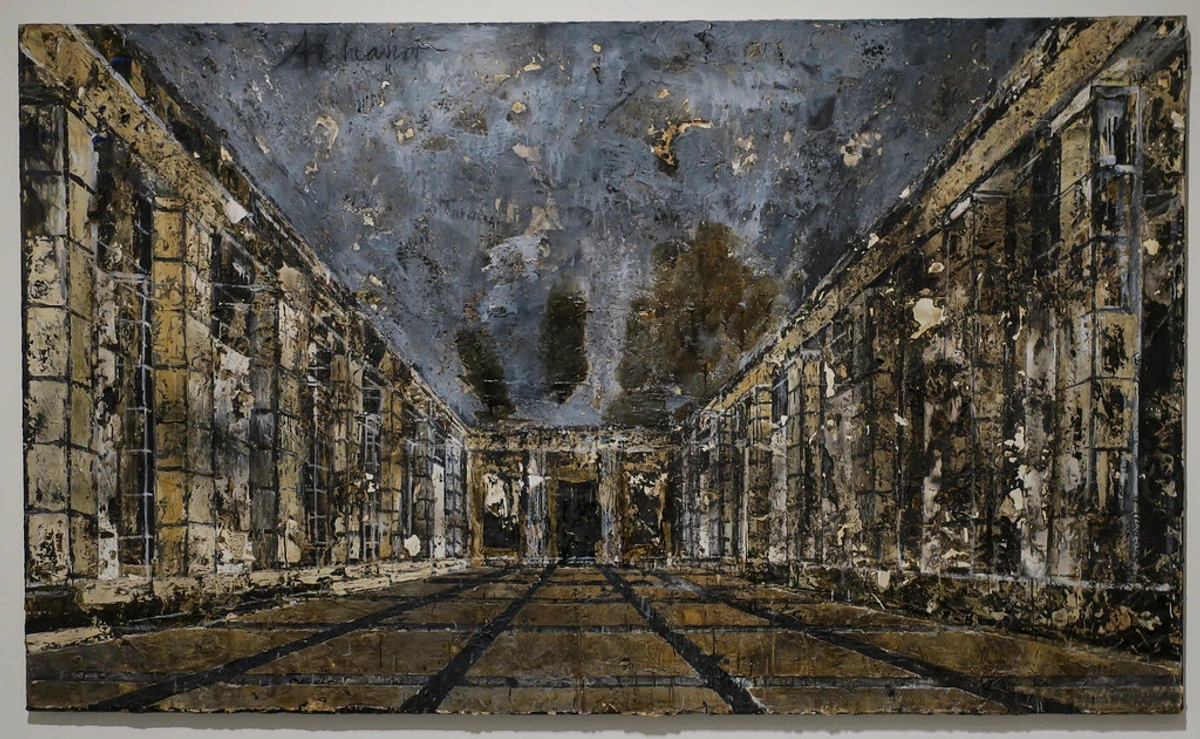
Finally, Alberti's greatest lesson isn't about geometry at all. It's his powerful argument for the intellectual dignity of art. He taught us that theory and practice are not enemies. That technique isn't just about manual skill; it's a tool for thinking. And that the artist's job—whether you're a Renaissance master or a contemporary painter—is not just to copy what you see, but to analyze it, understand it, and use that understanding to create a new world. This is the principle that connects Masaccio and Michelangelo to the conceptual artists of today. When an artist like Anselm Kiefer creates a monumental landscape, its power comes not just from its visual impact but from its dense layering of historical, philosophical, and material analysis. The work is a form of thought. This is Alberti's true, undying legacy: the idea that the artist is a critical thinker and a creator of knowledge, not just a skilled maker of beautiful objects. He gave art its theory, and in doing so, elevated it to a liberal art—a form of humanistic inquiry equal to poetry and philosophy.
This idea still resonates. When you see an artist today like Julie Mehretu creating intricate, large-scale abstract paintings, they aren't just intuitive gestures. They are deeply considered, researched, and built on a conceptual framework that is as rigorous as any mathematical proof. They show that the artist is a thinker, a philosopher of the visual. That's a legacy Alberti would have recognized immediately.
I guess that's why I finally came around to liking art theory. It's not a set of rules meant to fence you in. It's a conversation, one that started 600 years ago and is still going strong. Alberti was the one who kicked it all off, inviting us to peer through that little window he built and see the world, and ourselves, a little more clearly.
It's easy to look back and see the past as a fixed, dusty thing. But when you start to dig into a story like Alberti's, you realize just how fluid, how revolutionary, and how deeply human those moments of change really were. They weren't just painting pictures back then; they were inventing the modern way of seeing. And every time we pick up a camera or a brush, whether we realize it or not, we're continuing that same incredible conversation. Alberti's true genius wasn't just in giving artists a recipe for pictures that look real. His ultimate gift was a philosophy of art. He argued for an artist who was a thinker, and for a painting that could be a form of truth. He gave us the window, and in doing so, he taught us how to look through it—critically, thoughtfully, and with the profound understanding that every picture is also a proposition about the world.
Frequently Asked Questions (FAQ)
Is Alberti's system the only way to create a sense of depth in art?
Not at all. It is the most mathematically rigorous system for creating the illusion of depth from a single viewpoint, but it's just one tool in a vast toolbox. Artists across cultures and time periods have employed other highly effective methods. Vertical perspective (placing higher objects to signify distance) was prevalent in medieval art. Overlapping and atmospheric perspective (making distant objects fainter and bluer) are powerful intuitive tools. Many Asian art traditions also use shifting viewpoints and a "floating" perspective to guide the viewer's journey through a landscape. Alberti's system is powerful because of its internal consistency, not because it's the only valid approach to creating pictorial space.
I'm an artist, not a mathematician. Is learning classical perspective still relevant for my work?
That's an excellent question, and one I grappled with for years. My take is yes, absolutely, but maybe not in the way you think. You don't need to become a master surveyor. Even a basic understanding of how a vanishing point works gives you a powerful tool for manipulating a viewer's sense of space and focus. More importantly, what you're really learning is a system of visual thought. It’s a way of thinking about how objects relate to each other in space, which is invaluable whether you're painting a landscape or an abstract composition. It's a language; you don't have to speak it, but it's good to know the alphabet.
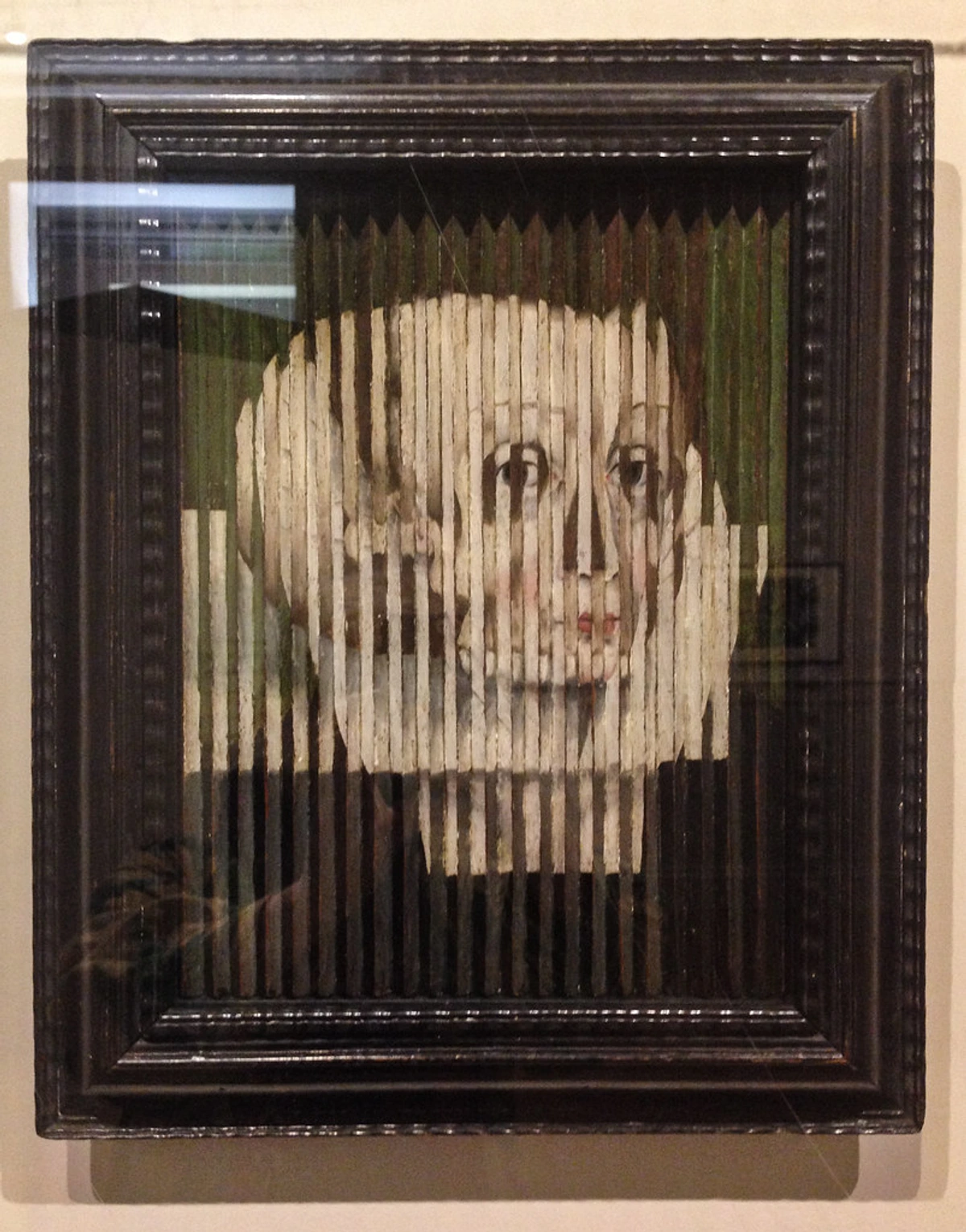
How did artists create a sense of depth before Alberti and linear perspective?
Great question! They used a whole toolkit of more intuitive, sophisticated, and often symbolic methods. Think of it like a children's drawing: objects higher up on the picture plane seem farther away. That's called vertical perspective, or 'piled perspective,' and it was the standard in medieval art. They would also use overlapping, where one figure is placed in front of another to show which is closer. Atmospheric perspective was also understood, where things in the distance are painted with less detail, lighter values, and bluer tones, something you can see beautifully used in some Chinese landscape paintings centuries before the Renaissance.
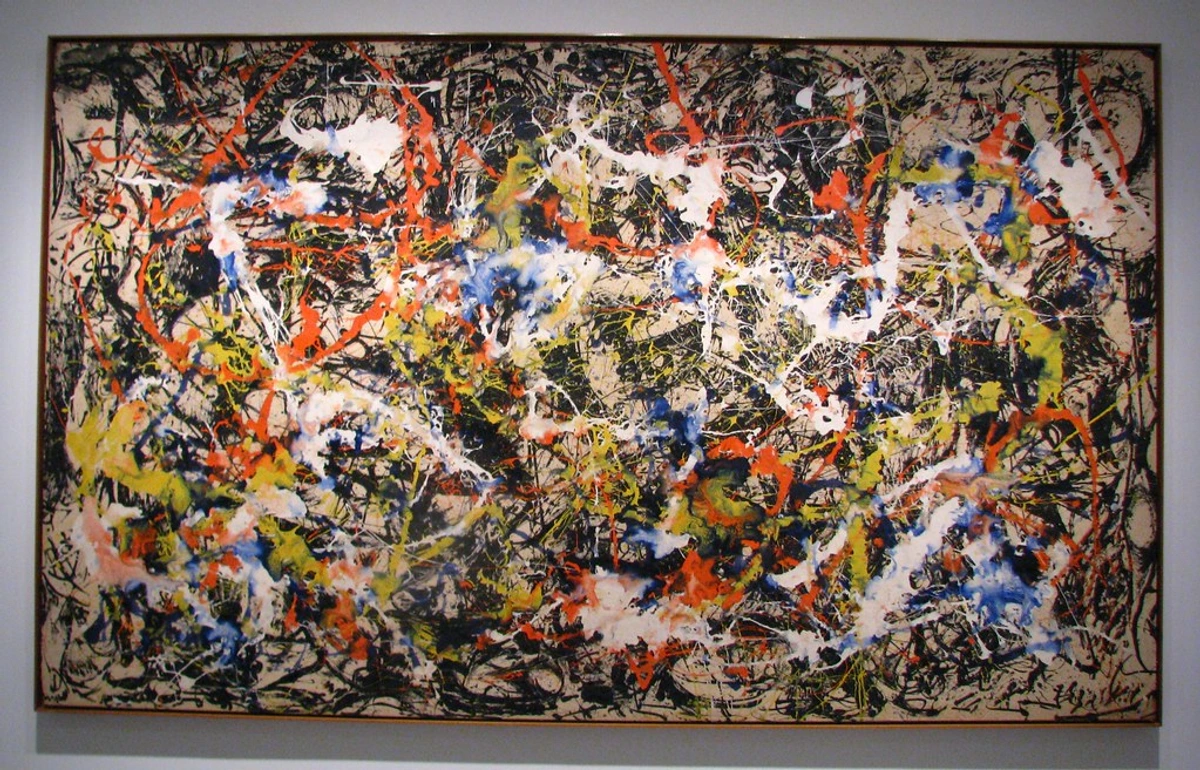
These methods could be incredibly poetic and expressive. Giotto, for instance, in his Scrovegni Chapel frescoes, uses architectural settings that tilt and flatten, not with mathematical precision, but to provide a stage that enhances the emotional weight and drama of his figures. The space was atmospheric, not architectural. Alberti's system was revolutionary because it offered a unified, mathematically consistent way to create a single, highly convincing illusion, locking the viewer and the artist into a fixed relationship with the painted world.
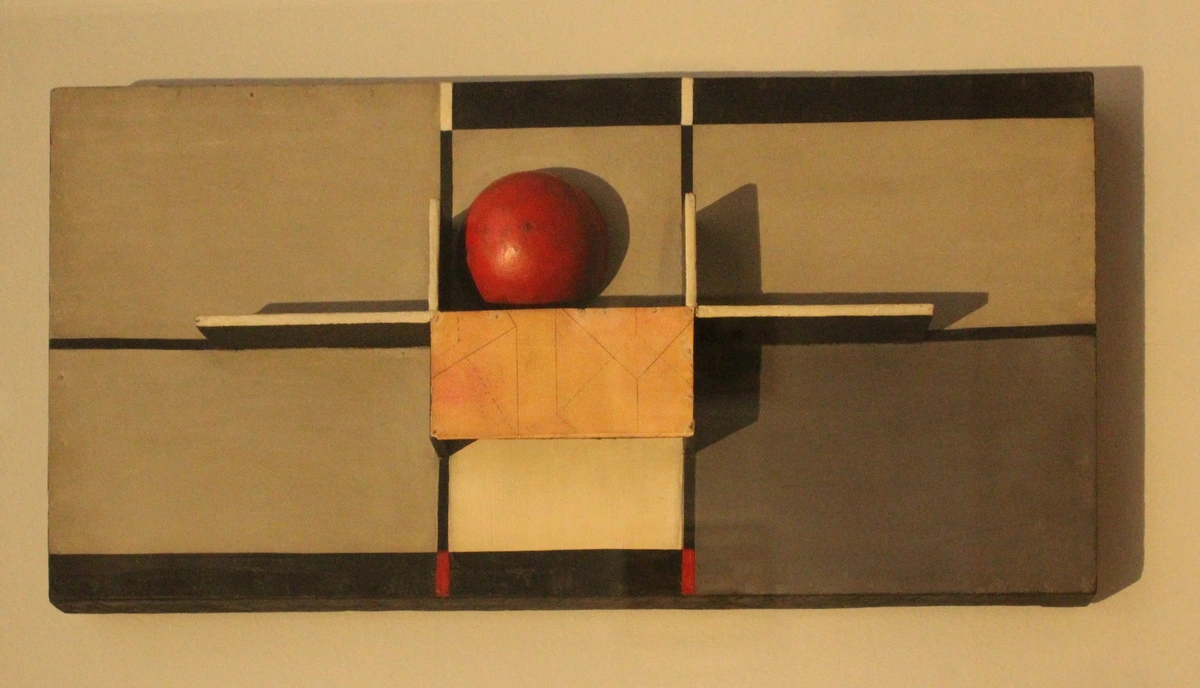
What does Alberti mean by 'historia'? Is it just the "story" of the painting?
It’s a much deeper concept than a simple story. For Alberti, an istoria (the Latin term) was the most important part of a painting. It's the grand, noble subject matter—a scene from history, mythology, or the Bible, for example. But it wasn't just about picking the right subject.
A good istoria had to be morally uplifting and emotionally powerful. The way the figures were arranged (the composition), their poses, and especially their facial expressions—what Alberti called the "movements of the soul"—were all crucial to bringing the story to life. It was the element that elevated painting from a craft to a form of philosophy. In many ways, it was the entire purpose of the painting. The technical mastery of perspective, light, and color and color theory was all in service of creating a compelling and moving istoria. It had to be dignified, varied, and abundant, demonstrating the artist's intellect and nobility of spirit.
Did Alberti invent linear perspective?
That's perhaps the most common and important question, and the answer is a bit tricky. He didn't invent it out of thin air. The architect Filippo Brunelleschi had already made experimental paintings demonstrating the principles a decade or so earlier. In fact, Brunelleschi famously painted a view of the Baptistery in Florence, using a peephole and a mirror to prove the mathematical accuracy of his constructed image. It was a sensation.
However, Brunelleschi never wrote his ideas down. He was an engineer and architect, not a theorist. Alberti was the one who observed what Brunelleschi and other artists were doing, figured out the underlying principles, and codified it all into a clear, teachable system that he laid out in his book, De Pictura. So, while he may not have been the very first to discover it, he was the one who created the theory—the philosophy—behind it and spread it across Europe. He provided the 'why' to go with the 'how,' making him the father of perspective theory as we know it.








I find the ‘Albertian window’ idea a bit restrictive. Isn’t there more to art than creating an illusion of reality?
You’ve hit on something crucial. You’re in excellent company, too. Alberti’s system was revolutionary, but it was also a product of its time—a time obsessed with reason, order, and humanism. The idea that all great art must function as a realistic “window” became so dominant for centuries that it ended up being a straightjacket for a lot of artists. And you're right, there's a world of artistic expression that exists outside that frame. Think about the art of the Middle Ages, with its flat, gold-leaf backgrounds that signify a divine, eternal realm rather than a physical one. Or the expressive distortions of Romanesque sculptures, where the spiritual intensity of the figure is far more important than its anatomical accuracy. Even in the Renaissance, the Venetian painters like Titian prioritized color and atmospheric light (colorito) over the strict linear draftsmanship (disegno) championed by Alberti and his Florentine followers. Your question taps into the central debate that animates the history of art: is a painting a window into a world, or is it a flat surface to be decorated? Alberti gave the definitive answer for five centuries; modern art was born the moment painters dared to answer the question differently.
It took the avant-garde movements of the late 19th and early 20th centuries to break free from it and explore other ways of seeing and representing the world. Think about Impressionism—it shifted the focus from faithfully rendering a scene to capturing the fleeting, subjective sensation of light and atmosphere. And Cubism, with its multiple viewpoints, is a direct intellectual and visual rebellion against the single, fixed Albertian view. So, your feeling is spot on. Appreciating Alberti means understanding both the profound power of his system and its inherent limitations. He gave us a powerful framework, but the greatest art often comes from knowing precisely when and how to break the rules.