Beyond 'It Speaks to Me': A Painter's Guide to Thinking About Art
Dive beyond 'I like what I like' into a practical exploration of art theory. Learn to engage with art on a deeper intellectual level, understand core concepts, and find unexpected connections that enrich your experience.

Beyond 'It Speaks to Me': A Painter's Guide to Thinking About Art
I have to confess something. For years, the phrase "art theory" made me want to run for the hills. I pictured dusty textbooks, impenetrable jargon, and academics arguing over concepts that had nothing to do with the visceral, gut-level reaction I have to a splash of color or a powerful composition. And honestly? I thought it might ruin the magic.
Maybe you've felt that way too. You stand in front of a painting and have a feeling, an intuition, but you feel pressured to have an intellectual reason for it. It’s as if your genuine response isn't quite enough. I’m here to tell you that the goal isn’t to replace that raw feeling with a lecture; it’s to equip you with a deeper framework so you can have a richer, more confident conversation with the art you encounter. Think of it less like learning a secret code and more like finally getting the inside jokes in a movie you already love. It’s less about being an expert and more about being in on the conversation.
What Are We Actually Talking About? Deconstructing 'Art Theory'
So, when we talk about "art theory," what are we really getting into? It's not one single thing. It's a collection of different lenses we can use to look at, think about, and understand art. These lenses help us move beyond simply identifying what's in the painting (a boat, a person, an abstract shape) and start asking why it's there, how it's arranged, and what the artist might be trying to communicate through those choices.
On a fundamental level, it breaks down into a few key areas. First, there’s the pure physical stuff: the semiotics of the piece. This is the formal language of art—the study of signs and symbols. It covers:
- Formal Elements: Color, line, shape, texture, and space. Think of these as the artist's basic vocabulary.
- Composition: How those elements are arranged on the canvas. This includes concepts like balance, contrast, rhythm, and movement. Is it chaotic? Serene? Does your eye get pulled in one specific direction?
- Symbolism: What do the things in the image represent? A skull might symbolize mortality (a classic memento mori), a dove might symbolize peace, and a wilted flower might symbolize the fleeting nature of life.
Beyond the physical object, art theory also provides frameworks and critical theories to interpret its meaning. This is where we connect the dots between the painting and the world it came from. We're talking about big-picture perspectives like:
- Feminist Theory: How does the art reflect or challenge gender roles and power dynamics? Who is being depicted, and who is doing the depicting?
- Marxist Theory: How does the art relate to class, labor, and economic systems? Is it a critique of wealth, or is it a product of it?
- Postcolonial Theory: How does the work engage with the legacy of colonialism and imperialism? Does it challenge or perpetuate certain cultural stereotypes?
These aren't just academic exercises. They are tools to help you see a piece of art not as an isolated object, but as a statement made by a person at a specific time and place, often in conversation with (or in rebellion against) the society they lived in. They allow you, the viewer, to become an active participant in meaning-making, rather than a passive recipient of a fixed message.
A Dialectic Dialogue: How Art and Theory Build Off Each Other
One of the most fascinating things about art history is how it progresses. It's rarely a straight line. Instead, it's more like a conversation across generations, or what philosophers might call a dialectic. You don't need to get bogged down in philosophical terms here; the concept is simple and powerful.
An artistic idea (a thesis) emerges—let's say, the rigid, formal rules of Classical painting. In response, a new movement (an antithesis) appears that deliberately breaks those rules—perhaps the spontaneous, light-obsessed rebellion of Impressionism. The tension and conflict between these two ideas then give birth to something entirely new and more complex (a synthesis), like Post-Impressionism, which took the best of both worlds.
This isn't just ancient history. Consider the Abstract Expressionist movement that dominated New York after World War II. Artists like Jackson Pollock and Mark Rothko were reacting against the rise of fascism. For them, creating overtly political or representational art felt inadequate, maybe even hypocritical. The horror of the world couldn't be captured in a simple picture. Their response was to turn inwards, expressing profound, universal emotions through pure color, gesture, and scale.
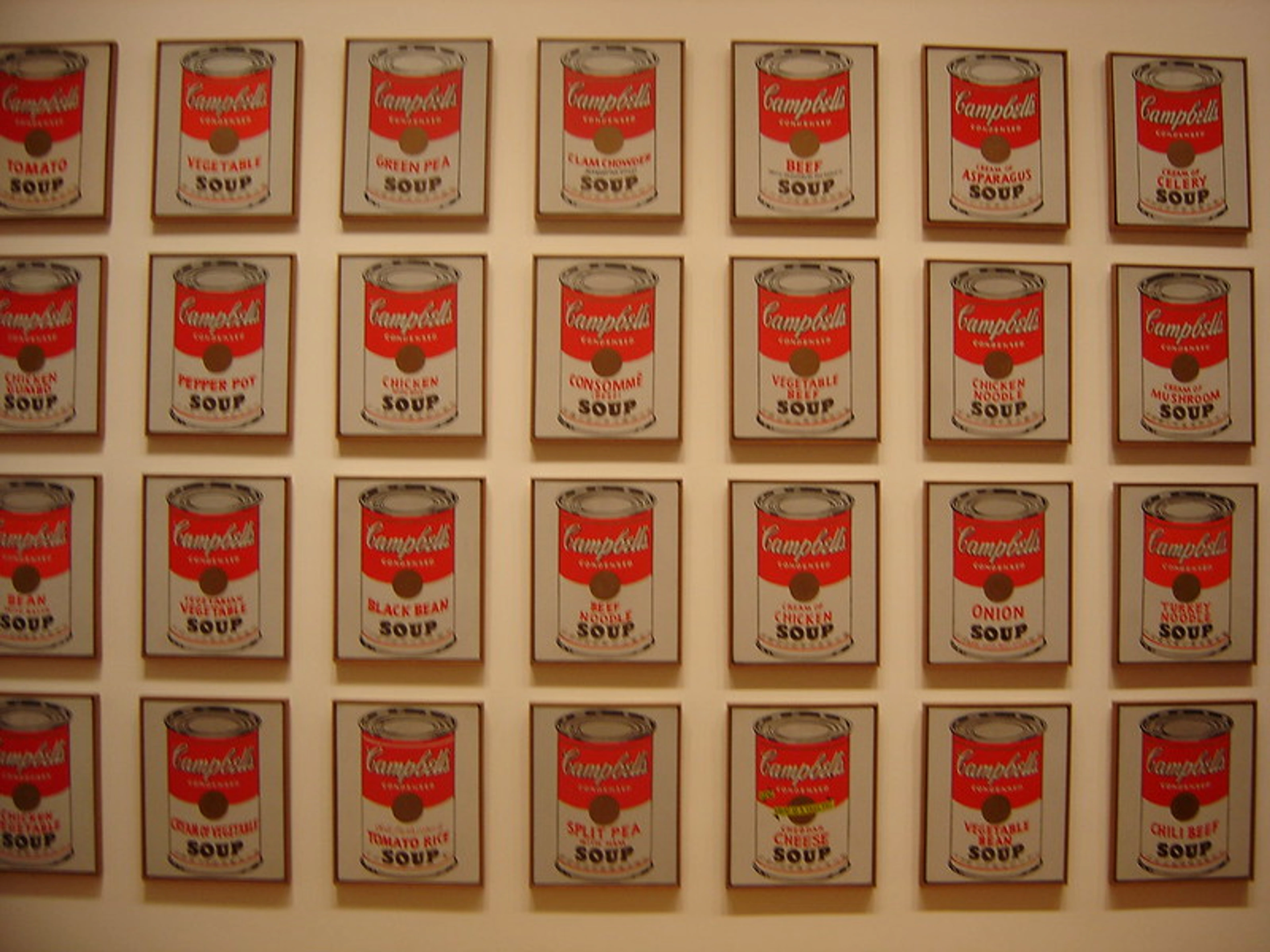
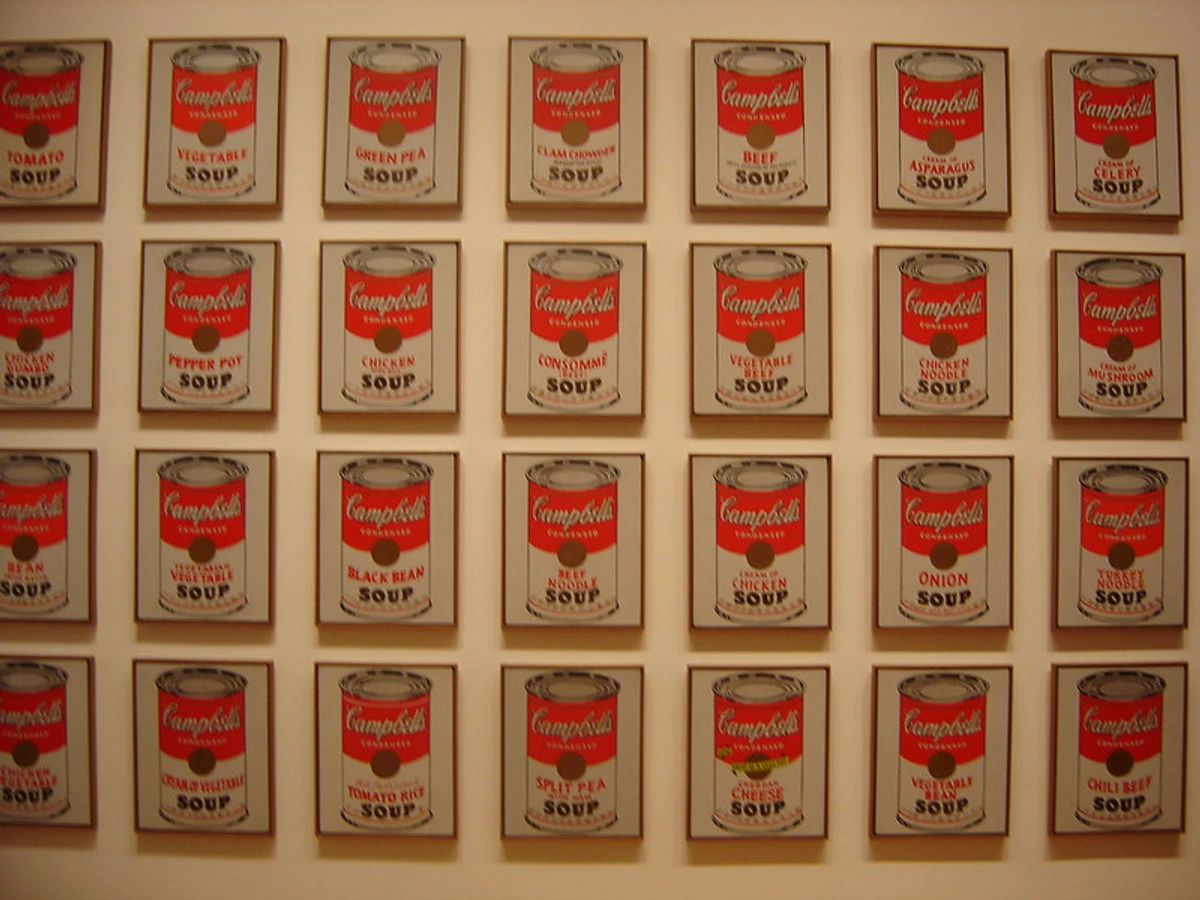
And what came next? Pop Art. Artists like Andy Warhol and Roy Lichtenstein looked at the soul-searching intensity of Abstract Expressionism and said, "Enough already." They turned their gaze outward to the commercial world of advertising, celebrity, and consumer culture. By painting a Campbell's Soup can, Warhol wasn't just making a picture of a soup can; he was launching a critique (and a celebration) of the new American reality. One movement was a direct, dialectical conversation with the one that came before it. Once you start seeing art history as this kind of argument, it becomes infinitely more engaging.
So What? Why This Actually Matters When You Look at a Painting
This is the part I used to struggle with. "That's a nice story," I'd think, "but how does knowing about dialectics help me enjoy a Rothko more?" The answer, I've learned, is that it changes the entire context of what you're looking at.
When you stand in front of a Rothko painting, you can appreciate it on a purely aesthetic level—the way the colors vibrate, the way they seem to float. But when you understand it as a profound, almost desperate attempt to find a spiritual and emotional truth after the horror of a world war, the experience deepens monumentally. The vast scale isn't just "big"; it's immersive. The fuzzy rectangles aren't just shapes; they're supposed to be windows into a deeper emotional state. You're no longer just seeing a painting; you're witnessing an argument, a question, and a deeply human statement.
The same goes for Pop Art. Without context, a Warhol print is just a celebrity portrait. With it, you're looking at a sharp, ironic, and complex commentary on what it means to be famous, what art can be, and the culture of mass production. Theory doesn't replace feeling; it gives your feeling a richer soil to grow in.
From a Painter's Perspective: The Things We Actually Wrestle With
As a painter, I can tell you that we aren't usually sitting at our easels thinking, "Now I will apply a Marxist critique to this canvas." The process is more intuitive, more of a struggle between feeling and thought, a push-and-pull between what the mind knows and what the hand discovers. Every piece I create is a series of choices, a solving of problems, both technical and conceptual. Every time I make a mark, I'm in a dialogue with the history of painting.
If I lay down a bold, vibrant color, I'm building on the legacy of the Fauves, who decided that realism wasn't their goal—emotional impact was. If I let a brushstroke stay visible and raw, I'm channeling the spirit of the Impressionists, who taught us that the artist's hand is a valid part of the story. If I abstract a familiar object, I'm following a thread that began with Cézanne and exploded with Picasso and Braque.
These aren't just historical footnotes to me; they are my vocabulary. I'm not just painting a picture; I'm writing a sentence in a language that has been developed over centuries. Understanding that language allows me to be more deliberate, more expressive, and frankly, to make better work. It helps me know when to follow a rule and, more importantly, when to break it to create something that feels true.
Take my own work—those bursts of color you'll see in my collections. They aren't random. Each choice is an attempt to solve a problem: how to make joy feel tangible, how to give anxiety a visual shape, how to find balance without stillness. Theory gives me the framework to tackle those problems with intention.
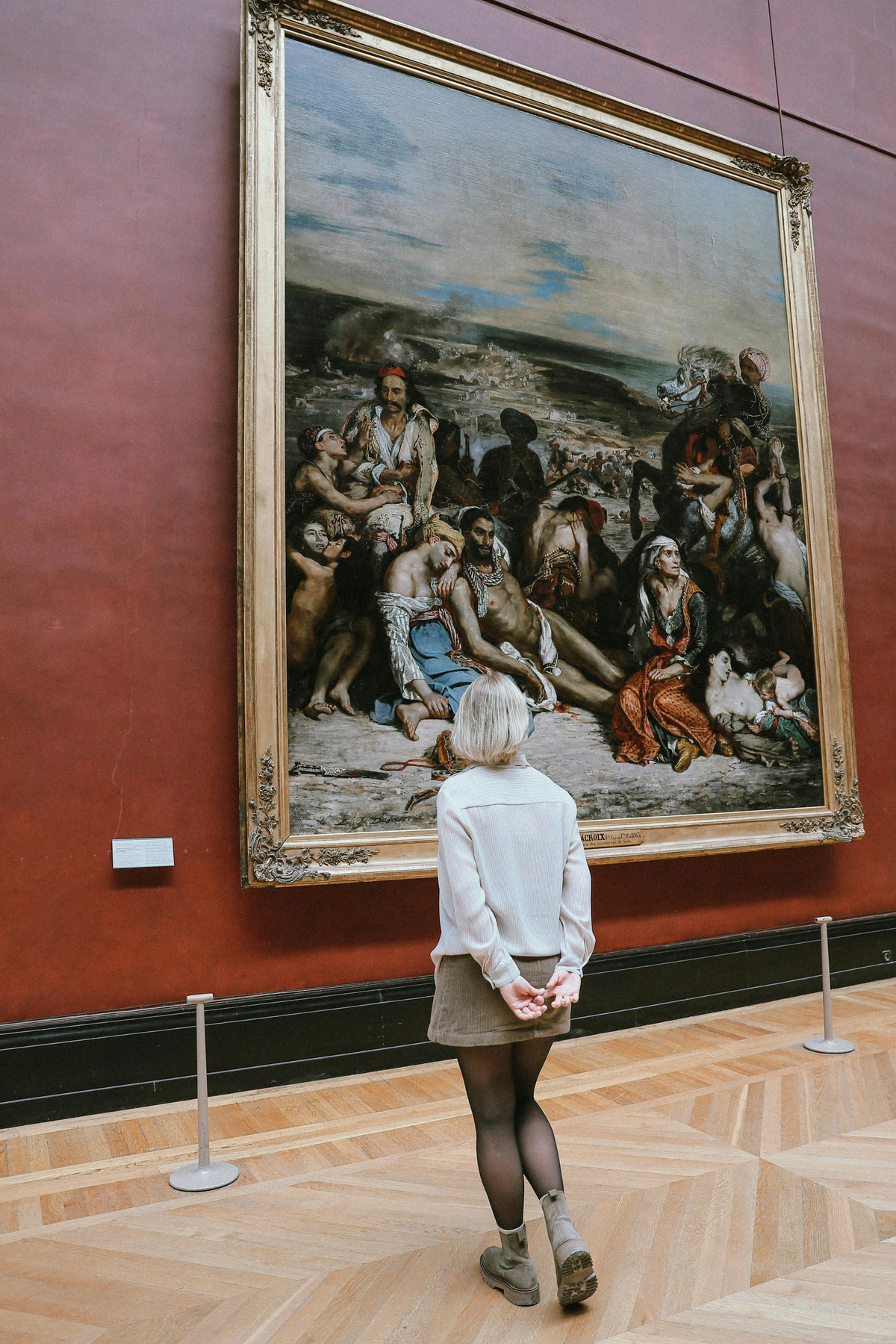
You, as a viewer, don't need to know the names of all the movements. But knowing that this rich, complex history exists empowers you to ask more interesting questions. The next time you see a piece of art, don't just ask, "Do I like it?" Ask yourself:
- What is this a reaction to?
- What problem was the artist trying to solve?
- What choices did they make to create this specific feeling?
These are the questions that turn a glance into a genuine encounter.
Your Toolkit: How to Start Engaging with Art... And Maybe Buying It
I'm not going to tell you that you need a degree to appreciate art. You don't. But having a few basic ideas in mind can transform a trip to a gallery from a passive walk into an active discovery. Think of it as building a small mental toolkit.
- Describe, Don't Judge (Yet): Before you decide if you like something, just describe it to yourself. This simple act of detached observation is incredibly difficult but powerful. What colors are present? Is the paint applied thickly or thinly? Are the lines straight or curved, rigid or flowing? Simply cataloging what's in front of you can be a surprisingly deep exercise. It forces you to slow down and truly see.
- Who Made It, and When? A little context goes a long way. Was this painted in 1890 or 1990? Knowing the era can instantly give you a framework for understanding it. A painting of a haystack in 1890 was likely part of an artistic revolution (hello, Monet). A painting of a haystack in 1990 is probably a conscious reference to, or a critique of, that history.
- Look for the 'Why': This is the fun part. Why did the artist use that jarring shade of pink? Why is the figure placed off-center? Why is that area of the canvas left almost bare? These "why" questions are the beginning of your own personal theory of the piece. You're becoming a detective, looking for clues left by the artist.
- Feel the Materials: Don't forget the physical nature of the work. Is it an oil painting with layers of luminous glaze? A raw, gestural acrylic? A cool, flat print? The material itself tells a story about process, permanence, and the artist's intent.
As you start engaging with art on this level, you'll naturally begin to form your own tastes. You won't just like a piece; you'll appreciate the intelligence behind it, the problem it solves, the conversation it's a part of. And when you find an artist whose work consistently speaks to you, whose visual and intellectual language you connect with, that's when the real magic happens. Your home or office becomes a stage for these ongoing dialogues, curated by you.
That's the moment you might start thinking about bringing a piece of that conversation into your own home. It’s no longer just a decoration; it's a connection to an idea, a feeling, and a dialogue that can continue for years. Speaking of which, you’re welcome to explore the collections I’ve been working on over on my /buy page.
Frequently Asked Questions
Isn't 'art theory' just a bunch of pretentious nonsense invented to make simple art seem more complicated? I used to think exactly that! And the truth is, sometimes it can be. Fancy words can be used to obscure meaning rather than reveal it. But at its best, art theory isn't about gatekeeping. It's a set of tools and a shared vocabulary that helps us articulate what we’re seeing and feeling. It’s the difference between saying a song is "good" and being able to talk about the rhythm, the chord progression, or the lyrics. It doesn't replace your gut feeling; it gives you a language to describe it.
Does 'understanding' art take away from the joy of just looking at it? That was my biggest fear, and I can tell you from experience the opposite is true. It’s like the difference between listening to a song in a language you don't understand versus one you do. You can enjoy the melody either way, but understanding the lyrics adds a whole new layer of meaning and emotion. Knowing the context, the history, and the choices an artist made adds depth. It doesn’t shut down your emotional response; it gives it more pathways to travel.
I'm not an artist. Why does this matter to me as just a viewer or collector? Because it gives you power and confidence. It helps you trust your own taste. When you understand some of the ideas an artist is playing with, you can decide for yourself if you think they’re successful. It helps you articulate why you’re drawn to a certain piece, which is incredibly useful if you’re thinking about buying art. It transforms you from a passive consumer into an active participant in the artistic conversation. And in my opinion, the most interesting art is the kind that invites you to participate. It leaves a little space for you to step inside and complete the circuit.
The View From Here
So, what's the point of all this intellectual rigor when it comes to art? For me, it’s about invitation and connection. Knowing theory doesn't give you the "correct" answer; it gives you the confidence to have your own answer. It encourages you to see interpretation not as a puzzle to be solved, but as a garden to be explored. Standing before a canvas, you're invited to parse its signs, feel its material logic, place it in its dialectical argument, and finally, decide what it adds to your inner world. It's about turning an instinct into an insight.


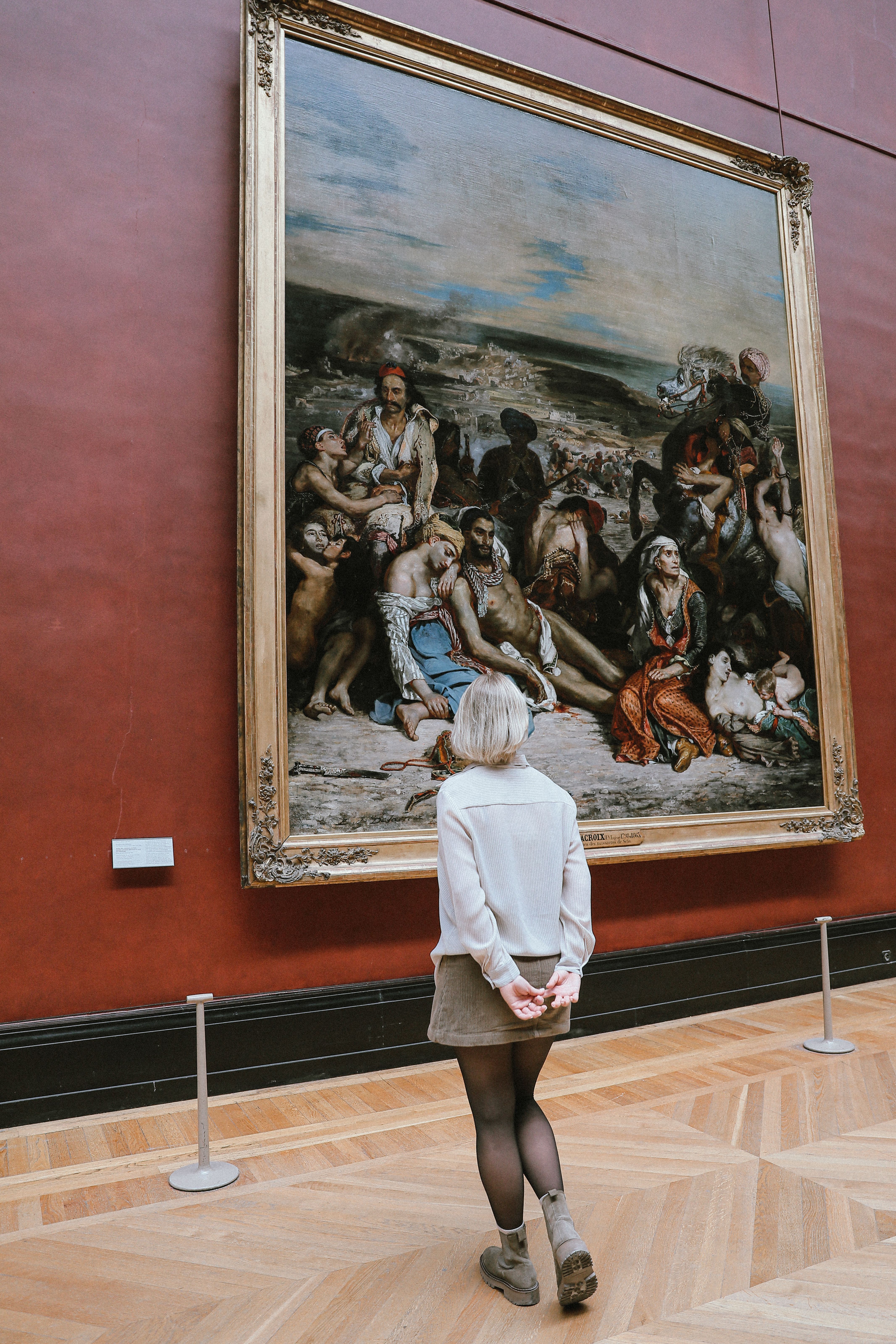

Whether you're looking at a centuries-old masterpiece in the /den-bosch-museum or a vibrant new canvas fresh from a studio, you now have the tools to not just see the object, but to listen to what it's trying to say. You can appreciate the hand of the artist, the weight of history, and the thrill of a new idea. And in doing so, you become part of the conversation—a story that continues every time someone stops to really look.