The Mind Behind the Canvas: Why Leon Battista Alberti is Still the Artist's Best Friend
The product is a comprehensive, authoritative, and engaging website article on Renaissance polymath Leon Battista Alberti, written first in English and then translated into Dutch in Markdown (MDX) format. The content is tailored for an artist's website (zenmuseum.com), incorporating subtle internal links where relevant. It aims to be the ultimate resource on Alberti, employing a unique, relatable, and human-centric narrative voice to explore his life, work, and lasting impact on art, architecture, and humanism.

The Mind Behind the Canvas: Why Leon Battista Alberti is Still the Artist's Best Friend
You're staring at a blank canvas, paralyzed by the possibilities. Should the composition be dramatic? How do you even use perspective? Is this foot anatomically correct? If you've ever felt this way, you're in good company. It turns out, an Italian polymath from the 15th century wrote the perfect guide for you. He wasn't just an artist; he was the ultimate artist's coach, and his name was Leon Battista Alberti.

I think we often picture the Renaissance as a time of effortless genius, where masterpieces simply appeared. But that’s a myth. The real story is one of obsessive problem-solving, and Alberti was the mastermind who codified the solutions. He gave artists a system, a set of rules to follow so they could then break them with purpose. He was the one who asked, “What if art could be a window into a perfect, rational world?” And then he wrote the instruction manual on how to build that window.

This isn't just dry theory. It’s a radical shift in how we see the world, and it started with one man who decided to explain the unexplainable.
The Polymath's Playbook: Who Was Leon Battista Alberti?
Let’s get this out of the way: calling Leon Battista Alberti (1404-1472) a 'Renaissance artist' is like calling a smartphone 'a phone.' It's technically true but misses the point entirely. This was a man who got into a horse-riding accident and responded by writing a Latin comedy so sharp it was confused for a long-lost Roman play. He was a humanist, an architect, a poet, a cryptographer, a mathematician, and an art theorist who fundamentally changed the course of Western art. In short, he was a professional deep-thinker.
His childhood reads like a plot from a historical novel. Born into a wealthy Florentine family that had been exiled and stripped of its assets, Alberti spent his early years navigating the complex political landscapes of Venice, Padua, and Bologna. This itinerant life gave him a unique perspective, allowing him to absorb the diverse intellectual currents of his time without being tethered to a single city-state's dogma. He studied law at the University of Bologna, a practical choice for a disenfranchised nobleman, but his true passion lay in the rediscovered texts of antiquity.
Imagine being a young man in the early 1400s and suddenly getting your hands on the complete works of Vitruvius, the Roman architect, or the mathematical treatises of Euclid. For most, it would be a historical curiosity. For Alberti, it was a revelation. He saw in these ancient writings not just relics, but a lost operating system for the world—a set of principles based on reason, geometry, and harmony that could be reapplied to the messy present. This wasn't about nostalgia; it was about revolution disguised as rediscovery.
Born in Genoa to a wealthy Florentine family in exile, Alberti spent his life trying to reconcile the dusty old books of the ancients with the vibrant, messy reality of his own time. He didn’t just want to imitate the Romans; he wanted to understand their principles and apply them to create something new. And for artists, the result of this quest was nothing short of a revolution. This wasn't just about art; it was about elevating the status of the artist from a mere artisan to a respected intellectual.
His masterwork, a slim volume titled De Pictura (On Painting), published in 1435, was the first of its kind. It wasn't a patron's commission or a guild's secret; it was a public declaration of art's intellectual power, written in the vernacular for anyone to read. He argued that painting wasn't just a manual craft; it was a liberal art, a discipline on par with poetry and philosophy. This was a radical statement. In one stroke, Alberti was trying to lift painting from the workshop floor to the scholar's study.
The First User's Manual for Art: Demystifying the Craft
Before Alberti, learning to be an artist was a process shrouded in workshop secrecy. Knowledge was passed from master to apprentice, a guarded craft. There were no textbooks, no principles written down for all to see. If you wanted to understand color, you weren't reading about it; you were grinding pigments. If you wanted perspective, you were copying the master, learning by rote.
Think about that for a second. Imagine trying to learn complex software development today if the only method was watching over someone's shoulder in complete silence. That was the artist's world. Skills were jealously guarded trade secrets, often locked within family workshops or powerful guilds. An apprentice might spend years just preparing panels and grinding pigments before ever being allowed to touch a brush to a significant part of a painting. The "why" behind the "how" was rarely, if ever, explained. It was a world of rote learning and blind imitation.
Into this guild-dominated world, Alberti dropped a bombshell. His book, De Pictura, wasn't just a collection of techniques; it was the first comprehensive blueprint that described painting as a rational, intellectual pursuit. He was essentially democratizing the secret knowledge of the masters, codifying practices that had been passed down through generations into a clear, systematic framework anyone with a sharp mind could learn.
Then along came Alberti with his De Pictura, a book that effectively said, "Let's open the windows and let the light in." It was the first time anyone had systematically broken down the act of painting into a set of learnable, intellectual principles. He proposed a revolutionary idea: genius wasn't a mysterious, inborn gift. It was the result of diligent study, disciplined application, and mastering a few key concepts. He wasn't trying to stamp out creativity; far from it. He was providing a stable foundation so artists could build higher, take more daring risks, and ground their wildest ideas in the observable world. He gave them the tools to make their visions feel undeniably real.

This change in thinking can't be overstated. By framing painting as a science with rules and principles, Alberti gave artists a new language to discuss and critique their work. A painter could now justify their choices based on reason, not just tradition. They could engage in dialogue with poets and philosophers as intellectual equals, arguing about the merits of a composition or the emotional power of a scene using a shared vocabulary. Alberti's project was, at its heart, an attempt to make artists self-aware. He wanted them to become conscious of the mechanics of their own genius.
The Three Pillars of Alberti's System
In De Pictura, Alberti structured artistic creation into three fundamental pillars. These weren't just ideas; they were a practical workflow. Think of them not as rigid laws, but as the fundamental axes of creativity. They outline the journey from seeing the world, to organizing it, to finally breathing light and life into it. It’s a surprisingly modern sensibility, reminiscent of how a UX designer might approach building an interface: first, wireframe the structure; second, define the user flow and interactions; and third, apply the visual design, textures, and lighting. He set up a pipeline for turning chaos into clarity.
1. Circumscription (Drawing the Outline)
Think of this as defining the edges of things. How do you capture the exact curve of a shoulder, or the subtle angle of a nose, without guessing? Alberti's answer was both simple and brilliant: use a veil.
This was a transparent grid, often a net with colored threads, stretched in a frame and placed between the artist and the subject. By looking through this grid, the world was broken down into manageable coordinates. The artist would have a similarly gridded drawing surface, allowing forms to be transferred with mathematical precision. It transformed the overwhelming complexity of reality into a series of small, solvable problems.
The technique offered a simple promise for any terrified artist: you don't need to hold the whole world in your head at once. Just focus on one square at a time. It demystified the process, turning observation into a repeatable skill. This idea resonates perfectly with contemporary guides that help readers analyze paintings and break down visual information systematically.
But it's more than just a crutch for beginners; it's a fundamental shift in mindset. The veil represents objectivity. It forces the artist to relinquish assumptions about what they think something looks like, and instead forces them to record exactly what is there. It's the difference between drawing the idea of a hand and drawing the specific, unique hand in front of you. This insistence on objective observation is what separates a generic figure study from the electrifyingly real figures in a Masaccio fresco. It's the foundation upon which all realistic art is built.
2. Composition (Arranging the Surfaces) This is where storytelling begins. For Alberti, the ultimate goal was the istoria—the grand, multi-figure narrative scene that stirs the soul. This wasn't just any scene; it was the pinnacle of artistic ambition, capable of moving viewers with its drama, emotion, and moral power. Think of a film director blocking a crucial scene, ensuring every actor's position and expression contributes to the narrative. That was Alberti's vision for painting.
He believed the most powerful compositions were those where every figure's pose and gesture worked in harmony to express the emotion of the moment. He advised artists to observe people in everyday life: how their bodies contort in grief, relax in joy, or tense with anger. Then, they should translate these observations into their work. He wrote about a "harmony of parts," a principle where nothing could be added or taken away without diminishing the whole—a concept that, by the way, applies directly to appreciating sophisticated work like that of Max Beckmann.
3. Reception of Light (Capturing Illumination) Light, for Alberti, was the soul of the painting. It defines form, reveals color, and creates mood. He taught artists to think in terms of four fundamental elements: light, shadow, highlight, and reflected light. This moved painting from simple outline-and-fill to a dynamic modeling of form.
His most revolutionary concept for achieving this was chiaroscuro, the dramatic interplay of light and dark. Think of it as controlling the spotlight on a stage. By plunging some areas into deep shadow and bathing others in brilliant light, an artist could create immense drama and sculptural volume, making figures look as if they could step right out of the frame.
But Alberti didn't stop there. He also articulated the principle of color perspective (or atmospheric perspective). He noted that distant objects appear less distinct and bluer due to the atmosphere, a critical tool for creating depth and a concept that the Sienese master Sassetta used to remarkable effect. For a modern artist exploring abstraction, these principles of light and color interaction remain as powerful today as they were in the Renaissance.
The Artist as Architect: Alberti's Enduring Influence
Alberti's genius didn't stop at the easel. He approached painting as if he were designing a building. He saw linear perspective not just as a trick, but as the fundamental architecture of visual space. He described a method where parallel lines converge at a vanishing point on a horizon line, a concept that gave art an unprecedented sense of mathematical order and depth. This wasn't just observation; it was geometric construction.

Here's the fascinating part: Alberti wasn't the first to think about perspective. Other early Renaissance artists like Brunelleschi and Masaccio were already experimenting with it. But Alberti was the one who wrote it down, who turned a brilliant workshop trick into a communicable, logical system. He gave it a name: costruzione legittima, the "legitimate construction." By giving it a name and a set of rules, he transformed it from an intuitive practice into a respectable science. It became the mathematical proof that a painting was a rational illusion. This system became so foundational that for centuries, it was the default way of understanding pictorial space in Western art.
His ideas on composition are echoed in the clean lines and harmonic proportions of his architectural masterpieces. Buildings like the Tempio Malatestiano in Rimini or the facade of Santa Maria Novella in Florence were conceived with the same principles of harmony and balance that he applied to a painting.
This concept of unified principles is what made him such a quintessential Renaissance figure. He saw the world as a web of interconnected, rational laws. Proportion was everything. He took inspiration from Vitruvius, advocating for musical ratios (like 1:2, 2:3, 3:4) to govern building dimensions, believing these proportions were inherently pleasing to the human soul. For him, painting, architecture, and music were simply different expressions of the same universal laws of harmony.
I think this is why his ideas feel so modern. He wasn't just an expert in one field; he was a systems thinker. He understood that the fundamental principles of good design—balance, hierarchy, rhythm, harmony—are universal. They apply whether you're composing a painting, designing a facade, or, as we'll see, even creating a digital artwork.

From Renaissance Mansions to Modern Canvases: Alberti in the 21st Century
If you think these 15th-century ideas are just historical footnotes, look a little closer. Every time you use a grid to sketch a complex cityscape, you're invoking Alberti's spirit. When a digital artist in Photoshop uses layers and lighting effects to create mood, they're following his lead. The technology has changed, but the fundamental questions remain the same: How do we represent three-dimensional reality on a two-dimensional surface? How do we organize visual information to tell a compelling story? How do we manipulate light to create emotion?
Alberti's core ideas about circumscription, composition, and the reception of light have seamlessly translated into the digital realm. Consider how a contemporary artist might begin a piece. Instead of a physical veil, we have software grids, guides, and the ability to zoom in infinitely on a single pixel. Composition happens on layers, allowing artists to move elements around with a freedom Alberti could never have imagined, yet the goal is the same as his istoria: to arrange the elements for maximum narrative and emotional impact.
I see a direct line from Alberti to the work of an abstract painter today. While they may not be painting a biblical scene, they are still wrestling with composition, light, and color. Understanding these foundational principles is crucial, whether you're creating a vibrant abstract piece or trying to get a handle on demystifying abstract art.
Let me take that a step further. The move from figurative to abstract art might seem like a radical break from Alberti's principles, but in many ways, it's a fulfillment of them. Artists like Piet Mondrian or Kazimir Malevich dispensed with the subject entirely to focus exclusively on Alberti's core components: line, form, and color. They are, in a sense, the ultimate Albertians, creating art that is pure geometrical composition. They took his underlying architectural principles and stripped them down to their bare essence.

Think about it. An abstract artist doesn't ask, "Does this look like a tree?" They ask, "Do these shapes create a sense of balance? Does this color convey the energy I feel? Is there a rhythm to these lines?" These are questions of composition and harmony that would have been deeply familiar to Alberti. He gave us the grammar of visual language; modern art simply started writing poetry with it.
His core idea—that art needs a rational, imaginative foundation—is more relevant than ever. In a world saturated with digital imagery, the principles of strong composition and controlled light are what separate a powerful visual statement from mere background noise. The rules haven't changed; the tools have.
It's easy to dismiss formal training and theory when you can find thousands of free tutorials online. But this is a trap. Too many artists learn a specific technique—how to paint eyes, how to render fur—without ever learning the underlying principles that make those techniques effective. It's like learning a few words of a language by rote without understanding the grammar. You can repeat the phrases, but you can't express a new thought. Alberti provides that grammar. He gives artists the framework to solve problems they've never encountered before by understanding the fundamental mechanisms of visual representation.
Essential Albertian Exercises for the Modern Artist
Okay, enough theory. How do you actually use this 15th-century playbook? Let's translate Alberti's ideas into a set of practical, hands-on exercises you can do today, regardless of your style or medium. These aren't just drills; they're ways of training your brain to see the world through a more structured, analytical lens.
Exercise 1: The Modern Veil (Digital and Physical)
The Goal: To train your ability for objective observation.
- Digitally: Open a photo of a complex subject (like a crumpled piece of paper, a hand, or a building) in Photoshop, Procreate, or any other editing app. Create a grid layer on top of it. Now, on a separate layer, draw what you see, focusing on one square at a time. The goal isn't to be perfect, but to force your hand to record only what is in each square, ignoring the overall image. It's a powerful way to break down intimidating subjects.
- Physically: Tape a sheet of clear plastic or a cut-open plastic sleeve to a picture frame. Use a dry-erase marker to draw a grid on it. Place it between you and a still life you've set up. Now, draw what you see in each square on your paper, which should also have a matching grid lightly drawn on it.
Why it works: This is pure Albertian circumscription. It forces you out of your "symbol" brain (the one that draws a generic eye) and into your "observation" brain (the one that draws that particular eye).
Exercise 2: The Emotional Grid (Compositional Focus)
The Goal: To move beyond static compositions and think about narrative and emotional impact.
Create a simple still life with three diverse objects. Now, create three small thumbnail sketches. For each one, assign a primary emotion:
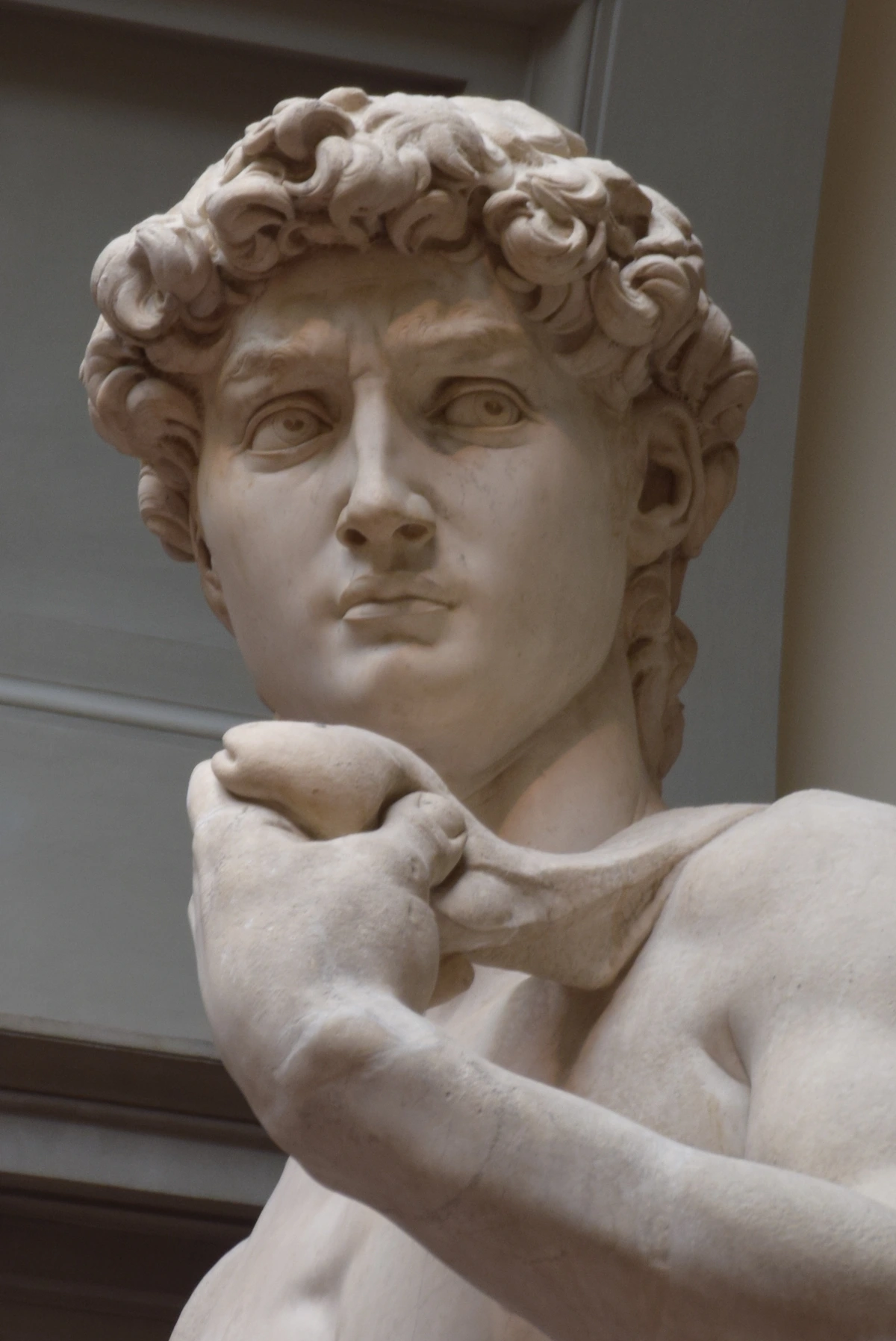
- Awe / Majesty: Arrange the objects vertically, allowing white space below to make them feel large and monumental. Use dramatic, high-contrast lighting in your mind's eye.
- Intimacy / Tenderness: Bring the objects very close together, perhaps touching or overlapping slightly. Imagine a soft, diffused light source coming from the side.
- Conflict / Tension: Place the objects far apart, perhaps with one object isolated from the other two. Use sharp, angular shadows.
Why it works: This exercise forces you to think like Alberti's istoria. The objects themselves are secondary; the primary goal is to use your composition and implied light to make the viewer feel something specific. It connects pure form to emotional content.
Exercise 3: The Four-Tone Value Study
The Goal: To simplify the chaos of light and shadow into a manageable, powerful pattern.
Take a black and white photo of a portrait or a complex scene. Now, try to redraw or paint it using only four flat values:
- White (pure paper or canvas)
- Light Gray
- Dark Gray
- Black
Your job is to group all the subtle mid-tones of the photograph into one of these four categories. It's a brutal exercise in simplification.
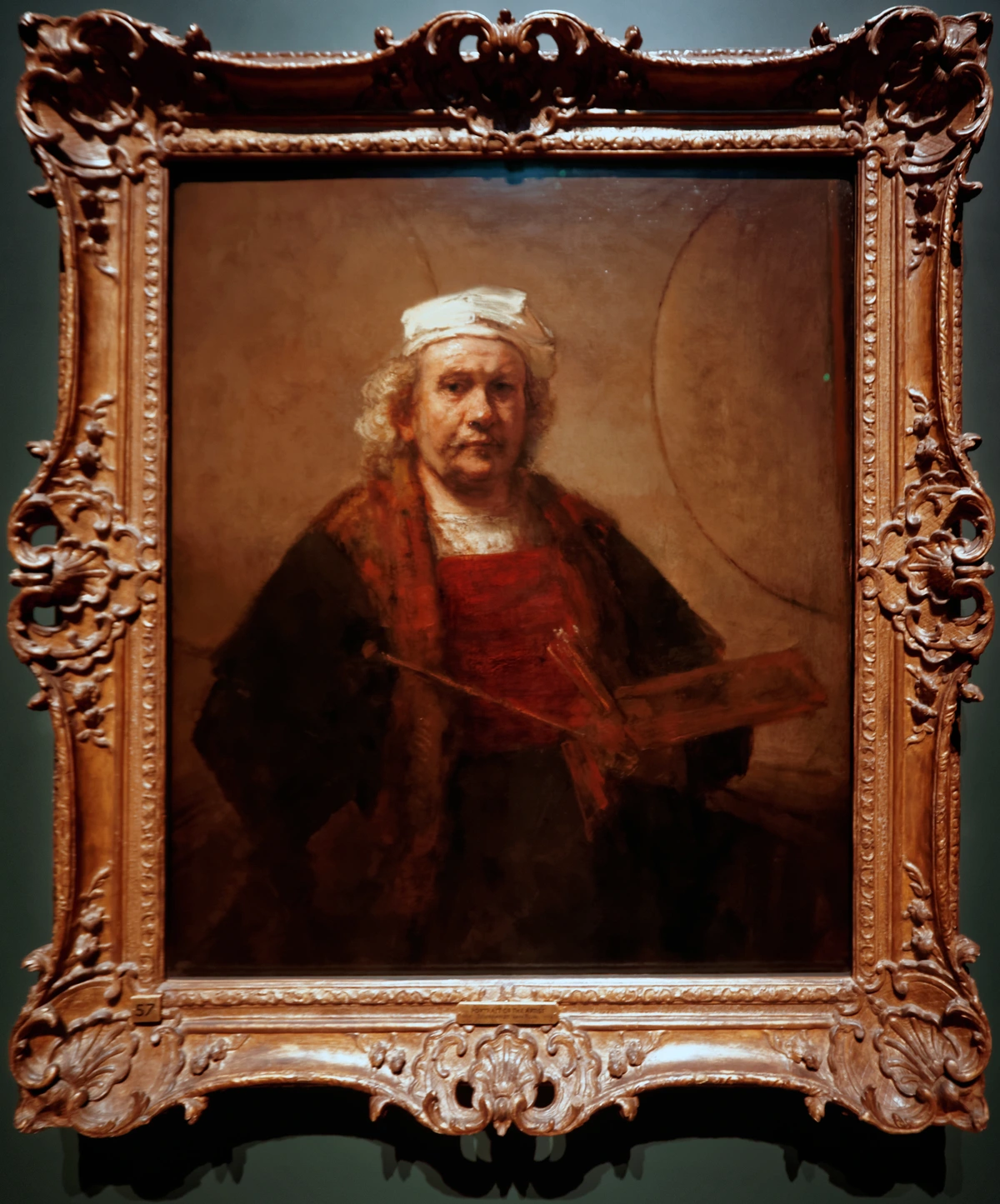
Why it works: This is Alberti's "Reception of Light" stripped to its core. By eliminating detail and focusing only on the major light and dark masses, you learn to see the fundamental geometric structure of your subject. A strong value pattern like this is the foundation of any successful painting, whether it's a realistic portrait or a dynamic abstract piece. It teaches you that light is not just an effect; it's a form of architecture.
The Power of Deliberate Practice
These exercises are not about speed; they're about mindfulness. They force you to make conscious decisions about things you might otherwise do on autopilot. By isolating these Albertian principles—objective observation, narrative composition, and the geometry of light—you build a mental toolkit that you can then apply intuitively to your own creative work. You start to build an instinct for what works. And that's when theory stops feeling like a set of rules and starts feeling like a superpower.
Why Alberti Matters for Every Artist Today
So why does a man who died over five centuries ago matter now, when you can watch a million YouTube tutorials for free?
The answer is simple: Alberti provides the "why" behind the "how." He's not just teaching you to draw a box in perspective; he's teaching you to see the world as a rational, measurable, yet profoundly beautiful system. He's the antidote to the myth of the tortured, instinctual genius whose talent is a bolt from the blue. He argues that great art is democratic. It's not a magical gift reserved for the few; it's a skill built on principles that anyone can learn, work at, and master.
In the end, Alberti's greatest gift isn't a set of rigid rules. It's permission. Permission to approach the blank canvas not with fear, but with a plan. Permission to believe that great art isn't just about ineffable talent, but about passion guided by principle. It's the freedom to be thoughtful about your work, to understand the mechanics of your own creativity.
He showed that art could be both a craft and an intellectual pursuit, a way of thinking as much as a way of seeing. He turned painters from mere decorators into philosophers with a brush. And in a world where anyone can take a photo, learning to truly see is the most valuable skill an artist can have.
This is the core of his legacy for the modern artist. When you understand the principles of perspective, you start noticing the converging lines of buildings everywhere you go. When you study composition, you can't help but analyze the framing of a movie scene. When you practice value studies, you begin to see the world not as a collection of objects, but as a shimmering mosaic of light and shadow. Alberti gives you a vocabulary to understand and articulate what you experience visually. He makes the world more interesting.
Frequently Asked Questions about Leon Battista Alberti
It's natural to have questions about a historical figure who seems so far removed from modern art-making. Here are answers to some of the most common questions I hear.
Q: Was Alberti the first person to invent linear perspective?
Not exactly. That honor is usually given to the architect Filippo Brunelleschi, who demonstrated its principles with a series of optical experiments in Florence around 1415. However, Alberti was arguably more important for the history of art because he was the first to write it down in a clear, logical system. He took Brunelleschi's brilliant but somewhat esoteric demonstration and turned it into a teachable method—the costruzione legittima. In short, Brunelleschi invented the machine; Alberti wrote the user's manual.
Q: Why is De Pictura considered so revolutionary?
It was revolutionary for one simple reason: accessibility. Before Alberti, artistic knowledge was oral and practical, passed from master to apprentice within a workshop. De Pictura codified these secrets into a text written in the everyday language of Italian (not just Latin), making advanced artistic theory available to anyone who could read. It was a move towards intellectual transparency and the democratization of knowledge.
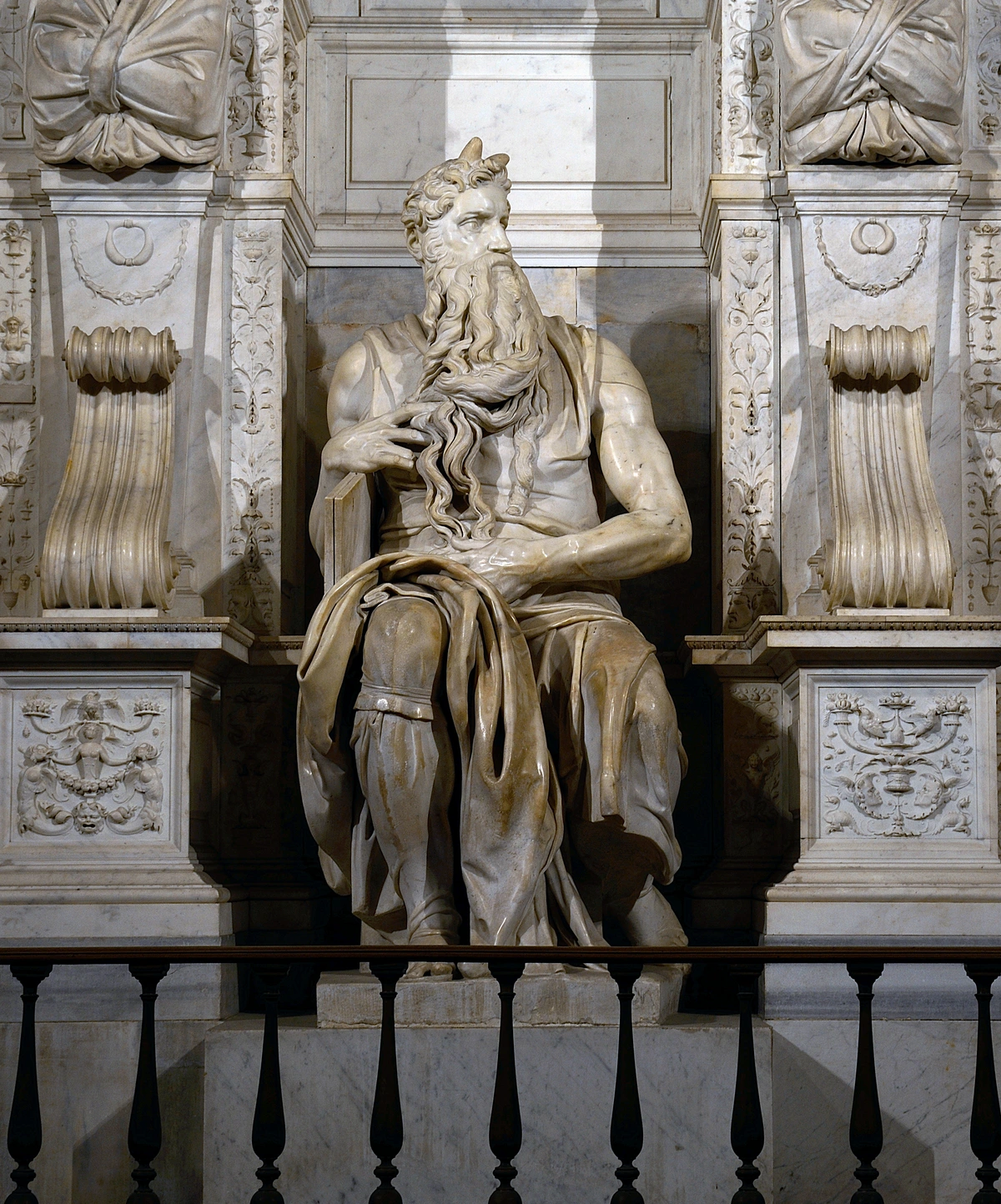
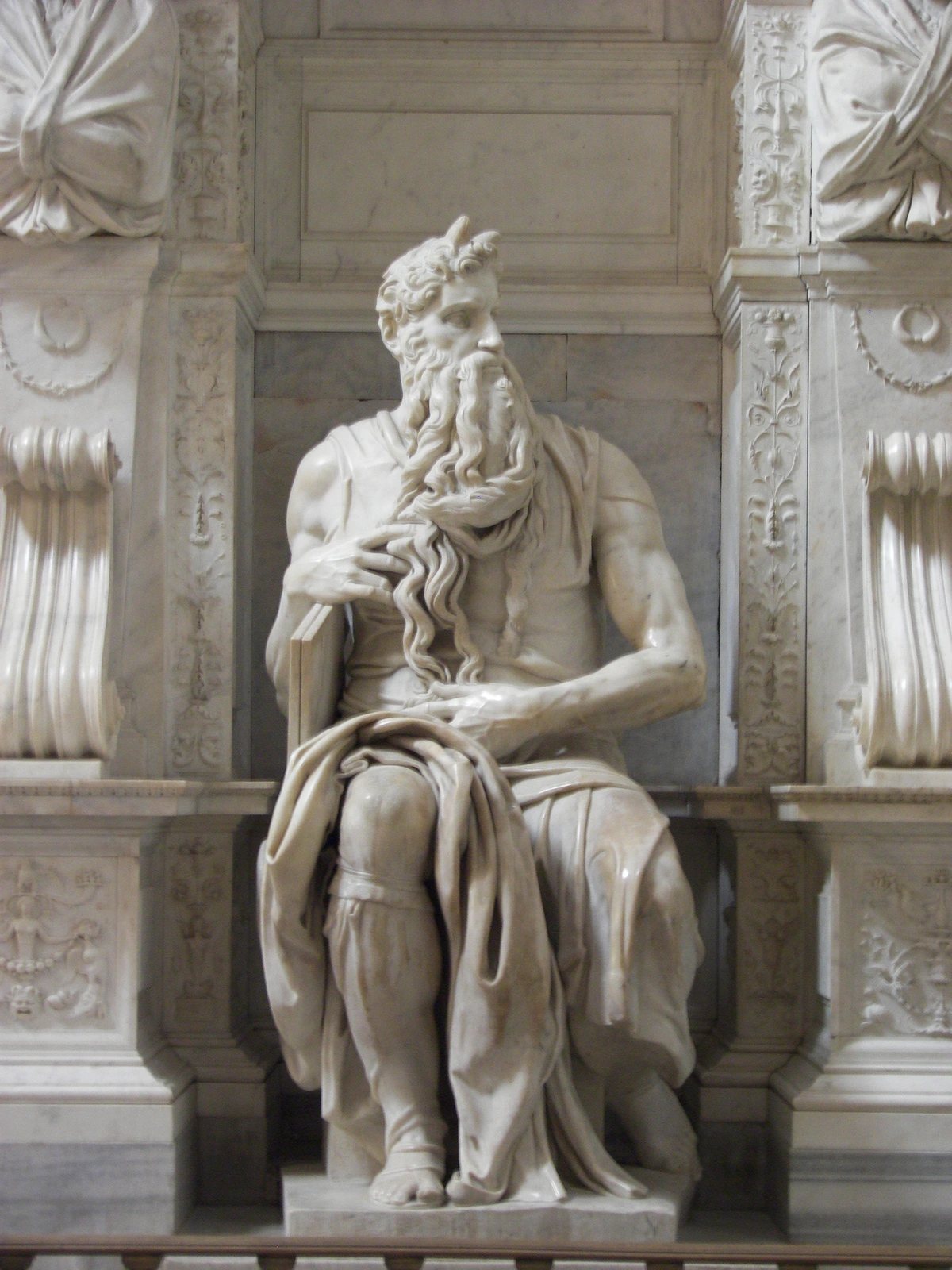
Q: How did Alberti's ideas influence later artists like Leonardo da Vinci and Michelangelo?
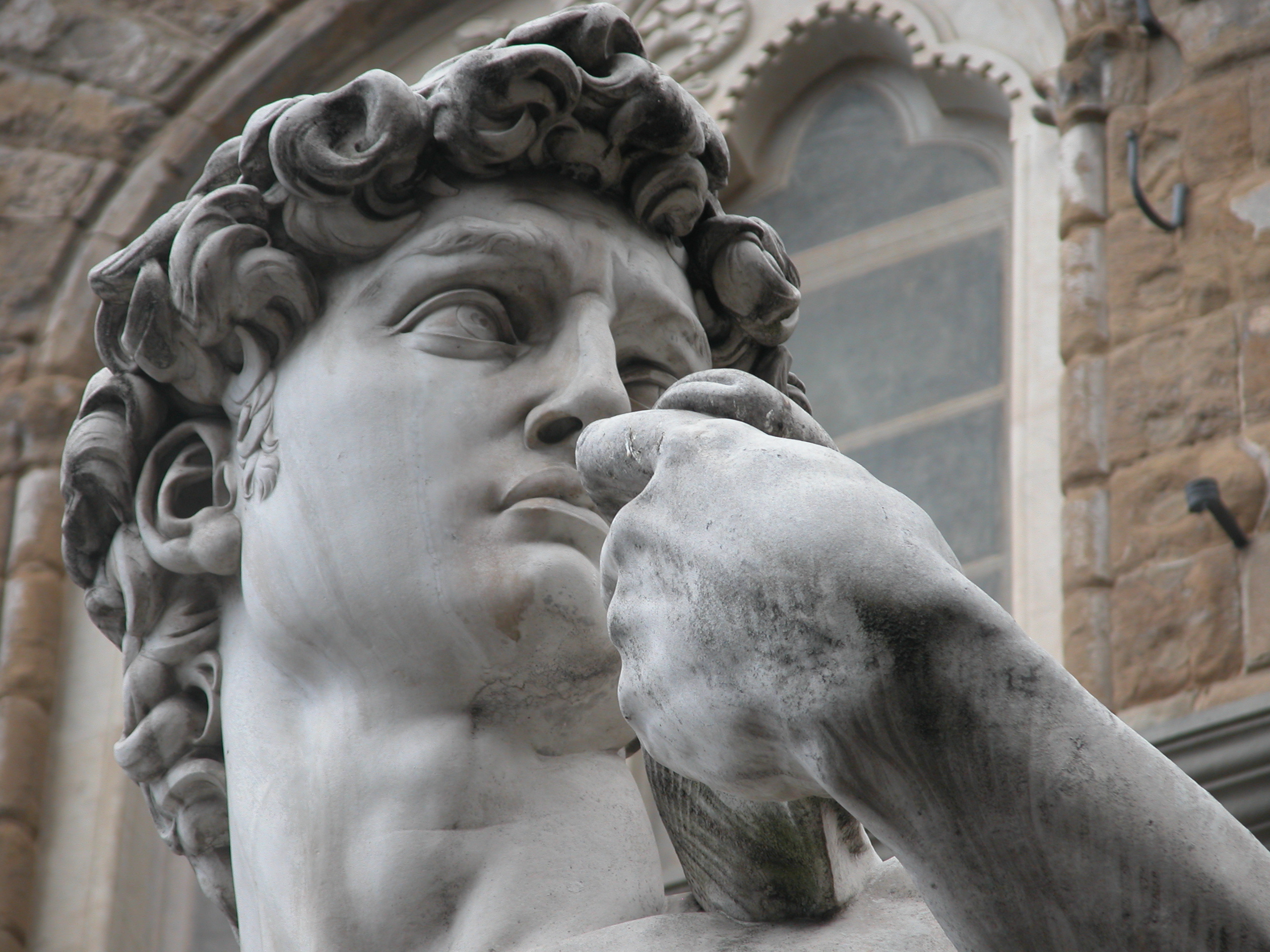
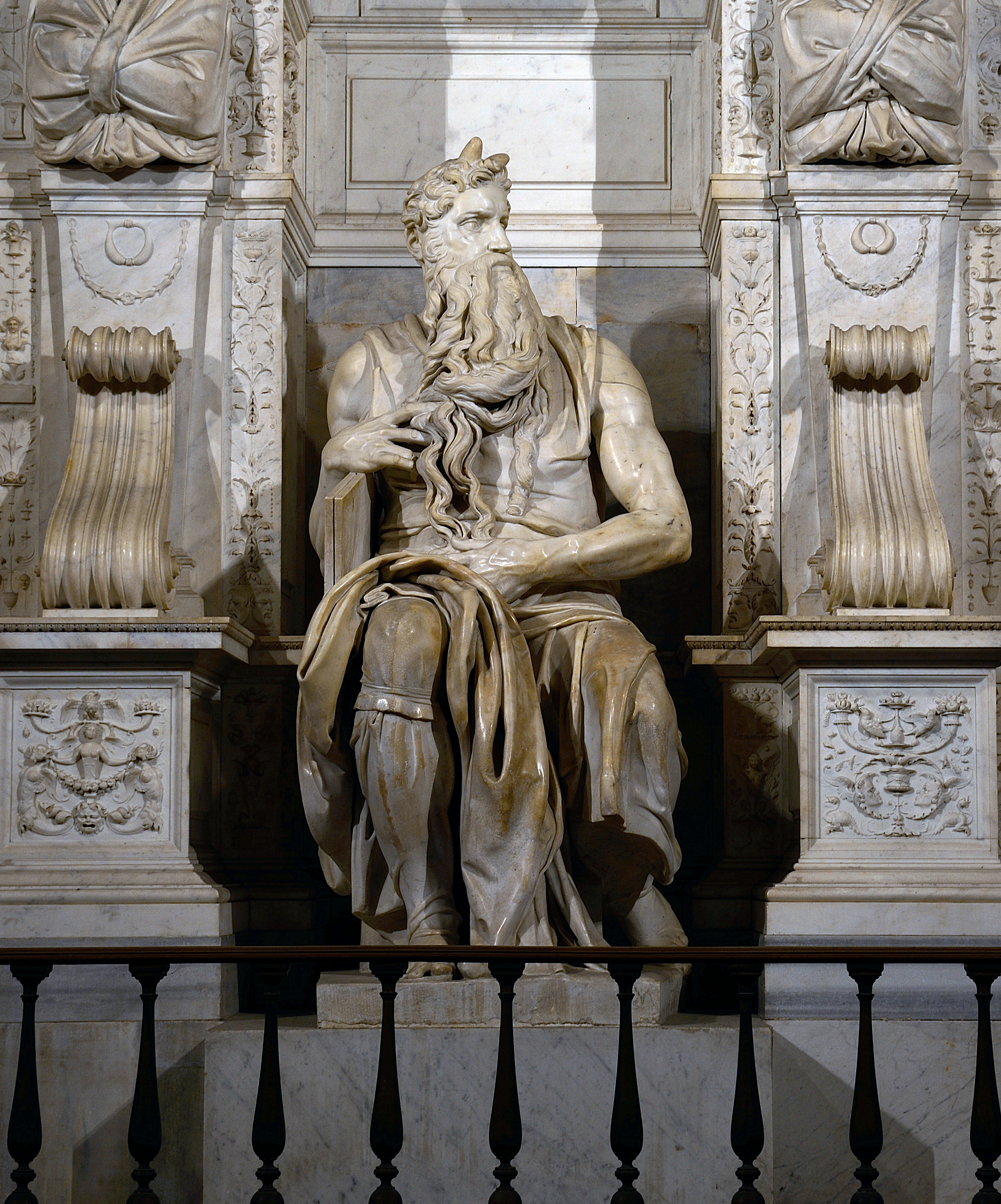
Alberti's influence on the High Renaissance masters was immense and foundational. Leonardo da Vinci owned a heavily annotated copy of De Pictura. He took Alberti's ideas about light and shadow and pushed them further, developing techniques like sfumato to create his famously mysterious and atmospheric paintings. Michelangelo, as a sculptor and painter, was deeply influenced by the Albertian ideal of the heroic, anatomically powerful figure whose gestures and poses convey intense emotion and narrative, the core of the istoria.
Q: Can Alberti's principles be applied to modern abstract art, which tries to avoid realistic representation?
Absolutely. In fact, I'd argue it's essential. Abstract artists may reject depicting a "window onto the world," but they are often fanatically committed to the principles Alberti outlined. They are deeply concerned with composition (the arrangement of shapes on the canvas), the reception of light (how colors and tones interact), and creating a sense of harmony or purposeful dissonance among the parts. Piet Mondrian's rigorously balanced grids are a form of Albertian composition taken to a logical extreme.
Q: How can I learn more about applying these historical concepts in my own studio practice?
That's the ultimate question, isn't it? A great next step is to look at our guide on Understanding Perspective in Art: A Beginner's Guide, which dives into the practical application of the very principles Alberti championed.
Here is a condensed guide to applying Alberti's principles in your own work, from initial sketch to finished piece.
An Albertian Toolkit for Artists: A Practical Summary
For those who like to get straight to the point, here's a distilled summary of Alberti's core advice and principles, structured for the modern artist facing a blank canvas. This is your go-to quick reference for the core tenets that transformed art from a craft into a science of seeing.
The Three Pillars of Practice
Pillar  | Core Concept | The "Why" Behind It | Practical Takeaway for Today |
|---|---|---|---|
| Circumscription | Outlining forms objectively. | To see things as they are, not as your brain's symbols suggest. | Use a grid, projector, or tracing to break down complex subjects. Learn to measure proportions accurately. |
| Composition | Arranging elements for narrative & emotion (the istoria). | Art's purpose is to move the soul, not just to decorate a surface. | Plan your composition with thumbnails. Ensure every element serves the story or emotional goal. |
| Reception of Light | Modeling form with light, shadow, & color. | Light creates reality; controlling it creates drama and space. | Master the value scale. Practice creating form with just a few tones before adding color or detail. |












Key Techniques & Terms
- The Veil (Velum): Alberti's grid method for accurate drawing. The 15th-century equivalent of tracing a photo, designed to train objective observation.
- Istoria: The ultimate goal of a painting—a narrative scene with figures whose gestures and expressions convey a clear moral or emotional message.
- Chiaroscuro: The dramatic contrast between light and dark. It's not just about lighting; it's about using tonal extremes to sculpt form and create mood.
- Color Perspective (Atmospheric Perspective): The observation that things get lighter, less detailed, and bluer as they recede into the distance. Essential for creating believable landscape depth.
- Costruzione Legittima (Legitimate Construction): Alberti's systematic, mathematical method for creating linear perspective, proving that painting was a science as much as an art.
The Albertian Workflow: A Checklist
- Plan: Start with a clear subject or narrative. Don't just dive in.
- Observe: Use a grid or other measuring tools to draw your subject accurately. Master circumscription.
- Compose: Arrange your elements to guide the viewer's eye and serve the story. Aim for an istoria.
- Establish Light Source: Decide where your light is coming from. This is the most critical decision for creating form.
- Model with Tone: Block in your large shapes of light, shadow, and mid-tone. Nail the value structure first.
- Refine: Add color on top of your solid tonal foundation. Use color perspective for depth.
- Harmonize: Ensure all parts serve the whole. Nothing should be added or taken away without diminishing the whole.
The Ultimate Takeaway
Alberti's legacy isn't a list of restrictive rules. It's the proposition that art is a marriage of passion and principle. He gave artists a language to understand their own practice, transforming them from artisans into intellectuals. By understanding the fundamental mechanics of sight and representation, you gain the freedom to bend those rules with intent and purpose. In the end, he empowers you to build your vision on a rock-solid foundation.