The Winged Victory: More Than Just Marble
Unveiling the secrets of Nike's iconic sculpture—from Hellenistic genius to modern inspiration. Why this ancient masterpiece still takes our breath away.

The Winged Victory: More Than Just Marble
Sensory Immersion: The First Encounter
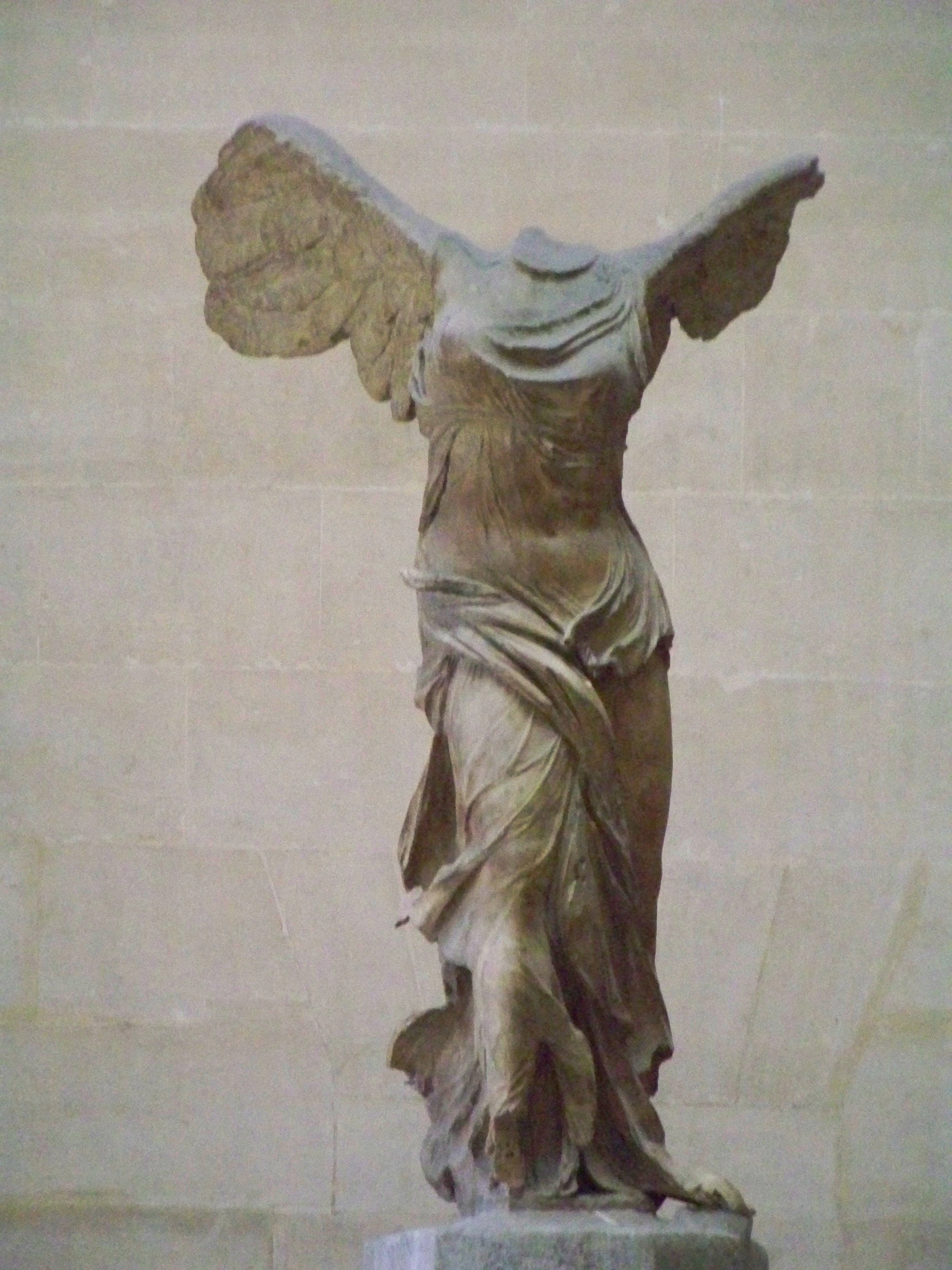
I remember the first time I saw her. Not a print or a digital copy, but the real deal in Paris’ Louvre. One moment I'm lost in a sea of tourists, the next—whoosh—a gust of wind seems to materialize out of nowhere, billowing the wings of Nike as if she's just touched down after a thousand-mile flight. Seriously, how does a lump of marble feel so alive? That's what I want to unpack today. Not just 'here's a statue,' but 'here's why your soul can't stop looking at it.'
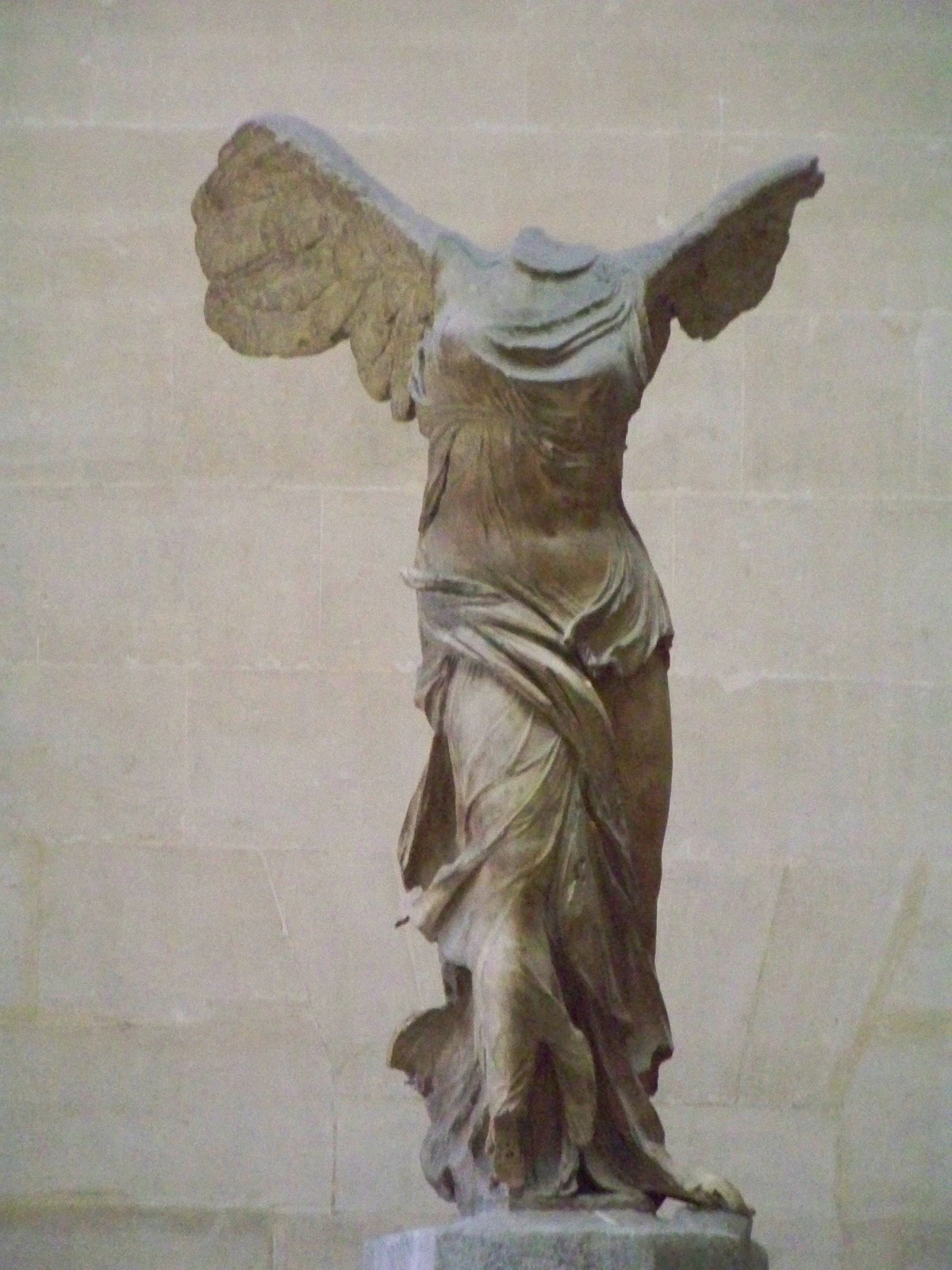
The impact is immediate and physical. It’s the sheer force of motion arrested at its zenith. We’re conditioned to see old art as static, museum pieces frozen in formal perfection. Yet here’s this goddess, landing with such velocity that her thin linen chiton is plastered against her body by an unseen gale. You can feel the sea spray, the salty air, the roar of a naval battle just won. Art history is full of masterpieces we’re supposed to admire. We nod politely at perfect proportions and serene faces. But the Winged Victory of Samothrace? She doesn’t ask for your polite applause. She demands your breath. You can’t look away because she’s captured something eternally human: the moment of triumph, frozen just as it begins to fade. It’s that flicker of energy that bridges the gap between ancient stone and your modern pulse. When you stand there, you're not just an observer; you're a witness to a moment of becoming.
The Big Question: Why Should We Care About Ancient Rock?
Let's be honest: ancient art can feel dusty. Abstract splatters or colorful explosions feel more like our modern world. But the Winged Victory? That's the original rule-breaker. It's not just "art"—it's a time machine. This 2.2-ton hunk of Parian marble, prized in antiquity for its translucency and fine grain, carved around 190 BCE is like a frozen snapshot of pure human ambition. Imagine sculpting this without power tools or safety goggles. Wild.
And I mean wild in the most literal sense. The sculptors had to solve problems that would stump a modern engineer. How do you make marble appear to defy gravity? How do you make stone feel alive? Every chip of the chisel was an act of faith, trusting a vision that existed only in the mind of a master whose name we no longer know. We see the finished product, but we rarely consider the years of toil, the dust-choked workshops, the sheer physical endurance required to wrestle a form like this from a mountain.
Think about it: we live in an age of digital ephemera, where a viral image vanishes in 24 hours. But here's a piece of stone that has commanded awe for over 2,200 years. It outlasted empires—from the Roman to the Byzantine. It likely survived earthquakes that shattered the sanctuary where she stood, wars that saw Samothrace change hands, and centuries buried in obscurity, forgotten by all but the local farmers who used her base as a stone quarry. When you stand before her, you're not just looking at a statue; you're confronting the sheer, stubborn persistence of human creativity. It makes you wonder—what could any of us create today that would outlive us by millennia? What does it even mean to build something to last? I grapple with this every time I start a new piece in my studio.
The Historical Backdrop: Art Born of Chaos
The world that gave birth to Nike was one of profound upheaval. The Hellenistic period (roughly 323-146 BCE) wasn't an era of serene city-states like Classical Athens. It was the messy, cosmopolitan aftermath of Alexander the Great's conquests, a world of sprawling empires, cultural fusions, and constant warfare. The old certainties were gone. It was a pressure cooker of innovation. Traditional patronages dissolved, and artists were thrust into a competitive, international market. In this climate, a new kind of art emerged—one that valued drama, raw emotion, and individual experience above serene perfection. This was art for the age of the individual, for the victor who stands alone on the prow of his ship. Artists were no longer just serving the gods of a single city; they were often working for powerful, newly wealthy monarchs who wanted art that projected their power and celebrated their victories on a monumental scale.
This is the context for the Winged Victory of Samothrace. She wasn't created in a vacuum. She was a product of an artistic arms race between kingdoms, especially the wealthy island of Rhodes, a major naval power and artistic hub. Rhodian sculptors became famous for their dramatic, large-scale works, their ability to capture movement, and their masterful rendering of complex emotions. To understand Rhodian style is to understand a culture obsessed with naval dominance and theatrical display. Their work is characterized by a radical dynamism, compositions that spiral outwards, and an almost reckless embrace of emotional intensity. They didn't just depict victory; they created the visual equivalent of a sonic boom. Understanding this helps us see Nike not just as a beautiful object, but as a sophisticated piece of political communication, a statement of power and piety from a specific place and time.
Ancient art isn't dusty—it's the original source code for everything we consider 'modern.' The Winged Victory demonstrates principles of movement, balance, and emotional expression that contemporary artists are still trying to crack. When you look at Nike, you're not seeing something old—you're seeing something eternal. The same energy that makes you stop and stare at a kinetic sculpture or an abstract painting was first captured in marble over two thousand years ago. She's the grandparent of every piece of art that makes you feel motion in something static.
I once spent an entire afternoon sketching her from different art books. Not to copy her, but to understand her DNA. Art Nouveau architects stole her flow for their ironwork. Futurist painters tried to capture her sense of speed. Even the dynamic tension in some of my own paintings—the ones with sweeping arcs and a feeling of lift—trace their lineage back to that marble on a staircase. It's humbling. Every rule we think we're breaking? It was probably first broken in Rhodes around 190 BCE.
Unpacking the Magic: A Masterpiece of Motion and Marble
The Workshop and Its Secrets: Inside a Hellenistic Masterpiece
Creating the Winged Victory wasn't just sculpting—it was engineering, physics, and alchemy all rolled into one. The sculptors, likely working in a workshop on the island of Rhodes (the artistic powerhouse of the Hellenistic world), had to solve problems that would challenge modern engineers. How do you carve marble that appears to float? How do you create wind that doesn't exist? How do you make stone feel alive? These weren't just artists—they were magicians with chisels.
To truly grasp their genius, you have to forget the clean, air-conditioned perfection of the Louvre for a moment. Imagine the scene: a noisy workshop in the 2nd century BCE, dust hanging thick in the Mediterranean air. Teams of artisans toiled in concert, their hammers and chisels a kind of percussion. Master sculptors, perhaps following models by a great artist whose name is now lost, directed the work. They used a combination of heavy tools for the initial roughing out (the point chisel) and finer chisels (toothed chisels, claws) for detailing. It's possible they used drills for deep undercuts, particularly beneath the wing feathers, creating a sense of airiness and shadow that makes the stone wings seem capable of true flight. The logistics alone boggle the mind. Quarrying the marble from Paros was a feat in itself—imagine extracting a 2.2-ton block using only wedges, water, and muscle. Transporting it across the Aegean Sea to the workshop on Rhodes, a perilous journey vulnerable to storms and pirates. And then the sheer physical endurance required—months, perhaps years, of standing on scaffolding, chiseling with relentless precision, all without safety goggles or power tools. This wasn't just artistry; it was a monumental logistical and financial undertaking, likely commissioned to celebrate a specific, significant naval victory like the Battle of Myonnisos. The marble itself was probably worked on while partially submerged in water to reduce dust and make the marble easier to carve.
To truly grasp their genius, you have to forget the clean, air-conditioned perfection of the Louvre for a moment. Imagine the scene: a noisy workshop in the 2nd century BCE, dust hanging thick in the Mediterranean air. Teams of artisans toiled in concert, their hammers and chisels a kind of percussion. Master sculptors, perhaps following models by a great artist whose name is now lost, directed the work. They used a combination of heavy tools for the initial roughing out (the point chisel) and finer chisels (toothed chisels, claws) for detailing. It's possible they used drills for deep undercuts, particularly beneath the wing feathers, creating a sense of airiness and shadow that makes the stone wings seem capable of true flight. The logistics alone boggle the mind. This wasn't just artistry; it was a monumental logistical and financial undertaking, likely commissioned to celebrate a specific, significant naval victory like the Battle of Myonnisos. The marble itself, quarried from the island of Paros, had to be transported across the Aegean Sea in a perilous journey. Once at the workshop, the stone was probably worked on while partially submerged in water to reduce dust and make the marble easier to carve. The sheer physical endurance required is astounding. wasn't just sculpting—it was engineering, physics, and alchemy all rolled into one. The sculptors, likely working in a workshop on the island of Rhodes (the artistic powerhouse of the Hellenistic world), had to solve problems that would challenge modern engineers. How do you carve marble that appears to float? How do you create wind that doesn't exist? How do you make stone feel alive? These weren't just artists—they were magicians with chisels.
To truly grasp their genius, you have to forget the clean, air-conditioned perfection of the Louvre for a moment. Imagine the scene: a noisy workshop in the 2nd century BCE, dust hanging thick in the Mediterranean air. Teams of artisans working in concert, their hammers and chisels a kind of percussion. There was no industrial quarrying. They had to source the marble, transport it across the sea, and then begin the painstaking process of roughing out the shape. The logistics alone boggle the mind. This wasn't just artistry; it was a monumental logistical and financial undertaking, likely commissioned to celebrate a specific, significant naval victory like the Battle of Myonnisos.

The Pose That Broke the Rules
Most Greek statues before this were pretty stiff. Think 'robot at a formal dinner.' Then Nike swoops in with asymmetry. Her torso twists like she’s gliding through a cyclone. One leg is forward, creating that iconic S-curve that makes your spine tingle. This isn’t just balance—it’s controlled chaos. I tried mimicking it once in my studio. Let’s just say my cat stared judgmentally while I wobbled for 10 seconds. These masters? Eternal elegance.
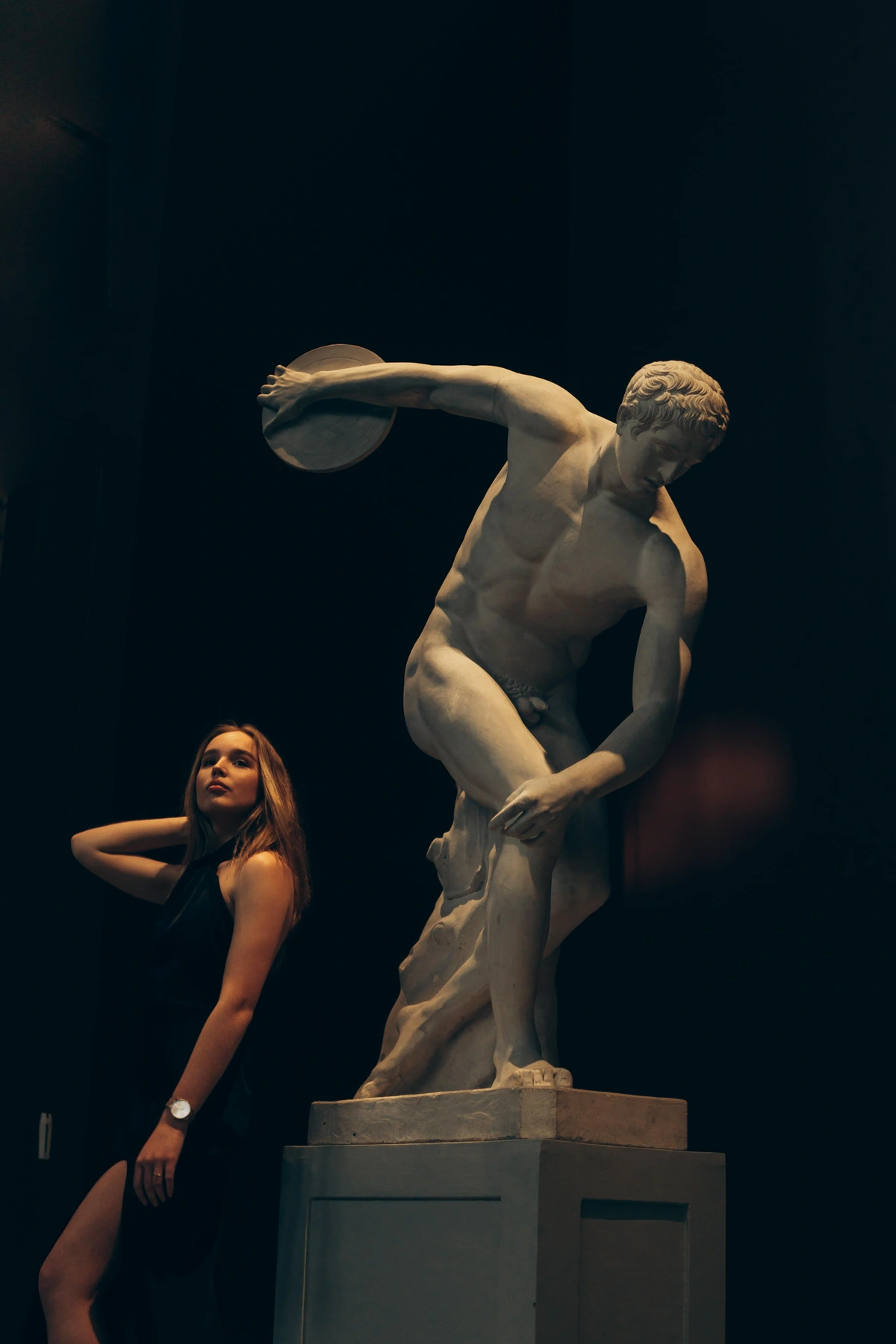
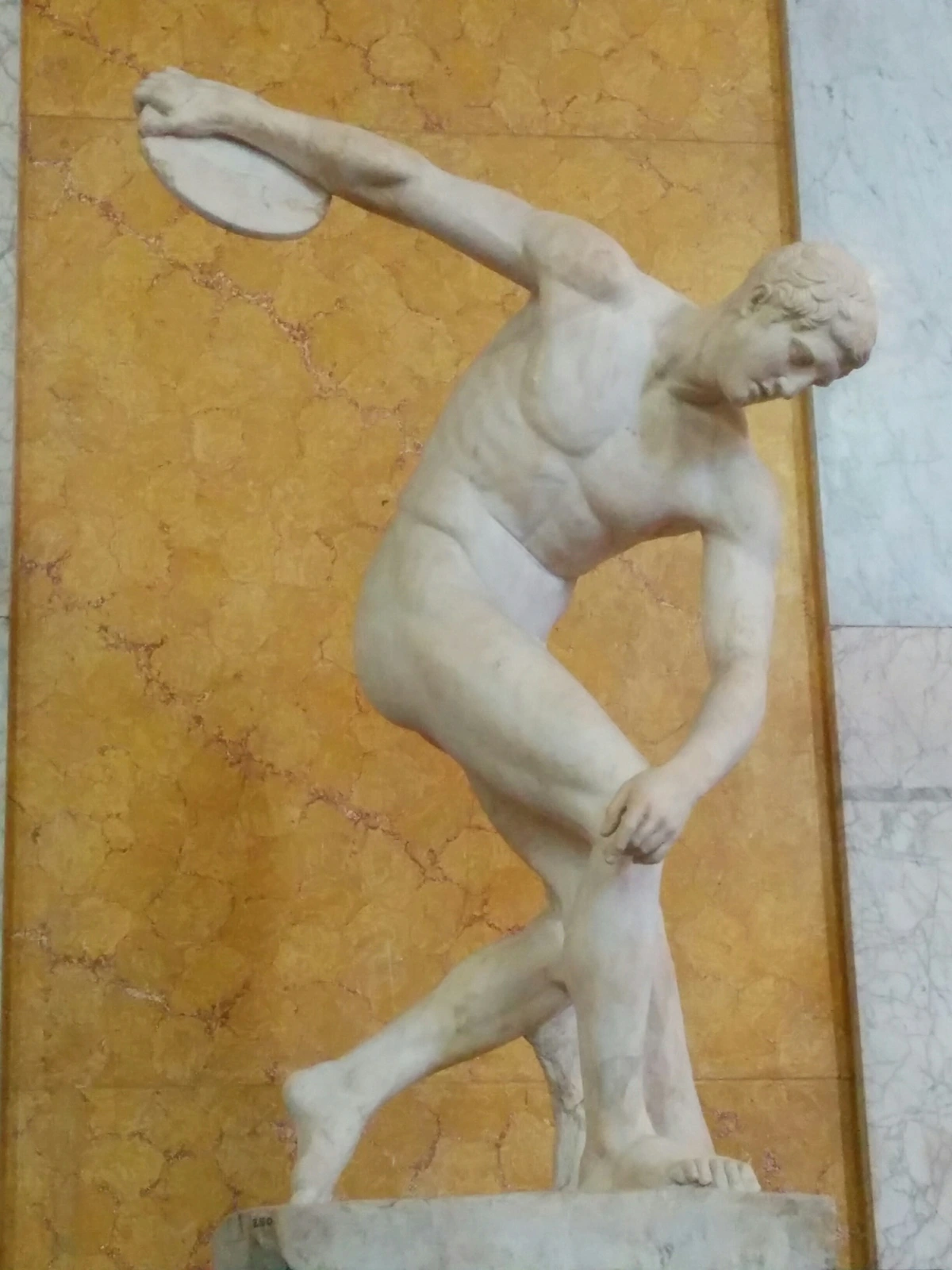
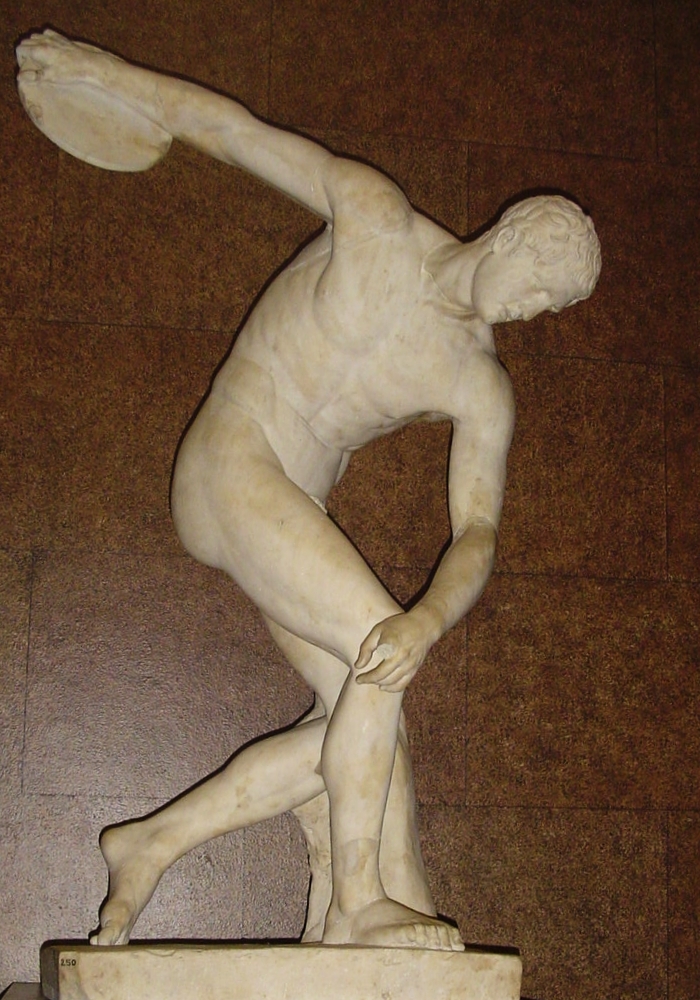
This departure from stoic, frontal poses wasn't just an aesthetic choice; it was a philosophical revolution. Hellenistic artists became obsessed with capturing transient moments—the instant before a discus is thrown, the moment of death in a Laocoön, a split second of action, a fleeting emotion. They traded the eternal perfection of the Classical era for the messy, exhilarating pulse of life itself. Artists like Lysippos, whose work heavily influenced this era, pioneered new canons of proportion and introduced the concept of the statue being viewed from all angles, breaking it free from a single, frontal plane. This new dynamism reflected a changing worldview—a focus on the individual, the momentary, and the dramatic. Nike is the ultimate expression of this. She's not standing in everlasting peace; she's just landed, the wind of her passage still roaring through her garments. It's a performance captured in stone. When you understand that, you see why she feels so modern. It's the ancient equivalent of a high-speed photograph.
The Wind That Doesn’t Exist
The drapery! It's not folded fabric; it's a liquid scream of victory. Look close: heavy folds sculpt into light ripples. How? They carved marble on both sides in sections, then glued them together with liquid marble (seriously, that's a thing called anastylosis). It's like they bent the laws of physics so marble could flow. Contemporary artists still copy this trick to make static art breathe. True alchemy.
If you ever try to render fabric in any medium—be it paint, charcoal, digital, or clay—you quickly learn that making it look heavy and light at the same time is the ultimate challenge. The sculptors of Nike achieved this through a combination of technical mastery and profound observation. They created deep, plunging folds, known as cataplexy, between the legs, suggesting the immense force of wind pinning the chiton (a kind of linen tunic) directly against her body. Yet, ascending towards her torso and outstretched wings, the marble is thinned dramatically, allowing the drapery to become a series of light, rippling ridges. Shadow and light would have danced across these contours, giving the stone a sense of breath and vibration.—paint, charcoal, even digital—you quickly learn that making it look heavy and light at the same time is the ultimate challenge. The sculptors solved this by using what I call 'the wet T-shirt effect.' They created deep, plunging folds between the legs, suggesting the force of the wind pinning the chiton (a kind of tunic) against her body. Then, around her torso and wings, the drapery thins out, becoming almost translucent. This contrast is everything. It tells a complete story: the direction of the wind, the speed of her descent, the texture of the linen itself. It's a masterclass in observation and technique. They didn't just see a piece of cloth; they saw the forces acting upon it and chose to immortalize the instant of greatest tension.
The Missing Pieces
Ever wonder why she has no head or arms? Frustrating, right? It’s her most famous feature, this radical incompleteness. But here’s where it gets brilliant. We think she once held a trumpet to her lips, announcing victory, and perhaps a palm frond or a laurel wreath in the other hand. She stood on a ship’s prow facing a cliffside shrine, a breathtaking spectacle of seafaring triumph. The Louvre displays her on a grey staircase (the Daru Staircase), which isn’t original—but intentionally dramatic. Like they’re saying: "You get the essence of flight without the boring details." Clever, huh? This intentional display forces us to project our own feelings onto her. Her missing head means she is every victory, for everyone, throughout time. Her absent arms mean she is defined not by what she holds, but by what she is: the embodiment of a moment.
Why It Still Matters: Nike’s Enduring Legacy
More Than Just a Trophy
She’s not just "victory." She’s defiance. The Hellenistic period was a messy time—empires crumbling, cultures clashing. The old order of city-states was gone, replaced by the vast, impersonal kingdoms of Alexander the Great's successors. In this era of uncertainty, here’s Nike, wings spread wide, not smirking but soaring. She’s resilience carved in white. Kinda like those days when the world feels heavy, but you push through anyway. Yeah, I go look at her prints when I need that kick. No shame.

Her original context on the island of Samothrace gives this even more power. She wasn't in a major city center; she was in a remote sanctuary dedicated to the 'Great Gods,' a place where people came to be initiated into a mystery cult. Her placement there wasn't just about a military win; it was an offering, a plea, a declaration of faith in a higher power amidst political chaos. She represents a victory that transcends the battlefield—a triumph of hope over despair.
From Louvre to Your Living Room
This isn’t just for museum nerds. Her silhouette is everywhere—fashion (wings on haute couture), architecture (think art deco skyscrapers), even branding (ever heard of a 'swoosh'?). Artists from Rodin to modern still rip off her pose. Why? Because she’s the blueprint for how to make static art scream with motion. Even my abstract plays with that energy—curves that suggest movement without literally moving it. You feel it, right?
Her influence is so pervasive it's almost invisible. Futurist sculptures, like Umberto Boccioni's Unique Forms of Continuity in Space (1913), reinterpret her merging of figure and environment into a machine-age dynamo. Art Nouveau architects like Victor Horta translated her flowing drapery into the sinuous ironwork of Parisian metro stations. And yes, that 'swoosh' on your sneakers—the Nike logo, designed in 1971, consciously or unconsciously taps into the same visual language of speed and victory she embodies. It's a corporate co-opting, sure, but it proves the symbol's primal power. Car designers use her stance for a sense of forward thrust. Sports photographers chase that same dynamic tension. It's a universal grammar for communicating energy. In a world saturated with explicit imagery, Nike operates on a more profound, symbolic level. She represents an idea of victory, not a specific person. This universality is what allows her to be effortlessly appropriated by movements from French revolutions to modern brands, each finding a new meaning in her timeless form.
The Modern Takeaway: What’s Your Nike Pose?
Here’s the real question: if you could embody her spirit—defiant, graceful, unapologetically present—how would you stand? In your work? Your art? Your relationships? That’s the secret. She’s not ancient history. She’s a posture for life. I had a print made once and hung it in my studio—reminds me to keep pushing, even when the inspiration feels stiff as marble.

Psychologically, posture is everything. Slump your shoulders, and your brain follows. Throw them back, lift your chin, and you shift your entire mental state. Nike is the ultimate power pose. She's a physical statement, a way of holding yourself in the world that broadcasts confidence and forward momentum. It's Amy Cuddy's famous 'power posing' theory, carved in marble two millennia ago. I'm not saying you need to walk around with your chest puffed out. But adopting that internal stance—the feeling that you are moving toward something, that the wind is at your back—it's transformative. It's the difference between letting life happen to you and taking an active role in your own story.
This connection between physical posture and inner psychology isn't a modern idea; it's ancient. The Greeks understood that the body and mind were not separate entities but a unified whole. The posture of a hero, a god, or in this case, a goddess of victory, was not just an artistic choice; it was a philosophical statement about human potential.

Caveats: The Reality of "Museum Classics"
Alright, let’s pop the hype balloon for a sec. Marble is fragile. The original colors are gone. She’s been painstakingly restored multiple times—major efforts in the 19th century, and again in 2013-2014. Fragments have been added and removed as scholarship evolves. She's a historical document, yes, but also a living artifact. And yes, some folks try to tokenize her as NFTs (yawn). But that’s missing the point. She’s not a JPEG. She’s humanity’s ancient attempt to grasp triumph—and that’s bigger than any blockchain gimmick.
The Goddess in Living Color: Confronting Our Misconceptions
Here’s something most people don't think about: she wasn't always the pearly white we see today. Ancient Greek and Roman statues were polychromed—painted in vivid, lifelike colors. We picture a pristine, white ideal of beauty, but the reality was far more garish and, frankly, more human. This "cult of white marble," largely a construct of Renaissance scholars and 19th-century Neoclassicism, has profoundly shaped our aesthetic expectations in a way that would be alien to the original sculptors. Traces of pigment have been found on Nike, suggesting her chiton was once adorned with deep blues and red ochre, her wings may have had detailed feathering, and gold leaf could have highlighted elements. Imagine her not as a ghostly, ethereal figure, but as a powerful, brightly colored goddess, her skin perhaps tinted, standing out sharply against the sea and sky of Samothrace. It forces an uncomfortable question: by fetishizing the white marble, are we clinging to a distorted, revisionist version of history—one that erases the vibrant reality of the past? It's a useful caution. It reminds me to question the 'natural' state of things and look for the hidden layers of meaning.
Quick Guide: Nike by the Numbers
Understanding the scale and technical details of the Winged Victory helps appreciate the magnitude of this achievement. The statue wasn't just art—it was a feat of engineering and craftsmanship that required immense technical knowledge and physical labor. From quarrying and transport to the final polishing, every step was a monumental challenge. Understanding her physical reality only deepens the awe.
Feature  | Original State | Modern Display |
|---|---|---|
| Weight | ~2.2 tons | Same (minus fragments) |
| Material | Parian marble, quarried from Paros | Parian marble |
| Height | ~5.57 meters (18 ft) including base | ~3.28 meters (statue only) |
| Wingspan | ~2.4 meters (~8 ft) | Same |
| Original Context | Standing on a dark grey marble ship's prow, facing a cliffside sanctuary on Samothrace | Louvre's Daru Staircase, a white/greyish stone |
| Colors | Polychromed: likely blues, red ochre, and gold leaf | Weathered white marble (traces of pigment remain) |
| Restoration Status | Found in 1863, major reconstructions in 1883 and 2013-2014 | Ongoing (latest intervention 2014) |
Visiting the Winged Victory: A Practical Guide
A Practical Guide: Making the Most of Your Pilgrimage
Making a pilgrimage to see her is worth it, but it requires a bit of savvy.
Here’s what you need to know to make the most of your visit. A statue this famous can feel like a checklist item, but with a little strategy, you can turn a brief encounter into a meaningful experience.
Finding Her at the Louvre
She doesn't hide. The Winged Victory stands at the top of the Daru staircase (Escalier Daru) in the Denon wing of the Louvre. It's one of the museum's main arteries, so it's almost always bustling with crowds. Don't try to fight your way to the front immediately. Find a spot partway up the stairs, slightly off to the side. If you can, visit during the Louvre's 'nocturnes'—its late opening hours on Wednesdays and Fridays. The evening light streaming down from the glass roof of the Daru Staircase can be magical, casting long shadows and giving the marble a warm, almost living glow. From partway up the stairs, you can see her from an angle that reveals her dramatic twist, and you can watch others experience her for the first time—which is a kind of performance art in itself. And remember, she's not the only star of the show. Make sure you take a moment to find the original ship's prow base, often displayed in a nearby gallery.

What to Look For
Anyone can see the wings and the draping. A more careful look reveals the genius in the details.
- The Left Foot: Her left foot is stepping forward, but her weight is still on her back leg. This captures the instant just before she fully lands, a moment of dynamic tension.
- The Wings: Notice how the feathers are rendered with different textures. The sculptors varied their chiseling to create a realistic sense of layered plumage.
- The Venation: On her lower torso, the marble is thinned so much that you can see lines that resemble veins beneath the skin—an impossibly subtle detail.
- The Ship's Hull: Don't miss the original grey marble base at the bottom, carved to look like the prow of a ship. It's a crucial part of her story, anchoring her to the sea and her naval origin.
A Note on the Crowds
The Louvre is the world's most visited museum. Her spot on the staircase is a major bottleneck. It's often shoulder-to-shoulder, and it can be tough to find a moment of quiet contemplation. If you can, visit during the Louvre's "nocturnes"—its late opening hours on Wednesdays and Fridays. The evening light in the stairwell can be magical, and the crowds thin out just enough to give you a few precious seconds of intimacy with her. Remember to book your tickets in advance. For more tips on navigating the world's most famous museum, check out our First-Timer's Guide to the Louvre.
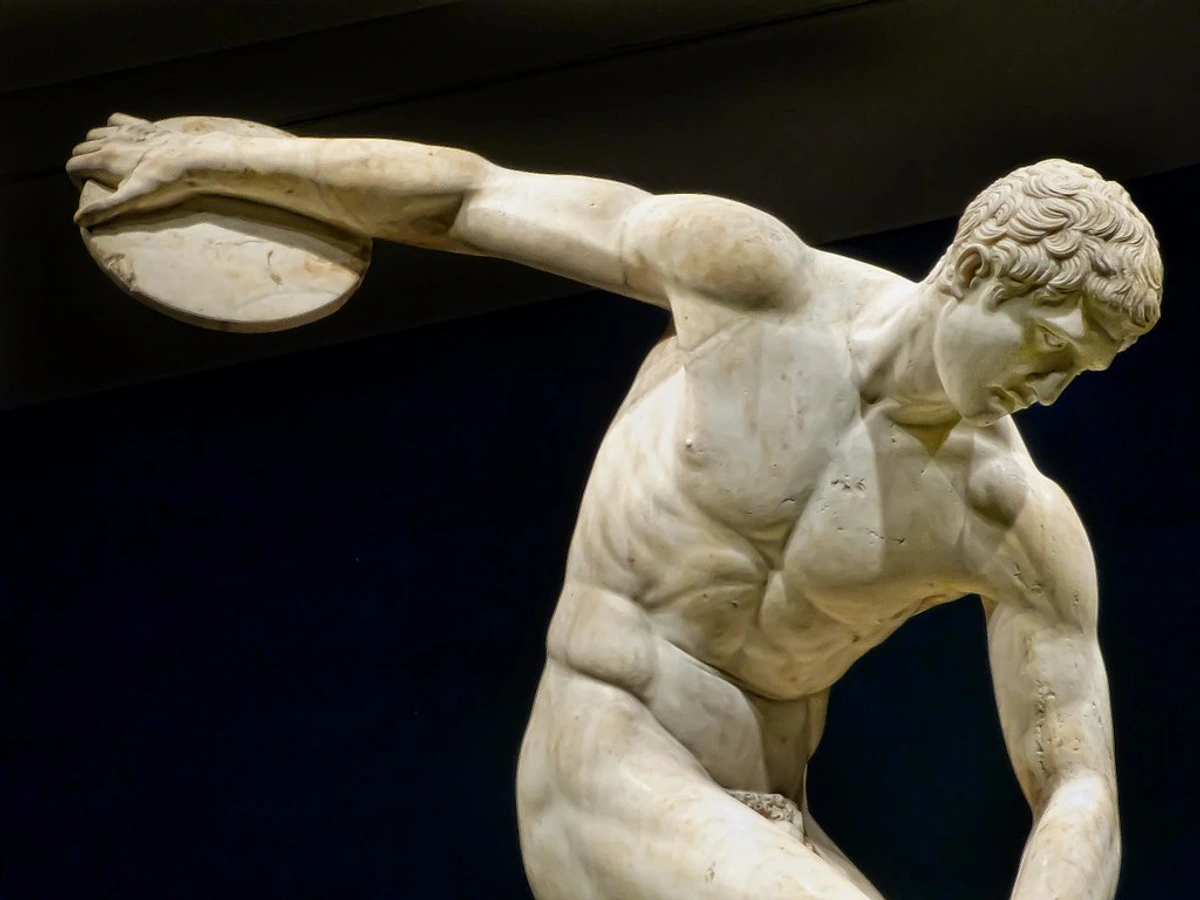
FAQ: Your Burning Questions
Q: Why is she called "Winged Victory"? A: She’s Nike, the Greek goddess of victory. Her Roman equivalent is Victoria. The "Winged" part is pretty self-explanatory—those magnificent, outspread wings symbolize the fleeting nature of triumph. Victory is something that can alight upon you, but it can just as easily fly away.
Q: Was she always headless? A: Nope! We assume she had one, and archaeologists found a few tantalizing fragments: a single right hand (now in a display case nearby) and a fragment of a left hand. However, no head has ever been found, leading to centuries of speculation about her expression. Was she joyful, serene, or fierce? We'll likely never know, and that mystery is a huge part of her power.
Q: Can I see her in person? A: Absolutely. She’s the centerpiece of the Louvre’s Hellenistic gallery, standing at the top of the Daru Staircase. Find her in the Denon wing. She's unmissable. Do a little reading beforehand, and the experience will be infinitely richer. It's one of the few artworks that consistently lives up to the hype.
Q: How does this relate to abstract art? A: It’s all about energy over literal representation. Nike’s curves suggest movement without showing her walking. Abstract art does the same with shape and color—letting your mind fill the gaps and complete the feeling. It's about distilling an idea down to its essential form. I play with this a lot in my own work, using bold, sweeping gestures to create movement that isn't literally there. It’s a direct line from Nike's flight to the canvas.
Q: Is the Louvre display accurate? A: No, and that's okay. She’s displayed on a grand grey staircase, not a ship's prow on a windswept cliff. The Louvre is upfront that the display is an aesthetic choice—it's poetic, not historical. It's designed to maximize her dramatic impact, giving her the theatrical entrance she deserves. It's an example of curatorial storytelling.
Q: Where’s the original base? A: It’s on display separately in the same wing of the Louvre, usually in a gallery nearby. If you visit, make sure you see both! Viewing the ship prow by itself allows you to appreciate its detailed carving, which is a masterpiece of realism in its own right. Carved from a distinct dark grey marble from Lartos on Rhodes, it stands in stark contrast to the white Parian marble of the statue itself. Seeing the two pieces together completes the story.
Q: What color was she originally? A: This is a burning question in modern archaeology. We now know that almost all ancient marble statues were brightly painted. Microscopic traces of pigments—including Egyptian blue, red ochre, and even gold leaf—have been found on Nike's surface. She was likely far more colorful and ornate than the white ideal we see today. It's a classic example of how history gets rewritten by later tastes.
Q: Who sculpted her? A: We don't know. The creator has been lost to history. Based on the style and the incredibly high quality of the work, the leading theory is that she was sculpted by a workshop on the island of Rhodes, which was a major center for grand, dramatic Hellenistic sculpture. But the name of the master sculptor remains a tantalizing mystery. My bet? It was a genius whose name was lost, probably forever.
Final Thought: Carving Your Own Victory
The Stories She Tells: Deeper Meanings in Stone
Chasing the Elusive Goddess: The Hunt for the Sculptor
A masterpiece like the Winged Victory is a cultural mirror. Every generation that has looked at her has seen a reflection of its own values and struggles. Yet, one of the most profound mysteries is the sculptor himself. We don't know who created her. Based on the style and the incredibly high quality of the work, the leading theory is that she was sculpted by a workshop on the island of Rhodes, a major center for grand, dramatic Hellenistic sculpture known for its mastery of composition and depiction of violent motion. Some scholars have tried to connect her to specific Rhodian artists mentioned in ancient texts, like Pythokritos, but these remain speculative. Perhaps this anonymity is fitting. It allows us to focus purely on the work itself—the sheer force of its vision—without the distraction of a biographical narrative. It turns the artist from a historical figure into a force of nature, as elemental as the victory she represents.
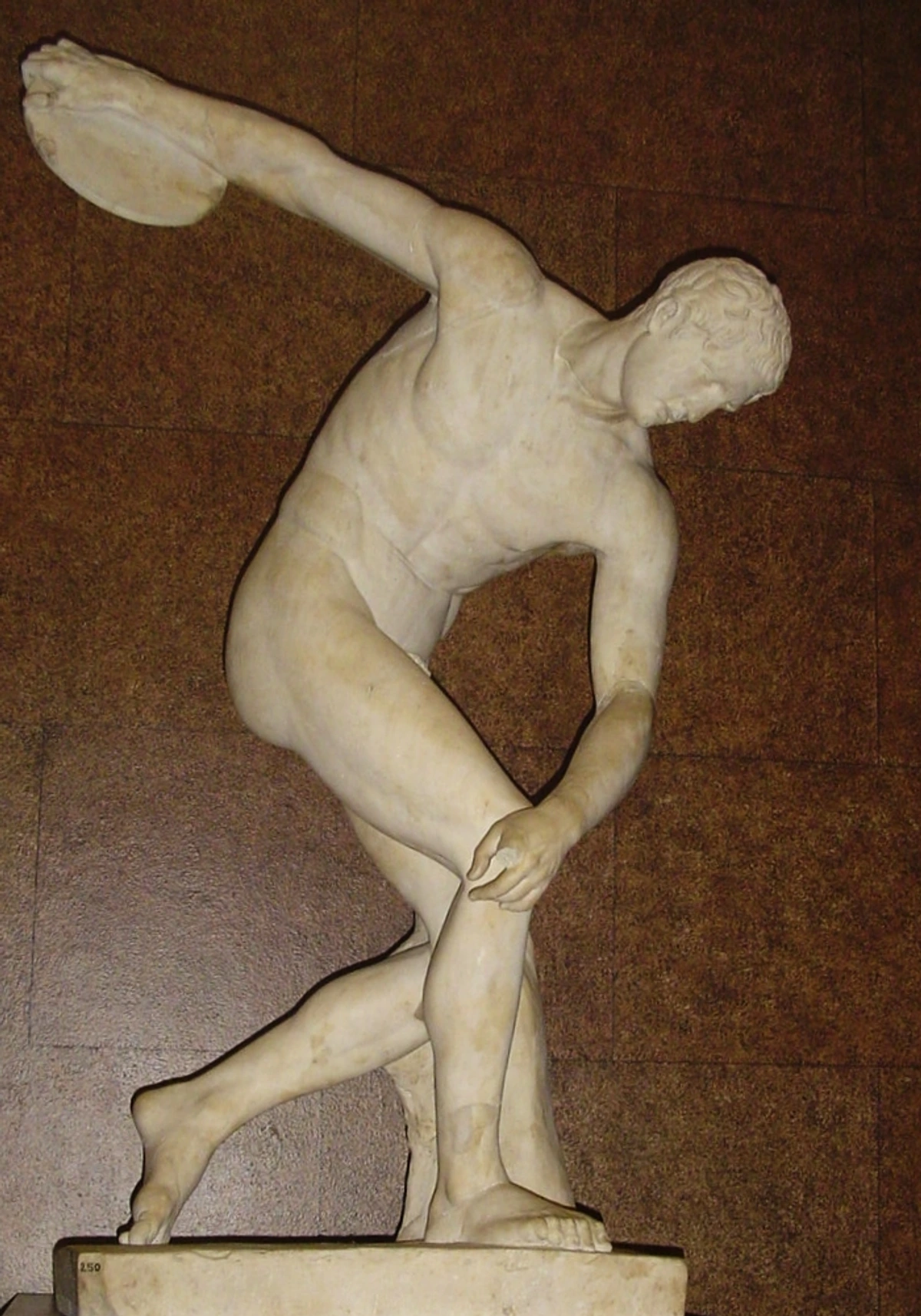
A Symbol of Political Power
For the original Greek patrons on Samothrace, she was likely a thank-offering to the gods for a specific naval triumph, perhaps against the Seleucid Empire. She wasn't just art; she was political propaganda carved in stone, a declaration of invincibility to rivals and a reassurance of divine favor to her people. To visit her was to witness the tangible evidence of a kingdom's power and piety.
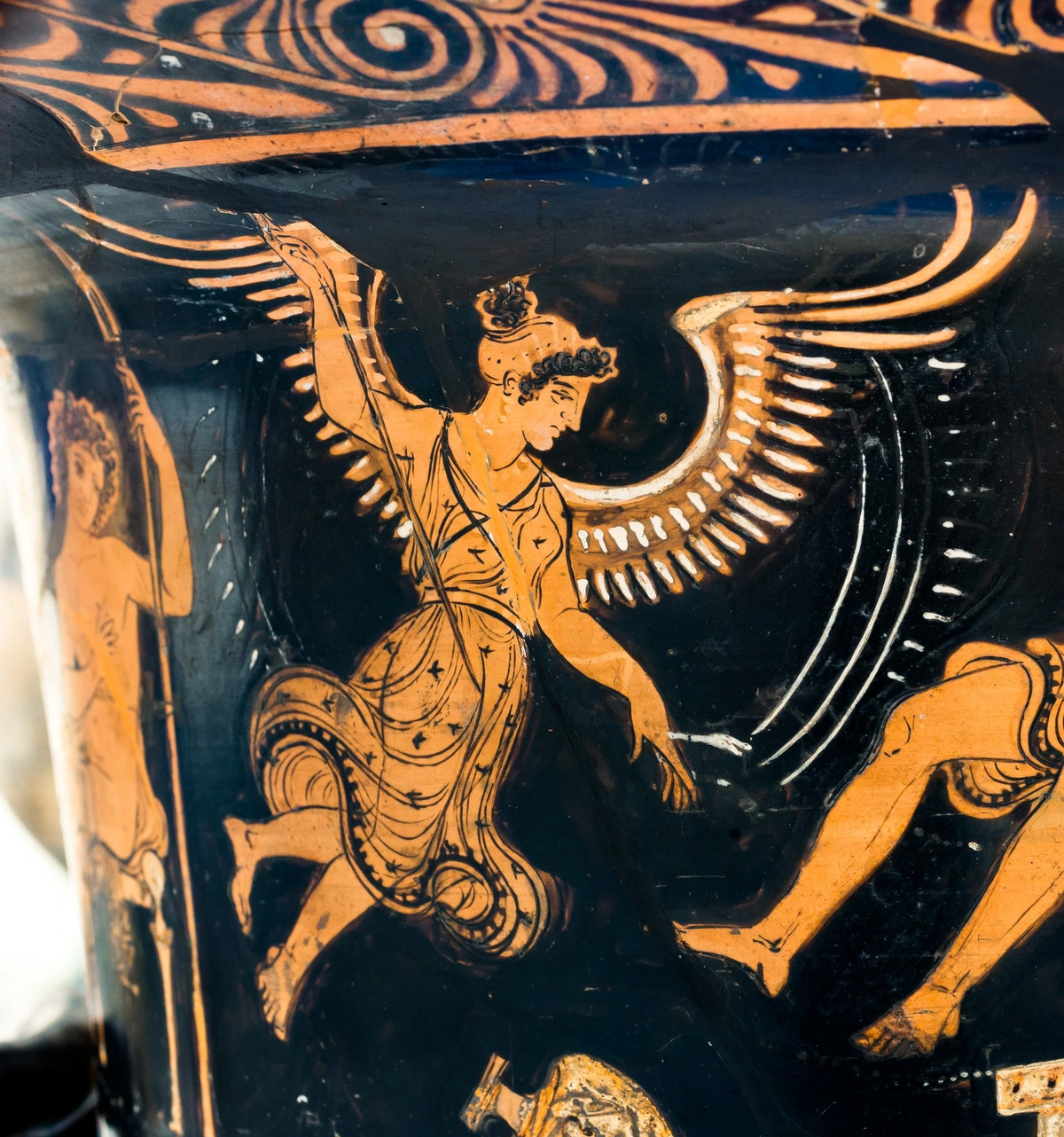
An Icon of Romantic Emotion
When she was rediscovered in 1863 by the French consul Charles Champoiseau, she was promptly shipped to the Louvre. This was the Romantic era, obsessed with the ruins of antiquity and their poignant beauty. Victorians saw in her incompleteness not a flaw, but the epitome of the sublime—a perfect expression of glory faded by time. Lord Elgin's marbles were debated; Nike was unequivocally adored. She fit the Romantic soul perfectly: triumphant yet tragic, beautiful but broken.
Think about that for a second. Why would a headless, armless statue of a naval victory resonate with 19th-century Europe, an era of burgeoning empires and rapid industrial progress? It's because she wasn't just a representation of victory; she was a testament to its impermanence. In a time of social upheaval and political instability, her broken form served as a powerful reminder of the transience of glory, an idea that has resonated with every generation since.
A Muse for Modernists
Later, as art fractured into movements like Futurism and Cubism, artists weren't interested in her narrative. They saw a more radical truth: she was a pure study in form, motion, and force. For them, the 'story' was irrelevant. What mattered was the dynamic spiral of her torso, the way her drapery dissolved into pure energy. She became a foundational text for understanding how to represent motion on a static plane, a lesson that directly influenced everything from Rodin's walking figures to Boccioni's 'Unique Forms of Continuity in Space'.

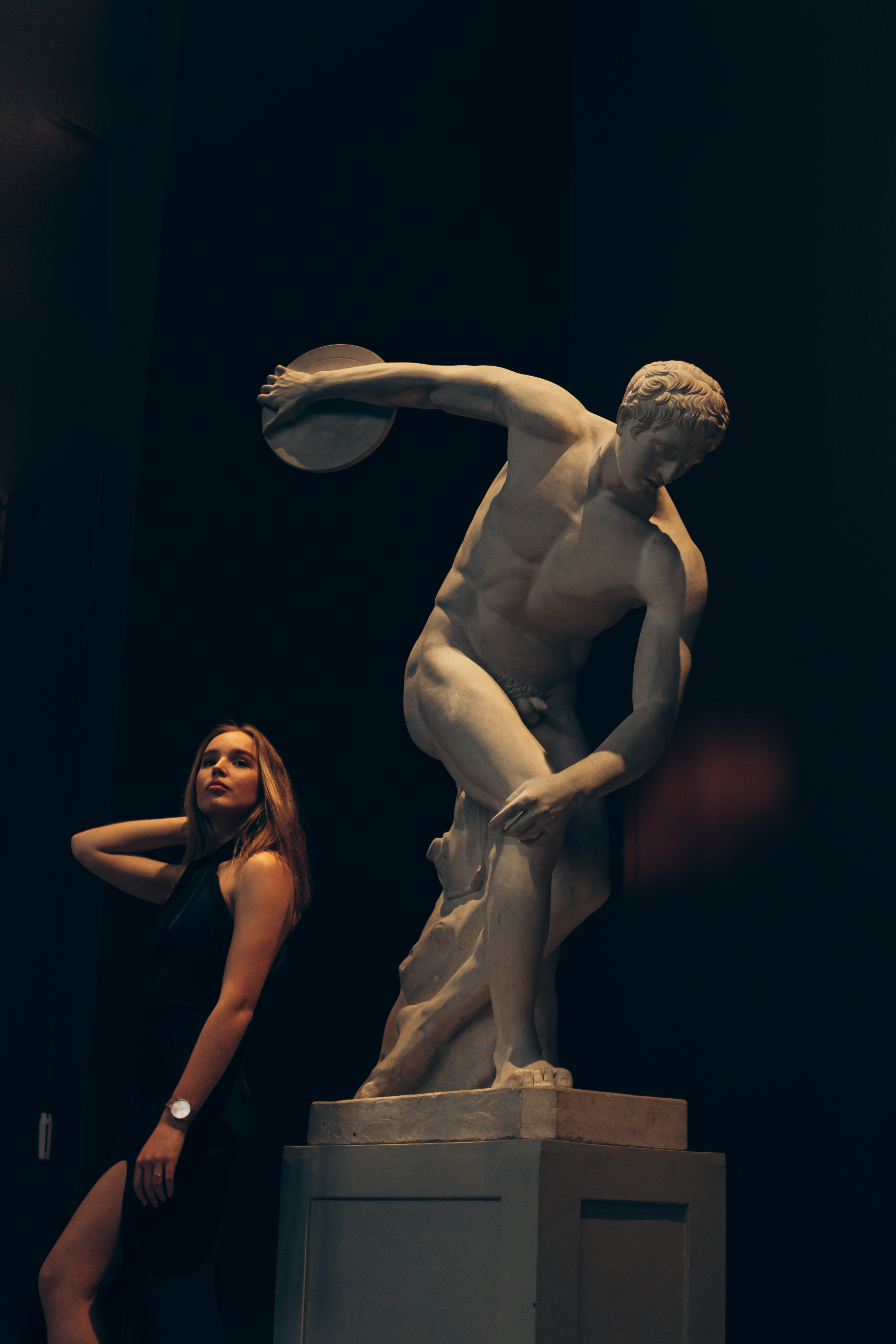






A Driver of Contemporary Creation
And now? For artists like me, she is all of these things and more. She's a paradox. She's a lesson in anatomy, an inspiration for abstract compositions, an icon of feminine power, and a cautionary tale about how history gets sanitized. When I work with bold, sweeping gestures in my art, I'm knowingly standing on her shoulders. When I choose to leave parts of a painting unresolved, trusting the viewer's mind to complete the work, I'm channeling her incompleteness. She is a living creative partner.