
Who Was Georgia O'Keeffe? The Ultimate Guide to American Modernism's Mother | Zenmuseum
Beyond the iconic flowers, truly see Georgia O'Keeffe's radical vision. This ultimate guide explores her pivotal role in American Modernism, New Mexico landscapes, and how her unique perspective reshaped modern art. Discover her life, process, and lasting legacy.

Who Was Georgia O'Keeffe? The Ultimate Guide to the Mother of American Modernism
Let's be honest. When you hear the name Georgia O'Keeffe, you probably think of one thing: giant, sensual flowers. Right? For decades, I felt like O'Keeffe was almost trapped in a gilded cage of her own iconic blooms, her immense contribution to art often reduced to just that single, albeit beautiful, facet. I saw them as beautiful, sure, but perhaps a bit… singular, almost too pretty. My own understanding of O'Keeffe truly shifted, however, when I stood before one of her stark New Mexico landscapes. With its raw, almost spiritual energy—the vast, unbroken horizons, the way the light carved monumental shapes from dusty hills, that profound sense of stillness—it really clicked for me. I began to understand what "monumental" truly meant in her work: a grandeur of scale and a timeless significance that elevates the subject far beyond its literal form. The sheer power, the way she could turn a dusty hill or a bleached bone into something monumental and alive—it changed everything. I realized I'd been looking at her work with only one eye open, missing so much more of her profound contribution to art. It was like suddenly understanding the vastness of the desert after only seeing a single cactus. That's the moment I began to truly see like O'Keeffe.
So, who was Georgia O'Keeffe, really? She was far more than just the 'painter of flowers.' She was a trailblazer, a foundational pillar of American Modernism, and an artist who saw the world—from a tiny seashell to a vast desert—with an intensity and clarity that most of us miss. American Modernism itself sought to forge a distinct artistic identity for the United States, aggressively moving beyond conservative European academic influences. It embraced uniquely American themes like the dynamism of urban life, the grandeur of industrialization, and the vast, often spiritual, landscapes of the continent. O'Keeffe was central to this quest, providing a deeply personal, often abstract, interpretation of these elements, moving art toward a purer expression of form and feeling. This isn't just a biography; it's an invitation for us to learn how to see like O'Keeffe, to truly grasp her radical impact on modern art. Join me as we explore her journey from the rolling prairies of Wisconsin to the stark desert of New Mexico, uncovering the revolutionary vision that made her a titan of American Modernism.
If you want to dive even deeper after this, we have an even more ultimate guide to Georgia O'Keeffe that explores every corner of her world. But for now, let's unpack her genius together.
From Prairie to Progressive Classrooms: O'Keeffe's Formative Years
Born in Sun Prairie, Wisconsin, in 1887, O'Keeffe's early life on a farm instilled in her a deep connection to nature and an appreciation for its fundamental forms that would subtly influence her art long before she ever consciously embraced abstraction. I often wonder how much those wide-open spaces, the endless horizon, and the cyclical rhythms of farm life—the stark contrasts of winter, the explosion of life in spring, the simple, powerful geometry of plowed fields or the rigid lines of fences—shaped her initial 'seeing,' laying a subconscious groundwork for her later monumental landscapes. Her formal artistic education took her from local art schools to the prestigious Art Institute of Chicago and later Teachers College, Columbia University.
It was here, under the tutelage of progressive educators like Arthur Wesley Dow, that her unique visual language began to truly take shape. Dow emphasized principles of design and abstraction, drawing inspiration from Japanese prints and traditional crafts like ukiyo-e, which focused on strong lines, flattened perspectives, and bold compositions. He encouraged students to focus on lines, colors, and shapes rather than strict representation, teaching the radical idea of distilling natural forms to their absolute essence. He believed art wasn't about mimicking reality, but about creating beautiful, harmonious compositions through abstract means—a concept that became a cornerstone of O'Keeffe's approach, teaching her to look beyond superficial detail. Think of it like a musician learning the underlying harmony and rhythm of a song, rather than just the surface melody; it opens up entirely new possibilities. This early exposure was crucial, laying the groundwork for her unique visual language. I often think about how many artists struggle to find their authentic voice, and O'Keeffe’s journey shows that it’s rarely a straight line; it's a gradual unfolding of an inherent vision.
One of her early series, the Charcoal Abstractions (1915), already hinted at the powerful, organic forms she would later explore. Works like No. 12 Special from this series, with its swirling, almost biological lines—like a magnified seed bursting with life, or the intricate whorls of a fingerprint—demonstrated her innate ability to convey immense energy and emotion through pure line and shadow, long before flowers or bones entered her iconic repertoire. You can almost feel the raw potential emanating from these early works, a prelude to the monumental visions to come. This foundational understanding of abstraction and form would prove essential as she navigated the electrifying art scene of New York.

The Electric Pulse of New York: Stieglitz and Urban Visions
Having established a foundational understanding of abstract design, O'Keeffe was perfectly poised for the vibrant, sometimes jarring, energy of New York. Her connection to the bustling art scene solidified when she moved there. In 1916, her charcoal drawings caught the eye of the influential photographer and gallerist Alfred Stieglitz, who exhibited her work at his famous "291" gallery without her prior knowledge! "291" wasn't just a gallery; it was a crucible for modern art in America, a daring space that introduced European avant-garde movements like Cubism and Futurism alongside emerging American talent like O'Keeffe, challenging academic traditions and championing radical new ways of seeing. It was a pivotal hub for artists looking to break away from traditional academic art, fostering a uniquely American artistic identity. It was the place to be seen, a veritable hotbed for new ideas and an essential art-lovers-guide-to-new-york-city. Their relationship, both professional and personal (they later married), placed her at the very heart of American Modernism. Stieglitz's own photographic work, known for its sharp focus, close-up framing, and abstract compositions—think of his iconic photographs of skyscrapers reduced to geometric patterns, or his "Equivalents" series which blurred the line between clouds and abstract forms—undoubtedly influenced O'Keeffe's unique visual language, encouraging her to isolate and magnify her subjects in ways that mirrored the camera's lens, often pushing her compositions to the edge of pure abstraction.
While in New York, O'Keeffe didn't just paint flowers; she tackled the towering urban landscape itself. Her skyscraper paintings, like "Radiator Building—Night, New York" (1927) or "The Shelton with the Two Towers" (1926), capture the dizzying heights, sharp angles, and geometric precision of the burgeoning metropolis. She was drawn to these structures not just for their imposing presence but as symbols of American innovation and modernity. While she mirrored the crisp, clean lines of Precisionism—an American Modernist movement championed by artists like Charles Sheeler and Charles Demuth who idealized industrial forms with photographic sharpness—O'Keeffe imbued her urban visions with a distinctly emotional depth, transforming architectural forms into powerful, almost living presences. With "Radiator Building," she conveys the dramatic, almost intimidating glow of the city at night, the towering structure seeming to pulse with an internal light. In "The Shelton," she reduces a monumental building to a mesmerizing play of interlocking geometric forms, a stark, powerful visual puzzle. She aimed to convey the feeling of modern urban life – the sense of awe, the relentless energy, and perhaps the anonymity of being a small figure amidst colossal structures. I remember feeling that exact sense of being dwarfed when I first moved to a big city, a mix of excitement and insignificance that O'Keeffe captures perfectly. Yet, this intense urban dynamism would soon give way to an even more profound artistic calling.
Beyond the Blossom: The Art of Magnified Seeing & Its Reception
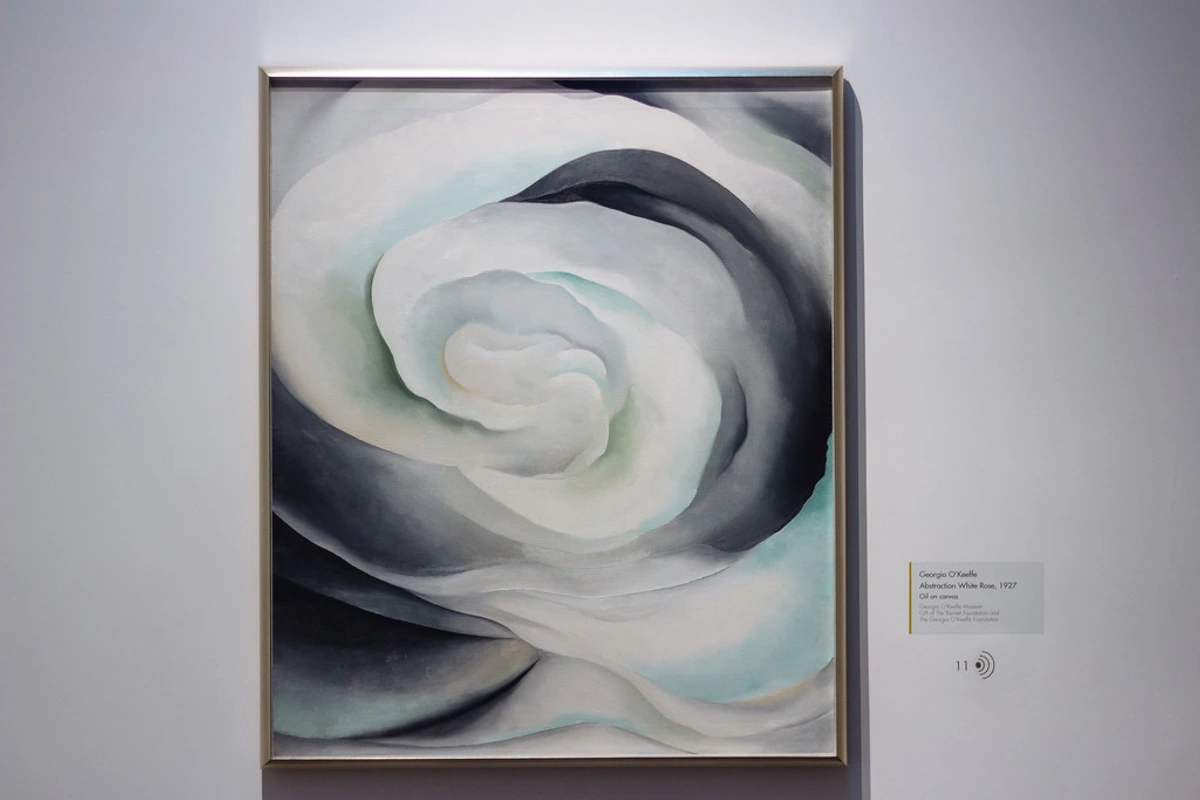
Okay, let's get the flower question out of the way. Yes, she painted them, and they are magnificent. She took something small and familiar, like a rose or an iris, and blew it up to a massive, often intensely cropped scale. Her goal, in her own words, was simple and profound: to make people in the bustling, fast-paced city stop and actually look at a flower. At a time when urban dwellers often sped past natural beauty, her work was a radical act of focused observation, a challenge to our superficial glances. It was an invitation to find the monumental in the minute, a concept that truly changed how I thought about everyday subjects in art. Take her "Abstraction White Rose" (1927), for instance; it's not just a flower, but a swirling exploration of form, light, and shadow. Her meticulous brushwork and subtle color layering allow the very veins of the petal to become rivers of light, revealing a microscopic universe of delicate beauty and immense energy. She was driven by a deep fascination with the internal structures and rhythms of nature, seeking to reveal the hidden power and sensuality inherent in organic forms, rather than just their outward appearance. It's a powerful reminder that if we just take a moment to truly observe, extraordinary beauty is everywhere.
credit, licence
Now, for the big controversy: are they sexual symbols? Critics at the time, mostly men, certainly thought so. They projected all sorts of Freudian interpretations onto them – reading deep, often subconscious, sexual meanings into the forms. This was a common trend in early 20th-century art criticism, often reflecting societal anxieties around female sexuality, the burgeoning field of psychoanalysis, and the art establishment's historical tendency to marginalize powerful female artists by reducing their work to personal or sexual matters. Critics, perhaps uncomfortable with a woman's powerful artistic voice and undeniable success, often sought to diminish or categorize her work through a sexualized lens—a pattern not uncommon for pioneering female artists of the era. O'Keeffe herself consistently denied it, and frankly, I believe her. She said, "You hung all your own associations with flowers on my flower and you write about my flower as if I think and see what you think and see of the flower—and I don't." Reducing these paintings to one single, sexualized meaning is to miss the much grander point about nature, form, and the profound act of seeing beyond superficiality. It also diminishes her powerful assertion of artistic intent against external projections. The true subject was the flower's inherent grandeur, its internal universe, not human desire. It makes me wonder, how often do we project our own biases onto an artwork, rather than truly engaging with the artist's stated intent?

The Desert's Embrace: Finding Soul and Form in New Mexico
Everything changed when O'Keeffe first visited New Mexico in 1929. The desert captured her heart and imagination in a way the city never could. She called it "the faraway nearby"—a place that felt both remote and intimately connected to her soul, a vast expanse that offered spiritual solace and boundless artistic inspiration. This paradoxical sense of a deeply personal yet expansive connection to the landscape truly became the wellspring of her most iconic works, moving beyond the city's confines into boundless space. She found inspiration in the vast, open landscapes of Ghost Ranch, with its ochre and crimson geological strata, the stark geometry of the Chama Valley, and the iconic flat-topped Pedernal mountain, which she painted repeatedly, seeing it as her "private mountain" and a constant presence. What was it about this arid, seemingly desolate landscape—its ancient geological formations, the intense quality of light, the dramatic shadows, the palpable sense of timelessness—that so profoundly captured her imagination? I believe it was the way the desert stripped away the unnecessary, revealing the essential forms and the raw, unyielding beauty she was always seeking. It was a landscape that encouraged profound introspection and allowed her to achieve an unparalleled artistic independence. She also engaged with the rich cultural tapestry of New Mexico, subtly incorporating elements from local Hispanic and Native American communities into her aesthetic, though always through her unique, abstract lens.
Her "Black Mesa Landscape, New Mexico" (1930) perfectly encapsulates this period. With its stark, simplified forms, piercing blues, and warm earth tones, it doesn't just depict a landscape; it evokes the feeling of the land—its ancient stillness, its raw power, its sun-baked silence, and the almost sculptural quality of its forms under the vast sky. She wasn't just painting a landscape; she was painting the feeling of the landscape itself, its very soul, demonstrating a unique approach to what is a landscape painting.
The bleached animal bones she collected over many years – skulls, pelvises, vertebrae – weren't symbols of death, as some misinterpreted. For O'Keeffe, they represented the enduring, beautiful structure of life in a harsh environment, a timeless connection to the land and its cycles of existence. She was fascinated by their abstract forms, the way light fell across their curves and hollows, making them monumental against the brilliant blue sky. It was as if she saw the skeletal architecture of the land itself echoed in these sun-bleached fragments; the negative space of the vast sky defining the powerful contours of the bone. This is the O'Keeffe that resonates most deeply with me—the one who found the universe in the curve of a pelvis bone, a raw and powerful testament to nature's relentless beauty. I often reflect on how the desert simply allowed her to strip away the superfluous, to focus on pure form and emotion, much like I try to do in my own how-to-abstract-art work. It’s a profound lesson in finding the universal in the particular.

O'Keeffe's Artistic Blueprint: How to Identify Her Masterpieces
If you want to spot an O'Keeffe from across the room at a museum (a fun game I like to play), here's what to look for. It's almost like a recipe, a consistent artistic fingerprint that makes her work instantly recognizable, yet endlessly compelling. This is her unique artistic DNA, a deliberate set of choices that elevate her work. To truly understand her genius, let's break down her signature artistic elements:
Technique  | Description | Key Artwork Example(s) | My Personal Take on its Impact |
|---|---|---|---|
| Magnification & Cropping | She zooms in tight on her subjects, often cropping them in unusual ways to force you to see them as abstract shapes rather than just recognizable objects. For instance, cropping a flower petal to resemble a sweeping, abstract curve rather than a mere botanical detail. | Jack-in-the-Pulpit, No. III (1930), Red Canna (1924) | This is what initially drew me in; it's a bold move that demands attention, almost like a visual whisper that shouts. It makes you reconsider what you thought you knew, revealing the monumental in the minute. |
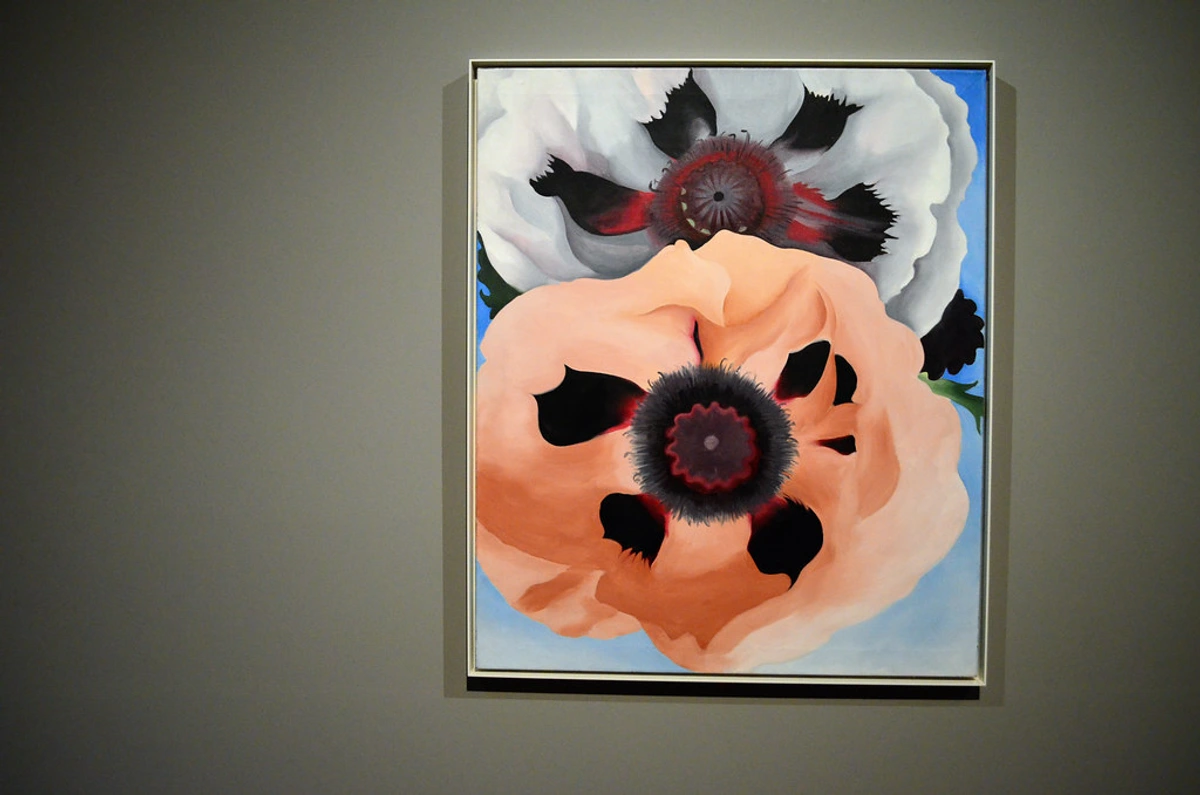
| Blending & Gradation | Look at her masterful use of color. She creates incredibly subtle, smooth transitions between hues, giving her forms a soft, glowing, almost ethereal quality, as seen in the luminous petals of her Oriental Poppies or the endless horizons of her New Mexico skies. | Oriental Poppies (1927), Sky Above Clouds IV (1965) | It’s deceptively simple, but incredibly hard to master. The seamless shifts create a palpable sense of atmosphere, almost as if you can feel the warmth of the New Mexico sun or the cool hush of a moonlit desert night. It's a masterclass in conveying mood through pure color, evoking a sense of timelessness. |
| Simplified Forms | She strips away unnecessary detail, boiling down landscapes, bones, and flowers to their essential lines and shapes. This isn't about being simplistic, but about revealing the underlying truth and power of the subject by removing distractions. It's like an architect stripping a building down to its essential structural elements to reveal its inherent strength and beauty. | Cow's Skull: Red, White, and Blue (1931), Black Place II (1944) | This is where the abstraction truly shines, revealing the core essence of the subject and making it universally relatable, almost archetypal. It teaches us to see the fundamental architecture of things. |
| Vibrant Color Palette | Whether it's the piercing blue of the New Mexico sky, the soft pinks of a flower, or the deep reds of a mesa, her use of color is both bold and nuanced, often using unexpected combinations to evoke emotion and atmosphere. In Red Hills and Pedernal (1936), for example, the intense reds clash with pale blues in a way that feels both unsettling and exhilarating. She once said, "I found I could say things with color and shapes that I couldn't say any other way – things I had no words for." This is key to understanding how artists use color and the broader the-psychology-of-color-in-abstract-art-beyond-basic-hues. | Red Hills, Lake George (1927), Blue and Green Music (1919) | Her blues, especially, have a particular intensity I haven’t seen elsewhere—they vibrate with an almost spiritual energy, a silent conversation with the vastness of the sky and land. And her Blue and Green Music truly attempts to translate the synesthetic experience of sound into visual rhythms and hues, a pure abstract expression of feeling. |
| Sensuous Lines | Everything flows. The curves of a hill, the petal of a flower, the opening of a seashell—it's all captured with a distinct, flowing line that feels both organic and alive, often hinting at the rhythm of the natural world. Think of the flowing curve of a desert mesa that mirrors the swell of a flower petal. | Shell and Old Shingle I (1926), Ram's Head White Hollyhock and Little Hills (1935) | There's an undeniable rhythm and movement in her forms, a true poetry of line that feels both ancient and utterly modern, drawing you into its embrace. These lines are the heartbeat of her work, making even a static form feel alive and breathing. |
By looking for these five key elements, you can begin to identify an O'Keeffe painting with confidence, understanding the deliberate choices that make her work so unique and why they resonate so deeply.
Her Broader Brushstrokes: Diverse Subjects & Unseen Worlds
While her flowers and landscapes are iconic, O'Keeffe's artistic vision was far broader. She found beauty and abstraction in unexpected places, proving that abstraction isn't just about large, grand subjects. She painted religious crosses found in the New Mexico landscape, transforming these humble, weathered wooden symbols into powerful, almost minimalist statements of faith and form, often silhouetted with imposing presence against her intense skies. These crosses, deeply embedded in the cultural fabric of New Mexico's Hispanic and Native American communities, held both aesthetic and profound historical weight for her, representing enduring spirituality in a harsh land, often with the same stark simplification she applied to bones.
Her doorway paintings, particularly those of her Abiquiú home, explore depth, light, and geometry with a quiet intensity, reducing architectural elements to abstract plays of light and shadow. They are more than just depictions of entrances; they invite contemplation about what lies beyond, hinting at mystery, the unknown, or a spiritual dimension—a quiet, internal world just beyond reach, much like an intimate meditation. She was fascinated by the way light would define these simple architectural forms, creating a dance of planes and voids. Even still lifes of mundane objects like shoes or radios became vehicles for her unique perspective, boiling down their essence into striking, almost sculptural compositions that reveal the hidden geometry and texture of the everyday. This versatility is often overlooked, but it powerfully underscores her relentless pursuit of capturing profound meaning from the seemingly ordinary, and it makes me think about how much beauty we miss in our daily lives by not simply looking with the same intensity she brought to every subject.
The Craft Behind the Vision: O'Keeffe's Artistic Process
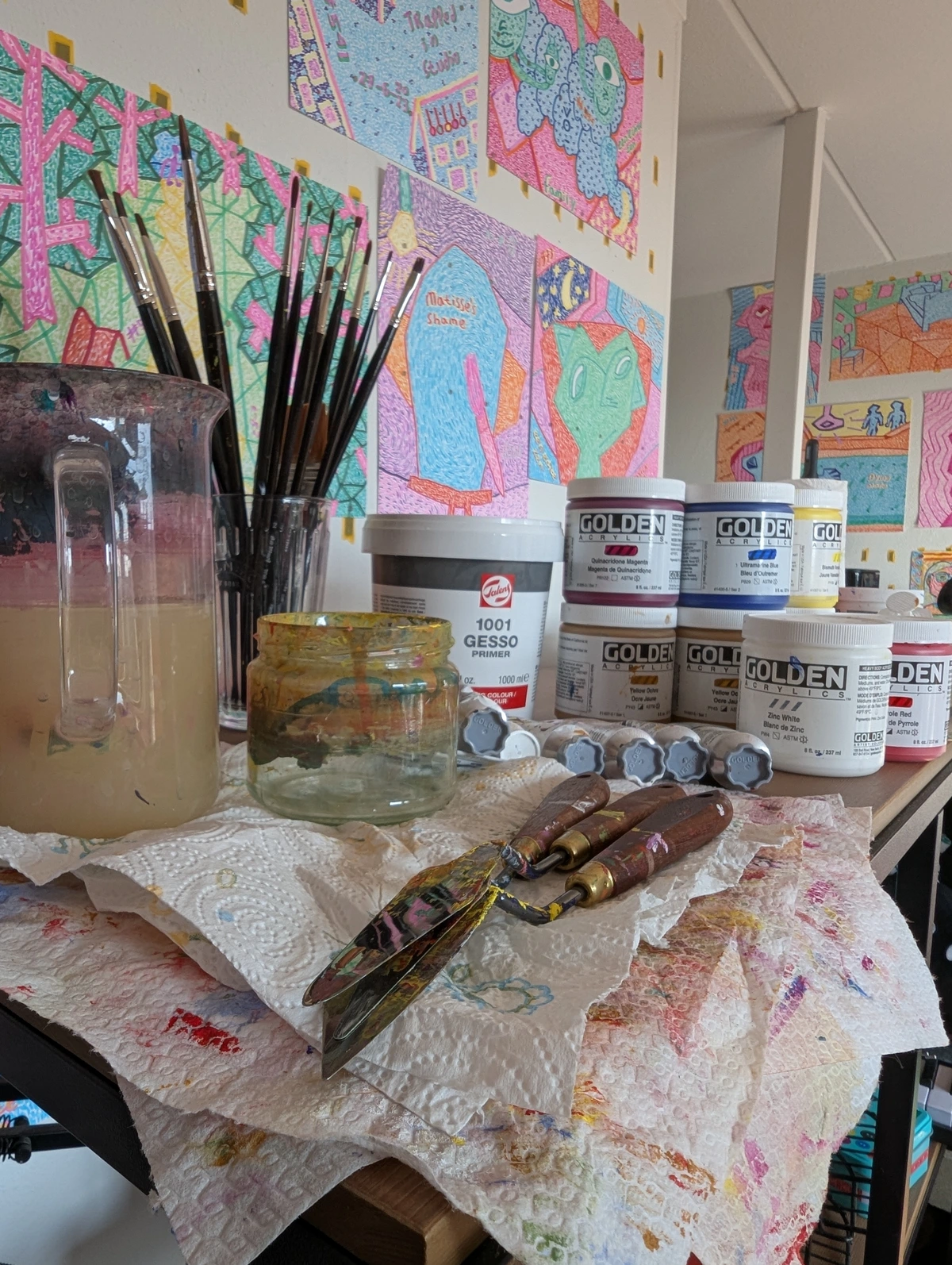
Beyond her distinctive visual language, O'Keeffe's artistic process was marked by a meticulous yet intuitive approach, honed over decades. She primarily worked with oil paint, favored for its richness, opacity, and incredible blendability, allowing her to achieve those characteristic smooth gradations and luminous surfaces that give her forms such a soft, glowing quality. She was known to use high-quality pigments, ground finely, contributing significantly to the intensity and purity of her colors—a crucial element for capturing the vivid, enduring hues of the New Mexico light and landscape, and one she guarded fiercely. While she often worked on a monumental scale for her iconic flowers and landscapes, she also created smaller, intimate works. However, she was also a master of watercolor and charcoal, especially in her early years, using them to experiment freely with abstraction and form, much like an architect might sketch initial ideas for a grand structure.
Her approach to composition was deliberate: she often cropped her subjects tightly, filling the canvas and eliminating extraneous detail to amplify their essential forms. She instinctively understood the power of negative space (the empty space around and between subjects), allowing these voids to define and enhance her subjects' presence, creating tension and harmony by guiding the viewer's eye and emphasizing the subject's contours. Think of her vast New Mexico skies, where the sheer expanse of blue or white defines the powerful silhouette of a mountain or a bone, making the subject leap forward. In her Abiquiú studio, which she meticulously designed with clean lines and abundant natural light, she worked with an almost monastic solitude, a stark contrast to her earlier, more social life in New York. She often painted multiple versions of the same subject, tirelessly refining her vision until she captured its absolute essence, engaging in an intense dialogue with her chosen motif, stripping away all but its ultimate truth. This was a testament to her deep focus and unwavering dedication to her craft. Even as her eyesight began to fail in her later years, her dedication remained: she adapted her artistic practice, creating subtle, luminous watercolors and collaborating closely with assistants to realize larger, pre-visualized works. Her late-period works often became more abstract and serene, focusing on the quality of light and memory. It was a remarkable testament to her resilience and unwavering dedication to art, proving that vision can transcend physical limitations.
An Enduring Force: O'Keeffe's Legacy and Influence
O'Keeffe's impact is hard to overstate. In a world completely dominated by male artists, she forged her own path and became one of the most successful and recognizable artists of her time, achieving significant commercial success and high market values during her lifetime. Her work was instrumental in defining American Modernism as a movement that celebrated distinct American themes and broke away from European artistic traditions. She proved that subjects from nature could be a powerful vehicle for radical modern abstraction, pushing boundaries in a way that continues to resonate. Her fearless independence, singular vision, and profound connection to the American landscape cemented her place as a pioneer, inspiring countless artists who came after her.
Her influence can be seen in the work of many later artists who explored abstraction and the natural world, from Richard Diebenkorn's expansive, light-filled abstract landscapes—which echo O'Keeffe's monumental sense of place and simplified forms in their celebration of Californian light and space—to contemporary female abstract painters like Emily Mae Smith, whose vibrant, symbolic works challenge traditional narratives and often share O'Keeffe's defiance of patriarchal interpretations, or Judy Chicago, whose feminist art often shares O'Keeffe's embrace of natural, powerful forms and her assertion of female agency against a male-dominated art world. She showed them how to truly see and translate that vision onto canvas, paving the way for a more diverse and introspective approach to art. If you're curious about the broader evolution of such styles, delve into the-ultimate-guide-to-abstract-art-movements-from-early-pioneers-to-contemporary-trends.
Beyond painting, O'Keeffe's aesthetic has even influenced interior design and architecture, with her minimalist use of form, natural palettes, and appreciation for light and space reflected in many modern homes and studios; think clean lines mirroring her simplified forms and earthy color palettes echoing her New Mexico landscapes, creating a sense of quiet grandeur. She lived to be 98, painting almost to the very end. Her move to Abiquiú in New Mexico marked a period of continued prolific output and deepening connection to the land, where she cultivated a life of artistic independence and quiet intensity, actively designing her living spaces to enhance her creative process. O'Keeffe was not just an artist; she was a phenomenon, a testament to artistic independence, resilience, and a deep, almost spiritual connection to the American landscape. Her place in the larger story of art is unshakeable, something you can explore on any good art timeline. Many of her works are available to buy.
Frequently Asked Questions (FAQ)
Let's answer some of the questions that often arise when exploring Georgia O'Keeffe's extraordinary life and groundbreaking art.
What is Georgia O'Keeffe best known for?
Georgia O'Keeffe is renowned for her diverse contributions to American Modernism. While most famous for her large-scale, close-up paintings of flowers, such as the iconic Jack-in-the-Pulpit series, she is equally celebrated for her striking landscapes of Northern New Mexico, like Ranchos Church and Taos Mountain, her powerful paintings of animal skulls against desert backgrounds (e.g., Cow's Skull: Red, White, and Blue, often depicting the skull's stark form against a backdrop of patriotic colors or vast sky), and her early, geometric cityscapes of New York, all characterized by their abstracted forms and vibrant colors. She transformed the mundane into the monumental.
What art movement is Georgia O'Keeffe associated with?
Georgia O'Keeffe is a key figure in American Modernism. This movement emerged in the early 20th century as American artists sought to develop a distinctive style, independent of European traditions, often focusing on American subjects and expressing the spirit of the new nation. While her work has elements of Precisionism (especially in her cityscapes, with their sharp focus and clean lines) and touches upon Surrealism in its dreamlike, magnified qualities or unexpected juxtapositions, she largely defied easy categorization. Her unique style, characterized by simplifying forms, bold colors, and an intense focus on natural elements, was entirely her own and highly influential in forging a distinct American artistic identity that resisted singular labels. Unlike contemporaries leaning into Regionalism or Social Realism, or the later gestural freedom of Abstract Expressionism, O'Keeffe maintained a deeply personal and abstract vision that set her apart.
Were Georgia O'Keeffe's flower paintings intentionally sexual?
This is the most debated aspect of her work, and O'Keeffe herself strongly and repeatedly rejected this interpretation. Critics of her time, largely influenced by the burgeoning field of Freudian psychoanalysis, often interpreted them as expressions of female sexuality. This was a common, often dismissive, critical lens applied to powerful female artists whose work challenged norms, reflecting societal discomfort with female artistic agency and an unhealthy or excessive interest in interpreting art through a sexualized lens. However, O'Keeffe consistently asserted she was simply painting what she saw, aiming to convey the essence and grandeur of the flower, often magnified to make urban dwellers truly observe them. She explicitly stated, "You hung all your own associations with flowers on my flower and you write about my flower as if I think and see what you think and see of the flower—and I don't." The sexual interpretations, she maintained, were projections of the viewers, not her artistic intent, highlighting the societal tendency to sexualize and diminish the work of powerful female artists. This is a crucial lesson in understanding artistic intent versus public perception.
How did photography influence Georgia O'Keeffe's painting?
The influence of photography, particularly through her husband Alfred Stieglitz, was profound. Stieglitz, a pioneer of modern photography, exposed O'Keeffe to avant-garde visual ideas and a focus on abstract composition through the camera's lens. Her famous close-up, cropped compositions of flowers and objects directly reflect a photographic sensibility, mimicking the way a lens can isolate and magnify a subject, transforming it into an abstract form. This allowed her to frame subjects in unconventional, often tightly cropped ways, forcing viewers to see them differently, much like a camera's lens isolates a scene. While she never directly copied photographs, her work shared photography's emphasis on sharp focus, strong composition, and presenting subjects in new, unconventional ways. It was a symbiotic relationship where both mediums enriched her visual vocabulary.
What was O'Keeffe's life like in New Mexico, away from the art world?
O'Keeffe's life in New Mexico, particularly after permanently moving to Abiquiú, was characterized by profound artistic independence and a deliberate pursuit of solitude and connection with the land. She cultivated a minimalist lifestyle, meticulously designing her homes at Ghost Ranch and Abiquiú to harmonize with the landscape, and living a disciplined daily routine centered around her art. Far from the bustling New York art scene and Stieglitz's demanding presence, she found immense personal freedom and sustained artistic inspiration in the quiet vastness of the desert. It truly became an artistic sanctuary for uninterrupted creative exploration. She was an avid hiker and explored the landscape extensively, often collecting bones and rocks. She also engaged with local Hispanic and Native American communities, though she maintained a fierce artistic and personal independence. This deliberate isolation allowed her to deeply immerse herself in her subjects, leading to some of her most iconic and introspective works. It was a life fully dedicated to her vision, on her own terms.
How did O'Keeffe's critics impact her career?
O'Keeffe navigated a complex relationship with critics throughout her career. While some, like Alfred Stieglitz, were ardent champions, others were dismissive or, as discussed with her flower paintings, projected their own biases onto her work. Initially, negative or reductive interpretations, especially the Freudian sexual readings, were frustrating and even prompted her move away from certain subjects. However, her unwavering commitment to her own vision and her fierce independence meant that she ultimately transcended these criticisms. She continued to paint what she saw and felt, and rather than directly engaging in public debates, she let her art speak, asserting her vision through her consistent and powerful output. This resolute focus eventually established an unshakeable reputation, making her one of America's most respected artists. Her ability to define her own artistic narrative, despite external pressures, is a powerful aspect of her legacy.
Where can I see Georgia O'Keeffe's art?
Her work is in major museums worldwide. Key institutions include the Museum of Modern Art (MoMA) in New York (known for her early New York works and abstractions), the Art Institute of Chicago (housing significant early works), the National Gallery of Art in Washington D.C., the Whitney Museum of American Art, and the National Museum of Women in the Arts (also in D.C., a crucial venue for her work). The single best place to see her work, particularly her iconic New Mexico landscapes and bone paintings, is the Georgia O'Keeffe Museum in Santa Fe, New Mexico, which is dedicated solely to her life and art, offering unparalleled insight into her creative world. It's a powerful reminder of how immersive it can be to see art in a dedicated space like a museum, something we try to capture at our home base in the den-bosch-museum.

Did O'Keeffe and Stieglitz have a complicated relationship?
Yes, their relationship was complex and intense, deeply intertwined with their artistic careers. Alfred Stieglitz, a powerful figure in the art world, was O'Keeffe's mentor, gallerist, and later her husband. While he passionately championed her work, their relationship was marked by a significant age difference, intense emotional connection, and extensive collaboration (including his famous photographic portraits of her). However, it was also strained by his extramarital affairs and O'Keeffe's increasing need for artistic independence and solitude, particularly during her time in New Mexico, away from his constant presence. Stieglitz, in his role as gallerist and promoter, also exerted significant control over her early public image and narrative, creating a complex dynamic of both profound support and artistic constraint that O'Keeffe eventually navigated to establish her fiercely independent voice. Their extensive correspondence offers rich insight into their complicated bond and the underlying power dynamic, set against the backdrop of early 20th-century societal norms regarding marriage and artistic freedom.
A Final Thought: The Invitation to Truly See
Georgia O'Keeffe taught us a new way of looking. She showed us that the monumental can be found in the minute, and that the modern world wasn't just about cities and machines—it was also about the enduring, quiet power of the natural world. Her artistic journey, from the geometric precision of New York skyscrapers to the sensuous forms of New Mexico's desert, offers a powerful lesson in finding one's authentic voice and vision, relentlessly pursuing truth in form and color. Her unwavering commitment to abstraction, vibrant color, and finding universal truths in the particular profoundly aligns with the spirit of contemporary art and the broader appreciation of visual expression.











The next time you find yourself in front of an O'Keeffe, I urge you to take a moment. Breathe. Try to forget the labels and the preconceived notions. Instead, look for her masterful use of magnification and cropping, the seamless blending and gradation of her colors, the profound simplification of forms, the unexpected vibrancy of her color palette, and the elegant sensuous lines that define her subjects. Engage with the present moment and observe deeply, almost mindfully, as she intended. You might be surprised by what profound beauty and meaning you find, and perhaps even discover a new way of seeing the world around you too. And just as I found myself seeing the world anew after that first encounter with her New Mexico landscapes, I hope this exploration encourages you to look closer, to find the monumental in the minute, and to truly see the profound beauty that surrounds us. Perhaps, like me, you'll feel a deep connection to her work and a renewed appreciation for the abstract beauty that underpins our reality, an invitation to a more profound way of being in the world. What will you choose to look at differently today? I'd love to hear about the new perspectives you uncover.