
What Is Burnt Umber? The Secret History and Science of a Classic Paint
A deep dive into the rich, earthy world of burnt umber pigment, exploring its ancient history, unique chemical makeup, and enduring role in art from the Renaissance to modern abstract works.

What Is Burnt Umber? The Story of Art's Most Unassuming Earth Tone
From Ancient Caves to Modern Canvases
Have you ever stopped to wonder about the colors right beneath your feet? We spend so much time reaching for the brightest tubes on the shelf, the latest synthetic inventions, that we forget the most ancient colors were always there, waiting in the soil. For me, that realization started with a single, unassuming tube labeled 'Burnt Umber.' It doesn't shout for attention. It doesn't promise neon brilliance. It just is—a deep, quiet brown with a reddish soul. But this modest color holds the secret history of art itself, a story written in rust and shadow.
I've always been fascinated by how the most fundamental things in art have the deepest roots. We chase the new, the bright, the complex, but the real magic is often in the primal stuff—the clay, the ochres, the umbers. The story of burnt umber doesn't start in an artist's studio, but in the earth itself, under a baking sun millions of years ago. The original, raw pigment is known as raw umber. It's a natural earth pigment, a type of clay richly colored by iron and manganese oxides. Think of it as soil that has been naturally concentrated and baked by geological processes over millions of years. The manganese is crucial here—it's what gives umber its characteristic depth and cooler, more olive-toned quality compared to other earth tones.
Pigment historian Nicholas Eastaugh describes early earth pigments as "the artist's first tool-kit," and I love that phrase. It wasn't about advanced chemistry. It was about chance and curiosity. Someone, somewhere, smeared a handful of dark clay on a rock face and a line was born. The first mark. The birth of painting. And umber, in its raw form, was there from the very beginning. Imagine a prehistoric human walking past a clay bank stained dark by mineral run-off. They scoop some up, mix it with water or animal fat, and a line is born. It's the birth of painting, and umber was there from the very beginning.
The key ingredients are goethite, which gives it a yellowish-brown hue, and manganese dioxide, which deepens it into a darker, cooler, more olive-toned brown. The name "umber" itself is thought to come from the Latin umbra, meaning "shadow," which feels incredibly appropriate for a color that has defined darkness in painting for millennia.
But here's where it gets interesting. At some point, a clever artist—or perhaps a curious cook tending a fire—discovered that heating raw umber transforms it. The process of calcination (basically, just roasting it) dehydrates the iron oxides. This chemical change turns the goethite into hematite, swapping the yellowish undertones for deeper, richer red ones. The manganese content ensures the color doesn't just turn red but becomes a complex, reddish-brown. The result is burnt umber.
This alchemy-by-accident paved the way for intentional control. While we can't pinpoint the first person to do this, evidence suggests that by the time of ancient Egypt, artists had mastered the technique. They weren't just using what the earth gave them; they were actively manipulating it, learning that temperature and duration were the keys to unlocking different shades of darkness. It's one of the earliest examples of chemistry in service of art.
This isn't a modern invention. Our Paleolithic ancestors were grinding these clays in caves like Lascaux and Chauvet over 17,000 years ago. The practice of heating them to change their color is ancient, but it became a refined, almost alchemical technique during the Renaissance. Artists' workshops began to closely guard their specific roasting temperatures and durations, realizing that a few degrees of heat could mean the difference between a dull brown and a luminous, reddish shadow. They were, in effect, the first chemists of color.
Cennino Cennini, the famed author of The Craftsman's Handbook from around 1400, gave detailed instructions for treating earth pigments. He advised artists to "cook" their raw earths carefully, noting how the heat would "change their nature." This secretive, guild-protected knowledge was a competitive advantage. A workshop's unique burnt umber recipe could be what made their paintings stand out in a crowded Florentine art market.
The Science of the Shade: What Is Burnt Umber Made Of?
Okay, let's get a little technical, but I promise to keep it simple. Think of the pigment like a recipe. I've always found that the most profound secrets are often hidden in the humblest of places. It's a deceptively complex mixture, and the magic happens at the molecular level. To truly understand it, we need to look past the color and into its atomic structure. It's a deceptively complex mixture, and the magic happens at the molecular level. To truly understand it, we need to look past the color and into its atomic structure.
Raw Umber's Recipe:
- A base of clay (silica and alumina) acts as the inert body. This doesn’t add much color but provides structure and bulk.
- A primary coloring agent: iron oxide hydroxide (goethite), which is FeO(OH). Goethite is what gives raw umber its foundational yellowish-brown character.
- A secondary, darkening agent: manganese oxide, typically manganese dioxide (MnO₂). This is the critical component, adding a cool, olive-toned darkness that defines raw umber.
The ratio of iron to manganese is what creates such variation between different umber deposits around the world. A clay from Cyprus will have a different personality than one from Italy or Pennsylvania, just like wine grapes from different regions. And this, as any art conservator will tell you, makes identifying the exact provenance of the pigment in an Old Master painting a fascinating, and often impossible, piece of detective work.
When you apply heat, you're essentially changing the recipe on a molecular level.
Burnt Umber's Recipe (The Transformation):
- The base clay remains, still providing structure, its job unchanged by the heat.
- The iron oxide transforms from goethite (FeO(OH)) into hematite (Fe₂O₃), losing its water molecule. It's a metamorphosis. The iron atoms literally rearrange themselves into a different crystalline structure. It’s like graphite turning into diamond under immense pressure—same carbon, new form.
- The manganese oxide remains, but its influence is now blended with the new, redder iron oxide. The manganese acts like a conductor in an orchestra, moderating the fiery reds of the hematite to create that perfect, resonant, reddish-brown tone. Too little manganese, and you get a color closer to burnt sienna. Just the right amount gives you the harmonious complexity of burnt umber.
It's remarkable, isn't it? The same elements, just rearranged by fire, create a completely different character. This is why burnt umber is warmer, more transparent, and has a greater tinting strength than its raw counterpart. That richness comes from the hematite. Most pigments hide their secret, but umber's secret is written in its very chemistry—the story of its transformation from a cool earth to a warm shadow.
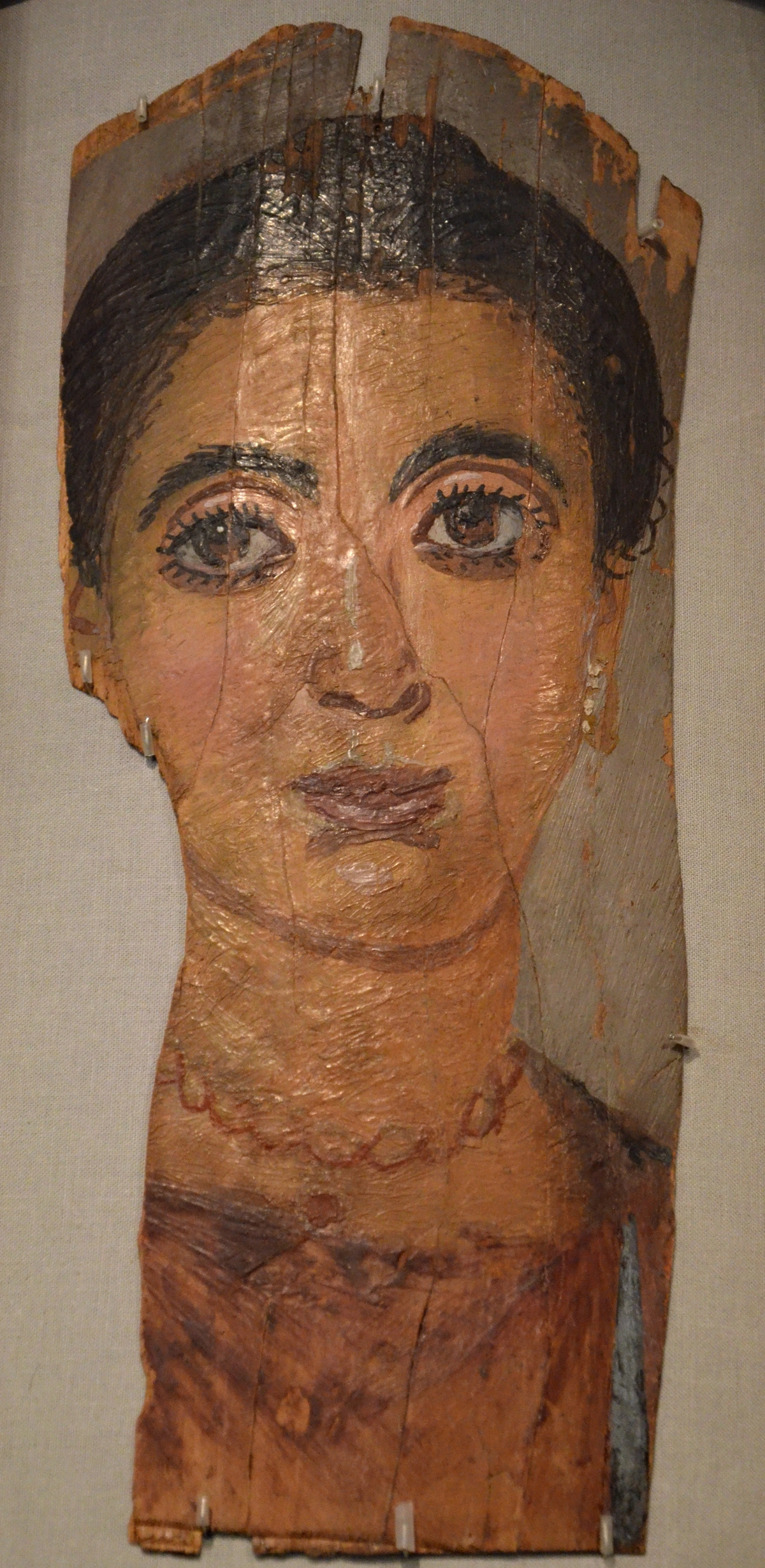
This transparency is its hidden genius. When you paint a glaze of burnt umber over another color, the light passes through, bounces off the lower layer, and comes back to your eye with a shimmering depth. An opaque pigment would just sit on top like a blanket, but umber integrates. It becomes part of the shadow, not just a description of it. This single property is why it has been the cornerstone of glazing and underpainting techniques for centuries.
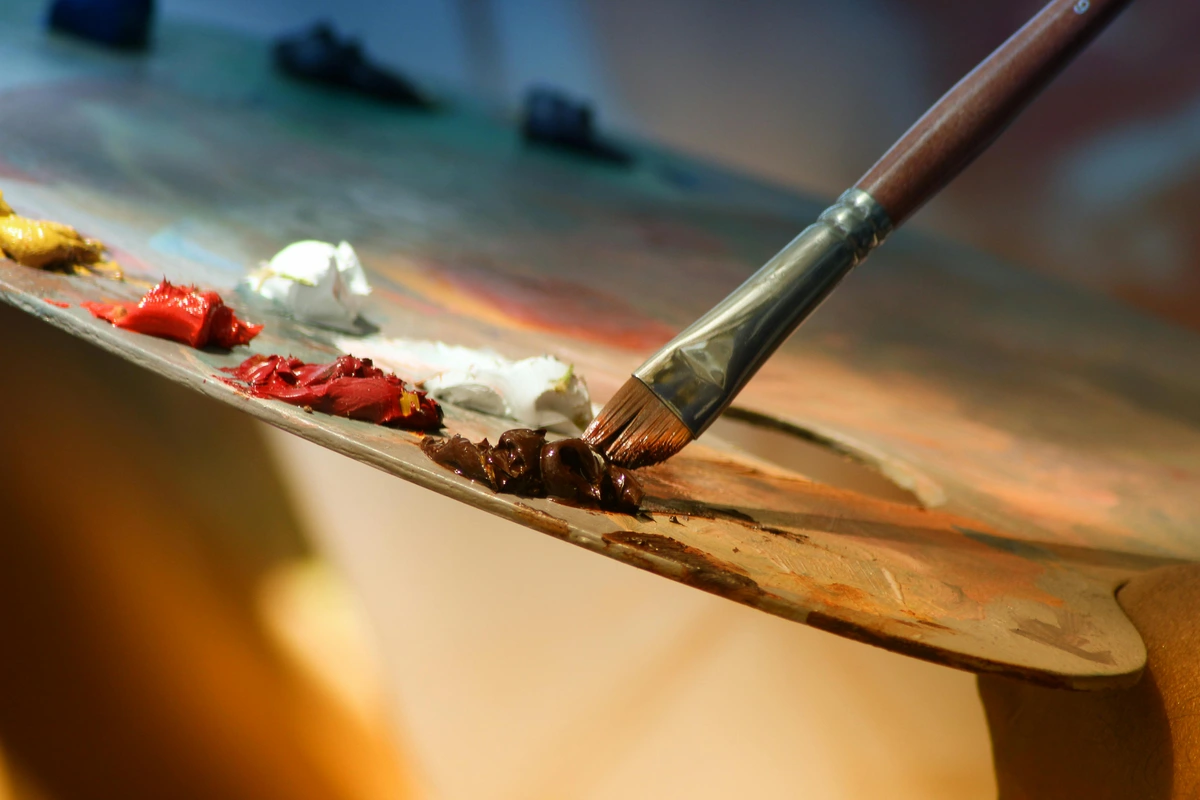
Why Artists Can't Live Without It: The Characteristics of a Master Pigment
I remember my own 'black period' vividly. I was convinced that to paint a shadow, you needed black. It seemed so logical, so obvious. The result was a series of paintings that looked like they had holes punched in them—flat, dead voids where life should have been. It was a dispiriting experience until a much older, wiser artist saw my work, sighed, and handed me a tube of burnt umber. "Try this," he said simply. "Stop describing darkness. Start building it." That single piece of advice changed everything. It taught me to look closer. Black, as a flat, singular pigment, is a lie we tell ourselves. In the real world, shadows are symphonies of reflected color, full of warmth and life. Burnt umber is the conductor of that symphony. It's not just a brown; it's a tool for creating life-like depth and a fundamental building block for a painter. It re-teaches you how to see.
These characteristics aren’t just a list of features; they’re the reasons it has outlasted countless other pigments. While bright crimsons fade and vibrant greens shift, burnt umber endures, both on the canvas and in an artist’s daily routine.
Here’s a breakdown of its key properties:
- Hue & Value: It sits in the deep brown range but has a distinct reddish-orange undertone, courtesy of that hematite. Its relative darkness makes it perfect for creating rich darks and warm shadows without sinking into dullness. When you hold a dab of it on your palette knife next to black, the difference is staggering. Black consumes light; umber reflects a warm glow back at you. It’s the color of a shadow on a sunlit terracotta pot, not a moonless night.
- Transparency: It's a highly transparent pigment. This allows light to pass through it and reflect off the layers beneath, giving shadows a sense of luminosity rather than a flat, dead look. It's the difference between a cast shadow and a felt presence. A glaze of burnt umber over a white canvas imparts a warm, glowing tone that is the starting point for many classical portrait painters.
- Tinting Strength: It's strong. A little bit goes a long way when mixed with white or other colors. You can create a vast range of beautiful, chalky pinks and warm, subtle beiges. A tiny dot of umber into a pile of Titanium White will create a subtle flesh tone, while a bit more creates the warm base for sandy beaches or sun-drenched stone. Its influence is powerful but gentle.
- Drying Time: Like many earth pigments containing manganese, it's a natural siccative, meaning it helps oil paint dry faster through oxidation. For an artist working in layers, this is a massive bonus, allowing for faster over-painting and reducing the risk of cracking. This is why it was, and still is, the ideal pigment for a foundational underpainting, or imprimatura. It sets the stage for a painting that can be built up quickly and securely.
Finding Its Place: Burnt Umber vs. Its Relatives
Think of the earth tone family like relatives at a reunion. You've got the fiery, loud cousin (Burnt Sienna), the quiet, grounded one (Raw Umber), and the bright, sunny sibling (Raw Sienna). And then there's Burnt Umber—the wise, complex patriarch. It doesn't need to shout to be heard. To really understand this patriarch, you have to see how it relates to its kin. They all spring from the same geological source, but heat and mineral content give each a completely different personality. Let's put them side-by-side.

Feature  | Raw Umber | Burnt Umber | Burnt Sienna | Raw Sienna |
|---|---|---|---|---|
| Process | Natural earth | Calcined natural earth | Calcined natural earth | Natural earth |
| Main Colorant | Goethite & MnO₂ | Hematite & MnO₂ | Hematite | Goethite |
| Hue | Cool, olive-brown | Warm, reddish-brown | Rich, orange-red | Yellowish-brown |
| Manganese | Yes (more) | Yes (less) | No (or trace) | No (or trace) |
| Mixing Effect | Muddier, more neutral | Cleaner, warmer darks | Vibrant, fiery warmth | Muted, golden tones |
Notice the crucial role of manganese? It's the secret ingredient, the element that truly separates the umbers from the siennas. In raw umber, it creates a cooler, more neutral greenish-brown. In burnt umber, it tempers the fiery red of the hematite, creating that perfect, complex reddish-brown—the ideal shadow. Burnt sienna, lacking significant manganese, is allowed to sing with a purer, more fiery orange-red, making it a highlight color rather than a shadow color.
This table is a snapshot of a family dynamic. Raw Sienna is the bright, youthful sibling. Burnt Sienna is the fiery, passionate one. Raw Umber is the grounded, cool-headed one. And Burnt Umber? It’s the wise, complex patriarch—warm, deep, and full of shadowy secrets.
The Shift to Synthetic: Are Modern Umbers Different?
So, here's the million-dollar question for the modern painter: does any of this ancient history even matter if I'm just squeezing a tube from an art store? It's like asking if the history of vinyl matters when you can just stream music. The answer is complicated. Yes, the sound—the color—reaches your ears, but understanding its origin changes how you hear it.
Here’s a question that often comes up in my studio: does any of this history matter if I'm just buying a tube of paint from an art store? The answer is yes and no. The quality and consistency of the color you get today is, in many ways, vastly superior to what artists of the past could ever hope for. This is thanks to the development of synthetic iron oxides.
Most commercially available burnt umber paints today are made with these synthetic oxides. Chemically, these are often identical to their natural counterparts. They are manufactured in labs to ensure incredible consistency, lightfastness (often a perfect ASTM I rating), and purity. You get the exact same color, tube after tube, year after year, which is something an Old Master relying on a variable natural deposit could only dream of.
For a commercial artist, an illustrator working on a project over many months, or an art restorer matching a specific historical tone, this consistency is non-negotiable. If you're working on a project over many months, the last thing you need is for your color to shift because you bought a new tube. Synthetic pigments are the modern guarantor of stability. They are the bedrock of predictable, reliable art production, and there's a deep value in that. I think of them as the digital equivalent of an analog color—perfect, reproducible, and utterly dependable. They are the bedrock of predictable, reliable art production, and there's a deep, unromantic value in that.
Most commercially available burnt umber paints today are made with synthetic iron oxides. And frankly, in many ways, they are a marvel of modern chemistry. We take consistency for granted now, but imagine being Rembrandt, ordering a sack of umber from Italy, and having to adjust your entire palette because this batch was redder than the last. It must have been maddening. Today's synthetic versions are chemically identical to their natural counterparts, often achieving a perfect ASTM I lightfastness rating. You get the exact same color, tube after tube, year after year. For a commercial artist or an art restorer matching a specific tone, this predictability isn't a luxury; it's a necessity.
For a commercial artist or a restorer, this consistency is non-negotiable. If you're working on a project over many months, the last thing you need is for your color to shift because you bought a new tube. Synthetic pigments are the modern guarantor of stability. They are the bedrock of predictable, reliable art production, and there's a deep value in that. I think of them as the digital equivalent of an analog color—perfect, reproducible, and utterly dependable.
The Alchemist's Tool: The Magic of Mixing
There’s a certain kind of artist who believes that you can mix any color you can imagine. While that might be true in theory, in practice, you end up with a lot of soupy, lifeless mud. The real secret isn’t mixing everything from primaries; it’s knowing which pigments bring a special quality to the party, making your other colors sing. Burnt umber is, without a doubt, the conductor of that orchestra.
A Practical Primer on Mixing
Mixing paint isn't just mathematics; it's a feeling, a negotiation. It's about understanding the personalities of your pigments. Ultramarine Blue is a cool-headed aristocrat. Alizarin Crimson is a passionate, brooding poet. And Burnt Umber? It's the wise mediator that can speak to all of them. Let's move from abstract theory to some practical, actionable recipes you can try right now.
1. Mixing a Vibrant, Living Black
Black from the tube (Mars Black, Ivory Black) is a conversation-ender. It's flat and final. But a chromatic black, mixed from other colors, vibrates with life.
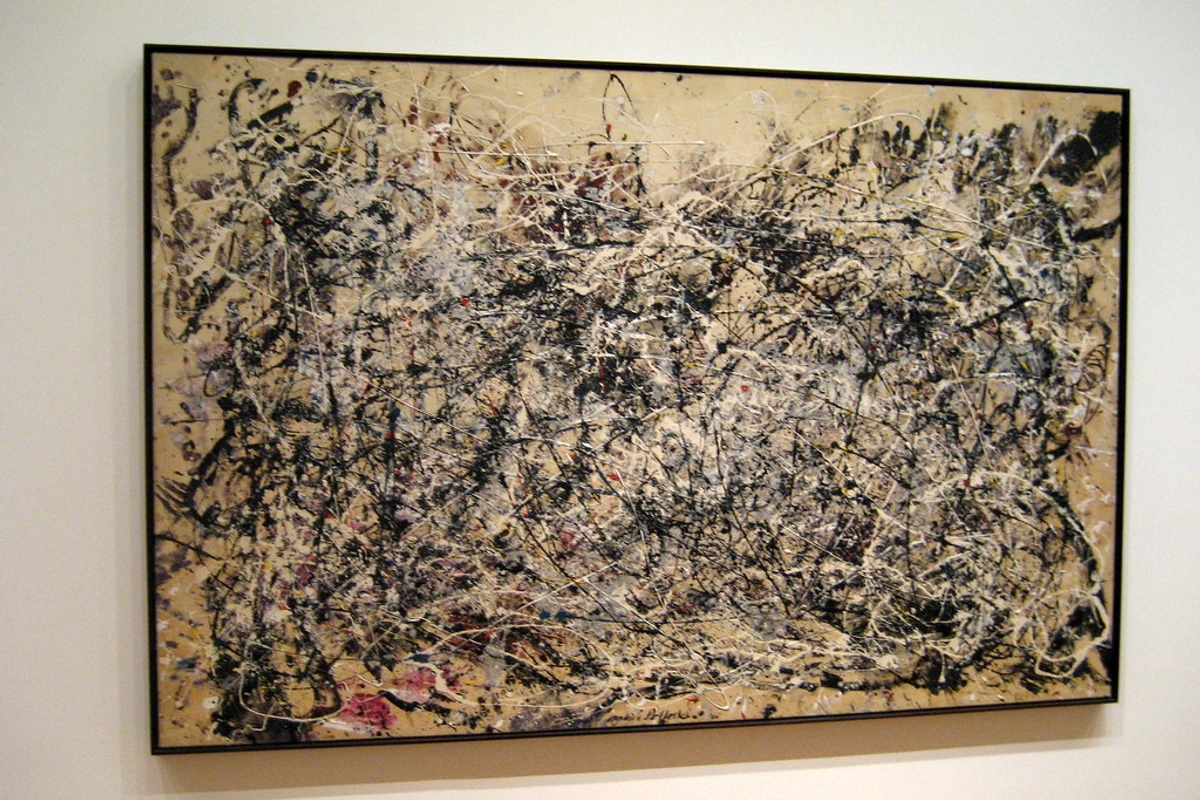
- The Classic Recipe: Start with a base of Ultramarine Blue. To this, add small increments of Burnt Umber. As you mix, you'll see the deep, inky black emerge. The warmth of the umber perfectly balances the cool of the blue. This black has depth. It has a soul.
- The Cool Black: For a black with a cooler, more mysterious feel, try mixing Burnt Umber with Prussian Blue. The result will be incredibly deep, almost electric.
- The Warm Black: A mix of Alizarin Crimson and Burnt Umber creates a black with a subtle, warm, almost purplish undertone, perfect for shadows on a sunset-lit subject.
I remember the first time I mixed a chromatic black. I was following an old instructor's advice, feeling slightly skeptical. I mixed ultramarine and umber, dabbed it on the canvas next to a stroke of Mars Black. The difference was almost comical. The Mars Black looked like a hole, an absence of light. My mix looked like a deep, quiet space that light had simply decided not to leave. It wasn't just a color; it was a discovery about what darkness is.
2. Creating Harmonious Greens
Many manufactured greens can look artificial, like a cheap plastic toy. Burnt umber is the antidote.
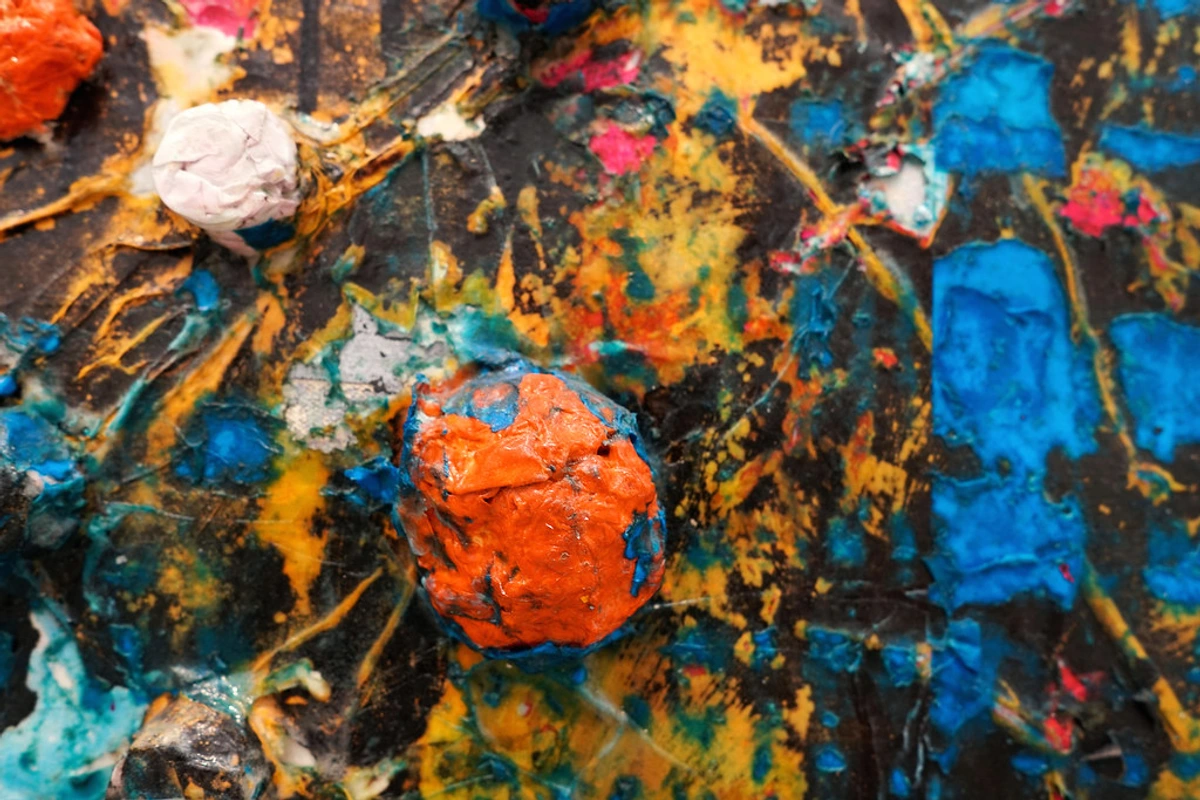
- Taming Viridian: Viridian Green is a powerful, cold green. On its own, it can be jarring. Add a touch of Burnt Umber. Watch as the color shifts from a synthetic electric green to the deep, serene green of a forest pond or the shadowed side of a leaf. It doesn't just darken it; it grounds it, connecting it back to the earth.
- Creating Olive and Khaki: Mix Burnt Umber with Cadmium Yellow or Yellow Ochre. This creates a range of beautiful, complex olive and khaki tones that would be impossible to achieve otherwise. It's the secret to painting military garb, sun-drenched grass, or the subtle tones of a landscape.
3. The Secrets of Natural Shadow
This is where burnt umber truly shines. Shadows in life are rarely black. They are full of reflected color.
- For Red / Orange Surfaces: A shadow on a red clay pot or a brilliant orange poppy is not grey. Mix a touch of the local color (say, Cadmium Red) with a larger amount of Burnt Umber. This creates a deep, resonant shadow that still hums with the energy of the object it's on.
- For Blue / Green Surfaces: A shadow on a blue wall or a green field involves balancing the cool local color with warmth. A mix of Cobalt Blue and Burnt Umber or Phthalo Green and Burnt Umber achieves this perfectly. The warmth of the umber suggests the subtle influence of ambient light, making the scene feel believable.
4. The Foundation of Flesh
Portrait painting is a high-wire act of color. The wrong shadow can make a subject look bruised or sickly.
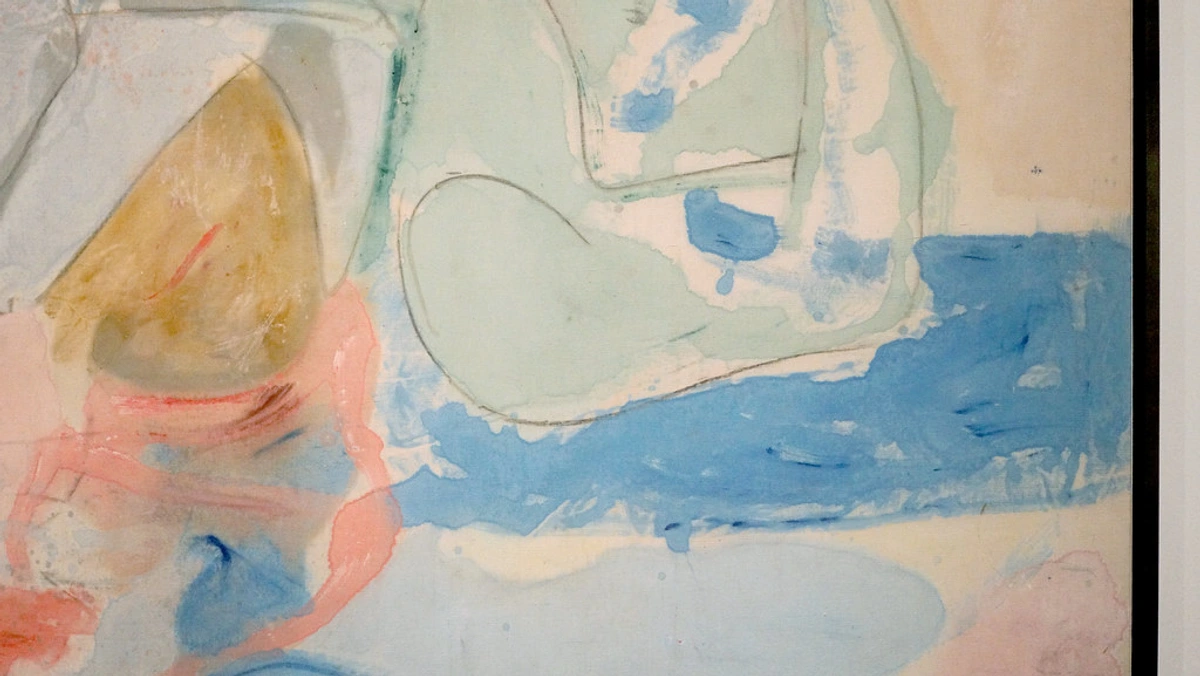
- The Believable Shadow: For shadows on Caucasian or lighter skin tones, avoid black at all costs. A base mixture of Burnt Umber and Alizarin Crimson, thinned with a medium, is your starting point. For deeper shadows, a touch of Ultramarine Blue can be added to this mix.
- The Warm Base: Mix Burnt Umber with White. This creates a beautiful, warm beige that can serve as a foundational mid-tone for the skin, a perfect starting point for building up lighter and darker areas. I sometimes use this as a thin imprimatura across the entire canvas before I even start drawing the features.
Mixing Table: Your Quick-Reference Guide
Feeling overwhelmed? Let's put this into a table you can pin up in your studio.
To Achieve This Color | Your Mixing Partner(s) | The Effect |
|---|---|---|
| A Deep, Vibrant Black | Ultramarine Blue or Prussian Blue | Creates a "living" chromatic black, far richer than tube black. |
| A Believable Skin Tone Shadow | Alizarin Crimson (& a touch of White) | Creates a warm, natural-looking shadow without looking bruised. |
| Natural, Earthy Greens | Viridian, Phthalo Green, or Cadmium Yellow | Tames artificial-looking greens, grounding them in reality. |
| Warm Taupe and Beige | White (in varying amounts) | Creates a spectrum of sophisticated, warm neutral tones for underpaintings. |
| A Dark, Olive Tone | A cool Yellow (e.g., Lemon Yellow) or Phthalo Green | A complex, deep green-brown, perfect for landscape elements. |
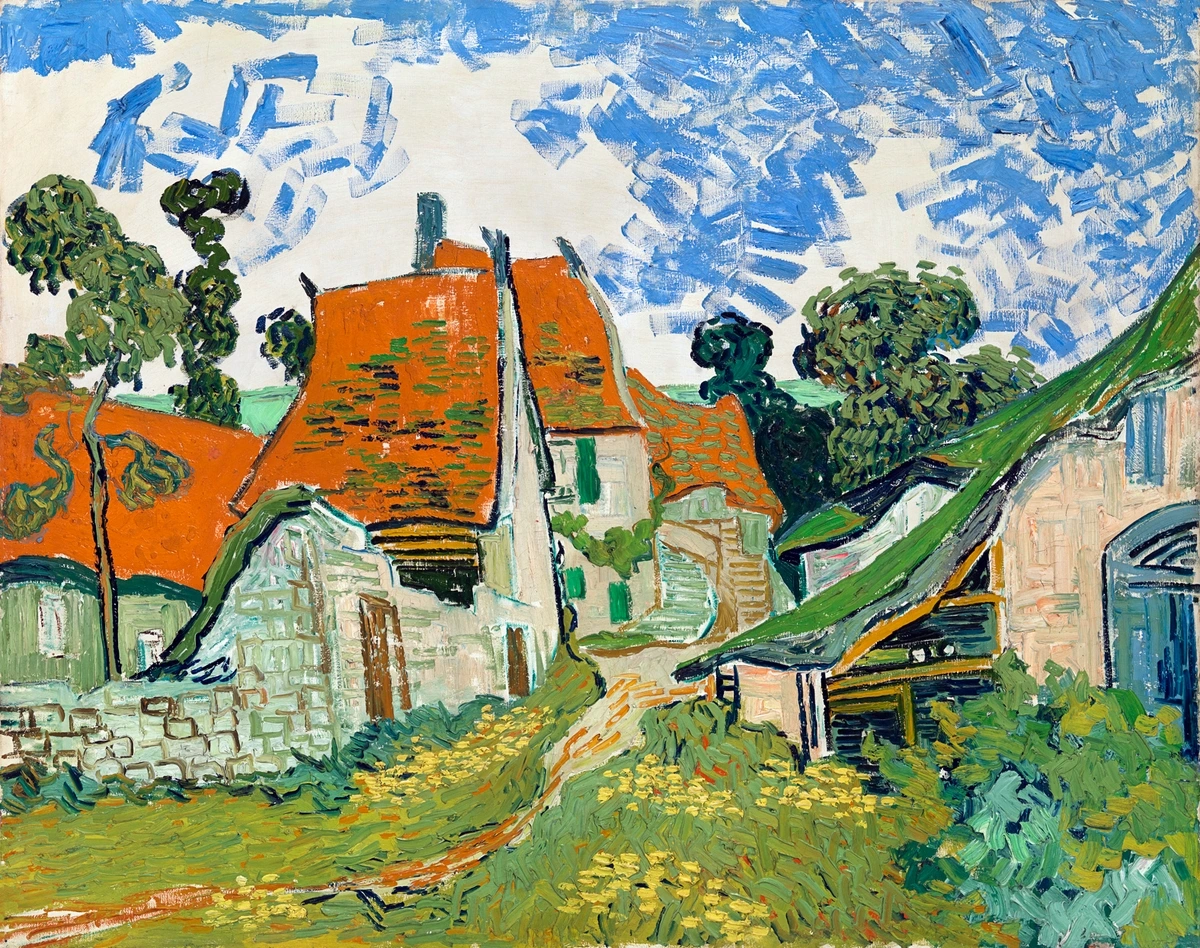
If you were to ask me what the single most useful dark pigment is for a beginner, I’d say burnt umber without hesitation. It's far more forgiving and versatile than black, which too often just kills the life in a color mixture. Black is a full stop; burnt umber is a semi-colon—it deepens a thought but keeps the sentence going. It's the translator between your light colors and your dark colors, helping them speak the same language.
The art historian Max Doerner once wrote that the Old Masters rarely used black straight from the bottle. Instead, they constructed their darks from other colors, layering them to create a rich, vibrating darkness. Burnt umber was their chief architect. It didn't just make things darker; it made them deeper. And that is the secret to creating a painting that feels alive.
- To darken a color: Add a little burnt umber to a green, a red, or a blue. It deepens the color while adding warmth, creating a more natural, luminous dark than a blunt, opaque black ever could. It's the difference between a shadow at dusk and a hole in the canvas. A Viridian Green, for instance, can be shockingly electric. A touch of umber tames it, turning it into the deep, serene green of a forest canopy in shadow.
- To create a vibrant "black": Mix it with its opposite, a dark blue like Ultramarine or Prussian Blue. The result is a deep, rich chromatic black that is full of life and far more interesting than a straight-from-the-tube black. The warmth of the umber and the coolness of the blue create a dynamic tension. Try it yourself: paint a stroke of Mars Black next to a stroke of your umber-blue mix. One looks flat and final, while the other seems to shimmer with internal light.
- To create skin tones: It's a fantastic base for shadows in portraiture. Mixed with white and a hint of red (like Cadmium Red or Alizarin Crimson), it creates beautiful, believable shadow tones. For brighter highlights, switch to its cousin, burnt sienna. The key is to resist the urge to use black. Shadows on skin are warm and full of reflected light. Black just looks like a bruise, but a mix with umber looks alive.
- For underpaintings (Grisaille/Brunaille): Its fast-drying nature makes it ideal for creating a monochromatic underpainting, establishing the light and dark values of a painting before adding color glazes on top. The Old Masters were masters of this technique, building their luminous canvases from the ground up. By first solving the puzzle of light and dark in umber, you free yourself to focus purely on the poetry of color in the subsequent layers. It’s a classic case of discipline creating freedom.
An Enduring Legacy: Burnt Umber Through the Ages
Reading about a pigment's history is one thing. Seeing it work is another. You can trace the entire arc of Western art—from its earliest explorations of light to its most modern abstractions—through the quiet, steady presence of burnt umber. It's more than just a passenger in art history; it's often the very foundation upon which masterpieces were built.
From the Ground Up: Burnt Umber in Practice
The Underpainting Revolution
It's hard to overstate how revolutionary the technique of underpainting was. Before the Renaissance, many paintings were more like tinted drawings. The underpainting (imprimatura, or ébauche) changed everything. Artists began by first solving the puzzle of light and shadow in a single color—and burnt umber was almost always their choice. This monochromatic foundation, often in a warm mid-tone, created a luminous depth that colored glazes could never achieve on their own. The light would penetrate the transparent layers of color, bounce off the white ground or the imprimatura, and return to the viewer's eye with a jewel-like radiance.
Case Study: Rembrandt's Luminous Darkness
No one understood this better than Rembrandt. His paintings aren't dark; they are built on darkness. He would often start with a warm, umber-toned ground on his canvas. Then, he would use burnt umber to "draw" with the brush, blocking in the deepest shadows of his composition. Layers of transparent and semi-transparent glazes of umber, mixed with lakes and other colors, would follow. The result? A darkness that feels velvety and endless, a space you feel you could walk into. The light in a Rembrandt portrait doesn't just sit on the surface; it emerges from the deep, umber-rich shadows. That golden glow on a cheek isn't just yellow paint; it's the contrast against a carefully constructed abyss of burnt umber.

Case Study: Turner's Anchor in the Storm
J.M.W. Turner approached umber from a completely different angle. Where Rembrandt used it to build depth, Turner used it to create contrast. In his chaotic, sun-drenched seascapes, light is the protagonist. But even the most brilliant light needs a foil. Turner used burnt umber for the deep, solid elements: the dark hull of a ship battling a storm, the silhouette of a pier, the hollow of a wave. This provided the essential anchor, the darkest note that made all his other colors—his brilliant yellows, his hazy pinks, his shimmering whites—explode with unprecedented luminosity. Without that grounding in umber, his paintings would risk becoming a formless wash of light. He used earth to hold his heaven.
The Modern Shift: Earth as Expression
As art moved into the modern era, the idea of a pigment became as important as its application. The Impressionists, while known for their bright palettes, still relied on earth tones for structure. Cézanne, for instance, used the warm, reddish-brown of burnt umber to define the architectural planes of his beloved Montagne Sainte-Victoire, giving solidity to his revolutionary explorations of form.
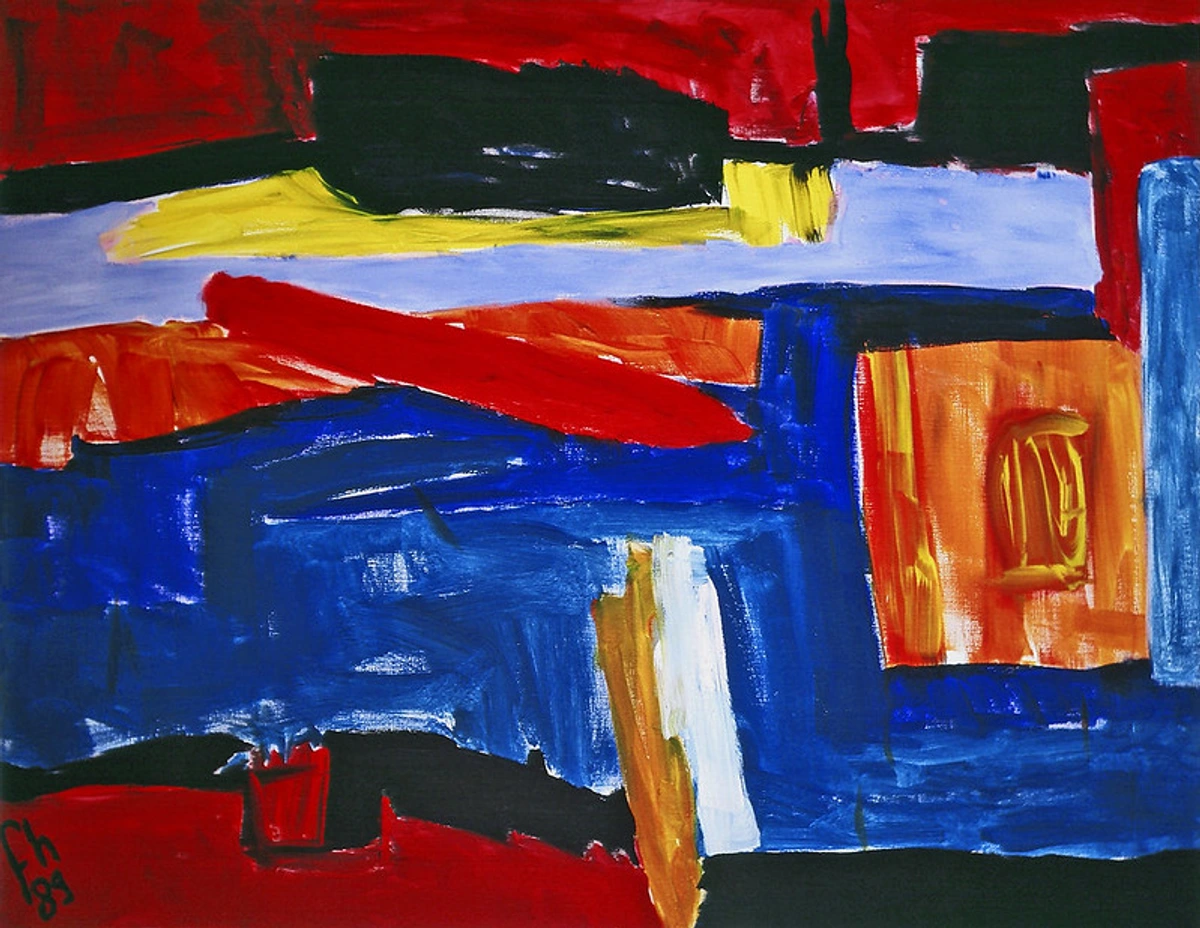
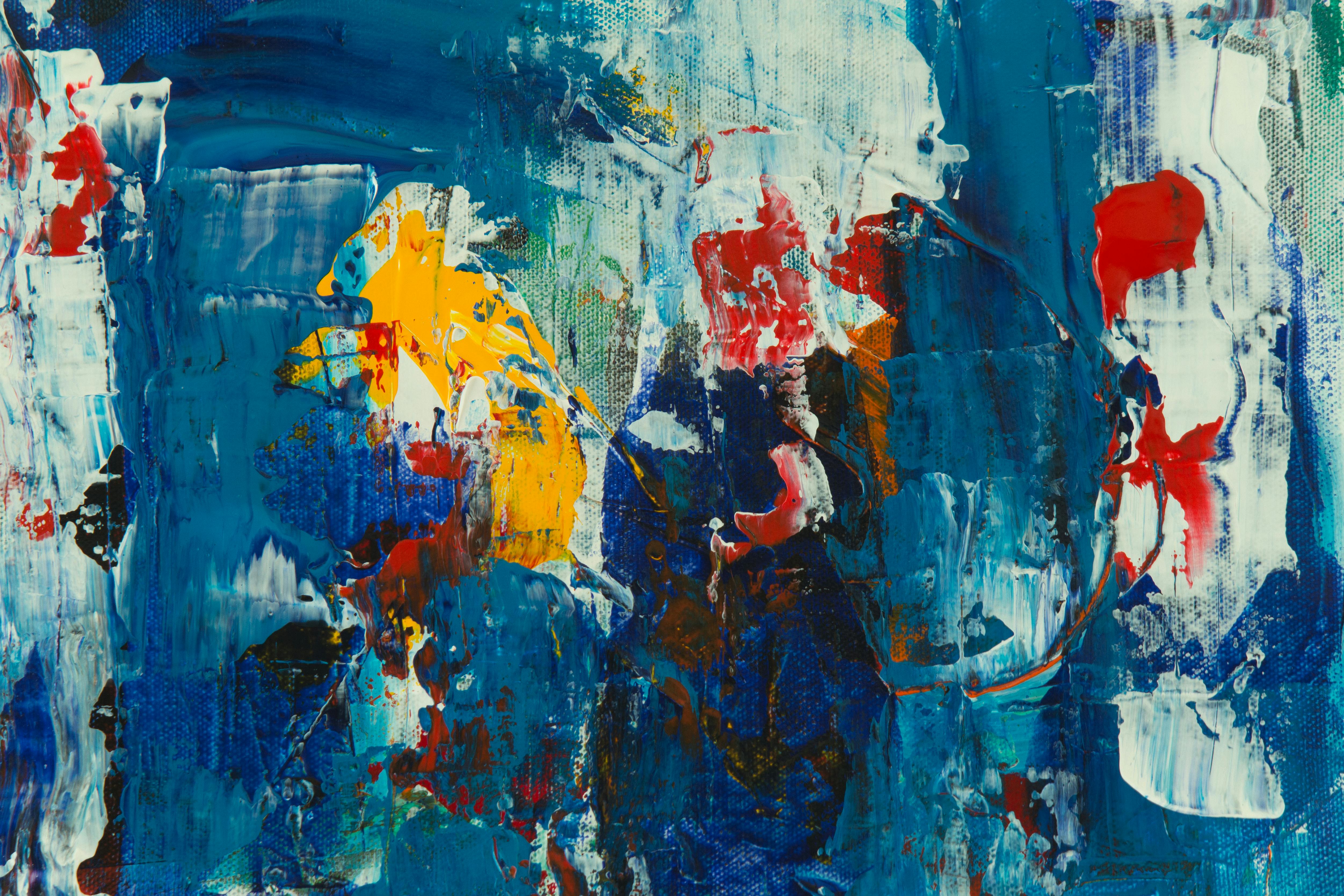
But it was the Abstract Expressionists who truly recast umber's role. In their hands, it was no longer just a tool for creating illusionistic space. It became a raw element, a gestural mark in its own right.
Case Study: De Kooning's Urgent Mark
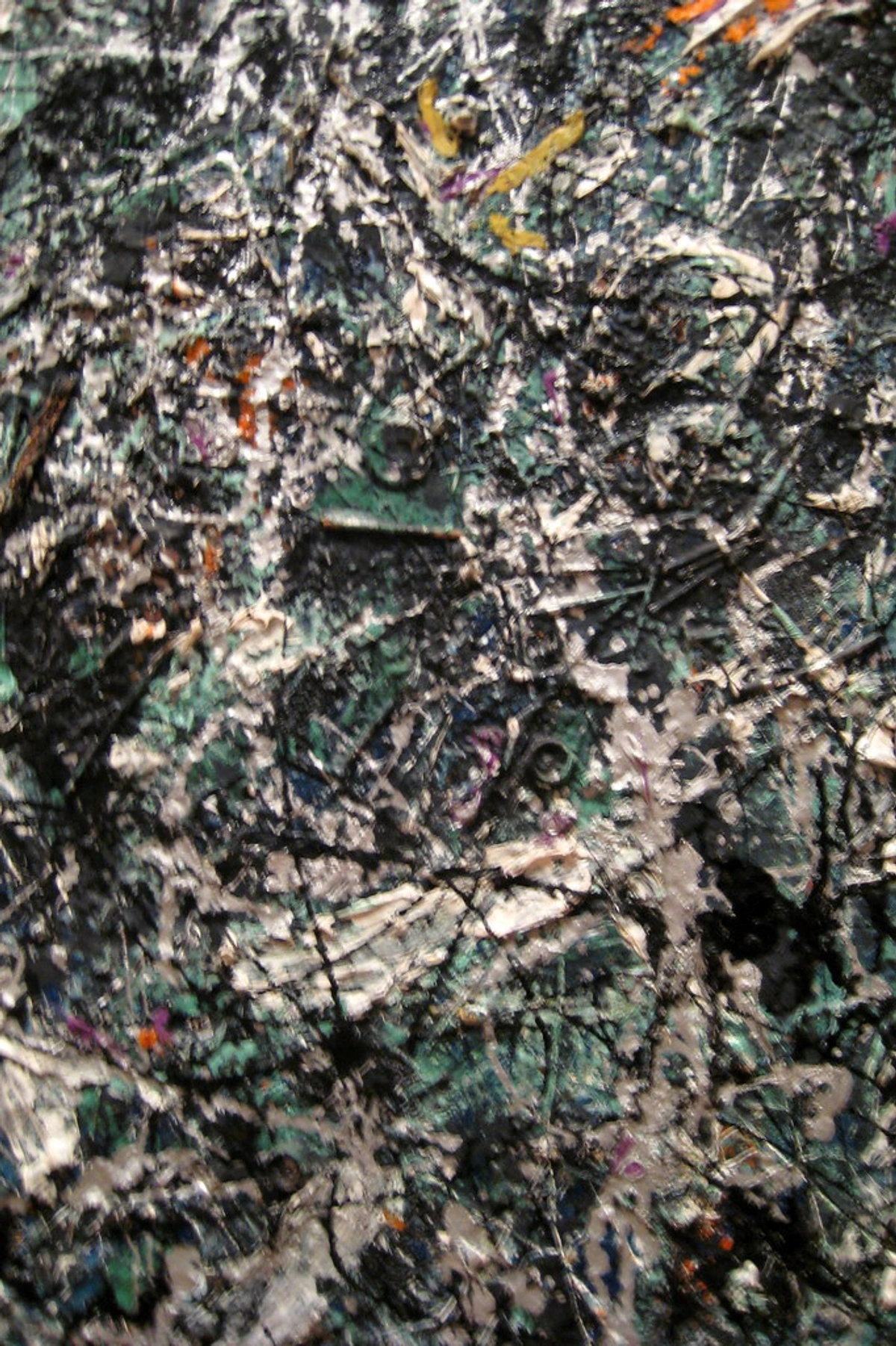
Look at a painting from Willem de Kooning's seminal "Woman" series. The canvas is a frenzy of slashing, aggressive brushstrokes. Amidst the violent pinks and acidic yellows, you will almost always find passages of deep, gestural black and dark brown. De Kooning used umber (and its cousins) not to describe a shadow on a leg, but as a primary, urgent mark that carries as much emotional weight as any other color. It's part of the painting's visual scream. He took the disciplined, foundational pigment of the Old Masters and turned it into pure, unfiltered expression. It was earth, but it was also fire.
Case Study: O'Keeffe's Connective Tissue
Georgia O'Keeffe used burnt umber as a form of connective tissue. In her monumental flower paintings or her stark depictions of animal bones, the umber acts as the grounding force. It's the dark, hollow center of a flower, the deep crevice in a pelvis bone, the shadow that defines the curve of a petal. For O'Keeffe, umber connected the otherworldly, almost hallucinogenic beauty of her subjects to the tangible, dusty, sun-baked reality of the New Mexico desert. It was her way of saying these visions weren't just dreams; they grew from the soil.
It’s one thing to talk about a pigment’s properties in the abstract, but it's another thing entirely to trace its quiet influence through the ages, to see it working in the background of a masterpiece. It's like spotting a single, humble brushstroke that, once you know it's there, explains the whole composition. You can trace the entire history of Western art through the delicate, glowing shadows it helped create. Burnt umber didn't just exist alongside these artists; it was a fundamental tool that enabled their vision. It's a quiet thread woven through the fabric of our visual heritage.
In the hands of Rembrandt, it was the velvety darkness from which his subjects would emerge, a technique known as chiaroscuro. He would build up layers of translucent umber glazes over a warm imprimatura, creating a palpable sense of air and atmosphere. The shadows in a Rembrandt portrait aren't empty; they are full of thought and emotion, a direct result of the depth umber provides.
J.M.W. Turner, the master of light, used it in a different way. For him, umber was the anchor in his chaotic, luminous storms. Even in his most abstract, sun-drenched landscapes, you can find umber in the dark hulls of ships or the deep recesses of a storm cloud, providing the essential contrast that makes his light seem to explode from the canvas. It was the deep note that allowed all the other colors to sing.
Fast forward to the modernists, and its role shifts again. In Georgia O'Keeffe's abstracted flowers and desert bones, burnt umber defines the hollows and crevices, grounding her dreamlike forms in a tangible earthly reality. It connects the otherworldly beauty of her subjects to the very soil they grew from. And in the abstract expressionist works of Willem de Kooning, it became an urgent, gestural mark, part of the raw, energetic language of his brushstrokes. It was no longer just a shadow; it was a primary element in a new visual vocabulary.
Your Questions, Answered: The Burnt Umber FAQ
This is where we get to the practical, down-to-earth questions. The kind of things you'd ask a fellow artist while cleaning brushes at the end of a long day, when theory gives way to the lived reality of paint under your fingernails and a canvas that's not cooperating. Theory is a clean, well-lit room. Practice is a messy studio where you're just trying to make the vision in your head match the thing on the canvas. It's in the daily handling of a material that you truly understand its personality, its quirks, and its stubborn, wonderful strengths. The questions here have been expanded to cover the most common curiosities and dilemmas an artist faces when choosing and using this essential color.

This is where we get to the practical, down-to-earth questions. The kind of things you'd ask a fellow artist while cleaning brushes at the end of a long day. After all, theory is one thing, but the reality of using a pigment day in and day out is another. It's in the daily handling of a material that you truly understand its personality, its quirks, and its strengths.
Appendices and Further Reading
If this exploration has only deepened your curiosity, you're not alone. I find myself falling down this rabbit hole regularly, following a thread from a chemistry textbook to an art history lecture to a geological survey map. It's all connected. If you wish to continue this journey, here are some of the signposts I've found most helpful.
Essential Books on Pigments and Color
- Color: A Natural History of the Palette by Victoria Finlay: A brilliant, globe-trotting narrative that traces the stories of different colors, including a fantastic chapter on earth pigments.
- The Artist's Handbook of Materials and Techniques by Ralph Mayer: The technical bible for any serious painter. It provides a deep, scientific, and practical dive into everything you could ever want to know about your materials.
- Bright Earth: Art and the Invention of Color by Philip Ball: A fascinating exploration of how the discovery and development of pigments have shaped the history of art.
Invaluable Websites
- The WebExhibits "Pigments through the Ages" (webexhibits.org/pigments): An incredible online museum that details the history, chemistry, and application of almost every major pigment known to art.
- Handprint.com - "Watercolor Palettes" (handprint.com): While focused on watercolor, this site offers an unparalleled scientific and artistic analysis of pigments, their mixing properties, and their lightfastness. It's a masterclass in understanding color.
These resources will turn you from someone who just uses paint into someone who truly understands the profound and ancient story held within every dab on your palette.
Is burnt umber toxic?
Let's be honest, this is the first question we should all ask about any art material. We get so caught up in the poetry of a pigment that we forget it's also a physical substance we're bringing into our homes and studios. So, let's cut to the chase: the short answer is no, not in any practical sense. The long answer, as always, is a little more nuanced.
This is a very practical and important question, especially for artists who work in small, enclosed spaces. The key thing to understand is the difference between pigment and paint. Modern burnt umber paints, whether made from natural earths or synthetic oxides, are considered non-toxic for their intended use. They do not present the same health risks as pigments containing lead, cadmium, or cobalt (though even those are often misunderstood and manageable with proper studio hygiene). The main components, iron and manganese oxides, are stable and safe when bound in a paint medium like oil or acrylic.
Modern burnt umber pigments, whether derived from natural earths or, more commonly, synthesized from iron oxides, are considered non-toxic for standard painting practices. They do not present the same health risks as pigments containing lead, cadmium, or cobalt (though the risks of those are also often overstated with proper handling). The primary components, iron and manganese oxides, are stable and safe when bound in a paint medium.
The Real Risk: Dust, Not Pigment
Now, the one place you do need to exercise caution is with dry, powdered pigment. This is the raw, unbound stuff that comes in a jar. If you're a paint-maker or an adventurous artist who likes to mix your own, the fine dust from any powdered pigment is not something you want to be breathing in. The manganese in umber, while safe when mixed, isn't great for your lungs as a fine particulate. If you are someone who grinds your own paints or uses dry pigments for other techniques, the fine particulate matter can be an inhalation hazard. Manganese, in particular, should not be inhaled in significant quantities over a long period. The simple solution is a good practice: always wear a basic particulate dust mask (an N95 is more than sufficient) when working with any dry pigment. Once the pigment is mixed into a binder (oil, acrylic medium, gum arabic), it is no longer airborne and is considered safe.
The Golden Rule
As with all art materials, the golden rules apply: don't drink it, and for goodness sake, don't paint your lips with it. It's also a smart habit to check the Safety Data Sheet (SDS) provided by the manufacturer. While rare with reputable brands, some budget paints can contain fillers or adulterants that aren't listed on the front label. When in doubt, a quick email to the manufacturer can clear things up. For the vast majority of artists buying pre-made paints from reputable brands, you can use burnt umber with complete peace of mind. Generally, no. Pigments made from natural or synthetic iron and manganese oxides are considered non-toxic and are perfectly safe for use in an open studio. However, you should never ingest paint. It's always wise to check the safety data sheet (SDS) from the manufacturer, as some brands may use additives or fillers. For artists using dry pigments, a simple dust mask is a smart precaution. The main risk comes from the fine dust, not the pigment itself.
Is burnt umber warm or cool?
This is a fantastic question that gets to the heart of color theory. It is decidedly a warm color, thanks to its reddish-orange undertones derived from hematite. In contrast, raw umber is the cooler, more neutral relative, often described as having a greenish or olive cast. Think of them as two sides of the same coin: raw umber is the color of earth in shadow, while burnt umber is the color of earth baked in the sun.
Can you make burnt umber by mixing other colors?
Ah, the eternal quest for the perfect mix, the desire to create everything from a handful of primaries! It's the painter's equivalent of wanting to cook a Michelin-starred meal using only salt, pepper, and a frying pan. You can approximate the color of burnt umber by mixing a dark red (like Alizarin Crimson) with a touch of black or a dark green. But can you truly replicate it? That's a much deeper question.
This is one of the most common questions I get, and I love it because it gets to the very heart of what a pigment is. Can you just mix, say, a dark red and a dark green to get the same effect? The simple answer is: you can approximate the hue, but you can't replicate the soul of the pigment.
The problem with a "mix-replacement" for umber is its opacity.
- Mixing Alizarin Crimson and Phthalo Green: This is the classic recipe for a dark, neutral tone. When you mix a transparent red and a transparent green, they neutralize each other. The result is a deep, murky brown or black. On the palette, it might look vaguely similar to burnt umber. But once you apply it to the canvas, the difference is night and day.
- Your Mix: Because you are mixing multiple pigments, the result will be far more opaque. When you try to glaze with it, the light won't pass through it with the same luminous quality. It will sit on top of the previous layer, looking flat and dead.
- True Burnt Umber: Being a single, transparent pigment, it allows light to pass through and bounce back, creating that characteristic "glow from within" that is the hallmark of a good glaze.
- The Missing Manganese: There's one more crucial element. Genuine burnt umber contains manganese, which acts as a natural drier in oil paint. Your Alizarin/Phthalo mix lacks this. When you're building a painting in layers, you want your initial underpainting to dry quickly so you can paint over it without disturbing it. A mix won't give you that time-saving property.
The Verdict
So, while mixing can be a great emergency solution if you've run out of paint, it's a poor substitute for the real thing. It's like the difference between a real violin and a high-quality synthesizer playing a violin sound. One has the grit, the resonance, the soul of the material; the other is just a faithful imitation of the note. For a student just starting out, the convenience of a mix is understandable. But for anyone serious about painting, having a dedicated tube of burnt umber on your palette is non-negotiable. The unique combination of transparency, hue, and drying properties makes it fundamentally irreplaceable. The soul of the question is this: can you mix a color and get a pigment? And the answer is no. You can mix Alizarin Crimson and Phthalo Green to get a dark, muddy brown. On the palette, it might pass. But when you try to glaze with it, the magic disappears. The mix will be opaque and lifeless, sitting on top of the layer below like a blanket. True burnt umber is transparent. Light passes through it, bounces off the lower layers, and returns to your eye with that "glow from within" that is the hallmark of a great glaze. You're not just mixing a note; you're missing the entire resonance of the instrument.
What is the difference between burnt umber and raw umber?
The simple answer is: fire. Raw umber is the natural, unheated earth pigment. Burnt umber is raw umber that has been roasted (or calcined), a process that changes its chemical structure by dehydrating the iron oxide. This makes it warmer (redder), more transparent, and stronger in mixes. It's the difference between a raw potato and a baked potato. Same origin, completely different character and use.
Is burnt umber the same as sepia?
This is a fantastic question, and a very common point of confusion in the brown-zone of the palette. On the surface, they're both deep browns. But their origins, their personalities, and most importantly, their permanence are worlds apart. The simplest way to think about it is this: burnt umber is to sepia what a stone is to a seashell. One is geological, one is organic.
This is a fantastic question, and a very common point of confusion. On the surface, they are both deep browns. But their origins, personalities, and permanence are worlds apart. Knowing the difference is key to using them effectively.
No, they are not the same. The simple analogy is that burnt umber is to sepia what a stone is to a seashell. One is geological, one is organic.
Feature | Burnt Umber | Sepia |
|---|---|---|
| Origin | Geological: Natural clay colored by iron and manganese oxides. | Organic: Historically extracted from the ink sac of the common cuttlefish (Sepia officinalis). |
| Chemical Nature | Inorganic, earth pigment. | Organic, animal-based dye/pigment. |
| Hue | A warm, earthy, reddish-brown. Solid and grounded. | A cooler, more purplish, reddish, or even greyish-brown. More melancholic and subtle. |
| Lightfastness | Excellent (ASTM I). One of the most permanent pigments known. It will last for centuries with no fading. | Fair to Poor. It is known to fade over time, especially when exposed to strong light. Old sepia drawings often have a ghost-like quality. |
| Best Used For | Permanent painting, underpaintings, mixing, anywhere high permanence is required. | Drawing, washes, and effects where a non-permanent, historical tone is desired. Conjures a feeling of old photographs or classical drawings. |
Historically, sepia was beloved by the Old Masters precisely for its beautiful, delicate tone. Leonardo da Vinci used it for his drawings. But this very delicacy is why you'll almost never find a tube of "Genuine Sepia" in a modern artist's paint line for serious painting. It's been largely replaced by more lightfast, synthetic iron oxide browns that can mimic its unique purplish-brown hue without the inherent fragility.

Permanence and Lightfastness: Will Your Work Last?
One of the most practical considerations for any artist, whether professional or hobbyist, is the longevity of their work. Will the painting you create today look the same in fifty years? In a hundred years? This is where burnt umber isn't just a good choice; it's an exceptionally wise one.
Burnt umber is renowned for its high degree of permanence and lightfastness. On the standard ASTM D4303 lightfastness scale (ranging from I for excellent to V for very poor), you will consistently find genuine and synthetic iron oxide-based umbers rated as a perfect ASTM I. This means it is among the most stable and reliable pigments an artist can use. It resists fading from ultraviolet light, and it is chemically stable, meaning it won't react with other pigments or the atmosphere over time.
The only potential note of caution comes from very old, natural umber deposits that contained significant amounts of sulfur or other impurities. These could, in some rare cases, lead to slight darkening over many decades. However, any reputable modern paint manufacturer will have tested and purified their natural earth pigments to eliminate this risk. If you stick to established brands, you can be confident that your umber shadows will remain as deep and rich for future generations as they were the day you painted them.
Where Does Burnt Umber Come From? A Geographic Detective Story
A tube of paint can feel like a completely modern object, but as we've learned, its contents are often ancient. So, where on Earth does this color come from? The story of umber's geography is a fascinating global detective story, and one that directly impacts the pigment you buy today.
Historically, the finest and most famous umbers came from specific regions whose geology provided the perfect combination of iron and manganese oxides.

- Cyprus: This island in the Mediterranean was arguably the most important historical source of high-quality umber, especially the prized "Turkey Umber." Its reputation for a rich, deep, and characterful pigment made it a sought-after commodity for centuries.
- Italy: The region of Umbria (the name is not a coincidence!) also produced significant amounts of umber. Italian painters, with their deep connection to fresco and early oil painting, had easy access to these excellent local earths.
- Germany and France: The Hartz Mountains in Germany and various locations in France also had notable umber deposits that were heavily utilized by Northern European painters.
Today, things are a bit different. While some artisanal paint makers still source and process genuine natural earths from places like Cyprus or Italy, the vast majority of burnt umber is synthetic.
What's interesting is that these synthetic versions are often engineered to match the 'fingerprint' of a specific historical deposit. So, a modern tube might be labeled "Burnt Umber (Cyprus)," which means it's a synthetic iron oxide blend meticulously formulated in a lab to perfectly mimic the exact hue and character of the prized umber that once came from the clay banks of Cyprus. It's a modern, highly scientific homage to an ancient place.
So, while they may look somewhat similar in your watercolor pan, their souls are completely different. Burnt umber is the reliable, ancient bedrock, the permanent foundation of a painting. Sepia is the fleeting, poetic whisper of the sea, beautiful for a sketch or a wash, but not something you can trust to hold the weight of a legacy. No. This is a common point of confusion, and it's an easy one to make since they both belong to the brown family. Sepia is a completely different pigment historically made from the ink sac of the cuttlefish. It has a more purplish, pinkish-brown, or even greyish-brown tone compared to the earthy red-brown of burnt umber. Furthermore, sepia is also notably less lightfast and can fade over time, whereas umber is known for its excellent permanence. Sepia has a distinctly organic, almost melancholy feel, while umber feels geological and eternal.
Beyond the Tube: The Future of an Ancient Pigment
In a world increasingly fascinated by the synthetic, the digital, and the novel, it's worth asking: does a pigment like burnt umber have a future, or is it merely a relic of a more analog artistic past? Every few years, a new 'revolutionary' pigment hits the market, promising unprecedented brightness or durability. And yet, in my studio, and in studios around the world, that same old tube of umber is still there, sitting patiently on the palette.
I believe its future is as secure as its past is long. While new, high-chroma pigments are constantly being developed by chemists, offering artists brighter and more fluorescent colors than ever before, these often lack the subtlety and harmonic complexity of the earth tones. A painting made entirely of all those intense, screaming, modern pigments can feel like a cacophony. It's exhausting. Burnt umber is the anchor in that storm, the deep bass note that provides context, depth, and gravity. It makes the bright colors truly sing by giving them something to sing against. It provides the essential contrast that makes brightness truly sing.
Moreover, as artists, I think we are becoming more conscious of the materials we use. There's a growing appreciation for the story behind our tools. In an age of mass production, the idea that the color on your brush has a direct lineage back to the clay-stained hands of a Paleolithic artist carries a certain weight. It's a vote for continuity, for process, for history. Using burnt umber is a choice to connect with that deep, uninterrupted history. It's a statement that some things don't need to be 'improved.'
Perhaps most importantly, its utility is its own guarantor. As long as artists strive to capture light, they will need to portray shadow. And as we've seen, burnt umber is, and likely always will be, one of the most eloquent languages for shadow ever discovered.
So, there you have it. Burnt umber is more than just a color. It's a piece of the earth, transformed by fire and time, ready to capture the light and shadow of our world. It’s the quiet hero of the palette, the color of things as they are, not as they first appear. It’s a history lesson, a chemical reaction, and an artistic tool, all rolled into one.
Before we get ahead of ourselves, let me pause for a moment. I realize I've been speaking about this stuff as if it's magical. And it's wise to be a little skeptical. At the end of the day, this is just dirt. It's rust. It's geology. And yet... when you trace its journey from a nameless clay bank to a tube of paint in your hand, a paint that Rembrandt and Turner also knew, it's hard not to feel a sense of connection. This isn't just a color; it's a testament to human curiosity—that first moment when a person realized they could take what the earth gave them and, with a little fire, turn it into something more.
Your Next Step: An Exercise for the Palette
Reading about a pigment is one thing; feeling its power under your own brush is another. If you've read this far, then I suspect you're ready for a small experiment. I want you to go to your palette right now—or the next time you're at your easel—and try this simple exercise. It will re-teach you how to see shadow.

The No-Black Allowed Challenge
Here's a simple exercise that will teach you more about burnt umber in 30 minutes than any article ever could. It's a game of limitation, and in that limitation, you'll find a new kind of freedom.
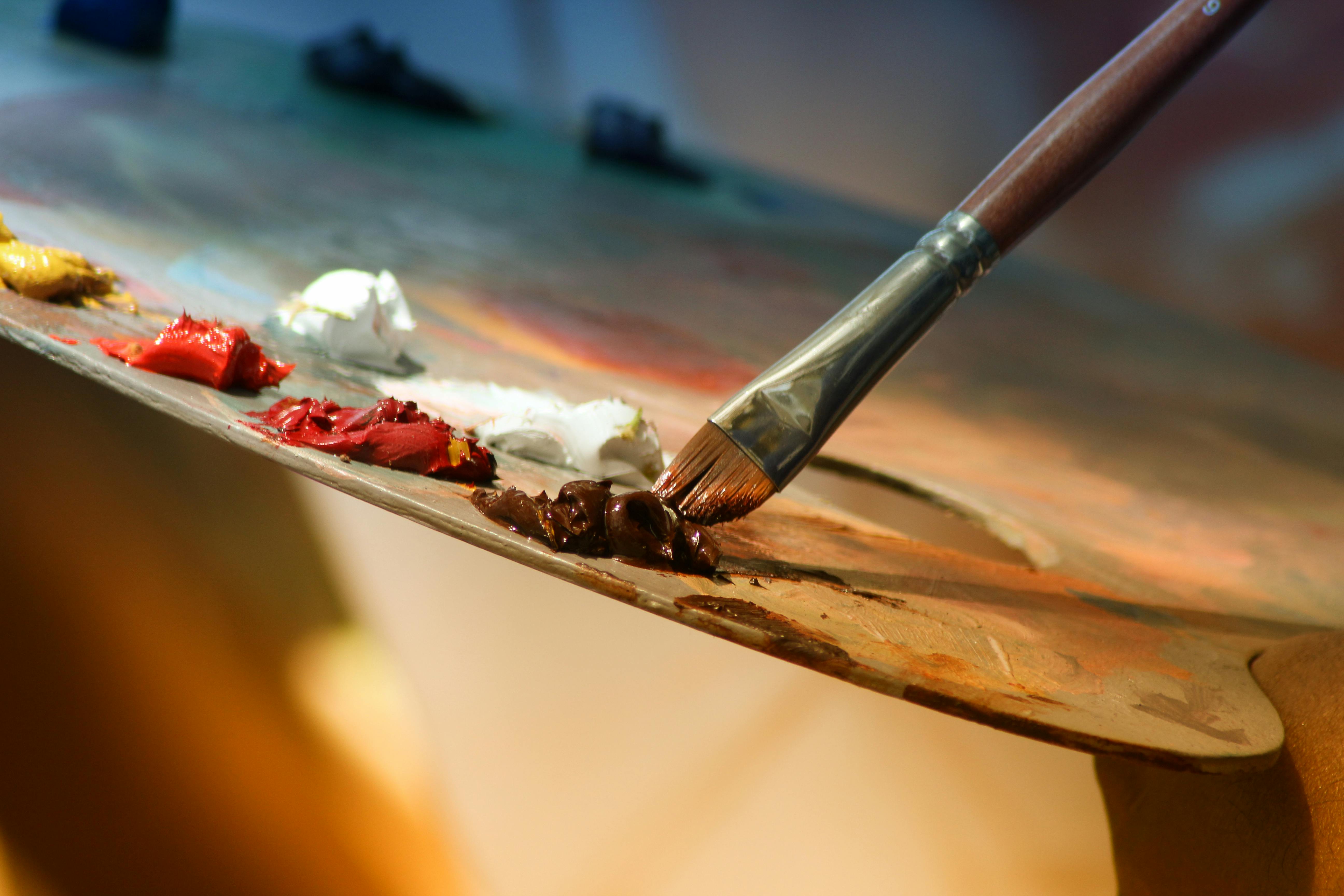
- Get a small canvas board or a sheet of watercolor paper. It doesn't have to be big, just a small practice surface. Now, find your tube of black paint—Mars Black, Ivory Black, Lamp Black—and put it in a drawer. The goal is to not use it.
- Place a simple object on a table next to you. A piece of fruit, a white coffee mug, a terracotta pot—anything with a simple form and a strong light source. A desk lamp works perfectly.
- Start painting, but only use burnt umber and white. Your goal is to render the full range of light and shadow you see, from the brightest highlight to the deepest, darkest part of the shadow. Mix your umber and white to create a value scale from near-white to near-black.
- Observe what happens. You will quickly learn to see the warmth in your shadows. To create your darkest darks, you'll have to use your burnt umber straight from the tube. Notice how it doesn't look like a hole, but like a deep, warm space. See how, when mixed with white, it creates beautiful, subtle flesh tones and warm greys. This is the foundation of seeing and painting believable light.
Doing this for just 30 minutes will teach you more about burnt umber than any article ever could. It forces you to use it as the Old Masters did: not just as a color, but as the very substance of vision itself.














This transformation from accident to artistry is why I find burnt umber so compelling. It's not a passive material. Using it connects you to a very old, very human impulse: to take what the world gives you and, through a simple act of ingenuity, make it more useful, more beautiful, more ours. It's the spirit of innovation embedded in a tube of paint.