Robert Rauschenberg's Combines: The Art That Bridged Life and Canvas
Dive deep into Robert Rauschenberg's revolutionary Combines, the hybrid artworks that fearlessly fused painting with everyday objects. Explore his defiant vision, creative process, iconic masterpieces like Monogram, and profound influence on modern art movements from Pop to Conceptual Art.

Robert Rauschenberg's Combines: The Art That Bridged Life and Canvas
I remember the first time I saw a picture of a Robert Rauschenberg 'Combine'. It was Monogram, the one with the goat. My jaw didn't just drop; it felt like my brain short-circuited trying to reconcile a stuffed Angora goat, a tire, and splashes of paint all on one canvas. It felt like a cosmic joke disguised as high art, and a profound masterpiece all at once. And you know what? That’s pretty much the perfect reaction. That confusion, that blend of the everyday and the artistic, is exactly what he was going for. He was, in his own words, trying to operate in "the gap between art and life." Honestly, who isn't trying to figure out that gap sometimes, trying to bridge the wild, messy reality of daily existence with something more profound, something that sings? If you're nodding along, then Rauschenberg's Combines are your kind of art. They didn't just make waves; they permanently reshaped the very definition of what art could be.
These aren't just weird sculptures or messy paintings. They are a whole category of their own, a defiant fusion that completely changed the game. So, if you're looking to truly grasp this exhilarating, often perplexing, but undeniably pivotal moment in modern art history, you've landed in the right place. We're going to break down exactly what makes a Combine tick, why it still matters today, and why Rauschenberg's audacious vision continues to resonate with anyone trying to make sense of the beautiful mess that is life.
Robert Rauschenberg: The Mind Behind the Revolution
To truly understand the Combines, you have to understand the mind that birthed them and the art world Rauschenberg stepped into in the 1950s. Born in 1925 in Port Arthur, Texas, Rauschenberg's journey was far from conventional. After a stint in the U.S. Navy and studying at the Kansas City Art Institute, he found himself at the legendary Black Mountain College in North Carolina. This experimental crucible was where he encountered influential figures like composer John Cage and choreographer Merce Cunningham (with whom he'd famously collaborate, blurring the lines between visual art, music, and dance from the outset), and, crucially, Josef Albers.
Albers, a former Bauhaus master, taught a rigorous, almost dogmatic, approach to color and form. He famously told Rauschenberg, "It is my purpose to break you of all your bad habits." And here's the thing: those "bad habits" often referred to Rauschenberg's intuitive, messy approach to composition, his disregard for traditional color theory, and his general resistance to tightly structured conventions. If I'm honest, I sometimes feel like Albers when I look at my own work, trying to find the 'bad habits' that are really just my unique voice, my stubborn way of doing things. But Rauschenberg? His response wasn't to conform, but to seek out new bad habits, perhaps even to celebrate them as his authentic artistic language. This defiance led to early experimental works like his "White Paintings" (1951), stark canvases devoid of imagery, meant to be activated by ambient light and shadows—a pure embrace of chance and the environment. Then came his "Black Paintings" (1951-52), works absorbing all light, suggesting a similar, yet opposite, exploration of presence and absence. Both pushed against convention, stripping art down to its bare essence and inviting the world to complete it. This early conceptual audacity, this willingness to let the external world dictate the artwork, undeniably set the stage for his groundbreaking later work.
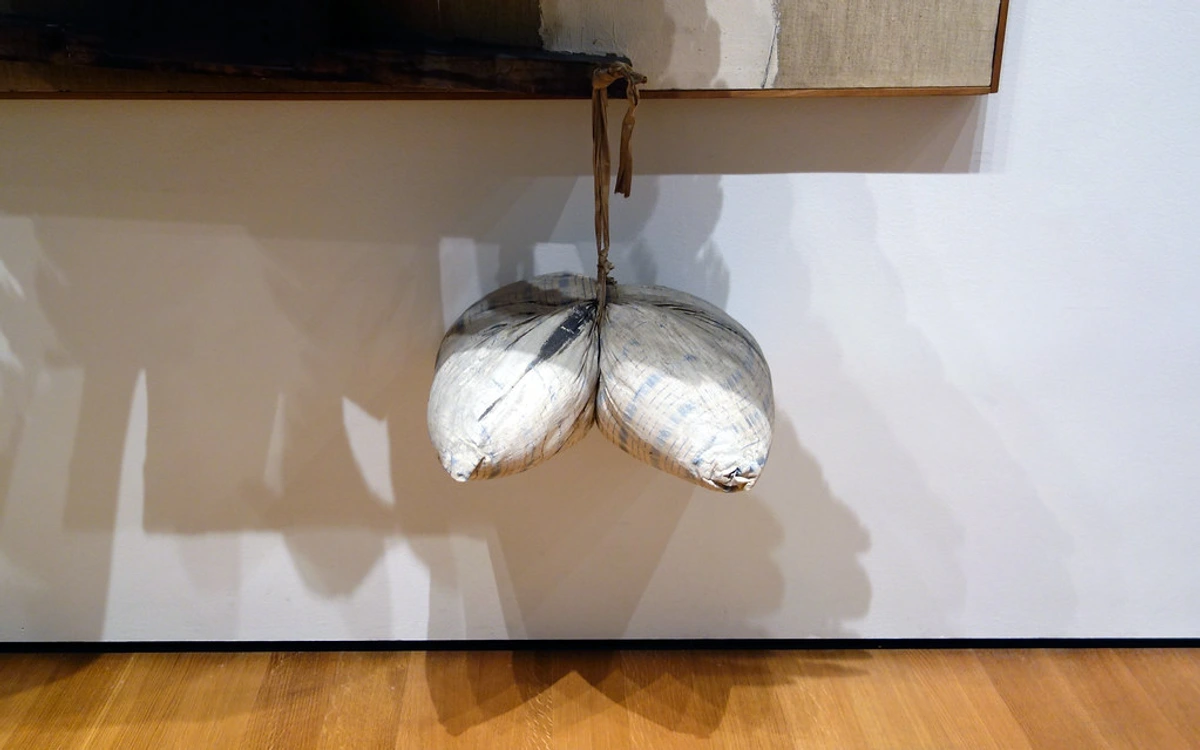
His core philosophy was summed up in his famous assertion: "Painting relates to both art and life. Neither can be made. (I try to act in that gap between the two.)" For Rauschenberg, "art" was the established, gallery-bound, purely aesthetic realm—often epitomized by the introspective, emotional brushstrokes of Abstract Expressionism. "Life," on the other hand, was the messy, everyday, often mundane reality outside the museum walls: the grime of New York City streets, discarded objects (or "everyday detritus" as art historians might call it), personal memories, even the quiet hum of a refrigerator. He didn't want to shut the world out; he wanted to invite it in for a party, and maybe spill some paint on the rug while he was at it. This wasn't just about making a statement; it was about acknowledging that art is life, and vice versa. It was a philosophy that also embraced chance and serendipity—the unexpected find, the accidental drip—allowing the world to contribute directly to the artwork's creation.
While earlier movements like Dadaism (think Marcel Duchamp's readymades—everyday manufactured objects, like his infamous urinal Fountain, simply presented as art) and Surrealism (reveling in unexpected juxtapositions and the irrational, like Magritte's mind-bending scenes) also explored these ideas, Rauschenberg's approach was distinct and, I'd argue, more deeply integrated. He wasn't just presenting a found object; he was actively combining it with traditional artistic mediums, transforming its context and meaning in a dynamic, compositional way. Duchamp's urinal was a statement about institutional critique, a conceptual provocation; Rauschenberg's goat, on the other hand, was an active participant in a new visual language, a conversation starter embedded in paint, part of a richer, more complex narrative. It wasn't about simply naming something art; it was about fundamentally transforming it through dialogue with other materials, making it work within a new visual narrative. This distinction is crucial, I think, and often overlooked when people compare their work.
His studio, like his mind, was often a fertile ground for these unexpected encounters. Imagine stepping into a space where paint splatters coexisted with discarded objects, where the very atmosphere was charged with the potential for new artistic narratives. It's easy to see how the materials of his daily existence could literally become the materials of his art. This wasn't a pristine, isolated ivory tower of artistic creation; it was a vibrant, chaotic workshop, a microcosm of the world outside its doors.
So, What Actually Is a Combine? And How to View One
When a stuffed goat meets a tire on a canvas, what do you even call it? Rauschenberg himself coined the term Combine because, well, what else describes a hybrid artwork that is neither a pure painting nor a pure sculpture but a defiant, joyful mix of both? He described them as existing "in the gap between art and life," a space where everyday detritus—anything from a deflated tire to a discarded shirt—found new meaning within an artistic context. Instead of merely using paint to represent the world, he decided to stick the actual world right onto his canvases – sometimes literally, sometimes with a rebellious splash of paint.
Think of it this way: a traditional painting creates an illusion of depth or reality on a flat surface, while a sculpture occupies three-dimensional space as a freestanding object. A Combine, however, crashes these two worlds together. It often begins with a canvas, implying a painting, but then explodes off that surface into the viewer's space with real objects, blurring the boundary between the two. They are three-dimensional collages that have ripped themselves from the wall, demanding your attention and making you question everything you thought you knew about art materials and boundaries. And here's a crucial point often missed: despite their chaotic appearance, Combines are far from accidental. Rauschenberg's choices were deliberate, his constructions thoughtful acts of balancing disparate elements. He wasn't just collecting junk; he was democratizing the art supply closet of the universe, carefully orchestrating unexpected encounters.

The ingredients could be anything and everything he could get his hands on, often sourced from the streets and junk shops of New York City. The choice wasn't random; he often selected objects for their intrinsic visual properties, their existing history, or their cultural resonance. His construction methods varied wildly, from simply gluing items to the canvas, using elaborate fasteners like screws and chains, to sewing objects directly onto the surface, or integrating them so deeply they became part of the painting's very texture. He really engineered these things, which is a detail I always find fascinating—it's not just random, it's considered chaos, a deliberate intertwining of disparate elements.
The Building Blocks of a Combine: Materials and Techniques
Let's break down the core components that make up these groundbreaking works:
- Expressive Paint Application: Yes, he still used paint, often in the expressive, drippy style reminiscent of the Abstract Expressionists who came before him. But it was often applied loosely, sometimes even messily, almost as another 'found' element, smeared directly over objects or dripping down their surfaces, challenging the traditional hierarchy of materials. It wasn't about refined technique but raw expression, embracing the accidental and the spontaneous, allowing the paint to interact with and even transform the found objects.
- Found Objects: This is the key, the real game-changer. Car tires, street signs, chairs, umbrellas, old photographs, even stuffed animals. He'd find them, embrace their existing history and wear, and integrate them into his vision. By using materials like deflated tires, bent metal, or old pillows, Rauschenberg deliberately brought their inherent decay, their urban grit, and their materiality into the artwork. He forced us to confront the ephemerality of both objects and art itself. It was about bringing the grittiness, authenticity, and untold narratives of urban life directly into the art. What makes a discarded object worthy of an art gallery? For Rauschenberg, it was its sheer, undeniable presence and the story it carried.
- Textiles: Scraps of fabric, clothing, bedding – these added texture, personal history, and a touch of domestic intimacy, often in stark contrast to the rougher industrial objects. A worn quilt, for instance, evokes warmth and comfort, while a piece of clothing can carry the ghost of a past wearer, softening the edges of the artwork, literally and metaphorically, with human narratives. The mundane suddenly became profound, a quiet whisper within the louder chaos.
- Images & Screen Printing: Newspaper clippings, magazine pages, and photographs. These were often applied using screen printing, a technique Rauschenberg mastered. Screen printing allowed for the mass reproduction and appropriation of imagery, directly anticipating techniques that Pop Art would later fully embrace. This method was revolutionary for him because it brought mass media directly into fine art, blurring the lines between high culture and everyday commercial imagery, allowing him to layer narratives from the public sphere onto his personal collages, creating a complex tapestry of shared experience.
He would literally combine these elements into a single work, forcing these disparate objects to have a conversation with each other, and with you, the viewer. It wasn't always a polite conversation, mind you, but it was always an engaging one. Sometimes it felt like a playful argument, other times a whispered secret shared between a quilt and a car tire. This intentional perplexity was a crucial aspect of his work, forcing viewers to actively engage, rather than passively consume, a narrative. He wanted you to think and feel and question, not just admire.
How to View a Combine: A Guide to Active Engagement
Unlike traditional paintings or sculptures, approaching a Combine requires a shift in mindset. You can't just passively look at it; you almost have to interact with it, walk around it, decipher its disparate elements, and confront its perplexing presence. Here's how I think about it:
- Embrace the Confusion: Don't fight the initial bewilderment. That's Rauschenberg's invitation. Let the illogical juxtapositions wash over you. It's okay if it doesn't immediately 'make sense.' The point isn't always a clear narrative, but an experience.
- Look for the 'Why': Why that object? Why that color? Why is it placed there? While chance played a role, Rauschenberg made deliberate choices. Consider the history or cultural associations of each found object. Ask yourself: 'What does the wear and tear on this object suggest about its past life?' or 'How does the material itself contribute to the emotional impact of the work?'
- Notice the Dialogue: How do the different materials interact? Does the soft textile contrast with the hard metal? Does the expressive paint unify or further fragment the composition? Look for the conversations happening between elements.
- Consider Your Own Experience: What does the work evoke in you? Does it remind you of something personal? Does it challenge your notions of beauty or art? The work becomes complete through your active interpretation.
- Don't Search for a Single Meaning: Rauschenberg created open-ended works. There isn't one definitive message. Instead, they offer a multitude of entry points and interpretations, as varied as the materials themselves. Think of it as a complex puzzle that allows for many solutions.
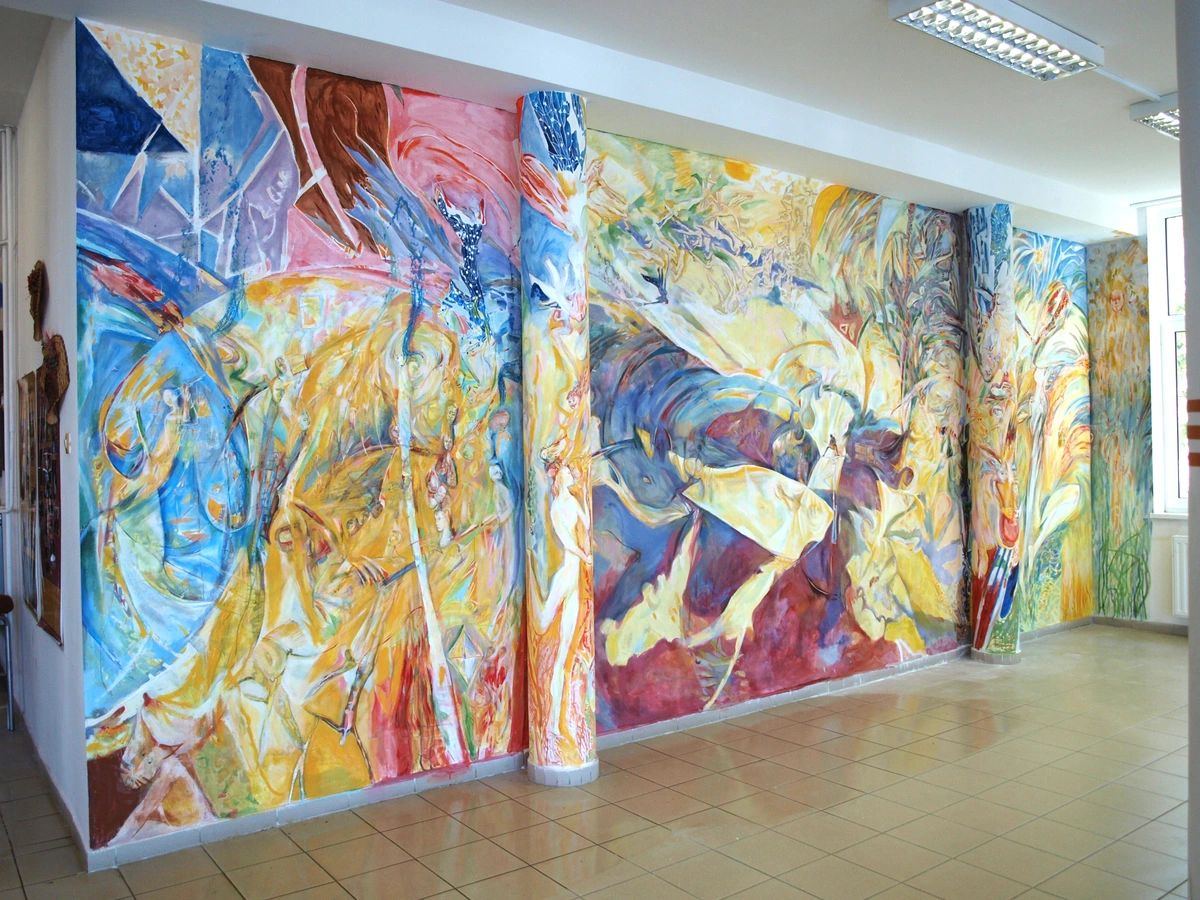
The Rauschenberg Revolution: A Paradigm Shift
This radical idea—using real-world objects and blurring categories—was a pivotal moment in art history. The dominant style Rauschenberg was reacting against was Abstract Expressionism—think Jackson Pollock's massive, emotional drip paintings, or Willem de Kooning's raw canvases. This movement, while powerful, often felt to Rauschenberg and his peers like an 'ivory tower' of art. It was all about the inner turmoil and genius of the artist, expressed purely through paint, often seen as a detached, almost spiritual, pursuit that excluded the messy realities of daily life. Art had become too caught up in its own head, too removed from the grit and joy of everyday existence, in his view. Rauschenberg admired these artists, especially de Kooning, but he instinctively felt that art needed to breathe the same air as humanity, not just in theory, but literally. He wanted to bring the street, the ordinary, the overlooked, right into the gallery, because that's where life truly happens.
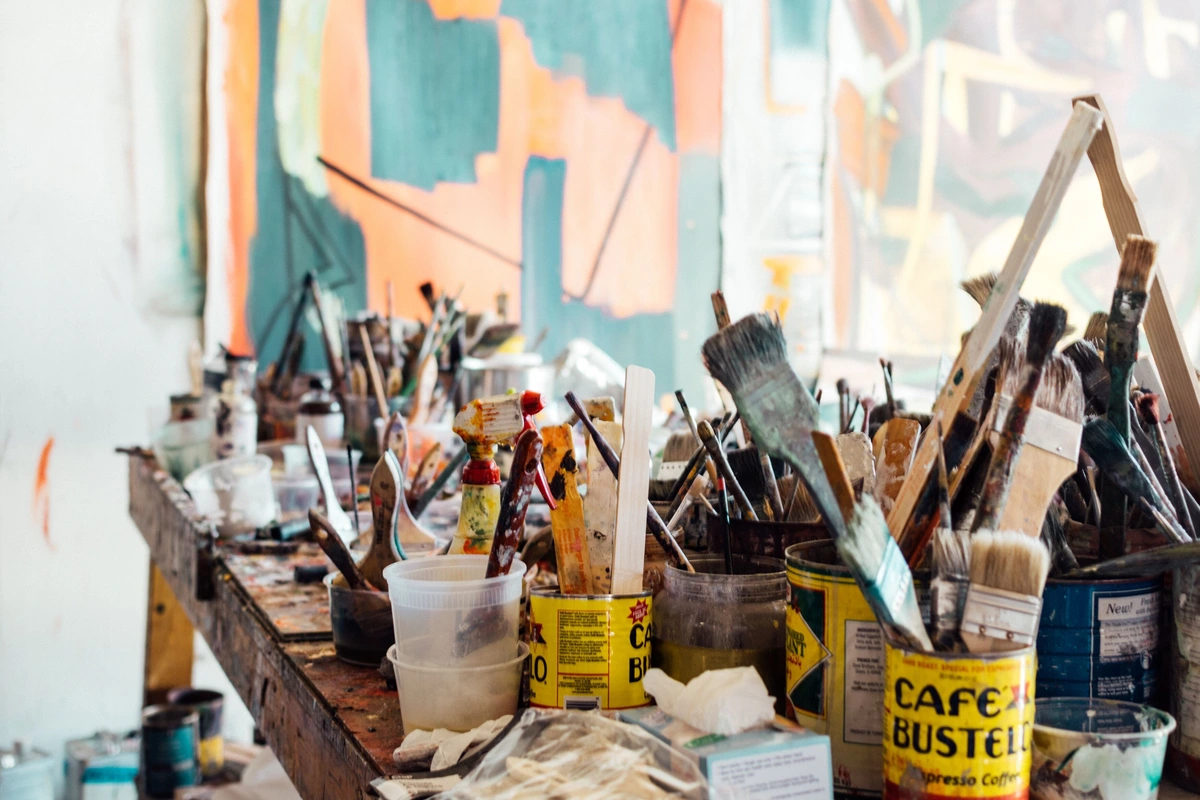
His Combines, by contrast, were loud, inclusive, and defiantly physical. They shattered the reverence for purely aesthetic art and injected a jolt of raw reality. This movement served as a crucial bridge from the introspective world of Abstract Expressionism to the loud, commercial-focused world of Pop Art. Andy Warhol's soup cans are, in a way, direct descendants of Rauschenberg's stuffed goat. By bringing commercial images, found objects, and mass culture directly into his work, Rauschenberg effectively pre-validated the use of such imagery, paving the way for Pop Art's full embrace of consumerism and media imagery. He showed that art could reflect the everyday without losing its profundity, and that you didn't need to reinvent the wheel to make a profound statement – sometimes you just needed to stick a wheel on the canvas.
But his influence didn't stop there. The Combines also laid significant groundwork for Conceptual Art, where the idea is paramount over aesthetic execution (Rauschenberg's process of choosing and combining was often the 'idea'). Think of artists like Sol LeWitt or Lawrence Weiner, whose instructions for art can be more important than the physical manifestation. They also impacted Minimalism, which, while seemingly diametrically opposed in aesthetic (Rauschenberg's maximalist chaos versus Minimalism's pared-down rigor), shared a crucial commonality: an engagement with industrial materials and the concept of found objects presented as art. Donald Judd's stacked boxes or Carl Andre's floor plates owe a conceptual debt to Rauschenberg's elevation of the everyday, even if their ultimate visual outcome was vastly different. Contemporary movements like Assemblage art (think Edward Kienholz or Betye Saar), which is literally about constructing artworks from various found elements, owe a direct debt to his innovative approach to collecting and constructing with diverse materials. Even the interdisciplinary work of Fluxus artists, who explored performance, events, and everyday objects, shared a spirit of blurring art and life that Rauschenberg championed. His pioneering interdisciplinary collaborations with Merce Cunningham, creating innovative scenic designs, further blurred the lines between disciplines, demonstrating art as an active, integrated experience. When I look at contemporary artists using unexpected materials, or creating immersive installations, I see Rauschenberg's shadow everywhere.
To truly grasp the seismic shift Rauschenberg initiated, let's consider a direct comparison:
Concept  | The Old Way (Pre-Rauschenberg) | The Rauschenberg Way |
|---|---|---|
| Definition of Art | Purely painting OR purely sculpture, distinct categories. | A hybrid; a Combine that defies categorization, embracing both and neither, existing 'in the gap between art and life.' |
| Materials | Oil paint, canvas, bronze, marble; special, 'artistic' materials, often expensive and symbolic. | A tire, a bed, a goat, trash from the street; anything is fair game, embracing the mundane, discarded, and ephemeral. |
| Artist's Role | The solitary genius who creates something from nothing, often in isolation. | The assembler, the curator of reality, the playful orchestrator who finds meaning and poetry in existing, often overlooked, things, inviting the world into the creative process. |
| Viewer's Experience | Stand back and admire technique, composition, or the artist's inner world; passive observation and intellectual decoding. | Walk around it, peer into it, question it, physically engage, and ask, 'What am I supposed to be looking at, and why is it like this?'; active participation and critical re-evaluation. |
| Subject Matter | Often idealized, narrative, or abstract expressions of inner turmoil. | The world itself, unedited and raw, full of its own narratives and chaos; life itself, with all its grit and glory, becomes the subject. |
| Artistic Intent/Philosophy | To create a perfect, contained aesthetic object, often reflecting the artist's singular inner vision. | To reflect the messiness and richness of life, dissolve boundaries, and invite the world (and the viewer) into the creation and meaning-making process. |
| Process & Performance | Often unseen, a private act of creation. | The act of finding, collecting, and assembling becomes part of the art, a visible or implied performance that foregrounds the artist's engagement with the world. |
| Initial Reception | Often critical praise from established circles for mastery of traditional forms. | Frequently met with bewilderment, controversy, and even outrage for breaking sacred artistic rules and challenging viewer expectations. |
His work wasn't just groundbreaking; it gave other artists explicit permission to break the rules, to challenge conventions, and to see art as an expansive, inclusive dialogue. The artistic timeline has a clear 'before' and 'after' Rauschenberg moment, much like an un-split atom and then, boom, a whole new universe of possibilities. And while Rauschenberg's later career saw him continue to experiment with printmaking, performance, and technology, the spirit of the Combines—the fusion of art and life—remained at its core. He showed that art is not just a picture on a wall but an active engagement with the world around us. It's about seeing the poetry in the everyday.
Iconic Combines: Confronting the Masterpieces
To truly grasp the audacious, sometimes confrontational, vision of Robert Rauschenberg, one must confront the 'Combines' that dared to place the everyday, and often the unsettling, directly into the sacred space of the gallery. These works were often met with bewilderment and even controversy at their initial showings, challenging viewers to reconsider what constituted 'art.' Imagine being an art lover in the 1950s, trained to appreciate the sublime abstractions of Rothko, and then being confronted with a literal bed on a wall. It must have been quite a shock!

Let's unpack some of these seminal works:

Bed (1955)
Yes, it's exactly what it sounds like. Rauschenberg took his own pillow, sheet, and quilt, mounted them on a stretcher like a canvas, and then went to town on them with paint, toothpaste, and fingernail polish. It’s shockingly intimate, especially when you think about the personal history embedded in actual bedding—a relic of sleep, vulnerability, and private moments. He called it one of his 'friendliest pictures,' perhaps because it felt so familiar, so domestic, yet simultaneously so rebellious and exposed, a brazen defiance of what 'art' was supposed to be. The textural contrast between the soft, worn fabric and the aggressive, almost visceral application of paint (like a raw wound on the softened fabric) creates a powerful, almost confrontational intimacy. It's a snapshot of the artist's own domestic life, flung onto a gallery wall, forcing a confrontation with personal space and the mundane stuff of existence. And honestly, who hasn't looked at their own messy bed and thought, 'Hmm, could this be art?' (Maybe that's just me.)
Monogram (1955-59)
Ah, the star of the show, the infamous Angora goat. Rauschenberg bought it from a second-hand office supply store for $15, a truly mundane origin for such an iconic art object. He struggled for years to incorporate it into a work, first mounting it on a shelf before finally deciding it should be on the floor, passing through a rubber tire. The title Monogram is a bit of a pun, perhaps referencing the interlocking forms of the goat and tire, like initials, or the act of 'monogramming' this found object with his artistic intent. It’s absurd, funny, and strangely beautiful, creating a poignant dialogue between the natural (the animal) and the industrial (the tire), the playful and the profound. This piece, more than any other, embodies Rauschenberg's 'cosmic joke'—a visual riddle that's both deeply serious in its artistic intent and utterly hilarious in its execution, forcing you to question conventional notions of beauty and artistic value. The goat isn't just in the art; it is the art, challenging the reverence typically afforded to traditional sculptures, making you wonder if you should laugh or gasp.
Canyon (1959)
This one is a beast of a Combine, featuring a mishmash of fabric, photos, a squeezed paint tube, and dangling from the bottom, a stuffed bald eagle. This eagle, a gift from a friend, would later cause Rauschenberg significant legal headaches because of the Bald and Golden Eagle Protection Act, leading to a complex ownership history and, at one point, even an attempted 'adoption' by the Moderna Museet in Stockholm to circumvent U.S. law. Can you imagine the bureaucratic nightmare? This wasn't just aesthetic; it was a confrontation, a bold move that had its price, and a perfect, almost humorous, example of how bringing 'real life'—with all its messy, bureaucratic, and sometimes litigious complications—into art can also bring real-life consequences for the artist. This legal entanglement itself became an unintended, yet deeply resonant, layer of meaning in the artwork, illustrating Rauschenberg's belief that meaning emerges from unexpected juxtapositions, not predetermined narratives, and that art can be just as complicated and unpredictable as reality itself.
Pilgrim (1960)
This Combine features a wooden chair strapped to a canvas, painted white. It's a stark, almost minimalist piece compared to some of his more elaborate works, yet it's equally powerful. The chair, a ubiquitous symbol of domesticity and everyday utility, is here transformed into an art object, its function deliberately stripped away and its form highlighted. It challenges us to see the inherent sculptural qualities in the most mundane items, and I think it’s a brilliant, quiet statement on how even the simplest object can hold profound artistic potential when recontextualized. It's Rauschenberg at his most elegant, yet still deeply provocative.
The Enduring Impact: Rauschenberg's Legacy Today
It’s easy to look at this stuff now, in a world full of installation and mixed-media art, and think, 'Okay, what's the big deal?' But that's precisely Rauschenberg's genius—he made it seem easy, opening the floodgates for artists who followed. His Combines didn't just change the art world; they permanently expanded its definition. Contemporary artists working across disciplines, employing found objects, or creating immersive installations owe a significant debt to his pioneering spirit. He showed that the world itself is the richest canvas, full of narratives waiting to be discovered and recontextualized.
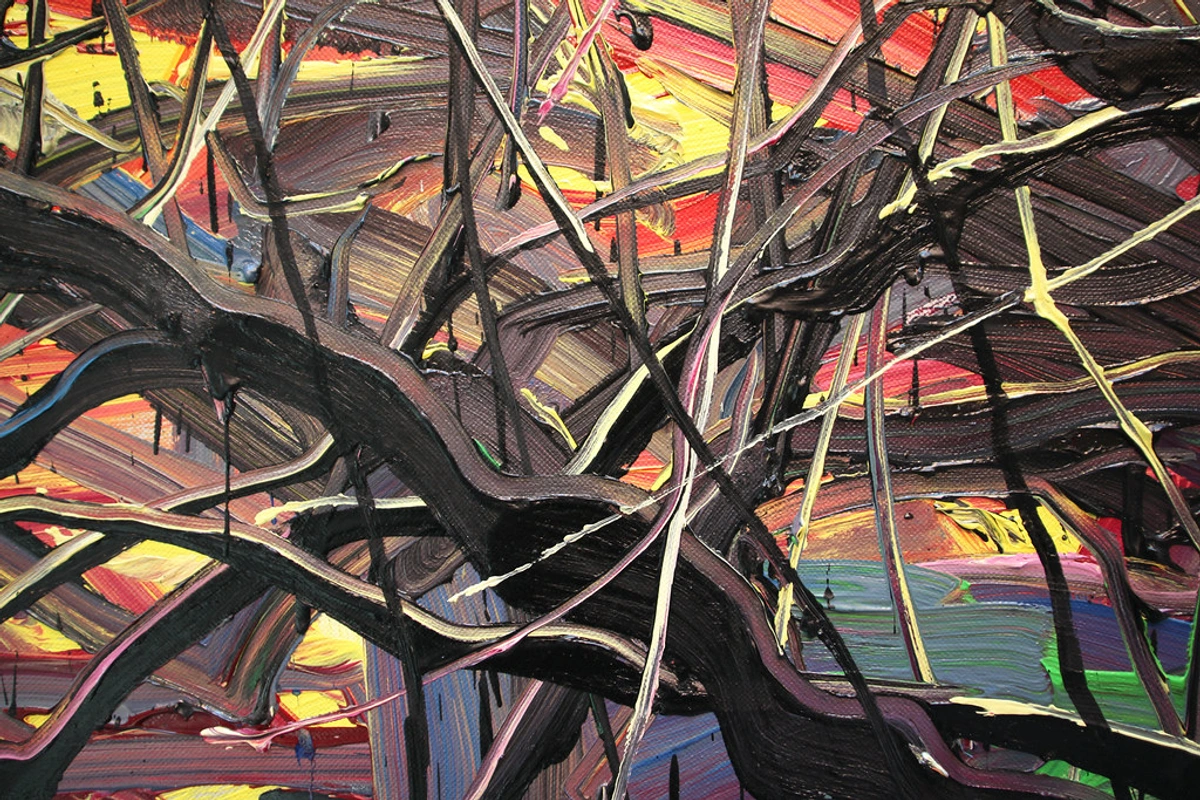
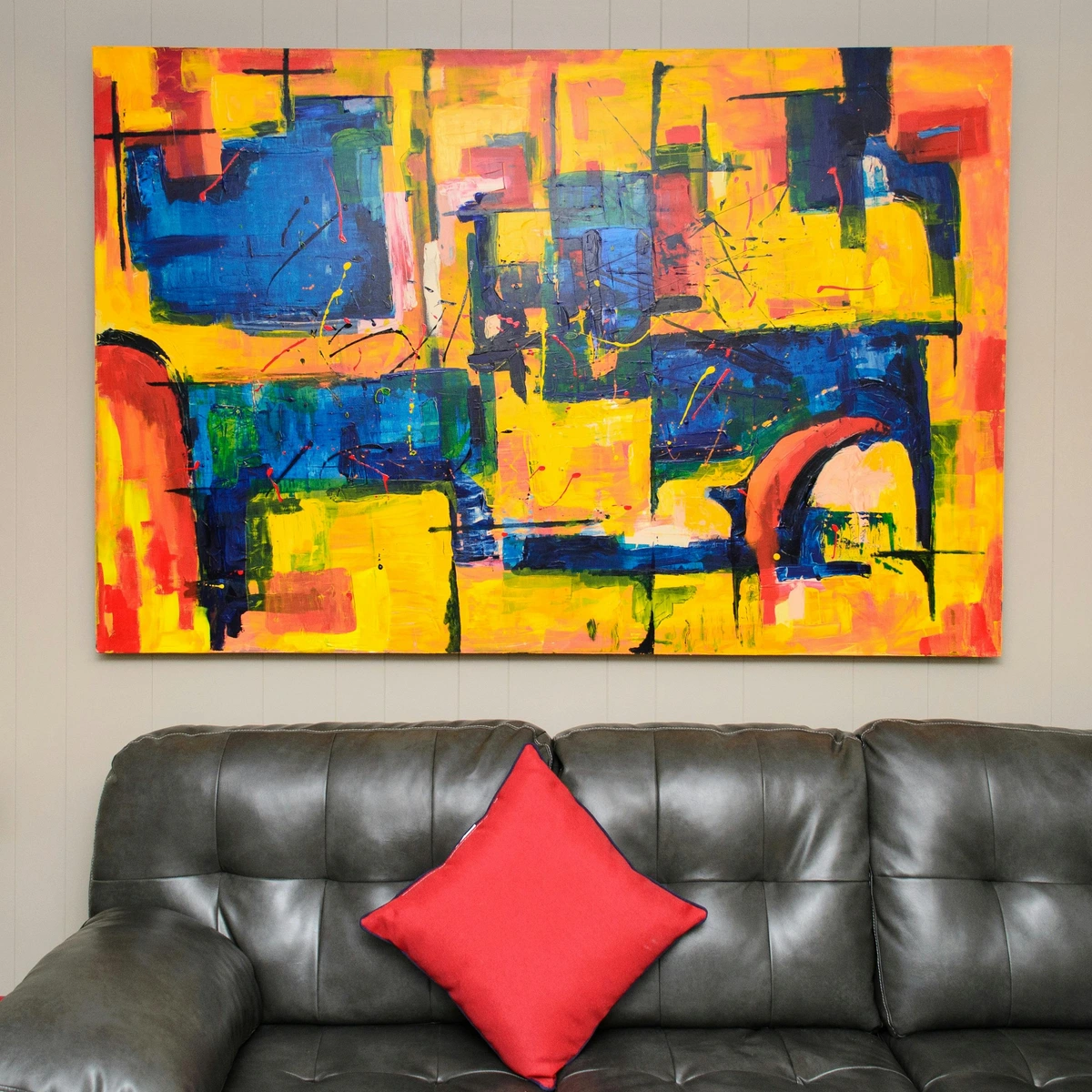
His work continues to inspire artists to embrace everyday materials and blur the lines between categories, a spirit you might even find echoed in some of the contemporary, often abstract, pieces available to buy art right here on the site. He gave art permission to be messy, inclusive, and deeply connected to the pulse of ordinary life. What makes his work resonate today? It's that eternal human struggle to find meaning in the chaos, to connect the personal to the universal, and to question what's truly valuable – themes that are as relevant now as they were then.
Consider how his influence ripples through contemporary practices:
- Assemblage Artists: Direct descendants like Edward Kienholz and Betye Saar meticulously construct narratives from found objects, clearly building on Rauschenberg's methodology of collecting and combining disparate elements to create new meaning.
- Performance Art & Happenings: His early, pioneering collaborations with John Cage and Merce Cunningham in experimental performances (like Pelican), where objects, sound, and movement merged, profoundly foreshadowed the interdisciplinary and participatory nature of much performance art by artists like Allan Kaprow and Carolee Schneemann.
- Street Art & Urban Interventions: While stylistically different, the act of appropriating everyday urban detritus and recontextualizing it in public spaces (think of Banksy's interventions, for example) shares a philosophical lineage with Rauschenberg's elevation of the ordinary, challenging the confines of the gallery and bringing art directly into life.
- Environmental Art: Artists using natural or discarded materials to comment on environmental issues (e.g., Agnes Denes, Richard Long) indirectly echo Rauschenberg's embrace of the material world and its inherent stories, including decay and renewal. While Rauschenberg wasn't explicitly an environmental artist, his approach to found materials paved the way for those who would be, demonstrating art's capacity to engage with real-world concerns.
When I see artists today using unexpected materials in installations, or blurring the lines between painting, sculpture, and performance, I can almost always trace a direct line back to Rauschenberg's audacious spirit. He fundamentally changed the conversation, making art a more expansive, democratic, and truly live experience.
Frequently Asked Questions (FAQ)
What is the most famous Robert Rauschenberg Combine?
That would have to be Monogram (1955-59), the piece with the taxidermied Angora goat and the rubber tire. It has become a potent symbol of his entire Combine series and his revolutionary artistic approach, constantly challenging viewers since its debut. It's the one that often sticks in people's minds, even if they've never heard the name Rauschenberg.
Are Combines considered paintings or sculptures?
This is precisely the question Rauschenberg intended to pose, and the answer is that they are intentionally both and neither. He created them specifically to challenge and dissolve the traditional distinction between painting and sculpture, aiming for a new category that defied rigid labels. Therefore, the most accurate and authoritative answer is to simply call them 'Combines.' Trying to fit them into a neat box misses the entire revolutionary point of his work.
What materials did Rauschenberg use in his Combines?
Literally anything he could get his hands on, often gathered from the streets of New York City. Common materials include oil paint, house paint, newspaper, photographs, wood, metal, fabric, and a whole host of found objects like tires, furniture, clothing, and even taxidermy animals. His embrace of the mundane made them extraordinary, demonstrating that art materials are all around us, waiting to be seen anew. For a deeper dive into the specific materials and techniques, I recommend revisiting the section on 'The Building Blocks of a Combine' earlier in this article.
How did Rauschenberg's work influence Pop Art?
By incorporating objects and images from everyday life and popular culture (like newspaper clippings, photographs, and commercial products), Rauschenberg broke away from the pure abstraction that dominated the art world. This radical integration of 'life' into 'art' opened the door for artists like Andy Warhol and Roy Lichtenstein to focus entirely on the imagery of mass media, advertising, and consumerism, directly leading to the Pop Art movement. He essentially gave Pop Art permission to exist, by showing the profound potential in the seemingly trivial.

What was the initial critical reception of Rauschenberg's Combines?
Initially, Rauschenberg's Combines were often met with bewilderment, controversy, and even outright hostility from traditional art critics and the public. They fundamentally challenged established notions of what art should be, blurring the lines between painting and sculpture with commonplace objects. Many found them chaotic or simply not 'art,' even dismissively labeling them 'junk art.' However, over time, their revolutionary nature became clear, and they are now celebrated as pivotal works in modern art history.

How did Rauschenberg select his found objects?
Rauschenberg didn't just pick things at random, though chance certainly played a role. He often selected objects for their intrinsic visual properties—their shape, texture, color, or existing wear. But he also looked for their inherent history or cultural resonance, the 'story' they carried from their previous life. Sometimes, an object would simply 'speak' to him or present itself in a way that suggested its artistic potential. It was a combination of intuition, keen aesthetic judgment, and an artist's eye for the overlooked, all contributing to a carefully considered chaos.
What is the difference between Rauschenberg's Combines and later Assemblage art?
While Rauschenberg's Combines are indeed a form of assemblage, he essentially pioneered the specific hybrid approach that birthed the term 'Combine' itself. Later Assemblage art, as a broader movement (think artists like Edward Kienholz or Betye Saar), explicitly built upon Rauschenberg's groundbreaking use of found objects and mixed media. The key distinction often lies in Rauschenberg's intentional blurring of painting and sculpture within a single, unified work, often keeping paint central even as he expanded the canvas. He was less about simply constructing a three-dimensional object from disparate parts, and more about integrating them into a painterly field, creating a dialogue that transcends simple categorization.
So, the next time you're in a gallery and see a piece of art that makes you scratch your head and think, 'My kid could have made that,' take a moment. Think of Rauschenberg and his goat. He was asking the hard questions about what art is supposed to be, and his answer was a joyful, chaotic, and resounding 'All of the above.' He showed that art isn't just something to be looked at; it's a piece of the world, with all its messiness and beauty, brought inside for a closer look. His legacy encourages us to find beauty and meaning in the unexpected, a philosophy that resonates deeply with artists like myself who seek to push boundaries and find the extraordinary in the everyday. Perhaps even a bustling cityscape can be a canvas, or the everyday objects in your own home. You can even explore more of these ideas and other art movements through our general timeline, or discover how contemporary art continues to challenge perceptions and bridge the gap between art and life by exploring pieces available to buy art that capture a similar spirit of unexpected beauty.