More Than a Thought: Why Intellectual Rigor is the Soul of Conceptual Art | Zen Museum
Delve into the intellectual rigor behind conceptual art, exploring how idea, theory, and critical thought elevate an artwork beyond aesthetics.

Intellectual Rigor: The Secret Engine That Makes Conceptual Art Art
Ever tried explaining to your uncle why a urinal in a museum isn't just a urinal? I have, and the breadsticks were getting cold. The experience got me thinking about a simple, yet profound question: What makes conceptual art, art?
Is it the texture of the paint, the curve of the marble, the decades of honed technique? For most of art history, the answer was a resounding yes. But what if the most important part of the artwork has no physical form at all? What if the real masterpiece is the idea itself?
Most people, if they're being honest, think it's a prank, an excuse for a lack of skill, or a tool for pretentious musings. I believe they're missing the point entirely. The real engine of conceptual art, the thing that separates a forgettable stunt from a profound cultural artifact, isn't the object at all—it's the intellectual rigor behind it.
Intellectual rigor is the disciplined, critical, and structured thinking that transforms a fleeting thought into a durable concept. It’s the scaffolding that holds an idea upright. Imagine the difference between a doodle on a napkin and an architectural blueprint for a skyscraper. Both might start with a quick sketch, but only one is built on a foundation of deep, deliberate thought—considering physics, materials, human behavior, and the environment. It's the difference between a 'what if...' and a fully-formed thesis. While craft asks, "Is this made well?", intellectual rigor asks, "Is this idea thought well?" In conceptual art, this foundational rigor isn't just important—it's the primary material.
When you stand before a piece of conceptual art, the art isn't the object you see. It's the rigorous process of thought you're invited to witness, unpack, and consider. The object is merely the vessel—the container for a set of instructions, a provocation, or a question. Your job as the viewer is to be the active participant who breathes life back into the idea.
We live in an age of the 'hot take' and the fleeting meme, where reactions are fast and contemplation is slow. Conceptual art, at its best, is an antidote to this phenomenon. It forces us to stop, unpack the idea, and engage with it critically—to move beyond surface-level reactions. It poses a quiet, patient question in a world shouting for our attention.
But intellectual rigor is not just for the elite. It's something you can actively develop. You can train yourself to look past your gut reaction—whether it's delight, boredom, or utter confusion—and start asking deeper questions. Why this object? Why here? Why now? What assumptions is the artist deliberately placing under a microscope for us to examine?
This approach opens the door to a more profound appreciation, a richer personal experience where you become a collaborator in the art's meaning. It's about finding the hidden architecture of thought that supports the final, elegant gesture you see.
The artist's job is to make that idea so compelling, so thoroughly worked out, that it can stand up to that scrutiny. When it's done right, you can feel the weight of the thought in the deliberate simplicity of its gesture. It's less about looking at something beautiful and more about being in the presence of a mind at work.
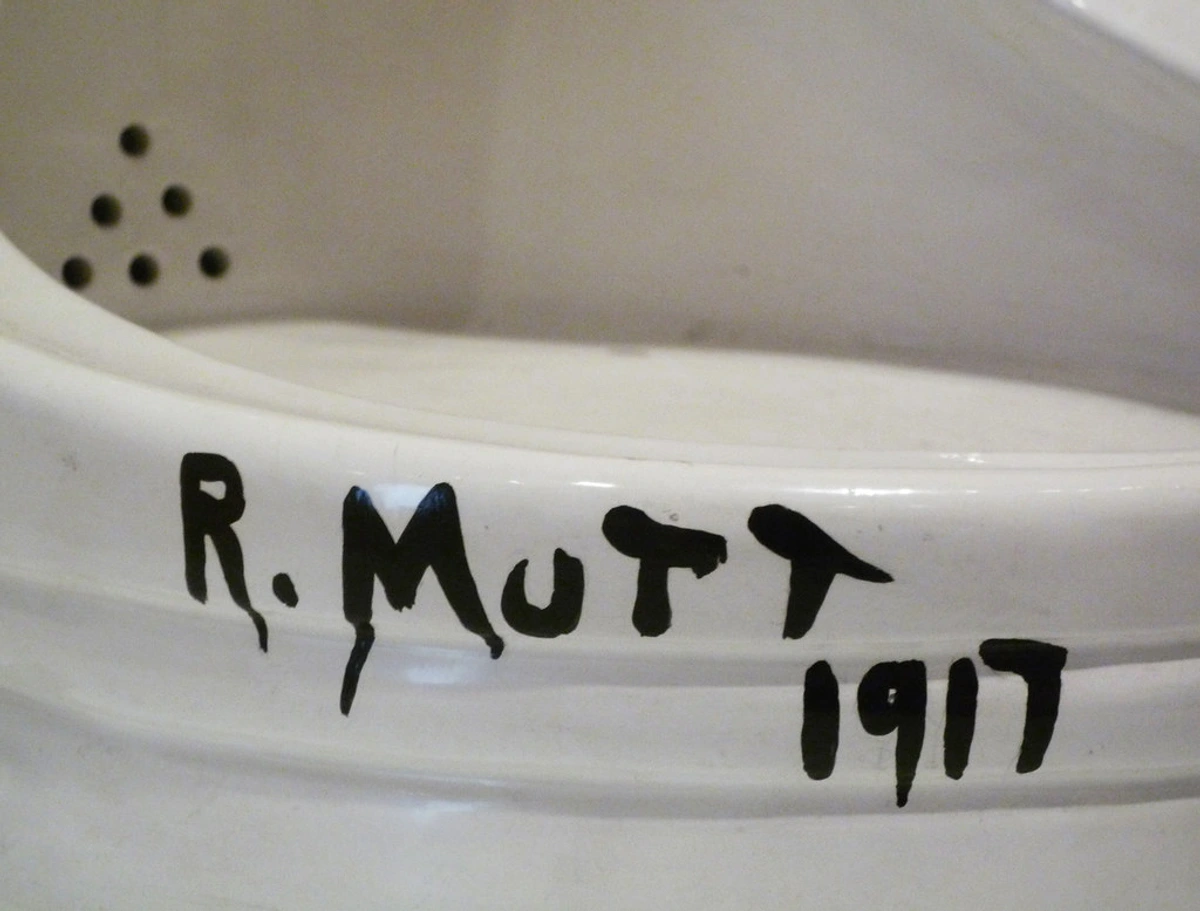
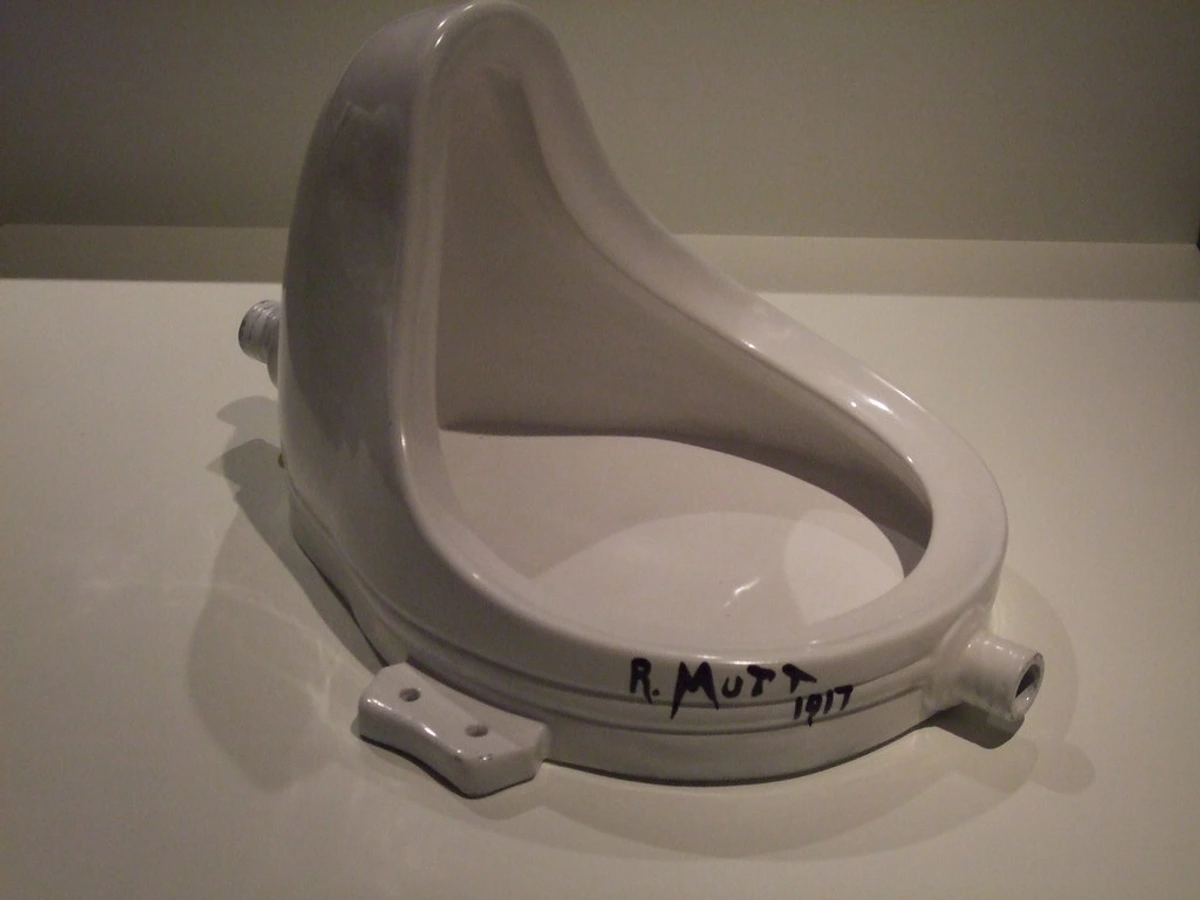
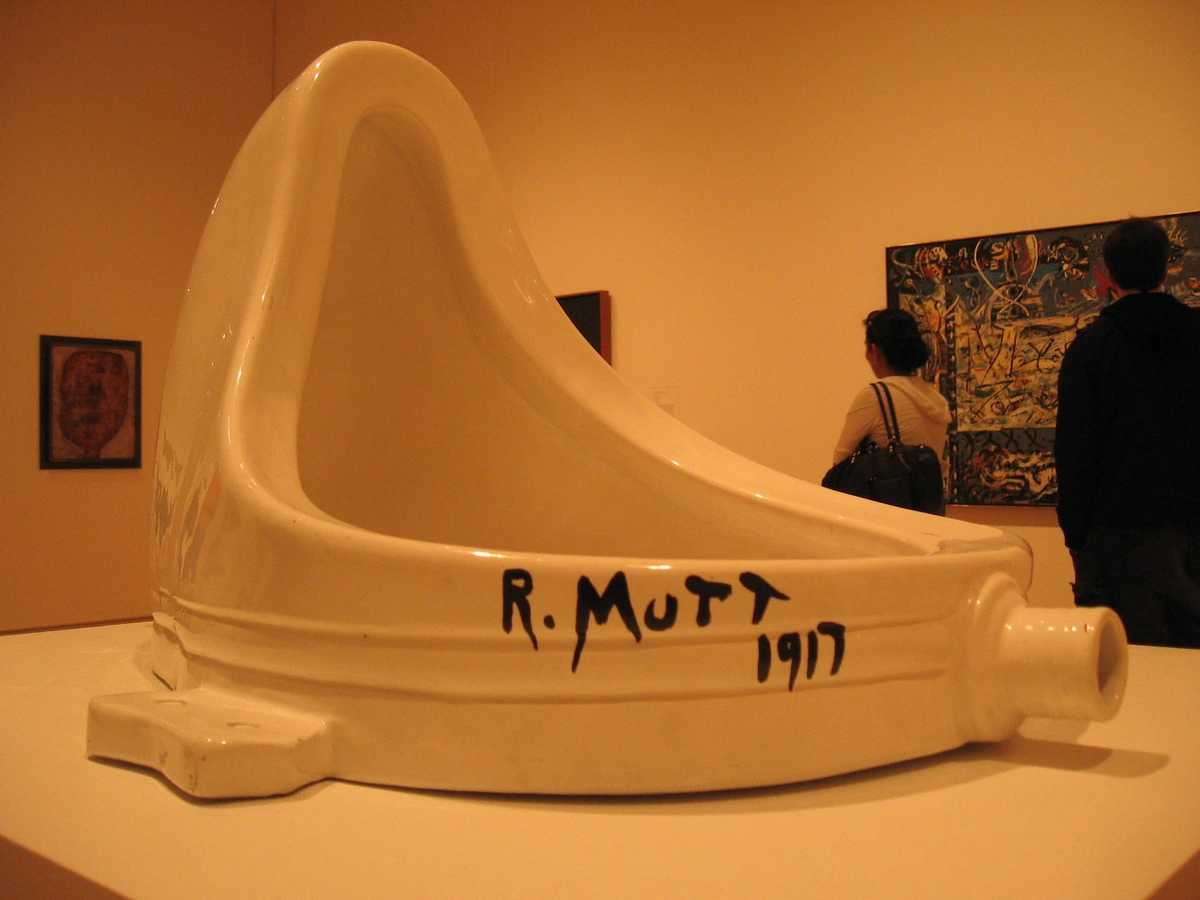
Marcel Duchamp is the undisputed godfather of this entire conversation. In 1917, he anonymously submitted a mass-produced porcelain urinal, signed it 'R. Mutt,' and titled it Fountain. He didn't craft it; he selected it. The art wasn't in the object's form or function, but in the audacious, sharp-witted act of selection and re-contextualization. It was a direct challenge to the establishment. He was asking, with a sly grin I imagine, 'Who decides what art is? The artist? The institution? Or the viewer?'
The genius of Fountain wasn't in presenting a urinal; it was in choosing the perfect urinal for the provocation. Its porcelain anonymity, its functional similarity to classical urns, its very banality—these were all conceptually charged decisions. It was an argument made not with words, but with a carefully selected, mass-produced object. He wasn't just being provocative; he was laying the philosophical groundwork for a century of art that would prioritize the idea over the craft.
If Duchamp set the table, the Pop Art movement that followed turned the meal into a banquet. Andy Warhol’s Brillo Boxes (1964) are the prime example. They weren’t about his ability to construct a perfect cardboard box; in fact, he had them fabricated for him, a crucial part of the statement. The work was a razor-sharp question about consumerism, originality, and the blurring line between the unique art object and the identical products on supermarket shelves.
Warhol's process itself was a study in intellectual detachment. How can an artist so deliberately remove their own "hand" from the process of making? It flips the entire history of painting, where every stroke was a record of a singular artist's existence and ability, completely on its head.
And then there are the Feminist art movements of the 1960s and 70s, which harnessed conceptual rigor as a tool for profound political and social critique.
Take Judy Chicago's monumental The Dinner Party (1974-1979). It's far more than a collection of beautiful plates and needlework. It was a monumental act of historical recovery and rigorous, collaborative craft. Each of the 39 place settings at the triangular table is a meticulously researched and handcrafted tribute to a specific woman from history, "the forgotten mothers of our culture."
Chicago used radical craft—mediums like ceramics and embroidery, which had long been dismissed as mere "women's work"—to create a new artistic language capable of honoring female history. The intellectual rigor here is staggering: it's in the thousands of hours of research, the symbolic design that permeates every plate and runner, and the systematic organization of the entire project to elevate women's place in history.
Ana Mendieta's Silueta Series (1973–1980) provides a hauntingly different perspective. She used her own body, or its outline, and elemental materials like earth, fire, water, and blood to create temporary works. The labor wasn't in carving a permanent statue, but in the repetitive, ritualistic act of tracing her form in the landscape.
Mendieta's intellectual rigor lay in her ability to fuse deeply personal themes (her own displacement from Cuba, the idea of belonging) with ancient, universal symbols and raw earth-body art. Each Silueta was a rigorous exploration of identity, displacement, and the indelible connection between the female body and the natural world. The photograph wasn't the art; it was merely the document of a profound, and often transient, conceptual act.
And there are those who turn the lens inward, using conceptual frameworks to explore the nature of perception itself. Consider Felix Gonzalez-Torres's "Untitled" (Portrait of Ross in L.A.) (1991). At first glance, it's just a pile of candies in the corner of a gallery, often brightly colored and shiny.
But the concept here is gut-wrenchingly precise. Viewers are invited to take a piece of candy, and as they do, the "portrait" of his partner Ross, who died from AIDS-related complications, quite literally dwindles away. The "ideal weight" of the candy pile represents Ross's body before his illness. The intellectual rigor lies in this devastatingly simple, yet politically and emotionally charged metaphor for loss, mourning, community participation, and the impermanence of life itself. It transforms a simple, everyday object into a profound vehicle for memory, love, and grief.
Critiquing the 'craftsmanship' of a Warhol is to completely miss his conceptual rigor. The artistic labor was not in the handiwork but in the act of identifying and re-presenting a mass-produced cultural icon within the hallowed space of a gallery, thereby forcing a cultural observation into the open.
Then there is art that wears its philosophical backbone on its sleeve. Joseph Kosuth’s One and Three Chairs (1965) is a prime specimen. He presents a physical chair, a photograph of that chair, and a printed photographic enlargement of the dictionary definition for the word 'chair.' It feels less like a painting and more like a brain teaser, a puzzle that has escaped the realm of aesthetics.
Kosuth is forcing us to confront a fundamental question: what are the layers of reality and meaning? We are presented with the object (the physical chair), its representation (the photograph), and its linguistic description (the definition). The work is a rigorous, almost clinical, exploration of semiotics (the study of signs and symbols) and epistemology (the study of knowledge). The intellectual rigor lies in this deliberate, systematic deconstruction of how we perceive and define the world.
One and Three Chairs is a masterpiece of conceptual clarity because it provides its own critical analysis. By giving us the dictionary definition, Kosuth is, in effect, telling us how to interpret the work. He’s holding up a mirror not just to the nature of chairs, but to the tools we use to make sense of reality itself.
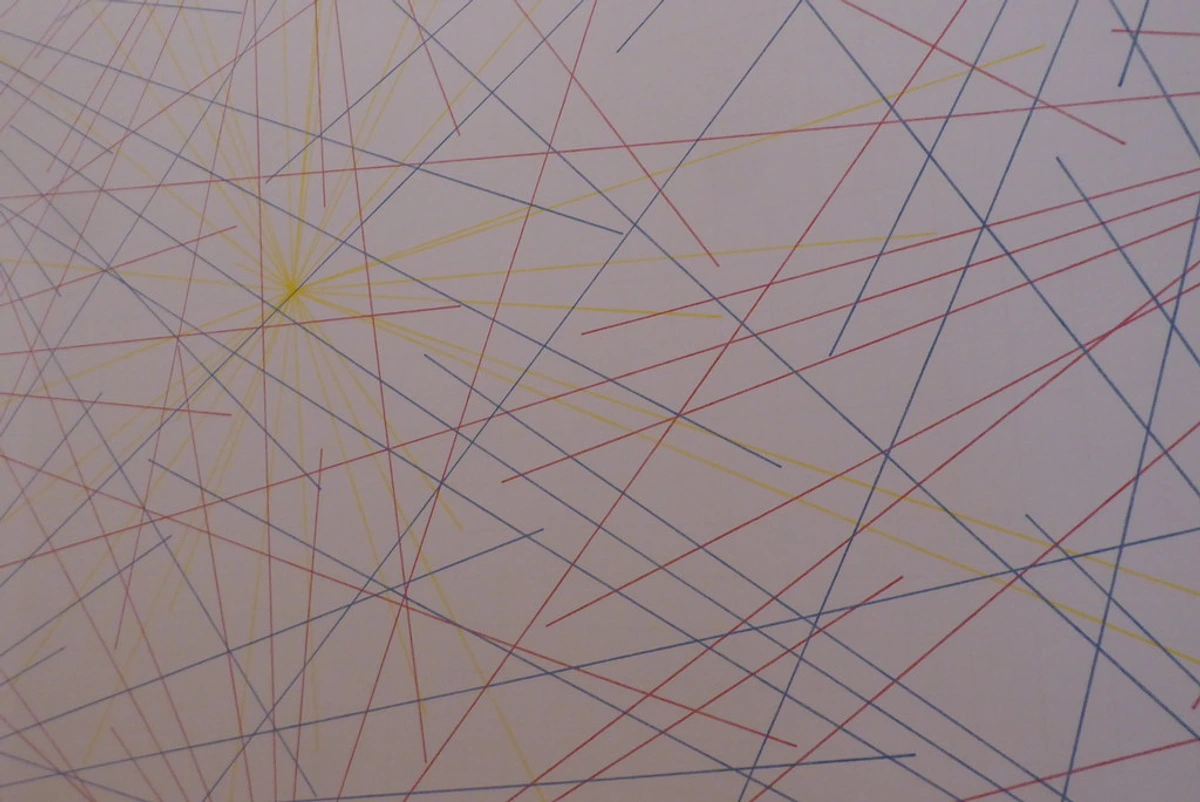
Sol LeWitt took this obsession with the system and the idea to its logical conclusion. His Wall Drawings are perhaps the ultimate expression of intellectual rigor. For LeWitt, the idea itself was the machine that generated the art. He would create detailed, written instructions—a conceptual algorithm—and a team of drafters would execute them directly on the wall. The final visual product was secondary to the purity and clarity of the initial concept. The art was the flawless plan, the recipe itself.
This rigorous, process-driven approach doesn't just live in museums. It’s a fundamental method of creation that transcends disciplines. When a designer sets out to create a logo, they are grappling with the same principles.
It isn't about simply drawing the best-looking apple or the most elegant swoosh. It's about the intellectual labor of embedding a company's entire identity—its history, its values, its future ambition—into a single, irreducible graphic form. This is an incredibly high-stakes act of intellectual distillation, where endless complexities are boiled down to a single, potent, and visually simple concept. The final product is just the endpoint—the real labor is in the hundreds of pages of sketches, the hours of research into market perception, and the difficult conversations about what the brand truly stands for.
But it isn't just graphic design. Look at architecture. The emotional power of Zaha Hadid's fluid, gravity-defying structures—like the Heydar Aliyev Center in Baku—doesn't come from a simple desire to make a "cool looking" building. It's born from incredibly complex intellectual and mathematical rigor, an obsession with topology and fluid dynamics translated into physical form. The final output is emotional, but it's built on a foundation of fierce intellect.

The same principle applies to music. Take the work of composer Steve Reich. His piece Different Trains is a haunting soundscape built by meticulously layering recordings of train whistles, sirens, and the voices of Holocaust survivors. The emotional gut punch of the piece—the feeling of being transported to a completely different era and a heartbreaking reality—is a direct result of his intellectual rigor. He constructed the entire work using his signature phasing and looping techniques, turning everyday sounds into a profound meditation on memory, history, and mechanized atrocity. The feeling isn't accidental; it's engineered through a rigorous intellect.
This is precisely why intellectual rigor doesn't drain the life from art; it pumps it full of a different kind of lifeblood—meaning. It provides the unseen skeleton that allows the body of the artwork to stand upright and withstand scrutiny. Without it, a clever idea remains just that—a fleeting clever idea. With it, that idea transforms into an experience, a durable statement that has the potential to challenge our perceptions, inspire new thoughts, and change the way we see the world.
The Many Faces of Intellectual Rigor: Beyond the Obvious Examples
Intellectual rigor in conceptual art isn't a monolith. It takes many forms, each with its own internal logic and disciplinary demands. Let me break down some of the most significant variations I've observed:

1. Philosophical Rigor (The Thinkers)
This is perhaps the most visible form—artists like Kosuth who engage directly with philosophical traditions, creating visual arguments about meaning, truth, and representation.
2. Systemic Rigor (The Planners)
Artists like LeWitt, Darboven, and Kawara who establish rigorous rules, systems, or procedures and follow them to their logical conclusions, regardless of aesthetic outcomes.
3. Research-Based Rigor (The Investigators)
These artists treat their studio like a laboratory, conducting extensive research—historical, scientific, or cultural—and producing art that synthesizes their findings. Mark Dion excavates museum storage rooms and displays his findings as archaeological sites. Simon Starling researches obscure historical connections and creates objects that embody these hidden narratives.
4. Social/Political Rigor (The Activists)
Here, rigorous thinking is applied to social and political questions. Mierle Laderman Ukeles performed maintenance work in museums as art, questioning the invisible labor that sustains cultural institutions. Tania Bruguera creates political scenarios and institutions that blur the line between art and activism.
5. Perceptual Rigor (The Tricksters)
Artists who systematically investigate how we see and perceive. Bridget Riley doesn't just make pretty patterns; she deploys precise optical principles to create experiences that are physically and psychologically affecting. Olafur Eliasson constructs elaborate environmental conditions to study how atmosphere, light, and space shape our experience of reality.
Type of Rigor  | Key Artists | Primary Focus | Typical Methods |
|---|---|---|---|
| Philosophical | Kosuth, Weiner | Meaning, language, truth | Text, definitions, propositions |
| Systemic | LeWitt, Kawara, Darboven | Rules, procedures, time | Instructions, algorithms, repetition |
| Research-Based | Dion, Starling | History, science, culture | Archives, fieldwork, documentation |
| Social/Political | Ukeles, Bruguera | Labor, power, institutions | Performance, participation, institutions |
| Perceptual | Riley, Eliasson | Vision, space, experience | Optical effects, environmental modification |
This diversity suggests that intellectual rigor isn't a single methodology but rather a commitment to thinking through a problem with maximum clarity, regardless of the specific disciplinary tools being employed.
So, where does the artist's labor fit into all of this? This is where things get wonderfully messy, and honestly, a bit uncomfortable for some. The skill isn't in the perfect brushstroke anymore; it's in the perfect articulation of a thought.
For the contemporary artist, this means the vast majority of the real work is invisible to the public. It doesn't happen on a canvas under studio lights, but in the quiet corners of life: the pages of a notebook, during late-night research sessions, in charged conversations, and in the difficult, disciplined practice of honing an idea down to its irreducible core.
I remember talking to an artist friend who spent six months researching 18th-century maritime navigation techniques for a single installation. The final piece was beautifully simple—just a suspended compass and some chalk markings on the floor—but the intellectual architecture behind it was staggering. Every element had been considered, tested, and justified through months of reading historical documents, interviewing sailors, and experimenting with materials. The visible artwork was just the final 5% of the iceberg.
This intellectual labor is grueling. It involves cycles of intense research, creative brainstorming, and ruthless self-editing. An artist might spend weeks reading about phenomenology to understand perception, or months studying urban decay to inform a series on forgotten spaces. This is not casual 'inspiration'; it's academic-level discipline applied to creative ends.
The labor becomes less about making and more about thinking, researching, and deciding. The documentation of this process—the sketches, the notes, the false starts—often becomes a vital part of the artwork itself, revealing the intellectual rigor that underpins the final, seemingly simple gesture. The process, in its entirety, becomes the art.
This doesn't mean traditional technique is discarded. It's fundamentally re-defined. Technical skill morphs from 'the ability to render' into 'the ability to research, select, and install the most potent material, image, or action.' The new virtuosity is in the precision and conceptual justification of the choice.

For an artist working in abstraction, like myself, this might mean that a specific shade of ultramarine blue isn't chosen because it looks pretty next to a crimson red. It's chosen because that blue is the specific color of twilight over the North Sea in December, and it's been mixed to trigger a specific memory of cold, expansive skies. The rigor is in how deeply that justification is considered and how perfectly the chosen element—be it a color, a line, or a material—serves the central idea of the piece.
For many artists, including those who explore contemporary and abstract themes, this shift is incredibly liberating. It allows for a more direct and unfiltered conversation with the core idea, unburdened by the historical weight and technical demands of traditional methods. It opens up a universe of potential materials and methods, where anything—from a text fragment to a live performance—can become a tool in service of the concept.
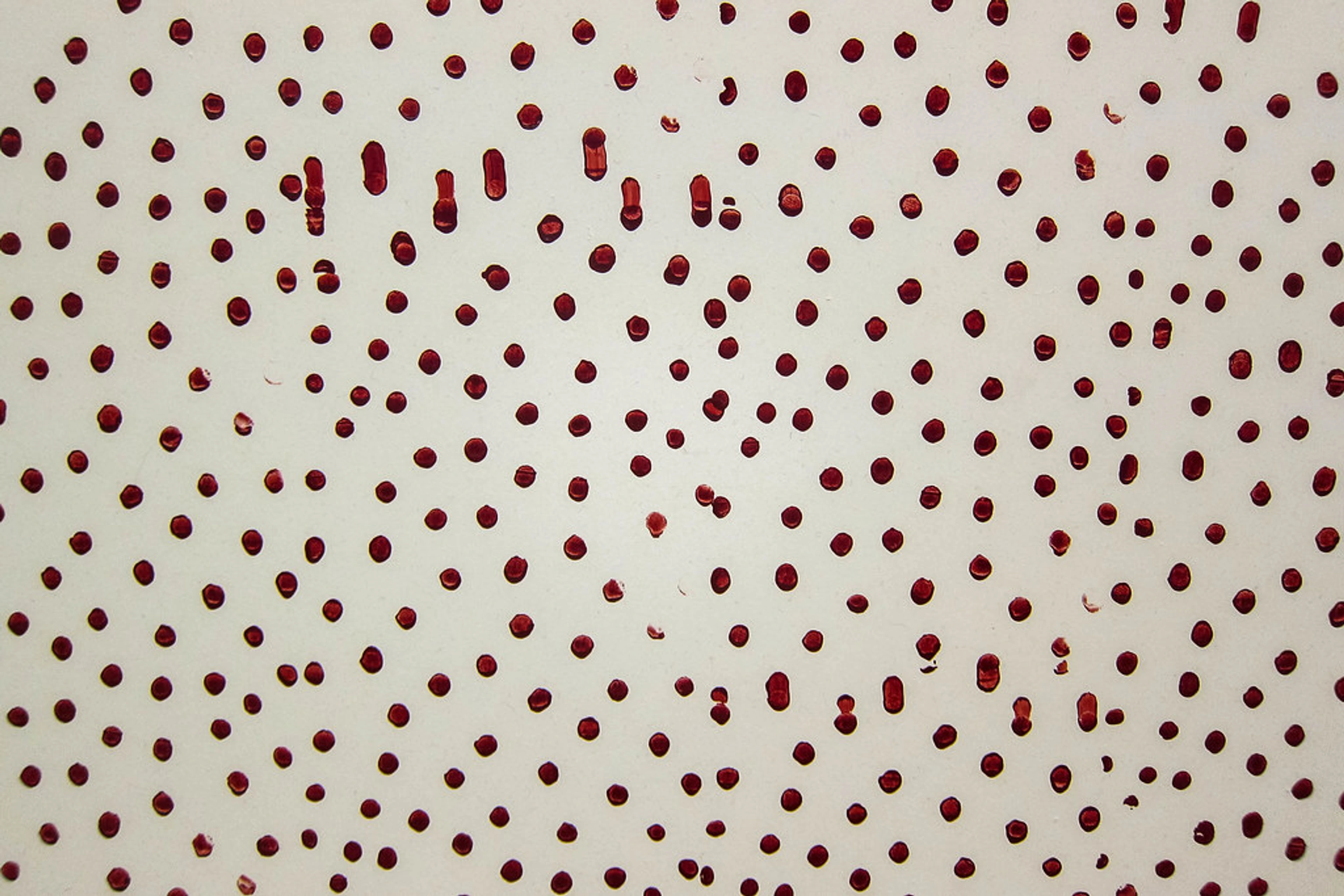
Because the proof is ultimately in the choices you make. Why paint and not pixels? Why a massive scale instead of an intimate one? Why raw canvas versus polished steel? Each choice becomes a line in the argument your artwork is making. The rigor is in your ability to defend your decisions not with "it just looks good," but with a clear statement of intent, rooted in the concept you’re exploring. It's one thing to say, "I want to paint about loneliness." It's another thing entirely to decide that loneliness is best expressed not through a solitary figure, but through the repetitive, obsessive mark-making of thousands of tiny, isolated dots on an empty white field.
This opens the door to entirely new mediums and methods. Performance art, for instance, elevates the artist's own body and a specific duration of time into the primary materials. Land art uses the earth itself as both canvas and substance. Installation art transforms an entire space into a carefully constructed experience for the viewer to move through. In each case, the artist's skill is in the conceptual orchestration of these elements to create a singular, cohesive idea.
And what about the role of chance? Artists like John Cage incorporated the uncontrollable randomness of the world into their work, using systems (like the I Ching) to make compositional decisions. This isn't a lack of rigor; it's a rigorous embrace of a different kind of reality, one where intention and serendipity can dance together within a clear framework.
Even those of us who still love paint—myself included—are working under this expanded definition. When I choose a specific shade of deep crimson, it's often not just because it's beautiful. It's because that particular red carries a history, a cultural weight, or a psychological association that connects directly to the question I'm trying to pose on the canvas. The rigor is in the curation of that specific emotional and intellectual temperature.
Let me ground this in my own practice, for instance. I rarely set out to simply 'paint a picture.' I set out to explore a feeling, a philosophical paradox, or a question about perception. The colors, the forms, the textures—they are not chosen for mere aesthetic pleasure. They are a curated toolkit, each element selected because it services that initial spark of inquiry.
The intellectual rigor is in the constant discipline of asking, 'Does this element serve the core idea?' If the answer is no, it's removed, no matter how visually appealing it might be. It’s a relentless process of distillation. This can be incredibly frustrating, like being a writer who has to kill their most beautifully crafted sentence because it doesn't move the story forward.
Common Objections and Nuanced Rebuttals
Of course, this shift in artistic practice didn't happen in a vacuum, and it's not without its critics—many of whom make valid points. It's worth addressing them head-on, because a strong concept can withstand scrutiny.
One major criticism is that it can lead to art that is cold, sterile, and emotionally distant. This is a legitimate concern, and to be honest, sometimes it's true. Some artists get so lost in their own theoretical frameworks that they forget to create an experience for a viewer to feel anything. But as we saw with Gonzalez-Torres, intellectual rigor doesn't have to be cold. In fact, a rigorously structured concept can be the very vehicle that delivers the most profound emotional payload. The system is the scaffolding that allows a truly complex feeling—like the grief of losing a loved one—to be communicated with devastating clarity.
Another critique is that it is elitist and exclusionary, that it requires a specialized dictionary of terms to even begin to understand. This is a failure of communication, not a failure of the concept itself. The best conceptual art often has a disarmingly simple entry point. Duchamp's urinal doesn't require an art history degree to be provocative. It requires only the recognition that you're looking at a urinal in a place you wouldn't expect one. The deeper layers of art-historical context certainly enrich the experience, but the initial jolt—the first question—is accessible to almost anyone. A sign blinking "Help" in a gallery window needs no translation. The problem arises when artists and institutions forget how to talk about the work in plain language, creating a barrier that shouldn't be there.
There's also the argument that it has created a "cult of the new" where novelty is valued above all else, leading to increasingly shocking or nonsensical gestures just for the sake of being different. And yes, the art market's insatiable appetite for the "next big thing" can create a pressure cooker where provocation is mistaken for substance. But this is a problem with any avant-garde movement throughout history. True intellectual rigor is the ultimate defense against empty novelty. The question isn't "Is this new?" but "Is this idea robust, clear, and does it resonate beyond its own cleverness?" An idea only needs to be truly new to you, right now.
The Viewer's Burden: When Looking Becomes Thinking
Here's where conceptual art becomes democratically radical: it transforms the viewer from a passive consumer of aesthetic pleasure into an active co-creator of meaning. When you encounter a powerful piece of conceptual art, your job isn't to simply appreciate its beauty or craftsmanship. Your job is to think alongside the artist.
This is both empowering and demanding. Suddenly, your own intellectual resources—your knowledge, your experiences, your ability to make connections—become essential ingredients in completing the artwork. A work like Felix Gonzalez-Torres's "Untitled" (Portrait of Ross in L.A.), a pile of candy that visitors are invited to take, only achieves its full emotional weight when you learn it references his partner's AIDS-related weight loss and the communal nature of grief. The artwork isn't the candy; it's the complex web of associations the candy triggers in an informed viewer.
This collaborative model requires a new kind of viewer literacy. If traditional art rewards the educated eye (knowing your Rembrandt from your Rubens), conceptual art rewards the educated mind—the ability to recognize references, unpack arguments, and follow complex lines of reasoning. It's not about "getting it" in some mystical sense; it's about doing the intellectual work.
Now, I know what you're thinking: art criticism can be a dense forest of academic jargon and theoretical frameworks that feels intentionally designed to make your head spin. But at its heart, rigorous criticism is an act of deep respect—an attempt to meet the artwork on its own conceptual ground, to engage with it at the level of its ideas.
A strong critic provides the language and framework to articulate precisely why one work resonates deeply while another falls flat. They dissect the artist's intent, interrogate the historical context, and analyze the potential cultural impact. In many ways, they act as the essential translators between the avant-garde and a bewildered public. A critic armed with intellectual rigor has the power to transform a dismissive, knee-jerk "my kid could do that" into a nuanced and fascinating conversation about context, concept, and the very nature of cultural value.
Think of a great critic as a bridge-builder. They construct a sturdy, well-reasoned pathway between your initial, often emotional, reaction and the deeper conceptual structure of the work. They don't give you the 'answer'; they give you the tools to build your own more profound understanding.
How to Cultivate Intellectual Rigor in Your Own Practice
Perhaps you're an artist, a designer, or a writer wondering how to apply these principles to your own work. It's not about becoming an academic; it's about adopting a more structured and relentless curiosity. Think of it as a mental gymnasium for your ideas.
Start with Obsessive Questioning. Every project should begin not with an answer, but with a question you genuinely don't know the answer to. "What does silence look like?" "How can I make a painting about bureaucracy?" "What is the color of nostalgia?" Don't let yourself off the hook with the first answer that pops into your head. Sit with the question. Let it bother you. Allow it to send you down rabbit holes of research you never expected to go down.
Next, embrace Ruthless Editing. This is perhaps the most critical and most difficult step. You have to become your own toughest critic. Learn to look at every element of your work-in-progress and ask that brutal question: "Does this truly serve the core idea I'm exploring?" If you find yourself hesitating, if your only defense is "but I like it," that's a red flag. Be willing to erase, destroy, or start over. It's far better to have a simple, powerful idea perfectly realized than a complex, messy one that doesn't know what it wants to say. Remember, intellectual rigor is about distillation, not decoration.

Then, practice Articulating Your Intent. Can you explain the central concept of your work to a friend in two or three clear sentences? If you can't, chances are the concept itself is still fuzzy and needs more work. This doesn't mean your work has to be simple or literal. It means the driving force behind it should be so clear in your own mind that you can communicate its essence without relying on art jargon or hand-waving. Writing a short artist's statement for yourself, even if no one else ever sees it, is a phenomenal exercise for sharpening your conceptual focus.
And consider the power of Constraints. Sometimes, having no limitations is the most paralyzing thing in the world. Give yourself a strict set of rules. Maybe you decide, "For this series, I can only use three colors and geometric shapes." Or, "This piece must be made entirely of found materials from my neighborhood." Constraints force you to become more creative and make your choices more deliberate. They build a framework within which you have to solve problems, and the solutions you find within those tight walls are often far more interesting than anything you would have come up with with "complete freedom."
A Practical Framework for Viewers: How to Look at Conceptual Art
Okay, let's shift gears. You're not an artist, you're a viewer standing in front of something that looks suspiciously like a stack of newspapers or a blinking sign that just says "Help." How do you engage with it?
First, Suspend Your Judgment. Your initial reaction—be it "That's brilliant!" or "This is ridiculous"—is just your starting point, not your final destination. Acknowledge it, and then consciously decide to move past it. The goal is to shift from a mode of passive consumption ("Do I like this?") to one of active investigation ("What is the idea here?").

Second, become a detective. Start gathering clues, both obvious and subtle.
- The Title: This is often the key that unlocks the whole thing. A work titled "One and Three Chairs" is giving you a direct instruction on how to look at it. A work titled "Untitled (Portrait of Ross in L.A.)" is offering a deeply personal and crucial context.
- The Materials: Why these materials? A brick, a neon sign, a photograph of a performance, a wall of text? What associations or histories do these objects or mediums carry?
- The Context: Where are you seeing it? A pristine white-walled gallery? A public street corner? The context fundamentally changes the meaning of the object within it.
Third, Identify the Central Question. Almost all great conceptual art is, at its heart, a question. Duchamp wasn't showing you a urinal; he was asking, "What is an institution, and who gives it the power to decide what art is?" Try to formulate the core question the artwork seems to be posing.
Finally, Embrace the Ambiguity. Often, there isn't a single "correct" answer that the artist is waiting for you to find. The work is a provocation, a catalyst for your own thoughts. The "meaning" isn't hidden inside the object like a prize; it's something that emerges in the space between the artwork and your own mind. Your interpretation, informed by your unique life and experiences, is a valid and essential part of the artistic process.
And while the art world certainly has its own complex commercial machinery, a gallerist with a sharp intellectual framework is a powerful ally, both for the artist and the collector. They aren't just salespeople moving product; they are curators, advocates, and interpreters.
They understand that for many serious collectors, the story of an artwork—the depth and quality of its underlying idea—is just as valuable, if not more so, than its immediate visual appeal. A great gallerist can spend an hour talking about the historical context and conceptual drive behind a piece that looks, on the surface, like three monochrome panels. They build a narrative of intellectual investment around the artwork, which is what truly separates a meaningful collection from a random assortment of pretty things.
Debunking the Myths & Your Top Questions Answered
I get it. The skepticism surrounding conceptual art is real, and on some days, it's even justified. Not every idea presented as 'conceptual art' is a good one. But a lot of the pushback stems from persistent myths that deserve to be dismantled, point by point.
Isn't it just about being lazy or unskilled?
On the surface, maybe. But the real skill is not manual; it's mental. The rigor is in developing, refining, and executing a concept with precision and depth. That intellectual labor is far more demanding than a perfect brushstroke.
Doesn't all this thinking drain the emotion out of it?
Absolutely not. This is the biggest misconception. Intellectual rigor shouldn't make art feel like homework. At its best, it provides the internal logic—the structure—that makes an emotional or aesthetic experience all the more potent. It's the architecture of feeling.
So, is conceptual art abandoning all skill?
This is the 'hot take' I hear most often. But this misses the point on a fundamental level. Conceptual art isn't an abandonment of skill; it's a radical redefinition of it. The 20th century gave artists a new tool: pure thought. Intellectual rigor is the high-level skill required to wield that tool effectively.
Is the whole point just to confuse people?
The goal isn't to trick or alienate. In fact, it's the opposite. The goal is to invite the viewer into a more active, participatory role. You are no longer just a passive observer looking at an object; you become an active participant who is thinking, questioning, and ultimately completing the work with your own interpretation and life experience. It’s a dynamic collaboration between the artist's formalized idea and your personal experience of it.
But can it still cause an emotional reaction?
When done well, it can have a profound emotional impact. By engaging both your intellect and your senses, it creates a more complete and often more memorable experience. That moment of 'aha!' when you grasp the concept can be a powerful and deeply moving feeling.

Why does it have to look so simple or boring?
This question cuts to the heart of the matter. The apparent simplicity is often a deliberate strategy. When an artwork is visually sparse or "boring," it strips away distractions. It forces you to confront the idea head-on, without the seduction of beautiful colors or masterful technique to fall back on. It's a way of saying, "The only thing that matters here is the thought. Please, just engage with the thought."
My kid could have made that. How can it be valuable?
This is perhaps the most common and most understandable objection. But it misunderstands the source of the value. The value isn't in the object itself (the paint, the canvas, the stick). The value is in the originality and power of the idea it represents, and its ability to change how we see the world. The object is just the container—a sophisticated and deliberate one—for a complex, unique, and rigorously developed thought that, quite frankly, your kid probably couldn't have come up with.

Conclusion: The Architecture of Feeling
Look, here's my final thought on the matter. Intellectual rigor isn't the enemy of beauty or emotion; it's their secret weapon. It’s the quiet confidence behind the artwork, the deep foundation that allows it to stand the test of time.
The next time you're faced with a piece of conceptual art that seems infuriatingly simple, don't ask, 'What is it?' Instead, ask, 'What is it asking me to think about?' The answer to that question is where you'll find the real art. It’s a world of ideas waiting to be explored, and honestly, I can't imagine a more exciting place to be.
Think of it this way: we're all swimming in a sea of images, ideas, and sensations every single day. Most of them wash over us, leaving little trace. But a truly rigorous work of conceptual art is different. It's a carefully constructed island in that sea—a solid, deliberate, and intelligently designed place for you to stand for a moment, to catch your breath, and to see the world from a slightly different vantage point. It's that shift in perspective, engineered by a powerful and disciplined mind, that is the true work of art.
The Economics of Ideas: Intellectual Rigor in the Art Market
You might be wondering: if the idea is everything and the object is secondary, what are collectors actually buying? This is where things get fascinating—and commercially complex.
In traditional art markets, value is tied to physical rarity and technical achievement. But in conceptual art, value is linked to the uniqueness and power of the idea, the artist's reputation for rigorous thinking, and the artwork's position within art historical discourse. Collectors aren't buying a thing; they're buying into a conversation, acquiring a piece of intellectual history.
This creates some wonderfully paradoxical situations:
- An artwork might exist primarily as a certificate of authenticity rather than a physical object
- The same "idea" might be owned by multiple collectors in different physical forms
- The artist's documentation, sketches, and notes might be more valuable than the "finished" work
- Performance-based conceptual art might leave the collector with nothing but photographs and memories
The serious collectors I've met who specialize in conceptual work are some of the most intellectually engaged people I know. They do their homework, read theoretical texts, and maintain ongoing dialogues with artists. They understand that they're not just decorating their walls—they're participating in the evolution of ideas.
However, let's be honest: this has also created opportunities for less scrupulous actors to package empty gestures as profound concepts. The market, being what it is, can transform even the most critical anti-art gestures into highly valuable commodities. This is the eternal irony of conceptual art: the more successfully it critiques the art world, the more eagerly that same art world embraces it.
Philosophical Underpinnings: The Big Ideas Behind the Art
Conceptual art didn't emerge from nowhere. It's rooted in philosophical traditions that stretch back centuries. Understanding these foundations helps reveal why intellectual rigor isn't just a preference—it's a necessity.
Ludwig Wittgenstein's philosophy of language fundamentally shifted how we think about meaning. His insight that many philosophical problems arise from misunderstandings about language—that we're often "bewitched" by our own grammatical structures—directly influenced artists like Kosuth who began treating language as a material to be interrogated rather than a transparent medium for communication.
Martin Heidegger's exploration of the nature of being and the relationship between objects and their contexts provided philosophical weight to Duchamp's readymades. Heidegger's concept of "equipment"—that objects reveal their true nature through use, not through isolated contemplation—helps explain why placing a urinal in a museum is more than just a prank.
Michel Foucault's analysis of power, knowledge, and institutions gave conceptual artists tools for critiquing the very systems that validated their work. Artists like Hans Haacke began making art that directly exposed the economic and political underpinnings of museums and galleries.
The Frankfurt School's critique of the "culture industry" (Theodor Adorno and Max Horkheimer) and Guy Debord's theory of "the spectacle" provided frameworks for understanding how capitalism transforms even resistant art into consumable products—a concern that has only intensified in our hyper-commodified present.
More recently, thinkers like Bruno Latour (Actor-Network Theory) and Donna Haraway (situated knowledges, cyborg theory) have influenced artists working at the intersection of science, technology, and culture, encouraging a more networked and ecological understanding of how meaning is produced.
These philosophical foundations aren't merely decorative references; they provide the conceptual tools that allow artists to think rigorously about their work. An artist engaging with Heidegger isn't just "quoting" philosophy—they're using philosophical methods to investigate fundamental questions about objects, space, and meaning.
Global Perspectives: Intellectual Rigor Beyond the Western Canon
It's crucial to acknowledge that the story I've been telling has been predominantly Western—Duchamp, Warhol, Kosuth, LeWitt. But intellectual rigor in art is hardly unique to Europe and North America. Different cultural traditions have developed their own forms of concept-driven art making.
In Japan, the Mono-ha (School of Things) movement of the late 1960s shared conceptual art's interest in systems and materials, but rooted these concerns in Zen Buddhism and traditional Japanese aesthetics. Artists like Lee Ufan and Nobuo Sekine created works that emphasized the relationships between objects and their environments, often using unaltered natural and industrial materials.
In Latin America, conceptual art took on explicitly political dimensions during periods of military dictatorship. Artists like Cildo Meireles (Brazil) created work that was necessarily conceptual because overt political art would have been too dangerous. His "Insertions into Ideological Circuits" involved subtly altering banknotes and Coca-Cola bottles and returning them to circulation—artworks that were invisible to authorities but carried subversive messages through economic systems.
In China, conceptual art emerged in the 1980s and 90s as artists like Huang Yong Ping, Xu Bing, and Ai Weiwei began grappling with rapid modernization and cultural transformation. Xu Bing's "Book from the Sky"—thousands of hand-printed books filled with invented Chinese characters—is a masterpiece of intellectual rigor that interrogates language, tradition, and the very possibility of communication.
These examples remind us that while the specific form of intellectual rigor might vary across cultures, the fundamental commitment to art as a mode of thinking—not just making—is a human impulse that transcends geographic boundaries.
The Digital Age: Intellectual Rigor in the Era of AI and Networks
The questions conceptual artists raised in the 1960s feel eerily prescient in our current moment. When ideas can be infinitely reproduced and distributed at zero cost, when AI can generate plausible images on command, when attention is the scarcest resource—what becomes of artistic value?
Some contemporary artists are directly engaging with these questions through digitally-native conceptual practices:
- Hito Steyerl creates video essays that function as theoretical texts, using the internet's visual language to examine how digital circulation transforms politics and aesthetics.
- Trevor Paglen trains his artistic gaze on surveillance infrastructure, drone warfare, and AI training data—making visible the systems that prefer to remain hidden.
- Constant Dullaart manipulates social media platforms and corporate logos, revealing the ideological assumptions embedded in our digital tools.
- Rafael Lozano-Hemmer creates participatory installations that use biometric data and algorithms to explore themes of surveillance, control, and technological intimacy.
The intellectual rigor in this work isn't just about having good ideas—it's about understanding the technical and economic systems that structure our digital lives and intervening in those systems with precision and insight.
Interestingly, some of the most rigorous conceptual work today is happening outside traditional art contexts altogether—in the form of hacker culture, critical design, and platform subversion. The boundary between art, activism, and research has never been blurrier, or more exciting.
Case Study: A Deep Dive into One Exceptionally Rigorous Work
Let me walk you through a single artwork to show you what I mean by intellectual rigor in practice. Tino Sehgal's "This Progress" (2006) is one of the purest examples I know.
Here's how it worked: When you entered the gallery, a young child would approach and ask, "What is progress?" Your conversation would begin. As you moved through the space, the child would hand you off to a teenager, who would hand you off to an adult, who would hand you off to an elderly person. At each stage, your conversation about "progress" would deepen and shift based on the age and experience of your interlocutor.
Notice what Sehgal did here:
- No physical objects. The artwork was the series of conversations itself.
- No documentation. Sehgal forbids any photographs or recordings of his work.
- The "material" is other people's thoughts. The artwork is literally constructed from the intellectual engagement of its participants.
- The setup is a formal structure. Like LeWitt's instructions, Sehgal created a precise framework, but the content emerges from within that framework.
- It evaporates as it happens. Unlike a painting you can revisit, "This Progress" exists only in the memories of those who experienced it.
The intellectual rigor here operates on multiple levels: philosophical (what does "progress" even mean?), social (how do we communicate across generations?), institutional (what happens when you remove all the traditional markers of "art"?), and experiential (what does it feel like to literally become part of the artwork?).
This is intellectual rigor at its finest—not as a dry academic exercise, but as a way of structuring a direct, human experience that leaves participants thinking differently about ideas they thought they understood.












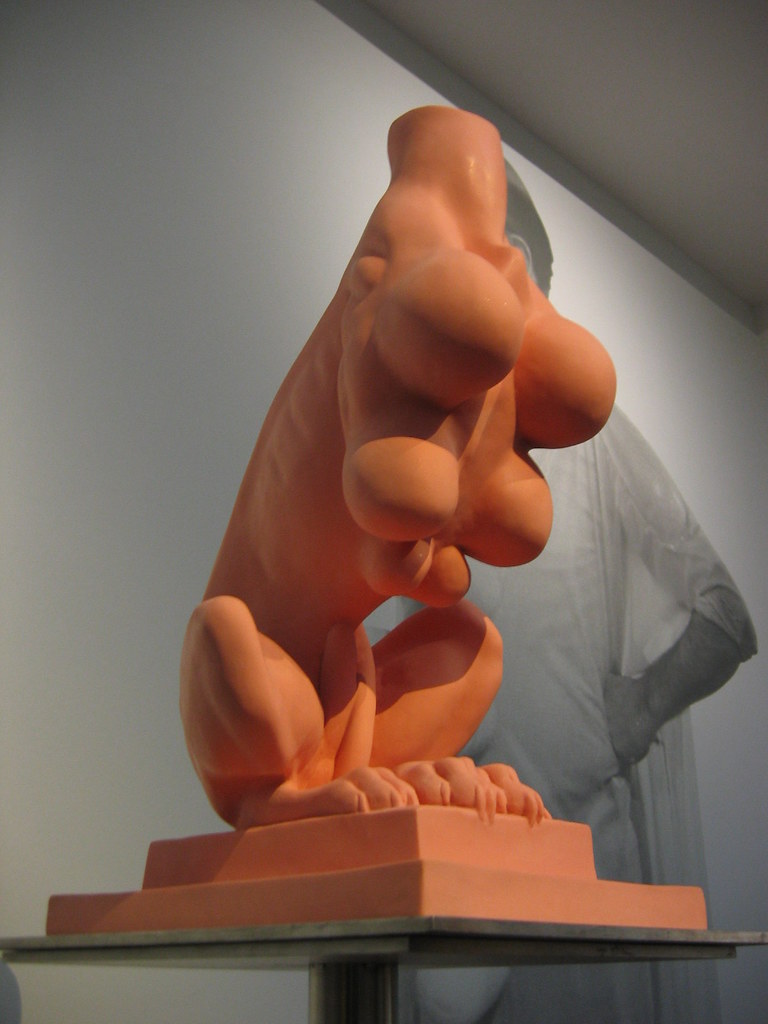
If you're interested in seeing how some of these ideas translate into contemporary practice, you can explore some of my own work in the /buy section or learn more about my journey on my /timeline.