Who Was Frank Lloyd Wright? A Guide to the Man & His Legend
Uncover the story behind Frank Lloyd Wright, from his radical 'organic architecture' to the drama that shaped his life. A personal look at the man who changed how we live.

So, You Want to Know About Frank Lloyd Wright? An Architect's Ghost Story
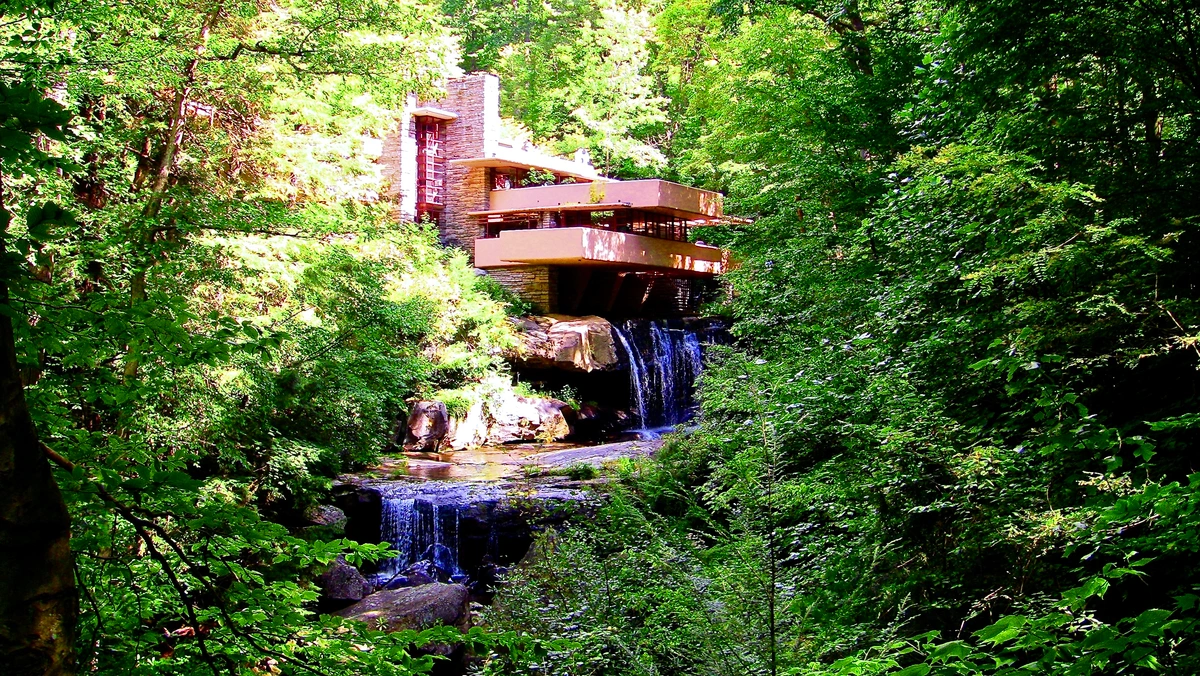
Every so often, you come across a name that feels less like a person and more like an entire chapter of history. Frank Lloyd Wright is one of those names. I remember seeing a photo of Fallingwater for the first time as a teenager, and my brain kind of short-circuited. A house... built over a waterfall? Not next to it, not with a view of it, but on it. It seemed impossible, arrogant, and utterly brilliant all at once. It broke a rule I didn't even know existed.
But here's the thing—that sense of impossibility? That's exactly what makes his work so timeless. Wright wasn't just designing buildings; he was redesigning how we think about space, nature, and the very idea of home. He was an American original who believed that architecture should be poetry made solid. More than 60 years after his death, you can still feel his presence in the way we live, work, and experience the world around us.
What truly sets Wright apart is his revolutionary approach to the relationship between human beings and their built environment. He understood that architecture wasn't just about shelter—it was about shaping human experience. His famous dictum "The mother art is architecture. Without an architecture of our own we have no soul of our own civilization" reveals his deep conviction that buildings shape culture as much as culture shapes buildings. This philosophical foundation underpins all his work, from the humblest Usonian home to the monumental Guggenheim Museum.
And that, right there, is the heart of the matter. To understand Frank Lloyd Wright, you have to understand that he saw rules as mere suggestions, especially when it came to how we should live.
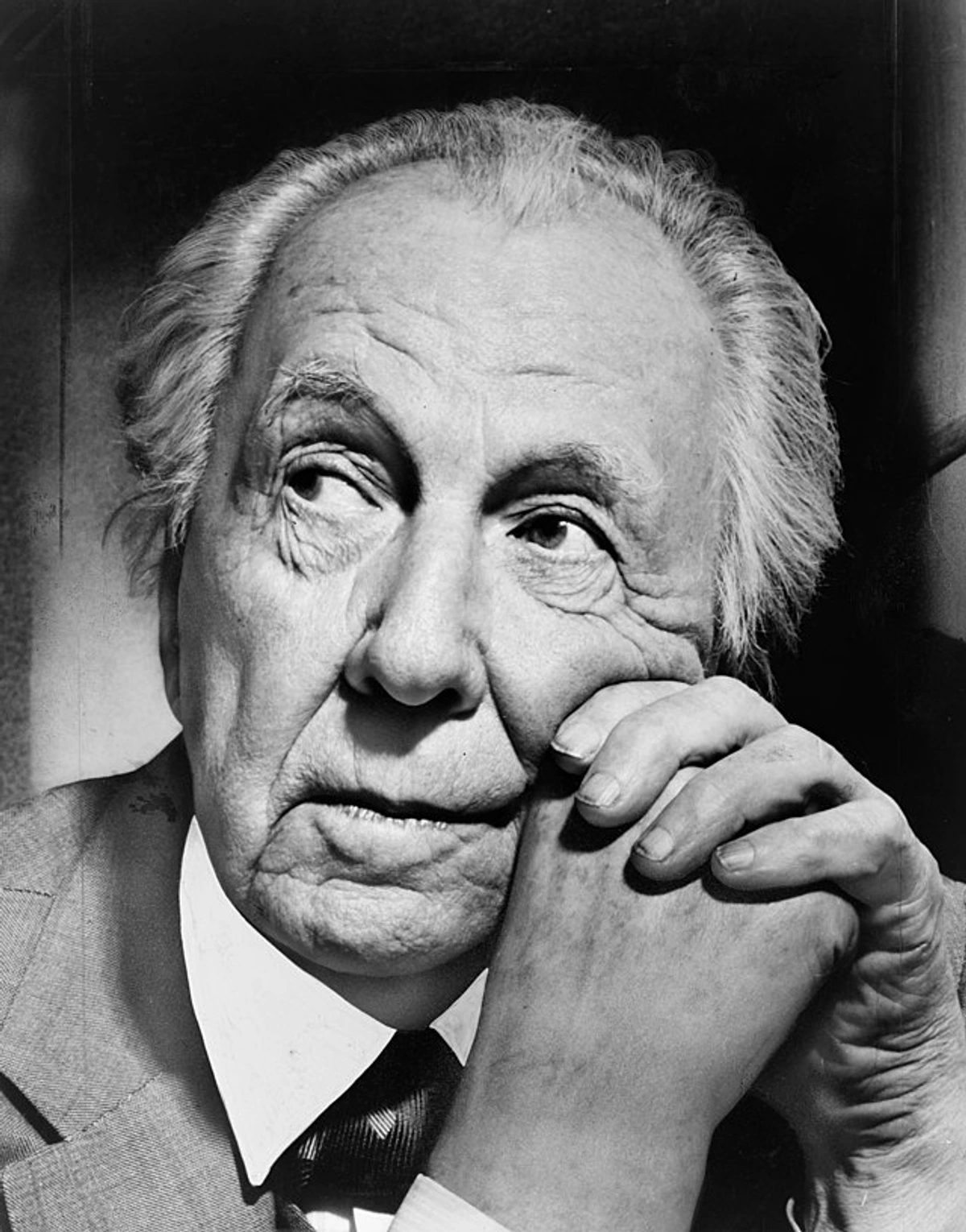
Look at that face. It’s the face of a man who knows something you don’t, and he’s not entirely sure you’re ready to hear it. He was a showman, a visionary, and by all accounts, an incredibly difficult person. But he left behind a ghost—a philosophy of design that still haunts architecture today.
The Big Idea: What is Organic Architecture, Really?
You'll hear the term Organic Architecture thrown around a lot with Wright. It’s easy to think it just means using lots of wood and stone and building in nature. That’s part of it, sure, but it's a bit like saying Pop Art is just about soup cans. The real idea is deeper.
For Wright, a building should grow out of its site as if it were a plant. The landscape, the materials, the very purpose of the building, and the lives of the people inside it—all of it should be a single, interwoven thing. A house on a prairie shouldn't be a tall, imposing box; it should be long and low, echoing the horizontal lines of the horizon. A house in the desert should be made of the desert itself. It's about a deep, profound sense of belonging.
This organic philosophy went far beyond mere aesthetics. Wright was essentially practicing what we now call biophilic design decades before the term was coined. He understood that humans have an innate need to connect with nature, and his buildings were designed to facilitate that connection. His use of natural light, indoor-outdoor transitions, and materials that changed with the seasons created spaces that felt alive and responsive. He believed that architecture should "fit" into its environment rather than dominate it, arguing that "a building should appear to grow naturally from its site." This approach was revolutionary in an era when architects were more concerned with making buildings look impressive than with how they made people feel inside them.
He believed a building could shape your life. That the flow from one room to another could either create harmony or discord. He wasn’t just building houses; he was designing a way of living.
Out with the Old: The Prairie School Revolution
Imagine the typical American home in the late 1800s. It was probably a Victorian house: tall, fussy, with lots of small, dark rooms, each with a specific, rigid purpose. You had the parlor for guests, the dining room for eating, and so on. It was a reflection of a society with strict social codes.
These Victorian homes were essentially architectural prisons. The small, enclosed rooms with their high ceilings and dim lighting created a sense of formality and constraint that Wright found oppressive. He once described them as "boxes within boxes" that imprisoned both the physical body and the human spirit. The rigid separation of functions reflected the Victorian obsession with propriety and social hierarchy—each room had its specific purpose, just as each family member had their specific role in society. Wright saw this as fundamentally unhealthy. He believed that good architecture should liberate people, not confine them, and that homes should be places of genuine human connection rather than staged social performances.
Wright looked at that and, I imagine, shuddered. He called these houses 'boxes' and saw them as prisons for the families inside. His answer was the Prairie School style. He blew the boxes open.
The Prairie School represented a radical break from architectural tradition that went far beyond mere style. When Wright broke open those Victorian boxes, he was actually revolutionizing how Americans lived. His open floor plans weren't just about having more space—they were about creating new ways for families to interact and relate to each other. The long, horizontal lines of Prairie homes weren't just aesthetically pleasing; they reflected the vast, open landscape of the American Midwest that Wright so deeply loved. This was architecture that spoke specifically to American experience, rejecting European traditions that had dominated American design since the country's founding. The Prairie School was, at its core, an assertion of American architectural identity.
Here’s a quick breakdown of what he was kicking to the curb:
Preserving Wright's Legacy
Today, more than 40 of Wright's buildings are preserved as museums and historic sites, allowing visitors to experience his genius firsthand. Organizations like the Frank Lloyd Wright Building Conservancy work to protect his remaining works, while the Frank Lloyd Wright Foundation continues to promote his architectural philosophy.
Major Wright sites open to the public include:
- Fallingwater (Pennsylvania): Perhaps the most famous Wright building, open for tours.
- Taliesin and Taliesin West (Wisconsin and Arizona): His personal homes and studios.
- Robie House (Illinois): A pinnacle of Prairie School architecture.
- Guggenheim Museum (New York): His most controversial and revolutionary museum.
- Unity Temple (Illinois): A revolutionary concrete church.
These sites not only preserve Wright's architectural legacy but also continue to educate and inspire new generations of architects, designers, and art lovers.
The preservation of Wright's buildings presents unique challenges. Many of his structures were built before modern building codes and materials science, requiring constant maintenance and innovative restoration techniques. For example, Fallingwater's famous cantilevers have required extensive reinforcement over the years, and many of his concrete structures suffer from what's known as "concrete cancer"—the deterioration of steel reinforcement within the concrete. Despite these challenges, organizations like the Frank Lloyd Wright Building Conservancy have developed sophisticated preservation strategies that honor Wright's original vision while ensuring these buildings remain safe and functional for future generations. The ongoing restoration work provides valuable insights into Wright's construction methods and continues to advance the field of historic preservation.
Victorian Style (The 'Box')  | Prairie School (Wright's Vision) |
|---|---|
| Tall, vertical emphasis | Low, horizontal emphasis |
| Complex, ornate exteriors | Simple, clean lines |
| Many small, closed-off rooms | Open-plan interiors |
| Dark interiors with heavy drapes | Ribbons of windows, lots of natural light |
| Hidden fireplaces | Central hearth, the 'heart' of the home |
| Disconnected from the landscape | Terraces and windows connecting inside and out |
| Rigid, formal spaces | Flexible, flowing living areas |
| Social hierarchy reflected in layout | Democratic, egalitarian space planning |
| Rooms isolated from each other | Seamless transitions between spaces |
He was essentially inventing the open-plan living we take for granted today. He wanted a home to be a sanctuary, not a social performance.
A Life of Fire and Rebirth
You can't really separate Wright the man from Wright the architect. His life was packed with more drama than a season of television. He left his first wife and family, ran off to Europe with a client's wife, Mamah Borthwick, and built their personal paradise, Taliesin, in Wisconsin.
Then, the unthinkable happened. In 1914, while he was away, a disgruntled servant set fire to the living quarters and murdered Mamah, her two children, and four others. The home, his sanctuary, was destroyed.
But this wasn't the only tragedy that would shape his work. Wright was born in 1867 in Richland Center, Wisconsin, to a family of Welsh descent. His father was a Baptist minister and his mother was a teacher who instilled in him a love of music and nature. He briefly studied civil engineering at the University of Wisconsin but left without graduating, apprenticing instead with the architectural firm of Joseph Lyman Silsbee in Chicago. It was there that he began to develop his own distinctive approach to design.
He could have been broken by it. And I'm sure a part of him was. But what did he do? He rebuilt Taliesin. And when it burned down again years later due to an electrical fire, he rebuilt it again. This cycle of creation, destruction, and defiant rebirth is woven into his story. It proves his philosophy wasn't just an abstract idea; it was how he survived. He built his way through his grief.
The story of Taliesin is more than just a personal tragedy—it's a metaphor for Wright's entire approach to life and architecture. Each time he rebuilt, he refined his vision, incorporating lessons from the destruction. The second Taliesin, built after the electrical fire, shows a more mature approach to fire protection and structural design. This resilience became a defining characteristic of Wright's career. Even in his 70s and 80s, when most architects would have retired, Wright was reinventing himself, tackling ambitious new projects like the Guggenheim Museum. His famous quote, "The thing always happens that you really believe in; and the belief in a thing makes it happen" reflects this profound faith in the power of human will and creativity to overcome adversity. It's this indomitable spirit that continues to inspire people today.
His personal life was as unconventional as his architecture. He married three times and had seven children. He was known for his charisma and his ability to charm clients, but also for his stubbornness and his refusal to compromise on his vision. He once said, "Early in life I had to choose between honest arrogance and hypocritical humility. I chose honest arrogance and have seen no occasion to change."
The Comeback: Usonian Homes and a Waterfall
By the time of the Great Depression, many thought Wright was a relic of a bygone era. His commissions had dried up. But again, he reinvented himself.
The early 1930s were perhaps the lowest point of Wright's career. The financial devastation of the Great Depression meant that wealthy clients who might have commissioned his elaborate Prairie-style homes were no longer able to do so. Wright's firm was struggling, and he faced mounting personal and financial pressures. Yet rather than adapting his style to suit the economic times, Wright took a more radical approach—he created an entirely new type of architecture that was democratic, affordable, and suitable for the new American middle class.
This reinvention was characteristic of Wright's career pattern. Throughout his life, he seemed to thrive on reinvention, using periods of professional setback as opportunities to innovate. Whether it was the tragedy at Taliesin that led to his development of the textile block system, or the financial pressures of the Depression that led to the Usonian homes, Wright consistently transformed challenges into creative breakthroughs. This ability to reinvent himself is perhaps one of the most enduring aspects of his legacy, demonstrating that great architecture isn't just about responding to circumstances—it's about transcending them.
He created the Usonian house. This was his vision for an affordable, democratic American architecture. These were smaller, single-story homes, often L-shaped to wrap around a garden terrace. They were stripped of attics and basements, using simple materials and clever construction techniques to keep costs down. It was a kind of high-design minimalism for the middle class, decades before that was a popular concept.
The Usonian homes represented Wright's most democratic architecture. Built during the Great Depression when few could afford luxury homes, these houses brought his revolutionary design principles to ordinary Americans. Wright believed that good design shouldn't be a privilege of the wealthy but a right of all citizens. The Usonian homes achieved this through several innovative features: their compact footprints reduced construction costs; their simple construction methods used readily available materials; and their efficient layouts maximized usable space. Wright's famous line "A free America... means houses free!" captures his vision of architecture as an expression of democratic ideals. These homes weren't just affordable—they were beautiful, thoughtful spaces that elevated the quality of life for middle-class families. The Usonian model influenced generations of tract housing and continues to inspire modern affordable housing design.
The Usonian homes were revolutionary in their simplicity and efficiency. Wright used a system of concrete blocks and wood paneling that could be assembled quickly and economically. The open floor plans and large windows created a sense of spaciousness even in smaller homes. He believed that good design shouldn't be a luxury for the wealthy, but something accessible to ordinary Americans. "A free America... means houses free!" he declared.
What made the Usonian homes truly revolutionary was their integration of advanced construction techniques with Wright's philosophical principles. The system of "textile block" construction, using pre-cast concrete blocks with decorative patterns, allowed for rapid construction while giving each home unique architectural character. Wright's innovative use of radiant floor heating was another forward-thinking feature that improved comfort while reducing energy consumption. The homes were also designed with passive solar principles in mind—large south-facing windows captured winter sun while deep overhangs provided summer shading. These features weren't just practical; they reflected Wright's belief that architecture should work in harmony with nature rather than fighting against it. The Usonian homes remain some of the most energy-efficient homes of their era, proving that sustainable design and beautiful design can go hand in hand.

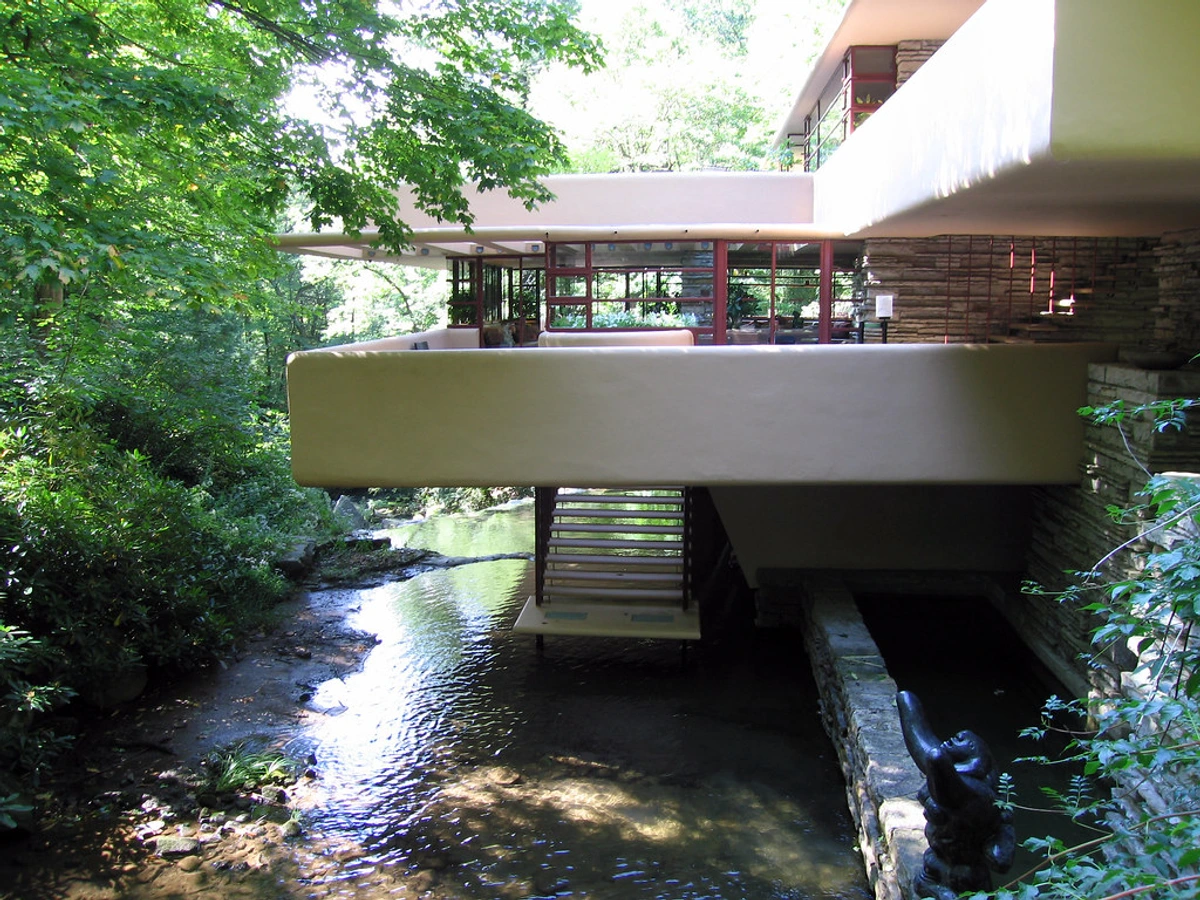
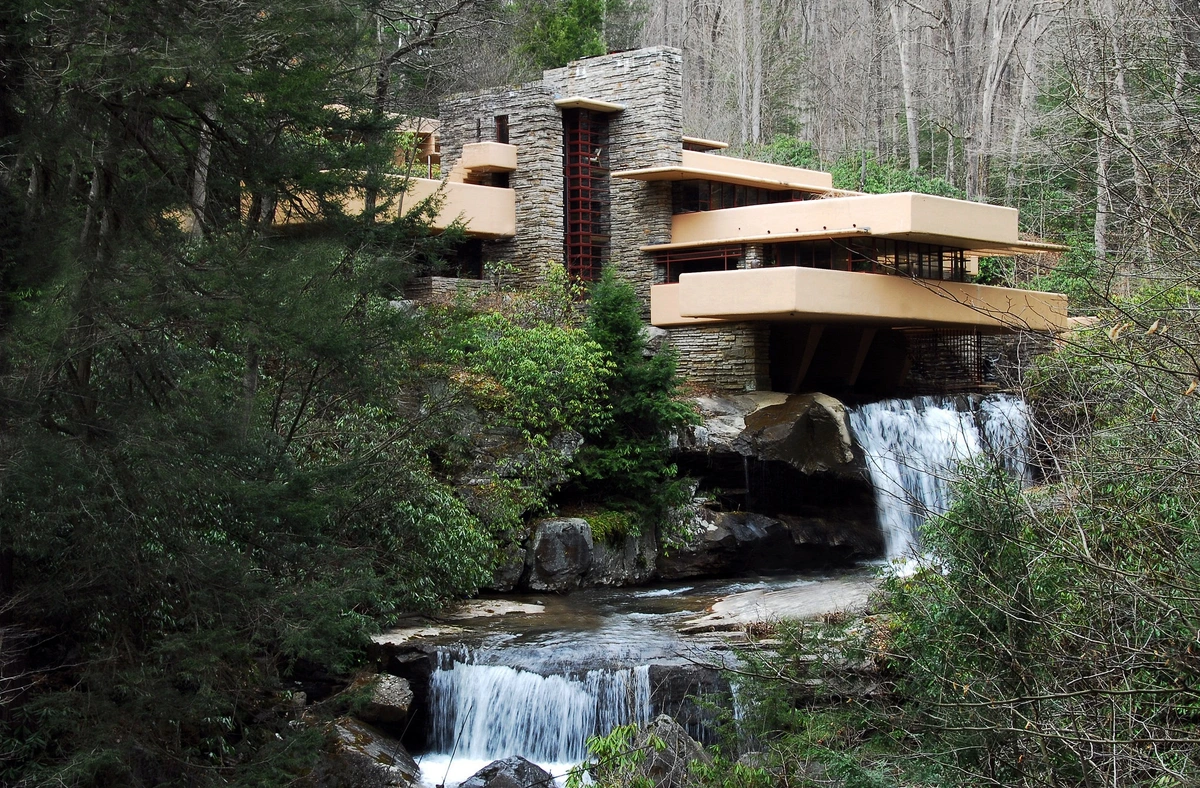
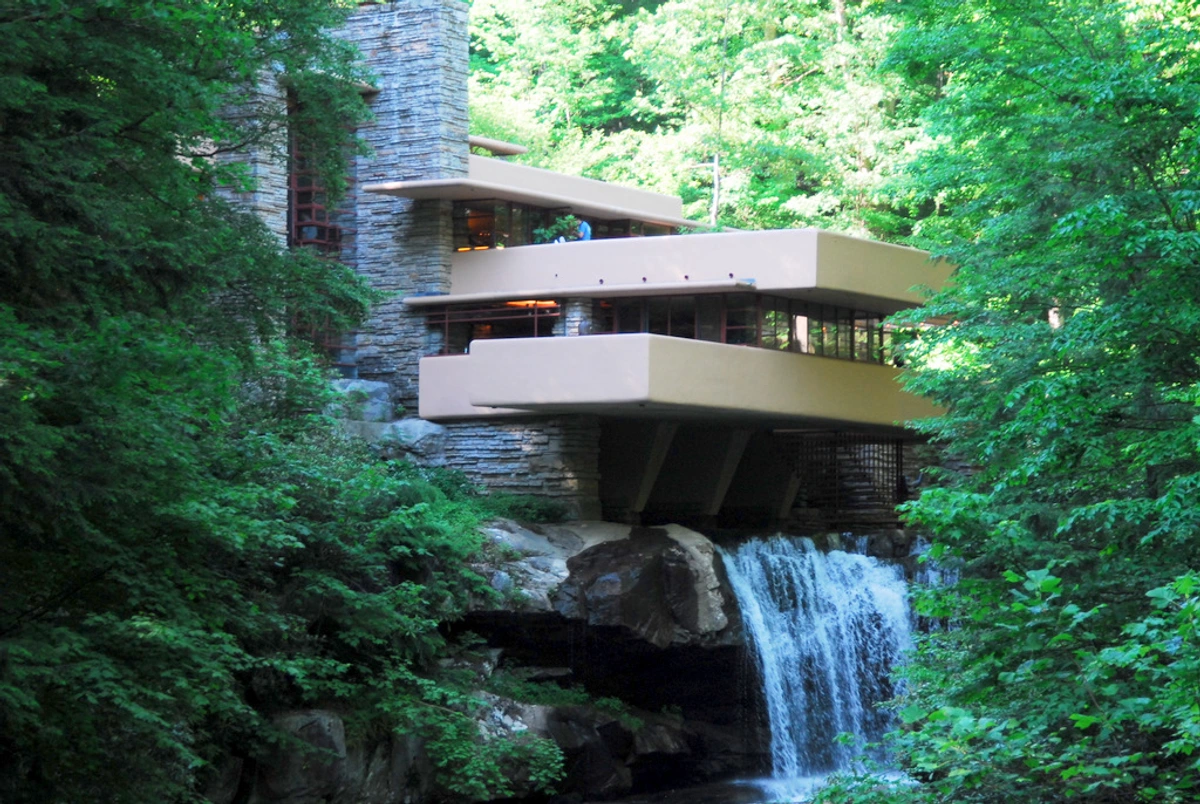
And then came Fallingwater (1935). Commissioned by the Kaufmann family of Pittsburgh, it's the ultimate expression of his organic philosophy. The house doesn't just sit by the waterfall; it's part of it. The sound of the water is a constant presence. The stone of the central fireplace was quarried from the site itself. It is a stunning, breathtaking fusion of human ingenuity and natural beauty. It's the building that put him back on the global stage, forever.
Fallingwater wasn't just a house—it was a manifesto. Wright designed it as a weekend retreat for the Kaufmann family, but it became something much more: a symbol of architecture's potential to live in harmony with nature. The cantilevered balconies extend dramatically over the waterfall, creating a sense of weightlessness and connection to the rushing water below. The house was completed in 1937 and has been designated a National Historic Landmark. It's considered by many to be the greatest work of American architecture ever created.
The creation of Fallingwater is itself a fascinating story of collaboration and vision. Edgar Kaufmann, the Pittsburgh department store magnate, initially approached Wright to design a house "near" the waterfall, not on it. Wright famously sketched the design in just two hours during an impromptu meeting, surprising everyone with his audacious vision. The engineering challenges were immense—those famous cantilevers extend over 30 feet from the main structure, supporting the weight of the terraces and building above. Wright's genius was in making this engineering marvel appear effortless and natural. What's perhaps most remarkable is how the building responds to its surroundings—the stone used in the central fireplace was quarried from the very site itself, and the house's forms echo the rock formations and horizontal layers of the surrounding landscape. Every detail, from the built-in furniture to the placement of windows, was carefully considered to enhance the experience of living with and among nature.
The Final Act: A Spiral in New York City
What do you do for an encore after Fallingwater? You turn the entire concept of a museum inside out.
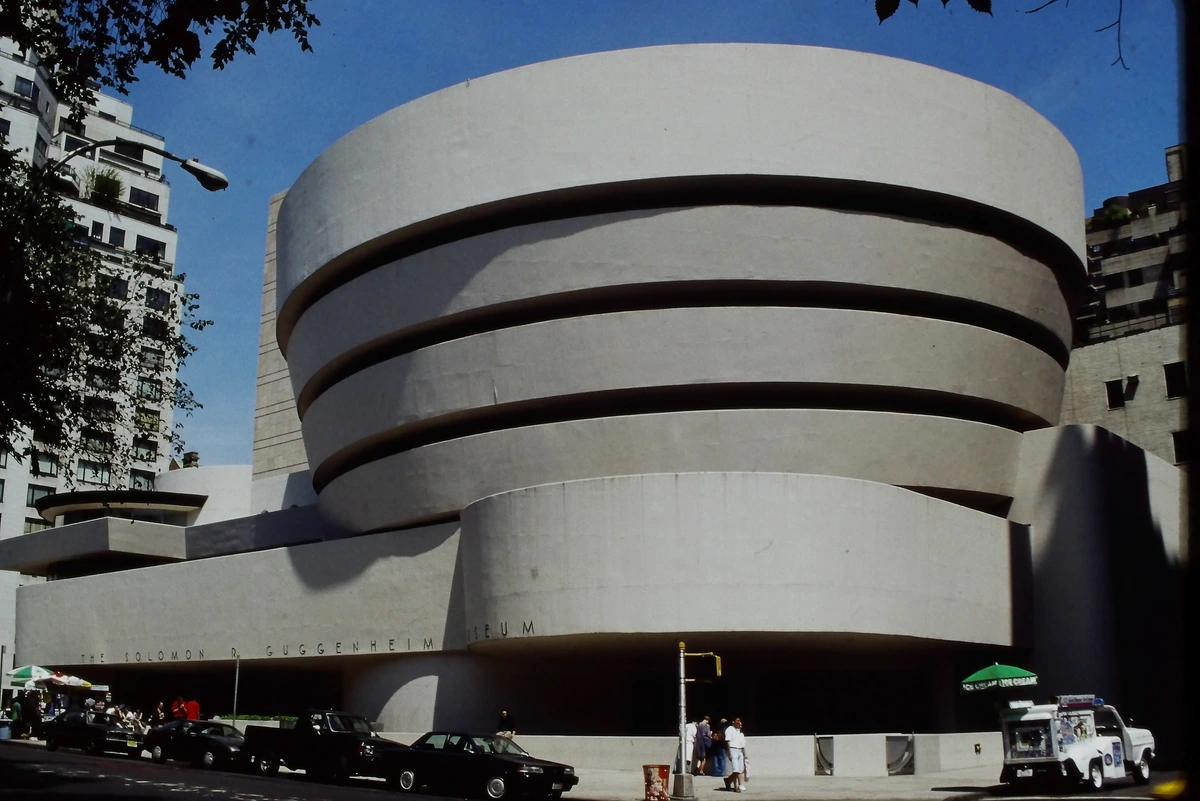
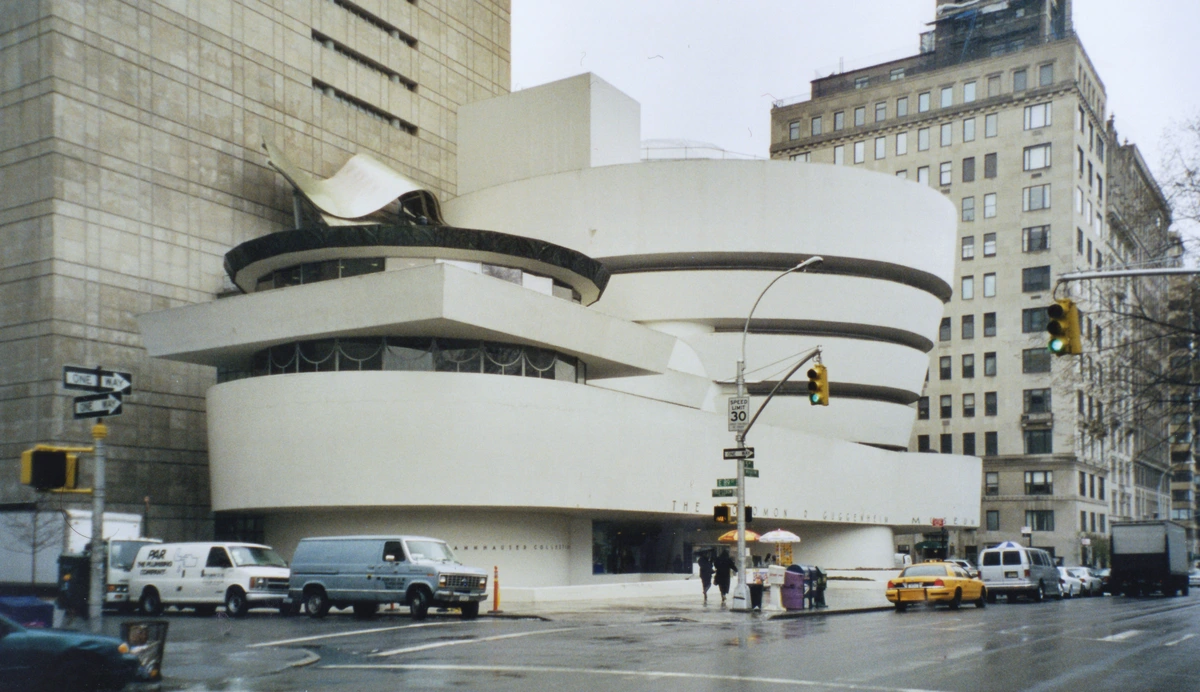
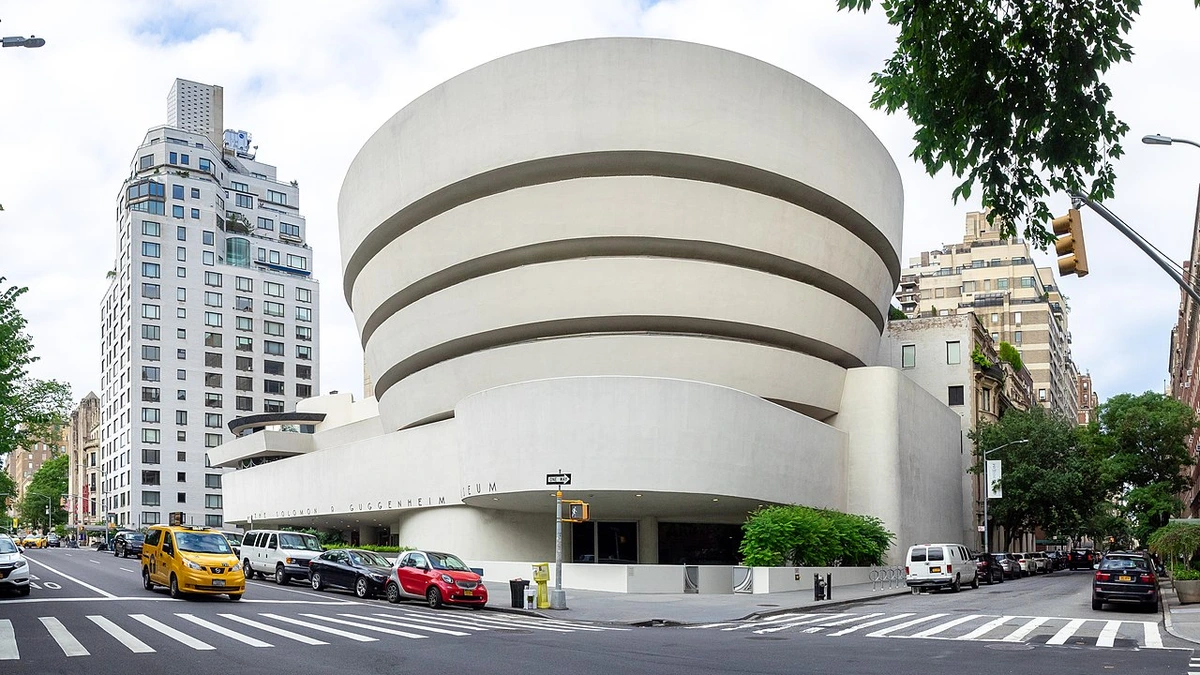
The Solomon R. Guggenheim Museum represents the culmination of Wright's architectural evolution and perhaps his most audacious achievement. By the time he designed it in his late 70s, Wright had already created some of the most revolutionary buildings in American history. Yet with the Guggenheim, he challenged not just architectural conventions but the very way we experience art and space.
The museum's spiral design was actually born from Wright's frustration with traditional museum architecture. He hated the "cattle market" atmosphere of conventional museums, where visitors are herded through a series of disconnected rooms. His spiral ramp created a seamless, flowing experience where art and architecture become one. As he said, "I wanted the building to be a temple of spirit, a monument to the human spirit." The fact that this monumental work was completed just six months after his death in 1959 makes it even more poignant—it was Wright's final statement about the relationship between art, architecture, and the human experience.
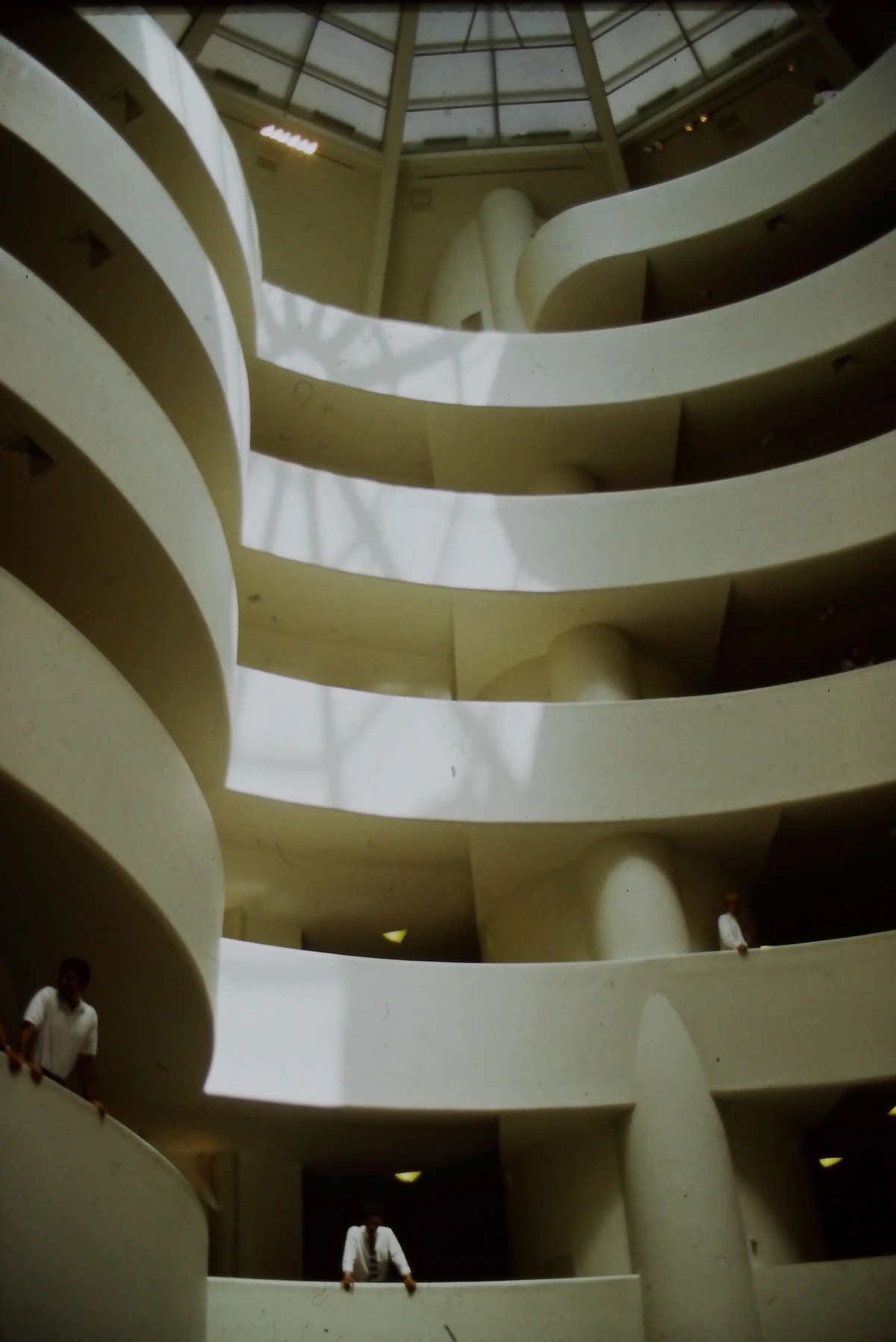
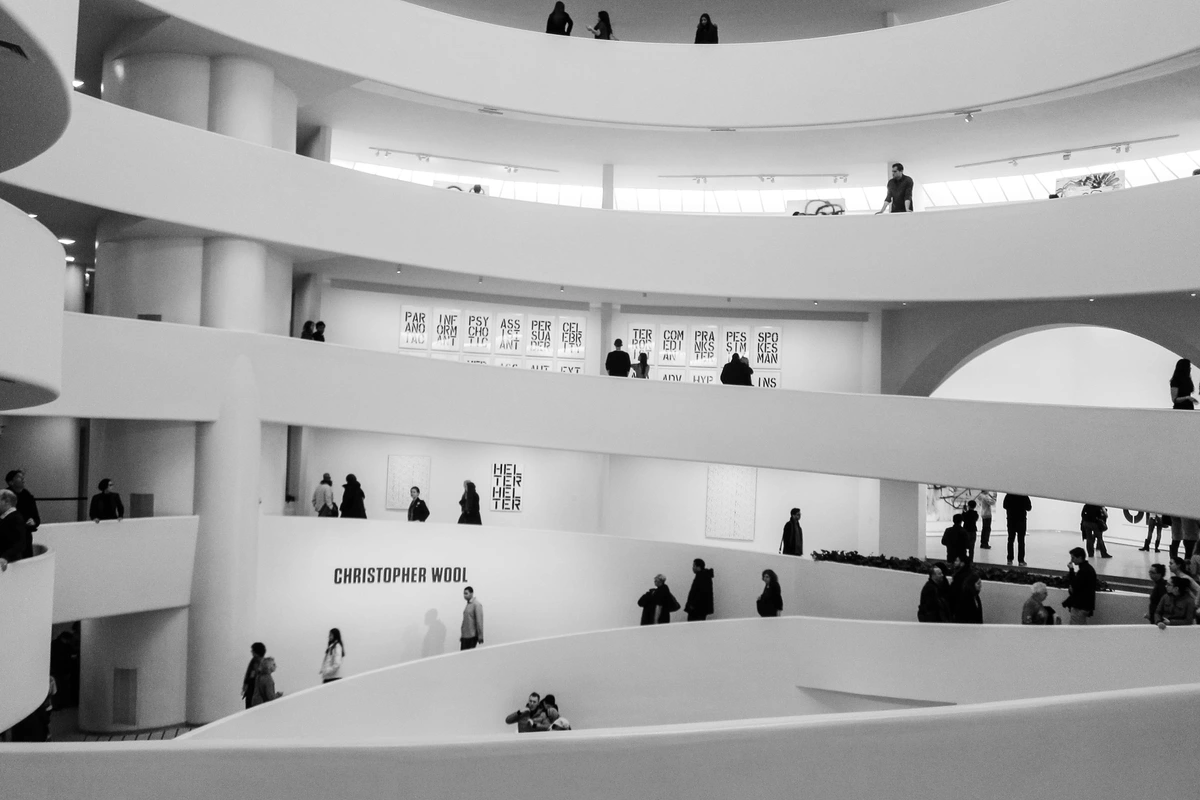
The Solomon R. Guggenheim Museum in New York is perhaps his most famous—and controversial—late-career masterpiece. Instead of a series of rooms, it's one continuous ramp spiraling up towards a glass skylight. You take an elevator to the top and gently descend, viewing the art along the way.
Construction began in 1953 and was completed in 1959, six months after Wright's death. The building was so radical that it faced fierce opposition from art critics who feared the architecture would overpower the art. Wright himself called it "a temple of spirit" and designed it to be the perfect environment for viewing abstract art.
The Guggenheim Museum's revolutionary design solved one of the fundamental problems of traditional museums: the disjointed viewing experience. In conventional museums, art is displayed in a series of separate rooms, forcing viewers to constantly shift their perspective and break their connection with individual works. Wright's continuous spiral ramp creates a seamless viewing experience where art flows naturally from one piece to another. The building's white interior and diffused natural light (from the central skylight) were specifically designed to eliminate distractions and allow viewers to focus entirely on the art. The controversial decision to have visitors start at the top and walk down was intentional—it creates a sense of unfolding revelation as they encounter each new section of the collection. While the building did indeed become the star attraction for many visitors, it ultimately fulfilled Wright's vision by creating a space where architecture and art could coexist in harmony rather than competition. The museum's collection has grown to include works by artists like Kandinsky, Picasso, and Pollock, but the building itself remains the star attraction.
Many artists at the time were furious. They felt the overwhelmingly powerful architecture would overshadow their work. And you know what? Sometimes it does. The building is a monumental piece of sculpture in its own right. It challenges the very idea of how art should be displayed and viewed, making the building itself part of the artistic experience. It’s a piece of abstract art you can walk through.
Frequently Asked Questions (FAQ)
What architectural style is Frank Lloyd Wright known for?
Frank Lloyd Wright is most associated with the Prairie School movement, which emerged in the early 20th century as America's first distinctive architectural style. However, Wright's career spanned multiple stylistic periods, each representing different phases of his evolving philosophy:
Early Work (1889-1900): Influenced by Victorian styles but already showing Wright's preference for horizontal lines and open spaces.
Prairie School (1900-1917): Wright's most famous period, characterized by low, horizontal lines, open floor plans, and integration with the natural landscape.
Textile Block Period (1923-1931): Experimental period using pre-cast concrete blocks with decorative patterns.
Usonian Period (1930s-1950s): Democratic architecture for the middle class, emphasizing simplicity and affordability.
Late Work (1940s-1959): More experimental and monumental works like the Guggenheim Museum, pushing the boundaries of form and space.
While these styles changed over time, they were all united by Wright's core principles of organic architecture, integration with nature, and honest expression of materials. He famously rejected the term "style altogether, saying "I don't believe in styles. I believe in principles." This refusal to be confined to a single category is what makes his work so endlessly fascinating and influential.
Wright is most associated with Prairie School architecture, but his work spans multiple styles including Usonian Architecture, Organic Architecture, and Modernism. His style evolved throughout his career, but he's best known for horizontal lines, open floor plans, and integration with nature.

How much does it cost to visit a Frank Lloyd Wright building?
Prices vary by site. General admission to Wright buildings typically ranges from $15-$30 per person. Special tours or events may cost more. Many sites offer discounts for students, seniors, and groups. Fallingwater, one of the most popular sites, charges around $25 for standard tours.
Here's a more detailed breakdown of Wright building visit costs:
Fallingwater (Pennsylvania): $25-30 for standard tours, $50-60 for behind-the-scenes tours Taliesin (Wisconsin): $20-25 for studio tours, $35-45 for landscape tours Robie House (Illinois): $15-20 for general admission, $25-30 for guided tours Guggenheim Museum (New York): $25-30 general admission, $35-40 for special exhibitions Unity Temple (Illinois): $10-15 for general tours, $20-25 for extended tours Johnson Wax Headquarters (Wisconsin): $20-25 for architectural tours Westcott House (Ohio): $10-15 for general admission Price Tower (Oklahoma): $15-20 for tower tours
Many sites offer memberships that provide free admission for a year, and some participate in reciprocal programs with other historic house museums. Group rates are typically available for parties of 10 or more, and some sites offer seasonal passes or combination tickets for visiting multiple Wright buildings in the same region.
Can I take photos inside Wright buildings?
Photography policies vary by location. Some sites allow photography for personal use, while others prohibit it entirely. The Guggenheim Museum generally allows photography, but interior photos of Wright's private homes like Taliesin may be restricted. Always check the specific site's photography policy before your visit.
Photography policies at Wright buildings are generally based on whether the site is still used as a private residence or is primarily a museum. Here's a general guide:
Generally Permitted: Guggenheim Museum, Fallingwater, Johnson Wax Headquarters, Price Tower, Westcott House Restricted Areas: Private quarters at Taliesin, some historic interiors at Robie House Generally Prohibited: Taliesin West (Arizona), Unity Temple sanctuary areas Special Considerations: Some sites allow photography only on certain days or require permits for professional photography
When photography is allowed, most sites request that you avoid using flash, tripods, or selfie sticks to protect the historic interiors and furnishings. Some Wright buildings have unique lighting conditions that can make photography challenging—his famous stained glass windows, for example, create beautiful light patterns but can be difficult to capture effectively without overexposing the image.
Are Frank Lloyd Wright buildings earthquake safe?
Many Wright buildings were designed before modern seismic codes were established. Some have been retrofitted with earthquake safety measures, while others remain as originally built. Buildings like the Guggenheim Museum have undergone extensive renovations to meet modern safety standards.
The seismic safety of Wright's buildings varies significantly by location and construction type. Buildings in earthquake-prone California, like the Hollyhock House (Los Angeles) and the Millard House (Pasadena), have been extensively retrofitted with modern seismic systems. The concrete structures, which Wright favored for their strength, generally perform well in earthquakes when properly reinforced.
However, some of Wright's cantilevered structures, like Fallingwater, present special challenges. The famous balconies over the waterfall were designed for aesthetic impact rather than seismic resistance, and modern engineering has required additional reinforcement. Buildings in areas with lower seismic risk, like the Midwest, often remain closer to their original condition.
Preservation organizations work carefully to balance safety requirements with the need to preserve Wright's original design intent. This often involves using discreet modern reinforcement that doesn't alter the building's appearance while ensuring structural integrity. The ongoing challenge is Wright's innovative use of materials and construction methods that sometimes pushed the boundaries of what was technically feasible in his era.
How can I identify a Frank Lloyd Wright building?
Look for characteristic features: horizontal lines, cantilevered elements, large windows, integration with landscape, custom-designed details, and use of natural materials. Many of his buildings also have his signature signature stone or concrete work and distinctive rooflines.
Identifying a Frank Lloyd Wright building can be both exciting and challenging, as his style evolved dramatically over his 70-year career. However, there are several key characteristics that appear in most of his work:
Visual Signature:
- Horizontal emphasis: Low, long lines that follow the horizon
- Cantilevers: Balconies and roofs that extend dramatically beyond supporting structures
- Stained glass: Custom-designed geometric patterns often featuring nature motifs
- Built-in furniture: Integrated cabinetry and seating that becomes part of the architecture
- Natural materials: Stone, wood, and concrete used in their natural state
Architectural Features:
- Open floor plans: Seamless transitions between living spaces
- Ribbon windows: Long, horizontal bands of glass
- Central hearths: Fireplaces positioned as the heart of the home
- Low-pitched roofs: Often with deep overhangs
- Integration with site: Buildings that appear to grow from the ground
Period Indicators:
- Prairie (1900-1917): Steeply pitched roofs, strong horizontals
- Textile Block (1923-1931): Decorative concrete blocks
- Usonian (1930s-1950s): Simple, affordable, L-shaped plans
- Late Work (1940s-1959): More experimental forms like spirals
If you suspect you've found a Wright building, check for the characteristic "Wright signature"—his buildings often have a distinctive sense of flow and proportion that feels both organic and precisely engineered.
What happened to Frank Lloyd Wright's unfinished projects?
Several of Wright's projects were completed after his death by his firm and associates. The Marin County Civic Center and Arizona State University Gammage Auditorium are prominent examples. Some projects remained unbuilt, while others were significantly modified from his original designs.
Did Frank Lloyd Wright ever work on skyscrapers?
While Wright is best known for his residential and public buildings, he did design several skyscraper concepts. His most famous skyscraper design was the St. Louis Bridge Vertical City (1929), which was never built. He also designed the Price Tower in Bartlesville, Oklahoma (1956), which is his only realized skyscraper.
What is Frank Lloyd Wright's most famous building?
That's a tough one, like picking a favorite song. Most people would say Fallingwater for its breathtaking integration with nature, or the Guggenheim Museum in New York for its revolutionary design. Both are UNESCO World Heritage sites.

However, Wright himself might have pointed to the Johnson Wax Headquarters in Racine, Wisconsin, with its revolutionary "lily pad" columns and open floor plan, or the Robie House in Chicago, which is considered the pinnacle of Prairie School architecture. Each building represents a different facet of his genius.
How many buildings did Frank Lloyd Wright design?
He was incredibly prolific. Over his 70-year career, he designed over 1,000 structures, and 532 of them were completed. Many of these homes are still lived in today, while others have been converted into museums, offices, or public spaces. His work spans every type of building imaginable: private homes, commercial buildings, religious structures, museums, and even a gas station in Cloquet, Minnesota.
Wright's Awards and Honors
During his lifetime and after his death, Wright received numerous accolades recognizing his contributions to architecture:
1949: American Institute of Architects Gold Medal 1953: Royal Institute of British Architects Royal Gold Medal 1957: First architect to appear on a U.S. postage stamp (the $2 "Famous Americans" series) 1966: Posthumously awarded the Presidential Medal of Freedom by President Lyndon B. Johnson 1991: AIA ranked Wright as "the greatest American architect of all time" 2019: UNESCO designated 8 of Wright's buildings as World Heritage Sites, including Fallingwater, the Guggenheim, and Taliesin
These honors reflect the enduring impact of Wright's work and how it continues to be recognized as foundational to American architecture and global modernism.
What is the core principle of 'organic architecture'?
It's the idea that a building should be in harmony with its environment and its inhabitants. It promotes the integration of the site, materials, furnishings, and the lives of the people into a single, unified whole.
But there's more to it than just aesthetics. Organic architecture is also about sustainability, about using local materials, about creating spaces that respond to climate and landscape. Wright was a pioneer in passive solar design long before that term existed. His buildings were designed to work with nature, not against it, using features like broad overhangs for shade, natural ventilation, and orientation to take advantage of sunlight and prevailing breezes.
Wright's sustainable approach was both practical and philosophical. He understood that buildings should be responsive to their specific environmental conditions rather than imposing a one-size-fits-all solution. For example, his prairie homes were designed with wide overhangs to protect against the harsh Midwestern sun, while his desert adaptation (though never fully realized) would have used thick walls for thermal mass to moderate extreme temperature swings. He was also a pioneer in daylighting—the strategic use of natural light to reduce the need for artificial lighting. His famous ribbon windows and clerestories were designed to capture daylight deep into interiors while minimizing heat gain. These weren't just clever design tricks; they reflected Wright's belief that buildings should be environmentally responsible. As he said, "I believe in God, only I spell it Nature." This reverence for natural systems drove his approach to sustainable design decades before environmental consciousness became mainstream.
Common Misconceptions About Wright
Despite his fame, there are several common misconceptions about Frank Lloyd Wright and his work:
Myth: Wright only designed houses for wealthy clients. Reality: While he did design luxury homes, he also created affordable Usonian homes and public buildings.
Wright was actually deeply committed to democratic architecture. He once declared, "I believe in the dignity of man. I believe that man has a right to beauty and consideration in his living, and that the first consideration in any room is that it be beautiful." This belief drove him to create architecture that was accessible to people of all income levels. His Usonian homes were specifically designed to be affordable middle-class housing that still embodied his design principles. He also designed numerous public buildings—including schools, churches, and community centers—that brought good design to ordinary people. Wright often worked for reduced fees on public projects because he believed in their importance to society. His famous quote "A free America... means houses free!" captures his vision of architecture as an expression of democratic ideals, accessible to all citizens rather than just the wealthy elite.
Myth: All his buildings look alike. Reality: Wright's style evolved dramatically over his career, from Prairie School to organic modernism to his late experimental works.
Myth: He was completely self-taught. Reality: He studied civil engineering and apprenticed with prominent architects before starting his own practice.
Myth: His buildings were always expensive to build. Reality: Many of his homes were designed with cost efficiency in mind, using innovative materials and construction methods.
In fact, Wright was often frustrated by clients who didn't understand his cost-saving innovations. His Usonian homes were specifically engineered to be affordable, using simple materials like wood and concrete that could be assembled quickly and economically. The textile block system he developed allowed for rapid construction while creating distinctive architectural character. Wright was also a master of space efficiency—his homes felt much larger than they actually were through clever design. However, his reputation for going over budget came primarily from his custom-designed projects where clients wanted luxurious materials and finishes. Even then, Wright would argue that the long-term value of his designs—through energy efficiency, durability, and timeless beauty—actually made them more economical in the long run. As he famously said, "The doctor can bury his mistakes, but the architect can only advise his clients to plant vines."

Myth: He cared more about the building than the people who would use it. Reality: Wright was deeply concerned with how spaces affect human behavior and psychology—he designed buildings to enhance people's lives.
Was Frank Lloyd Wright associated with the Art Deco movement?
Not directly. While his work was contemporary with the Art Deco movement, Wright was fiercely individualistic and forged his own path. His organic style, focused on natural forms and horizontal lines, was quite different from the stylized, geometric, and often vertical emphasis of Art Deco.
The philosophical differences between Wright and the Art Deco movement were profound. Art Deco emerged from the Machine Age and celebrated industrial technology, geometric abstraction, and the sleek, streamlined forms of mass production. Wright, by contrast, was deeply suspicious of technology that separated humans from nature. He famously criticized Art Deco as being "too machine-like" and lacking soul.
While both movements were modernist in their rejection of historical styles, they represented fundamentally different worldviews. Art Deco embraced the future and the machine, while Wright sought to reconcile technology with nature and create architecture that was rooted in human experience and the natural world. This difference is perhaps most evident in their approaches to ornament: Art Deco used geometric patterns inspired by machinery, while Wright's ornamentation was always drawn from natural forms and integrated into the building's structure rather than applied as decoration.

Wright actually criticized Art Deco as being "too machine-like" and lacking soul. He preferred what he called "natural geometry"—forms inspired by nature rather than industrial design. While both movements were modernist, they represented different philosophical approaches: Art Deco embraced the machine age, while Wright sought to reconcile technology with nature.

Wright's Approach to Sustainability
Though the term "sustainability" didn't exist in Wright's time, his philosophy was remarkably ahead of its time. He was essentially practicing what we now call green architecture decades before it became mainstream:

Passive design: His buildings were oriented to take advantage of natural light, heat, and ventilation, reducing the need for artificial systems. Local materials: He often used materials found on or near the construction site, reducing transportation energy. Durability: Wright designed buildings to last for centuries, using high-quality materials and construction methods. Connection to nature: By bringing the outdoors inside through large windows and terraces, he created spaces that reduced the need for artificial environments. Energy efficiency: Features like overhangs for shade, thermal mass in concrete and stone, and careful planning all contributed to energy efficiency.
Wright once said, "The doctor can bury his mistakes, but the architect can only advise his clients to plant vines." This humorous quip actually reflects his belief in creating buildings that would endure and improve with age rather than needing constant replacement.
Is it true he was difficult to work with?
Yes, the stories are legendary. He was known to be arrogant, uncompromising, and often went over budget. He believed his vision was paramount, and clients were often in for a wild ride. But the results speak for themselves.
Working with Wright was often described as "an experience" rather than a straightforward business relationship. He had a reputation for making dramatic changes mid-project, sometimes throwing out months of work because he'd had a "better idea." He was known for his dramatic entrances—showing up at construction sites in his signature cape and porkpie hat, ready to critique every detail. Clients reported that Wright could be charming and inspiring one moment, then brutally dismissive the next. There are countless stories of his stubbornness: he once walked out of a meeting with a client who wanted to change his design, saying "I am not interested in pleasing you. I am interested in pleasing architecture." Another time, he refused to build a house with a basement, saying "The basement is a place for potatoes, not people."
Yet despite these challenges, many clients remained devoted to Wright. They recognized that they were getting something truly special—architecture that would stand the test of time and inspire awe for generations. As one client said, "Working with Wright was like riding a wild horse. It was terrifying at times, but when you finally got to your destination, you had experienced something extraordinary."
There are countless stories of Wright's stubbornness. He once walked out of a meeting with a client who wanted to change his design, saying "I am not interested in pleasing you. I am interested in pleasing architecture." Another time, he refused to build a house with a basement, saying "The basement is a place for potatoes, not people." But despite his difficult personality, his clients often remained devoted to him, recognizing that they were getting something truly special.
Wright's Lasting Legacy and Influence
Wright's influence extends far beyond individual buildings to shape the very way we think about architecture and its relationship to human life. He helped create a uniquely American architecture that wasn't just imitating European styles but expressing something authentically American about our relationship to space, nature, and democracy.
His most enduring legacy is probably his emphasis on open living spaces. The open floor plans that are now standard in modern homes were revolutionary when Wright introduced them. By removing walls between kitchen, dining, and living areas, he created spaces that encouraged family interaction and a more casual, democratic way of living. This approach fundamentally changed how Americans live in their homes.
Wright also pioneered what we now call biophilic design—the idea that buildings should connect people with nature. His emphasis on natural light, indoor-outdoor transitions, and materials that changed with the seasons created spaces that felt alive and responsive to their environment. This approach has become increasingly relevant as we recognize the importance of nature to human well-being.
Perhaps most importantly, Wright demonstrated that architecture could be both beautiful and meaningful. He believed that buildings should express something about the people who live in them and the places they inhabit. This human-centered approach continues to inspire architects who seek to create buildings that are not just functional but truly enhance people's lives.
Wright's Influence on Contemporary Architecture
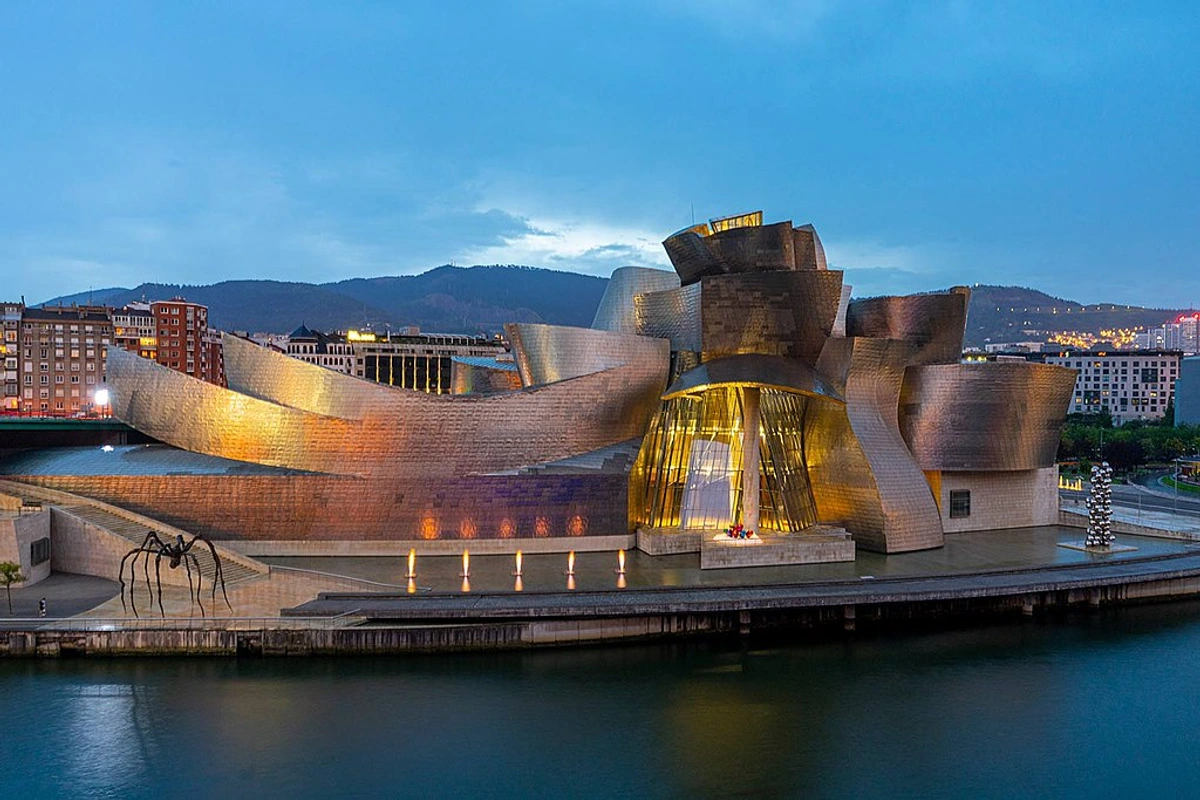
Wright's legacy lives on in the work of countless contemporary architects. Buildings like Tadao Ando's concrete churches in Japan, with their emphasis on natural light and spiritual space, clearly reflect Wright's influence. Similarly, the work of architects like Thom Mayne and Frank Gehry, with their innovative use of materials and dynamic forms, can be seen as extensions of Wright's experimental spirit.
Even in residential architecture, Wright's principles remain dominant. The modern open-plan home, the emphasis on indoor-outdoor living, and the integration of buildings with their surroundings—all these standard features of contemporary architecture have their roots in Wright's revolutionary ideas. As architecture critic Paul Goldberger noted, "Wright didn't just design buildings; he designed the way we live in them."
Further Reading and Resources
For those inspired to learn more about Frank Lloyd Wright, here are some excellent resources:




Books
-"Frank Lloyd Wright: An Autobiography" - Wright's own account of his life and work -"Frank Lloyd Wright: The Masterworks" - Comprehensive overview of his major buildings -"Fallingwater: Frank Lloyd Wright's Redisigned Nature" - Detailed analysis of his most famous work -"The Architecture of Frank Lloyd Wright" - Academic study of his design principles -"Frank Lloyd Wright: Biography of an American Architect" - Detailed biography by Meryle Secrest -"The Fellowship: The Untold Story of Frank Lloyd Wright and the Taliesin Fellowship" - Revealing account of his apprenticeship program -"Wright Space: Pattern and Meaning in Frank Lloyd Wright's Houses" - Analysis of his spatial concepts -"The Genius and the Goddess: Frank Lloyd Wright and the Women in His Life and Work" - Exploration of his personal relationships
Documentaries
-"Frank Lloyd Wright" (PBS) - Ken Burns documentary -"Fallingwater Rising" - Documentary about the Kaufmann family and the creation of Fallingwater -"The Genius of Frank Lloyd Wright" - Exploration of his architectural innovations -"Frank Lloyd Wright's Chicago" - Focus on his early career and Prairie School period -"Taliesin: The House on the Hill" - Documentary about his personal home and studio -"The Architecture of Democracy" - Examination of Wright's democratic ideals in architecture -"Frank Lloyd Wright: The Man Who Built America" - Comprehensive career overview -"The Drawings of Frank Lloyd Wright: The Architectural Legacy" - Focus on his remarkable drawings
Websites
-Frank Lloyd Wright Building Conservancy: BuildingConservancy.org -Frank Lloyd Wright Foundation: FrankLloydWright.org -Fallingwater: Fallingwater.org -Wright in Wisconsin: wrightinwisconsin.org -Taliesin Preservation: taliesinpreservation.org -Unity Temple Restoration Foundation: unitytemple.org -Frank Lloyd Wright Building Guide: comprehensive database of Wright buildings -Getty Research Institute: Online collection of Wright drawings and documents -Society of Architectural Historians: Resources on Wright's historical context
Virtual Tours
Many Wright buildings offer virtual tours online, making his work accessible to people worldwide: -Guggenheim Museum virtual tour -Fallingwater virtual experience -Taliesin virtual tour -Robie House virtual tour -Johnson Wax Headquarters virtual experience -Unity Temple virtual tour -Imperial Hotel virtual tour (historical) -Frank Lloyd Wright Home and Studio virtual tour -Wright's Taliesin West virtual experience -Darwin Martin House virtual tour These virtual tours provide an opportunity to experience Wright's revolutionary spatial concepts and design details that might be missed in person. Many include 360-degree views, interactive floor plans, and detailed information about construction techniques and historical context.
These resources offer deeper insights into Wright's genius and allow you to explore his work in greater detail, whether you're planning a pilgrimage to his buildings or simply want to understand his revolutionary approach to architecture.
But his influence goes far beyond individual buildings. Wright helped create a uniquely American architecture that wasn't just imitating European styles. He pioneered concepts that are now standard in modern design: open floor plans, integration with nature, and the idea that buildings should enhance rather than dominate their surroundings. Architects like I.M. Pei, Philip Johnson, and even contemporary architects like Tadao Ando have all been influenced by his work.
Wright's impact can be seen in nearly every aspect of contemporary architecture. His emphasis on horizontal architecture—long, low buildings that follow the contours of the land—changed how we think about suburban and rural residential design. The open floor plans he popularized are now standard in homes worldwide because they create more flexible, family-friendly living spaces. His innovative use of materials—from the textile blocks of the 1920s to the reinforced concrete of the Guggenheim—influenced generations of architects to think beyond traditional construction methods.
Perhaps most importantly, Wright established the principle that architecture should be responsive to its specific context. His rejection of one-size-fits-all design in favor of buildings that grow "out of the ground, into the light and into the air" like plants created a new standard for authentic, place-based architecture. This approach continues to inspire architects who seek to create buildings that are both of their time and of their place.
Today, more than 40 of his buildings are open to the public as museums and historic sites, allowing people to experience his genius firsthand. The Frank Lloyd Wright Building Conservancy works to preserve his remaining works, ensuring that his vision continues to inspire future generations of architects and designers.