Mastering Foreshortening: Ultimate Guide to Depth, Perception & Art
Master foreshortening: the ultimate guide to depth and illusion in art. Explore its definition, history, practical drawing tips, and common mistakes to create dynamic, captivating art.

Mastering Foreshortening: The Ultimate Guide to Depth and Illusion in Art
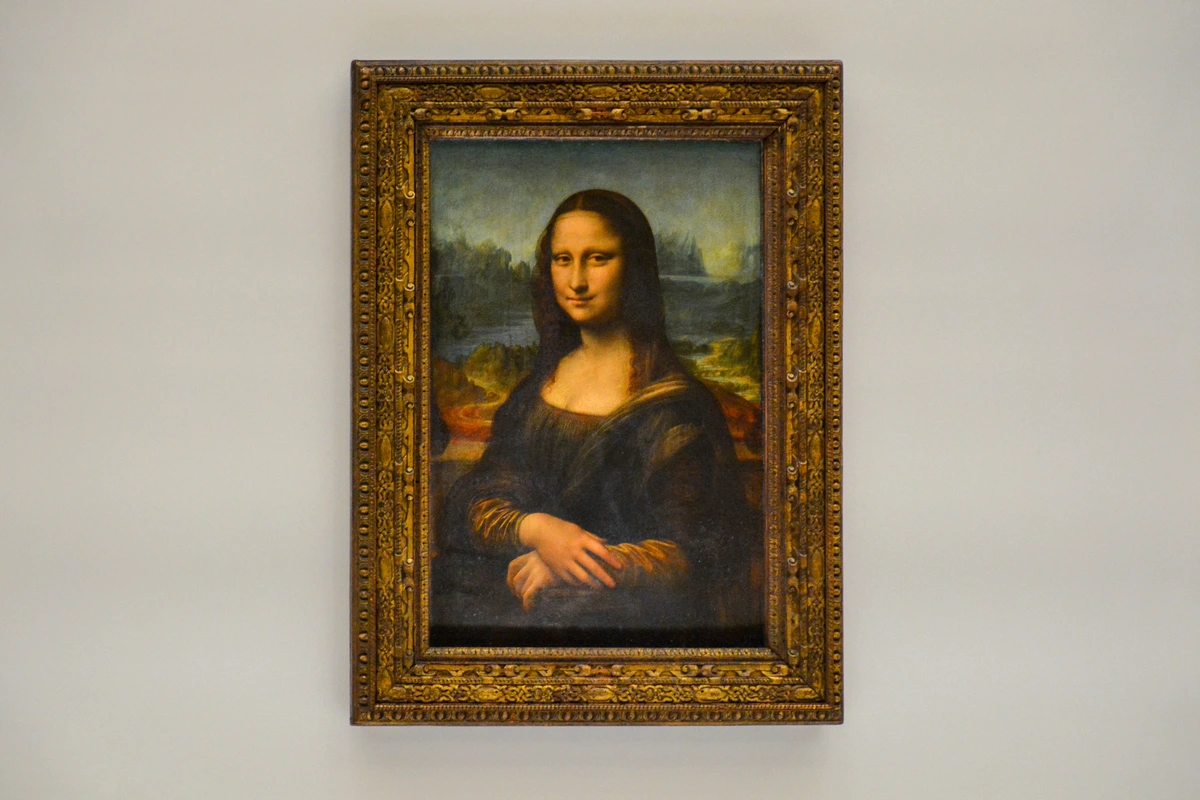
I still vividly remember the early days in figure drawing, attempting to make an arm truly reach out to the viewer, to truly project from the page. More often than not, it would stubbornly remain flat, like a sad, deflated balloon, or worse, bend at an impossible angle. Honestly, the crumpled papers accumulated into a tiny mountain, each one a testament to an artistic defeat. But then came that moment of breakthrough – gazing up at Michelangelo's Sistine Chapel, feeling the colossal figures practically leap from the ceiling, or seeing a dramatic Mantegna where a body receded so powerfully it almost hurt. That sense of a flat surface magically yielding profound depth – it's always felt like a profound secret, a visual enchantment. This pursuit of optical realism, this daring to defy the flatness of the canvas, marked a significant shift towards scientific observation and humanism in art, forever changing how we perceive depicted reality. At the heart of much of that enchantment lies foreshortening, a visual cheat code for transforming two dimensions into three. This isn't just a technical trick; it's a fundamental principle that will unlock new levels of artistic expression and appreciation, a topic I find endlessly fascinating in my own artist's journey. In this comprehensive guide, we'll unravel its mysteries, explore its rich history, delve into practical techniques, and discover its enduring impact on art, from the Old Masters to contemporary abstraction.
What is Foreshortening? The Illusion of Depth, Volume, and Perception
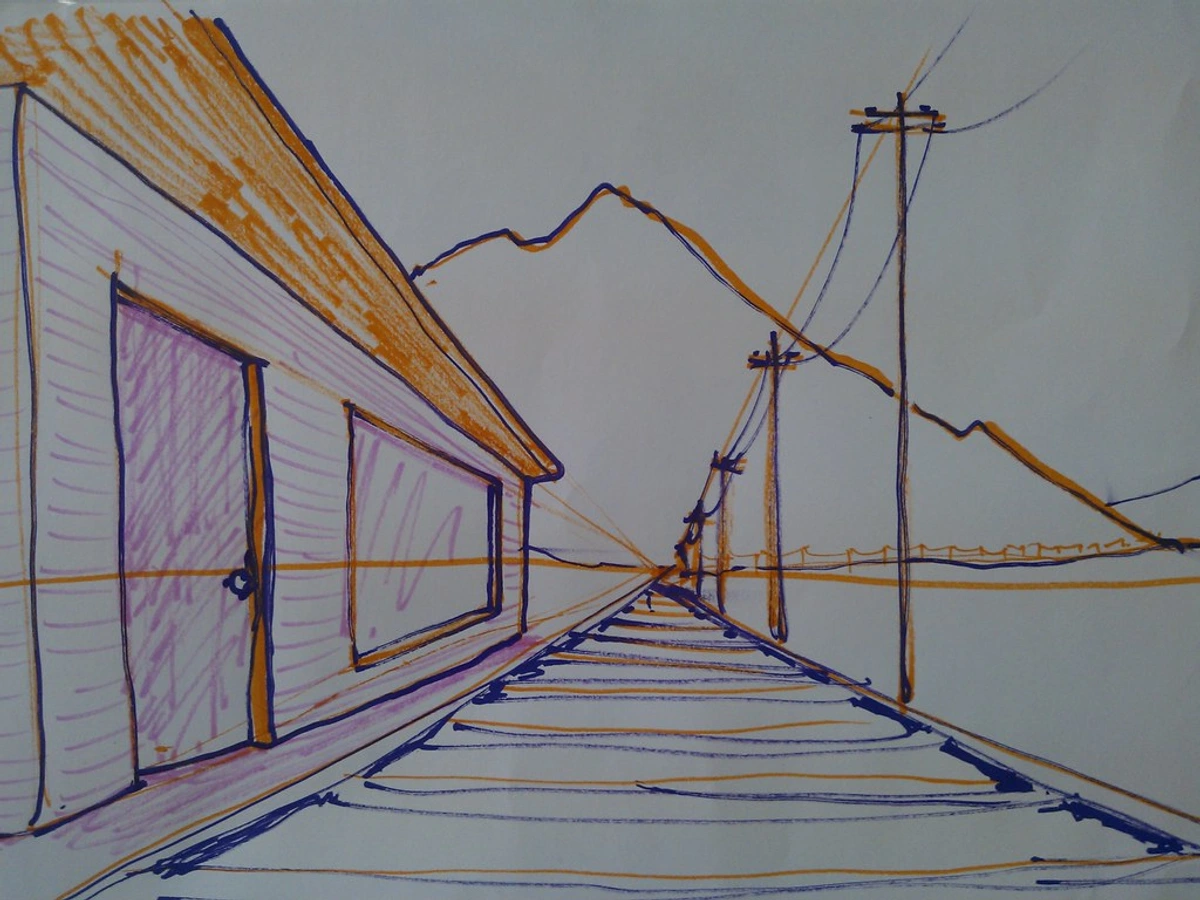
So, what exactly is this visual sleight of hand that convinces our eyes of depth where there is none? Think about standing at one end of a long, straight road. The sides of the road, which you know are parallel, appear to converge in the distance, shrinking to a point on the horizon. Or imagine gazing down a long corridor; the far end seems much smaller and closer than your brain knows it actually is. That's the everyday magic of perspective at play, a fundamental artistic principle. Foreshortening is its star performer when it comes to individual objects or parts of them, dramatically compressing their apparent length.
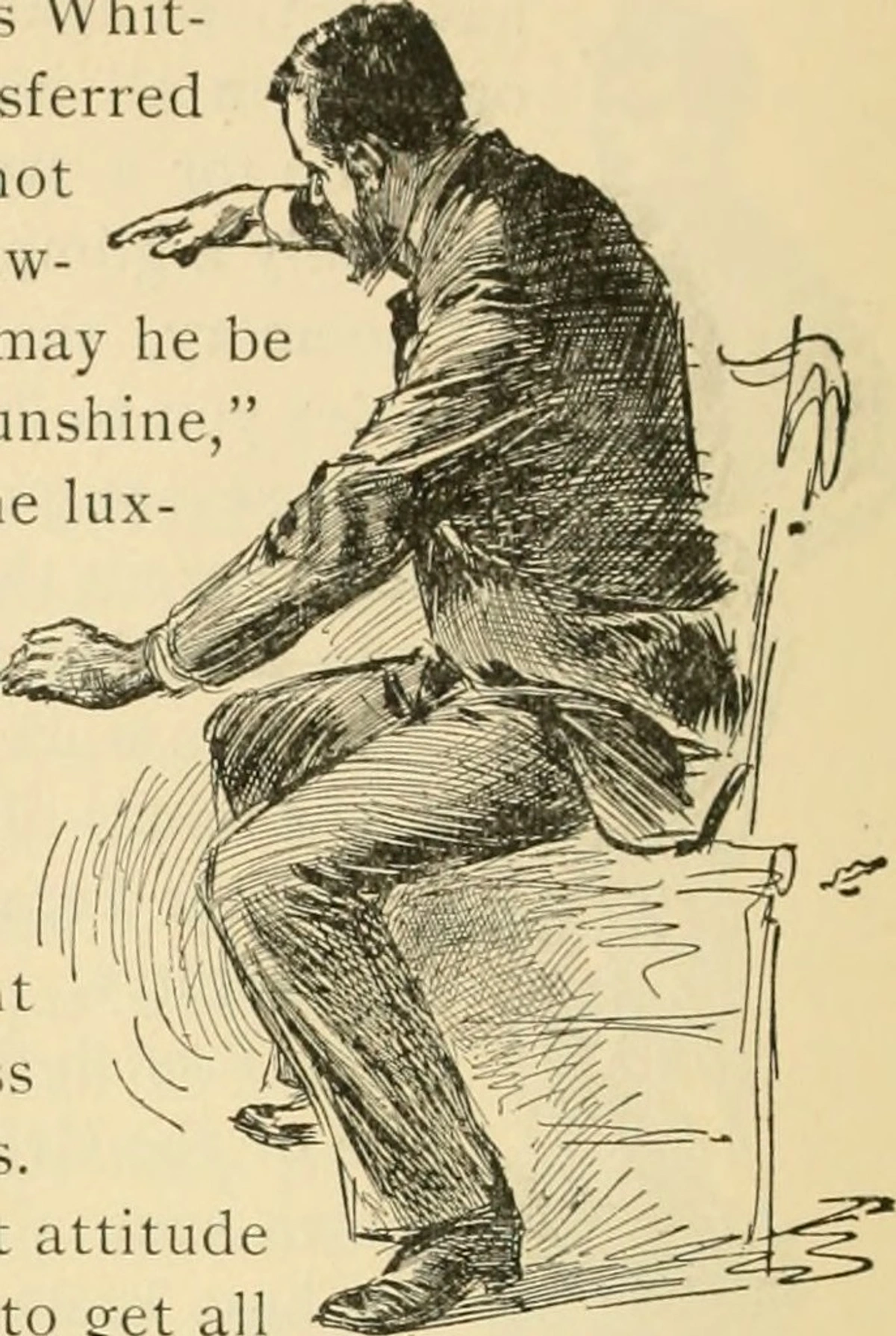
At its core, foreshortening is a visual effect where an object or distance appears compressed, or shorter and often wider than its actual length, because it's angled obliquely towards or away from the viewer. When I say "obliquely," I mean it's not perfectly parallel or perpendicular to your line of sight. It's about drawing what the eye perceives, not what the mind knows. This direct contrast, this tension between the objective truth of an object's fixed dimensions and the subjective way our vision distorts them, is the essence of foreshortening's power. It is, quite simply, a deliberate distortion of form to create the illusion of depth. To illustrate, hold a pencil directly pointed at your eye: the eraser end looks huge, while the tip seems tiny. Your mind knows it's a single, uniformly shaped pencil, but your eye sees a dramatically compressed form. That's foreshortening. Or, think about looking at your own legs while sitting; they appear shorter and thicker than their actual length because you’re viewing them at an oblique angle. You know your shoes are a certain length, but if you look straight down at your feet, they appear significantly shorter, the toe box seeming to recede dramatically. This powerful technique depicts subjective visual perception, creating a sense of physicality.
This artistic technique is an essential tool for creating the illusion of volume and recession in space, rendering forms on a flat surface with convincing three-dimensionality. It works hand-in-hand with perspective to give a sense of realism and dynamic movement to figures and objects. Without foreshortening, figures would often appear flat, stiff, or unnaturally long, like cardboard cutouts trying to exist in a three-dimensional world. It helps artists render volume by relying on key visual cues: diminishing size (not just smaller due to distance, but the form itself is compressed), converging lines, distortion of form, and overlapping elements.
While this is how our human eyes process the world, it's worth noting that not all vision works this way. Certain animals have different visual fields and ways of perceiving depth, and many non-Western art traditions, like ancient Egyptian art or traditional Chinese landscape painting, prioritized symbolic clarity, narrative, or spiritual harmony over optical realism. In ancient Egyptian art, for example, figures were often depicted with the head in profile, the eye frontal, and the body frontal or in profile, with size indicating social or divine importance (hieratic scale) rather than spatial recession. Depth was often conveyed through a system of registers or overlapping figures, but rarely through optical foreshortening. Similarly, traditional Chinese landscape paintings often employed atmospheric perspective and a shifting viewpoint, guiding the eye through vast, ethereal spaces but eschewing strict linear perspective and dramatic foreshortening in favor of a more symbolic or meditative rendering of nature. It's fascinating to consider how different cultures chose to "see" and represent their world – a powerful reminder that art is a reflection of its time and beliefs.
Contrast this with orthographic projection, which is how a technical drawing might represent an object – showing its true, unforeshortened dimensions from various angles. Orthographic projection aims for objective measurement, providing a 'true' view without optical distortion. Foreshortening, by deliberately distorting those known dimensions, is what makes a flat canvas feel like it has actual depth, capturing the subjective experience of vision rather than objective measurement. It's the art of making two dimensions feel like three, a powerful visual illusion. Art historian John Berger, for instance, extensively discussed how perspective, and by extension foreshortening, shapes our perception of represented reality, often tying it to ownership and individual viewpoint. All of this, by the way, is a beautiful example of how design in art fundamentally influences perception.
Why Foreshortening Matters: Its Impact on Your Art and Perception
Now, you might be thinking, "Why bother with such a seemingly complex artistic technique? Isn't it just about making things look shorter?" I know I certainly did in my early days. The truth is, understanding foreshortening profoundly impacts not just your ability to create art, but also how you perceive the world around you. It's the secret sauce that makes a flat image pop, transforming static figures into dynamic, living beings, and most importantly, it's a powerful tool for viewer engagement. Mastering it allows you to:
- Achieve Optical Realism & Spatial Depth: Make your drawings and paintings look genuinely three-dimensional, convincing the viewer that objects recede into space or project forward. Imagine a dramatically foreshortened hand reaching directly out from a portrait – it feels tangible, almost as if you could shake it. It's how artists render depth and volume convincingly, making the artwork feel like a window into another world.
- Inject Dynamism and Emotion: A dramatically foreshortened limb or body can convey intense action, vulnerability, or power, drawing the viewer deeper into the narrative. Think of a figure falling or leaping; the compression of their form emphasizes the force of their movement, enhancing visual storytelling and making the scene feel alive.
- Create Tension and Unease: Beyond dynamism, extreme foreshortening can create a powerful sense of disorientation, vulnerability, or even menace. A dramatically foreshortened skull or a figure falling head-first can evoke strong emotional responses, adding another layer to your narrative and making the viewer feel intimately involved, sometimes uncomfortably so. This visceral response is partly due to our brain's automatic processing of spatial cues; a sudden shift in perceived depth can trigger an instinctual reaction to what feels like an encroaching or rapidly receding form, playing on our innate understanding of proximity and threat.
- Manipulate Perceived Scale: Foreshortening allows you to play with how large or small objects appear relative to each other, not just due to distance, but by how much they are angled away. This is crucial for creating grand compositions or emphasizing specific elements, giving certain parts of your artwork a powerful visual presence. For example, a tiny beetle dramatically foreshortened to appear huge and menacing in the foreground can utterly dominate a vast landscape, shifting the entire visual hierarchy and emotional focus of a piece.
- Enhance Composition & Guide the Eye: Use foreshortening to strategically guide the viewer's eye, create focal points, and add depth to even simple arrangements of objects. A strategically foreshortened element can pull the viewer into a scene or direct their gaze across the canvas, orchestrating their visual journey.
- Train Your Eye & Drawing Techniques: Develop sharper observational skills, learning to see the world as a series of compressed, angled forms rather than just flat outlines. This trains your brain to truly see the subjective reality of visual perception, improving your drawing techniques and making you a more astute observer of the world.
- Understand Art History: Appreciate the genius of masters like Mantegna or Michelangelo, whose revolutionary use of foreshortening fundamentally changed how art was made and perceived. It allows you to see the technical brilliance behind iconic works, not just their surface beauty, connecting you to centuries of artistic innovation.
- Inspire Unique Artistic Styles: By pushing the boundaries of what is known versus what is seen, mastering foreshortening can lead to experimental and groundbreaking artistic styles, encouraging artists to find new ways to express spatial dynamics and challenge conventional representations.
It’s a powerful visual illusion that, once understood, unlocks a whole new dimension of artistic expression and appreciation. Try to spot it in everyday life – on a bird's wing in flight, a car speeding away, or even your own outstretched arm. Once you start looking, you'll see it everywhere!
A Journey Through Time: Foreshortening's Evolution in Art History
The human desire to depict depth on a flat surface is ancient, of course. Yet, for a long time, artists focused more on symbolic clarity than optical realism. Think of the ancient Egyptians, for example, where figures were often depicted frontally or in profile, with size indicating importance rather than distance (hieratic scale). This wasn't because they couldn't see foreshortening, but because their artistic and cultural goals prioritized clear, consistent, narrative representations that emphasized spiritual or social status over mimicking the transient nature of visual perception. Early medieval art similarly flattened space to emphasize spiritual narratives over earthly dimensions. These artists had different artistic languages, where depth was often communicated symbolically or through overlapping planes rather than optically. Even in some traditional Asian art forms, like Chinese scroll painting, depth was conveyed through atmospheric perspective, overlapping forms, and varying brushwork, rather than the systematic mathematical perspective seen in the West. It's fascinating to consider how different cultures chose to "see" and represent their world – a powerful reminder that art is a reflection of its time and beliefs.
But then came the Renaissance, and everything changed. This was an incredibly exciting period where artists truly began to dissect vision and space, leading to an explosion of realism and dramatic narratives in painting and sculpture. If you've explored the ultimate guide to Renaissance art, you'll know this era was a powerhouse of innovation, and foreshortening was a jewel in its crown. Early Renaissance masters like Masaccio and Paolo Uccello were pivotal in this transformation, experimenting with linear perspective to create illusions of deep space and volumetric forms, laying the groundwork for the more dramatic foreshortening that would define the High Renaissance. It was during this time that theorists like Leon Battista Alberti, in his seminal treatise On Painting (1435), codified the mathematical principles of linear perspective, providing artists with a systematic framework to accurately represent three-dimensional space and, by extension, foreshortened forms. They literally drew the lines that would lead to figures leaping from ceilings and bodies powerfully receding into space, making art feel like a direct extension of scientific observation and humanist thought. It's truly inspiring to think of the intellectual curiosity and daring experimentation that unfolded during these years.
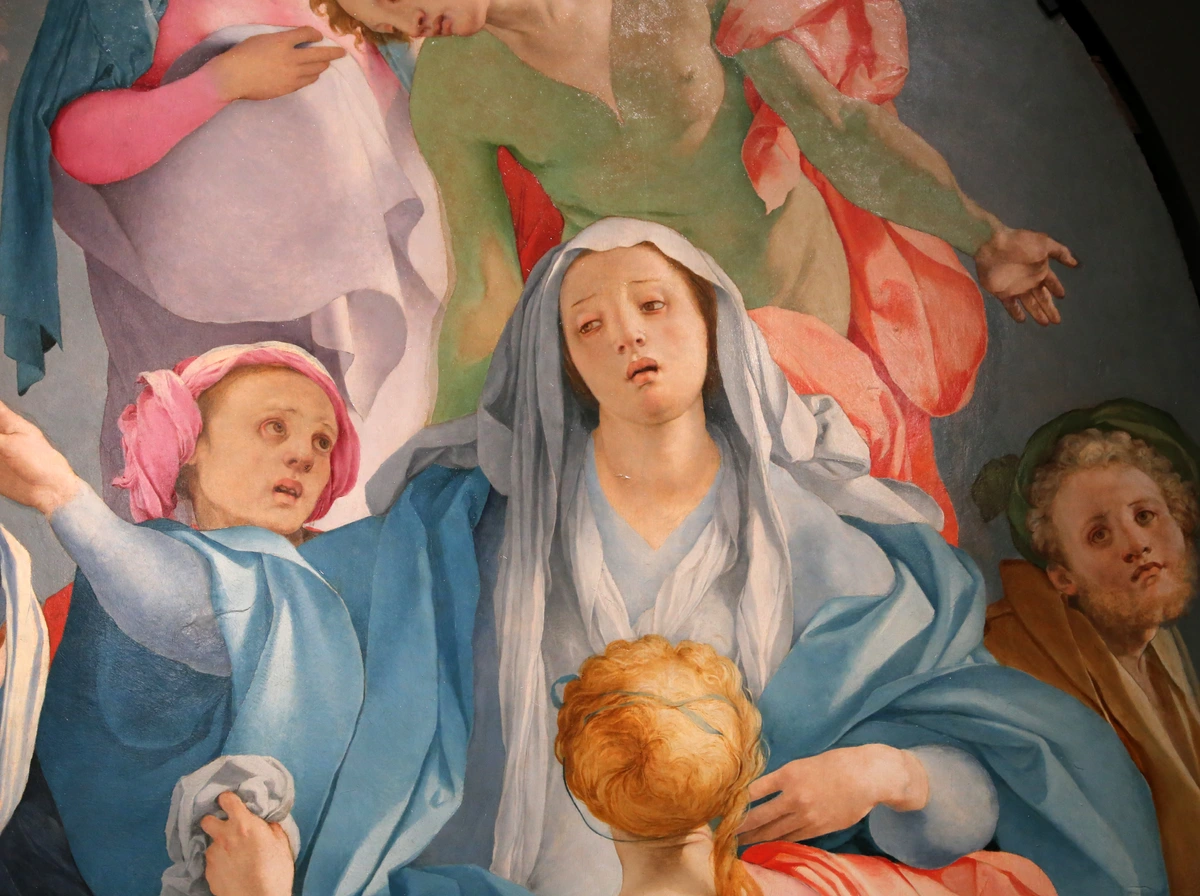
Let's examine some iconic artworks that powerfully demonstrate foreshortening:
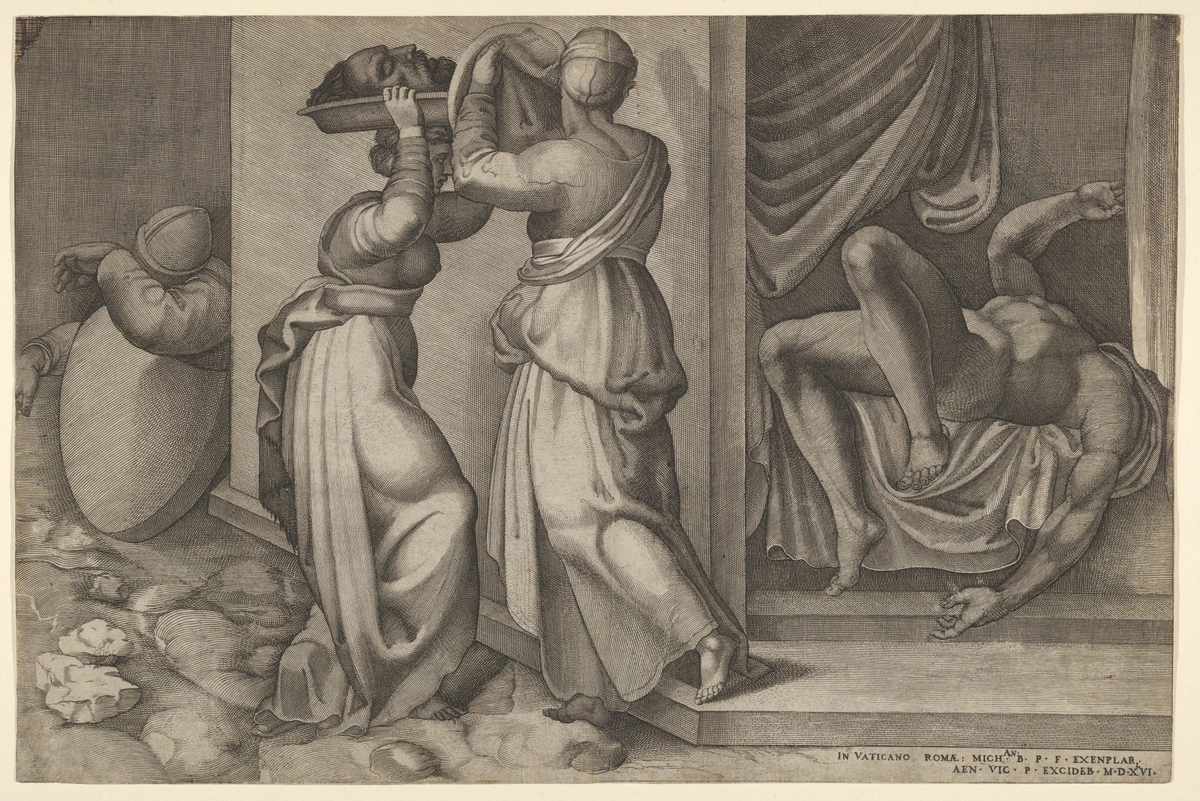
Artwork  | Artist | Period | Key Foreshortening Aspect | Artistic Technique Employed | |
|---|---|---|---|---|---|
| Lamentation of Christ (c. 1480) | Andrea Mantegna | Renaissance | Christ's body depicted from a drastic foot-first angle; feet disproportionately large and positioned on a tessellated floor that reinforces the strong recession, pulling the viewer into the scene with visceral immediacy. | Extreme linear perspective, dramatic viewpoint, meticulous detail in drapery and anatomy. | Creates an incredibly poignant, visceral sense of death and vulnerability, making Christ's body feel almost tangible. |
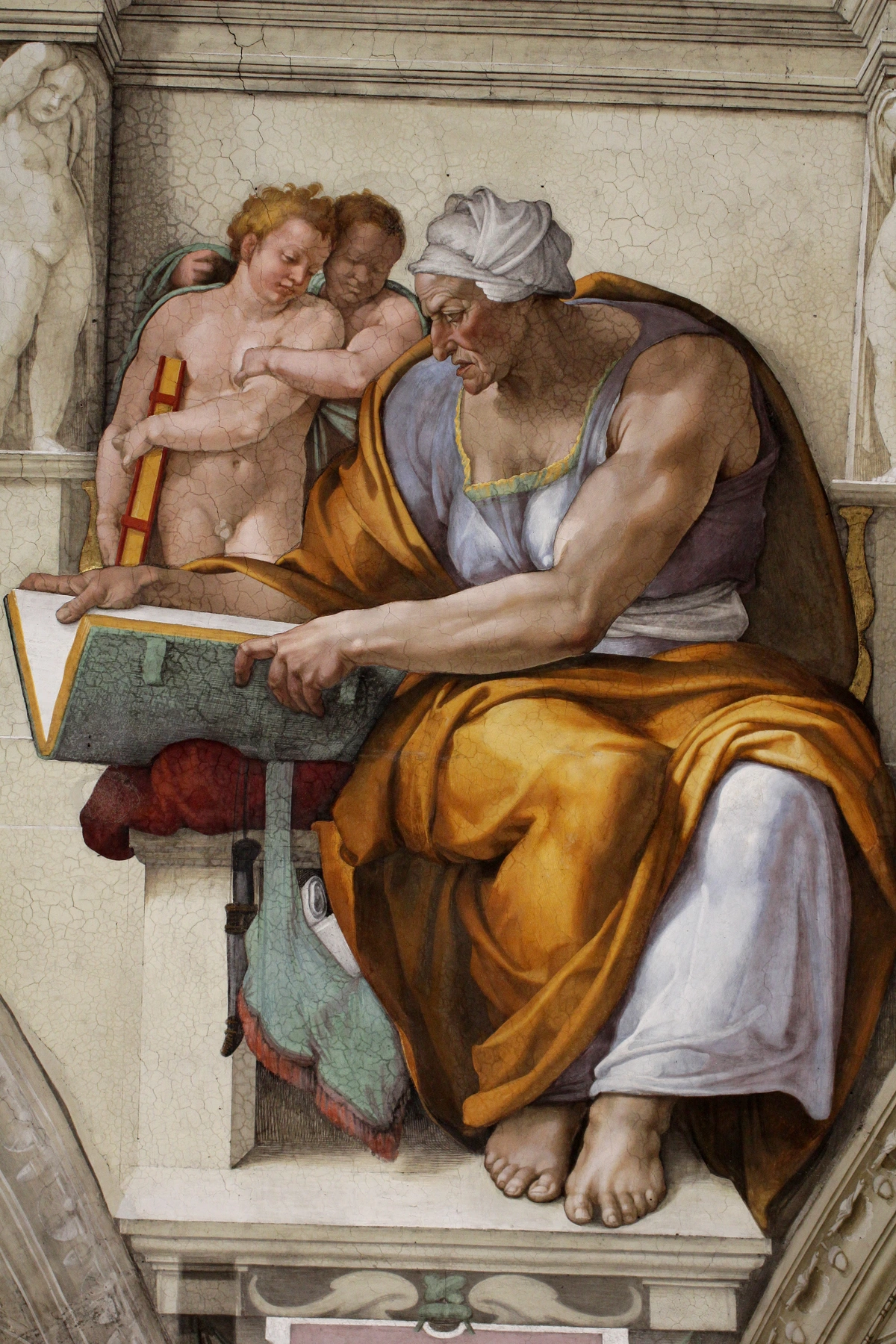
| Sistine Chapel Ceiling (Creation of Adam) (c. 1508-1512) | Michelangelo | High Renaissance | Figures (God, Adam) rendered with immense three-dimensionality and dynamic muscularity, often seen from below (sotto in sù), causing limbs and torsos to project or recede powerfully from the vaulting ceiling. | Masterful anatomy, contrapposto, volumetric rendering through sfumato and modeling, fresco technique. | Imbues figures with divine power, monumentality, and a palpable sense of movement and grand scale. |
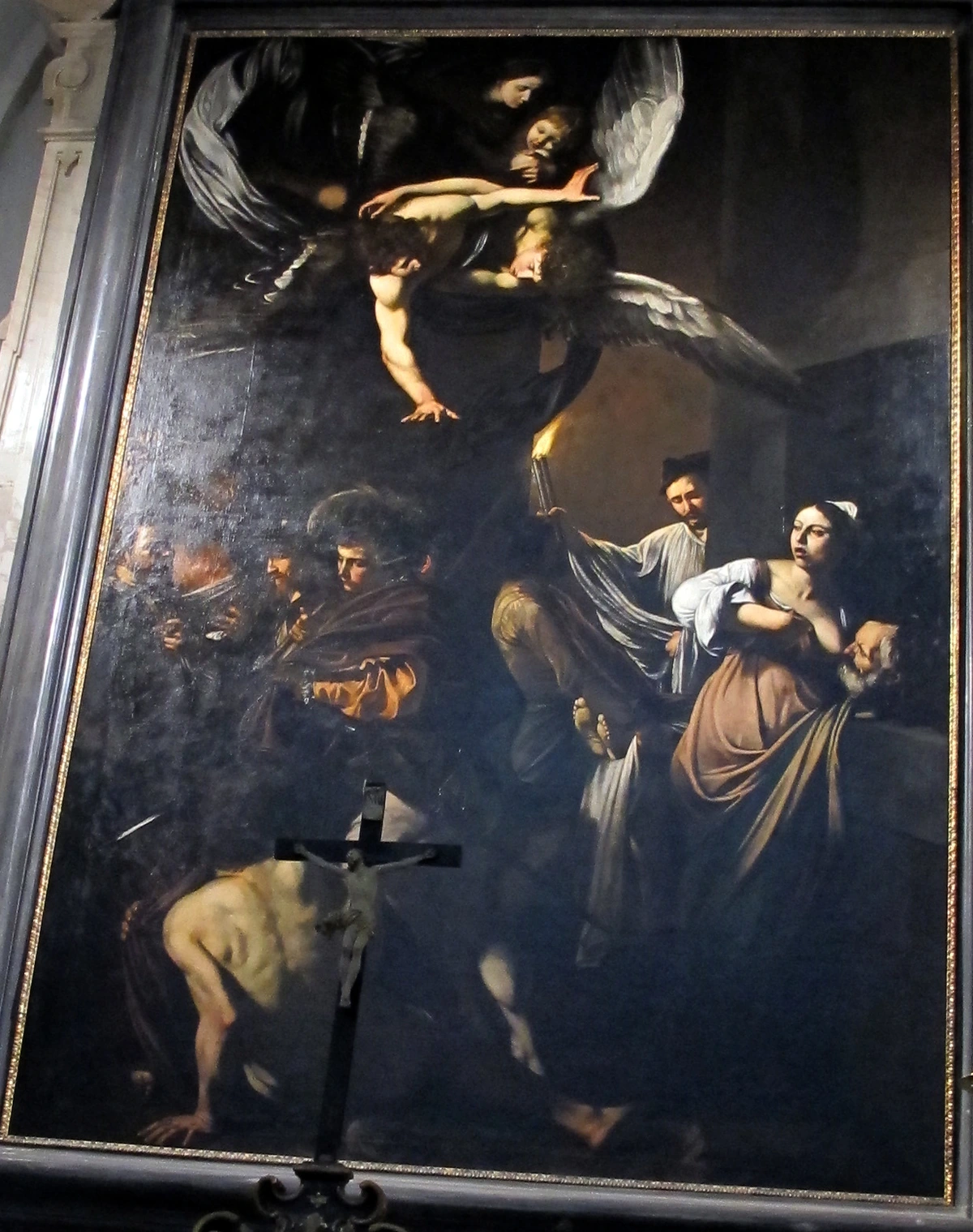
| The Entombment of Christ (c. 1600-1601) | Caravaggio | Baroque | Figures often project dramatically into the viewer's space, such as the outstretched arms and legs of the pallbearers, utilizing sharp angles and intense illumination to heighten the illusion of proximity and three-dimensional presence. | Intense chiaroscuro, dramatic angles and viewpoints, tenebrism (extreme contrast between light and dark). | Pulls the viewer physically and emotionally into the scene, creating tension, immediacy, and a sense of raw, unvarnished human experience. |
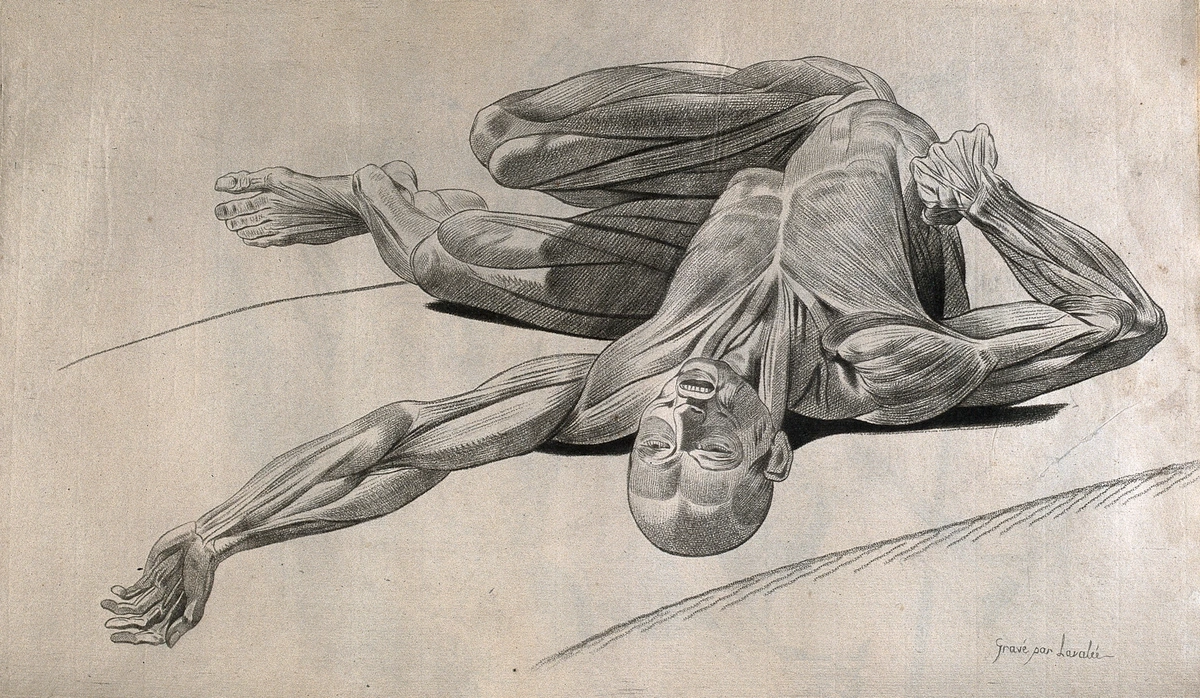
Building on the foundational realism of the Renaissance, we then enter the Baroque era. Artists like Caravaggio truly pushed its dramatic potential even further, often using extreme angles and intense chiaroscuro (light and shadow) not just to create volume, but to make the foreshortened forms project out with stunning theatricality, pulling the viewer right into the scene, creating tension and immediacy. It's a style that always leaves me feeling incredibly engaged, almost physically present in the artwork. Think also of sculptors like Gian Lorenzo Bernini, whose dynamic, multi-figured works (such as The Ecstasy of Saint Teresa) employ dramatic foreshortening in the bodies and drapery to create theatrical, almost explosive, movement, making the marble feel incredibly fluid and alive. Other Baroque masters like Annibale Carracci and Artemisia Gentileschi similarly utilized foreshortening to imbue their figures with powerful physical presence and emotional depth. It's a bold, almost aggressive use of the technique that leaves you no choice but to engage with the artwork on a profound level.
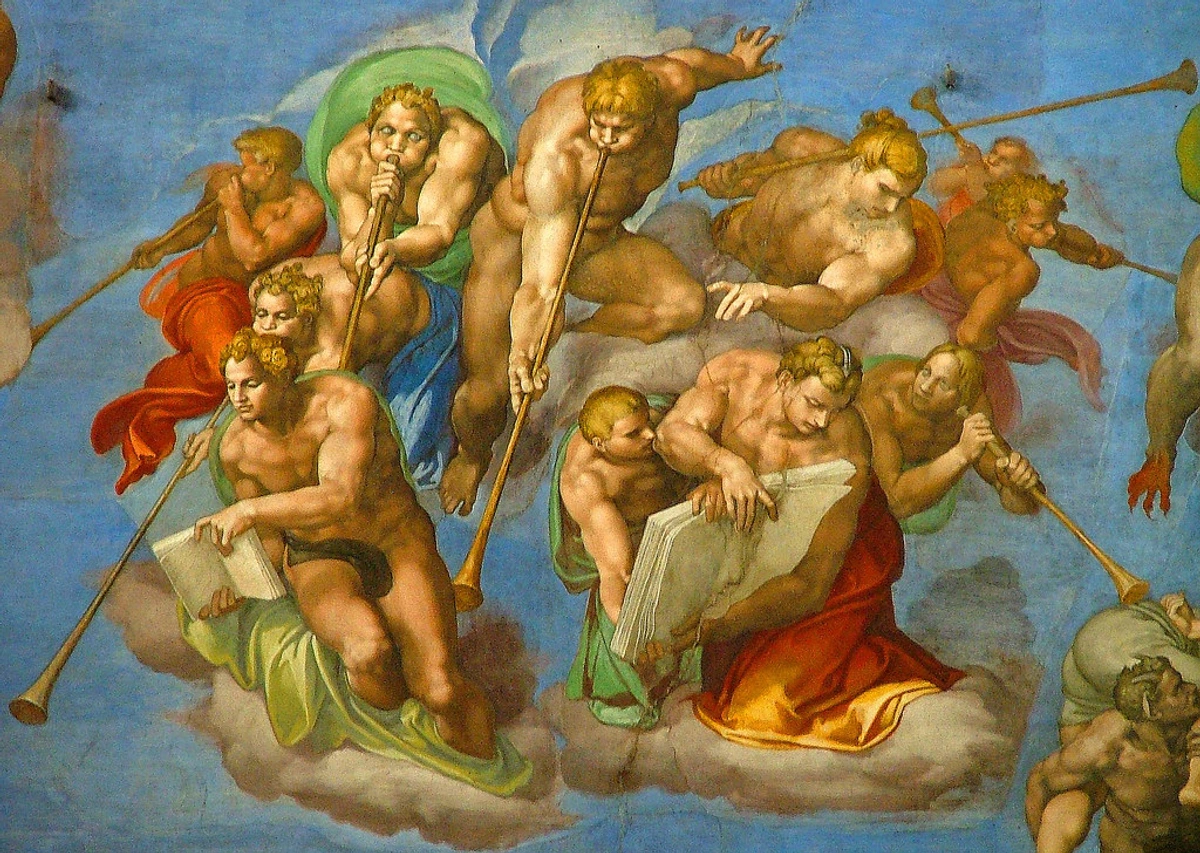
Baroque Ceilings: Looking Up into Illusion
A particularly breathtaking application of foreshortening during the Baroque period was in grand ceiling frescoes, a technique known as quadratura. This involved a complex interplay of painting, architecture, and often stucco sculpture to create staggering illusions. Artists like Andrea Pozzo transformed flat architectural surfaces into seemingly boundless skies or divine realms, with figures soaring upwards or appearing to float directly above the viewer. By masterfully employing extreme foreshortening, linear perspective, and painted architectural extensions – such as trompe l'oeil columns, cornices, and balustrades – they created astounding illusions where the church ceiling seemed to open up to heaven, blurring the lines between painting, sculpture, and architecture. It was a complete sensory experience designed to overwhelm and inspire awe, a testament to the power of artistic perspective to bend reality. It's hard not to feel a profound sense of wonder standing beneath one of these masterpieces.
Even into the Neoclassical and Romantic periods, while perhaps less overtly dramatic than the Baroque, foreshortening remained a fundamental tool for artists seeking to depict the human form with naturalism and expression, whether in the grand historical narratives of Jacques-Louis David or the emotional intensity of Théodore Géricault. Its role shifted from theatrical spectacle to more refined naturalism, but its core principle of creating compelling spatial depth remained.
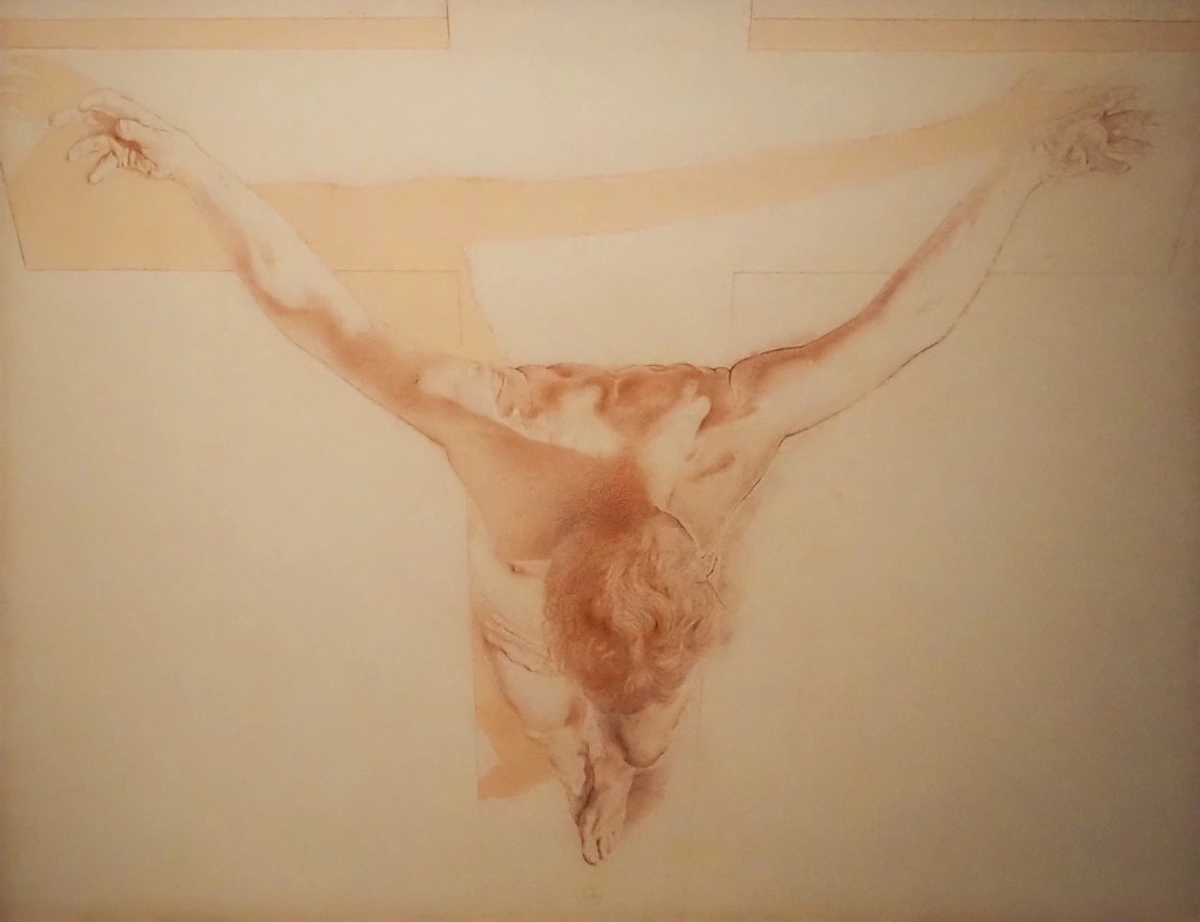
Dalí's 'Christ in Perspective': A Modern Masterpiece of Foreshortening
One of my favourite examples of extreme foreshortening that really drives home its impact is Salvador Dalí's Christ of St. John of the Cross (often colloquially known as Christ in Perspective). It's a modern interpretation that showcases a Renaissance-level mastery to depict Christ on the cross viewed from directly above, looking down upon the crucifixion scene. This dramatically overhead viewpoint makes the body appear incredibly foreshortened, almost hovering. Dalí uses this not just for optical realism, but to amplify the surreal and deeply emotional impact, creating an immense, almost terrifying, presence and vulnerability. The surreal context amplifies the distortion, making the viewer feel both removed and intimately connected to the scene simultaneously, demonstrating foreshortening’s ability to evoke complex emotions across eras and challenge traditional religious iconography. It's a truly unsettling and brilliant use of the technique.
The Artist's Toolkit: Mastering the Mechanics of Foreshortening
I remember countless days in art school, hunched over my sketchbook, trying to make a figure feel truly three-dimensional. It felt like I was constantly battling my own brain, which insisted on flattening everything out. Learning foreshortening felt like unlocking a secret cheat code, but trust me, it wasn't easy. It’s like trying to bend reality to your will on a two-dimensional surface, and honestly, it’s harder than it looks! I distinctly recall struggling with a model's hand reaching forward – my mind knew the fingers were long, but my eye insisted they were tiny nubs. It took me ages to reconcile that internal conflict! You're essentially learning to navigate by the stars when everyone else is still looking at a flat map.
1. Diligent Observation: See What You're Truly Looking At
This is where the rubber meets the road. For artists, countless hours are spent observing how forms actually appear from different angles. It's about training your eye to see the distortions and compressions in real life, not just drawing what your brain thinks an arm or a leg 'should' look like. For instance, notice how a circle viewed obliquely becomes a compressed ellipse, or how the top of a square table appears as a trapezoid when seen from an angle. This isn't something you can simply intuit; it requires diligent study and practice, almost like learning a new language where the grammar is visual perception.
To actively train your eye, try these exercises:
- Exercise 1: The Cylinder Stretch. Draw a simple cylinder lying flat on a surface. Now, imagine it's coming directly towards your eye. How does its perceived length change? How does its diameter at the 'front' end compare to the 'back'? Sketch this transformation, focusing on ellipses and proportional shifts.
- Exercise 2: The Hand's Descent. From an overhead angle, your hand looks very different. Hold your hand up and look straight down at it, then sketch it. Focus on the compressed shape of the palm and how the fingers appear shorter and wider. Compare the perceived length of your index finger to your thumb from this angle.
- Exercise 3: The Coffee Cup Challenge. Place a coffee cup on your desk. Draw it from a normal eye-level. Now, move your head until you are looking directly down into the cup. Notice how the circular rim becomes a very compressed ellipse, and the height of the cup visually shrinks. Draw this.
Use a plumb line (a string with a weight) or even your pencil to measure relative angles and proportions in real life. Focus on gesture drawing to capture the overall flow and direction of foreshortened forms before getting bogged down in detail. It's a continuous process of calibration.
2. Understanding Linear Perspective: The Foundation of Depth
This is where it all begins. Foreshortening works within the broader system of linear perspective. Remember our road example? That's linear perspective. Parallel lines appear to converge at a vanishing point on the horizon, and objects closer to the viewer are larger, receding elements become smaller. This interplay is absolutely crucial for an overall sense of depth. Foreshortening is particularly potent when combined with two-point or three-point perspective, as it allows for figures and objects to be angled dynamically within the scene, rotating and receding in multiple directions. Without a solid understanding of perspective, foreshortening often falls flat (pun intended!). Art theorists like Leon Battista Alberti and later, art historian E.H. Gombrich, extensively discussed how linear perspective created a systematic way to represent depth, providing the framework for foreshortening. At its heart, linear perspective is a system of geometric projection, where lines and planes are systematically scaled and distorted to mimic the optical effects of distance and angle, providing the mathematical underpinning for how foreshortening accurately translates three-dimensional forms onto a two-dimensional plane.
3. Mastering Anatomy (Especially for Figures): The Blueprint Beneath the Form
Especially for human or animal figures, a deep knowledge of bones and muscles allows artists to convincingly distort and compress forms without losing structural integrity. You need to know how the body works to 'break' it convincingly for the illusion. For example, when viewing a thigh (femur) from directly above, it appears much shorter and thicker than its actual length. If you don't understand the underlying skeletal and muscular structure, your foreshortened limbs can quickly look rubbery, boneless, or broken, appearing to bend impossibly or lacking any sense of weight and bone structure. It's not just about getting the shape right; it's about conveying the feeling of a living, breathing form, even when dramatically compressed. This is where the knowledge of anatomy becomes indispensable; it's the internal logic that allows for believable external distortion.
4. Value and Form: Sculpting with Light and Shadow
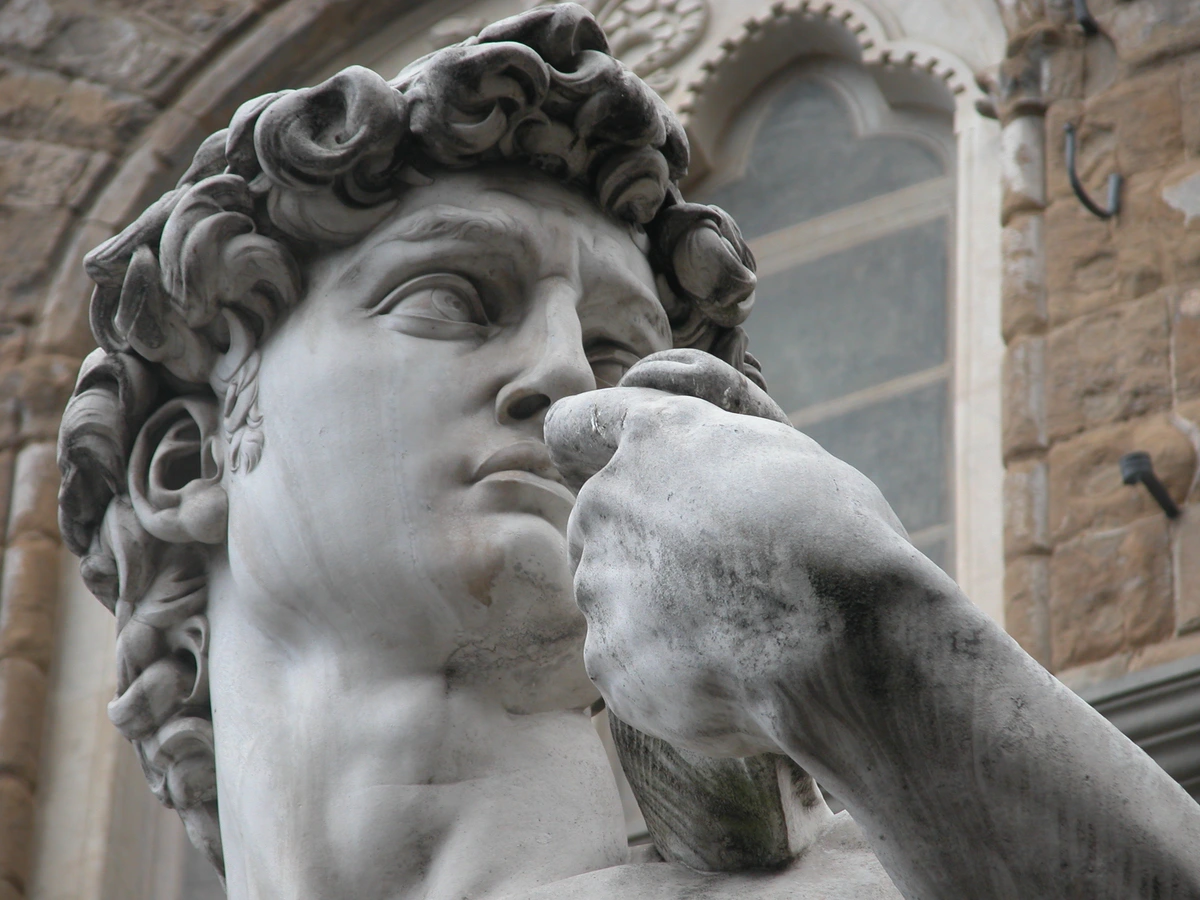
Once you have the structure, how do you make it feel solid, weighted, and truly three-dimensional? Shading and highlights are used to define the planes of a foreshortened object. This is how a compressed form can still feel substantial and volumetric. It's not just about applying local color, but how light falls across an object, creating shadows and illuminated surfaces that tell our brain about its volume and orientation in space. The direction of the shadows is particularly important, as it reinforces the angle at which the object is receding or projecting. For example, consider a sphere, like a human head, viewed from above, looking down. The planes facing you will be brighter, while the underside recedes into shadow, subtly compressing its perceived length and emphasizing its roundness and downward angle. It's an unspoken conversation between light and form, where changes in value reinforce the illusion of recession. Consistent and accurate lighting is paramount for selling the illusion of volume and spatial depth in foreshortened forms, adding a sense of tactility.
5. Atmospheric Perspective: Adding Depth to the Distance
While foreshortening handles the immediate compression of objects, atmospheric perspective complements it beautifully by enhancing the illusion of depth, especially in expansive scenes. This technique describes how objects appear less distinct, paler, and often bluer as they recede into the distance due to the scattering of light by air particles. Think of distant mountains appearing hazy and blue. By combining the sharp, foreshortened forms in the foreground with the softer, desaturated elements in the background, artists can create an incredibly convincing sense of vast, receding space. It’s an indispensable tool for tying a dramatically foreshortened foreground into a believable, distant backdrop, creating a cohesive visual narrative.
6. Compositional Hierarchy: Guiding the Viewer's Eye
Foreshortening isn't just a technical trick for individual objects; it's a powerful compositional tool. By dramatically foreshortening certain elements, an artist can create a strong sense of compositional hierarchy, drawing the viewer's eye to specific points of interest. A hand reaching forward might become the immediate focal point, or a figure receding rapidly into the background can emphasize distance and scale. This manipulation of perceived size and depth allows the artist to control the viewer's narrative experience, making them feel either intimately close to or overwhelmingly distant from certain elements within the artwork. It's about orchestrating what the viewer sees and, more importantly, how they feel about it.

Foreshortening in Nature: A Constant Teacher
Beyond the studio, nature itself is a master of foreshortening. Observe a bird in flight with its wings angled towards you; the leading edge will appear significantly longer and broader than the trailing edge, and the wing as a whole will be dramatically shortened. Or consider the trunk of a tree viewed from a steep angle upwards or downwards – its known cylindrical form compresses into an elliptical shape, its true height visually diminished. The foreshortened curves of a mountain range, the retreating lines of a river, the dramatic compression of a wave as it curls towards the shore, or even a long row of lampposts receding into the distance also offer endless lessons. By studying these natural occurrences, artists can gain an intuitive understanding of how forms distort in space, providing a rich source of reference for their own figure drawing and compositions. It's a constant reminder that the 'rules' of foreshortening are simply observations of how light and form interact in our world.

Early Optical Devices & Digital Aids: Historical and Modern Perspectives
While not directly foreshortening techniques, early optical devices like the camera obscura offered artists a glimpse into how light and perspective naturally compressed and projected a three-dimensional scene onto a two-dimensional surface. This mechanical projection provided a 'truthful' visual reference, helping artists understand the principles of perspective and foreshortening without having to solely rely on arduous mental calculations. These tools were invaluable for Renaissance and Baroque artists seeking to accurately capture the subjective experience of vision, pushing the boundaries of realism.
In our modern era, digital tools like 3D modeling software, virtual reality applications, and even advanced photo editing offer powerful ways to explore and understand foreshortening. While these can be incredible aids for artists to study complex forms from any angle, I've found it's crucial not to let the software do all the seeing for you. The human eye and brain still need to be trained to interpret and express these spatial dynamics artistically. These technologies simply offer another lens, not a replacement for diligent observation and foundational drawing skills.
How to Draw Foreshortened Figures: Essential Techniques and Tips
Practicing foreshortening doesn't have to be daunting. The key, as I've found, is to approach it systematically, always reminding myself to trust my eyes over my brain. It's an ongoing conversation between what I see and what I know. Here’s a simple, textual breakdown of how you might approach a foreshortened arm reaching towards the viewer, or any other challenging form:
- Establish the Action Line (Gesture Drawing): Start with a light, gestural line that captures the overall direction and curve of the arm, from shoulder to fingertips. This gives you the dynamic flow and helps avoid stiff, static forms. Think about the energy and movement first, almost like a visual shorthand for the limb's trajectory in space.
- Block in Major Forms (Simplification): Think of the arm as a series of simple cylinders (upper arm, forearm) and spheres (shoulder, elbow, fist). From a foreshortened view, these will appear as compressed ellipses and wider, shorter cylinders. This simplification helps build a solid, three-dimensional foundation, making the complex form digestible.
- Simplify Overall Shape (Contour): Before diving into details, simplify the entire foreshortened form into its most basic, encompassing contour. For example, a head viewed from above might first be a large, squashed ellipse, or a hand reaching towards you might first be seen as a broad, tapering wedge. This helps to establish the primary compression before you get lost in the intricacies of anatomy.
- Define Overlapping Elements: The shoulder will partially overlap the upper arm, the upper arm will overlap the forearm, and the hand/fist will overlap the forearm. This layering is crucial for depth and clarity, clearly defining what is closer and what is further away, creating visual cues for recession.
- Observe Proportional Shifts: The closest part (e.g., the hand/fist) will appear disproportionately larger, while the furthest part (the shoulder) will be smaller and more compressed. Constantly compare lengths and widths. For an outstretched arm, the length of the forearm might appear only a fraction of its actual length compared to the hand or upper arm, even though you know it's anatomically longer. Use your pencil to measure these perceived proportions against each other – it's a game-changer for accuracy.
- Focus on Negative Space: Instead of just drawing the object itself, pay close attention to the shapes of the spaces around and between the foreshortened forms. This can often help you see the true angles and proportions more accurately, bypassing your brain's tendency to normalize and providing an objective way to see the distorted shape.
- Add Anatomical Detail: Once the basic foreshortened structure is sound, begin to refine with muscle groups and bone indications. Even when compressed, these underlying forms still define the limb's volume and integrity. Without this, it risks looking like a deflated rubber tube or a disembodied appendage.
- Apply Value and Shadow: Use light and shadow to sculpt the forms. The parts closest to the light source will be brightest, and planes turning away will fall into shadow, further enhancing the illusion of recession and volume. Consistent lighting sells the illusion, transforming flat lines into tangible mass.
Common Foreshortening Mistakes and How to Overcome Them: A Practical Guide
While understanding the mechanics is crucial, even experienced artists encounter pitfalls. Believe me, my sketchbooks are full of them! Foreshortening is a constant exercise in self-correction. Here are some common mistakes to watch out for, along with practical ways to approach them:
- Drawing What You Know, Not What You See: This is probably the hardest habit to break! Our brains are masters of correction. They tell us an arm is a certain length, even if it looks ridiculously short from a specific angle. To overcome this, try drawing from life or photos, using grids to break down complex forms, or even drawing the negative space around the foreshortened object. Actively use a mirror for self-portraits from unusual angles to force your eye to observe true distortions. Alternatively, use a plumb line to check vertical alignments or a gesture drawing approach to capture the dynamic flow of the form rather than its static 'known' length. It's like trying to follow a distorted map rather than the known grid of streets – you have to trust the visual data, however counter-intuitive. Are you truly seeing the compressed shapes, or are you just sketching what your mind expects?
- Over-Simplification: While blocking in major forms is crucial, reducing complex forms to overly simple shapes can lose the nuance and believability of foreshortening. For instance, simplifying a foreshortened hand into a mere block will lose the subtle curves of the fingers and palm, making it feel artificial and lifeless. Foreshortening isn't about making things flat; it's about making them compressed and retaining their volume. Instead, think of the form as a series of overlapping planes, each slightly receding. Try using wireframe models or simple geometric shapes as an intermediate step to ensure the underlying compressed structure is sound before adding detail.
- Losing Structural Integrity: Without a solid understanding of anatomy, figures can quickly look like deflated balloons or worse, broken. Limbs might appear to bend at impossible joints (e.g., an elbow bending backward) or lack the underlying bone structure, making them look rubbery or disproportionately thin or thick. Focus on the core skeletal structure and major muscle groups, even when they are compressed. Poorly executed foreshortening can ruin an otherwise strong artwork, making it look amateurish or even grotesque. Always ask yourself: 'Does this form still feel solid and believable, or does it look like a cartoon character trying (and failing) to defy gravity?'
- Lack of Value Contrast: If the shading is flat and monotonous, the illusion of depth vanishes. Use a full range of values, from deep shadows to bright highlights, to make the forms pop forward or recede convincingly. Consistent lighting is crucial for selling the illusion of volume and depth. Without proper chiaroscuro, foreshortened forms will appear flat, no matter how well drawn. Remember, shadows sculpt the form and define its relationship to space.
- Ignoring the Light Source / Inconsistent Lighting: A common mistake is to render forms without a consistent light source across different foreshortened elements within the same artwork. This flattens the entire image, making it difficult for the viewer's brain to interpret depth and perceive a unified space. Always establish a clear, single light source to create believable highlights and shadows that define the foreshortened forms, ensuring the visual illusion holds true and all elements appear to exist in the same unified space. This consistency is paramount for believability.
Artists also leverage various tools to aid in accurate foreshortening. These can range from traditional plumb lines and artist's squares for measuring angles and proportions, to more modern aids like digital photo references, projection tools, or even basic 3D modeling software (though one must be careful not to let the software do all the seeing for you!). The tools are there to assist, not to replace your trained eye. Ultimately, mastering foreshortening is a journey of refining your perception and technical skill, which is why I've found these tips to be invaluable.

Foreshortening in Modern Art: From Cubism to Abstraction and Beyond
While foreshortening is traditionally a hallmark of representational art, its underlying principles—manipulating perceived depth, compressing form, and guiding the viewer's eye—continue to profoundly inform modern and abstract practices. It's like the DNA of spatial illusion, present even when the outer form changes dramatically. It's an exploration of how our eyes interpret flatness as vastness, a question I often explore in my own artist's journey. Even in the most abstract compositions, a viewer's brain is still primed to interpret visual cues of depth, often subconsciously drawing upon their ingrained understanding of how foreshortening works in the real world. This makes the manipulation of space in abstract art incredibly potent.
Think about movements like Cubism, where artists like Picasso and Braque deliberately fragment and reassemble forms from multiple viewpoints simultaneously. While not strictly "foreshortening" in the classical sense, they are playing with the very ideas of how objects occupy space and how we perceive them from various angles. Cubist artists break down objects into geometric facets, each of which could be considered a partial or distorted foreshortened view from a different angle. These are then reassembled, creating a complex, layered sense of depth and form that forces our eyes to interpret multiple "foreshortened" views at once, creating a new, complex spatial reality. The goal of generating a sense of depth and form, albeit a fractured one, remains central.
Then there's Futurism, a movement that celebrated speed, technology, and dynamic motion. Artists like Umberto Boccioni used fragmented, overlapping forms and lines of force to convey figures in continuous movement, often implying dramatic foreshortened views of bodies in action, capturing the fleeting nature of perception and the dynamism of modern life. His famous Unique Forms of Continuity in Space sculpture, for instance, is a prime example of a figure whose form is dramatically distorted by its implied motion, a sort of kinetic foreshortening. And of course, Op Art, which often uses precisely arranged geometric shapes and lines to create dazzling optical illusions of depth and movement. Artists like Victor Vasarely and Bridget Riley use diminishing scale of repeating patterns or converging lines to trick the eye into perceiving recession or projection, much like the illusion of a long tunnel or vibrating forms. This is foreshortening in its most abstract form – pure spatial manipulation, almost like a visual puzzle for the brain.
Even in Abstract Expressionism, while seemingly purely non-representational, the principles of foreshortening can subtly influence the feeling of a piece. An artist might use dense, heavy brushwork in the foreground that appears to advance, while lighter, more diffused marks recede, creating a push and pull of spatial depth without depicting any recognizable object. It's about evoking spatial dynamics through pure form and color.
Surrealism and Anamorphosis: Distorted Realities
Surrealism, with its focus on the dreamlike and the subconscious, frequently employed foreshortening to create unsettling juxtapositions and a heightened sense of reality. Artists like René Magritte often used dramatic perspective and foreshortening to distort familiar objects or figures, making them appear strangely compressed or looming, contributing to the movement's disorienting and thought-provoking aesthetic. This manipulation of perceived reality blurred the lines between the conscious and unconscious, making the familiar unfamiliar, and often quite unsettling.
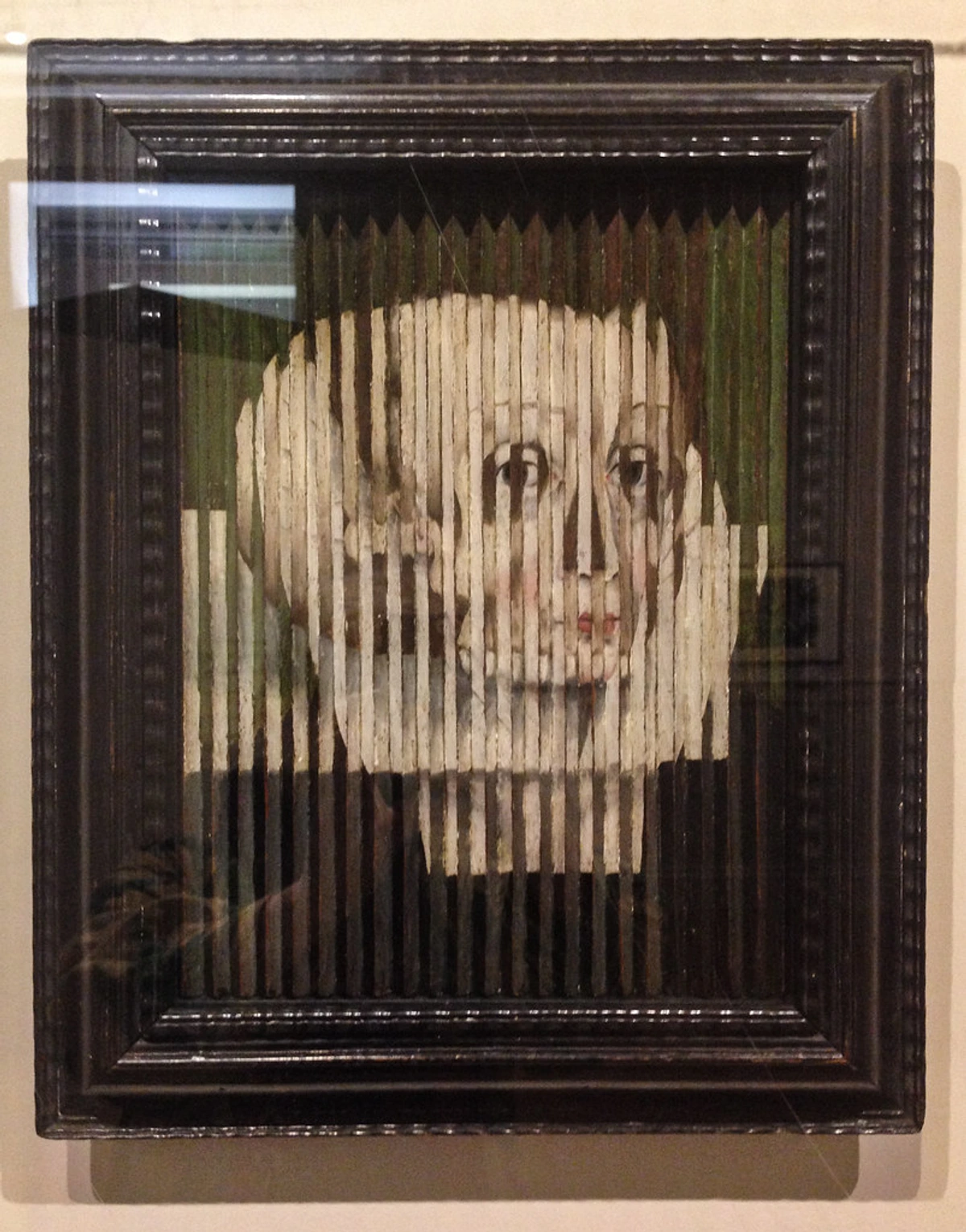
Related to these explorations is the fascinating technique of anamorphosis. This is a deliberately distorted projection or perspective that requires the viewer to occupy a specific vantage point, or use a special device, to reconstitute the image. From other perspectives, the image appears stretched, squashed, or otherwise unreadable. A famous historical example is Hans Holbein the Younger's The Ambassadors, which features a dramatically elongated skull at the bottom that only resolves into a clear image when viewed from an extreme oblique angle. Anamorphosis takes the principle of foreshortening—that what you see is different from what you know—to its most extreme and playful conclusion, making the viewer an active participant in creating the illusion.
Beyond the Canvas: Foreshortening in Photography, Film, and Design
Beyond the canvas, foreshortening principles are everywhere. In photography and film, extreme wide-angle lenses or dramatic camera angles can create powerful foreshortening effects, making close objects loom large and distant ones recede quickly, intensifying drama or scale. This is often achieved through forced perspective, a photographic technique that manipulates visual perception to make objects appear further away, closer, larger, or smaller than they actually are. Think of an iconic shot from The Lord of the Rings where a hobbit looks tiny next to a wizard, or a superhero flying towards the viewer, their outstretched fist dramatically enlarged. Even in stage design, cleverly angled sets and props use foreshortening to create illusions of greater depth on a shallow stage. In architecture, grand hallways or domes often use subtly foreshortened elements to enhance the feeling of vastness or height, drawing the eye upwards or inwards. And in graphic design and product visualization, foreshortening is key to conveying scale, form, and usability, making items pop off the page in advertisements or clearly illustrating their three-dimensional nature in technical drawings. It really is a universal visual principle.
The contemporary art market, while embracing new technologies like digital art and even, somewhat controversially, NFTs, still fundamentally relies on these timeless principles of visual perception. While NFTs are a new way to own art, they don't change how the art itself creates an illusion of depth or form; that still comes back to the artist's understanding of principles like foreshortening, whether in a digital sculpture or a painting.
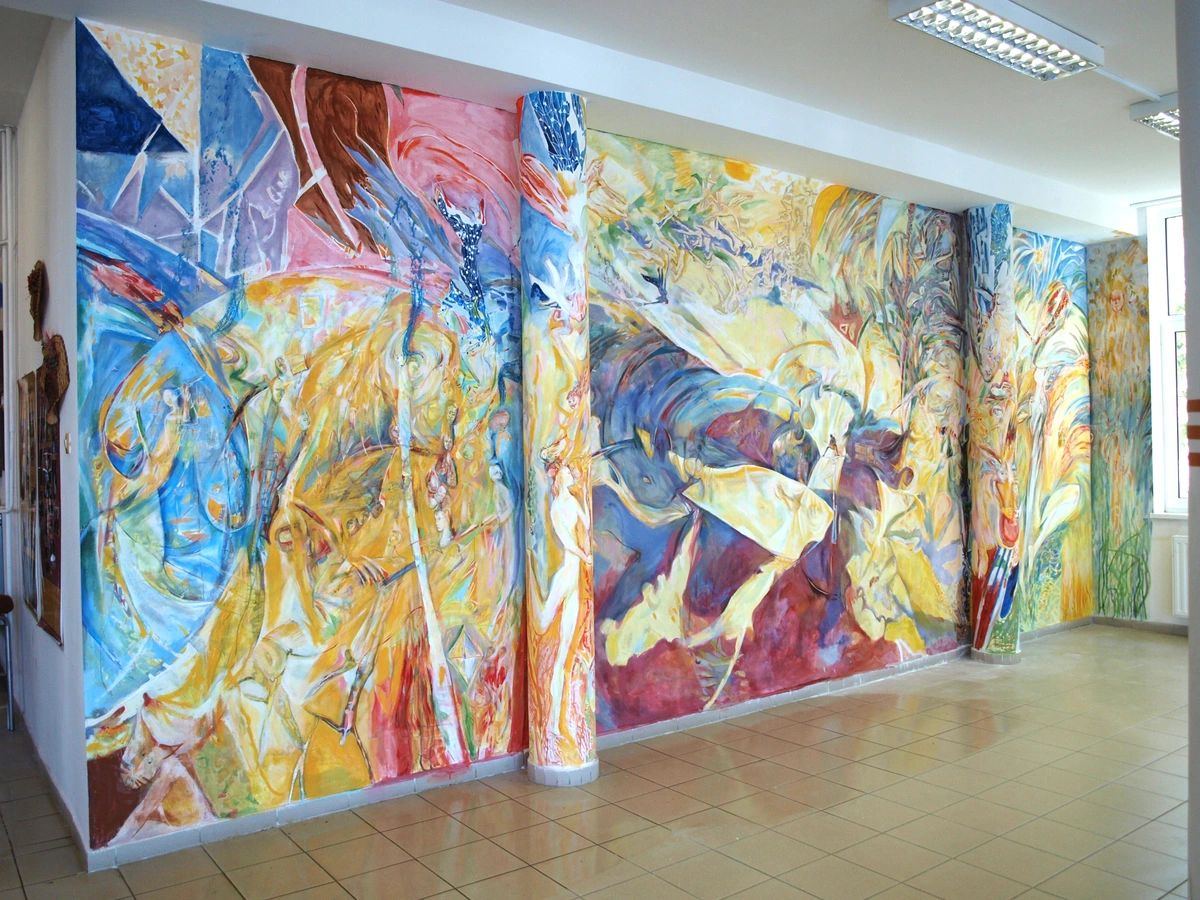
This abstract manipulation of space is something I often explore in my own work. My contemporary, colorful, and often abstract pieces, with their geometric forms, overlapping planes, and vibrant colors, are deeply informed by these principles. They create a powerful, dynamic illusion of depth and movement, inviting the viewer to look beyond the immediate surface. The way I layer bold hues and allow light to play across the textures in my work often mimics the visual compression and expansion that foreshortening achieves, transforming flatness into a perceived vastness, a question I often explore in my own art for sale. It asks the same question foreshortening does: how does our eye interpret flatness as vastness? Perhaps you'll even experience it firsthand during a visit to our museum in 's-Hertogenbosch.








Key Takeaways on Foreshortening
- It's about Perception, Not Knowledge: Foreshortening depicts objects as the eye sees them from an oblique angle, not as the mind knows their true dimensions. It's a crucial visual illusion, compelling the viewer to engage with the subjective reality of the artwork.
- Essential for Depth & Dynamism: It's a crucial technique for creating convincing three-dimensional volume, dynamic movement, rendering volume, and realistic recession in art. It makes flat images feel alive and tangible.
- Creates Physicality and Tactility: When mastered, foreshortening imbues rendered forms with a tangible, almost touchable presence, making figures and objects feel solid and occupying real space within the artwork.
- Historical Impact: Revolutionary in the Renaissance, it became a cornerstone for realism and emotional impact in subsequent art movements, profoundly influencing artistic perspective and changing the course of Western art.
- Requires Practice: Mastering foreshortening demands diligent observation, a solid understanding of perspective and anatomy, and consistent practice to overcome the brain's natural tendency to flatten forms. It's an ongoing journey to refine your drawing techniques and visual literacy.
FAQ: Your Questions on Foreshortening Answered
General Understanding & Definitions
Q: Is foreshortening the same as perspective? A: They are closely related but distinct. Perspective is the broader system used to create the illusion of depth on a flat surface, often involving a horizon line and vanishing points for an entire scene. Think of it as the architectural blueprint for a whole city, setting the overall artistic perspective. Foreshortening is a specific technique within perspective, dealing with how individual objects or parts of objects appear compressed and distorted when viewed at an angle. It's like how a specific building or even just a window within that city appears when you look at it from an oblique angle, contributing to the overall perspective of the scene. So, while all foreshortened objects contribute to perspective, not all perspective involves extreme foreshortening, but all convincing foreshortening relies on the principles of perspective.
Q: What's the difference between foreshortening and simply drawing something smaller? A: This is a common and important misconception! Simply drawing something smaller implies it's further away, maintaining its original proportions and shape. Foreshortening, however, refers to a distortion or compression of an object's actual form due to being viewed at an oblique angle, making it appear shorter and often wider than its true dimensions. Imagine two identical cars. One is far away but facing you directly – it just looks small. The other is close but angled sharply away, its rear bumper appearing huge and its length compressed – that's foreshortening. A foreshortened object might be quite close, but because it's angled away or towards you, it appears much shorter and thicker than its true dimensions. It's about how the form itself is compressed and distorted, not just its overall size reducing due to distance.
Q: What are the key visual cues that signal foreshortening to the viewer? A: The main cues include diminishing size (objects angled away appear shorter and thicker, not just smaller due to distance), converging lines (parallel lines on an object seem to meet at a point as they recede), distortion of form (objects appear compressed or wider than their actual dimensions due to the oblique angle – e.g., a circle becoming an ellipse, a square becoming a trapezoid), and overlapping elements (nearer objects block parts of farther ones). These elements work together to trick the eye into perceiving spatial depth and three-dimensionality.
Q: How does foreshortening differ from anamorphosis? A: Foreshortening depicts objects as they naturally appear compressed from an oblique viewpoint, creating a realistic sense of depth in a standard two-dimensional image. Anamorphosis, on the other hand, deliberately distorts an image so severely that it only appears correct—or un-distorted—when viewed from a very specific, extreme angle or with a special mirror/lens. It's an intentional and often playful exaggeration of foreshortening for a hidden or surprise effect, pushing the boundaries of perception far beyond natural observation. It forces the viewer to become an active participant in 'unscrambling' the image.
Challenges & Practice
Q: Why is foreshortening considered difficult? A: It's challenging because it requires artists to draw what they see, not what they know to be true about an object's actual length. Our brains tend to correct for the optical illusion in real life, making it counter-intuitive to represent accurately on paper. It demands strong observational skills, a deep understanding of form and anatomy, and the ability to temporarily override your brain's "common sense" about an object's true dimensions. It's truly a test of how well you can trust your eyes over your preconceived notions, an essential element of figure drawing and a constant battle against mental habits.
Q: How can I practice foreshortening in my own sketches? A: Start simple! Draw everyday objects like a book, a mug, or your own hand from extreme angles. Try placing an object directly in front of you and drawing it from that perspective. Use gesture drawing to capture the overall flow, then block in forms with simple geometric shapes (cubes, cylinders) before adding detail. Practice drawing the negative space around the object, and use a mirror for self-portraits from unusual angles. The key is constant observation, trusting what you actually perceive, and consistently refining your drawing techniques. Don't be afraid to make mistakes – every 'failed' drawing is a lesson learned.
Q: Are there ethical considerations when using extreme foreshortening? A: While foreshortening is a powerful artistic tool, extreme or exaggerated use, especially in depicting people, could potentially be used to misrepresent or distort a subject in a negative or misleading way, similar to how certain camera angles can distort. For example, it could make a figure appear overly aggressive, weak, or grotesque if not handled with sensitivity and clear artistic intent. As artists, we wield considerable power in how we present reality, and it's always worth considering the impact of our choices on the viewer's perception and interpretation, especially when pushing the boundaries of optical realism.
Beyond Traditional Art
Q: Can foreshortening be used in non-representational art? A: Absolutely! While the term traditionally applies to realistic depiction, the principles of creating apparent depth through the manipulation of size, overlap, and convergence of lines are fundamental to all art forms that aim for spatial illusion, even abstract ones. Overlapping shapes, varying line weights, and color gradients in abstract art can mimic the effect of foreshortening, guiding the eye and creating a sense of recession or projection without depicting literal objects. It's all about playing with how the eye interprets space, creating spatial depth in new and exciting ways.
Q: What are some everyday examples of foreshortening I might see? A: You encounter it constantly! Think of a car speeding away – its back appears to shrink rapidly while its width remains substantial. A bird flying overhead with its wings stretched towards you will show dramatically foreshortened wings. Or even your own legs when you look down at your feet – they appear shorter and thicker than their actual length because you’re viewing them at an oblique angle. A long tunnel, a stack of plates viewed from the side, or even the rings of Saturn from a certain angle all demonstrate foreshortening. It’s all around us, influencing how we perceive depth and spatial dynamics in our daily lives.
Concluding Thoughts: The Enduring Power of Foreshortening
Foreshortening, to me, is more than just a technical trick; it's a testament to the artist's relentless pursuit of illusion, a profound way to imbue a static image with life, movement, and emotional resonance. It's about convincing our brains that a flat surface is a window into another dimension, inviting us to step into the artwork. Whether it’s Mantegna's dramatic Christ, the powerful figures in Michelangelo's ceiling, or a contemporary abstract piece playing with geometric recession, the core idea remains: transforming the flat into the fantastic. This enduring power of illusion, of bridging the gap between objective truth and subjective perception, is what I strive to capture in my own work. When you explore my art for sale, you'll find that even in the abstract forms and vibrant colors, the principles of foreshortening—the manipulation of perceived depth, the compression of form, the guiding of the eye, and the interplay of light and shadow to create illusory volume—are subtly at play, inviting you to experience vastness and dynamism. It asks the same question foreshortening does: how does our eye interpret flatness as vastness? Perhaps you'll even experience it firsthand during a visit to our museum in 's-Hertogenbosch, where these same visual principles continue to captivate. So, next time you look at a painting, or even just your own hand, try to see the foreshortening – it’s everywhere, and it’s truly magical.