Kazimir Malevich & Suprematism: The Ultimate Guide to Pure Form and Non-Objective Art
Dive deep into Kazimir Malevich's Suprematism: uncover the iconic Black Square, the 'zero of form,' its radical philosophy of pure feeling, and profound impact on abstraction and modern design. Your definitive guide to this revolutionary art movement.

Kazimir Malevich & Suprematism: The Ultimate Guide to Pure Form and Non-Objective Art
Let's be honest: sometimes, when I encounter a seemingly simple black square on a white canvas, or a dynamic arrangement of basic geometric shapes, my first thought might be, "Is that it?" Or even, "I could do that!" And you know what? That's a completely natural reaction. But what if that 'simplicity' isn't simple at all? What if it's the culmination of decades of intense searching, a radical philosophy, a quest for something utterly pure? That, my friends, is where we find Kazimir Malevich and his revolutionary movement, Suprematism. It's not just about what you see, but the profound why behind it – a journey into the very essence of art, stripping away the clutter of representation to find a profound sense of purity. My own artistic philosophy is deeply committed to this pursuit of the essential, the universal, the unfiltered emotional response, a journey I'm still on, and one I'm excited to share with you as we explore how a simple square became a cosmic void, a manifesto for a new world, and a benchmark for understanding abstraction itself. You can learn more about my personal artistic vision in why i paint abstract: my personal philosophy and artistic vision.
This article isn't just a history lesson; it’s your definitive guide to understanding Malevich's groundbreaking ideas, to unraveling the philosophical underpinnings of Suprematism, and to discovering the unexpected freedom that lies in the abstract. We'll delve into Malevich's early life, the birth of Suprematism with the iconic Black Square, its underlying philosophy, its visual language, its lasting influence, and what it all means for us as viewers today.
Who Was Kazimir Malevich? A Revolutionary Forged in Tumult
To understand Suprematism, we first need to understand the revolutionary mind behind it. Born in Ukraine in 1879, Kazimir Malevich’s early artistic journey was, like many revolutionaries, a whirlwind of influences. He dabbled in Impressionism, Symbolism, and even a distinctly Russian form of Neo-Primitivism. He drew inspiration from folk art (like lubok prints) and the spiritual resonance of traditional icon painting and peasant life. These indigenous forms, with their direct emotional impact, simplified imagery, and often symbolic narratives, offered him a glimpse into an art unburdened by academic realism and the illusion of three-dimensional space. Consider lubok prints with their bold outlines, flat, vibrant colors, and often humorous or moralistic tales – they represented a direct, unmediated form of communication, a rejection of pictorial depth. Traditional icons, on the other hand, functioned as sacred conduits, not mere representations, facilitating a spiritual connection through their simplified, stylized forms and two-dimensional flatness. This foundational understanding, especially the rejection of illusionism and the embrace of spiritual immediacy, would profoundly shape his later quest for an art of pure feeling. Russia at the turn of the 20th century was a crucible of political and social upheaval, a fertile ground for radical new ideas, not just in politics, but in art. Artists felt a profound urge to break free from the past, to invent a future, echoing the revolutionary fervor that would soon engulf the nation.
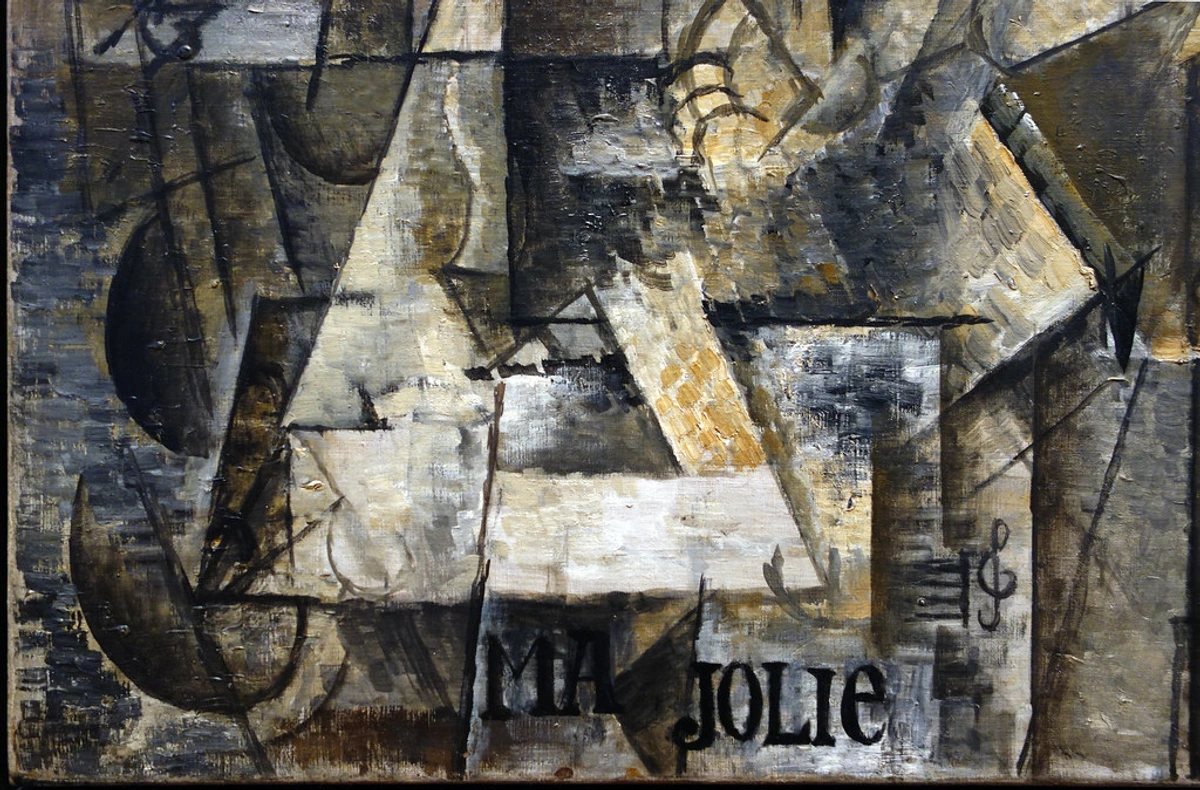
His early career saw him grappling with the emerging avant-garde movements, particularly Cubism and Futurism. He was fascinated by the fragmentation of form, the depiction of movement, and the breaking away from traditional perspectives – that singular, fixed viewpoint that had dominated Western art for centuries. You can delve deeper into these pivotal shifts in our ultimate guide to Cubism and the broader history of abstract art. I remember trying to wrap my head around Cubism myself, how it shattered reality only to reassemble it from multiple angles, and how Futurism tried to capture the blur of speed. Malevich didn't just imitate; he pushed these ideas further, dissolving recognizable forms to explore pure abstraction, moving beyond the mere fragmentation of objects towards a complete dissolution of the recognizable world. In early Cubo-Futurist works like his dynamic The Knife Grinder (1912), you can see the object still present but already fractured, multiplied, and infused with motion. The visual elements of overlapping and intersecting planes, the simultaneous depiction of multiple facets of the grinder, and the radiating lines indicating speed and force clearly demonstrate his move towards complete non-objectivity, casting off the literal appearance of things in favor of an energetic, fragmented representation of reality.
He even experimented with Zaum, a "transrational language" developed by Russian Futurists like Velimir Khlebnikov and Aleksei Kruchenykh. Zaum aimed to communicate pure emotion and sound beyond the constraints of logic and traditional words. For Malevich, Zaum was more than linguistic play; it was an attempt to tap into a primal, pre-rational understanding, a direct communication of inner feeling unburdened by everyday meaning. Think of a guttural cry or an abstract sound that conveys emotion without specific words. The visual experiments of Zaum poetry, where typography and visual arrangement played a key role, further hinted at a language that bypassed intellect and spoke directly to the soul – a clear precursor to his visual language of pure form. He sought a higher reality, an art that transcended the everyday, the material, the chaotic human experience, to touch upon a universal truth. This intense exploration set the stage for Suprematism, a revolutionary leap towards pure abstraction. It was as if he was searching for a visual equivalent to Zaum, a form that spoke directly to the soul, bypassing intellect and all objective representation, much like music transcends specific words to convey profound emotion.
The Iconic Black Square: A Manifesto of Pure Possibility and the Zero of Form
What happens when art sheds all pretense of representing the world? What remains when everything recognizable is removed? If there’s one work that embodies Suprematism and Malevich’s radical philosophy, it’s his Black Square (1915). A black square on a white background. Simple, right? But its simplicity is its profound power. When I first encountered it, I admit, my internal dialogue was probably a mix of "Is that it?" and "Seriously?" This piece doesn't just challenge; it demolishes everything we think art should be, forcing us to ask: what is art, really, when stripped to its absolute core? It’s a deliberate provocation, an invitation to confront the very essence of painting, a true starting pistol for modern art, an unapologetic anti-establishment statement.
Its creation was surprisingly precise; Malevich used a thin application of black oil paint on a white canvas, striving for a flat, untextured surface. However, close examination reveals subtle cracks and imperfections, hinting at the human hand and the physical reality of the paint itself. This wasn't just a painting; it was a manifesto. Malevich proclaimed it the "zero of form," not as an end point, but as the generative point from which all future art would originate – an ultimate blank slate of the soul. He displayed it in the "icon corner" of the room at the 0.10 Last Futurist Exhibition in Petrograd, traditionally where a religious icon would hang in a Russian home – a deliberate and provocative act that underscored its spiritual significance as a new, secular icon. It was a cosmic void, representing infinite space and the primordial state before creation, a symbol of liberation from the old world of representational art. Critics and the public were, understandably, bewildered and often outraged. Many dismissed it as a joke or an insult, failing to grasp the profound philosophical statement Malevich was making. They saw a simple square, but Malevich offered a window to a new spiritual reality. For an artist like myself, deeply invested in decoding abstract art, Malevich's square is a benchmark, a challenge to find purity and meaning in the seemingly simple. It's a true gateway to pure feeling, a primal scream of artistic freedom.
The Black Square forces you to confront the very essence of painting: surface, color, shape. It’s not about what it is, but that it is. It demands introspection, stripping away external references to focus solely on internal experience. It’s an invitation to meditate on pure existence. It asks you to feel, not to recognize. This is why it’s not merely a geometric shape, but a profound philosophical statement and a call to a new mode of perception.
Malevich continued to explore this concept, creating several versions of the Black Square over the years, each one a further philosophical inquiry. His White on White (c. 1918) pushed the "zero of form" even further, a white square subtly offset on a white ground, exploring the nuances of light, texture, and pure presence. The subtle interplay of matte and glossy whites, achieved through careful paint application and variations in medium, invited viewers to perceive almost imperceptible shifts in form and space, challenging the very limits of perception and reinforcing the nuances within the void. This was a radical experiment in monochrome, demonstrating that even within apparent emptiness, a profound aesthetic and spiritual experience could unfold.
Then came the Suprematist Composition: Airplane Flying (1915), a dynamic arrangement of geometric shapes that seemed to defy gravity and float in cosmic space, perfectly embodying his vision of art liberated from earthly constraints. Here, bold primary colors (often red, black, and yellow) arranged diagonally against the white background created an intense sense of upward motion and boundless energy. Even later, he revisited his iconic square with Black Square on Black Background (c. 1923), exploring the subtle interplay of matte and glossy black, a philosophical deepening of the void concept, proving that even in apparent monochrome, infinite variations of feeling and form could exist. This evolution showed his relentless search for the absolute, a true "spiritual awakening" on canvas, perpetually redefining the starting line for art.
Decoding Suprematism: The Philosophy of Pure Feeling and Non-Objectivity
In 1915, Malevich unveiled Suprematism to the world, a movement that quite literally aimed for the 'supremacy of pure feeling in art.' Forget landscapes, portraits, still lifes. Forget storytelling, allegory, or even recognizable objects. Suprematism demanded a complete break from representation – it was about achieving an absolute art, free from the burden of the objective world, what Malevich called "non-objective" art. While abstract art might distort reality, non-objective art, like Suprematism, completely rejects it. It aims to create its own reality, a pure, autonomous entity where meaning is derived solely from the interaction of forms, colors, and space, rather than any external reference. For me, that "zero of form" isn't an absence or a void, but a beginning, a pristine, essential state where pure emotion can finally speak and new meaning can emerge, almost like the silence before a profound musical composition. It represents the ultimate liberation of art from having to imitate anything at all, a canvas cleared for new spiritual truths. What does that sound like to you?
Imagine staring at a canvas and being asked to feel, not to recognize. To experience the dynamic tension of a square, the infinite possibilities of a circle, the stark finality of a line. It’s a proposition that invites us to stretch our perception, isn't it? Especially for those of us (and I count myself among them!) who are wired to seek meaning, to categorize, to tell stories. But Malevich urged us to let go, to surrender to the pure sensation. He believed that certain basic geometric forms, stripped of all associative meaning, could directly convey profound spiritual and emotional states. For example, a perfect circle, unburdened by any earthly reference, might evoke a sense of infinity, unity, or cosmic harmony due to its fundamental simplicity and geometric perfection. A triangle could signify spiritual ascent or dynamic tension, while a cross could represent universal connection. These pure forms, for Malevich, were universal elements, carrying an inherent spiritual energy derived from their primal presence. It was like tuning into a primal frequency, a cosmic connection, much in the way some mystics sought universal truths through simplified symbols. The forms themselves, unburdened by narrative, become a direct conduit for inner experience. This search for universal truths through simplified symbols was deeply aligned with contemporary esoteric philosophies like Theosophy, which Malevich studied, informing his belief in geometric forms as conduits to higher realities and the concept of a hierarchical universe with higher planes of existence.
Suprematism’s core tenets can be boiled down to a few powerful ideas, each a radical departure from traditional art, forming a coherent philosophy for non-objective creation:
Tenet  | Core Idea | Malevich's Vision/Intention | Impact/Significance |
|---|---|---|---|
| Non-Objectivity | Complete rejection of real-world representation. | Art should be its own reality, a pure, autonomous entity free from imitation, allowing meaning to arise solely from the artwork itself. | Liberated art from narrative and external reference, demanding a new, introspective engagement from the viewer, a revolutionary break with tradition. The Black Square is its quintessential expression. |
| Geometric Abstraction | The universe's purest form expressed through basic shapes. | Squares, circles, triangles, and crosses were not decorative but universal elements with inherent spiritual energy, capable of building a new cosmic order and evoking primal truths. | Established a universal visual language, transcending cultural and linguistic barriers, enabling direct communication of profound spiritual and emotional states, aiming for a higher consciousness. |
| Primacy of Pure Feeling | Art's true purpose is to convey emotional/spiritual sensation. | The form itself, stripped bare of associative meaning, becomes the feeling, a direct, unmediated communication bypassing the intellect and speaking directly to the soul. | Shifted focus from recognition to raw experience, making the viewer an active participant in meaning-making through introspection. This is the ultimate goal of the "zero of form." |
| Dynamic Composition | Forms arranged in boundless white space, suggesting movement. | To create a 'cosmic ballet,' a microcosm of the universe where forms interact in harmonious flux, unbound by earthly gravity and physics, expressing universal energy. | Introduced a revolutionary sense of spatial freedom and movement within the canvas, turning static compositions into energetic fields of pure abstraction, meticulously balanced for optical tension. |
| The Fourth Dimension (White Space) | White background is not empty, but a crucial conceptual element. | It represents infinity, the void, pure feeling itself – a conceptual space beyond our three-dimensional reality where forms float freely, symbolizing primordial space, unconstrained and absolute, allowing for higher consciousness and spiritual liberation. | Transformed the canvas from a window into a material world to a boundless, spiritual realm, inviting the viewer's mind to expand beyond material constraints and enter a higher state of consciousness. It's the profound silence before a powerful piece of music begins. |

This radical vision fundamentally shifted how we understand abstraction in contemporary art. It’s not just about what you see, but what you feel and think without the crutch of familiarity, forcing a profound internal dialogue. It asks you to enter into a direct, unmediated relationship with the artwork, becoming an active participant in its meaning.
Suprematism's Visual Language: Geometry, Color, and Cosmic Dynamism
While the Black Square is the icon, Suprematism evolved into dynamic compositions of various geometric forms – squares, circles, rectangles, and crosses – floating in boundless white space. As I mentioned, the white wasn't just a background; it was the 'fourth dimension,' representing infinity, the void, the pure feeling itself – a canvas for cosmic energy where forms could exist in pure spiritual freedom. Malevich chose white to symbolize the absolute void, the spiritual realm, and the ultimate liberation from the material world, a blank slate for new creation, a truly revolutionary concept for a canvas, challenging traditional notions of pictorial space.
Malevich used a limited palette, often primary colors (red, yellow, blue), black, and white. Each color and shape carried profound symbolic weight, contributing to the overall spiritual impact, an aspect often explored in the psychology of color in abstract art. For instance, red often signified revolutionary energy, passion, or cosmic light, embodying a powerful, active force, as vividly seen in the bold red rectangle of Red Square: Painterly Realism of a Peasant Woman in Two Dimensions (1915). This work's title, seemingly at odds with its abstract form, was Malevich's defiant statement: the red rectangle, not a depiction of a peasant, is the raw, unmediated energy and spiritual essence of the peasant, echoing the fervor of the Bolshevik revolution itself, stripped of all representational clutter. Black represented the void or the "zero of form," a point of ultimate concentration and mystery. Yellow frequently hinted at cosmic energy, the sun, or a divine radiance, while blue could suggest infinity, the heavens, or a boundless atmosphere. A triangle, with its sharp edges and upward thrust, could symbolize spiritual ascent or dynamic tension, and the cross, universal connection. These weren't rigid rules, but deeply felt associations and Malevich's personal interpretations of their spiritual resonance. He was doing this on a grand, cosmic scale, creating a language of color that transcended the everyday.
The way these elements interacted – their scale, placement, and implied movement – created a sense of cosmic ballet. This isn't random; it's a meticulously crafted visual language designed to evoke sensation, to make you feel the universal energy. Malevich sought to express the "cosmic order" through these carefully balanced, floating compositions, suggesting a universe in harmonious flux. The deliberate arrangement of contrasting shapes and colors across the white void, often diagonally, created optical tension and a dynamic equilibrium that felt unbound by gravity. If you’re curious about how artists achieve this, our guide on the definitive guide to composition in abstract art offers some fantastic insights. And for a deeper dive into how individual shapes carry meaning, check out the symbolism of geometric shapes in abstract art. It's amazing how a few simple shapes, when imbued with such intentionality, can conjure such vast feelings and profound cosmic connection. It makes you realize that even simple elements can hold immense power, echoing the profound silence before a great symphony.
Beyond the Canvas: Suprematism's Far-Reaching Influence and Political Suppression
Suprematism, though relatively short-lived as a pure movement due to intense political pressures in Russia, had an immense and lasting impact. The profound philosophical and aesthetic shifts Malevich introduced rippled through the 20th century. It wasn't just about painting; Malevich envisioned a new world shaped by Suprematist principles – architecture, furniture, even clothing. He saw art as a force for societal transformation, for building a utopian future based on pure form and spiritual harmony, aligning his artistic revolution with the broader social revolution unfolding around him. His vision was deeply spiritual, influenced by esoteric philosophies like Theosophy, which introduced ideas of higher planes of reality, universal interconnectedness, and the spiritual power of symbols – concepts that dovetailed perfectly with Malevich's quest for pure feeling and absolute forms.
His concept of the "Arkitekton" – abstract architectural models built from geometric blocks – demonstrated his belief that Suprematist principles could redefine living spaces. These were not mere studies but were conceived as free-standing, three-dimensional sculptures, embodying the dynamic tension and spatial freedom of his paintings. Imagine bold, minimalist structures rising from the earth, their forms interacting purely as planes and volumes in space, creating an environment that elevates the spirit through pure aesthetic experience – prototypes for a new, non-objective architecture, fostering a new, pure human experience in urban environments, liberated from purely functional constraints. They were a vision of a world where every building was a piece of pure art.
Malevich's teaching career, notably at the Vitebsk Art School (where he founded the UNOVIS group, an acronym for "Affirmers of the New Art," in 1919), left a profound mark. UNOVIS, with members like El Lissitzky, Ilya Chashnik, and Nikolai Suetin, actively pursued the integration of Suprematist forms into all aspects of life – from painting and sculpture to design, typography, theater, and propaganda. For example, in 1920, UNOVIS members collaborated on the visual design of the opera Victory Over the Sun, translating Suprematist geometric forms into dynamic stage sets and costumes that blurred the lines between art and life, creating a truly revolutionary aesthetic experience. They produced revolutionary propaganda posters with bold geometric forms, designed utilitarian objects (like teacups and textiles) with Suprematist aesthetics, and even experimented with clothing, truly building a new visual culture from the ground up. Their manifestos advocated for collective artistic action and the creation of a universal art for the new society, pushing students towards radical abstraction and spiritual exploration, advocating for art as a means of collective spiritual emancipation, a blueprint for a utopian future.
The Shadow of Socialist Realism and Its Suppression
However, the political climate in Russia drastically shifted. The initial revolutionary zeal that had briefly embraced avant-garde experimentation soon gave way to the rise of Socialist Realism. This new state-mandated aesthetic, formally institutionalized in the early 1930s, demanded easily digestible, propagandistic art depicting heroic workers, idealized leaders, and traditional, optimistic scenes, all serving the clear political goals of the Soviet state. Its core tenets emphasized clarity, accessibility, and a direct promotion of communist ideals, specifically glorifying the proletariat and the triumphs of Soviet labor and leadership through a heroic-realist style with clear narrative, often monumental scale, and idealized figures.
These ideas stood in stark opposition to Suprematism's non-objectivity and focus on individual, pure feeling. Abstract art, deemed "bourgeois," "decadent," "incomprehensible," and dangerously individualistic, was violently suppressed. The Soviet regime feared abstraction precisely because its meaning was open to individual interpretation and not easily controlled by the state. It represented a rejection of the materialist ideology by seeking spiritual truths, and its non-representational nature made it impossible to use for explicit communist propaganda. The avant-garde, initially seen as revolutionary, was now perceived as a threat to the state's control over cultural expression, forcing artists into self-censorship or artistic retreat. Malevich faced immense personal struggles: his exhibitions were shut down, his works confiscated, and he was even briefly imprisoned in 1930 on suspicion of being a German spy. He was forced to abandon his pure abstract style, creating figurative works in an Impressionistic manner during his later years, often with a subtle, defiant inclusion of a black square or cross (e.g., in portraits where a small black square might appear in the background or as a signature, a quiet act of protest). This period of forced artistic retreat stands as a stark reminder of how totalitarian political forces can stifle artistic freedom and expression, a story that still resonates today, echoing in similar suppressions of artistic dissent across the globe.
Timeline of Key Suprematist Events
Year | Event |
|---|---|
| 1879 | Kazimir Malevich born in Kiev, Ukraine. |
| 1912 | Paints The Knife Grinder, a Cubo-Futurist work showing his progression towards fragmentation. |
| 1913 | Collaborates on the Futurist opera Victory Over the Sun, designing costumes and sets that prefigure Suprematism. |
| 1915 | Exhibits Black Square at the 0.10 Last Futurist Exhibition in Petrograd, marking the official birth of Suprematism. Publishes his manifesto From Cubism and Futurism to Suprematism: The New Painterly Realism. |
| c.1918 | Creates White on White, pushing Suprematist principles to a radical extreme. |
| 1919 | Founds the UNOVIS group (Affirmers of the New Art) at the Vitebsk Art School, aiming to apply Suprematist principles across all art forms and daily life. |
| 1927 | Publishes The World as Non-Objectivity (German edition of his theories) and travels to Warsaw and Berlin for exhibitions, introducing Suprematism to a wider European audience. |
| 1930 | Briefly imprisoned by Soviet authorities; faced increasing pressure to conform to Socialist Realism. |
| 1935 | Dies in Leningrad (formerly Petrograd). |
Suprematism's Global Legacy
Despite this suppression and his personal hardships, Suprematism's influence reverberated across Europe and beyond, shaping other movements and artists. While its immediate Western reception was limited due to the Iron Curtain, Malevich's ideas spread through publications and key exhibitions in the 1920s and 30s, profoundly influencing the European avant-garde:
Movement/Artist | Key Shared Principles | Key Philosophical Underpinning (from Suprematism) | Distinguishing Characteristics (from Suprematism) | Direct Link/Inspiration from Suprematism | Example Work |
|---|---|---|---|---|---|
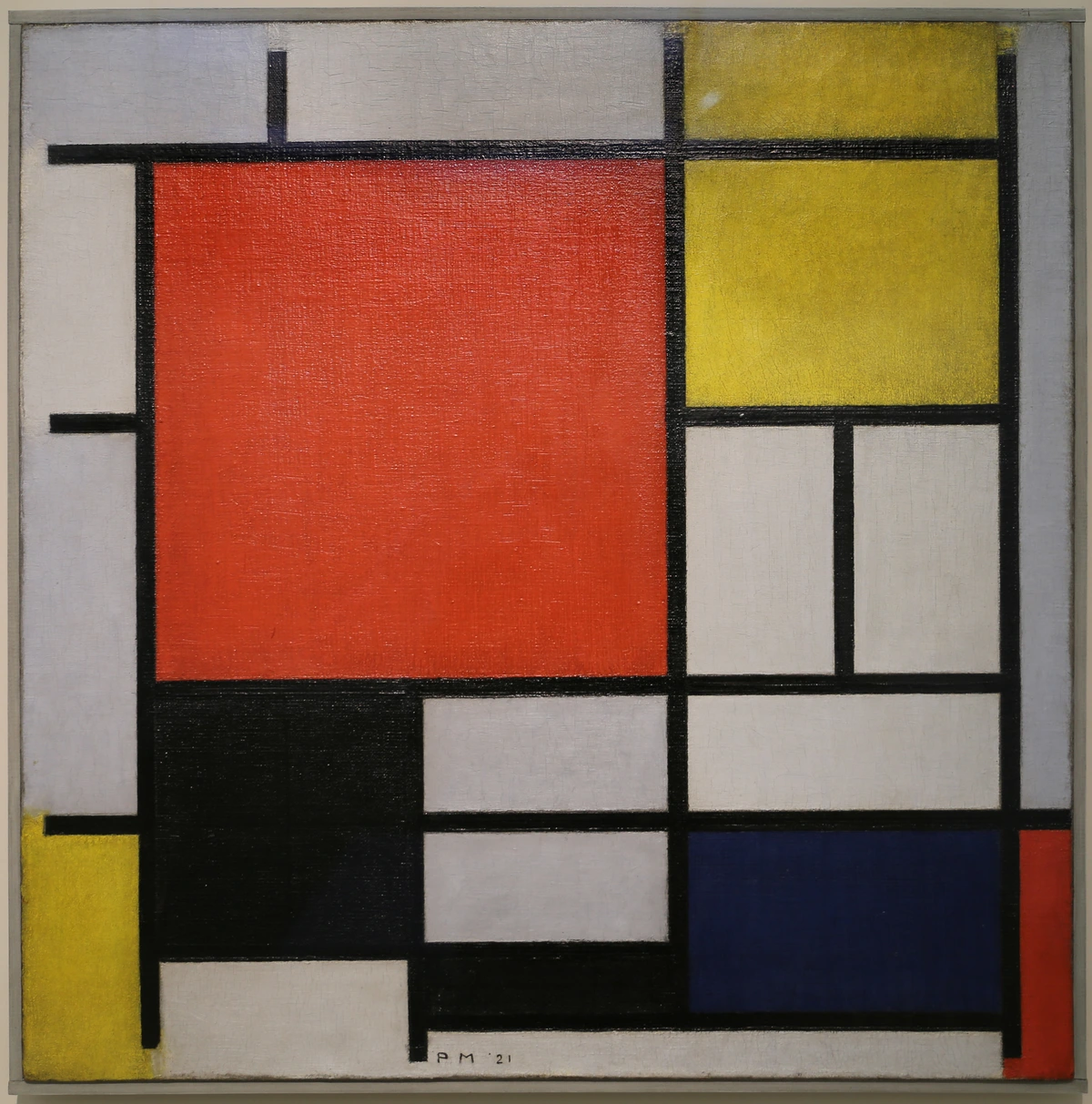
| De Stijl | Geometric purity, primary colors, elemental forms | Quest for universal harmony and spiritual order through elemental geometric forms, aimed at a utopian society. | More rigid grid system, focus on horizontal/vertical lines, rational harmony, often applied to design and architecture; less overtly spiritual, more focused on universal order, with Mondrian's evolution from representational art to pure abstraction mirroring Malevich's journey. | Malevich's emphasis on basic geometric forms and primary colors as universal elements profoundly influenced De Stijl artists like Piet Mondrian, whose own evolution from representational art to pure abstraction mirrored Malevich's trajectory towards the "absolute." | Mondrian's Composition with Red, Blue, and Yellow (1930) |
| Constructivism | Geometric forms, industrial materials, social purpose | Belief in art's capacity to build a new society and embody revolutionary ideals through pure form and rational construction, seeing art as an active force for social change. | Emphasis on utility, engineering, and serving the revolution through functional art and mass production, often rejecting art for art's sake and prioritizing industrial aesthetics. | The abstract geometric language and revolutionary spirit of Suprematism provided a visual vocabulary and dynamism for Constructivists like El Lissitzky (whose "Proun" works directly bridged Suprematism's spatial concepts with architectural designs), who applied these forms to functional objects, architecture, and propaganda, aiming for practical societal transformation. | Tatlin's Monument to the Third International (1919-20) |
| Bauhaus School | Integration of art, craft, and technology; functionalism | An underlying belief in the universal language of pure form for designing a more harmonious world, with a strong focus on practical application and a holistic approach to design. | Holistic approach to design, applied arts, and education, prioritizing functional utility and mass production over pure feeling, merging art with daily life through industrial methods. | While less overtly spiritual, the Bauhaus embraced the geometric abstraction and non-objective forms pioneered by Suprematism, applying them to industrial design and architecture, emphasizing functional beauty and clarity, deriving functional design from essential forms and promoting a new universal aesthetic. | Marianne Brandt's Tea Infuser (1924) |
| Minimalism | Reduction to essential forms, purity, focus on objecthood | The ultimate pursuit of essentialism and direct presence, echoing Malevich's 'zero of form' in stripping away all extraneous elements and focusing on the art object itself as a starting point. | Less spiritual, more focused on the viewer's perception of the object and the space it occupies; removal of the artist's hand, often seeking impersonal objectivity, using industrial materials and direct physical presence. Philosophically, Minimalism is often more secular and empirical. | The radical reduction to elementary forms and the exploration of pure presence in Malevich's Black Square can be seen as a conceptual precursor to Minimalism's quest for essentialism, objecthood, and the direct engagement with form and space, particularly the idea of presenting a pure, unadulterated form, divorced from narrative. | Donald Judd's Untitled (Stack) (1967) |
| Op Art | Geometric forms, optical illusions, visual sensation | The belief in art's ability to create a direct, unmediated visual experience, bypassing narrative and tapping into primal perception, often through dynamic visual interplay. | Focus on optical effects, movement, and perception, aiming to manipulate the viewer's eye through systematic visual illusions and sensory experience. | Suprematism's dynamic compositions and use of geometric forms to evoke movement and sensation laid a groundwork for Op Art's systematic exploration of visual perception and optical illusions, even if the underlying philosophy differed. This can be further explored in our guide to Victor Vasarely, the father of Op Art. | Victor Vasarely's Vega-Pal (1969) |
The impact of Suprematism can be seen in the Dutch movement De Stijl, led by Piet Mondrian. While distinct, both shared a focus on geometric purity and primary colors, though Mondrian's grid system was far more rigid, seeking rational harmony rather than cosmic dynamism. He sought a different kind of balance, a universal order expressed through precise orthogonal lines. Even much later, artists exploring optical illusions, like Victor Vasarely, echoed Malevich's interest in pure visual sensation, albeit with different philosophical underpinnings. Its legacy also profoundly influenced modern graphic design and visual communication, where the power of simple geometric forms to convey complex ideas is a cornerstone. It truly shows how a singular, radical vision can ripple through decades of artistic evolution and permeate various aspects of our visual culture, continually inspiring new interpretations of the ultimate guide to abstract art movements.
The Viewer's Role: Engaging with the Non-Objective
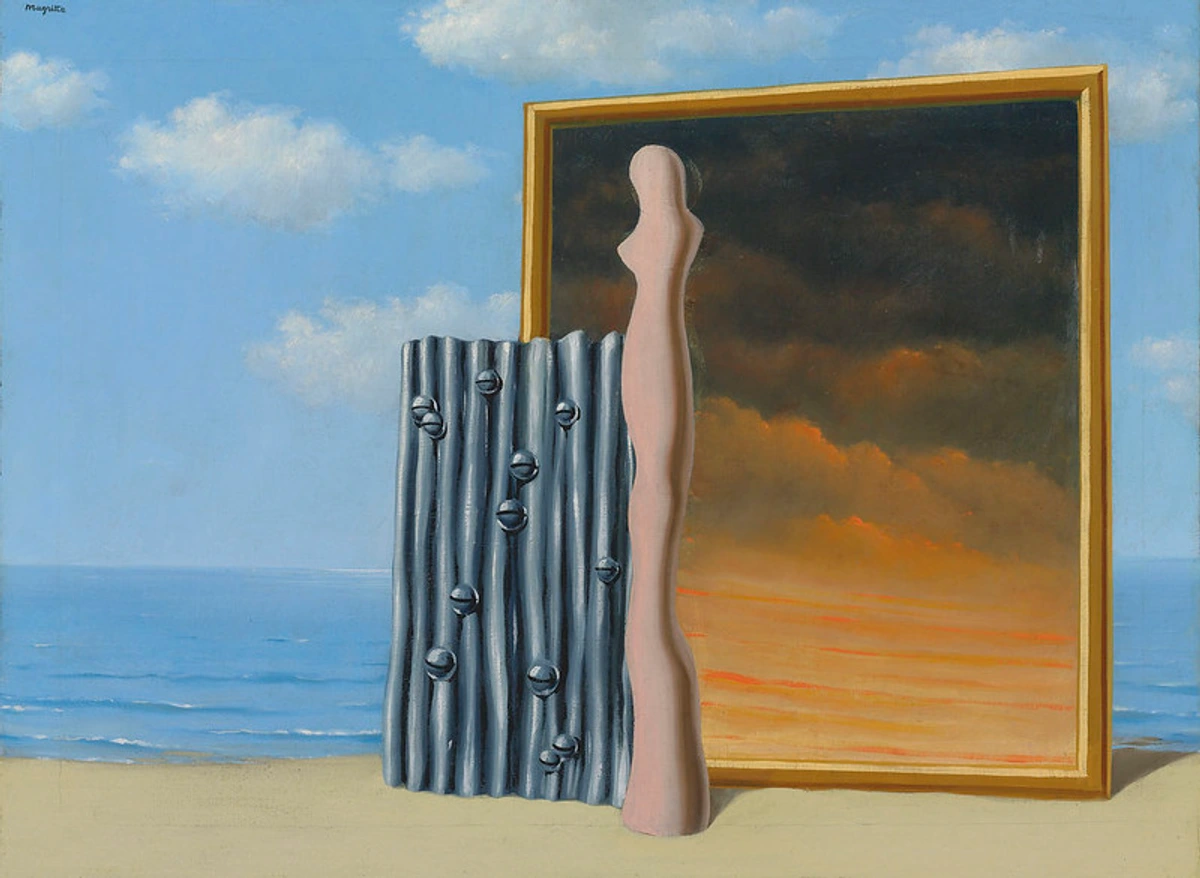
One of the most profound aspects of Suprematism, and indeed much non-objective abstract art, is the demand it places on the viewer. When you remove all recognizable objects, the art stops telling you a story in a conventional sense. Instead, it invites you to participate in the creation of meaning. For me, that's where the real magic happens. It’s no longer about identifying a tree or a person; it's about what the interaction of shapes, colors, and space does to your internal world. What sensations arise? What thoughts are sparked? Malevich wasn't just painting squares; he was offering a pathway to an inner experience, a direct challenge to your perception. He's asking you to become a co-creator, to bring your own consciousness to the canvas, initiating a profound internal dialogue through emotional resonance, intellectual contemplation, or subconscious associations. To truly engage, I've found it helps to approach the artwork without expectation, letting go of the need to 'understand' and simply allowing yourself to feel the forms and colors.
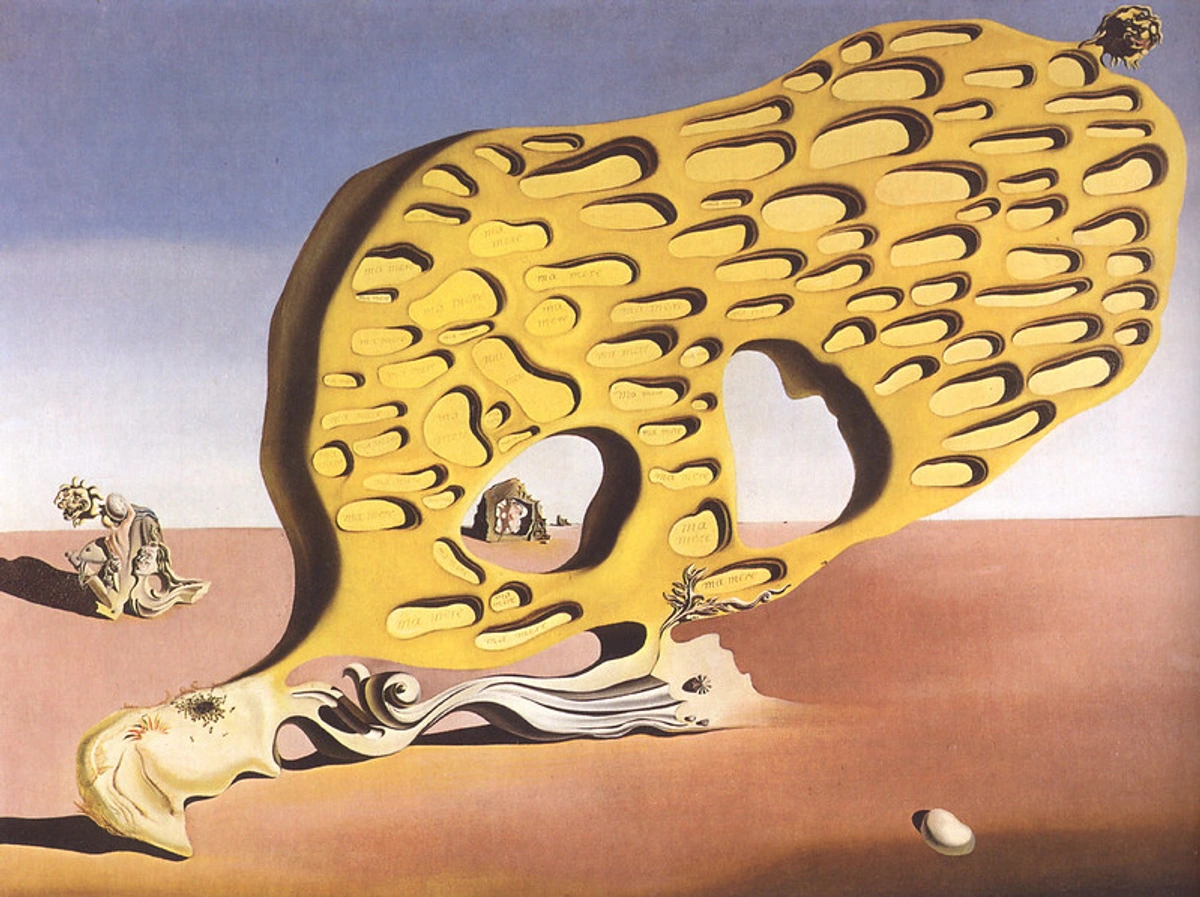
This is why some people find abstract art challenging – it requires an active engagement, a willingness to let go of preconceived notions and open yourself to raw perception. There's no "right" answer or single narrative to decode. Instead, the meaning becomes a dialogue between the artwork and your unique consciousness. It's a highly personal encounter, and that's precisely its strength. It empowers you to be a co-creator, to discover your own "pure feeling" in response to the artist's pure form. The value, in this context, truly lies in the connection and the internal dialogue, rather than just possession.
So, when you stand before a Malevich, don't ask "What is it?" Ask "What does it make me feel?" What does it unlock in your own mind? The answers are yours to find.
Frequently Asked Questions (FAQ) about Kazimir Malevich and Suprematism
I get a lot of questions about abstract art, and Malevich often comes up as a key figure. It’s natural to have questions about such a radical approach! This section aims to clarify common queries and deepen your understanding of Suprematism's fundamental ideas.
What is the core idea behind Suprematism?
At its heart, Suprematism is about the "supremacy of pure feeling in art." It's a movement that completely rejected depicting real-world objects in favor of basic geometric shapes (squares, circles, lines, triangles, crosses) to express universal spiritual and emotional sensations. Malevich believed art should be free from any connection to the objective world, aiming for a "zero of form" where pure, unmediated feeling is paramount – not an absence, but a foundational state for new meaning and an ultimate expression of artistic freedom.
Why is Malevich's Black Square so important?
The Black Square is a pivotal artwork because Malevich declared it the "zero of form" – a radical starting point for all future art, free from past conventions. He deliberately placed it in the "icon corner" of the 0.10 Last Futurist Exhibition, a spot traditionally reserved for religious icons in Russian homes, elevating it to a new spiritual symbol. It's a powerful statement about the essence of painting itself, a cosmic void and spiritual icon that demands pure introspection rather than recognition. Its revolutionary nature challenged the very definition of art at its time, forcing a re-evaluation of what painting could be and initiating a new era of spiritual abstraction. It's a true starting pistol for modern art.
What's the difference between 'abstract' and 'non-objective' art in the context of Suprematism?
This is a fantastic and crucial distinction! While all non-objective art is abstract, not all abstract art is non-objective. Abstract art often takes inspiration from observable reality and then simplifies, distorts, or exaggerates it (think Cubism still showing fractured objects). Non-objective art, like Suprematism, makes a complete break from depicting any recognizable objects or figures from the real world. It aims to create its own reality, a pure, autonomous entity where meaning is derived solely from the interaction of forms, colors, and space, rather than any external reference. Malevich pushed for this absolute non-objectivity to achieve the "zero of form" – an art truly liberated from earthbound representation and able to communicate pure feeling directly.
Why did Malevich use basic geometric shapes?
Malevich used basic geometric shapes (squares, circles, triangles, crosses, rectangles) because he believed they were the purest, most universal visual elements, stripped of all everyday associative meaning. For him, these forms carried inherent spiritual energy and could directly convey profound spiritual and emotional states, acting as conduits to higher realities. They were the building blocks of a new cosmic order, allowing art to transcend the material world and speak directly to the soul.
What is the significance of the white space in Suprematist paintings?
In Suprematism, the white background is far from empty; Malevich considered it the "fourth dimension" – representing infinity, the cosmic void, and pure feeling itself. It's a conceptual space beyond our three-dimensional reality where geometric forms float freely, symbolizing primordial space, unconstrained and absolute. This white void is crucial for allowing the forms to evoke a sense of spiritual liberation and higher consciousness, acting as a canvas for boundless energy and pure aesthetic experience.
How did Suprematism influence other art movements and architecture?
Suprematism had a profound impact across the 20th century. Its emphasis on geometric abstraction and non-objectivity directly influenced movements like De Stijl (Piet Mondrian), Constructivism, and the Bauhaus School in their pursuit of new aesthetic and functional forms. Malevich's concept of the "Arkitekton" – abstract geometric architectural models – laid the theoretical groundwork for a non-objective architecture, advocating for buildings as pure forms rather than functional enclosures. It paved the way for future explorations in abstract art, including Minimalism and Op Art, by proving the expressive power of pure form and challenging artists to move beyond mere representation. Its principles continue to resonate in contemporary design and visual culture, constantly reminding us of art's capacity to transcend the material world.
Was Suprematism a political movement?
While Suprematism arose during a period of intense political revolution in Russia, and Malevich himself initially aligned his utopian artistic vision with the revolutionary spirit, it was primarily a philosophical and aesthetic movement rather than an explicitly political one. Malevich believed his art could contribute to a harmonious, new society through spiritual evolution. However, its non-objective and individualistic nature made it distinct from the later, state-mandated Socialist Realism. Unlike some other avant-garde movements (like parts of Constructivism, which explicitly served the state), Suprematism championed a universal, spiritual art that transcended temporal politics. This ultimately led to its suppression by the Soviet regime, as it was deemed "bourgeois," "incomprehensible," and dangerously individualistic, stifling its direct political impact and forcing Malevich into artistic retreat. So, while not political by its own definition, it became highly politicized by external forces, a powerful testament to art's ability to challenge authority and spark dialogue.
Who were Malevich's key followers or proponents?
Malevich gathered a dedicated group of students and artists at the Vitebsk Art School, forming the UNOVIS (Affirmers of the New Art) group in 1919. Key members included El Lissitzky, Ilya Chashnik, and Nikolai Suetin. These artists actively propagated Suprematist ideas, applying them to various fields from painting and sculpture to architecture, industrial design, typography, and even theater, striving to integrate pure abstract forms into all aspects of a new, revolutionary society.
A Final Thought: The Enduring Power of Pure Form
Looking at Malevich's work, especially the Black Square, can still be a challenging but deeply rewarding experience. It's a reminder that art doesn't always have to tell a story or show us something familiar. Sometimes, the most profound experiences come from stripping everything away, from engaging with pure form and allowing ourselves to simply feel. That quest for the essential, for the universal emotional response that transcends culture and language – a precursor to later philosophical discussions about art's role in consciousness and perception – is what continues to drive artists like myself. It's about finding that resonance in the seemingly simple, that spark of the infinite in a geometric shape. It’s a testament to art's ability to transcend the material and touch the profound, demonstrating that the "zero of form" is, in fact, an infinite beginning. It is still astonishing how relevant this radical quest for pure feeling remains in our complex, image-saturated world today. The challenge is not to understand it, but to feel it.
If Malevich's radical journey into the 'zero of form' has sparked something in you, an appreciation for the raw power of abstraction, then you might find resonance in my own explorations of pure feeling on canvas. Explore my abstract art collection to see these principles in practice, and perhaps discover your own 'zero of form' within them.