Cubism: Picasso, Braque, and the Revolution of Perception in Modern Art
Unpack Cubism's radical shift with Picasso & Braque. Explore Analytic & Synthetic phases, key influences like Cézanne & African art, and its lasting impact on modern perception, digital design, and contemporary art. A deeply personal journey.

Cubism: Deconstructing Reality, Reassembling Perception with Picasso and Braque
Cubism. The name itself hints at fragmentation, doesn't it? A taking apart, a reassembly. And that's exactly what this revolutionary movement did to art – it dismantled centuries of visual tradition, then presented a startlingly new way to construct reality. I remember the first time I really looked at a Cubist piece, not just glanced. It wasn't just paint on canvas; it felt like a puzzle, a conversation, a challenge. This wasn't merely a style; it was a seismic shift, a re-wiring of how we perceive. It changed the very grammar of visual language, forcing the viewer from a passive observer into an active participant. More profoundly, it challenged the notion of a single, objective reality presented by art. As an artist who grapples with representing multiple dimensions and feelings on a flat surface, I find this early exploration utterly transformative. It paved the way for modern art's relentless questioning of representation and perception, laying the groundwork for movements both abstract and conceptual. And it all began with two minds that seemed to operate as one: Pablo Picasso and Georges Braque.
Understanding Cubism: A Revolution in Perspective
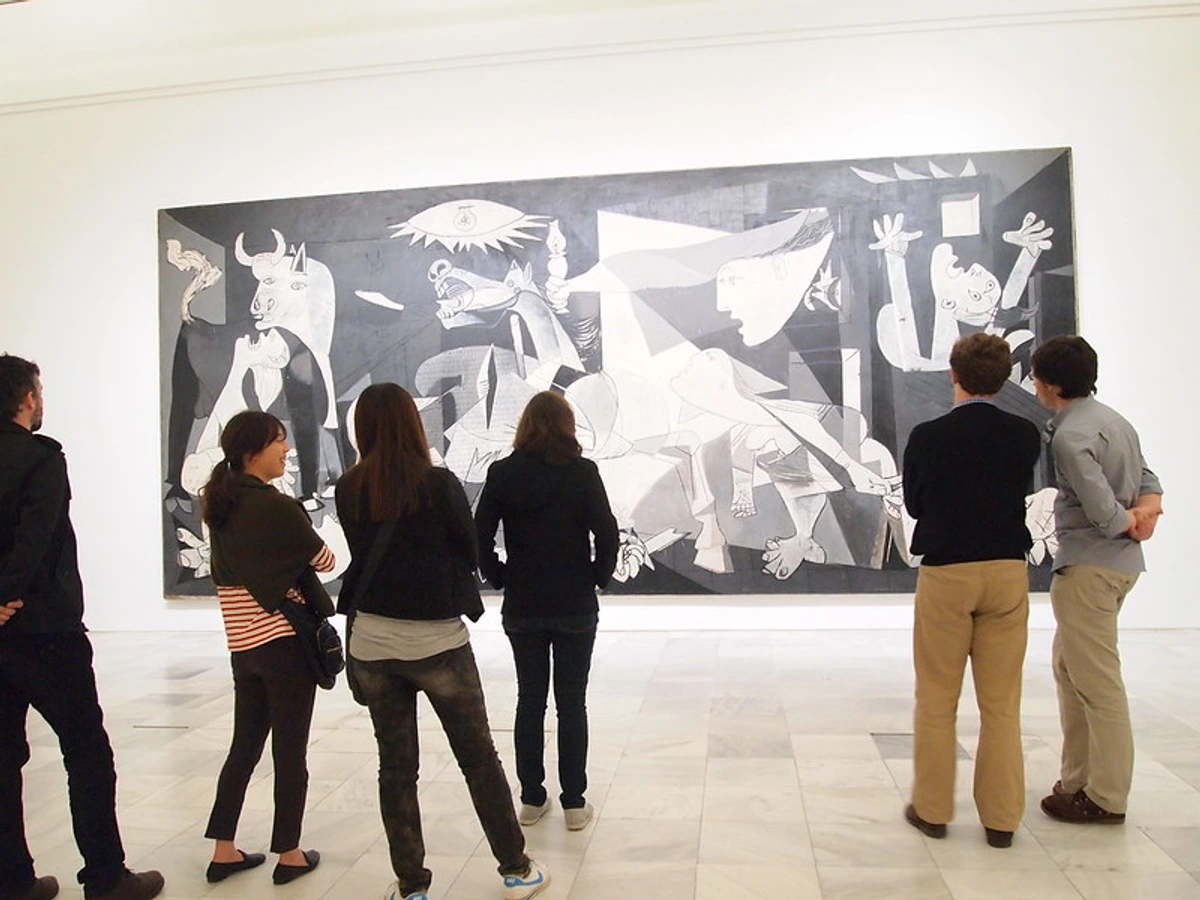
What if reality isn't as solid and singular as we've always been told? For centuries, art had been a meticulous window to a single, 'ideal' reality, meticulously crafted through techniques like linear perspective, guiding our eye to one vanishing point. But what if, like a truly interesting person, reality has multiple facets you need to explore from every angle? Cubism tossed out that single viewpoint, challenging centuries of Western artistic tradition. It proposed a radical alternative: presenting multiple viewpoints of an object simultaneously on a single surface. This approach breaks down objects into geometric forms and reassembles them, allowing for a comprehensive, multi-faceted understanding of the subject, rather than a singular, static impression. This conceptual breakthrough was a direct counterpoint to movements like Impressionism, which focused on fleeting moments and subjective light. Instead, Cubism emphasized the fundamental, enduring structure of reality itself, reflecting a broader early 20th-century intellectual shift towards questioning fixed truths. Think of how Einstein's theory of relativity challenged the notion of absolute simultaneity, suggesting that time and space are relative to the observer; Cubism similarly proposed a relative, multi-perspectival view of objects. New psychological theories exploring subjective experience also mirrored Cubism's attempt to represent not just what is seen, but what is known or felt about an object. And let's not forget the philosophical currents, like Nietzsche's critique of absolute truth or Henri Bergson's concept of 'duration' – the idea that time is a continuous, fluid experience, not a series of discrete moments. These ideas, swirling in the intellectual air of the time, all seemed to whisper: reality is far more complex and relative than we once believed. Moreover, the rise of photography, which could capture reality with unprecedented realism, freed artists to explore what painting could do beyond mere representation, pushing them towards conceptual and structural investigations.
This wasn't just a stylistic choice; it was a profound intellectual endeavor. Imagine for a moment a world where everything you thought was solid and singular suddenly had countless hidden angles and layers. That's the visual adventure Cubism invited us on.
The Architects of Cubism: Picasso, Braque, and Their Influences
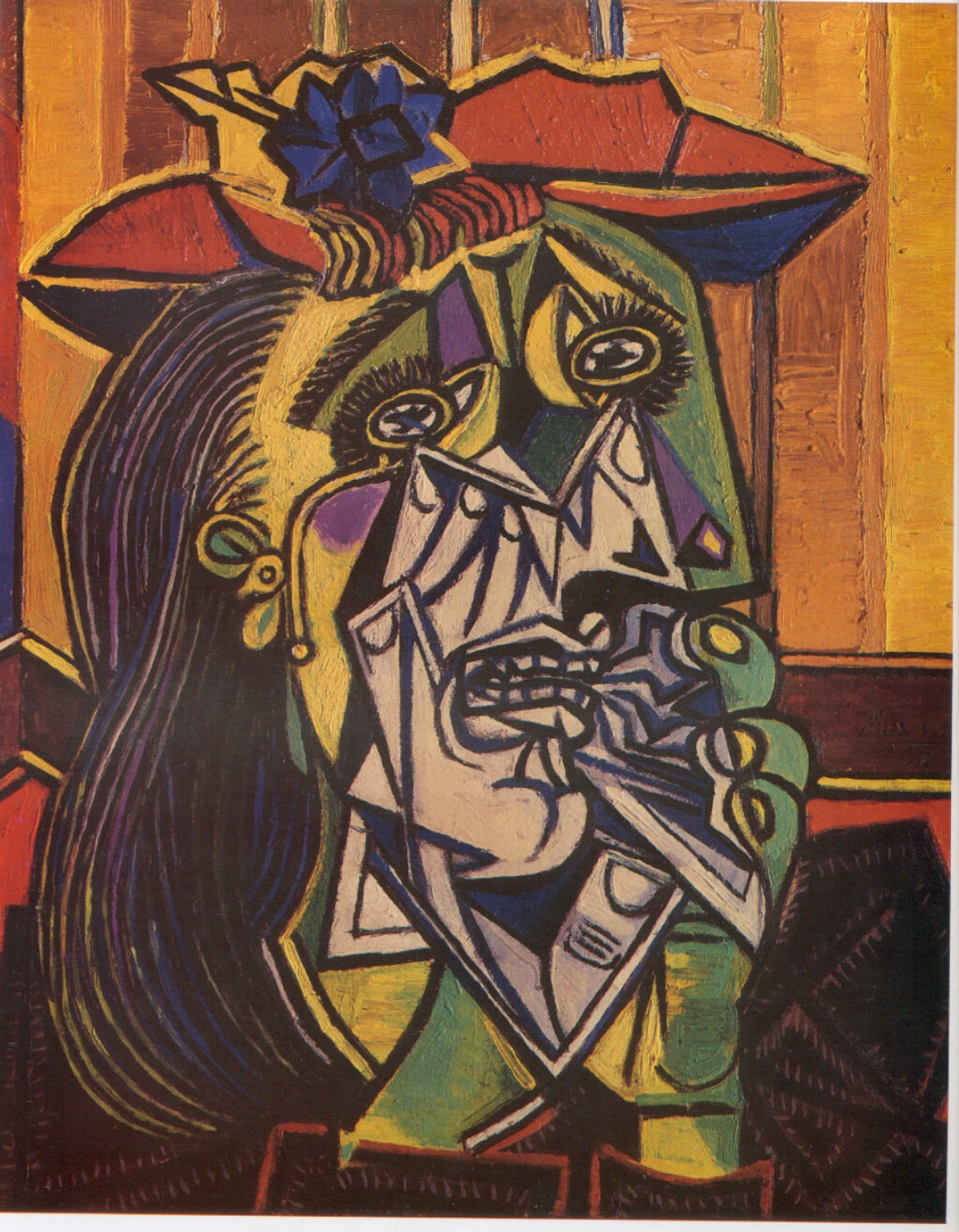
The Cubist revolution was primarily spearheaded by the intense, almost symbiotic collaborative dialogue between the Spanish prodigy Pablo Picasso and the French painter Georges Braque. Between approximately 1907 and 1914, their creative partnership was exceptionally close, marked by constant conversation and shared experimentation. Before their Cubist breakthrough, both artists had explored different paths: Picasso had moved through his melancholic Blue Period and more tender Rose Period, while Braque had been a proponent of Fauvism, characterized by bold, non-naturalistic colors and expressive forms. These foundational experiences, particularly Fauvism's challenge to naturalistic color, paved the way for their subsequent deconstruction of form.
But these groundbreaking ideas, like any good invention, didn't just appear out of thin air. Picasso and Braque were master alchemists, drawing inspiration from fascinating sources:
- Paul Cézanne: The Post-Impressionist master's late work, particularly his landscapes and still lifes, profoundly influenced Cubism. If you've ever felt like the world is just a collection of basic shapes – a cylinder here, a sphere there – then you're starting to think like Cézanne. He famously urged artists to 'treat nature by the cylinder, the sphere, the cone.' But his real genius, the bit that whispered directly to Picasso and Braque, was his concept of passage. Imagine painting an apple. Most artists render a clear, defined edge. Cézanne, however, would subtly blur those boundaries, allowing the red of the apple to bleed into the green of the tablecloth, letting planes of color and form merge almost imperceptibly within the painted surface itself. For instance, a tabletop might not stop abruptly at the edge of a fruit bowl; its surface planes would gently dissolve and recompose into the background wall, hinting at the interconnectedness of all elements. For me, that 'bleeding' of forms isn't just a visual trick; it's a profound statement about interconnectedness, a challenge to strict separation that I often echo in my own attempts to blend distinct visual elements in my art. This wasn't just a trick of the eye; it was a philosophical statement about how objects exist in space, directly anticipating Cubist fragmentation. To understand Cézanne's lasting legacy, consider our ultimate guide to Cubism.
- African and Iberian Tribal Art: What resonated deeply with Picasso, I think, was the sheer, raw power and spiritual potency of African and Iberian sculpture and masks. I've always been drawn to art that doesn't try to be 'pretty' but instead goes straight for emotional truth. These ancient artifacts often employed flattened features, exaggerated forms, and presented multiple angles (like a nose shown frontally on a profile face), not for photographic likeness, but for profound presence and spiritual impact. A striking example is the influence of Fang masks, which often feature simplified, geometric faces with powerful, schematic lines, often with highly stylized eyes or mouths that convey emotion through pure form rather than naturalistic detail. These works spoke of an internal, structural reality, unburdened by Western naturalism, often rooted in concepts of ritual and 'fetishism' (in the anthropological sense of an object imbued with spiritual power). This gave Cubists, in my view, the artistic 'permission' to break free from strict realism and pursue a deeper, more conceptual structural truth, often simplifying forms into geometric components. The boldness and unapologetic distortion of these works felt like a liberation, a blueprint for conveying essence rather than mere appearance. To explore this transformative influence further, consider reading our insights on The Influence of African Art on Modernism: A Curatorial Perspective.
This period of intense collaboration, roughly 1907-1914, is often called the 'heroic phase' of Cubism. And honestly, it feels right. Imagine two brilliant minds, working so closely they almost become one, pushing boundaries daily, making discoveries that would reshape art forever. It was an intellectual adventure, a shared quest, and undoubtedly a time of intense creative breakthroughs and challenges to existing norms. It was also, I imagine, quite exhausting – I can only guess at the sheer number of canvases, sketches, and late-night debates involved! This intense deconstruction of the visible world gave rise to what we now call Analytic Cubism.
Analytic Cubism: Deconstructing the Visual World (circa 1907-1912)
Have you ever looked at an object and felt you were seeing it from multiple angles at once, or trying to understand its fundamental building blocks? Analytic Cubism represents the initial, highly intellectual phase of the movement, characterized by a rigorous deconstruction of the subject. Artists systematically analyzed objects from every conceivable angle, breaking them down into their most basic geometric components and reassembling them on the canvas. The goal was to depict the underlying structure and multiple facets of an object simultaneously. They took objects, usually mundane ones – a guitar, a bottle, a pipe, or a person – and put them through a visual blender. Not to destroy them, but to understand them from every angle. I think of it as trying to understand a complex problem by breaking it down into its smallest components, then seeing how those pieces interact, much like a sculptor might chip away at a block of stone to reveal the essential form within.
Key characteristics include:
- Monochromatic Palette: Works were typically executed in a restricted palette of browns, grays, and blacks. Color was deliberately suppressed to prevent distraction from the exploration of form and structure, forcing the viewer to focus solely on the geometric interplay.
- Fragmented Forms: Objects are shattered into numerous angular, overlapping planes. These fragments often appear translucent or faceted, creating a dense, interlocking surface.
- Multiple Viewpoints: The illusion of seeing an object from several angles simultaneously is central, creating a sense of movement and instability.
- Ambiguity and Merging: Distinctions between forms and their surrounding space often blur. The background and foreground frequently merge, creating a unified, albeit complex, compositional field. This constant ambiguity forces you, the viewer, to actively participate; you're mentally reconstructing, piecing together the visual information like a detective. It’s a bit like trying to solve a visual riddle, and as an artist, I sometimes find myself wrestling with that exact challenge – how much to reveal, and how much to let the viewer actively 'build' the image in their mind, suggesting not just outward appearance but the internal landscape of thought.
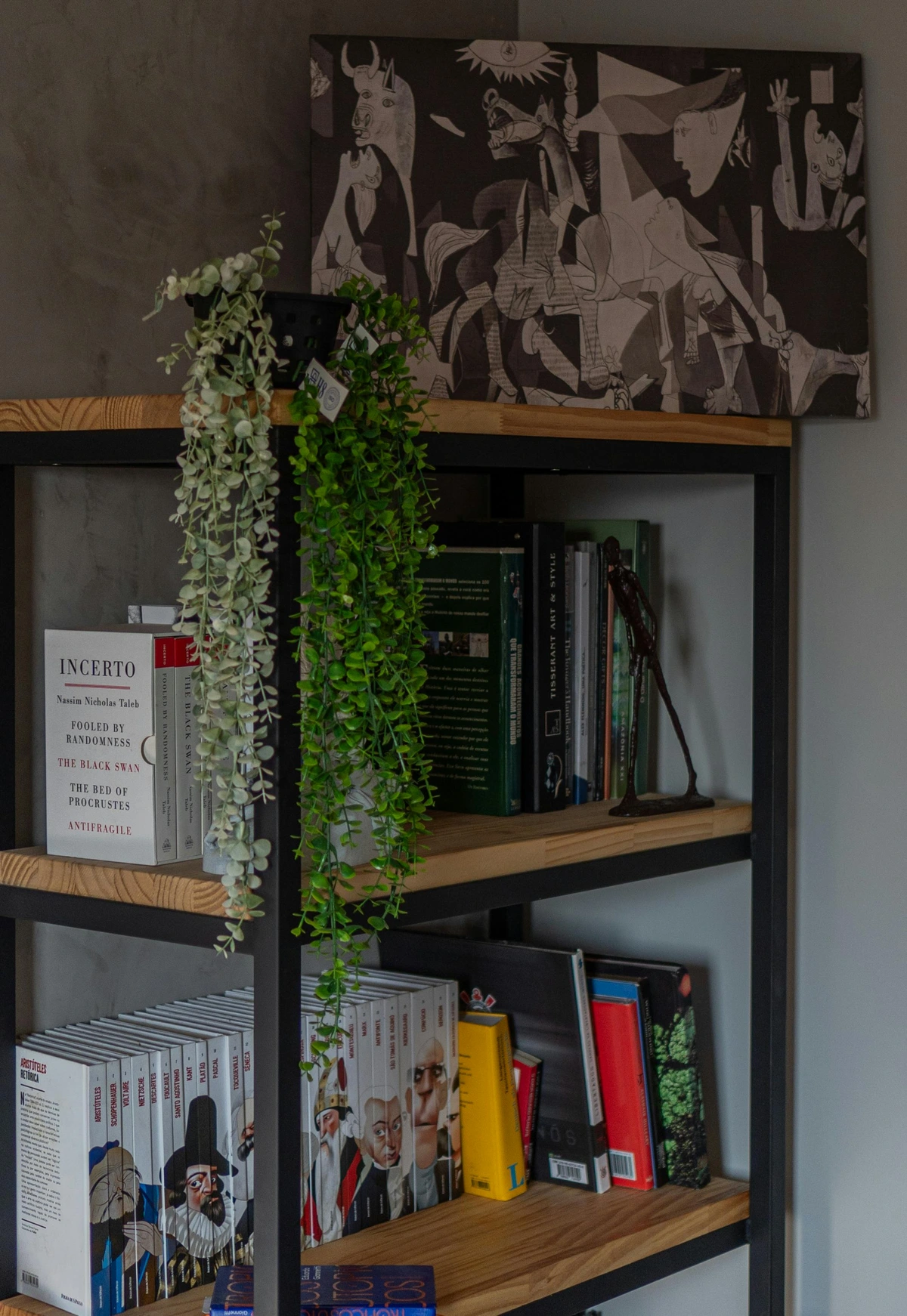
The complexity of Analytic Cubism often requires active engagement from the viewer to mentally reconstruct the fragmented image. Pablo Picasso's Studio with Plaster Head serves as an exemplary work from this period. In this piece, mundane objects are transformed into a complex puzzle of interlocking planes, with the plaster head itself fragmented into geometric facets, reflecting light and shadow from multiple implied sources, challenging us to actively piece together what we're seeing. The forms dissolve into one another, inviting the viewer to discern individual elements within the overall structural unity, almost like watching an idea take physical shape, constantly shifting its definition.
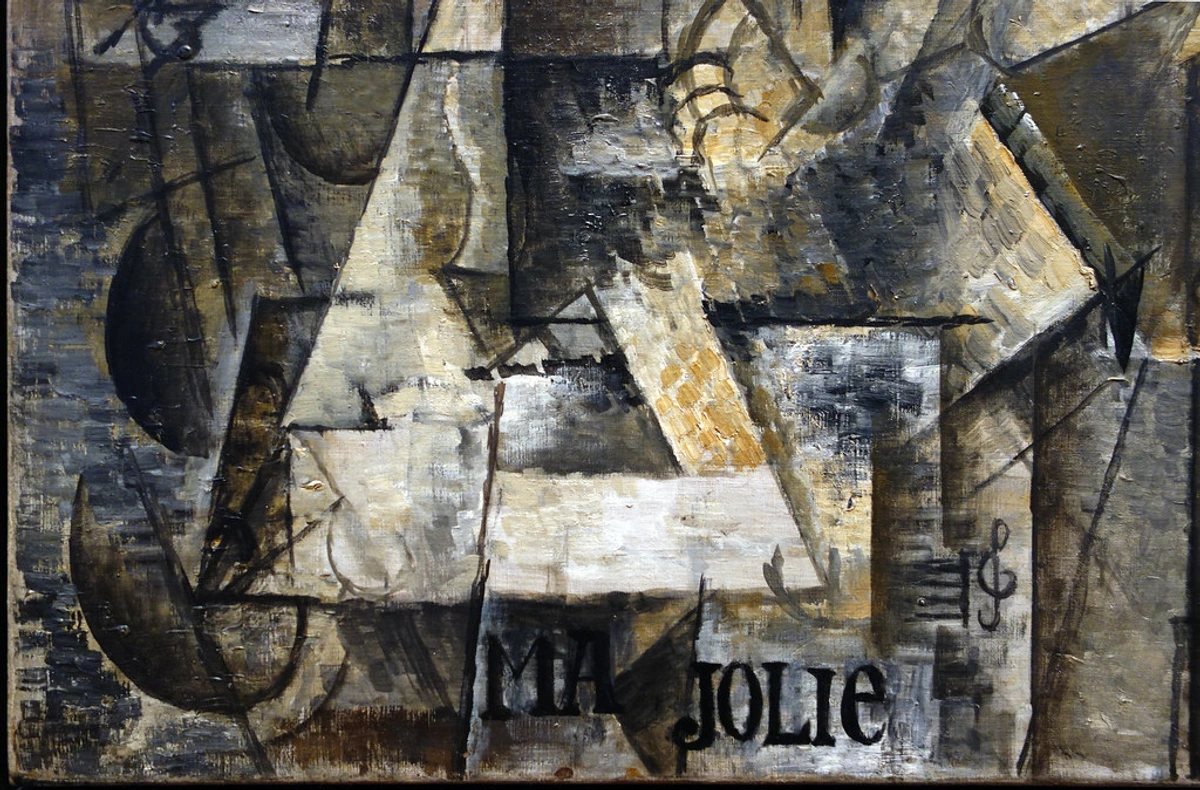
Similarly, Georges Braque's Violin and Candlestick (1910) epitomizes Analytic Cubism through its subtle tonalities and highly fragmented forms, where musical instruments and domestic objects are dissected into an intricate web of interpenetrating planes, challenging the viewer to mentally reconstruct the familiar. Picasso's abstract portraits from this era, such as The Sailor, also demonstrate the application of this deconstruction to the human form. The figure is rendered with bold lines and distorted features, its anatomy fragmented and reassembled to convey not a superficial likeness, but a truth in structure, even if that truth appears fragmented and raw. Artists during this phase primarily utilized oil paint, often applied thickly in a technique akin to impasto to emphasize texture and the physicality of the surface. They also made extensive use of charcoal and pencil, not just for preliminary sketches, but as primary tools for defining the bold, structural lines and geometric forms directly within their compositions, further emphasizing the underlying architectural qualities of their works. This tactile approach gave the fragmented forms a palpable presence, reinforcing their intellectual weight and the raw process of their creation.
Synthetic Cubism: Reassembling and Innovating (circa 1912-1914)
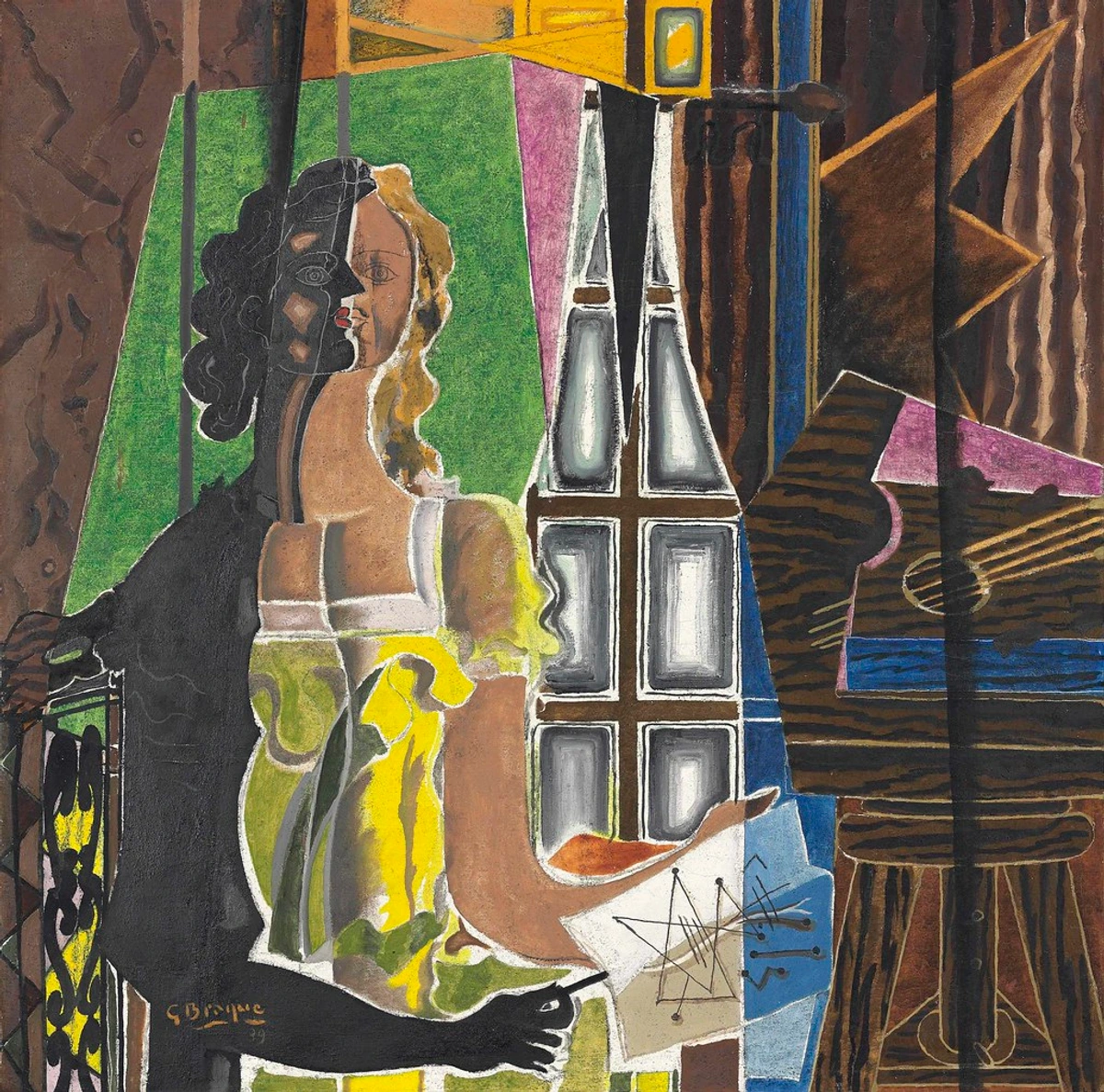
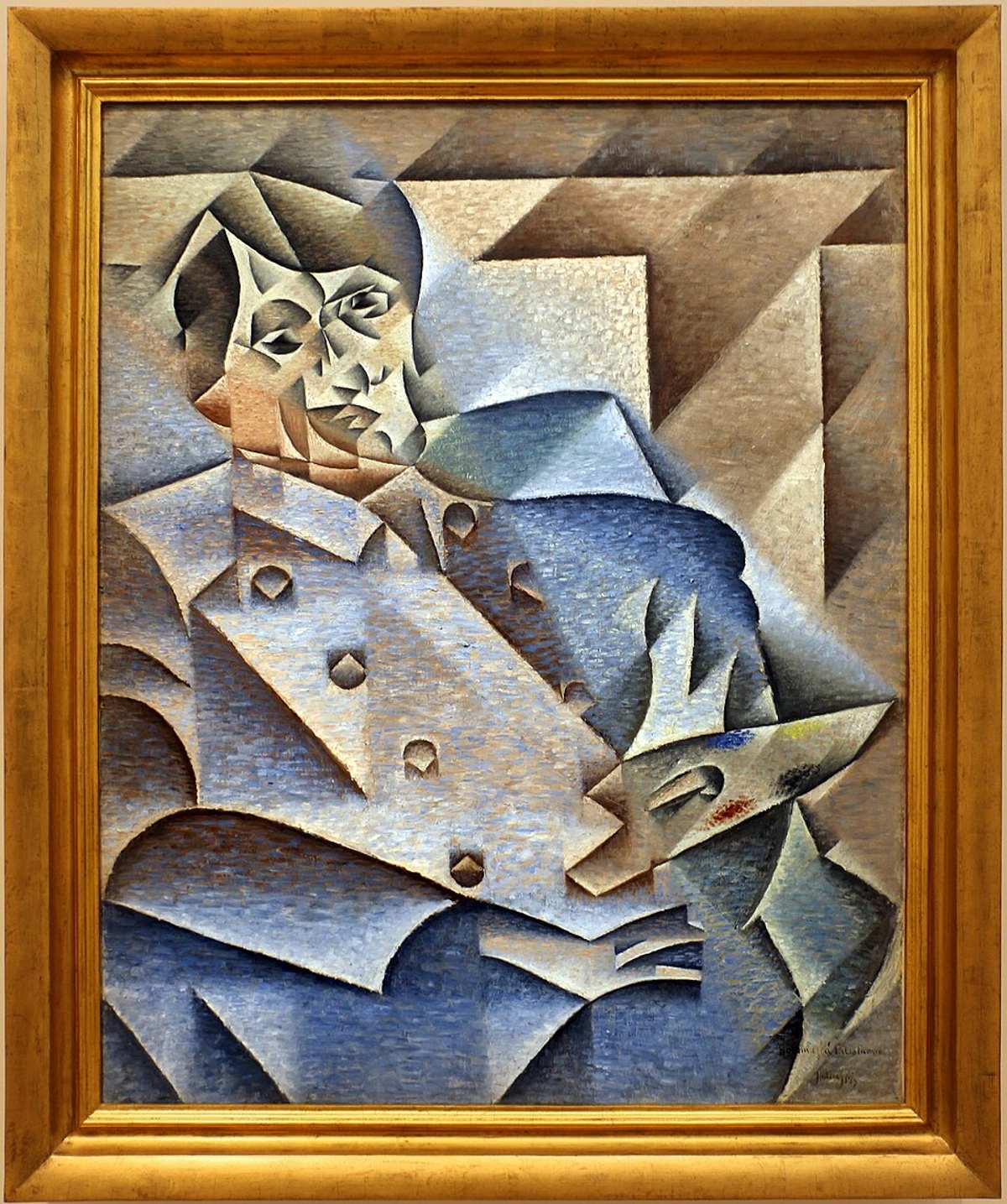
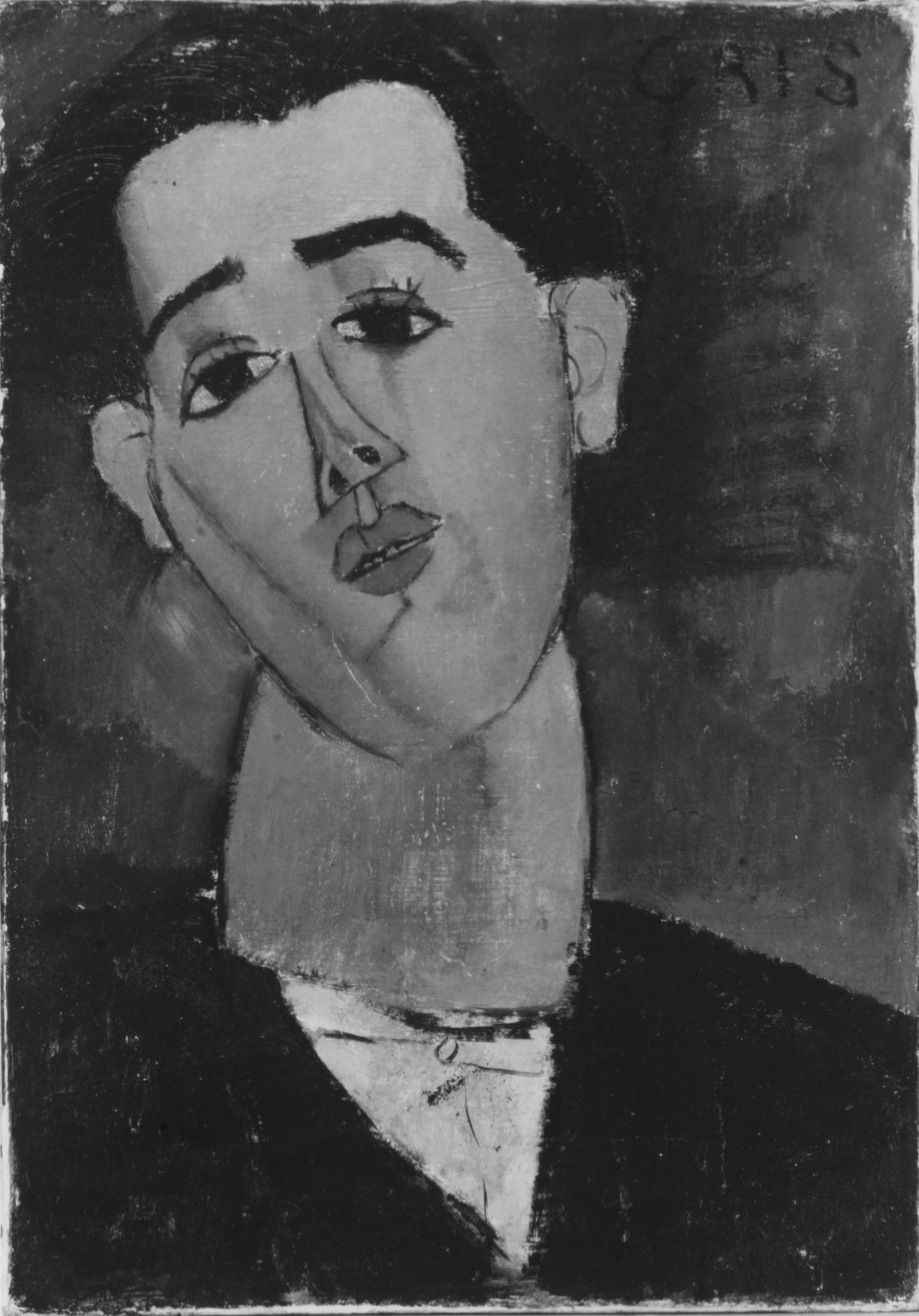
After the intense, cerebral workout of Analytic Cubism, it was almost as if Picasso and Braque, and soon others like the brilliant Juan Gris, needed to breathe a little. This wasn't about breaking things down anymore; it was about building them back up, but with a new understanding. I find Gris's approach particularly fascinating; he brought a unique clarity, almost a mathematical precision, to the 'reassembly' process. His work often feels less like an explosion and more like a carefully constructed, elegant machine, sometimes built on an underlying grid that lends his compositions a rigorous, almost architectural elegance and a sense of predictable, yet inventive, structure. While Picasso and Braque also continued their explorations, incorporating more decorative elements and real-world textures in their own distinct, often more intuitive manner, Gris’s distinct systematic methodology provided a crucial alternative voice. This period saw a shift from strict analysis to a more synthetic approach—meaning forms were built up rather than solely broken down, with the purpose of inventing new, coherent forms and compositions. This phase is generally characterized by greater clarity, bolder forms, and a playful integration of real-world elements.
Key developments of Synthetic Cubism include:
- Introduction of Color: A brighter, more varied palette was reintroduced, moving beyond the monochromatic limitations of Analytic Cubism. Color now served a decorative and compositional purpose, often used flatly.
- Simpler Forms: Shapes became larger, flatter, and bolder, with less intricate fragmentation. Compositions often featured overlapping planes that created a shallow, layered space.
- Collage (Papier Collé): This technique was a groundbreaking innovation. Artists began incorporating real-world materials like newspaper clippings, wallpaper, patterned paper, and even fabric directly onto the canvas. This blurring of lines between art and life, between painting and sculpture, challenged traditional notions of art by asserting the validity of everyday objects as artistic components and fundamentally undermining the traditional hierarchy of art materials. By introducing actual fragments of reality (a newspaper headline, a piece of patterned wallpaper), collage simultaneously highlighted the constructed nature of painting and grounded the abstract forms in a tangible reality. The use of collage introduced an element of "reality" into the abstract, inviting a dialogue between representation and abstraction.
- Text and Numbers: Stenciled letters, words, and numbers were often integrated into compositions, adding another layer of meaning, texture, and a direct connection to reality.
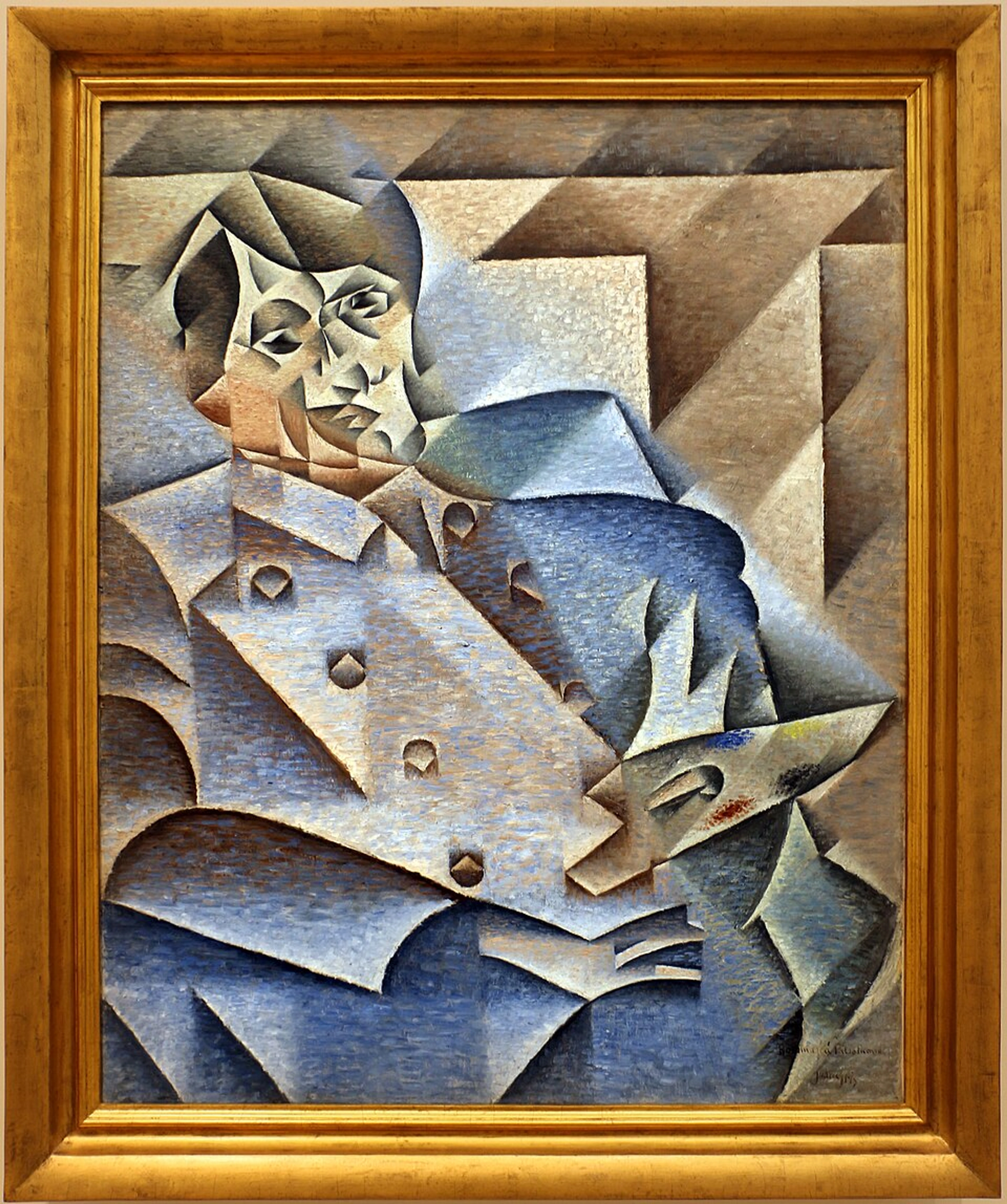
Juan Gris, often regarded as the "third Cubist," was a master of Synthetic Cubism. His work brought a distinct clarity and rigorous logic to this phase, making his compositions feel more structured and less chaotic than some earlier Analytic works. Gris's Still Life with a Bottle of Bordeaux exemplifies the hallmarks of Synthetic Cubism, brilliantly showcasing the use of text fragments and simpler, overlapping geometric planes, all composed with precise formal elegance.
This shift marked a profound conceptual leap, moving Cubism from purely analytical deconstruction to a more inventive, reconstructive process. To further clarify these distinctions and appreciate the evolution, let's look at a direct comparison:
Analytic vs. Synthetic Cubism: A Comparative Overview
Feature  | Analytic Cubism (1907-1912) | Synthetic Cubism (1912-1914) |
|---|---|---|
| Approach | Deconstruction, analysis of form | Reconstruction, building up of forms |
| Primary Goal | To understand an object's deep structure | To invent new forms and compositions |
| Palette | Monochromatic (grays, browns, blacks) | Brighter, more varied colors introduced |
| Form | Highly fragmented, intricate, complex | Simpler, flatter, bolder shapes |
| Techniques | Multiple viewpoints, ambiguity | Collage (papier collé), stenciled letters |
| Readability | Challenging, abstract | Generally more accessible, decorative |
| Key Feeling | Intellectual, structural exploration | Playful, material experimentation |
The Broadening Horizon: Cubism's Enduring Influence
How did a radical movement born from intense collaboration between two artists grow to reshape the entire art world? Cubism didn't stay a secret conversation between two friends for long. Its public debut at exhibitions like the Salon des Indépendants and the Salon d'Automne in Paris, particularly through the works of artists like Albert Gleizes and Jean Metzinger, caused an absolute uproar. Imagine the shock and bewilderment in a world accustomed to traditional realism; it was a scandal, a joke to many, yet undeniably the beginning of a profound dialogue about art's future. While Picasso and Braque pioneered the movement, their ideas quickly spread. Figures like Albert Gleizes and Jean Metzinger were not just practitioners; they were crucial theorists, notably co-authoring the seminal 1912 treatise "Du 'Cubisme'". This work helped codify and disseminate Cubist principles to a wider audience, articulating core ideas such as Cubism being an intellectual art concerned with conceptual truth rather than mere visual illusion, and outlining how artists could achieve a multi-perspectival representation. It wasn't just a duo; it became a chorus. Cubism rapidly disseminated, influencing a generation of artists and sparking numerous offshoots.
Fernand Léger, for instance, took the Cubist toolkit and applied it to the roar of the modern city and the hum of industry. When I look at his work like The City, I don't just see fragmented buildings; I see the dynamism, the clanking gears, the faceless rush of urban life, all built up with a sculptural solidity that feels intensely modern. He achieved this by emphasizing robust, tubular, and machine-like forms, often using bold outlines and block-like sections to convey the mechanical energy and scale of urban environments, rather than the more nuanced fragmentation of early Cubism. Unlike the more introspective, almost analytical deconstruction of Picasso and Braque, Léger used Cubist principles of robust reassembly to convey the force and rhythm of the machine age itself, a grand, monumental vision of the urban experience. His fascination with the mechanical and the monumental scale of urban experience resonated deeply, much like my own intrigue with how fragmented forms can suggest movement and energy in my more abstract pieces.
Beyond Léger, figures like Robert Delaunay and his wife Sonia Delaunay developed Orphism, a vibrant offshoot that retained Cubist geometric forms but prioritized pure abstraction and the interplay of light and color. Unlike Cubism's focus on structural form and often subdued palettes, Orphism embraced dynamic color harmonies and simultaneous contrasts—the optical effect where colors appear more vibrant when placed next to their complementary hues—to create a powerful sense of movement and emotional resonance. Orphism served as a crucial bridge between Cubism's structural innovations and the burgeoning world of abstract art, emphasizing dynamic color harmonies and simultaneous contrasts, paving the way for movements focused entirely on non-representational expression. Its principles deeply influenced subsequent abstract art movements, demonstrating Cubism's foundational role in the evolution of abstract thought. To learn more about this specific bridge to abstraction, check out our article on Orphism: The Colorful Bridge Between Cubism and Abstract Art or explore The Definitive Guide to the History of Abstract Art: Key Movements, Artists, and Evolution.

Cubism's influence also rippled through other avant-garde movements. Early Futurism, for instance, adopted Cubist fragmentation to express speed and dynamism, while Constructivism integrated its geometric deconstruction into functional, socially conscious art. The outbreak of World War I in 1914 significantly disrupted the intense collaborative phase of Cubism, scattering many artists and prompting shifts towards new artistic concerns. For some, the post-war period saw a return to order and classicism, a rejection of fragmentation in favor of more stable forms, even while Cubist lessons in structure remained foundational. The war's stark realities and demand for stability also subtly shifted the focus for many artists, moving them away from purely intellectual deconstruction towards forms that might convey a sense of renewed order or, conversely, the lingering psychological fragmentation of a world turned upside down. Picasso, for instance, moved towards Neoclassicism, while Braque explored new textures and more decorative elements in his post-war work, demonstrating a subtle yet persistent evolution of Cubist ideas. Yet, the foundational ideas of Cubism persisted, subtly and overtly informing nearly all subsequent abstract art movements and continuing to inspire contemporary artists to explore the interplay of form, color, and fragmented narratives.
Why Cubism Remains Relevant Today
Why does Cubism, a movement over a century old, still resonate so deeply in our modern world? I think it's because it offers a profound lesson far beyond just art. In a world saturated with information, often fragmented and delivered from countless perspectives via our screens, Cubism's insistence on multi-perspectival understanding feels incredibly prescient. It reminds me that often, the 'truth' isn't one simple view, but a complex interplay of many. As an artist, I constantly grapple with this – how to represent something not just as it 'looks' but as it feels or is understood from different angles. It pushes me to break free from conventional ways of seeing and to embrace the inherent complexity of life. For instance, when I'm composing a digital art piece, I often think of Cubist layering to achieve depth and suggest multiple narratives. Consider a modern user interface: multiple overlapping windows, pop-up notifications, or dashboard widgets all present fragmented information simultaneously, requiring the user to actively piece together a complete understanding, much like a Cubist painting. Or I use fragmentation to convey the chaotic beauty of modern existence in my art for sale. You can see echoes of Cubist principles everywhere, from the layered interfaces of modern UI/UX design to architectural deconstructivism, and even in complex data visualizations that present information from intersecting viewpoints. Cubism, in its essence, completely transformed what art could be, freeing artists to explore subjective reality, multiple truths, and the very mechanics of perception.

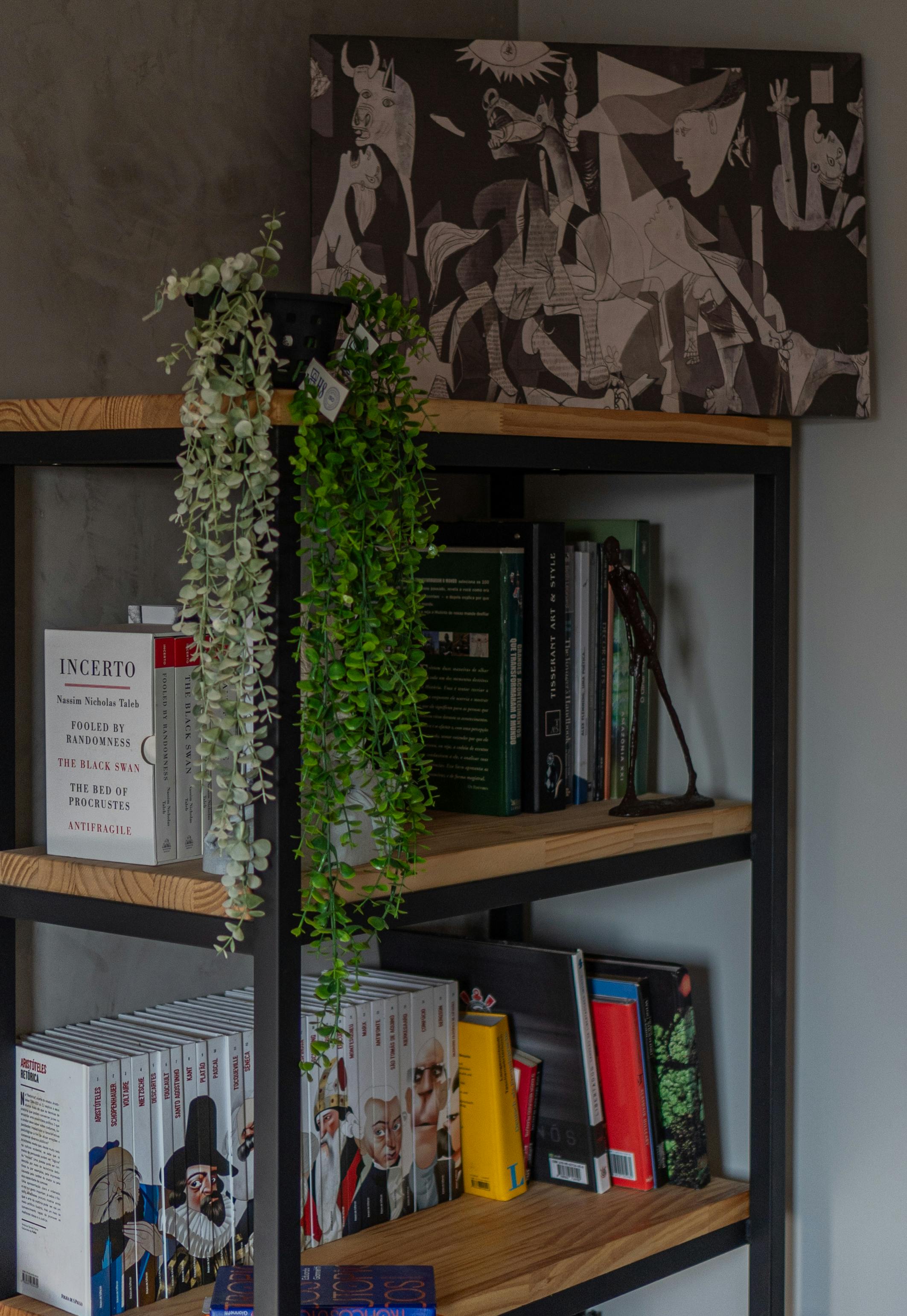


Cubism fundamentally redefined the parameters of art, liberating artists from the strictures of literal representation. It enabled the exploration of subjective reality, multiple truths, and the very mechanics of perception. By positing that an object is not merely one thing seen from one angle, but a complex tapestry of experiences and perspectives, Cubism offered a profound lesson applicable far beyond the canvas. The enduring legacy of Cubism can still be observed in many modern abstract pieces. It begs the question: how do you choose to piece together meaning from the fragments of your own reality?
Frequently Asked Questions (FAQ)
What sparked Cubism?
Cubism was primarily sparked by the intense, almost symbiotic collaborative dialogue between Pablo Picasso and Georges Braque, who pushed each other to dismantle traditional artistic norms. This fertile partnership was nourished by several key influences: Paul Cézanne's geometric approach to landscape and still life, his method of passage and emphasis on underlying structure; the raw, simplified forms and spiritual potency of African and Iberian tribal art, which inspired Picasso to embrace powerful, non-naturalistic perspectives, utilizing features like stylized eyes and geometric facial structures; the rise of photography, which freed painting from purely mimetic representation; and a collective desire to challenge traditional Western art's reliance on single-point perspective and illusionism. The expressive distortions and bold colors of Fauvism also served as a crucial precursor, helping to break from strict representational norms.
How was Cubism received by the public and critics?
Initially, Cubism was met with widespread bewilderment, ridicule, and even outrage from the public and many art critics. Its radical departure from traditional representation was often dismissed as bizarre, ugly, or a deliberate hoax. Early public exhibitions, such as those at the Salon des Indépendants and the Salon d'Automne, were met with scandal. However, as its theoretical underpinnings became better understood and its revolutionary nature recognized, it gradually gained acceptance and critical acclaim, eventually being heralded as one of the most significant and influential movements of the 20th century.
What is the main difference between Analytic and Synthetic Cubism?
Analytic Cubism (the earlier phase, circa 1907-1912) involved breaking down objects into many small, overlapping, monochromatic geometric fragments to show multiple viewpoints simultaneously; it was primarily focused on analysis of form and understanding an object's deep structure. Synthetic Cubism (the later phase, circa 1912-1914) involved building up forms with simpler, flatter shapes, often incorporating brighter color and collage elements like newspaper or fabric (papier collé); it focused on synthesis and reassembly, often appearing more decorative and accessible.
What materials and techniques did Cubist artists primarily use?
During the Analytic phase, artists predominantly used oil paint (often applied thickly with impasto to enhance texture) along with charcoal and pencil for their highly structural and monochromatic compositions, using these drawing tools to define geometric forms and foundational lines. In the Synthetic phase, they continued with oil paint but also famously innovated with collage (or papier collé), incorporating real-world materials like newspaper, wallpaper, and fabric directly onto the canvas, blurring the lines between painting and sculpture and adding new textures and layers of meaning.
How did Cubism evolve beyond its initial phase, and what other movements did it influence?
While the intense collaborative phase of Picasso and Braque concluded around 1914 with the outbreak of World War I, Cubism's principles continued to evolve. Artists like Juan Gris continued to refine Synthetic Cubism, while movements like Orphism (Delaunay), Futurism (Boccioni, Balla), and Constructivism (Tatlin) directly adapted and reinterpreted Cubist fragmentation and multi-perspectival views to new ends, often emphasizing dynamism, technology, or social utility. Cubism also had a significant impact on sculpture, influencing artists like Alexander Archipenko and Jacques Lipchitz to explore volumetric forms through planar intersections and multiple perspectives. Its influence extended to architecture through movements like De Stijl, which embraced geometric abstraction and modular forms. The stark realities of WWI also subtly influenced a shift towards more stable forms for some post-war artists. Picasso himself ventured into Neoclassicism, and Braque explored new textures, but the foundational ideas of breaking down and reassembling forms remained a cornerstone for virtually all subsequent abstract and avant-garde art movements, deeply influencing painting, sculpture, architecture, and design for decades.
Is Cubism still relevant today?
Yes, unequivocally. Its core principles—challenging singular perspectives, embracing fragmentation, and exploring the geometric underpinnings of reality—continue to inspire contemporary artists. Many abstract and mixed-media artists today draw directly or indirectly from Cubist concepts in their work, demonstrating its enduring vitality and influence on modern aesthetic sensibilities. The way Cubism invites us to actively piece together meaning feels particularly relevant in our information-saturated digital age, especially in fields like UI/UX design, where layered information requires multi-perspectival understanding.
Conclusion
So, if you ask me, Cubism was never just about jagged lines and muted colors. It was a declaration: reality is negotiable, perception is active, and art can be a powerful tool for seeing the world anew. It taught us, and still teaches us, that sometimes, the most profound understanding comes not from a single, static view, but from the courageous act of deconstruction and the thoughtful joy of reassembly. It's an invitation to engage, to question, and to truly see. This pursuit of seeing beyond the obvious, of understanding structure and interplay—whether through layered compositions or fragmented narratives—is a core part of my own artist's journey and drives the creations you might find in my museum in 's-Hertogenbosch. For example, in my "Cityscapes Reimagined" series, I deliberately fragment architectural elements and reassemble them with vibrant, overlapping colors to capture the multifaceted energy and rhythm of urban life, inviting viewers to experience the city not as a static image, but as a dynamic interplay of forms and light, much in the Cubist spirit, but with a contemporary, colorful twist. This journey of exploring and reinterpreting reality is, for me, what makes art truly alive.