
Judy Chicago's The Dinner Party: Enduring Feminist Vision & Legacy Explained
Dive deep into Judy Chicago's revolutionary 'The Dinner Party'. Explore its powerful feminist symbolism, collaborative creation, materials, and lasting impact on art history, making it the ultimate guide.

Unpacking The Dinner Party: Judy Chicago's Enduring Feminist Vision and Legacy
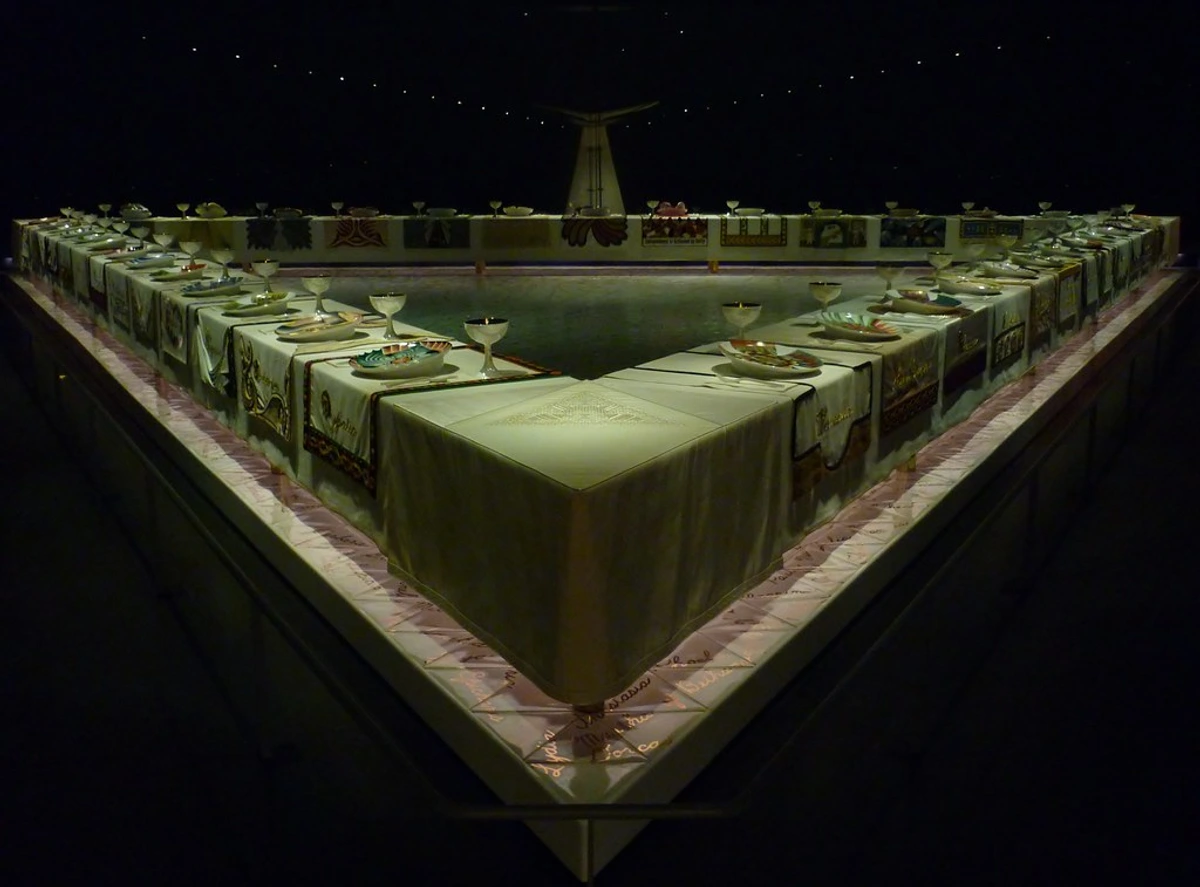
Ever stood before a monumental artwork, feeling its weight and significance, yet grappling with the 'why' beneath the surface? That was precisely my experience with Judy Chicago's powerful installation, The Dinner Party. I remember walking into the vast, darkened space, the triangular table glowing, and feeling an immediate, almost overwhelming sense of its ambition and audacity. But the layers? They take a minute to unpeel, don't they? It's like trying to read a complex map without a legend. While a general overview might give you the basics, like "what is The Dinner Party by Judy Chicago", if you're like me, you're hungry for the how and the why.
You want to understand the intricate symbolic language Chicago and her team of hundreds of volunteers wove into every thread and every shard of porcelain. So, let's pull up a chair. We're not just looking at a table; we're learning to read a map of history, power, and identity – a roadmap to a different way of seeing the world, paved with radical feminist symbolism. It’s a powerful invitation to reconsider whose stories we tell, and how the very fabric of our history is woven.
Contextualizing a Revolution: Second-Wave Feminism and Art in the 1970s
To truly unravel the layers of meaning in The Dinner Party, we need to step back and understand the revolutionary cultural and political landscape in which it was born. We're rewinding to the 1970s, an era defined by second-wave feminism, a movement that fundamentally challenged patriarchal structures across society, from the workplace to the art world. I often think how stifling it must have been to be a female artist in that era, navigating a world where major museums featured overwhelmingly male collections, critical discourse was dominated by male voices, and art schools often subtly steered women towards "crafts" rather than "fine art." It truly was a boys' club, often explicitly so. This pervasive bias swept countless female contributions under the rug – from early female naturalists making scientific breakthroughs to medieval women scholars writing philosophical treatises that were often attributed to men or simply lost to history. This erasure wasn't just accidental; it was systemic, woven into the very fabric of cultural institutions.
Key tenets of second-wave feminism that profoundly shaped The Dinner Party included:
- The personal is political: This wasn't just a slogan; it was a revelation. It highlighted how individual experiences of sexism – say, a woman being told her intricate needlework wasn't "real art" – reflected systemic oppression. For Chicago, turning traditionally domestic, dismissed crafts into high art was a direct embodiment of this principle.
- Challenging patriarchal narratives: Actively seeking to rewrite history and culture to include women's voices and perspectives. The very act of naming forgotten women was a political statement.
- Elevating women's experiences and domains: Valuing traditionally female domains and activities – often dismissed as "crafts" or "domestic labor" – as legitimate subjects for art and serious discourse. This directly informed Chicago's choice of materials and collaborative approach, rejecting the hierarchy that placed "fine art" (painting, sculpture, often by men) above "craft" (textiles, ceramics, often by women). Historically, this distinction grew sharper with the rise of academic art institutions and the Salon system, which largely excluded women from formal training and recognition.
Judy Chicago, a visionary at the forefront of the feminist art movement, saw this glaring omission as an opportunity to rewrite the narrative. She wasn't starting from scratch; she was building upon the courageous work of earlier feminist pioneers and artists. I think of women like Eleanor Antin, known for her performative identities and conceptual art challenging societal roles, Miriam Schapiro, a pioneer of "femmage" who combined painting with fabric collage to reclaim domestic craft, and Suzanne Lacy, whose large-scale social performance art often addressed violence against women. Chicago took their spirit of challenging the male-dominated art canon and magnified it to a monumental scale previously unimagined. Her goal wasn't just to create art; it was to create a history where women were central, celebrated, and undeniable. It was a massive undertaking, requiring years of meticulous research and the dedication of hundreds of volunteers. This wasn't a solitary stroke of genius; it was a collective act of reclamation and creation, an undeniable statement on "feminist symbolism in art".
The Genesis of a Masterpiece: Collaboration, Craft, and Vision
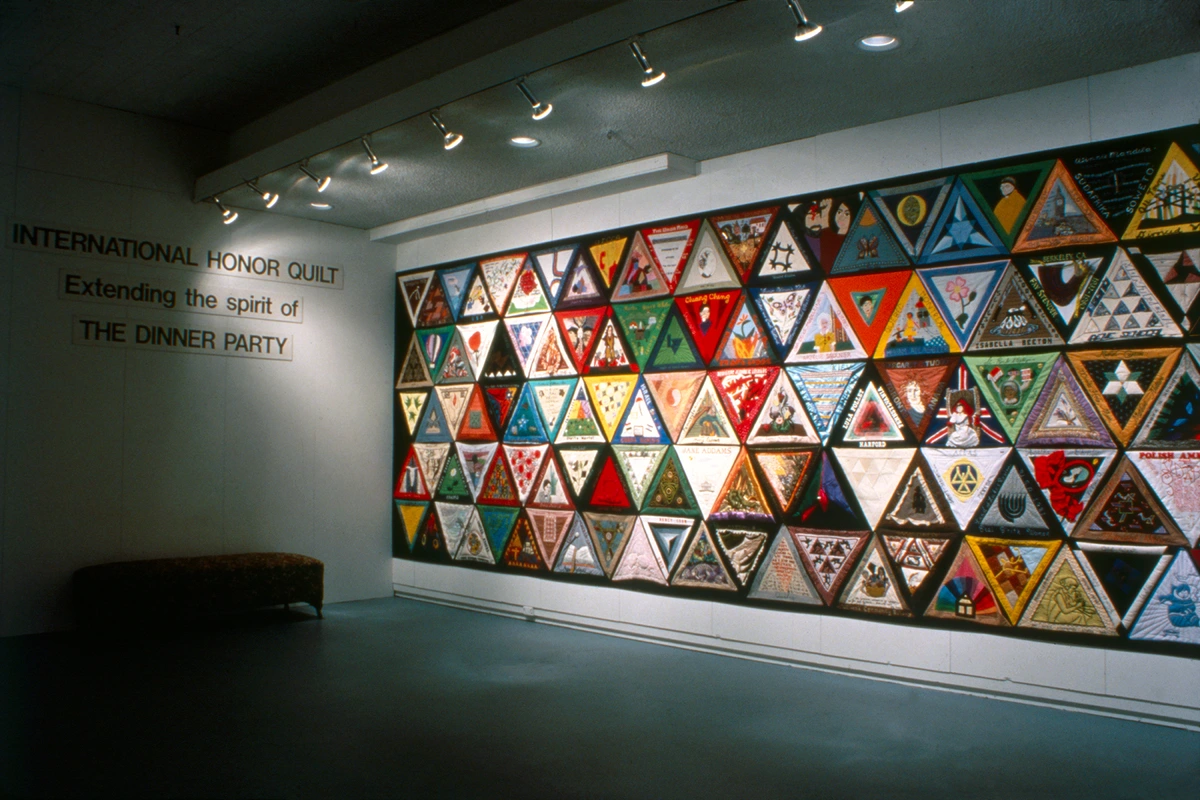
Before we dive deeper into the individual elements, it’s crucial to understand the sheer scale of the undertaking. The Dinner Party wasn't conceived as a singular artistic stroke; it was a deeply collaborative effort that involved hundreds of skilled volunteers – men and women – working tirelessly over five years (1974-1979). Imagine that: a giant, organized, feminist art factory! This collective approach was itself a radical statement, elevating traditionally undervalued "women's work" and celebrating communal creative labor. I've been involved in collaborative projects myself, and I can tell you, managing diverse personalities and skill levels towards a single, ambitious vision is an art form in itself. The sheer dedication required is immense.
Chicago established dedicated workshops for each major component: a ceramics studio for the plates and the Heritage Floor tiles, and a needlework studio for the intricate runners. The sheer logistical and artistic challenges were immense: from managing diverse personalities and skill levels among volunteers, who ranged from professional ceramicists and textile artists to dedicated hobbyists and students, to ensuring consistent quality across thousands of unique elements. The finicky kiln firings alone, required for 39 unique plates and over 2,300 floor tiles, presented a monumental technical hurdle. Every firing was a gamble, with potential for warping or cracking, demanding incredible precision and patience. This project was a triumph of coordinated craftsmanship, directly challenging the lone-genius myth of art history and proving that significant artistic vision could be realized through collective effort.
From the delicate embroidery stitches to the precise glazing of porcelain, every single detail was a testament to collaboration and craftsmanship. The volunteers were not merely assistants but co-creators, bringing their diverse skills in everything from china painting and textile artistry to historical research to realize Chicago's ambitious vision. This process mirrors the article's larger theme: that significant achievements, especially for women, are rarely solitary, but rather built on a foundation of shared effort and mutual support. It's a powerful echo of women throughout history who achieved greatness often through informal networks and communal endeavors, their contributions frequently obscured by histories that valued individual, typically male, genius. This very spirit of collective creation and the elevation of traditionally 'feminine' crafts directly informs every symbolic element we'll explore next.
Unpacking the Symbols: A Feminist Lexicon
The Grand Structure: Triangle and Thirteen
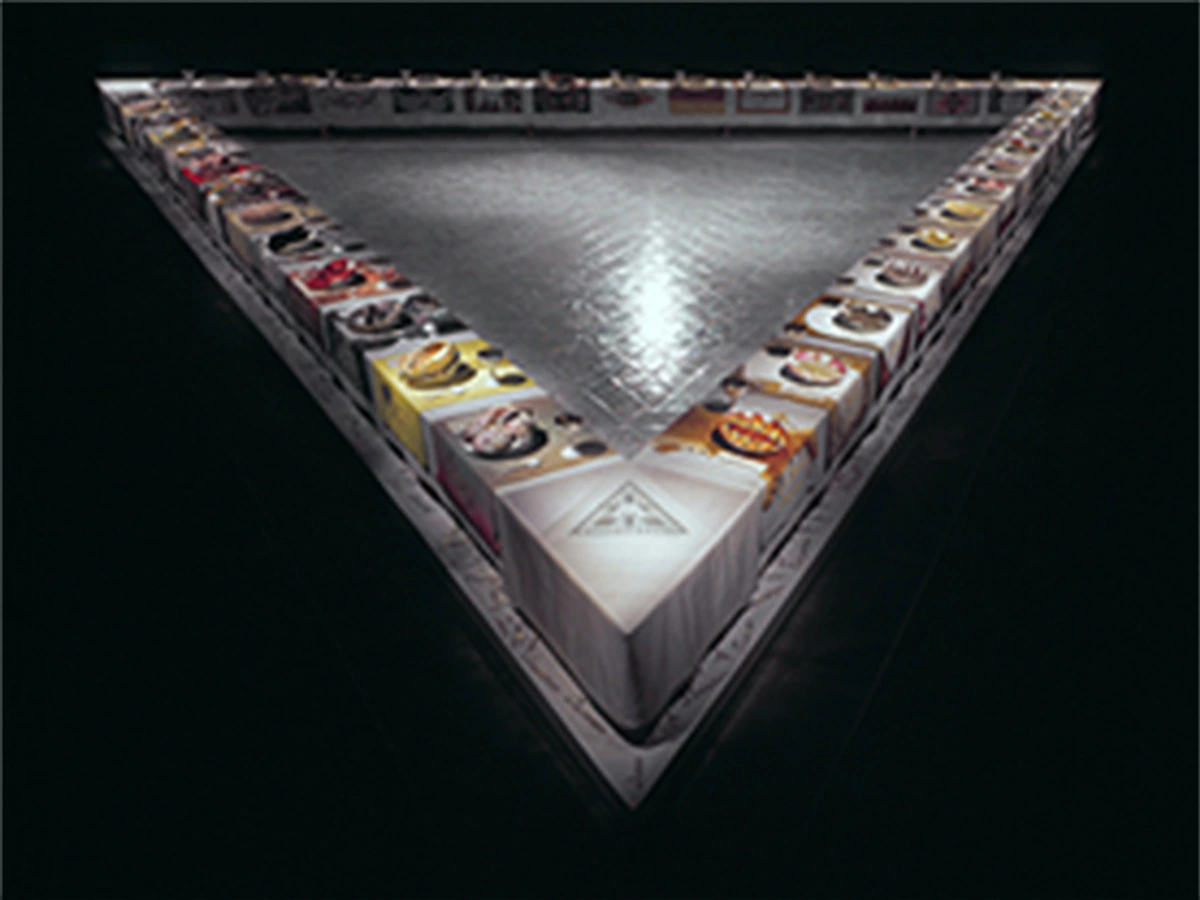
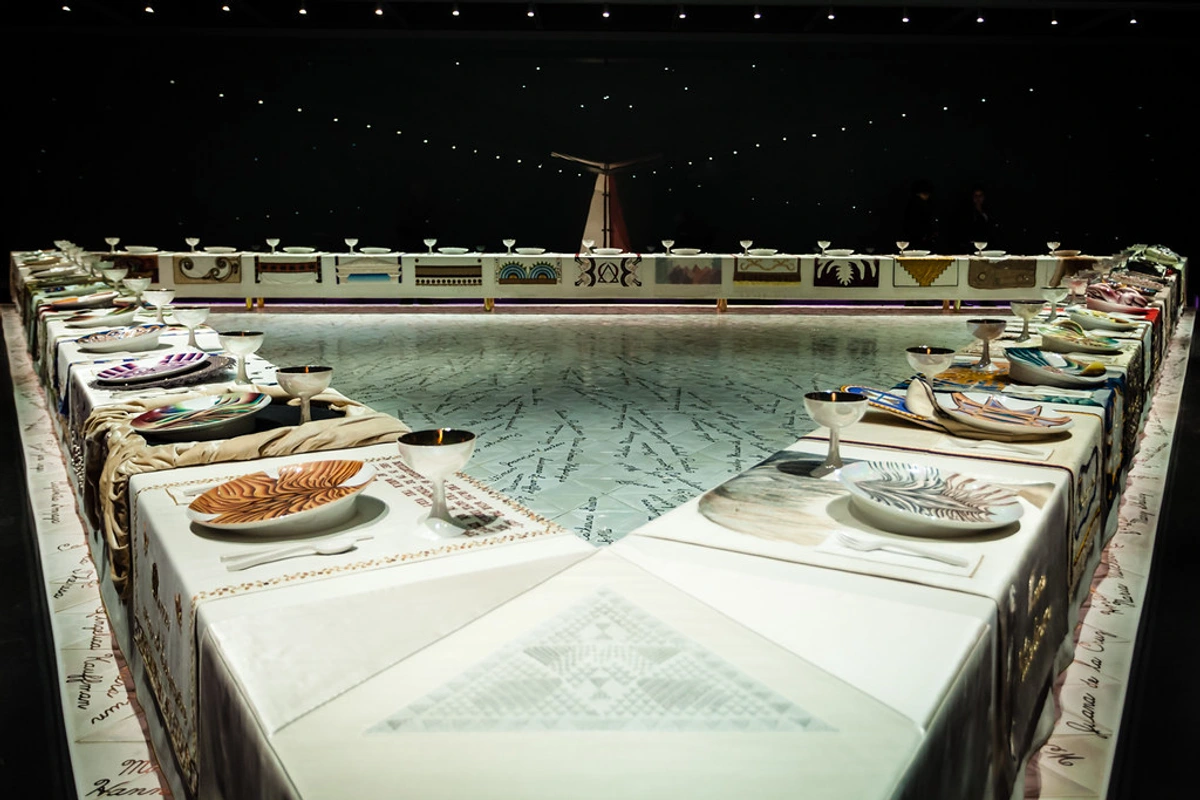
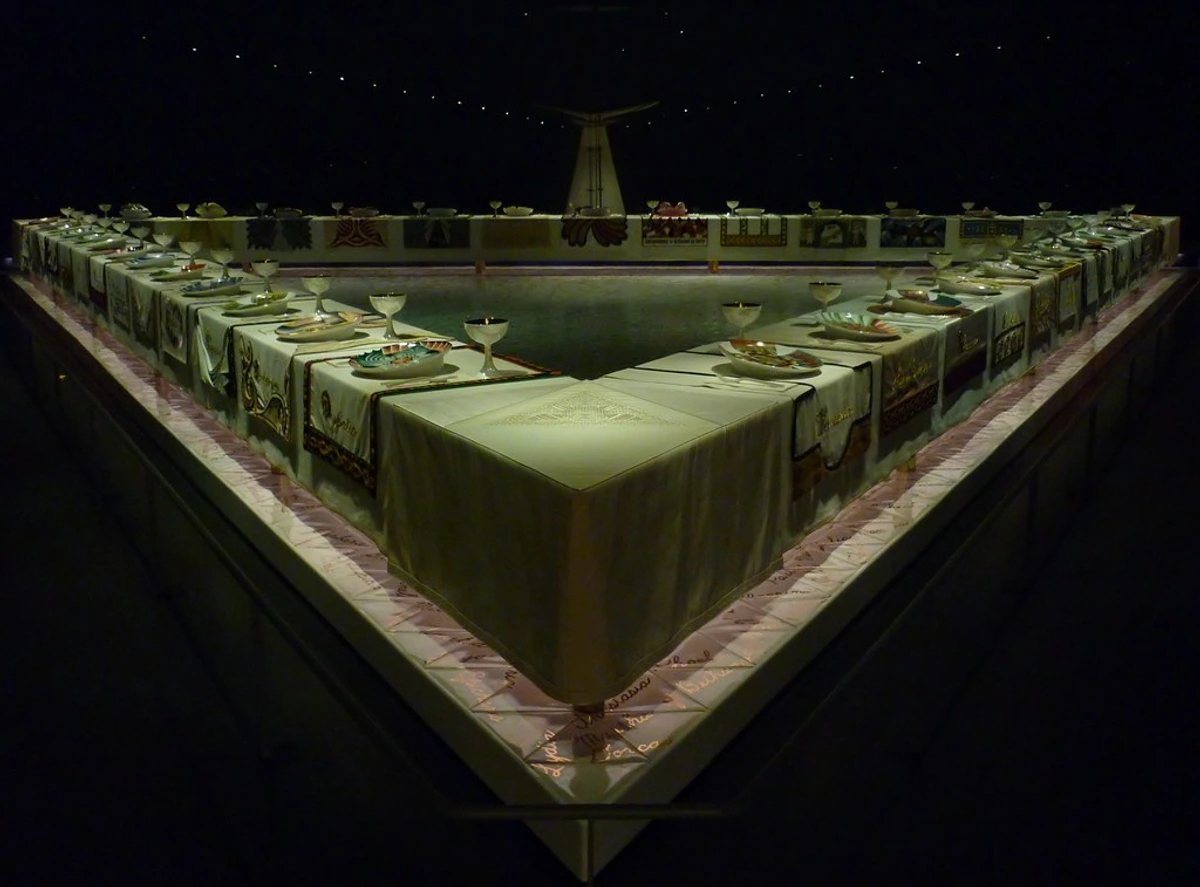
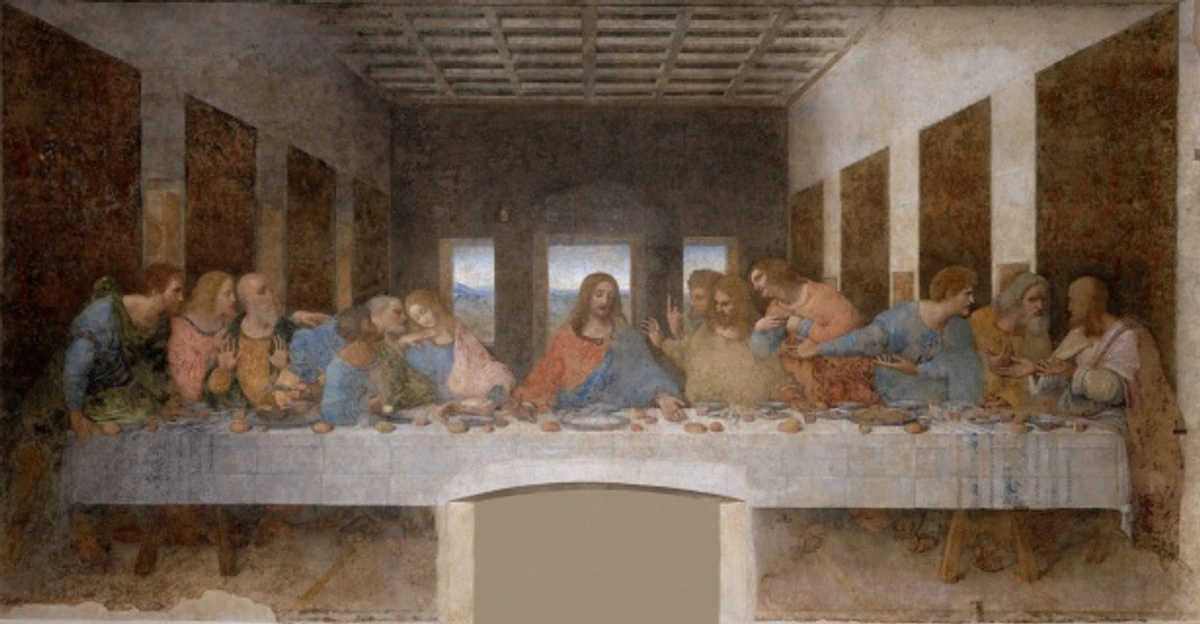
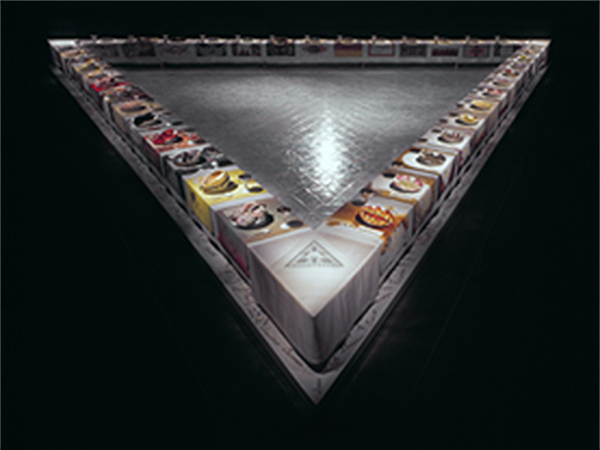
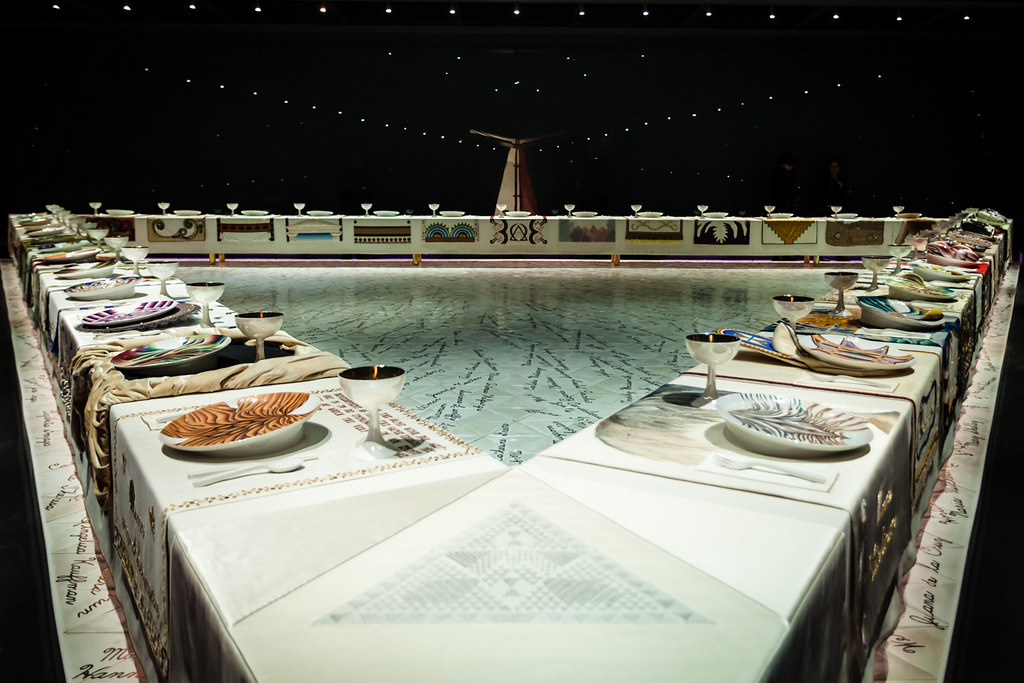
First things first, you can't miss it: the entire table is a massive, equilateral triangle. Now, I know what you're thinking, "It looks cool in a gallery." And yes, it absolutely does. But the choice is steeped in deeper meaning. The triangle is one of the oldest and most potent symbols for the female across many cultures and spiritual traditions. Think ancient goddesses, think the divine feminine. It directly challenges the male-centric narratives and power structures that have dominated Western art, architecture, and religion for millennia. Crucially, it represents equality and a level playing field – a stark contrast to the hierarchical, rectangular tables (like the one depicted in Da Vinci's Last Supper) that dominate Western art and cultural narratives. In an art world historically shaped by male artists depicting male-centric narratives, a triangular table where no one sits at the 'head' is a quiet revolution in geometry, a visual manifesto for a different social order. And, I mean, if you're going to host a monumental dinner party for history's overlooked women, why would you even consider a hierarchy?
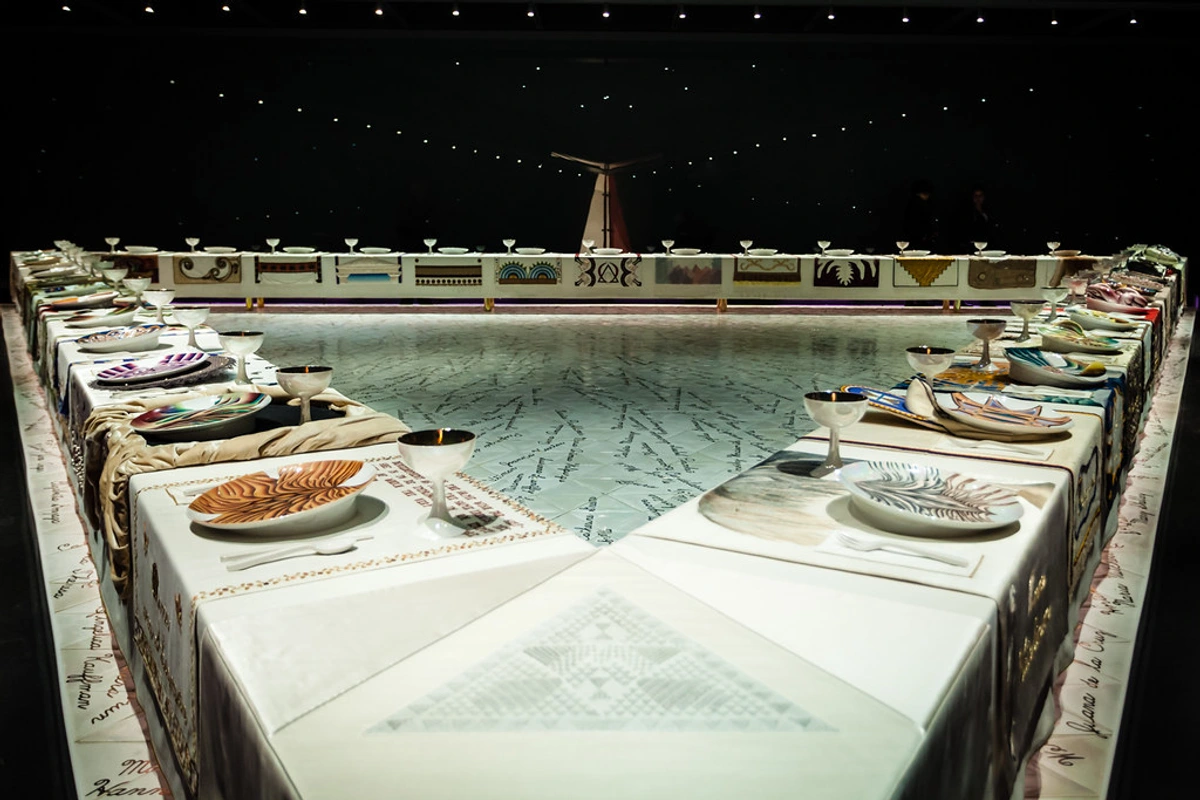
And it's not just one triangle. The room is full of them. The Heritage Floor is made of triangular tiles. Even the runners have a triangular taper. It's a symbol that echoes from the macro (the overall structure) to the micro (the individual elements), constantly reinforcing this core idea of a powerful, egalitarian female space, much like ancient goddess cultures revered the threefold aspects of the feminine principle.
Each side of the triangular table has 13 place settings, for a total of 39 guests. Again, not a random number. In Western culture, 13 is often seen as unlucky. There were 13 people at the Last Supper, after all—one of whom was a traitor. It’s the number that gets skipped on elevator buttons, making me wonder who decided that was a good idea (definitely not a coven, I'd bet). Chicago, being the brilliant artist she is (if you're curious about her, you should check out "who is Judy Chicago"), flips this on its head. She reclaims the number, connecting it instead to the 13 members of a witches' coven, or the 13 lunar cycles in a year – both powerful, female-centric associations rooted in ancient goddess traditions. This choice is a perfect example of the work's larger project: rewriting a history that has so often written women out, transforming a symbol of perceived misfortune into one of solidarity and magical power. Talk about a glow-up for a number!
The Honorees: A Deliberate Pantheon of Women
The selection of the 39 women for the table and the 999 for the Heritage Floor was an exhaustive, research-intensive process, undertaken by Chicago and her team of historians and researchers. It wasn't about simply picking the 'most famous' women; rather, it was a deliberate and strategic act of historical reclamation. They applied three rigorous criteria, and the research often involved deep dives into obscure archives and academic papers to unearth forgotten contributions:
- Significant Contribution: Did the woman make a substantial and documented contribution to society, often overlooked by patriarchal history?
- Advancement of Women: Did she actively work to advance the cause of women, or did her life story powerfully illuminate a critical aspect of women's history?
- Representation: Did her presence help to represent a significant historical period, geographical area, or type of achievement that had previously been overlooked in male-dominated historical narratives? This included women from various mythologies, queens, activists, artists, scientists, and philosophers.
This meant deliberately including figures from ancient mythology like Ishtar, the ancient Mesopotamian goddess of love, war, and fertility, embodying foundational feminine power, and the Primordial Goddess, representing a universal, ancient reverence for the feminine as the earth mother, source of creation, and embodiment of cyclical life that predates organized patriarchal religions. Overlooked medieval scholars like Hrotsvitha (a 10th-century German canoness, dramatist, and poet who preserved classical literary forms at a time when women's intellectual work was exceptionally rare) were included, alongside pioneering modernists such as Virginia Woolf and Georgia O'Keeffe, and even figures like the Shoshone guide Sacajawea. The goal was to create a panoramic view of women's impact across diverse cultures and eras, ensuring a representative rather than exhaustive list.
For instance, while a widely recognized modern figure like Frida Kahlo is not at the table, her inclusion on the Heritage Floor, among the 999, acknowledges her impact while maintaining the table's focus on historically marginalized or foundational figures. The 39 guests at the table were carefully selected not just for their individual fame, but to create a representative pantheon across diverse historical periods, geographical areas, and types of achievement. Chicago's primary goal was to illuminate those women whose contributions had been historically obscured or diminished by patriarchal narratives, rather than simply celebrating already famous figures. It’s about creating a foundational history, making visible what was previously overlooked, and showing that even the celebrated figures at the table are supported by a vast, unsung legacy. The selection itself is a powerful act of "understanding symbolism in contemporary art", making visible what was previously obscured.
The Plates: A Journey from Confinement to Liberation
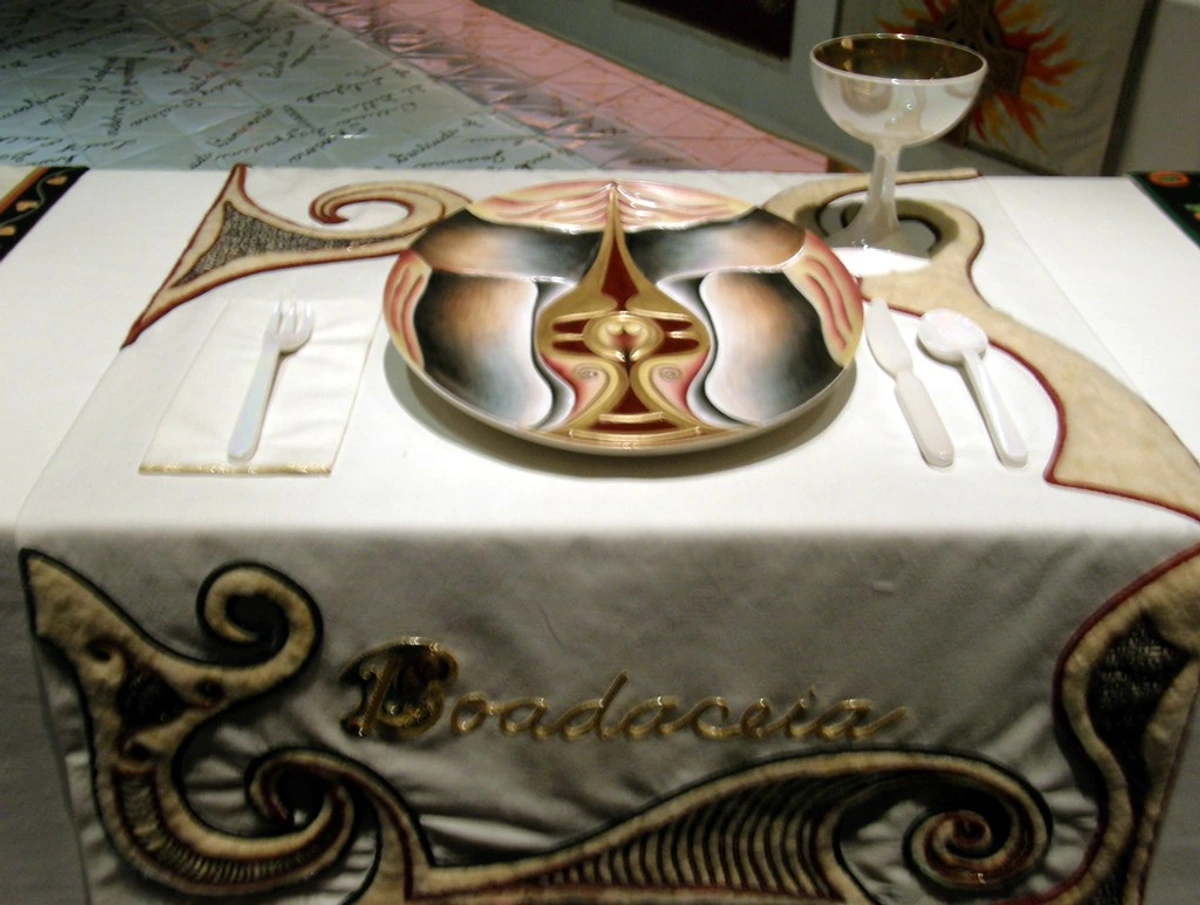
Now, perhaps the most discussed and visually striking elements of the installation are the individual plates, each a unique artistic statement. They are, for many, the very heart of The Dinner Party, and certainly the most famous—and for a time, infamous—part of the installation. If you look closely at their evolution as you move around the table, a fascinating narrative emerges, one that visually charts women's journey through history. Each plate is a sculpted porcelain canvas, reflecting the honoree's story and era.
Early Plates: Containment and Central-Core Imagery
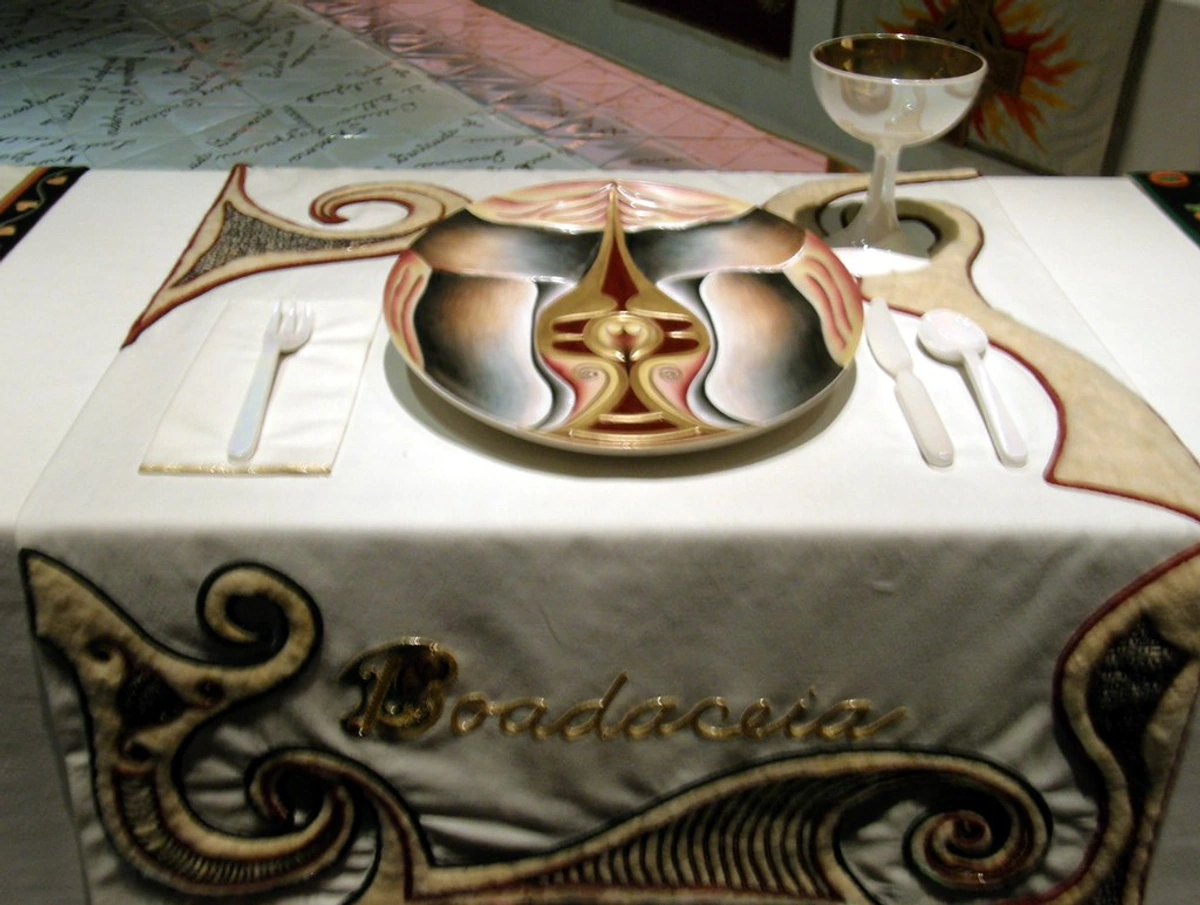
For figures from prehistory and the classical world, you'll notice the plates are relatively flat, with forms that are contained within the plate's circular boundary. They often feature central-core imagery, a recurring motif in Chicago's work that deliberately represents the vulva – a symbol of feminine power, birth, and creation. This imagery, appearing as strong, often geometric shapes deeply embedded within the plate's form, was intended to reclaim and celebrate female anatomy as a source of strength, rather than an object of shame or mere sexual function. It was a bold statement, challenging centuries of cultural suppression of female sexuality and reproductive power.
Take the plate for Ishtar, the ancient Mesopotamian goddess of love, war, and fertility, for example. Its central form is strong, geometric, and deeply embedded within the plate, symbolizing the raw, foundational power of the feminine in early civilizations but also hinting at its eventual containment. Consider the plate for Hatshepsut, the powerful female Pharaoh of Egypt; its design is regal and contained, an intricate labyrinthine pattern that speaks to her authority but also to the rigid structures and bureaucratic mazes she had to navigate and ultimately embody as a male ruler. These early plates represent the immense, often suppressed, power of women in a world that sought to confine them.
Later Plates: Metamorphosis and Liberation
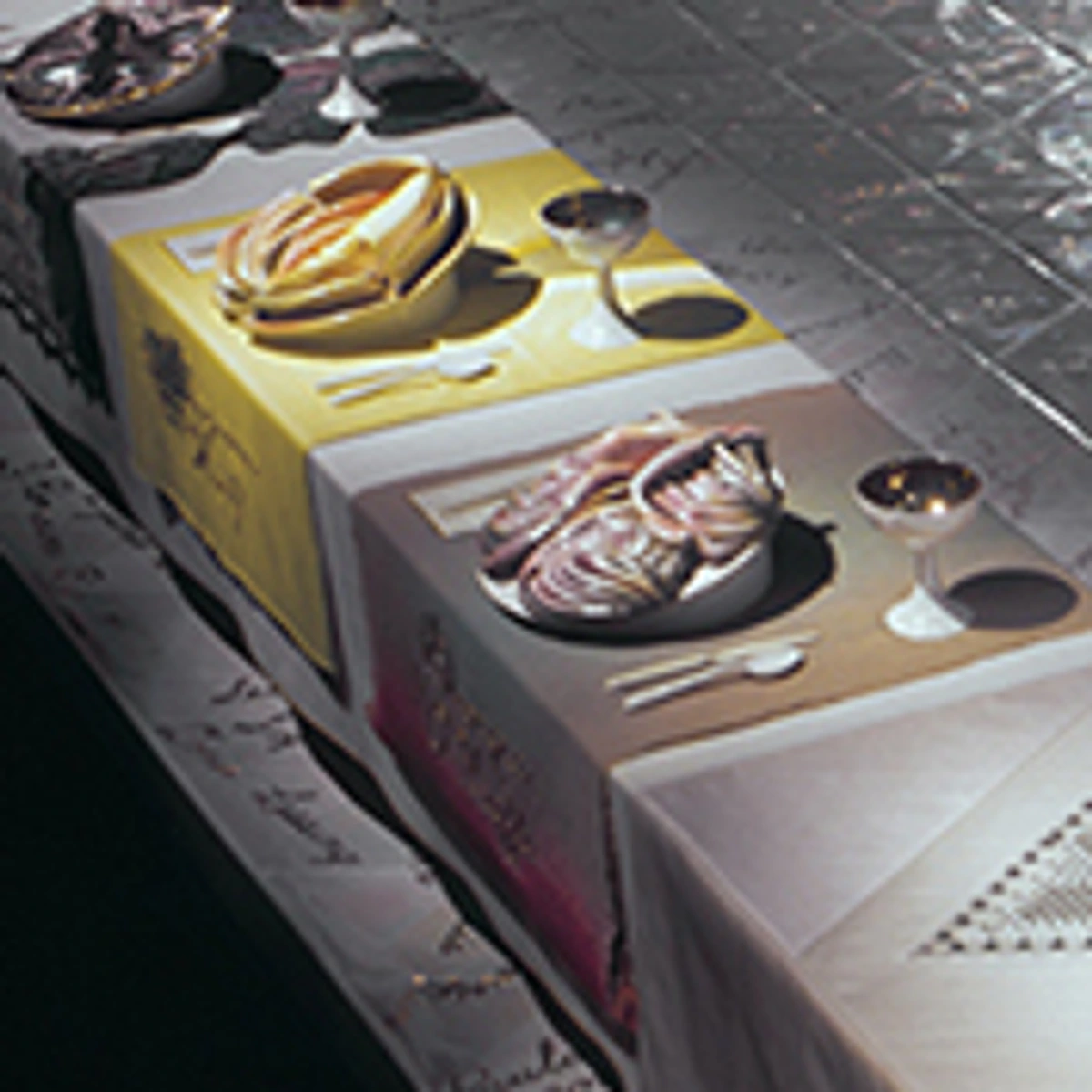
This contained power gradually transforms as we move through history along the wings of the table. Here's where it gets truly fascinating: the plates literally begin to rise, their forms becoming more three-dimensional, more sculptural, actively breaking free from the circular confines of the plate. They often take on butterfly-like forms, which Chicago herself explicitly called "butterfly-vagina" imagery – a powerful visual reclamation of female anatomy merged with a profound symbol of metamorphosis, the soul, and liberation. Across cultures, butterflies have long symbolized transformation, resurrection, beauty, and the soul's journey. Merging this with the vulva imagery creates a potent visual metaphor for women’s growing ability to assert their identities and break free from historical constraints, moving from a confined chrysalis to a creature of flight and beauty. This visual crescendo illustrates women’s struggle for freedom and self-expression throughout history.
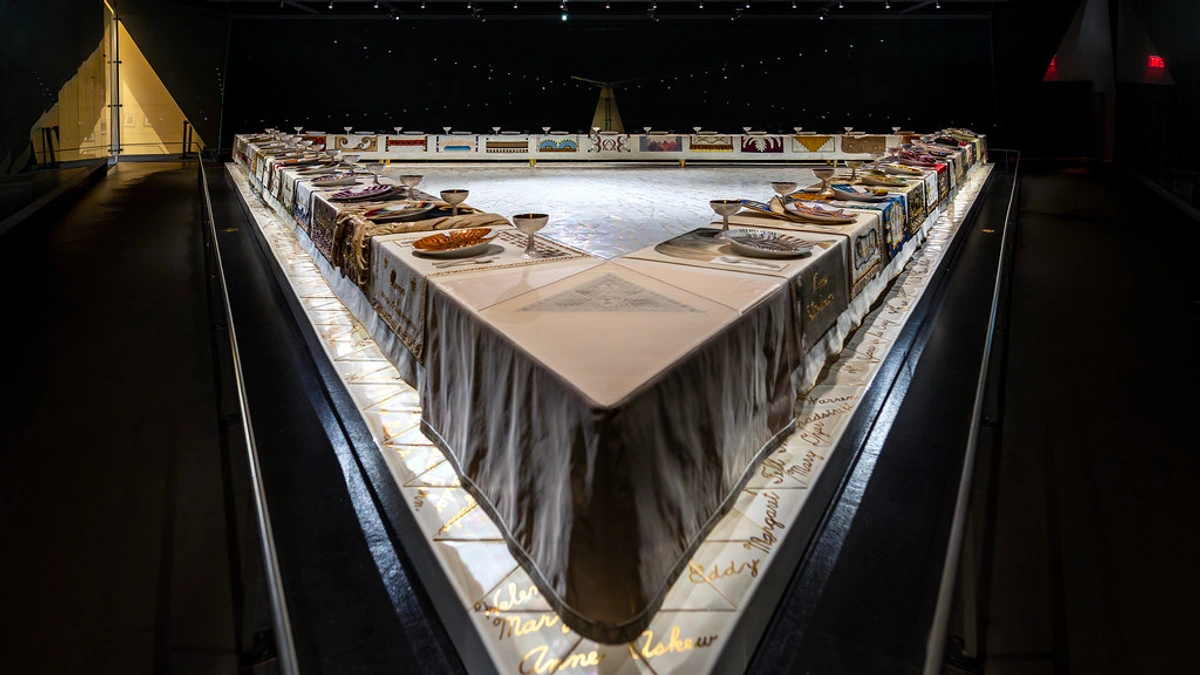
For example, while the plate for Hypatia, the ancient Greek philosopher and mathematician, is constrained and geometric, reflecting her struggle in a male-dominated intellectual world, plates for later figures like Catherine the Great (whose plate features a dynamic, almost explosive form bursting from a central crown, symbolizing her formidable power, ambition, and intellectual influence as an enlightened absolutist) or Sojourner Truth (with strong, abstract geometric forms that evoke African textiles, breaking through the surface with a vibrant, fiery palette of reds and oranges symbolizing her passionate activism and resilience against oppression) burst with color and form. These designs are emblematic of their groundbreaking contributions and the expanded possibilities for female expression. This entire visual story speaks to empowerment and the relentless push for liberation.
The Runners: Weaving Narratives Through Craft
Beneath each of the 39 unique plates is an intricately embroidered runner, and this is where the celebration of craft and collaboration truly shines. Chicago deliberately used techniques like needlepoint, embroidery, and weaving—crafts historically dismissed as "women's work" and relegated to the domestic sphere—to tell these monumental stories. Each runner is a masterpiece of symbolism in its own right, incorporating the styles, patterns, and biographical details of the woman it honors. For instance:
- The runner for the mythical Amazon warrior Penthesilea features bold, strong lines and ancient motifs, perhaps evoking tribal patterns or battle armor, reflecting her fierce independence and martial prowess.
- For a medieval mystic like Hildegard of Bingen, the runner might use flowing, organic forms, rich, ecclesiastical colors reminiscent of illuminated manuscripts, and even symbolic depictions of her cosmic visions, reflecting her profound spiritual and intellectual contributions.
- And for Sacajawea, the Shoshone guide, the runner features indigenous patterns, naturalistic elements like plants and animals, and even a map-like quality, symbolizing her invaluable journeys and deep connection to the American landscape.
- The runner for Elizabeth I might feature intricate Elizabethan ruffs and architectural motifs, reflecting her strategic use of iconography and her firm grasp of political power in a male-dominated world.
- For Emily Dickinson, one could imagine delicate, perhaps fragmented, floral patterns and references to her reclusive life and profound internal poetic landscapes.
These are not just tablecloths; they are narrative tapestries, elevating traditional women's skills to the realm of high art, challenging the arbitrary distinctions between "fine art" and "craft." They are prime examples of the intricate "symbolism in Judy Chicago's The Dinner Party" and the painstaking effort of hundreds of textile artists.
The Heritage Floor: A Foundation of Forgotten Voices
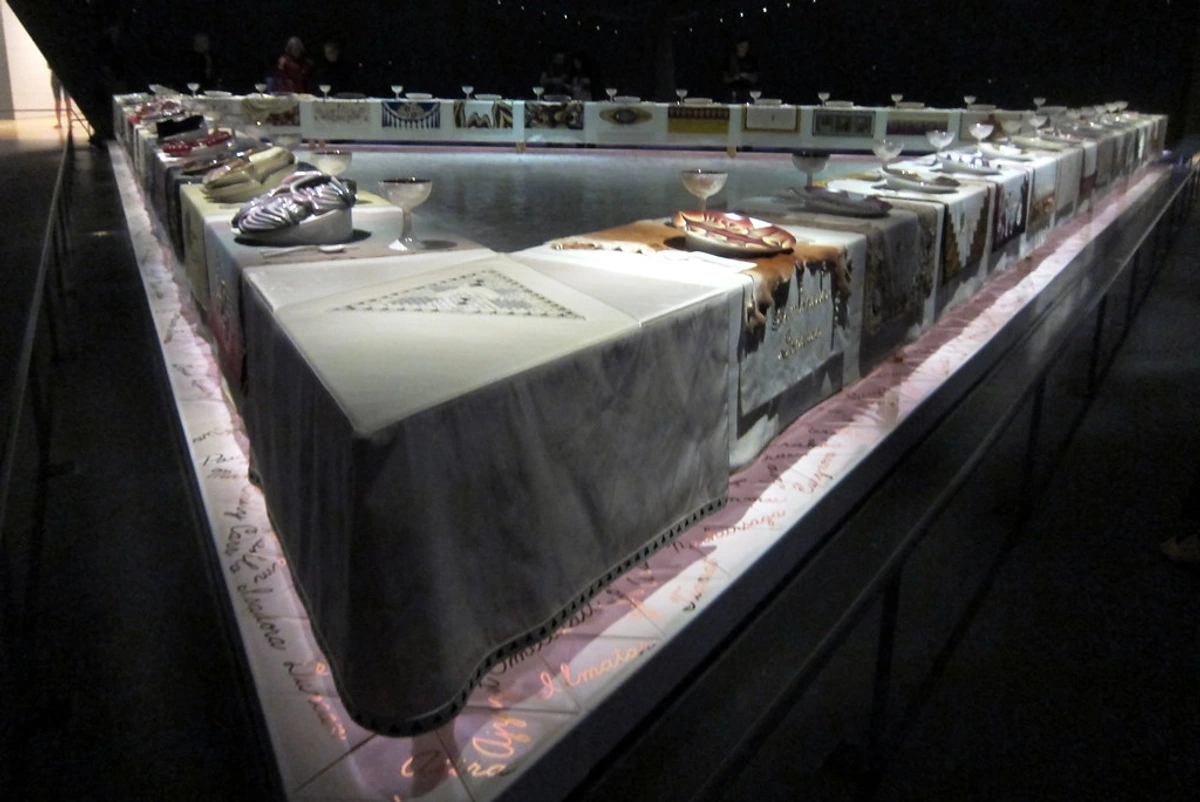
And then there's the floor – the literal bedrock of the entire installation. The entire table rests on the Heritage Floor, comprised of 2,304 hand-cast porcelain tiles. Inscribed in shimmering gold luster on these triangular tiles are the names of another 999 women who made significant contributions to history. This is, for me, the most profound symbol of all. The 39 guests at the table are not isolated figures of greatness; they are quite literally supported by the foundation of thousands of other women whose names might otherwise be forgotten. It’s a powerful statement that individual achievement is never achieved in a vacuum, but rather rests on a vast, often unrecognized, legacy of collective female endeavor. Chicago and her team meticulously researched these 999 names, categorizing them into broad groups like mythological figures, writers, scientists, activists, and artists, to ensure a comprehensive backdrop of women's historical impact. It’s a physical manifestation of a crucial historical truth: we stand on the shoulders of giants.
The sheer scale of names on the Heritage Floor creates a powerful visual and emotional impact, reminding us that for every celebrated figure, there are countless others whose work, innovations, and struggles paved the way. It’s a direct response to historical erasure, making visible the invisible. The long-term preservation of such a vast, multi-media installation also presents unique challenges, from maintaining precise climate control to ensuring careful handling during exhibitions, underscoring its preciousness and ongoing vulnerability as a living historical document.
Materials and Mastery: Challenging the Art Historical Canon
Beyond the symbolism so intricately woven into the plates, runners, and the foundational Heritage Floor, the very choice of materials used throughout The Dinner Party constitutes one of its most radical statements. Judy Chicago and her collaborators intentionally chose ceramics and textiles (specifically needlework and embroidery) for the plates, runners, and floor. Why? Because these crafts were historically devalued, relegated to the domestic sphere, and dismissed as "women's work" rather than legitimate "fine art." Think about it: a painting, traditionally made by men, hangs on a museum wall and commands millions. A delicate embroidery, often made by women, might be admired for its skill but rarely granted the same artistic status. It's a classic example of cultural bias at play, a clear line drawn by a patriarchal art establishment. It makes me wonder how much incredible art has been lost or simply never recognized because it didn't fit the narrow, male-defined criteria of "high art." For me, as an artist who often works with color and abstract forms, there's a profound beauty in the tactile and handcrafted, a direct connection to human touch that often gets overlooked in the pursuit of "grand" statements.
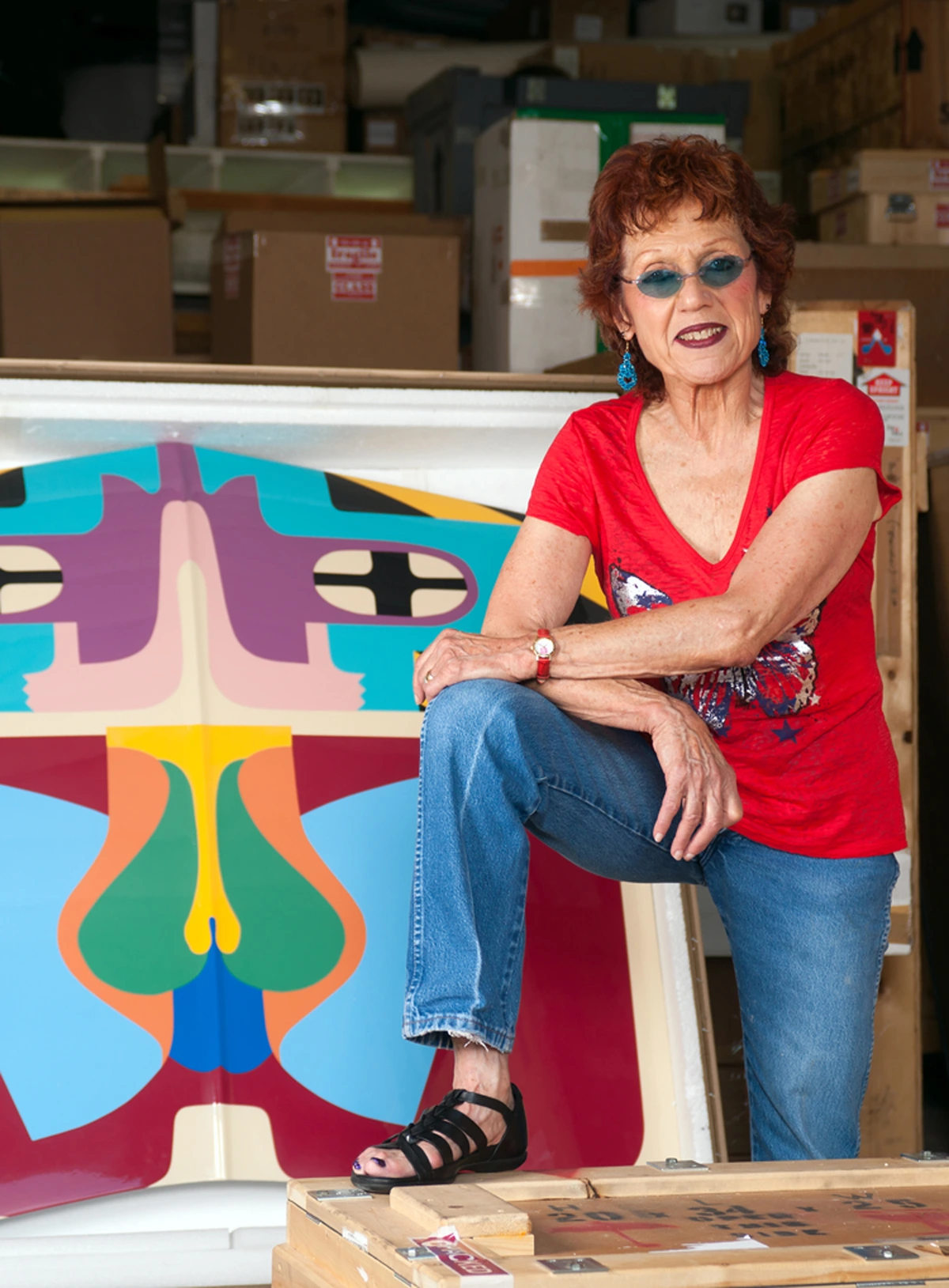
By using these very materials to create a monumental, museum-worthy piece of high art, Chicago makes an undeniable statement. She elevates and validates what has been traditionally marginalized, challenging the patriarchal hierarchy within art itself. It's a powerful act of artistic subversion, proving that the skill, creativity, and expressive potential found in these "crafts" are every bit as profound as any oil painting or bronze sculpture. It's a reclaiming of artistic legitimacy, echoing the collective effort required to create this installation and supporting the overarching theme of women's contributions.
Artistic Techniques and Technical Triumphs
Beyond the symbolism, the sheer technical mastery involved in The Dinner Party is breathtaking. The ceramics studio, for instance, wasn't just about shaping clay; it involved the meticulous creation of 39 unique dinner plates, each requiring multiple firings at specific temperatures, precise glazing, and hand-painting. Imagine the delicate balance needed to prevent warping, cracking, or color distortion in the kiln for pieces so intricately sculpted – it’s a bit like trying to keep a dozen delicate soufflés from collapsing in a hot oven, but over five years! The challenge of maintaining consistent quality across 2,304 individually hand-cast and lustered triangular tiles for the Heritage Floor was an enormous undertaking in itself, requiring specialized knowledge of clay bodies, glazes, and firing schedules. Each piece is a testament to perseverance and specialized knowledge.
The needlework studio was equally rigorous. Hundreds of volunteers, many trained in various forms of textile art, applied traditional embroidery techniques such as satin stitch, couching, laid work, and even more complex historical stitches to create the 39 elaborate runners. Each design had to be meticulously translated onto fabric, patterns carefully chosen to reflect the honoree's life, and stitches executed with precision, often requiring specialized knowledge of historical textile traditions. This monumental scale of textile production, usually relegated to individual domestic projects, was transformed into an industrial yet artisanal endeavor, culminating in a collective masterpiece that demanded both artistic vision and unparalleled technical execution.
The Power of Color: A Resonant Palette
The use of color throughout The Dinner Party is deeply intentional and contributes significantly to its symbolism. While specific colors are often chosen to reflect the individual woman being honored (e.g., historical period, personal attributes, achievements), Chicago also employs a broader chromatic scheme. Historically, art has often used muted, "serious" palettes for grand historical narratives, particularly those by male artists. Here, Chicago makes a deliberate departure. The vibrant, often rich and warm colors used in the plates and runners inject energy, vitality, and celebration into the women's stories, further emphasizing their power and presence.
For example:
- Earth tones and muted shades often appear in the earlier plates, reflecting periods of greater constraint or figures whose impact was only later recognized, perhaps echoing the limited palettes available in ancient dyes or the somber tones of historically suppressed narratives.
- Vibrant blues, purples, and golds become more prominent in later plates and runners, symbolizing spiritual awakening, intellectual freedom, and regal power as women gained more agency, echoing historical associations with royalty, divinity, and enlightenment.
- Warm reds and oranges frequently signify passion, activism, and the fiery spirit of rebellion against injustice, drawing on universal associations of these colors with energy and revolution. Think of Sojourner Truth's plate, bursting with these hues, a vibrant testament to her unyielding fight.
This isn't just about aesthetics; it's a statement. Bold, expressive color asserts visibility and challenges the subtle ways women's contributions have been dulled or rendered invisible in traditional historical accounts. It's a powerful and often overlooked aspect of the work's overall symbolic language, designed to be both visually striking and emotionally resonant. You could explore more about "how artists use color" for deeper insights into this fascinating artistic choice.
Critical Dialogue and Enduring Legacy
The Dinner Party didn't just appear fully formed; its journey to becoming a permanent icon was as complex as its creation. After its completion in 1979, the work embarked on a global tour, sparking both fervent admiration and intense controversy. Critics debated its explicit imagery, its classification as art, and its feminist message, often with vitriol. Some dismissed it as mere "craft" rather than "fine art," echoing centuries of patriarchal bias. Others condemned its overt vulvar symbolism as crude, shocking, or "pornographic." I remember reading about one US House of Representatives member, Robert Dornan, who infamously called it "ceramic pornography" and tried to block its exhibition. Talk about a strong reaction, right? Beyond the initial shock, the work also sparked debates around its perceived essentialism (was it too focused on biological femaleness?) and questions of historical inclusivity (who was missing from the table?).
These reactions, while harsh, only underscored Chicago's point: a truly feminist artwork, challenging established norms, would provoke such outrage from the status quo. Yet, audiences flocked to see it, many experiencing a profound connection and recognition of the untold stories it presented. It traveled to museums across the United States, Canada, Europe, and Australia, becoming a touchstone for feminist art and a magnet for public discussion. It spurred countless academic papers, dissertations, and inspired a generation of feminist art exhibitions and curriculum development in art history programs. Despite its monumental significance, finding a permanent home for The Dinner Party proved challenging for many years, a testament to the institutional resistance it initially faced, and the broader struggle for feminist art to gain institutional acceptance and recognition. Eventually, in 2007, it found its permanent residence as the centerpiece of the Elizabeth A. Sackler Center for Feminist Art at the Brooklyn Museum in New York, where it continues to inspire, provoke, and educate countless visitors. Its journey proves that art can indeed be a powerful catalyst for social change, and that sometimes, the most profound statements are also the most controversial.
In today's rapidly evolving art market, one might even speculate about the discussions The Dinner Party would ignite if it were created now – perhaps conversations around digital ownership or NFTs. But its enduring power lies precisely in its tangible, meticulously crafted forms, a testament to collective human effort and a physical reclaiming of history, far removed from ephemeral digital trends.
Beyond the initial storm of controversy, The Dinner Party has cemented its place as one of the most significant artworks of the 20th century. Its enduring legacy lies not only in its artistic innovation but also in its profound impact on subsequent generations of artists, feminists, and art historians. It became a powerful touchstone for the burgeoning field of feminist art history, prompting institutions and scholars to re-examine the historical canon and actively seek out and research the contributions of women artists who had long been overlooked. Personally, I find it incredibly motivating to see how one artwork can literally reshape an entire academic discipline. It's an artwork that truly lives on, continuing to provoke dialogue about gender, power, and historical representation, and inspiring new forms of activism and artistic expression.
Key Symbols at a Glance
To help consolidate the intricate symbolism, here's a quick reference of the key elements that make The Dinner Party so profound. It’s a complex work, but these are the big ones.
Symbol  | Primary Meaning(s) | Significance in The Dinner Party |
|---|---|---|
| Equilateral Triangle | The female, divinity, equality, solidarity. A non-hierarchical structure. | Establishes a sacred, egalitarian space for women, visible in the table's structure, Heritage Floor tiles, and runner tapering. |
| The Number 13 | Reclaiming power; linked to covens, lunar cycles, challenging patriarchal superstition. | Transforms a symbol of misfortune into one of female solidarity and strength, representing the 13 guests on each side of the table. |
| The 39 Place Settings | A representative pantheon of individual women's achievement. | Honors specific historical women whose contributions were overlooked, making them visible and celebrated. |
| Central-core Imagery (Vulva) | Female anatomy as a source of power, creation, and strength, reclaimed from shame. | Boldly celebrates female sexuality and reproductive power, challenging suppression and patriarchal norms through ceramic plate designs. |
| Evolving Plates | The progression of women's struggle from confinement to liberation and expression. | Visually narrates the journey of women breaking free from societal constraints over millennia, moving from flat to sculptural forms. |
| Butterfly Motif | Metamorphosis, freedom, the soul, and the vulva as a symbol of female power. | A powerful symbol of women's transformation, self-actualization, and the reclamation of female anatomy, particularly in later plates. |
| Embroidered Runners | Validating "women's work" as fine art; telling biographical stories through craft. | Elevates historically devalued crafts to high art, asserting the artistic and cultural value of female labor through intricate designs specific to each honoree. |
| The Heritage Floor | The historical foundation upon which greatness is built; honoring the forgotten. | Physically grounds the 39 guests in a collective legacy of 999 other women, emphasizing shared history and mutual support. |
FAQ: Answering Your Most Pressing Questions About The Dinner Party
Curious minds often have the best questions, and The Dinner Party certainly sparks many! Here are some of the most common inquiries, helping us deepen our understanding of this extraordinary work.
Why did Judy Chicago choose 'craft' materials like ceramics and textiles?
Chicago and her team very intentionally chose ceramics and textiles (needlework, embroidery) because these crafts were historically devalued and relegated to the domestic sphere as "women's work." By using them to create a monumental piece of high art – an installation of unprecedented scale and ambition – she makes a powerful statement about what kind of labor, what forms of artistic expression, and which materials are considered artistically valid. It's a deliberate elevation of women's traditional crafts to the realm of fine art, challenging centuries of patriarchal artistic hierarchy. As an artist myself, I find this act of reclaiming materials incredibly inspiring.
Why aren't some famous women (like Frida Kahlo) at The Dinner Party table?
This is a common and excellent question. The selection process was highly complex and rigorous, based on three main criteria:
- Significant Contribution: Did the woman make a substantial and documented contribution to society, often overlooked by patriarchal history?
- Advancement of Women: Did she actively work to advance the cause of women, or did her life story powerfully illuminate a critical aspect of women's history?
- Representation: Did her presence help to represent a significant historical period, geographical area, or type of achievement that had previously been overlooked in male-dominated historical narratives?
Many women who aren't at the table, like Frida Kahlo (who would have been considered too contemporary and well-known at the time to fit the historical scope Chicago was trying to illuminate), are instead honored on the expansive Heritage Floor among the 999 names. The 39 guests at the table were carefully selected not just for their individual fame, but to create a representative pantheon across diverse historical periods, geographical areas, and types of achievement. Chicago's primary goal was to illuminate those women whose contributions had been historically obscured or diminished by patriarchal narratives, rather than simply celebrating already famous figures. It’s about creating a foundational history, making visible what was previously overlooked, and showing that even the celebrated figures at the table are supported by a vast, unsung legacy. It reminds me a bit of how many incredible women artists from history are only now getting the attention they deserve.
How large is The Dinner Party installation?
It's truly monumental! The triangular table itself measures 48 feet (approximately 14.6 meters) on each side, with the entire installation covering a substantial gallery space. The scale is a deliberate statement, asserting the monumental importance of women's history, in contrast to how often it has been minimized or ignored. When you stand before it, the sheer physical presence demands attention, reinforcing the gravity of the stories it tells and the collective weight of the histories it represents.
Is The Dinner Party a religious artwork, or how is it classified?
While it borrows the form of a ceremonial meal (like the Last Supper) and uses symbols associated with divinity (the triangle, 13), it's not tied to a specific religion. It's better understood as a secular, spiritual work that creates a new kind of sacred space to honor women's history and legacy. It’s about reverence for human achievement and collective identity, rather than specific dogma. As for classification, it is widely considered an installation art piece due to its large scale, multi-media nature, and how it transforms an entire space. However, it also contains significant sculptural elements (the plates) and textile art (the runners), making it a truly interdisciplinary work. It transcends easy categorization, which, ironically, is part of its power – much like the women it honors often transcended the narrow roles prescribed for them.





credit, licence

How long did it take to create The Dinner Party and who were the volunteers?
The Dinner Party took five years to create, from 1974 to 1979. It was a massive undertaking, involving Judy Chicago and a dedicated team of hundreds of volunteers. These volunteers, a diverse group of men and women, brought a wide range of skills to the project. They included ceramicists, china painters, textile artists, embroiderers, researchers, and general assistants. This collaborative model was central to Chicago's vision, emphasizing collective effort over individual genius and elevating historically devalued "women's work" into a monumental artistic statement.
Ultimately, every choice in The Dinner Party is a conversation starter, an urgent invitation. It asks us to reconsider what we value, whose stories we tell, and what symbols we use to tell them. It's not just a dinner party; it's an invitation to a different way of seeing the world—one where everyone has a seat at the table, and the floor beneath them is paved with the names of those who made it possible. As an artist, I'm always fascinated by works that challenge conventions and redefine what art can be, and The Dinner Party does exactly that. This powerful work serves as a reminder of the vital conversations art can initiate, encouraging us to not only appreciate such masterpieces but to also support contemporary artists who continue to explore themes of identity and history in their own unique ways, perhaps even inspiring you to explore my art for sale, my artistic journey on my timeline, or consider a visit to the Den Bosch Museum if you're ever in the area, where art often sparks similar profound dialogues. So, as you encounter art, history, or even everyday symbols, ask yourself: whose voices are missing from the table? Whose stories are you helping to amplify?