The Dinner Party: Judy Chicago's Iconic Feminist Art Explained
Judy Chicago's 'The Dinner Party': a deep dive into its history, symbolism, and controversies. Discover how this iconic feminist art installation reshaped narratives for women in art.

The Dinner Party: Unpacking Judy Chicago's Monumental Feminist Art Installation
Alright, let's talk about The Dinner Party. When I first stumbled upon the title, I confess, my imagination went wild. Was it a performance art piece where attendees actually dined? Who was on the guest list? And, seriously, why on earth is the table a giant triangle? It’s one of those artworks that hooks you with its apparent simplicity, then immediately drowns you in layers of profound, glorious complexity. It’s like a riddle wrapped in an enigma, served on a hand-painted plate, if you catch my drift.
But stick with me, because diving into this piece isn't just about art history; it's like getting a skeleton key to a secret, sprawling wing of history you probably never knew existed. This isn't just a sculpture you observe from a distance. For me, it feels more like a living, breathing declaration, a comprehensive educational journey, and a truly monumental act of reclaiming forgotten narratives, all spearheaded by the incredible artist Judy Chicago. It's a feminist art installation that asks you to engage, to question, and maybe even to rewrite your own understanding of the past.
The Big Idea: Setting a Grand Table for History's Overlooked Women
Imagine, for a moment, the grand banquet hall of Western history. For centuries, the guest list was, let's just say, rather exclusive. The great male thinkers, the formidable rulers, the celebrated geniuses – they all had their prominent seats at the table. Women, on the other hand, were often relegated to the shadows, their contributions minimized, their names forgotten, or worse, entirely erased. It's a pattern you see everywhere in the traditional history of art and culture, where the spotlight consistently fell on one half of humanity. This wasn't just passive neglect; it was often an active omission from academic canons, public records, and the very institutions that shaped our understanding of achievement.
Judy Chicago saw this historical imbalance, this glaring omission, and decided, quite rightly, to host a different kind of party entirely.
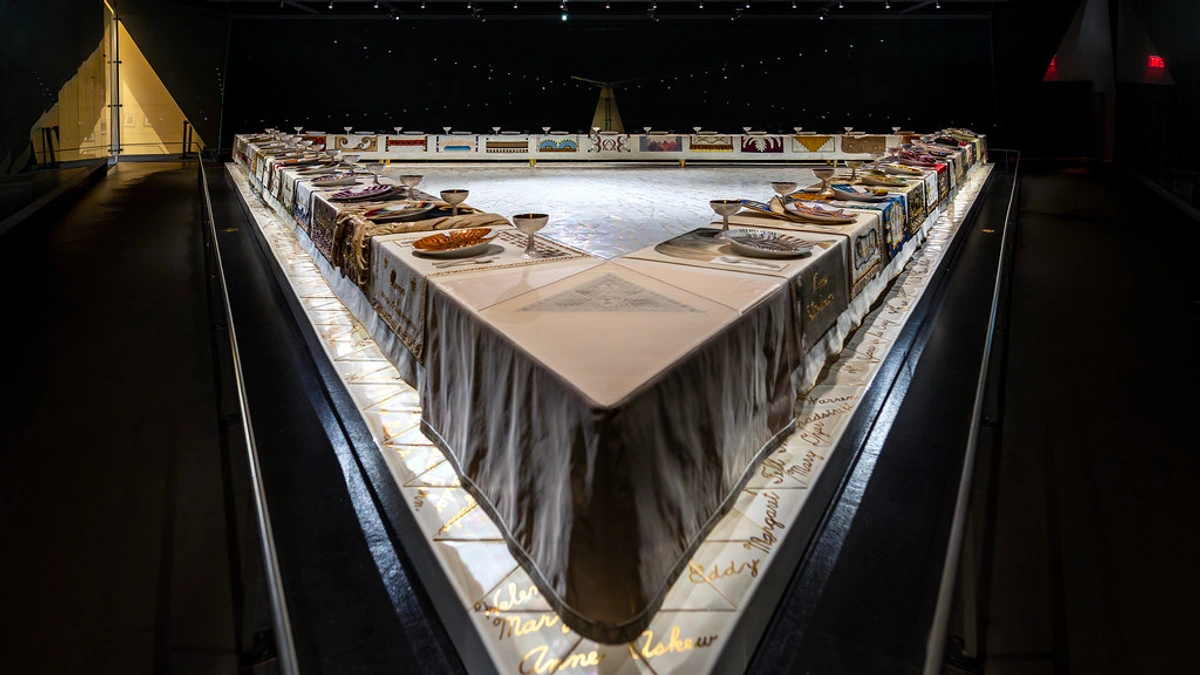
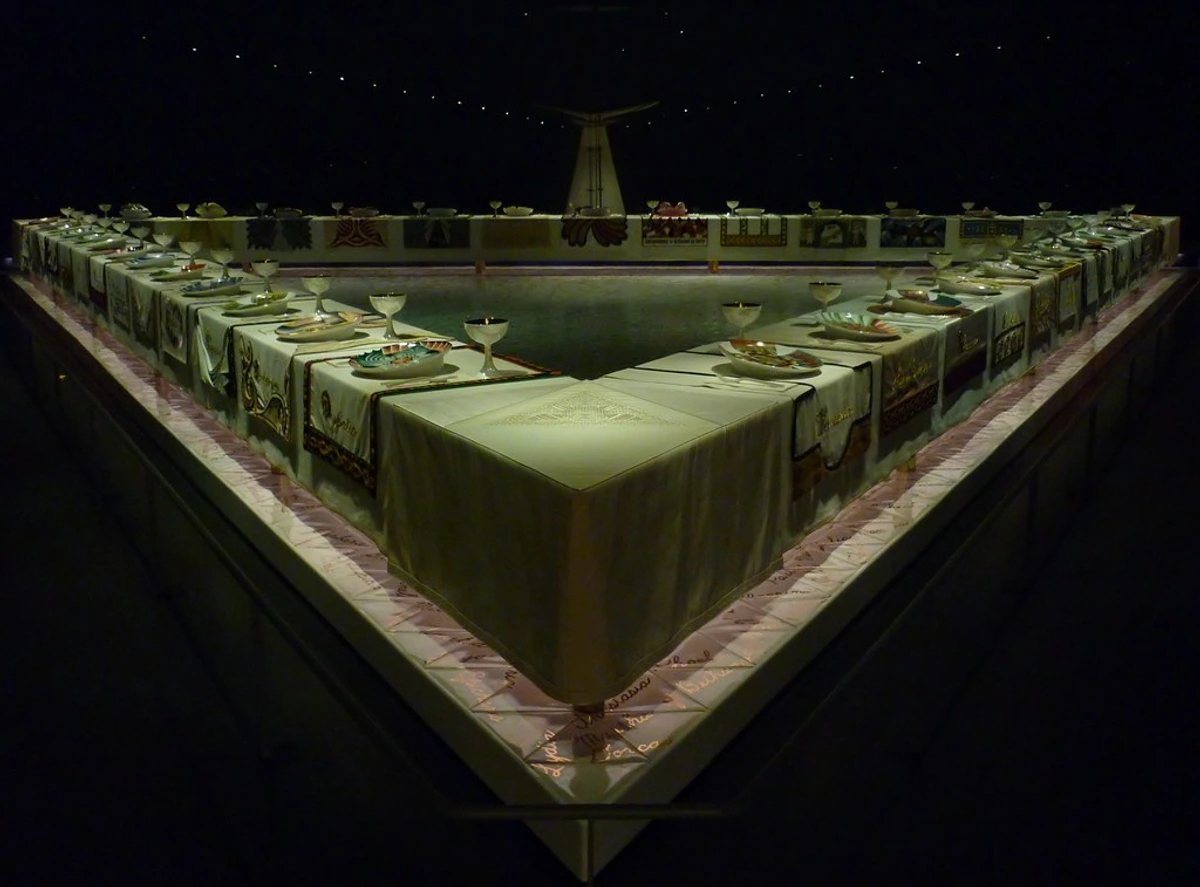
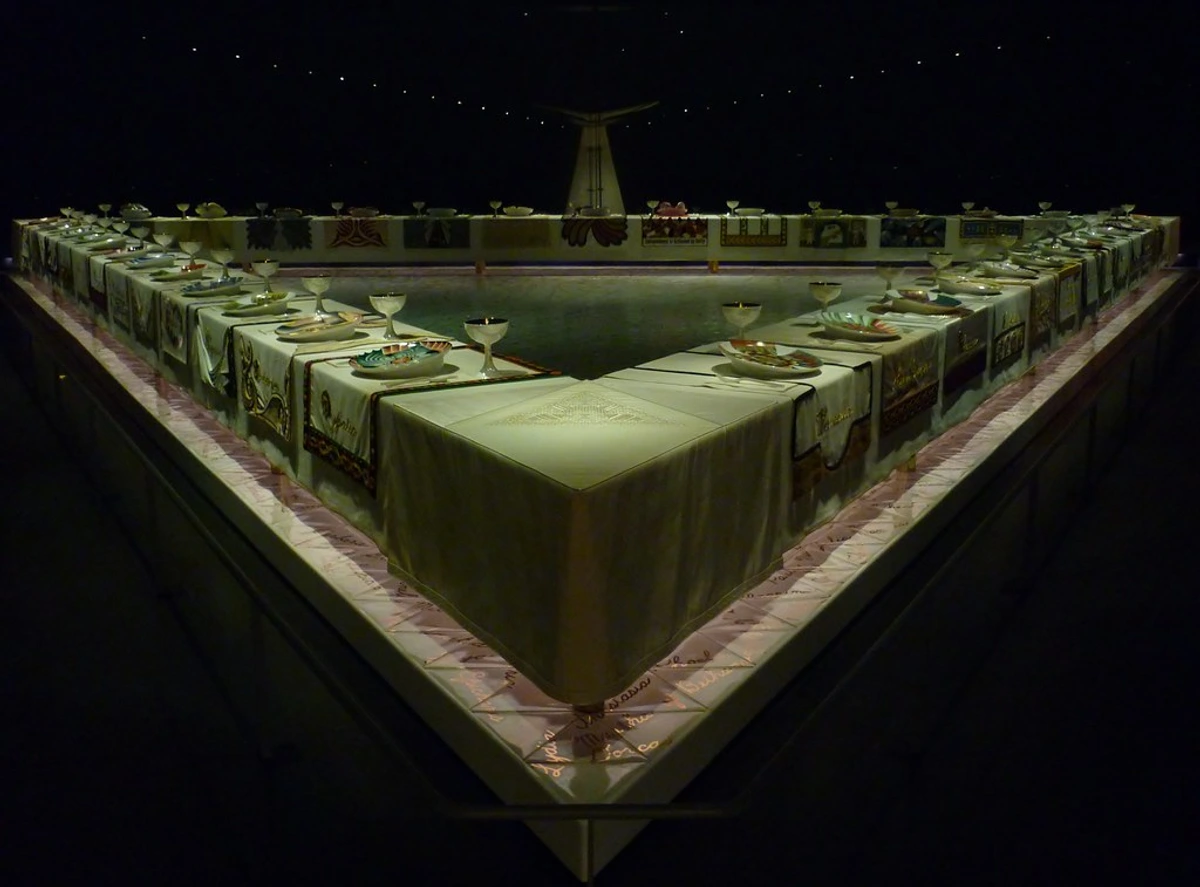
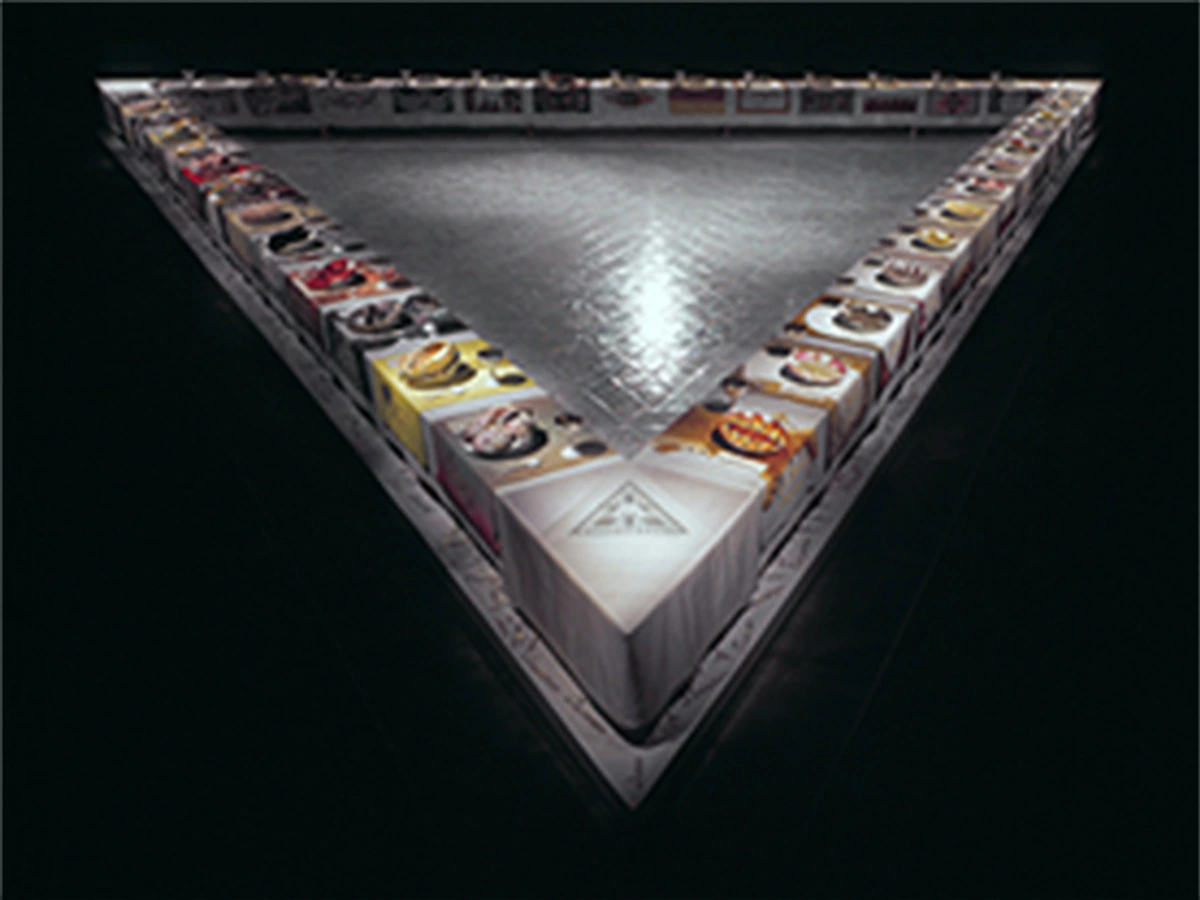
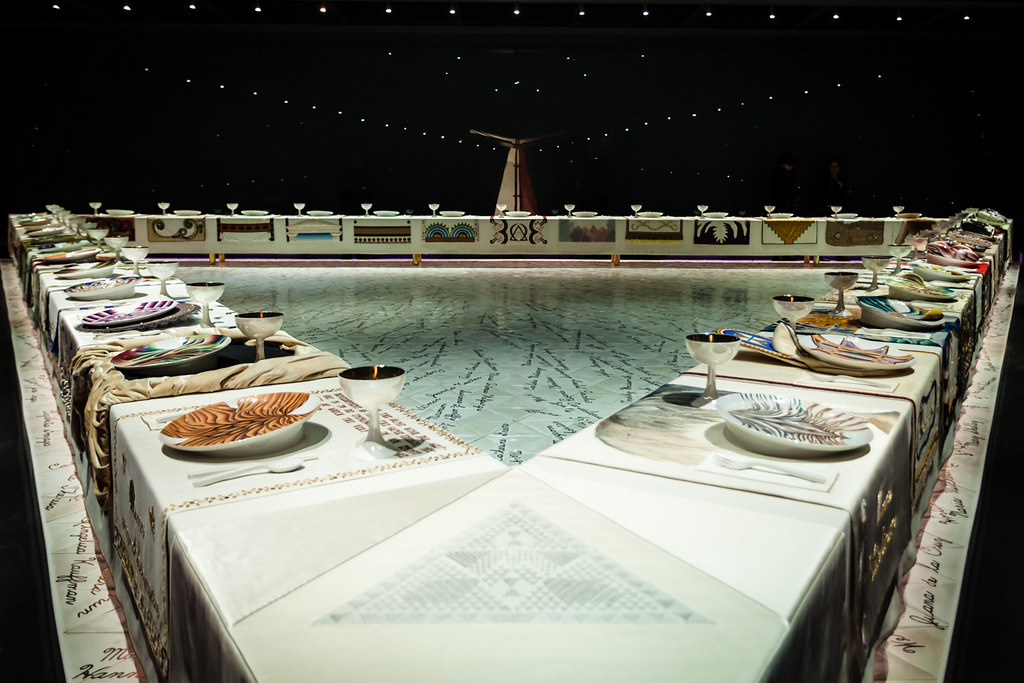
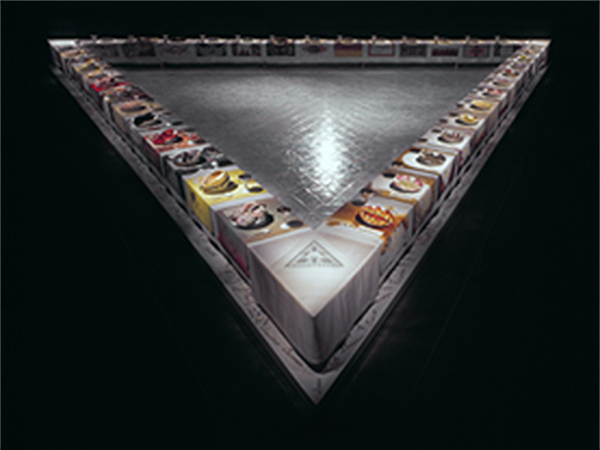
Between 1974 and 1979, Chicago, along with a team of hundreds of volunteers, meticulously crafted The Dinner Party. It's a monumental contemporary art installation designed to symbolically set a place for 39 pivotal women – both mythological and historical – who, despite their profound contributions, were systematically overlooked, miscategorized, or simply written out of the narrative. It’s a vast, equilateral triangle, each side stretching an imposing 48 feet (almost 15 meters). When you stand before it, the sheer scale of the piece demands your attention; it's impossible to ignore, just as Chicago intended.
So, when I called this piece a manifesto, a classroom, and an act of reclamation, I wasn't just being poetic. It is a manifesto because it boldly declares that women's history matters, demanding their rightful place in the cultural canon and challenging the existing patriarchal power structures. It functions as a classroom by literally putting forgotten names and stories before our eyes, compelling us to learn about these influential figures and fostering a deeper, more inclusive historical understanding. And it is a profound act of reclamation, taking back narratives, artistic techniques (like needlework and ceramics), and even powerful symbols that had been devalued or suppressed by male-dominated systems. It's art as a catalyst for social change.
The 39 honorees span an astonishing breadth of time and achievement, from ancient goddesses and powerful queens to pioneering artists, writers, and activists of the early 20th century. We're talking about figures whose impact ranged from shaping ancient civilizations to challenging modern societal norms. It’s a dazzling assembly, brought together for a meal that never actually takes place, but whose symbolic resonance continues to feed our understanding of history.
credit, licence
Deconstructing the Table: A Feast of Intentional Symbolism
I truly believe that if you want to understand the profound impact of The Dinner Party, you have to get up close, metaphorically speaking, and deconstruct it. Every single element Chicago and her team included is absolutely soaked in meaning. It’s not just a collection of objects; it’s a meticulously crafted system of symbolism in art, an intricate tapestry of history, craft, and radical thought. It’s the kind of piece you could study for years – and honestly, people have.
Why an Equilateral Triangle?
Let's start with the most striking structural choice: that massive, equilateral triangle. My mind immediately goes to ancient history, and for good reason. This shape isn't arbitrary; it’s one of the most ancient and universal symbols for the female, for the goddess, for fertility and creation. By choosing this form, Chicago immediately grounded the work in a primal, pre-patriarchal, female-centric world. It’s as if she’s invoking an Earth-mother energy, a shape that existed long before the rigid, hierarchical structures that would later dominate Western history. And the 'equilateral' part? That's about perfect symmetry, mirroring the ideal of equal standing that the feminist movement has always strived for. It’s a powerful, almost spiritual, foundation.
The Number Game: 13, 39, and a Subversive Jab
Each side of this monumental triangle boasts 13 exquisitely detailed place settings, bringing the grand total to 39. Now, why 13? Well, if you're like me, your mind probably jumps to a certain famous last supper, right? The number 13 is a direct, witty, and profoundly subversive reference to the number of men at the Last Supper. Chicago is flipping the script entirely, replacing that iconic, all-male assembly with a powerful gathering of women, often overlooked or actively demonized. It’s an inversion of power dynamics, a visual rewriting of a cornerstone narrative. And for another layer of historical intrigue, it also nods to the traditional number of witches in a coven – a brilliant move, reclaiming a term historically used to demonize powerful women and turning it into a badge of honor.
The Place Settings: An Individualized Tribute, Crafted with Care
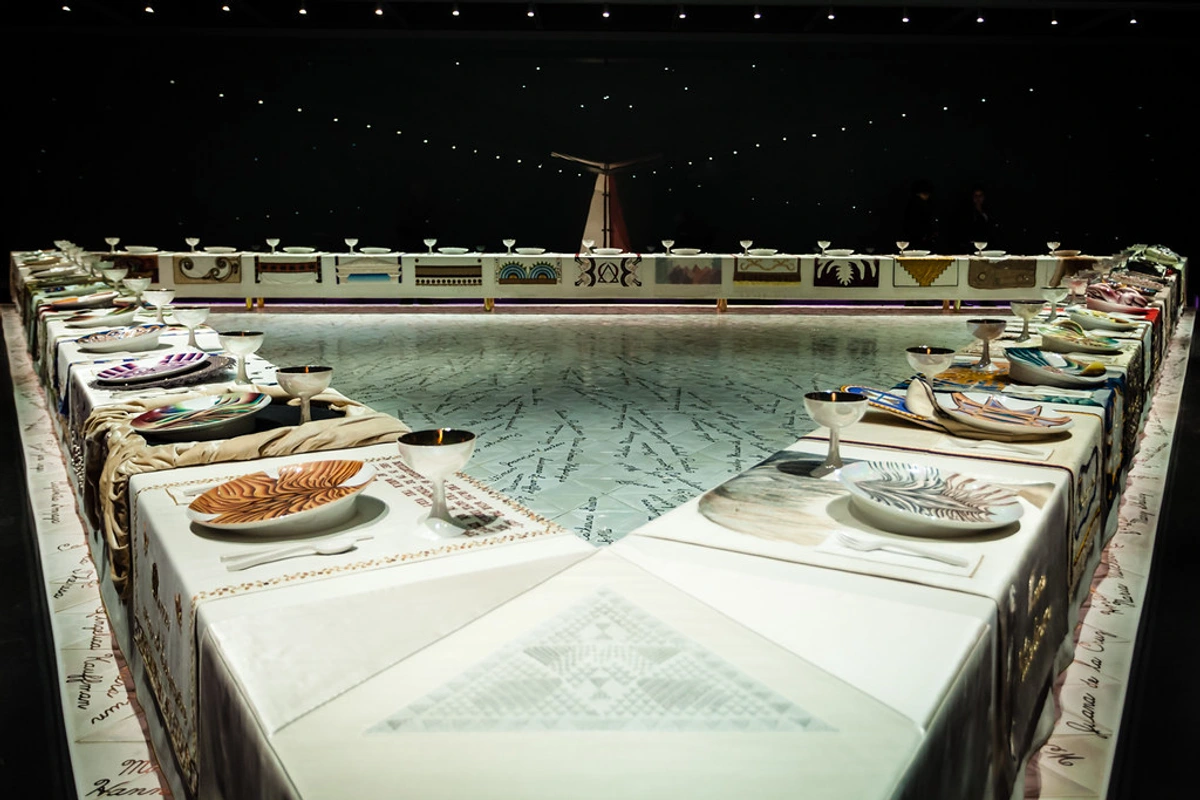
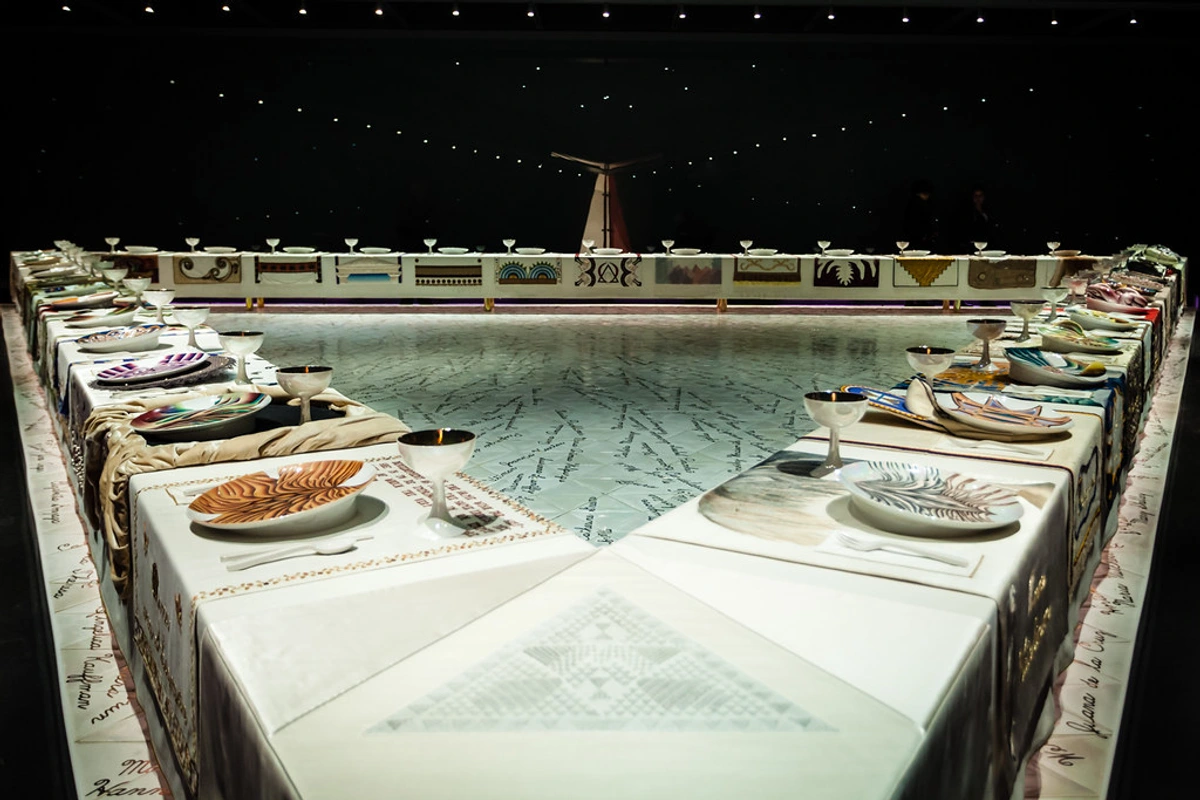
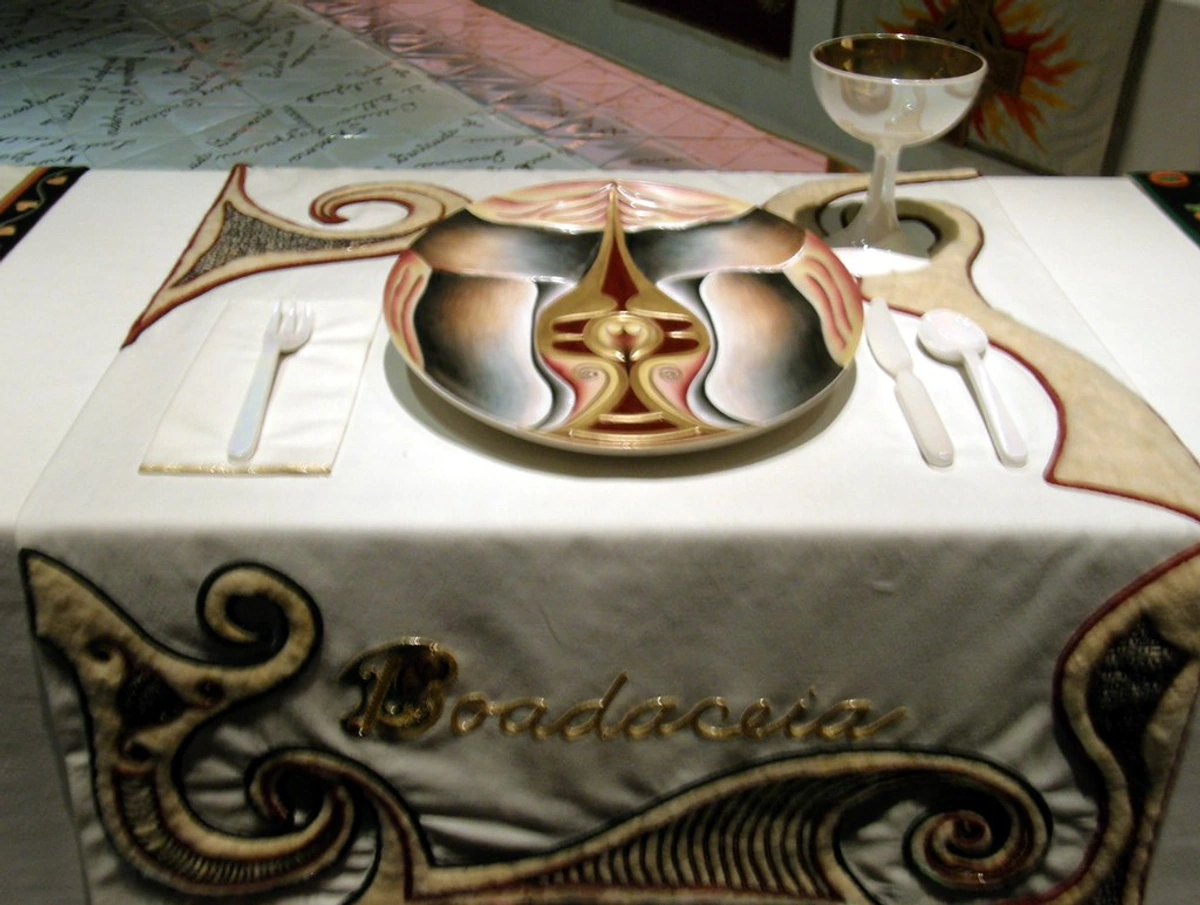
This is truly where The Dinner Party comes alive for me. Every single one of the 39 place settings is a unique, deeply personalized tribute, painstakingly designed to encapsulate the life, work, and spirit of the woman it honors. It’s a testament to both meticulous research and the incredible craftsmanship involved. Each setting includes:
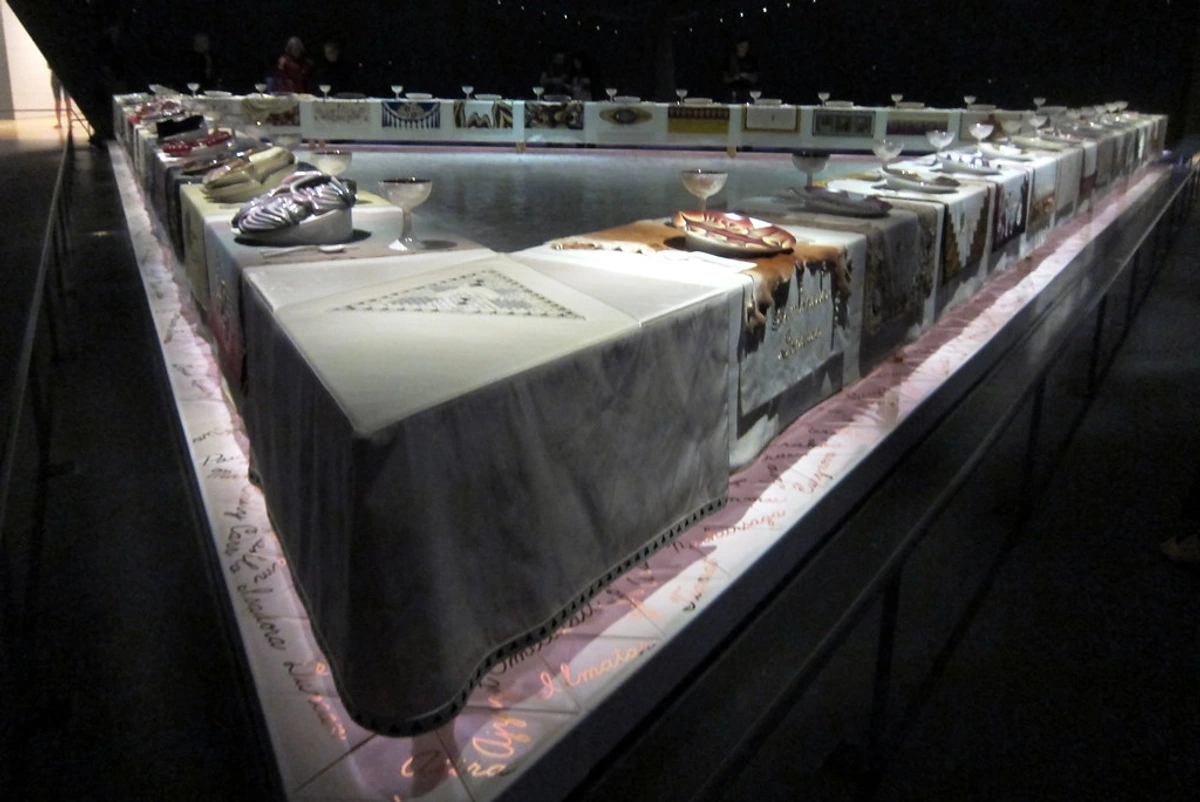
- An Embroidered Runner: These aren't just table linens; they're historical documents. Each runner was created using needlework techniques, stitches, and styles appropriate to the historical period of the woman being honored. This involved incredible research and the collaborative effort of numerous skilled volunteers, elevating traditional "women's work" to high art.
- A Ceramic Plate: Here's the truly groundbreaking part. Each plate, crafted from fine porcelain with shimmering luster glazes, features a central motif. These motifs, often abstract butterfly or floral forms, are widely interpreted as symbolizing a vulva – a bold, unapologetic representation of female agency, power, and beauty. What’s fascinating is how these plates evolve: those for the earliest figures are flatter, more contained, gradually becoming more sculptural and three-dimensional as you move towards the contemporary end of the table. This progression beautifully symbolizes women's growing freedom and assertion throughout history.
- A Ceramic Goblet and Cutlery: Completing the traditional place setting, these elements are also unique to each woman, reflecting their era and contributions.
- The Name: The honored woman's name is boldly embroidered into her runner, ensuring her presence is undeniable.
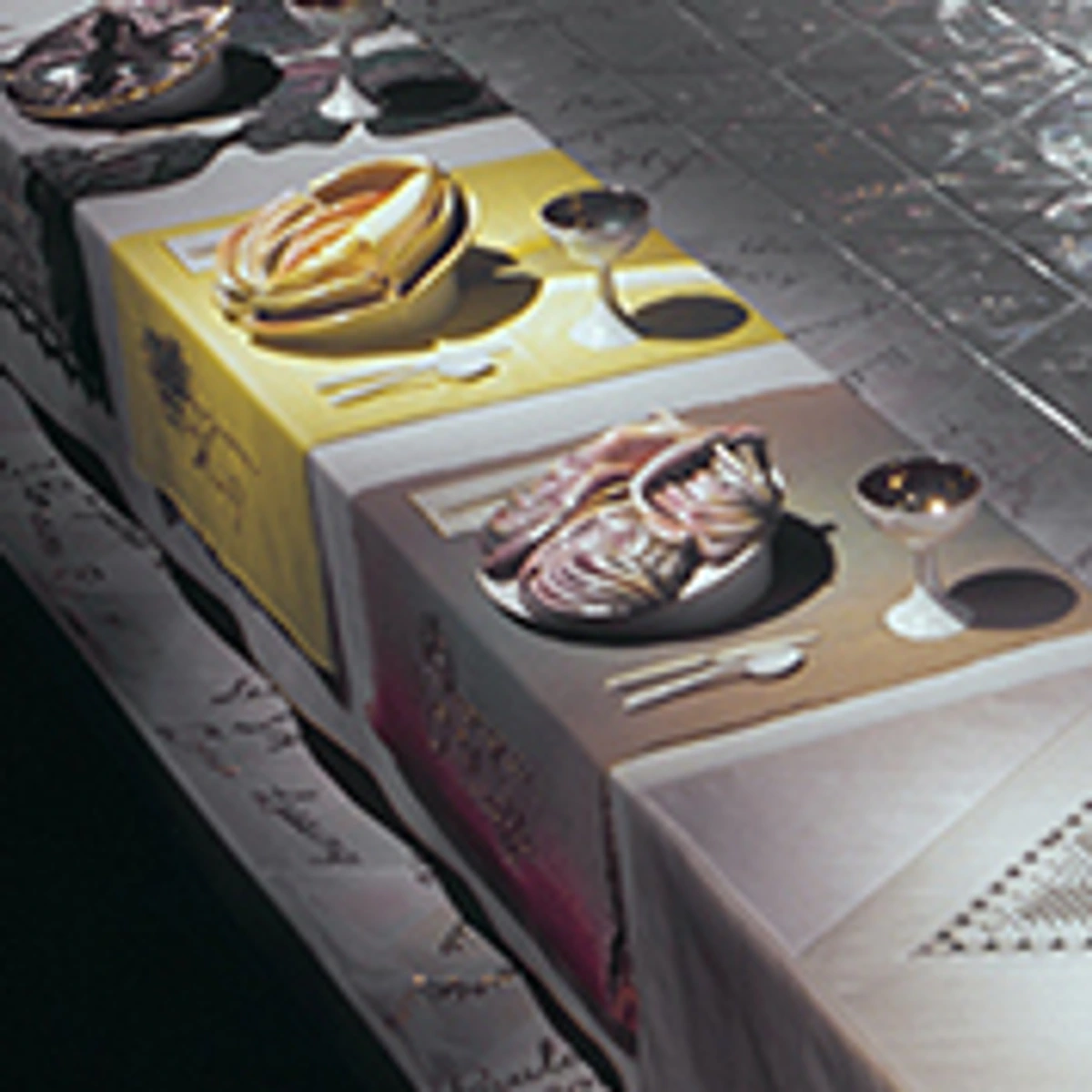
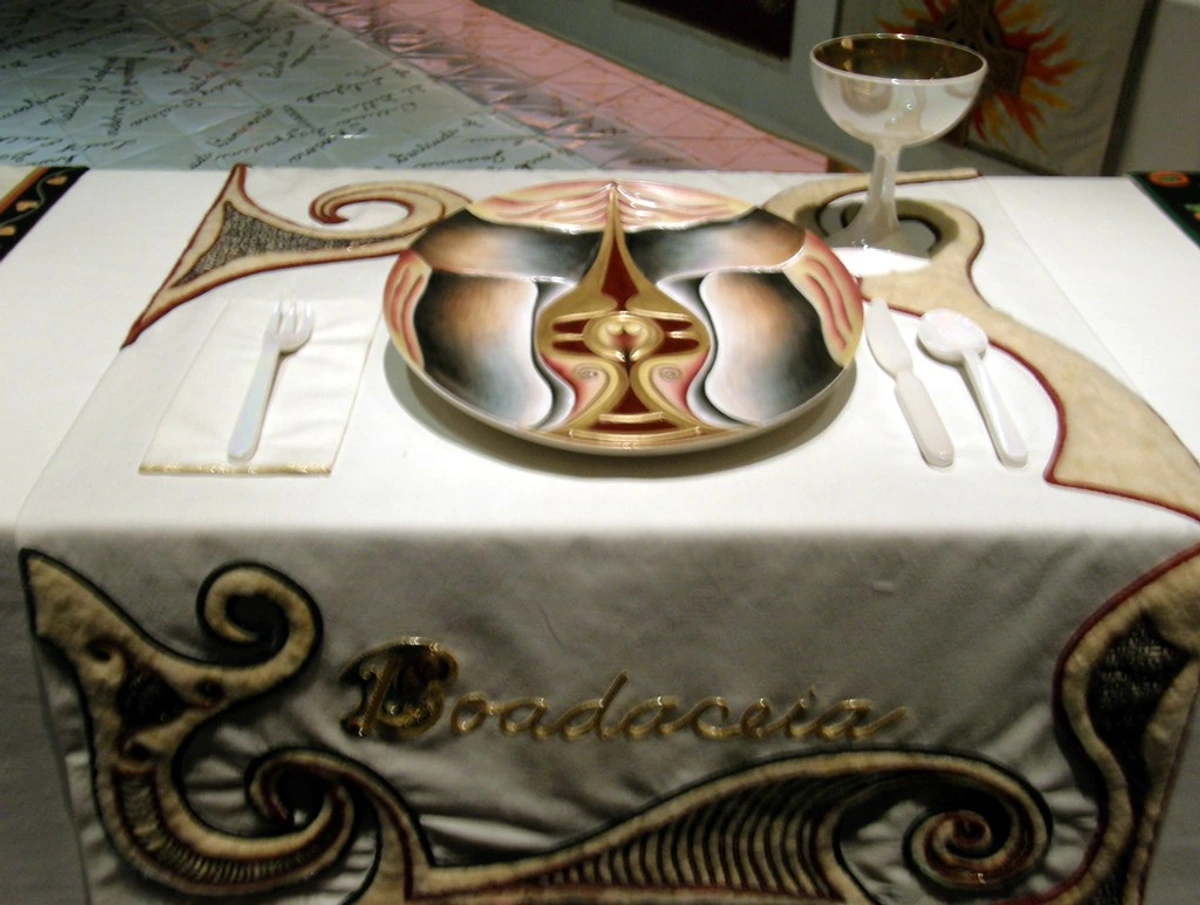
To give you a better feel for the depth of this individualization, here are a few striking examples from the table:
Honoree  | Runner Details | Plate Design |
|---|---|---|
| Hatshepsut | Uses Egyptian motifs and hieroglyphs telling her story of ruling as a pharaoh, emphasizing her power and divine right. | A stylized, powerful form reflecting the authority and regal imagery of ancient Egyptian art, asserting her presence as a divine ruler. |
| Virginia Woolf | Features a delicate, watery design, echoing the themes of her novel The Waves and subtly alluding to her tragic suicide, evoking a sense of introspection. | A blooming, delicate flower pushing through constraints, symbolizing the complex beauty of her mind and her struggle against societal pressures. |
| Georgia O'Keeffe | Simple, elegant, with colors directly drawn from her iconic paintings, reflecting her minimalist aesthetic and deep connection to nature. | The most three-dimensional plate on the entire table, a powerful, swirling form that seems to almost escape its confines, embodying her fiercely independent spirit and groundbreaking artistic vision. |
The Heritage Floor: We Stand on Their Shoulders – A Foundation of Forgotten Names
Underneath the table, if you look closely, you’ll discover what I consider perhaps the most profoundly moving part of the entire installation: The Heritage Floor. It's a vast triangular expanse of more than 2,000 handmade, gold-lustered porcelain tiles. Inscribed upon these tiles, in shimmering gold, are the names of another 999 women who, despite their significant marks on history, remain largely unknown.
This isn't just a list; it's a powerful visual metaphor. The 39 celebrated guests at the table literally rest on the foundation of these 999 women. It’s a compelling, undeniable statement about how progress, knowledge, and collective achievement are built on the countless, often invisible, contributions of those who came before us. It’s a vast, shimmering sea of names, a testament to the countless unacknowledged contributions that form the bedrock of our current understanding of history and culture. Standing there, you can almost feel the weight of history, and the quiet power of all those forgotten voices finally being heard.
The Controversy: Art, Craft, and the Unapologetic Female Form
When The Dinner Party first exploded onto the art scene, it was nothing short of a sensation. But, as with any truly groundbreaking iconic 20th-century art, it wasn't universally adored. The criticism was often fierce, and it frequently circled around a few predictable, yet revealing, points.
Let me tell you, it felt like the art world, or at least a significant part of it, wasn't quite ready for Judy Chicago's audacious vision.
The "Art vs. Craft" Debate: Dismantling Hierarchies
One of the loudest points of contention was the very materials and techniques Chicago employed: ceramics and needlework. These were traditionally, and I mean traditionally, dismissed as mere "women's work" or "craft" – certainly not worthy of the hallowed halls of "fine art." But this, ironically, was precisely Chicago's masterstroke. She wasn't just using these forms; she was actively elevating them, challenging the very definition of what art is and, more importantly, who gets to define it. This wasn't merely about valuing ceramics or textiles; it was about dismantling the masculine-dominated hierarchy of the art world, breaking down the gatekeeping mechanisms that had systematically excluded women’s contributions from the esteemed canon. It was a radical act of validation for centuries of female creativity.
The Vulva Imagery: An Unapologetic Celebration
And then there were the plates. Oh, the plates! You simply cannot talk about this piece without acknowledging the central-core, butterfly-like imagery. Many observers, both critics and the public, immediately (and correctly) interpreted these as explicitly vaginal forms. For some, this was shocking, offensive, even obscene – so much so that some politicians actively tried to prevent museums from acquiring the work. But for Chicago, this was far from obscene. This unapologetic embrace of vulval imagery was a direct confrontation with centuries of societal discomfort, shame, and outright repression of female sexuality and identity. It was a celebration, a powerful assertion of female bodily autonomy and beauty, daring viewers to confront their own discomfort.
Inclusivity Questions: The Ongoing Dialogue
In the decades since its creation, The Dinner Party has also faced critiques from within feminist circles, and these conversations are vital for the continued evolution of feminist symbolism and art. A prominent example is the setting for Sojourner Truth, the only Black woman at the table. Her plate notably deviates from the signature vulva form, instead featuring three abstracted faces. Chicago's stated intention was to avoid further sexualizing a figure who had endured horrific sexual exploitation as a slave. However, this choice has led to an important and ongoing dialogue: some have viewed it as an unintended failure to grant her the same representation as the white women at the table, highlighting the complexities and nuances inherent in representing diverse experiences within a unified feminist framework. It reminds us that even with the best intentions, interpretation and impact can vary widely, and our understanding of inclusivity is constantly evolving.
The Enduring Journey: The Dinner Party's Impact and Evolution
It's fascinating to consider that an artwork so monumental didn't immediately have a permanent home. After its initial debut, The Dinner Party embarked on a remarkable journey, touring extensively across the globe for many years. This touring was crucial, allowing millions to experience the work firsthand and engage with its challenging ideas.
Here's a brief look at some key milestones in its public life:
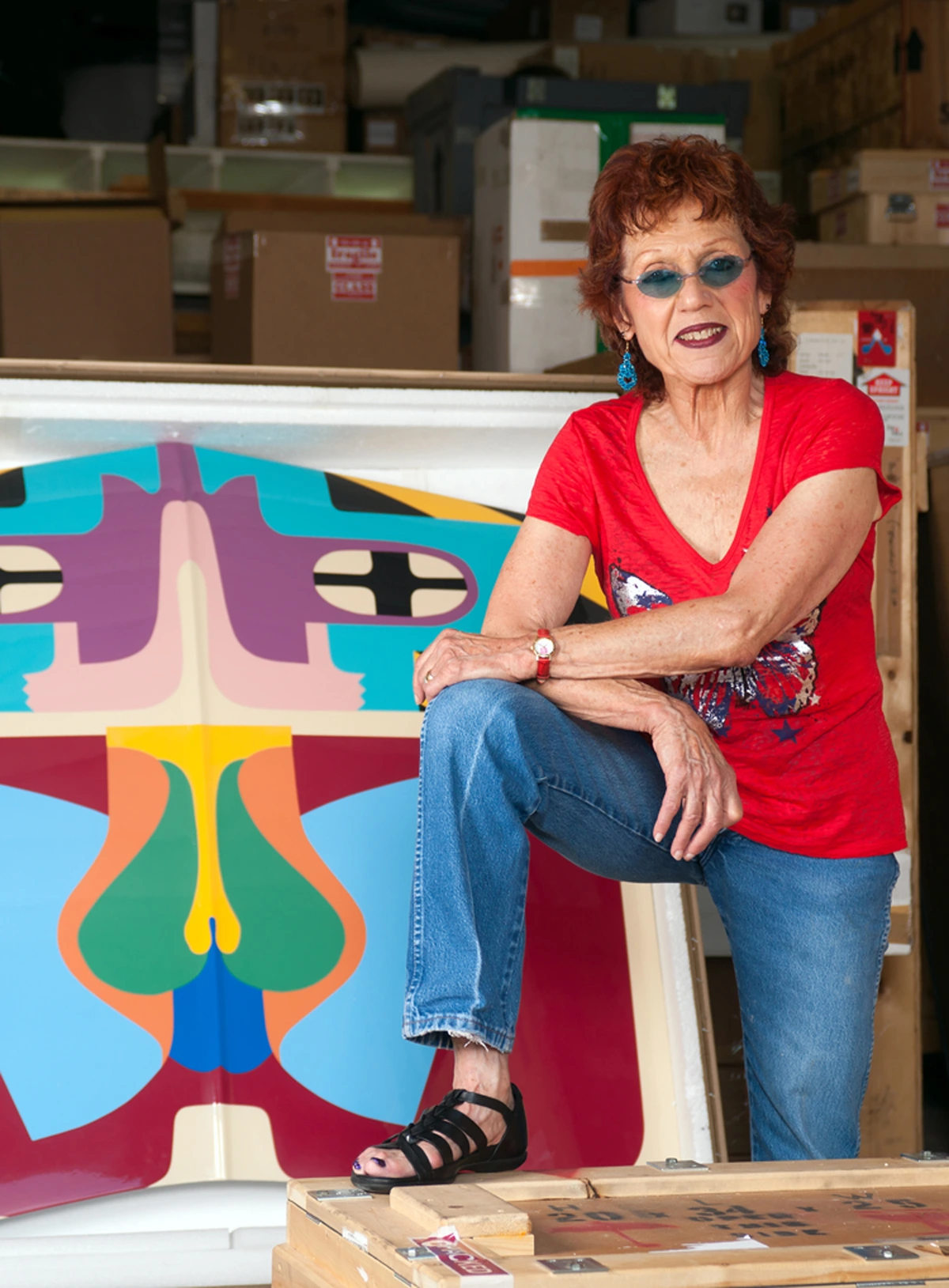
- 1979: Premiered at the San Francisco Museum of Modern Art, immediately sparking widespread debate and drawing massive crowds.
- 1980s-2000s: Toured internationally, gracing museums and galleries in various countries, continuously fueling discussions about feminism, art, and history.
- 1987: The piece was placed on long-term loan at the University of Houston–Clear Lake.
- 2001: Secured by the Elizabeth A. Sackler Foundation.
- 2007: Found its permanent home at the Elizabeth A. Sackler Center for Feminist Art at the Brooklyn Museum in New York City, solidifying its place as a cornerstone of modern art history.
This journey in itself reflects the very themes of the artwork – the struggle for recognition, the slow but steady progress towards establishing a place for women's contributions within mainstream institutions.
The Enduring Legacy: Why This Monumental Artwork Still Matters
Despite all the controversy – or perhaps, and I lean towards this, because of it – The Dinner Party has firmly cemented its place as one of the most iconic and profoundly influential artworks of the 20th century. It didn't just invite a conversation; it forced a seismic shift in dialogue about who gets remembered, whose stories are told, and whose contributions are valued in our cultural narratives. It championed a revolutionary model of collaborative art-making, bringing hundreds of volunteers into the creative process, and it undeniably brought feminist symbolism into the mainstream consciousness like never before.
But for me, its real power goes beyond being a historical landmark. It’s more than a history lesson; it’s a living, breathing prompt. It doesn't just present answers; it asks you the vital questions: Who else is missing from your table? Whose stories haven't been told to you? It’s a starting point for a much larger, ongoing conversation, one that we are absolutely still having today, perhaps more urgently than ever.






I believe its greatest strength is that it’s not a finished statement, a definitive declaration. Instead, it’s an open invitation – an invitation to question, to research, to celebrate, and ultimately, to ensure that the table of history you build for yourself, and for future generations, is a truly complete and inclusive one.
Frequently Asked Questions (FAQ)
Where is The Dinner Party located now? After touring for years without a permanent home, this monumental installation found its rightful place. It is now permanently housed in the Elizabeth A. Sackler Center for Feminist Art at the Brooklyn Museum in New York, where it has been since 2007, drawing visitors from all over the world.
Is it a real dinner party? Can you eat off the plates? Oh, if only! No, it's not a real dinner party in the literal sense. It's a symbolic artwork, a sculpture designed to convey profound historical and feminist messages. The settings are purely sculptural, crafted from delicate porcelain and intricate textiles, and no food is ever served. Imagine the curator's horror!
Who are some of the other incredible women at the table? The 39 guests are a truly inspiring roster, spanning millennia and diverse cultures. They range from the very first mythological figures, like the Primordial Goddess, all the way to influential women of the early 20th century, such as Georgia O'Keeffe. Other notable figures include the formidable Empress Theodora, the visionary Hildegard of Bingen, the pioneering artist Artemisia Gentileschi, the philosophical Mary Wollstonecraft, and the tireless suffragist Susan B. Anthony. Each one's story is worth a deep dive.
How was this colossal artwork made? This is one of my favorite parts of the story! It was a truly massive and groundbreaking collaborative effort, involving over 400 people, predominantly volunteers. This diverse team included ceramists, expert needle-workers, and meticulous researchers. It was a conscious decision by Chicago to embrace this feminist model of collaborative creation, directly challenging the patriarchal myth of the "lone male genius" in art. It showed the power of collective vision and skill.
Why isn't Frida Kahlo at the table? That's a fantastic question, and one I hear often! At the time of The Dinner Party's creation in the mid-1970s, Frida Kahlo, while certainly recognized, had not yet achieved the widespread global icon status she holds today. Her immense popularity and critical re-evaluation truly blossomed later. It’s a perfect, living example of how our understanding of history and significant figures is constantly evolving – a dynamic process that The Dinner Party itself powerfully encourages. It reminds us that history is never static, always open to new discoveries and renewed appreciation. You can find out more about influential women in art in our guides on famous female painters and famous female sculptors.
And if you're like me, still buzzing with curiosity about the artist behind this monumental work, I highly recommend you dive even deeper. Check out our Ultimate Guide to Judy Chicago. It's packed with insights into her creative process, other significant works, and her enduring impact on the art world and beyond. It’s a truly fascinating journey into the mind of a trailblazer.