Eugène Delacroix: The Rebel Who Painted Revolution
Uncover the dramatic life and explosive art of Eugène Delacroix – the French Romantic genius who redefined painting with color, chaos, and courage.

Eugène Delacroix: The Rebel Who Painted Revolution
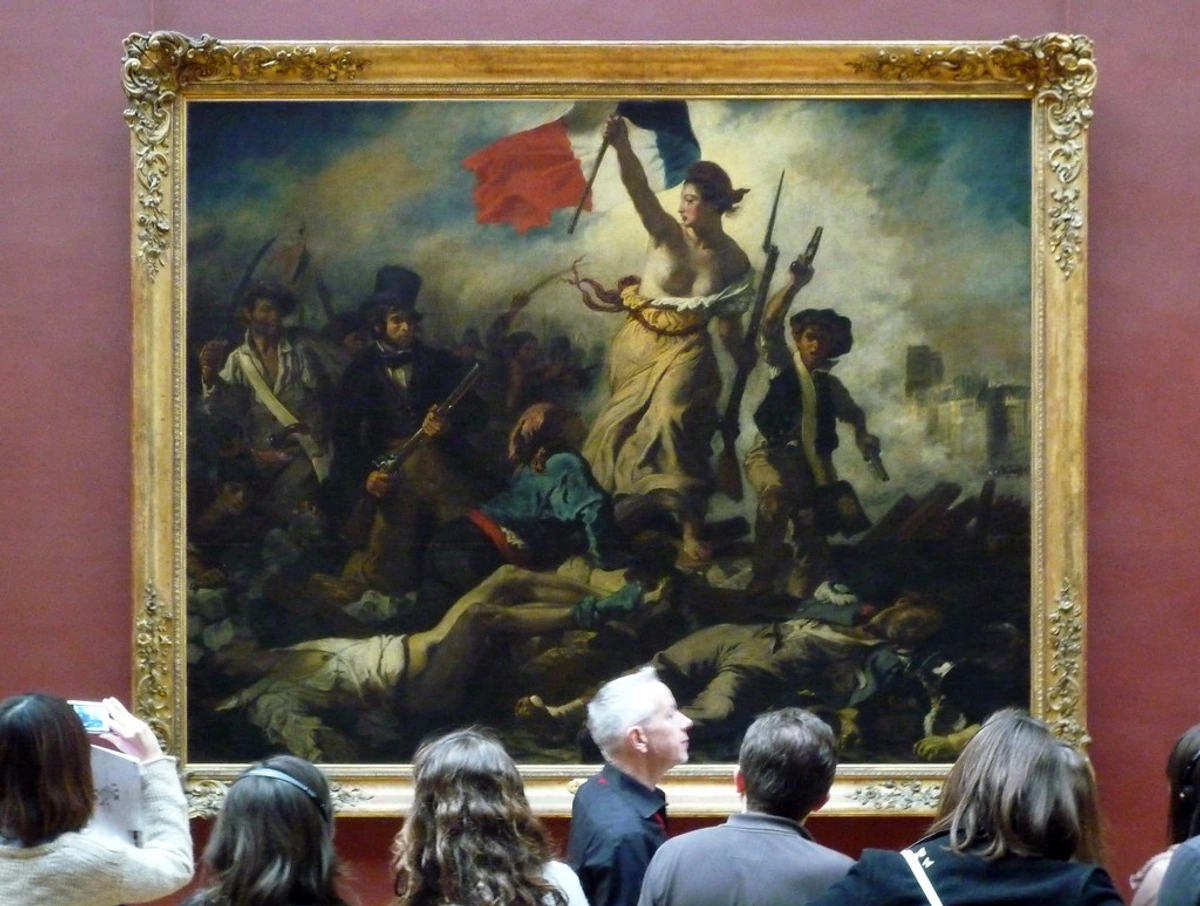
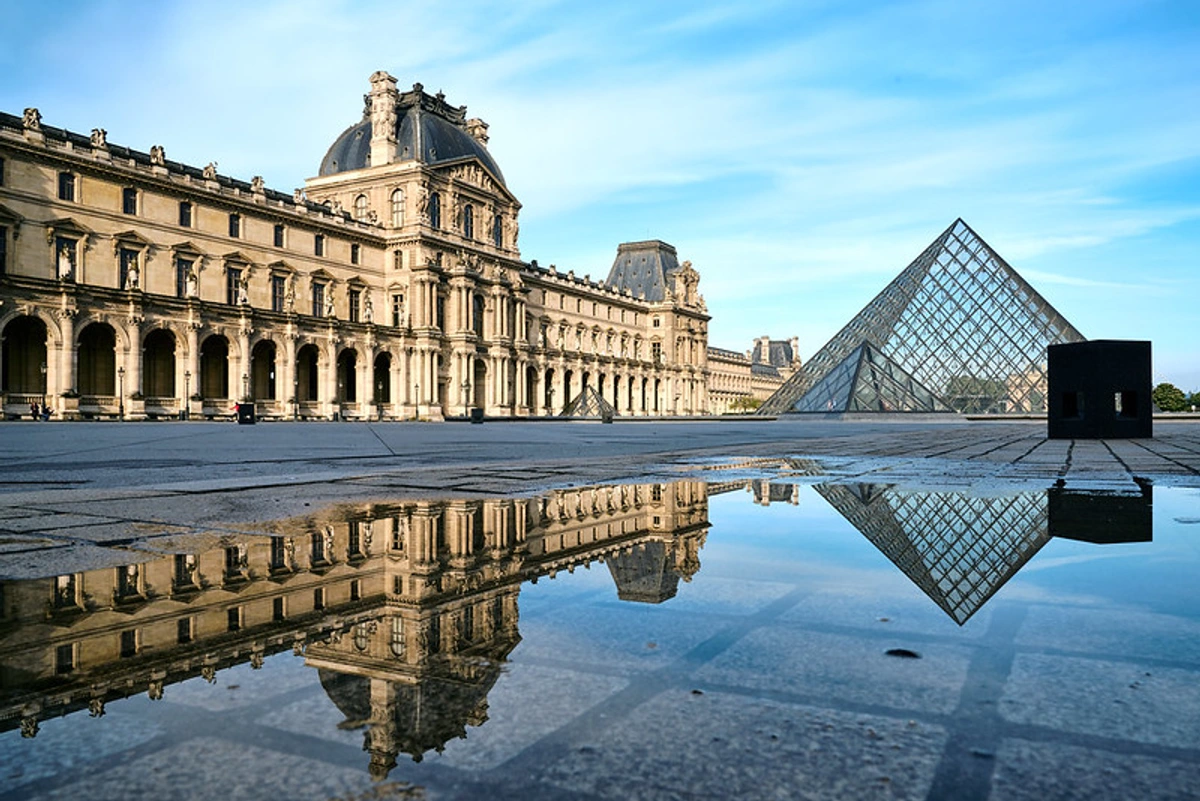
I remember standing in front of Liberty Leading the People at the Louvre, heart pounding, and thinking, "This is pure electricity." It's not just a painting—it's a revolution frozen in time, a symphony of chaos where every brushstroke feels like a gunshot. That’s the magic of Eugène Delacroix, the man who poured his soul into canvases that still scream from museum walls and proved that paint could be as dangerous as politics. Today we're diving deep into the life of the "Violin of Color," the Romantic rebel who refused to play by the rules and changed art forever.
The Turbulent Beginning: Not Your Average Artist Prodigy
Ferdinand Victor Eugène Delacroix entered this world on April 26, 1798, in Charenton-Saint-Maurice, France, into a chaos that would become his signature. His early life reads like a gothic novel: his father Charles-François Delacroix, a prominent minister under Napoleon, died when Eugène was just 7, sparking rumors that the boy wasn't even the painter's biological son. (Imagine carrying that family drama through art school!) The persistent whisper among art historians—that his true father was the brilliant, morally ambiguous diplomat Charles-Maurice de Talleyrand—casts a long shadow over his life. Beyond the strategic military implications, Delacroix's fascination with North Africa reflected deeper European Romantic preoccupations with the "Orient" as a space of spiritual and aesthetic renewal. The French conquest of Algeria in 1830—occurring just two years before his journey—had made North Africa a site of intense French colonial interest, but also a source of profound cultural anxiety and exotic fantasy. Delacroix's encounter with Morocco must be understood within this colonial context: he traveled as part of a diplomatic mission aimed at establishing French influence with the Moroccan sultan, yet his artistic vision transcended mere colonial documentation.
His journals reveal this complex dynamic. While he occasionally reproduces European stereotypes about "Oriental" indolence and fatalism, he more often demonstrates remarkable cultural sensitivity and aesthetic appreciation. His sketches of Moroccan daily life—women at wells, musicians performing, merchants in marketplaces—show none of the salacious voyeurism that characterized much Orientalist painting. Instead, they reveal genuine curiosity about Islamic culture, architecture, and social customs.
This cultural encounter had profound artistic consequences beyond mere subject matter. Delacroix observed that Moroccan artists "understand decoration in a way we have forgotten," recognizing patterns of geometric abstraction that predated European modernism by centuries. The intricate tilework, calligraphic inscriptions, and architectural ornamentation he documented would later influence not only his own decorative projects but also the development of Art Nouveau and abstract art movements.
If true, it would explain his lifelong sophistication, his access to political circles, and a certain disillusioned pragmatism that tempered his Romantic fire. His mother Victoire belonged to the elite Oeben family—cabinetmakers to French royalty for generations—which gave Eugène cultural privileges and an early exposure to craftsmanship that most artists could only dream of. This complex inheritance—a web of rumored paternity, political intrigue, and artisanal legacy—created the psychological crucible for his later rebellion.
The Political Landscape of Delacroix's Birth
Delacroix's birth in 1798 occurred during one of the most turbulent periods in French history—the Directory, just years after the Reign of Terror and midway through the French Revolutionary Wars. Napoleon Bonaparte was still a rising general, and France was caught between revolutionary ideals and the emergence of a new authoritarian order. This climate of political upheaval, where old monarchies crumbled and new empires rose, became the essential backdrop for Delacroix's art. He was, in many ways, a child of the revolution’s second generation, inheriting both its intellectual fervor and its deep disillusionment. I often think of him as someone who witnessed history's gears grinding violently, and decided early on that painting must reflect this chaos, not smooth it over with classical platitudes. Contemporary accounts suggest that Delacroix's personal demeanor reflected this inner turmoil—he was described by friends as possessing "nervous energy" and "restless intelligence," characteristics that would define both his painting technique and his psychological disposition throughout his life.
The uncertainty of his parentage mirrored this societal instability. While the Talleyrand rumor remains speculative, its symbolic power is undeniable—it positions Delacroix as an insider-outsider from birth, someone potentially connected to immense power (Talleyrand served every French regime from Louis XVI to Louis-Philippe) yet officially unacknowledged. This dual status may have fueled both his ambition and his profound empathy for marginalized figures throughout his work. This insider-outsider complex would become a defining characteristic, allowing him to critique the establishment while maintaining access to its privileges. Art historians like T.J. Clark have noted how this psychological positioning helps explain Delacroix's remarkable ability to create art that was simultaneously revolutionary and commercially successful—he understood both the language of power and the language of those who resist it.
The evidence for Talleyrand's paternity, while never conclusively proven, created a persistent undercurrent of speculation that shaped how Delacroix was perceived in his lifetime. Contemporary salon gossip frequently alluded to his "aristocratic bearing" and "unnatural sophistication," attributing these qualities to hidden noble parentage rather than individual genius. This rumor likely contributed to the complex mix of respect and resentment he encountered throughout his career.
Proponents of the Talleyrand theory point to several compelling, though circumstantial, pieces of evidence:
- Physical resemblance: Contemporary accounts describe Delacroix as bearing a striking likeness to Talleyrand, especially in his penetrating gaze and distinctive facial structure. Multiple acquaintances noted the similarity independently, creating a body of anecdotal evidence that persists in art historical literature.
- Political protection: Despite his often-controversial work, Delacroix consistently received government commissions and official support, suggesting powerful patronage. His government position as Director of Fine Arts under the July Monarchy, and later his election to the Academy, happened with surprising ease given his radical reputation among conservative circles.
- Intellectual sophistication: From a young age, Delacroix displayed a worldly sophistication and ease in aristocratic society—qualities more readily explained by Talleyrand's mentorship than his official father's background. His journals reveal familiarity with political intrigue and diplomatic nuance that seems extraordinary for someone of his official social station.
- Financial anomalies: Delacroix's financial circumstances throughout his life contained unexplained elements—sudden inheritances, mysterious patronage, and access to expensive art materials despite frequent complaints about poverty. These irregularities have led some biographers to speculate about undisclosed sources of support.
- Contemporary documentation: Several contemporary diarists and letter-writers made veiled references to the connection, though none stated it explicitly due to social taboos and potential political consequences.
However, historians like Maurice Sérullaz and more recently Barthélémy Jobert argue that while plausible, the evidence remains circumstantial. What's more significant is how this ambiguity shaped Delacroix's psychological landscape. He carried himself with the bearing of someone who believed he deserved greater recognition than he had received—a temperament that would serve him well during his decades-long battles with the art establishment. This psychological posture also helps explain his remarkable productivity: he seemed driven to prove his worth through an almost relentless output of paintings, drawings, and writings. His friend and fellow artist Paul Huet noted that Delacroix worked "like a man possessed, as if each canvas might be his last chance to prove something essential about himself." This sense of urgency distinguished him from contemporaries who worked at a more leisurely pace.
An Inheritance of Chaos: Rumors, Privilege, and Early Loss
Delacroix's formative years were a masterclass in contradiction and survival. They forged not just an artist, but a man perpetually at odds with his world.
A Haunting Paternity Rumor: The question of his biological father is perhaps the single most defining ghost in his biography. The official story: Charles-François Delacroix. The persistent rumor: Charles-Maurice de Talleyrand, one of the most cunning political survivors in French history. Contemporary gossip, and even Talleyrand's own enigmatic comments, fueled this speculation. While conclusive proof remains elusive, the 'what if' is tantalizing—it would reframe Delacroix's life as one of hidden noble lineage, explaining his ease in aristocratic salons, his sophisticated worldview, and perhaps even the government commissions that came his way. It adds a layer of psychological depth to his art; his fascination with hidden identities and dramatic revelations feels deeply personal.
The Oeben Legacy: From his mother's side, the Oeben family, Eugène inherited not wealth, but something more valuable for a future artist: a profound respect for meticulous craftsmanship. The Oeben workshop had defined luxury for the French court, creating furniture that was both structurally sound and breathtakingly beautiful. This dual appreciation for the robust framework and the decorative surface would later manifest in Delacroix's method: complex underpaintings and architectural drawings forming the skeleton upon which he'd layer his famously vibrant, chaotic color. He didn't just paint; he built his canvases, a legacy of the artisan blood in his veins.
The Double-Edged Sword of Orphanhood: Losing both parents by his early teens left Eugène profoundly alone. This early abandonment became a crucible. It instilled a fierce self-reliance, but also a lingering melancholia visible in his journals—a sense of being an outsider looking in. While his older brother, General Charles-Henri Delacroix, pursued a conventional military career, Eugène was left to navigate the Parisian art world, a bourgeois milieu where he often felt stifled. This orphanhood also paradoxically freed him from the weight of family expectation, giving him the psychological space to pursue his own iconoclastic path.
However, his orphanhood also brought material hardship. Despite his family's respectable social standing, financial resources were limited, creating persistent anxiety about money throughout his early career. This economic pressure likely contributed to his disciplined work ethic and his willingness to pursue commercial lithographs and illustrations alongside his monumental paintings—never compromising his vision, but pragmatically addressing market demands.
First Brushstrokes: A Rebel in Training
- The Louvre as His True School: Though he entered École des Beaux-Arts at 17, he found its rigid Neoclassical dogma suffocating. His real education happened in the Grande Galerie of the Louvre, where he was gripped by the dynamism of Rubens, the Venetian masters' color, and the raw life in works by Velázquez. He'd spend days on end, not just copying, but absorbing the energy of these masters.
- Géricault: The Mentor and the Catalyst: His meeting with Théodore Géricault, the brilliant, tortured creator of The Raft of the Medusa, was a formative explosion. Géricault, a fellow rebel against academic sterility, taught him that painting could be as visceral as life itself, that it could tackle contemporary catastrophe. More than just technique, Géricault gave Delacroix permission to paint the world as he felt it—raw, brutal, and emotionally immediate. Delacroix famously posed as one of the dying figures in The Raft of the Medusa, a baptism by immersion into what would become his life's work.
- The Salon of 1822: A Public Humiliation: Delacroix's first major submission to the Paris Salon, The Bark of Dante (Dante and Virgil in Hell), was a shock. While it won a medal, the conservative establishment couldn't stomach its dark violence and emotional intensity. In a deliberate act of artistic humiliation, the piece was controversially hung above eye level, a placement meant to diminish its impact and signal official disapproval. Instead of crushing the young artist, this public slight steeled his resolve. It was the opening salvo in a lifelong war between Delacroix and the Academy.
This experience of official rejection, combined with his orphanhood and family mysteries, forged Delacroix's identity as a perpetual outsider. He developed what art historian Lee Johnson calls "the psychology of the misunderstood genius"—a complex mixture of aristocratic bearing, intellectual superiority, and chronic insecurity about his place in the art world. This duality drove both his perfectionism in the studio and his often aggressive defense of his artistic principles in public forums.
The École des Beaux-Arts and Academic Rebellion
Delacroix's formal education began traditionally enough. At 17, he entered the prestigious École des Beaux-Arts in Paris, the epicenter of French academic training. Yet, from the beginning, he found himself fundamentally at odds with the institution's rigid Neoclassical doctrine, which emphasized precise drawing (le dessin) over color, historical idealism over contemporary reality, and static composition over dynamic movement. His teachers, including the influential Pierre-Narcisse Guérin, recognized his talent but were often bewildered by his resistance to academic orthodoxy. Where his classmates diligently copied classical sculptures and perfected their linear precision, Delacroix was already seeking something more visceral and emotionally immediate.
This conflict became the defining tension of his early career: a deep respect for the technical mastery of the old masters, combined with a profound conviction that their methods were inadequate for expressing the psychological and political realities of his own tumultuous era. His rebellion wasn't born of ignorance, but of knowledge—he had studied Raphael, Michelangelo, and Poussin so thoroughly that he understood exactly which rules he was breaking and why.
Breaking All the Rules: The Birth of French Romanticism
Delacroix erupted onto the art scene at a moment of suffocating predictability. While the ghost of Jacques-Louis David still demanded stern Roman republicans and perfect, wax-museum musculature, Delacroix unleashed canvases that felt like open wounds: raw emotion, exotic fever-dreams, bleeding flesh, and motion that could blur the line between ecstasy and violence. He became the unlikely, often vilified, figurehead of French Romanticism – a movement that declared, once and for all, that the painter's soul was a valid, perhaps the most valid, subject for art. His debut at the 1822 Salon with The Bark of Dante (Dante and Virgil in Hell) was a confrontation: viewers accustomed to the serene clarity of classical painting were suddenly confronted with writhing bodies, feverish colors, and an almost unbearable psychological intensity. The painting depicts Dante and Virgil crossing the River Styx, surrounded by the damned souls of the wrathful and sullen. Delacroix's treatment transformed this familiar literary scene into a vision of pure psychological terror—the water itself seems to boil with human agony, and the figures claw at the boat with desperate, inhuman energy. It felt like someone had torn open a psychological wound and declared it beautiful. This wasn't mere shock value—Delacroix was drawing on his deep knowledge of Dante's text while filtering it through his own contemporary experience of political violence and social upheaval. The painting announced that Romanticism wouldn't be polite, wouldn't be decorous, wouldn't retreat into safe historical distance. It would grapple directly with the most disturbing aspects of human experience.
What distinguished Delacroix's Romanticism from its German or English counterparts was its specifically French character—by which I mean its engagement with contemporary politics and its sophisticated dialogue with classical tradition. While German Romantics like Caspar David Friedrich retreated into transcendental solitude and English Romantics like J.M.W. Turner pursued increasingly atmospheric abstraction, Delacroix remained committed to the human drama unfolding in real historical time. His paintings engaged directly with the pressing political questions of his moment: the Greek War of Independence (The Massacre at Chios), the July Revolution (Liberty Leading the People), and ongoing debates about French colonialism and cultural identity. While German Romantics like Caspar David Friedrich focused on transcendental solitude and English Romantics like J.M.W. Turner pursued atmospheric abstraction, Delacroix remained committed to the human drama. His friend and supporter Charles Baudelaire recognized this distinction, writing that Delacroix was "passionately in love with passion," while other Romantics of his generation often seemed more interested in passion's atmospheric effects than its human cost. His paintings engaged directly with current events: the Greek War of Independence (The Massacre at Chios), the July Revolution (Liberty Leading the People), and ongoing debates about French colonialism and cultural identity. He never retreated from political controversy, instead using it as raw material for aesthetic innovation. This political engagement wasn't merely thematic—it fundamentally shaped his formal language. The chaotic compositions of his revolutionary scenes, with their dynamic diagonals and dramatic color contrasts, emerged directly from his conviction that contemporary political upheaval demanded a new visual syntax. Traditional classical composition, with its stable pyramids and balanced proportions, couldn't adequately represent a world where legitimate authority was constantly being contested in the streets.
The contrast with Turner is particularly illuminating: both artists used color as their primary language, but where Turner increasingly dissolved form into atmospheric conditions, Delacroix insisted on the human body as the site where political and psychological dramas converge. This difference reflects their distinct cultural contexts: Turner's England, despite its own political tensions, enjoyed relative stability compared to the revolutionary cycles that defined Delacroix's France. Delacroix witnessed multiple regime changes, political violence, and social upheaval firsthand—experiences that made the human body's vulnerability and resistance central to his artistic vision. Where Friedrich sought transcendence through landscape, Delacroix found it through the body in extremis—the martyr, the revolutionary, the lover, the warrior—pushed to their emotional and physical limits.
His Romanticism was also deeply literary, drawing inspiration from European literature in completely new ways. He wasn't merely illustrating scenes from Dante, Shakespeare, or Byron; he was translating their psychological complexity into purely visual terms. This literary dimension of Delacroix's work reflected broader nineteenth-century French culture, where painting and literature maintained close, often competitive relationships. His friendships with writers like Victor Hugo, George Sand, and Charles Baudelaire meant that his visual experiments participated in a larger cultural conversation about how to represent modern consciousness. When he painted scenes from Goethe's Faust or Scott's Ivanhoe, he treated literature as a springboard into realms of human passion that academic painting had deemed unworthy or inappropriate.

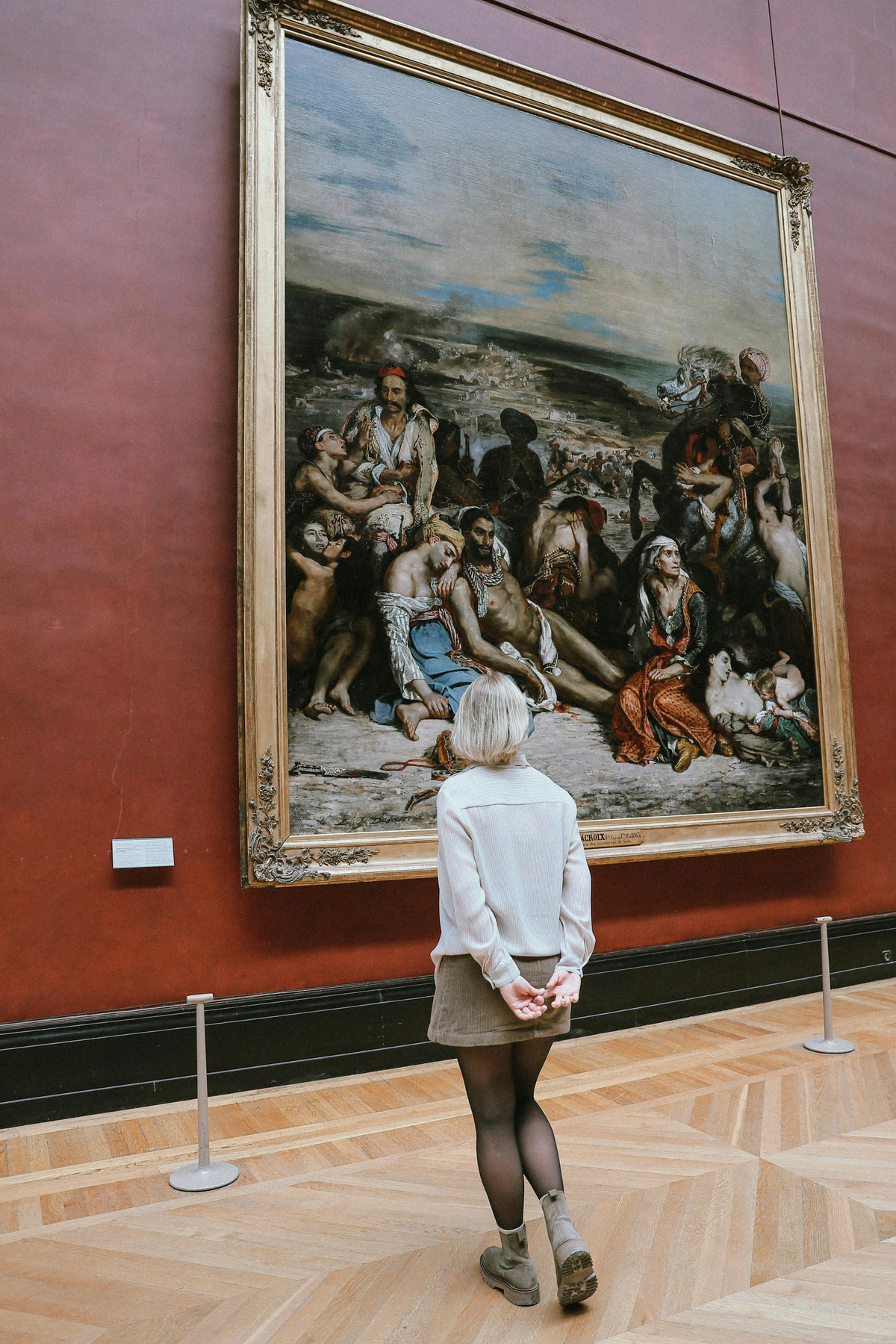
His unstated, yet deeply felt, manifesto was simple: "Make us feel, not just see, the drama." This wasn't an aesthetic choice; it felt like a moral imperative, a lifelong crusade against the kind of artistic boredom that drains the life from a room. Delacroix believed that art's highest purpose was emotional communication—not the detached, analytical observation advocated by Neoclassical theorists, but direct transmission of lived experience from artist to viewer. This conviction placed him at odds not only with academic tradition but also with emerging scientific approaches to visual representation. This wasn't an aesthetic choice; it felt like a moral imperative, a lifelong crusade against the kind of artistic boredom that drains the life from a room. I think of it as the difference between reading a clinical description of a revolution and being caught in the crush of the crowd, smelling gunpowder and blood. That palpable urgency is what defines his work. When critics labeled his 1824 masterpiece The Massacre at Chios a "massacre of painting," he embraced the insult as a badge of honor. It confirmed he was doing something right. The painting depicted a contemporary atrocity—the massacre of Greek civilians by Ottoman forces during the Greek War of Independence—with unprecedented emotional rawness and formal chaos. Conservative critics were scandalized by its apparent technical shortcomings and its departure from historical idealization, but Delacroix recognized that the subject demanded a new kind of painterly language. While his predecessors treated canvases like polite dinner parties, Delacroix treated them like battlefields—bloody, chaotic, and unforgettable.
This philosophy extended to his choice of materials: he pioneered the use of more vibrant modern pigments like chrome yellow, emerald green, and cobalt blue, colors that were chemically more stable and optically more intense than traditional earth tones. These "artificial" colors were initially criticized as garish by conservative critics, who preferred the muted palettes of classical painting. His experimentation with these new industrial pigments wasn't merely aesthetic—it reflected technological developments of the Industrial Revolution, making his work paradoxically both nostalgic for pre-modern vitality and forward-looking in its embrace of modern materials.
What Exactly Is French Romanticism? It's an Argument with Itself
I think of French Romanticism as art's first genuine emotional reckoning. Before it, European art was often trapped in a polite conversation about virtue, heroism, and order. Then Delacroix arrived and screamed: Let's feel everything, especially the messy parts. It wasn't just a style; it was a full-scale philosophical revolt against the tyranny of reason and the suffocation of social convention. The core tenets felt like a declaration of independence for the individual soul. They emerged not from abstract theory but from lived experience—from artists who felt suffocated by Enlightenment rationalism and aristocratic social conventions. This was the generation that came of age after the French Revolution had shattered old certainties but failed to deliver on its promises of liberty, equality, and fraternity. The romantic artist found themselves suspended between a lost past and an uncertain future, forced to create their own values and meaning.
- The Tyranny of Emotion: Placing the individual's subjective experience—fear, ecstasy, doubt, passion—above all else. The painter's inner storm was now a worthy subject for a ten-foot canvas.
- The Allure of the Exotic: Actively seeking out the unfamiliar and the "Oriental" (a problematic but revealing colonial-era term) as an escape from European moralism. It was an aesthetic and spiritual tourism in an age before mass travel.
- The Cult of Movement: Rejecting the static, sculptural poses of Neoclassicism in favor of a dynamic, cinematic energy. Figures don't pose; they're caught mid-action, mid-fall, mid-scream.
- Color as a Psychological Weapon: No longer just descriptive, color became the primary vehicle for emotion. Delacroix understood that a specific red could communicate rage long before the viewer registers the subject.
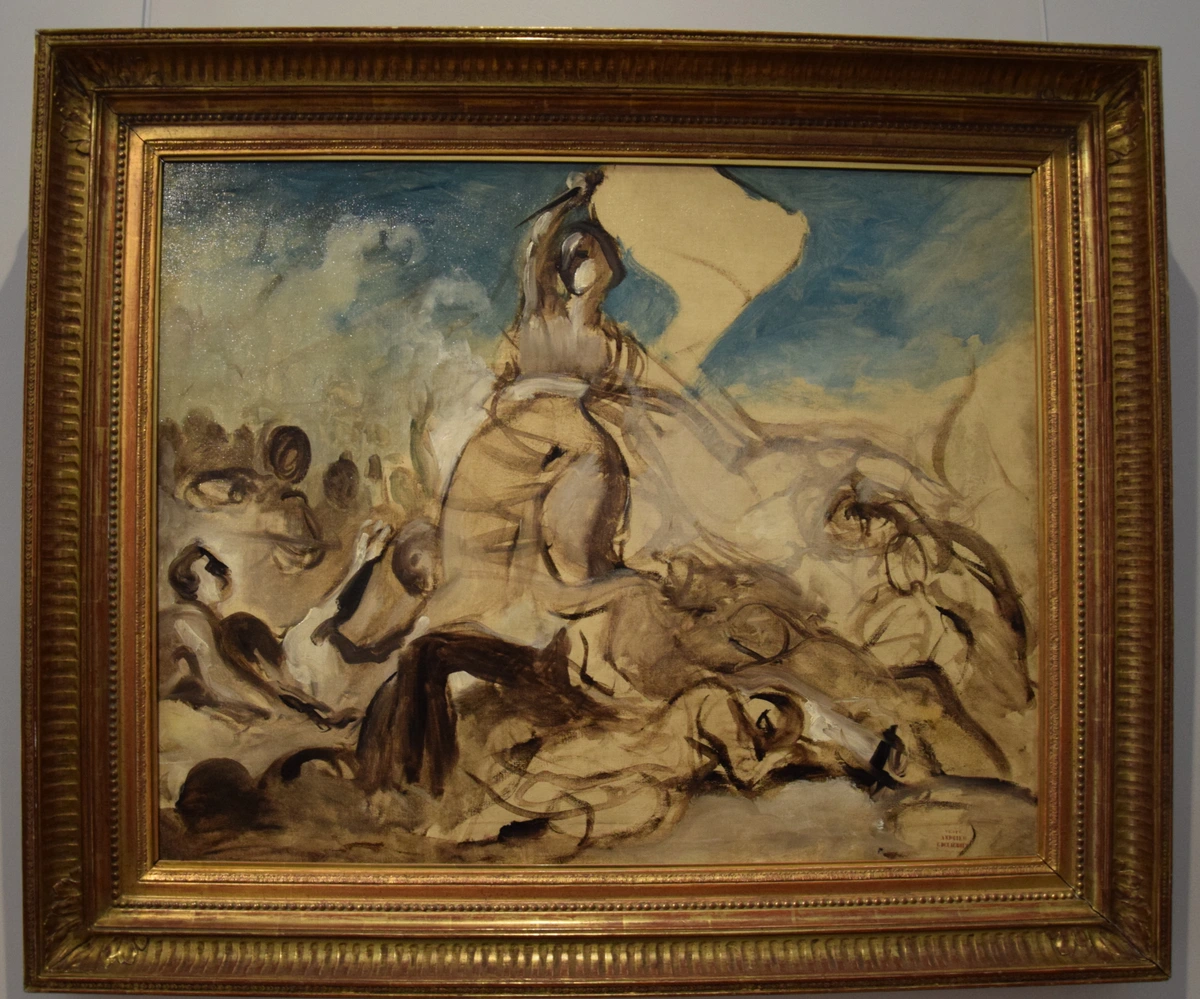
- The Beauty of the Unfinished: Embracing the sketch, the suggestive brushstroke, and the "non-finito" quality that invites the viewer to complete the work with their own imagination. It's an act of profound trust in the audience.
If Neoclassicism was a perfectly balanced symphony, Romanticism was the improvised jazz solo that breaks out midway, demanding you either join the chaos or get left behind. It was the sound of an artist thinking out loud, in public, at full volume.
The Historical Context: Painting in the Shadow of Upheaval
To truly grasp Delacroix's revolution, you have to understand the world that birthed him. He came of age during one of the most turbulent periods in French history—a relentless cycle of revolution, empire, restoration, and revolt that lasted from 1789 well into the 1840s. This wasn't background noise; it was the air he breathed, the fuel for his art. The chaos he painted mirrored the chaos he lived through. Society was breaking apart and reforming, and artists were left to question everything they thought they knew about order, authority, and human nature. The French Revolution had promised universal rights and democratic participation, but what followed was years of Terror, foreign wars, Napoleonic dictatorship, and the restoration of monarchy. This cycle of raised hopes and bitter disappointments created a specifically French form of political consciousness that Delacroix's art both reflected and helped to shape. In this world, Neoclassicism's calm, stoic heroes felt like a hollow joke. People needed an art that matched the intensity of their lived experience, an art that could capture the feeling of living through the end of one world and the violent birth of another. That art was Romanticism, and Delacroix became its most articulate and controversial French exponent.
Delacroix's contribution to this aesthetic revolution went beyond mere rebelliousness. Like many revolutionaries, he was also a deeply traditional craftsman who meticulously studied the old masters. His innovation lay in synthesis—combining the dramatic chiaroscuro of Caravaggio with the color brilliance of Venetian Renaissance painting (Titian, Veronese, and Tintoretto) and the furious energy of Baroque masters like Rubens and Rembrandt. Unlike many academic artists who studied these masters to imitate their surfaces, Delacroix sought to understand their underlying creative processes. His copies after Rubens, for example, don't attempt literal reproduction but instead analyze how Rubens achieved specific optical and emotional effects. He taught himself to see these historical traditions through the lens of Romantic individualism, filtering classical techniques through his own psychological and emotional needs. His journals reveal this synthetic approach: he could spend pages analyzing Michelangelo's anatomical precision or Raphael's compositional harmony, then immediately pivot to his own experimental color theories. Unlike the pompier painters who merely imitated classical forms, Delacroix metabolized them, transforming stern academic lessons into fuel for his own expressive fire.
This synthetic approach defined his teaching as well. Though he never maintained a formal academy, his published writings and informal mentorship created a counter-tradition to academic pedagogy. He taught by example, demonstrating that true originality emerges not from rejecting the past but from entering into a creative dialogue with it. This ability—to be simultaneously reverent and irreverent toward tradition—remains one of his most distinctive and influential characteristics, distinguishing him from both conservative imitators and naive rebels who lacked his deep historical knowledge. He was, in the most profound sense, a revolutionary who understood that true innovation emerges not from destroying the past, but from engaging with it critically and passionately—a lesson that would reverberate through generations of modern artists.
In his journal entry for January 26, 1857, he wrote: "What makes men of genius is not new ideas, but the idea which dominates them: that everything has already been said is not enough, that everything must be said again, and that too in the way they feel it." These words capture his paradoxical relationship with tradition—respectful but not reverent, knowledgeable but not constrained. The passage continues with a crucial insight: "The beauties which have been discovered by the great masters are eternal beauties, but their forms are insufficient for us." This distinction between eternal principles and temporal forms became central to his artistic philosophy.
The truth is that Delacroix never completely rejected classical principles. Even his most "revolutionary" paintings maintain strict underlying structural coherence. In Liberty Leading the People, the pyramidal composition, though dynamic and fragmented, still organizes the chaos according to classical principles. His preparatory drawings reveal meticulous attention to compositional structure and anatomical accuracy—skills he developed through rigorous academic training. This careful balance—revolutionary content within controlled structure—is what separates great rebels from mere iconoclasts. This careful balance—revolutionary content within controlled structure—is what separates great rebels from mere iconoclasts. He showed future generations how to be truly modern while remaining in dialogue with the entire Western tradition.
The Great Divide: A Clash of Civilizations on Canvas
To understand the seismic shift Delacroix represented, you have to see the battlefield. The war wasn't just about different styles; it was a fundamental disagreement about what art was for. This isn't a dry comparison chart; it's a summary of the cultural trench warfare that defined 19th-century art.
Romantics (Delacroix)  | Neoclassicists (Ingres, David) |
|---|---|
| Soul over Sense: Passion, feeling, the artist's inner turmoil is the subject. Art as emotional archaeology, digging into the human psyche. | Mind over Matter: Order, reason, and idealized civic virtue are the aim. Art as moral instruction and democratic education. |
| Dynamic Vibrancy: Artists like Delacroix used dynamic color contrasts that created a feeling of shimmering, unstable energy. Color creates psychological atmosphere. | Muted Sobriety: Muted academic palettes (lots of earth tones, controlled highlights) aimed to create a sense of timeless, marmoreal seriousness. Color describes form. |
| The Global and Exotic: Subjects were often drawn from contemporary events or "exotic" locales like North Africa, Turkey, or the Middle Ages. Art responds to the contemporary world. | The Classical and Ideal: Historical/mythological idealism was the only acceptable subject, with an emphasis on Greco-Roman antiquity. Art transcends time. |
| The Hand of the Artist: Brushstrokes visible, celebrating the spontaneous act of creation. The artist's process is part of the story. Embodied, material presence. | The Perfect Surface: Invisible technique (licked finish), where brushstrokes are smoothed away to create an impersonal, polished ideal. Transcendent, dematerialized perfection. |
| The "I": Individual expression, even if flawed or eccentric, is paramount. Art reflects unique consciousness. | The "We": Collective classical ideals, a shared cultural language, were more important than individual style. Art creates community. |
| Motion over Stasis: Dynamic diagonal compositions, active brushwork, figures in motion. Life as process and becoming. | Stability over Movement: Static pyramidal compositions, controlled poses, frozen moments. Life as perfected being. |
| Local Color over Ideal Tone: Using color as observed or felt, with bold contrasts. Truth emerges from specific perception. | Idealized Harmony: Centralized composition with triadic color schemes. Truth emerges from universal principles. |
This aesthetic civil war shaped French culture for half a century, creating the intellectual framework within which modernism would later emerge. The battle lines were so clear that succeeding generations of artists felt compelled to take sides, creating a dialectic that pushed both camps toward greater extremes of expression. Delacroix's side ultimately won the long war—not because Ingres lacked genius, but because Delacroix's vision proved more expansive, capable of absorbing scientific, political, and cross-cultural developments that Neoclassicism's rigid framework simply couldn't accommodate. The legacy of this conflict would echo through subsequent generations, reappearing in debates between Post-Impressionists and academic painters, Fauvists and traditionalists, ultimately becoming a permanent feature of modern art's self-understanding.
This bitter divide was most famously embodied in the lifelong feud between Delacroix and Jean-Auguste-Dominique Ingres. Ingres, the undisputed master of the perfect line, allegedly said, "Drawing is the probity of art," implying that Delacroix's color-centric approach was a form of artistic dishonesty. Delacroix, in turn, saw Ingres's work as cold, lifeless, and emotionally sterile. It was a clash of aesthetic titans, and the aftershocks would shape art history for a century to come.
Brushstrokes of Genius: Revolutionary Techniques
Delacroix didn't just paint subjects – he invented ways to make paint itself scream emotion. His brush wasn't just a tool; it was an instrument that made colors sing and clash in perfect disharmony. He pioneered techniques that would fundamentally alter how artists approached the physical act of painting:
The Alchemy of Color: Theory and Practice
Delacroix's approach to color was revolutionary precisely because it was grounded in both scientific observation and emotional intuition. He was fascinated by the emerging optical theories of his time, particularly the work of chemist Michel Eugène Chevreul, whose 1839 treatise The Principles of Harmony and Contrast of Colours provided scientific validation for what Delacroix had already discovered through practice: that colors interact dynamically, and their perceived hue depends entirely on their surrounding context.
Simultaneous contrast: Delacroix obsessively explored how placing complementary colors (red/green, blue/orange, yellow/violet) next to each other created visual vibrations that made both colors appear more intense. In The Fanatics of Tangier, observe how the deep blues vibrate against the warm earth tones, creating an almost electric tension. He would often lay down complementary underpaintings, allowing traces to show through in the final work, creating a complex chromatic conversation that anticipates Impressionist and Post-Impressionist color strategies.
Optical mixing: Instead of physically mixing colors on his palette, Delacroix increasingly applied pure colors in separate brushstrokes, allowing the viewer's eye to blend them optically at a distance. This technique, radical in his time, would become foundational to Impressionism and Divisionism. When you stand back from Liberty Leading the People, the seemingly chaotic reds, whites, and blues resolve into the French tricolor flag—a masterful demonstration of color creating meaning through visual perception rather than descriptive accuracy.
Reflected light: His Moroccan experience taught him that color is never static. White isn't simply white—it reflects every nearby hue. In Women of Algiers, look closely at the women's garments: shadows contain violets, blues, and golden reflected lights, transforming what could have been monochromatic drapery into a complex chromatic symphony.
The Physics of Movement: Compositional Dynamics
Beyond color, Delacroix revolutionized how paintings convey motion and energy. He intuitively understood principles that scientists were just beginning to formalize. His friend and correspondent, the pioneering photographer Nadar, recalled that Delacroix was fascinated by early stop-motion photography experiments, seeing in them scientific confirmation of his own visual observations about how bodies move through space. He kept detailed journals documenting his analysis of how galloping horses move, how bodies fall, and how light changes during motion—observations that directly informed his most dynamic compositions.
Diagonal dynamism: He favored dramatic diagonal compositions over the static vertical/horizontal grid of Neoclassicism. These diagonals create visual tension and directional force, pulling the viewer's eye through the picture plane. In The Massacre at Chios, the diagonal arrangement of figures—from the dead and dying in the foreground to the mounted soldier in the background—creates a sense of relentless forward momentum, drawing the viewer deeper into the scene's terrible drama.
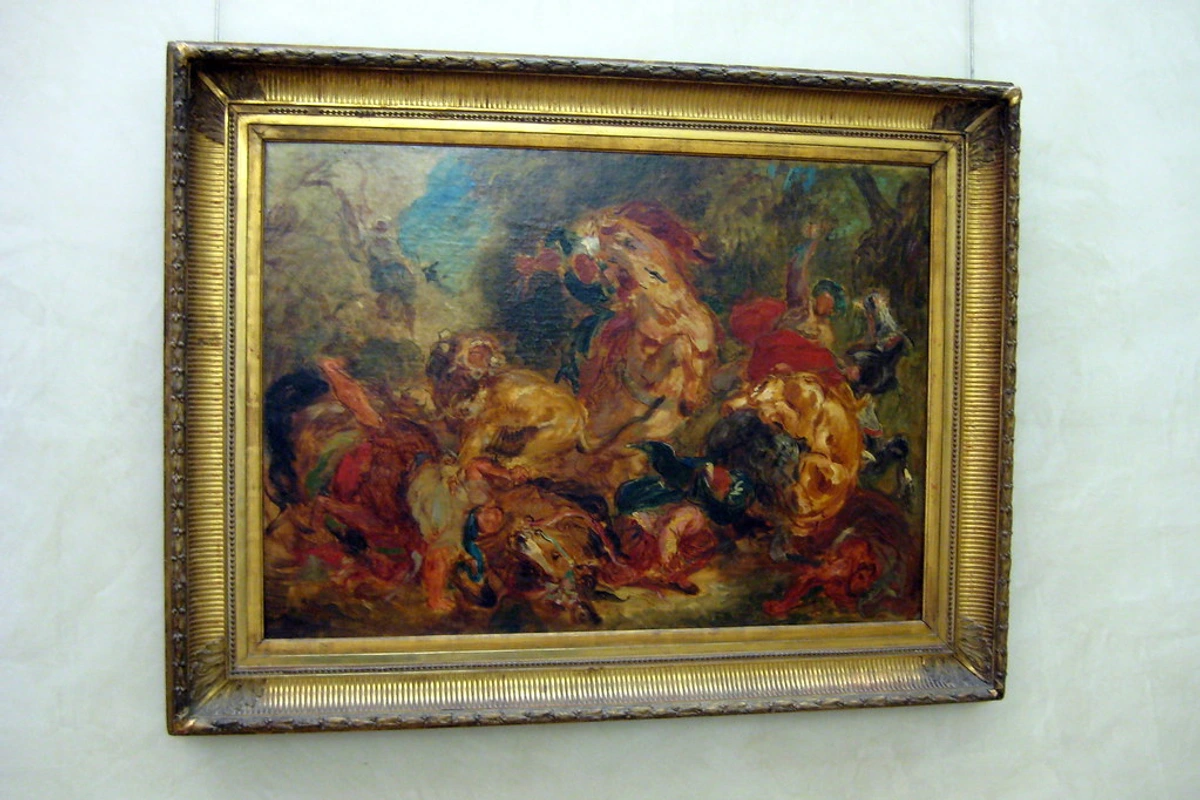
Swirling vortex compositions: In works like The Death of Sardanapalus or his late lion hunts, he organized elements around a swirling, centrifugal force that throws figures and objects toward the edges of the canvas. This creates a sense of explosive, barely contained chaos. Art historians have noted how these compositions seem to anticipate the swirling dynamism of Baroque masters like Rubens, filtered through Delacroix's distinctly modern sensibility.
Figure placement and overlap: Instead of arranging figures in clear, isolated poses (the academic preference), Delacroix overlapped bodies, creating dense, complex spatial relationships where movement in one figure generates movement in the next. This technique creates what psychologists call "kinetic empathy"—the viewer's eye follows the implied motion, creating a kinesthetic experience of the painting. His preparatory sketches show him experimenting with different figure groupings, seeking the arrangement that would maximize this sense of collective movement while maintaining individual character. In Liberty Leading the People, notice how each figure seems to surge forward, their overlapping forms creating a wave-like motion that propels the entire composition toward the viewer.
Diagonal dynamism: He favored dramatic diagonal compositions over the static vertical/horizontal grid of Neoclassicism. These diagonals create visual tension and directional force, pulling the viewer's eye through the picture plane. Art historians have noted how his diagonal arrangements seem to anticipate cinematographic techniques—the way figures enter and exit the frame creates a sense of continuous action happening beyond the canvas edges. In The Death of Sardanapalus, the entire composition spirals around a central diagonal axis that seems to pull everything toward violent dissolution.
Swirling vortex compositions: In works like The Death of Sardanapalus or his late lion hunts, he organized elements around a swirling, centrifugal force that throws figures and objects toward the edges of the canvas. This creates a sense of explosive, barely contained chaos. These compositions have been analyzed using chaos theory mathematics—the apparent disorder follows precise mathematical relationships that create aesthetic tension. The vortex wasn't merely decorative; it embodied Delacroix's worldview that existence itself was a state of constant transformation and conflict.
Figure placement and overlap: Instead of arranging figures in clear, isolated poses (the academic preference), Delacroix overlapped bodies, creating dense, complex spatial relationships where movement in one figure generates movement in the next. This technique creates what psychologists call "kinetic empathy"—the viewer's eye follows the implied motion, creating a kinesthetic experience of the painting.
Rhythmic brushwork: In his late works particularly, his brushwork itself becomes a record of movement—quick, directional strokes that follow the energy of the subject rather than carefully describing its edges. This technique anticipates gestural abstraction by nearly a century. When you stand close to these late paintings, the shimmering surface seems to pulse with the same energy as the subject being depicted. Contemporary conservation analysis using macrophotography reveals that Delacroix worked with multiple brush sizes simultaneously, holding several brushes in his hand at once to switch rapidly between fine detail and broad gesture.
The Studio as Laboratory: Delacroix's Working Process
Delacroix's studio was less an artist's workshop than a scientific laboratory dedicated to optical experimentation. He worked with controlled north light, using mirrors and lenses to study his paintings under different conditions. His move to the Rue de Fürstenberg studio in 1857 reflected this experimental approach—he chose the space specifically for its stable northern exposure, which provided consistent illumination throughout the day. He would sometimes work on multiple canvases simultaneously, testing variations of the same composition with different color harmonies. This systematic approach to aesthetic problems distinguished him from both academic painters who relied on formulaic solutions and intuitive Romantics who worked purely from inspiration. His final studio on the Rue de Fürstenberg, now preserved as the Musée Delacroix, was specifically designed with a skylight that could be adjusted to control the quality and direction of natural light, allowing him to observe his work under the precise conditions he desired.
This methodology—systematic preparation followed by expressive execution—became a model for later artists seeking to combine intellectual rigor with emotional directness. The Impressionists, Fauvists, and early abstract artists would all adopt variations of this working process, proving that Delacroix's technical innovations had as much lasting influence as his more visible stylistic innovations. His approach suggested that true artistic freedom emerged from technical mastery, not from its absence—a lesson that remains central to art education today. Visitors to his studio were often struck by the almost scientific organization of his materials: pigments meticulously arranged by hue and intensity, brushes organized by size and stiffness, sketchbooks categorized by subject matter and date. This combination of passionate expression and systematic preparation made him a bridge between the intuitive Romantic and the analytical modernist—a balance that continues to influence artists working today.
His approach combined rigorous planning with improvisational execution. He would develop paintings through numerous preparatory drawings and oil sketches, working out compositions, color arrangements, and tonal relationships. Technical analysis of his paintings reveals extensive underdrawing and underpainting, indicating that his seemingly spontaneous surfaces rested on carefully constructed foundations. However, once he began the final canvas, he remained open to discovery, often radically changing elements mid-painting in response to new insights. Infrared imaging of works like The Abduction of Rebecca shows significant compositional changes made directly on the canvas, demonstrating his willingness to revise in response to emerging aesthetic possibilities. Infrared imaging and X-ray analysis of his canvases reveal extensive pentimenti—areas where he scraped away and repainted entire sections—demonstrating his commitment to finding the most emotionally truthful expression rather than simply executing a preconceived plan. In The Death of Sardanapalus, for example, he completely reworked the composition multiple times, laboring for months to achieve the final vision of chaotic destruction that so shocked his contemporaries.
Materials and Techniques
Delacroix's technical innovations extended to his materials. He was an early adopter of new pigments that became available through 19th-century chemical advances, including cadmium yellow, emerald green, and cobalt blue. These modern colors offered greater intensity and permanence than traditional earth tones, allowing him to achieve the chromatic brilliance that defined his mature style. He would often apply multiple layers of glaze and scumble, building up surfaces that shimmered with optical complexity. This layering technique created what art restorers today recognize as his signature surface quality—a depth and luminosity that simply couldn't be achieved through direct painting alone.
This methodology—systematic preparation followed by expressive execution—became a model for later artists seeking to combine intellectual rigor with emotional directness.
The man didn't just mix colors; he made them fight on the canvas. His friend and fellow artist Paul Huet once observed him working and noted: "He treats color like a general directing his troops, sending them into battle with precise strategic intention." This military metaphor captures something essential about Delacroix's approach—he saw color relationships not as harmonious arrangements but as dynamic conflicts that generated visual energy.
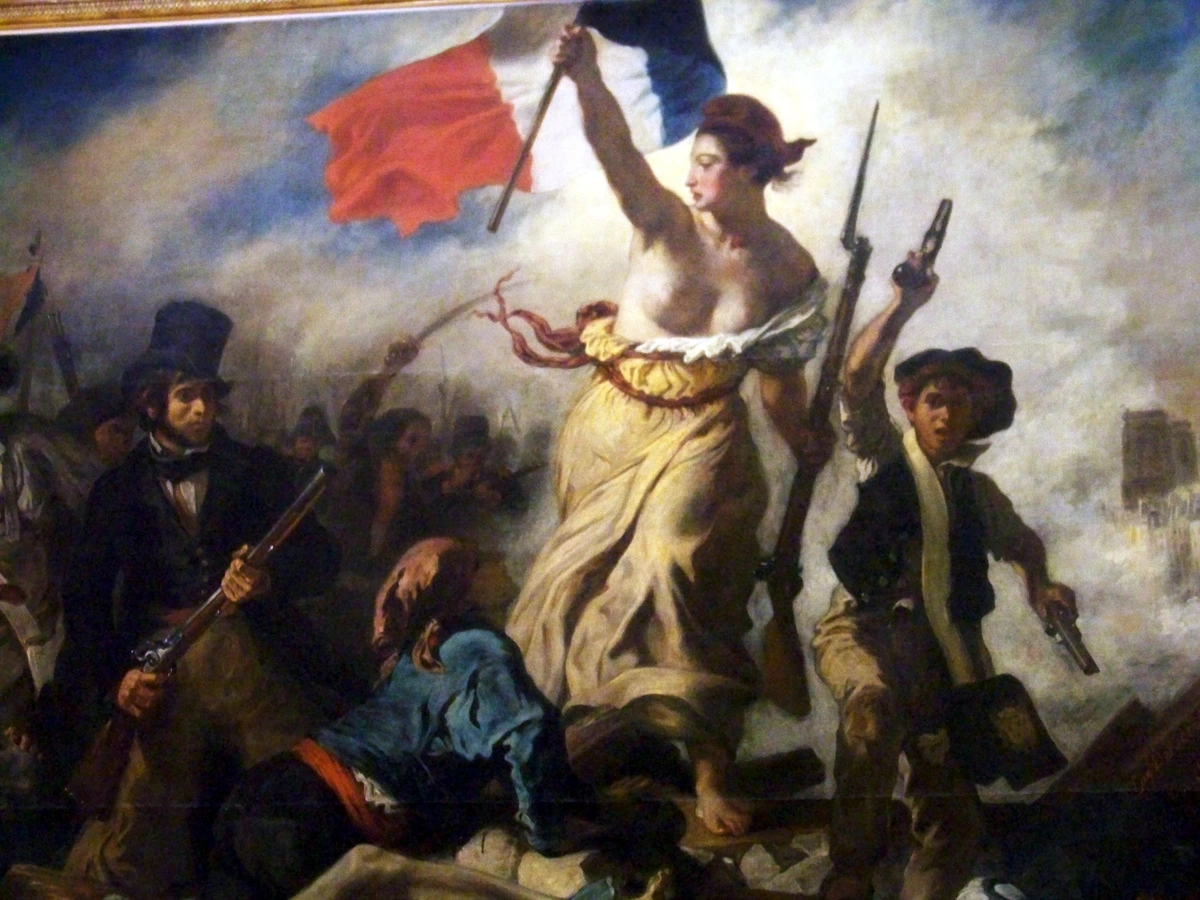
Icon Reborn: The Shocking Modernity of "Liberty Leading the People" (1830)
In the summer of 1830, Paris erupted. King Charles X was overthrown in three glorious, bloody days known as the July Revolution. While the embers were still cooling, Delacroix, electrified by the spectacle, began work on the single most iconic image of revolution ever created: Liberty Leading the People. This wasn't a history painting looking back at some safely distant event; it was a piece of urgent, contemporary journalism, a visual scream ripped straight from the headlines.
This wasn't just a painting; it was a calculated act of artistic fusion that broke all the rules. Let's dissect why it felt, and still feels, so revolutionary:
- The Goddess Becomes a Mortal: Liberty isn't some distant, ethereal allegory. She's a woman of the people, a living, breathing incarnation of the revolutionary spirit. With her bare feet planted firmly on the barricade, she's earthly, powerful, and real. Art historians have identified her as a fusion of classical Nike (Winged Victory) with the contemporary Parisian revolutionary—she wears the Phrygian cap (symbol of the 1789 Revolution) while embodying classical heroic nudity. This synthesis of classical and contemporary made her simultaneously timeless and immediate.
- The Molten Core of the Revolution: Delacroix painted this just weeks after the events, channeling the visceral energy of the streets into his pigment. You can almost smell the gunpowder, hear the cries, feel the desperation and hope. He sketched frantically in the streets during the final days of fighting, filling notebooks with observations he would later synthesize into this monumental canvas. X-ray analysis shows he worked with astonishing speed, making major compositional changes directly on the canvas rather than through extensive preliminary studies.
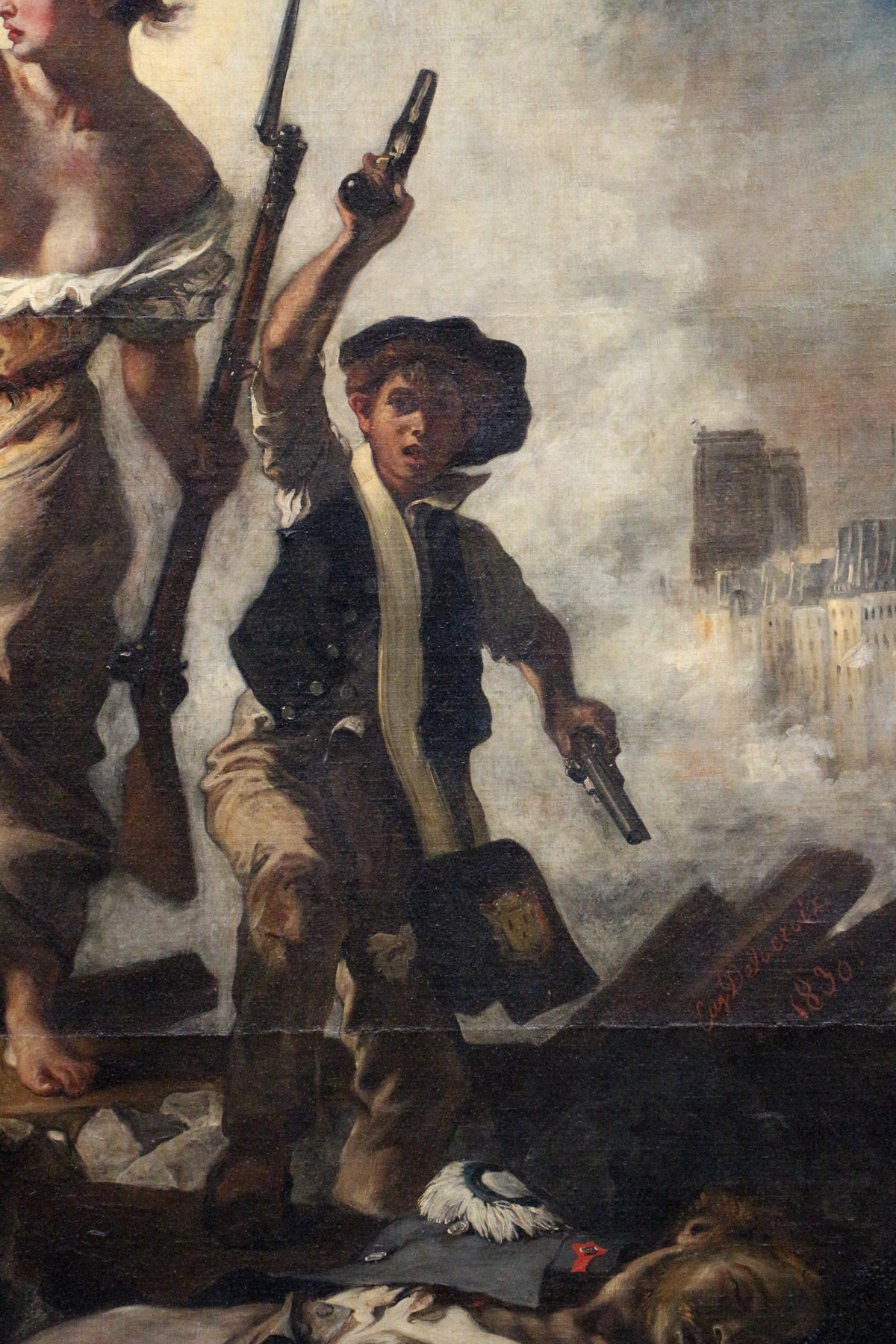
- The Face of Faceless Struggle: He constructs a deliberate microcosm of the revolution. To her left, a boy with pistols—the embodiment of the terrible price of freedom, a child dragged into an adult war. This figure, often identified as Gavroche (anticipating Victor Hugo's character in Les Misérables), represents the tragic sacrifice of innocence in political violence. To her right, a factory worker and a dashing student, representing the alliance of the working and intellectual classes that fueled the revolt. Delacroix includes himself (or his social class) in the top-hatted figure—acknowledging bourgeois participation while maintaining a certain ironic distance.
- The Unheroic Dead: The corpses underfoot aren't noble or romanticized. They're just dead. The stark realism of their twisted limbs and vacant stares was a slap in the face to an academy used to heroic, sanitized death scenes. Compare these bodies to the elegantly arranged corpses in David's The Death of Marat—Delacroix shows death as ungainly, messy, and disrespectful of classical aesthetics.
- Liberty's Body as a Political Statement: Her exposed breast isn't there for titillation. It's maternal, powerful, protective. It grounds her in a physical, biological reality, connecting the fight for liberty to the most fundamental forces of creation and nurturing. It's both an invocation of classical allegory and a radical departure from its chilly perfection. Contemporary feminist art historians have analyzed this figure as embodying a specifically revolutionary form of femininity—strong, public, and physically powerful rather than domestically confined.
- The Artist as Witness: That top-hatted bourgeois figure on the left, standing just behind Liberty? That's Delacroix himself—or a figure representing him. By placing himself in the fray, he's making a profound statement: the artist is not a mere observer of history. He's a participant, a recorder, an active agent in the unfolding drama. It's a declaration of the role of the artist in society that still resonates in an age of social media documentation of political events.
- The Critical Reception and Political Suppression: The painting's reception was as revolutionary as its content. After being purchased by the new king Louis-Philippe for 3,000 francs, it was deemed too inflammatory for public display and returned to the artist within months. It wouldn't be permanently displayed until 1863, after both the artist and the monarchy were gone. The painting seemed to possess an almost supernatural ability to threaten authority, regardless of political regime.
The painting's reception was as revolutionary as its content. After being purchased by the new king Louis-Philippe, it was deemed too inflammatory for public display and returned to the artist within months. It wouldn't be permanently displayed until 1863, after both the artist and the monarchy were gone. The painting seemed to possess an almost supernatural ability to threaten authority, regardless of political regime.
And yet, the painting's history is almost as complex as its composition. Despite its immediate popular acclaim, it was considered too incendiary, too politically volatile. The new monarchy, the July Monarchy of Louis-Philippe, bought the painting but quickly hid it from public view, fearing it would inspire another revolt. It would only emerge for brief periods before being put away again, a testament to its raw, undiminished power to unsettle those in authority. It's this very ability to provoke, to feel vital and dangerous across centuries, that makes it a true icon.
The Alchemist's Journey: North Africa's Violent Revelation
For Eugène Delacroix, Paris was the cage. Morocco was the sky. In 1832, at the age of 34, he seized a chance to escape: a diplomatic mission to the court of Sultan Moulay Abd al-Rahman. Ostensibly, he was the secretary to the Count de Mornay; in reality, he was an artistic refugee in search of a new visual language. The six-month journey across the Mediterranean wasn't just a trip; it was a violent and necessary uprooting, an aesthetic rebirth that would fundamentally rewire his brain and fuel his creativity for the next thirty years.
This wasn't the romantic tourism of a flâneur; it was the desperate, arduous pilgrimage of a man who felt his art suffocating in the grey constraints of European civilization. Stepping off the boat in Tangier, he entered a world of almost hallucinatory sensory overload.
The Eye Explodes: A World Remade in Light and Shadow
What greeted him was a chromatic symphony that made Paris look like a faded daguerreotype. He saw things he had never imagined, and he documented them with the frantic, obsessive energy of a man who knows he's stumbled upon a treasure he can't possibly carry home. His sketchbooks from the trip, now held at the Louvre, are archaeological records of a mind being remade in real-time.
- Light as the New Language: He was transfixed by how the North African light transformed everything. White robes weren't white; they were prisms reflecting a dozen different colors—violet shadows, yellow highlights, the warm bounce of earth tones. It was a revelation in optics that would redefine his palette. In his journals from the trip, he wrote: "Everything here speaks to me... the light, the character, the architecture, the thousand beautiful details that I can only touch upon."
- The Unseen World Made Visible: He sketched vibrant marketplaces in Tangier, snake charmers, and fierce Fantasia riders with their French military rifles. He filled pages with architectural details—the intricate geometry of mosques, the cool interiors of homes in Fez—and daily life scenes that no Western painter had ever documented with such unvarnished authenticity. His seven sketchbooks from this trip, now preserved at the Louvre, contain over 150 drawings and watercolors—an astonishing visual diary of his encounter with a culture completely foreign to European expectations.
- The "Oriental Palette" is Born: The trip gave him a completely new chromatic vocabulary. He named it his "Oriental palette"—burnt oranges, deep crimsons that seemed to glow from within, and turquoises that vibrated against the earth. These weren't just pretty colors; they were carriers of a different kind of energy, a heat and brilliance that felt ancient and new at the same time. This palette would influence his work for the remaining thirty years of his career, appearing not just in his overtly "Oriental" subjects but in his religious paintings, historical scenes, and even his portraits.
Beyond the Sketchbook: The Art That Changed Everything
He returned with more than drawings. He returned with a new set of eyes. The experiences were later translated into a series of masterpieces that permanently altered the course of Western art.
- The Fanatics of Tangier (1837-1838): A scene of almost unbearable tension, where he channels the raw power of a spiritual frenzy he had witnessed firsthand.
- Women of Algiers in their Apartment (1834): Perhaps his most influential work after Liberty. It's a quiet, intimate interior—a world of rich textiles and soft, reflective light. It gave European audiences a glimpse into a private, feminine space they had only imagined, showcasing not only his technical mastery but also his sensitive, humanistic gaze.
For Delacroix, the most astonishing part is that he never returned to North Africa. He didn't need to. The six months he spent there were so concentrated, so overwhelming, that they provided a lifetime of raw material. He was like a man who'd stared into the sun and spent the rest of his life trying to explain the afterimage.

The Man Behind the Barricade: A Life of Passion, Pain, and Solitude
To stand before a Delacroix canvas is to witness an act of profound, almost violent, self-expression. But to understand the art, you have to understand the profound contradictions of the man who made it. A man who painted the crowd but lived in solitude, who celebrated liberty but feared the mob, who was both a social lion and a reclusive hermit. His life was as vividly painted, and as deeply tormented, as his canvases.
The Artist as Intellectual: Reading, Writing, and Reflecting
Delacroix was far more than a painter of dramatic scenes; he was a highly cultivated intellectual who read voraciously in literature, philosophy, and history. His personal library contained over 1,000 volumes, many heavily annotated with his marginal notes. His journals reveal a mind in constant dialogue with:
- The classics: Homer, Virgil, Dante, Shakespeare
- Contemporary literature: Goethe, Byron, Walter Scott, Victor Hugo
- Philosophy: Montaigne, Rousseau, Diderot
- Art theory: Leonardo da Vinci, Vasari, and his contemporary critics
He was particularly fascinated by the relationship between painting and music, seeing both as parallel forms of non-verbal expression. His diary entries are filled with observations about attending operas and concerts, analyzing how composers achieved emotional effects that he sought to replicate in paint. "In painting," he wrote, "as in music, the effect must come from the very soul of the work, independent of the subject." This insight—that abstract qualities like color, composition, and brushwork could communicate emotion directly, independent of narrative content—was revolutionary in his time and would become central to modern art's development.
He was particularly fascinated by the relationship between painting and music, seeing both as parallel forms of non-verbal expression. His diary entries are filled with observations about attending operas and concerts, analyzing how composers achieved emotional effects that he sought to replicate in paint.
Perhaps most remarkably, Delacroix was a serious student of politics and current events. He maintained detailed knowledge of French parliamentary debates, international diplomacy, and colonial affairs. This political sophistication—rare among artists of his generation—gave his historical and contemporary subjects an unusual depth and complexity that transcends simple emotionalism. He wasn't just painting dramatic scenes; he was analyzing and interpreting the political and social forces that created them. His journals from the 1848 revolution reveal him rushing into the streets of Paris during uprisings, not as a mere voyeur but as a participant-observer who understood he was witnessing history unfold. He would later translate this experience into unfinished sketches that show a remarkable eye for the specific social dynamics of revolutionary crowds—the way different social classes positioned themselves, how authority was performed and challenged.
The Artist's Body: A Vessel of Pain
Delacroix's physical existence was a constant, nagging battle. From his youth, he suffered from a range of chronic health issues that plagued him until his death: persistent, debilitating headaches, recurring bouts of bronchitis that left him weak, and what was likely a chronic tubercular condition. For most, this would have been an unbearable burden. For Delacroix, it became an integral, if unwelcome, part of his artistic identity. He developed a complex relationship with his own frailty, believing that illness acted as a whetstone for his artistic vision. "Pain sharpens the vision and disposes one to a kind of reverie," he wrote in his journal, suggesting that his suffering wasn't just an obstacle, but a catalyst for the heightened emotional state he sought in his art. He painted not despite his pain, but through it. This lifelong intimacy with mortality gave his paintings of suffering a gut-wrenching authenticity that no healthy artist could ever manufacture. "Pain sharpens the vision and disposes one to a kind of reverie," he wrote in his journal, suggesting that his suffering wasn't just an obstacle, but a catalyst for the heightened emotional state he sought in his art. He painted not despite his pain, but through it. This lifelong intimacy with mortality gave his paintings of suffering a gut-wrenching authenticity that no healthy artist could ever manufacture. When he painted a dying martyr or a drowning man, he wasn't imagining their pain; he was channeling his own.
His correspondence with his doctor and close friend, Dr. François-Joseph Pietri, reveals the extent to which he monitored his health. In one 1847 letter, he wrote: "I am working despite a persistent fever that has not left me for three weeks, telling myself that perhaps this very suffering gives my vision an intensity it would otherwise lack." This is not the romanticization of suffering, but a clinical observation: he had learned to use his physical limitations as an aesthetic instrument.
Recent medical historians have speculated that his symptoms—the chronic laryngitis, the persistent digestive issues, the recurring fevers—might point to conditions as varied as sarcoidosis or even lead poisoning (not uncommon for artists working with lead-based paints). Whatever the precise diagnosis, what remains remarkable is how he transformed physical limitation into artistic strength, using illness as both subject and method.
The Recluse's Heart: Love, Loneliness, and the Fear of Abandonment
Despite a charisma that drew admirers to him, and a rumored series of affairs with his models and society women, Delacroix never married. The psychic wound of his childhood abandonment ran deep, creating an almost insurmountable wall between him and lasting intimacy. In a devastatingly candid journal entry, he laid his philosophy bare: "Love and work are incompatible in my nature." He recognized that the all-consuming focus his art required was fundamentally at odds with the emotional responsibilities of a family. He chose the work, a decision that consigned him to a life of profound solitude.
His intimate relationships, while passionate, tended to be brief and fraught with the tension between emotional connection and artistic vocation: Élise Boulanger, a talented musician and long-term friend, who represented perhaps his closest approach to sustained partnership; Joséphine de Forget, a society hostess and salonnière, who maintained a warm friendship with Delacroix for decades, providing social connection without domestic demands; and various models, like many artists of his era, forming romantic attachments complicated by class differences and professional boundaries.
This self-imposed isolation wasn't born of misanthropy, but of a deep-seated need to protect his creative core from the demands of the outside world. His apartment and later his studio were his sanctuaries—color laboratories and intellectual bunkers where he could conduct his experiments in peace, away from what he often saw as the distracting frivolities of the Parisian social scene.
His intimate relationships, while passionate, tended to be brief and fraught with the tension between emotional connection and artistic vocation:
- Élise Boulanger: A talented musician and long-term friend, she represented perhaps his closest approach to sustained partnership. Their relationship was intellectual and artistic rather than romantic, based on shared cultural interests.
- Joséphine de Forget: A society hostess and salonnière, she maintained a warm friendship with Delacroix for decades, providing social connection without domestic demands.
- Various models: Like many artists of his era, he formed romantic attachments with some of his models, relationships complicated by class differences and professional boundaries.
This emotional isolation was both chosen and imposed. He genuinely believed that domestic life would compromise his artistic integrity. In an 1858 letter he wrote: "I am forced to be a monk in the midst of Paris. The world thinks me cold and reserved; meanwhile my heart is burning with desires that must remain unsatisfied." His decision prefigures the trope of the artist as solitary genius—a cultural myth he both embodied and helped create.
His apartment and later his studio were his sanctuaries—color laboratories and intellectual bunkers where he could conduct his experiments in peace, away from what he often saw as the distracting frivolities of the Parisian social scene. This self-imposed isolation wasn't born of misanthropy, but of a deep-seated need to protect his creative core from the demands of the outside world.
The Rival's Shadow: Ingres, the Eternal Antithesis
No understanding of Delacroix is complete without understanding his polar opposite and lifelong rival: Jean-Auguste-Dominique Ingres. This wasn't just a professional disagreement; it was an aesthetic civil war that divided French art for half a century. "Monsieur Ingres believes the world is made of lines," Delacroix wrote in his journal with a mix of exasperation and wry respect. "I believe it is made of color."
This simple statement was the battle line. Ingres, the high priest of Neoclassicism, saw drawing—le dessin—as the very soul of art, a noble pursuit of ideal form. To him, Delacroix's emphasis on color and emotional effect was a form of artistic charlatanism, an undisciplined emotional outburst. Delacroix, in turn, saw Ingres's polished, controlled canvases as sterile, lifeless, and cold. Their rivalry extended beyond mere words: when Delacroix was proposed for membership in the Académie, Ingres actively worked behind the scenes to block his election, calling him "a revolutionary in painting" who would corrupt the youth.
The irony, of course, is that Delacroix was an extraordinary draftsman—his preparatory drawings reveal meticulous attention to anatomical accuracy and compositional structure. He simply believed that once this foundation was secure, it should be animated rather than constrained by line. Ingres, meanwhile, was no crude technician—his portraits show remarkable psychological penetration and emotional nuance within his classical framework. They represented two different conceptions of the soul: Ingres believed it could be perfected through discipline, Delacroix that it must be liberated through expression.
Their competition took concrete form in the official art world:
- Salon confrontations: At the 1824 Salon, their works were hung in proximity, inviting direct comparison. Ingres showed his traditionally composed Vow of Louis XIII, Delacroix his revolutionary Massacre at Chios.
- École des Beaux-Arts politics: Ingres served as director of the French Academy in Rome, giving him institutional power that he used to promote Neoclassical doctrine.
- Commissions and honors: Both artists competed for lucrative government commissions and official decorations, with Ingres generally favored by conservative administrations, Delacroix by more liberal ones.
- Followers and schools: Each gathered around him a circle of disciples who perpetuated the aesthetic conflict, creating rival factions within the Paris art world.
When Delacroix was finally elected to the Académie in 1857, Ingres's reported comment—"This is a veritable artistic assassination!"—captures the depth of his opposition. Yet Delacroix's private journals reveal complex feelings: respect for Ingres's technical mastery, frustration with his narrow vision, and recognition that their competition pushed him to clarify his own artistic philosophy. They were indeed two halves of a single, arguing whole—thesis and antithesis whose opposition would eventually synthesize into modern art.

The Diarist's Torment: 7,000 Pages of Self-Interrogation
In the end, the most intimate portrait of Delacroix lies not in his public paintings or his public rivalries, but in the staggering 7,000 pages of his private journals. Started in his early twenties and maintained until a few years before his death, this monumental work of self-interrogation is a window into his soul. It's a chronicle of doubt, ambition, intellectual hunger, and the terrifying freedom of artistic choice—a document that remains one of the most comprehensive and psychologically penetrating records of an artist's inner life ever created.
What makes his journals remarkable is their combination of personal confession and intellectual rigor. They reveal a mind constantly questioning itself, testing ideas, and documenting creative failures as honestly as successes. Unlike many artist-writers who present their process as linear and inevitable, Delacroix shows us the messy, uncertain reality of creation—the false starts, the frustrations, the moments of doubt that precede breakthrough insights. It's a chronicle of doubt, ambition, intellectual hunger, and the terrifying freedom of artistic choice.
What makes his journals remarkable is their combination of personal confession and intellectual rigor:
Technical analysis: He recorded detailed observations about his painting methods, often conducting experiments specifically to answer technical questions. "I have been making experiments in complementary colors all day," he wrote in 1850. "Red and green vibrate together in a way that reveals the deepest emotional truth." His journals contain hundreds of pages analyzing pigment properties, brush techniques, canvas preparation, and varnishing methods—a comprehensive record of his life-long technical experimentation.
Creative process: He documented his struggles with specific paintings, revealing the iterative nature of his creative process. For The Abduction of Rebecca he made over 30 preparatory drawings, recording his dissatisfaction with each attempt until discovering the final composition. These process notes reveal an artist deeply engaged with problem-solving, willing to abandon weeks of work when intuition suggested a different direction.
Emotional honesty: He wrote openly about his fears of mortality, his frustrations with critics, his loneliness, and his occasional despair about his health. "My body is failing me," he wrote in 1858, "but my mind remains voracious. What agony!" This psychological candor was unusual for his era and has made his journals invaluable to historians studying the creative personality.
Intellectual engagement: He engaged with contemporary art criticism, scientific discoveries, and philosophical debates, using his journal as a space to think through complex ideas. His analysis of contemporary exhibitions shows him grappling with the work of younger artists with remarkable open-mindedness, even as he maintained his aesthetic principles.
The journals are filled with memorable aphorisms that capture his philosophy:
- "The artist who aims at perfection in everything achieves it in nothing"
- "What moves men of genius is their obsession that what has already been said is still not enough"
- "I am a rock beaten by the sea: time wears me down, but my form becomes more interesting"
- "The more I live, the more I believe that work is the only pleasure"
- "Genius is the union of enthusiasm and discipline"
- "The beautiful is what is characteristic"
- "I do not paint for the future, but for the present"
- "The first merit of a painting is to be a feast for the eye"
- "Style in painting is the power to express particularity"
- "Happiness is the absence of suffering—and that is why I am never happy when I paint, for I suffer then most of all"
- "I have no love for reasonable painting"
- "The greatest difficulty in writing is to be truthful"
These aphorisms reveal the fundamental contradictions that drove him—the tension between perfectionism and spontaneity, between rational control and passionate expression, between public ambition and private suffering.
The complete journal runs to three volumes in its definitive French edition. The most widely available English translation, edited by Hubert Wellington, captures about a third of the original content while maintaining the essential character of Delacroix's voice. For anyone serious about understanding art's creative process, this book is essential reading—a direct line into the mind of a master at work.
Eternal Echoes: His Legacy in Modern Art
Delacroix didn't just influence art; he birthed movements. Looking back from our contemporary vantage point, his influence appears so fundamental to modern art's DNA that it's difficult to imagine a 20th century without him. Every major movement from Impressionism through Abstract Expressionism carries his genetic fingerprint in some form.
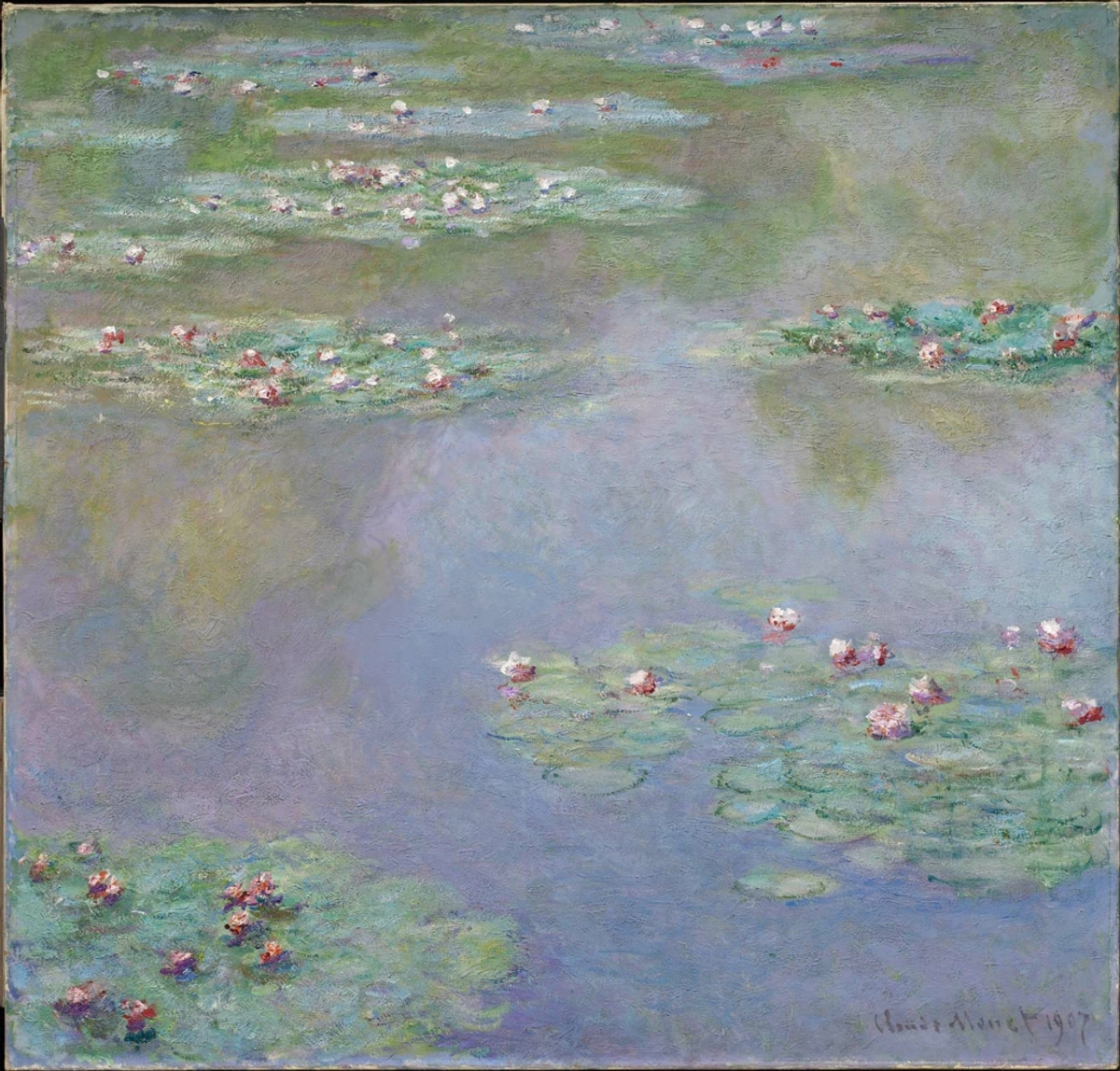
Art historian Robert Rosenblum described this influence perfectly: "Delacroix discovered the alphabet of modern painting. Subsequent artists didn't need to reinvent these letters; they simply arranged them into new words and sentences." This captures the paradox of his legacy—he was simultaneously revolutionary and foundational, breaking rules that would become the new grammar of modern art.
Delacroix's Influence on Major Art Movements
Impressionism: The most direct line of descent runs from Delacroix to the Impressionists. His broken-color technique, plein-air sketches, and emphasis on light's optical effects became foundational to Monet, Renoir, and their circle. When the young Claude Monet encountered Delacroix's Women of Algiers at the Louvre, he reportedly spent weeks copying it, trying to understand how those shimmering color relationships worked. Later, when critics attacked the Impressionists for their sketch-like techniques and visible brushwork, they could point to Delacroix as their distinguished precedent. Artists like Frédéric Bazille and Auguste Renoir made pilgrimages to see Delacroix's work in person, studying his use of color in particular. Renoir later recalled: "I went to see Delacroix's paintings and I blushed with shame at my own awkwardness. I understood that painting could be something other than the servile imitation of nature."
The connection wasn't merely technical; it was philosophical. Delacroix had demonstrated that painting could be about sensory experience rather than narrative content, about the artist's subjective response to the world rather than its objective description. This fundamental shift in artistic purpose made Impressionism possible.
Post-Impressionism and Symbolism: Cézanne's famous pronouncement—"We all paint through Delacroix"—wasn't mere rhetoric. His systematic analysis of Delacroix's color harmonies influenced Cézanne's own experiments with formal structure. Van Gogh's expressive brushwork and symbolic use of color had clear precedents in Delacroix's emotionally charged technique (Van Gogh made direct copies of Delacroix's Pietà and Good Samaritan). Gauguin's interest in "primitive" cultures and exotic subjects also followed paths Delacroix had blazed decades earlier.
For Cézanne, Delacroix represented the possibility of reconciling structure and color—a synthesis that would become the central project of his own artistic development. Cézanne's extensive analysis of Delacroix's Apollo Slaying the Serpent ceiling in the Louvre reveals his systematic study of how Delacroix used color to model form while maintaining compositional coherence. Van Gogh's letters to his brother Theo are filled with references to Delacroix, particularly his belief that color could express emotion directly. "I would like to paint the way Delacroix painted," Van Gogh wrote, "with a fire that comes from the very soul."
Symbolist artists like Gustave Moreau and Odilon Redon found in Delacroix's literary and exotic subjects a precedent for using painting to explore psychological and spiritual dimensions beyond the visible world. Moreau, who visited Delacroix in his final years, adapted his technique of jewel-like color and mythological subject matter to create his own distinct Symbolist vision.
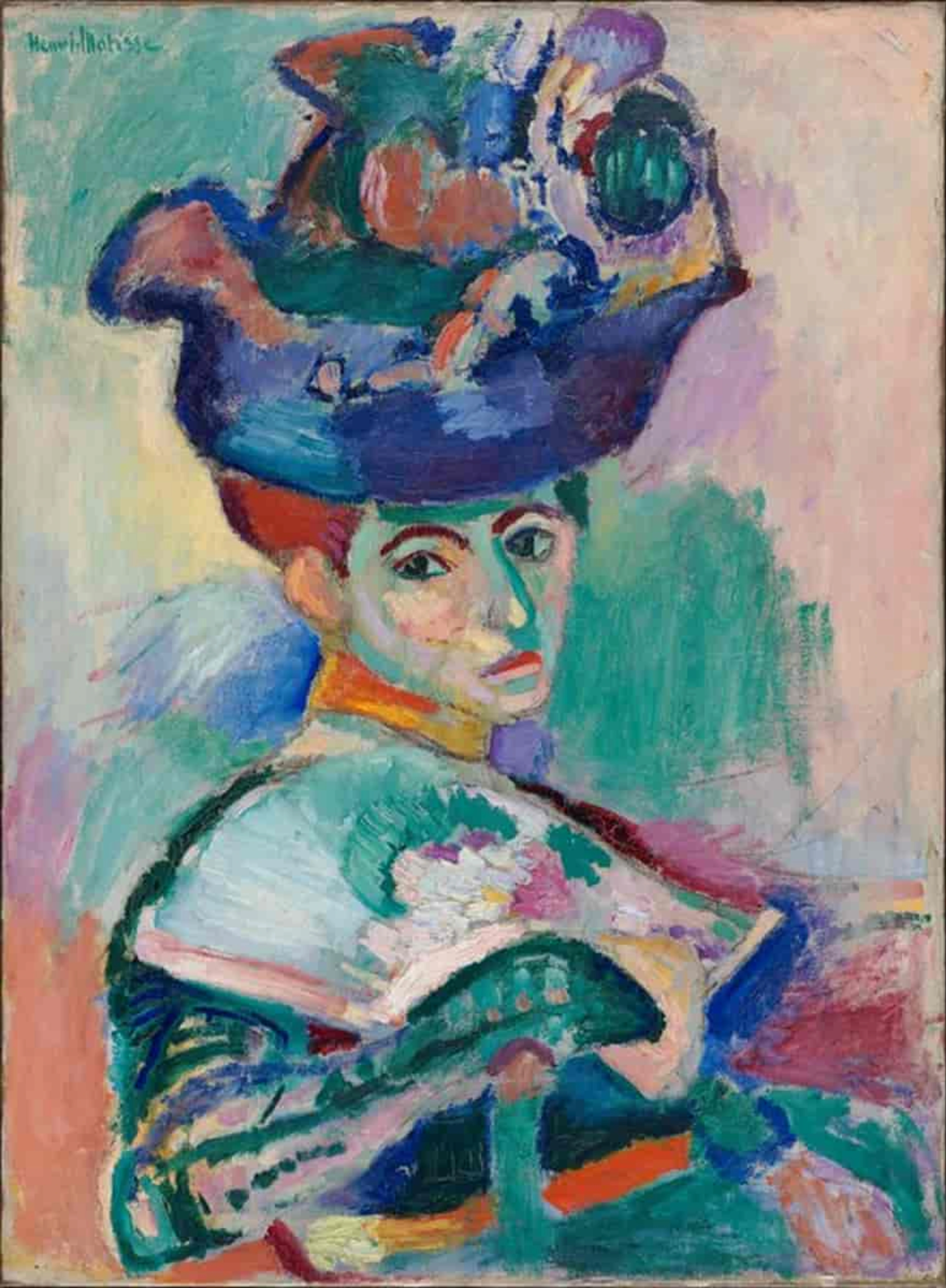
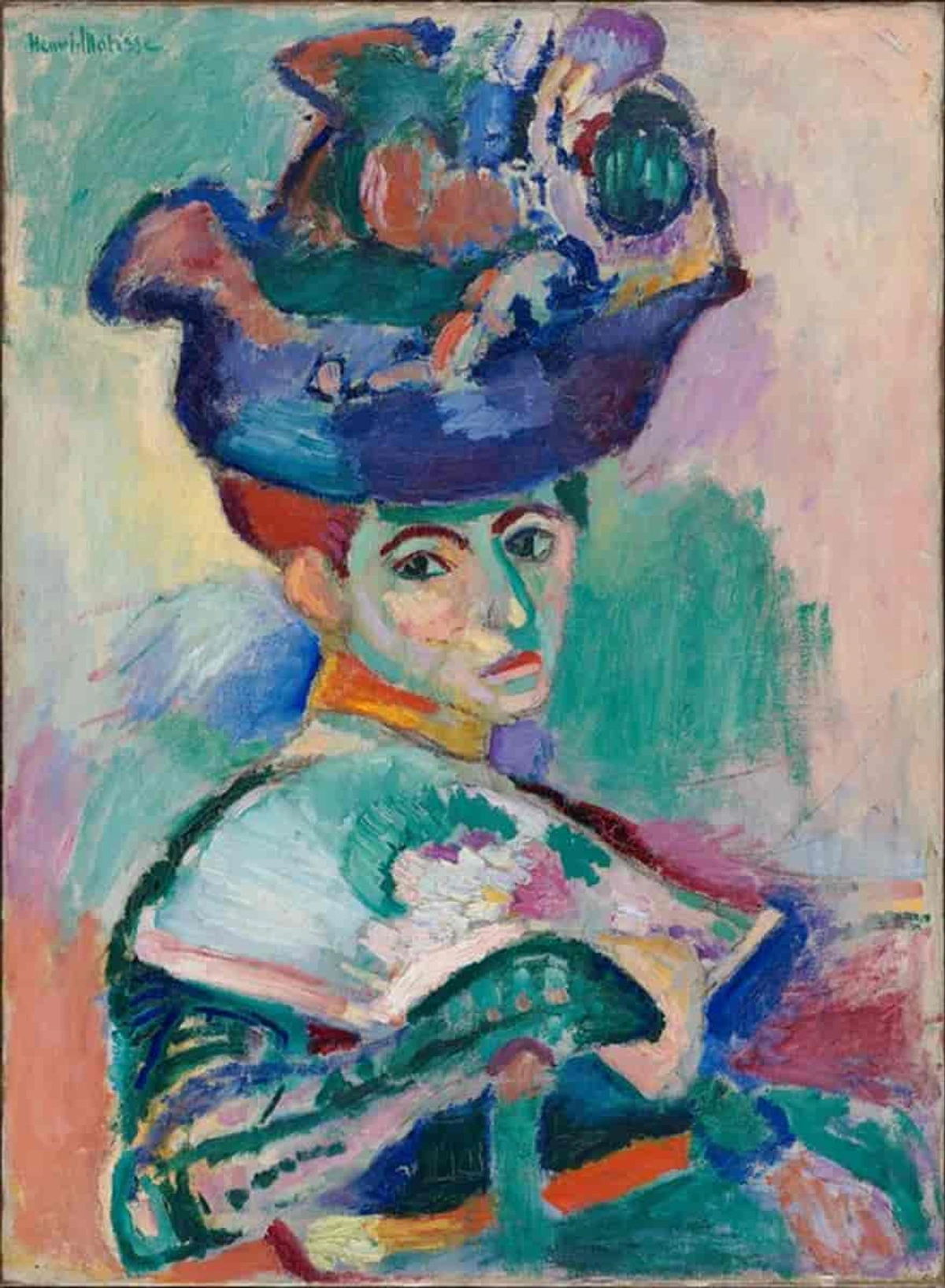
Fauvism and Expressionism: Matisse, Derain, and the Fauves learned from Delacroix that color could be liberated from descriptive function. His "Oriental" palette—those intense vermilions, emerald greens, and cobalt blues—became the foundation for Fauvist color experiments. German Expressionists like Ernst Ludwig Kirchner found in Delacroix's energetic brushwork and emotional directness a model for their own psychologically charged paintings.
Fauvism and Expressionism: Matisse, Derain, and the Fauves learned from Delacroix that color could be liberated from descriptive function. His "Oriental" palette—those intense vermilions, emerald greens, and cobalt blues—became the foundation for Fauvist color experiments. German Expressionists like Ernst Ludwig Kirchner found in Delacroix's energetic brushwork and emotional directness a model for their own psychologically charged paintings. When Matisse declared that "color was not given to us to imitate nature, but to express our own emotional state," he was echoing a principle that Delacroix had demonstrated throughout his career.
Matisse's fascination with Delacroix was lifelong. He copied The Abduction of Rebecca and wrote extensively about Delacroix's use of color as an independent expressive element. The Fauves' 1905 Salon d'Automne exhibition, which scandalized Paris with its radical color choices, represented the culmination of Delacroix's chromatic revolution—a full liberation of color from descriptive responsibility.
Abstract Expressionism: This might seem like the longest leap, but it's there. Delacroix's late religious paintings and lion hunts, with their increasingly gestural brushwork and emphasis on the physical act of painting, prefigure Abstract Expressionist concerns. When Jackson Pollock spoke of wanting to "express his feelings rather than illustrate them," he was articulating a fundamentally Delacrucian principle. Willem de Kooning's fusion of figurative elements with abstract expression also has clear precedents in Delacroix's work.
Clement Greenberg, the influential critic who championed Abstract Expressionism, acknowledged Delacroix as a crucial ancestor. Greenberg recognized that Delacroix's emphasis on the physical process of painting—the visibility of brushwork, the materiality of pigment—anticipated modernism's self-conscious attention to the medium itself. In this sense, Delacroix didn't just influence what modern art looked like; he influenced what modern art was about.
Contemporary Art: Today, artists continue to find relevance in Delacroix's example. Contemporary painters like Cecily Brown and Anselm Kiefer have acknowledged his influence on their fusion of historical content with gestural abstraction. Even digital artists working with new media often begin their education by studying how Delacroix orchestrated complex compositions and color relationships. Contemporary street artists like Banksy have cited his political immediacy as an influence, while video artists like Bill Viola reference his ability to make time itself—the frozen moment of crisis—a central element of his compositions. His influence extends beyond painting into film, photography, and installation art, demonstrating the breadth of his vision.
The through-line is inescapable: Delacroix made painting modern by demonstrating that it could be simultaneously intellectual and emotional, structured and spontaneous, traditional and revolutionary. He showed that great art isn't a choice between mind and heart, but their passionate marriage.
The Essential Delacroix: A Curated Tour of His Masterworks
Trying to distill Delacroix's vast output into a list feels a bit like trying to map a storm. Each painting is a world, and to stand before one is to be drawn into its gravitational pull. For anyone wanting to move beyond the familiar iconography of Liberty and truly understand his genius, here is a curated guide to the works that define his artistic journey. These are the paintings that will show you not just what Delacroix painted, but how he thought and why he matters—works that demonstrate his evolution from rebellious youth to mature master, and his enduring influence on everything that came after.
Trying to distill Delacroix's vast output into a list feels a bit like trying to map a storm. Each painting is a world, and to stand before one is to be drawn into its gravitational pull. For anyone wanting to move beyond the familiar iconography of Liberty and truly understand his genius, here is a curated guide to the works that define his artistic journey.
Painting (Year) | Why It Matters: The Story It Tells | Where to See It |
|---|---|---|
| The Bark of Dante (Dante and Virgil in Hell) (1822)* | Delacroix's first major Salon entry. While causing controversy, it established his signature blend of literary subject matter with visceral emotional intensity. The painting's dark Romanticism shocked viewers accustomed to classical restraint. Acquired by the French government for 2,000 francs—a significant validation for the young artist. | Louvre, Paris |
| The Massacre at Chios (1824) | This was his declaration of war on the art establishment. A sprawling panorama of human suffering inspired by the Greek War of Independence, its "pathétique" and perceived messiness caused a scandal. It was here he first fully embraced painting as a vehicle for political outrage and visceral emotion, and where the famous "massacre of painting" insult was born. | Louvre, Paris |
| The Death of Sardanapalus (1827) | The ultimate spectacle of Romantic decadence. A symphony of destruction showing an Assyrian king calmly watching as his concubines, horses, and treasures are destroyed. It's a painting about nihilistic desire and the aestheticization of chaos, a world away from the moralizing history paintings of his rivals. Considered so radical that it was rejected for the 1827 Salon and only exhibited privately. | Louvre, Paris |
| Liberty Leading the People (1830) | The revolution, captured in real-time. Its genius lies in fusing the grand allegorical tradition with the gritty, smoky reality of contemporary street fighting. It's a clamoring, complex composition that manages to be both a reportage and a timeless symbol. Created in just three months—an astonishing feat for a painting of this scale and complexity. | Louvre, Paris |
| Women of Algiers in their Apartment (1834) | A quiet masterpiece born from his Moroccan journey. Far from a salacious Orientalist fantasy, it's a profoundly respectful and intimate glimpse into a private world. Matisse and Picasso were obsessed with it; Matisse called it "the most beautiful painting ever." Its influence on modern art is immeasurable. When Picasso saw it, he reportedly said "I could stay here forever." | Louvre, Paris |
| The Fanatics of Tangier (1837-1838) | A masterclass in controlled frenzy. He channels the raw, hypnotic energy of a religious ritual he witnessed in Morocco, proving his ability to paint collective ecstasy and psychological tension with a rare and terrifying authenticity. Demonstrates his mature understanding of color vibration and group dynamics. | Minneapolis Institute of Art, USA |
| The Entry of the Crusaders into Constantinople (1840) | A monumental late history painting, blending his love for dramatic pageantry with his understanding of light and human psychology. It's a work of immense scale and ambition, showcasing the historical epic refracted through a thoroughly modern sensibility. Commissioned for Versailles, demonstrating official recognition. | Louvre, Paris |
| Christ on the Sea of Galilee (1854) | A deeply personal and turbulent image of faith. Far from a serene depiction, his Christ is a figure of human struggle against an unforgiving natural world. It feels like a metaphor for his own lifelong battles with doubt and mortality. Shows his increasingly loose, expressive brushwork. | Metropolitan Museum of Art, NYC |
| The Abduction of Rebecca (1858) | Medieval romance meets high-drama color. Inspired by Walter Scott's Ivanhoe, it's a showcase of his late style: dynamic movement, rich chiaroscuro, and a palette that feels like it's on fire. Demonstrates his lifelong fascination with literary sources. | Metropolitan Museum of Art, NYC |
| Lion Hunt (1861) | A final, ferocious statement. Painted just two years before his death, it's a testament to his undiminished energy. The animal violence is a proxy for the elemental human struggles that had obsessed him his entire life. The brushwork is shockingly modern and gestural. | Art Institute of Chicago, USA |
| Greece on the Ruins of Missolonghi (1826) | A powerful political allegory born of passionate support for Greek independence from the Ottomans. It's a painting that wears its heart on its sleeve, proving that Delacroix's revolutionary spirit wasn't confined to the canvas. Created as a direct response to contemporary events. | Musée des Beaux-Arts, Bordeaux, France |
| Pietà (1850) | A deeply personal religious work showing his late style's fusion of dramatic emotion with increasingly loose, expressive brushwork. Van Gogh was particularly moved by this painting's raw emotional power and made his own copies of it. | National Museum of Art, Oslo |
| Apollo Slaying the Serpent (1850-1851) | A monumental ceiling painting for the Louvre's Apollo Gallery, demonstrating his mastery of decorative classicism while maintaining his characteristic energy and color brilliance. Shows his ability to work on any scale and in any format required. | Louvre, Paris |
| Tiger Hunt (1854) | A companion to his lion hunts, showcasing his fascination with animal violence as metaphor for human struggle. The increasingly abstract treatment of the animals' fur and the landscape demonstrates his evolving technique. | Musée d'Orsay, Paris |
| Jacob Wrestling the Angel (Saint-Sulpice murals, 1855-1861) | Part of his final major commission—three monumental murals for the Church of Saint-Sulpice in Paris. Shows his ability to work on a vast scale while maintaining emotional intensity and chromatic brilliance. | Church of Saint-Sulpice, Paris |
| Self-Portrait (1837) | The artist's mask. Stripped of allegory and historical circumstance, this is Delacroix confronting himself—handsome, intense, and with a gaze that seems to look right through you. It's a rare moment of quiet, undefended psychological depth. | Louvre, Paris |
| Self-Portrait (1837) | The artist's mask. Stripped of allegory and historical circumstance, this is Delacroix confronting himself—handsome, intense, and with a gaze that seems to look right through you. It's a rare moment of quiet, undefended psychological depth. | Louvre, Paris |
| Greece on the Ruins of Missolonghi (1826) | A powerful political allegory born of passionate support for Greek independence from the Ottomans. It's a painting that wears its heart on its sleeve, proving that Delacroix's revolutionary spirit wasn't confined to the canvas. | Musée des Beaux-Arts, Bordeaux, France |
| Pietà (1850) | A deeply personal religious work showing his late style's fusion of dramatic emotion with increasingly loose, expressive brushwork. Van Gogh was particularly moved by this painting's raw emotional power. | National Museum of Art, Oslo |
| Apollo Slaying the Serpent (1850-1851) | A monumental ceiling painting for the Louvre's Apollo Gallery, demonstrating his mastery of decorative classicism while maintaining his characteristic energy and color brilliance. Shows his ability to work on any scale. | Louvre, Paris |
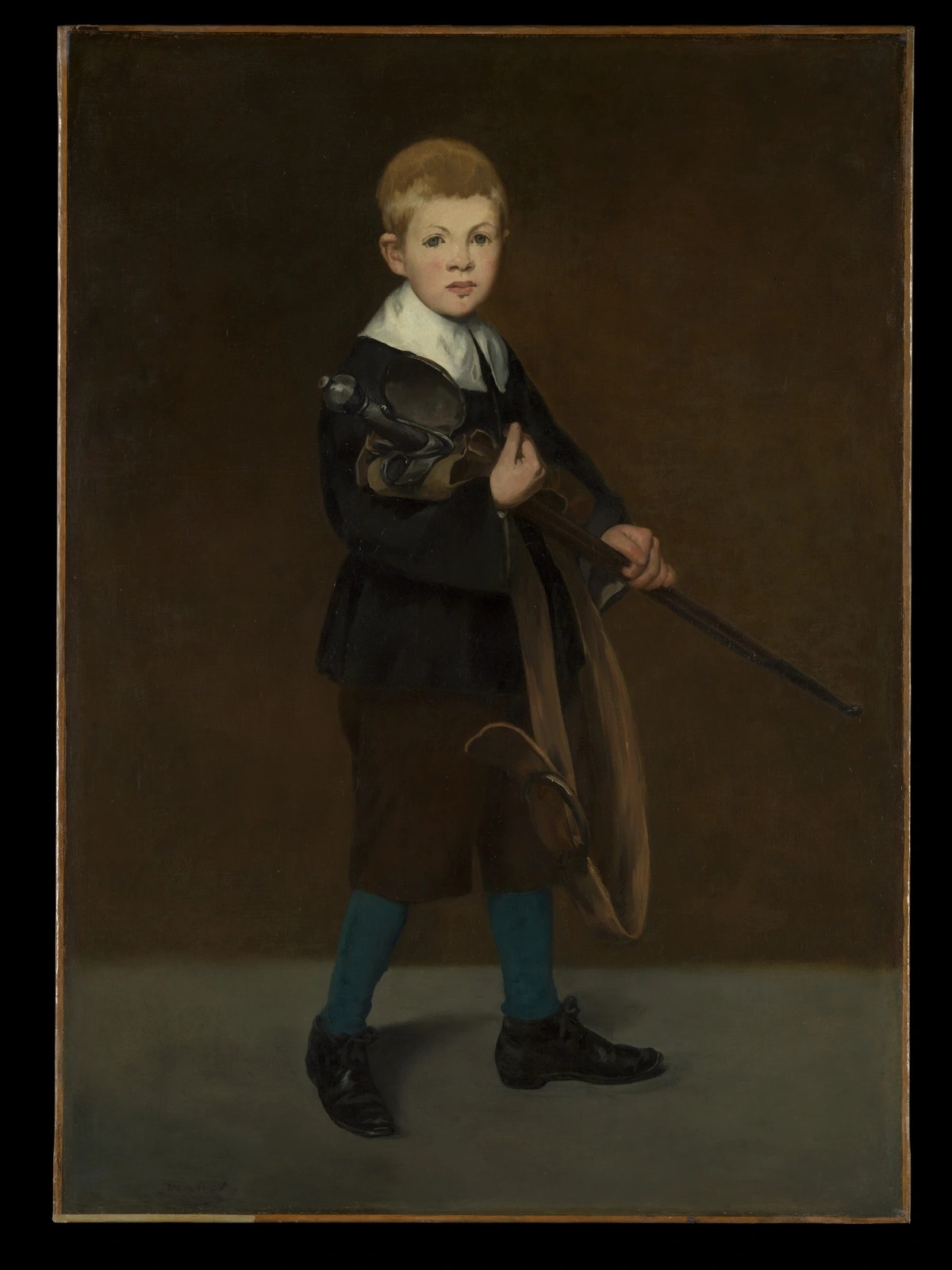
This list barely scratches the surface. Delacroix produced over 9,000 works in his lifetime, ranging from monumental Salon paintings to intimate watercolors, from political lithographs to decorative murals. His range was staggering, his productivity legendary. Each work offers a different window into his restless, probing mind.
Frequently Asked Questions
Q: Why is Delacroix considered the founder of French Romanticism? A: While others explored Romantic themes—Géricault in France, Friedrich in Germany, Turner in England—Delacroix became the movement's technical and philosophical leader in France for several crucial reasons. First, his theoretical sophistication: through his journals and public writings, he articulated a coherent aesthetic philosophy that went beyond mere rebellion against classicism. Second, his technical innovation: he didn't just paint emotional subjects; he invented new ways to make paint itself convey emotion through color, brushwork, and composition. Third, his engagement with contemporary political and social issues gave his work immediate relevance that transcended purely aesthetic concerns. Finally, his influence on subsequent generations was so profound that art historians retroactively identify him as the pivotal figure in French art's transition from Neoclassicism to Romanticism and ultimately to modernism. When you see his work next to his contemporaries, you immediately understand: this is where modern art's heartbeat started. His emergence at the 1822 Salon with Dante and Virgil wasn't just another debut—it was a gauntlet being thrown down, establishing him as the leader of a movement that was just beginning to find its name.
Q: How did his Moroccan journey change his art? A: The 1832 diplomatic mission to Morocco fundamentally rewired his artistic brain. This six-month journey wasn't a comfortable tour—Delacroix traveled by ship, carriage, and horseback across difficult terrain, often camping in basic conditions. When he stepped off the boat in Tangier, he entered what he later called "the living antiquity"—a world where ancient customs, brilliant light, and vibrant colors existed in a state of almost hallucinatory intensity. Suddenly, this French artist saw colors he never imagined existed—the way sunlight transforms white robes into a prism of reflected hues, the geometry of Islamic architecture, the theatrical energy of street performers. He filled seven sketchbooks with drawings and watercolors, creating an astonishing visual diary of his encounter with a culture completely foreign to European expectations.
His 1832 sketchbooks, now preserved at the Louvre, document an immediate transformation:
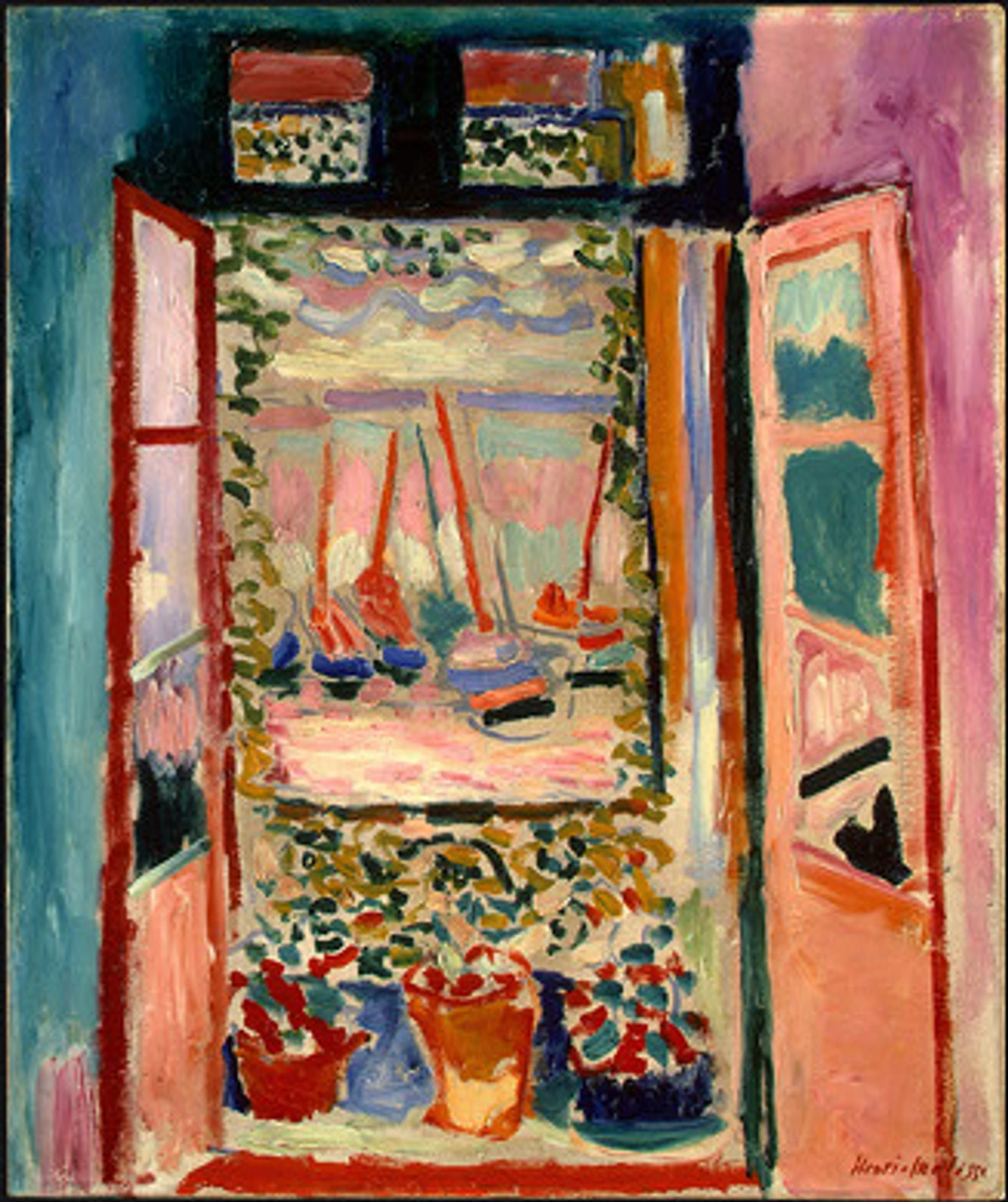
Optical discoveries: The North African light revealed color relationships invisible in France's softer northern climate. He wrote: "White clothing in the shadows has violet reflections... the yellow of the earth bounces up onto white walls." This observation of reflected color became central to his mature technique.
Cultural encounter: Unlike many European visitors who saw North Africa through colonial prejudices, Delacroix approached Moroccan culture with genuine curiosity and respect. His journals are filled with detailed observations of daily life, religious ceremonies, and social customs. He was particularly struck by what he perceived as a dignity and naturalness in Moroccan people that contrasted with European artifice.
Compositional freedom: The crowded marketplaces, the informal groupings of figures in courtyards, the dramatic light falling through architectural spaces—these experiences liberated his compositions from the formal staginess of French academic painting. His Moroccan-inspired works feel observed rather than staged.
Technical effects: He began experimenting with new techniques to capture this vivid world: looser brushwork, more transparent glazes, thinner paint application for immediacy, and bolder contrasts between light and shadow areas. He was trying to develop a technical language equal to his visual experience.
The transformation wasn't immediate in his finished Salon paintings—The Fanatics of Tangier didn't appear until 1837—but the Moroccan experience provided a wellspring of inspiration that nourished his art for the remaining thirty years of his life.
Psychological transformation: Perhaps most importantly, Morocco shifted Delacroix's relationship to his own European identity. He began to see French academic art as constrained, artificial, and emotionally limited compared to the directness he observed in Moroccan visual culture. This critical distance allowed him to develop a more independent artistic voice. His journals from this period are filled with critiques of European civilization and its "cold calculation," contrasted with what he perceived as the authentic emotional life of North African culture.
Subject matter evolution: After Morocco, his work showed a marked increase in themes involving:
- North African daily life and ceremonies
- Exotic animals (particularly horses and lions, which he observed with new intensity)
- Dramatic light effects in architectural interiors
- More sensual treatment of the human figure
- Increased interest in religious ecstasy and collective emotion
Technical assimilation: The "Oriental color harmony" he developed—warm earth tones contrasted with jewel-like accents—appears not just in his overtly Moroccan subjects but influences his entire mature palette. Even his late religious paintings and classical subjects show traces of this chromatic experimentation. X-ray analysis of his later works reveals that he often began with warm underpaintings, a technique he developed in response to observing how Moroccan sunlight created golden undertones in all surfaces.
Long-term influence: The Morocco experience provided Delacroix with a renewable source of imagery and technique. He never returned to North Africa, yet continued producing Moroccan-inspired works throughout his career. The sketchbooks from that six-month trip became a visual dictionary he consulted for decades.
In short, Morocco taught him that reality was more interesting than academic rules. He spent the next thirty years proving it, ultimately demonstrating that radical technical innovation could emerge from deep cultural engagement—a lesson that would resonate through generations of modern artists.

Q: Did Delacroix have any students? A: Surprisingly, Delacroix never maintained a formal teaching studio in the traditional manner. He was too individualistic for systematic pedagogy, once writing that formal instruction was "poison to true talent." He believed that artists must discover their own methods through independent experiment rather than following prescribed rules.
However, this avoidance of formal teaching masked his genuine commitment to artistic education. He influenced subsequent generations through other channels:
The Louvre as Classroom: Like many artists of his generation, Delacroix learned by copying masterworks at the Louvre. As he matured, younger artists would seek him out there. Édouard Manet, then an unknown art student, approached him for advice in 1857. Delacroix reportedly spent several hours discussing technique with him, generously sharing his knowledge despite his reputation for being reserved.
Salon Influence: His annual Salon submissions functioned as public lessons. Artists including Gustave Courbet, Jean-François Millet, and the young Claude Monet would study his paintings in detail, analyzing his brushwork, color harmonies, and compositional innovations.
Literary Contributions: His published writings—particularly his articles in art journals—functioned as another form of teaching. Essays like "Questions sur le Beau" articulated his aesthetic philosophy in terms accessible to younger artists seeking alternatives to academic doctrine.
Advising Role: Though he refused formal students, Delacroix occasionally provided informal mentorship. The Symbolist painter Gustave Moreau visited him regularly in his final years, absorbing both technical advice and philosophical guidance about the artist's role in society.
Through His Contemporaries: Perhaps most importantly, Delacroix's ideas reached younger artists through his friendships with influential critics and writers. Théophile Gautier, Charles Baudelaire, and later Émile Zola all championed his work, translating his visual innovations into literary terms that reached a broader audience.
The story is often told that when Delacroix was finally elected to the Académie in 1857, several academicians protested that his influence was already too pervasive among young artists. They didn't need him as a professor—he was already shaping their development through the power of his example.
His appointment to the Académie des Beaux-Arts in 1857 (not 1863) did eventually provide an institutional platform, but by then his most important influence had already been exerted. Future modernists didn't need his formal approval—they had his revolutionary example.

Q: What was his relationship with Ingres? A: Toxic doesn't even cover it. Think oil and water. Fire and ice. Ingres—the king of Neoclassicism—believed drawing was everything, color was secondary decoration. Delacroix? He believed color was emotional truth, and line was merely its servant. Their feud began in the 1820s and continued until Delacroix's death.
Their fundamental disagreement centered on what they believed painting should accomplish. Ingres sought perfection through precise execution, believing that ideal forms transcended individual emotion. Delacroix sought truth through expressive means, believing that emotion itself was the ideal. Ingres once famously declared: "Drawing is the probity of art," implying that Delacroix's color-centric approach was a form of artistic dishonesty. Delacroix countered in his journal: "What they call a fault in me is often precisely the quality that gives my work its character."
The confrontations were legendary:
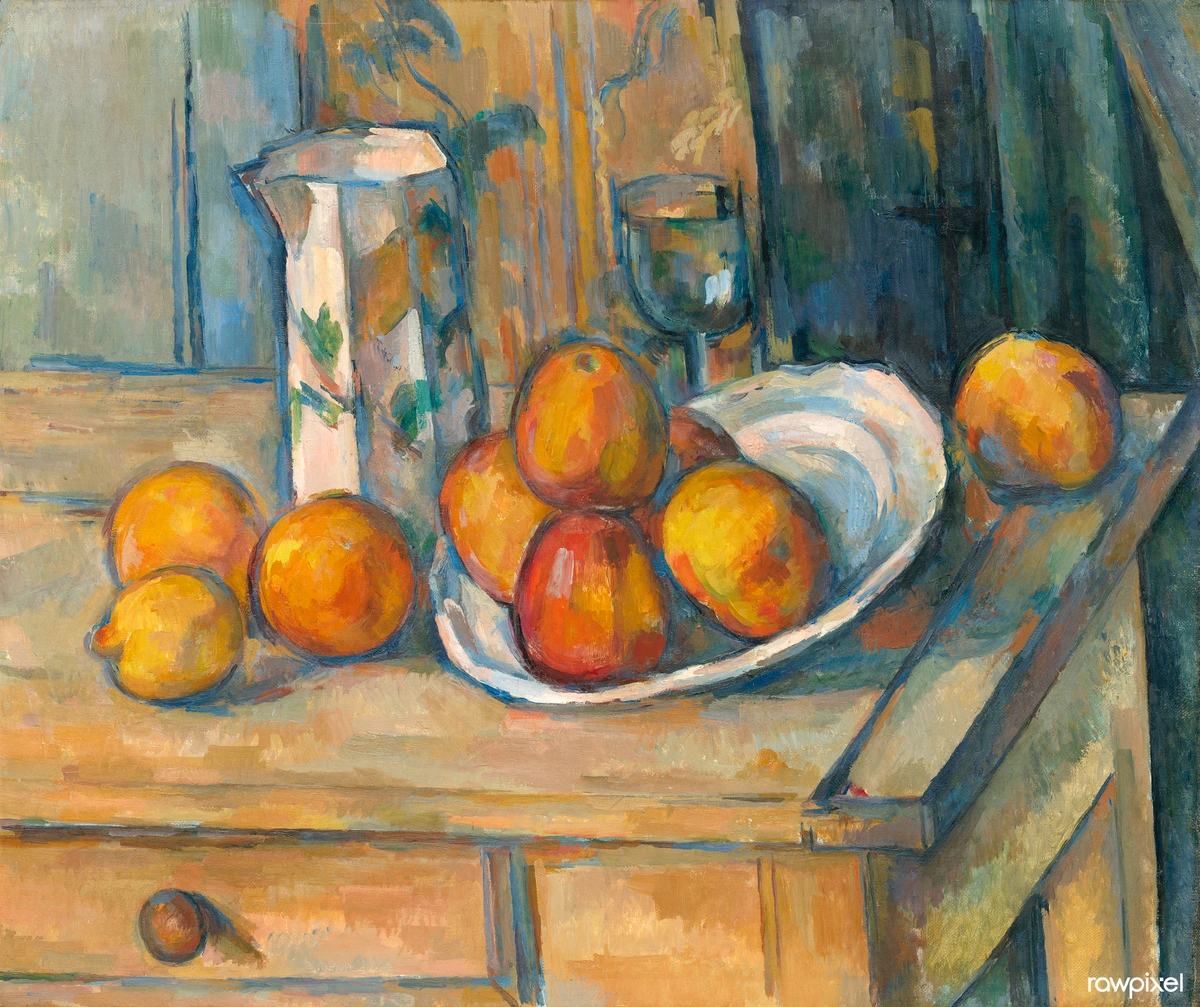
- Salon encounters: At the 1824 Salon, where Ingres showed his Vow of Louis XIII and Delacroix his Massacre at Chios, the contrast was so stark that critics immediately cast them as opposing champions.
- Public declarations: Ingres famously told his students, "Drawing is the probity of art. Color is but an accessory, usually deceptive." Delacroix responded in his journal: "What moves men of genius... is not new ideas, but their obsession with the idea that what has already been said is still not enough."
- Political maneuvers: When Delacroix was finally elected to the Académie in 1857 (after seven failed attempts), Ingres reportedly threatened to resign, calling it "the end of the line."
- Personal avoidance: They would go to elaborate lengths to avoid each other. The art dealer John Rewald recounts a story of Ingres deliberately walking on the other side of the street when he saw Delacroix approaching.
Yet beneath this public animosity lay a complex dynamic. Delacroix secretly admired Ingres's technical mastery and unwavering principles. He wrote in his journal: "I have a secret admiration for this talent, so sure of itself." Similarly, Ingres, despite his public condemnations, privately acknowledged Delacroix's formidable intelligence.
Their relationship exemplifies what Hegel called a dialectical opposition—thesis (Neoclassicism) meeting antithesis (Romanticism) to produce the synthesis of modern art. Without Ingres's disciplined classicism to rebel against, Delacroix's innovations might have lacked their revolutionary force. Without Delacroix's expressive freedom straining against tradition, later artists might not have found the courage to pursue increasingly individualistic expression.
Q: How does Delacroix's art relate to today's artists? A: His belief in emotional authenticity, cultural curiosity, and technical bravery resonates with contemporary creators in ways that might surprise you:
- Contemporary abstract painters value his "controlled chaos" approach—making bold gestures while maintaining underlying structure. Artists like Anselm Kiefer and Cecily Brown have cited his influence on their fusion of figurative and abstract elements.
- Street artists see his quick Moroccan sketches as early examples of capturing ephemeral moments. His on-site watercolors prefigure today's urban sketchers and plein-air digital artists.
- Cultural appropriation debates look to Delacroix as a complex figure in cross-cultural representation. While his work participated in Orientalist discourse, his respectful portrayal of North African subjects offered an alternative to stereotypical exoticism.
- Digital artists study his color contrasts and layering techniques when working in Photoshop and Procreate. His understanding of optical color mixing directly informs digital color theory. Contemporary concept artists for film and video games study his composition notebooks, learning how to create dynamic visual storytelling.
- Performance artists connect to his belief that art should embody raw, unfiltered experience. His philosophy of art as immediate, embodied expression resonates with contemporary performance practices. Marina Abramović has cited Delacroix's concept of the artist as witness as foundational to her durational works.
- Installation artists draw inspiration from his transformation of architectural spaces, particularly his late mural projects that integrated painting with architectural environments. The immersive installations of artists like Anselm Kiefer or Bill Viola often feel like three-dimensional Delacroix, creating environments where viewers are surrounded by emotionally charged color and imagery.
I've visited studios where his influence is explicit—color choices directly referencing his Oriental palette, compositional energy that echoes his battle scenes. When artists feel trapped by rules or expectations, they often remember Delacroix's journals: "What moves men of genius, or rather what inspires their work, is not new ideas, but their obsession with the idea that what has already been said is still not enough."
That quote alone could fuel a thousand contemporary art careers. Including, perhaps, the one reading this right now—check out today's bold colorists for inspiration.
The Final Brushstroke: A Legacy Written in Light and Blood
Halfway through writing this article, I put my pen down and stared at a print of Liberty Leading the People I keep tacked to my studio wall. I was trying to find a way to summarize what Delacroix means, and I realized the answer wasn't in a book—it was right there. The paint looks like it's still wet, still fighting. And I think that's the whole point.
Delacroix once wrote, "I believe there is something in all that is real which directly corresponds with a state of soul." What makes him eternal isn't just his staggering technique or his dramatic subjects, but the profound truth contained in that simple sentence. He understood that painting wasn't about transcribing the world, but about translating the soul's response to that world. He painted the storm as much as the calm because he understood they were two sides of the same human coin.
What continues to astonish me, years after I first encountered his work, is its relentless modernity. He speaks to us across the centuries not as a historical artifact, but as a contemporary. He wrestled with questions we still ask: What is the role of the artist in a world on fire? How do you maintain your individuality in the face of immense pressure to conform? How do you find a visual language for emotions that seem too large for words?
Reading his journals, I'm struck by how contemporary his inner voice sounds. Here's a man writing in the 1840s, and he could be speaking about our current moment: "I am heartsick about the state of the world, yet I know that despair is a luxury I cannot afford... Each day I return to my studio as if to a monastery, finding in work the only refuge from chaos." This isn't escapism—it's an acknowledgment that creative discipline can be its own form of revolutionary practice, especially when the world seems bent on madness.
Whether you encounter his work at the Louvre in Paris, discover a print that speaks to you, or stumble upon his influence in the brave, chaotic canvases of a contemporary artist, his turbulent energy still vibrates. A canvas by Delacroix doesn't ask for passive observation; it demands a response. It challenges us, as viewers, to find our own voice in the chaos, to choose color over line, passion over perfection, and raw, unfiltered commitment over easy comfort. In our own time, as we navigate an endless stream of digital images, his insistence on the physical, emotional power of paint feels less like a historical curiosity and more like a vital, urgent lesson. He reminds us that art isn't just something to look at—it's something that happens to you.
Years ago, I spent a week in Paris specifically to study his work, riding the metro each morning to the Louvre and positioning myself in front of different paintings for hours at a time. What astonished me wasn't just the technical mastery—though that's undeniable—but how the longer you look, the more the paintings seem to breathe. The chaotic brushstrokes resolve into precise gestures, the "violent" colors reveal subtle harmonies, and you begin to feel the rhythm of his thought process in real time. It's like listening to an extraordinary jazz musician: what initially sounds chaotic reveals itself as an incredibly sophisticated structure, built on decades of disciplined practice but delivered with the urgency of improvisation.
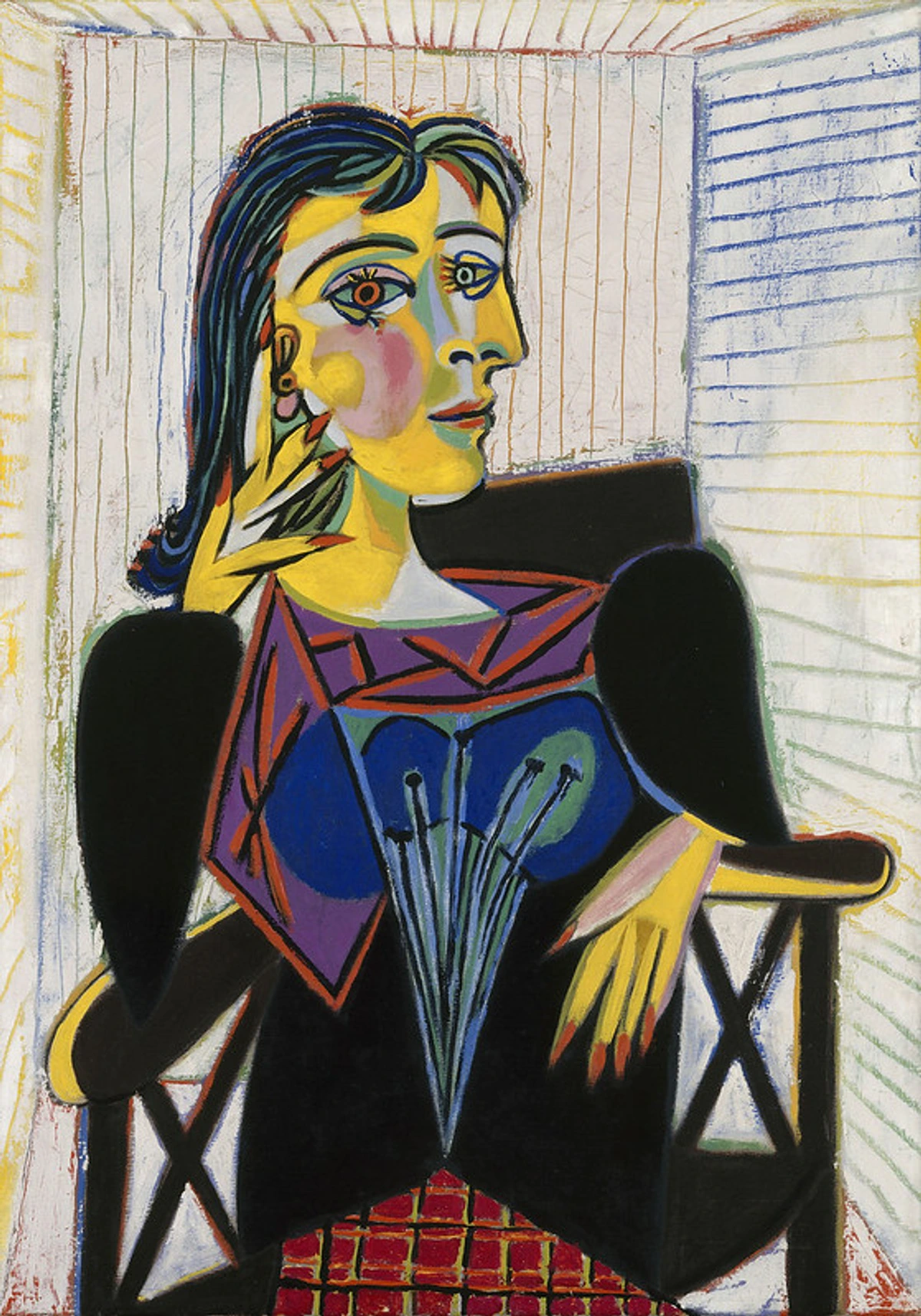
Today, standing before one of his canvases, you don't just see history. You feel the pulse of creation itself, the electric thrum of a mind thinking out loud in pigment. You witness what happens when someone refuses to accept the world as given and instead paints it as it is felt. And that, dear reader—that unending, restless, passionate conversation between the soul and the world—is art's purest magic. If that spirit moves you, perhaps you'll find your own color rebellion somewhere unexpected.
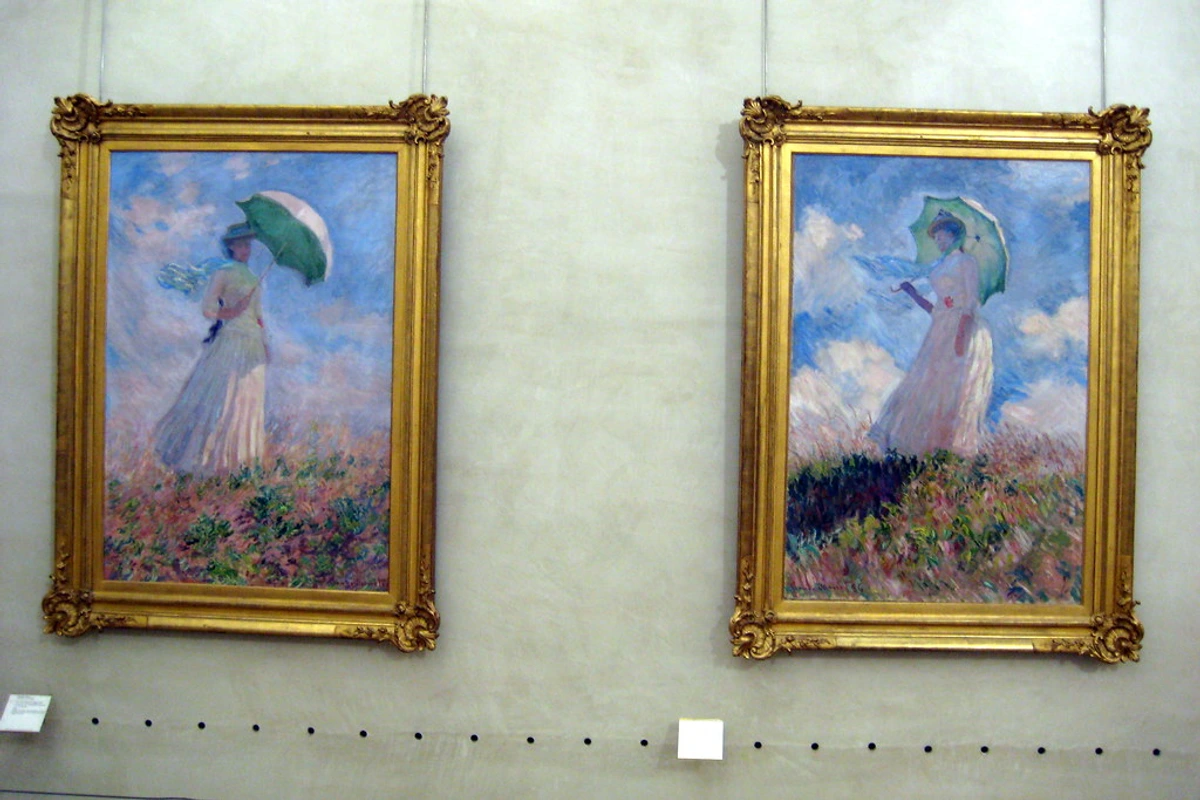
Where to See His Work & Experience His Genius
If this article has sparked your curiosity (and I hope it has), here's where you can encounter Delacroix's work firsthand:
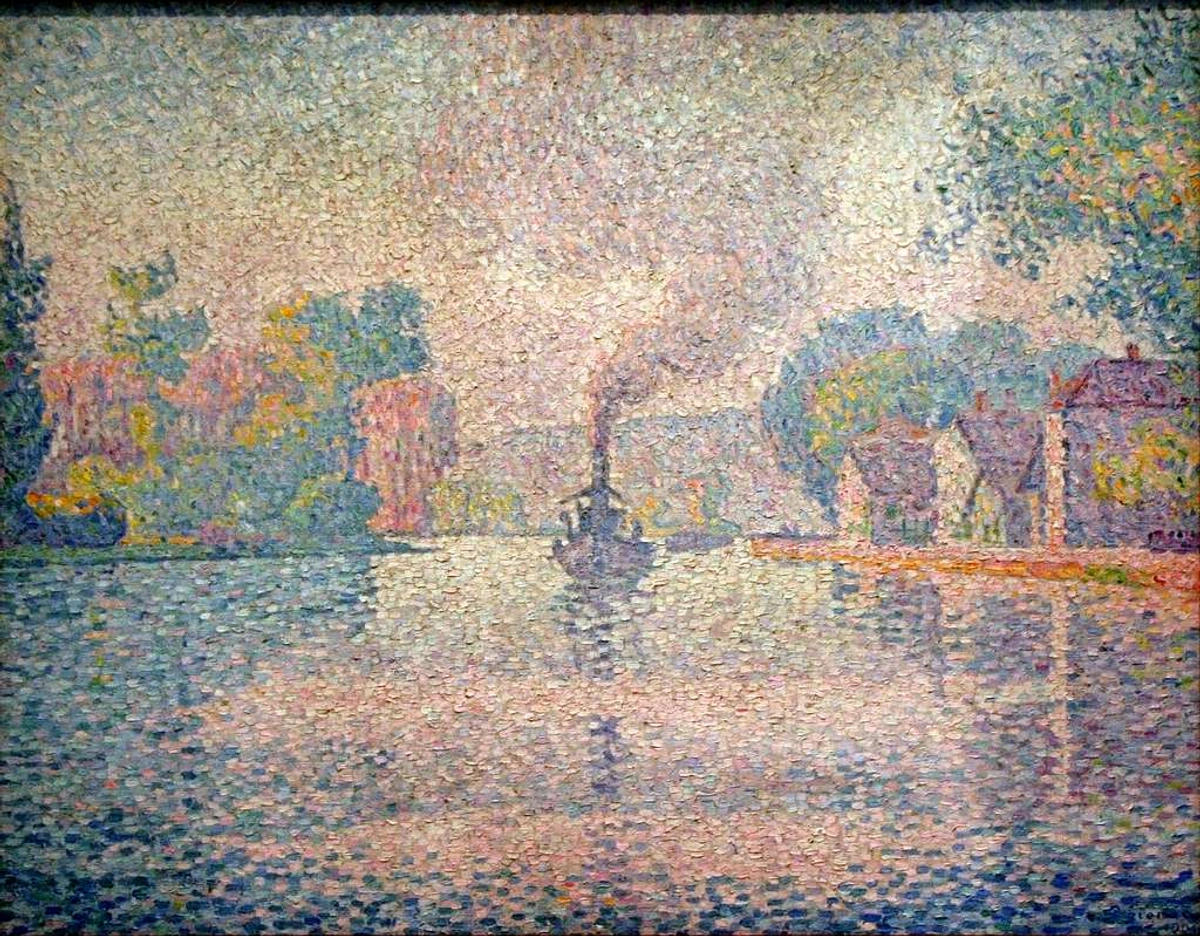
Paris – Musée du Louvre The motherlode. Room after room of Delacroix, including Liberty Leading the People, The Death of Sardanapalus, and Women of Algiers. Budget at least 3 hours for these galleries alone. The Louvre displays over 50 of his paintings, so wear comfortable shoes and prepare to be overwhelmed in the best possible way.
Paris – Musée Delacroix His final apartment and studio, preserved as a museum. This intimate space on Place de Fürstenberg feels like stepping into his private world. You can see his easel, his color palette (stained with centuries-old pigments), and some personal sketchbooks. Visiting this space after seeing his major works at the Louvre creates a powerful emotional connection.
New York – The Metropolitan Museum of Art Home to Christ on the Sea of Galilee and The Abduction of Rebecca. The Met's European painting galleries are free with admission, and their collection beautifully contextualizes Delacroix within 19th-century art movements. Standing in front of Christ on the Sea of Galilee, you can feel the desperation in the churning water, a testament to his ability to make nature itself a central character in the drama of faith.
Chicago – Art Institute of Chicago Visit Lion Hunt, one of his final major works showing undiminished energy despite his declining health. The AIC's collection includes several of his Orientalist paintings and preparatory sketches that reveal his working process. Seeing these violent, final works is a humbling experience—proof that his creative fire burned until the very end.
Online Resources Can't make it to these museums? The Louvre's website offers virtual tours of Delacroix galleries, and Google Arts & Culture has high-resolution images you can zoom into to study his brushwork. I've spent hours digitally exploring Liberty Leading the People at pixel level—it's like detective work for art lovers.
Fun Fact for Museum Visitors
When you stand in front of Liberty Leading the People, try finding the artist himself—the man in the top hat just behind Liberty's right shoulder. It's Delacroix's only known self-portrait within a major history painting, as if he's saying: "Yes, I was there. And yes, this matters."
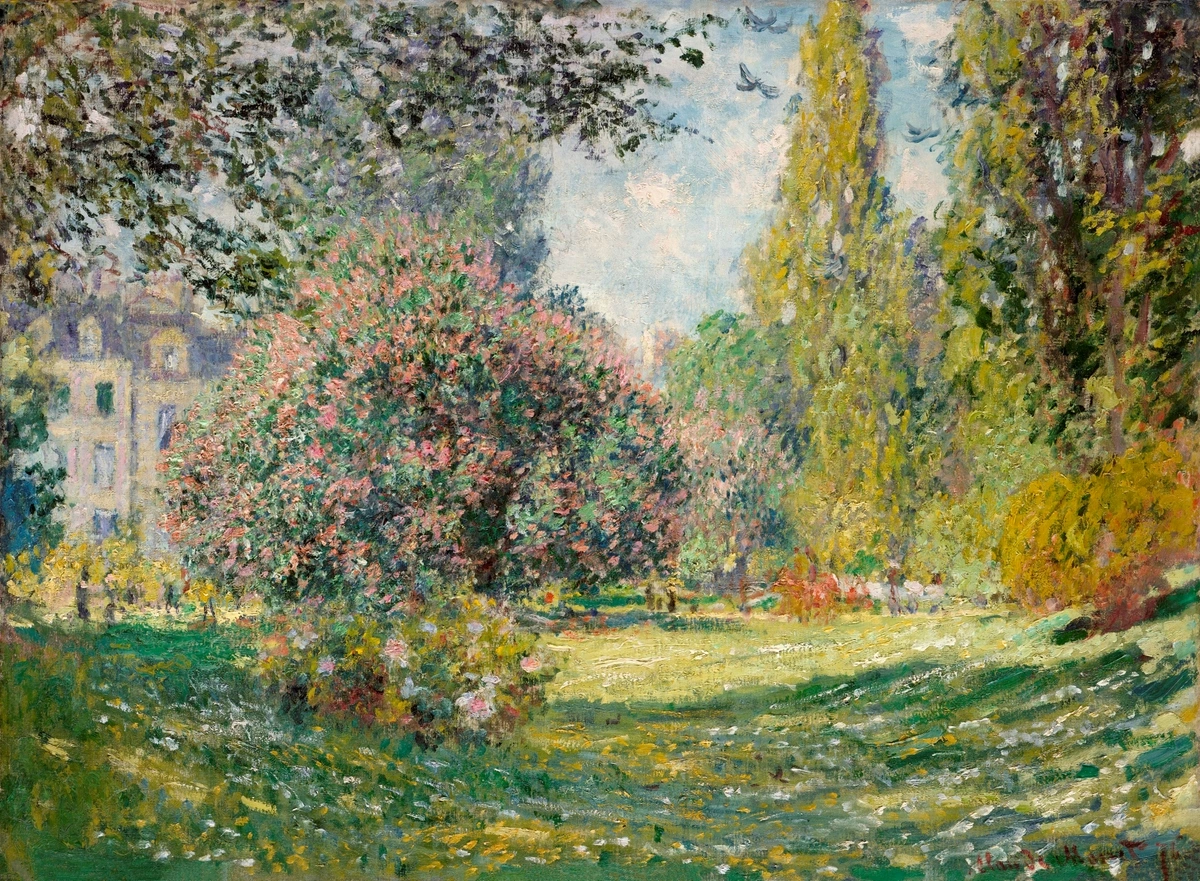
SEO Meta Elements
The Final Brushstroke
Eugène Delacroix died on August 13, 1863, at his Paris apartment. He was 65. By then, he'd created over 9,000 works—paintings, drawings, lithographs, and those meticulous journal pages.
His final journal entry reads: "The first merit of a painting is to be a feast for the eye." He spent his life proving that this feast could also nourish the soul.
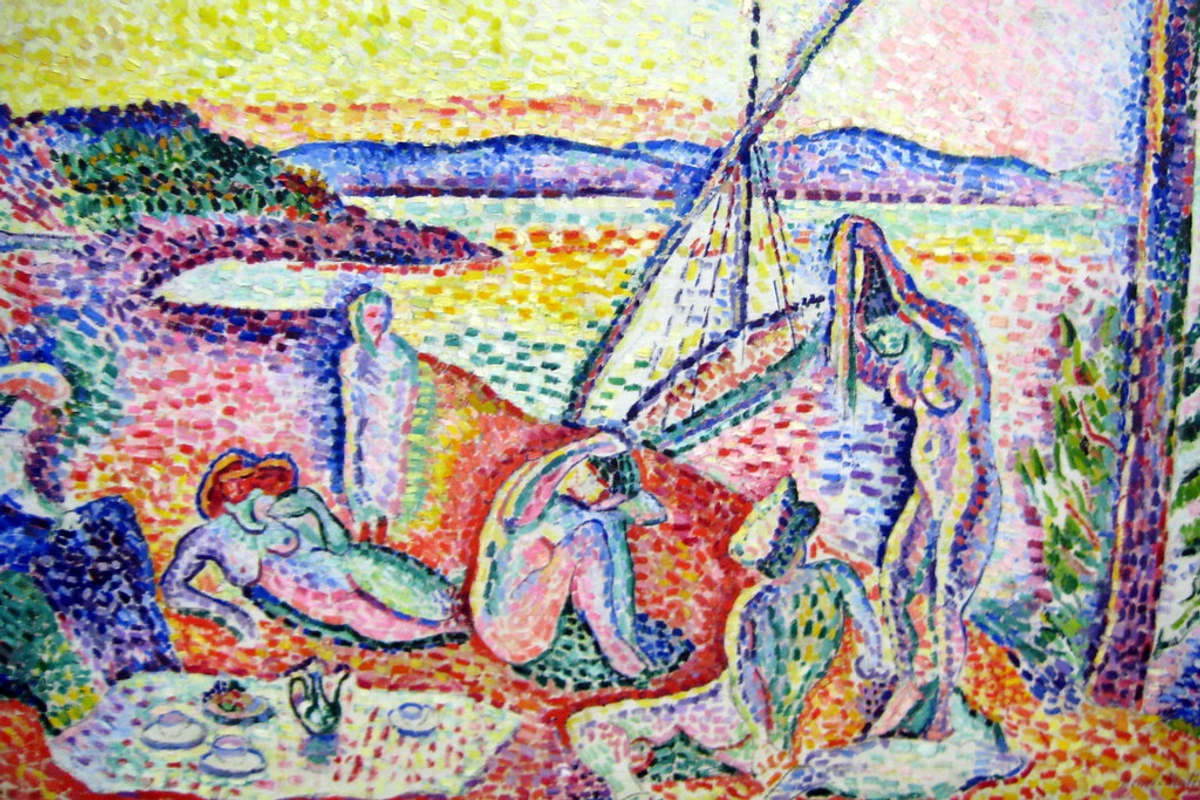
The art world he left behind was already being remade in his image. The Impressionists, just beginning their own revolution, were armed with his color theories and his permission to paint the world as they saw it. His lifelong rival, Ingres, would outlive him, but the aesthetic war they had fought was over. The battle between line and color was shifting decisively, permanently, in Delacroix’s favor. His late appointment to the Académie and the grand public commissions for ceiling paintings in the Louvre and the Church of Saint-Sulpice felt less like a victory and more like a final, grudging surrender from an establishment that could no longer ignore his overwhelming influence. The Louvre's Galerie d'Apollon ceiling (1850-1851) and the three monumental murals for Saint-Sulpice (1855-1861) represent his most sustained engagement with architectural decoration, showing he could work successfully on any scale required by official commissions without compromising his artistic vision.
Yet even in this moment of official recognition, he remained an outsider. Art historian Lee Johnson notes that Delacroix was elected to the Académie not as a Romantic painter, but as "the last great history painter"—a category the academicians could understand. They honored his technical mastery while continuing to reject his aesthetic philosophy. This fundamental misunderstanding would persist until the end of his life.
But here's what moves me most, especially as I get older: Delacroix never stopped. Even as his body failed him, as the chronic illnesses that had plagued him his entire life tightened their grip, his brushstrokes remained fierce, his colors electric. His final works show no decline, no mellowing, no retreat into safe repetition. They show only evolution—a mind and hand in restless motion until the very end. His late religious paintings and lion hunts are as passionate, as technically audacious, as anything he painted in his youth.
His Death and the Birth of a Legend
On August 13, 1863, Eugène Delacroix died at his final apartment and studio on the Rue de Fürstenberg. He was 65 years old. By then, he had created an astonishing body of work: over 9,000 pieces, including paintings, drawings, lithographs, and the nearly 7,000 pages of journals that form one of the most intimate self-portraits in the history of art. His final journal entry, written a few years before his death, reads with a characteristic mix of aesthetic clarity and personal exhaustion: "The first merit of a painting is to be a feast for the eye." It's a statement that feels both profoundly true and perfectly incomplete—a final, tantalizing suggestion that the conversation was far from over.
Perhaps that's his deepest, most enduring lesson, the one that escapes the history books and sinks into the soul of anyone who has ever tried to put brush to canvas: Art isn't about arriving at some perfect, placid destination. It's about remaining perpetually, recklessly alive to the world. It's the willingness to be perpetually curious about what paint can do, perpetually humble in the face of what you don't yet know, and perpetually brave enough to risk a spectacular failure for the slim chance of creating something true.
Some artists make pretty pictures. Eugène Delacroix made revolutions. And two centuries later, we are still living in the glorious, chaotic, and beautiful aftershocks of his genius.
SEO Meta Elements
Meta Title: Eugène Delacroix Biography: French Romantic Art Rebel Meta Description: Uncover the dramatic life of Romantic painter Eugène Delacroix – his techniques, masterpieces, and revolutionary impact on art history.
Focus Keywords: Eugène Delacroix, French Romanticism, Liberty Leading the People, Delacroix paintings, color theory, Romantic art, Delacroix biography, French art history, Delacroix techniques, oil painting methods
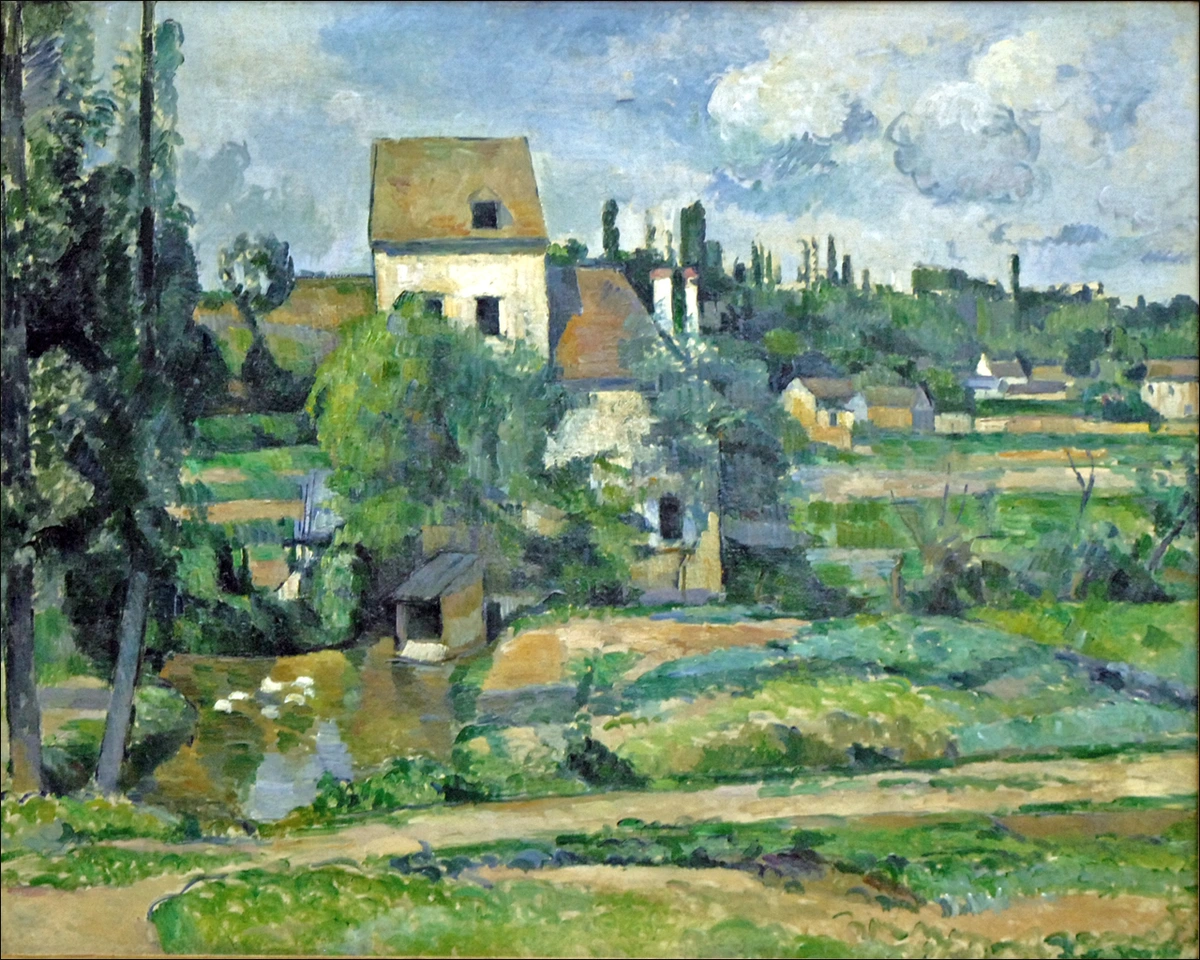



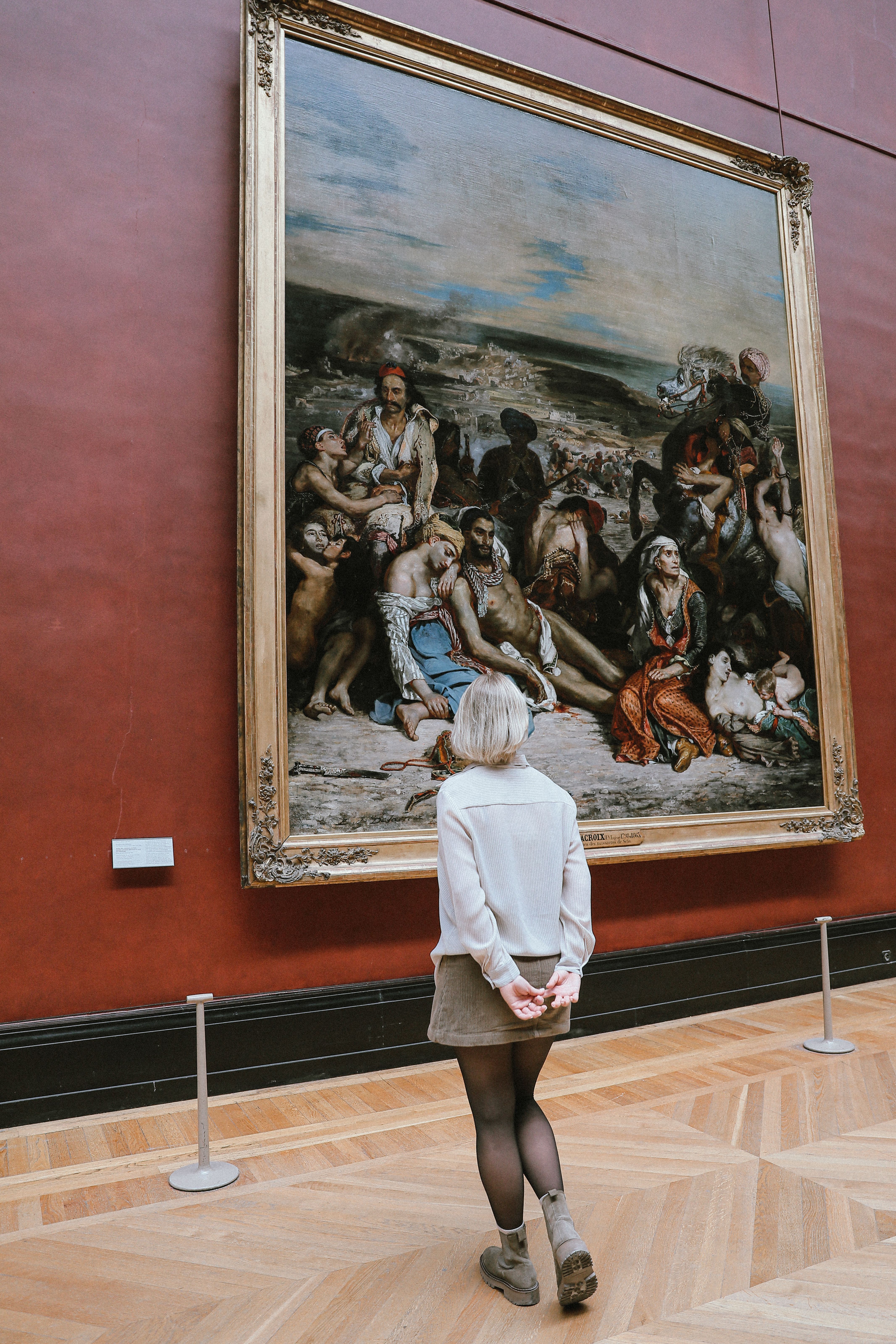



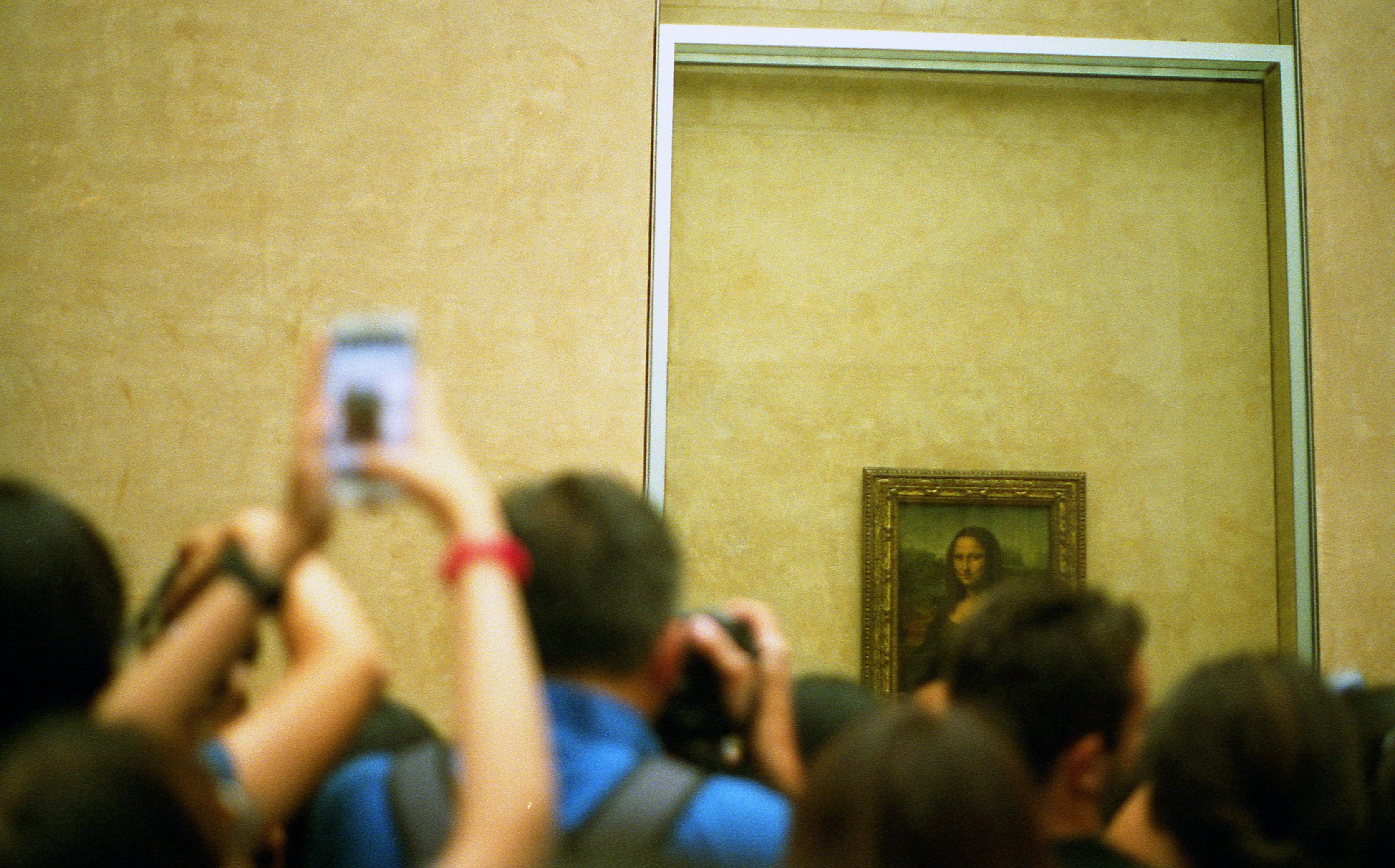



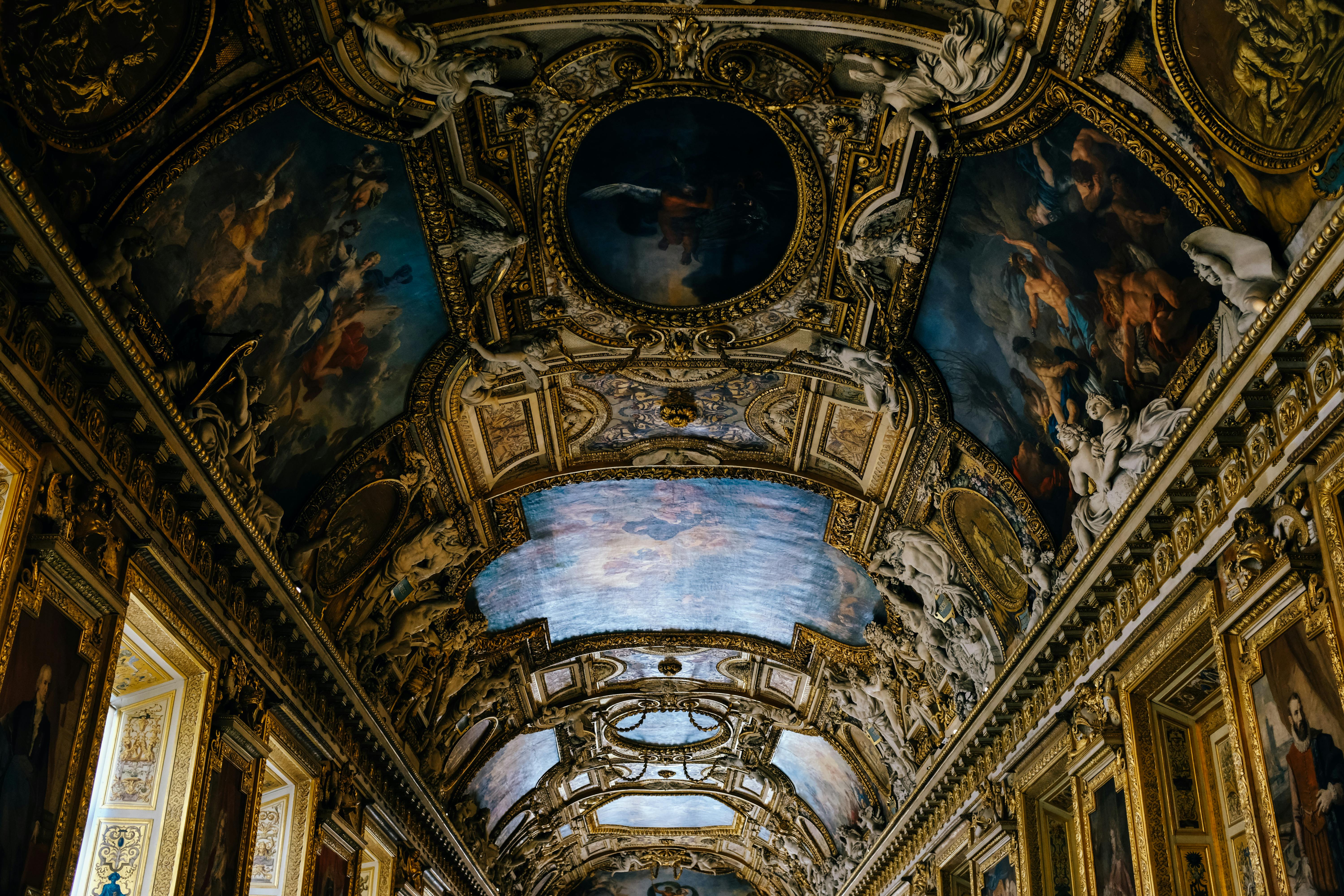





Long-tail Keywords: Where to see Delacroix paintings, how did Delacroix influence modern art, Delacroix vs Ingres rivalry, Delacroix Morocco journey impact, what paints did Delacroix use, Romantic art characteristics, Liberty Leading the People meaning, Delacroix journal quotes, how to paint like Delacroix, Delacroix artistic legacy