Cecily Brown: The Thrilling Blur of Abstraction and Figuration
Dive into Cecily Brown's dynamic world where abstract and figurative art collide. Discover her process, influences, and lasting impact on contemporary painting, told with a personal touch.

Cecily Brown: The Thrilling Blur Between What We See and What We Feel
There are paintings that simply demand your full, undivided attention, aren't there? The kind that grab you by the collar and pull you right into their swirling vortex of color and form. For me, Cecily Brown's work has that undeniable, almost primal pull. She’s this incredible force in contemporary painting, an artist whose monumental canvases don't just hang on a wall; they erupt with an assertive energy that often feels... well, visceral. What truly fascinates me about her is how effortlessly she seems to bridge that sometimes-tricky divide between abstraction and figuration. She just fluidly merges these two poles of artistic expression, constantly challenging what I thought painting could even do. It's a complex, often sensual world she invites us into, one that practically begs for your active visual and intellectual engagement. It's not passive viewing; it’s an invitation to wrestle with the canvas itself.
Where It All Began: London, New York, and a Deep Dive into History
So, where does a vision like this even start? Cecily Brown's journey kicked off in London, where she was born in 1969, leading her to the rather esteemed Slade School of Fine Art. But if you ask me, the real game-changer was her move to New York in the mid-1990s. Imagine that: dropping yourself right into the epicenter of the art world when painting itself felt like it was constantly on trial, being questioned about its very relevance. It must have been this incredible crucible, pushing her, shaping her burgeoning style in ways a quieter place never could. It's a bit like throwing yourself into the deep end, isn't it? Though she was knee-deep in contemporary chatter, her artistic sensibilities were, fascinatingly, anchored in a truly sophisticated understanding of art history.
She didn't just casually glance at the past; she meticulously drew inspiration from a whole lineage of masters. I always picture her in a museum, almost having a silent, intense conversation with them. She pulls from the dramatic compositions and deep human narratives of Old Masters like Peter Paul Rubens – seriously, you can almost feel her marveling at how he captured that fleshy dynamism, that sheer volume of life on canvas. And then there's Francisco Goya, from whom she surely absorbed that profound psychological depth and a fearless exploration of human drama and social critique. But she didn't stop there. She also embraced the explosive freedom and gestural intensity of the Abstract Expressionists. Particularly Willem de Kooning – she just seemed to inherit his uninhibited gestural freedom and a raw, immediate energy. She didn't just admire them; she seemed to absorb their sheer audacity, their belief that the canvas was a place for genuine, messy, exhilarating action. This isn't just synthesis; it's like she's engaging in a profound dialogue across centuries, taking those enduring human themes – desire, conflict, vulnerability – and reinterpreting them through her own distinctly modern, vital, and deeply personal lens.
Her Signature Move: Orchestrated Turbulence and the Blurring Body
If you’ve ever seen a Cecily Brown painting, you know that frantic, almost tumultuous brushwork is her calling card. I always find myself caught in that delightful paradox with her work – this 'orchestrated turbulence,' as I like to think of it. It looks wild, utterly free, but there's this palpable sense of control, like a conductor leading a magnificent, unruly orchestra. Every single stroke seems to be a direct, physical manifestation of an idea, a feeling, a fleeting moment. It’s got that bold spontaneity you might see in a Willem de Kooning, but with her own distinct flavor. Her canvases are these expansive universes where forms are perpetually in motion, simultaneously coalescing and dissolving. It’s a testament to her formidable technical mastery, and honestly, her profound understanding of composition in abstract art must be something else.
And right there, amidst this beautiful maelstrom, figuration just emerges with startling clarity, only to melt back into the painterly fabric just as quickly. You see a limb, a torso, a hint of a face, and then… poof, it's gone. It's like trying to catch butterflies, isn't it? These fragments hint at bodies caught in moments of intimacy, conflict, or quiet reverie. This dynamic dance between the discernible and the elusive? That’s Brown’s genius, her hallmark for weaving figuration into her abstract tapestries. She never gives you the whole picture, bless her heart, which means you become an active participant, a visual detective. You're invited to piece together fragments, to discern narratives that continually shift and evade definitive capture. It's a visual dialogue that utterly transcends explicit depiction, making your gaze an integral part of the artwork's very experience.
Then there's that undeniable undercurrent of sensuality and the erotic, woven right into the fabric of her brushstrokes. It’s rarely explicit, thank goodness, sparing us the obvious, but it’s there, in the way colors bleed into each other, in the curves and suggestions of forms. She’s subverting those traditional representations, embedding them within a swirling vortex of paint, challenging our conventional perspectives through distortion, scale, and context. It’s as if the paint itself is alive, breathing, experiencing, rendering the inherent sensuality of the human form through the very act of painting—the push and pull, the intermingling.
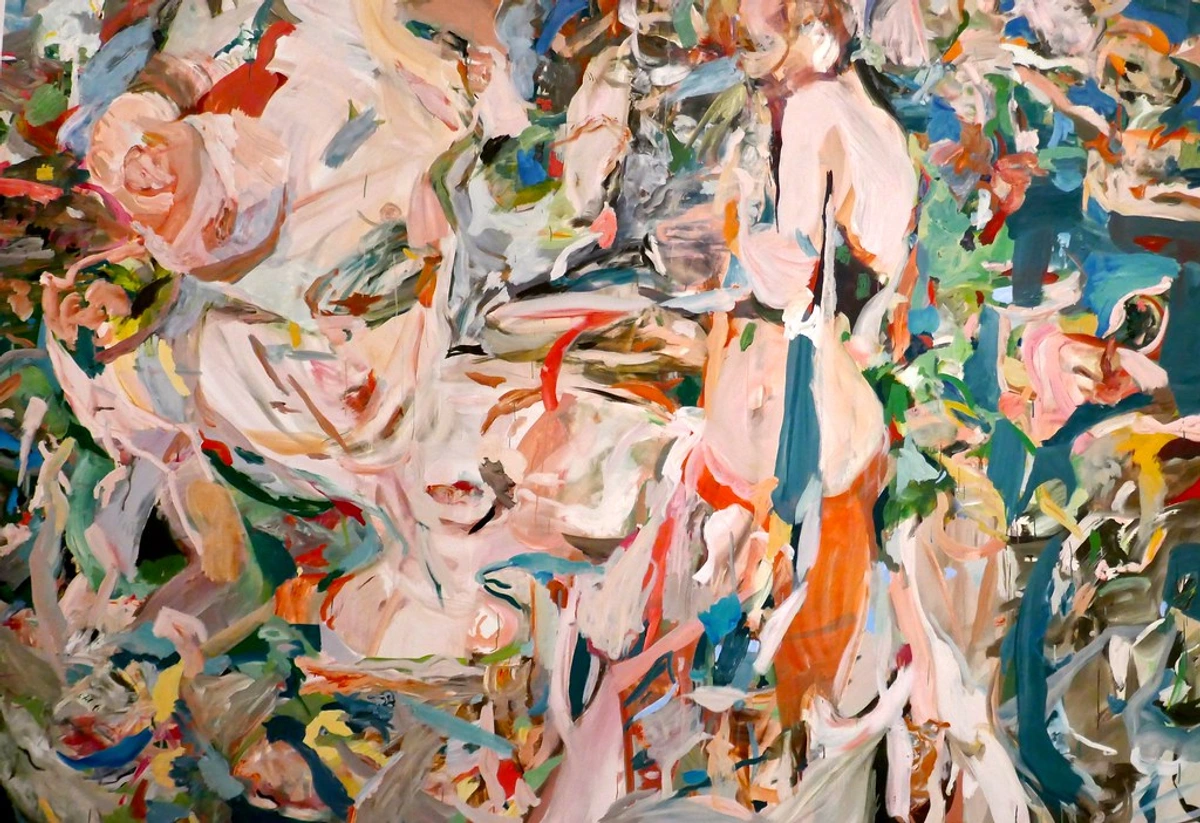
Take her compelling 'A Swan Comforting a Snake' (1998-1999) for a moment. It’s a perfect encapsulation, isn't it? You see her signature blend of swirling forms and intense color, where these fragmented figures seem to wrestle, to entwine, emerging from and receding into the gestural abstraction. You're left wondering, "Is this tenderness or a struggle?" That’s the genius – the ambiguity that keeps you utterly hooked, making you a detective in your own viewing.
https://live.staticflickr.com/1907/31184291068_8e821a86fd_b.jpg, https://creativecommons.org/licenses/by-nc/2.0/
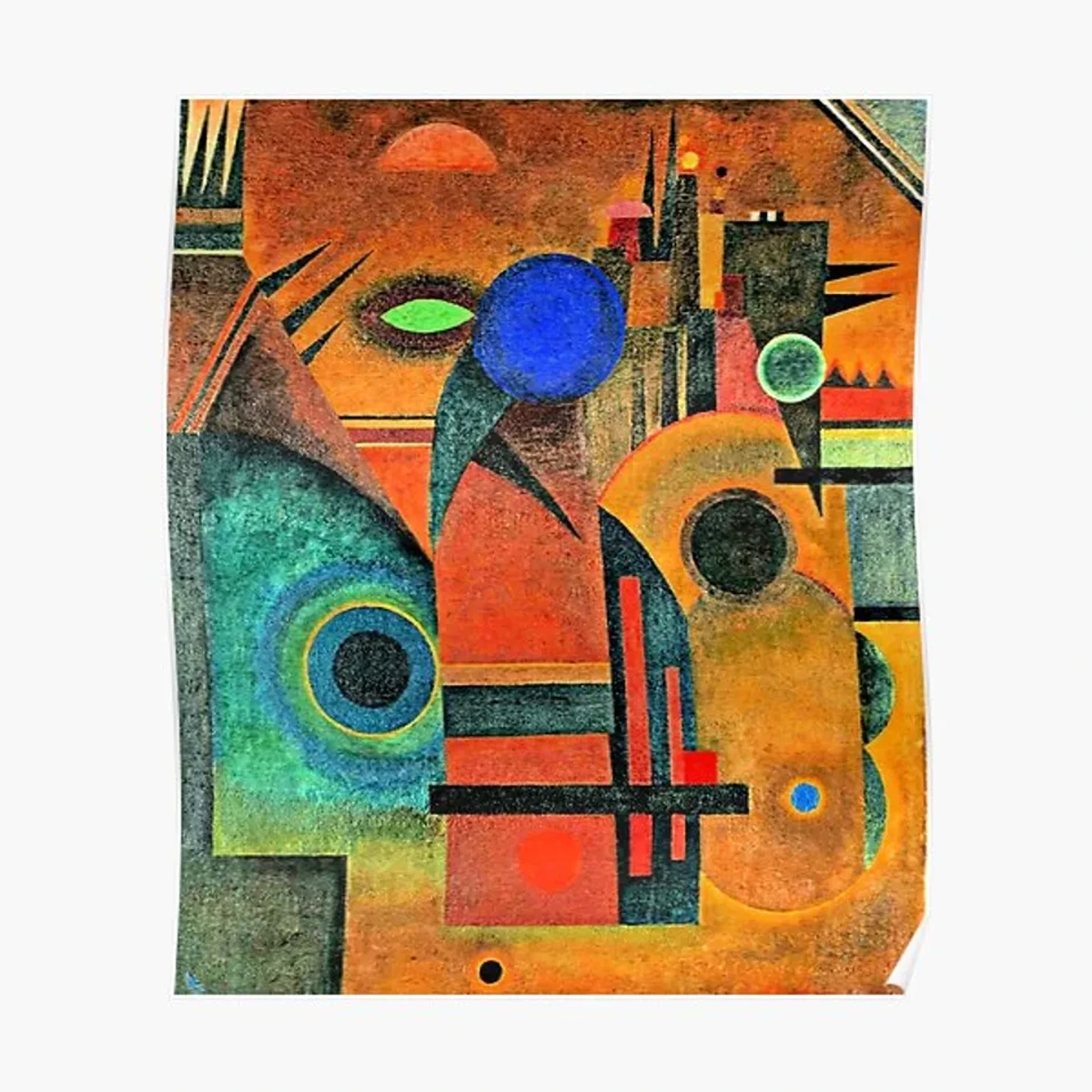
And her palette? Audacious doesn’t even begin to cover it. It's a symphony where hues don't just sit next to each other; they clash and harmonize, creating these incredibly powerful emotional states. Her fearless approach to color, using it not merely to describe but to evoke profound psychological landscapes, echoes the innovative spirit of movements like Expressionism or Fauvism. Her colors are rarely just colors; they’re moods. You can practically feel the heat of those oranges, the cool blues whispering anxieties. It's like she's painting emotions directly, bypassing the rational mind. Indeed, I often think of pieces like Henri Matisse’s 'The Red Room' as a sort of historical conversation partner for Brown's dramatic chromatic statements, though her application often imbues her surfaces with a distinctive texture that adds another layer of complexity.
Then there’s the monumental scale. Oh, the scale! Standing before one of her large canvases is like stepping into another dimension. It doesn't just hang on the wall; it envelops you. You feel it in your chest, this physical presence that demands your full attention, pulling you into its swirling embrace. This amplifies the visceral impact of her brushwork and that delicious ambiguity of her figuration, demanding a full bodily engagement from us, the audience, rather than just a detached glance.
The Beautiful Mess of Creation: Process, Paint, and the Artist’s Hand
Her studio must be a place of intense dialogue, a wrestling match with the very paint itself. I can almost picture it: an explosion of color, the scent of oils, canvases stacked, each one bearing witness to an epic struggle. Brown’s artistic process involves this intensely physical engagement with her medium. She’s not just delicately applying paint; she’s often laying down thick impasto – that’s where you put paint on so thick it’s almost sculptural, sometimes straight from the tube. Who hasn't felt that primal urge to just slather paint on, thick and luxurious, reveling in its materiality? Brown takes that urge and elevates it to genius.
She then scrapes, abrades, and reapplies, an iterative dance that's often destructive and reconstructive all at once. It’s beautiful, isn't it? This transforms the paint itself into a dynamic, almost living entity within the work, with the raw energy of her compositions inextricably linked to the physicality of her painterly gestures. Each canvas becomes a testament to this intense dialogue with her materials, where the sheer act of painting—the pushing, pulling, and layering—becomes a metaphor for the sensual and tumultuous themes she explores. The materiality isn't just a surface effect; it’s the beating heart of her art, conveying a palpable sense of struggle, embrace, and transformation. If you're ever curious about how artists use color and texture to achieve such powerful emotional and visual effects, honestly, Brown’s work offers a masterclass in chromatic and tactile storytelling. It's a reminder that art isn't always neat and tidy; sometimes, it’s beautifully, gloriously messy.
https://freerangestock.com/photos/177284/artists-workspace-filled-with-paint-brushes-and-supplies.html, https://creativecommons.org/public-domain/cc0/
A Grand Conversation: How History Whispers in Her Art
It's as if she's not just looking at art history; she's having a lively, sometimes rowdy, conversation with it. Brown's practice goes way beyond simply drawing influence; it’s a direct and profound dialogue with the centuries. It’s more like a profound re-examination of those enduring human themes – desire, conflict, vulnerability – all filtered through a distinctly modern, gestural language. I love how she doesn't just appropriate; she reinterprets, or maybe even 're-feels,' works by Old Masters like Goya, Rubens, and Hogarth. She seems to inhabit their narratives for a moment, then refracts them through her own urgent, contemporary gaze. It deconstructs traditional narrative painting, doesn't it? Replacing a clear storyline with an immersive experience of fleeting perceptions and potent emotional resonance.
Her work powerfully reflects broader trends in understanding abstraction in contemporary art, beautifully demonstrating how a deep historical dialogue can truly invigorate contemporary practice. And that’s the magic, isn't it? Her paintings are never truly finished until you look at them. They’re not static pronouncements; they're invitations to a shared experience. They demand active participation, allowing shapes and suggestions to crystallize and dissolve in your gaze. This active process of interpretation becomes central to understanding her art, making you, the viewer, an indispensable collaborator in its unfolding meaning. That inherent ambiguity in her work ensures that each viewing can yield a fresh discovery, preventing these glorious creations from ever feeling fully exhausted or definitively 'read.' It’s a wonderful challenge, really, a call to keep looking.
Her Unmistakable Mark: Why Cecily Brown Matters Now More Than Ever
Cecily Brown hasn't just carved out a niche; she’s created an entire landscape within contemporary painting. More than that, I think she’s played a crucial role in reminding us all of the sheer power and enduring relevance of painting itself in the 21st century. Her unwavering commitment to paint as a primary means of expression, coupled with her intellectual rigor and deep emotional resonance, has firmly cemented her position as one of the most significant artists working today. When you see her large-scale, highly energetic canvases, you witness a master blending Abstract Expressionism with suggestive figuration – a unique synthesis of historical traditions with a fiercely contemporary, gestural language that truly sets her apart.
It’s interesting, isn’t it? Many of her peers might comfortably lean into either pure abstraction or pure figuration, but Brown, with admirable confidence, occupies that fascinating, liminal space right between them. She’s creating a dialogue that is both intellectually rigorous and deeply, thrillingly visceral. In an era where digital and conceptual art often hog the spotlight, Brown's dedicated exploration of the painterly tradition offers a powerful affirmation of its enduring relevance. She's not just continuing traditions; she's forging brave new paths, profoundly influencing a whole generation of artists who are still grappling with the beautiful complexities of representation and abstraction. Her work is widely exhibited in leading institutions globally, showcasing the vitality of abstract art styles and cementing her legacy. You can find her prominent solo exhibitions at places like the Modern Art Oxford, the Des Moines Art Center, and The Met Breuer – pretty impressive, if you ask me. For those who want to see more, visitors can explore the richness of modern art movements at institutions globally, and perhaps even discover original pieces for sale, such as art for sale, or delve deeper into an artist’s personal timeline. I hear there’s even an artist’s museum in 's-Hertogenbosch, NL that’s worth a visit if you’re ever in the area. The artist’s museum is a place for discovery.

https://live.staticflickr.com/6195/6087778411_164f0d9a2f_b.jpg, https://creativecommons.org/licenses/by-nc-nd/2.0/

So, What's the Takeaway? Keep Looking.
If there’s one thing Cecily Brown’s entire body of work screams, it’s this: painting is far from dead. It's a vibrant, continuing vision, a compelling testament to its enduring power to capture the messy, beautiful complexities of the human experience. Her remarkable ability to synthesize a deep understanding of historical influences with a uniquely contemporary vision really does ensure her place as a pivotal figure in modern and contemporary art. Honestly, her canvases aren't just paintings; they're dynamic arenas where raw emotion, intellectual curiosity, and painterly prowess all converge, inviting profound engagement and a continuous re-evaluation of how we perceive the world. Through her lasting impact, Brown reshapes our understanding of both abstraction and figuration, boldly asserting the vitality and endless possibilities of paint in the 21st century. So, as you stand before a Cecily Brown, don't just look; feel. Let the colors wash over you, let the forms invite you in, and allow yourself to get wonderfully lost in that thrilling space between the abstract and the figurative. It’s a journey, and one that’s endlessly rewarding. I promise you.