Adriano de Sousa Lopes: Architect of Portuguese Modernism, WWI Artist & Curator
Discover Adriano de Sousa Lopes (1879-1944), the pivotal figure who bridged tradition and modernism in Portugal. Explore his impactful WWI art, unique 'rooted' style, and legacy as a museum director.

Adriano de Sousa Lopes: Portugal's Quiet Architect of Modernism, Reimagined
Sometimes, I find myself thinking about the artists who don't necessarily shout from the rooftops, the quiet forces who shape an entire era without needing bombastic manifestos or radical public declarations. For me, Adriano de Sousa Lopes (1879-1944) is precisely that figure—the 'quiet architect' of Portuguese Modernism. He wasn't one for instant revolution, unlike some of his more avant-garde contemporaries. Instead, he was quietly, profoundly, building a bridge. He was a Portuguese painter who stood with one foot firmly in the traditional, academic art world and the other gracefully dipping into the wild, exhilarating currents of Modernism, that transformative movement of the late 19th and early 20th centuries that challenged established traditions and embraced new ways of seeing and depicting the world. This exploration will reveal how Lopes, through his thoughtful evolution and quiet advocacy, became a cornerstone of Portuguese Modernism, offering a deeply relatable model for integrating tradition with innovation.
My own journey as an artist has often felt like a similar tightrope walk, seeking a unique voice without discarding the rich tapestry of art history. I remember trying to find my own style, experimenting wildly, but always feeling the pull to understand the 'why' behind the old masters before I could truly break free. Lopes's journey, I believe, is perhaps more universally relatable than that of the fiery iconoclast. It's the story of an artist evolving, absorbing the world around him, struggling to find and hone his own voice amidst a dizzying sea of change. It's about thoughtful synthesis, about integrating the new with the enduring, rather than just outright revolution. This quiet architecture wasn't about tearing down old structures; it was about seamlessly incorporating new wings, new perspectives, new light into an existing foundation. Let's peel back the layers on this intriguing architect of modern Portuguese art, and perhaps, find a bit of ourselves in his quiet quest for progress.
Early Brushstrokes: From Academic Precision to Parisian Awakening
To truly understand this quiet architect, we must first trace the foundations of his skill, built in the rigorous studios of Portugal. Imagine you're a young, exceptionally talented artist in Portugal at the cusp of the 20th century. The weight of the old masters, of rigorous academic training, is immense. This period of academic art emphasized technical mastery, meticulous detail, realistic representation, and often classical or historical subjects, focusing on what was considered 'high art.' In Portugal, this meant a strong adherence to 19th-century academic principles, with institutions like the Academia de Belas-Artes de Lisboa shaping artists to produce technically polished works, often for a conservative patronage. It championed perceived perfection and control, a timeless beauty that could, however, feel stifling to a curious mind. The pressure to conform, to reproduce what was 'acceptable,' was palpable. Portuguese artists of this era, seeking broader horizons, often faced the challenge of securing funding and patronage to study abroad, a journey Lopes was fortunate to undertake.
Sousa Lopes began his artistic life in the most classic way imaginable: studying at the Academies of Fine Arts in both Porto and Lisbon. This period was all about academic precision—rigid lines, meticulous detail, and an almost reverent adherence to classical forms that formed the bedrock of traditional painting. His early works were often precise, almost photographic renderings of rural scenes or still lifes, demonstrating a mastery of form and light that laid the groundwork for his later evolutions. He mastered the meticulous draughtsmanship and controlled palette that were the hallmarks of the era, creating works that, while technically sound, perhaps yearned for a new breath of life. I often think back to my own early art school days, meticulously copying old drawings, feeling both the comfort of tradition and the restless urge to find something more—a sentiment I sense in Lopes's early journey. This initial period, grounded in Naturalism and representational accuracy, was less about personal expression and more about demonstrating absolute control over the medium. It's the equivalent of a classical architect mastering every traditional joint and load-bearing calculation before ever dreaming of a glass façade.
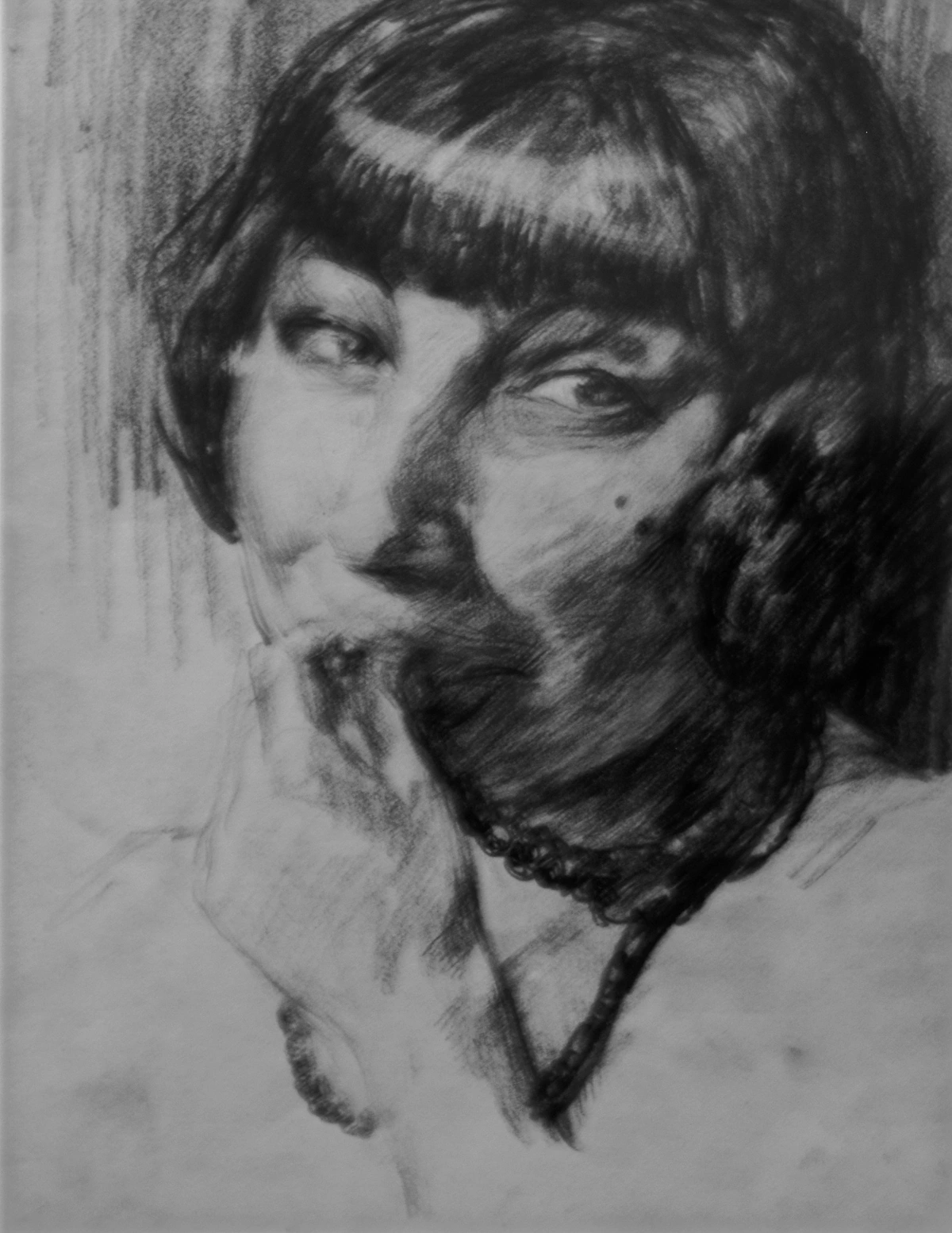
But then, as it was for so many ambitious artists of his generation, the magnetic pull of Paris became irresistible. He secured a scholarship and moved to the city of lights in 1903. This is where his artistic narrative truly takes flight, where the quiet architect started sketching plans for expansion. Paris at that time was an absolute explosion of new ideas, a kaleidoscope of burgeoning movements. It was an immersion in new visions, from the fleeting moments of Impressionism with its focus on capturing light and color, to the emotional depths of Symbolism, when Fauvism was beginning to roar with vibrant, non-naturalistic color, and when even Cubism's fragmented reality was starting to emerge, challenging every established perception. It must have been an intoxicating, overwhelming, yet utterly liberating experience.
Lopes didn’t immediately dive head-first into the most radical factions, and that's precisely what makes his journey so compelling to me. He was more of an observer, a thoughtful synthesizer, rather than a provocateur. It reminds me of my own artistic path; I've often felt a deep appreciation for the avant-garde, but a stronger pull towards understanding and integrating, rather than simply replicating or tearing down. Lopes absorbed a spectrum of influences, carefully selecting what resonated with his evolving vision, almost as an architect selects materials best suited for his new design. He wasn't just observing; he was internalizing, experimenting, and finding a way to make these new languages his own:
credit, licence
- The light and color of Impressionism: He learned to capture the ephemeral quality of fleeting moments, employing visible, broken brushstrokes and optical mixing to suggest movement and the delicate play of light on surfaces. He didn't just imitate; he understood how light could transform a mundane scene into a vibrant tableau, how it shimmered on a wet street or dappled through leaves, integrating this new perception of light into his own visual language. Think of the luminous quality in a Monet or Renoir, and how Lopes began to infuse that brilliance into his own work.
- The moody atmosphere of Symbolism: This artistic movement, which sought to evoke emotions, ideas, and inner states rather than literally depict reality, resonated deeply with Lopes. He began to explore poetic suggestions and subjective experiences, often infusing his scenes with a profound sense of mystery or introspection, moving beyond mere objective depiction. He discovered the power of suggestion, painting not just what is seen, but what is felt, using color and composition to conjure a mood of quiet contemplation or melancholic beauty, reminiscent of figures like Odilon Redon or Gustave Moreau.

- The intimate scenes and tonal harmonies of artists like James McNeill Whistler: Whistler's focus on delicate arrangements, subtle color relationships (often referred to as "harmonies" or "nocturnes"), and a profound sense of atmosphere in domestic or quiet landscapes provided a crucial model. Think of Whistler's Nocturne in Black and Gold: The Falling Rocket—less about a literal scene, more about the feeling of night. Lopes learned to find beauty in everyday moments and to craft compositions where colors and tones worked together almost musically, creating a sense of serene introspection. This embrace of Aestheticism—the belief in "art for art's sake" and the pursuit of beauty and mood above narrative or moralizing—offered Lopes a profound lesson in how art could evoke subjective experience through formal qualities alone.
His work from this pivotal period vividly demonstrates a clear shift. The rigid lines of his academic training began to soften, his palette brightened with a new luminosity, and his subjects became increasingly personal and atmospheric, imbued with a fresh sensibility. You can see this beautifully in works like Parisian Street in Soft Light (c. 1910), where the city's energy is less about sharp edges and more about the delicate interplay of light on cobblestones and the blurred motion of figures, a gentle nod to Impressionistic light fused with a Symbolist undertone of urban contemplation. It was a beautiful, gradual blossoming, reflected in his evolving approach to paint and color. This wasn't a sudden break; it was a careful, considered evolution, like adding a new, vibrant facade to a sturdy old building, letting in a new kind of light.

The Crucible of War: A Different Canvas
Yet, even the most meticulously planned artistic journeys can be irrevocably altered by the unforeseen storms of history. For Sousa Lopes, this came in the grim, brutal form of World War I. His artistic exploration in Paris, full of light and introspection, was suddenly confronted by the cacophony and desolation of war. One of the most defining chapters of his life was his role as an official war artist (1917-1918), sent to the Western Front in Flanders to document the lives of the Portuguese Expeditionary Corps. The subtle harmonies and luminous cityscapes of Paris were suddenly replaced by the mud, the cold, and the relentless tension of the trenches. This wasn't about painting glorious, heroic battle scenes; it was gritty, raw, and profoundly human. He wasn't merely a documentarian, but an interpreter of the human cost, with a task to convey the unvarnished truth of the trenches. I can only imagine the sheer force of such an experience, altering one's artistic lens forever. It makes me reflect on how my own artistic concerns shift when faced with profound personal or societal challenges – the superficial falls away, leaving only the essential. This, too, was a form of architecture, but one built on the fragile reality of human endurance, tested under immense pressure.
His war art, often in poignant sketches and powerful oil paintings of the front lines, was a stark departure from romanticized depictions of conflict. These weren't the heroic, idealized battle scenes of yesteryear; they were raw, immediate, and sometimes unsettling. He captured the exhaustion, the omnipresent mud, the gnawing tension, and the quiet camaraderie of the trenches. His ability to capture psychological states in works like Soldiers at Rest, Western Front (1918)—showing figures slumped in weariness, faces etched with the silent burden of war, or eyes reflecting a distant, internal struggle—garnered significant, if somber, recognition for its unflinching honesty. These works are not just historical documents; they are deeply emotional works of art, imbued with modern, unflinching realism. He employed a style that was immediate and expressive, focusing on the fleeting, brutal moments and the psychological state of the soldiers, pushing his palette towards more somber, earthy tones that mirrored the grim reality he observed. His brushwork, while still controlled, gained an urgency, a gestural quality that conveyed the immediacy of the moment. This intense, harrowing experience, I believe, didn't just document war; it deeply etched itself onto Lopes's artistic soul, pushing him definitively away from any lingering academic idealism towards a modern, visceral language of human experience under duress. The quiet architect had witnessed a profound dismantling of old certainties, and his art reflected this new, harsher reality with an eloquent, somber authority, forever changing the trajectory of his visual vocabulary.
The Return Home: Pioneering a Rooted Portuguese Modernism
Returning to Portugal, Sousa Lopes was undeniably a changed artist, bringing with him the scars of war and the lessons of Europe's artistic vanguard. The world he returned to was also grappling with its own artistic identity. He became a key figure in what is known as the first generation of Portuguese Modernism. But what exactly was Portuguese Modernism? Unlike its more radical European counterparts, Portuguese Modernism, emerging in the early 20th century, often sought a distinct national identity while absorbing international trends. Portugal, a country deeply proud of its history but also seeking to assert its place in a changing Europe, found its modern artistic expression in a complex and diverse movement. Figures like Amadeo de Souza-Cardoso and Almada Negreiros explored Cubist and Futurist influences with revolutionary zeal, while others, like Lopes, sought a path of integration, reflecting the country's own struggle between tradition and modernity.
This is crucial when we consider his relationship to the so-called Orpheu Generation—a more radical literary and artistic movement, often linked to figures like Fernando Pessoa and Mário de Sá-Carneiro. The Orpheu journal, published in 1915, became synonymous with a provocative, avant-garde spirit, openly embracing manifestos of Futurism, Cubism, and a more aggressive avant-garde that often sought to shock and dismantle traditional structures. Their visual art counterparts, while fewer, shared this revolutionary zeal, often prioritizing fragmented forms, speed, and a universal modernism that sometimes overshadowed local connection. I imagine it felt like a jolt, a sudden, bright flash, aiming to clear the canvas entirely, much like a demolition crew preparing for a completely new build.
Lopes, by contrast, sought a different path—what I, and many art historians, call a 'rooted Modernism.' He demonstrated that you could indeed be a modern artist without severing all ties to tradition, finding a harmonious path forward that spoke to a distinctly Portuguese identity. His quiet architecture was about building upon, not over. He was constructing foundations for a modern art that felt inherently Portuguese, integrating European modern sensibilities with a deep connection to local landscapes and culture, not just a pale imitation of Parisian trends. This approach felt, to me, far more authentic and sustainable than a purely revolutionary stance, like building a thoroughly modern house but adorning it with traditional Portuguese tiles and colors, making it uniquely its own. It's about finding the universal in the particular.
My own art often strives for this balance – drawing from universal abstract principles while infusing it with personal narrative or a sense of place. I appreciate how Lopes didn't merely import foreign styles, but filtered them through his own unique lens, giving them a Portuguese soul. This integration wasn't accidental; it was a conscious, patient process of understanding what elements of Modernism could genuinely enhance and speak to Portuguese identity without losing it.
Themes and Motifs in Lopes's Evolving Vision
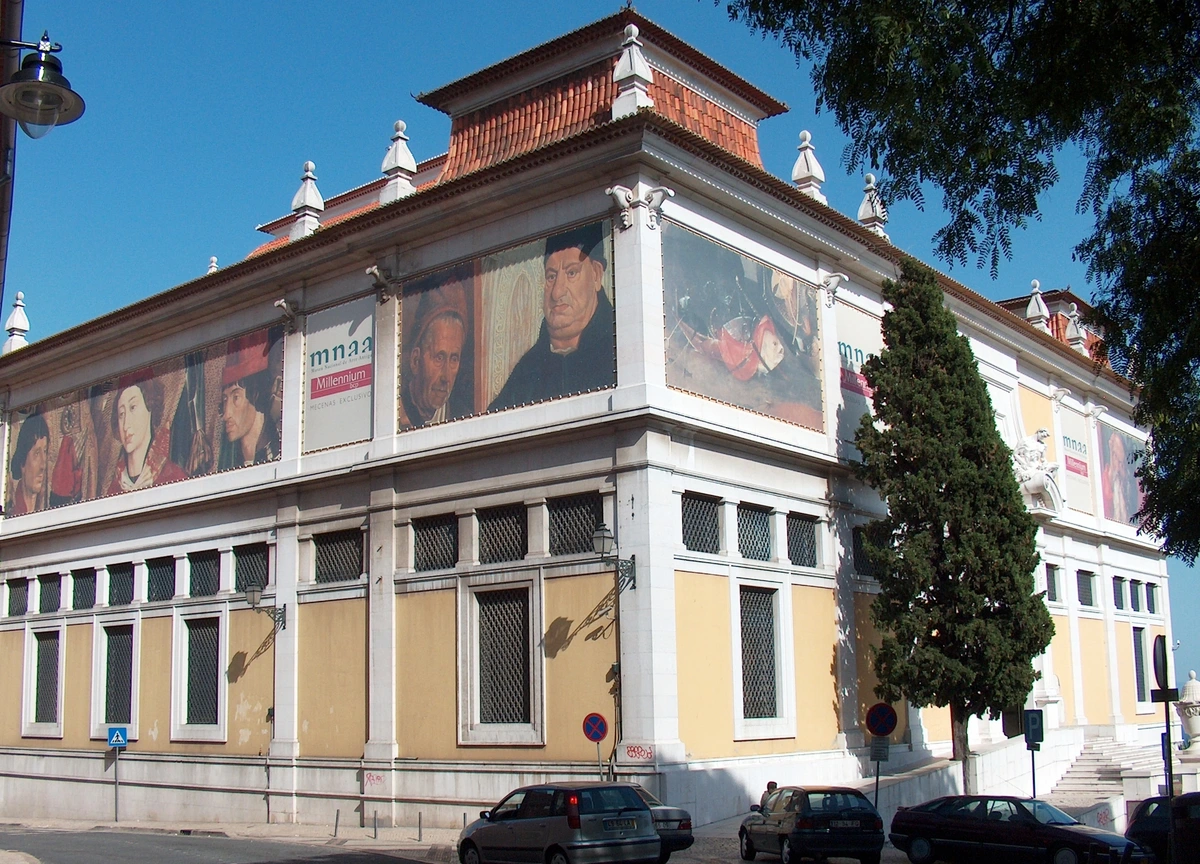
Lopes's later work, particularly his evocative landscapes of the Portuguese coast, especially from the Algarve, are filled with this modern sensibility. The Algarve, with its unique light, vibrant hues, and rugged coastlines, provided Lopes with a rich palette and subject matter that allowed him to fuse modernist techniques with local themes. Consider works such as Fishermen's Return, Algarve (c. 1925). In these paintings, the modernist treatment of light and color—the shimmering reflections on the water, the bold shadows of the cliffs—is unmistakable, yet they retain a profound connection to place, almost a classical sense of monumental composition. He painted portraits, landscapes, and scenes of daily life, all filtered through his unique, evolving perspective. Even his portraits, like The Lisbon Intellectual (c. 1930), filter the subject through an evolving perspective, using nuanced light and expressive brushwork to reveal inner character—perhaps the quiet intensity of thought in the subject's gaze, or the subtle tension in their posture—combining a sophisticated understanding of form with a deep emotional resonance. He wasn't just showing us a person; he was showing us their inner world, framed by a distinctly Portuguese light, with expressive brushwork that conveyed emotion and movement, rather than mere photographic detail. This dedication to psychological insight and a profound sense of place became hallmarks of his mature style, establishing him as a crucial figure in Portuguese art history. You can explore more of his unique approach at the Chiado Museum.
Beyond the Canvas: Curator and Advocate
His influence wasn't confined to his own canvases. Later in his life, Sousa Lopes took on another profoundly crucial role: he became the director of the National Museum of Contemporary Art in Lisbon (now the Chiado Museum) from 1919 to 1940. In this pivotal position, he became a quiet champion for the modern art he had helped usher in. This was a critical period for establishing a national identity for modern art in Portugal, and Lopes was, in essence, the institutional architect. The challenges were immense: public taste was often conservative, and funding for modern art acquisitions could be scarce. Yet, he persevered.
Before his directorship, the museum, like many national institutions of the time, likely mirrored prevailing conservative tastes, focusing on historical or academic works. Lopes's tenure, however, marked a significant shift. He actively shaped the national discourse, not just by hanging art, but by carefully selecting new acquisitions that pushed the boundaries of what was considered 'art' in Portugal, curating exhibitions that gave voice to both established and emerging modernists. For instance, he championed the acquisition of works by his contemporaries who were exploring new forms, ensuring their place within the national collection. His curatorial philosophy was an extension of his artistic one: a balanced vision that sought to introduce the new without discarding the valuable aspects of the past. He orchestrated exhibitions that showcased the progression of modern art, often balancing international trends with local talent, ensuring that Portuguese artists gained exposure while the public developed an understanding of global movements. This was not just administration; it was an active cultivation of a nascent art scene, meticulously laying the structural groundwork for future generations.
It's a classic story arc, really—the student becomes the master, who then becomes the gatekeeper and advocate for the next generation. I find myself constantly thinking about the importance of those who nurture an art scene, the quiet organizers and champions who make space for new voices. It's a vital role, often overlooked in favor of the more flamboyant artists. Without such figures, even the grandest artistic movements would struggle to find their footing.

It's a testament to his balanced vision that he could champion the new while respecting the old, ensuring that the seeds of modernism he had helped plant would flourish for future generations. He effectively built an institutional bridge, connecting Portugal's artistic heritage to its modernist future.

Sousa Lopes's Enduring Legacy and Reception
Adriano de Sousa Lopes's impact resonates far beyond his lifetime. During his career, his war art received significant recognition for its profound realism and honesty, praised by critics for its departure from traditional, romanticized depictions of conflict. His ability to convey the human cost and psychological states of soldiers cemented his reputation as a modern artist of deep emotional insight. While his 'rooted Modernism' was less overtly revolutionary than the Orpheu Generation, it was arguably more influential in shaping the broader trajectory of Portuguese art, offering a sustainable path for integrating innovation without abandoning national identity.
Today, Lopes is regarded as one of Portugal's most significant modern artists. His work is held in prestigious collections, and his curatorial tenure at the National Museum of Contemporary Art is recognized as foundational for establishing modern art in Portugal. He's admired not for a single groundbreaking style, but for his consistent, thoughtful evolution, his empathetic portrayal of the human experience, and his strategic cultivation of a national artistic consciousness. He built an oeuvre and an institution, brick by quiet brick.
Adriano de Sousa Lopes: A Chronological Journey
To fully appreciate Lopes's journey, let's look at the distinct phases that shaped his remarkable career, a continuous conversation between tradition and innovation, often punctuated by specific artworks that mark his evolution. These works aren't just snapshots in time; they are vital chapters in the narrative of his artistic 'architecture,' each building upon the last to create a cohesive and deeply personal modernist vision.
This collection of works, alongside his pivotal roles, showcases a coherent and evolving artistic identity. The table below offers a clear visual guide to how he meticulously constructed his unique artistic identity, piece by piece, influencing generations to come.
Period of Life  | Key Events & Influences | Artistic Style Highlights | Representative Work (Example) | Key Takeaway |
|---|---|---|---|---|
| Early Years (1879-1903) | Studied at Academies in Porto & Lisbon. Exposure to traditional Portuguese academic art, emphasis on draughtsmanship and classical forms. | Academic precision, Naturalism, solid draughtsmanship, restrained palette, realism, representational accuracy. | Rural Landscape with Figures (c. 1902) | Mastering the foundations, a bedrock of technical skill. |
| Parisian Period (1903-1914) | Scholarship to Paris. Deep absorption of Impressionism, Symbolism, Whistler, and exposure to early Fauvism and Cubism. | Transition to Modernism: softer lines, luminous palette, atmospheric, intensely personal subjects, delicate color harmonies, atmospheric perspective, subjective interpretation, influence of Aestheticism. | Parisian Street in Soft Light (c. 1910) | Thoughtful synthesis of European avant-garde, finding new light. |
| World War I (1917-1918) | Official war artist on Western Front (Flanders). Documented Portuguese soldiers, witnessing profound human struggle. | Expressive, documentary, unflinching realism, focus on psychological states (exhaustion, trauma, camaraderie), often somber and direct, expressive realism, urgent brushwork. | Soldiers at Rest, Western Front (1918) | Art confronting brutal reality, forging a visceral human language. |
| Later Career (1919-1944) | Director of National Museum of Contemporary Art. Pioneering figure in Portuguese Modernism. Returned to Portuguese themes, landscapes, and portraits. | Matured Modernist style: nuanced light, expressive yet controlled brushwork, profound sense of place and identity, a 'rooted Modernism', psychological portraiture, deep connection to local culture and landscape. | Fishermen's Return, Algarve (c. 1925), The Lisbon Intellectual (c. 1930) | Building a distinctly Portuguese modern art, integrating place and soul. |

Frequently Asked Questions (FAQ)
Sometimes, even after delving deep, a few core questions linger. Here are the answers to some common queries about Adriano de Sousa Lopes, the quiet architect of Portuguese Modernism:
Who was Adriano de Sousa Lopes and why is he important?
Adriano de Sousa Lopes (1879-1944) was a prominent Portuguese painter and a pivotal figure in the transition from 19th-century academic tradition to 20th-century Modernism in Portugal. He's particularly known for his distinguished war art during WWI, his unique 'rooted Modernism' that blended European trends with Portuguese identity, and his significant, long-standing role as director of the National Museum of Contemporary Art in Lisbon (now the Chiado Museum). His importance lies in his ability to bridge eras, innovate thoughtfully, and champion modern art institutionally, laying vital groundwork for subsequent generations of Portuguese artists.
What artistic style is Adriano de Sousa Lopes known for?
His style underwent a significant evolution, reflecting his 'quiet architect' approach. He started with a traditional, academic Naturalist style emphasizing precision and representational accuracy. After his formative years in Paris, his work incorporated influences from Impressionism, Symbolism, and Whistler, characterized by freer brushstrokes, a luminous palette, a focus on atmosphere, and intensely personal subjects. His war paintings are particularly celebrated for their expressive, unflinching realism and emotional depth, often capturing profound psychological states. His mature style is often described as a 'rooted Portuguese Modernism,' blending European modern sensibilities with a deep connection to local landscapes and culture, distinct from the more radical Orpheu Generation. He masterfully combined European trends with a distinctly Portuguese soul.

What were his most important artworks?
While specific titles are numerous and varied across his prolific career, he is most celebrated for his powerful and poignant paintings and sketches from the Western Front during WWI, which offer a unique historical and emotional record of the conflict (e.g., Soldiers at Rest, Western Front, 1918). His evocative landscapes of the Portuguese coast, especially the Algarve (e.g., Fishermen's Return, Algarve, c. 1925), are also highly regarded for their modernist treatment of light and their deep sense of place, blending European techniques with local identity. Even his early Parisian works, like Parisian Street in Soft Light (c. 1910), highlight his emerging modernist vision and his embrace of new artistic ideas, showcasing his subtle transition from academic to modern painter.
How did Sousa Lopes contribute to Portuguese art and modernism?
Sousa Lopes made several crucial contributions, solidifying his role as a foundational figure in Portuguese Modernism:
- Bridging Tradition and Modernity: He served as a vital bridge between 19th-century academic art and 20th-century Modernism in Portugal, skillfully integrating new European ideas without abandoning local context. He proved that innovation didn't require complete rupture.
- War Art Chronicler: He created an invaluable artistic record of Portugal's involvement in WWI, offering an honest and emotionally resonant portrayal of the conflict that moved away from romanticized heroism and towards a modern realism.
- Institutional Champion: As a long-serving director of the National Museum of Contemporary Art, he actively championed and shaped the trajectory of modern art within Portugal, acquiring new works, curating influential exhibitions, and laying foundational groundwork for future generations, defining a distinctly Portuguese Modernism.
- Pedagogical Influence: While not primarily a teacher in a formal academy, his example and curatorial choices profoundly influenced subsequent generations of Portuguese artists, guiding them toward a balanced, thoughtful approach to artistic innovation. You can learn more about his peers and the broader artistic movements of the time by exploring our art history timeline.
How was Sousa Lopes's war art received?
Sousa Lopes's war art was received with significant, albeit somber, recognition at the time. His unflinching honesty and realistic portrayal of the Portuguese Expeditionary Corps on the Western Front were widely praised for their departure from traditional, romanticized depictions of conflict. Critics and the public alike appreciated his ability to convey the human cost and psychological states of soldiers, establishing him as a crucial chronicler of Portugal's wartime experience. These works cemented his reputation as a modern artist capable of profound emotional insight.
How did Lopes's 'rooted Modernism' differ from the Orpheu Generation?
Sousa Lopes's 'rooted Modernism' emphasized integrating European modern techniques (like Impressionistic light and Symbolist atmosphere) with a deep respect for Portuguese identity, landscape, and cultural themes. He sought evolution rather than rupture, building upon existing foundations and allowing the new to enrich the old. The Orpheu Generation, by contrast, was a more radical, manifesto-driven movement, actively seeking to break from tradition and embrace aggressive avant-garde movements like Futurism and Cubism, often resulting in a more international, less overtly Portuguese, aesthetic. Orpheu championed revolutionary change through provocative manifestos and experimental forms; Lopes's approach was a thoughtful synthesis, quietly, patiently weaving the new into the fabric of the old, ensuring that modernism in Portugal maintained a distinctive national character.
Why is the Algarve significant in Lopes's later work?
The Algarve region was immensely significant for Lopes because its unique light—creating stark contrasts between ochre cliffs and the azure sea—vibrant hues, and rugged coastal landscapes provided a perfect canvas for his 'rooted Modernism.' It allowed him to apply his refined modernist techniques—such as his nuanced understanding of light and expressive color—to subjects that were deeply emblematic of Portuguese culture and geography. This fusion resulted in works that were both contemporary in style and profoundly connected to their local identity, capturing the essence of a specific place through a modern artistic lens, making the universal resonate through the particular.









The Enduring Whisper of a Quiet Legacy
I sometimes wonder why some names shout from the rooftops of art history while others, equally vital, quietly whisper. Sousa Lopes is, to me, one of those essential whispers. He didn't invent a new '-ism', he didn't violently overthrow the establishment, but he skillfully navigated the complex, often turbulent transition into the modern era, creating a body of work that is both beautiful and historically significant. He was, truly, an architect, meticulously laying the foundations for a new artistic landscape in Portugal, building bridges that made modernism accessible and resonant for his countrymen. His legacy isn't about the grand declaration, but about the profound, quiet impact of consistent, thoughtful work. It's a reminder that authenticity and sustained effort can often outlast fleeting trends.
His story reminds us that artistic progress isn't always about radical disruption; sometimes, it's about the thoughtful synthesis, the evolution that anchors the new in the familiar. And that, I believe, is a lesson for any artist, any creative soul really, who is trying to find their voice in a world of constant change. For me, discovering Lopes has been a profound lesson in the power of evolution, showing how a quiet dedication can build bridges that stand the test of time, connecting past, present, and future. Lopes's legacy invites us to find beauty in thoughtful evolution and the quiet strength of integration—a valuable perspective for any artist navigating their own creative path. It makes you want to explore more, doesn't it? Perhaps even visit the Chiado Museum yourself and see the lasting foundations he laid. Or explore how art continues to evolve in other cultural centers, like the Den Bosch Museum, and consider browsing our art for sale to start your own collection, witnessing the descendants of the bridges Lopes built.