Reina Sofía Museum Madrid: Essential Guide to Modern & Contemporary Art
Unlock Madrid's Reina Sofía Museum. Explore Picasso's Guernica, Dalí, Miró, Spanish & global modern art, striking architecture, and essential visitor tips for a deep dive.

The Reina Sofía Museum, Madrid: Your Deep Dive into Modern & Contemporary Spanish Art
Have you ever walked into a museum and felt that exhilarating mix of awe and a tiny bit of dread, wondering how you'll ever truly grasp the monumental stories held within its walls? That’s exactly how I felt on my first visit to the Reina Sofía in Madrid. It’s not just a collection of art; it’s a visceral journey through the tumultuous 20th and 21st centuries – a narrative steeped in conflict, innovation, identity, and profound questioning. For many, and I totally get it, the magnetic pull of Picasso’s Guernica is almost overwhelming. But trust me, this museum offers so much more than just its iconic masterpiece. It’s an essential dialogue between tradition and radical innovation, a conversation that deeply shapes our understanding of modern human experience. This guide? Think of it as your trusted companion, designed to cut through the noise, reveal the historical depths, and ensure your visit is not just a walk-through, but a deep, meaningful engagement with art that truly speaks. (Even if, like me, you occasionally find yourself taking an accidental detour into the gift shop – it's all part of the adventure, right?)
A Dialogue with the Avant-Garde: Setting the Stage
If the grand, classical Prado Museum feels like the ancestral home of European painting, then the Reina Sofía, formally known as the Museo Nacional Centro de Arte Reina Sofía (MNCARS), is its edgy, thought-provoking younger sibling. It plunges you headfirst into the tumultuous, innovative, and often challenging world of modern and contemporary art, primarily Spanish but with crucial international connections. Established in 1990, the museum was created to fill a significant gap in Spain's national collections, ensuring that the nation's 20th-century artistic output and its dialogue with global movements were properly preserved and presented. It’s a profound narrative of Spain's artistic and political landscape, a story told through the bold strokes of Cubism, the unsettling visions of Surrealism, and the raw power of Abstract Expressionism, all reflecting the intense upheaval, invention, and profound questioning of an era.
Architectural Echoes: Where History and Modernity Meet
One of the first things that struck me about the Reina Sofía is that the building itself tells a story, a fascinating architectural dialogue between the historical and the contemporary. The main home of the collection is the beautiful former Sabatini Building, an 18th-century General Hospital designed by Francisco Sabatini. Its classical grandeur, with symmetrical facades and elegant courtyards, echoes a past dedicated to physical healing, and stood as a significant landmark in Madrid's urban development. It’s almost poetic, isn't it? A space once devoted to mending bodies was reborn in 1990 to nourish the soul with art. And yes, it comes complete with stunning glass elevators – I always find myself taking an extra ride just to enjoy the views and the subtle shift in perspective, watching Madrid unfold!
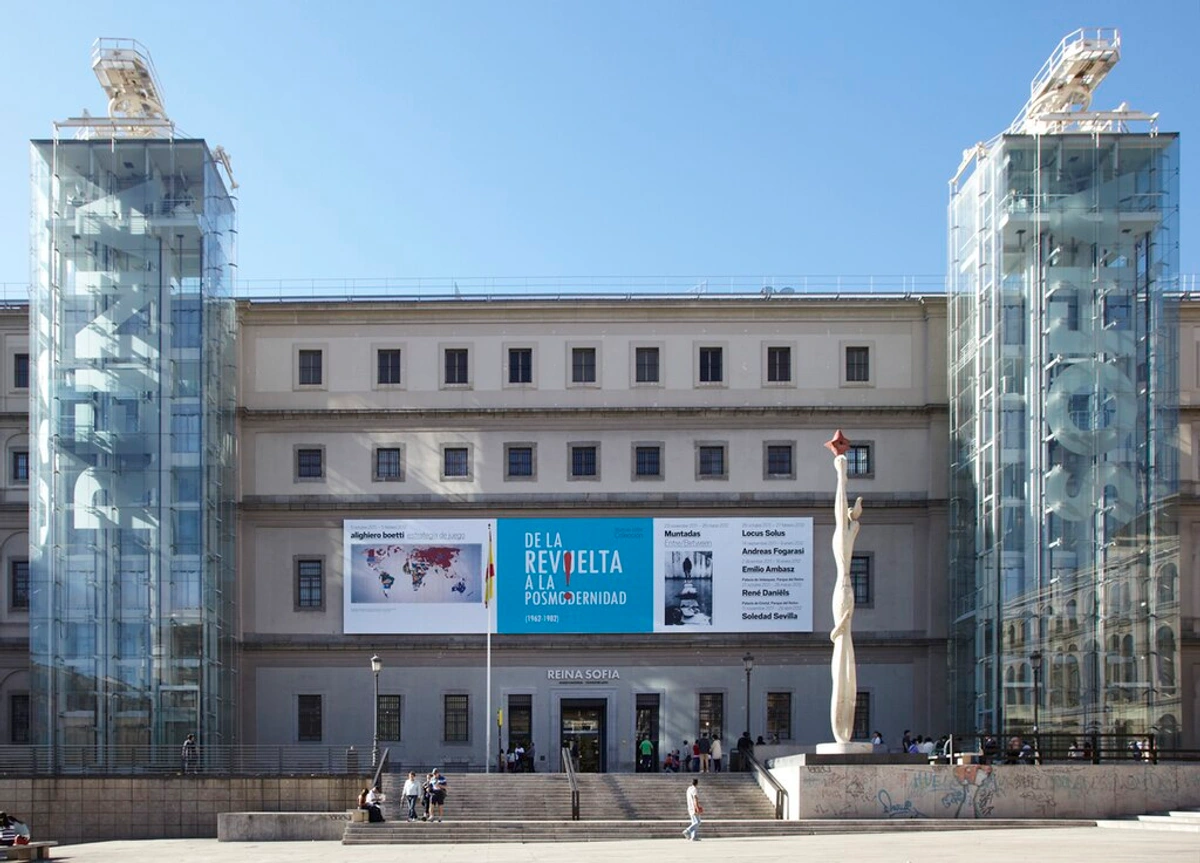
Then, in 2005, came the sleek Nouvel Building, a striking contemporary addition of red steel and glass, designed by the renowned Jean Nouvel. This extension is all about transparency, light, and openness, featuring vast exhibition spaces that seamlessly blend with the historical structure. This architectural conversation isn't just an aesthetic choice; it’s a conceptual statement, mirroring the museum's mission to bridge the past and present of art. It’s this dynamic interplay that I find almost as compelling as the art it houses – a testament to how physical spaces can profoundly shape our experience of culture and provide a journey through different eras even before you confront the artworks themselves.
Navigating the Art's Labyrinth: My Strategy for You
Now that we've touched upon the museum's fascinating architectural evolution, let's talk about how to navigate its artistic labyrinth. The very design of these buildings, from Sabatini's classical logic to Nouvel's expansive contemporary flow, impacts how we experience the art within. Trust me, trying to see everything in one go is a recipe for museum fatigue. My advice? Don't. Instead, approach it like an exciting expedition: focus on what genuinely piques your interest, allow yourself to get delightfully lost (or just plain lost, which happens to me more often than I'd like to admit!), but with a flexible plan. The collection is broadly organized chronologically, making it easier to follow the compelling historical narrative of modern art. Knowing what awaits you, even broadly, can transform a visit from overwhelming to exhilarating.
Here's a quick navigational table to guide your exploration and help you find your artistic bearings. I always find having a rough idea of what's where makes the whole experience less daunting:
Area  | Focus | Key Highlights/Artists | Atmosphere/Notes | Key Themes/Concepts Explored |
|---|---|---|---|---|
| Sabatini Building | 1900-1968: The Genesis of Modern Art & Post-War Responses | Picasso, Dalí, Miró, Juan Gris, Antoni Tàpies, Antonio Saura, Eduardo Chillida, Manolo Millares | Historic grandeur, elegant, classic museum feel, original hospital structure. Home to the earliest and most impactful works. | War, revolution, identity, psychological landscapes, censorship, exile, Freudian influence, formal experimentation, societal fragmentation, trauma, anti-war sentiment, propaganda, nation-building, repression, resistance, material art, abstraction, existentialism, Pop Art critique, social commentary, breaking conventions, exploration of new materials, collective memory, decolonization. |
| Floor 2 (Main) | 1900-1945: Art and Politics, the Avant-Garde: The genesis of modern Spanish art, artistic responses to the Spanish Civil War, early avant-garde movements. | Guernica, Picasso, Dalí, Miró, Juan Gris, Cubism, Surrealism, early photography, propaganda art. | Guernica is here – expect crowds and quiet, intense reflection. Often the busiest floor, but it’s the beating heart of the museum. Prepare for powerful emotions. | War, revolution, identity, psychological landscapes, Freudian influence (Dalí), formal experimentation (Cubism, Gris), societal fragmentation (Picasso), trauma, anti-war sentiment, propaganda (Renau), nation-building. |
| Floor 4 | 1945-1968: From Revolt to Postmodernity: Post-war movements, Informalist art, Pop Art, New Figuration. Responses to Francoism, nascent international dialogue. | Antoni Tàpies, Antonio Saura, Eduardo Chillida, Manolo Millares, Abstract art, Spanish avant-garde, works reflecting socio-political realities and resistance, Abstract Expressionism. | Focus on post-war innovation and expressive abstraction, often raw and powerful. Good for deeper dives into Spain's artistic defiance and material experimentation. Expect challenging and visceral works. | Repression, resistance, material art (Tàpies, Millares), abstraction, existentialism, Pop Art critique, social commentary, breaking conventions, exploration of new materials, collective memory, decolonization. |
| Floor 0 & 1 | Library, Bookstore, Auditorium, Temporary Exhibitions. | Check current exhibition schedule for contemporary art, specific curated themes. The public library is a significant research resource open to visitors. | Often dynamic, with fresh perspectives. Can be a good starting point for specific interests or a calm retreat. Quieter, scholarly atmosphere, perfect for dedicated study or contemplation if the library is your focus. | Contemporary issues, curated deep dives, interdisciplinary approaches, new artistic practices, cultural theory, art history. Research, new perspectives, art theory, cultural studies, historical context, architectural evolution, design impact, critical theory, post-colonialism, urbanism, art and technology. |
| Nouvel Building | 1968-Present: Global Perspectives & Contemporary Forms | Works from the late 20th and 21st centuries, often experimental and engaging with global themes. | Sleek, contemporary, open, and airy design. Often housing larger installations and contemporary works. Represents the museum's forward-looking aspect. | Global art, experimental forms, interdisciplinary dialogue, new media, political and social reflections, digital art, performance art, post-humanism, environmental concerns. |
| Floor 0 | Temporary Exhibitions, Auditorium, Restaurant, Bookshop. | Cutting-edge contemporary art, specific curated themes, performances, experimental installations and media art. | Ideal for contemporary art and a meal break. Often hosts larger, immersive shows, pushing artistic boundaries. Expect bold, interactive, and often thought-provoking pieces. | Global art, experimental forms, interdisciplinary dialogue, new media, political and social reflections, digital art, performance art, post-humanism, environmental concerns. |
| Floor 1 | Temporary Exhibitions, Library, Research Center. | Often a deep dive into specific artists or movements, historical surveys, architectural archives, design history and theory. The Research Center is a key hub for art historical scholarship. | Deeper dives into modern thought and its roots. Quieter, scholarly atmosphere, perfect for dedicated study or contemplation, especially if you're interested in art research. | Research, new perspectives, art theory, cultural studies, historical context, architectural evolution, design impact, critical theory, post-colonialism, urbanism, art and technology. |
My personal recommendation? Definitely start with the second floor of the Sabatini Building for Guernica and the surrounding early 20th-century avant-garde. This sets a powerful emotional and historical baseline. After that, you can decide whether to delve deeper into the subsequent periods on other floors or cross over to the Nouvel Building for contemporary and temporary exhibitions. Remember, those sleek glass elevators on the Sabatini side aren't just practical; they're a fun little attraction in themselves!
If You Only Have an Hour: A Lightning Tour
Okay, I know some visits are a whirlwind. If you're really pressed for time, here's my advice for a high-impact hour:
- Head straight to Sabatini Building, Floor 2: Immerse yourself in Picasso’s Guernica and its accompanying studies. This is non-negotiable. Spend at least 20-30 minutes here.
- Briefly explore the surrounding galleries on Floor 2: Catch glimpses of key Dalí and Miró works nearby to get a taste of Surrealism and early abstraction.
- Quickly admire the Sabatini Building's architecture: Take a moment in one of the elegant courtyards or ride the glass elevators.
This lightning tour ensures you hit the absolute highlights and absorb the museum's core essence, even if you can't linger.
The Heart of the Museum: Picasso's Indelible Guernica
Let's be honest, for many, myself included, the primary magnet pulling them into the Reina Sofía is one monumental, black-and-white canvas: Pablo Picasso's Guernica. And rightly so. It's more than just a painting; it's a visceral scream against the atrocities of war. Created in response to the devastating aerial bombing of Guernica in April 1937 during the Spanish Civil War, it’s a harrowing depiction of human and animal suffering. When you stand before it, the sheer scale, the fragmented forms that defy easy categorization, the stark monochromatic palette, and the raw, gripping emotion – it's overwhelming in the best possible way. I always find myself spending a disproportionate amount of time in its presence, just absorbing the narrative and feeling the crushing weight of history, perhaps even more so than any other single artwork I’ve encountered. It’s a stark, powerful testament to the destructive capacity of humanity and a plea for peace that resonates across generations. The museum does an excellent job of surrounding Guernica with related sketches, photographs, and historical documents, revealing the tragic events it depicts and the artistic process behind such a monumental work.
To truly appreciate its depth and context, I highly recommend delving deeper into the profound meaning of Picasso's Guernica. Take your time in this section; it's truly the beating heart of the museum, a powerful testament to art's ability to document and protest.
Can I take photos of Guernica?
This is a common question, and one I also had! Unfortunately (or fortunately, depending on your perspective), no, photography of Guernica is strictly prohibited. This rule is in place to preserve the artwork, prevent congestion around this monumental piece, and encourage a more contemplative viewing experience. And honestly? It's a blessing. It forces you to put down your phone and truly see it. Trust me, the memory will be far more vivid than any hurried smartphone snap.
Beyond the Icon: A Journey Through Modern Masterpieces
While Guernica draws us in with its immense gravitational pull, the Reina Sofía is a universe unto itself, a vibrant journey through the evolution of modern art. It’s rich with other masterpieces that demand your full attention, often with a distinctly Spanish flavor, consistently exploring the human condition amidst great change, from the early 20th century's avant-garde to contemporary expressions. This section is where the museum truly expands your understanding of how art grapples with its time, revealing the diverse ways artists found their voice amidst profound societal shifts.
Salvador Dalí's Dreamscapes: The Psychology of Surrealism
If you're a fan of the bizarre, the dreamlike, and the utterly captivating, then the Salvador Dalí rooms are a must-see. His surrealist works, born from a post-WWI era of disillusionment and a deep dive into Freudian psychology, truly feel like fever dreams seeping into your waking consciousness like warm wax – I find myself simply unable to look away. For Dalí, particularly in the shadow of the brewing and then raging Spanish Civil War, Surrealism wasn't just an art movement; it was a profound way to explore inner realities when external ones were crumbling. Pieces like Face of the Great Masturbator or Man with a Head of Clouds are pure theatrical genius, inviting you into a strange, unsettling, yet undeniably magnetic world where the subconscious reigns supreme. Surrealism, simply put, is an artistic and literary movement aiming to express the subconscious mind through dream imagery and juxtaposed realities. I often find myself giggling at the audacity, then marveling at the sheer psychological depth. It's a fascinating contrast to the stark reality of Guernica, showing another way artists grappled with their inner and outer worlds. What does his dreamlike world reveal about the subconscious mind's resilience in turbulent times, I wonder? To dive deeper into his mind, explore our enduring legacy of Surrealism or our ultimate guide to Salvador Dalí.
Joan Miró's Poetic Universe: Abstract Freedom
Move further, and you'll encounter the whimsical, poetic universe of Joan Miró. His vibrant, biomorphic forms and bold colors are an absolute joy. Biomorphic, for those wondering, refers to abstract shapes that evoke natural organisms – think amoebas or celestial bodies, but rendered with a childlike spontaneity. For me, they often feel like the secret language of dreams or the universe itself, vibrant and alive. Miró, grappling with the same tumultuous times, particularly the shadow of the Civil War, often sought refuge in this almost innocent connection to nature and the subconscious. He created abstract yet deeply personal expressions that, while playful, carried an undercurrent of profound thought. It's a playful yet profound exploration of abstraction that feels almost childlike in its freedom, yet deeply sophisticated in its underlying philosophy and composition. How does he manage to convey such complex emotions with such deceptively simple forms, you might ask? If you're interested in diving deeper into his unique world, check out our ultimate guide to Joan Miró.

Juan Gris's Cubist Puzzles: Rethinking Reality
And for those who appreciate the intellectual rigor of Cubism, the works of Juan Gris offer a compelling perspective on this revolutionary movement. Cubism, for me, is like looking at the world through a shattered mirror, then painstakingly reassembling the fragments to reveal a deeper truth. His precise, geometrically structured still lifes, like the exemplary The Bottle of Anis del Mono, and figures are a testament to Cubism's radical rethinking of form and perspective – imagine looking at an object from multiple angles simultaneously and then reassembling those views onto a single canvas. This deconstruction challenges traditional notions of reality itself, a crucial part of the modernist quest for new ways of seeing and representing a fragmented world. What insights does this multi-perspectival approach offer into the nature of perception? If you want to understand more about the movement itself, our ultimate guide to Cubism is a great place to start.
Other Visionaries of Spanish Modernism: Responding to a Changing Nation
Beyond these titans, the museum's walls are alive with the vibrant echoes of other pivotal figures who shaped the 20th and 21st centuries, often reflecting Spain's unique artistic dialogue with global movements. Their works offer a broader canvas of Spanish experience, from the scars of civil war to the euphoria of democratic transition, often carrying subtle messages of resistance and resilience. You'll discover:
- Antoni Tàpies: Known for his powerful material art – often incorporating humble elements like sand, earth, rags, or industrial detritus – Tàpies’s work, deeply associated with Informalism, offered a visceral response to the Franco regime. His textured surfaces and raw physicality were not just aesthetic; they subtly conveyed messages of resistance and existential reflection amidst repression, turning ordinary materials into powerful statements.
- Eduardo Chillida: Whose monumental, often abstract, iron and steel sculptures redefine space and volume. Chillida masterfully balances mass with emptiness, inviting you to engage with the void as much as the form and creating a profound sense of presence and contemplation.
- Antonio Saura: A key figure in Spanish Informalism, Saura was celebrated for his dark, expressive, and often tormented figures. His raw, almost confrontational works, like his powerful Crucifixions, directly railed against the political and social repressions of his era, exploring the human psyche under duress with unbridled intensity.
- Manolo Millares: Another leading figure in Informalism, Millares created stark, aggressive, and highly textured canvases often incorporating torn sacking and other humble materials. His art powerfully embodied the post-war existential angst and protest, speaking volumes through its raw materiality and visceral surfaces.
- Josep Renau: A master of photomontage and graphic design, Renau's politically charged works were vital visual commentaries during the Spanish Civil War and his subsequent exile. His vibrant, often satirical, posters – like his anti-fascist propaganda for the Republican cause – transformed art into a direct tool for social and political critique, often using bold, graphic imagery to convey urgent messages with powerful clarity.
- Equipo Crónica: This Pop Art-inspired collective from the post-Franco era used irony and satire to critique political and social realities, reinterpreting art history and popular culture through their vibrant, graphic style, often subtly challenging the prevailing narratives.
- Luis Gordillo: Explores a vibrant, abstract expressionism that pushes beyond traditional boundaries, with his often complex, fragmented, and colorful compositions reflecting internal psychological landscapes and the shifting nature of identity.
- Miquel Barceló: A contemporary Spanish artist known for his highly textured, often large-scale paintings and sculptures that incorporate organic materials and draw inspiration from natural phenomena, reflecting a deep connection to the earth and sea and often echoing ancient forms.
International Dialogues: Spain's Place in Global Art
The Reina Sofía isn't solely a chronicle of Spanish genius; it also brilliantly weaves in international masters, showcasing a rich tapestry of 20th and 21st-century artistic innovation. For me, seeing these artists here highlights Spain's crucial place within a global art historical narrative. These international voices are not mere adornments; their work either profoundly influenced or powerfully resonated with Spanish artists, creating a dynamic cross-cultural dialogue that speaks to shared anxieties, parallel formal experiments, and universal philosophical inquiries:
- Francis Bacon: Whose distorted figures convey intense psychological drama, often unsettling and deeply introspective. His raw depictions of suffering and isolation, echoing the human cost of conflict and repression, resonated profoundly with Spanish artists grappling with the aftermath of civil war and dictatorship, finding a universal language for torment.
- René Magritte: Offering his famously unsettling surrealist scenes, challenging perception and reality with his witty and enigmatic compositions. His exploration of dreams and the subconscious provides a fascinating parallel and counterpoint to Dalí's brand of Surrealism, inviting contemplation on the nature of what we see and believe, often with a wry sense of humor.
- Georges Braque: A pioneer of Cubism alongside Picasso, whose works exemplify the early, revolutionary phases of the movement, pushing the boundaries of representation. His inclusion underscores the foundational international roots of one of Spain's most famous artistic exports and showcases the collaborative spirit of the early avant-garde that reshaped how we see reality.
- Max Ernst: Known for his dreamlike collages, frottages, and other experimental techniques that expanded the vocabulary of Surrealism. His innovative approach to accessing the subconscious offered new pathways for artistic expression that profoundly influenced the broader European avant-garde, including artists in Spain seeking new forms of creative freedom and psychological depth.
This diverse array showcases movements including early Expressionism, Futurism, Dada, and the post-war avant-garde, illustrating global artistic dialogues and cross-cultural influences. If you’re curious about the broader spectrum of abstract art, our ultimate guide to abstract art movements provides a fantastic overview.
Beyond the Brush: Photography, Cinema, and Design as Cultural Narratives
The Reina Sofía’s commitment to modern and contemporary art extends beyond painting and sculpture to embrace various media that shaped the 20th century. This multi-disciplinary approach allows for a richer, more nuanced understanding of the period's cultural evolution, showing how art reflects and influences society in all its forms. For me, it's a testament to the idea that true artistic expression transcends any single medium, constantly seeking new ways to communicate.
- Early 20th-century Photography: Beyond just documenting societal shifts, political upheavals, and daily life, the museum holds significant works that elevate photojournalism to an art form. Notably by Robert Capa, whose iconic, raw images from the Spanish Civil War provide immediate historical context, profoundly connecting with pieces like Guernica by bearing witness to the very events it decries. But you'll also find works from other Spanish and international photographers – pioneers like Agustí Centelles and Henri Cartier-Bresson (whose influence on photography is immense, though his specific works might not be in this collection) – who captured the era's dramatic changes, often pushing the boundaries of photography as a critical and artistic medium.
- Cinema: Reflecting cultural narratives through film, often presented in dedicated screening rooms or as integrated video installations, the collection features works by directors like Luis Buñuel, a titan of Surrealist cinema. His groundbreaking films, such as Un Chien Andalou (co-written with Dalí) and L'Âge d'or, are vital examples of surrealist expression and biting political critique. These aren't just entertainment; they're profound visual art that influenced painters and sculptors alike, reflecting societal anxieties and challenging norms with provocative, anti-establishment themes. The museum explores film not just as entertainment but as a powerful artistic and political tool, showing how moving images can shape our understanding of the world.
- Design: Showcasing modern aesthetics, from industrial to graphic design, the museum highlights Spain's often overlooked contributions to modern design and its integration into daily life and propaganda during key historical periods. For example, you might encounter striking Republican-era posters – those by figures like Josep Renau, with their bold use of color, typography, and photomontage – or innovative furniture and iconic graphic works that tell a story of cultural identity and political messaging through form and function, often in direct conversation with the fine arts. It reminds us how art infiltrates every aspect of our lives, even the most practical.
All these elements further enrich its narrative of Spain's cultural evolution, demonstrating how art, in all its forms, acts as a mirror and a catalyst for change. It's a vast landscape of creativity, waiting to be explored across the museum's carefully curated spaces.
Practicalities for a Seamless Expedition
With a sense of where to go within the museum, let's dive into the practicalities that will ensure your visit is as smooth and enjoyable as possible – because a little planning goes a long way in preventing museum fatigue and ensuring you fully soak in the art! (And maybe save some energy for a delightful Spanish meal afterward, a priority for me, naturally.)
- Book Tickets Online, Seriously: Don't even think about waiting in line, especially for a museum this popular. Pre-book your tickets on the official Reina Sofía website. This goes for its neighbors too: I always recommend booking for the Prado Museum and the Thyssen-Bornemisza in advance as well, especially if you're planning to visit all three. It’ll save you precious time and energy for the art.
- Free Entry Hours – A Double-Edged Sword: The museum offers free entry during specific hours, usually in the late afternoon/evening. These hours are fantastic for accessibility, but be warned: they attract significant crowds. If saving money is your top priority, expect queues and a bustling atmosphere. I often prefer to pay for a quieter experience, but the free hours are an invaluable public service.
- Best Time to Visit: Early mornings (right after opening) or late afternoons (a couple of hours before closing) are usually less crowded. Weekdays are always better than weekends if your schedule allows for that flexibility.
- How Long to Spend: I'd allocate at least 2-3 hours if you want to see Guernica and a few other highlights without rushing. If you're an art enthusiast or want to explore the breadth of the collection and current exhibitions, you could easily spend 4+ hours.
- Wear Comfortable Shoes: This might sound obvious, but you'll be doing a lot of walking across extensive galleries and between buildings. Your feet will definitely thank you later.
- Getting There: It's conveniently located near the Atocha train station, a major transport hub. The nearest Metro stop is Estación del Arte (Line 1). It's also easily walkable from many central Madrid locations, making it a breeze to access.
- Facilities: There are well-placed cafes and a gift shop. The shop is great for art books and unique souvenirs. And while I appreciate the physical mementos, seeing these masterpieces always gets my own creative juices flowing, making me think about my own artistic journey and the pieces I create. It’s a wonderful prompt to perhaps explore contemporary art online or even consider buying original pieces, don't you think? After all, the enduring value of tangible art, whether centuries-old masterpieces or vibrant contemporary originals like those on my timeline, offers a profound connection that digital trends rarely match. If you want to dive deeper into art, maybe visit
/den-bosch-museumas well for some more inspiration! - Audio Guides: Yes, audio guides are typically available for rent at the museum. I usually find them incredibly helpful for providing deeper insights and context to key artworks, especially for a collection as rich and historically layered as this one. Check at the information desk upon arrival.
- Accessibility: The museum is generally well-equipped for visitors with disabilities, offering accessible entrances, elevators, and restrooms. The public library and research centers in both buildings are also designed to be accessible. It's always a good idea to check their official website for the most specific and up-to-date details on services and facilities before your visit to ensure a smooth experience.
- Bags and Backpacks: Small bags and backpacks are generally allowed, but larger bags, umbrellas, and sometimes coats may need to be checked in the cloakroom, usually located near the entrance. To expedite your entry and avoid delays, consider bringing only essentials or leaving larger items at your accommodation. Traveling light always enhances my museum experience.
Madrid's "Golden Triangle of Art": A Broader Perspective
Madrid is incredibly rich in art, forming what's often called the "Golden Triangle of Art." The Reina Sofía is one corner of this powerful triangle, offering a focused exploration of the dramatic and transformative 20th and 21st centuries. If you imagine Madrid's art scene as a grand narrative, with each museum playing a distinct role, here's how I see it:
- The Prado Museum: This institution is the ancestral home, the crown jewel for European art from the 12th to the early 20th century. It features Spanish Golden Age masters like Goya, Velázquez, and El Greco, telling centuries of classical European storytelling. If you're a first-timer to Madrid's art scene, our essential guide to the Prado Museum is vital for navigating its vast classical collection.
- The Reina Sofía Museum: This is the avant-garde studio, the pulsating heart where new and challenging chapters of modern history are written, often with urgent political and social commentary. It's where you encounter the raw emotion and intellectual ferment of the modern era.
- The Thyssen-Bornemisza Museum: This museum acts as a crucial bridge, the discerning collector's curated salon, offering a comprehensive overview of Western art history from the Renaissance to Pop Art. It smoothly connects the old masters of the Prado with the modern works of the Reina Sofía, featuring significant movements like German Expressionism and American Pop Art, making it an invaluable part of the triangle. I always think of it as the perfect palate cleanser between the intensity of the Prado and the challenging modernity of the Reina Sofía.
I highly recommend trying to visit all three if your time allows. They offer such complementary perspectives on art history; it's a truly enriching experience to see them in conversation with each other, revealing the continuous thread of artistic evolution and how art continually reinvents itself.
Frequently Asked Questions (FAQ)
Thinking about visiting the Reina Sofía? Here are some common questions I hear, hopefully making your first visit a breeze and dispelling any uncertainties that might pop up:
Q: Is the Reina Sofía Museum free to enter?
A: Yes, the museum offers free entry during specific hours, usually in the late afternoon/evening. These free hours are designed to promote accessibility to art and align with cultural traditions of making public institutions available to all. However, be aware that these times often attract significant crowds, so expect queues and a bustling atmosphere if you choose to visit then. It's always best to check the official website for the most up-to-date schedule, as these times can change. Otherwise, there is an admission fee, which I often opt for to avoid the largest crowds and have a more contemplative experience.
Q: What are the opening hours for the Reina Sofía Museum?
A: The Reina Sofía Museum generally opens from 10:00 AM to 9:00 PM on most days, but it is typically closed on Tuesdays. Hours can vary for holidays or special events, so I always recommend checking the official Reina Sofía Museum website directly before your visit for the most current and accurate opening times.
Q: How far is the Reina Sofía from the Prado Museum?
A: They are incredibly close! The Reina Sofía and the Prado Museum are within easy walking distance of each other, typically about a 10-15 minute stroll along the Paseo del Prado. They are both integral parts of Madrid's "Golden Triangle of Art," making it convenient to combine visits and experience different eras of art history in one day.
Q: Where can I buy tickets for the Reina Sofía Museum?
A: I strongly recommend buying your tickets online through the official Reina Sofía Museum website in advance of your visit. This will save you significant time by allowing you to bypass ticket queues, especially during peak seasons or free entry hours. Tickets can also be purchased at the museum's ticket counters, but expect longer waits.
Q: What kind of art does the Reina Sofía Museum specialize in?
A: The Reina Sofía specializes in 20th and 21st-century Spanish and international modern and contemporary art. Its collection prominently features works from movements like Cubism, Surrealism, and Abstract Expressionism, with Pablo Picasso's Guernica being its most famous piece, a powerful protest against war. It's truly a deep dive into the art that grappled with the modern world's complexities and profound historical shifts.
Q: Can I bring a bag or backpack into the museum?
A: Small bags and backpacks are generally allowed, but larger bags, umbrellas, and sometimes coats may need to be checked in the cloakroom, usually located near the entrance. To expedite your entry and avoid delays, consider bringing only essentials or leaving larger items at your accommodation. Traveling light always enhances my museum experience.
Q: Is there a cafe or restaurant at the Reina Sofía?
A: Yes, the museum has cafes and a restaurant where visitors can take a break and grab a snack or a meal. These are typically located in both the Sabatini and Nouvel buildings, offering good spots to refuel and reflect on the powerful art you've seen.
Q: Is the Reina Sofía Museum accessible for visitors with disabilities?
A: Yes, the museum is generally accessible. It offers adapted entrances, elevators, and accessible restrooms throughout its buildings. The public library and research centers in both buildings are also designed with accessibility in mind. For detailed information on specific facilities or services, it's always recommended to check the official Reina Sofía Museum website before your visit to ensure all your needs are met for a smooth and enjoyable experience.
Q: Are there guided tours available at the Reina Sofía?
A: Yes, the Reina Sofía Museum often offers both guided tours (some free, some paid) and audio guides for rent. Guided tours can provide invaluable context and deeper insights into the collection, especially for a museum with such a rich historical and thematic narrative. Check the museum's information desk or website for schedules and booking details.
Q: Does the Reina Sofía collection include 21st-century art?
A: Absolutely. While primarily known for its profound 20th-century holdings, the Reina Sofía Museum's collection actively extends into the 21st century, featuring contemporary works that continue the dialogue of modern art and reflect current artistic trends, particularly within the Spanish context. Through significant acquisitions and temporary exhibitions, it ensures its relevance to today's art world, making it a living, evolving institution that showcases the ongoing evolution of artistic expression.
Q: Is sketching or drawing allowed in the Reina Sofía Museum?
A: Generally, yes, sketching and drawing with pencils or dry media are permitted in the museum's galleries. I love seeing people engage with the art this way! However, the use of wet media (like paints or ink), easels, or large drawing boards is usually prohibited to protect the artworks and ensure clear pathways for visitors. Always be mindful of other visitors and avoid blocking views. For specific rules or any concerns, it's a good idea to confirm with museum staff upon arrival.




Conclusion: Your Unforgettable, Evolving Journey Through Modern Art
Every time I visit the Reina Sofía, I'm struck by how raw, immediate, and profoundly human 20th and 21st-century art feels. It’s a period of intense upheaval, invention, and profound questioning, captured vividly on its walls. I remember one particularly quiet afternoon, standing before a lesser-known piece of post-war Spanish abstraction – a canvas with rough textures and deep, muted tones – and feeling a profound sense of an artist grappling with identity in a changed, often repressed, world. The museum doesn't just display art; it presents a narrative of humanity grappling with its own complexities, through the lens of Spanish history and international artistic dialogue. It’s a constant dialogue, really, reminding me that art, whether centuries old or vibrantly contemporary like the pieces I create and explore on my timeline, continuously reflects, questions, and shapes our reality.
For anyone interested in the human condition, in history, or simply in powerful imagery, the Reina Sofía offers a deeply moving and truly transformative experience. It challenges you, it inspires you, and it certainly leaves an impression. The museum's dedication to art preservation, research, and education also reinforces its role as a living, evolving institution, constantly inviting us to find inspiration and perhaps even ignite our own creative sparks for contemporary art-making. So go there with an open mind, give yourself time, and let the art speak to you. You'll leave changed, I promise, perhaps even with a new spark for your own creative endeavors, or simply a deeper appreciation for the enduring power of art.