Andy Warhol: Pop Art's Prophet, Icon, & Cultural Architect
Unpack Andy Warhol's revolutionary art, life, and prophetic vision. Explore Pop Art, The Factory, and his lasting impact on celebrity, media, and digital culture. The ultimate guide.

Who Was Andy Warhol? The Definitive Guide to the Pop Art King & Cultural Prophet
Let's be honest, you've probably got an image in your head when someone says "Andy Warhol," right? White wig, iconic soup cans, Marilyn Monroe splashed in neon hues. Maybe you think, "Ah, the guy who made being famous for being famous, well, famous." I know I did, for a long time, dismissing him as a quirky one-trick pony who simply reflected consumer culture with a sly, ironic wink. But then I truly plunged down the rabbit hole of his work, his philosophy, and his utterly wild life, and I realized how profoundly, comically wrong I was. He wasn't just an artist; he was the architect of modern celebrity, media saturation, and our entire consumer landscape – a cultural prophet whose insights into image and identity feel more relevant today than ever. This isn't just a biography; it's your ultimate guide to understanding the quiet revolutionary who reshaped art forever.
Warhol wasn't just an artist; he was a mirror, and a rather unflinching one at that. He held up a giant, shimmering surface to 20th-century America and simply reflected back: "This is you. This is what you love, what you worship, what you consume, what you discard." He did it with such a deadpan, almost mechanical coolness that it forced everyone to actually look. He elevated the mundane to the monumental and, in turn, made the monumental something you could quite literally buy in a supermarket. It’s a trick no one has pulled off quite the same way since. Just think about that for a moment: the revered art on your gallery wall, and the cheap can in your pantry, both elevated to a strikingly similar status. That’s a profoundly disruptive idea, if you ask me, and one that still makes me pause.
So, if you're here thinking he's just the soup can guy, stick with me. We're going to unpack the quiet, sickly kid from Pittsburgh who became the undisputed king of Pop Art and, in the process, re-wrote the rules of what art could even be.
From Andrew Warhola to Andy Warhol: The Genesis of a Pop Icon
Before the brand, there was the man, Andrew Warhola. Born in 1928 to devout Byzantine Catholic immigrants from what is now Slovakia, his childhood in working-class Pittsburgh was anything but glamorous. I often think about how his parents, Andrej and Julia, steeped him in a culture rich with folk art and religious icons. You know, those vibrant, often repetitive images, laden with symbolic meaning, that adorn Byzantine churches? They're not just pictures; they're sacred objects, produced with a certain intentional, almost ritualistic, replication of established forms. It's hard not to connect that early exposure to his later fascination with repetition, iconic imagery, and the almost worshipful way society treats certain commercial products and celebrity faces. This wasn't just an influence; it was an unexpected seed for his entire artistic philosophy.
Frail and often sickly, a severe bout of Sydenham's chorea (a neurological illness often linked to rheumatic fever, also known as St. Vitus' Dance) in his youth left him with involuntary movements and skin blotches, deepening his already quiet nature and making him feel like an outcast. This wasn't just a childhood illness; it was a defining period. Imagine being a frail kid, often confined, observing the world from a slight remove – it must have honed his observational eye, making him the quiet, almost alien perceiver he became. If I’d been in his shoes, I probably would have retreated inward too, finding solace in the fantasy worlds offered by movie magazines, comic books, and his own sketchbook. These escapist realms, filled with reproducible images and manufactured heroes, were shaping his future vision more than anyone could know.
His artistic talent was obvious early on. He went on to study commercial art at Carnegie Mellon University. This is a crucial detail, because unlike the dramatic, soul-searching Abstract Expressionists like Jackson Pollock – whose work, I've always felt, was less about the image and more about the visceral act of creation itself, the raw emotion splashed across a canvas in spontaneous, gestural bursts – Warhol’s background was firmly in the pragmatic, commercial business of selling things. He wasn't wrestling with existential angst on a canvas; he was figuring out how to create an image that was appealing, direct, and, most importantly, reproducible. He understood how to craft an advertisement, a visually arresting product that served a commercial purpose, and he was remarkably good at it.
When he moved to New York in 1949, he quickly became one of the most successful commercial illustrators of the decade. He was designing eye-catching shoe advertisements, creating whimsical fashion illustrations for magazines like Vogue and Harper's Bazaar, and even designing record album covers. It was a good living, a way to make a name for himself, sure, but it was still 'work for hire' in the eyes of the traditional fine art world. That world, with its high-minded ideals and disdain for anything perceived as commercial, looked down on such work. But Warhol, with his keen, almost alien perception, saw something revolutionary in the commercial realm. He understood there was no inherent qualitative line between a revered masterpiece in a museum ('high art') and a brightly packaged consumer product ('low commerce'). This simple, yet utterly subversive, idea was about to blow the art world wide open. For me, this is where his genius truly begins to bloom – in the audacious rejection of arbitrary artistic hierarchies.
Key Life Events: A Timeline of Transformation
To truly appreciate the arc of his radical life and career, sometimes a simple list is the clearest path. It’s like looking at the blueprint for an artistic revolution, or perhaps a personal [/timeline] of his most impactful moments. Each point here isn't just a date; it's a pivot, a provocation, or a profound shift that shaped our cultural landscape.
Year  | Event & Significance |
|---|---|
| 1928 | Born Andrew Warhola in Pittsburgh, Pennsylvania. The foundation of his unique perspective was laid in a working-class, immigrant upbringing. |
| 1949 | Moves to New York City and begins a highly successful career in commercial illustration, honing his skills in visual communication and mass appeal. |
| 1962 | Debuts his Campbell's Soup Cans series at the Ferus Gallery in Los Angeles, a landmark moment that launched Pop Art and sparked outrage and debate. |
| 1964 | Opens "The Factory," his iconic silver-painted studio, which quickly became the anarchic epicenter of New York's avant-garde and counter-culture scene. |
| 1966 | Creates The Exploding Plastic Inevitable, a series of multimedia events combining rock music (The Velvet Underground), film, dance, and light shows, pushing the boundaries of performance art. |
| 1967 | Produces the influential album The Velvet Underground & Nico, designing its iconic banana cover and shaping future music genres like punk and new wave. |
| 1968 | Is shot and critically wounded by Valerie Solanas. This traumatic event profoundly affected him, shifting his later work towards darker themes and a more guarded public persona. |
| 1969 | Founds Interview magazine, his "crystal ball of Pop," offering unedited conversations with celebrities and blurring the lines between journalism and artistic expression. |
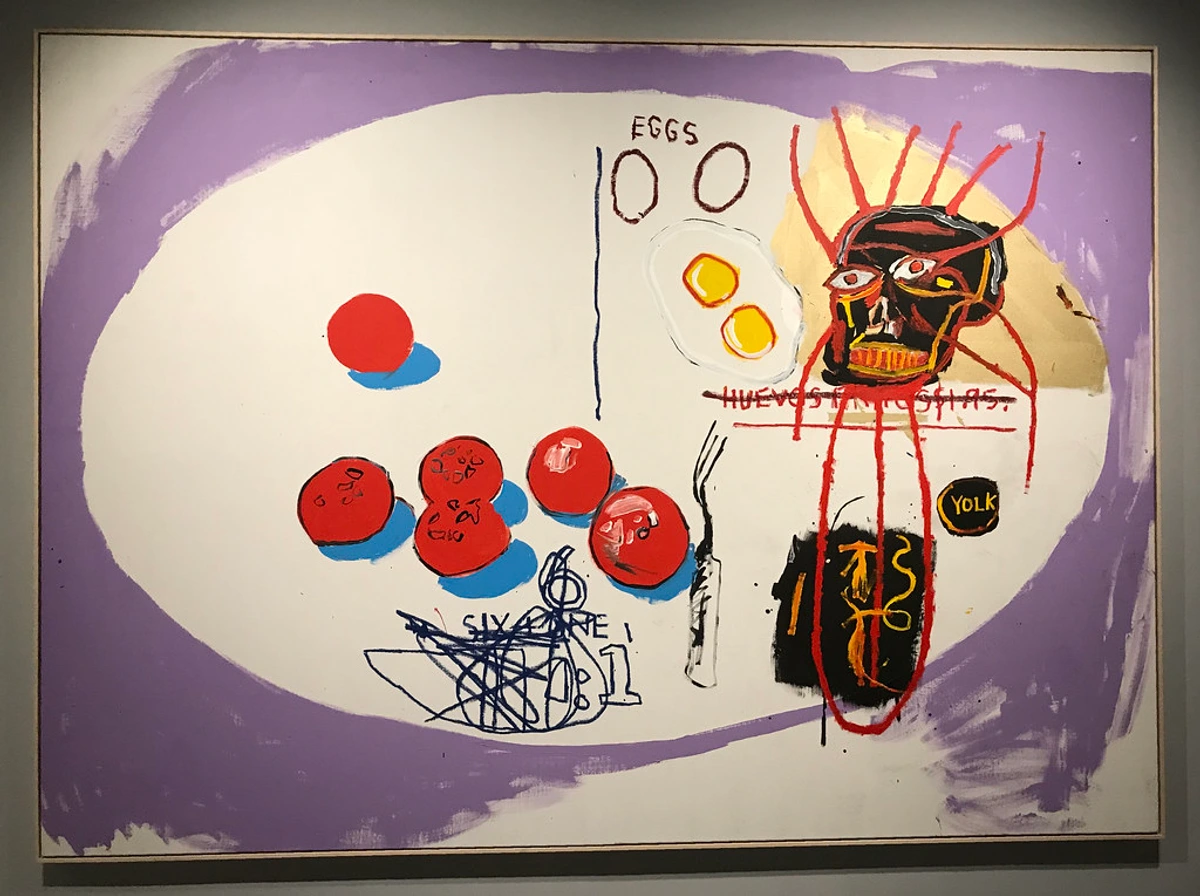
| 1985 | Collaborates with Jean-Michel Basquiat, creating a fascinating bridge between Pop Art and the raw energy of Neo-Expressionism, an artistic dialogue between two generations. |
| 1987 | Dies unexpectedly in New York City following gallbladder surgery, leaving behind a monumental legacy that continues to influence art and culture worldwide. |
The Birth of Pop: Soup Cans, Celebrities, and The Factory
With his commercial foundation firmly laid, and his revolutionary philosophy simmering, Andrew Warhola was now ready to shed his old skin and transform the very definition of art with his vibrant, new vision: Pop. It was a bold, almost impudent move, but one that changed everything.

The Campbell's Soup Cans (1962): Art as Product
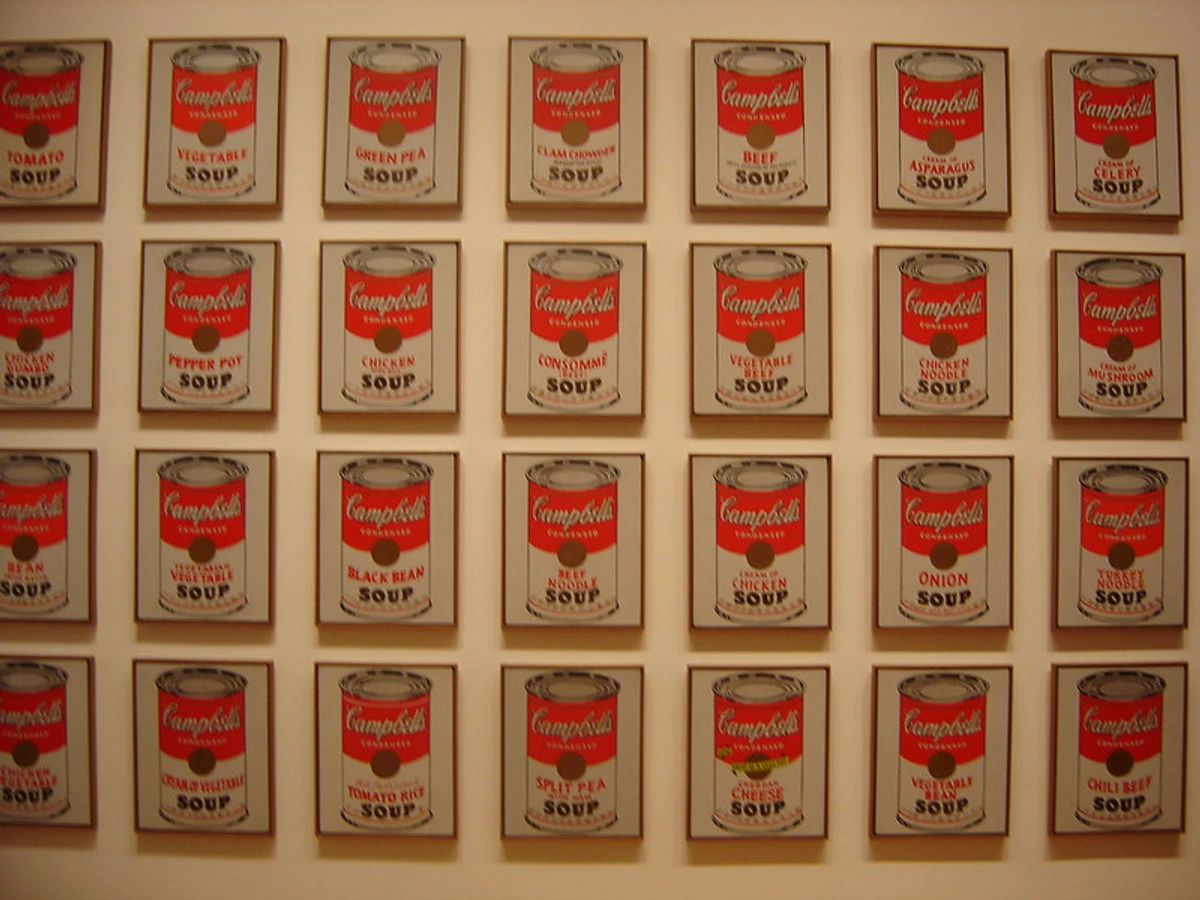
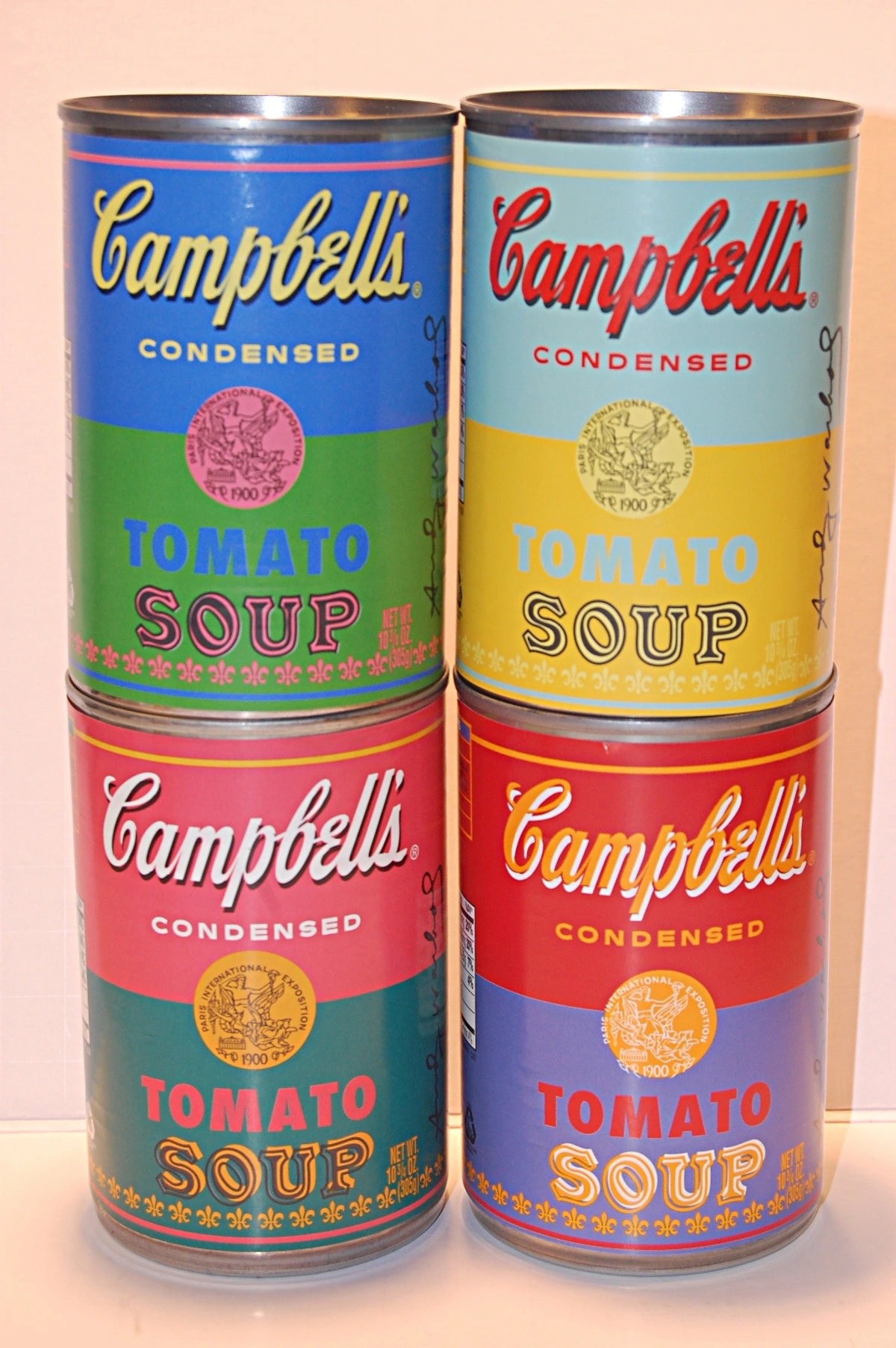
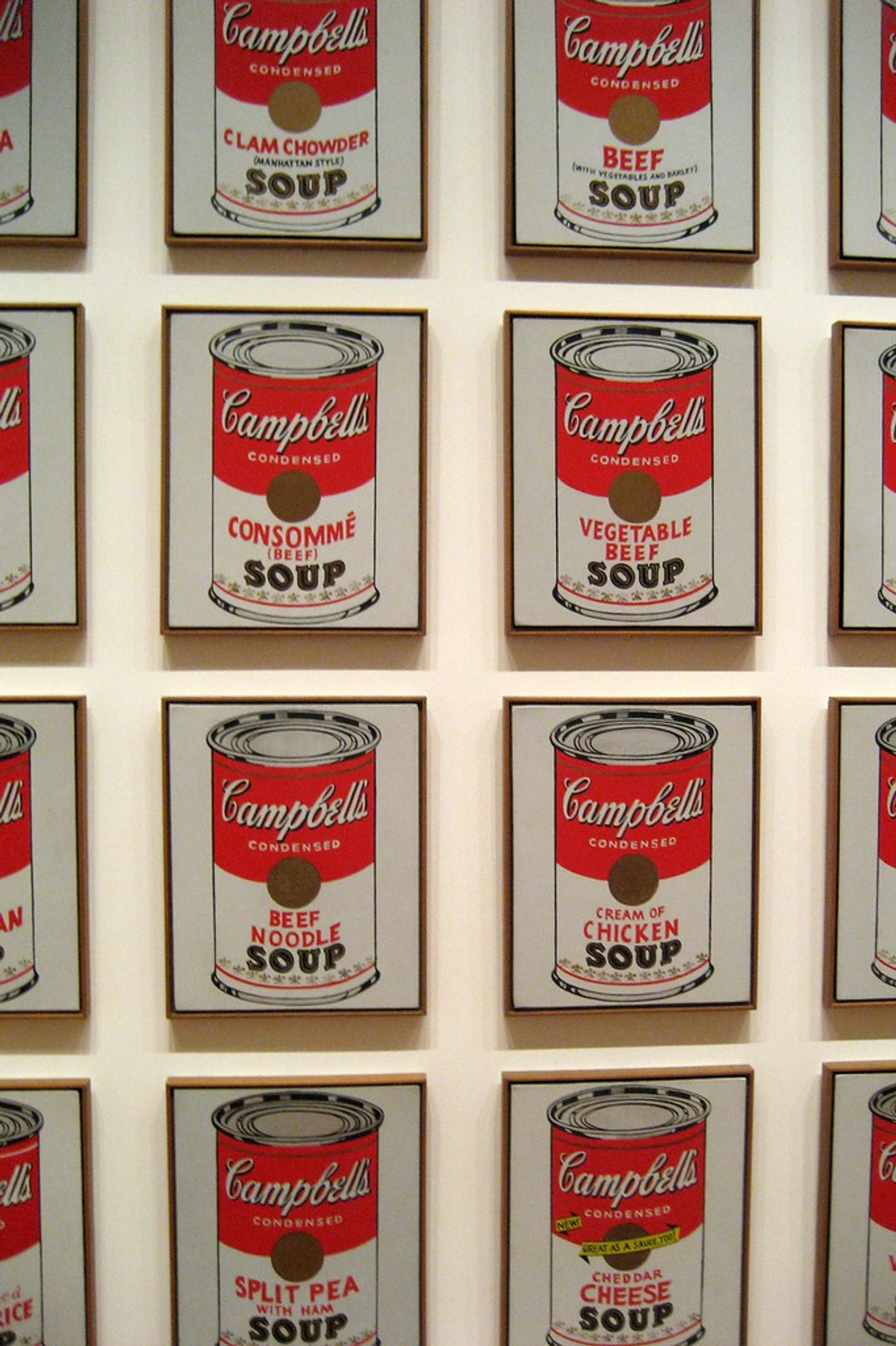
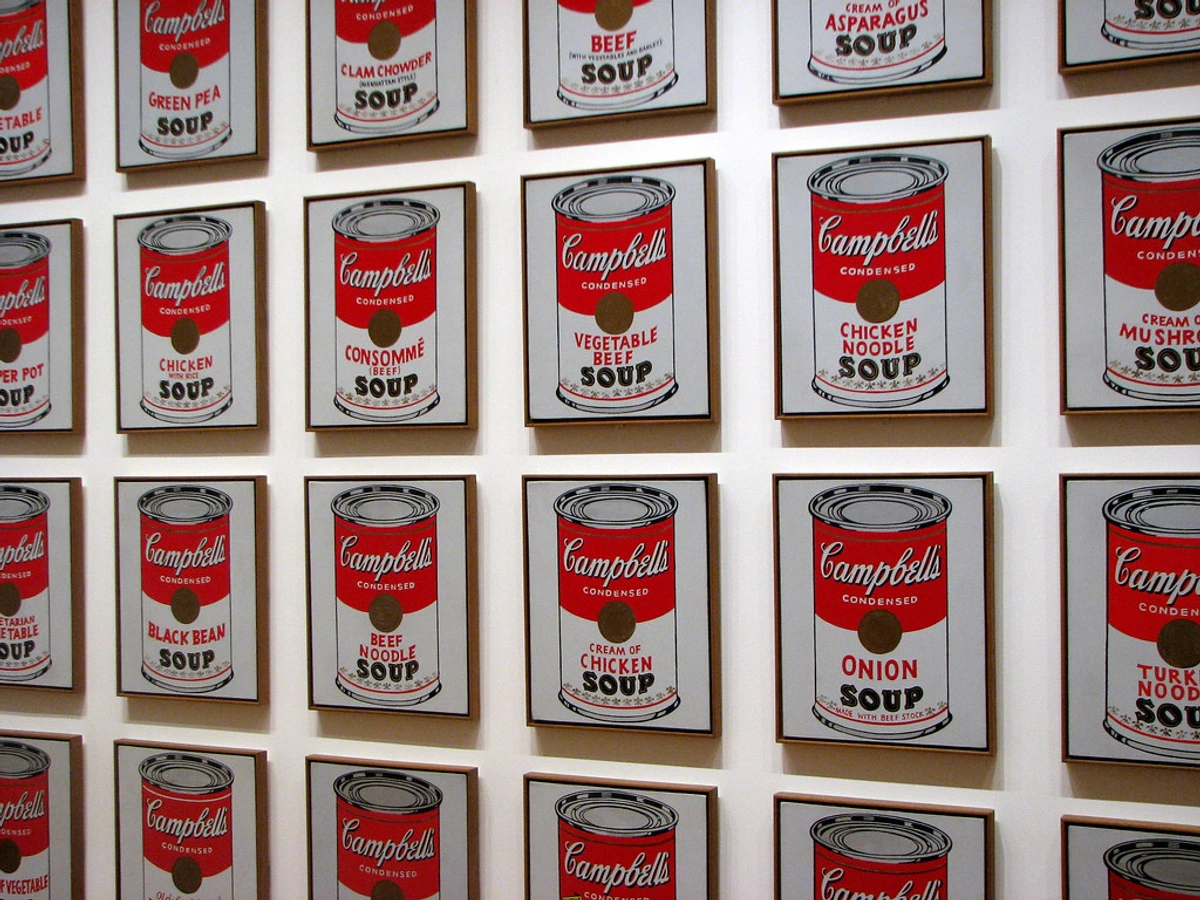
This was, without exaggeration, the shot heard 'round the art world. Thirty-two canvases, each a meticulously realistic depiction of a different flavor of Campbell's Soup. When they debuted at the Ferus Gallery in Los Angeles in 1962, displayed like actual products on supermarket shelves – yes, literally stacked on narrow ledges against the wall – the art world reeled. Critics and viewers were baffled, angry, or dismissed them as a joke. "Where was the emotion?" they demanded. "The artist’s hand? The profound meaning?" But what if that very bewilderment was precisely the point? What if Warhol wanted us to question our own assumptions about what art could be, and where it could be found? By presenting these everyday, mass-produced objects with the solemnity of fine art, he obliterated the perceived divide between 'high' and 'low' culture, inviting us to see the aesthetic value in the ordinary.
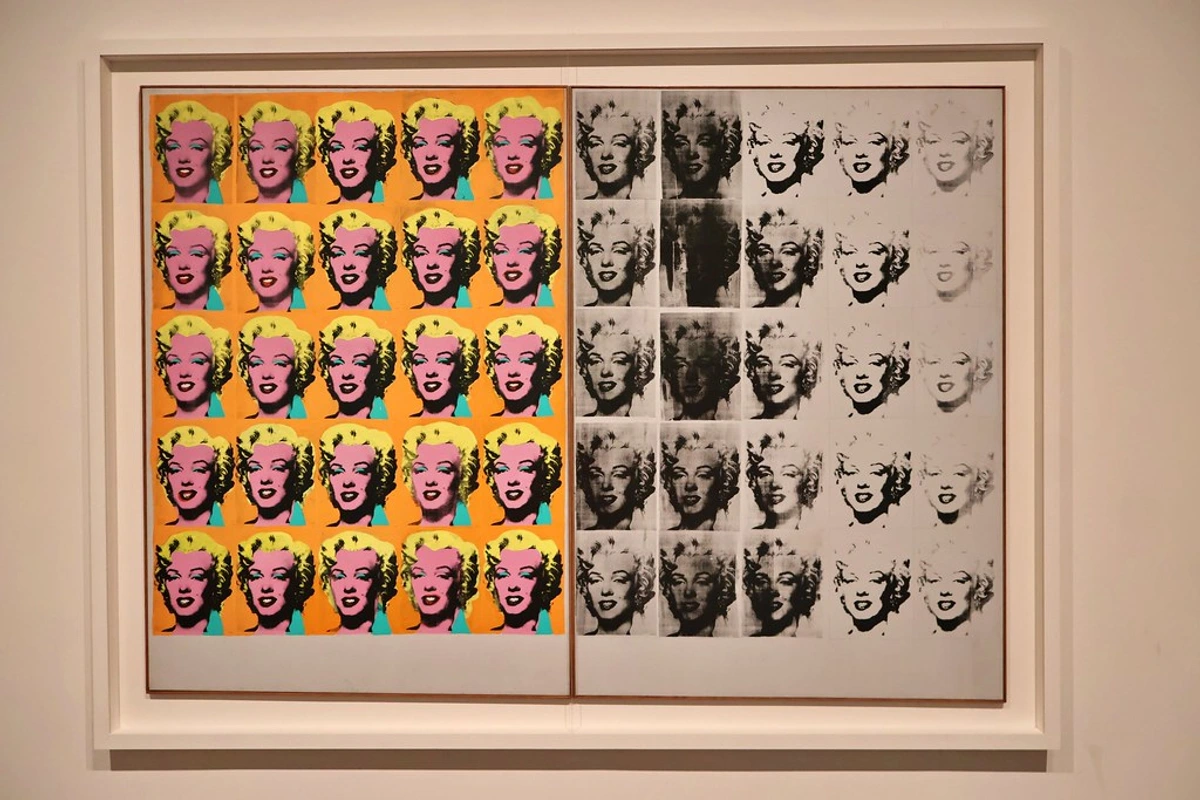
This act, for me, was a stroke of genius. Warhol wasn't just removing the artist's hand; he was celebrating the machine age. He meticulously employed screen printing (or serigraphy), a commercial process he knew intimately from his illustration days, that allowed him to mass-produce images with mechanical precision. But this wasn't just about speed; it was about embracing the 'imperfection' of the machine. The slight misregistrations, the uneven ink saturation, the subtle variations from print to print – those weren't errors to Warhol. They were part of the texture of mass production, an almost democratic flaw, a visual echo of commercial printing. He was saying, "This is what your world looks like, not some pristine, hand-painted ideal." He wasn’t merely reproducing an image; he was making art by replicating the machine’s process. This wasn't just about the soup; it was a profound commentary on the industrial-scale consumption and culture that produced such objects. Screen printing itself was revolutionary because it democratized art: it allowed for easy reproduction, making art accessible for wider ownership, challenging the very notion of the unique, sacred artwork. If you're interested in the technical side, there's a great guide on what is screen printing. His dedicated assistants were integral to this process, working under his direction, truly embodying his collaborative ethos and further blurring the traditional role of the solitary artist.

Marilyn, Elvis, and the Mass-Production of Fame
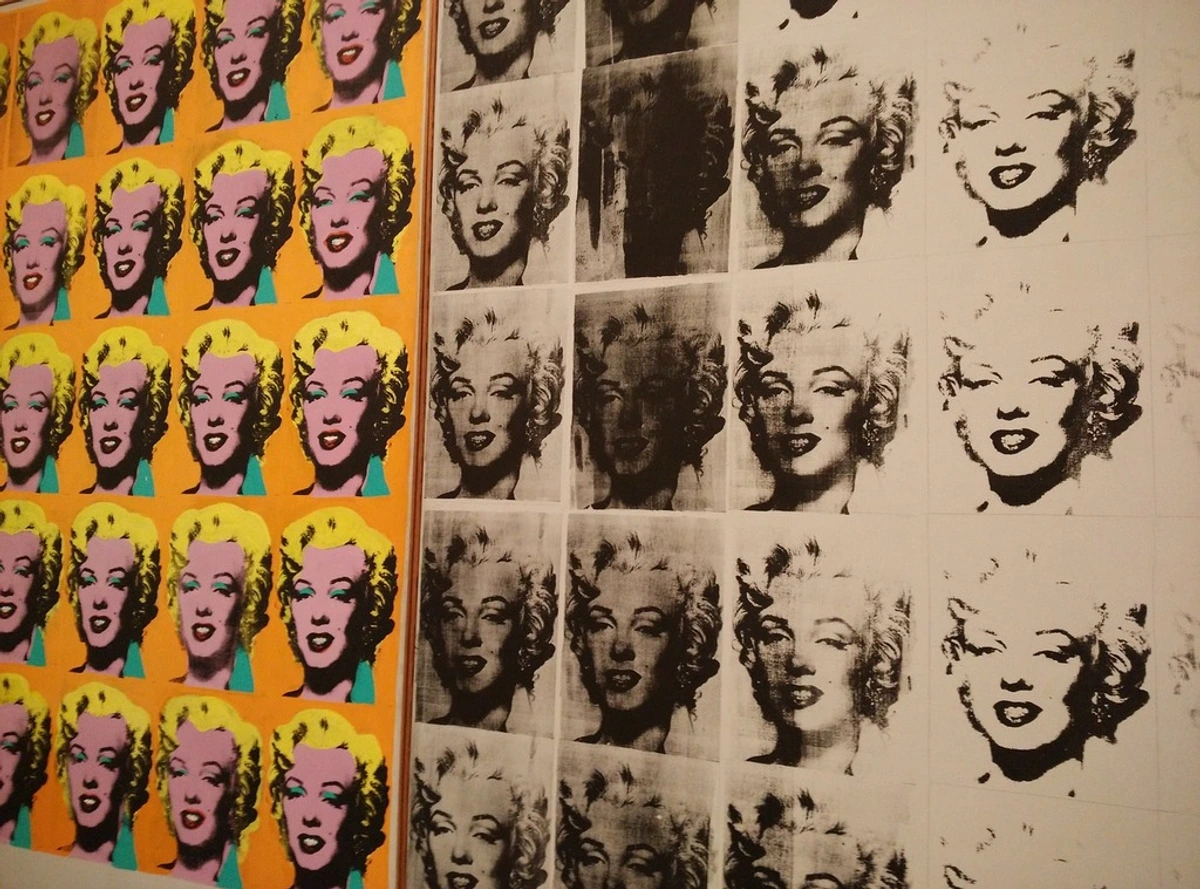
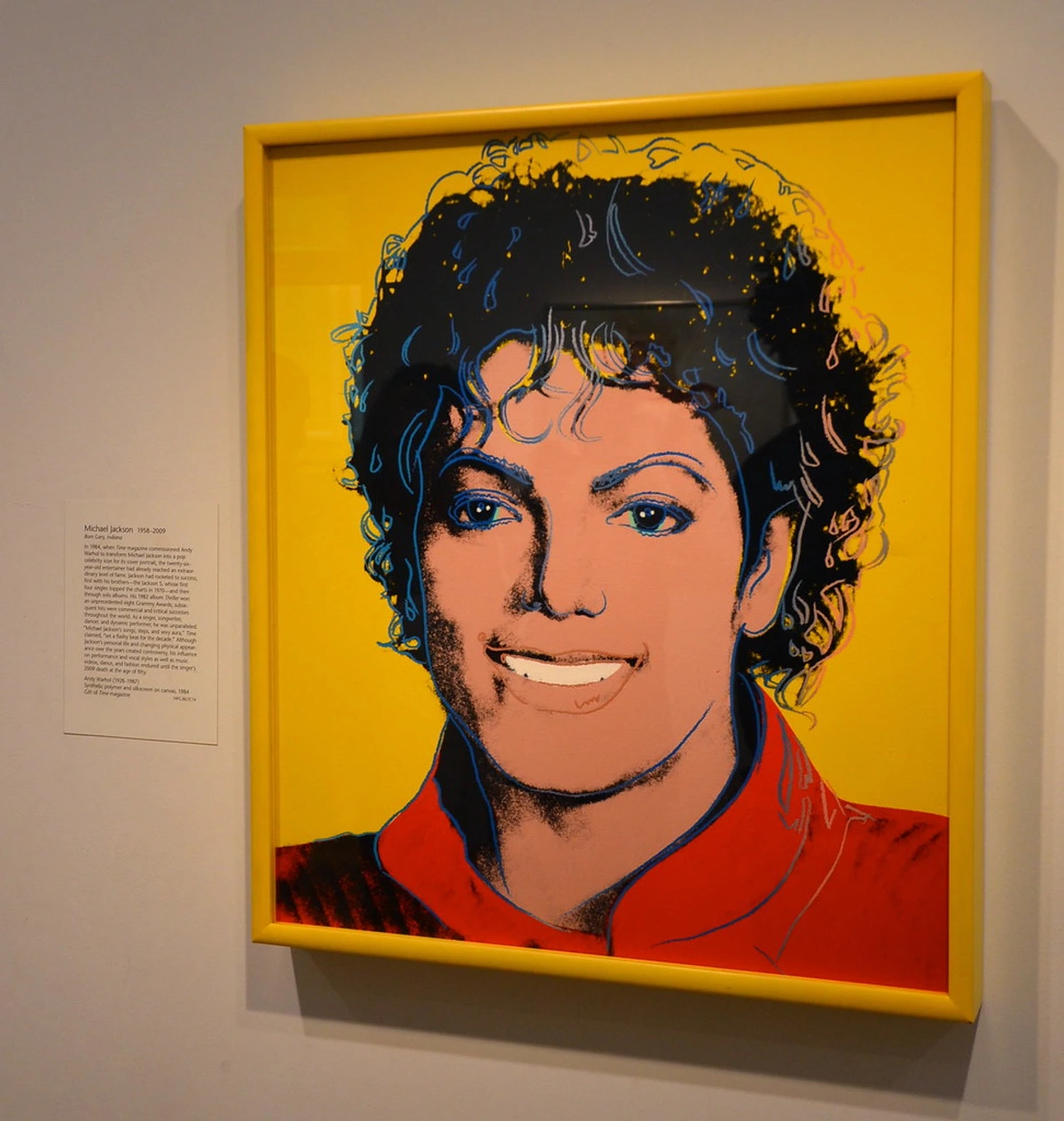
After turning soup cans into art, Warhol turned his attention to another ubiquitous mass-produced commodity: the celebrity image. He created instantly iconic portraits of figures like Marilyn Monroe, Elvis Presley, Elizabeth Taylor, and Jackie Kennedy. He almost always used existing publicity photos – images already iconic, universally recognizable, often chosen for a specific archetypal pose or emotional resonance that had long permeated public consciousness. But he didn't just copy them; he transformed them through relentless repetition and garish, high-contrast colors. I've always thought those hyper-saturated, almost artificial palettes he chose were a brilliant way to mimic the glossy, often manufactured image of fame itself, pushing it into the realm of pure product. These were not psychological portraits; they were visual amplifications of existing icons, stripping away individual identity to reveal the mechanism of stardom itself. This process, often executed by his dedicated assistants – who were integral to his studio's massive output, much more than mere helpers – allowed him to churn out a dizzying volume of work, further mimicking the mass production of consumer goods and celebrity personas.
His Marilyn Diptych, created shortly after her death in 1962, is a masterwork, a chillingly prescient commentary on her tragic fame. On one side, you have her face repeated in vibrant, almost aggressively cheerful colors—the public icon, the eternal product. On the other, the image is repeated in fading black and white, spectral, ghostly, and disappearing. It's a stunning, deeply unsettling commentary on life, death, and the relentless, soul-crushing nature of fame. You see this piece in a museum, whether it's the Tate Modern or a smaller gallery like the [/den-bosch-museum], and it just stops you in your tracks, forcing a confrontation with mortality and the fleeting, yet endlessly reproduced, nature of stardom. He chose figures who were already mythologized, whose images were so ingrained in the public psyche that they functioned like brands, ready for his artistic treatment.

credit, licence
The Factory: Where Art, Life, and Chaos Collapsed
Warhol’s studio, famously known as The Factory, wasn't just a place to work; it was a self-contained universe, the vibrant, anarchic epicenter of New York's counter-culture. Covered in silver foil and paint, it was a chaotic, non-stop hub for artists, musicians, filmmakers, socialites, and a rotating cast of fascinating misfits Warhol dubbed his "Superstars." Think of it: a silver-clad chaos where identities were forged, gender fluidity was celebrated, spontaneous performances erupted, and the very act of living was meticulously documented and elevated to a form of art. Figures like the captivating Edie Sedgwick, whose fragile beauty became synonymous with the Factory scene, the wonderfully brazen Viva, and the enigmatic Ultra Violet weren't just muses; they were collaborators, performers, and living extensions of Warhol's artistic vision. His most significant assistants, like Gerard Malanga, Brigid Berlin, and Paul Morrissey, were crucial to the massive output, often executing prints, films, and other projects under his direction, truly embodying his collaborative ethos.
Hier, the boundaries between art, life, and commerce dissolved entirely. The Factory was less a studio and more a living, breathing social experiment – a party, a film set, a sweatshop, and a salon all rolled into one, buzzing with a controlled chaos that perfectly mirrored Warhol’s detached yet all-consuming gaze on the modern world. From the grocery aisle to the silver screen, Warhol’s vision was transforming culture, one iconic image and one compelling persona at a time. It’s hard to imagine another place quite like it, a true crucible of artistic and social revolution.
Beyond the Canvas: Film, Music, and Publishing – Expanding the Pop Universe
Warhol's ambition couldn't possibly be contained by painting alone. He was an obsessive documentarian of his time, a restless creator, and he used every medium available to him, always pushing boundaries and questioning definitions.
- Film: He made hundreds of films, from static, hours-long 'anti-films' designed to challenge the very concept of cinema – like the eight-hour Empire (a continuous, unedited shot of the Empire State Building from one vantage point) or Sleep (a five-hour film of his friend John Giorno sleeping). Why make these? I think he was stripping cinema down to its barest elements, forcing us to confront the act of looking, the passage of time, and the banality of existence without traditional narrative distraction. To me, it was a deliberate provocation, a rejection of Hollywood spectacle in favor of raw, unedited reality, almost a meditative act of observation. He also made more experimental narrative-driven films like Chelsea Girls (1966), shown as a split-screen projection, which offered a raw, unedited, and voyeuristic glimpse into the lives of his Superstars, further blurring the lines between reality and artifice, documentary and fiction. These films are less about plot and more about atmosphere, personality, and the act of being filmed.
- Music: He managed and produced the seminal avant-garde rock band The Velvet Underground, designing their instantly iconic banana album cover for their debut The Velvet Underground & Nico (1967). More than just a manager, he was their patron, creating an entire aesthetic experience that combined their raw, experimental music with his visual style. The band's dark, gritty lyrics and unconventional sound, combined with Warhol's stark visual branding, created a subculture that profoundly influenced punk, new wave, and alternative music for decades to come. He understood that music, too, could be a packaged product, an iconic object, a multi-sensory art experience.
- Publishing: He co-founded Interview magazine in 1969, which he famously called "the crystal ball of Pop." It focused on unedited, often rambling conversations with celebrities and other cultural figures. This seemingly casual approach was deliberate: it demystified the famous by presenting them in their raw, unguarded chatter, while simultaneously elevating everyday gossip and intimate dialogue to a form of cultural artifact. Again, he was blurring the lines between the famous and the everyday, the polished and the raw, capturing a perceived authenticity, or at least the appearance of it, long before reality TV made it a global commodity. It was a brilliant, almost anthropological look at fame.
Warhol's Philosophy: Repetition, Surface, and the Profoundly Mundane
What truly fascinates me about Warhol is not just what he painted, but why and how he thought about art. He often embraced the superficial, the repetitive, and the commercial not as a failure of artistic depth, but as a potent commentary on depth itself. "If you want to know all about Andy Warhol," he once famously said, "just look at the surface of my paintings and films and me, and there I am. There's nothing behind it." I find that both disarming and profoundly insightful, a bold refusal to conform to the expectation of artistic profundity. He was, in a way, suggesting that the surface is the depth in our hyper-commercialized, image-driven world – that the meaning resides precisely in the ubiquity and immediate recognition of the image.
His use of repetition, whether in endless soup cans or multiple Marilyn faces, stripped the subject of its perceived uniqueness, forcing us to confront the mechanics of consumerism and media saturation. It was a mirror reflecting our own relentless consumption, a visual echo of advertisements we see repeatedly until their meaning dissolves into a kind of hypnotic hum. And in doing so, he challenged traditional notions of authorship and the sacred value of the 'original' artwork. He embraced appropriation, taking existing images and transforming them into his own, raising profound questions about copyright and intellectual property long before the digital age made them ubiquitous. While some critics dismissed this as shallow or exploitative, I see it as a daring, almost prophetic dissection of how images function and gain power in our society. The legal and ethical debates around fair use and artistic transformation that are so prevalent today? Warhol was instigating those conversations half a century ago, daring us to look beyond the "aura" of the original.
The Darker Side of Pop: Death and Disaster – A Chilling Reflection
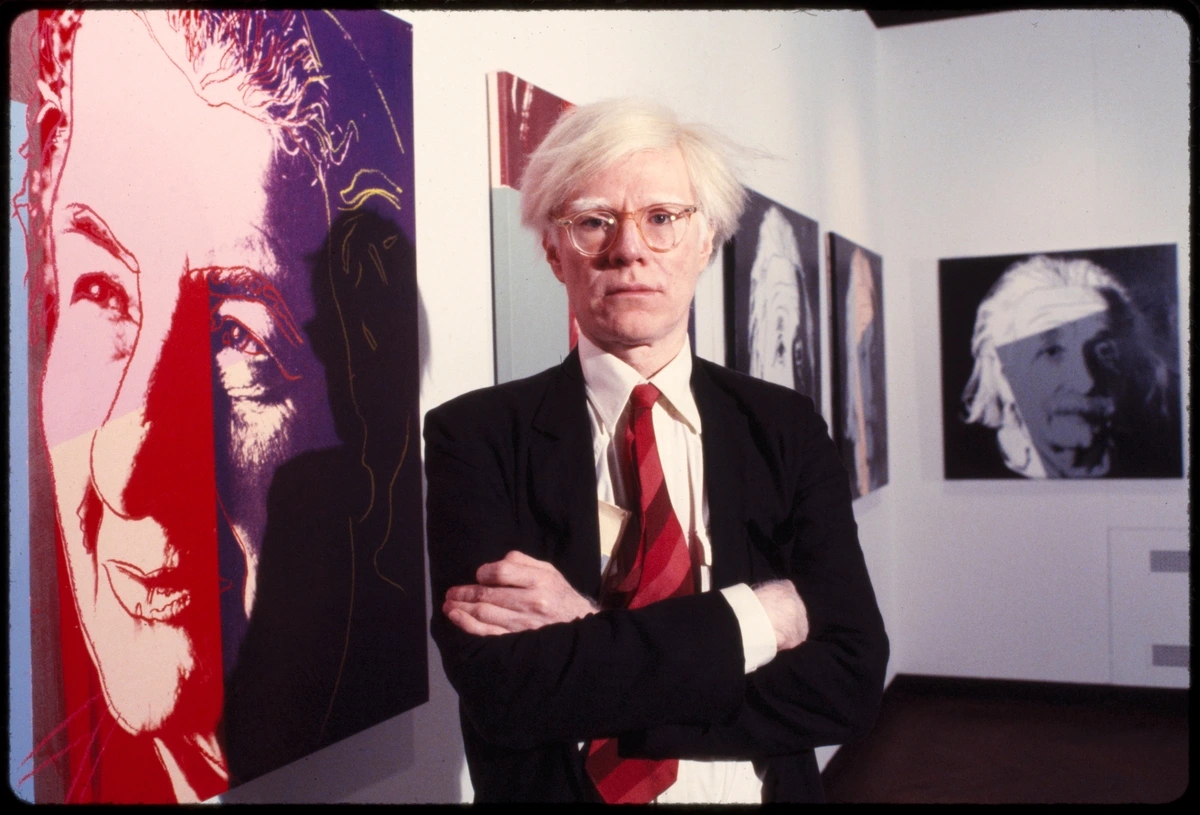
While we often associate Warhol with bright colors and celebrity glamour, it's crucial to remember his profound, almost unsettling fascination with death and disaster. His "Death and Disaster" series, for example, which included silkscreens of electric chairs, car crashes (Orange Car Crash 14 Times, 1963), and suicides, stands in stark, chilling contrast to his vibrant Pop aesthetic. These aren't just sensational images; they are, to my mind, a further extension of his commentary on media saturation. He took images of tragedy directly from newspaper clippings, police photographs, and magazine reports, then repeated them, much like the soup cans or celebrity portraits. Through sheer ubiquity and the detached, mechanical process of screen printing, he stripped them of their initial shock value. It forces us to ask: do we become desensitized to suffering when it's endlessly reproduced by the media? It’s a powerful, unsettling question, and one that adds a complex, deeply human layer to his seemingly detached artistic persona. This series is a stark reminder that even in a world obsessed with surface, the harsh realities of mortality are always lurking.
Common Criticisms and Warhol's Enduring Rebuttal
It's important to acknowledge that Warhol wasn't universally acclaimed during his lifetime, and even today, some debates persist. Critics often accused him of being superficial, lacking emotional depth, or even exploiting his subjects. Some saw his embrace of commercial processes and mass-produced imagery as a betrayal of 'true' art, reducing it to mere product. They questioned the originality of his work, given his reliance on existing photographs and the extensive involvement of his assistants.
However, these very criticisms, ironically, serve as a testament to his genius. Warhol’s work deliberately provoked these questions. His supposed "shallowness" was a profound commentary on a society that had become superficial. His "lack of emotion" mirrored the detached, almost clinical way mass media presented both celebrity and tragedy. And his challenge to originality? That was a prescient exploration of authorship and reproduction that continues to define our digital age. He wasn't simply reflecting culture; he was actively critiquing it by holding up an unvarnished mirror and letting us draw our own, often uncomfortable, conclusions. He forced the art world to broaden its definition, pushing beyond traditional aesthetics into the realm of conceptual and cultural critique.
The Enduring Legacy: Why Warhol Still Reigns in Our Digital Age
So, why are we still talking about him with such intensity? Because Warhol’s ideas have not only endured, they've become the very water we swim in. He didn't just foresee a world where the line between art, commerce, and celebrity would completely dissolve; he built the prototype. His shrewd business acumen, too, was revolutionary; he turned his art into a veritable brand, demonstrating how an artist could be a commercial enterprise in themselves, a concept utterly radical for his time.
"In the future, everyone will be world-famous for 15 minutes."
This famous quote is more relevant now than ever. In the age of social media, reality TV, viral content, and personal branding – where we are all, to some extent, curating our own images and performing for an audience, constantly seeking those fleeting moments of viral fame – we are all, unequivocally, Warhol's children. He understood the mechanics of fame, media, and self-promotion in a way that was decades ahead of its time. His work forces us to ask critical questions about what we value, what constitutes authenticity, and what is just a meticulously crafted copy.
Warhol in the Age of Digital Art and NFTs
And in a world debating the ownership and value of digital art or the skepticism around NFTs, his explorations of reproduction, uniqueness, and authorship feel uncannily prescient, don't you think? Warhol showed us that the value of art isn't solely tied to its physical singularity. He democratized images through repetition and accessible techniques like screen printing. While NFTs claim to offer "unique" digital ownership, the underlying digital images are endlessly reproducible, echoing Warhol’s challenge to the very concept of the "original." He laid the philosophical groundwork for understanding how value can be created and perceived in a world of infinite copies, without ever needing a blockchain. It’s a fascinating, complex dialogue that continues to unfold, and Warhol remains a central figure in that conversation, offering a nuanced perspective on what truly constitutes artistic value in an era of mass reproduction.
His influence is undeniably everywhere. Think of the street art of Banksy, with its sharp social commentary, reproducible stencil aesthetic, and often anonymous authorship, or the high-gloss, pop-culture-infused sculptures of Jeff Koons, which elevate kitsch to fine art. Beyond fine art, his shadow falls across fashion, advertising, branding, and especially the pervasive culture of social media. Every selfie we curate, every personal brand we build, every fleeting trend we consume and discard – these are all, in a sense, echoes of Warhol’s prophecies. He taught us that fame itself is a commodity, and that art can be found not just in the rarefied halls of museums, but in the everyday, the manufactured, and the endlessly repeatable. And honestly, finding art that truly makes you think is why many of us [/buy] art in the first place.


He took art off its pedestal and put it on a t-shirt, on a record cover, on a screen, and in doing so, he changed the game forever. His impact on how we perceive art, celebrity, media, and even ourselves is simply immeasurable. He left us with a challenge: to look closer at the world around us, and question everything we consume.
Frequently Asked Questions (FAQ)
What art movement is Andy Warhol associated with? Andy Warhol is the leading and most iconic figure of Pop Art, a groundbreaking art movement that emerged in the 1950s and truly flourished in the 1960s. Pop Art famously challenged traditional fine art by boldly incorporating imagery from popular and mass culture, such as advertising, comic books, product packaging, and mundane everyday objects. It brought 'low' art into the 'high' art conversation, redefining what could be considered art and critiquing consumerism. You can dive deeper into the movement with our ultimate guide to Pop Art.
What is Andy Warhol's most famous artwork? While it's always debatable given his vast and influential body of work, his Campbell's Soup Cans series (1962) and the Marilyn Diptych (1962) are arguably his most recognized and iconic works. These pieces perfectly encapsulate his obsessions with mass production, consumerism, and the cult of celebrity, defining the very essence of Pop Art and making a profound commentary on popular culture and fame. You can learn more about them in our article: What are Warhol's Campbell's Soup Cans?.
What was The Factory? The Factory was Andy Warhol's legendary New York City studio, famously coated in silver foil, located in various iterations across the city. Far more than just a workplace, it was the vibrant, chaotic epicenter of New York's avant-garde and counter-culture scene. It served as a gathering spot for artists, musicians, filmmakers, socialites, and Warhol's eclectic 'Superstars' like Edie Sedgwick and Viva. The Factory was renowned for its wild parties, experimental film productions, and as the primary site where Warhol and his assistants mass-produced his silkscreen prints. It truly embodied his philosophy that art was a collaborative, social, and commercial enterprise where the boundaries between life and art blurred entirely. It was a place where identities were forged and documented, a living artwork in itself.
Did Andy Warhol have any notable collaborations? Yes, he engaged in several significant collaborations throughout his career. One of his most famous and intriguing collaborations was in the 1980s with the much younger, dynamic artist Jean-Michel Basquiat. Their joint works were a fascinating, if sometimes tense, fusion of Warhol's clean, reproducible pop imagery and Basquiat's raw, expressive, Neo-Expressionism style, often featuring bold lines, graffiti-like elements, and intense emotional content. This collaboration created a significant bridge between the Pop Art generation and the emerging art movements of the 80s, sparking a powerful artistic dialogue.
How did Andy Warhol die? Andy Warhol died unexpectedly on February 22, 1987, at the age of 58. His death was caused by a sudden post-operative cardiac arrhythmia following what was considered routine gallbladder surgery. His passing shocked the art world, as he was still highly active, influential, and working on new projects at the time, leaving behind a monumental and still-resonating legacy.
Was Andy Warhol a serious artist? Absolutely. While his playful, often provocative, and overtly commercial subject matter led some critics at the time to dismiss him as superficial or a charlatan, history has unequivocally recognized him as one of the most important and influential artists of the 20th century. His groundbreaking work offered a profound, complex, and often critical commentary on consumer culture, media saturation, the nature of fame, and the very definition of art itself. He forced us to redefine our understanding of artistic value, purpose, and originality. He was, without a doubt, a serious artist, just one who spoke a new, revolutionary language that precisely reflected and critiqued the modern world around him. His artistic critique continues to inform contemporary discussions on art, authenticity, and media.