
Umberto Boccioni: The Futurist Who Painted Motion and Changed Art Forever
Take a deep dive into the life and work of Umberto Boccioni, the powerhouse artist who captured the energy of the 20th century. I explore his key Futurist ideas, his most famous works, and why his art still feels relevant today.

Umberto Boccioni and the Velocity of Creation: Inside the Futurist Mind
You know that feeling when a train races past, and the gust of wind makes you feel unsteady on your feet? Or when a car speeds by on a wet street, and for a split second, everything seems to blur into streaks of light and sound? That visceral, physical sensation of being in a world that's constantly accelerating—that's what Umberto Boccioni was obsessed with capturing. He didn't just want to show you a picture of a galloping horse or a bustling city street; he wanted you to feel the vibration in your bones, to experience the blur of motion as if you were right there in the middle of it.
I remember standing in front of his work for the first time, completely unprepared for what I was about to experience. It wasn't like looking at a painting; it felt more like being caught in a visual vortex, where time and space collapsed into pure energy. That moment changed how I thought about what art could do—not just capture a moment, but simulate an experience. It’s that raw, unfiltered sensation of being in the modern world that he fought so hard to put on canvas.
Today, most of us see his paintings and sculptures as staples of modern art history. But I find it more interesting to peel back the layers and understand the man who stood at the center of the storm, the one who arguably gave Futurism its visual soul. For anyone curious about how art shattered its old forms to embrace the frantic, beautiful chaos of the new century, this is for you. Let's dive in.
The Futurist Manifesto: A Declaration of War on the Past
Before we get to Boccioni, let's set the scene. It’s 1909, and the Italian poet Filippo Tommaso Marinetti publishes a screeching, aggressive, and frankly exhilarating piece of writing in a French newspaper. It was called the Futurist Manifesto, and it read less like an art critique and more like a declaration of war against anything old.
Marinetti and his crew of Futurists worshipped the new gods of speed, machinery, and violence. They wanted to burn down museums and libraries, which they saw as cemeteries for old ideas. Their heroes weren't scholars or philosophers; they were race cars and airplanes. This might sound like the rantings of a passionate, slightly unhinged art student, but it was a powerful call to arms. They declared that a roaring car was more beautiful than the Winged Victory of Samothrace—a statement designed to offend and electrify in equal measure. This ethos of glorifying modern life and dynamism became the core of the Futurist movement's ideology. Marinetti's manifesto was the philosophical earthquake; Boccioni would soon provide the blueprints for how to build art in this new, shaken world.

The Seeds of Futurism: A World in Flux
To truly grasp the Futurist shockwave, you have to picture the world at the dawn of the 20th century. It was an era of unprecedented change. The invention of the automobile, the airplane, the radio, and electrified cities were fundamentally altering human perception. For the first time, people could move faster than a galloping horse, communicate across continents instantaneously, and experience night transformed into day. This wasn’t just technological progress; it was a revolution of the senses. The old, static world of Renaissance perspective and pastoral quietude felt like a historical relic to these young Italians.
It was in this electrified atmosphere that Marinetti’s words found fertile ground. He wasn’t just celebrating machines; he was arguing for a new consciousness, a "man multiplied by the machine." This directly challenged centuries of artistic tradition that valued contemplation, permanence, and idealized beauty. Futurism demanded an art of noise, speed, and violent rupture.
Enter the Dynamo: Umberto Boccioni
This is where our man Boccioni enters the story. He read Marinetti’s manifesto and felt an immediate jolt of recognition. Here was his chance to push painting and sculpture into a realm it had never been before.
The Artist's Formative Journey: From Divisionism to Dynamism
Born on October 19, 1882, in Reggio Calabria, Italy, Umberto Boccioni's life was itself a study in motion—a theme that would define not only his art but his entire existence. His family moved frequently during his youth, from the southern tip of Italy to bustling northern cities like Genoa and Padua, before finally settling in Rome in 1899. It was there, while studying at the Academy of Fine Arts, that he met Gino Severini, another restless spirit who would become a core member of the Futurist group.
What strikes me about these early years is how Boccioni was constantly searching for a visual language that could match the intensity of his experience. For several years, he worked as a commercial illustrator and immersed himself in Divisionism, the Italian cousin of French Pointillism. Works from this period, often portraits or romantic landscapes, show him meticulously applying small strokes of pure color to build up form and light. But there was a crucial problem: it felt static to him. It was still predicated on capturing a single, frozen moment under a specific light, a visual experience he increasingly found inadequate.
His intellectual and artistic turning point came during a 1906 trip to Paris and then Russia. There, he was exposed to the radical new ideas of Post-Impressionism and began to see art’s potential for expressing internal emotion over external reality. The pivotal year was 1910. While in Milan, working alongside artists like Carlo Carrà and Luigi Russolo, he read Marinetti’s manifesto. It was the intellectual lightning bolt he had been waiting for. He later wrote that the manifesto gave him "the desire to create the plastic expression of this dynamism." The search was over; the path was clear.
That tension between what art was and what it could be—that's what drove him. Most artists were content to capture a moment; Boccioni wanted to capture the energy between moments, the blur of transition, the very sensation of becoming rather than being.
Boccioni became the main engine of the Futurist painting movement. After reading the Manifesto, he immediately sought out Marinetti and, along with other artists like Carlo Carrà, Luigi Russolo, and his old friend Gino Severini, co-authored the Technical Manifesto of Futurist Painting in 1910. This document, largely driven by Boccioni's intellectual energy, was the real birth of Futurism as a visual art form. He was not just a follower; he was the movement's chief theorist who codified its aesthetic.
The difference between Marinetti's original manifesto and Boccioni's technical document fascinates me. Where Marinetti was all fire and rhetoric, Boccioni was rigorous and methodical. He didn't just say "we love speed"; he explained how to translate speed into visual terms. He gave the movement its visual vocabulary, a set of concrete principles that could be applied and developed.
In 1912, he went a step further and published the Technical Manifesto of Futurist Sculpture, a text that sought to liberate sculpture from its millennia-long obsession with inert, monolithic form. In it, he declared, "Sculpture must give life to objects by making their extension into space palpable, systematic, and plastic." Reading these manifestos today, you can feel his burning urgency—this desperate need to articulate something that had never been articulated before, to build an entirely new aesthetic from the ground up.
The Art of Dynamic Force: Key Concepts in Boccioni's Work
To understand his art, you have to abandon the idea that a painting should be a window to a static world. Boccioni was playing by a different set of rules. Here are the core ideas he was constantly chasing:
Universal Dynamism
This was his central principle, a philosophy he articulated in the 1910 manifesto. Boccioni believed that everything is in motion and everything is connected. He wrote that objects in motion multiply and vibrate, their form becoming blurred as they rush through space. A person walking is inseparable from the energy of the street they're walking on; a horse is part of the movement of the crowd around it. An object is defined not by its solid form but by the forces acting upon it and the movements it makes through space. The goal was to paint the dynamic relationship between an object and its environment, creating a sense of universal dynamism where form and space are one.
When I first really understood this concept, it was like one of those optical illusions that flip your perception. Instead of seeing figures moving through space, I began to see space and figures as part of a single, continuous energy field. That's the revolutionary shift Boccioni was pushing for—not just showing motion, but showing that everything is motion.
Lines of Force
Think of it like this: if you could see the invisible energy trails that everything leaves behind—the arc of a swinging arm, the direction of a speeding car, the magnetic pull between two people—those would be Boccioni's lines of force. He used these repetitive, directional lines in his paintings and sculptures to show the path of movement. They aren't just decorative; they are the skeleton of the motion he's trying to capture.
I've always thought of these lines as visual gravity. They pull your eye through the composition, creating rhythm and intensity. When you look at a Boccioni painting and feel that almost physical pull, that's the lines of force working on you. They're not just depicting movement—they're creating it in your perception.
The Simultaneity of Vision
Our eyes don't see the world in a single frozen frame. They constantly move and dart around, and our brain stitches it all together. Boccioni wanted to capture that fragmented, multi-perspective experience. He would show you the front, side, and back of a moving figure all at once. This concept, which he called simultaneity, allowed him to compress multiple moments in time into a single, explosive image.
This is where Boccioni really separated himself from the Cubists. While Picasso and Braque were showing multiple viewpoints of static objects, Boccioni was showing multiple viewpoints of things in motion. It's the difference between studying a statue from different angles and trying to visualize the entire path of a running person in one glance.
Plastic Dynamism
This was the term he used for his unique approach to form. For Boccioni, form wasn't solid. It was plastic—malleable, fluid, and constantly being shaped by the motion and atmosphere around it. A horse isn't just a horse; it's a vortex of power and speed that distorts the very air around it.
Plastic dynamism might be the most radical of his ideas because it fundamentally challenges what we think of as real. In Boccioni's world, solidity is an illusion. Everything is in flux, and the artist's job is to capture that flux, not the temporary form it happens to take at any given moment.
Before diving into specific works, I want to emphasize something that still amazes me: Boccioni's entire mature career lasted barely five years. Five years. That's less time than most artists spend in graduate school. Yet in that brief window, he created a body of work that changed everything. It makes you wonder what more he might have done.

The City Rises (1910)
This is the painting that put Futurist painting on the map. A vast, chaotic scene set against the backdrop of Milan's industrial expansion, it depicts the raw, untamed energy of urban construction. But the real subject isn't the building site itself—it's the overwhelming sensation of labor, power, and movement.
When you stand in front of this painting at MoMA, the first thing that hits you is the sheer scale—it's monumental, nearly seven feet tall. The effect is overwhelming. You don't just look at it; you feel surrounded by it.
A team of massive, muscular workhorses dominates the foreground, seemingly in a state of wild, rebellious panic. They aren't just pulling a cart; they appear to be breaking free from their constraints, their bodies and straining muscles a vortex of energy. Behind them, the workers seem almost secondary, smaller figures caught up in the same primal force. Boccioni uses frantic, swirling brushstrokes and those signature lines of force to show the frenzy. The entire composition is tilted, pulling the viewer's eye into the chaotic center of the action.
What I find most compelling about this painting is how it captures a very specific historical moment. It feels less like a painting of construction and more like a painting that is construction. Milan was undergoing rapid industrialization, and Boccioni wasn't just painting what he saw; he was painting the very energy, sound, and vibration of that transformation.
The horses represent pure, untamed power being harnessed for urban development, but they also seem to be rebelling against it, their bodies becoming swirling vortices of energy. In doing this, Boccioni departs from the traditional heroic narrative of labor. This isn't about the glory of the worker; it's about the chaotic, violent, glorious force of change itself. It's the perfect visual expression of Marinetti's phrase from the manifesto: "We will sing of the multicolored and polyphonic tides of revolution." This painting was a bolt of lightning, announcing a new and aggressive artistic vision to the world. Art would no longer be a passive mirror; it would be an active force, as powerful, exhilarating, and dangerous as the age it sought to represent.
Unique Forms of Continuity in Space (1913)
This is, without a doubt, Boccioni's most [famous work](/finder/page/famous abstract art) and one of the most iconic sculptures of the 20th century. If a bronze figure could look like it's exploding, this would be it.
The sculpture depicts a powerful human figure mid-stride, a modern-day Winged Victory for the industrial age. But Boccioni isn't interested in the anatomical details. In his 1912 Technical Manifesto of Futurist Sculpture, he declared that an object in motion is "not stable, but a "unique form of continuity in space." He's sculpted the air being pushed aside by the figure's movement. The body is elongated and streamlined, its surface a series of rhythmic, aerodynamic curves.
The genius of this sculpture lies in what it chooses to show—and what it chooses to omit. There are no facial features, no individual muscle groups, nothing that would pin this figure to a specific identity or moment. Instead, you see pure forward momentum. The figure's legs are like pistons, and the drapery-like forms that trail behind aren't clothing—they're the visual record of movement through space. It's a monument to motion itself.
The tragic irony is that the original plaster version wasn't cast in bronze until after his death. The man who so passionately celebrated the future never saw his most famous work cast in a permanent material. It was only in 1931, fifteen years after his death, that the first bronze casts were made. Today, examples can be found in major museums worldwide, including MoMA in New York and the Tate Modern in London. The image was later featured on the Italian 20-cent euro coin, a final, strange victory for an artist who wanted to destroy the old monuments and raise new ones in their place.
Dynamism of a Cyclist (1913)
This painting is a pure distillation of Boccioni’s ideas. It’s an abstract whirlwind of color and form, but it has a very specific subject: the experience of riding a bicycle at high speed.
The canvas is a vortex of interpenetrating forms. You can just about make out the oval of a wheel, the fragmented, helmeted head of the cyclist, and the repeated lines that show the bike’s path through space. The colors themselves are dynamic—vibrant reds and greens clash against each other to heighten the sense of velocity. It's a perfect example of simultaneity, showing multiple temporal phases in a single painting. You aren't seeing a single instant; you're seeing the entire action of the turn compressed into one explosive moment. This approach to motion in art was revolutionary for its time.
How Boccioni and Futurism Changed the Future of Art
Case Study: Boccioni vs. Cubism—A Necessary Comparison
It's impossible to understand Boccioni's genius without pitting him against his contemporaries, the Cubists. While both movements shattered the single, fixed viewpoint that had dominated art since the Renaissance, their motivations were fundamentally different.

Cubism (as practiced by Picasso and Braque) was an intellectual, spatial experiment. It was about deconstructing a static object—a guitar, a bottle, a person's head—into its geometric components and showing multiple viewpoints (front, back, side) on a flat plane. It was a quiet, almost hermetic art concerned with form, structure, and pictorial logic.
Boccioni's Futurism, in stark contrast, was about time, energy, and sensation. His goal wasn't to analyze a static object but to capture the experience of an object in motion. The fragmentation in his work isn't an intellectual puzzle; it's a sensory assault meant to simulate velocity and psychological immersion.
The easiest way to see this is to compare Boccioni's Dynamism of a Cyclist with Duchamp's Nude Descending a Staircase. Duchamp was deeply influenced by Futurism, but his work still feels more like a sequential, almost anatomical study of movement. Boccioni's cyclist, on the other hand, feels like a single, explosive collision of body, machine, and environment. It's not just a figure in motion; it's a painting about the very sensation of speed. This crucial distinction is what makes his work feel so visceral and immediate even today.
His revolutionary approach still impacts how contemporary artists, like those featured on this site's timeline, approach form and energy in their work.
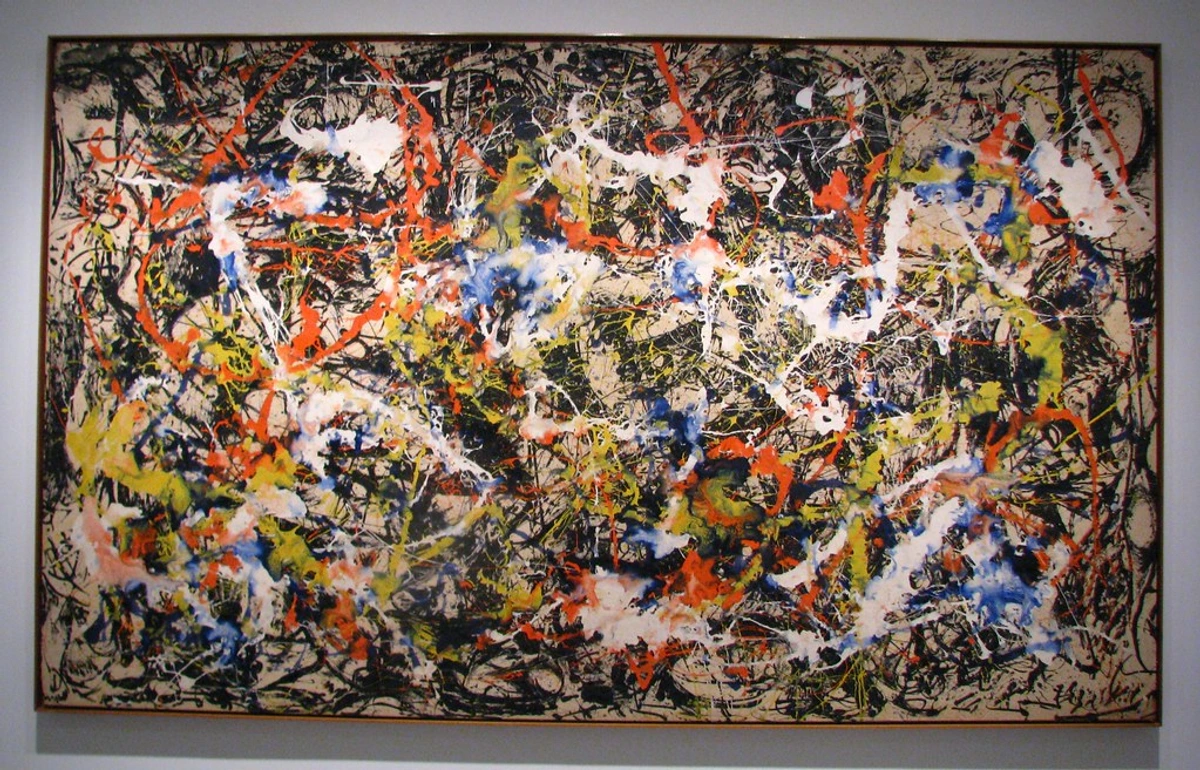
His influence rippled out across the art world, providing a crucial bridge between the fragmented visions of Cubism and the wild, emotional energy of movements like Vorticism in England and Rayonism in Russia. Artists like Wyndham Lewis and Natalia Goncharova directly incorporated Futurist dynamism into their work, creating a pan-European avant-garde dialogue. The idea that a painting could be an object in its own right, a record of forces rather than just an illusion of a window, fundamentally paved the way for the development of later abstract art, from the chaotic action paintings of Jackson Pollock to the more structured work of Sol LeWitt.
The Enduring Pulse: Boccioni's Influence on the Modern World
It’s easy to see Boccioni’s legacy as purely historical, something confined to the early 20th-century avant-garde. But that’s a mistake. His core idea—that art must convey the dynamic sensation of modern life, not just its static appearance—continues to shape our visual culture in profound ways.
- In Film and Animation: The entire language of cinematic motion—the blur of a fast-moving subject, the warping of space in a high-speed chase, the use of multiple exposures to show simultaneous action—has its conceptual roots in Boccioni’s Dynamism of a Cyclist and his theories of simultaneity. When you watch a superhero movie and see speed lines trailing from a running figure, you are looking at a direct descendant of Boccioni's "lines of force."
- In Technology and Design: The dynamic, clean, and forward-moving aesthetic of Futurism is embedded in the DNA of modern industrial design. From the aerodynamic curves of a high-speed train to the sleek, confident forms of a sports car, the preoccupation with speed as a beautiful form is pure Boccioni. Even in user interface design, the visual cues that suggest movement—a button that looks like it's being pressed, an animation that guides your eye—rely on principles he helped pioneer.
- In Contemporary Art: Traces of his influence are easy to spot. The gestural energy of Jackson Pollock's drip paintings, the explosive force captured in the work of Marcel Duchamp, and the immersive, all-consuming environments of Yayoi Kusama all share a debt to Boccioni’s radical project. He proved that art’s job wasn’t just to depict things, but to generate experiences.
I see Boccioni's influence everywhere I look now. When I watch action movies with their bullet-time effects and dynamic camera work, I think of Unique Forms of Continuity in Space. When I see contemporary artists working with motion capture and digital technologies to visualize movement, they're working in territory that Boccioni first claimed. Even in graphic design, motion graphics, and user interface design, those principles of dynamism and lines of force are everywhere.
You can see echoes of his work in everything from the energetic canvases of the Abstract Expressionists like Jackson Pollock, to the cinematic motion studies found in some digital art and animation today. He fundamentally changed our idea of what art could capture, moving from static representation to dynamic experience.
The Bittersweet End and an Unavoidably Complicated Legacy
In a tragic twist of fate, what the Futurists adored—speed and technology—is what took Boccioni's life. He died in 1916 at age 33, thrown from his horse during a cavalry drill in World War I. His incredible career lasted barely five years, yet he managed to produce some of the most influential art of the century.
It's also impossible to talk about Futurism without addressing its uncomfortable and darker side. The movement's glorification of war as 'the world's only hygiene' and its aggressive nationalism became deeply entangled with the rise of Fascism in Italy. Marinetti, the movement's founder, was a card-carrying Fascist who helped shape the party's early ideology.
Boccioni, however, presents a more complex case. There's no evidence he was ever a formal member of the Fascist party, and he died in 1916, years before Mussolini's rise to power. Scholars continue to debate the extent of his nationalism versus his purely artistic revolutionary zeal. However, it's undeniable that the Futurist aesthetic of aggression, power, and a violent break with the past provided a powerful cultural toolkit for Fascism. The movement's ideas were easily co-opted, and many former Futurists became ardent supporters of the regime. This complicity has forever complicated its place in art history, forcing us to separate a powerful artistic revolution from the destructive political one it later inspired.
This leaves us with a complex legacy. How do we admire the groundbreaking power of his art while acknowledging the unsettling shadow of its political context? This is a question art historians and admirers like you and me grapple with constantly.
Boccioni's Lesser-Known Works and Experimental Techniques
While we tend to focus on his most famous pieces, Boccioni's experimental nature led him to explore several fascinating directions that often get overlooked.

Materia (1912)
This painting might be his most psychologically complex work. It depicts his mother on the balcony of their family home in Milan, but the treatment is anything but traditional domestic portraiture. The figure seems to merge with the railing, the balcony, and the city beyond. Forms interpenetrate in ways that suggest both physical and psychological connection.
What I find fascinating about Materia is how it applies Futurist principles to an intimate, personal subject. This isn't the public spectacle of The City Rises or the pure motion study of his cyclist paintings. It's a portrait that breaks down the boundaries between self and environment, interior and exterior, personal and public. It suggests that Boccioni was exploring emotional and psychological dynamism, not just physical motion.
Early Portraits and Divisionist Works
Before fully committing to Futurism, Boccioni experimented with Divisionism (the Italian version of Pointillism). Works like his 1907 portrait of his mother show him mastering a very different approach to light and color. Looking at these early works, you can see an artist searching for his voice, trying on different styles to see what fits. I find it fascinating that even here, in his Divisionist phase, his subject matter often leans toward the bustling energy of city life and workers, a clear thematic precursor to his Futurist masterpieces.
The transition from these relatively traditional works to full-blown Futurism happened remarkably fast—just three or four years. That speed of evolution tells you something about the intensity of Boccioni's artistic drive. When he found the right 'problem'—how to paint speed—he attacked it with an almost frantic urgency.
Lost and Destroyed Works
A tragic aspect of Boccioni's legacy is how much of his work has been lost. He was incredibly prolific during his brief career, but many pieces were destroyed during World War II bombing raids, particularly in 1943. Some works exist only in black-and-white photographs, leaving us to imagine their revolutionary use of color.
Even more intriguing are the works we know existed but have completely disappeared. His sketchbooks, many sculptures, and experimental pieces mentioned in letters and exhibition catalogues are gone. We only have fragments of his complete artistic output, which makes what survives all the more precious.
The Critical Reception: How a Revolutionary Was Received
Understanding how Boccioni's work was received during his lifetime reveals just how revolutionary it was—and how controversial. The story of his critical reception is a case study in how the art world grapples with something it has no language for.

Initial Reactions: Shock, Scandal, and a Glimmer of Recognition
When Boccioni's first Futurist works were exhibited, starting with the 1911 traveling show, the reactions were predictably extreme. Traditional art critics were outraged. They called the work "insane," "degenerate," and "an insult to art." Some accused Boccioni and the Futurists of being artistic charlatans—incompetent artists who couldn't draw properly and were hiding behind bizarre theories to mask their lack of talent.
But there was another reaction, too—a current of intense excitement. Younger artists, writers, and intellectuals saw something genuinely new. They recognized that Boccioni wasn't just being provocative; he was tackling fundamental problems about how to represent the fragmented, accelerated nature of 20th-century experience. The debate was immediate and intense, which was exactly what the Futurists wanted.
International Impact
The 1912 Futurist exhibition that traveled to Paris, London, and Berlin was a revelation. Although Boccioni's work was often misunderstood, it sparked intense debate and influenced artists across Europe. In England, it directly inspired the Vorticist movement, whose leader, Wyndham Lewis, aggressively adapted Boccioni's theories of dynamism into his own hard-edged aesthetic. In Russia, encountering Futurism was a pivotal moment for artists like Natalia Goncharova and Mikhail Larionov, who would go on to develop their own movement, Rayonism, arguing that 'we ourselves create the style of our everyday life.' The Futurist virus was spreading, mutating as it went.

The Paris Problem
The relationship with Paris was particularly complex. The French art establishment had dominated European art for decades, and there was considerable resistance to this upstart Italian movement. But privately, many Parisian artists were paying close attention. You can see Futurist ideas percolating through the work of artists like Marcel Duchamp, whose Nude Descending a Staircase clearly shows the influence of Boccioni's theories about motion.
Critical Evolution
What's fascinating is how quickly critical opinion evolved. By 1913, serious critics were beginning to engage with Futurist ideas rather than simply dismissing them. Articles began to appear that tried to understand the theoretical basis of the work, even when the writers didn't fully approve of the results.
The speed of this critical acceptance says something important: Boccioni's work was so fundamental that it forced everyone to reconsider what art could be. Even those who hated it had to acknowledge that it represented something genuinely new.
What are the key characteristics of Futurism?
At its core, Futurism was about celebrating the 20th century. Its key characteristics include the glorification of speed, technology, youth, violence, and objects like the car, the airplane, and the industrial city. Artistically, it's defined by its attempts to capture movement (dynamism), energy, and multiple viewpoints at once. It was a movement built on a paradox: using art to celebrate the very mechanization that was poised to make traditional art forms obsolete.
Is Futurism politically associated with a specific ideology?
Yes, and it's an uncomfortable truth. While it started as an artistic movement, Italian Futurism’s obsession with power, nationalism, and violence led many of its members (though not Boccioni himself, who died before Fascism's rise) to become ardent supporters of Benito Mussolini and Italian Fascism. Marinetti, the founder, was a central figure in this political alignment. This has forever complicated its place in art history, forcing us to separate a powerful artistic revolution from the destructive political one it later inspired.

Where can I see Umberto Boccioni's art?
Luckily for us, his work is in major collections around the world. I highly recommend checking museum websites before you visit, but a good starting point includes:
A quick tip from my own experience: Major museums often rotate their collections, so if you're making a special trip to see a specific work, definitely call ahead or check online. I once traveled to see The City Rises only to find it was in storage for conservation—lesson learned!
- The Museum of Modern Art (MoMA), New York: Home to an entire gallery of masterpieces, including the monumental The City Rises (1910) and the groundbreaking painting Dynamism of a Cyclist (1913).
- Tate Modern, London: Holds a number of significant works, allowing for a deep dive into his artistic development. Their collection includes several important early works that show his transition to Futurism.
- The Metropolitan Museum of Art, New York: Often has key pieces on display, sometimes including a cast of Unique Forms of Continuity in Space.
- Museo del Novecento, Milan: Located in the city Boccioni helped immortalize, this museum holds a superb collection of his work. Being in Milan while looking at these paintings adds a whole other layer of meaning—you can feel the energy of the city he was responding to.
- Galleria Nazionale d'Arte Moderna, Rome: A must-visit in Italy's capital, holding many important Futurist works.
- Stedelijk Museum, Amsterdam, and the Centre Pompidou, Paris: Also hold important pieces in their permanent collections of modern art.
- Estorick Collection, London: This little gem in North London has one of the world's finest collections of Italian Futurism outside Italy. It's intimate, focused, and absolutely worth a visit if you want to dive deep.
- Peggy Guggenheim Collection, Venice: While primarily focused on later movements, they have some excellent Futurist works that contextualize Boccioni's influence.
- National Gallery of Modern and Contemporary Art, Rome: Don't confuse this with the Galleria Nazionale—this is a separate museum with an excellent Futurist collection.
An Enduring Influence on Modern and Contemporary Art
We live in a world more dominated by motion and speed—from the blur of high-speed trains to the dizzying flow of information on a screen—than Boccioni could have ever imagined. Admittedly, his vision had a dark political side, but his core artistic innovation—that an artwork can be a direct record of energy and experience, not just a picture of a thing—is more relevant than ever. He blazed a trail, proving that art could, and should, strive to keep pace with the world it lives in. He taught us that a moment isn't a single frame, but a continuum of motion, light, and feeling.














For me, that's the ultimate takeaway. It's a lesson I keep in mind even as a contemporary artist. When his art makes you feel the sheer velocity of a galloping horse or the intoxicating energy of a changing city, you’re connecting with a revolutionary idea that continues to shape how we see and feel the world through art. Today we might take motion blur for granted, but Boccioni was one of the first to fight for it, to insist that this overwhelming sensation of speed was the real subject of our time.