Forged Anew: How Iron Age Artifacts Inspire My Vibrant, Abstract Art
Explore the unexpected connections between ancient Iron Age artifacts and the world of modern abstract art. Discover how millennia-old designs inspire today's artists, and learn to see historical objects with fresh, creative eyes.

When History Becomes a Color Palette: How Iron Age Artifacts Fuel My Modern Art
You know that feeling when you stumble upon something so old it feels almost alien? I remember the first time I saw a photograph of the Snettisham Great Torc in a museum catalog. I wasn't in a musty archaeology library; I was sitting in my bright, messy studio, surrounded by half-finished canvases covered in bold, abstract shapes and ridiculous amounts of Prussian blue. And there it was: a twisted ribbon of ancient gold, a spiral dance of metalwork from a world that felt impossibly distant. Yet, the elegant curve of its form, the sheer audacity of its craftsmanship, resonated with something deep inside me. It was beautiful, powerful, and yes, surprisingly modern.
This is the strange and wonderful rabbit hole I've been down for the past few years: exploring how the raw, potent designs of the Iron Age can directly inspire the vibrant, abstract art we create today. It’s not about copying old things. It’s about feeling the echo of an ancient human impulse—to decorate, to symbolize, to make our mark—and channeling that energy into something completely new. This isn't just an academic exercise; it's a fundamental part of how I see the world, and a deep well of ideas I come back to again and again in my own work.
The Enduring Allure of an Ancient World
Before we dive in, let's get one thing straight. The Iron Age wasn't a single, monolithic era of drab, rusty tools. It was a dynamic period bursting with innovation and artistic expression, stretching roughly from 1200 BCE to 600 CE depending on where you were in the world. Think less "cavemen" and more "master metalworkers and sophisticated societies." From the intricate spirals of the La Tène culture in Europe to the powerful bronze castings of the Nok culture in Africa, the era was a hotbed of technological and artistic revolution.
I find it helpful to visualize this richness not as a single timeline, but as a global map of creativity. Different regions, completely isolated from one another, arrived at startlingly similar artistic solutions to the same fundamental human problems.
I find it helpful to visualize this richness not as a single timeline, but as a global map of creativity. Different regions, completely isolated from one another, arrived at startlingly similar artistic solutions to the same fundamental human problems. From the elaborate bronze heads of the Nok culture in Nigeria to the geometric precision of Villanovan pottery in Italy, there's an almost universal grammar of form that speaks to shared human impulses.
What grabs me, as a modern artist, isn't the historical timeline, but the feeling these objects evoke. And honestly, sometimes I wonder if we haven't lost something essential in our contemporary art world – something these ancient makers understood instinctively. We get so caught up in concepts and theories and market trends that we forget art is supposed to be a physical, material experience first and foremost. They have a certain material honesty. What you see is what you get. A torc is gold, shaped by fire and force. A sword hilt is bronze, carved with intent. There’s no plastic, no computer-aided design—just a raw dialogue between the human hand, a simple tool, and an unforgiving material. This purity of purpose is magnetic. It’s a quality I desperately try to capture when I’m mixing a cadmium pigment or laying down a definitive brushstroke.
This honesty extends to function. Many of these objects were not just decorative; they were used. A torc was worn, a shield was carried into battle, a pot held grain. This integration of beauty and utility is deeply inspiring. It suggests that art wasn't a separate category, something you only did in your free time. Art was woven into the very fabric of life. That's a powerful message for any artist questioning their place in the modern world. This principle of material honesty can be a guiding force for collectors as well, offering a framework for appreciating art that prioritizes authenticity and tangible connection over fleeting trends.
This honesty extends to function. Many of these objects were not just decorative; they were used. A torc was worn, a shield was carried into battle, a pot held grain. This integration of beauty and utility is deeply inspiring. It suggests that art wasn’t a separate category, something you only did in your free time. Art was woven into the very fabric of life. That’s a powerful message for any artist questioning their place in the modern world.
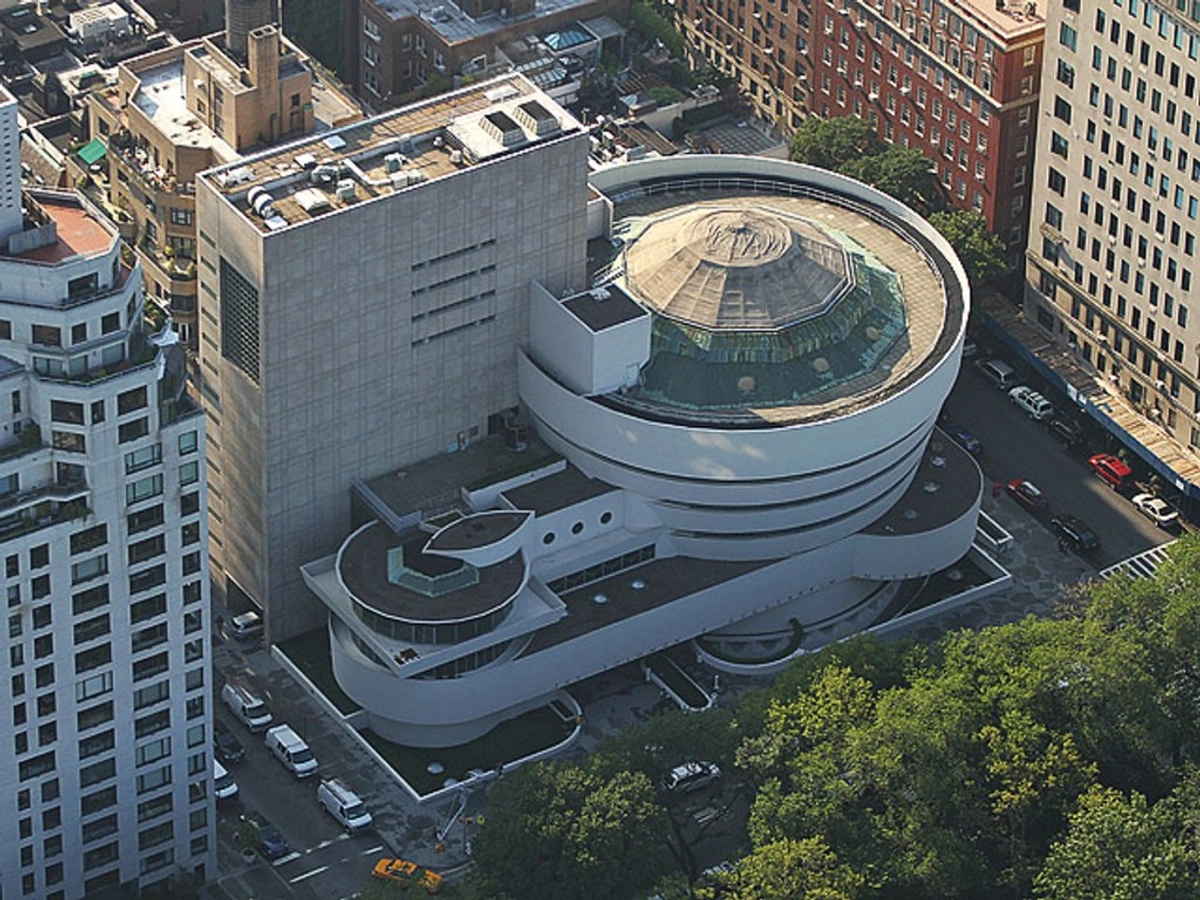
And then there's the abstract symbolism. Iron Age artists weren't trying to paint a photorealistic portrait of a chieftain. They were distilling the world into its essence: the flow of a river became a winding scroll, the power of the sun a radiating disc, the mystery of nature a complex knot. They were the original abstract artists, simplifying and stylizing reality to communicate complex ideas about power, spirituality, and the cosmos. This connection to elemental forces and abstract representation is something I explore in my own work, drawing inspiration from diverse sources that all share this symbolic depth, including how to paint auroras which requires a similar distillation of immense natural energy into pure color and form on the canvas. The interesting thing is how differently I approach painting auroras now that I've spent time with Iron Age art. Where I once might have focused on capturing a literal representation of the phenomenon, I now find myself much more interested in capturing the feeling of standing under those shimmering lights – the sense of awe, the connection to cosmic forces, the way the colors seem to pulse with their own internal rhythm. That shift from representation to evocation is something I learned directly from studying how these ancient artists worked.
Think about the Scythian animal style art from the steppes—powerful beasts twisted into impossible, flowing shapes that emphasize movement over anatomical correctness. Or consider the simple, geometric patterns on early Celtic pottery—repeated triangles and diamonds that speak of order, craft, and identity. In a way, I feel a deep kinship with those long-forgotten artists. We're both trying to capture the intangible.
What I find particularly remarkable is how these different approaches – the flowing organic style of Scythian art versus the rigid geometry of early Celtic pottery – can both be so effective at capturing something essential about the world. It reminds me that there's no single correct way to make meaningful art, just as there's no single way to live a meaningful life. Sometimes the answer is in the flowing curve, sometimes in the decisive angle. The key is knowing which language to speak in which moment.
This move towards abstraction isn’t a diminishment of reality; it’s an amplification. By simplifying a wild horse into a series of elegant curves, the Celtic artist wasn’t just drawing a horse. They were capturing the idea of speed, the feeling of unbridled power. This is the secret language of symbols, and the Iron Age speaks it fluently.
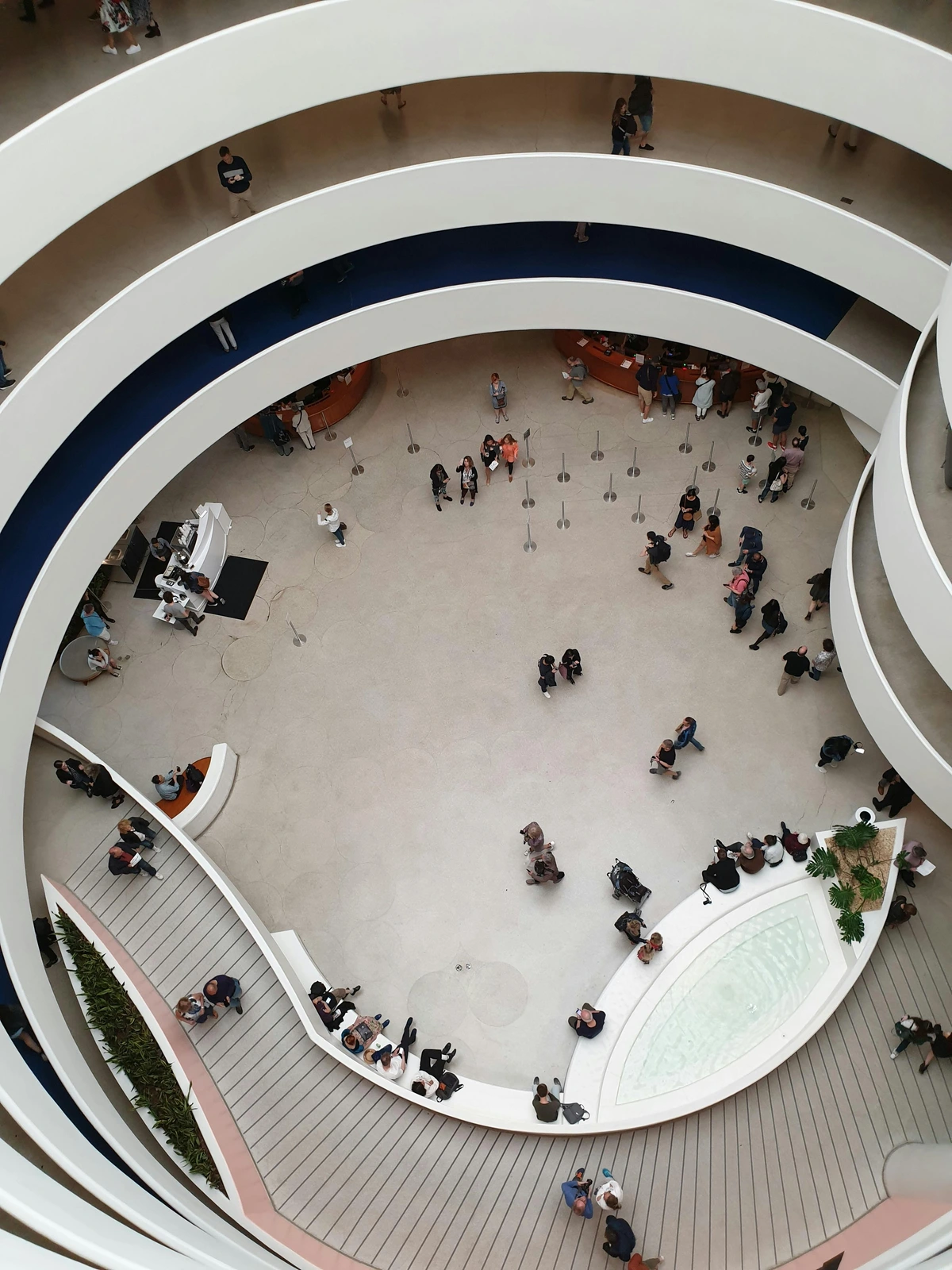
Interestingly, archaeological research has begun using material science to better understand these objects – everything from x-ray fluorescence to understand pigment composition on pottery, to neutron diffraction that reveals the internal crystal structure of a bronze without damaging it. Understanding these technical constraints and innovations only deepens my appreciation for what these artists achieved. It reveals a sophisticated knowledge of materials and techniques that rivals any modern metalworking guild, proving that our ancestors were not just inspired creators, but also brilliant technicians who understood their materials at a molecular level.
What fascinates me most about this scientific lens is that it confirms our intuitive response as artists. When I'm drawn to the deep, saturated red of an ochre pigment, I'm responding to the same material reality that captivated an Iron Age potter. When I admire the way a brushstroke holds its shape, I'm appreciating a physical property not so different from a metalsmith admiring the flow of molten bronze into a mold. These ancient creators had an intimate, almost magical relationship with their materials that we can only approach through deep practice and experimentation. They knew which clay would withstand firing, which alloy would produce the perfect golden hue, which stone would flake predictably to create a sharp edge. This wasn't just technical knowledge; it was a form of wisdom that came from generations of trial, error, and accumulated experience.
From Ancient Forge to Modern Canvas: A Conversation Across Millennia
This isn't just about vague feelings of inspiration. It's about tangible ideas that can jump from an artifact to your sketchbook. Here’s a breakdown of the core principles I've been playing with, the connective tissue between then and now.
Principle  | Iron Age Expression | Modern Artistic Translation |
|---|---|---|
| Organic Flow | La Tène spirals, plant tendrils | Gestural, calligraphic brushstrokes |
| Geometric Boldness | Solar discs, chevrons, dot patterns | Hard-edge abstraction, color field painting |
| Material Symbolism | Sacred gold, polished iron | Physical texture, impasto, raw canvas |
| Spatial Tension | Interlaced knotwork, triskeles | Figure-ground interplay, use of negative space |
| Symbolic Abstraction | Stylized animals, cosmological maps | Non-representational imagery, emotional color palettes |
Think of this table as your creative compass when you feel lost in the studio. Each principle represents a different way of seeing – a different lens you can hold up to both ancient artifacts and your own work-in-progress. Sometimes I'll literally print out this list and tape it to my easel, forcing myself to check: "Am I really exploring the full potential of each principle, or am I just playing it safe?" It's amazing how asking "What would happen if I treated this canvas with the same ritual respect as a ceremonial torc?" can completely shift your approach to making art.
This table isn't just an academic exercise. It's a toolbox. Each row represents a tangible bridge between the ancient world and your studio.
The Power of the Organic Form
Iron Age art is deeply rooted in the natural world. The graceful arcs and spirals found on so many artifacts aren't just decoration; they feel like a direct translation of plant tendrils, flowing water, and animal horns. This focus on flowing, organic shapes offers a powerful antidote to the rigid, straight lines of our modern digital world.
I like to think of these shapes as a forgotten grammar of form. They move. They grow. They pulse with an internal vitality that feels alive, even when carved into cold metal. This is perhaps most evident in the way they handle endings. A spiral doesn't abruptly stop; it resolves itself. A tendril doesn't break; it merges back into the main body of the work. There's an eternal loop, a sense of interconnectedness, that I find deeply calming in our age of fragmented attention. It's a visual representation of how everything is connected—a concept that feels remarkably contemporary despite being thousands of years old. When I'm working on a large canvas, I often find myself thinking about this principle. How does this brushstroke connect to that one? How does this color field relate to the next? The Iron Age artist's mastery of flow and interconnection becomes a powerful metaphor for creating harmony within my own work.
The La Tène style, which flourished in Central and Western Europe from about 450 BCE, is a masterclass in this. Its intricate, swirling patterns are almost hypnotic, creating a sense of movement and life within a static object. What I find particularly fascinating is how this style developed independently across vast distances – from Ireland to Romania – yet maintains a coherent visual language. It suggests that these artists weren't simply copying each other, but rather tapping into a shared understanding of natural forms and visual rhythm that transcends specific cultural boundaries. I can spend hours just following a single line on a piece of La Tène jewelry, watching how it grows, folds back on itself, and connects everything into a cohesive whole. This interconnectedness – where every part relates to every other part in an unbroken flow – creates a visual rhythm that feels both ancient and surprisingly modern.
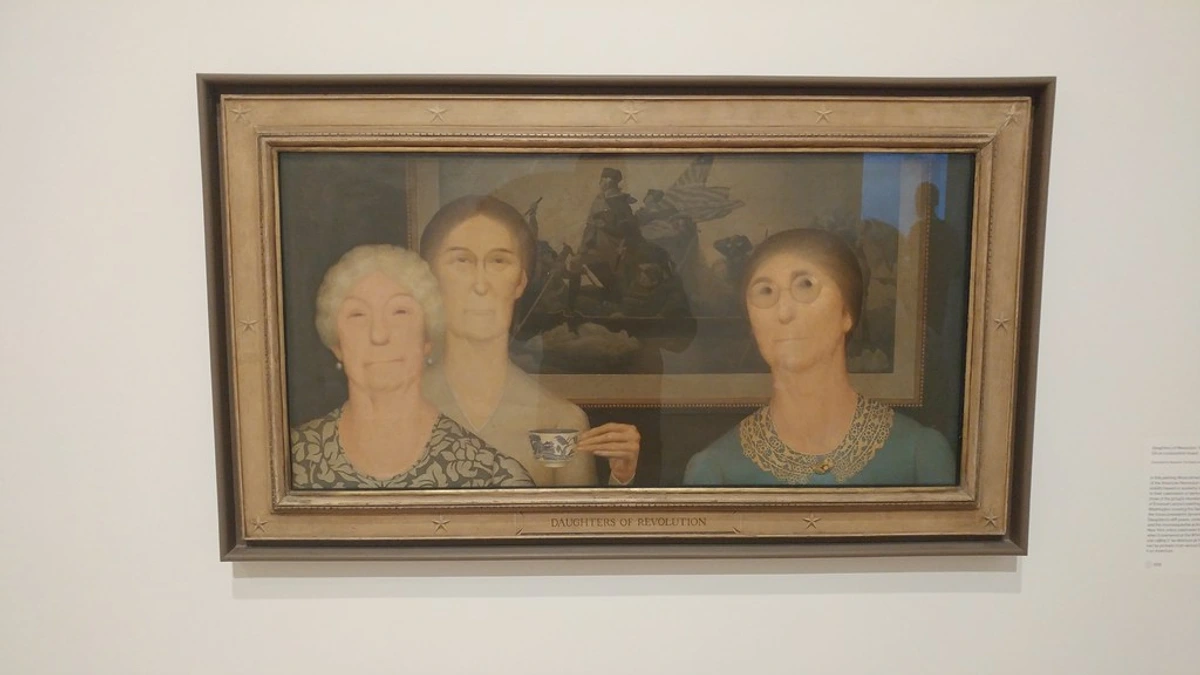
Contemporary artists have often drawn inspiration from such designs. For instance, this relates to the principles I explore in creating a cohesive color palette for abstract painting – where the interconnectedness of colors echoes the interconnected flow of La Tène metalwork. But this isn't limited to abstract expressionism; even representational work like Grant Wood's American regionalism shows how artists can create powerful visual harmony through careful attention to flowing, organic shapes that guide the viewer's eye through the composition.
I've even started noticing these principles at work in completely unexpected places – not just in "fine art" but in the design of everyday objects, in architecture, in fashion. Once you start seeing the world through this lens of fundamental formal relationships, you realize that the lessons of Iron Age art aren't confined to a museum display case. They're part of the universal grammar of visual expression that undergirds everything from ancient torcs to tomorrow's graphic design.
But what's the secret sauce? I think it's a combination of things. First, there's the mastery of the S-curve or lyre motif. It's a fundamental shape that seems to contain both tension and release in a single, elegant form. It's the visual equivalent of taking a deep breath – there's an intake, a pause, and a release all contained within one graceful arc. This isn't just decorative; it's a fundamental rhythm found throughout nature, from the curl of a fern frond to the sweep of a breaking wave.
Second, there's the use of trumpet curves—flared, expanding shapes that lend a feeling of explosive, outward energy. When you combine these with subtle relief work, where some lines are raised and others are chased into the surface, you get an object that literally shimmers with depth and movement. It's no longer just a drawing on metal; it's a captured dance. These aren't just theoretical concepts – they're tools I use in my own work, which you can explore in my available originals. I've found that applying these ancient principles to contemporary color palettes opens up endless possibilities for creating work that feels both timeless and utterly of this moment.
credit, licence
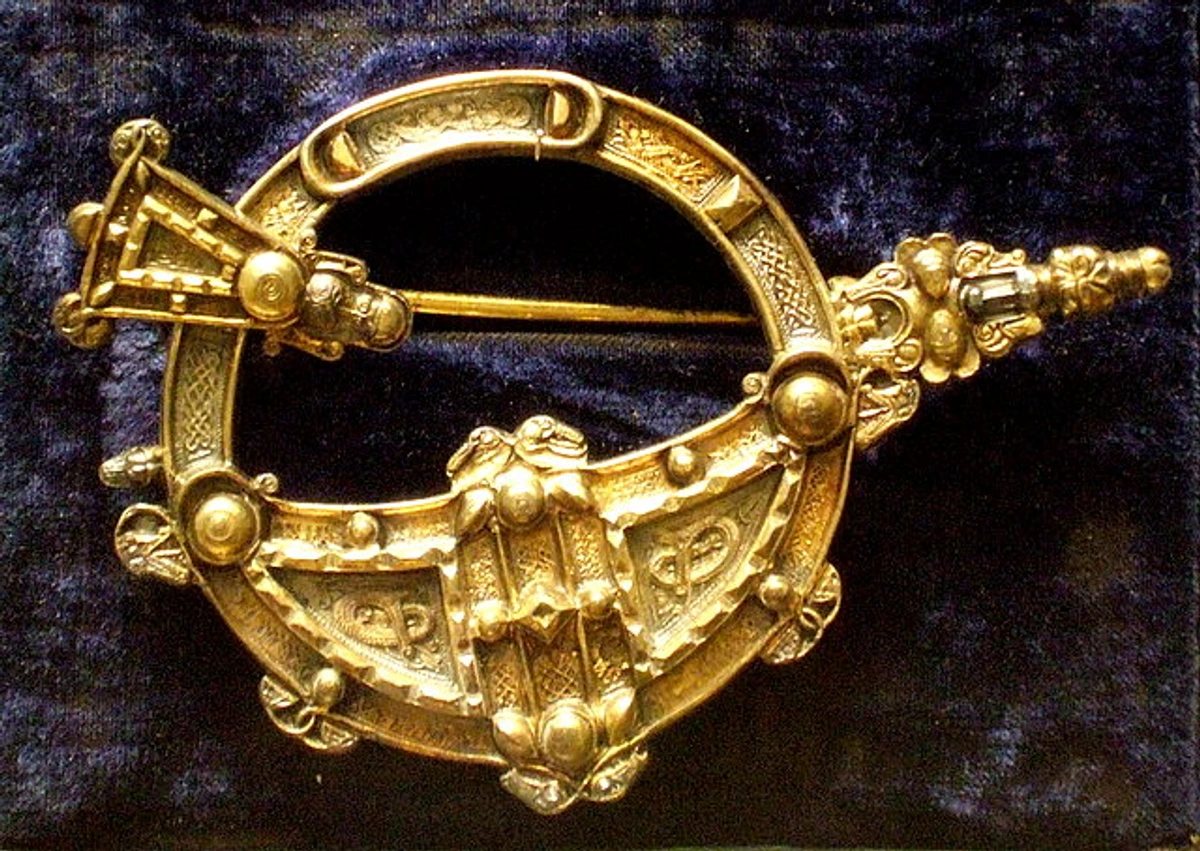
Look at the flow of that metalwork. As an artist, I see a vocabulary of shapes ready to be borrowed. How can I translate that rhythm into a brushstroke? How can that elegant curve inform the arc of a composition on one of my own originals? The goal isn't to paint a fibula; it's to capture its motion.
There's something almost musical about this translation process. The interlocking curves create a syncopated rhythm that I find myself trying to replicate not just with visual forms, but with the very pacing of my brushwork. Fast, energetic strokes might capture the explosive quality of a trumpet curve, while slow, deliberate lines mirror the patient unfolding of a spiral. It's like transcribing jazz music onto canvas – you're not just copying the notes, you're trying to capture the feeling, the timing, the soul of the thing. This translation process reminds me of watching skilled figure painters work – how they don't just copy the figure, but capture the essence of the pose. It's that same spirit of capturing energy rather than form that makes these ancient designs so potent for contemporary work.
The Energy of Geometric Reduction
On the flip side of the organic, we have the power of simple, bold geometry. Many Iron Age cultures used fundamental shapes—circles, lines, dots, chevrons—to create designs of striking impact. What's remarkable is how these basic geometric elements appear almost universally across different Iron Age cultures, from the Celtic tribes of Britain to the Nok civilization of Nigeria. A circle carved into pottery in Italy shares a family resemblance with a stamped decoration on an African terracotta figure – not because of cultural contact, but because there are only so many fundamental ways to organize visual information, and these cultures discovered many of the same solutions independently. A perfect circle might represent the sun or the cyclical nature of time. A series of parallel lines could symbolize a field, rain, or social order. These cultures understood that you don't need complexity to create a profound visual statement.
This geometric language is almost universal. You find it in the etched patterns on the shields of the Iberian Peninsula, in the stamped decorations of Italic pottery, and across a vast swathe of the ancient world. It's the visual equivalent of a drumbeat. Simple, direct, and capable of carrying immense emotional weight when used with conviction. It’s the foundation upon which more complex ideas are built.
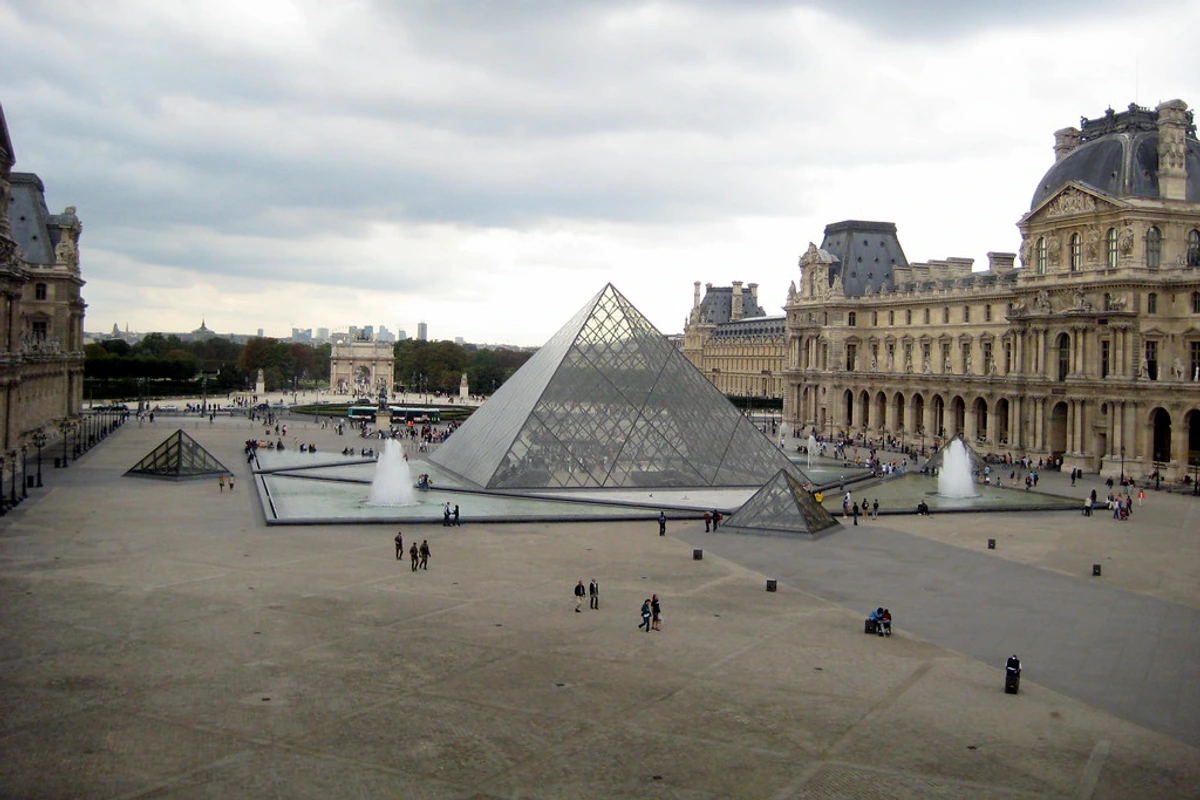
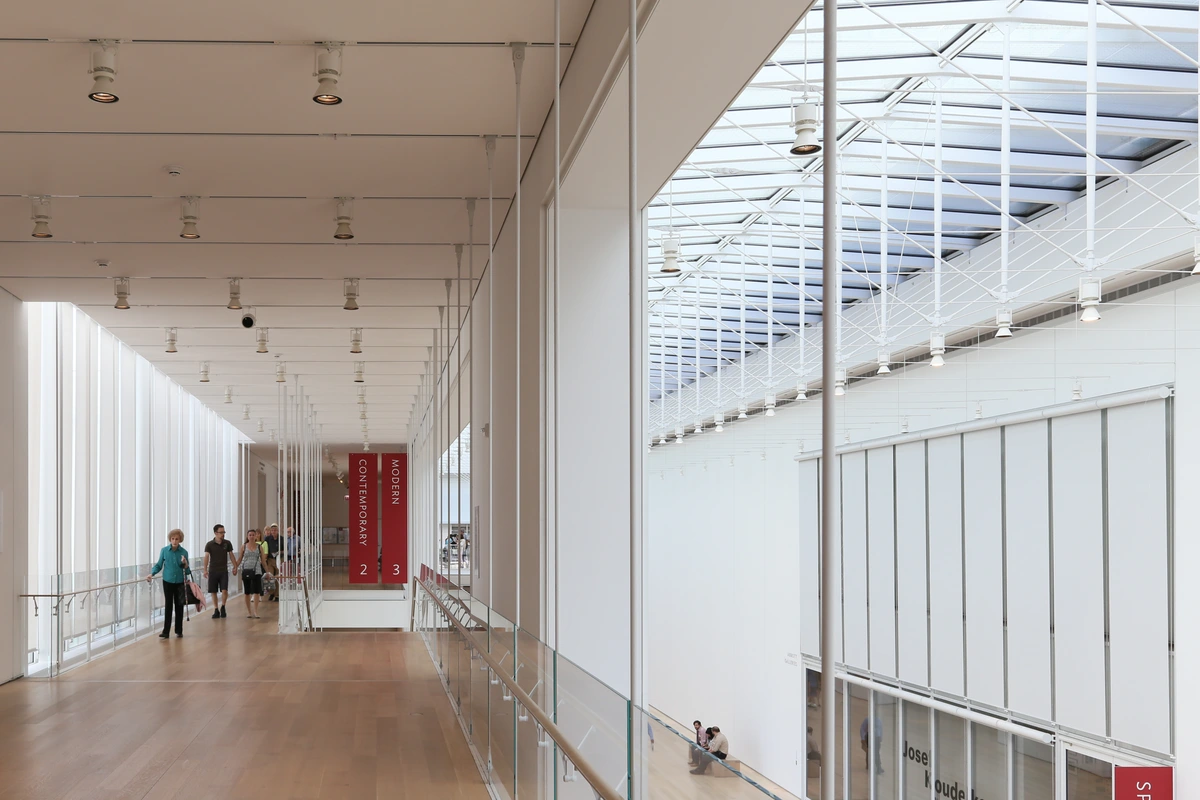
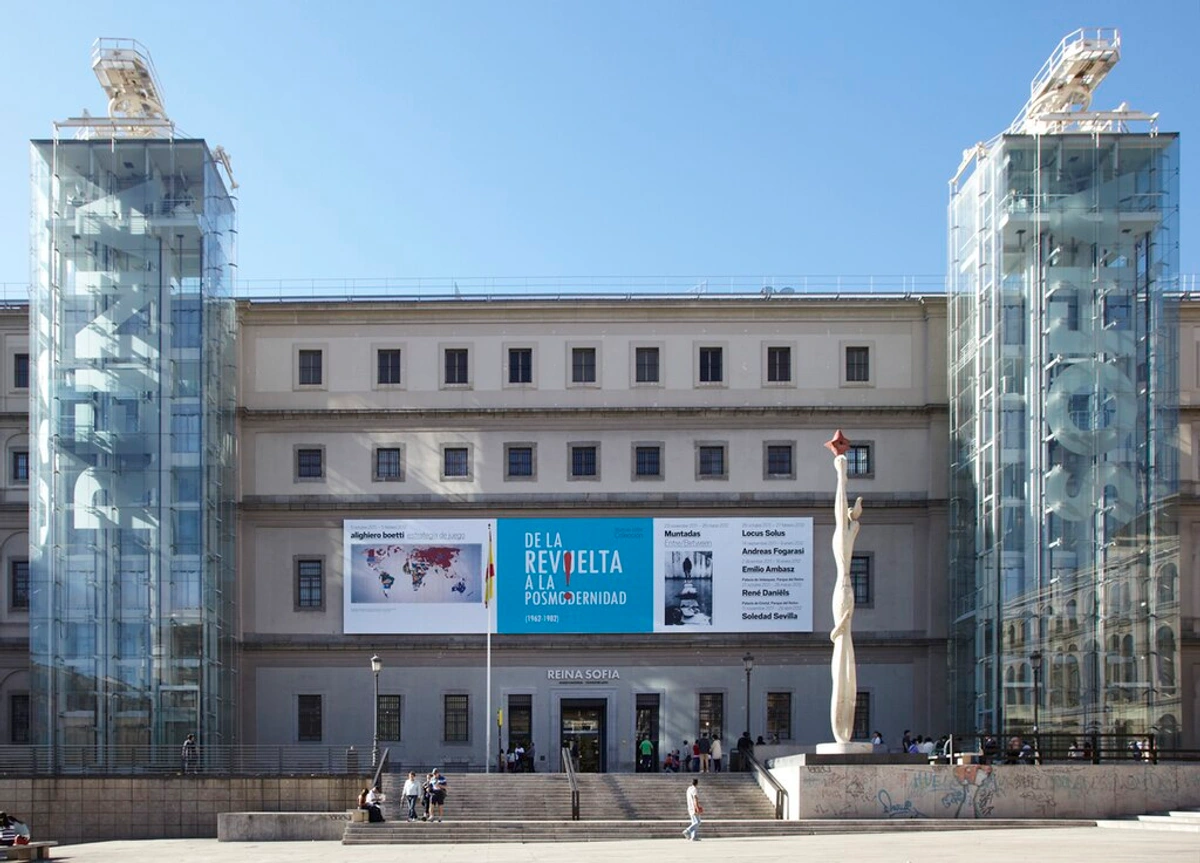
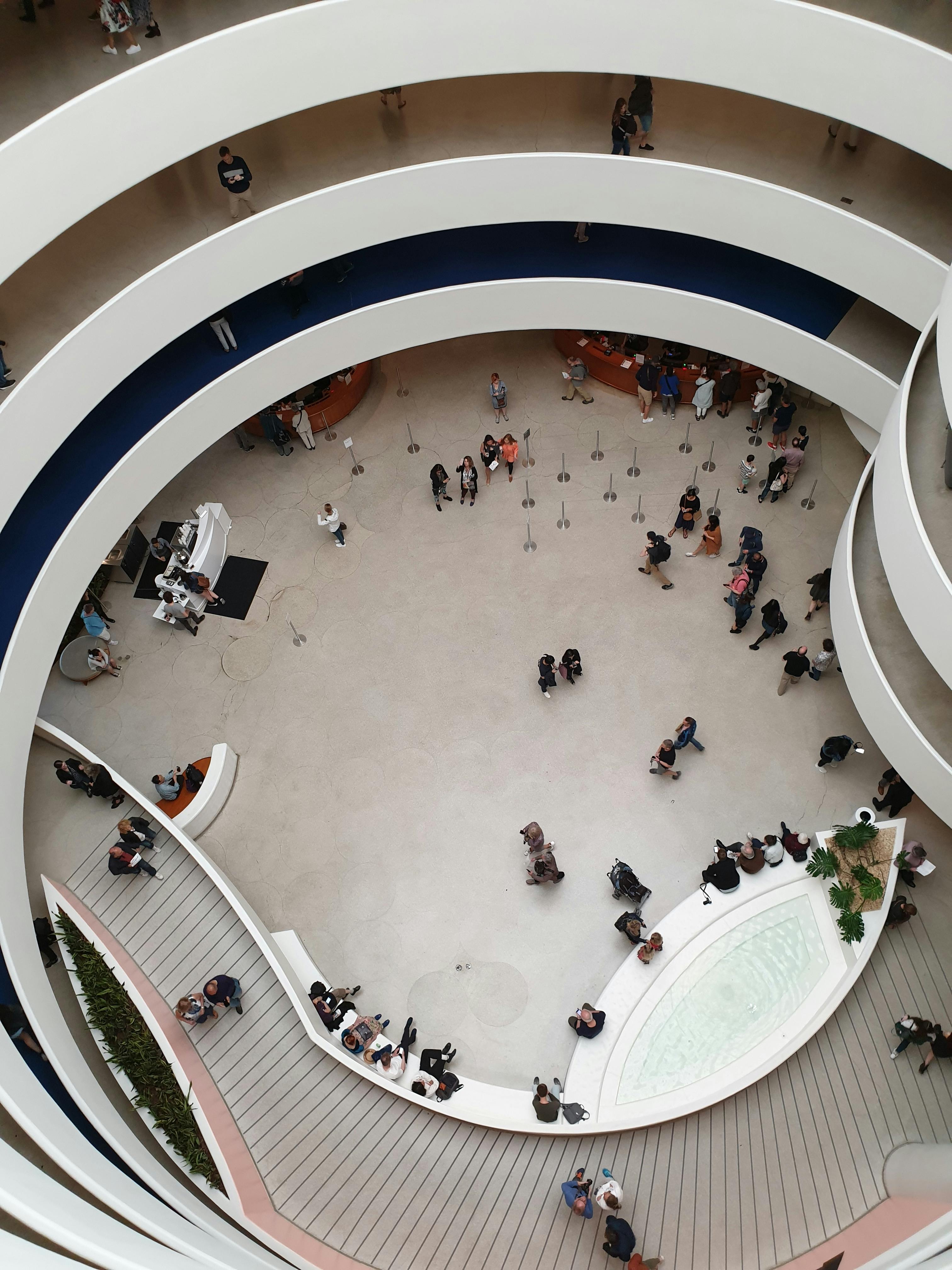
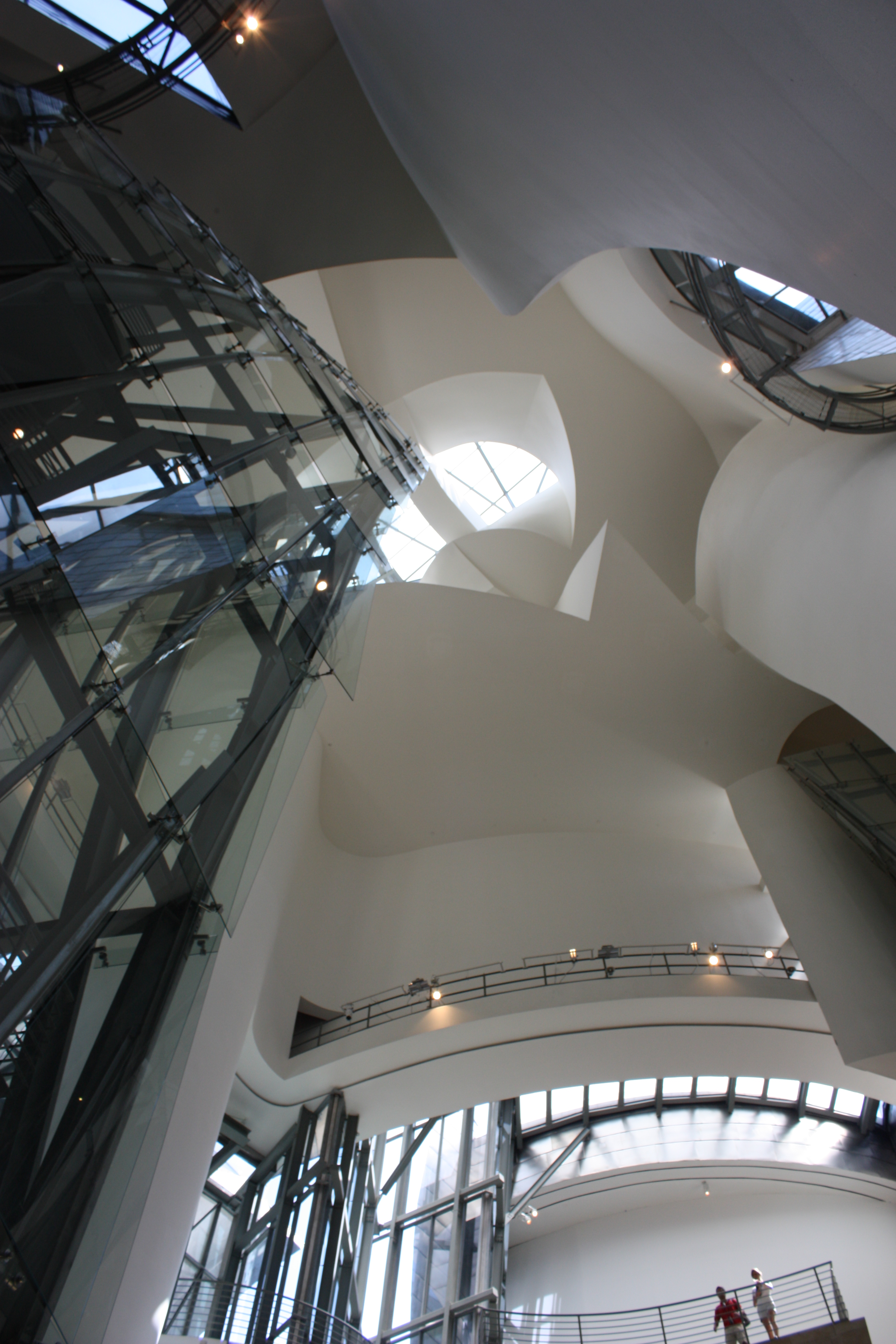
The Louvre's iconic juxtaposition of ancient architecture and modern geometry reflects this same dialogue between eras that we're exploring. It's a reminder that the tension between ancient and modern, geometric and organic, is not just an academic concept – it's alive in our cities and our institutions. For anyone wanting to explore these connections firsthand, our visitor's guide to major art institutions offers practical advice for getting the most out of these transformative experiences.
A fantastic example is the art of the Nok culture of Nigeria. Their terracotta sculptures feature elaborate hairstyles and jewelry built from geometric patterns and textures. These aren't just decorative; they convey social status and identity through a language of abstract shapes. There's a confident directness to this kind of design that I find incredibly appealing – it's the visual equivalent of speaking clearly and without hesitation.
The terracotta heads from Nok culture, dating from around 500 BCE to 200 CE, represent some of the earliest known sculptural traditions in sub-Saharan Africa. These works demonstrate an incredible sophistication in both technical execution and symbolic representation, using geometric abstraction to convey identity and status in ways that still feel remarkably modern today. What strikes me most is how they achieve such emotional presence through pure geometry – there's no attempt at naturalism, just pure abstract power that somehow captures something essential about humanity.
This principle of reduction has another champion: the Villanovan culture of early Iron Age Italy. Their biconical urns and hut urns feature some of the most potent and minimalist designs I've ever seen. A simple zig-zag for water, a few parallel lines for a field, a series of dots to imply an audience or stars. It's art that trusts the viewer to fill in the blanks. It's a powerful reminder that a powerful composition can be built on the simplest of foundations. Sometimes, when I'm feeling overwhelmed by a complex painting, I'll force myself to simplify, to channel that Iron Age clarity: what is the one essential shape this piece needs?
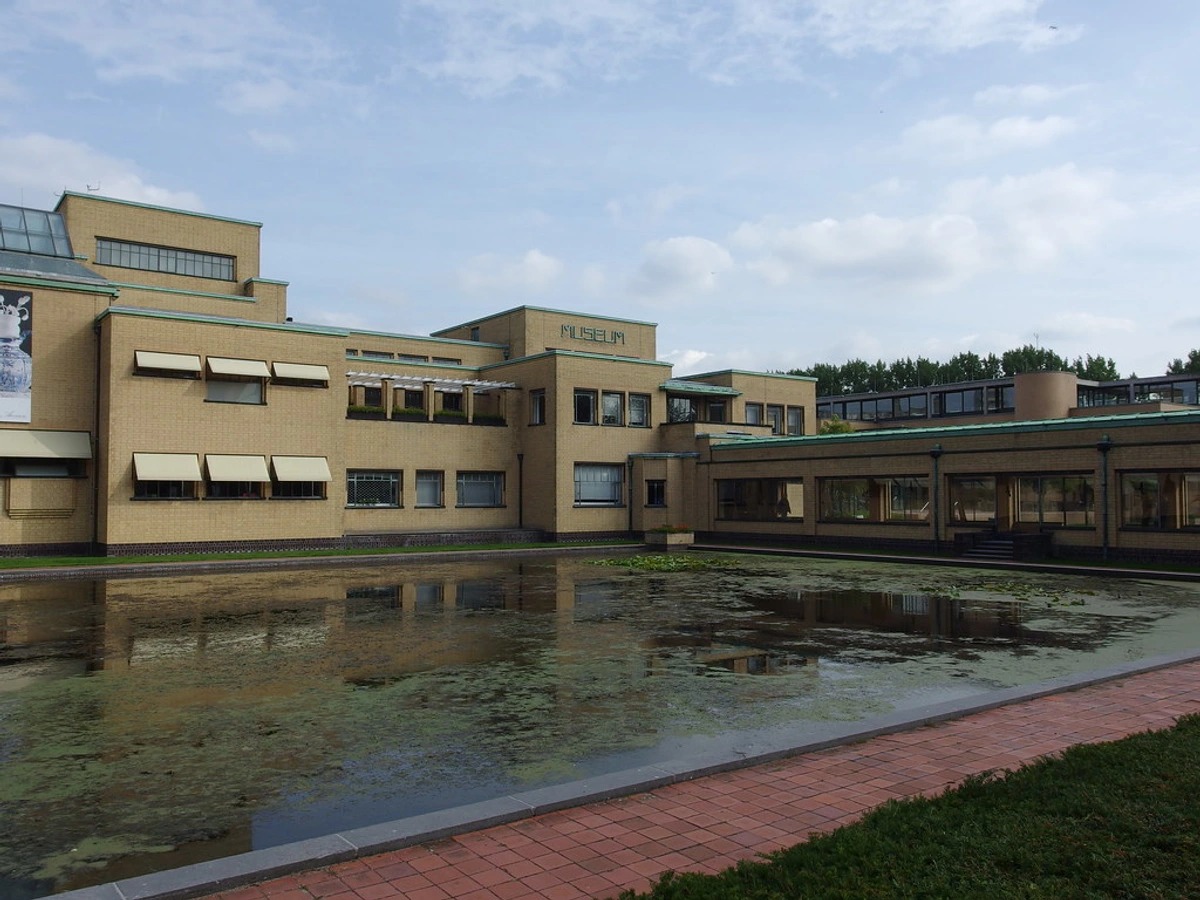
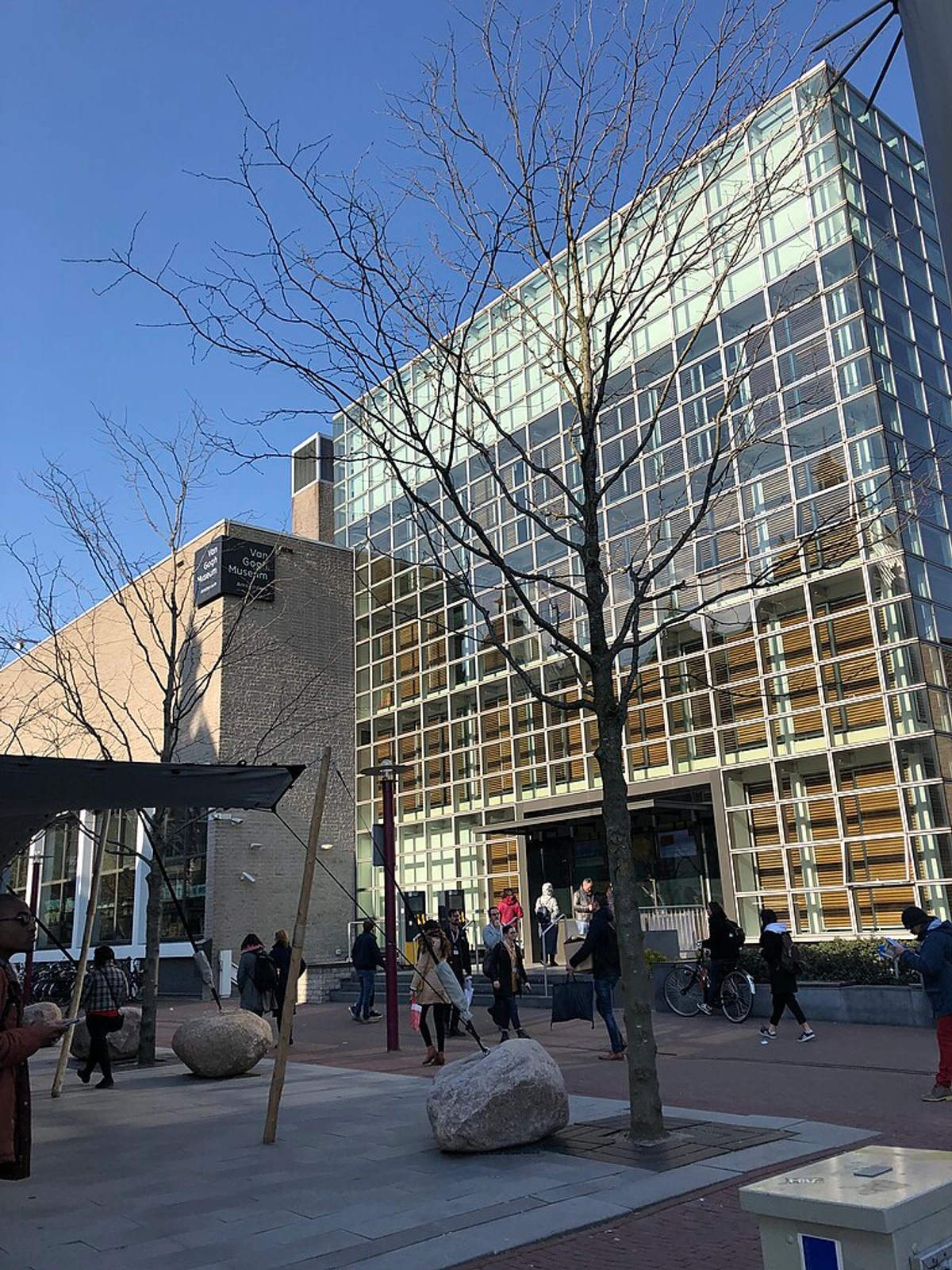
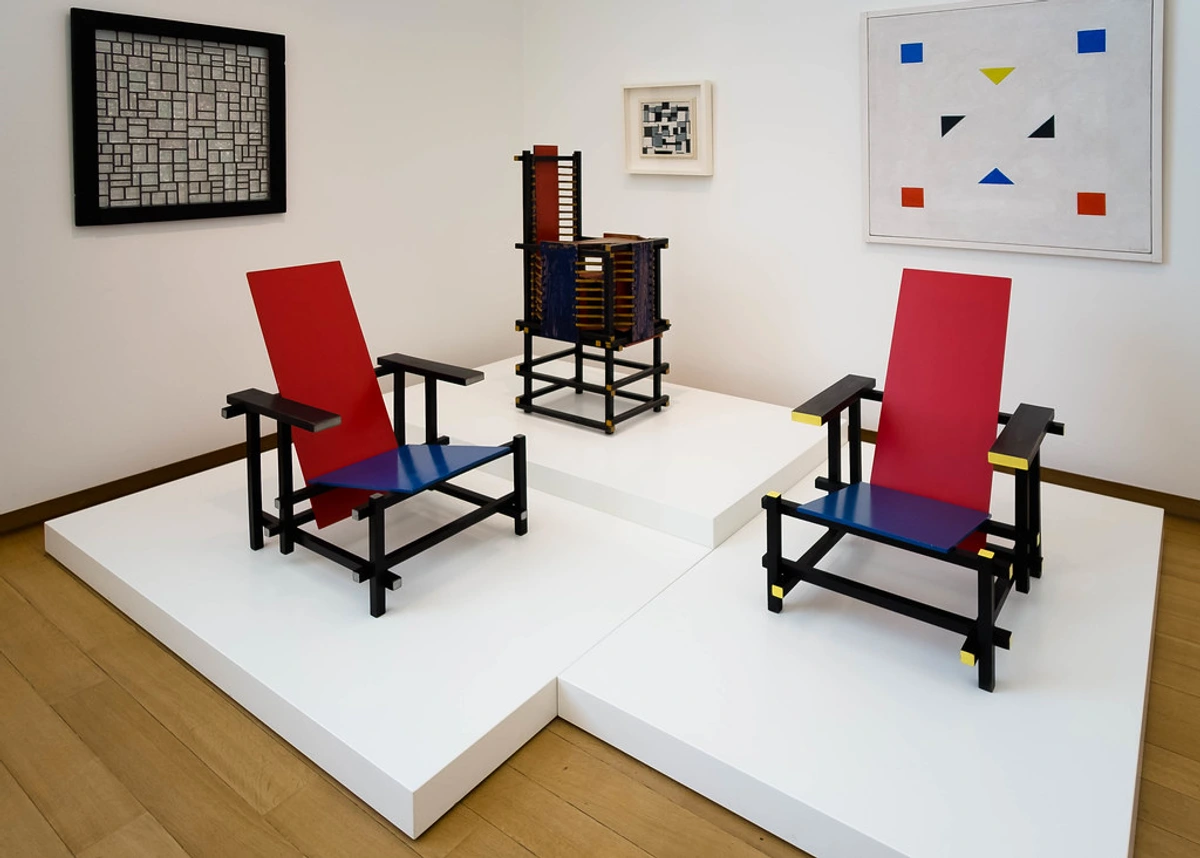
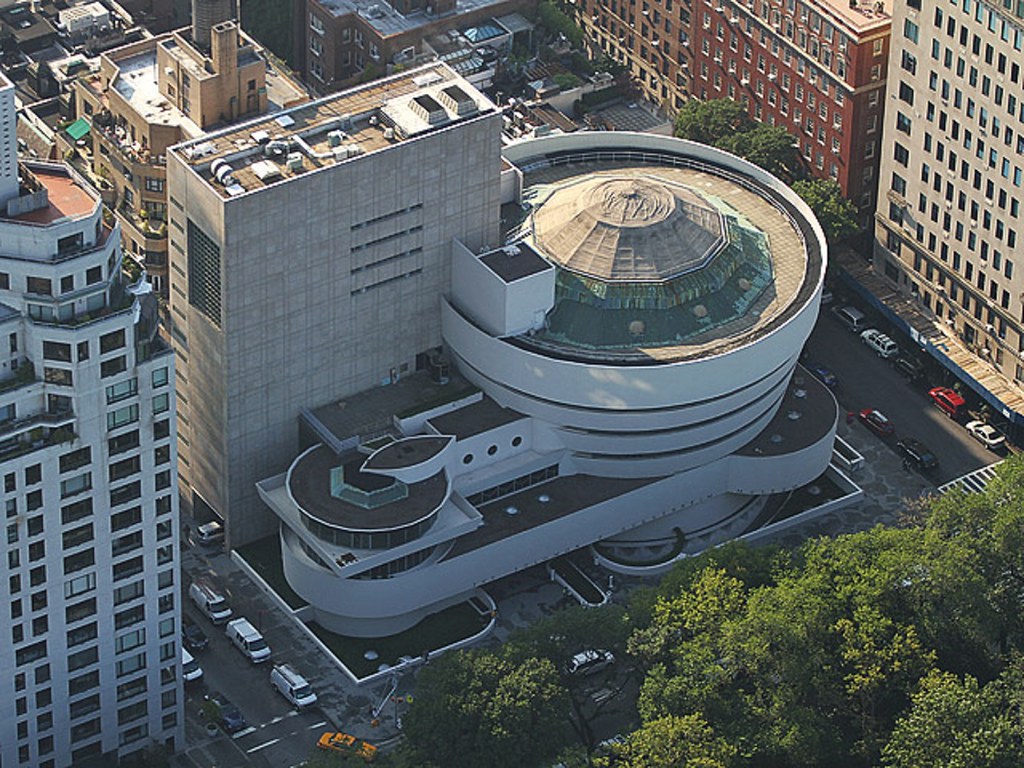
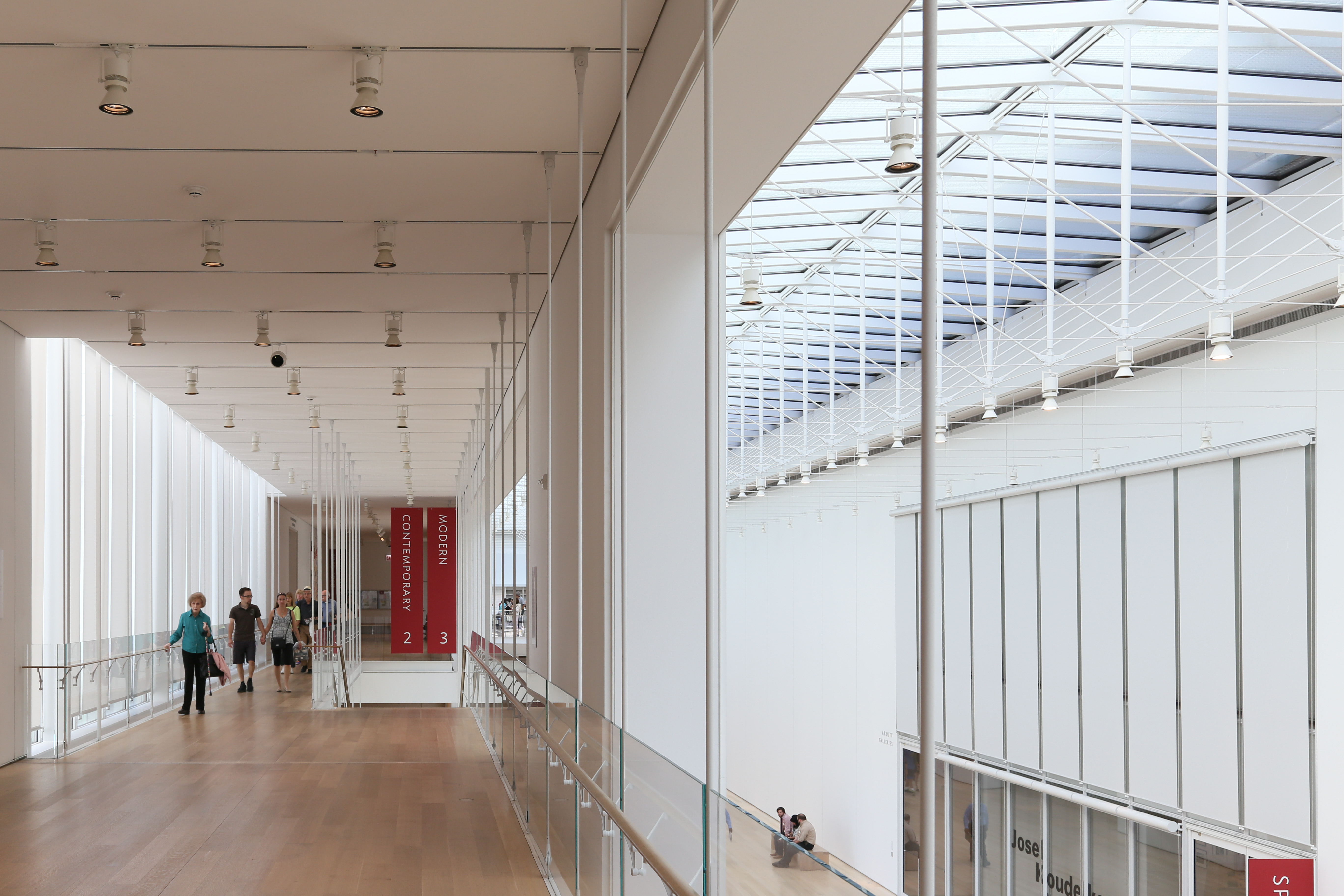
This modernist building reminds me that while ancient potters worked with clay and fire, today's designers work with steel and glass. Yet the fundamental design principles – how form follows function, how patterns create rhythm, how geometry can express identity – remain eerily consistent across millennia. It makes me wonder what Iron Age artisans would think of our contemporary design language, and what they would recognize as familiar.
This principle of reduction has another champion: the Villanovan culture of early Iron Age Italy. Their biconical urns and hut urns feature some of the most potent and minimalist designs I've ever seen. A simple zig-zag for water, a few parallel lines for a field, a series of dots to imply an audience or stars. It’s art that trusts the viewer to fill in the blanks. It's a powerful reminder that a powerful composition can be built on the simplest of foundations. Sometimes, when I’m feeling overwhelmed by a complex painting, I'll force myself to simplify, to channel that Iron Age clarity: what is the one essential shape this piece needs?
The Symbolism of Color and Material
For the Iron Age artisan, color wasn't just a pigment; it was alchemy. The gleaming red-gold of bronze, the deep, earthy black of polished iron, the fiery yellow sheen of a torc—these were not just aesthetic choices. They were statements of wealth, technology, and power. Gold, in particular, wasn't just valuable – it was considered divine, the flesh of the gods, incorruptible and eternal. Owning a golden torc wasn't just about looking good; it was a display of incredible social standing and divine connection. The process of creating these colors was itself a form of magic – transforming dull ores into gleaming metals through fire and expertise.
This reverence for material properties extended beyond just metals. The natural patinas that formed on bronze and copper – those beautiful blues and greens we now associate with aged statues – weren't initially accidents to be avoided, but often welcomed as signs of the material's transformation over time. There's something remarkably contemporary about this embrace of process and material transformation, anticipating modern art's interest in how materials change and evolve.
But let's talk about that 'earthy black.' The technique for achieving the glossy, black, almost gem-like surface on many bronze and iron objects is called niello. It involved inlaying a black sulfide compound into engraved lines on the metal. The result was a stunning, high-contrast design that pulled the eye and created dramatic visual impact. Niello work required incredible precision, as the process involved heating the metal just enough to fuse the compound without melting the delicate engraved lines.
Beyond niello, other patination methods were used to deliberately color metals, creating rich browns, blues, and greens. The Variscite patina process, for instance, could create deep green surfaces through controlled oxidation, while other techniques produced the glossy black seen on many Celtic artifacts. These weren't random chemical reactions; they were controlled, intentional artistic choices. This technical mastery reminds me of how contemporary artists learn to harness the unique properties of specific materials – how cadmium red in oil painting offers unique depth and vibrancy that no other red pigment can match. Materials have inherent characteristics that skilled artists can exploit, whether you're working with metal or paint.
This reverence for the intrinsic quality of a material is a powerful lesson. I try to approach my own paints with the same mindset. I’m not just slapping "red" onto a canvas. I'm working with the unique granular texture of a cadmium pigment, the deep, transparent glow of an alizarin crimson. Each color has a personality, a history, an identity. That torc-maker knew the soul of his gold. I want to know the soul of my paints.
It extends beyond color to the very surface. The rough texture of a cast bronze piece, the deliberate linear patterns on pottery—these are testaments to the importance of physicality. In my own work, this translates to an obsession with surface quality. Thick, buttery impasto next to a thin, drippy wash. The roughness of unprimed canvas interrupting a smooth gradient. It’s about making the viewer want to touch the work, to feel that material honesty with their own eyes.
A Mini Masterclass: Stealing from the Ancients for Your Own Art
The Artist's Sketchbook: From Museum to Studio
Okay, let's get practical. How do you actually translate these dusty old concepts into modern, vibrant art? It's easier than you think. The goal isn't to replicate, but to reinterpret. Here’s how I like to approach it.
Think of this process not as copying, but as echo-location. You're sending a creative signal out into the past and listening for the reverberations that come back, slightly altered but fundamentally resonant.

1. Find Your Artifact Muse
Start by browsing museum archives online. Don't just look for famous pieces. Look for the quiet stuff: broken potsherds with a single, elegant line of glaze, a weight with a clever pattern, a simple bronze ring. Pick one object that makes you pause. Print a picture of it, stick it on your studio wall, and just live with it for a while. The goal is to find something that speaks to your own aesthetic. Let it become a visual companion that you see every day, allowing its forms and patterns to seep into your subconscious. Often, the most profound connections happen not when you're actively trying to analyze or copy, but when the artifact's essence has had time to merge with your own creative voice. This process of patient observation is something that connects artists across all disciplines.

Let’s say you choose an ancient Celtic coin.
credit, licence
Look at that horse. It's not realistic. It's a collection of shapes—a curve for the head, a dash for the eye, a powerful line for the body. It's an energetic collection of ideas about "horseness." My mind immediately races to what that feels like in paint.
2. Deconstruct It. What's the Real Idea?
Now, analyze your chosen artifact not as a historical object, but as a piece of design. Ask yourself:

- What is the core feeling? (e.g., Is it power? Serenity? Chaos? Balance?)
- What is the dominant line quality? (e.g., Is it flowing and curved like the La Tène fibula? Or is it rigid and sharp?)
- What is the relationship between positive and negative space? (e.g., How do the shapes interact with the empty space around them?)
- What is the one shape or pattern you'd steal? (e.g., For the coin above, maybe it's the curve of the horse's head and neck, or the repetition of the dots on the mane.)
Forget the object's original purpose. You're just mining for raw creative ore.
3. Reconstruct It on Your Terms
This is where the magic happens. Take the one or two core ideas you've extracted and apply them to a modern context.
Using our coin example:
- The Idea: The elegant, minimalist curve of the horse's profile.
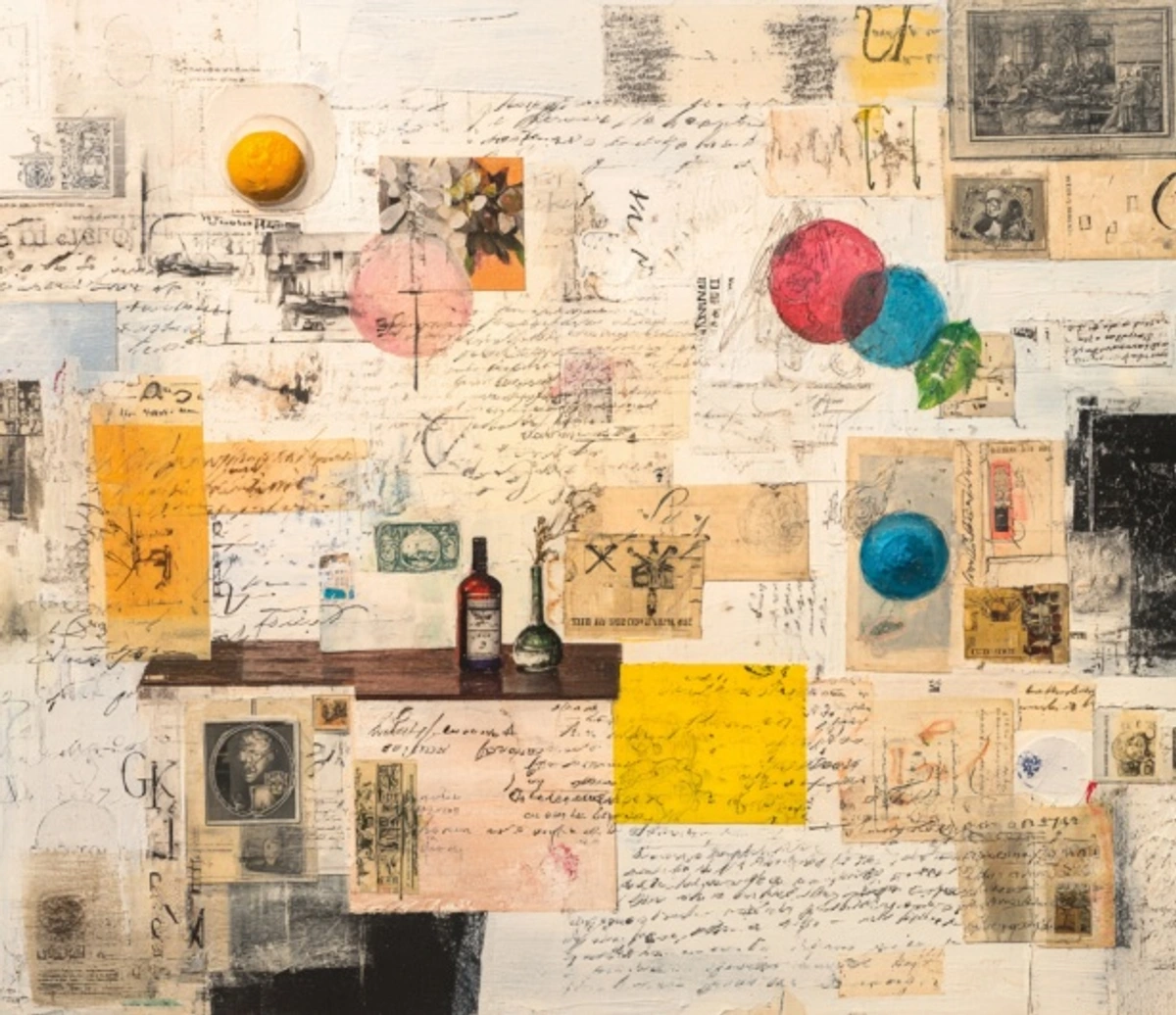
- The Modern Translation: I might take that curve and blow it up, making it the central sweep of a large, abstract painting. It’s no longer a horse. It’s a gesture of grace and strength. I could fill it with vibrant, contemporary colors that the original Celtic artist could never have imagined. The result is a piece that feels both ancient and completely new.
But what if the object isn't a single figure? Let's try something more complex, like the swirling patterns of a La Tène fibula.
- The Idea: The focus isn't on a single object, but on the rhythm of the interlocking, flowing lines.
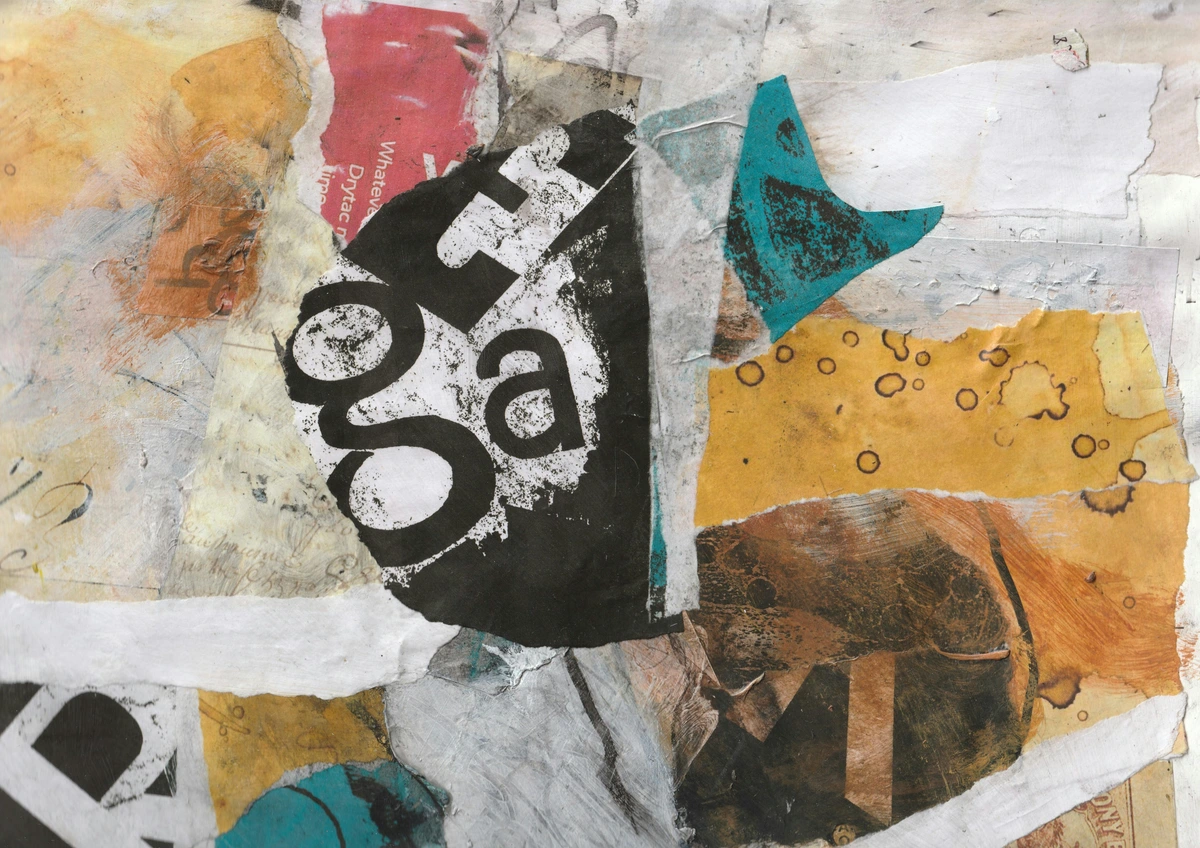
- The Modern Translation: I might ignore the object's outline entirely and focus on creating my own visual rhythm. I'd experiment with a brush loaded with a single, confident color, laying down a series of interlocking S-curves and trumpet shapes. The goal isn't to paint the fibula, but to capture its syncopated beat, its visual frequency. It becomes an exercise in calligraphic abstraction.
The key is to let the ancient idea be a starting point, not a cage. Your own style, your own color palette, and your own emotions should do the rest of the talking.
Don't be afraid to play around on paper first. A simple sketch can help you bridge the gap between the artifact and your own canvas. I keep a special sketchbook just for this kind of research – what I like to call my "archaeological dig" journal. It's filled with quick studies of artifacts, but filtered through my own artistic lens. I might do three or four different sketches of the same La Tène brooch: one focusing just on its overall silhouette, another isolating the rhythm of its curves, a third turning those curves into pure abstract marks, and a fourth exploring what happens when I overlay those marks with contemporary color relationships. This multi-step process of translation is where the real creative magic happens.

credit, licence
A simple sketch like this can help you dissect an artifact and rebuild it as your own. What starts as a complex spiral can become a bold, modern swoosh of color. Don't overthink it. Just play.
I believe this search for connection is a quiet rebellion against the disposable nature of our times. An Iron Age sword was made with intention to last a lifetime, perhaps even to be buried with its owner for the next. The object was imbued with meaning beyond its function. That's what I strive for in my work. Every brushstroke is a choice. Every color is a feeling. The goal is to create something that isn't just seen, but felt. Something that, like the Snettisham Torc, might stop someone in their tracks two thousand years from now and make them feel a profound connection to the human hand and mind that made it.
This brings up something I've been thinking about a lot lately: the difference between making art that's merely attractive and making art that's genuinely meaningful. In our hyper-commodified art world, it's easy to fall into the trap of creating work that matches current trends or fits neatly above someone's sofa. But when I spend time with these ancient artifacts – objects that were often created for deeply personal, spiritual, or ceremonial purposes – I'm reminded that the most powerful art has always served something beyond mere decoration. It's this search for deeper meaning that keeps me returning to these ancient sources, even when making work that looks utterly contemporary.
This isn't about pastiche or creating 'ancient-looking' art. It's a quiet nod. A whispered secret shared between the maker, the object, and you. It's a layer of soul that can't be faked.
The Artist-Maker, Then and Now
The Timeless Conversation of Making
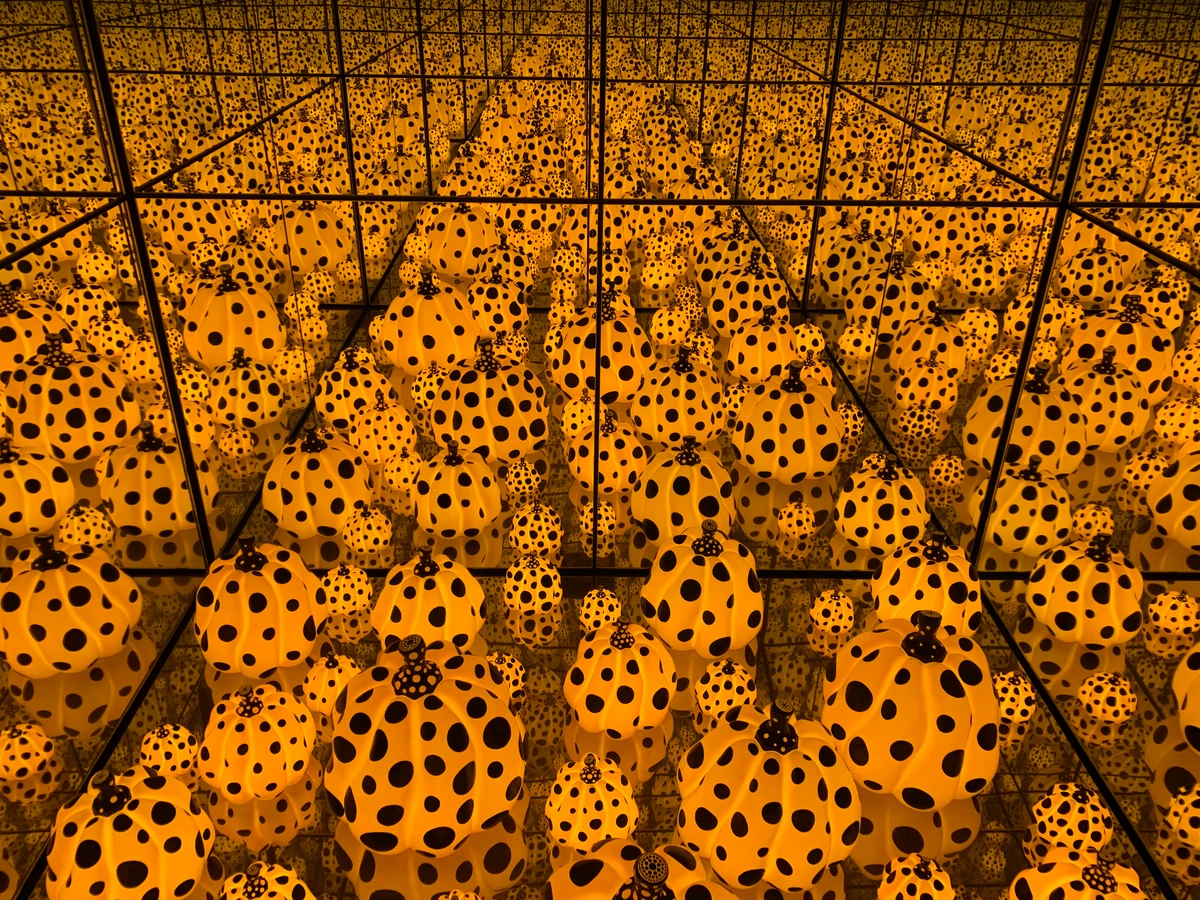
When I'm alone in my studio, mixing colors and wrestling with a canvas, I sometimes feel a strange connection to that anonymous Iron Age smith. We're separated by thousands of years and a universe of technology, but the fundamental act is the same: we are makers. We are taking raw, shapeless materials and infusing them with meaning and emotion. My canvas is my torc. My brush is my hammer. In fact, I often think about how different mediums shape this creative act – while I work primarily in paint, I'm fascinated by how sculptors like Yayoi Kusama or monumental artists like Anish Kapoor wrestle with similar questions of space, form, and viewer experience using entirely different materials. The medium may change, but the creative struggle – that intimate dance between maker and material – remains essentially human and fundamentally unchanged.
In a world saturated with fleeting digital images and mass-produced objects, creating something by hand feels more important than ever. The Iron Age artifact is a reminder of that power. It’s a permanent record of a human hand and a human mind. It’s not perfect. It’s not machine-made. It’s gloriously, defiantly, human. And that, I believe, is what makes art meaningful, whether it was made yesterday or two thousand years ago.

My Journey Starts Here: Where to See These Treasures for Yourself
I can only scratch the surface here. The real 'aha!' moments happen when you stand in front of the objects themselves. If you're bitten by the bug, here are some of the world's great collections that I've found endlessly inspiring:
- The British Museum, London: An absolute powerhouse of world art. The Iron Age collection is breathtaking, holding treasures from Sutton Hoo, Snettisham, and beyond. It's the kind of place where you can easily lose a whole day. Don't miss the stunning collection of Celtic metalwork, particularly the intricate spirals and knotwork that exemplify the La Tène style.
- The National Museum of Ireland, Dublin: Home to an astonishing collection of Irish Iron Age gold, including the stunning Broighter Hoard. The craftsmanship will leave you speechless, and you'll find some of the finest examples of the flowing, organic style that so resonates with contemporary abstract artists.
- The Metropolitan Museum of Art, New York: A global collection with strong holdings in European and ancient Near Eastern art. Their online collection is a fantastic research tool, and their physical collection includes some remarkable examples of geometric patterning from various Iron Age cultures.
- The National Museum of Nigeria, Lagos: To see the power of Nok culture firsthand. The terracottas have a presence that is hard to describe, with their confident geometric abstraction and powerful symbolic presence that predates many European Iron Age works.
- Louvre Museum, Paris: Home to incredible Etruscan and other European artifacts, including some masterful examples of Villanovan geometric pottery that perfectly illustrate the power of reduction and symbolic representation.
- The State Hermitage Museum, St. Petersburg: Holds a vast collection, including remarkable Scythian gold that showcases the dynamic, flowing animal style – another form of abstraction that transforms realistic subjects into potent symbolic forms.
- Local Archaeological Museums: Don't overlook smaller regional museums. The archaeology museum in your own city or region likely has Iron age artifacts that can provide inspiration. Local museums often have the advantage of contextual displays that show how these objects functioned within their specific cultural and geographic settings. I've discovered some of my most inspiring artifacts in tiny, out-of-the-way local museums that most tourists would never visit. There's something particularly intimate about encountering these objects in their original landscape – a chance to understand not just what they looked like, but how they related to the earth, sky, and daily life of the people who made them. Plus, the curators at these smaller institutions are often incredibly passionate and knowledgeable, and a conversation with them can reveal insights about the artifacts that you'll never find in any publication.
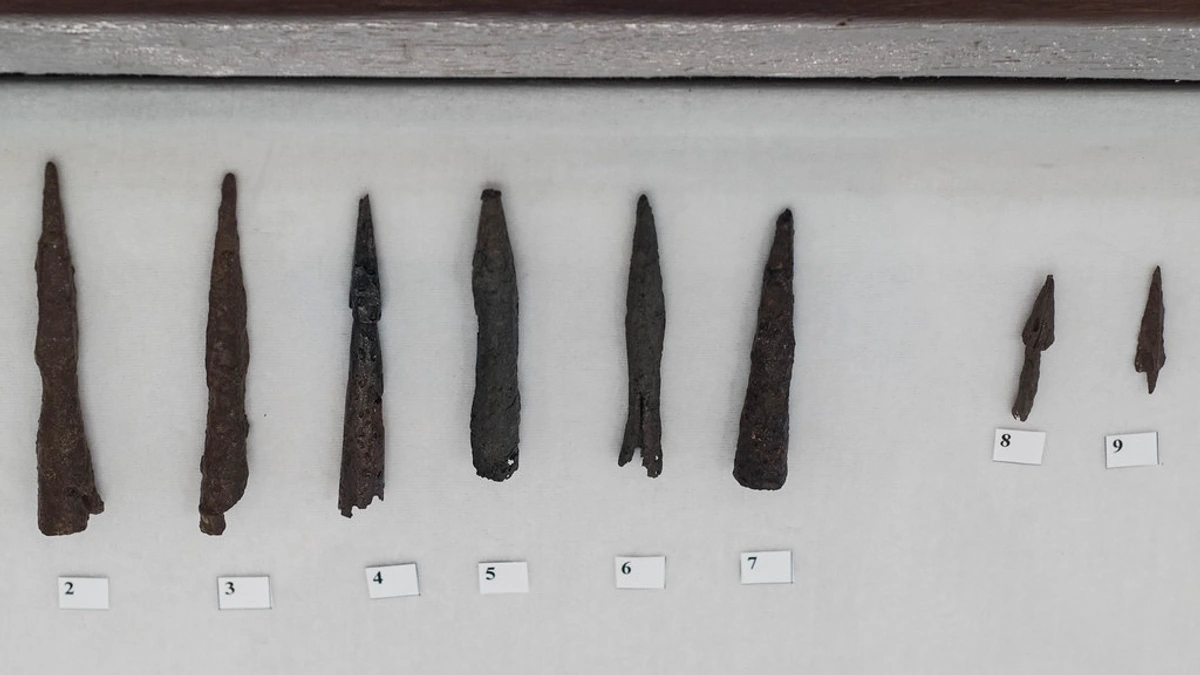
Even a local history museum can hold unexpected treasures. Look for rusted arrowheads, humble pottery shards, or a simple bronze ring. Often, the most profound lessons are hidden in the quietest objects. I've found that sometimes the most worn, fragmentary pieces spark the most creative responses – there's something about their incompleteness that invites the contemporary artist to fill in the gaps with their own imagination.
Frequently Asked Questions (FAQ)
How do I start if I've never studied ancient art before?
Honestly, that's the best place to start. You don't need to memorize dates or learn complicated terminology. Begin with your gut. Look at pictures of Iron Age artifacts online (the British Museum's collection is a great starting point) and notice which ones make you linger. Don't worry about why – just trust your instincts. Once you've found a few objects that grab you, the curiosity will come naturally, and you'll find yourself wanting to learn more about who made them and why.
The secret is that you're not studying history; you're having a visual conversation across time. Your job as an artist isn't to become an archaeologist – it's to find the visual language that speaks to your own creative needs, regardless of when or where it was made. Sometimes I think having too much historical knowledge can actually get in the way of that purely visual, emotional response that makes for the most authentic creative work.
Can I use images of Iron Age artifacts in my own art?
This is a fantastic and important question. In most cases, the artifacts themselves are thousands of years old and are in the public domain. The copyright, if any, would apply to the photograph of the artifact, not the object itself. Therefore, you cannot simply use any image you find online without checking the source.
But here's a more interesting way to think about this question: rather than worrying about copyright, think about what kind of relationship you want to have with these ancient objects. Do you want to be a passive consumer of digital images, or do you want to engage in an active creative dialogue? My strong recommendation is to visit museums in person whenever possible. There's something that happens when you stand in front of the actual object – some quality of scale, presence, and material reality – that simply cannot be captured in any photograph. The safest bet is to either use photos that are clearly marked for reuse with a license like Creative Commons, or to visit a museum in person, sketch the objects, and use your own drawings as inspiration. This is what I, and many artists, do. It connects you to the object in a way a photo never can. Your drawing, even a quick sketch, becomes a filter for your own creativity, turning historical data into a personal vision. This sketching process also trains your eye to understand the artifact's structure in a much deeper way than passive viewing – you're literally tracing the artist's decisions and learning their visual logic firsthand.
Additionally, consider that different countries have different rules about photographing artifacts in their national collections. Some museums allow photography for personal use, others restrict it. Always check the museum's policy before visiting, and when in doubt, the old-fashioned method of sketching with pencil and paper is not only legally safe but also provides a much deeper engagement with the object. Many museums actually encourage sketching – it slows visitors down and creates a more meaningful connection with the collection. Some institutions have specific guidelines about materials (usually just restricting messy media like paint or ink), but pencil sketching is almost universally welcome.
How do I learn more about specific Iron Age cultures?
What materials should I use to respond to these ancient artifacts?
I always recommend starting with objects, not textbooks. The digital archives of major museums are your best friends here. The British Museum, the Metropolitan Museum of Art, and the National Museum of Ireland have incredible virtual archives where you can browse thousands of artifacts by culture and period. Start broad, and when a particular style or object catches your eye, dive deeper.
But here's the thing most people miss: once you've found a culture or style that resonates with you, don't just look at the famous masterpieces. Go deep into the collection and look at the everyday objects – the broken potsherds, the simple tools, the fragmentary pieces. These often reveal more about the fundamental design principles than the perfectly preserved treasures do. There's something about the humbler pieces that often feels more honest, more direct, and more relevant to how we can incorporate these influences into our own contemporary work.
Books are also invaluable, but don't underestimate the power of simply looking. Your artist's eye will deconstruct an object in ways a historian's might not, focusing on line quality, spatial relationships, and emotional impact. For specific cultures, look for books that are heavy on high-quality images and light on dense text. You're looking for inspiration, not a PhD. Let your intuition guide you.

If you're particularly drawn to the flowing, organic designs, focus on the La Tène culture of Central Europe. Their mastery of flowing, plant-based forms can teach you volumes about creating dynamic, energetic compositions. Their work shows how to use line not just as a boundary but as a carrier of movement and life. If you want to understand how to make static forms feel like they're growing and breathing, La Tène metalwork is your masterclass.
If bold geometry speaks to you, explore Villanovan or early Etruscan art. These cultures understood the power of reduction – how a few well-chosen lines can communicate volumes. Their work teaches you about visual economy and trusting your viewer's intelligence to fill in the gaps. Sometimes the most powerful statement comes from what you choose not to show.
If you're fascinated by sophisticated metalworking techniques, investigate Celtic or Scythian goldwork. The technical virtuosity of these cultures is staggering, but more importantly, their work demonstrates how technical skill can be put in service of profound symbolic meaning. Each culture developed distinct approaches that can provide different kinds of inspiration for your own work. Consider also exploring the connections between these ancient traditions and other artistic movements, like understanding symbolism in abstract art more broadly.
The key is matching your natural inclinations with the right ancient tradition. If you're drawn to chaos and energy, look at Scythian animal style. If you prefer meditative, complex patterns, study Celtic knotwork. Knowing your own artistic temperament helps you find the most resonant voices from the past.

Isn't this just copying?
That's a fair point, and it's a line every artist navigates differently. I don't see it as copying. I see it as having a conversation. Copying is trying to make an exact replica of the artifact, which is usually impossible anyway. Inspiration is letting the artifact's design principles—its flow, its geometry, its symbolism—spark a new idea that bears little to no physical resemblance to the source. When a musician is inspired by Beethoven, they aren't rewriting the 5th Symphony. They are taking a feeling, a technique, a rhythm, and weaving it into their own unique song. The goal is to add to the conversation, not repeat it. It is a creative dialogue across millennia.
Think of it this way: every artist alive today is standing on the shoulders of giants. The masters of modern art were deeply influenced by "primitive" and ancient art – Picasso by African masks, Matisse by Islamic decorative art, the Abstract Expressionists by Native American sand paintings. What made their work revolutionary wasn't the absence of outside influence, but the unique way they synthesized those influences with their own contemporary concerns and personal vision. This is what T.S. Eliot meant when he talked about "the historical sense" – the awareness that the best new work emerges from a deep engagement with tradition, even when that tradition is being radically transformed.
Think about it this way: every artist stands on the shoulders of those who came before. The abstract expressionists of the 20th century were influenced by everything from African tribal art to children's drawings. What makes the work original isn't the absence of influence, but the unique way those influences are synthesized and transformed through the individual artist's vision, experience, and technical approach.
What's the best way to visit a museum for artistic inspiration?
Throw out the guidebook, at least for the first pass. When I go to a museum with the goal of finding inspiration, I ignore the audio guide's endless dates and dynasties. I walk through the galleries quickly first, letting my eyes be drawn to things without overthinking. It's like panning for gold – you let the current carry you and watch for the flash of something valuable. Your subconscious often knows what it needs before your conscious mind does.
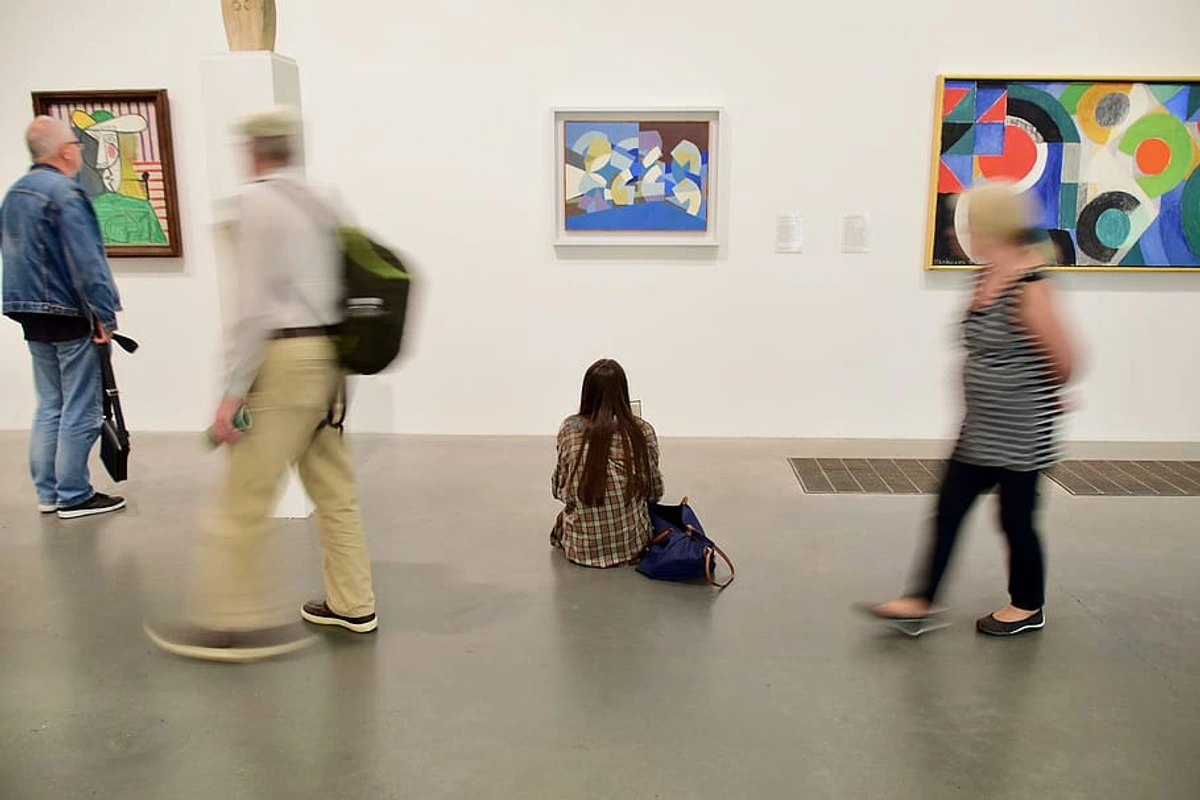
Once something catches your attention, give it your full attention for at least ten minutes – a surprisingly challenging discipline in our age of constant distraction. Try this method: spend the first three minutes just looking, without any agenda. Then spend the next four minutes sketching the object in a notebook, even if you think you can't draw. Don't worry about accuracy; let your hand follow the most compelling lines and shapes. Finally, spend the last three minutes writing: not facts about the object, but your subjective experience of it. What does this object make you feel? What memories or associations does it trigger? What questions does it raise? This three-part process transforms a passive viewing experience into an active creative dialogue that will stay with you long after you've left the museum.
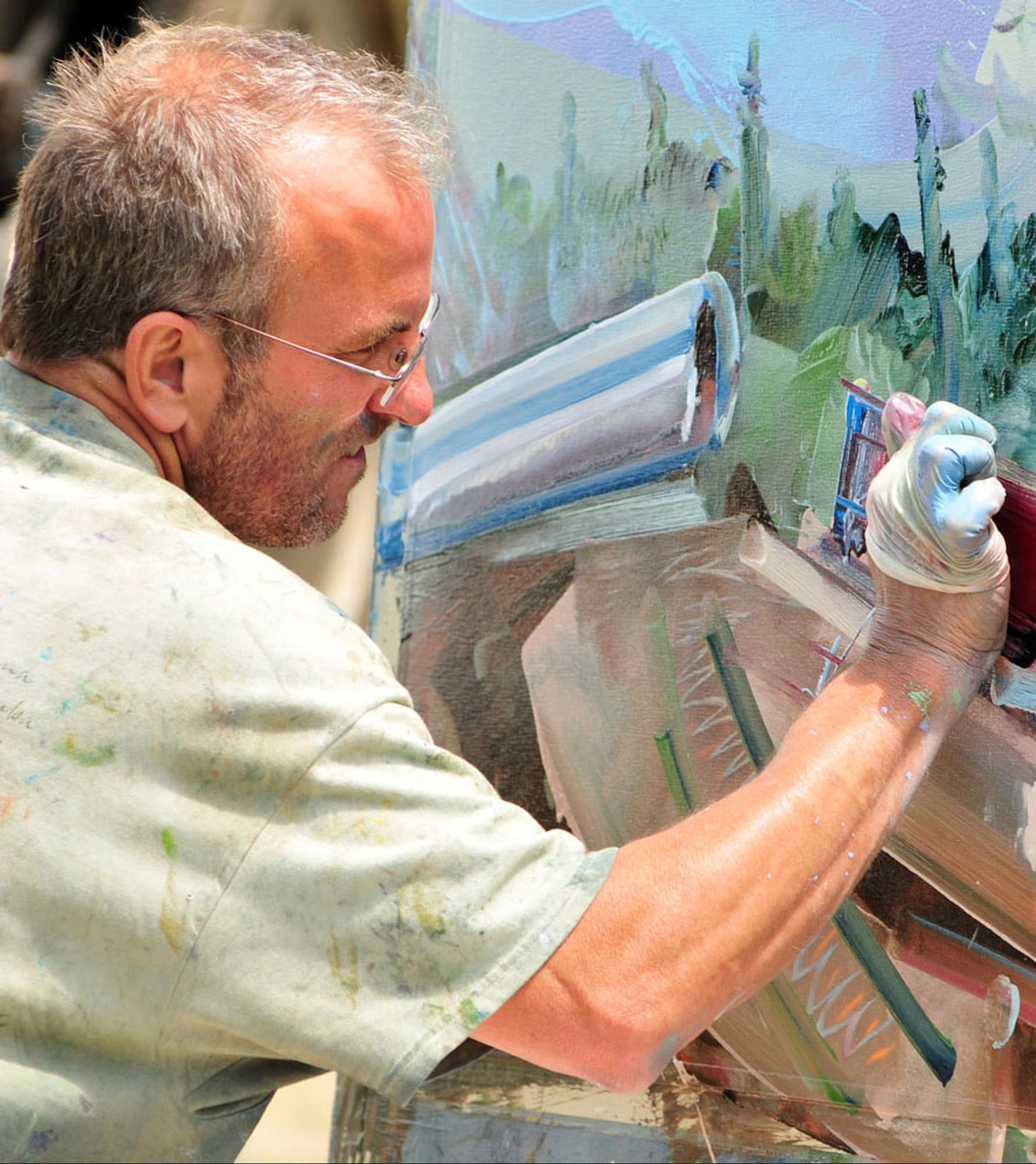
I then go back to the three or four pieces that made me stop. I'll sit with one for 15 minutes – a luxury in our rushed world, but essential for real connection. I'll sketch it in a small notebook, not for a perfect drawing, but to force my brain to really see the lines and shapes, to understand the decisions the original artist made. I'll write down abstract words: "agitated," "calm," "the curve feels like water." This process of direct, personal engagement is what transforms data into inspiration. The best museum visits feel like conversations, not lectures.
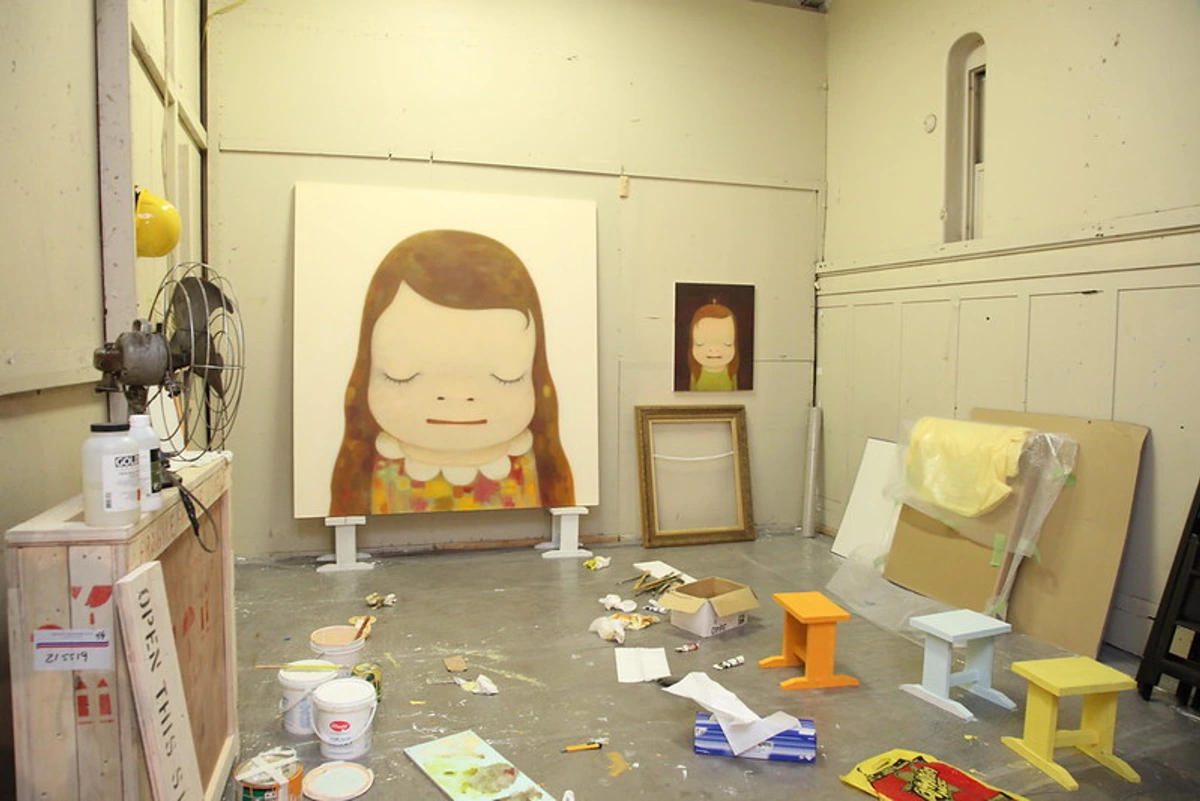
Sometimes I'll take it a step further and create small color studies or compositional sketches based on what I'm seeing, letting the ancient forms guide my contemporary choices. This creative response turns a museum visit from passive consumption into active dialogue with history. For practical tips on making the most of these experiences, our guide to visiting major art institutions offers proven strategies for getting beyond the surface and finding real inspiration.

Final Thoughts: A Line Unbroken
When I'm in my studio, surrounded by the tools of my trade, I often feel the ghost of that Iron Age smith looking over my shoulder. Not in a spooky way, but as a fellow traveler on a shared path. We both stare at a blank space—a patch of earth, a lump of clay, a white canvas—and see possibility. This shared creative impulse, this act of transforming raw material into meaning, transcends time and connects all makers. Whether you're working with charcoal and paper or exploring more experimental approaches like holography in art, the fundamental creative challenge remains remarkably consistent: how do you make the invisible visible?
The deeper I've gone into this exploration, the more I've realized that what I'm really studying isn't just ancient art – it's the nature of creativity itself. These Iron Age artisans weren't so different from us. They faced the same blank page (or blank mold, or blank piece of clay). They made decisions about form, color, and meaning. They sometimes struggled with technical challenges. They sometimes had creative breakthroughs. They were, in other words, artists – people who took the raw materials of their world and transformed them into vessels of meaning and beauty. And that, finally, is what makes their work so endlessly inspiring to me: it reminds me that this impulse to create, to transform, to leave our mark on the world – this is the most fundamentally human thing there is. We both stare at a blank space—a patch of earth, a lump of clay, a white canvas—and see possibility. We both wrestle with uncooperative materials. We both strive to take a thought or a feeling from the invisible world of our minds and make it solid. Real. Touchable.
The Iron Age didn't just give us better tools for farming; it gave us a new way of seeing the world. It laid the groundwork for an artistic language that valued the essence of things over their mere appearance. That language—of symbolic form, of material honesty, of abstract thought—never went away. It was passed down, quietly, from one generation of makers to the next. It's there in the logic of a Romanesque arch, the energy of a Baroque flourish, and the decisive gesture of a modern abstract expressionist.
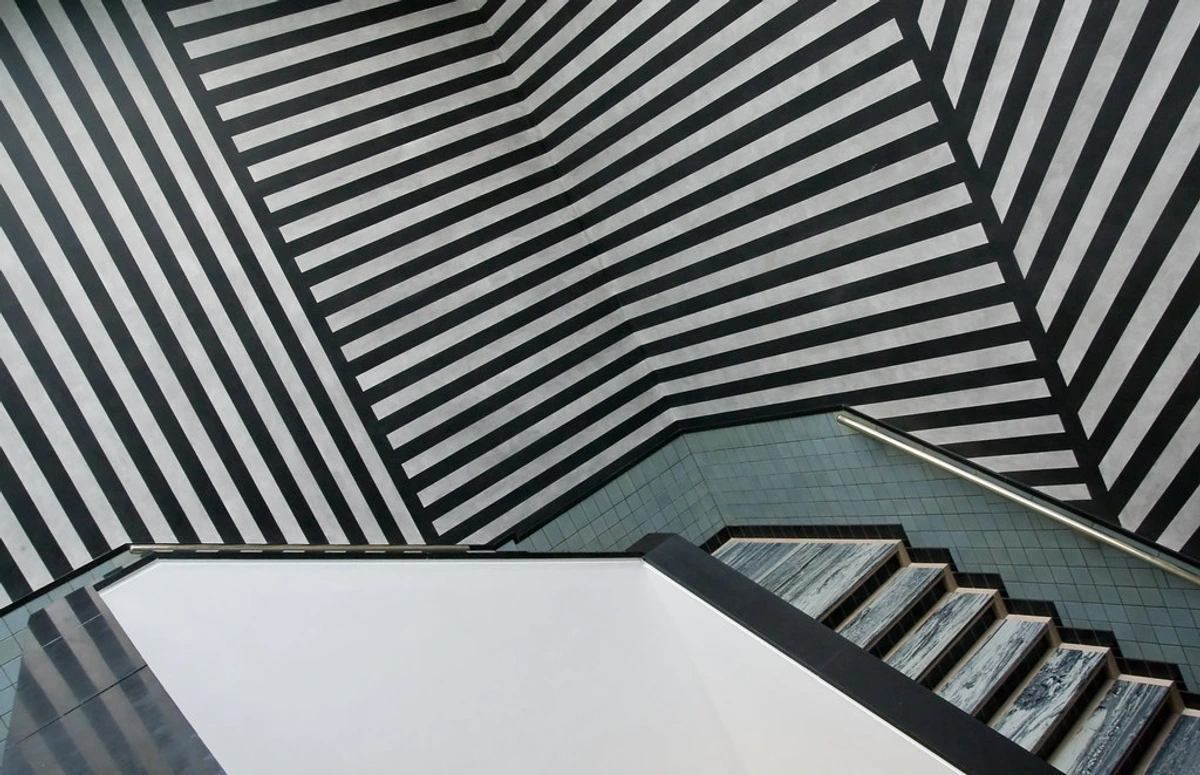
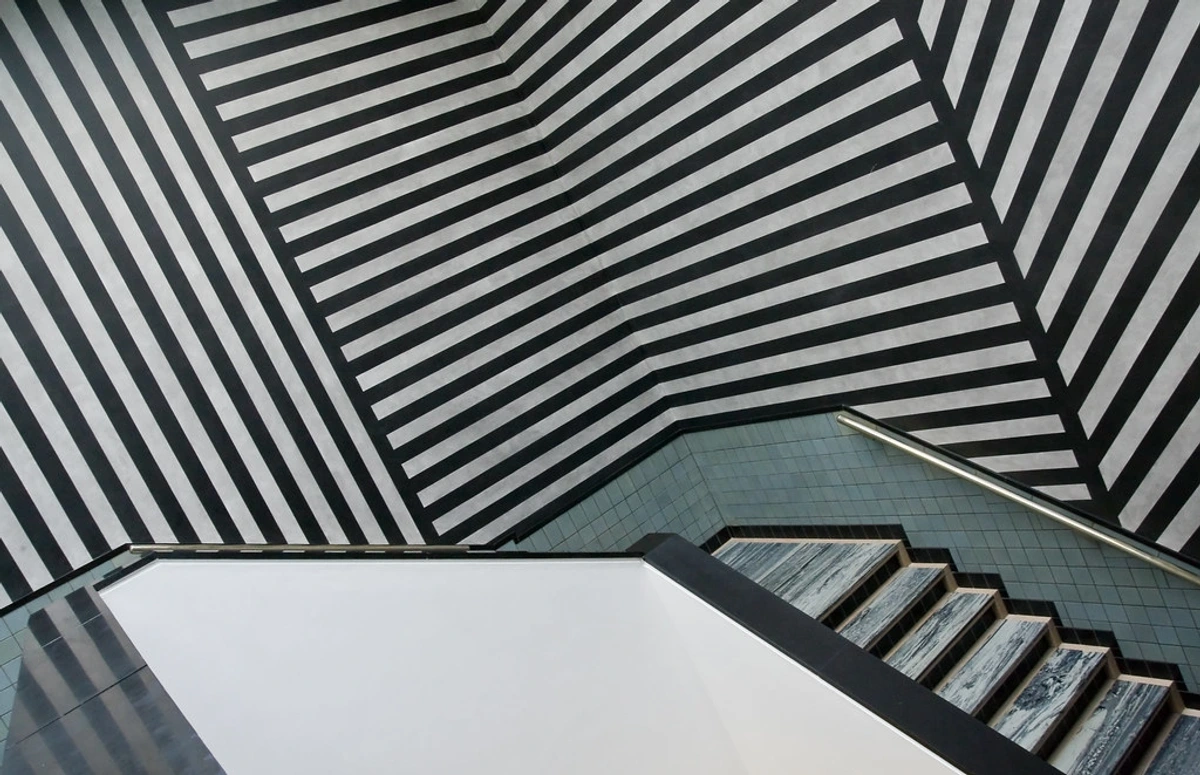
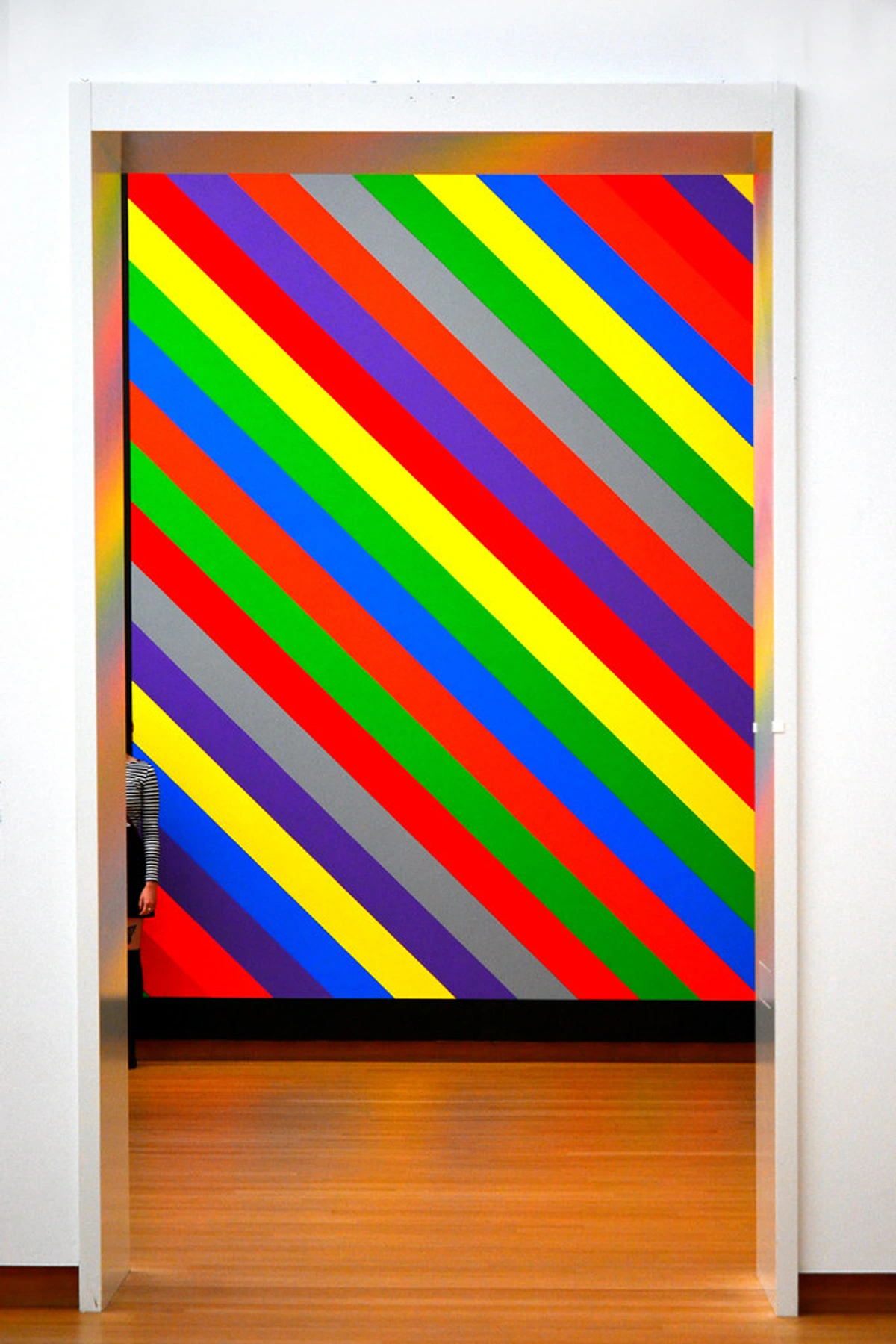
This continuity is something I find incredibly moving. When I'm working on a piece that draws inspiration from these ancient sources, I feel like I'm part of an unbroken chain of makers stretching back thousands of years. Each generation rediscovers and reinterprets these fundamental principles according to their own time, materials, and vision. This unbroken chain of artistic innovation is visible everywhere – from ancient torcs to Grant Wood's revolutionary American scenes, from Iron Age geometric patterns to the bold stripes of Sol LeWitt's conceptual installations. The fundamental language of visual expression evolves, but the underlying grammar remains remarkably stable.
And this brings me to perhaps the most important reason why this ancient art matters to contemporary makers: it offers us an alternative to the relentless novelty that our culture often demands. In a world that's obsessed with what's new and next, these ancient artifacts remind us that some human questions are timeless, and some creative solutions have enduring power. They give us permission to slow down, to take inspiration from sources outside the immediate contemporary moment, and to trust that our own work can be both deeply personal and part of a much longer conversation about what it means to be human and to make meaning through the manipulation of physical materials.


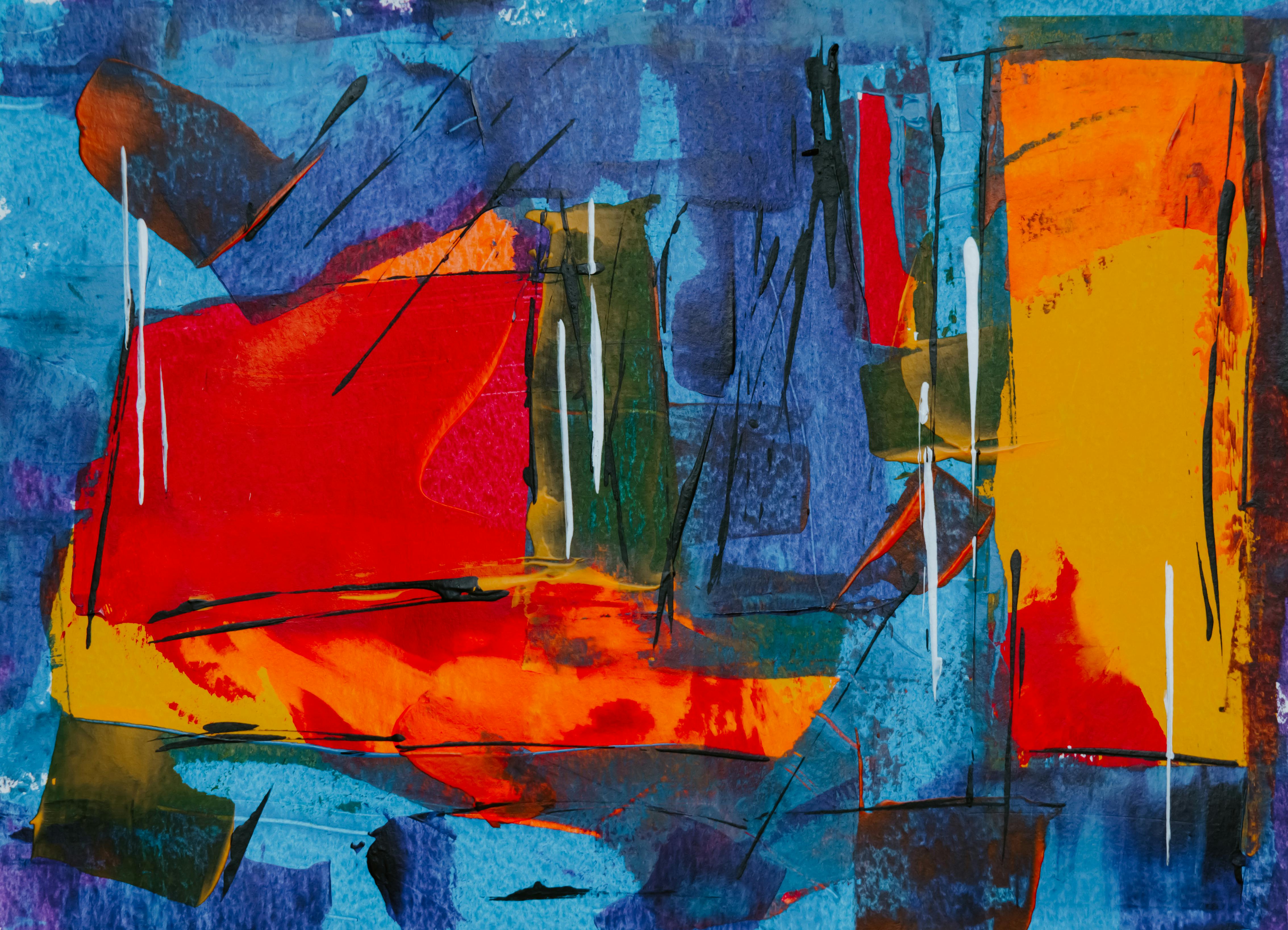






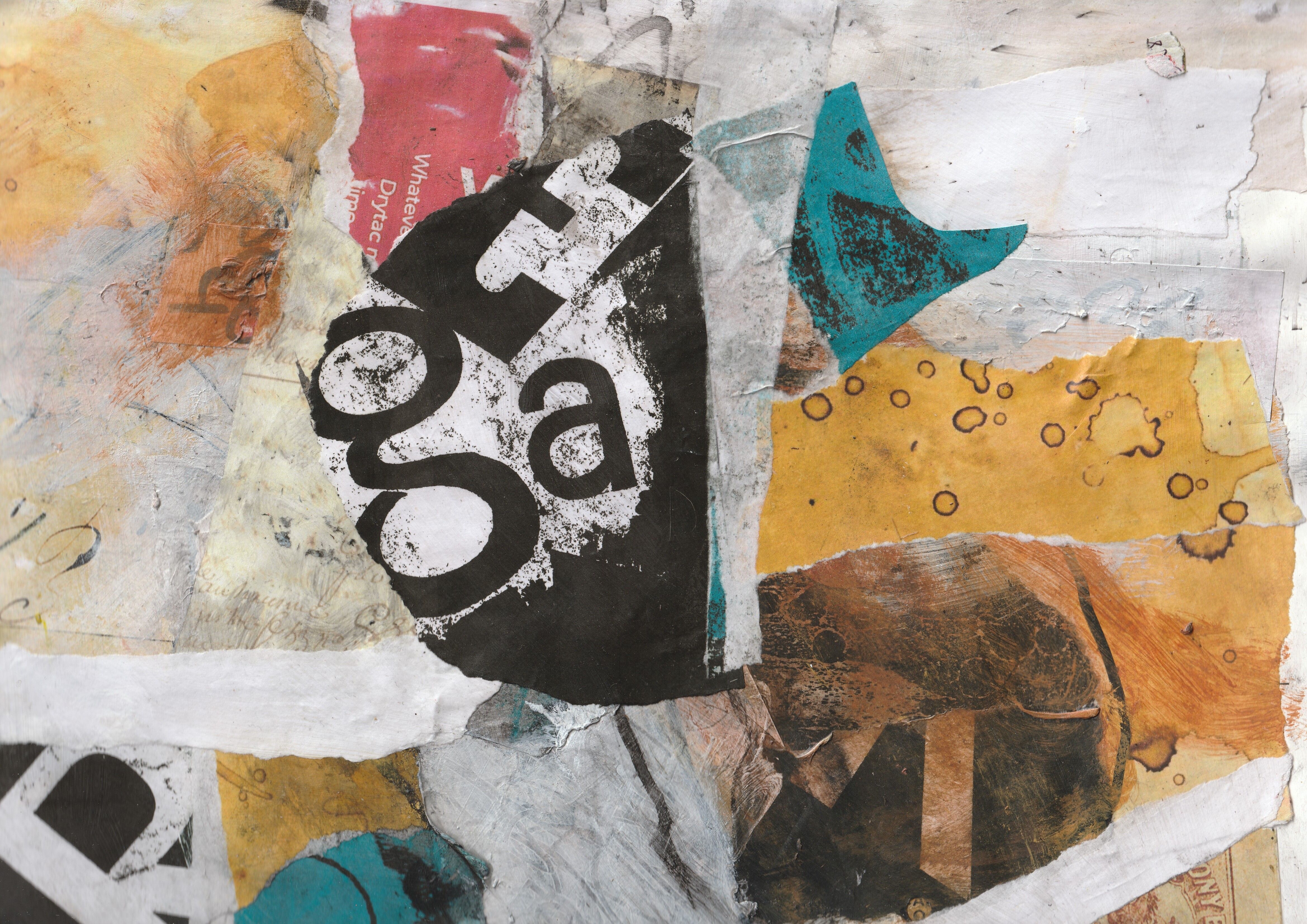


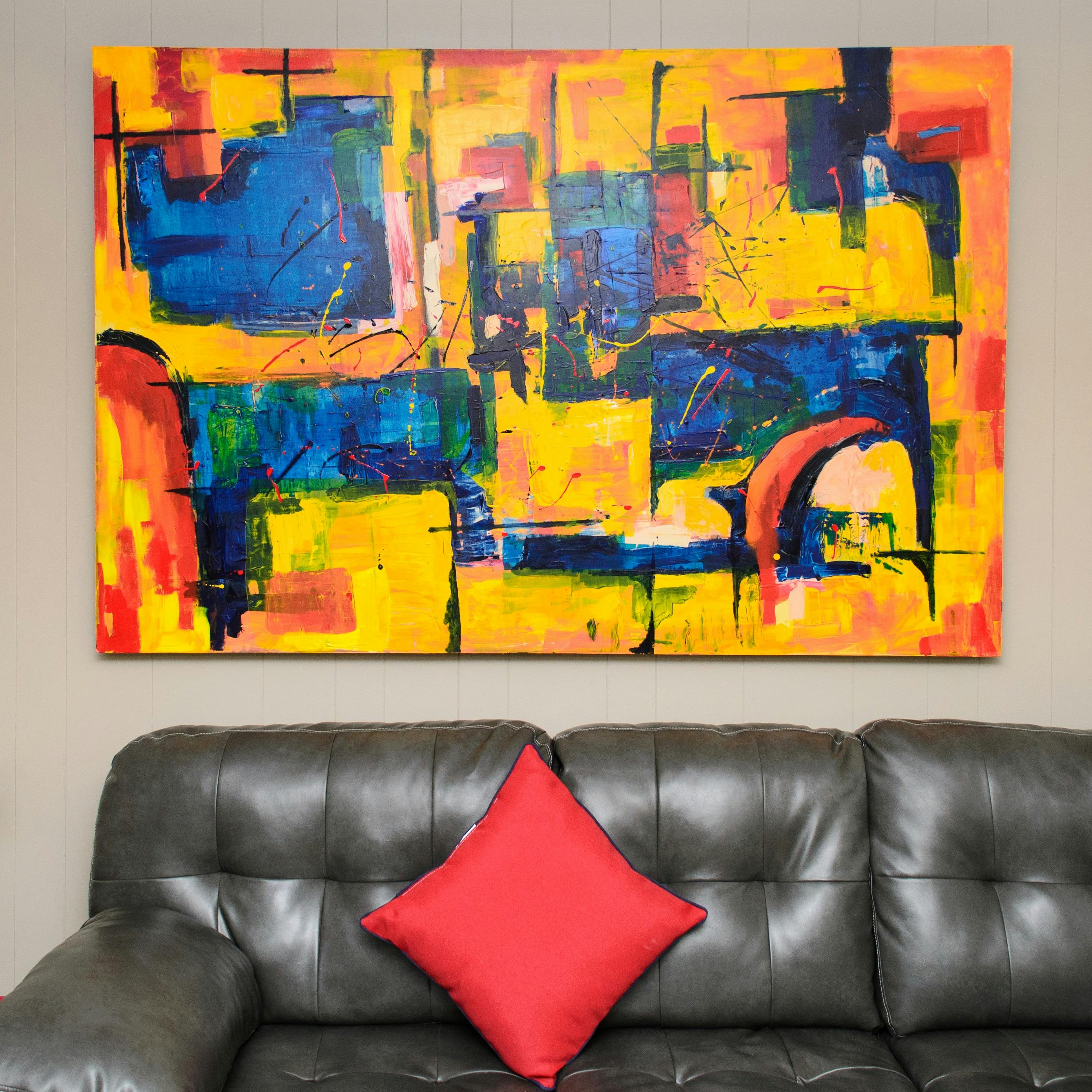



So, when you look at one of my seemingly chaotic abstract canvases, and you see a shape that feels oddly familiar, a rhythm that seems to echo something primal, it's not an accident. It's an invitation. It's me holding up a 2,000-year-old piece of gold to the light, and asking you to see the brilliant, modern sparks it's still casting today.