
Marcel Duchamp's Fountain: Is a Urinal Really Art? My Take.
Dive into the fascinating story of Duchamp's "Fountain," the iconic urinal that shattered art's boundaries. I explore why it's a masterpiece, its impact, and what it truly means to define art.

What is Marcel Duchamp's Fountain, and Why is it Art?
I've got a confession to make. When I first encountered Marcel Duchamp's Fountain, that infamous urinal, my initial thought was, "Seriously? This is art?" I remember standing there, probably scoffing internally (or maybe even externally, who knows?), trying to reconcile this mundane plumbing fixture with everything I'd been taught about beauty, skill, and creative genius. It felt like a giant, artistic prank. And honestly, a part of me still thinks, "Well played, Duchamp, well played." But then, the other part of me, the part that loves to peel back layers and understand the why, starts to realize just how profoundly brilliant and necessary that prank actually was. It wasn't just about a urinal; it was a carefully calculated assault on the very foundations of traditional art, a pivotal moment that redefined artistic creation and perception forever.
It was a statement, a challenge, and a pivotal moment that would ignite a century-long debate. And if you're like me, you probably need a little help unpacking it all, so let's dive in.
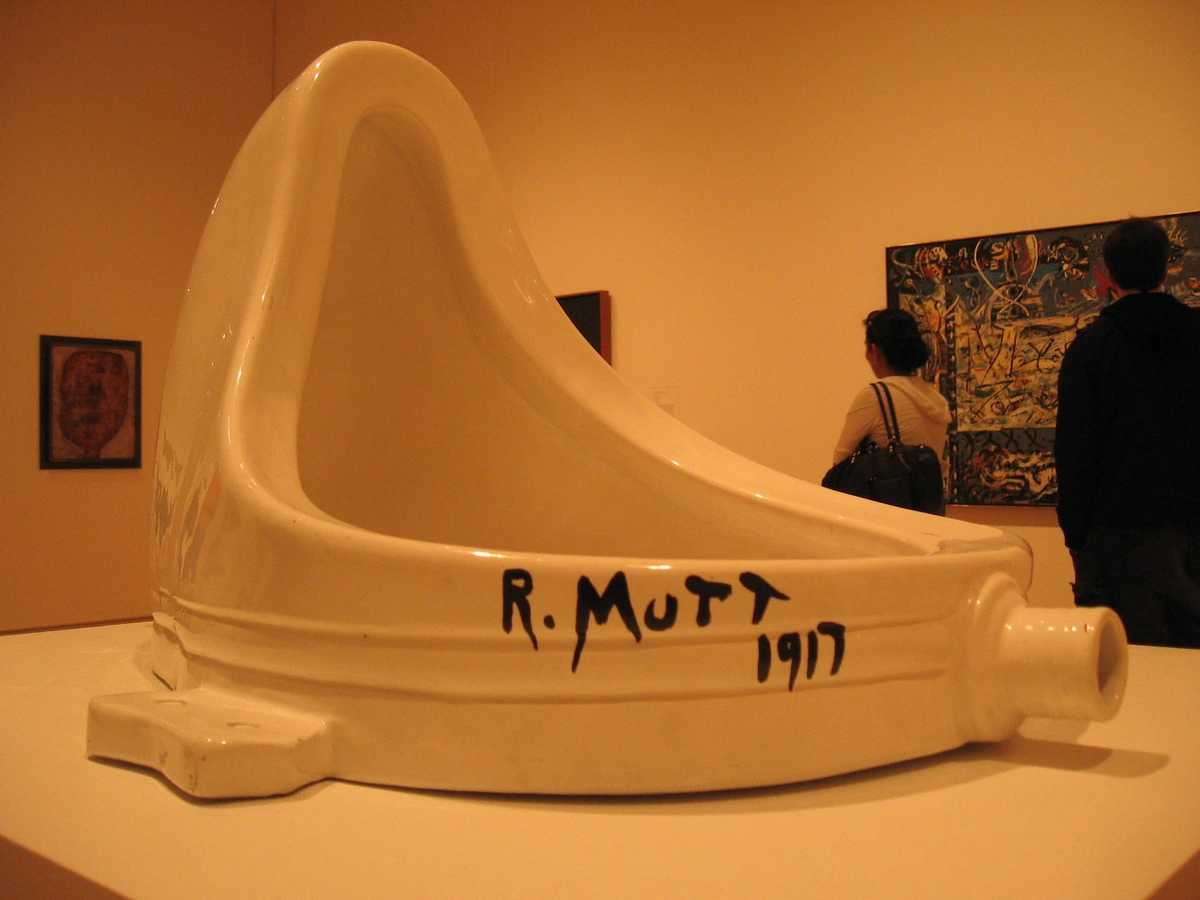
https://upload.wikimedia.org/wikipedia/commons/c/c1/The_Fountain_%283038681452%29.jpg, https://creativecommons.org/licenses/by-sa/2.0
A World in Disarray: The Birth of Dada
To truly grasp Fountain, we need to rewind a little further and understand the swirling chaos of the early 20th century. World War I had just brutalized Europe, shattering old ideals of reason, order, and progress. Artists, disillusioned and angry, sought to dismantle the very systems that had led to such devastation. This fertile ground of cynicism and rebellion gave birth to Dadaism.
Dada wasn't just an art movement; it was an anti-art movement. It embraced nonsense, irrationality, and a furious rejection of bourgeois values and aesthetic conventions. They used absurdity as a weapon, challenging logic and tradition. Duchamp, though often considered a precursor to Dada rather than a strict member, embodied this spirit of iconoclasm perfectly. His earlier works, like "Nude Descending a Staircase," had already pushed boundaries, but Fountain was a seismic shift, a direct and unequivocal assault on the notion of "art" itself, right at the heart of the burgeoning American Dada scene. It really makes you think about how major world events can completely reshape artistic expression, doesn't it?
The Story of R. Mutt and a Porcelain Provocation
Let's rewind to 1917, New York. Duchamp, a figure already known for shaking things up with works like Nude Descending a Staircase, No. 2, decided to submit a piece to the Society of Independent Artists exhibition – an exhibition he himself helped found, famously touting a "no jury, no prizes" policy. His submission? A porcelain urinal, turned on its back, signed "R. Mutt 1917." Now, the name R. Mutt was a cheeky play on Mott Works, a famous plumbing manufacturer, but also a sly nod to popular comic strip characters of the time. The title "Fountain" itself was a stroke of ironic genius, transforming a mundane object of waste into a source of flowing ideas and endless debate. This wasn't just any urinal; it was a carefully chosen, deliberately presented object.
The committee, despite their "no jury" stance, were flummoxed. They debated. They squirmed. And ultimately, they rejected it. Not for being immoral (though that was certainly an undertone), but for not being "art." This rejection, in direct violation of their stated principle, served as the ultimate proof of Duchamp's argument: that the art establishment's biases and definitions were arbitrary and exclusionary, even when they claimed otherwise. And just like that, Duchamp had proven his point before the exhibition even opened. He didn't just create an artwork; he created an event, a question, and a scandal that echoes through art history to this day. The uproar was immediate and widespread, sparking fervent discussions in newspapers, salons, and studios about the very nature of art.
The "R. Mutt" signature itself is a fascinating puzzle. Beyond the pun on Mott Works plumbing, it carried layers of meaning. "Mutt" could also refer to a common, even derisive, term for a dog, suggesting a deliberate anonymity and a rejection of the artist's elevated status. It stripped away the ego, placing the focus squarely on the object and the idea, rather than the "hand of the master." It's almost as if Duchamp was saying, "The artist doesn't have to be a genius; the act of choosing is the genius." And that, my friends, is a truly humble, yet profoundly arrogant, statement all at once.
The Revolutionary Idea: The Ready-Made
What Duchamp did with Fountain was introduce the concept of the ready-made. This wasn't about him physically sculpting or painting something new. It was about him choosing an existing, mass-produced object and, by simply re-contextualizing it and declaring it art, transforming its meaning. He wasn't making art with his hands; he was making art with his mind. This shift from manual skill to intellectual concept was revolutionary, asserting that the artist's conceptual choice held as much, if not more, artistic merit than their craft.
Think about that for a second. It's a huge shift. For centuries, the value of art had been tied to the artist's skill, the craft, the hours spent toiling away. With a ready-made, Duchamp basically said, "Hold my beer. What if the idea is the art? What if the decision is the creative act?" I mean, my own journey as an artist involves a lot of hands-on work with color and form, but the initial spark, the idea, that's where it all begins for me too. You can also explore the deeper meaning of hues in our article on The Psychology of Color in Abstract Art. You can see how those sparks translate into my art here, if you're curious about my take on modern abstract expression.
It reminds me of artists like Christopher Wool, who also challenged traditional painting by focusing on process and language, questioning the very act of mark-making.
Crucially, Duchamp chose objects that were "manufactured without any aesthetic consideration," aiming for what he called "anesthetic indifference." He wasn't picking things because they were inherently beautiful or ugly, but precisely because they were so utterly mundane, so devoid of traditional artistic merit, that their elevation to art would force a profound re-evaluation. It's a bit like taking a pebble from your driveway and placing it on a velvet cushion in a museum – the pebble hasn't changed, but everything about how you perceive it has. This indifference was key to detaching art from purely retinal (visual) pleasure and shifting it towards intellectual engagement. Other famous ready-mades include his Bottle Rack (1914) and Bicycle Wheel (1913), each similarly chosen for their functional anonymity before being presented as art.
The ready-made wasn't just a gimmick. It was a philosophical bomb thrown into the stuffy halls of the art establishment. It forced people to ask:
- What is art, really?
- Who gets to decide what is art? Is it the artist, the critic, the institution, or the public? Fountain deliberately blurred these lines.
- Does an artist's touch have to be evident? Duchamp argued the conceptual act, the choice, was the artistic act, not necessarily the physical manipulation of materials.
- Is the context (the gallery, the exhibition) more important than the object itself?

This lineage of thought is clear when you look at artists like Andy Warhol, who took everyday objects and popular culture icons, mass-produced them, and, like Duchamp, asked us to reconsider their artistic value. It's a direct echo of Fountain's audacious questioning.
These aren't easy questions, and they're still being debated. Duchamp essentially opened a Pandora's Box of artistic possibility, paving the way for everything from conceptual art (a movement where the underlying concept or idea is considered the "art," often to the exclusion of any physical object or aesthetic value) to Pop Art (Andy Warhol's soup cans, anyone?). For a deeper dive into the broader evolution of such ideas, you might find our guide to The Definitive Guide to the History of Abstract Art insightful.
The Institution as Gatekeeper: Who Decides What is Art?
Beyond the artist's intent, Fountain ruthlessly exposed the power of the art institution. The Society of Independent Artists, with its "no jury" promise, was supposed to be a bastion of open-mindedness. Yet, faced with a urinal, their internal biases and traditional definitions of art quickly surfaced. Their rejection of Fountain wasn't just a snub; it was a public demonstration of how institutions, galleries, and critics wield immense power in conferring the status of "art" upon an object.
It forced a reckoning: Is art inherent in the object, or is it conferred by its context and the validation of an authoritative body? Duchamp playfully (or provocatively) suggested the latter. By submitting it to a show, he was testing the very framework of exhibition and reception. It's a question that still haunts the art world today, especially when you consider how much value is placed on a piece once it enters a major collection or fetches a high price at auction. The financial market, too, plays an undeniable role in this intricate dance of validation.
Why We Call it Art (Even If It Makes Us Squirm)
So, why is Fountain considered art by most serious art historians and critics today? Here's my breakdown, trying to channel that conversation you might have over a lukewarm latte:
1. It Challenged and Expanded the Definition of Art
Before Fountain, art was largely defined by aesthetics and craft. Duchamp dared us to think beyond that. He proved that art could be about provocation, about questioning, about ideas. It wasn't about making a beautiful object; it was about making us rethink beauty and objects themselves, moving art away from purely aesthetic pleasure towards intellectual and critical engagement. It was a revolutionary act that broke down old barriers, paving the way for movements like Conceptual Art, where the idea behind the work is paramount. If you're curious about how art has continually pushed its own boundaries, our Ultimate Guide to Marcel Duchamp offers a broader perspective on his revolutionary career.
2. The Power of Intent and Context
Duchamp intended it to be art. He selected it, signed it (with a pseudonym, adding another layer), and submitted it to an art exhibition. By removing the urinal from its functional context and placing it in a gallery, he forced us to look at it differently, to consider its form, its materials, and its cultural implications. The context changed the object. It's a bit like when you see a familiar object in a museum, suddenly you pay attention to details you never noticed before. This shift from utilitarian object to art object highlights the transformative power of the artist's decision and the institutional frame. It wasn't just what he chose, but how he presented it that made all the difference, creating a conceptual shift in perception.
3. It Demanded Intellectual Engagement
Unlike, say, a beautiful landscape painting where the appreciation might be immediate and emotional (and don't get me wrong, I love those!), Fountain demands that you engage with it intellectually. You have to think about it. You have to grapple with its implications. It's less about visual pleasure and more about stimulating thought. And for me, that's a cornerstone of truly profound art – the stuff that sticks with you and makes you see the world a little differently. My own journey as an artist has been about that evolution of thought, constantly pushing boundaries in my own way, a story you can explore on my timeline.

Consider an artist like Jean-Michel Basquiat, whose raw, expressive works might not fit traditional notions of "beauty," but undeniably demand intellectual engagement and provoke deep thought about identity, race, and society.
4. Its Enduring Influence
No matter what you think of Fountain itself, its influence is undeniable. It's a foundational piece for modern art movements like Dada, Surrealism, Conceptual Art, and Pop Art. It opened doors for artists to explore non-traditional materials, performance, and pure ideas. Without Duchamp's "prank," the art world as we know it today would look vastly different. You can trace some of these evolutions in our article on The Evolution of Abstract Art: Key Movements and Their Collectible Value. Imagine no Warhol, no Rauschenberg, no Ai Weiwei – it's a profound lineage. Furthermore, Fountain's radical stance also paved the way for movements like Fluxus and early Performance Art, where the artistic act itself became the primary medium, a direct descendent of Duchamp's emphasis on the artist's decision and the spectator's experience. It gave artists permission to redefine their own roles and the very boundaries of their practice.
The Big Questions It Still Asks
Even now, over a century later, Fountain continues to spark debate. And that, I think, is a testament to its power. It keeps asking:
What About Gender and the Gaze?
While not always central to initial interpretations, Fountain has also been a subject of feminist readings. As a traditionally male object (a urinal), its presentation could be seen as a commentary on male-dominated institutions or even a subversive play on the male gaze. The idea of presenting such a raw, functional object, typically hidden from public view, also prompts questions about modesty, public vs. private, and the gendered spaces we inhabit. It adds yet another fascinating layer to an already complex work, reminding us that art often reflects more than its creator initially intended.
- Is anything art if an artist says it is? This is the tricky one, right? If I just pick up a rock and declare it art, is it? Duchamp's answer leans towards "yes, if it makes you think about art."
- What is the role of the viewer? Fountain implicates us directly. Our reaction, our discomfort, our intellectual struggle—that's all part of the artwork.
- Does art need to be beautiful, or even aesthetically pleasing? Clearly, Duchamp thought "no." It needs to be thought-provoking.
I mean, I get why some people still roll their eyes. There’s a natural human desire for skill, for beauty, for something that elevates the spirit in a traditional sense. But Fountain reminds us that art can also be a mirror, reflecting our own assumptions and prejudices about what art should be. And sometimes, that mirror isn't pretty, but it's always illuminating.





Frequently Asked Questions About Duchamp's Fountain
Was Duchamp serious about Fountain being art?
Absolutely. While it had an element of playful provocation, Duchamp was deadly serious about his philosophical challenge to the art establishment and the very definition of art. He meticulously documented the event and defended his conceptual approach, emphasizing that the "idea" was the true work of art. He saw it as a tool to question the very basis of artistic judgment, not merely a joke.
Where is the original Fountain today?
The original Fountain was lost shortly after its initial rejection, a fact that ironically adds to its legendary status, reinforcing the idea that the concept, not the physical object, was paramount. The surviving "original" is a photograph taken by the renowned photographer Alfred Stieglitz, which became crucial evidence of its existence. However, Duchamp authorized multiple replicas (readymades are, by their nature, replicable and challenge notions of authenticity), which are now held in major museums worldwide, like the Tate Modern in London. This further highlights how the work's power lies in its conceptual impact rather than its singular physical presence.
Did Fountain kill painting?
No, not at all! Duchamp himself was a painter, and while he did famously declare he wanted to "kill art," what he really meant was killing the traditional, purely aesthetic definitions of art. Painting and sculpture continued to thrive, but Fountain certainly broadened the scope of what art could be, allowing for new forms of expression. Interestingly, Duchamp largely withdrew from the art world in the 1920s to pursue his passion for chess, further underscoring his detachment from conventional artistic practice.
My Final Thought
So, the next time someone asks you, "Is a urinal really art?", instead of a quick "yes" or "no," I hope you'll pause. Maybe even crack a small smile. Because thanks to Marcel Duchamp and his porcelain provocation, that simple question unlocks an entire universe of thought about creativity, meaning, and the ever-shifting boundaries of what we call art. It's not just a urinal; it's a conversation starter, a paradigm shifter, and frankly, a brilliant piece of performance art wrapped up in a bathroom fixture. And for that, I'm genuinely grateful.