
The Hudson River School: America's Artistic Dawn, Sublime Landscapes & Enduring Legacy
Uncover the Hudson River School, America's first true art movement. Explore its origins, key artists like Cole, Church, Bierstadt, their pursuit of the sublime, revolutionary techniques, and the complex legacy in shaping national identity and inspiring conservation, through an artist's personal lens.

The Hudson River School: America's Artistic Dawn, Sublime Landscapes & Enduring Legacy
When you really boil it down, the Hudson River School was America's first truly original artistic movement. It was a declaration, a bold statement about who we were and what we valued, all expressed through the monumental beauty of our own landscapes. For me, the whole essence of it comes down to that profound feeling you get when you're truly lost in a grand vista – a mountain range stretching endlessly, the vast, restless ocean, or even just a dramatic swirl of clouds. It’s this profound feeling, a mix of awe and a humbling sense of connection to something ancient and immense. That feeling, that powerful sense of the sublime in nature, is precisely what I believe the artists of the Hudson River School were passionately pursuing, long before anything resembling the modern art world even existed. For me, encountering a work by Frederic Church or Thomas Cole often evokes that same deep shiver, that delicious hint of terror mixed with wonder. It's a visceral, overwhelming experience they captured, and this quest for the sublime is the very heart of America's first major artistic movement. Honestly, it’s a feeling I still chase in my own abstract landscapes today, trying to capture that same profound, almost spiritual emotion through abstract expression.
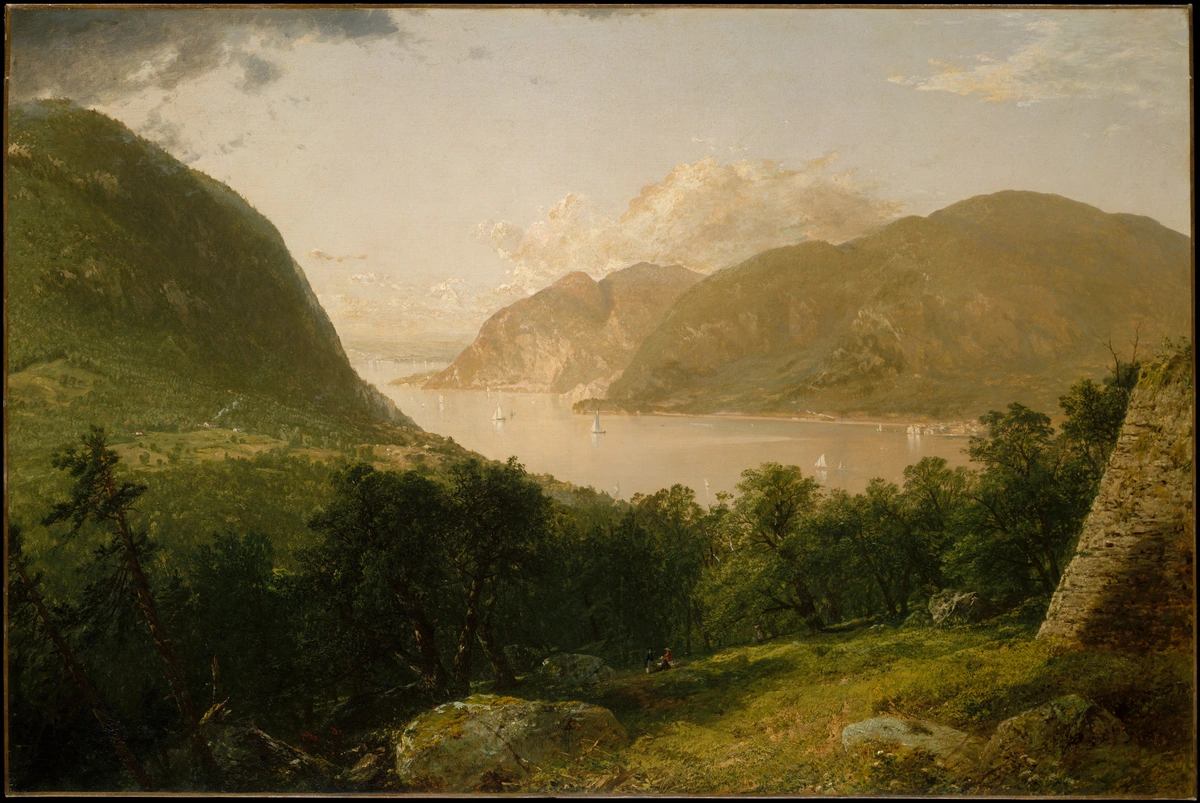
A New World, A New Canvas: The Birth of American Art
So, how did America, a young nation fresh off the War of 1812 and brimming with potential, transition from looking across the Atlantic for artistic inspiration to confidently finding its own voice in its own wild landscapes? In the early 19th century, we were still culturally a fledgling. American artists like Benjamin West and John Singleton Copley, while celebrated, largely worked within the grand traditions of European portraiture and historical painting, often even training and residing abroad. They imported European styles, compositional rules, and often even subjects, with landscape painting remaining largely a secondary genre influenced by masters like Claude Lorrain, Salvator Rosa, and Nicolas Poussin, who established European traditions of idealized or dramatic landscapes.
But then, driven by a surging sense of national pride and a desire to prove ourselves culturally, a group of painters emerged. These artists, often supported by wealthy patrons – industrialists, merchants, and landowners eager to invest in a distinctly American cultural identity – decided it was high time America looked inward. Notable among these early champions were figures like Luman Reed, a New York merchant who actively commissioned works from Cole and Durand, and Daniel Wadsworth, a Connecticut landowner and art enthusiast who became a key patron and supporter of Thomas Cole. These patrons sought not just aesthetic pleasure but a tangible representation of America's unique destiny and its vast, untapped resources, which in turn legitimized their own economic power and national vision. They converged around the scenic Hudson River Valley in New York, aiming to forge an art movement that celebrated the continent's unique grandeur rather than merely mimicking European masters. It was, in essence, America's first true artistic roar, a bold declaration that our landscapes deserved their own epic narratives, as inspiring as any European Alps.
This burgeoning American artistic vision wasn't an isolated phenomenon; it was deeply influenced by the broader Romantic movement that was sweeping through Europe. Romanticism, with its championing of emotion over rigid reason, its glorification of untamed nature, and its emphasis on individual, spiritual experience, provided a potent philosophical framework. Think of poets like William Wordsworth and Samuel Taylor Coleridge, who found profound truths in nature's wildness. In America, this sentiment also resonated with Transcendentalist thinkers like Ralph Waldo Emerson. But Romanticism's tendrils stretched further, influencing American writers like James Fenimore Cooper, whose "Leatherstocking Tales" celebrated the frontier, and composers who sought to evoke the vastness of the American wilderness through music. For these American artists, this European current offered a lens through which to interpret their own continent's vast beauty, adapting it to a distinctly American context of national destiny and discovery. So, it wasn't just about painting pretty scenes; it was about painting deeply felt ideas – ideas that patrons were eager to support, not just for aesthetic pleasure, but to legitimize their own economic power and foster a unique national cultural identity, much like aristocratic patrons had done in Europe for centuries.
The Hudson Valley: America's Open-Air Studio
But why the Hudson River Valley, you might ask, became the spiritual crucible for this movement? It was both accessible and remarkably wild, offering spectacular, unspoiled views of mountains, dense forests, and the meandering river itself – an ideal subject for artists intent on capturing America's natural splendor. It truly became their open-air studio. I often imagine them out there, sketchbook in hand, perhaps battling a rogue mosquito or two, meticulously capturing the ephemeral light and grand forms. These initial sketches, bursting with the immediacy of direct observation, would then be refined back in their city studios into grander compositions. Now, this wasn't quite plein air painting in the spontaneous, immediate sense that the Impressionists would later embrace. Instead, this direct, almost tactile engagement with nature was absolutely crucial to their vision, providing the raw material for their meticulously composed studio works. They needed to feel the landscape to paint its soul.
Thomas Cole and the Dawn of a Movement
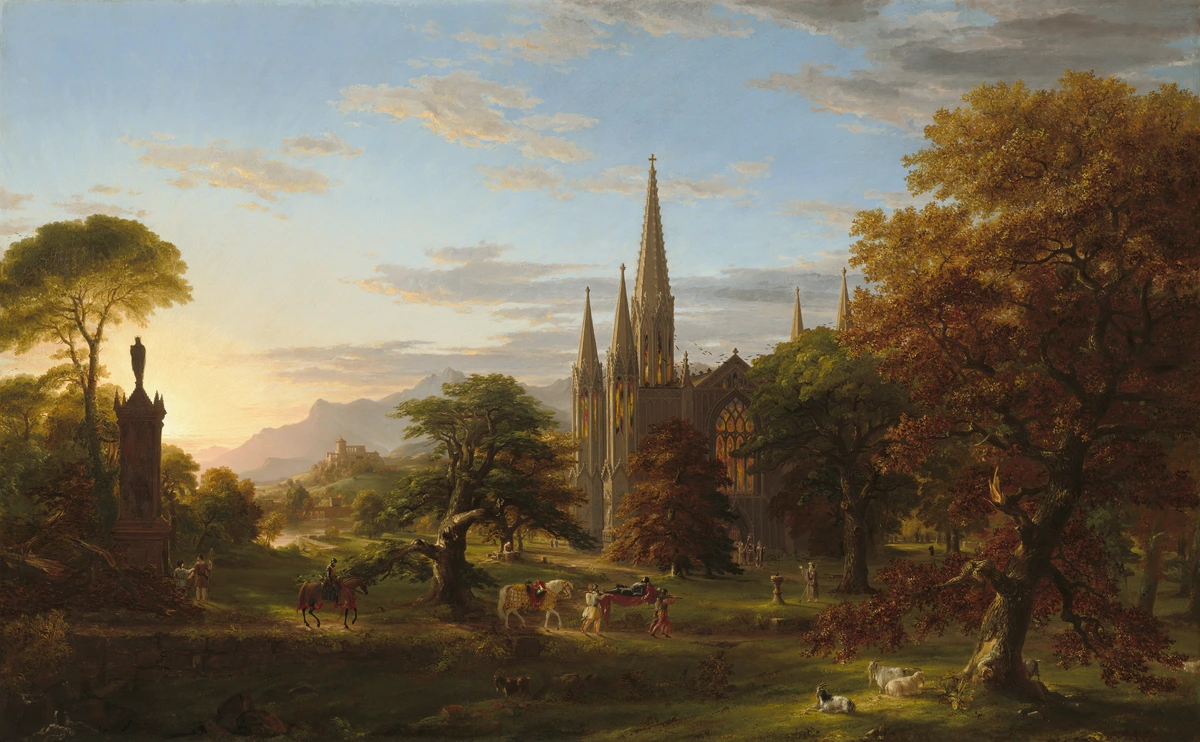
The recognized founder of the Hudson River School was Thomas Cole, an English immigrant who arrived in America in 1818. I often wonder what it must have felt like for him, a fresh pair of eyes taking in these monumental, untamed landscapes for the very first time. His work wasn't merely topographical documentation; it was deeply imbued with profound moral and allegorical meaning, often hinting at the transient nature of civilization against the backdrop of eternal wilderness. Cole chose this allegorical approach because he saw painting as a powerful tool for moral commentary, often warning against the destructive hubris of human ambition and emphasizing the enduring power and spiritual lessons of nature. For instance, in his dramatic five-part series, The Course of Empire, Cole vividly illustrated the rise and fall of an idealized civilization: from "The Savage State" depicting pristine wilderness, through "The Arcadian or Pastoral State" with early human settlement, to "The Consummation of Empire" showing a grand, decadent empire at its peak, then "Destruction" with the empire's violent downfall, and finally "Desolation," returning to ruins reclaimed by nature. He was essentially commenting on the cyclical nature of human ambition and the fleetingness of even the greatest human achievements compared to nature's enduring power. Or consider the powerful The Oxbow (View from Mount Holyoke, Northampton, Massachusetts, after a Thunderstorm), where a stormy, untamed wilderness contrasts sharply with a cultivated, peaceful valley, hinting at America's own potential paths. Cole didn't just paint what he saw; he showed us that art could do more than depict; it could comment on the great philosophical questions of the day. It’s remarkable to think of Cole tackling such profound philosophical questions on a canvas, wouldn't you say? It makes me think about how contemporary artists still grapple with similar themes, albeit through different lenses.

Chasing the Sublime: The Heart of the Hudson River School
That profound, almost disorienting sense of the sublime – the idea I mentioned earlier – was truly the guiding star for these artists. But where did this powerful concept originate? Long before Kant, the 18th-century philosopher Edmund Burke, in his A Philosophical Enquiry into the Origin of Our Ideas of the Sublime and Beautiful (1757), meticulously laid the groundwork. Burke differentiated the sublime from the beautiful, associating the former with feelings of pain, terror, obscurity, vastness, and power. He argued that while beauty inspires love and affection, the sublime evokes astonishment, awe, and a sense of delightful horror. This concept, exploring the overwhelming power of nature that dwarfs human existence, profoundly influenced Romantic thinkers and artists, providing a theoretical lens through which the Hudson River School painters would interpret the American wilderness. Philosophers of the Romantic era, such as Immanuel Kant, further explored the sublime, differentiating it from the beautiful by its capacity to evoke feelings of boundlessness and infinity, sometimes even a pleasing terror, pushing the limits of human comprehension. For the Hudson River School artists, a towering, mist-shrouded waterfall or a vast, stormy sky wasn't just scenery; it was a visceral encounter with the divine, a spiritual revelation. They sought to bottle that gut-punch of nature's raw, untamed power, translating it onto canvas for all to feel.
This American interpretation of the sublime starkly contrasted with the more tranquil picturesque aesthetic, which focused on harmonious, balanced, and gently pleasing views of nature. Think of a meticulously manicured garden or a serene, gently flowing stream bordered by pastoral fields – beautiful, yes, but intended to soothe rather than overwhelm. If the picturesque is like a quiet, comforting cup of tea, the sublime is like standing at the edge of a raging storm, feeling both tiny and alive, watching lightning crackle across an impossibly vast sky. While the picturesque aimed to soothe, to delight the eye with refined beauty, the sublime aimed to stir the soul, to confront the viewer with a grandeur that transcended human understanding. It was a raw, untamed force, perfectly suited to the burgeoning identity of a wild new continent, and a far more powerful statement than mere gentle beauty. So, why choose the path of awe and a little bit of terror over gentle beauty? Because it felt more real to the American experience.
Crafting the Vision: Techniques of Grandeur and the Power of Oil
These artists weren't just painting what they saw; they were meticulously crafting visions, building entire worlds on canvas. Their method typically began with detailed sketches done outdoors, capturing the nuanced light, color, and specific forms of the landscape. Back in their studios, these studies would transform into large-scale, often colossal, oil paintings. The sheer scale of these artworks was intentional; many were enormous, designed to immerse the viewer and amplify the sense of overwhelming natural power, much like a modern IMAX film. This was art as spectacle, intended to fill your field of vision and command your entire emotional response.
Oil paint was their preferred medium, chosen specifically for its remarkable properties that allowed them to achieve their ambitious goals. Its slow drying time allowed for seamless blending and subtle gradations of color, crucial for depicting atmospheric effects and vast, receding distances. More importantly, oil paints could be applied in layers of translucent glazes, a technique where thin, transparent layers of color were built up over an opaque underpainting. Imagine trying to capture the ethereal glow of a sunset; Hudson River School artists would lay down a base of deep blues and purples for the distant mountains, then build up thin, transparent layers of warm ochres and cadmium yellows, allowing the underpainting to shimmer through, creating an illusion of light radiating from within the canvas. It’s this meticulous layering that truly allowed them to capture the ethereal qualities of light breaking through stormy clouds or illuminating a distant peak. As an artist myself, mastering glazing techniques is a journey, and I've found it requires both patience and a deep understanding of how light interacts with pigment. If you're curious about the mechanics, a deep dive into mastering glazing techniques in oil painting is well worth the read.
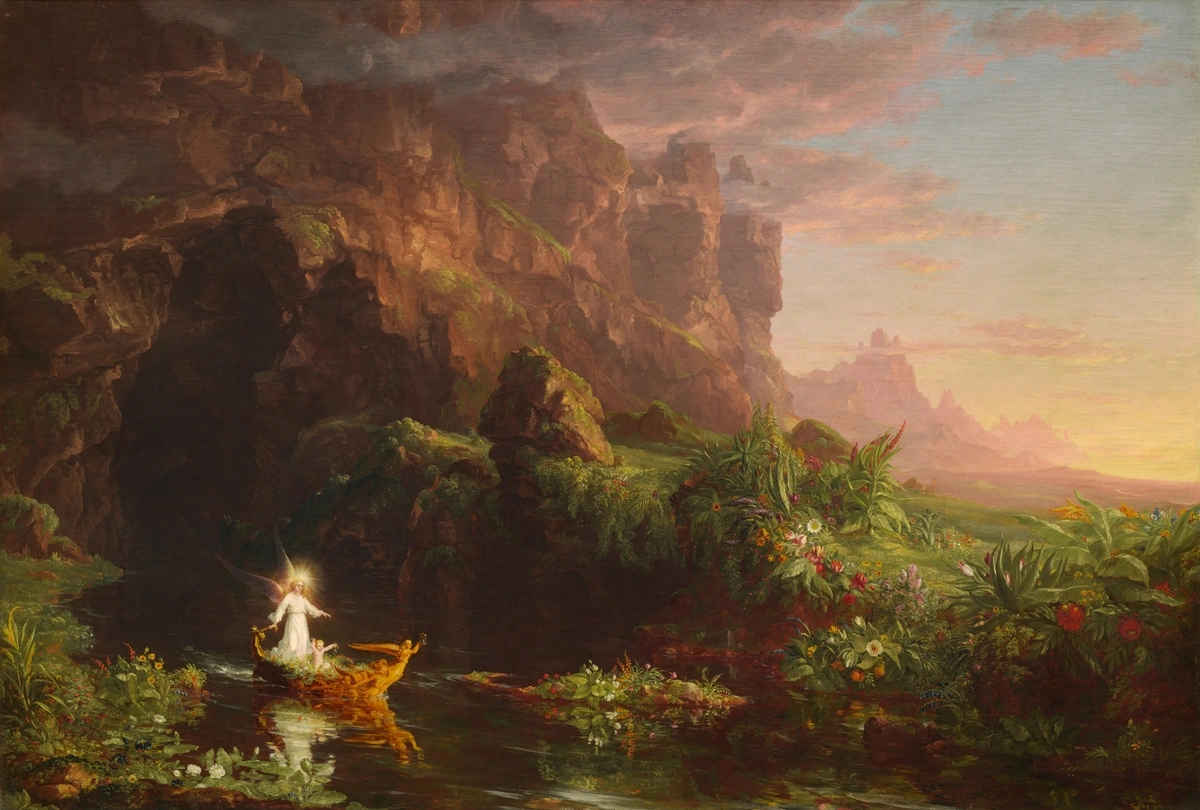
Common elements, almost like their signature moves, included:
Technique  | Purpose |
|---|---|
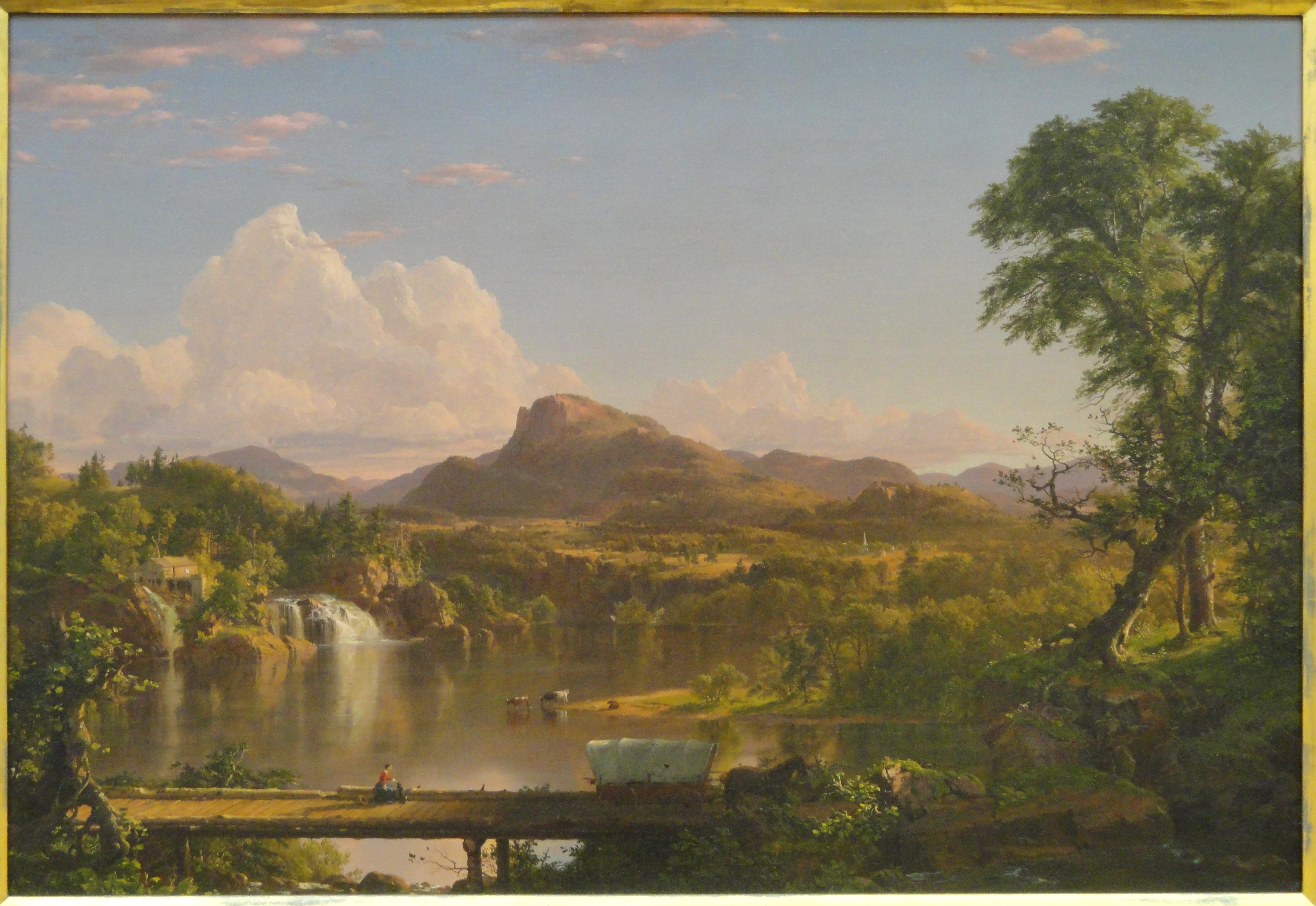
| Panoramic Vistas | Sweeping, expansive views that invited the viewer's eye to wander across vast distances, often from an elevated, almost divine, perspective, emphasizing the immensity of the American landscape. |
| Dramatic Lighting | Often featuring sunrises or sunsets, stormy skies, or shafts of light breaking through clouds, creating powerful emotional and spiritual effects that really spoke to the concept of the sublime – that mix of beauty and awe. |
| Tiny Figures | Human figures or animals were often rendered small in comparison to the landscape, deliberately emphasizing nature's overwhelming power and humanity's humble, transient place within it. Take Cole's The Oxbow, for example, where a minuscule artist figure is almost swallowed by the vastness, a subtle reminder of who's really in charge, isn't it? Another powerful example is his View from Mount Holyoke, where the tiny figures emphasize the dramatic scale. |
| Meticulous Detail | Every leaf, every rock, every ripple in the water was often rendered with painstaking precision. This reflected both a burgeoning scientific interest in the natural world and a spiritual reverence, validating the grandeur and divine order of the American landscape. |
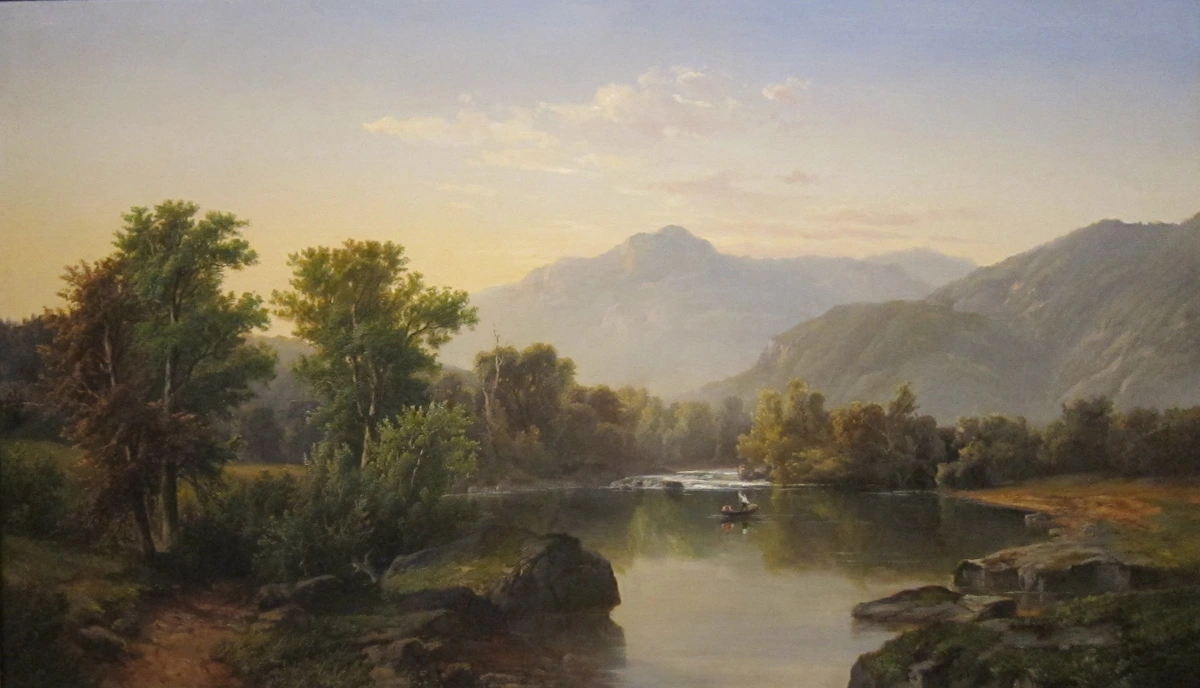
The mid-19th century also saw the nascent development of photography. While painting remained the dominant visual art form, this new, seemingly objective medium subtly began to challenge art's role as purely representational. I often think about how it must have felt for artists, facing this new technology. It wasn't that photography rendered painting obsolete; rather, it pushed painters to lean into what photography couldn't capture: the subjective interpretation, the allegorical narrative, and the profound emotional resonance of the human hand. It underscored the profound emotional and conceptual power their canvases held – art that aimed not just to record, but to interpret, to evoke, and to inspire a nation. It was a powerful reminder that some feelings are beyond mere reproduction, requiring the artist's subjective hand. Conversely, as photography itself evolved into an art form, many early landscape photographers were directly influenced by the compositions and majestic scope of Hudson River School paintings, seeking to capture similar grand visions through their lenses. This fascinating interplay between two burgeoning art forms is a topic I've explored further in the history of photography as fine art.
The Luminaries of the Landscape: Pioneers of American Grandeur
Thomas Cole certainly laid the groundwork, but a whole constellation of talent followed, each bringing their unique vision to this grand American canvas. While the Hudson Valley was their spiritual home, these artists, alongside figures like Thomas Doughty and John F. Kensett, didn't confine themselves. Their vision quickly expanded, leading them on extensive travels and explorations to capture the Catskills, the Adirondacks, the White Mountains of New Hampshire, and eventually, the monumental landscapes of the American West. These arduous journeys were fundamental; the artists experienced the raw wilderness firsthand, allowing them to imbue their works with an authenticity and emotional resonance that mere imagination couldn't achieve. Imagine the sheer determination required to haul massive canvases, stretchers, pigments, brushes, and even camping gear into the untamed wilderness, often navigating rough terrain and unpredictable weather! What would I give for a drone and a camera on one of those expeditions, eh?
- Asher B. Durand: Often considered the second-generation leader, Durand emphasized fidelity to nature and a softer, more intimate portrayal of the American wilderness. For him, fidelity meant a meticulous, almost scientific rendering of botanical and geological details, capturing the precise texture of leaves or the distinct strata of rocks. He often studied directly from nature, making detailed drawings and oil sketches, which informed his larger studio compositions. His iconic Kindred Spirits, depicting Cole and the poet William Cullen Bryant in a sublime landscape, is almost like a manifest for the movement – art and poetry finding common ground in nature's embrace. Another important work, Progress (The Advance of Civilization), shows a contrasting view of wilderness and encroaching human development, offering a more nuanced perspective than some of his contemporaries. I sometimes imagine what kind of conversations they'd be having out there, surrounded by all that majesty, perhaps debating the nuances of a particular cloud formation or the deeper meanings within the rustling leaves. His hyper-focus on botanical detail was truly revolutionary, laying a groundwork for artists to truly 'see' the natural world, not just generally observe it.
- Frederic Church: Oh, Church. If Cole was the philosopher, Church was absolutely the showman, a true rock star of his era. His colossal canvases, like The Heart of the Andes, the awe-inspiring Niagara, or his haunting Icebergs, were spectacles that drew massive crowds, almost like the blockbuster movies or viral sensations of their day. People would line up, pay admission, and even use opera glasses to examine the minute details. I can only imagine the sheer spectacle of standing before one of those colossal canvases in its day – a true art 'event' before the term even existed! He was a master of dramatic composition and luminous light, often blending scientific precision (derived from extensive travel journals and observations during his own far-flung expeditions, from the Arctic to South America, Greenland, and even the Middle East) with a profound spiritual awe. You could almost feel the mist from Niagara or the humidity of the rainforest just by gazing at his paintings, couldn't you? He sought out exotic locales, bringing back epic, almost theatrical depictions of untouched grandeur, perfectly tailored to a public eager for vicarious adventure.
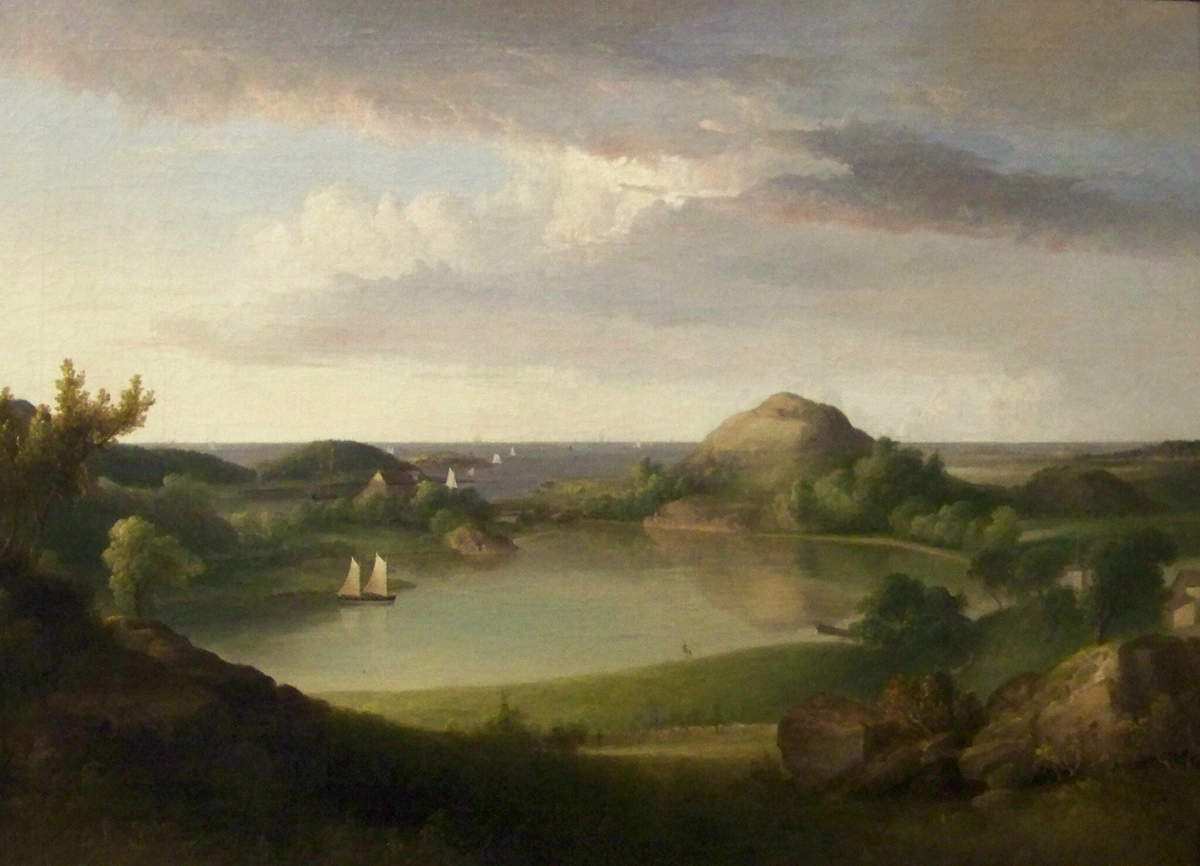
- Albert Bierstadt: He took the Hudson River School's vision westward, capturing the monumental scale and rugged drama of the Rocky Mountains and the vast American frontier. His work, like The Rocky Mountains, Lander's Peak, often highlighted the dramatic expansion of the nation, blending meticulous detail with an almost romanticized sense of adventure. Bierstadt was a master of creating grand, almost theatrical panoramas that dwarfed human figures, emphasizing the vastness and untamed quality of the land. His expeditions sometimes included encounters with Indigenous peoples, whose encampments occasionally appeared in his works. However, these depictions were typically romanticized and depoliticized, portraying Indigenous life as picturesque and harmonious with nature through idealized attire, static poses, and a lack of narrative depth that obscured the immense challenges they faced. For instance, in paintings like Lander's Peak, Indigenous figures are often small, positioned passively, and integrated into the landscape as if they are merely another natural element, rather than active agents facing profound societal upheaval. This presented an idealized, rather than accurate, narrative of American progress, conveniently sidestepping the contemporary realities of violent displacement, cultural destruction, and land claims inherent in westward expansion. Historical accounts of forced removals and the decimation of Indigenous populations, like the Trail of Tears (which occurred just prior to his prominence) or ongoing conflicts with Plains tribes, stand in stark contrast to these serene depictions. It's hard not to feel a surge of wanderlust looking at his mountains, even if you know the real journey was far more arduous. Looking at Bierstadt's mountains, I can practically feel that same pull, that urge to explore, even if my own 'exploration' happens more in my studio than on a trail. Today, art historians critically re-evaluate Bierstadt's works, recognizing that while visually stunning, they often contributed to a simplified narrative that obscured the painful historical realities faced by Indigenous communities during America's westward expansion.
- Jasper Cropsey: Known for his incredibly vibrant autumnal landscapes, Cropsey captured the quintessential, fiery beauty of the changing American seasons. His ability to render light and color, especially the brilliant reds, oranges, and golds of fall, was unparalleled, making you almost smell the crisp air and hear the crunch of fallen leaves underfoot. While celebrated for autumn scenes, Cropsey also painted other seasons and occasional genre scenes, always with a strong sense of atmospheric truth. His careful observation of the seasons wasn't just about creating pretty pictures; it was a celebration of America's unique climatic cycles, distinct from European traditions, offering a symbolic resonance with themes of harvest, abundance, and the natural cycle of life itself.
Beyond the Brushstroke: National Identity, Critiques, and Enduring Legacy
These masterful techniques and grand visions weren't just about aesthetic beauty; they served a powerful, often political, purpose in shaping how America saw itself and its destiny. The Hudson River School was profoundly intertwined with the burgeoning sense of American national identity. These artists, consistently supported by wealthy patrons and showcased in wildly popular public exhibitions, gave visual form to a young nation finding its confident voice. As the nation relentlessly expanded westward, these paintings served as powerful visual affirmations of America's unique wilderness, its divine destiny – what came to be known as Manifest Destiny. This philosophical ideal, which believed America was divinely ordained to expand across the continent, found its visual counterpart in the paintings' epic scale and untouched vistas, implying a vast, empty land awaiting settlement and progress. These artworks presented a vision of a pristine, untouched Eden, a kind of new Eden, precisely at a time when industrialization and westward expansion were rapidly transforming and consuming that very landscape. It's a curious irony, isn't it, to celebrate untamed nature so fiercely even as the very concept of 'untamed' was being challenged by aggressive logging, mining, and railway construction. The socio-economic context of the mid-19th century, marked by rapid industrial growth, increasing immigration, and westward migration, created a fervent appetite for images that reinforced a sense of national purpose and pride, further cementing the Hudson River School's popularity.
Contemporary Debates and Overlooked Narratives
It's crucial, however, to acknowledge that this idealized vision wasn't universally celebrated, even in its own time. While widely popular, the movement faced nuanced criticism. Some contemporary intellectuals and writers looked at these grand canvases and perceived not just pure patriotism, but perhaps an overzealous, almost aggressive nationalism – what we might call jingoism – that conveniently sidestepped the profound complexities and immense costs of westward expansion. For instance, a jingoistic interpretation of a painting like Bierstadt's Rocky Mountains might declare, "Look at this grand, untouched land given to us by God, ready for our conquest and civilization!" Figures like James Jackson Jarves, an influential art critic, sometimes critiqued the overly didactic nature or the sheer scale, which occasionally verged on bombast for some critics, arguing for a more refined aesthetic. There were even subtle artistic rivalries, for example, between the detailed, almost scientific approach of Durand and the more theatrical, panoramic style of Church, though these were often more about stylistic differences than personal animosity.
These 'costs' were significant and largely ignored in the paintings. They included the brutal displacement, violent subjugation, and cultural destruction of Indigenous peoples, whose ancestral lands were so often depicted as pristine wilderness merely awaiting European settlement. The paintings also often turned a blind eye to the rapidly accelerating environmental impact of burgeoning industrialization, with vast forests being cleared for timber, mineral-rich landscapes scarred by mining, and the wilderness dissected by railway lines. The unwavering focus on an untouched, uninhabited Eden presented an incomplete, and at times, deeply misleading narrative, one that has been critically re-evaluated by later generations of art historians. It makes you wonder how differently we might have approached land stewardship had those narratives been acknowledged on canvas. Beyond elite collectors, the reach of the Hudson River School was surprisingly broad, truly democratizing the imagery of the American landscape. Through the widespread production of lithographs and engravings based on the popular paintings – notably works by Asher B. Durand and Frederic Church were frequently reproduced by engravers like James Smillie and John Filmer – and even illustrations in popular magazines and souvenirs, these majestic visions became accessible to a far broader public. This allowed many more Americans, across social strata, to feel a sense of national pride and a personal connection to the wilderness, deeply reinforcing the cultural narrative of the young nation's unique identity.
The End of an Era and a Lasting Legacy
By the late 19th century, artistic tastes began to undergo a significant shift. The rise of European Impressionism and the French Barbizon School, with their radically different emphasis on direct, immediate observations of nature, fleeting moments, and radically looser, more visible brushwork, began to overshadow the meticulously detailed grandeur of the Hudson River School. Impressionism, for instance, focused on capturing the subjective experience of light and color in everyday scenes, depicting transient effects of atmosphere and often urban or domestic life, a stark contrast to the grand, allegorical narratives and polished realism championed by Cole and Church. This shift resonated with audiences of the time as urbanization accelerated, new scientific understandings of light emerged, and a desire for art that reflected modern, everyday experiences grew. Additionally, American artists began to travel to Europe more frequently, bringing back new influences and further diversifying the American art scene. I guess every dominant style eventually finds itself needing to make way, doesn't it? People eventually yearn for something a bit more... fleeting, more personal, perhaps even more raw and immediate after too much polished grandeur. This shift in artistic trends eventually led to the decline of the Hudson River School as the dominant style, pushing American art in exciting new directions, including the broader abstract art movements of the 20th century. Even later art movements, such as Regionalism, carried a torch for depicting the American landscape, albeit with a different focus on rural life and local identity, showing a continued reverence for the land itself.
Ultimately, the Hudson River School gifted America a powerful visual language for its awe-inspiring landscapes and laid a fundamental foundation for its burgeoning national identity. Their legacy endures, subtly shaping how we perceive and appreciate American landscapes even today. These artists were the true pioneers who first articulated a distinctly American artistic vision, passionately celebrating the unique beauty of this continent and evoking a profound sense of wonder. Their vivid depictions of wilderness even helped inspire early conservation movements, reminding us of nature's irreplaceable value and laying groundwork for the establishment of national parks. For me, as an artist, they serve as a potent, timeless reminder that connecting with the raw power of nature, and translating that profound feeling onto a canvas – that spirit of wonder they first roared into existence – is a timeless pursuit. Whether it’s through hyper-realistic detail or pure abstract expression, that initial spark of awe is what truly matters. Their influence can even be seen as a precursor to American landscape photography and early documentary film, establishing a visual vocabulary for America's natural heritage that resonates to this day.



And who knows, perhaps some of my own art inspirations, even if they're a world away in style and technique, are still chasing that same elusive feeling. If you're looking for art that evokes a similar, albeit contemporary, sense of connection, I invite you to explore my collection. Or, if you're curious about an artist's personal journey through these kinds of inspirations and how these historical echoes resonate in modern art, my timeline might offer some insights. My studio in 's-Hertogenbosch, NL is where these contemporary interpretations come to life – a fusion of history's awe and today's abstract spirit.