
Art for Everyone: A Beginner’s Guide to Making Art Accessible
Discover how art can be accessible to everyone! This guide demystifies barriers, offers entry points, and builds appreciation skills with practical tips—no expertise needed.

Art for Everyone: A Beginner’s Guide to Making Art Accessible
It happens in a flash. You’re standing in front of a painting, a sculpture, a print, and a voice in your head whispers, “What am I supposed to be seeing here?” We’ve all felt it—that sting of being on the outside of a private joke, convinced the art world is a secret club with velvet ropes and a hidden password. But I’m here to let you in on the truth: the door was never locked. You were just looking for a secret handshake when the handle was right there all along. Art isn’t a test you have to pass; it’s a playground you’re invited to explore. This is your guide to climbing over the fence and discovering that your messy, personal, and entirely valid connection to art is more than enough. It’s the whole point.
Why Does Art Accessibility Matter? The Case for Connection
To call art a luxury is to fundamentally misunderstand its role in our lives. Art is not the cherry on top of civilization; it’s the flour in the bread. It’s how we process a complex world, how we grieve, celebrate, and question. It’s the sigh of relief after a long day, the quiet rage against injustice, the uncontainable giggle at something absurd. When we build walls around this fundamental human language, we don’t just lock art away—we lock a part of ourselves out. We become isolated from a vital tool for understanding ourselves and each other. This isn’t a small problem. It’s a cultural crisis that feeds a sense of intellectual and emotional disenfranchisement. Let’s name a few of the usual suspects:
- The Jargon Wall: Phrases like "chromatic abstraction" or "postmodern deconstruction" get flung around so casually, as if art appreciation were a secret society with its own coded language. It makes art feel like an academic subject you need a PhD to even begin to understand, rather than a human experience to be felt and discussed.
- The Gatekeeping Myth: This is the deeply ingrained idea that you’re either born with the “art gene” or you’re forever on the outside, mystified. It fosters a culture of exclusivity and tells people their untrained opinion is worthless, keeping them from ever picking up a pencil or confidently voicing their thoughts on a piece.
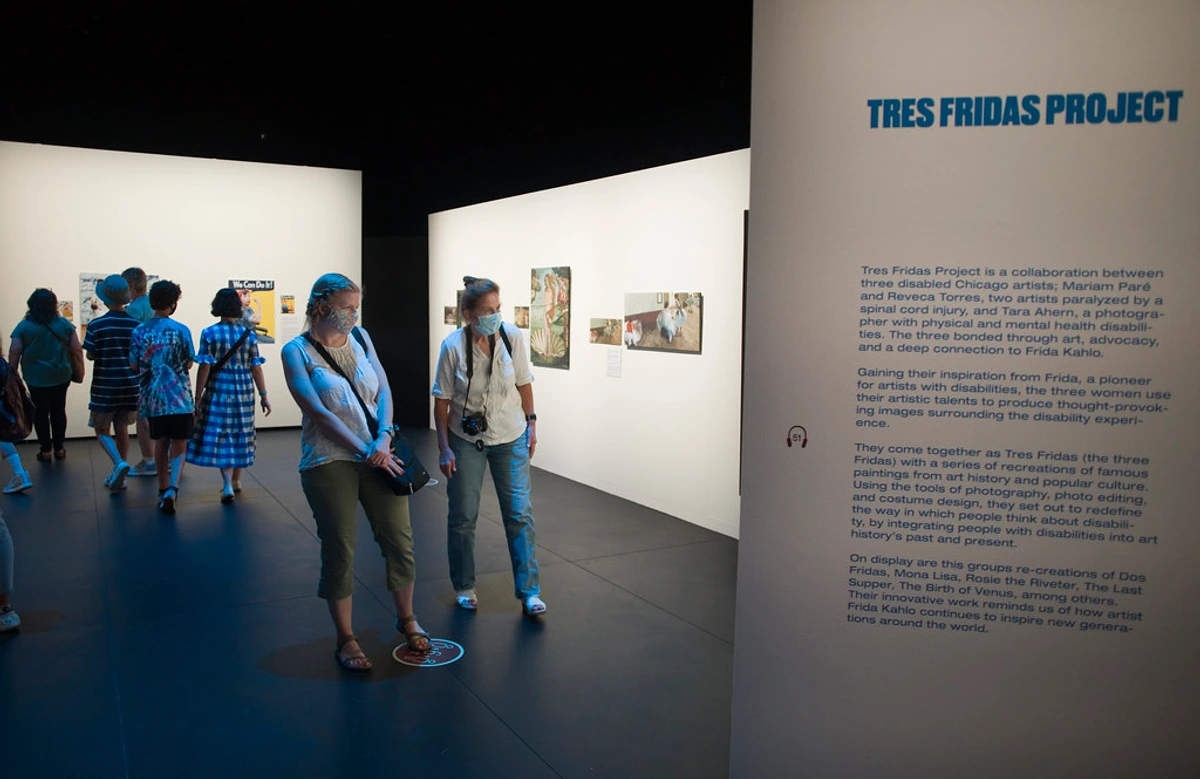
- The Intimidation Factor: The marble floors, the echoing silence, the stern docents—museums and galleries, for all their treasures, can feel less like welcoming public spaces and more like temples where only the initiated are worthy. This turns a place of potential discovery into a hall of silent judgment.
But here’s the liberating truth: Art doesn’t just survive accessibility; it thrives on it. When we pull down these walls, something magical happens. Art evolves because more voices and visions enter the conversation. Communities connect because a shared mural or a local artist’s work becomes a talking point, a source of pride. Perspectives broaden because we’re exposed to how someone else sees the world. Imagine a world where your neighbor’s kitchen mural is discussed with the same enthusiasm as a museum’s masterpiece. Imagine walking past a community garden and seeing it as a living sculpture. That world starts right here, with demystifying the process.
A Guided Tour Through (and Around) the Barriers
Think of these myths not as truths, but as well-polished tricks of the light. They create deep, intimidating shadows in corners that are actually just open, explorable space. The good news is, all it takes to dismantle them is a little bit of curiosity and the courage to flip on the lights. Let's start by examining the big myths that keep so many of us from walking through a door that's already wide open.
Myth 1: “You Need Special Training to ‘Get’ Art”
Reality check: The idea that there’s a single “correct” interpretation of art is like saying there’s only one correct way to feel about a piece of music. It’s utter nonsense. A vivid memory of mine: I was standing in front of Van Gogh’s The Starry Night, lost in trying to recall what I’d learned about his use of impasto. Then, a child next to me tugged on her dad’s sleeve and announced, “Look, the sun is having a bad hair day!” It was hilarious, and a far more profound insight into the painting’s swirling, electric energy than any art-historical analysis I was attempting. She wasn’t wrong. She was seeing the raw emotion directly. The splatter of paint that looks like chaos to you might look like freedom to me. Your reaction is valid because art is a two-way conversation, not a lecture. It’s an invitation to ask a question, not a riddle with a single answer.

Myth 2: “Art Creation Is Only for the Talented”
We’ve turned talent into a magic trick, when really, it’s just disciplined practice wearing a fancy coat. That doodle you sketch in the margins of a notebook during a long meeting? That’s art. That quick photo you snapped on your lunch break because the way the light hit the building was beautiful? That’s art, too. It’s not about the result being “good” by some external standard; it’s about the act of letting your mind wander into a visual or sensory space. Creativity isn’t a light switch that’s either on or off; it’s a muscle that atrophies without use and grows stronger with consistent, playful exercise.
Let’s be real. My first serious attempt at watercolor was a disaster of legendary proportions. I got frustrated, couldn’t get the brush to do what I wanted, and in a moment of utter madness, I stuck the paintbrush in my mouth to wet it. (Pro tip: don’t do this. Especially with cadmium red.) The result was a muddy, chaotic canvas that looked like a bruise. It’s now tacked up in my studio, a cherished reminder that imperfection isn't the enemy of art; it's the starting line.
Myth 3: “Museums and Galleries Are Intimidating”
Let’s be honest. They absolutely can be. The marble floors that echo your every footstep, the stern docents, the feeling that you should be appreciating this more than you are—it can turn a place of discovery into a hall of judgment. But here’s the crucial context: these spaces weren’t all built to exclude you; many were simply designed for a different era, with different ideas about who “the public” was. The good news is that the rules of engagement are changing, and fast. Cultural institutions are realizing that a silent, somber temple to art can also be a very lonely place. They’re actively working to shed that intimidating skin. The key is knowing how to find these opportunities. For instance:
- Self-guided tours with personality: Forget dry, academic lectures. Many museums now have audio tours hosted by artists, comedians, or curators with a passion for storytelling, making the art come alive with personal anecdotes and surprising facts.
- Designated "Slow Art" or "Quiet Hours": Many institutions now set aside specific times for visitors to experience the galleries with fewer crowds. These are often tailored for sensory-sensitive individuals, but honestly, they’re a gift for anyone who just wants to enjoy some peace and quiet with the art.
- Pay-what-you-wish days: Numerous museums open their doors on certain evenings or days where admission is a suggested donation. Suddenly, a world-class collection becomes as accessible as a movie ticket.
- Interactive and digital elements: From touchscreens with deep-dive information to augmented reality apps that let you see a painting in its original context, technology is helping to shift the experience from reverent observation to playful discovery.
Pro tip: The atmosphere of a place changes drastically with the crowd. A museum on a packed Saturday can feel like a department store sale. A museum on a midweek morning, especially right when it opens, feels like you’ve been given a private key to the city’s cultural vault. That’s my favorite time to go. You get space. You can stand exactly where you want, for however long you want, and truly decide for yourself what you think, without feeling rushed or scrutinized.
Your Art-Entry Toolkit: A Cheat Sheet for the Curious
The hardest part of any journey isn’t the distance; it’s the first step out the door. We’ve talked about the barriers and myths, but what does starting actually look like when you’re standing at the edge of the diving board, heart pounding? Here are some practical, personality-driven ways to dive into the world of art. Consider this your cheat sheet—no swim lessons required.
1. Start with Something You Already Love (Don’t Fake It)
You wouldn’t start a friendship by pretending to have hobbies you don’t. The same goes for art. Don’t force yourself to “appreciate” Mark Rothko’s color fields if what truly catches your eye is the dynamic action of a comic book panel. Art doesn’t require you to meet it on some elevated, intellectual plane. It meets you where you are. The connection you already have to the world is your compass. If you love houseplants, you’re already primed to admire the intricate detail of botanical illustrations. If you’re fascinated by the stories ink tells on skin, researching the history of indigenous body art or Japanese tattoo traditions will be a million times more engaging than slogging through a Baroque painting you feel you “should” like. Let your genuine interests lead, not what you think is expected of you.

Your Interest  | Art Styles & Movements to Explore |
|---|---|
| Nature & The Outdoors | Impressionism, Plein Air Painting, Land Art, Botanical Illustration, Ecological Art, Nature Art |
| Fashion & Style | Textile Arts (weaving, embroidery), Fashion Photography, Costume Design in Film, The History of Clothing as Art |
| Video Games & Animation | Digital Art, Concept Art, Character Design, Storyboarding, Pixel Art, The rise of Independent Art Games |
| Music & Sound | Album Cover Art, Concert Poster Design, Synaesthesia-Inspired Art, Stage Design, The visual language of Music Videos as an Art Form |
| Cooking & Food | Food Styling, Culinary Photography, Still Life Painting, Zine Culture, The art of Food as Subject Matter |
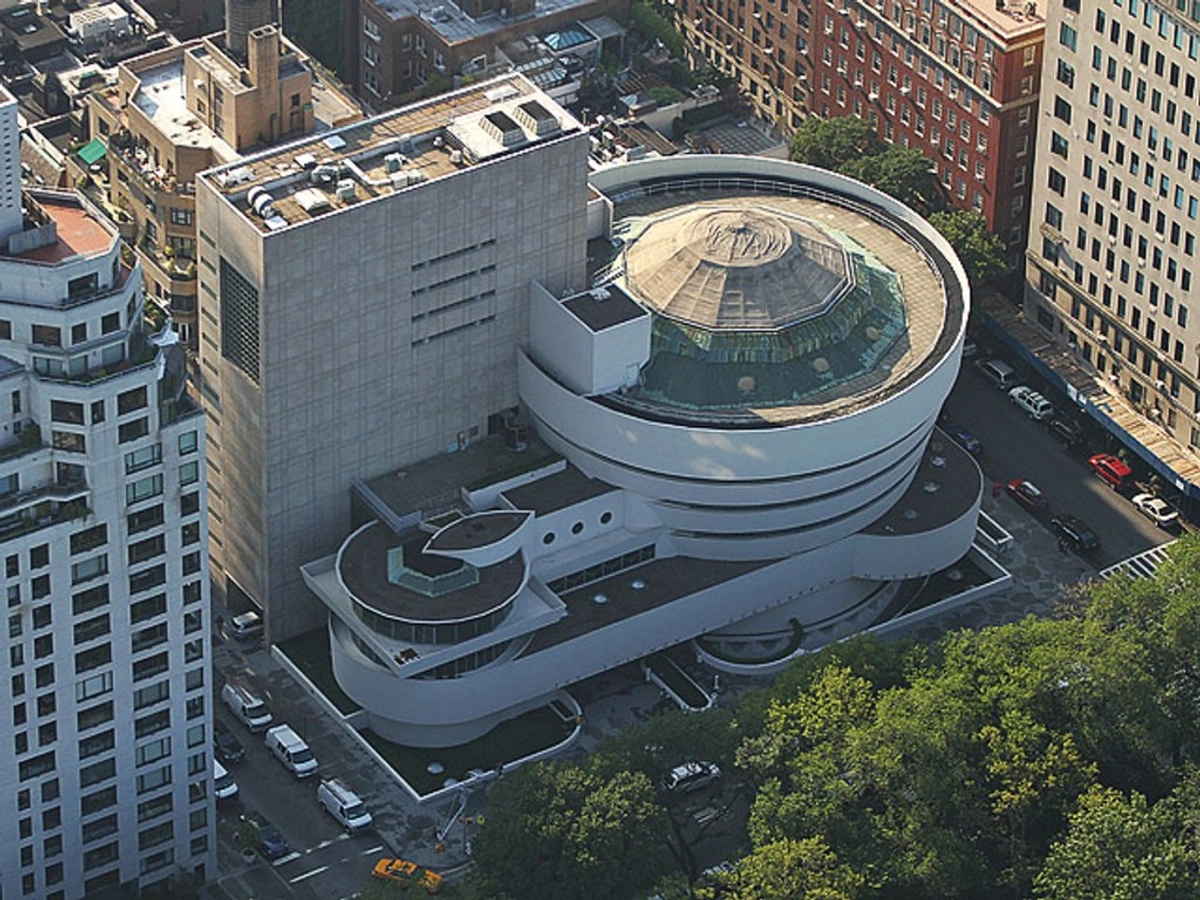
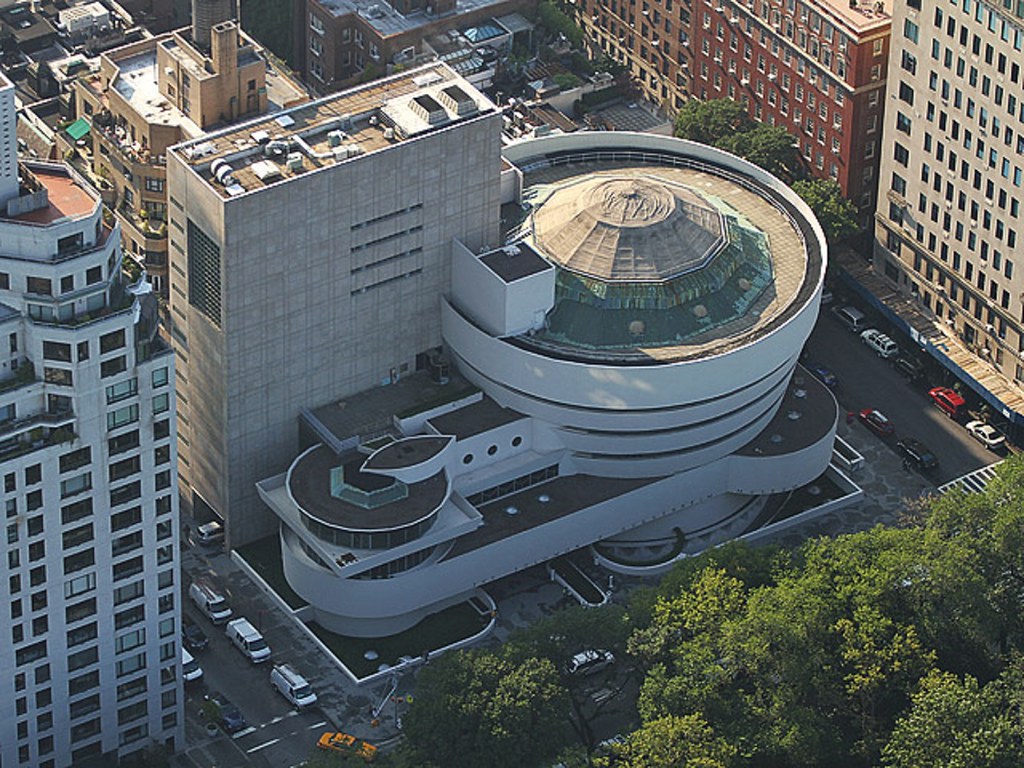
| Architecture & Design | Bauhaus, Art Deco, Brutalism, Sculpture, Architectural Sketching, The relationship between Art and Architecture |
| Pop Culture & Social Media | Contemporary Collage, Meme Culture, Graphic Novels, Digital Illustration, Exploring Fan Art and its culture. |
2. Curate Your Own Personal “Museum” (Without the Crowds)
Who says a museum has to be a physical building? Some of the world’s greatest collections are now available to tour in your pajamas. And no, this isn’t a consolation prize—it’s an upgrade. You can explore an entire museum’s collection on your lunch break, zooming in on brushstrokes in a Van Gogh that you’d never be allowed to get close to in real life. The digital world has democratized access to art on a scale we’re still wrapping our heads around.
Here are a few of my favorite free digital playgrounds:
- Google Arts & Culture: This isn’t just a website; it’s a time machine and a teleporter. You can take virtual tours of over 2,000 museums, from the Sydney Opera House to the Rijksmuseum. They have high-resolution “gigapixel” images of iconic works, letting you see every tiny crack in the paint. It’s perfect for deep dives without leaving your couch.
- Sketchfab: Ever wanted to walk around a Rodin sculpture? Sketchfab is a platform where you can explore 3D scans of sculptures, artifacts, and architecture from every angle. It’s mind-bendingly cool, and it completely changes your relationship with three-dimensional objects.
- Pinterest: Don’t underestimate the humble mood board. Create a board called “Art I Love” and another called “Art I Don’t Understand Yet.” Pin anything that catches your eye. Over time, you’ll start to see patterns in your own taste you never knew existed.
- Hyperallergic: For a deeper read, this site offers smart, accessible art criticism and news. It’s a great way to learn about contemporary art without the heavy jargon.
Pro tip: Make a point to save art you actively dislike. It’s one of the most powerful exercises for training your eye. I once spent a whole week trying to understand why a particular artist’s work frustrated me so much. I found it arrogant, cold, and overly simplistic. Then it hit me: I wasn’t frustrated with the art; I was envious of how fearlessly bold it was. It was the kind of confident simplicity I wished I could achieve in my own work. Disliking something can teach you more about your own taste than liking something ever will.

3. Join the Conversation (But Don’t Shout)
Art is a conversation, not a monologue. Once you start exploring, find your people. The beauty of the modern world is that you can find your community from your couch.
- For nuanced discussion: Reddit (like r/ArtCritique, r/contemporaryart) is a fantastic place to start. You can share your beginner takes, ask “stupid” questions (spoiler: they’re usually the best ones), and see how other people talk about art.
- For quick, digestible insights: TikTok/#ArtTok is a powerhouse for demystifying complex art in 60-second bursts. Artists, curators, and enthusiasts break down everything from color theory to art history with a refreshing lack of pretension.
- For in-person, low-stakes practice: Don’t overlook your local community. Libraries, community centers, and artist collectives often host life drawing groups or casual “drink and draw” nights. These are almost always zero-pressure environments where stick figures are not only welcome but celebrated.
Understanding Art: The Three-Question Trick
Let me let you in on a little secret that they don’t teach you in art history class (or at least, not in a way that sticks): art is just a visual handshake. It’s an artist reaching across time and space to connect with you. It’s not about finding the “right” answer. It’s about discovering your own question. The second you stop worrying about “getting it” and start asking “what is this making me feel?” you’ve won half the battle.
Next time you’re standing in front of a piece, or scrolling past one online, and you feel that familiar lurch of “I don’t know what to think,” try this simple three-step process. It’s a framework, not a formula, and it will do more for your confidence than any textbook.
- State the Obvious: Start by describing the physical facts of what you’re seeing, as if you were explaining it to someone on the phone. Forget interpretation for a moment. Just be a pair of eyes. Use simple, concrete language. “Okay, there’s a big rectangle of blue. It’s not a flat blue; it has darker and lighter patches. There are thick, white brushstrokes cutting through it that look like frosting. There’s a tiny red dot in the bottom corner.” This shifts your brain from “critic” mode to “observer” mode, which is a much more comfortable place to start.
- Check Your Emotional Pulse: Now, ask the only question that matters: “How does this make me feel?” Don’t worry about why. Just name the feeling, even if it’s “bored” or “confused” or “a little bit hungry.” Then, and only then, ask “Why?” Maybe the blue feels cold and lonely to you. Maybe the thick paint feels aggressive. Maybe the red dot feels like an urgent alarm. There are no wrong answers here. Your feelings are the key to the door.
- Become a Storyteller: Turn the art into a narrative. Ask yourself, “If this had a one-sentence caption, what would it be?” or “What happened right before this?” or “What sound would this piece make?” This is where your imagination gets to play. That abstract painting of a storm might be titled “The Argument Before the Door Slam.” A serene landscape might be the “Last Quiet Breath Before the Messy Dinner Party.” By inventing a story, you’re building a personal bridge to the artwork.
Abstract art is the perfect example of this. A lot of people think it’s a secret code you need a PhD to crack. It’s not. It’s pure emotion made visible—a scream, a whisper, a burst of chaotic joy captured in visual form. The artist isn’t hiding a picture of a dog in there; they’re trying to make you feel the frenzy of the city or the quietude of a sunrise.
Similarly, color theory sounds like a science class, but it’s really just the study of how colors make us feel. Why does a room painted yellow feel energetic while a blue room feels calm? That’s color theory in action. It’s about the emotional and psychological impact of light, something humans have been intuitively understanding for centuries.
And look, I have to tread carefully here, but I’ll be straight with you: the whole digital ownership conversation gets complicated. I have deep reservations about reducing an image, which can be copied perfectly and infinitely, to a unique digital token on a blockchain. Is the art the image itself or the token? For me, there’s an irreplaceable, soul-deep satisfaction in the physicality of art—in the way a brushstroke catches the light, or you can feel the ridges of paint on a canvas. That tangible connection between the artist’s hand and the object feels sacred. So while digital creation is a powerful tool, I’ll always be drawn to the physical artifact.
Your First Creation: It Only Takes 10 Minutes
It’s easy to talk about art. Talking is safe. Making art is where the real magic happens, and it’s also where we freeze up. The blank page can be terrifying. So let’s take the stakes away entirely. I want you to set a timer for 10 minutes and create something you have no choice but to fail at, and in doing so, set yourself free.
The mission is not to make “good” art. The mission is simply to make marks. To move your hand and get out of your own head.
Here are three absurdly low-stakes exercises to try. Pick one and don’t overthink it:
- The Wobbly Line Challenge: Take a pen, pencil, marker—whatever. Now, using your non-dominant hand (your “wrong” hand), draw five straight lines on a piece of paper. The goal is not to make them straight. The goal is to watch your brain short-circuit as it tries to do something it’s forgotten how to do. Let the lines be wobbly, let them cross, let them look like a seismograph during an earthquake. You’ve just made your first abstract drawing. Congratulations.
- The Coffee Stain Club: Spill a little coffee (or tea, or juice) on a piece of paper. Don’t try to control the spill. Just let it happen. Now, with a pen, draw around the stain. See if you can turn the random blob into a creature, a landscape, a weird little monster. Your only job is to collaborate with the accident. You’ll be amazed at what your brain will invent to make sense of the chaos.
- The Foil Sculpture Society: Take a sheet of aluminum foil from your kitchen drawer. Crumple it. Not into a ball, but into a shape. A figure. A weird little abstract tower. A mountain. Un-crumple it and do it again, but differently. Notice how the light catches the crumpled edges. You’re not just playing with trash; you’re exploring form and light in three dimensions. Boom. You’re a sculptor.
Failure is fuel, not a dead end. The first time I tried watercolors, I was aiming for a pear and ended up with something that looked more like a bruised banana. It was a mess. But it was my mess. I learned more from that muddy, failed pear about how paint moves and blends than I ever did from a perfect tutorial. Today, that painting is my phone background—a permanent reminder that the things we judge as “failures” are often the most interesting parts of our journey. They’re the lines on the map that prove you were brave enough to actually explore.
Your Burning Questions, Answered Honestly
Every journey has its questions. Here are some of the most common ones I hear, along with the straightest answers I can give.
Q: Do I need to study art history to appreciate art? A: This is the fear talking. The short answer? Absolutely not. The longer answer? Knowing the context—that the Impressionists were radical rebels against the stuffy French Academy, or that Van Gogh painted many of his most famous works from inside a mental asylum—can add incredible layers of depth and meaning. It’s like knowing the backstory of a character in a movie. But here’s the thing: that’s the dessert, not the main course. The connection—that initial gut reaction of “wow” or “huh?” or “I kind of hate this, but I can’t stop looking”—that comes from you. The history is the bonus track. I know brilliant artists who only crack open an art history book when they have a specific problem, like wanting to learn how the old masters drew hands, and that’s the only section they read.
Q: What if I dislike a famous artwork? Is it okay to say I think the Mona Lisa is overrated? A: Bravo! Yes, a thousand times yes. The goal of looking at art is not to nod along in silent, reverent agreement with a list of “approved” masterpieces. If you think the Mona Lisa is a bit overrated, you’re in good company. Many people find her enigmatic smile less captivating than the chaos of the crowd snapping selfies in front of her. The point of art is to react, not to like. That Pollock drip painting you find chaotic and messy? Perfect. That Rothko color field that just looks like a big red canvas to you? Also perfect. It means you’re engaging, thinking, and bringing your own experience to the table. A strong reaction, even a negative one, is a thousand times more valuable than a polite, passive “appreciation.”
Q: How do I start collecting art on a real-person’s budget? A: Let’s banish the idea that collecting art means auction houses and private jets. The best collections are built on passion, not price tags. You can start building a collection that means something to you on any budget. My advice:
- Open-Edition Prints: These are affordable prints made by artists (like the ones you can find on this site) that allow more people to own a piece of their work. It’s a fantastic way to support an artist you love without breaking the bank.
- Artist Markets / Arts and Crafts Fairs: These are my favorite places to find unique art. You get to meet the artist, hear the story behind the work, and find something truly one-of-a-kind.
- Buying Prints Online: The internet has opened up a global art market. Many artists sell high-quality prints directly through their own websites or online galleries. Starting small, with a $15 postcard or a small print, is a perfect way to begin. It sparks the same joy as a larger piece, and you’ll quickly learn what you’re drawn to.
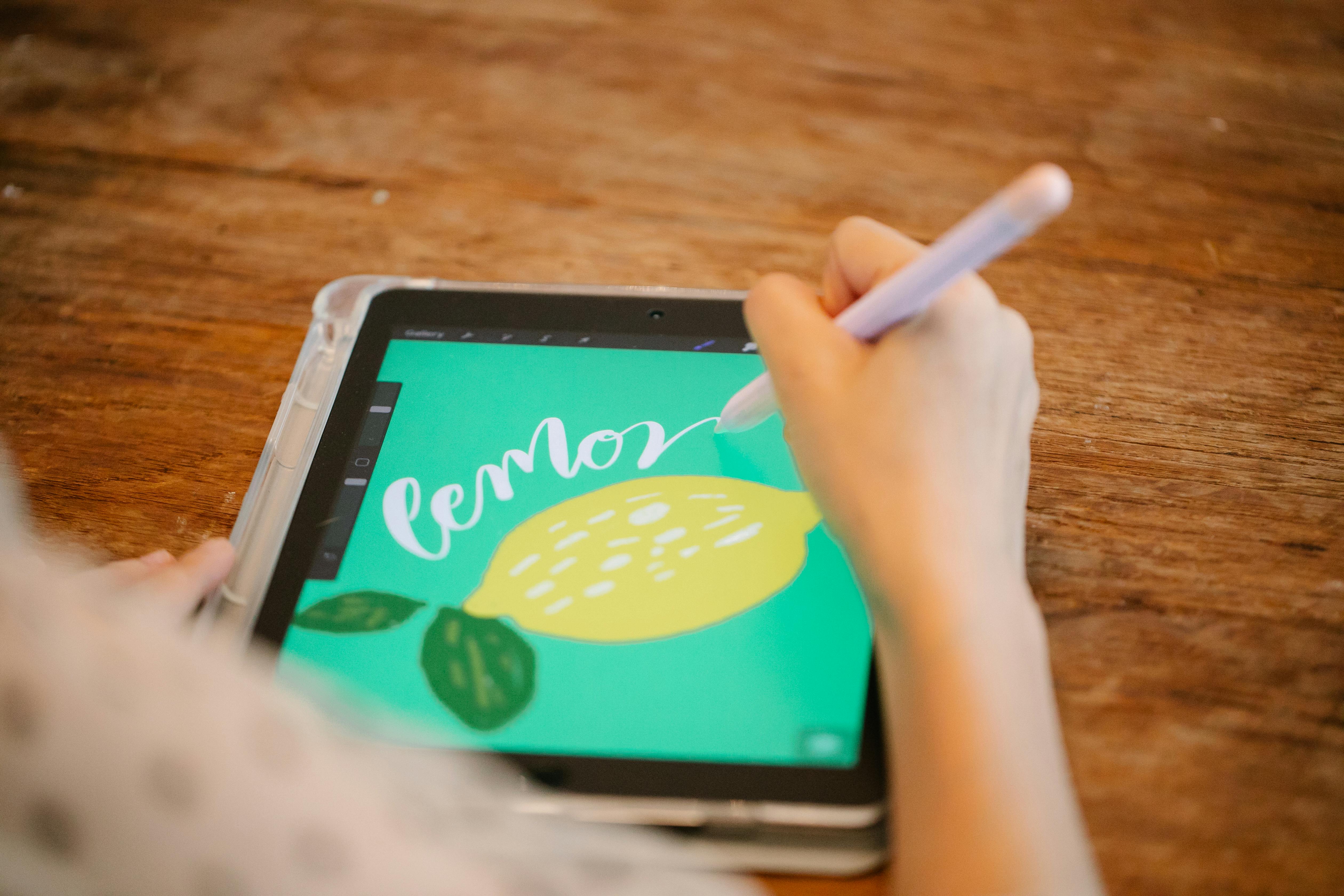
Q: Is digital ‘real’ art? A: Welcome to one of the art world’s most spirited debates! Digital tools have utterly democratized creation, allowing anyone with a smartphone to sketch, paint, and design. That’s an incredible, world-changing development. At the same time, many artists (myself included) place a huge value on materiality—the specific smell of oil paint, the texture of handmade paper, the way charcoal feels gritty between your fingers. There’s a history and a physical soul in the object. My take? The tool doesn’t define the art. If an image or a creation communicates a feeling, an idea, or a story, it is art. You can have deep, meaningful digital art and soulless physical art. The conversation is still evolving, but I think we can all agree that the impulse to create is what’s truly real.
The Real Secret They Don’t Teach in Art Class
Here’s the thing no one ever tells you at the museum: art isn’t a monolith. It’s a giant, sprawling, chaotic playground. It’s the only playground where the equipment was made by people just trying to figure life out as they went along. And the only ticket you need to get in is curiosity.
You don’t need formal training (though it can be fun). You don’t need a trust fund. You don’t need a degree that says you’re “qualified” to have an opinion. You just need to show up and be yourself. You already, in a million little ways, know how to do this. You know how to pause the TV and point at a shot and say, “Wow, look at that.” You know how to spend twenty minutes trying to decide what to wear, how colors make you feel, or why one brand’s logo appeals to you and another’s doesn’t. You laugh at memes. You gasp at sunsets. You feel a pang of something when a song hits just right. That’s it. That’s the whole skill set. See? You’ve been practicing your whole life without even knowing it.
So the next time you find yourself in front of a painting, or someone drops a phrase like “chromatic abstraction” in conversation, you don’t have to feel a thing. You don’t have to nod sagely. Just smile. Because you’re no longer on the outside looking in. You’re in the playground.
The most profound thing I’ve learned is that art isn’t about being right. It’s not about passing a test. It’s about showing up, being present, and allowing yourself to connect. It’s about being human. The rest is just details. So go on, make a wobbly line with your left hand. Curate a digital museum of things you hate. Find the story in a coffee stain. Art isn’t just in the museums. It’s in the attempt, the glance, the curiosity. It’s in the conversation. And most of all, it belongs to you.






Practical Tip: Keep a "senses journal." Write down colors, textures, or shapes that stop you mid-stride. It’s your personal decoder ring.