Degas's Dancers: Unveiling 19th-Century Ballet's Unseen Reality & Art
Beyond the tutus: Dive into Degas's world. Discover the gritty reality of 19th-century Parisian ballet, the 'abonnés' system, his Realist art, photographic innovations, and why his unflinching gaze still challenges us.

Degas's Dancers: Unveiling the Unseen Reality of 19th-Century Ballet
Edgar Degas. The name alone conjures images of graceful ballerinas, delicate pastels, and the elegant world of 19th-century Parisian ballet. But like many, for years my perception of Degas's dancers was tinted with a saccharine sweetness, a polite nod to delicate forms and elegant tutus. I'm quite certain I first saw them smiling serenely on some art calendar, absorbing only their superficial charm – a desire for simple beauty in what was often a complex world. They seemed... idyllic. Predictable. And honestly, about as thought-provoking as a particularly calm puddle. You know the feeling, right? That sense of a beloved song, but only ever hearing the radio edit – pleasant, yes, but missing the subtle harmonies, the unexpected bridges, the emotional crescendos that give the full song its power. That's how I felt about Degas, and it's a feeling I suspect many of us experience when we only skim the surface of something profound.
Much like René Magritte's art can challenge what we think we see, revealing hidden truths beneath familiar subjects, my own crack in that perception arrived during one of those museum shuffles, my patience thinning in a queue, when I found myself gazing at a print of The Dance Class. It wasn't the triumphant performance I'd imagined, no final bows bathed in golden light. Instead, it was the messy, unapologetically human truth of a rehearsal: a dancer stretching an aching back, another adjusting a drooping strap, the weary dance master with his cane. The carefully constructed illusion shattered, and in its place, a raw, captivating truth tumbled out, pulling me into a vortex of observation I’ve never quite escaped. Sweat gleaming on young brows, the fierce ambition burning in their eyes, and those unflattering angles – the awkward stretches, the bent knees, the sheer exhaustion etched onto faces hidden from the spotlight. That was it. That was the moment the superficial charm dissolved, sending me tumbling down a rabbit hole filled not with whimsy, but with stark observation and profound human stories of effort, vulnerability, and sacrifice. My own quest to understand this deeper reality began there, revealing a reflection of life's often unacknowledged struggle that many of us, in our own ways, face daily. To truly appreciate Degas's revolutionary vision, I realized, we first need to peel back the layers of his world, much like he peeled back the layers of ballet itself.
The Paris Opéra: Glittering Façade, Gritty Reality of a Brutal Profession
To truly appreciate Degas's shift in perspective, we must first understand the world he was observing so closely: the opulent, yet unforgiving, world of the 19th-century Paris Opéra. This wasn't just a venue for entertainment; it was a complex social ecosystem and, for its dancers, a brutal profession. Ballet itself was undergoing a significant transformation, moving from the more romantic, ethereal styles of earlier decades to increasingly technically demanding performances. The development of pointe work and a greater emphasis on athleticism pushed the physical boundaries of what dancers could achieve, requiring incredible physical prowess and years of rigorous training. Think of the grand Opéra Garnier, a symbol of Belle Époque extravagance, whose glittering halls concealed a very different reality for those performing within.
For the young women who danced there, it was less a fairytale and more a grueling, often precarious existence. Many of these dancers hailed from working-class families, for whom ballet was one of the few avenues offering a desperate, albeit often illusory, escape from poverty. Imagine families living on the brink, where a daughter's potential success in ballet might mean the difference between starvation and a meager survival. They typically began training as young as seven or eight, facing intense competition and physical demands that bordered on brutal, all while scrambling for limited opportunities in often cold, cramped, and unsanitary rehearsal spaces.
They were affectionately, yet tellingly, called “les petits rats” (the little rats) – a moniker that perfectly captured their industriousness, their often desperate circumstances, and their sheer numbers vying for a chance. The term also subtly hinted at their perceived insignificance within the grand opera house, scurrying about backstage, often barely seen or acknowledged by the glittering audience. Imagine the relentless competition: hundreds of aspiring girls, pushing their young bodies to the limit in dusty rehearsal rooms, knowing only a handful would ever truly succeed at the highest levels. Their lives were a stark contrast to the glittering image presented on stage. Many lived in cramped, unheated garrets, often skipping meals or sharing meager rations. Their daily wages were barely enough to cover rent and basic necessities, making supplementary income a constant, pressing concern. While ballet had evolved from royal courts to public stages, in Degas's era, it was a booming form of entertainment, but the lives of the performers remained largely hidden from the appreciative audience. Their daily existence revolved around a demanding routine:
- Endless, repetitive rehearsals: Hours upon hours of demanding physical exertion under the watchful, often harsh, eyes of strict maîtres de ballet (dance masters), whose cane wasn't just for rhythm. They pushed young bodies to their limits, expecting perfection and unwavering discipline. Injuries were rampant, and often untreated, becoming just another grim reality of the profession.
- Constant physical toll: Injuries were not just common; they were an expected part of a career that pushed young bodies to their absolute limits, often without adequate care or rest. Chronic pain, deformities, and long-term health consequences were a grim reality, concealed by the glamour of the stage. This physical sacrifice, often undertaken from a very young age, is a profound testament to their ambition and desperation.
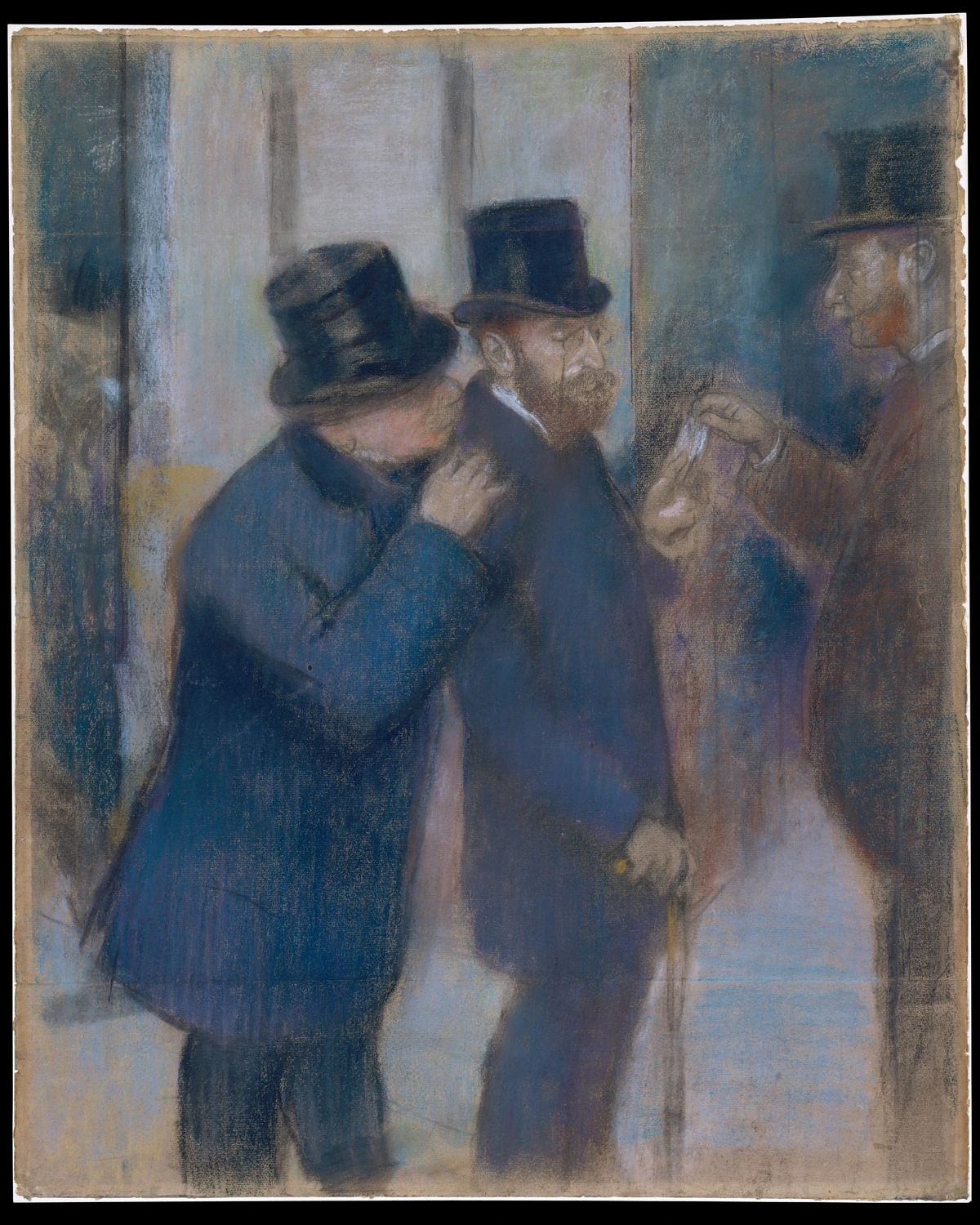
- Pervasive pressure to secure wealthy male patrons, the “abonnés”: This is where the glittering façade truly crumbled, revealing a harsh underbelly. These privileged subscribers to the Opéra had unique backstage access, a notorious system where the lines between genuine artistic support and outright transactional relationships, often involving sexual favors, were perennially blurred. Abonnés could visit the dancers in their dressing rooms, offering 'gifts' – from financial assistance (like a few francs for a meal) to social connections, a theater ticket, or even a modest piece of jewelry – in exchange for companionship or other favors. This system was not officially sanctioned, but it was an open secret, a pervasive aspect of the Opéra's social contract and a reflection of broader societal attitudes towards women in entertainment. For many dancers, securing an abonné meant the difference between starvation and survival, but often at a profound personal cost. Imagine a young dancer, her family depending on her meager earnings, being approached by a wealthy subscriber who offers enough to cover rent and food for a month – but with unspoken expectations attached. Refusal often meant not just losing a patron, but a potential advocate, making the choice incredibly difficult. This pervasive exploitation presented a significant ethical dilemma for Degas as an artist: how to depict these vulnerable subjects without contributing to their objectification, instead highlighting their humanity and struggle?
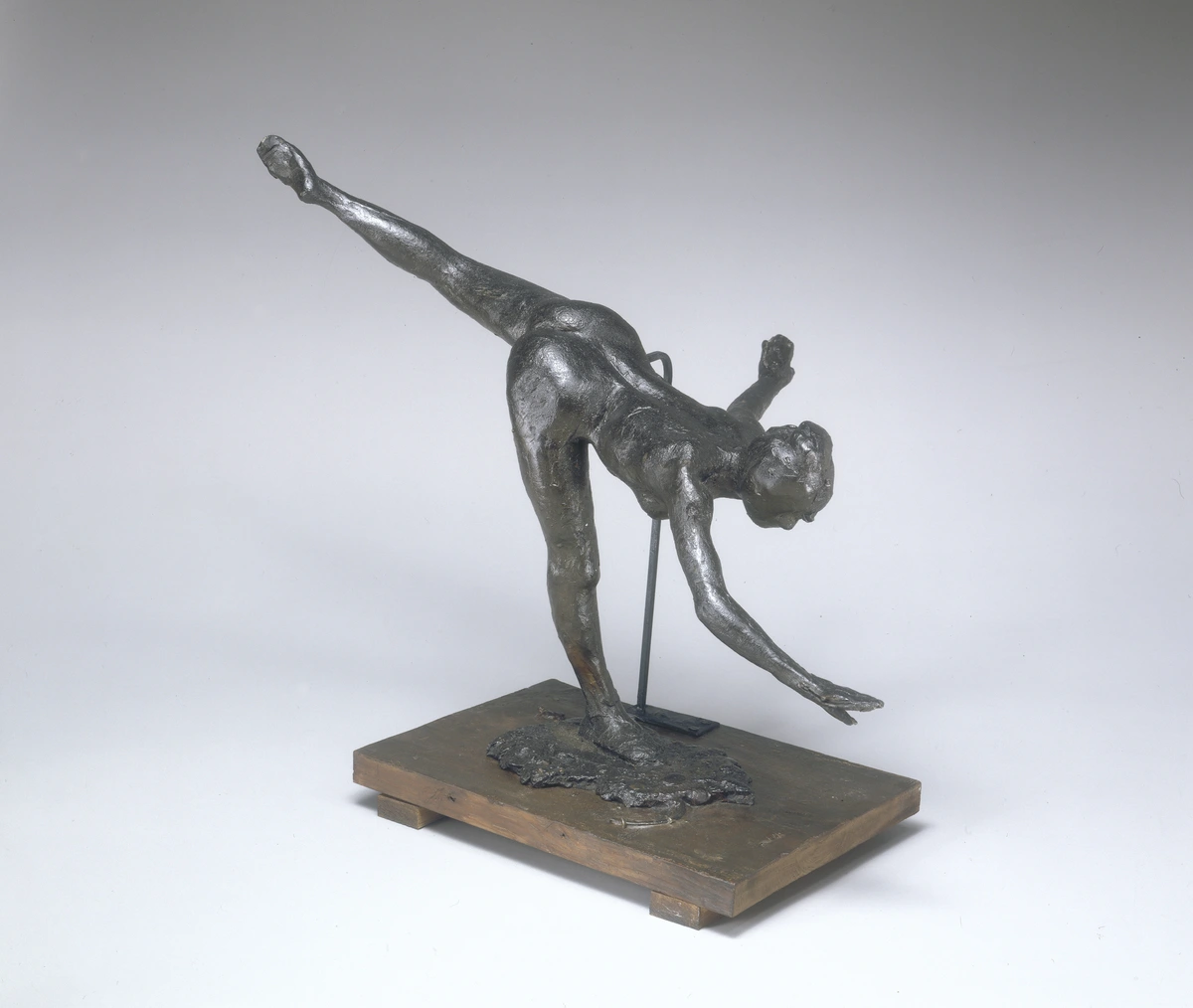
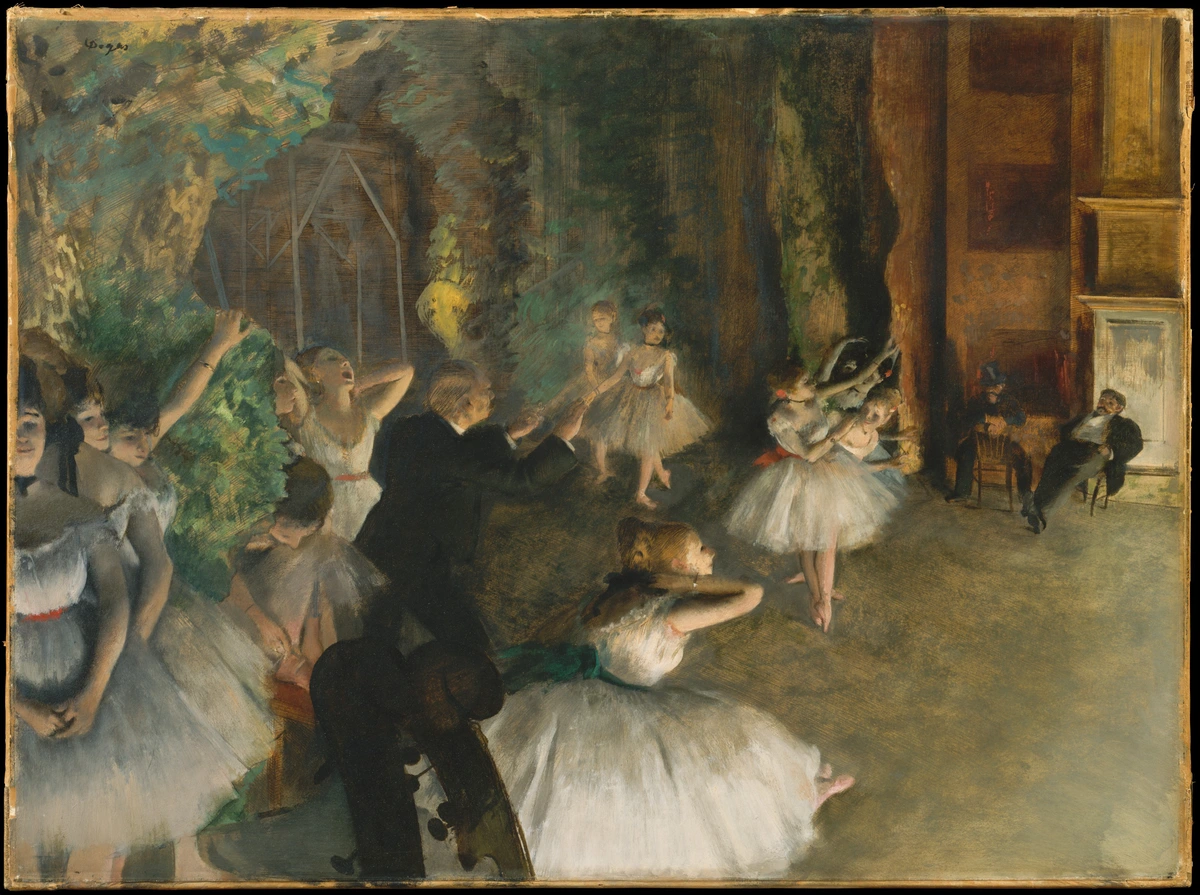
Degas, with his unflinching Realist eye, didn't shy away from this complex reality. He didn't paint the triumphant final bows or the perfectly executed pirouettes that the audience saw. Instead, he captured the moments of rest, boredom, awkward stretching, and weary anticipation. He showed the aching muscles, the frayed ribbons, the quiet struggles, and the profound vulnerabilities. His compositions were often deliberately unvarnished, showing the dancers from unexpected angles, emphasizing their physical effort and the mundane reality of their labor rather than a romanticized ideal. It was a world of sweat, ambition, and raw human effort, not just sparkle and grace. He showed us the unseen labor behind the glamour, a stark contrast to the romanticized views often presented. It's almost as if he was saying, "Look closer, this isn't just a pretty show; this is life, lived on the edge, full of unacknowledged grit and sacrifice."
To help visualize this contrast, I often find it useful to think about the differing perspectives:

Pierre-Auguste Renoir's 'La Loge' (above) captures the opulent, romanticized view of the Parisian theater experience, often depicting the joyous camaraderie of a social gathering or the soft glow of an afternoon light. Renoir sought to celebrate the beauty of social engagement and the fleeting pleasures of modern life. Degas, by contrast, preferred to show the unseen labor, the struggle, and the true grit behind the glamour. He chose to dissect rather than merely admire, focusing on what happened backstage rather than in the grand box seats, inviting us to a more profound understanding of the human condition.
Aspect of the Opéra  | Audience Illusion (The Romantic Myth) | Performer's Truth (The Degas Reality) |
|---|---|---|
| The Dancers | Ethereal, graceful muses, effortlessly beautiful | Young, overworked athletes and workers, often exploited |
| The Setting | The grand, magical stage, bathed in golden light | Cramped, dusty rehearsal rooms; dimly lit wings; precarious dressing rooms |
| The Performance | A flawless, enchanting spectacle of perfection | Endless, repetitive practice; moments of physical pain and mental fatigue |
| The Atmosphere | Magical, enchanting, innocent, escapist | Tense, competitive, physically draining, economically precarious, vulnerable |
| Patronage | Artistic support and appreciation for the arts | A notorious, often veiled system of social and sexual exploitation |
Even in abstract forms, artists explore the raw elements of creation, much as Degas explored the fundamental mechanics of movement and the hidden structures of society, revealing the unseen forces at play and the underlying beauty of form.
Edgar Degas: The Independent Realist's Unwavering Gaze
This unflinching focus on the 'messy, unapologetically human truth' of the dancers was not an accident; it was a deliberate artistic stance, one that placed Degas firmly outside the prevailing artistic currents of his time. To truly understand why Degas felt compelled to capture this raw reality, we must first examine his own artistic journey and his deliberate distance from the prevailing artistic movements. Edgar Degas (1834-1917) was undeniably a Parisian artist, but he famously and vehemently rejected the label of 'Impressionist'. And honestly, I completely get it. It's like trying to categorize a deeply psychological novel as light beach reading – it just fundamentally misses the point! Impressionists like Monet were often out in sun-drenched fields chasing fleeting light and capturing impressions of landscapes and atmospheric effects, delighting in spontaneous brushwork and vibrant, unblended colors. Degas, however, was a creature of the city's dim, gas-lit interiors, fascinated by the human form in motion, not shimmering light. He found the Impressionists' focus on the ephemeral surface of things too fleeting, too lacking in the rigorous study of form and structure he held so dear. He felt their style was too "naturalistic" – meaning, too focused on surface appearance without underlying structural integrity – and lacked the careful composition he believed essential to art, prioritizing enduring form and meticulous structure over transient visual effects. His own academic training, rooted in classical principles and a deep respect for the Old Masters, instilled in him a profound appreciation for drawing, anatomy, and classical composition, influences often overlooked when comparing him to his more radical contemporaries. He once famously quipped, "The air that one sees in the pictures of the Impressionists is the air of a picture by an Impressionist. I prefer the air that breathes through a drawing."
He famously called himself a Realist or an Independent, and for good reason. Realism, as an art movement, focused on depicting subjects as they appear in everyday life, without idealization or romanticization, often highlighting social conditions and the unvarnished truth. Degas's fascination lay not in ephemeral light effects, but in the enduring truth of modern life, meticulously captured through rigorous study of form and movement. Unlike the Impressionists' spontaneous, loose brushwork and rapid capture of transient moments, Degas prioritized the structured lines of drawing, a foundational element of his practice rooted in classical training. His aim was a precise, almost scientific observation of the human condition, even within the seemingly glamorous world of ballet. This rigorous study involved not just understanding anatomy through academic texts, but dissecting poses, understanding how muscles and bones articulated during movement, and repeatedly sketching the same pose from slightly different angles. He even used wax models to better understand three-dimensional form, painstakingly capturing every nuance of a dancer's physique. If you're curious about the fundamental building blocks of art that so fascinated Degas, exploring the elements of art like line offers a fascinating parallel to his own artistic philosophy, showing how a single line can convey both form and emotional weight.
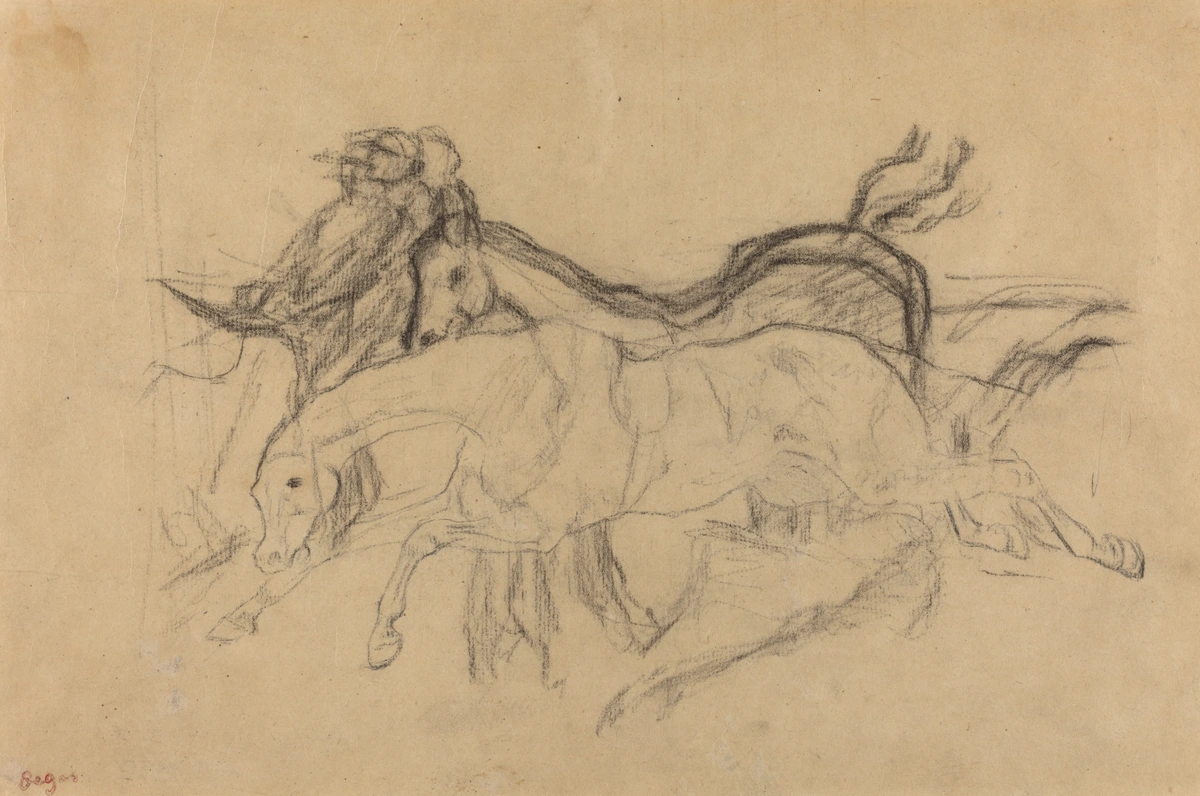
Degas was drawn to subjects that revealed the human condition in everyday, often unglamorous, settings: laundresses, milliners, bathers, horse racing, and, most famously, the dancers of the Paris Opéra Ballet. This wasn't a casual interest; he was an obsessive observer. He often secured backstage passes for decades, sketching endlessly with charcoal and graphite in countless notebooks. These weren't just quick doodles; they were often detailed studies of musculature and skeletal structure, reflecting his deep understanding of human anatomy. He would sometimes spend hours watching a single dancer, making hundreds of rapid sketches to capture the subtle shifts between movements, or even using wax models to better understand three-dimensional form. This relentless study allowed him to capture not just the outward appearance, but the very essence of bodily movement and profound human fatigue. He aimed to portray the dancers as professional athletes, honing their craft with immense discipline, rather than just ethereal beings. He wanted to depict the physical conditioning and exacting techniques behind their grace, often meticulously studying the same dancers over extended periods to understand their movement patterns and the subtle shifts between one movement and the next, almost like a choreographer studying a performance. His approach was less about capturing a fleeting moment and more about understanding the process of movement, the labor behind the elegance, and the mental resilience required.
Degas and His Contemporaries: A Unique Perspective
While Degas shared a fascination with modern life with some of his contemporaries, his approach remained distinctly his own. Artists like Jean-Louis Forain also depicted ballet scenes, but often with a more overtly satirical or narrative edge, using caricature to highlight the scandalous aspects of the Opéra and its patrons. Henri de Toulouse-Lautrec, too, captured the vibrant, often gritty, world of Parisian entertainment, including dancers, but his style was more expressionistic, focusing on character and atmosphere with bold outlines and flat, emotional colors to convey specific moods. Degas, by contrast, maintained a more detached, analytical gaze. His aim was not moralizing or caricature, but a precise, almost clinical observation of human behavior and form, letting the viewer draw their own conclusions from the raw presentation of reality. He wasn't telling a story about the dancers; he was showing you their reality, compelling you to confront it directly without overt emotional guidance.
Degas's Artistic Innovations: Line, Composition, and the Shifting Lens of Photography
Degas was, above all, a master draftsman. He believed, quite fundamentally, that line was the foundation of all art, the skeletal structure upon which everything else was built. His notebooks are filled with hundreds of quick, precise sketches capturing the subtle curve of a spine, the tension in a calf muscle, or the weary slump of a tired shoulder. For him, the human body in motion was the ultimate artistic challenge, and the dancers, with their repetitive, disciplined movements, were simply the perfect vehicle for this relentless study. His lines were not merely outlines; they conveyed volume, tension, and the very force of movement itself, imbuing his figures with a powerful sense of presence and dynamic energy. For those curious about how Degas fits into the grand sweep of art history, my timeline offers a broader context for his journey through various artistic currents, highlighting his unique position.

He also broke away from traditional compositions, using daring angles and abrupt cropping that made his scenes feel incredibly immediate – like a private moment glimpsed through a keyhole, or from an unexpected vantage point in the wings. These seemingly candid, spontaneous arrangements were, in fact, meticulously planned, often directly influenced by his deep interest in photography. Photography, still a relatively novel and revolutionary medium in the 19th century, offered a new visual grammar, and Degas eagerly absorbed its mechanics, recognizing its potential to capture reality in unprecedented ways.

credit, licence
How Photography Shaped Degas's Vision
Degas didn't just imitate photographs; he mimicked the effects of early photography, integrating its "accidents" into his meticulously planned compositions to create a heightened sense of realism and immediacy. Think about it: early cameras often had long exposure times, leading to blurred motion in candid shots, an effect Degas replicated to convey movement and the fleeting passage of time. They had fixed focal lengths and could arbitrarily crop a scene, often cutting off figures at the edges – a common photographic "accident" he turned into an artistic device, as seen in works where dancers are abruptly truncated, inviting the viewer to imagine the scene beyond the frame. His works often feature unusual perspectives (from above, below, or sharply angled from the side, mirroring unconventional camera placements), and an almost 'frozen' quality of movement – a snapshot of arrested motion, not stiffness. He was particularly interested in how photography could capture the fleeting, unposed moment, and he translated this visual honesty into his paintings, making his scenes feel like stolen, candid glimpses of reality, full of dynamic tension and surprising intimacy. This dynamic interplay between the nascent technology of photography and his artistic vision cemented his place as a true innovator, pushing the boundaries of traditional painting.
The Transformative Power of Pastels and The Little Fourteen-Year-Old Dancer
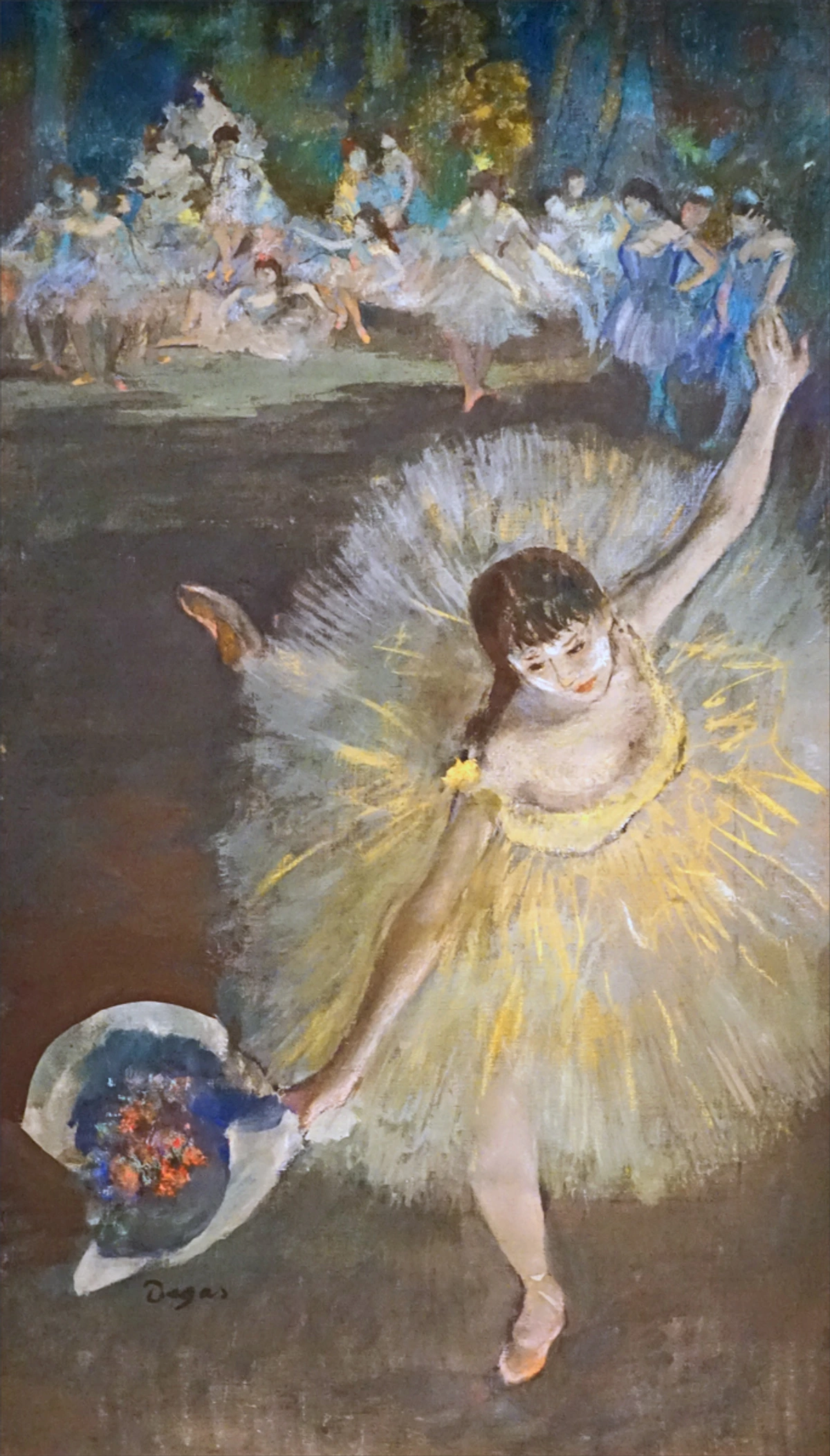
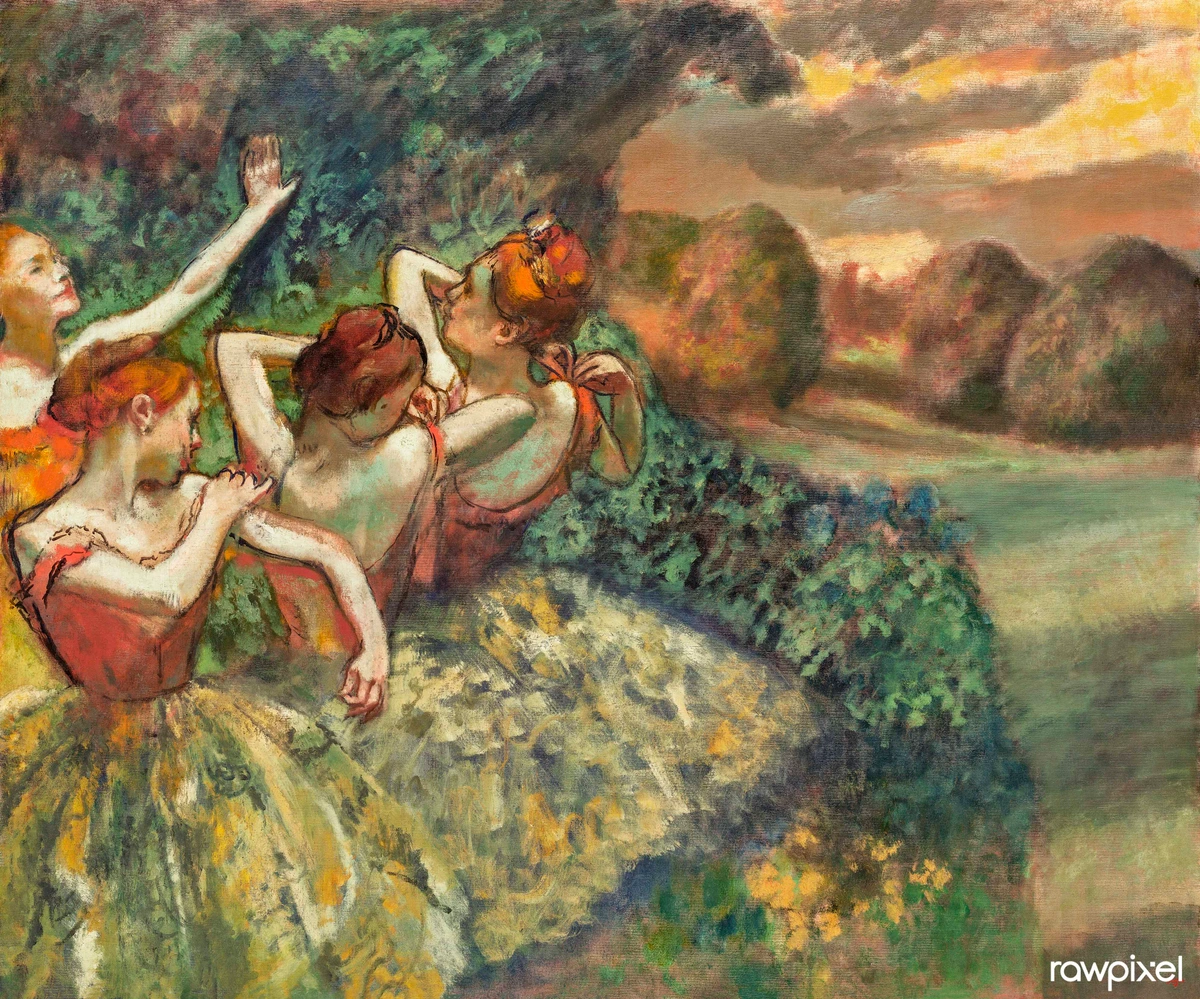
While he was a skilled oil painter, Degas increasingly turned to pastels, especially for his later dancer series. This medium allowed him to blend the immediacy of drawing with the rich, vibrant color of painting. Pastels offered a velvety texture and a luminous quality that beautifully captured the diffused, often artificial, gaslight of the theater – a pervasive feature of 19th-century interiors. This gaslight influenced his palette, leading to warm, muted tones and dramatic contrasts between lit and shadowed areas, reflecting the intimate, often confined spaces he depicted and emphasizing the glowing contours of bodies and costumes. Pastels were also uniquely suited to capturing the delicate textures of tulle tutus and the subtle flush of skin after exertion, allowing for a quick build-up of layers and an expressive freedom. He often used whites and yellows to represent gaslight, and vibrant blues and greens to render costumes, creating a sophisticated play of color. In his hands, forms and details sometimes dissolved into vibrant explosions of color – where sharp outlines blurred into fields of pure pigment, the sensation of movement and light taking precedence over strict anatomical definition. This powerful emphasis on pure sensation and the fluidity of movement over precise depiction was a significant precursor to abstraction, long before it became a widespread movement, showcasing his innovative spirit. It's fascinating how artists use color to convey emotion and atmosphere, and Degas's sophisticated use of pastels is a masterclass in this regard, moving beyond mere representation to evoke feeling.
Much like in abstract forms, Degas's later works saw contours dissolve, emphasizing sensation and the raw impact of color, pushing the boundaries of traditional representation and anticipating modern art movements.
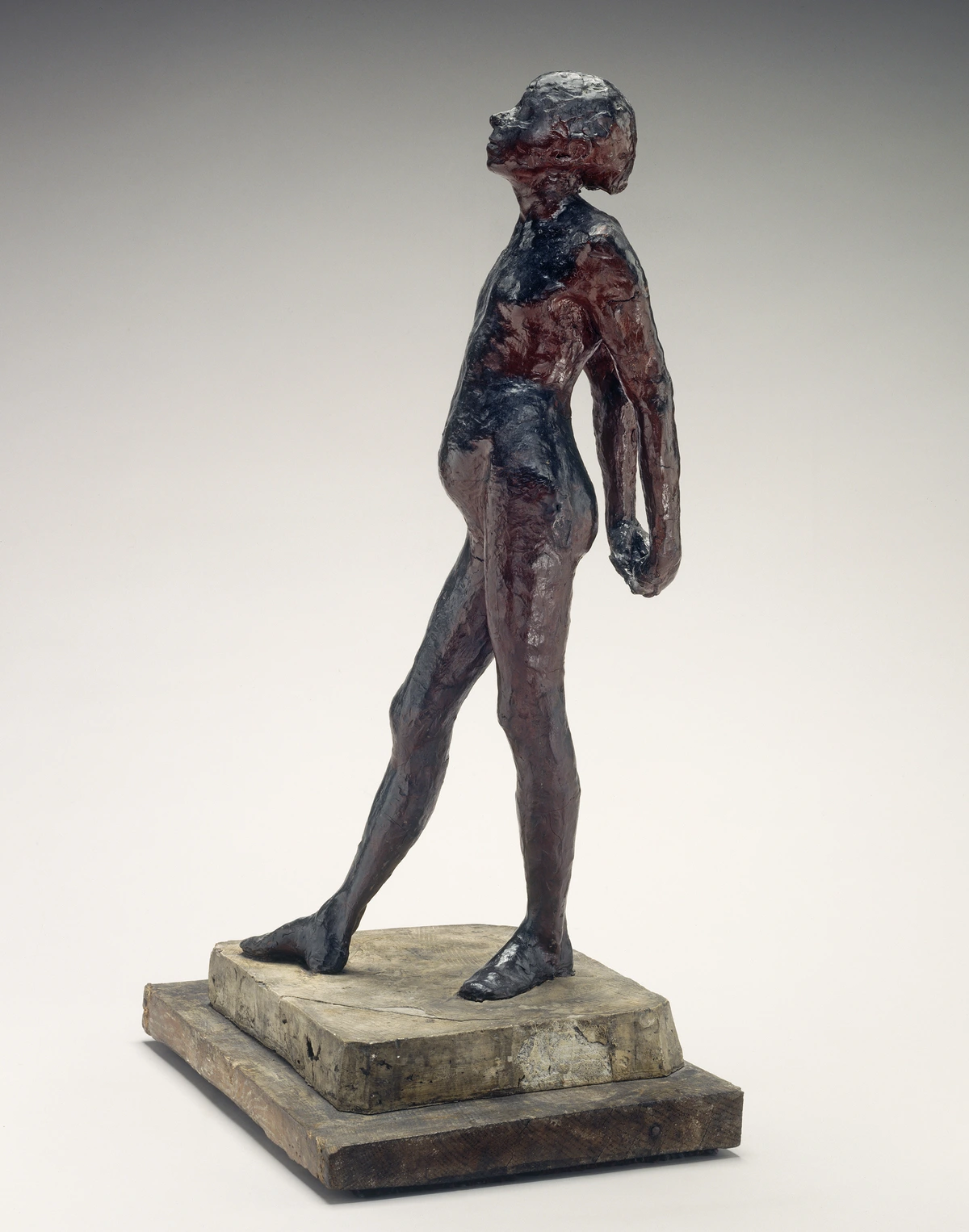
But perhaps no single work of his encapsulates his revolutionary Realist vision and his challenging approach to art more than his sculpture, The Little Fourteen-Year-Old Dancer (1881).
This was the only sculpture he exhibited publicly, and it caused a massive scandal. Instead of the idealized, classical beauty expected in sculpture (think of the smooth, unblemished marble figures of antiquity, representing unattainable ideals), Degas presented an unflinching, almost clinical depiction of a young ballet student, Marie van Goethem. Its startling realism, the groundbreaking use of real materials (a bronze figure adorned with a real fabric tutu, a linen bodice, satin slippers, and even human hair tied with a ribbon), and the perceived "ugliness" or lack of idealization in the subject matter shocked contemporary viewers. Critics reacted with outrage, some lambasting her as "a flower of precocious depravity," recoiling at her "suggestive posture," or rejecting the thought of a working-class girl, with all her implied social realities, being presented as high art. Can you imagine the shock, the profound discomfort, of seeing something so raw and unvarnished – a working-class girl, with hints of her precarious existence – presented as a serious work of high art, challenging centuries of aesthetic tradition? It was a bold statement that underscored his unwavering commitment to depicting life as he saw it, however uncomfortable that might be for the viewing public. This work, in particular, sparked intense debates about the ethical responsibility of artists, especially when depicting vulnerable subjects from the working class. Was Degas merely exploiting his subject, or was he granting her a dignity often denied, forcing viewers to confront uncomfortable social truths? These are questions that continue to resonate in the art world today. Despite the initial uproar, the sculpture was eventually celebrated posthumously and acquired by major museums, cementing its place as a groundbreaking masterpiece.
Just as the Centre Pompidou's exposed structure challenged architectural norms by revealing its inner workings, Degas's sculpture defied conventional beauty by revealing the unseen truths and raw reality of the ballet world.
Iconic Degas Dancers: Masterpieces Revealing Ballet's Unseen Truths
To truly appreciate Degas’s unique vision, you simply must spend time with some of his most iconic dancer pieces. Each tells a different part of the story, revealing his evolving technique and unwavering focus on capturing the unseen. From early rehearsals to later, more abstract works, these pieces collectively form a profound Edgar Degas biography of his artistic obsession and his relentless pursuit of truth in art. You can explore more of his extensive body of work related to ballet on this page: Edgar Degas Dancer Paintings.
Artwork Title | Year | Medium | Significance in Degas's Oeuvre |
|---|---|---|---|
| The Dance Class | 1874 | Oil on canvas | A quintessential example of his focus on the mundane reality of rehearsal, not just performance. This painting was crucial in establishing his reputation for depicting the dusty rehearsal rooms, tired expressions, and informal attire behind the spectacle. It challenges the idealized image of ballet by revealing the quiet labor, individual personalities, and weary waiting, offering a candid window into the unglamorous truths of training, a theme he would revisit often. |
| The Ballet Class | c. 1871-1874 | Oil on canvas | Another profound depiction of the dancers' rigorous training, emphasizing the collective effort and disciplined repetition that formed the backbone of their art. Here, he often highlights the dance master's critical presence and the sheer physicality involved, contrasting sharply with the effortless grace seen on stage. It shows the constant grind and the silent ambition in the faces of the young performers. |
| L'Étoile (The Star) | 1878 | Pastel on paper | Here, Degas masterfully uses perspective to create a powerful sense of unease and voyeurism. A prima ballerina is shown on stage, but from an unsettling, high-angle, cropped perspective that feels intrusive. The shadowed male figure lurking in the wings isn't just background; he's a potent symbol of the dancers' precarious position and the ever-present reality of the abonnés. The contrast between the illuminated dancer and the dark observer makes the voyeuristic aspect even more potent, making the viewer complicit in the gaze and highlighting the vulnerability inherent in their profession. |
| Dancers in Blue | c. 1890 | Pastel | A stunning example of his later, more expressive style, heavily influenced by his failing eyesight. Forms and details begin to dissolve into a vibrant tapestry of color and light, highlighting the expressive power of pastels and the ethereal quality of movement. The vibrant blues and greens, rendered with broad strokes, connect his physical state directly to his artistic evolution, almost hinting at abstraction and anticipating future artistic movements. |
| The Little Fourteen-Year-Old Dancer | 1881 | Bronze, tulle, silk, human hair | The only sculpture he exhibited publicly, it caused a massive scandal. Its unflinching realism, the startling use of real materials (a real tutu and hair), and the perceived "ugliness" or lack of idealization in the subject matter shocked contemporary viewers who expected classical beauty in sculpture. This work profoundly challenged traditional notions of art and was a bold statement about class and art, sparking intense ethical debates about artistic representation, particularly of vulnerable, working-class subjects. |

Just as historical art challenged viewers with its raw portrayal of human suffering and faith, Degas's works, though secular, challenged conventional beauty by revealing the unvarnished truth of his subjects.
Common Questions About Degas's Dancers
It’s natural to be curious about the mind behind these captivating, yet often challenging, works that offer such a unique glimpse into 19th-century ballet. Here are some of the most frequent questions I receive about Degas's motivations and methods when it comes to his dancers, providing further insight into Degas art techniques and his world:
Did Degas paint his dancers from life?
Yes, absolutely. Degas was an obsessive observer, often securing backstage passes for the Paris Opéra for decades. He constantly sketched dancers during rehearsals, rest periods, and even off-stage, capturing them in unguarded moments. This allowed him to portray the unglamorous reality of their profession, not just idealized performances. He typically began with quick charcoal and pastel sketches, often making hundreds of studies to capture sequential motion and build a vast visual library of poses, refining them later in his studio for larger oil or pastel works. He preferred to capture motion and effort in real-time observation, meticulously studying the same dancers over extended periods to understand their movement patterns and the subtle shifts between one movement and the next. His dedication was almost scientific, a true hallmark of his Realist art movement affiliation.

Much like a curious observer might scrutinize a unique object, Degas meticulously studied his subjects to uncover their true essence.
Why did Degas reject the Impressionist label?
He saw himself primarily as a Realist or an Independent, and he was quite vocal about it. While he exhibited with the Impressionists and shared some interests (like depicting modern life), he differed fundamentally in technique and philosophy. Impressionists like Monet and Pissarro focused on fleeting light and spontaneous, broken brushwork, aiming to capture transient moments and atmospheric effects outdoors (plein air). Degas, however, valued rigorous drawing, meticulous composition, and a more analytical, almost scientific observation of form and movement, which he believed provided the underlying structure essential to art. He explicitly believed Impressionism was too focused on surface appearance without underlying structure, something he felt the Impressionists often neglected in their pursuit of fleeting moments. He favored working in the studio, where he could control the light and focus on careful composition and drawing, an approach that contrasted sharply with the Impressionists' emphasis on immediacy and spontaneity. This distinction highlights the core difference in Impressionism vs Realism as artistic philosophies.
What was the public reaction to Degas's dancer paintings?
Initially, his Degas ballerina paintings were met with mixed reactions. While some appreciated their novelty and realism, others were uncomfortable with his portrayal of dancers as hard-working individuals rather than graceful muses. The raw, sometimes awkward poses and the hint of the dancers' precarious social standing were often unsettling, challenging the romanticized ideals of the time. His sculpture, The Little Fourteen-Year-Old Dancer, caused a particular uproar due to its startling realism and the use of real clothing and hair, profoundly challenging traditional notions of ideal beauty in sculpture and leading to accusations of "ugliness" and "depravity." Over time, however, his unique vision became widely celebrated for its honesty, psychological depth, and innovation, eventually earning him a place among the masters.

Just as Frank Lloyd Wright challenged architectural norms, Degas pushed the boundaries of artistic convention, sparking debate but ultimately leaving an undeniable legacy.
Were Degas's works controversial?
Yes, sometimes quite profoundly. Beyond The Little Fourteen-Year-Old Dancer scandal, his unflinching portrayal of female subjects – from bathers caught in intimate, unposed moments to the weary, unglamorous lives of laundresses and dancers – was often seen as too direct, too clinical, or even voyeuristic by some contemporary critics. He challenged the romanticized ideals of his time by showing the human truth beneath the surface, and that often made people uncomfortable. Critics sometimes questioned his motivations, wondering if his detached gaze bordered on exploitation, especially when depicting vulnerable working-class women. But for me, it made them think, and that was precisely his intention: to show the effort, the vulnerability, and the social complexities hidden beneath the glittering façade, compelling viewers to confront these realities.

What is the significance of Degas's ballerinas?
Degas's ballerinas are significant because they strip away the idealized glamour of ballet to reveal the demanding, often brutal, reality of a 19th-century dancer's life. He transformed a seemingly ethereal subject into a vehicle for social commentary and Realist observation. His works highlight the dancers as hardworking individuals, athletes, and often exploited young women, providing a profound human dimension to an art form previously seen only for its aesthetic perfection. They challenge viewers to look beyond superficial beauty and engage with the underlying effort, vulnerability, and complex social dynamics, making them enduring symbols of both artistic mastery and human struggle.
How did Degas depict women beyond dancers?
While his dancers are undeniably iconic, Degas's Realist art movement interests extended to other facets of modern Parisian life, always with that characteristic unflinching gaze. He meticulously documented laundresses, capturing the backbreaking labor and stoic dignity of working-class women through their exhausted postures and the textured folds of their garments. His millinery shop scenes offered a glimpse into the burgeoning world of fashion and female commerce, showing women engaged in their craft with quiet focus and artistry. In these diverse subjects, he consistently explored the delicate balance between grace and grit, surface appearance and underlying truth, mirroring the insights he gained from his ballet studies.
Did Degas ever depict dancers happily?
While Degas is renowned for his realistic portrayals of dancers' arduous training and moments of weariness, it would be an oversimplification to say he never depicted them happily. He certainly captured moments of quiet introspection and focused determination that could be interpreted as a form of contentment or pride in their craft. However, his primary interest lay in the truth of their lives – the effort, the discipline, the physical and mental labor – rather than overt displays of joy or theatrical spectacle. His focus was on the human condition within their profession, which naturally included the less glamorous, more challenging aspects. He showed their resilience and their quiet dignity, which, in its own way, is a profound form of human happiness.
How did Degas influence later artists?
Degas's innovations profoundly impacted subsequent generations of artists. His daring compositions, influenced by photography and Japanese prints, introduced new ways of framing scenes and depicting movement, inspiring artists to break from traditional academic rules. His unflinching Realist approach to modern life, focusing on everyday subjects and the human figure in unposed moments, laid groundwork for future movements interested in social commentary and authenticity. Furthermore, his experimental use of pastels, pushing the medium beyond mere sketching to create luminous, painterly effects that hinted at abstraction, opened new avenues for exploring color and sensation. Artists across various disciplines learned from his keen observation of the human form, his mastery of line, and his commitment to depicting reality, however uncomfortable.
Like viewers in a gallery discussing the nuances of an artwork, Degas invites us into a deeper conversation about art, society, and the human condition.
The Evolution of an Obsession: Degas's Dancers Through Time
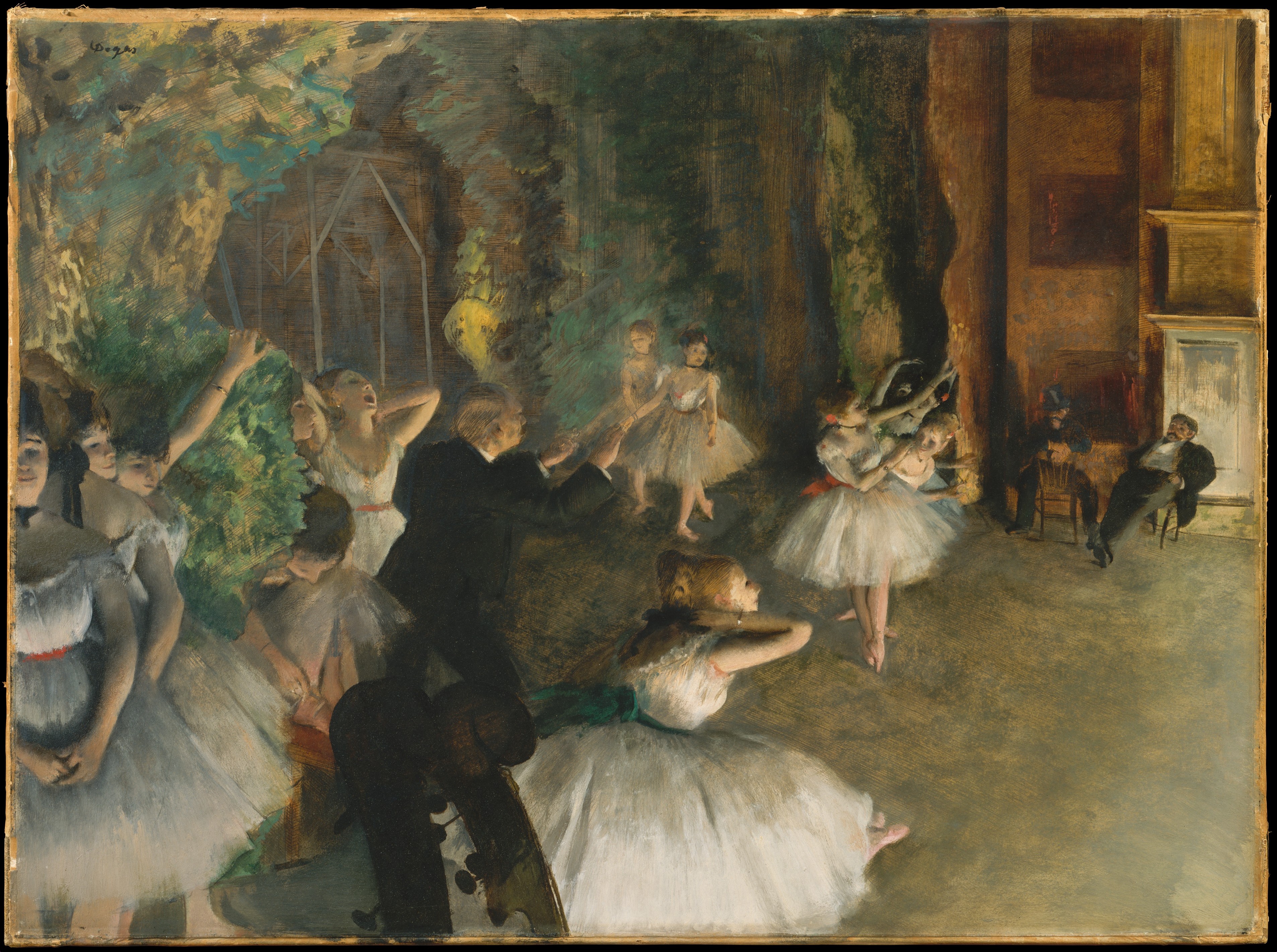
Degas's fascination with dancers wasn't static; it evolved throughout his career, often reflecting changes in his own health and artistic priorities. As Degas's vision began to fade significantly in his later years, around the 1880s and 1890s, a profound shift occurred in his artistic practice, forcing an adaptation that led to even greater innovation. His style became more expressive and less concerned with fine detail. This challenge, rather than hindering him, forced him to adapt and innovate. He began to rely more heavily on pastels, using broader strokes and vibrant, less blended colors. This led to the luminous, almost abstract pastel works we see in pieces like Dancers in Blue, where forms and contours dissolved into fields of pure pigment. These later works prioritize color, light, and the raw sensation of movement, demonstrating his ability to adapt and innovate even in the face of physical challenges. This artistic resilience ensured his reputation continued to grow, moving from initial controversy to widespread acclaim as a master of modern art, truly anticipating some of the expressive and abstract movements of the 20th century.

Just as frottage reveals the hidden textures of a surface, Degas's evolving style uncovered new layers of artistic expression, even as his physical abilities changed.
The Enduring Legacy of Degas's Unflinching Gaze
So, what do we take from all this? For me, Degas's dancers are a powerful reminder that true beauty often lies not in perfection or romanticized ideals, but in the raw, unvarnished truth of human experience. He taught me to look beyond the glittering façade, to appreciate the immense effort, vulnerability, and quiet dignity of those often relegated to the background. His art isn't just about ballet; it's about work, social dynamics, the power of observation, and the courageous decision to depict life as it truly is, even when it's uncomfortable. His art isn't just about looking; it's about seeing – seeing the effort behind the elegance, the reality beneath the spectacle, the quiet dignity in the everyday. He challenged the world to look deeper, and in doing so, offered a profound lens through which to view not just art, but humanity itself. This spirit of unflinching observation and the courage to depict authentic human experience is a guiding principle for artists today who seek to create work that resonates beyond superficial beauty.









Burlington House, home to the Royal Academy of Arts, stands as a testament to the enduring power of artistic institutions to shape and preserve cultural legacies, a context against which Degas's fiercely independent vision often stood in bold relief.
His legacy, therefore, isn't just about his mastery of line or the transformative use of pastels, though those are undeniably profound. It's in his unwavering commitment to a personal, Realist vision that dared to show the sweat, the struggle, and the silent narratives behind the spectacle. And for that, I believe, his dancers will continue to captivate and challenge us for generations to come, much like they captivated and challenged me on that quiet museum visit years ago. If you're seeking art that prompts this deeper kind of seeing, that celebrates authenticity and unflinching observation, perhaps a piece from my art could be a starting point, reflecting a similar spirit of authentic expression, or you might find inspiration in the broader historical journey through art on my timeline.