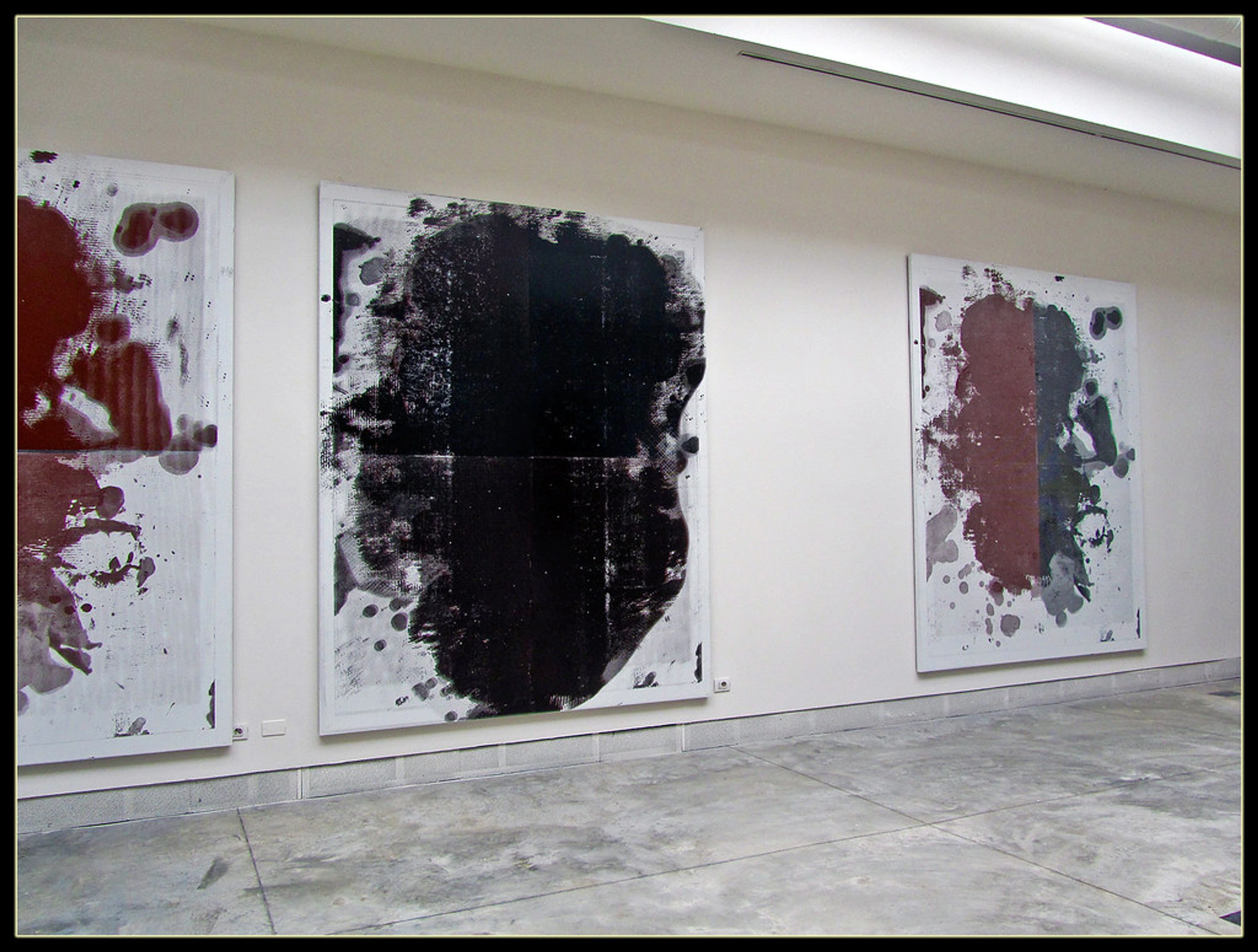
Alberti’s Rules: A 500-Year-Old Guide for Modern Art
Ever feel like ‘balance’ in art is just a buzzword? Leon Battista Alberti’s 15th-century rules for paintings feel jarringly relevant today. This article explores how his principles can combat our visual chaos and bring clarity to modern art.

Alberti’s Secret: Why a 500-Year-Old Architect’s Rulebook is an Artist’s Best Friend Today
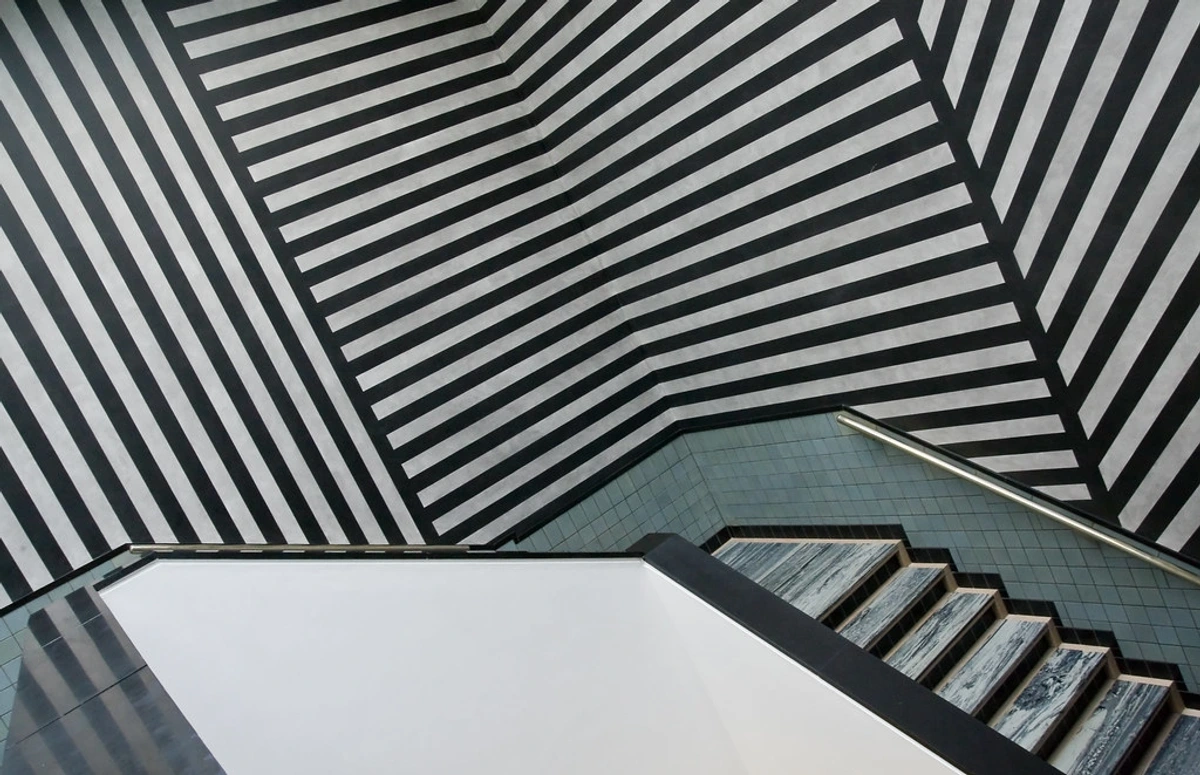
I’ll be honest, the first time I read Leon Battista Alberti’s On Painting, I expected a dusty art history lecture. What I got was a jolt. Here was a 15th-century architect, a philosopher, a man of the Renaissance, laying out a simple set of rules for making a painting feel right. Not as a strict recipe, but as a way of thinking about space, light, and people that feels almost radical in our age of endless scrolling and visual noise. It’s like finding a master key that unlocks both a 15th-century fresco and the visceral impact of a contemporary abstract painting. Alberti’s genius wasn’t in inventing art, but in being the first to articulate its grammar—the underlying syntax of how a flat surface can be persuaded to sing with depth, drama, and life. Understanding this syntax, as Alberti did, helps explain why certain abstract works by masters like Sol LeWitt continue to demand attention in a chaotic world—they speak a universal language.
Most of us aren’t painting biblical scenes for a Florentine chapel, so you might wonder what his advice has to do with a vibrant, abstract piece you'd hang in a modern apartment or a dynamic digital composition. That’s the surprising part. Alberti wasn't just writing for his time; he was writing about the fundamental human experience of looking. And that’s something that hasn’t changed, even if our cameras have. He was obsessed with the psychology of perception—how our brains assemble a chaotic array of light and shadow into a coherent, meaningful world. That fundamental wiring hasn’t been updated. We still crave order amid chaos, focus within distraction, and a sense of place even in the most non-representational art. Alberti’s rules are, at their core, a guide to satisfying that deep, unchanging hunger.

Who Was Leon Battista Alberti? (And Why Should You Care?)
Imagine a person who could design a building, write a groundbreaking book on perspective, compose a witty play, and debate ethics with the Pope—all in a week. That was Alberti. He was the archetype of the “Renaissance Man,” a label that can feel intimidating until you realize his core belief: that art and science are two sides of the same coin. For him, understanding how we see wasn’t just for mathematicians; it was the essential first step for anyone trying to create a powerful image. He saw the painter not as a mere craftsman, but as a kind of god, creating a microcosm—a complete, parallel world on a flat surface. This audacious idea elevates painting from decoration to philosophy. It implies that behind every brushstroke, every choice of color or form—whether on a Renaissance chapel wall or a modern gallery canvas—is an intentional act of world-building.
His little book, De Pictura or On Painting, published in 1435, is considered the first modern treatise on the theory of painting. It wasn’t just technical; it was philosophical. He argued that a great painting isn’t a collection of lucky brushstrokes. It’s a carefully constructed window into another world, built on principles of harmony, balance, and clarity. These aren’t just pretty words; he gave artists a practical toolkit to achieve them. Think of it as the first artist’s manifesto, a declaration that painting was a liberal art, an intellectual pursuit worthy of the same respect as poetry or oratory. It codified what great artists did intuitively, offering a roadmap for generations to come—a roadmap we can follow today when applying classical theory to modern compositions, like preparing a canvas correctly to support such intentional work.
The Three Pillars of Alberti’s On Painting
The brilliance of Alberti’s system is its elegant simplicity. He distilled the complex art of composition into three core concerns: circumscription, composition, and the reception of light. He called this the ‘three parts of painting,’ and they function like a checklist for building a compelling illusion from the ground up. It’s a system that scales from a portrait to a sprawling narrative, from a still life to an abstract explosion of color. Crucially, these three pillars function in any medium—from the raw canvas of a Baroque master to the layered digital compositions of today’s contemporary art.

1. Circumscription: Drawing with Purpose
Think of circumscription as drawing, but with a much deeper purpose. Alberti isn’t talking about mindlessly outlining a figure. He’s talking about the power of the contour line to not only define a shape but to give it life and accuracy. He described it as the process of tracing the outlines of a thing, just as it might be seen from a specific viewpoint.
This is more profound than it sounds. It’s the difference between drawing a “generic” hand and drawing that specific hand, with its unique proportions and slight turn. He even suggested using a thin veil with a grid on it—a sort of proto-projector—to trace a scene accurately. It wasn't about cheating; it was about training the eye to see. For a modern artist, this translates directly to sketchbook practice, extending even to how we approach our artist’s biography, grounding our story in specific, truthful details. It's the discipline of slowing down and truly observing the edges of things before you abstract them away. It’s the foundation upon which all the color and light will later rest. It insists that before you can invent, you must first see. This act of deliberate definition is what transforms a background into a space, a color wash into a shape with presence.

2. Composition: Where the Magic Happens
If circumscription is about the individual characters, composition is the art of writing the play. This was Alberti’s main event. For him, composition was about how all the parts of the painting relate to each other to create a single, harmonious whole. He broke this down into three key relationships, and this is where his mind starts to sound shockingly modern. He saw the canvas not as a surface for recording things, but as a stage for directing the viewer’s experience. Every element is an actor with a role to play in the drama of perception, a stage that can evoke the same sense of profound space as the immersive installations of artists like Yayoi Kusama.
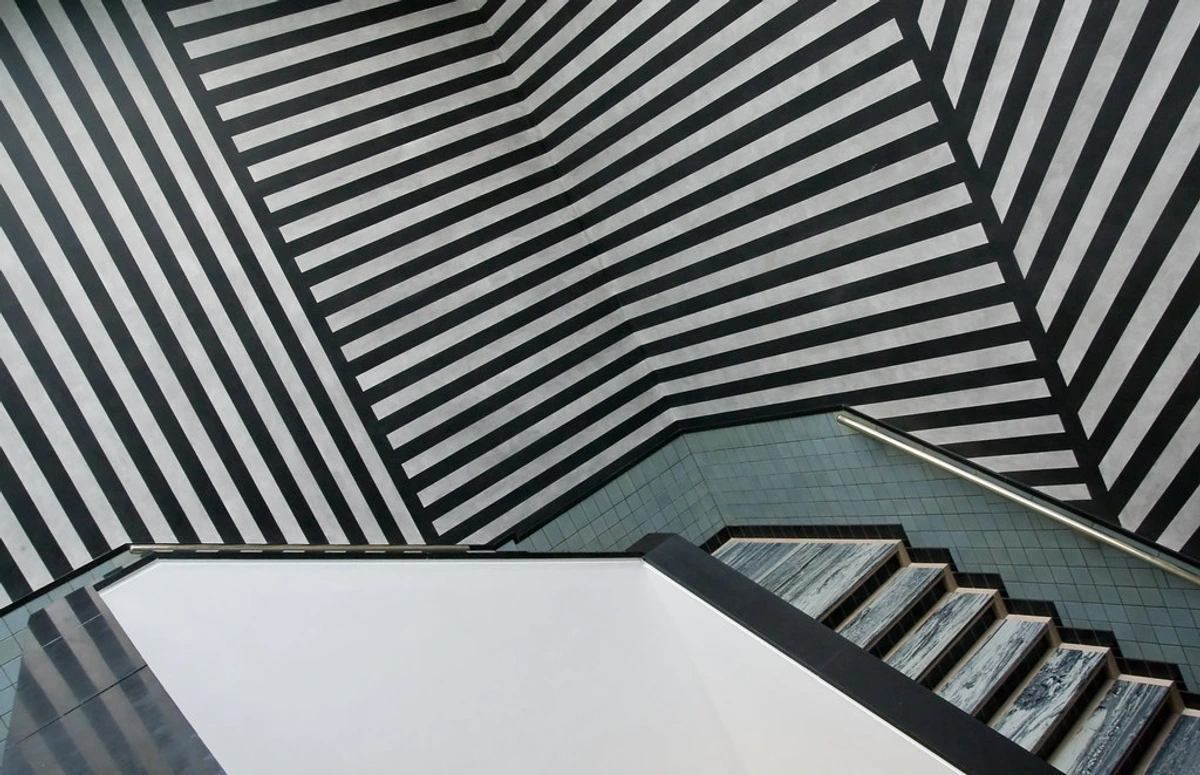
- Planes: Imagine different layers of space in your picture, like a stage with a foreground, a middle ground, and a background. Alberti called these planes. He taught that by carefully placing figures and objects on different planes, you create a believable sense of depth and space. This creates what he called istoria, a narrative so compelling it pulls the viewer in. It's the principle that separates a random collection of objects from a purposeful scene, a principle that holds true when arranging art in a room and ensuring it has space to breathe.
- Members: This is a wonderful, human-centric term for the individual parts of whatever you’re painting—the limbs of a body, the branches of a tree, the individual streaks that make up an abstract gestural mark. He stressed that every “member” must be in the right proportion to the whole figure. A hand should look like it belongs to the arm it's attached to, just as a single brushstroke should feel destined to be part of a larger shape.
- Bodies: This is the final level. It’s about how all the complete figures and objects (the “bodies”) relate to each other within the story of the painting. Are they in a dynamic group? Is one figure isolated and significant? In abstraction, this is the interplay between your primary focal shapes, creating a visual rhythm that guides the eye.
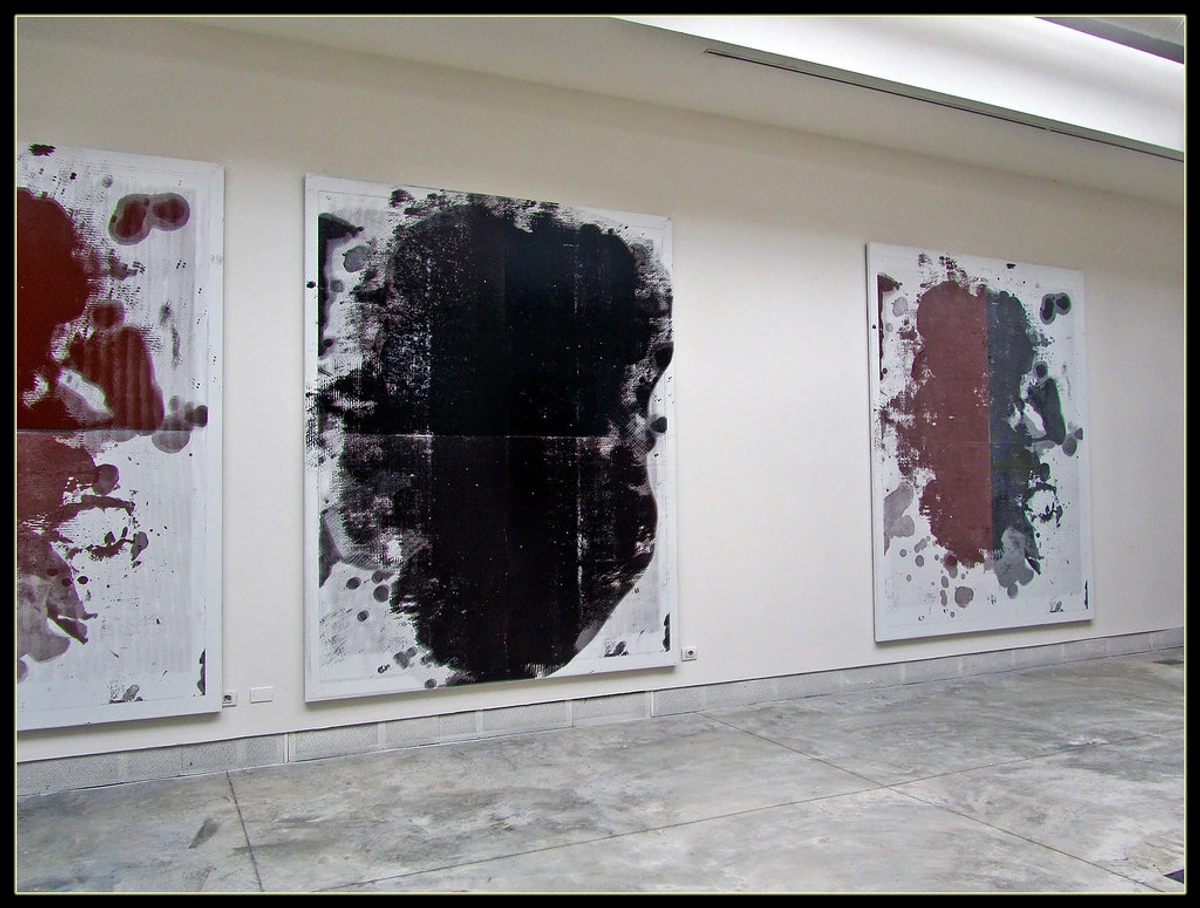
These three ideas work together like nesting dolls. You build the planes, you populate them with well-proportioned bodies, and you ensure their individual parts are coherent. It’s a foolproof system for creating a sense of order. And in an abstract painting, this translates beautifully to thinking about the relationship between large color fields (planes), smaller dynamic shapes (bodies), and the lines that connect them (members). It becomes a way to talk about visual weight, tension, and balance without ever needing a human figure. A bold, singular circle on a vast canvas isn't just a circle; it’s a ‘body’ whose isolation tells a story, whose relationship to the edge of the ‘plane’ creates drama.
3. Reception of Light: The Drama
This is what brings a painting to life. After you’ve built your stage and arranged your actors, the reception of light is what you use to make the whole scene dramatic and believable. Alberti was obsessed with light. He taught that light isn’t just a white wash; it has a source, it creates shadows, and it sculpts forms. He emphasized that a single, strong light source creates the most powerful sense of volume. But he also knew light was emotion. The cold, blue-white light of dawn feels different from the warm, golden light of a candle. Light is what makes a scene feel sacred or cinematic, serene or stormy. It is the soul of the painting, informing everything from the preparatory layers of the ground up.
The key takeaway? Light and shadow are your primary tools for creating form and emotion. The quality of the light—whether it's the harsh noon sun of a cityscape or the soft, diffused glow of a studio lamp—sets the entire mood of your work. It's the single biggest factor in creating atmosphere. For the abstract artist, this principle translates to understanding value. You can create the illusion of a single, raking light—and thus, powerful form—simply by carefully modulating the lightness and darkness of your colors. It’s a powerful reminder for anyone hanging art in a room with no natural light, proving that the drama of illumination can be just as compelling when it originates entirely from the canvas itself. This understanding allows artists to treat color itself as a source of light, a concept explored in-depth when considering coastal interior design where light and reflection are paramount.
From Renaissance Rulebook to Modern Canvas
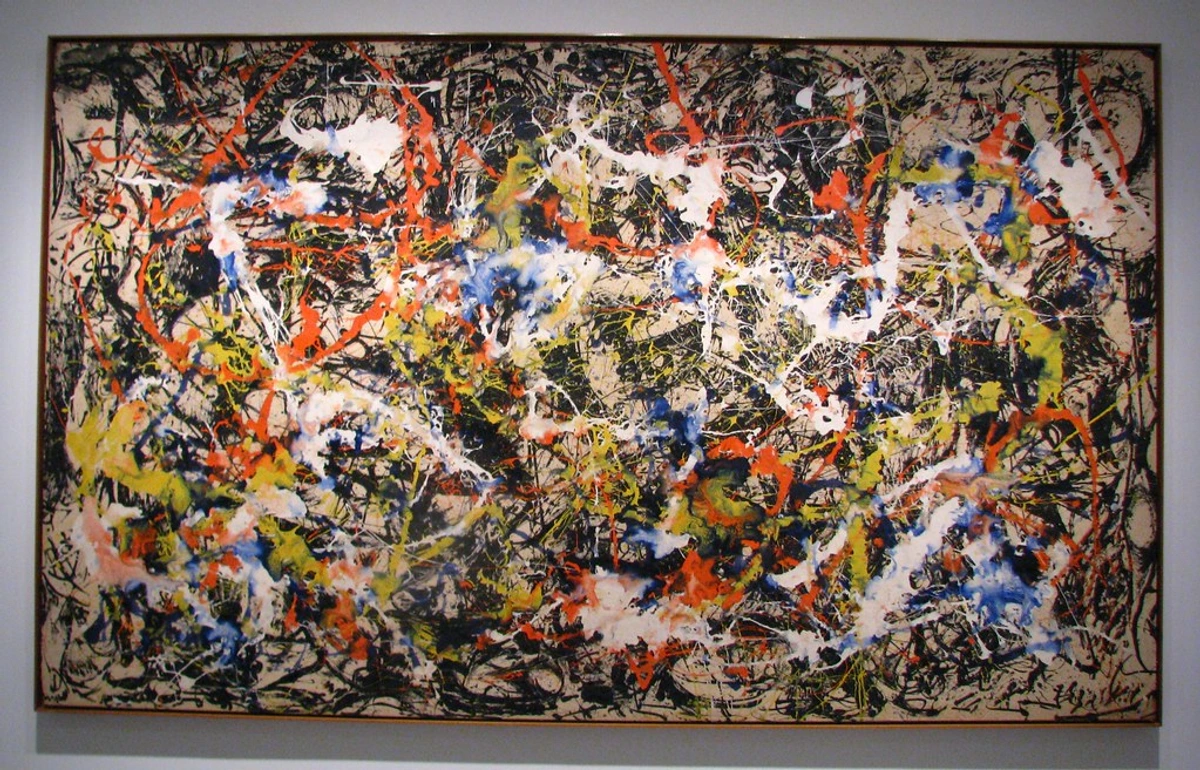
Alberti's principles feel formal, but their spirit is incredibly adaptable. The artists who followed him, from Raphael to Rembrandt, saw this framework not as a cage, but as a launchpad. They learned his rules and then learned how to break them with purpose—Rembrandt by bathing his scenes in a darkness so profound it felt psychological, Rothko by using vast ‘planes’ of pulsating color to evoke pure emotion. That same journey is open to us. It’s a process that moves beyond simple appreciation of art to using it as a tool for social commentary, where the structured composition directs the viewer not just to a story, but to an idea.
Alberti's Principle  | Renaissance Application | Modern & Abstract Application |
|---|---|---|
| Circumscription | Accurately outlining a saint’s robe to show its folds. | Defining the crisp edge of a bold geometric shape or the subtle boundary where two colors meet in a color field painting. |
| Composition | Placing the Madonna on a central plane to make her the clear focus, surrounded by smaller figures. | Balancing a large block of color with smaller, counteracting shapes to create a dynamic but stable visual rhythm, or applying these principles to curate a collection in a minimalist space. |
| Reception of Light | Using dramatic chiaroscuro (light/shadow) to model a figure's muscular form. | Juxtaposing complementary colors or shades to create the illusion of light emanating from within the canvas itself, or guiding how a piece is displayed under artificial light. |

Alberti's Principle | Digital Art Application |
|---|---|
| Circumscription | Using the pen tool to create precise vector paths, or the lasso tool to define a selection. |
| Composition | Arranging layers in Photoshop or manipulating a 3D scene graph in Blender to control depth and focal points. |
| Reception of Light | Adjusting the virtual lighting rig in a 3D scene, or using layer blend modes like ‘Screen’ or ‘Multiply’ to simulate light effects. |
Why Alberti Still Matters for Artists Like You and Me
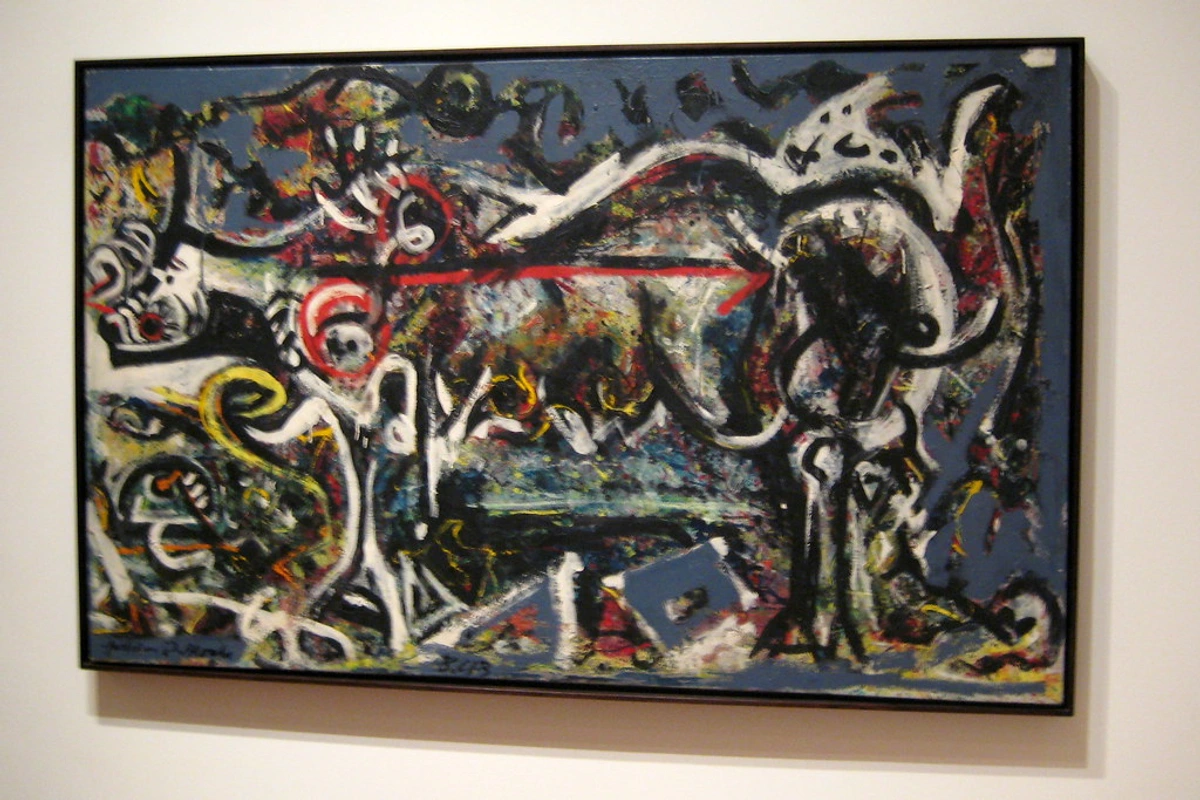
So, why should you, a modern artist or art lover, care about a 500-year-old rulebook? Because in a world saturated with chaotic, fragmentary images, Alberti offers a powerful antidote. He provides a framework for creating work that is intentional, balanced, and deeply satisfying to the human eye. His principles are a guide to making art that doesn’t just shout for attention, but holds it. Think about the last time a piece of art truly stopped you in your tracks. Chances are, it wasn’t just the subject, but the underlying architecture—the invisible order that made the chaos feel inevitable.
It’s the difference between throwing ingredients into a pot and following a recipe from a master chef. You can still add your own flair, your own unique spices, but the fundamentals ensure the final dish isn’t a complete mess. Embracing Alberti’s principles is a way to give your creative instinct a solid foundation. It's about making choices, not just happy accidents. It’s about learning to see your canvas as a space to be constructed, not just a surface to be filled. It’s the difference between reaction and intention.

You can see echoes of his philosophy in the way I structure my own pieces—thinking of the canvas as a stage where color and form interact, making deliberate decisions about which elements get the spotlight. If you're curious to see how these classical ideas play out in a contemporary setting—how these structured planes and choreographed bodies find their way into modern abstract work—I explore these connections in my own practice. You can follow the evolution of these ideas on my artist's timeline, where the dialogue between classicism and contemporary abstraction continues.
Frequently Asked Questions (FAQ)
Here are some common questions about Alberti and his principles.
Did Alberti invent linear perspective?
No, he didn’t invent it, but he was the first to write down its rules clearly and philosophically. Filippo Brunelleschi is credited with demonstrating the mathematical principles of linear perspective, but it was Alberti who translated that hard science into a practical guide for artists. He made it accessible.
Isn’t following these rules restrictive to creativity?
I used to think that, too. But here’s the thing about rules: you have to understand them before you can break them effectively. Alberti’s principles are less like a cage and more like learning to drive. Once you know the rules of the road, you have the freedom to go anywhere you want with confidence, not chaos. They provide the underlying order that makes creative deviations meaningful.
How can abstract artists use these ideas without figures or scenes?
This is the most exciting part! Abstract art replaces the literal figures and objects with formal elements. The “bodies” become your primary shapes or color fields. The “members” are the smaller gestural marks or lines that relate to them. And the “planes” become the layers of paint or the arranging of these shapes in a deep, illusionistic space. Alberti’s ideas are a powerful tool for moving beyond random mark-making to a place of considered composition.
What is Alberti’s “velo”?
The velo, or veil, was Alberti’s clever drawing aid. It was a piece of finely woven cloth with a grid of threads. An artist could look through this grid at a scene and copy what they saw square by square onto a similarly gridded drawing surface. It was a tool for training the eye to see proportion and perspective accurately—a physical manifestation of his belief that art should be based on a scientific understanding of vision.










How does this relate to digital art and 3D rendering?
Alberti would have loved modern technology. The core principles of 3D rendering—defining objects (circumscription), arranging them in a scene (composition), and applying virtual light sources to them (reception of light)—are a direct digital descendant of his 15th-century framework. The tools have changed, but the fundamental logic of creating a believable image is identical. This same systematic approach to building a visual world is what allows new avenues of art creation to feel both innovative and oddly familiar—they are built on the same ground.
The Enduring Window
Leon Battista Alberti asked us to treat every canvas as a window. It’s a powerful metaphor that challenges us to create a sense of depth, order, and meaning on a flat surface. In our fast-paced, often superficial visual culture, his call for thoughtful, harmonious composition feels less like a historical artifact and more like a vital, humanistic mission. It's a call to slow down, to see the intentionality in the world around us—from the architecture of a museum to the art within it.
Whether you’re a painter, a digital artist, or simply someone who loves to look, considering his principles encourages a deeper engagement with the images we create and consume. It's not about perfection; it's about intention. And starting with that simple, powerful idea might be all the direction you need.