The Pre-Raphaelite Brotherhood: Ultimate Guide to a Radical Art Revolution
Dive into the Pre-Raphaelite Brotherhood's radical art revolution: truth to nature, dazzling colors, moral purpose, enduring legacy on art, design, & powerful women artists.

The Pre-Raphaelite Brotherhood: The Ultimate Guide to a Radical Art Revolution & Enduring Legacy
I vividly remember the feeling of artistic frustration in my early days. That gnawing sense that the established rules felt more like shackles than guidelines, pushing you towards a conformity that stifled genuine expression. It was during one of these moments, poring over art history books late into the night, that I first truly understood the Pre-Raphaelite Brotherhood. Not just as painters of beautiful, often melancholic women or meticulously rendered natural scenes, but as kindred spirits: a gang of young, brilliant, and deeply dissatisfied rebels who wanted to smash the stuffy conventions of the British art world. They didn't just seek reform; they sought a revolution, aiming to redefine what art could truly be. This article delves into why their rebellion was necessary, who these radical founders were, what their core beliefs entailed, and their surprisingly enduring legacy that still resonates in contemporary art and design today. Their audacious vision and fierce conviction, the power of seeing the world anew, mirror the spirit of rebellion that fuels my own creative journey.
The Secret Society: Unmasking the Radical Founders
In the annals of art history, secret societies often conjure images of intrigue, cryptic symbols, and shadowy figures. But for a group of young, idealistic artists in 19th-century Britain, forming a 'Brotherhood' was less about dark rituals and more about a desperate need for intellectual and artistic freedom. The existing climate was one of artistic stagnation and stifling academic control, precisely what galvanized a group of seven young men, mostly students at the Royal Academy, to form their secret society in 1848. The secrecy wasn't just youthful theatrics; it was a deliberate, strategic choice, allowing them to develop and articulate their radical ideas without immediate public backlash or academic censure. You can almost feel that intense, young energy, that shared secret that bound them together against the world, forging a powerful bond against the perceived artistic establishment. While seven young men initially formed this tight-knit group, the vision and momentum largely sprang from the passionate convictions of three core figures, each bringing a unique energy to their artistic revolution. They were a fascinating mix of idealists, poets, and technical virtuosos, all in their late teens or early twenties, bound by a shared sense of rebellion against the prevailing artistic establishment. Their very formation was a statement: art education should not be about rote copying, but about engaging directly and sincerely with the world.

To truly understand the driving force behind this revolution, we must meet the individuals who dared to dream differently and infuse their youthful defiance into every brushstroke:
Founding Member  | The Vibe / Role | Key Contribution |
|---|---|---|
| Dante Gabriel Rossetti | The charismatic, romantic, poet-painter. He was the undeniable heart and soul of the group, a natural leader with a dramatic flair, literary sensibility, and a deep appreciation for the symbolic and mystical. | Pushed for rich literary, symbolic, and deeply emotional themes in their art, drawing heavily from poetry and medieval romance. His magnetic personality held the diverse group together and inspired its later evolution. |
| William Holman Hunt | The deeply religious, almost scientifically precise, and obsessively detailed painter. He acted as the moral compass and ideological purist of the Brotherhood, unwavering in his principles and dedicated to extreme realism. | The most faithful to their 'truth to nature' principle, often to extremes, emphasizing meticulous detail and direct observation. He famously travelled to the Holy Land to ensure historical and geographical accuracy for his biblical scenes. |
| John Everett Millais | The child prodigy. Widely regarded as the most technically gifted painter of his generation, capable of breathtaking skill, rapid execution, and quick adaptation to the PRB's radical ideas. | Created many of their most famous and controversial works, adapting their principles with brilliant fluidity and technical mastery. His ability to fuse intricate detail with emotional depth made his works instantly iconic. |
| William Michael Rossetti | Dante's brother, the diligent chronicler and rationalist of the group. He was less an artist and more the intellectual backbone, carefully documenting their theories and activities. | As a poet, critic, and editor, his literary contributions, including his translation of Dante, provided intellectual weight and theoretical articulation to the Brotherhood's aims. He documented the Brotherhood's artistic theories, manifestos, and activities in his diaries and the short-lived Germ periodical, providing invaluable historical records. The Germ, a short-lived literary magazine, was their primary public platform, intended to explain their aims through essays, poems, and illustrations. |
| James Collinson | An early convert to their ideals, known for his delicate, sincere, and often religiously themed early works. He was a quieter, more introspective member whose commitment was deeply spiritual. | His early departure from the group due to profound religious doubts and a crisis of conscience – he felt art could not reconcile with his intense piety – highlights the intense personal commitment the PRB demanded and the internal struggles some members faced. |
| Frederic George Stephens | A painter in the early years who later became an incredibly influential art critic and historian. His critical voice helped shape public perception of the movement. | An early practitioner who later used his critical voice and deep understanding of the Brotherhood's aims to champion their ideals, actively defending their often-confrontational works against academic hostility and championing their core principles of truth to nature and sincerity in influential publications like The Athenaeum. |
| Thomas Woolner | The group's only sculptor, bringing a three-dimensional perspective to their ideals. He was a staunch advocate for sincerity and naturalism in sculpture. | His portrait busts, often imbued with a striking realism and psychological depth, extended the PRB's principles of truth to nature and sincerity into sculpture, rejecting academic classicism in favor of more emotionally resonant and detailed forms, influencing the approach to three-dimensional art within the broader movement. |
Why "Pre-Raphaelite"? A Look Before the "Grand Manner"
To grasp the sheer necessity of their rebellion, you have to picture the suffocating art scene they were born into. Mid-19th century British art was not only dominated but dictated by the Royal Academy of Arts. The Academy had... rules. Not just a few suggestions, but rigid, unyielding dogmas that prioritized tradition and a perceived 'ideal' over genuine observation or heartfelt expression. It was an environment less about fostering creativity and more about maintaining a rigid status quo, almost a creative straitjacket. This conservative approach actively stifled originality, leaving many young artists feeling that their authentic voices were unwelcome.
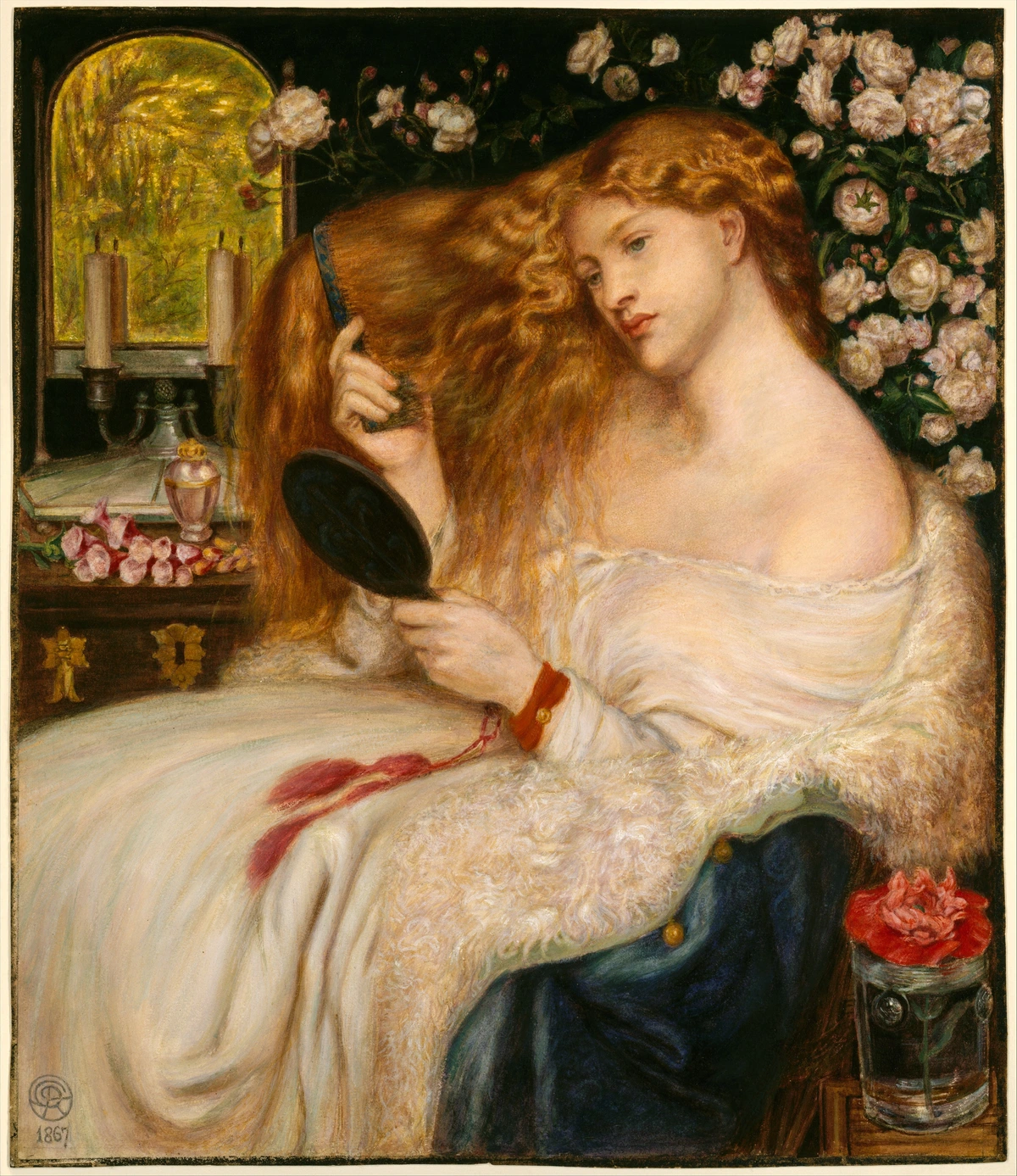
The undisputed gold standard, the stylistic North Star, was the High Renaissance master, Raphael. Now, don't get me wrong, Raphael was undeniably a genius, a master of graceful composition and idealized forms. But by the 1840s, his once-innovative style, often called the Grand Manner, had been copied, diluted, and frankly, sterilized for centuries. Artists like Nicolas Poussin and Annibale Carracci had defined its earlier principles, but by the 19th century, art students were taught to paint in a specific, almost mechanical way, following a tired formula that felt more like paint-by-numbers than true artistic exploration. This pervasive and uninspired imitation was precisely what the young rebels abhorred. Imagine a world where every artist was expected to produce art that looked largely the same – the sheer creative claustrophobia!
credit, licence
The Stifling Conventions of the Royal Academy (Post-Raphael)
- Idealized Figures: Everyone looked like a Greek god or goddess, perfectly proportioned, gracefully posed, and flawlessly beautiful. Authenticity, individual character, and emotional depth were often sacrificed for a generic, polished perfection that felt utterly divorced from reality. I've often felt these figures, though technically impressive, lacked genuine soul. This wasn't just an aesthetic preference; it represented a philosophical disconnect from genuine human experience.
- Formulaic Compositions: Often based on rigid geometric shapes like pyramids or S-curves, these compositions ensured 'balance' and 'harmony' but frequently at the expense of dynamic storytelling or natural movement. The result was often static, carefully arranged scenes that looked like posed mannequins rather than living moments.
- Dark, Moody Lighting (Chiaroscuro): A technique called chiaroscuro (strong contrasts between light and dark) was used heavily, but often to an extreme. This frequently resulted in what the PRB derisively called 'sloshy' and 'soupy' brown paintings – canvases bathed in dull sepia tones, where true vibrancy and the nuanced play of natural light were lost in a murky gloom. The overuse of dark grounds further muted colors, making the works feel heavy and joyless. Imagine trying to make colors sing on a canvas that's already murky grey – how vibrant could they possibly be? I find myself instinctively reaching for brighter palettes, much like they did.
- Trivial Subjects: A plethora of stuffy portraits of aristocrats, generic historical scenes, or allegories that felt detached from genuine human experience or contemporary life. This was 'art by numbers,' where technical proficiency overshadowed heartfelt emotion or social commentary. Artists were encouraged to paint other art, rather than observe the world around them. This reflected a lack of sincerity and moral purpose that the PRB found dishonest.
To the young upstarts of the Pre-Raphaelite Brotherhood, this was nothing short of dishonest. It was art that wasn't looking at the world, but at other art; art that lacked sincerity and moral purpose. This is precisely why they named themselves 'Pre-Raphaelite': a direct, provocative statement against the perceived artistic decline that followed Raphael's era and the rigid academic dogma it inspired. Their goal was a radical reset, a return to the art created before Raphael, when they felt art was purer, more sincere, and deeply observed. Artists like Sandro Botticelli and Jan van Eyck were their artistic heroes, representing a clarity, luminosity, and emotional depth they believed had been forgotten. Looking at a painting like Botticelli's The Birth of Venus, you can see the luminous colors, graceful lines, and meticulous detail that inspired them, a stark contrast to the Academy's dim canvases. Botticelli's lyrical figures and rich symbolism were a breath of fresh air; his willingness to infuse classical themes with a distinctly individual, almost melancholy beauty, spoke to their desire for emotional resonance. Likewise, Jan van Eyck's unvarnished realism, as seen in works like the Arnolfini Portrait, with its almost microscopic precision in depicting every wrinkle, texture, and play of light, resonated deeply with their desire for 'truth to nature' and honesty in portrayal, a quality I often seek in my own abstract work by exploring raw texture and unfiltered emotion.
This return to an earlier, more authentic aesthetic was also subtly influenced by the writings of John Ruskin, who passionately championed 'truth to nature' and medieval art even before he became their public defender. His influential work, particularly Modern Painters, articulated the idea that art should strive for moral truth by depicting natural beauty with utmost fidelity, advocating for artists to 'go to nature in all singleness of heart, and walk with her laboriously and trustingly.' Ruskin specifically criticized academic painters for relying on convention rather than direct observation, a sentiment that perfectly fueled the Brotherhood's rebellion. This laid the intellectual groundwork for the PRB's emergence; it was almost as if Ruskin had written the theoretical playbook that the Brotherhood then went out and executed with their brushes. Interestingly, this period also saw the nascent rise of photography. While the PRB embraced realism, they largely saw photography as a tool for reference rather than an artistic medium in itself, asserting the painter's unique interpretive role over mere mechanical reproduction. They were less interested in merely replicating reality, and more in interpreting its spiritual and emotional truths through a heightened sense of detail – a distinction they felt a mechanical process couldn't achieve.
Moreover, the mid-19th century was a time of profound social and industrial change in Victorian England. The rapid industrialization led to concerns about the loss of traditional craftsmanship, the dehumanizing effects of factory labor, and a general sense of an increasingly ugly, less spiritual world. This societal backdrop contributed to the Pre-Raphaelites' romanticized view of the pre-industrial past, especially the Middle Ages, as a time of greater purity, moral integrity, and authentic craftsmanship. This longing for a simpler, more 'true' era would later heavily influence William Morris's Arts and Crafts Movement.
You can explore more about these earlier influences in our article on famous Renaissance artists or delve into the specifics of The Birth of Venus. For a broader understanding of art from this period, check out our ultimate guide to Renaissance art.
The Pre-Raphaelite Manifesto: A Radical New Way of Seeing
Having formed their secret conclave, the young rebels began to articulate the core tenets that would define their revolution against academic complacency. While they didn't have a single formal, written manifesto (though William Michael Rossetti diligently documented their ideas in the Germ), their shared beliefs formed a truly radical blueprint for their time. I like to think of them as a few core principles, almost commandments, that guided their brushes and their rebellion – a bold rejection of stale artistic norms in favor of a profound commitment to authenticity. Here's how they fundamentally redefined painting:
1. Absolute Truth to Nature and Meticulous Detail
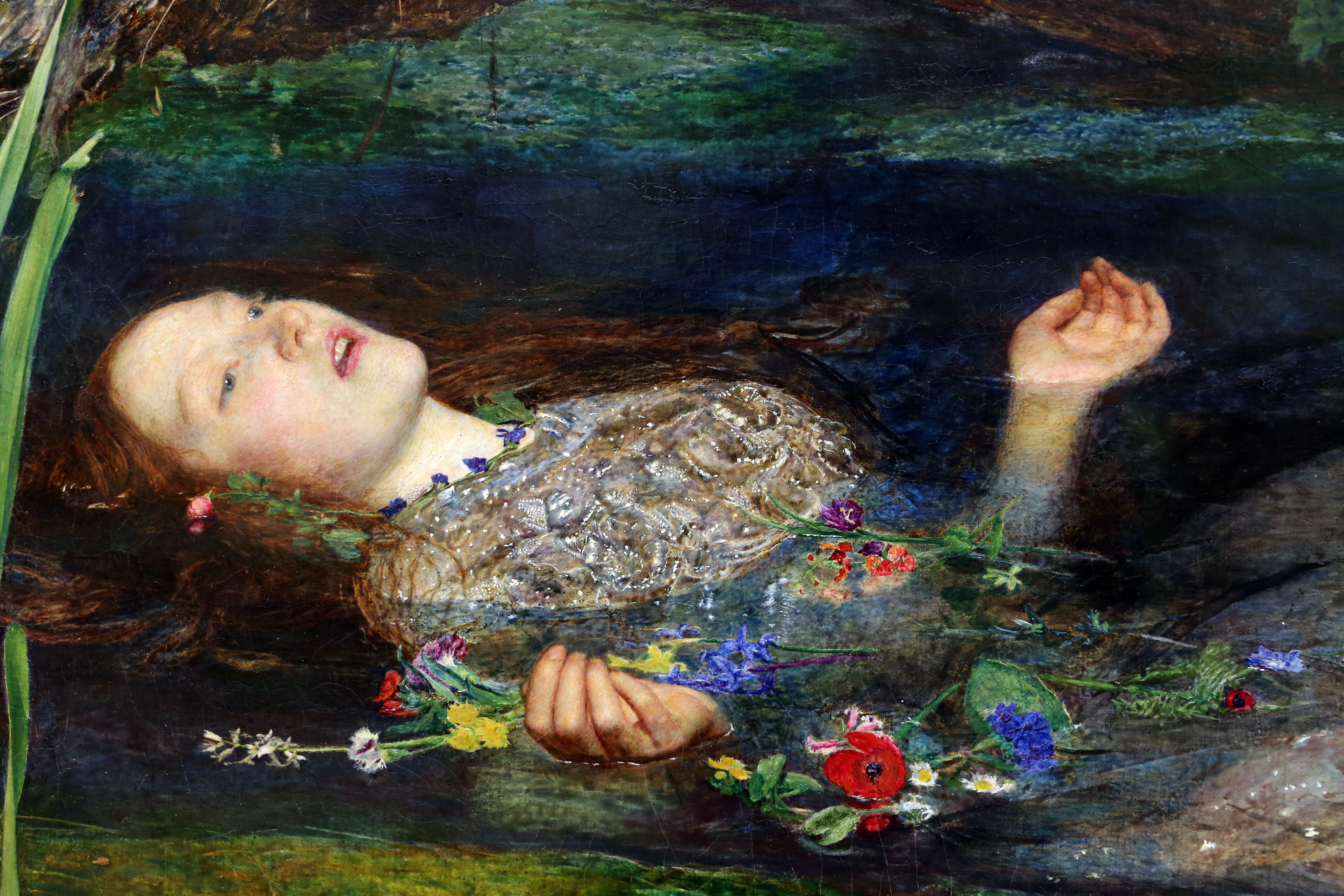
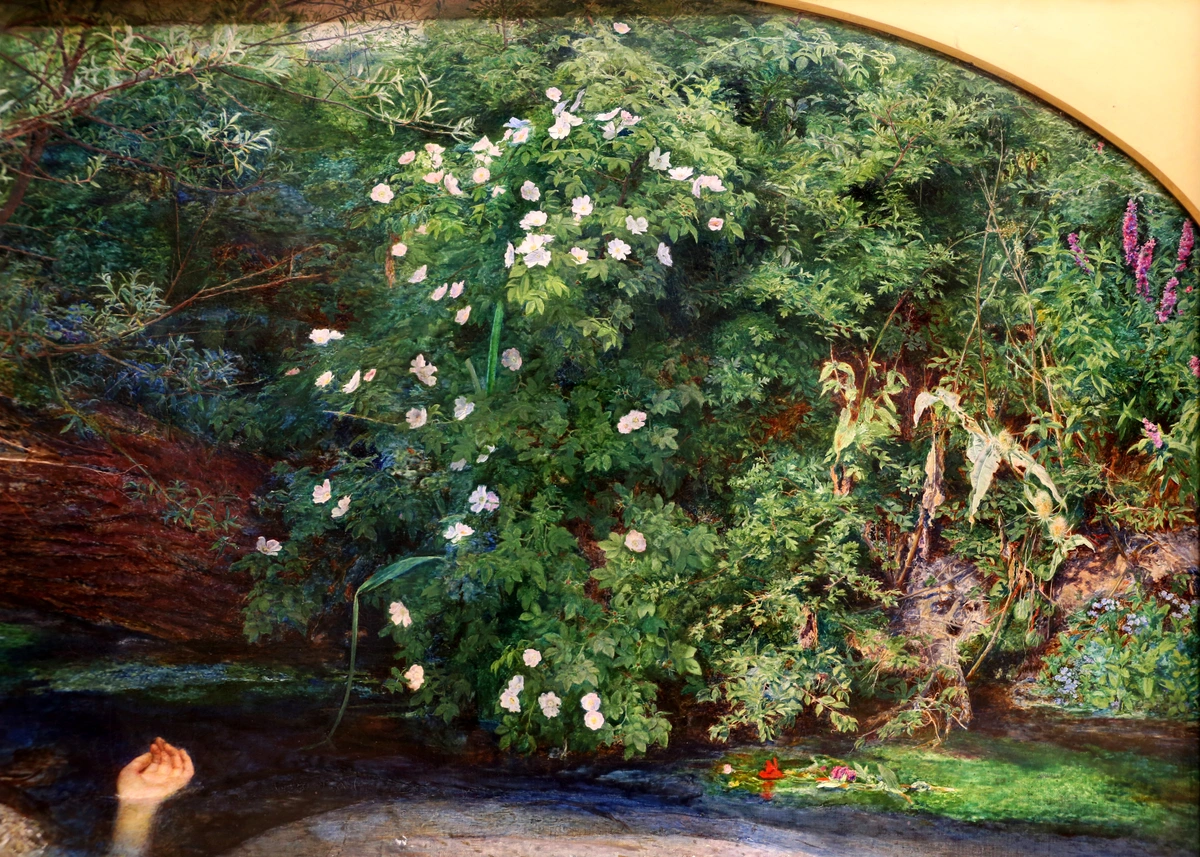
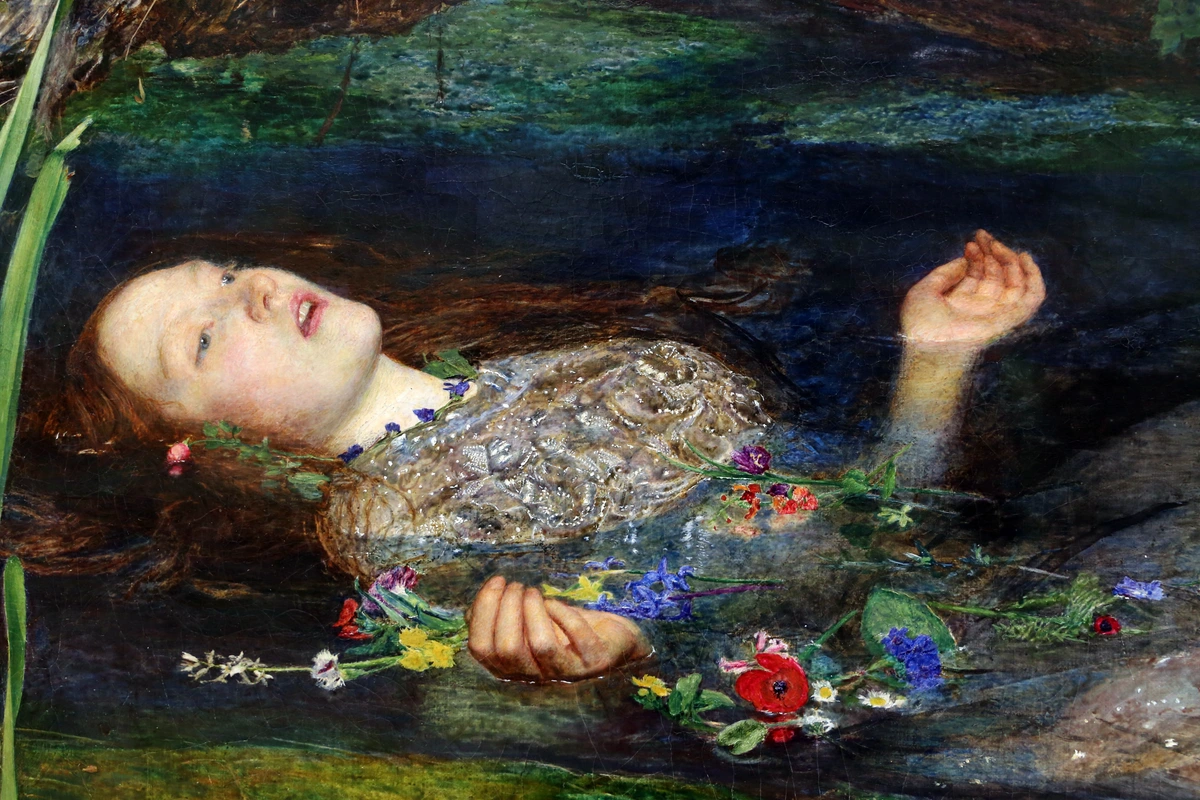
This was their number one rule, their unwavering rallying cry against the idealized, 'prettified' art of the Academy. Their philosophy was simple yet profound: paint what you see, exactly as you see it, without compromise, embellishment, or artificial rearrangement. This wasn't just about achieving photographic accuracy; it was about a deeper spiritual and moral authenticity, a conviction that truth in depiction led to truth in feeling. Every blade of grass, every freckle, every thread on a carpet – nothing was too small or 'unworthy' of meticulous observation. I mean, how often do we actually look at a single leaf, really scrutinizing its veins and imperfections? They did, and they painted it with almost scientific precision, often directly en plein air (outdoors) to capture natural light and detail. For more on this outdoor painting technique, see our article on what is plein air painting. While they sought absolute realism, it wasn't a crude naturalism; they still strived for an 'ideal beauty,' but one that emerged from the truth of observation, not from a generalized classical ideal. John Everett Millais, for instance, famously worked on the landscape for Ophelia for months by the Hogsmill River, ensuring botanical accuracy and the precise play of light on water. His model, Elizabeth Siddal, endured hours posing in a bathtub filled with water (initially heated by lamps, though the story goes they eventually went out, leading to her catching a severe cold – a testament to the Brotherhood's extreme dedication to realism!). William Holman Hunt famously traveled to the Holy Land to paint biblical scenes in the actual locations, convinced that only direct, painstaking observation could convey true spiritual feeling, evident in works like The Scapegoat. This obsession with painstaking detail and direct engagement with the natural world was their most potent weapon against the generic, idealized style that had become so prevalent, and a direct challenge to the academic method of painting from memory or established compositions rather than from life. For me, this relentless pursuit of capturing reality in all its complexity is incredibly inspiring; it reminds me that true artistry often lies in seeing the extraordinary in the seemingly ordinary, a principle I apply even in my abstract art by focusing on the precise interplay of colors and forms to evoke specific emotions and capture a fleeting truth.
2. Serious, Heartfelt Subjects with Moral Purpose
They wanted their art to mean something profound, to stir the soul and engage the mind, rather than simply decorating a wall. They drew deep inspiration from rich literary sources: Shakespeare's plays (like Ophelia, which explores themes of madness and despair), the Bible's stories (e.g., Christ in the House of His Parents, a realistic portrayal of sacred figures), Arthurian legends (Rossetti's Lancelot and Guinevere), and classical mythology. Think of works inspired by Keats's poems like Isabella, or the Pot of Basil, Tennyson's The Lady of Shalott, or Dante's Divine Comedy, where complex human emotions, moral dilemmas, and spiritual narratives were brought to vivid life. William Michael Rossetti's editorial work on The Germ (their short-lived magazine) was crucial here, as it provided a platform for essays and poems that articulated the symbolic and literary ambitions of the Brotherhood, directly linking their visual art to profound intellectual and moral narratives. This connection to symbolism and profound narrative, often infused with allegorical layers and moral commentary, is something I find essential, even in abstract forms.
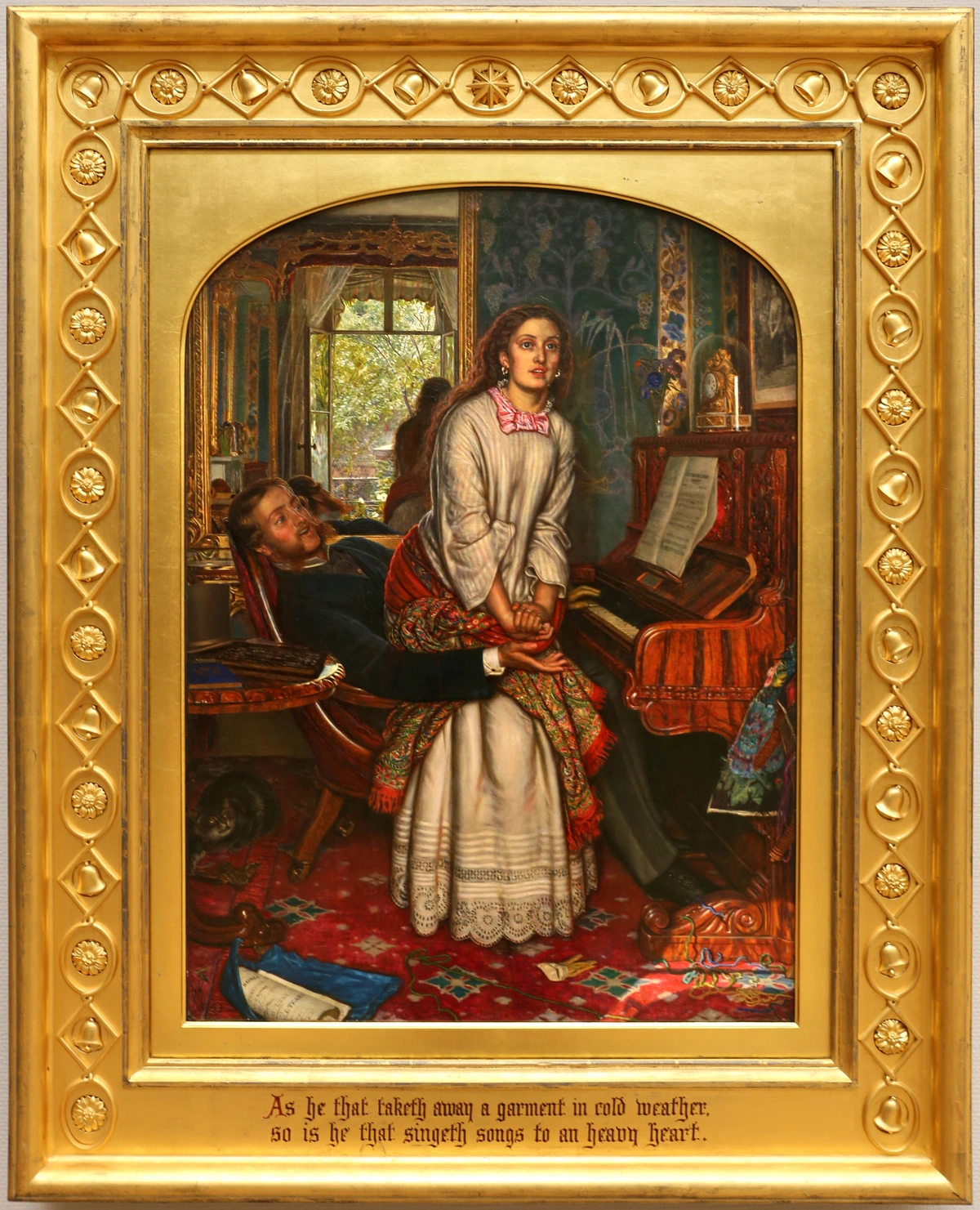
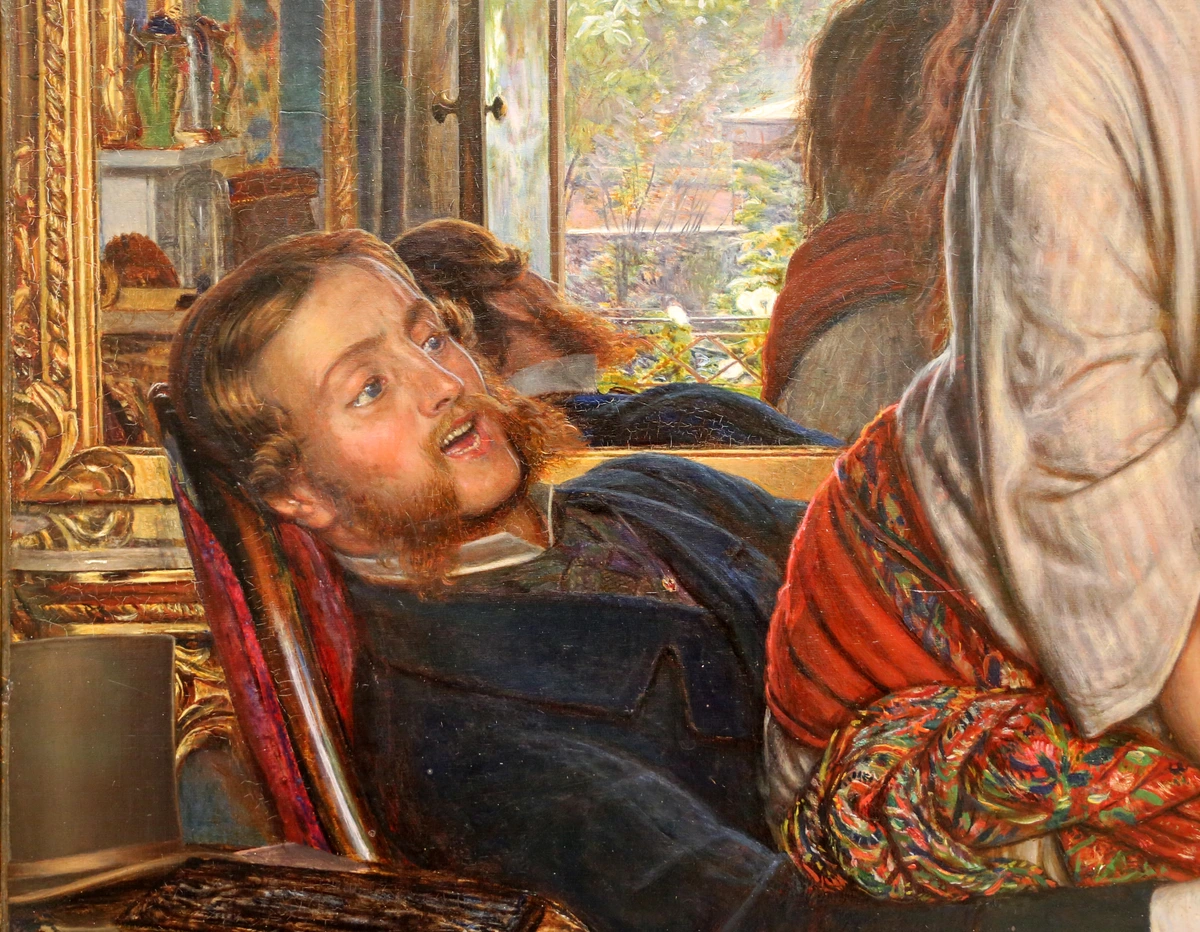
But their scope wasn't limited to the past; they weren't afraid to tackle modern social issues either, giving them a moral weight and a sense of urgent contemporary relevance. Hunt's The Awakening Conscience, for example, depicts a 'fallen woman' (a common Victorian euphemism for a mistress or prostitute) having a sudden moment of moral clarity, spurred by a ray of natural light and the melody of a song. It’s a powerful social commentary on contemporary Victorian society, challenging viewers to confront uncomfortable truths rather than idealized fictions, much like the social critiques found in the works of Charles Dickens or Elizabeth Gaskell. Similarly, paintings like Ford Madox Brown's Work (though not a Brotherhood member, he was closely associated and shared many ideals) vividly depict the complex social strata and labor issues of Victorian London, showcasing the dignity of labor and the stark realities of poverty. Other themes they touched upon included urban squalor, the changing roles of women, and the moral ambiguities of industrial capitalism. This commitment to narrative, emotion, and moral purpose was a direct counterpoint to the 'trivial subjects' and detached academicism favored by the Royal Academy. It reminds me that art can be a powerful catalyst for social change, a mirror held up to society, a theme I often explore in my own work when I connect abstract forms to underlying human struggles and triumphs, much like the Mexican muralists after them.
You can learn more about this in our guide to the symbolism of the Pre-Raphaelite Brotherhood art, poetry, and social reform.
3. Dazzling Color, Pure Light, and Innovative Technique
To actively fight the 'soupy' browns and somber tones of academic art, the PRB developed a revolutionary technique that made their canvases almost vibrate with life. Instead of painting on a dark ground (which muted colors), they prepared their canvases with a brilliant white ground and then applied their pigments in thin, translucent layers, or glazes, often while the white ground was still wet. This wet-on-wet (or fresco secco-like, though applied to oil) technique allowed colors to seamlessly blend and glow with an astonishing luminosity. Imagine trying to make colors sing on a pristine white canvas versus one that's already murky grey – the white ground acts like an internal light source, allowing the colors to maintain their purity and vibrancy, almost glowing from within. It's like looking at a jewel where the light refracts and shines through the stone itself, rather than just reflecting off its surface, creating an intense, jewel-like richness. They often used pure, unmixed pigments directly from the tube to maximize chromatic intensity, rejecting the muted palettes favored by the Academy. This was a visual shock to audiences used to dark, muted canvases, and it was a deliberate statement of their 'truth to materials' – allowing the inherent beauty and intensity of the pigments to shine through without being obscured by heavy varnishes or dark underpainting.
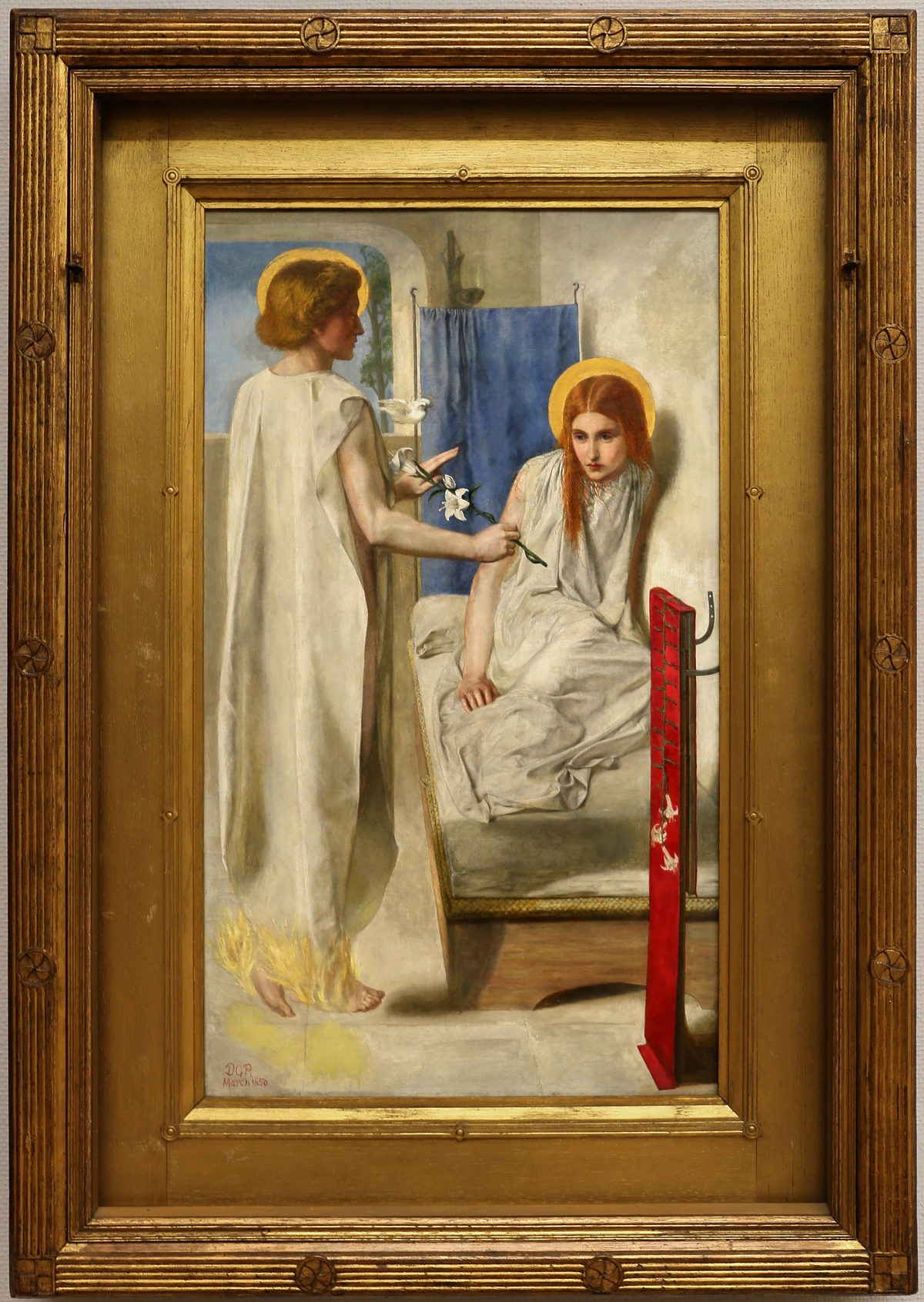
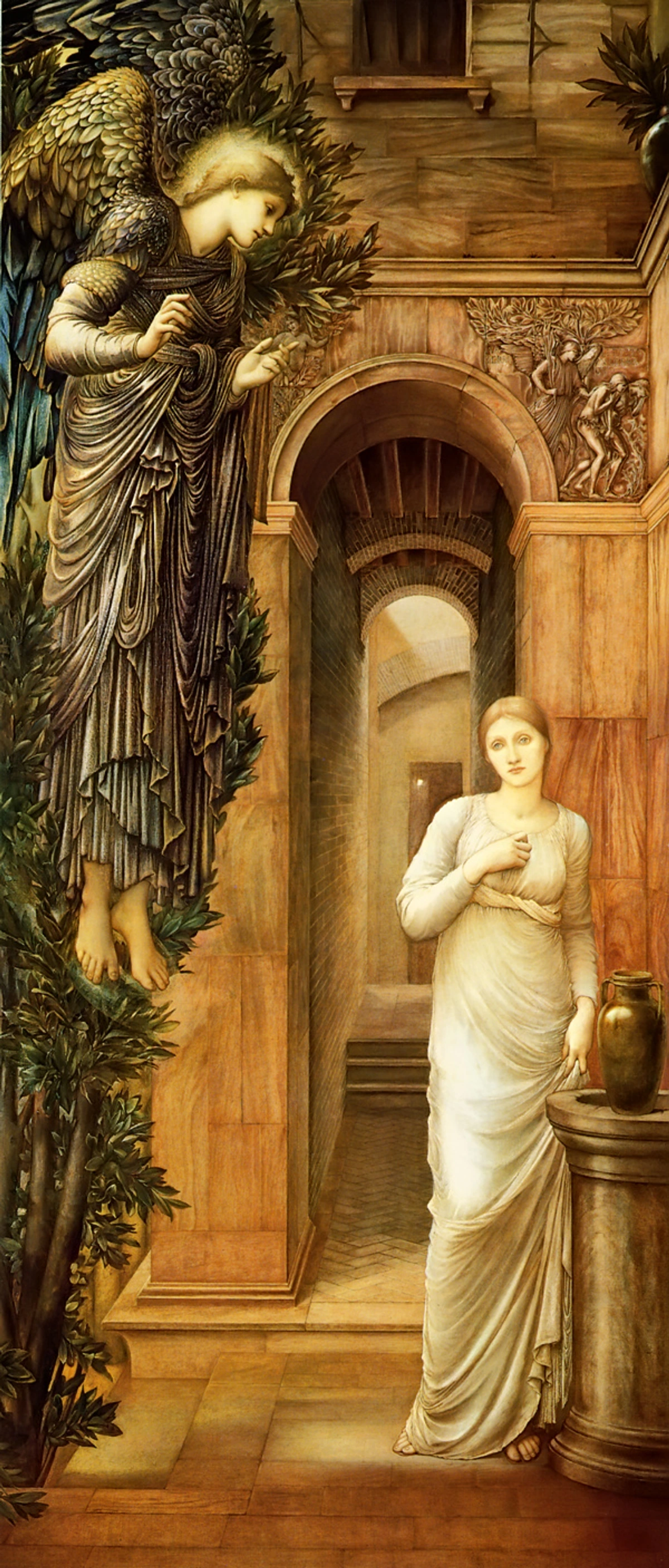
Rossetti’s Ecce Ancilla Domini! (also known as The Annunciation) is a perfect example of this radical use of pure, bright color and white, creating an ethereal, almost spiritual luminosity that truly stands out and feels remarkably modern even today. Similarly, Millais's Mariana showcases exquisite details rendered with brilliant, jewel-like colors. As someone who works extensively with color, I can tell you that this approach to maximizing chromatic intensity feels incredibly intuitive and liberating; it's a constant exploration in my own abstract compositions, where the vibrancy of a hue can define an entire emotional landscape. To learn more about how artists use color, explore our article on how artists use color.
These three principles formed the bedrock of their artistic revolution, pushing for a more honest, meaningful, and visually striking art.
From Scandal to Stardom: The Critical Firestorm and Ruskin's Powerful Endorsement
Initially, the public and critics were, to put it mildly, horrified. The establishment saw them as artistic terrorists. Their commitment to 'truth to nature' often meant rejecting the idealized, sanctified depictions expected for religious or historical scenes. When Millais exhibited Christ in the House of His Parents in 1850, it caused a massive scandal that reverberated through the British art world. People were used to seeing the Holy Family as serene, idealized, almost ethereal figures, elevated above the common populace. Millais, in his unwavering commitment to realism, painted them as a strikingly realistic, working-class family in a messy carpenter's shop, complete with sawdust, grime, and figures that looked like actual, somewhat unkempt, people – not polished saints. The realism was simply too much, too 'common' and 'disrespectful' for many Victorian sensibilities, which expected religious art to transcend the everyday. The renowned novelist Charles Dickens famously lambasted the painting, describing the Virgin Mary as 'a monster in the lowest gin-shop in England' and arguing that the entire Holy Family was depicted as 'mean, odious, repulsive, and revolting.' He found the depiction shockingly undignified, perfectly encapsulating the outrage of the day and providing a stark illustration of the PRB's confrontational approach. Critics found their vibrant colors garish and their meticulous detail "ugly" compared to the subdued tones and broad brushstrokes of academic art. It's a classic tale, isn't it? What's radical and shocking today often becomes the accepted canon tomorrow.
Their saving grace, and perhaps one of the most significant endorsements in art history, came from the most powerful art critic of the day, John Ruskin. Having already laid some of the intellectual groundwork for their movement with his own fervent calls for 'truth to nature' in works like Modern Painters, Ruskin recognized the sincerity, skill, and moral conviction in their controversial paintings. He didn't just 'like' their art; he saw it as the embodiment of his own philosophical ideals about the purpose of art. He wrote impassioned letters to The Times in 1851, specifically defending Millais and Hunt, praising their meticulous attention to detail, their vibrant use of color, and their unwavering commitment to spiritual and moral truth in art. Ruskin argued that their art, far from being disrespectful, was a profound return to the spiritual honesty and minute truthfulness he believed had been lost in post-Raphaelite academic conventions, proclaiming that their work 'will be a foundation of a new school of art in England.' With his influential support, the tide slowly but surely began to turn. While some critics remained hostile, Ruskin's endorsement lent the Brotherhood immense credibility. By the mid-1850s, the Pre-Raphaelites were no longer scandalous outsiders; they were the new establishment, their once-confrontational works now fetching high prices and adorning prominent galleries. It's a powerful reminder that sometimes, genuine artistic innovation first sparks outrage before earning its rightful place in history.
The Second Wave and Enduring Legacy: From Craft to Contemporary Art
The original Brotherhood, like many intense youth movements, largely dissolved after only a few years, its original members moving in different directions. But their influence was just beginning. Their radical ideas had planted seeds that blossomed into a vibrant second wave of artists, often centered around the magnetic personality of Rossetti, who remained a guiding figure. This later phase, often called Aesthetic Pre-Raphaelitism, shifted the focus from the almost scientific realism of Hunt towards creating even more beautiful, decorative, and dreamlike worlds inspired by medieval romance, myth, and legend, with an increased emphasis on symbolic narrative and idealized beauty.

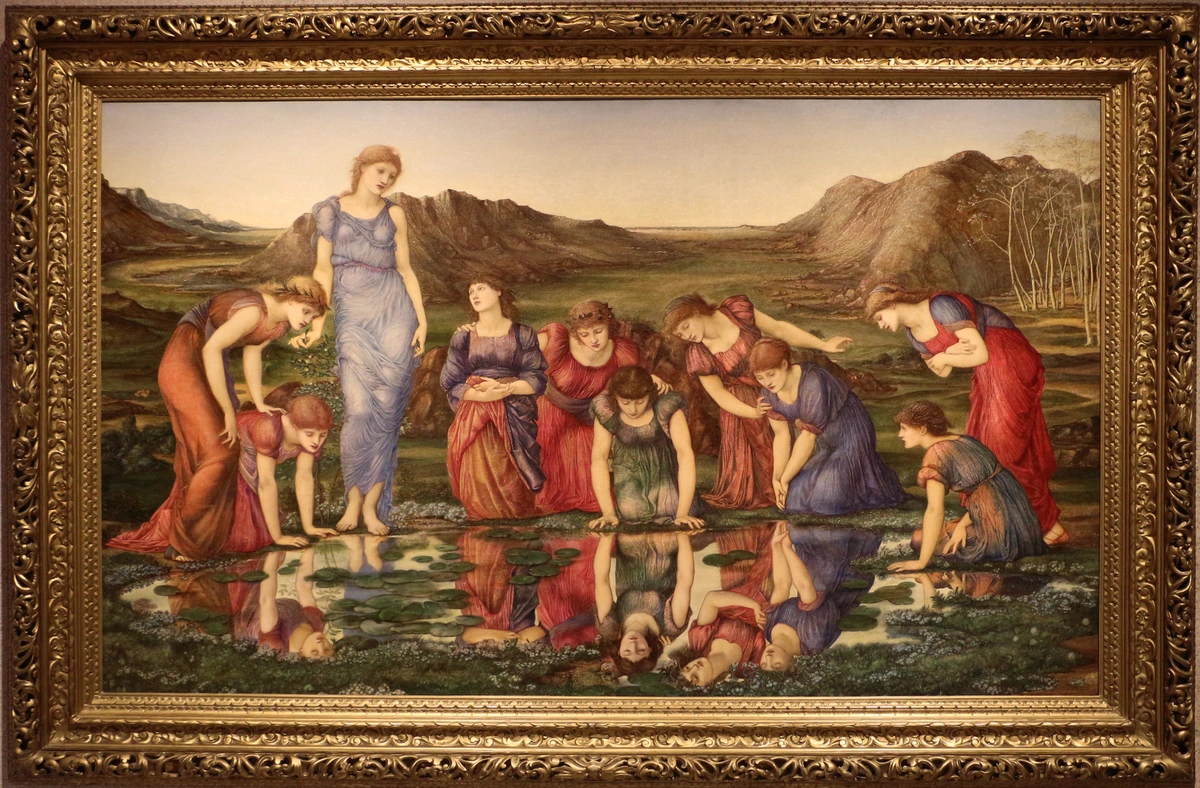
Artists like Edward Burne-Jones and William Morris took these principles and evolved them. Burne-Jones's art, for instance, often evokes a melancholic beauty and spiritual yearning, emphasizing aestheticism over strict naturalism, as seen in his iconic King Cophetua and the Beggar Maid or the richly symbolic The Beguiling of Merlin. He infused his work with a profound sense of narrative and evocative symbolism, embodying a more decorative and introspective turn for Pre-Raphaelitism, often drawing on Arthurian tales and classical myths. Other notable figures like John William Waterhouse, though working later into the Victorian era, continued to draw heavily on Pre-Raphaelite aesthetics, particularly in his ethereal depictions of literary and mythological heroines like The Lady of Shalott or Ophelia. This phase saw a deepening of their engagement with medievalism, viewing the Middle Ages not just as a source of artistic inspiration but as a period of perceived social harmony, craftsmanship, and spiritual purity, a romanticized contrast to the perceived ugliness and moral decay of industrial Victorian society. The shift was subtle but significant: less about harsh realism, more about idealized beauty, heightened emotion, and narrative depth, often with a strong leaning towards Symbolism, where every element could carry deeper, often mystical, meaning. This focus on intense beauty and evocative symbolism profoundly influences my own abstract explorations of emotional landscapes.
William Morris, in particular, extended the PRB's principles of truth to materials, high craftsmanship, and a passionate rejection of industrial ugliness beyond painting, delving into furniture design, textiles, wallpaper, and book production (through his Kelmscott Press). He passionately advocated for a return to handcrafted quality against the perceived poor quality and dehumanizing effects of industrial mass production. His critiques echoed those of Augustus Pugin, who deplored the loss of medieval craftsmanship. Morris's dedication to integrated design, where art permeated every aspect of daily life, directly echoed the PRB's sincerity and reverence for craftsmanship. His influence was so profound that he is considered a founding figure of the hugely influential Arts and Crafts Movement, which championed traditional craftsmanship and a simpler, often medieval or folk-art inspired aesthetic, impacting design and architecture globally. The PRB also had a notable, though often overlooked, influence on illustration, particularly in children's books and magazines, where their commitment to intricate detail and narrative clarity found a natural home. This demonstrated how their artistic philosophy could transcend the canvas, influencing the very fabric of daily life. For more on the role of design, see our article what is design in art.
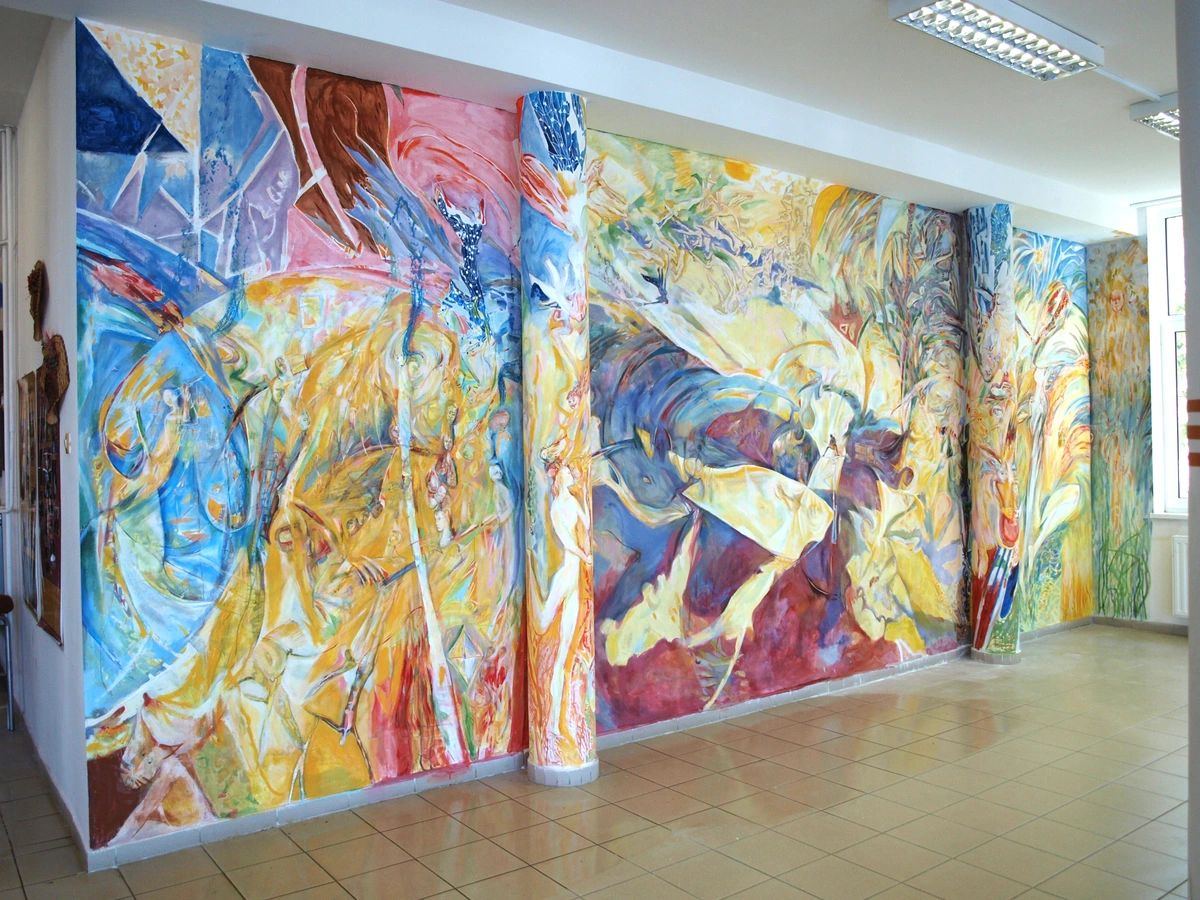
This later phase of Pre-Raphaelitism, with its emphasis on intricate detail, symbolic narrative, the beauty of natural forms, and a decorative quality, flowed directly into and heavily influenced the Aesthetic Movement (championing 'art for art's sake') and later, the curvilinear elegance of Art Nouveau. You can see their legacy in the flowing lines and natural motifs of Art Nouveau, where artists like Aubrey Beardsley and designers like Hector Guimard carried forward the decorative and symbolic richness. The Pre-Raphaelites brought color, meticulous detail, genuine emotion, and a profound sense of purpose back into the heart of British art, leaving an indelible mark on everything that followed, from painting and illustration to design and craft. The Arts and Crafts Movement fundamentally changed design forever, influencing everything from furniture to textiles, and its ideals continue to resonate in contemporary design practices focused on sustainability and handmade quality. Their rebellion was a seismic shift, proving that art could be both deeply personal and universally impactful. Their commitment to intense color and symbolic narrative continues to inspire artists working across various mediums today, from figurative realism to abstract expression. I find particular resonance in their belief that beauty and meaning are intertwined, a core tenet of my own creative philosophy.
[credit], [licence]
You can explore more about these later developments in our definitive guide to the Art Nouveau movement, learn more about Art Nouveau artists, and the broader question of what is design in art. The foundational ideals of sincerity, truth to materials, and authentic expression continue to inspire artists and designers today, much as they inspire my own creative journey.
Frequently Asked Questions (FAQ)
Curious minds often have questions about this fascinating movement. Here are some of the most common inquiries I encounter:
Why are they called 'Pre-Raphaelite'?
They gave themselves this name because they fundamentally rejected the artistic dominance of Raphael and his followers, particularly the diluted, academic style that had become pervasive in the 19th century. Raphael's 'Grand Manner,' with its emphasis on idealized forms and balanced compositions, had, by their time, become a rigid template for mediocrity, stifling originality. Their goal was to return to the art created before Raphael's time – specifically the early Italian Renaissance and Flemish masters like Botticelli and Van Eyck – which they saw as possessing greater honesty, meticulous detail, and spiritual purity. It was a clear, provocative statement against what they perceived as the stale conventions of academic painting and an explicit embrace of a more authentic, deeply observed artistic past.
What defines the Pre-Raphaelite style?
The Pre-Raphaelite style is characterized by several key elements:
- Intense Realism and Meticulous Detail: A painstaking commitment to 'truth to nature,' rendering every element from human figures to botanical details with almost photographic precision. This often involved painting directly from life (en plein air).
- Vibrant, Jewel-like Colors: A deliberate rejection of the muted, 'soupy' browns of academic art. They achieved luminosity by painting on a white ground with thin, pure glazes, creating a glowing effect.
- Serious, Heartfelt, and Symbolic Subjects: A preference for narratives drawn from literature (Shakespeare, Arthurian legend, the Bible), mythology, and contemporary social issues, imbued with deep emotional, moral, and allegorical meaning.
- Idealized Female Figures: While committed to realism, they often depicted women with a distinctive, melancholic beauty, frequently drawn from specific models like Elizabeth Siddal and Jane Morris.
- Rejecting Academic Conventions: A conscious move away from the 'Grand Manner' of Raphael's followers, including formulaic compositions and generalized forms, in favor of a more sincere and direct artistic expression.
Who was the most important Pre-Raphaelite artist?
That's a really tough question, akin to picking your favorite Beatle! It honestly depends on what you value most – technical genius, ideological purity, or charismatic leadership. Each of the core trio played a crucial, indispensable role:
- John Everett Millais was arguably the most technically skilled, a child prodigy who created some of their most iconic and recognizable single artworks, such as Ophelia and Christ in the House of His Parents. His ability to combine intricate detail with profound emotional depth was unparalleled and quickly made him a public figure, albeit a controversial one. His technical virtuosity allowed him to perfectly execute the Brotherhood's aesthetic tenets, making his paintings visually striking and emotionally resonant.
- William Holman Hunt was the ideological purist, the most faithful to their 'truth to nature' principles throughout his life, often pursuing his artistic vision to extreme lengths (like his famous trips to the Holy Land to ensure biblical accuracy). His dedication to moral and spiritual truth, as exemplified in works like The Light of the World, made him the movement's moral and aesthetic backbone, always striving for absolute sincerity in representation.
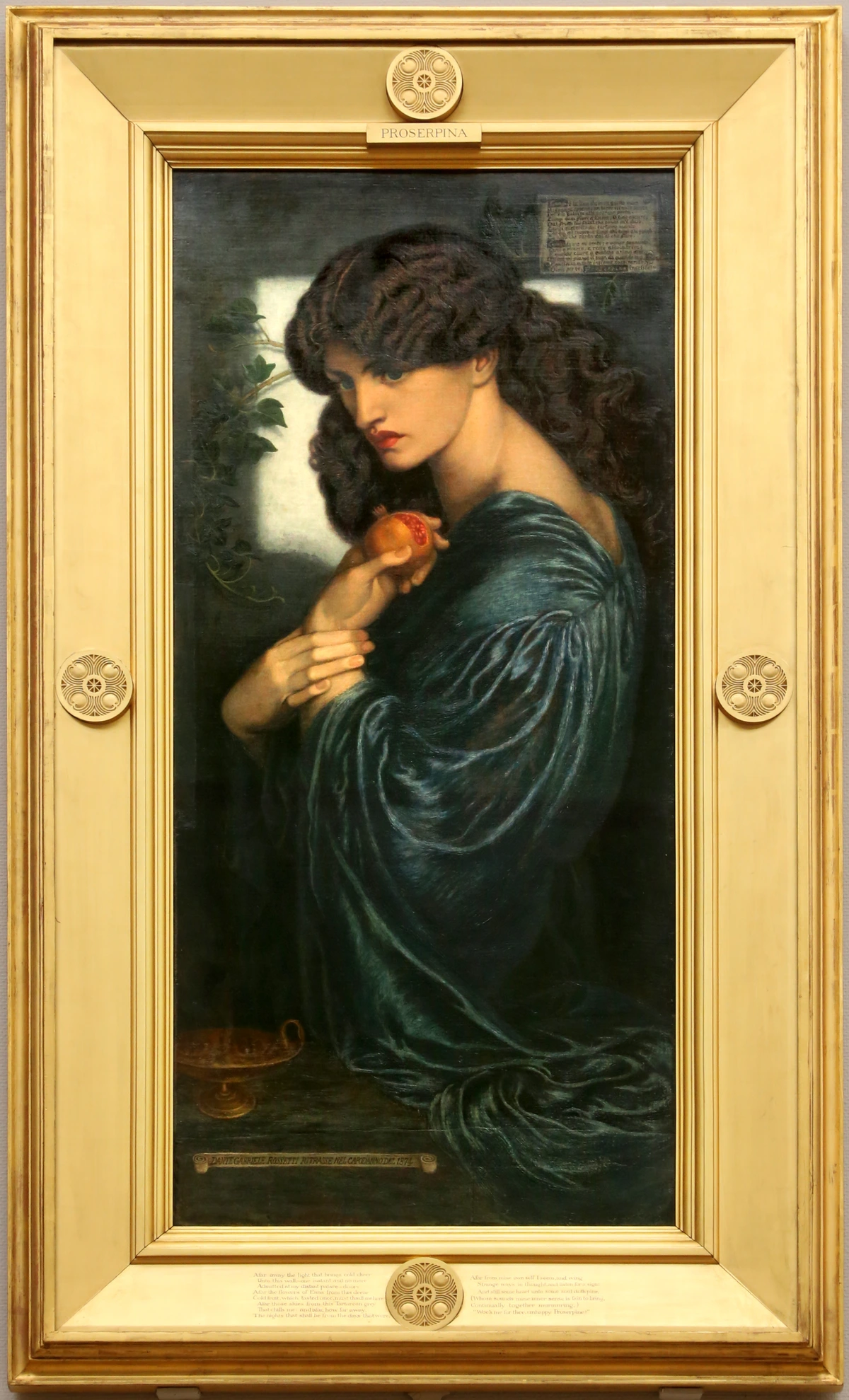
- But Dante Gabriel Rossetti was often seen as the driving force, the charismatic leader, the poet whose romantic vision defined their spirit and whose magnetism inspired not only the original Brotherhood but also the influential second generation of artists. His symbolic and literary themes, seen in iconic portraits like Proserpine, deeply enriched the movement and gave it much of its characteristic emotional intensity and poetic depth.
So, I'd say it's a three-way tie, each indispensable to the movement's success and enduring legacy. Beyond these founders, artists closely associated with the movement like Ford Madox Brown contributed powerful social realist works like Work, showcasing the broader social conscience of the era, and later figures like Edward Burne-Jones were instrumental in evolving the Pre-Raphaelite aesthetic into its Symbolist and Aesthetic phases, broadening its lasting impact with his dreamlike, medieval-inspired narratives.
Were there any women in the Pre-Raphaelite Brotherhood?
The Brotherhood itself was an all-male society, a reflection of the prevailing societal norms of its time, which largely excluded women from formal artistic institutions like the Royal Academy. Women in the Victorian era faced immense barriers to professional artistic training and recognition, often relegated to decorative arts or working as amateurs.
However, women were absolutely central to the movement in many capacities: as iconic models, powerful muses, and talented artists in their own right. While not official members, their contributions were integral to the Pre-Raphaelite vision and output, often working in parallel or directly with the male artists, albeit without the same formal recognition.
Elizabeth Siddal, famously the model for Millais' Ophelia and later Rossetti's wife, was a gifted painter and poet herself. She received some informal artistic training, notably from Rossetti, and worked primarily in watercolor and drawing, often depicting themes of unrequited love, illness, and supernatural events, often with a delicate, melancholic beauty and a distinct Pre-Raphaelite sensibility. Her contributions are often tragically overshadowed by her personal life and early death, but her delicate and poignant works, such as Clerk Saunders or Lady Clare, reveal a unique artistic voice. Christina Rossetti (Dante's sister) was a celebrated poet whose evocative verses deeply inspired many Pre-Raphaelite paintings. Her poetry, characterized by its rich symbolism, religious devotion, and exploration of love, death, and moral struggles, directly informed the narrative and emotional depth found in many Pre-Raphaelite works. Later, artists like Evelyn De Morgan, known for her mystical and allegorical paintings such as Hope in a Prison of Despair, and Marie Spartali Stillman, a prolific painter of literary subjects, carried the Pre-Raphaelite style forward with their own unique visions. Their works, alongside others like Eleanor Fortescue-Brickdale, proved that the artistic principles resonated far beyond the original male group and inspired a generation of women artists despite formal barriers and limitations of the era. The movement, in its focus on sincerity and personal expression, inadvertently opened doors for women to pursue serious artistic careers, even if outside the formal 'Brotherhood.'
What is the most famous Pre-Raphaelite painting?
Without a doubt, it's John Everett Millais' Ophelia (1851-52). Its captivating blend of literary tragedy (depicting Shakespeare's Ophelia drowning), breathtaking detail in its natural setting (each plant precisely rendered with almost botanical accuracy), and profound sense of tragic beauty has made it one of the most iconic, recognizable, and beloved paintings in the world, embodying many of the core tenets of the Pre-Raphaelite movement. The story of Ophelia, with its themes of lost love, madness, nature's indifference, and tragic beauty, deeply resonated with the melancholic and morally earnest sensibility of the Pre-Raphaelites.
Other highly recognizable and significant works include:
- John Everett Millais: Christ in the House of His Parents (famous for its scandal and its revolutionary realism in depicting a sacred scene).
- William Holman Hunt: The Light of the World (for its deep symbolism and spiritual message, becoming an icon of Victorian religious art).
- Dante Gabriel Rossetti: Proserpine (for its iconic depiction of female beauty, intense symbolism, and rich emotional atmosphere).
- Edward Burne-Jones: King Cophetua and the Beggar Maid (a quintessential example of the later, more aesthetic phase of the movement, known for its dreamlike quality and idealized beauty).
What was the Pre-Raphaelite Brotherhood's relationship with photography?
While the Pre-Raphaelite Brotherhood was formed to rebel against academic conventions in painting, their relationship with the burgeoning medium of photography was nuanced. They were not strictly opposed to it; in fact, several members, including Dante Gabriel Rossetti and John Everett Millais, used photographs as reference material for their paintings. For artists committed to 'truth to nature' and meticulous detail, a photograph could offer an accurate record of a scene, a model's pose, or botanical elements, which they could then interpret and elaborate upon in their own work.
However, they did not consider photography an art in the same sense as painting. For the Pre-Raphaelites, art involved the artist's interpretive vision, moral purpose, and emotional engagement – qualities they felt a mechanical process like photography could not inherently possess. They believed painting offered a unique ability to infuse reality with heightened meaning, symbolism, and spiritual truth, going beyond mere factual reproduction. So, while they embraced photography as a useful tool for achieving accuracy, they always asserted the painter's superior role in transforming observation into profound artistic expression. It was a tool, not a replacement for the artist's hand and soul.

A Final Thought: The Echo of Rebellion in My Own Work
The Pre-Raphaelites were more than just painters of beautiful, sad women, or meticulous depictions of nature. They were a genuine youth movement that boldly kicked down the doors of a stale, suffocating artistic institution. Their story reminds me that every so often, art needs a good shake-up, a jolt of rebellion that forces us to question established norms and look for answers in unexpected places—even if that means looking centuries into the past. This cyclical nature of challenging the status quo, of looking to the past with fresh eyes to invent the future, is something I find incredibly resonant in my own work. Their rebellion also occurred amidst broader Victorian reform movements, from social justice to early feminism, demonstrating how artistic shifts are often intertwined with wider societal changes.
This spirit of seeking genuine expression, of bringing vibrant color and profound meaning to the canvas, and challenging artistic conventions is certainly a driving force behind much of the art I create today. For example, I recently explored combining intense, jewel-like colors with abstract forms in a new series, directly inspired by the Pre-Raphaelites' innovative use of white ground and pure pigments to create luminosity. It was a struggle to get the vibrancy just right, but that dedication to material truth felt incredibly authentic. Whether I'm exploring new forms and ideas within abstract and expressive painting, or delving into themes that challenge contemporary perceptions, the Pre-Raphaelite emphasis on sincerity, emotional depth, and a personal vision is a powerful beacon. Their dedication to seeing the world truly, and translating that vision with unapologetic passion, is a constant inspiration. If you're curious to see how this historical spirit manifests in a contemporary context, I invite you to explore my own artistic journey and influences on my [/timeline], perhaps even find a piece to buy for your own space, or visit my Den Bosch Museum for an immersive experience.