Who Is Yves Tanguy? Meet the Surrealist Painter of Uncharted Worlds
Dive deep into the life and art of Yves Tanguy, the self-taught Surrealist who painted haunting, subconscious dreamscapes. This is your ultimate guide to understanding the man behind the mysterious, evolving forms.

Who Is Yves Tanguy? An Immersive Journey into the Mind of a Surrealist Master
It’s funny how some artists step into history with a thunderclap—a manifesto, a scandal, a revolution. Yves Tanguy, I think, entered on tiptoe. He was a quiet soul who spent his life painting the impossible geography of the subconscious, and today, his name is synonymous with the most enigmatic corners of Surrealism. You look at one of his paintings, and you don't just see it; you feel like you've wandered into the aftermath of a dream you can't quite remember.
I want you to imagine a world of soft bell-like forms, bones that seem to breathe, and shadows stretching to a horizon that may be the end of time. That’s the world Tanguy created. It's a world that feels utterly alien, yet somehow familiar, like a word on the tip of your tongue. If you've ever stumbled upon his work in a museum—perhaps at the Met, MoMA, or the Tate—and felt a sudden, inexplicable quiet, you’ve already met him. If you've ever wondered who was behind these haunting, beautiful, and deeply strange canvases, you're in the right place. This is the story of the man who painted not what he saw, but what he felt in the deepest, most inarticulate parts of his mind, a man whose canvases now command tens of millions in the art market, cementing his status as one of the most collectible and influential artists of the 20th century.
From Streets of Paris to Shores of America: Tanguy's Unlikely Journey
It’s strange to think that one of the 20th century’s most distinctive artistic visions came not from the academy, but almost as an afterthought. Yves Tanguy’s journey into art was as accidental and fateful as the landscapes he would later paint, a story of chance encounters and sudden, life-altering conversions that feel more like fiction than biography. He didn't dream of becoming a painter as a child; he stumbled into it, and in doing so, revealed a world that was waiting to be seen.
Yves Tanguy’s story didn’t start in an art studio. Born on January 5, 1900, at the very heart of Paris, he came of age in a world still reeling from one war and blindly stumbling toward another. The son of a retired naval captain, he seemed destined for a life at sea, a life of regimented order that couldn’t have been further from the uncharted terrains he’d later paint. But Tanguy was wired differently. He was an introspective kid, more at home in his own head than in a classroom. After his father’s death, his family moved to Brittany, a land of ancient standing stones and moody, brooding coastlines. That landscape of myth and mystery undoubtedly seeped into his bones; you can almost see the vast, empty beaches and pale skies reflected in his later paintings.
By his late teens, Tanguy was back in Paris, serving a mandatory stint in the merchant navy and later the French army. These were formative years. The empty, hypnotic seascapes he encountered during his time at sea would later inform the vast, horizon-dominated plains of his mature work. The rigid, almost nonsensical rituals of military hierarchy, meanwhile, offered a real-world taste of the illogical systems that Surrealism sought to dismantle. It was a bizarre apprenticeship for an artist of the irrational.
It was during this period, in 1920, that he met another restless soul in the army, Jacques Prévert, who would become a lifelong friend and, later, a celebrated poet and screenwriter. The two were kindred spirits, sharing a rebellious sense of humor and a disdain for authority. For a time after their service, they lived a bohemian existence in Montparnasse, scraping by and immersing themselves in the intellectual ferment of post-war Paris. They were part of a generation that had seen the old world crumble and were desperately searching for a new one, even if it had to be invented from scratch.
Then came the moment that changed everything. The popular story, perhaps apocryphal but capturing an essential truth, goes that Tanguy was on a bus with Prévert. As they passed the window of Paul Guillaume's gallery, a single painting by the Italian "metaphysical" painter Giorgio de Chirico stopped him cold. It was like a psychic shock, a visual thunderclap that bypassed his eyes and hit him directly in the gut. He saw in Chirico's work—with its long, unnatural shadows, its impossible architecture, and its air of profound and unsettling mystery—a reality untethered from logic. This wasn't a depiction of the world as it was, but as it was felt. Tanguy, it's said, shouted in surprise, so absorbed by the image he nearly missed his stop. At the age of 24, with no formal training, having never seriously picked up a brush, he decided, right then and there, that he would become a painter. It was perhaps the most decisive moment in his life, a cosmic course correction delivered through a gallery window.
The Surrealist Method: Painting with an 'Absent Mind'
You can’t talk about Tanguy without talking about the engine of his creativity: the Surrealist belief in a reality beyond the rational. The goal wasn’t to escape reality, but to plunge deeper into it, past the boring, day-to-day world of logic and into what the movement’s leader, André Breton, called a “superior reality”—the reality of dreams, of desire, of the unfiltered subconscious. For Tanguy and his peers, the artist wasn’t a craftsman decorating a canvas; he was an explorer, a medium, a secret agent sent behind enemy lines to report back from the uncharted territories of the mind.
So, how do you paint a dream? For the Surrealists, it wasn't about skill or technique in the traditional sense; it was about accessing a deeper level of consciousness. They called this state "psychic automatism," a term first coined by the poet André Breton. In essence, it was about letting the hand move without the interference of the conscious, rational mind. The goal was to bypass logic and let the imagery of the subconscious flow directly onto the canvas.
Tanguy became a master of this process. By his own admission, he would often begin a painting with no plan, no sketch, nothing. He would put a canvas on an easel and just start. A single form might appear—a biomorphic shape, a distant structure—and he would follow it, allowing it to dictate what came next. It was a conversation between his inner world and the blank space in front of him. This technique of painting with an "absent mind" is the key to the unsettling coherence of his work. The worlds he builds feel governed by their own strange, internal logic, even if that logic is completely opaque to us.
This artistic family became the ecosystem in which his unique vision could flourish. He was an active participant in their radical experiments, contributing to their journals and joining their collective investigations into the irrational. He played the “exquisite corpse” drawing game, tried his hand at automatic writing, and embraced their passionate engagement with psychoanalysis and Marxist politics. For Tanguy, this was his true education. It gave him not just a language for his internal visions, but a whole philosophy of creation.
A Dictionary of Delirium: Unpacking Tanguy's Iconic Visual Language
Walk into a room of Yves Tanguy's paintings, and you enter a world that is instantly recognizable as his, a kind of private country with its own geography, its own population, and its own inexplicable laws. He didn’t just paint different subjects; he constructed a unique visual dictionary, a set of recurring motifs that he arranged and rearranged like words in a private language. These forms feel less like things he invented and more like specimens he discovered—first in his own mind, and then, with astonishing precision, on the canvas. To look at them is to try and understand a grammar we can only intuit.
Walk into a room of Yves Tanguy's paintings, and you enter a world that is instantly recognizable as his. He created a unique visual dictionary, a set of recurring motifs that he arranged and rearranged to build his uncanny scenes. Think of these forms not as objects, but as geological specimens from a planet that only exists in the mind. Each shape is a word in a private language, and every painting is a sentence whose grammar we can only intuit.
The Forms
First, there are the forms. Tanguy’s a master of the semi-recognizable object. His paintings are populated by what the movement’s leader, André Breton, poetically called "amoeboid creatures," as if he'd gone diving into a petri dish and a nightmare at the same time. You'll see:
- Biomorphic shapes: This is Tanguy's most celebrated invention. These soft, rounded, vaguely organic forms look like bones washed smooth by a prehistoric sea, mollusks that crawled out of a primeval ooze, or the internal organs of a creature that never existed. They aren’t any of these things, but they feel like archetypes of them. They aren't just shapes; they are vessels for a deep, biological memory, tapping into a collective unconscious that pre-dates language.
- Crystalline structures: In stark contrast to the soft forms are these sharp, angular, almost architectural elements that jut from the ground like fossilized missiles or monuments from a lost civilization. These could be the ruins of a future that hasn't happened yet, or fossils of a form of inorganic life. They provide a powerful tension between the hard and the soft, the rigid and the fluid, the organic and the constructed, creating a sense of deep time and geological mystery.
- Elongated shadows: No light source in a Tanguy painting behaves as it should. Light doesn't clarify; it confuses. Shadows are long, stretching infinitely toward a horizon, suggesting a sun that is perpetually low in the sky, a world trapped in a state of eternal, haunting twilight. It’s a light that doesn’t illuminate so much as it deepens the mystery, turning every object into a question mark.
The Tanguyesque Landscape
Second, there is the landscape. Tanguy almost always sets his dramas on a vast, barren plain. It’s not really the Utah desert, not really the seabed of the English Channel, not really an alien planet glimpsed through a telescope. It’s all three at once, a synthesis of external reality and internal state. This is his stage.
It’s a place of profound emptiness, a void that swallows sound and amplifies solitude until it becomes a character in the scene. The horizon line is almost always high in the picture, emphasizing the sky's immense, brooding presence and compressing the ground into a narrow stage. This isn't the hopeful, exploratory horizon of a European Romantic landscape; it’s a limit, a boundary beyond which you cannot see or know, a kind of spiritual precipice. It's a landscape of pure atmosphere, a painting of the inside of your own skull when you close your eyes. Is this a world a million years after humanity has vanished, leaving only its strange artifacts behind, or a million years before consciousness first blinked into existence? Tanguy sustains that ambiguity, that sense of being outside of time.
The Palette
Finally, there is the palette. Early on, his colors were often muted and somber, dominated by grey, beige, and sepia tones that feel like they were scraped from the walls of a Parisian alleyway or the bottom of the sea. But after he moved to the United States in 1939—fleeing the coming storm of war and following the trail of the brilliant American painter Kay Sage, who would become his second wife—his world began to glow from within. The greys gave way to luminous, ethereal blues, soft, fleshy pinks, and deep, earthy umbers. It was as if the desaturated palette of his European anxieties had been replaced by a new, more vibrant, but no less mysterious, American light. It's a fascinating case study of how an artist's entire inner world—and the visual language that describes it—can be transformed by a change of geography and a change of heart.
The Evolution of a Private Visionary
Tanguy's artistic journey wasn't a straight line but a deepening dive into his own unconscious. He started as a tourist in the land of dreams and ended up as its most dedicated cartographer.
His development can be broken down into several key periods, each marked by subtle shifts in mood, form, and palette that reveal an artist constantly pushing the boundaries of his own internal world:
Period  | Characteristics & Key Works |
|---|---|
| Early Explorations (1926-1927) | Still heavily shadowed by the influence of Giorgio de Chirico, these early works are moody, architectural, and a bit more figurative than his later masterpieces. He’s finding his footing, but you can already see the seeds of his signature style germinating in the strange perspectives and unnerving still lifes where inanimate objects seem to thrum with latent, malevolent life. A work like The Storm (Black Landscape) (1926) feels like a bridge between Chirico's desolate Italian piazzas and Tanguy's own uncharted world, a transition from metaphysical architecture to psychological geology. |
| "In the Grip of Surrealism" (1927-1933) | This is Tanguy in his pure, uncut Surrealist prime. The signature otherworldly landscapes appear in full force, now populated by a cast of unmistakable, strange, amoebic forms that look like they've just crawled out of a petri dish or a nightmare. The paint application becomes smoother, more polished and enamel-like, adding to the disquieting realism of an unreal scene. This immensely fertile period culminates in his breakthrough masterpiece, Mama, Papa is Wounded! (1927), a painting whose psychologically charged title is a perfect match for its stark and deeply unnerving visual drama. |
| Refinement and Expansion (1934-1939) | His world doesn't just get stranger; it gets more elegant. His forms become more refined and streamlined, as if they are evolving in the harsh light of their own planet. He plays with scale, introducing more complex spatial arrangements and a sense of rhythmic placement. There's a new sense of order, even as the subject matter remains profoundly strange, like watching a slow, silent ballet performed by archetypal beings. A classic example is Day of Slowness (1937), where the forms seem to engage in a wordless, meditative dance across a vast plane. This was also the period of his involvement in major Surrealist exhibitions, like the landmark 1936 "International Surrealist Exhibition" in London, which cemented his reputation as a leading figure of the avant-garde. |
| The American Period (1940-1955) | After fleeing the gathering storm in Europe for the US in 1939, his world literally opens up. The spaces in his paintings become even more vast and empty, reflecting the epic scale of the American landscape and the profound sense of displacement that comes with exile. His palette deepens, shifting from the drab greys of Europe to a new spectrum of ethereal blues, murky umbers, soft fleshy pinks, and milky whites, as if his new home had recalibrated his entire inner climate. The forms themselves begin a new evolutionary phase, becoming more abstract, more crystalline, sometimes almost calligraphic, yet also more aggressive and sharp. He remarried, to the brilliant American Surrealist painter Kay Sage, who became a powerful creative partner and stabilizing force. The final chapter of his life, spent as an American citizen in Woodbury, Connecticut, saw the creation of some of his most mature and monumental works, like the staggering Multiplication of the Arcs (1954), before his life was tragically cut short by a cerebral hemorrhage at just 55. |
Throughout this evolution, one thing remained constant: his singular vision. He wasn’t chasing trends. The market could do as it pleased (and thankfully for him, it often pleased him well). He was simply continuing his lifelong exploration of the uncharted territory within.
How to Look at a Tanguy: A Guide for the Perplexed Viewer
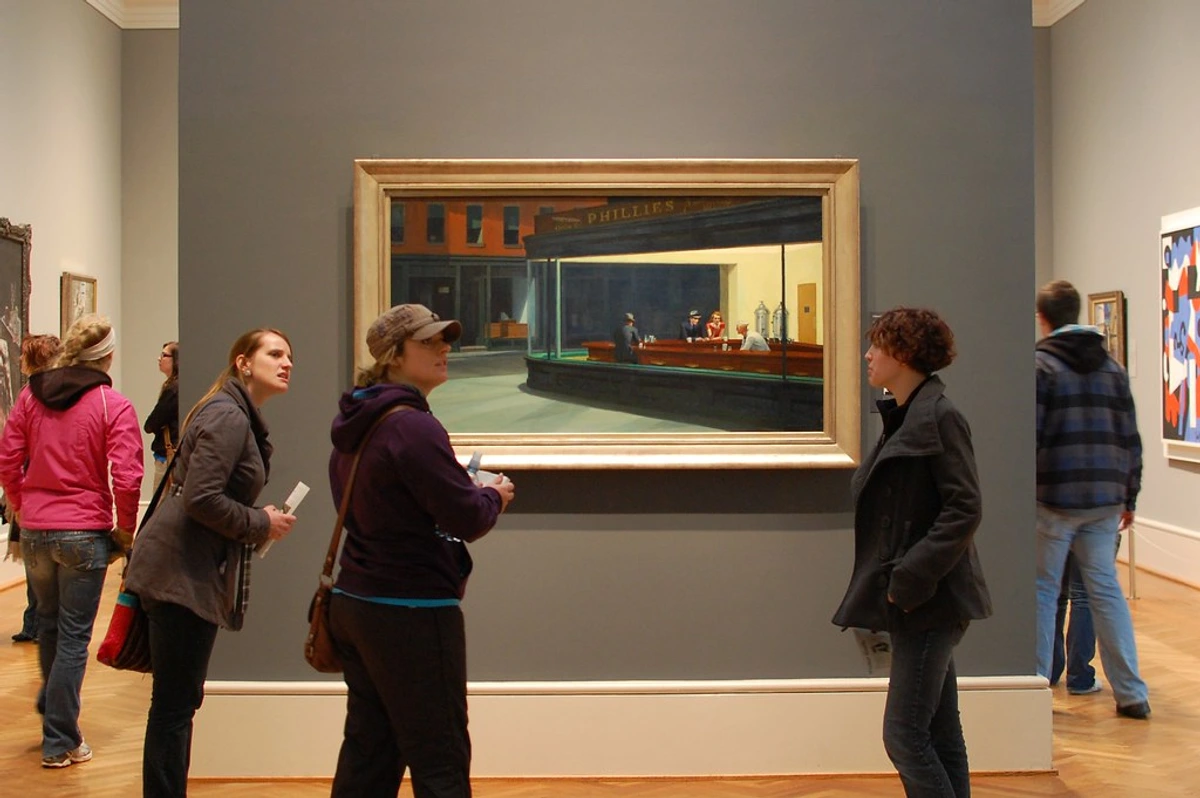
You can read all you want about Surrealist theory, but the real magic happens when you stand in front of the work itself—it's a whole different conversation. It's one thing to understand the concept of automatism, and another thing entirely to feel the vast, psychic geography of a Tanguy painting pulling at your own subconscious. The real key is to stop trying to 'understand' it and just experience it. I encourage you, the next time you’re at a museum with a Tanguy—and you'll find them in the best modern art collections in the world—to do this: forget the label on the wall for a minute.
Just look. Don't rush. Let your eyes adjust to the light of this strange world. It's a bit like putting on a pair of night-vision goggles; at first, everything is dark and indistinct, but then the world resolves into a new and surprising clarity. Give the painting time to work its particular brand of magic on you.
Let the painting pull you into its horizon. Let your eye wander among the shapes without trying to name them. Don’t ask "What is that?" Ask, "What does that feel like?" Does that cluster of forms feel threatening or playful? Does that vast emptiness feel lonely or peaceful? Tanguy’s work resists a single narrative. It invites you to bring your own subconscious to the party, to become a collaborator in the creation of its meaning. There is no right or wrong answer, only your personal, emotional response.
Pay attention to the texture. Despite the otherworldly subject, his technique is almost classically precise, with smooth, enamel-like brushstrokes that give these impossible visions a haunting credibility. He deliberately suppresses any sign of the artist's hand, forcing you to engage directly with the image, not the process. The air in a Tanguy painting has a specific weight and temperature. Can you feel it? Standing in front of one, I often get the strangest sensation of the temperature in the room dropping by a few degrees. He proves that you don't need demons or monsters to create a sense of profound unease; sometimes, an empty space and an ambiguous shape are all you need to unsettle the soul. It's a masterclass in how less is more, in how a single, quiet form can be louder than a whole symphony of noise.
Yves Tanguy: Frequently Asked Questions (FAQ)
Here, we answer the most common questions art lovers, students, and collectors ask about this fascinating and enigmatic artist, from his methods to his market.
What art movement is Yves Tanguy associated with? Tanguy is one of the quintessential figures of Surrealism. He was a core member of the Parisian Surrealist group from the mid-1920s, signing their manifestos and exhibiting with them until his departure for the United States on the eve of World War II. His work is a perfect embodiment of the movement's goal to channel the subconscious mind and remains a cornerstone of Surrealist art history.
What is Yves Tanguy's art style? How would you describe it? Tanguy's style is one of the most instantly recognizable in all of modern art. It's defined by hyper-realistic depictions of impossible, dreamlike scenes. His paintings almost always feature a vast, barren, seemingly infinite plain populated by enigmatic, often biomorphic forms that look like bones, amoebas, mollusks, or other unidentifiable otherworldly artifacts. The light is eerie and artificial, and the shadows are impossibly long, creating a mood of profound mystery and unease. It's an art of stunning contradictions: the familiar and the alien, the organic and the mineral, the deeply psychological and the purely formal. The term 'Tanguyesque' is now used by art critics to describe any work that evokes a similar sense of vast, depopulated, and psychologically charged space.
What was Yves Tanguy's most famous painting? While he created many iconic works, his 1927 painting, Mama, Papa is Wounded! is arguably his most famous and the one that truly cemented his reputation. Its psychologically loaded title and unsettling landscape of ambiguous forms make it a landmark of Surrealist art. Other major works in museum collections today include The Rapidity of Sleep (1945), Indefinite Divisibility (1942), and From Green to White (1954), each representing a key phase of his career. Auction prices for his major works often reach into the tens of millions.
Did Yves Tanguy have any formal art training? Remarkably, no. Tanguy was entirely self-taught. After his revelatory encounter with a de Chirico painting at age 24, he simply decided to become a painter and taught himself. His first surviving paintings, dating from around 1925, already show an astonishing confidence and a fully-formed unique vision. This rawness and pure, unfiltered connection to his inner vision is a huge part of his work's power and a testament to his innate genius.
What inspired Yves Tanguy? Tanguy's inspiration was a rich and complex tapestry, woven from both his internal world and the external influences around him.
- The Subconscious: This was his primary source material. The imagery flowed directly from his own psyche, accessed through techniques of psychic automatism and a deep, intuitive connection to his own dreams.
- Giorgio de Chirico: His encounter with a de Chirico painting was a life-altering, revelatory moment. Chirico's metaphysical paintings, with their mysterious architecture and illogical shadows, gave Tanguy the philosophical and aesthetic blueprint for his own work.
- Childhood Landscapes: The stark, mystical coastlines of Brittany, France, where he spent part of his youth, left an indelible mark. Those vast, empty beaches, dramatic skies, and ancient, enigmatic standing stones (menhirs) clearly inform the desolate, timeless landscapes of his paintings.
- The Surrealist Circle: He was deeply embedded in the Parisian Surrealist group, engaging with the radical ideas of André Breton, the collages of Max Ernst, and the new modes of thought proposed by the psychoanalytic theories of Sigmund Freud.
- The Natural World: Tanguy was an avid collector of rocks, minerals, and marine specimens. He saw a direct connection between these natural forms—the logic of a crystal, the soft shape of a sponge—and the imaginary forms he put on his canvases.
- Kay Sage: His second wife, the brilliant American Surrealist painter Kay Sage, was a profound influence. Her more architectural, hard-edged style encouraged a new clarity and structure in his own painting, and she was a crucial stabilizing and intellectual force in his life.
- The Written Word: He was an avid reader of works by Jarry, Lautréamont, and other proto-Surrealist writers who celebrated the logic of delirium.
A Collector's Eye: Tanguy in the Art Market
A Tanguy on the wall is more than an aesthetic choice; it'2019s a statement of intellectual and historical engagement. Since his death in 1955, his market has only grown stronger, solidifying his place in the canon of modern art. His works are highly sought after by major museums and discerning private collectors. In recent years, his major paintings have sold for astonishing sums, often exceeding $15-$20 million at auction, a testament to his enduring appeal and the rarity of his top-tier works appearing on the market. Significant collectors like Peggy Guggenheim were early champions, including his work in her legendary gallery, Art of This Century.
Auction Milestone | Year | Price Realized (USD) | Painting |
|---|---|---|---|
| High Water Mark | 2019 | $21.3 million | Les Mouvements du Soir (c. 1939) |
| Record for American Period Work | 1998 | $18.7 million | A Large Picture Which is a Landscape (1930) |
| Recent Major Sale | 2022 | Est. $12-18 million | Le Temps Meuragant (c. 1937) |
If you’re considering acquiring a work by Tanguy, you’re navigating a niche but highly competitive area of the art market. Provenance is king; a work with a clear exhibition history is far more valuable. Due to his precise technique, condition is also a critical factor. For those just beginning, prints and works on paper can serve as an accessible entry point into his visionary world. And for an artist like myself, whose work explores similar realms of color and form, a Tanguy isn’t just an investment; it’s a constant source of inspiration, a reminder of how a painting can create a complete reality unto itself.
Tanguy's Technical Mastery: How Did He Create Those Worlds?
For all their dream-like, spontaneous feel, Tanguy’s paintings are technical marvels, a beautiful contradiction of intuitive content and painstaking execution. I’ve always been fascinated by the paradox of an artist using hyper-realist technique to depict pure imagination—it's a kind of sleight of hand that makes the impossible feel inevitable. He achieved his signature look not through wild, gestural freedom, but through a meticulous, almost scientific, multi-step process that proves you can't separate the vision from the craft.
- Automatic Drawing: It often began with an “automatic” drawing or doodle. He would let his hand move freely, allowing a subconscious impulse to create a starting form.
- Layered Grisaille: He typically worked in grisaille—shades of gray—for the under-painting. This allowed him to establish the precise tonal values of light and shadow that give his spaces their uncanny depth and realism. Once established, these forms were incredibly solid and convincing.
- Glazing for Color: On top of this structure, he would apply thin, translucent layers of oil paint—a technique called glazing. This is the secret to the luminous, almost internal glow of his colors. He didn’t just mix a color; he built it up optically, letting light pass through the layers and reflect off the white gesso ground, creating a spectral vibrancy.
- Immaculate Surface: The final surface is smooth and enamel-like. He deliberately suppressed any visible brushstrokes. This "invisible" technique forces the viewer to focus entirely on the forms and the atmosphere, not the artist's hand. It’s a brilliant sleight of hand: the surface is deadpan, but the image itself is profoundly alive with psychological energy. It’s a lesson in how technical control can be used to liberate the irrational.
Critical Reception & Legacy: What the Experts Say
Tanguy’s work was controversial from the start, as any good Surrealist art should be. Early critics were often perplexed, unsure whether to categorise his work as a serious contribution to modernism or as a bizarre cerebral exercise. Art historian James Thrall Soby, in his 1955 monograph, was one of the first to articulate the power of Tanguy’s vision, linking it to a sense of profound postwar alienation. "Tanguy's art," he wrote, "seems the visual equivalent of a ɀ‘șexistentialist ‘70‘äŹ0‘ècrisis.’” His smooth, anonymous style was often contrasted with the more visceral, gestural angst of artists like Francis Bacon.
Over time, his reputation has only grown. Today, he’s recognized by scholars and art lovers as one of the key figures who bridged the gap between the dreamscapes of early Surrealism and the vast, color-field abstraction of post-war American artists like Mark Rothko. His influence is a quiet but potent undercurrent in the work of artists as diverse as Robert Smithson, whose Spiral Jetty shares Tanguy’s sense of a landscape outside of human time, and contemporary photographers like Thomas Demand, who build unsettlingly pristine worlds. Tanguy didn’t just paint pictures; he influenced the entire psychological landscape of modern art.
Major Works & Where to See Them
You can't truly understand Tanguy until you've stood before one of his canvases—reproductions are like looking at a photo of the Grand Canyon; they give you the facts but none of the feeling. The scale, the texture, the way the light seems to emanate from within the paint—these are things you have to experience in person to believe. It's a pilgrimage worth making. Here’s a quick guide to some of his most pivotal paintings and the museums lucky enough to hold them in their public collections, a roadmap for your own journey into his world.
Mama, Papa is Wounded! (1927)
This is the painting that announced Tanguy’s mature genius. Its unsettling title, given by an early collector, only adds to the painting’s psychological tension. A vibrant red "ribbon" of paint slices horizontally across a desolate plain, while strange geometric and biomorphic forms loom like malevolent spectators. It’s a powerful statement of anxiety and the illogical violence of the subconscious. Where to see it: The Museum of Modern Art (MoMA), New York. It's a cornerstone of their Surrealist gallery.
The Rapidity of Sleep (1945)
A masterpiece from his American period. Here, his palette has shifted to a colder, more metallic range of blues, beiges, and grays. The forms are less organic and more crystalline, like shards of mineral or bone scattered across an alien desert. The title suggests the fleeting, disorienting quality of dreams. Where to see it: The Metropolitan Museum of Art, New York. It hangs as a testament to his later, more abstract style.
Indefinite Divisibility (1942)
A haunting and beautiful painting that perfectly encapsulates his classic ‘Tanguyesque’ landscape. The forms are a mix of soft, strange objects and sharp, linear structures casting impossibly long shadows. It captures a moment of absolute stillness and infinite mystery. Where to see it: The Art Institute of Chicago. It’s a must-see for understanding his mastery of space.
Multiplication of the Arcs (1954)
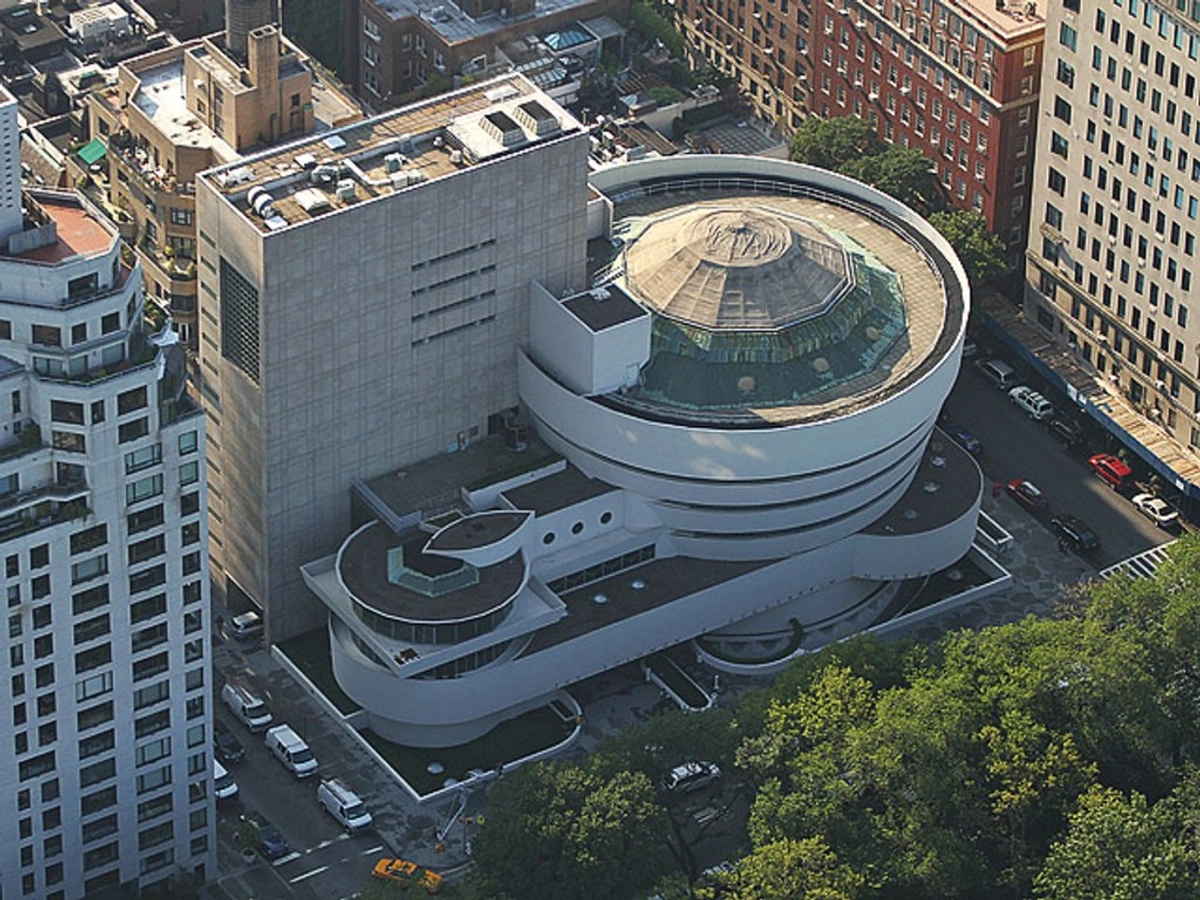
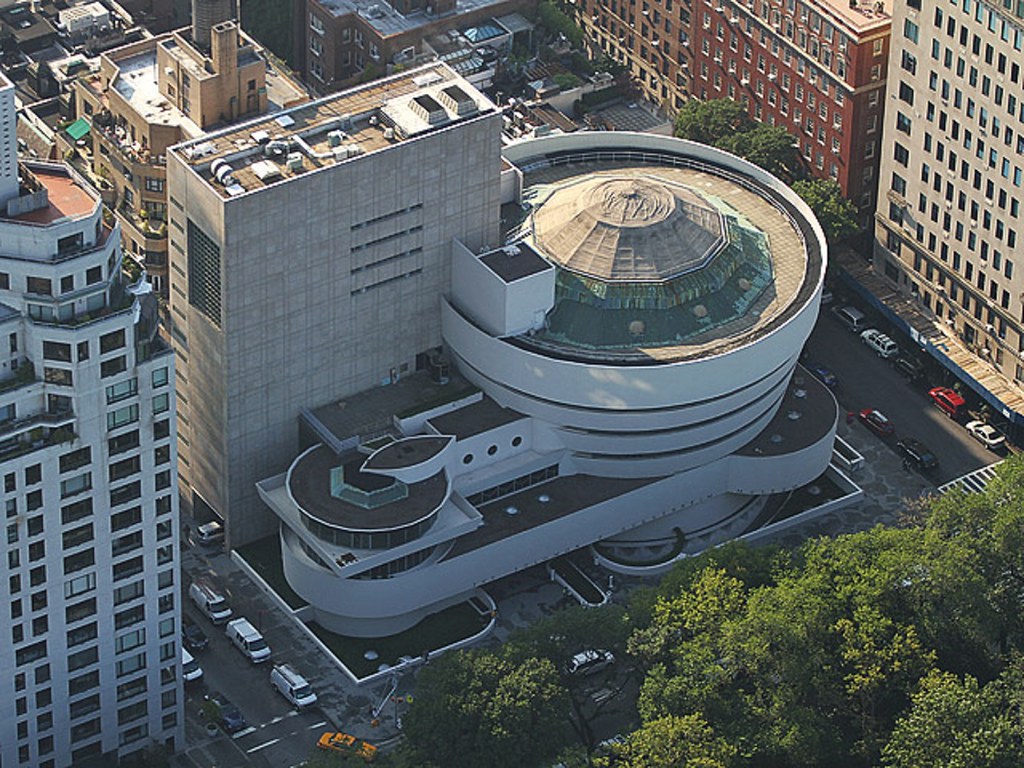
One of his last and largest paintings, this work feels like a culmination of his entire artistic project. The space is vaster than ever, and the sparse, refined forms seem to carry immense, symbolic weight. It is a powerful, meditative, and deeply disquieting vision. Where to see it: The Solomon R. Guggenheim Museum, New York.
Other significant collections can be found at Tate Modern in London, the Peggy Guggenheim Collection in Venice, and the Centre Pompidou in Paris. Smaller but no less important works are held by institutions like the Menil Collection in Houston, which has an exceptional Surrealist wing, and the Wadsworth Atheneum in Hartford, Connecticut, not far from where Tanguy spent his final years. Check their websites before you go—these galleries often rotate their collections, and there’s nothing quite like the feeling of turning a corner and unexpectedly finding yourself face-to-face with one of his silent worlds. The surprise is part of the experience.
Epilogue: A World Without End
I've always found something deeply affecting, almost poetic, in the way Yves Tanguy left this world. He died suddenly on January 15, 1955, of a cerebral hemorrhage in his home in Woodbury, Connecticut. It was a quiet, undramatic end for a man whose art was anything but, and he was only 55, at the absolute zenith of his creative abilities, still pushing the boundaries of his inner world. It feels fitting, in a way, for an artist who painted landscapes that seemed to exist outside of time—he simply vanished from one of his own pictures, leaving the world to continue on without him, a world he had only just finished showing us.
The worlds he painted remain, as potent and mysterious as ever. In our current age of rapid, often brutal change, a Tanguy painting feels less like a historical artifact and more like a necessary refuge. It offers a different kind of space—a space for deep contemplation, for accepting mystery, for sitting with the uncomfortable and the beautiful and refusing to choose between them. He gives us permission to not have all the answers.
His canvases are more than just windows into a strange world; they are mirrors reflecting the strangeness within our own—our private anxieties, our forgotten dreams, our sense of being a small, conscious thing in a vast and indifferent universe. Sometimes the best art doesn’t give you answers. It gives you a quiet, disquieting space where you can ask your own questions, where you can be alone with your own thoughts without feeling judged. Tanguy's paintings are not puzzles to be solved; they are places you visit, and their profound silence is their most powerful language. They remind us that some of the most important things can never be said, only felt.





His influence is a quiet but unmistakable presence in the work of countless contemporary artists who explore the terrain between abstraction and the subconscious. Painters like Peter Doig, whose dream-like figuration often employs vast, atmospheric spaces saturated with memory, or Anselm Kiefer, whose barren, symbolic landscapes echo Tanguy's sense of historical anxiety, continue the dialogue he began. Even photographers like Gregory Crewdson, who stages cinematic, psychologically fraught suburban scenes, owe a debt to the atmosphere Tanguy pioneered. Digital artists and concept designers working in film and video games find endless inspiration in his 'otherworldly' aesthetic. He created a visual vocabulary for the mind's interior—the language of the liminal space—that is still in use today, influencing everything from the set design of science fiction movies to the metaphysical installations of artists like Thomas Hirschhorn. For an artist like myself, seeing a Tanguy in person is like coming home to a place you've never been, a profound reminder that the most powerful art is not about the world as it is, but as it is felt, remembered, and dreamed.